Blog / Buying Guides

What Is the Primary Difference Between the 2026 Grand Wagoneer and Grand Wagoneer L?

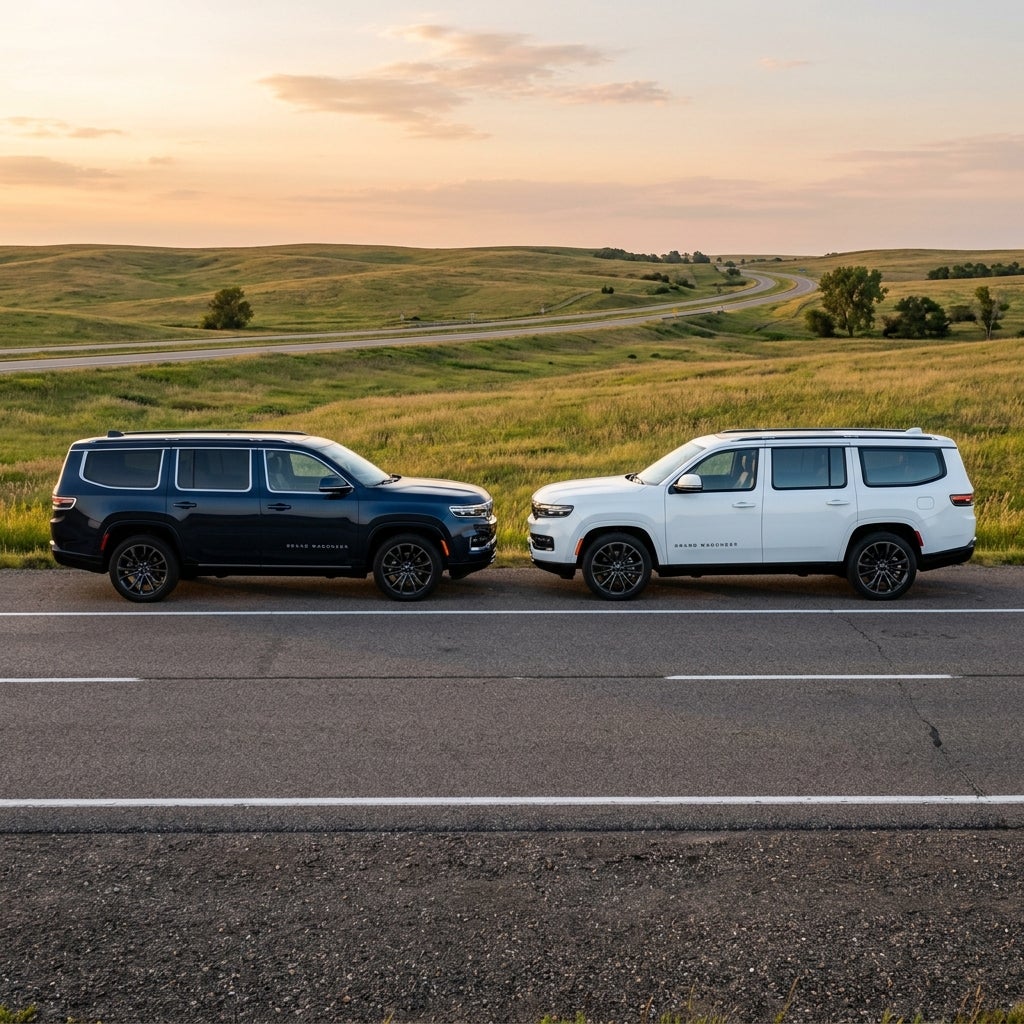
Dark blue and white Jeep Grand Wagoneer SUVs parked bumper to bumper along a rural road at sunset. (Representative image for illustration purposes only. Actual vehicle may vary based on trim and configuration.)

What Is the Primary Difference Between the 2026 Grand Wagoneer and Grand Wagoneer L?

When evaluating luxury full-size SUVs, the distinction between standard and extended wheelbases is critical for drivers who prioritize both passenger accommodations and cargo versatility. The primary difference between the 2026 Grand Wagoneer and the 2026 Grand Wagoneer L lies entirely in physical proportions: the Grand Wagoneer L extends overall vehicle length by exactly 12 inches (226.7 inches compared to 214.7 inches) and stretches the wheelbase by 7 inches (130.0 inches compared to 123.0 inches). Crucially, this extra length is allocated entirely behind the rear doors and into the rear overhang, leaving interior passenger legroom virtually identical across all three rows while dramatically expanding cargo capacity behind the third row from 27 cubic feet to a massive 44 cubic feet.
For families, outdoor enthusiasts, and executive transporters in Geary County and across North Central Kansas, this distinction alters how the vehicle functions in daily practice. In the standard Grand Wagoneer, eight passengers travel in supreme comfort, but carrying luggage for all eight occupants often requires careful packing or roof-rack cargo boxes. In contrast, the 2026 Grand Wagoneer L effortlessly swallows full-sized luggage, sports equipment, camping gear, or agricultural supplies behind a fully upright third row. Because both models utilize the identical high-output 3.0-liter Hurricane Twin-Turbo engine and standard Quadra-Drive II 4x4 drivetrain, choosing between them comes down to garage footprint, turning maneuverability, and your exact cargo space requirements. You can explore both variations live in our New Vehicle Listings at Valor CDJR.

Wheelbase and Exterior Dimensions Breakdown: Standard vs. Long-Wheelbase

Understanding how 12 additional inches of exterior body length affect everyday driving dynamics is essential before deciding which vehicle belongs in your driveway. The standard 2026 Grand Wagoneer measures 214.7 inches in overall length with a 123.0-inch wheelbase, translating to a turning radius of approximately 19.0 feet. This relative compactness makes navigating tight suburban parking structures, downtown Junction City streets, or parking spots near Kansas State University in Manhattan notably straightforward for a full-size SUV.
By comparison, the 2026 Grand Wagoneer L extends overall length to 226.7 inches on a 130.0-inch wheelbase. This increased span increases the turning circle to approximately 20.1 feet and adds roughly 200 pounds of curb weight. On open Kansas highways like I-70 or US-77, the extended wheelbase provides remarkable tracking stability, effectively ironing out crosswinds and road expansion joints. However, home parking requirements must be carefully measured: a standard residential garage measuring 20 feet deep (240 inches) will accommodate the extended model, but leaves minimal clearance for walking around the liftgate when closed.

Specification

Grand Wagoneer

Grand Wagoneer L

Overall Length

214.7 inches

226.7 inches

Wheelbase

123.0 inches

130.0 inches

Overall Width (w/ mirrors)

94.0 inches

94.0 inches

Overall Height

75.6 inches

75.6 inches

Curb Weight (Approx.)

6,400 lbs

6,600 lbs

Turning Diameter

38.0 ft

40.2 ft

Min. Garage Depth Recommended

20.0 feet

21.5 feet

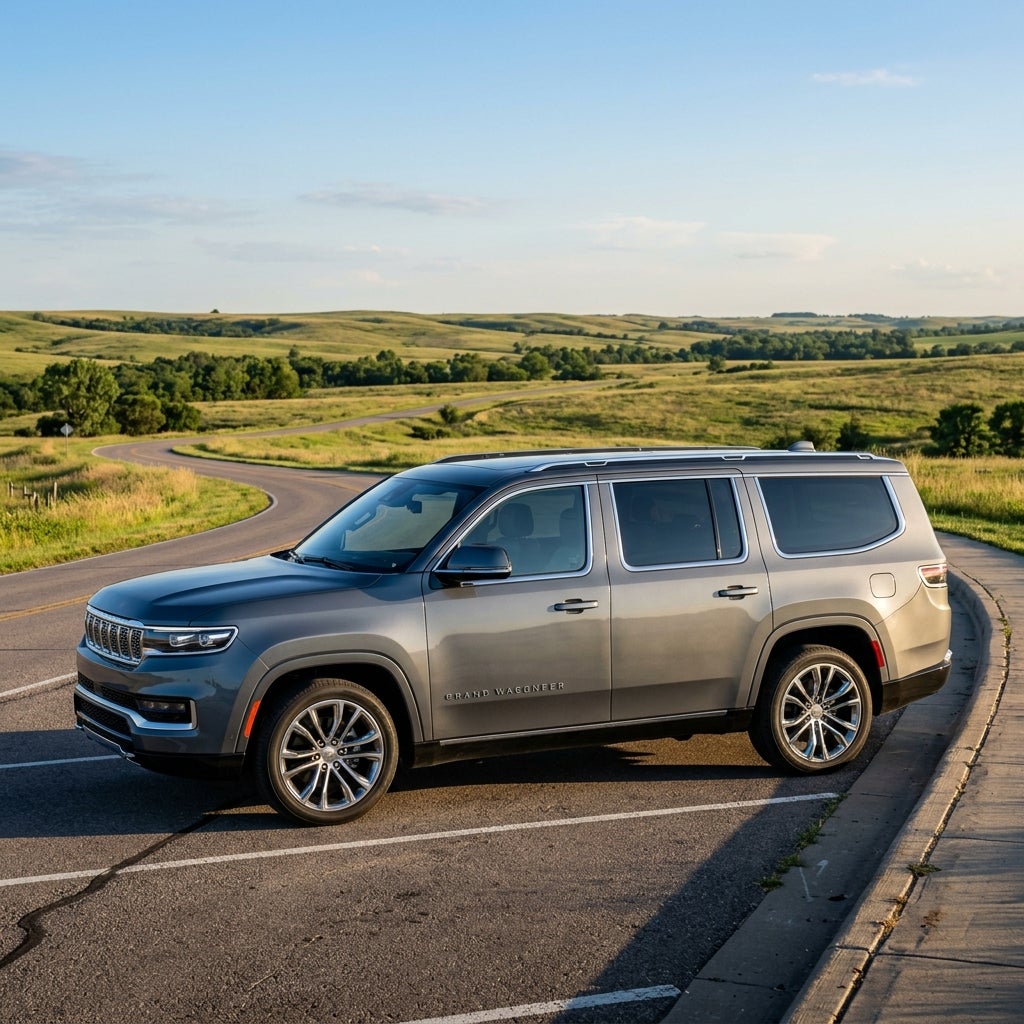
Profile view of a grey Jeep Grand Wagoneer parked near a winding road in rolling green hills. (Representative image for illustration purposes only. Actual vehicle may vary based on trim and configuration.)

Cargo Space and Third-Row Passenger Comfort in the Grand Wagoneer L

Many three-row luxury SUVs sacrifice comfort in the third row to preserve cargo room, or vice versa. The genius of the 2026 Grand Wagoneer lineup is that passenger space is standard-setting in both variants. Third-row legroom measures an adult-friendly 36.6 inches in both the standard and long-wheelbase models, accompanied by 39.0 inches of headroom and generous shoulder space. Passengers in the back row enjoy standard power recline features, dedicated USB-C charging ports, cup holders, and HVAC vents integrated into the luxury leather trim.
Where the Grand Wagoneer L creates a distinct competitive advantage is in rear cargo capacity. Behind the third-row seatback, trunk space leaps from 27 cubic feet in the standard model to an incredible 44 cubic feet in the L variant—a massive 61% gain. Fold the third row down, and cargo volume expands to 89 cubic feet (compared to 71 cu ft). With both second and third rows folded completely flat, maximum cargo capacity reaches 131 cubic feet in the L versus 117 cubic feet in the standard wheelbase.

Cargo Configuration

Standard Model

Grand Wagoneer L

Cargo Behind 3rd Row

27.4 cu ft

44.2 cu ft (+16.8 cu ft)

Cargo Behind 2nd Row

70.9 cu ft

88.8 cu ft (+17.9 cu ft)

Max Cargo (Behind 1st Row)

116.7 cu ft

130.9 cu ft (+14.2 cu ft)

3rd-Row Legroom

36.6 inches

36.6 inches (Identical)

2nd-Row Legroom

42.7 inches

42.7 inches (Identical)

1st-Row Legroom

40.9 inches

40.9 inches (Identical)

Practical access is identical across both configurations thanks to the standard power tip/slide second-row captain's chairs or bench seating. A single touch moves the second-row seat forward, providing a wide entryway into the third row without forcing passengers to awkwardly crawl through.

What Engine Options Are Available in the 2026 Jeep Grand Wagoneer?

High-Output Hurricane Twin-Turbo

Every 2026 Grand Wagoneer and Grand Wagoneer L comes standard with the high-output 3.0-liter Hurricane Twin-Turbo inline-six engine. Delivering an extraordinary 510 horsepower and 500 lb-ft of torque, this powertrain surpasses legacy naturally aspirated V8 engines in horsepower, low-end torque delivery, and overall thermal efficiency. Paired with a precision TorqueFlite 8-speed automatic transmission, performance is smooth and responsive whether merging onto I-70 or ascending steep grades in the Flint Hills.

Quadra-Drive II 4x4 & Towing

To translate 500 lb-ft of torque into effortless capability, both wheelbases feature standard Quadra-Drive II full-time 4WD with an Electronic Rear Limited-Slip Differential (eLSD) and a 2-speed transfer case with low range. When properly equipped with the Heavy-Duty Trailer Tow Package, the standard Grand Wagoneer delivers a maximum towing rating of up to 9,800 pounds, while the extended Grand Wagoneer L carries a maximum rating of 9,450 pounds due to its increased curb weight. Integrated Trailer Brake Control and Zoom Mode rear cameras make hitching quick and effortless.

Selec-Terrain & Air Suspension

Both vehicles come fitted with standard Quadra-Lift Air Suspension offering up to 3.6 inches of air spring lift and 10 inches of total ground clearance. Drivers can toggle through five distinct modes via the Selec-Terrain system: Auto, Sport, Rock, Snow, and Sand/Mud. Experience this power and capability firsthand by contacting our sales specialists at Valor CDJR.

What Trim Levels Are Available on the 2026 Jeep Grand Wagoneer?

Series I & Series II

Series I: Sets the baseline for flagship luxury with Nappa leather-trimmed seating, 20-way power front seats with massage functions, tri-pane panoramic sunroof, McIntosh MX950 19-speaker sound system, and digital rearview mirror. Series II: Upgrades to ultra-premium Palermo leather trim, 22-inch polished aluminum wheels, Digital Rearview Mirror 2.0, Drowsy Driver Detection, and traffic sign recognition.

Obsidian Trim Package

Obsidian: Introduces a bold, dark-tinted aesthetic featuring Piano Black exterior accents, 22-inch Black Noise wheels, dark onyx interior badging, black leather upholstery with contrast stitching, front passenger interactive display screen, and the flagship McIntosh 23-speaker Reference Audio system generating 1,375 watts.

Series III & Tech Packages

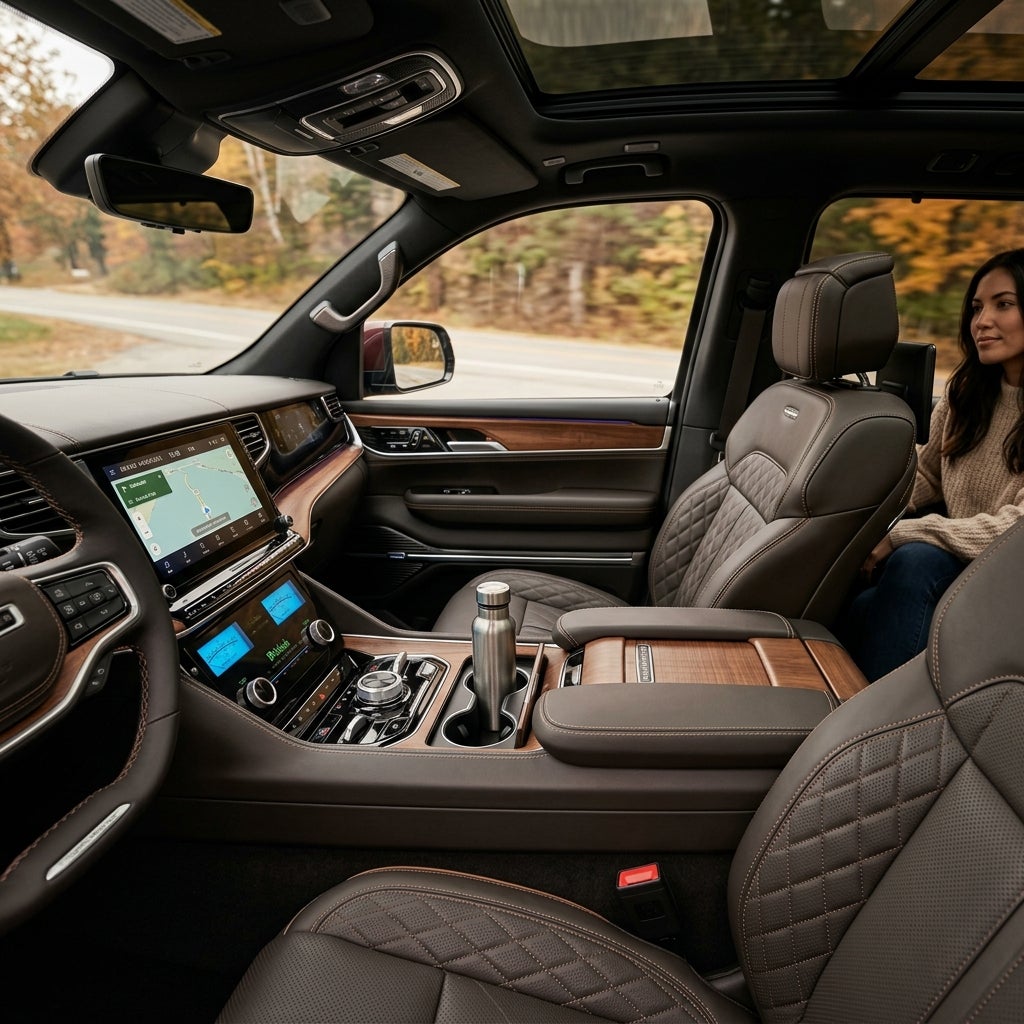
Series III: Represents the pinnacle of automotive craftsmanship, adding quilted Palermo leather seats, Night Vision Camera with pedestrian/animal detection, Active Driving Assist hands-free highway driving system, and dual 10.1-inch rear seat entertainment displays with Amazon Fire TV built-in.
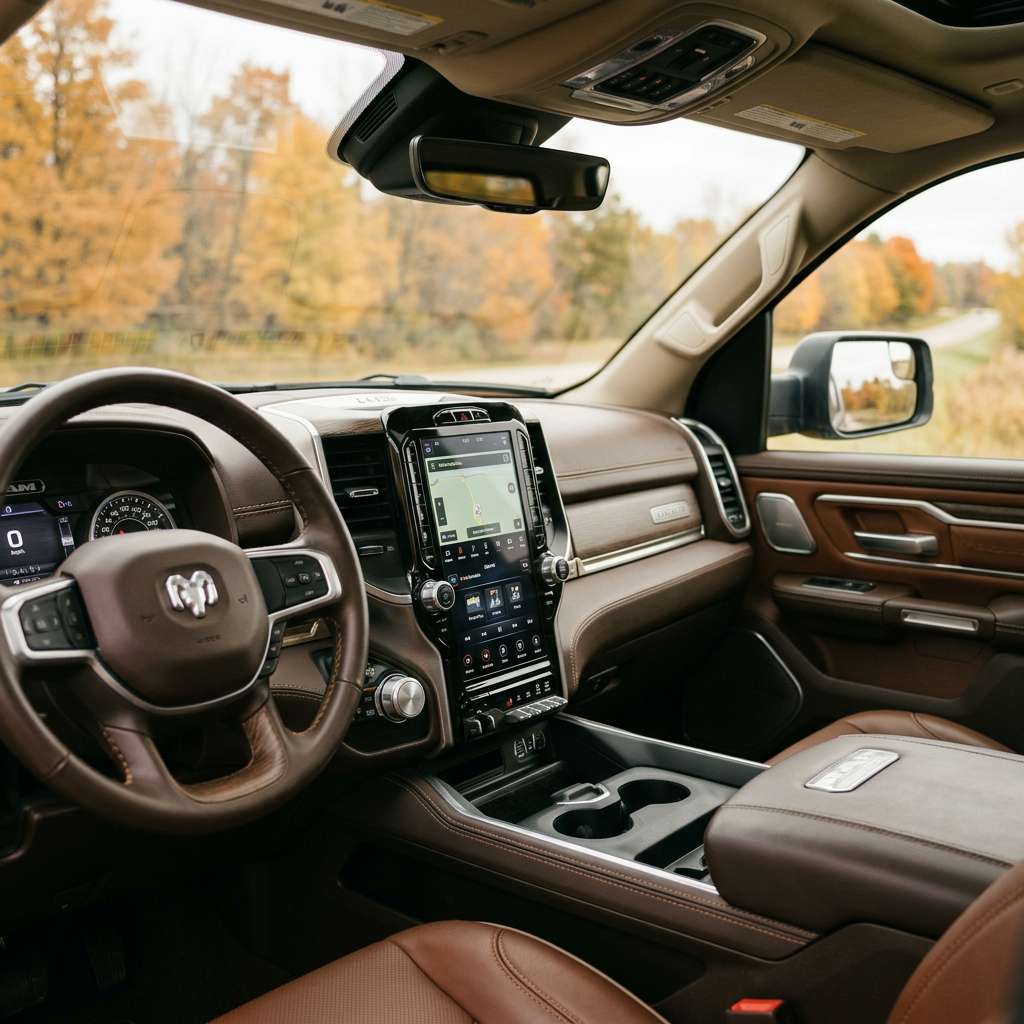
Interior of a luxury SUV featuring quilted brown leather seats, wood trim console, dual digital displays, and panoramic sunroof. (Representative image for illustration purposes only. Actual vehicle may vary based on trim and configuration.)

What Is the Price Increase to Step Up from Standard Wheelbase to the Grand Wagoneer L?

For buyers analyzing value, the cost differential between the standard 2026 Grand Wagoneer and the extended Grand Wagoneer L is exceptionally straightforward. Across all matching trim levels (Series I, Series II, Obsidian, and Series III), the MSRP difference to step up to the Grand Wagoneer L may vary by trim and options. Given that this step-up delivers 16.8 additional cubic feet of primary rear trunk volume and a 4-gallon larger fuel tank, many buyers view the long-wheelbase upgrade as one of the most cost-effective feature selections in the entire luxury SUV segment.
Furthermore, standard equipment parity across both wheelbases means you are not forced to compromise on tech, luxury, or safety features when choosing the body style that fits your garage. When evaluating your purchase budget, taking advantage of our online Trade In Evaluation tool and securing pre-approval through our finance center can help establish precise monthly payments. Check your eligibility in advance with our online Get Pre-Approved form.

Trim Baseline

Standard Wheelbase

Grand Wagoneer L Increment

Series I

Base Luxury MSRP

+$3,000 MSRP (Approx.)

Series II

Mid-Tier Luxury MSRP

+$3,000 MSRP (Approx.)

Obsidian

Blacked-Out Luxury MSRP

+$3,200 MSRP (Approx.)

Series III

Pinnacle Luxury MSRP

+$3,500 MSRP (Approx.)

Fuel Tank Size

26.5 Gallons

30.5 Gallons (+4.0 gal)

Trunk Space Value

27.4 cu ft

44.2 cu ft (+61% space)

How Does the 2026 Jeep Grand Wagoneer Compare to the Cadillac Escalade?

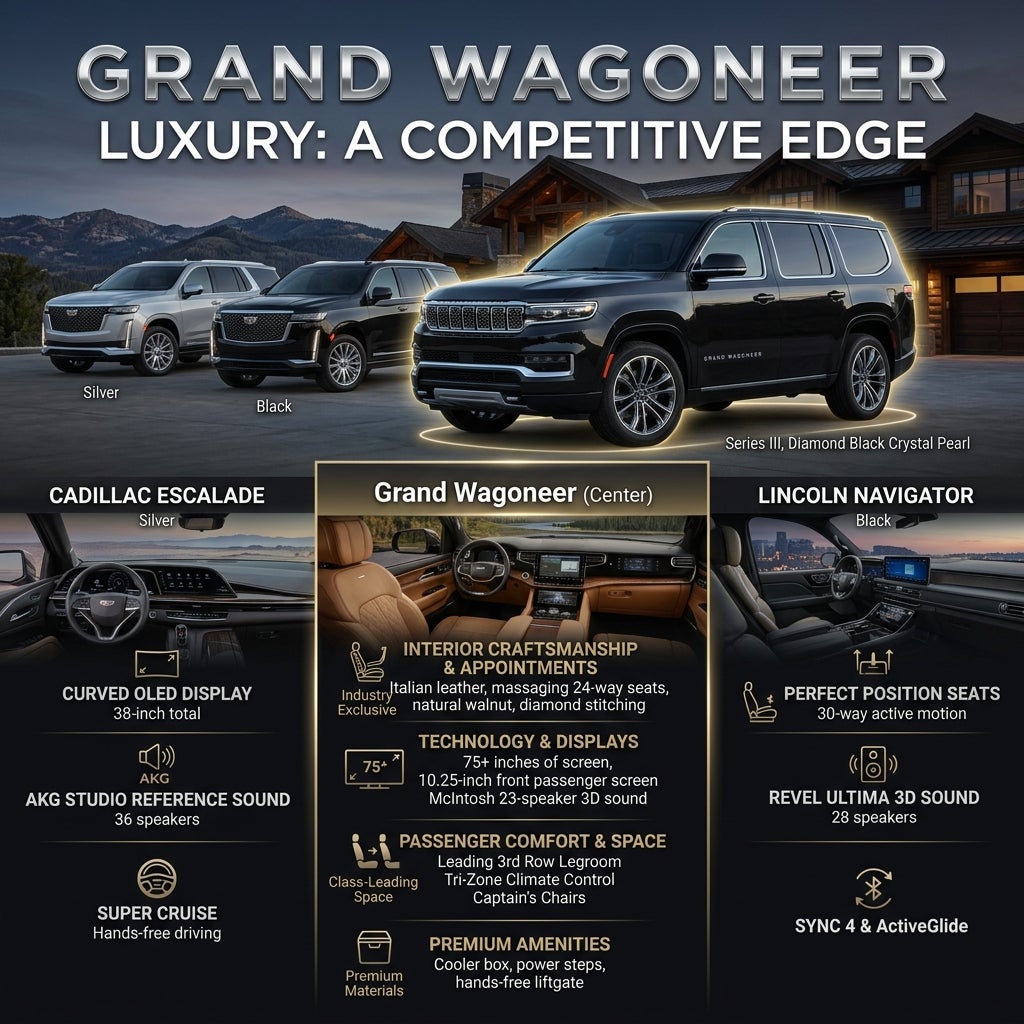
In the upper echelon of American full-size luxury SUVs, the primary benchmark competitor to the 2026 Grand Wagoneer and Grand Wagoneer L is the Cadillac Escalade and Escalade ESV. A head-to-head analysis reveals clear areas where the Grand Wagoneer platform offers notable advantages, particularly regarding performance output, standard drivetrain equipment, and maximum towing capacity.
First, the standard 3.0L Hurricane Twin-Turbo HO engine in the Grand Wagoneer generates 510 horsepower and 500 lb-ft of torque, handily outperforming the Cadillac Escalade's standard 6.2L naturally aspirated V8 (420 hp / 460 lb-ft). Second, while four-wheel drive is an expensive add-on option on lower Escalade trims, Jeep includes standard Quadra-Drive II 4x4 across every Grand Wagoneer model. Finally, the Grand Wagoneer's maximum tow rating of 9,800 lbs easily surpasses the Escalade's 8,000-lb capacity, making it the preferred choice for pulling horse trailers, heavy boats, or travel trailers across Kansas.
Infographic comparing the Grand Wagoneer SUV features against the Cadillac Escalade and Lincoln Navigator. (Representative image for illustration purposes only. Actual vehicle may vary based on trim and configuration.)

Feature / Metric

Grand Wagoneer / L

Cadillac Escalade / ESV

Standard Engine

3.0L Hurricane Twin-Turbo I6

6.2L V8 Gasoline

Horsepower

510 hp

420 hp

Torque

500 lb-ft

460 lb-ft

Standard Drivetrain

Quadra-Drive II 4x4

Rear-Wheel Drive (4WD extra)

Max Towing Capacity

Up to 9,800 lbs

Up to 8,000 lbs

Audio System Flagship

McIntosh 23-Speaker

AKG Studio 36-Speaker

Passenger Screen

10.25-inch Available

Not Available

3rd-Row Legroom

36.6 inches

34.9 in / 36.6 in (ESV)

What Are the Common Maintenance Requirements and Long-Term Reliability Expectations?

Maintaining top-tier luxury performance and long-term reliability in your 2026 Grand Wagoneer or Grand Wagoneer L requires adherence to factory-recommended service intervals. The High-Output Hurricane Twin-Turbo engine is an advanced piece of engineering built with a plasma-transfer wire-arc (PTWA) cylinder bore coating and twin low-inertia turbochargers. To keep this powerplant operating at peak performance, routine maintenance scheduled every 7,500 to 10,000 miles is required using full synthetic 0W-20 engine oil and OEM filter replacements.
Key long-term service considerations for the Grand Wagoneer platform include: • Quadra-Lift Air Suspension: Inspection of air lines, compressor fittings, and ride-height sensors during regular tire rotations to ensure leak-free operation in harsh winter conditions. • 4x4 Fluid Services: Front differential, rear eLSD, and transfer case fluid flushes recommended every 50,000 to 60,000 miles, especially if towing heavy trailers regularly. • Brake System Care: Given the vehicle's curb weight and high towing limits, periodic inspection of brake pad wear and rotor surfaces ensures maximum stopping power. • Wagoneer Client Services: Every 2026 Grand Wagoneer is supported by available factory-backed service coverage; contact us for current program details.
For quick maintenance, oil changes, or tire inspections in Junction City, visit our Express Lane service or order genuine Mopar components directly through our Parts Department. Convenient online booking is always available via our Service Scheduler.

Fuel Economy, Tank Capacity, and Highway Driving Range

EPA Fuel Ratings

The 2026 Grand Wagoneer standard wheelbase earns EPA fuel economy ratings of 14 mpg city, 20 mpg highway, and 17 mpg combined. The Grand Wagoneer L posts virtually identical EPA estimates of 14 mpg city, 19 mpg highway, and 16 mpg combined, despite its 12-inch additional body length.

Expanded Tank Capacity

To complement its extended body, Jeep engineers equipped the Grand Wagoneer L with a 30.5-gallon fuel tank—a 4.0-gallon increase over the standard model's 26.5-gallon tank. Premium unleaded fuel (91+ octane) is recommended to achieve peak 510-hp performance output.

Cruising Range Efficiency

Thanks to the 30.5-gallon fuel supply, the 2026 Grand Wagoneer L delivers a highway cruising range exceeding 575 miles on a single fill-up. This extended range makes long-distance travel across Kansas, Colorado, or Missouri effortless without frequent fuel stops.

Driving in the Flint Hills: Handling Riley County Roads and Manhattan Commutes

Living and driving around Junction City, Fort Riley, and Manhattan presents a unique combination of highway speed zones, rolling prairie terrain, and unpredictable seasonal weather. During summer months in the Flint Hills, high heat and crosswinds on I-70 demand structural rigidity and powerful air conditioning. The Grand Wagoneer excels in both areas, offering four-zone automatic climate control with personalized rear controls and an acoustically laminated windshield that isolates the cabin from tire and wind noise.
When navigating rural properties or unpaved agricultural roads across Riley and Geary Counties, the standard Quadra-Lift air suspension elevates ground clearance to a maximum of 10.0 inches. This allows drivers to traverse muddy lanes, deep gravel, or snowdrifts with absolute composure. On daily commutes between Junction City and Manhattan via K-18, the adaptive damping suspension continuously adjusts shocks 100 times per second, absorbing road imperfections and delivering a whisper-quiet ride.
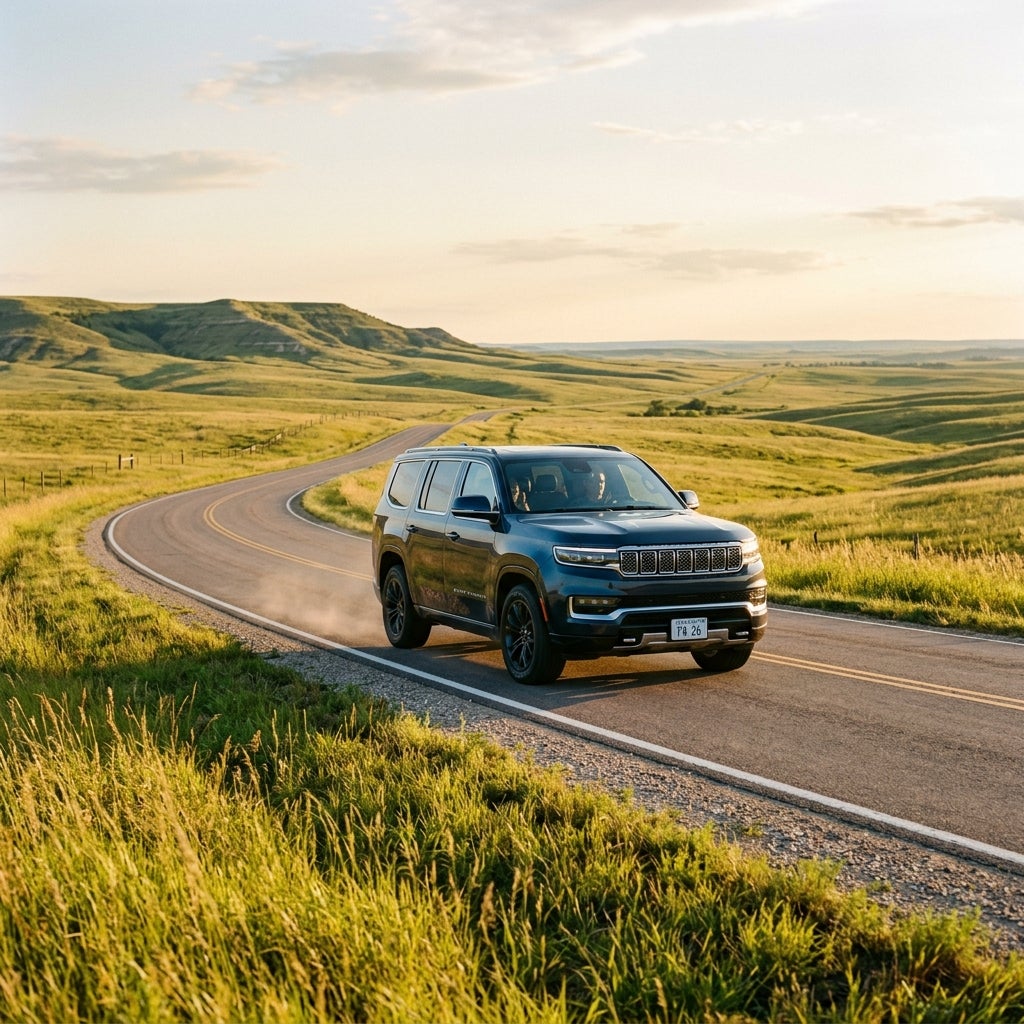
A dark blue SUV driving on a winding two-lane road through rolling green hills at golden hour. (Representative image for illustration purposes only. Actual vehicle may vary based on trim and configuration.)

Where Can I Buy a 2026 Jeep Grand Wagoneer Near Me?

If you are searching for an authorized Grand Wagoneer dealership in North Central Kansas, Valor CDJR is your premier destination. Conveniently located at 1825 Goldenbelt Blvd in Junction City, KS 66441, our showroom serves customers from Manhattan, Salina, Fort Riley, Topeka, and surrounding communities. We offer dedicated Wagoneer Client Specialists, direct factory ordering, current lease and purchase financing options, and personalized VIP delivery experiences.
Whether you are interested in a new standard Grand Wagoneer, an extended Grand Wagoneer L, or exploring our certified pre-owned selections in our Used Vehicle Listings, our team provides transparent, pressure-free guidance tailored to your lifestyle. We also assist business owners with heavy-vehicle tax advantages through our Commercial Vehicle Inventory specialists. Ready to get started? Get Directions to Valor CDJR or Call us at (785) 238-5114 today.
Logo for Valor Automotive featuring a silver shield with red 'V' and white 'A' letters on a blue background.

Experience the 2026 Grand Wagoneer and Grand Wagoneer L at Valor CDJR

The best way to determine whether the standard 2026 Grand Wagoneer or the extended Grand Wagoneer L best fits your garage and lifestyle is to compare them side-by-side at Valor CDJR. Experience the 510-horsepower Hurricane Twin-Turbo engine, test the McIntosh 23-speaker sound system, and see how the 44 cubic feet of rear cargo space in the L model may fit your family's needs.
Posted in:

Related Posts

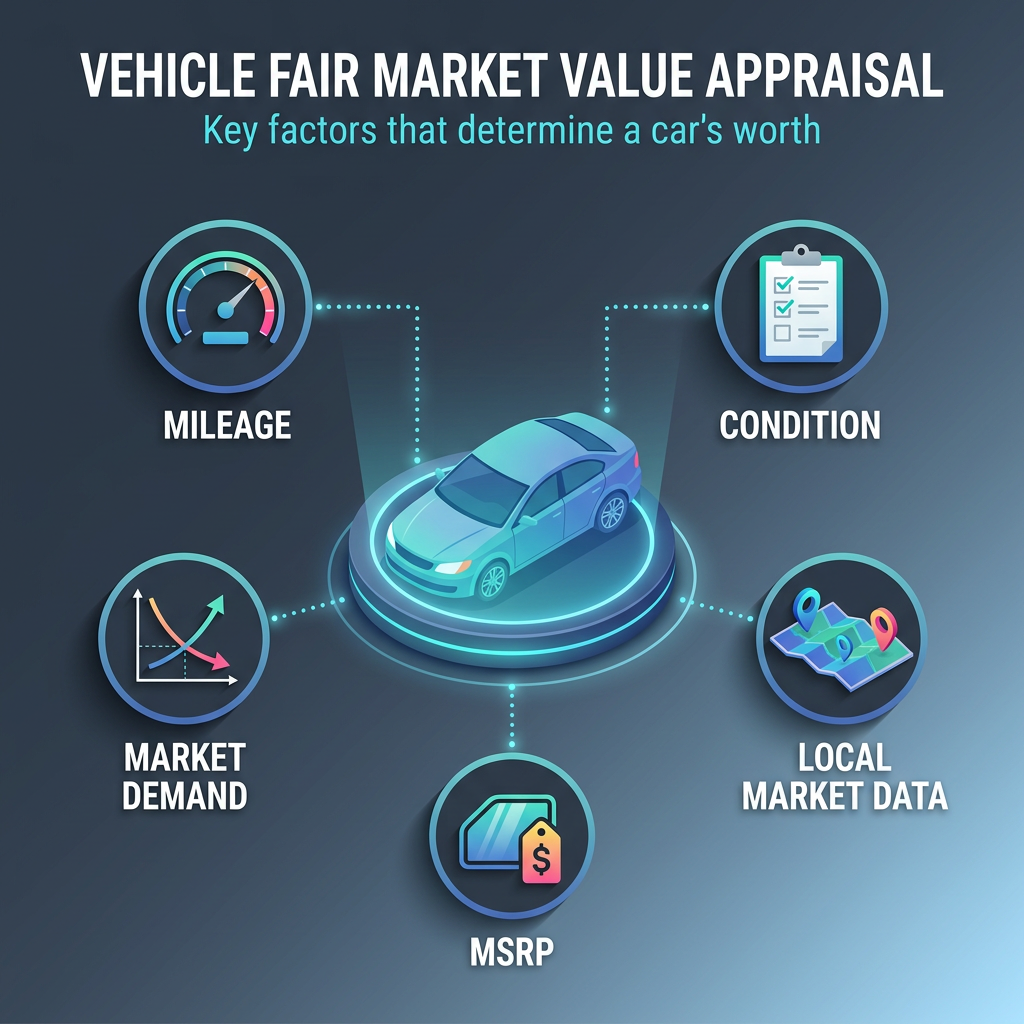
How Is Fair Market Value Determined for a Vehicle? Direct Valuation Factors Explained

How Is Fair Market Value Determined for a Vehicle? Direct Valuation Factors Explained

How Is Fair Market Value Determined for a Vehicle? Direct Valuation Factors Explained Determining the true Fair Market Value (FMV) of a vehicle requires looking beyond simple online price tags. At its core, fair market value represents the monetary price that a willing, informed buyer would pay and a willing, informed seller would accept in an open, competitive market—neither being under any compulsion to buy or sell. Establishing this baseline is essential whether you are buying a new vehicle, trading in your current ride, or selling a used vehicle outright. Automotive valuation experts evaluate several critical baseline metrics to calculate accurate market values. These factors include real-time regional transaction data, overall mileage, vehicle age, physical and mechanical condition, trim level, and factory-installed options. In active vehicle markets like Junction City, Manhattan, and the broader Flint Hills region of Kansas, localized supply and demand dynamic exert significant weight on final pricing numbers. What Does MSRP Stand for in Automotive Sales and How Does It Differ From Retail Price? Understanding MSRP Baseline Metrics: MSRP stands for Manufacturer's Suggested Retail Price. It is the baseline dollar figure established by the vehicle manufacturer that represents the baseline retail price before optional packages, dealer accessories, local taxes, title, or destination delivery charges are calculated. Because MSRP is set nationally by the manufacturer, it remains identical across dealerships nationwide regardless of geographic location. It provides a standardized starting point for buyers to compare model pricing across different trim levels. MSRP vs Actual Retail Selling Price: While MSRP serves as the manufacturer's benchmark recommendation, the actual retail price is determined by real-world market equilibrium. In periods of high vehicle availability, retail prices may vary based on current market conditions and available manufacturer incentives. Conversely, when specific models experience high demand or low supply around Geary and Riley counties, transaction prices align closely with or occasionally exceed MSRP. Understanding this baseline distinction helps car shoppers negotiate with clarity and confidence. What Federal Law Requires Window Stickers on New Cars and What Information Must They Display? Every brand-new vehicle sold in the United States must legally display a standardized window sticker commonly referred to as a Monroney sticker. This mandatory document was established under the Automobile Information Disclosure Act of 1958, authored by Oklahoma Senator Almer Stillwell 'Mike' Monroney. Before this legislation, car buyers faced considerable confusion regarding base pricing, optional features, and shipping costs. The Monroney Act protects consumers by requiring clear, transparent labeling directly on new vehicles before they enter dealer inventory. Mandatory Information Standardized on Window Stickers: • Official Base MSRP breakdown • Factory-installed optional packages and pricing • Destination and handling delivery charges • Official EPA fuel economy ratings (MPG city/highway) • NHTSA 5-Star Safety Ratings breakdown • Engine, transmission, and final assembly point details Do Car Dealerships Actually Pay Full Invoice Price for Vehicles? Factory Invoice Price Explained: The factory invoice price represents the initial dollar amount billed from the automaker to the dealership when a vehicle is shipped. While many buyers assume invoice price reflects actual net dealer cost, wholesale accounting involves additional structural nuances. Dealer Holdback Programs: Automakers typically provide a financial payment to dealers known as holdback—usually 2% to 3% of the base MSRP or invoice amount. Holdback assists dealerships in offsetting inventory financing expenses, facility operations, and floor-plan interest costs. Volume Incentives & Allowances: Manufacturers offer tiered performance allowances, quarterly sales goal cash incentives, and regional advertising funds. These factory-to-dealer programs reduce true net dealer cost, supporting competitive retail pricing for car shoppers. Explore New Vehicle Listings Can You Decline Dealer-Installed Options on a New Car When Negotiating Price? Factory-Installed vs Dealer-Added Accessories: It is vital to distinguish between options installed directly on the assembly line versus accessories added after arrival at a dealership. Factory-installed packages appear directly on the Monroney sticker and cannot be physically removed. Dealer-added accessories, such as custom tinting, paint protection film, wheel locks, or all-weather floor guards, are listed on a supplemental window addendum. Buyers have full consumer rights to discuss, negotiate, or decline non-factory add-on items when establishing a fair market purchase price. Practical Negotiation Strategies: 1. Review the vehicle pricing breakdown line-by-line prior to finalize agreement terms. 2. Request clear separation between base MSRP, factory packages, and dealer addenda. 3. Decide which protective accessories offer genuine practical value for your daily driving habits in Kansas. Key Physical and Operational Factors That Impact Used Car Appraisal Values Mileage & Mechanical Wear: Mileage remains one of the fastest impact points in pre-owned valuation. Average annual usage sits around 12,000 to 15,000 miles. Crossing key milestones (such as 30k, 60k, or 100k miles) affects valuation thresholds based on major upcoming service intervals. Body & Interior Condition: Physical aesthetics directly sway market appraisals. Inspectors evaluate exterior paint clarity, body panel integrity, frame alignment, upholstery wear, and cabin odor. Vehicles rated in 'Excellent' condition command distinct market premiums. Vehicle History & Maintenance: Comprehensive history reports (CARFAX/AutoCheck) reveal clean title status, structural repair history, airbag deployment, single-owner pedigree, and consistent scheduled maintenance records that boost consumer resale confidence. How Local Geography and Regional Demand Influence Fair Market Value in Junction City and Riley County Automotive market values are heavily influenced by geographic region. Vehicle demand in central Kansas reflects the unique lifestyle needs, seasonal weather conditions, and terrain of the Flint Hills region. In Junction City, Manhattan, and surrounding Riley and Geary counties, four-wheel-drive (4WD) trucks and all-wheel-drive (AWD) SUVs command higher relative market value than they might in sunbelt states. Local drivers require durable traction for winter snow, agricultural operations, and rural gravel roads. Additionally, military service members commuting around Fort Riley create strong demand for reliable, well-maintained pre-owned commuter vehicles. Value Your Trade-In Online Comparing Black Book, Kelley Blue Book, Edmunds, and NADA Value Reports Kelley Blue Book (KBB) & Edmunds: Consumer-focused valuation guides heavily weight asking prices on retail dealer websites and private seller listing aggregators. They provide easy-to-read market ranges for everyday buyers. NADA Values (J.D. Power): NADA guides rely heavily on actual transaction data from lender financing records and dealership sales reports. Financial institutions and credit unions often utilize NADA for loan underwriting standards. Black Book Wholesale Data: Black Book updates weekly based on real-time dealer wholesale auto auction transaction prices nationwide. Dealership appraisers rely on Black Book to measure current wholesale acquisition values. Understanding the Gap Between Trade-In Value, Private Party Price, and Dealer Retail Value Car shoppers often notice distinct pricing tiers for the exact same vehicle year, make, and model. Understanding these differences clarifies why trade-in offers, private sales, and dealership retail prices vary: • Trade-In Wholesale Value: The immediate wholesale offer extended by a dealership. This figure accounts for reconditioning expenses, state safety inspection costs, titled transfer logistics, and market holding risk. • Private Party Value: The price negotiated directly between individual private sellers. While higher than trade-in offers, private sales lack buyer protections, certified warranties, and trade-in tax savings allowances. • Dealer Retail Price: The final sticker price for a fully reconditioned, professionally inspected vehicle complete with reconditioning investment, warranty backing, and dealer facility support. Step-by-Step Checklist for Determining a Fair Market Price Before Buying or Selling Step 1: Research Local Comps Search active vehicle listings within a 50-to-100-mile radius of Junction City and Manhattan to establish realistic local market pricing benchmarks. Step 2: Verify Exact Options Confirm specific engine configurations, drivetrain (4WD vs AWD vs FWD), and option packages that add tangible resale value. Step 3: Perform Physical Check Conduct a detailed physical inspection for paint scratches, tire tread depth, brake life, glass chips, and interior wear. Step 4: Pull History Report Examine official vehicle history reports to confirm accident history, title status, ownership count, and service records. Step 5: Compare Guides Cross-reference valuations from KBB, Edmunds, NADA, and Black Book to evaluate fair price boundaries. Step 6: Get Professional Appraisal Obtain a professional in-person appraisal from a trusted local dealer to receive an estimated trade-in value. Browse Pre-Owned Inventory How Lenders Use Fair Market Value for Auto Loans and GAP Insurance Coverage Loan-to-Value (LTV) Ratios & Financing: Financial institutions rely heavily on accurate fair market values when establishing maximum auto loan limits. Lenders calculate a metric known as the Loan-to-Value (LTV) ratio, comparing total financing amount against recognized vehicle value (NADA or wholesale valuation). If purchase price exceeds established fair market guidelines, lenders may require larger down payments or offer adjusted interest rates. Maintaining proper alignment between sales price and FMV ensures smoother credit approvals and favorable financing terms. GAP Insurance Mechanics: In the event of a total loss accident or theft, standard auto insurance policies payout based on the vehicle's fair market value at the time of the incident—not your original loan balance. GAP (Guaranteed Asset Protection) insurance covers the financial gap between insurance FMV payouts and remaining loan balances. Get an Accurate, Transparent Fair Market Value Quote at Valor CDJR Today Navigating automotive pricing doesn't have to be complicated. At Valor CDJR, we believe in upfront clarity, competitive pricing, and honest appraisals for every driver in Junction City, Manhattan, Fort Riley, and throughout Riley County. Whether you are shopping for a new vehicle, evaluating pre-owned options, or seeking a fair trade-in quote for your current vehicle, our team is ready to deliver accurate market insights. Visit our showroom at 1825 Goldenbelt Blvd in Junction City, KS 66441 or reach out directly by phone. Get Directions to Valor CDJR or Call (785) 238-5114 today to get started with a transparent, professional market quote. Get Pre-Approved Online

RAM 1500 Buyer Guide: Choosing the Right Engine, Trim, and Towing Capability

RAM 1500 Buyer Guide: Choosing the Right Engine, Trim, and Towing Capability

Ram 1500 Buyer Guide: Choosing the Right Engine, Trim, and Towing Capability Selecting the right light-duty pickup truck requires balancing raw capability, day-to-day comfort, powertrain efficiency, and real-world value. The Ram 1500 continues to set the benchmark in the full-size truck segment by delivering an unmatched combination of luxury, towing muscle, and innovative suspension design. Whether you are hauling gear to Milford Lake, navigating daily commutes across Manhattan, or handling heavy agricultural tasks throughout Riley County, understanding how the Ram 1500 configuration options fit your lifestyle is essential. At a glance, the Ram 1500 provides up to 12,750 lbs of maximum towing capacity when properly equipped, backed by class-exclusive multi-link coil rear suspension that eliminates the harsh ride typical of traditional leaf-spring setups. Buyers can select from flexible powertrains ranging from the reliable 3.6L Pentastar V6 with eTorque mild-hybrid assistance to the twin-turbocharged 3.0L Hurricane I6 engines. For drivers focused on overall value, the Big Horn trim represents the sweet spot in pricing and equipment, while the Laramie delivers premium luxury features without climbing into top-tier price brackets. Ram 1500 Trim Level Breakdown: Which Trim Offers the Best Value for Your Budget? Tradesman & Big Horn The Tradesman is built for maximum durability and work efficiency with vinyl or durable cloth seating, easy-to-clean floor mats, and essential power equipment. However, for value-focused buyers, the Big Horn (known as Lone Star in Texas) offers the best overall value. It upgrades the cabin with chrome exterior accents, leather-wrapped steering wheel, fog lamps, and expanded access to popular equipment packages like the Uconnect 12-inch touchscreen. Laramie & Rebel Moving up to the Laramie introduces standard luxury such as leather upholstery, heated and ventilated front seats, dual-zone climate control, and advanced safety suites. For off-road enthusiasts tackling rugged trails, the Rebel brings factory lifted suspension, Bilstein performance shocks, electronic locking rear differential, all-terrain tires, and aggressive off-road styling. Limited Longhorn & Limited At the top of the lineup, the Limited Longhorn incorporates southwest craftsmanship with real wood trim, premium leather, and detailed embroidery. The flagship Limited trim adds Active-Level Four-Corner Air Suspension, ultra-premium leather seating, standard 12-inch or available 14.5-inch touchscreens, and a 19-speaker Harman Kardon premium audio system. Trim Level Key Highlights Target Buyer Tradesman Vinyl/Cloth seating, Uconnect 5 with 8.4" screen, Class IV receiver hitch Fleet operators & work-first buyers Big Horn Fog lights, 18" aluminum wheels, available 12" touchscreen (Popular Choice) Value-focused everyday truck buyers Laramie Leather trim, heated/ventilated front seats, 10-speaker audio, power tailgate Luxury & comfort seekers Rebel Factory lift, Bilstein shocks, locking rear axle, skid plates, 33" tires Off-road adventurers Limited Air suspension, 12"/14.5" screen, premium leather, Harman Kardon sound Premium truck connoisseurs What Engine Options Are Available on the Ram 1500? 3.6L Pentastar V6 with eTorque The base powertrain is the proven 3.6L Pentastar V6 featuring the eTorque mild-hybrid system. Delivering 305 horsepower and 269 lb-ft of torque, this engine uses a belt-generator setup to provide supplementary seamless torque during acceleration and smooth engine stop-start functionality. It is ideal for drivers prioritizing daily fuel economy and light utility. 3.0L Hurricane I6 Turbo Replacing outgoing V8 options, the standard-output 3.0L Hurricane twin-turbo inline-six delivers impressive muscle: 420 horsepower and 469 lb-ft of torque. It produces significantly higher output and efficiency than classic V8 engines, offering effortless passing power and strong towing capabilities across Kansas highways. High-Output 3.0L Hurricane I6 Turbo For maximal full-size performance, the High-Output Hurricane I6 pumps out a stunning 540 horsepower and 521 lb-ft of torque. Engineered with dual turbochargers, direct high-pressure injection, and forged aluminum pistons, this engine delivers sports-car acceleration and heavy-duty towing performance without sacrificing engine refinement. All Ram 1500 engines are paired with the smooth-shifting TorqueFlite 8-speed automatic transmission, optimizing shift points whether cruising empty or pulling a fully loaded trailer. Engine Option Horsepower Torque Max Towing Capacity 3.6L Pentastar V6 eTorque 305 hp 269 lb-ft Up to 8,100 lbs 3.0L Hurricane I6 Turbo 420 hp 469 lb-ft Up to 11,560 lbs High-Output 3.0L Hurricane I6 540 hp 521 lb-ft Up to 10,740 lbs Towing Capacity and Payload: What Is the Maximum Towing Weight of the Ram 1500? When properly configured with the Max Tow Package and appropriate axle ratios (such as the 3.92 rear axle gear), the maximum towing capacity of the Ram 1500 reaches up to 12,750 lbs, along with a maximum payload rating of up to 2,300 lbs. Whether you are hauling a speed boat down to Milford Lake or pulling livestock and farm equipment through the Flint Hills, configuration matters. Payload capacity depends on your cab style, drivetrain, and trim package—heavier luxury options like the Limited reduce total payload slightly compared to a Quad Cab Tradesman. To ensure hitching confidence, Ram incorporates Integrated Trailer Brake Controller options, Trailer Reverse Steering Control, and automated Trailer Light Check routines. Browse Towing-Ready New Inventory Coil-Spring vs. Leaf-Spring Ride Quality: Which Rear Suspension System Does the Ram 1500 Use Compared to the Ram 2500? A frequent question among truck buyers is: Which rear suspension system does the Ram 1500 use compared to the Ram 2500? Unlike traditional full-size pickups from competitors that use rigid leaf springs, the Ram 1500 uses a class-exclusive multi-link coil-spring rear suspension as standard equipment. Coil springs offer progressive spring rates, allowing the rear axle to absorb highway bumps and gravel road washboards far more smoothly without the stiff, bouncy unladen ride associated with leaf springs. By comparison, heavy-duty trucks like the Ram 2500 utilize either five-link coil setups or heavy-duty leaf springs designed primarily to support extreme vertical tongue weights exceeding 15,000+ lbs. Furthermore, the Ram 1500 offers an optional class-exclusive Active-Level Four-Corner Air Suspension. This system automatically lowers the truck at highway speeds to minimize aerodynamic drag, levels the vehicle automatically when carrying heavy bed loads or trailers, and allows manual height adjustment for off-road ground clearance or easy loading. Premium Comfort & Interior Tech: What Key Features Are Standard on the Ram 1500 Laramie Trim? Seating & Comfort Standard features on the Laramie trim include premium leather-trimmed seating, 10-way power-adjustable driver and front passenger seats with power lumbar support, driver seat memory settings, and heated and ventilated front seating for multi-season comfort in Kansas weather. Audio & Climate Control The Laramie features Dual-Zone Automatic Temperature Control, an amplified 10-speaker audio system with subwoofer, heated steering wheel, power-adjustable pedals with memory, and an acoustic windshield that ensures an exceptionally quiet cabin environment. Utility & Safety Tech Standard utility features include a power-sliding rear window, Remote Keyless Enter 'n Go with proximity entry, Remote Start System, Forward Collision Warning with Active Braking, and ParkSense Front and Rear Park Assist with Stop. Uconnect Tech Guide: Is Apple CarPlay and Android Auto Wireless on the Ram 1500? Yes, Apple CarPlay and Android Auto are fully wireless on the Ram 1500 equipped with the Uconnect 5 infotainment system. You no longer need USB cables to mirror your smartphone's navigation, music apps, contacts, and messaging. The system connects automatically when you enter the vehicle via Bluetooth and Wi-Fi data link. Uconnect 5 is available in multiple display sizes, including the standard 8.4-inch display, the impressive 12-inch vertical touchscreen, and the massive available 14.5-inch reconfigurable display screen. Key features of the Uconnect 5 System include: • Dual-Phone Bluetooth Connectivity: Pair two smartphones simultaneously so driver and passenger can manage calls or streaming. • Over-the-Air (OTA) Updates: Keeps navigation mapping and system firmware updated automatically via cellular connection. • Customizable User Profiles: Save up to 5 distinct driver profiles for seating positions, audio presets, climate preferences, and mirror placement. • Available Passenger Interactive Display: 10.25-inch front passenger screen allowing co-pilots to manage navigation, camera feeds, and entertainment independently. 4x4 Off-Road & Winter Capability: How Much Does Adding Four-Wheel Drive Cost on the Ram 1500? Adding four-wheel drive (4x4) to a Ram 1500 configuration typically costs between $3,500 and $3,800 over the equivalent 4x2 model, depending on trim level and package equipment. For drivers around Fort Riley and Junction City, 4WD is a vital investment. Kansas winters bring unpredictable ice, sleet, and drifting snow, while agricultural work around the Flint Hills requires traction across muddy fields and unpaved county roads. Ram's 4x4 systems feature multiple operational modes: • 4WD Auto: Automatically shifts power to front wheels when rear traction slippage is detected. • 4WD High: Locks front and rear driveshafts for low-traction surface conditions like snow or mud. • 4WD Low: Engages extra gear reduction for low-speed towing or extreme off-road terrain. Get Pre-Approved for Your Ram 1500 Quad Cab vs. Crew Cab: Selecting the Right Cabin and Bed Size Combination Quad Cab (6'4" Bed) The Quad Cab features four doors with slightly smaller rear door openings and 35.6 inches of rear legroom. It comes exclusively paired with the 6-foot 4-inch cargo bed. This setup is optimal for work crews, solo drivers, or truck owners prioritizing bed length and payload cargo volume over rear passenger stretch-out room. Crew Cab (5'7" or 6'4" Bed) The Crew Cab delivers class-leading rear passenger room with a massive 45.2 inches of rear legroom, easily accommodating three adults or large child safety seats. Crew Cabs can be optioned with either the standard 5-foot 7-inch short bed (easier garage parking) or the 6-foot 4-inch conventional bed for maximum versatility. Smart Truck Utility: RamBox Cargo Management & Multi-Function Tailgate RamBox Cargo Management The class-exclusive RamBox system incorporates weatherproof, lockable, and drainable storage bins integrated directly into the bed side rails. Complete with remote key fob locking and a 115-volt power outlet inside, it is ideal for tools, fishing gear, or iced beverages. Multi-Function Tailgate The innovative available 60/40 swing-away doors open 88 degrees sideways while still functioning as a traditional flat tailgate (rated up to 2,000 lbs). This allows forklift loading or easy manual bed access without leaning over a dropped tailgate. Bed Utility & In-Floor Storage In addition to bed tie-down cleats and LED illumination, Crew Cab models feature hidden in-floor 'Ram Bins' under the rear floor mats—removable, drainable storage spaces perfect for straps, hitches, or emergency supplies. Active Safety & Driver Assist Features for Highway and Towing Confidence Modern safety technology on the Ram 1500 extends beyond basic airbag systems to active driver assistance engineered for high-speed highway cruising and trailering stability: • Blind Spot Monitoring with Trailer Detection: Automatically senses the length of your attached trailer to extend blind spot monitoring zones dynamically. • Adaptive Cruise Control with Stop & Go: Adjusts vehicle speed automatically to maintain set distance behind traffic ahead, even bringing the truck to a complete stop if needed. • Active Lane Management: Subtle steering wheel torque alerts and assists the driver if unintentional lane drift occurs. • 360-Degree Surround View Camera: Provides a bird's-eye view around the perimeter of the vehicle, making tight parking and trailer positioning simple. • Head-Up Display (HUD): Projects speed, turn-by-turn navigation, and safety alerts directly onto the windshield in full color. • Digital Rearview Mirror: Uses a rear-facing camera to stream real-time video behind the truck, unobstructed by rear cargo or passengers. Finding Your Ideal Ram 1500 Truck at Valor CDJR in Junction City, KS When purchasing a light-duty truck, working with a local dealership that understands your driving conditions makes all the difference. At Valor CDJR, located at 1825 Goldenbelt Blvd in Junction City, KS 66441, our sales and finance experts specialize in tailoring Ram 1500 configurations to your specific lifestyle—whether for military duty at Fort Riley, agricultural hauling near Manhattan, or family road trips across Kansas. We provide complete transparency with Trade In Evaluation estimates, custom factory ordering options, and competitive truck incentives. Need directions? Get Directions to Valor CDJR or Call us at (785) 238-5114 to speak with a truck specialist. Value Your Trade-In Test Drive a New Ram 1500 at Valor CDJR Today Ready to experience the smooth coil-spring ride, twin-turbo Hurricane power, and modern Uconnect technology of the Ram 1500 firsthand? Explore our online inventory or visit our showroom today to get behind the wheel. Our team is dedicated to helping you find the ideal trim, cab setup, and towing package for your needs. Explore New Ram 1500 Inventory

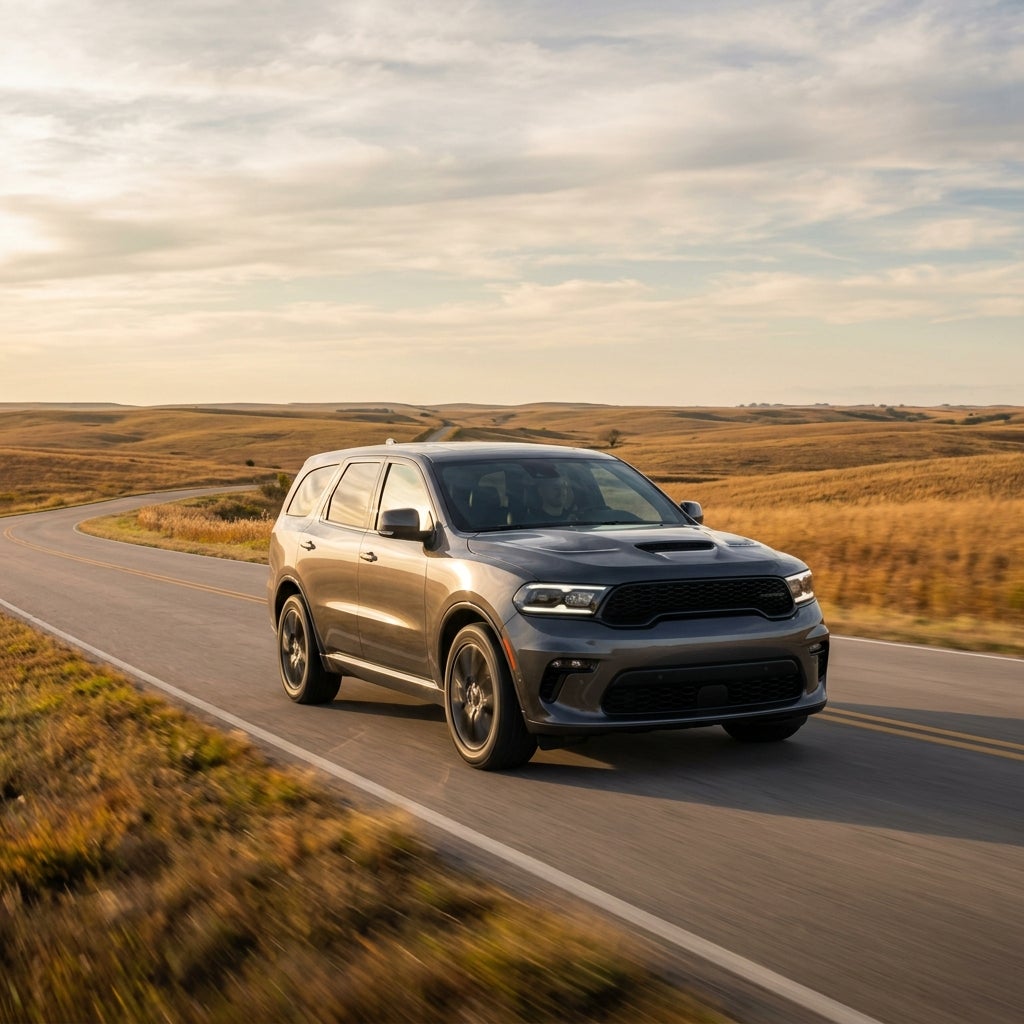
2025 Dodge Durango Local Market Evidence in Junction City, KS

2025 Dodge Durango Local Market Evidence in Junction City, KS

2025 Dodge Durango Local Market Evidence in Junction City, KS When evaluating whether there is strong local market evidence for shopping a 2025 Dodge Durango in Junction City, Kansas, the data points overwhelmingly to yes. Central Kansas buyers, particularly across Geary County and neighboring Riley County, consistently prioritize versatile three-row SUVs that blend true muscle-car performance with heavy-duty towing capability and confident all-weather control. The 2025 Dodge Durango fulfills these regional demands better than almost any alternative in the midsize SUV segment. Local market evidence is reflected in three distinct trends: steady incoming inventory allocations at local dealerships like Valor CDJR, exceptional regional resale values for all-wheel-drive three-row vehicles, and specialized lifestyle demand. Families commuting daily between Junction City and Fort Riley or driving into Manhattan require winter-ready traction during severe Kansas weather spells. Concurrently, outdoor enthusiasts pulling boats to Milford Lake require serious trailering stamina. Whether comparing the efficient SXT or the muscular R/T trim, the 2025 Durango stands out as a prime investment tailored for life in the Kansas River Valley. To explore live inventory allocations and test drive a new Durango in person, Get Directions to Valor CDJR today. Durango Metric 2025 Dodge Durango SXT 2025 Dodge Durango R/T Engine Option 3.6L Pentastar V6 5.7L HEMI V8 Horsepower & Torque 295 hp / 260 lb-ft 360 hp / 390 lb-ft Max Towing Capacity Up to 6,200 lbs Up to 8,700 lbs Drive System Available AWD Performance AWD Standard/Available Infotainment Uconnect 5 w/ 8.4-inch or 10.1-inch Uconnect 5 w/ 10.1-inch Display Browse New Durango Inventory Key Local Factors Driving 2025 Durango Demand Near Fort Riley and Riley County Living and working around Junction City involves unique geographic and demographic considerations. A major engine of local demand is the active military community at Fort Riley. Service members and military families frequently undergo Permanent Change of Station (PCS) moves, requiring versatile vehicles capable of cross-country highway travel, carrying full family loads, and towing trailers without breaking a sweat. Furthermore, winter commuting along Interstate 70 between Junction City, Ogden, and Manhattan can quickly turn hazardous during sudden plains snowstorms and freezing rain. The Dodge Durango's available all-wheel-drive system continuously monitors road conditions, automatically distributing power between front and rear axles to maintain stability on icy overpasses. Beyond winter safety, the rolling topography of the Flint Hills demands responsive power. Negotiating steep grades along Highway 77 or carrying heavy weekend cargo requires an engine and chassis tuned for endurance. The Durango delivers muscle-car heritage in a utility framework, explaining why it remains a top choice throughout Geary County. What Are the Main Performance Differences Between the 2025 Dodge Durango SXT and R/T? 2025 Dodge Durango SXT: 3.6L Pentastar V6 Engine The entry point to the Durango lineup features the proven 3.6-liter Pentastar V6 engine paired with a smooth TorqueFlite 8-speed automatic transmission. Generating 295 horsepower and 260 lb-ft of torque, the SXT provides energetic acceleration for everyday highway merging and town driving. It offers a strong maximum towing capacity of up to 6,200 pounds when properly equipped, making it ideal for lighter campers, small utility trailers, and family watercraft. 2025 Dodge Durango R/T: 5.7L HEMI V8 Engine Stepping up to the Durango R/T unleashes legendary V8 rumble. Powered by the 5.7-liter HEMI V8, the R/T delivers 360 horsepower and 390 lb-ft of torque. Featuring performance transmission calibration, sport-tuned steering, and an available active exhaust, the R/T accelerates with authority. More importantly for local towers, maximum towing capacity increases to an impressive 8,700 pounds, effortlessly handling heavy travel trailers and larger ski boats. Performance Feature Durango SXT (3.6L V6) Durango R/T (5.7L V8) Horsepower 295 hp @ 6,400 rpm 360 hp @ 5,150 rpm Torque 260 lb-ft @ 4,000 rpm 390 lb-ft @ 4,250 rpm Transmission 8-Speed Automatic 8-Speed Performance Auto Standard Towing 6,200 lbs 7,400 lbs (Up to 8,700 lbs w/ Tow N Go) Exhaust Note Quiet / Smooth Signature Performance Active Exhaust How Much More Expensive Is the 2025 Dodge Durango R/T Than the SXT? Trim MSRP Gaps The entry-level Durango SXT offers an accessible starting price point for value-focused families. Stepping up to the R/T typically represents an MSRP increment of roughly $9,000 to $12,000, depending on optional packages like the Tow N Go or Blacktop Package. Standard Equipment Value That price bump brings significant standard upgrades beyond the 5.7L V8 engine. The R/T includes standard Uconnect 5 10.1-inch navigation touchscreen, leather-trimmed sport seating, power liftgate, 20-inch aluminum wheels, and Dodge Performance Pages. Monthly Financing & Trade Offset On a standard 60-month or 72-month finance term, the monthly payment difference usually ranges between $150 and $220. However, utilizing high trade-in valuations at Valor CDJR can significantly offset this monthly gap. Get Pre-Approved Online Standard Features vs Upgrades Across 2025 Durango SXT vs R/T Configurations Uconnect 5 Infotainment The SXT comes standard with an 8.4-inch display, while higher configurations and the R/T boast the crisp 10.1-inch high-definition Uconnect 5 screen. Both systems support wireless Apple CarPlay and Android Auto, dual-phone Bluetooth connectivity, and over-the-air map updates. Seating & Interior Flex The SXT features comfortable 7-passenger seating with a 60/40 fold-flat second row. The R/T unlocks available second-row captain's chairs for effortless pass-through to the third row, combined with heated/ventilated front seats and leather seating surfaces. Safety & Exterior Style Standard driver assistance includes Blind Spot Monitoring and Rear Cross Path Detection. R/T adds Adaptive Cruise Control with Stop, Forward Collision Warning with Active Braking, performance hood scoops, and optional dark exterior accents via the Blacktop Package. Real-World Highway and Flint Hills Fuel Economy for V6 vs V8 Models 3.6L V6 Daily Efficiency For commuters traveling back and forth between Junction City, Fort Riley, and Manhattan on I-70, the 3.6L Pentastar V6 delivers great highway fuel efficiency. Achieving an EPA-estimated rating up to 26 mpg highway in rear-wheel drive or 25 mpg highway with AWD, the V6 maximizes range on long weekly drives while maintaining plenty of passing power. 5.7L V8 Fuel Saver MDS Technology While the 5.7L HEMI V8 yields around 22 mpg highway, Dodge engineers integrated clever Fuel Saver Multi-Displacement System (MDS) technology. Under light throttle conditions during steady highway cruising across flat stretches of Geary County, MDS seamlessly deactivates four cylinders to conserve fuel without sacrificing engine responsiveness when accelerating up Flint Hills grades. Trade-In Valuation and Resale Trends in Central Kansas Pre-owned three-row SUVs remain in extremely high demand throughout Central Kansas. Due to constant PCS cycles at Fort Riley and the strong preference for AWD capability among regional buyers, high-quality trade-in vehicles command premium appraisal values. Dodge Durango models historically retain strong resale equity thanks to their muscular styling, durable drivetrains, and versatile towing capacity. At Valor CDJR, our trade valuation experts leverage real-time local market data to provide top market value for your current sedan, truck, or crossover. Start your appraisal online with our quick Trade In Evaluation tool to see how much equity you can apply toward your new 2025 Dodge Durango. Value Your Trade-In Now Towing Boats, Campers, and Trailers Around Milford Lake and the Kansas River Valley Milford Lake—the largest body of water in Kansas—is located right in Junction City's backyard. Weekend outdoor recreation is a way of life for local residents, whether hauling ski boats, pontoon craft, camper trailers, or jet skis to local boat ramps. The Durango standard trailer sway control tech automatically detects trailer movement and applies targeted brake pressure to maintain rock-solid tracking. While the SXT model's 6,200-pound limit easily handles personal watercraft and midsize pop-up campers, the R/T model's 8,700-pound maximum rating with the Tow N Go package equips you to tow full-size double-axle travel trailers and heavy speedboats without strain. Total Cost of Ownership: Maintenance, Insurance, and Service Support Routine Maintenance Both V6 and V8 Durango engines feature proven Mopar engineering designed for long-term reliability. Quick oil changes, tire rotations, and multi-point inspections can be handled rapidly at our dedicated Express Lane service center in Junction City without needing an advance appointment. Insurance Considerations Insurance rates for the Durango SXT typically reflect standard midsize family SUV insurance brackets. The R/T trim may carry slightly higher premiums due to its V8 performance package, though advanced standard driver safety suites help keep policy rates competitive. Certified Service & Parts Valor CDJR maintains a comprehensive stock of OEM Mopar components via our local Parts Department. You can easily schedule scheduled maintenance through our online Service Scheduler or Call us at (785) 238-5114. How to Compare 2025 Dodge Durango Inventory in Junction City and Manhattan Shopping for a 2025 Durango across Junction City and nearby Manhattan is straightforward when working with Valor CDJR. Rather than driving between multiple dealer lots, buyers can filter online inventory by trim, engine, exterior paint color, and trailering packages. Browse our New Vehicle Listings or explore pre-owned models in our Used Vehicle Listings. If you have specific preferences for paint shades or interior seating configurations, our sales team can track incoming factory allocations or assist with a direct custom order from Dodge. Buyer Decision Framework: Choosing the Right 2025 Durango Trim for Your Needs Step 1: Determine Towing Capacity Needs If your recreational towing involves lightweight trailers or boats under 6,000 lbs, the SXT V6 is fully capable. If pulling heavy travel trailers over 7,000 lbs, select the R/T with the 5.7L V8. Step 2: Calculate Commute & Fuel Priorities High-mileage daily commuters driving I-70 between Junction City and Manhattan will appreciate the Pentastar V6's 25+ highway mpg. Weekend cruisers and performance fans will prefer the HEMI V8 sound. Step 3: Evaluate Interior Tech & Budget Compare monthly finance targets against desired tech features like the 10.1-inch Uconnect 5 display or captain's chairs. Use our online financing tools to lock in rates. Apply for Durango Financing Test Drive the 2025 Dodge Durango at Valor CDJR in Junction City Ready to experience the 2025 Dodge Durango for yourself? Visit Valor CDJR at 1825 Goldenbelt Blvd in Junction City, KS. Our knowledgeable sales staff is ready to help you compare SXT and R/T models side-by-side, answer questions about military incentive programs, and walk you through competitive financing options. Whether you are stopping by after work or visiting from nearby Manhattan or Fort Riley, we welcome you to schedule a relaxed, no-pressure test drive today. Take the wheel and discover why the Durango remains the premier 3-row SUV for Kansas drivers. Schedule Your Test Drive Today