




Blog

All Buying Guides Maintenance & Service New Vehicle Reviews Technology & Innovation Financing & Insurance Model Comparisons Safety Features Used Vehicle Guides New Vehicle Inventory Valor CDJR Towing & Hauling Safety Parts & Accessories Seasonal Vehicle Care Trade in Advice Vehicle Financing & Trade-In Tips Family & Lifestyle Vehicles Commercial Truck Reviews Dealership Sales Strategies KS Community Heavy-Duty Truck Features Junction City Military & Veteran Benefits Off-Road & Adventure Vehicles Vehicle Ownership Care Automotive Repair Buying Guides & Dealership Services Financing & Trade-In Options Service Commercial Fleet Management Commercial Vehicles Hybrid & Electric Vehicles Military Vehicle Buying Guides Parts Performance & Powertrain Towing & Hauling Vehicle Features & Accessories Vehicle Safety & Compliance Automotive News Automotive Recalls Dealership Inventory Highlights Dealership Visit Preparation Fleet & Upfit Buying Guides Inventory & Pricing Insights Jeep Lifestyle & Accessories Military & Community Car Buying Programs Repair & Diagnostics Vehicle Maintenance & Preparation Vehicle Pricing Strategies Vehicle Trade-In Tips Warranty & Coverage Brake System Care Car Buying Tips Car Purchase Tips Commercial Vehicle Comparisons Dealer Profiles & Interviews Dealership Offers & Promotions Dealership Service Experience Diesel Engine Technology Financing & Insurance for Military Families Genuine Parts & Accessories Local Automotive Events OEM Parts & Warranty Coverage Pre-Owned Vehicle Sales Road Trip & Travel Tips Special Offers & Promotions Tailgating & Outdoor Adventures Tailgating & Outdoor Recreation Towing & Roadside Assistance Vehicle Maintenance & Winter Care Vehicle Registration & Legal Advice for Military Personnel Vehicle Repair & Diagnostics Vehicle Sales Experience Warranty & Protection Plans Agricultural Vehicles & Equipment Certified Pre-Owned Programs Community & Military Support Initiatives Dealership Events Engine & Performance Insights Lease & Lease-End Information Leasing Options Luxury SUVs Out-of-State Purchasing Guides Part & Warranty Services Parts & Repair Reimbursement Recall & Warranty Repairs Seasonal Sales Events Technology & Innovation in Vehicle Service Tire & Traction Guides Vehicle Incentives & Promotions Vehicle Technology & Features Weekend Dealership Events and Services Winter Driving Tips
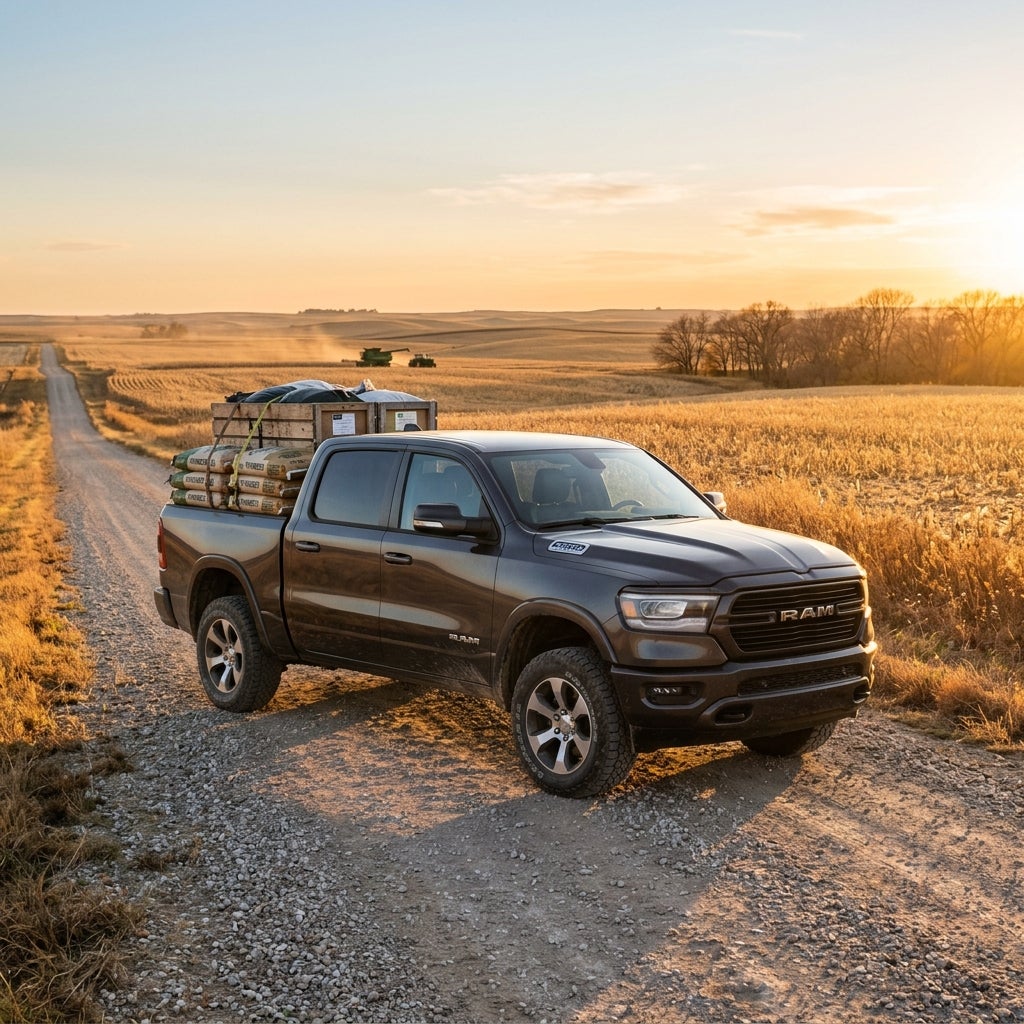
What I Tell Local Contractors About Managing and Operating a RAM 4500 Chassis Cab
in Commercial Truck Reviews

What I Tell Local Contractors About Managing and Operating a RAM 4500 Chassis Cab

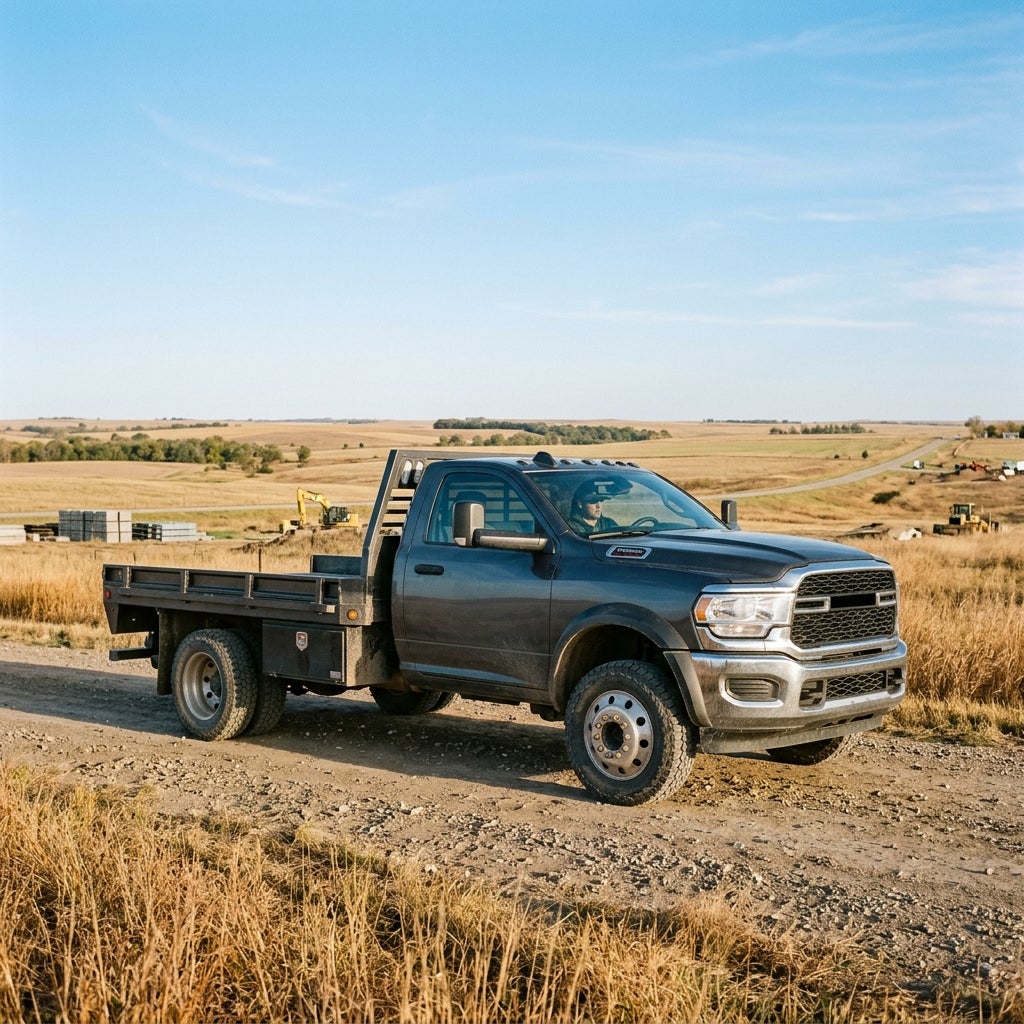
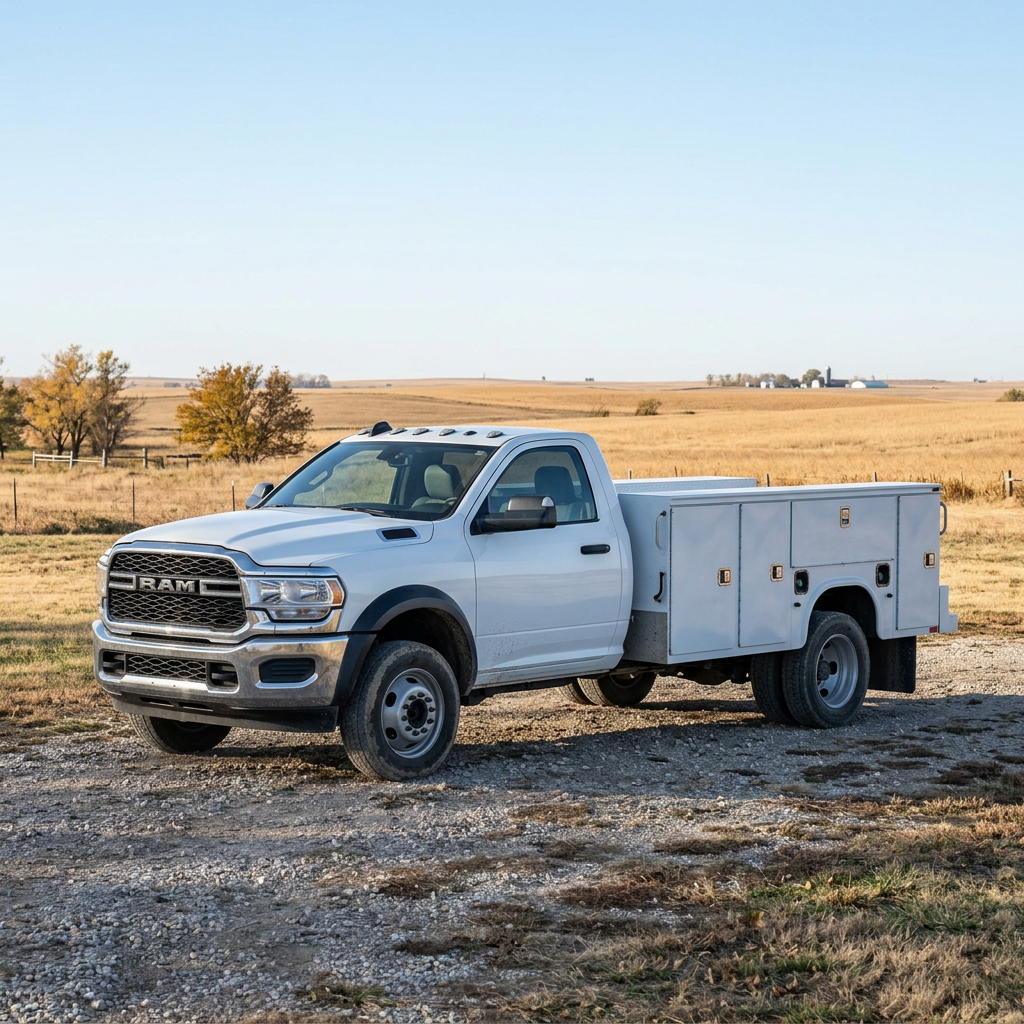
What I Tell Local Contractors About Managing and Operating a RAM 4500 Chassis Cab ## What Should Every Commercial Owner Know About Operating the Ram 4500 Chassis Cab? Operating a Ram 4500 Chassis Cab in Class 4 commercial service gives business owners a 16,500-pound GVWR workhorse that standard Class C licensed drivers can operate legally without a Commercial Driver's License (CDL), provided the combination trailer rating stays under 10,000 pounds. Driven by an available 6.7L Cummins turbo-diesel delivering 800 lb-ft of torque, this chassis pairs up to 28,550 pounds of diesel towing capacity with heavy-duty 50,000-PSI steel C-channel frame rails designed for severe-duty upfitting. When local fleet managers come into our Junction City showroom for a consultation, the question I hear most often centers on balancing maximum hauling strength with licensing efficiency. The single-vehicle CDL mandate threshold established by federal regulations sits at 26,001 pounds Gross Vehicle Weight Rating (GVWR). Because the Ram 4500 Chassis Cab sits comfortably beneath that boundary at 16,500 pounds GVWR, business owners can assign regular crew members to drive heavy equipment, transport materials, and maneuver vocational bodies. That saves significant payroll overhead and avoids complex commercial driver compliance tracking. However, total combination weight requires careful mathematical tracking. Under Federal Motor Carrier Safety Administration rules, a Class A CDL becomes mandatory if the combined rating of the truck and trailer exceeds 26,001 pounds Gross Combined Weight Rating (GCWR) and the trailer itself carries a manufacturer GVWR tag over 10,000 pounds. For instance, pairing a 16,500-pound GVWR Ram 4500 with a 12,000-pound equipment trailer produces a combined rating of 28,500 pounds, requiring a CDL driver. Choosing a trailer rated at or below 9,500 pounds keeps total GCWR at 26,000 pounds or less, preserving non-CDL status for daily operations. If you need help calculating your combination weight before buying, you can always give our commercial team a call to review your fleet requirements. Table of Contents What Is the Gross Vehicle Weight Rating (GVWR) of a Ram 4500 Chassis Cab? What Standard Features Are Included on the Base Ram 4500 Tradesman Trim? How Does Ram 4500 Towing Capacity and PTO Capability Compare to the Ford F-450? What Tax Incentives and Deductions Apply to a Commercial Ram 4500 Purchase? What Are the Fluid Capacities and Fuse Box Locations on the Ram 4500 Cummins Diesel? Where Can Owners Access the Ram 4500 Owner's Guide and Commercial Support? What Is the Gross Vehicle Weight Rating (GVWR) of a Ram 4500 Chassis Cab? Class 4 commercial vehicles like the Ram 4500 Chassis Cab are defined by a Gross Vehicle Weight Rating ( GVWR) of up to 16,500 pounds, making it ideal for medium-duty applications. Depending on engine selection and cab layout, maximum chassis payload ranges up to 9,390 pounds with the 6.4L HEMI V8 gas engine and up to 8,560 pounds with the 6.7L Cummins turbo-diesel. Achieving severe-duty payload ratings requires a heavy-duty structural foundation. The Ram 4500 is engineered with flat, high-strength 50,000-PSI steel C-channel rear frame rails utilizing industry-standard 34-inch spacing. Unlike curved pickup frames, this flat structural layout provides a clean mounting plane that accepts aftermarket bodies without requiring custom frame brackets. Key component ratings supporting severe-duty payloads include: Heavy-duty front axle rated up to 7,000 pounds GAWR to support heavy front-mounted equipment or snowplows Commercial rear axle assembly supporting up to 12,000 pounds rear GAWR to absorb heavy vertical pin weights from gooseneck trailers Commercial-grade 15-inch disc brake assemblies engineered for repeatable heat dissipation under continuous gross weight conditions Dual rear wheel axle configurations with heavy-duty multi-leaf rear suspension designed to eliminate rear-end squat under capacity loads Navigating rolling Flint Hills grades around Manhattan demands this structural rigidity, especially when pulling high-pinnacle trailers or carrying mounted crane bodies. Contractors evaluating new equipment can explore our complete selection of new Ram chassis cabs or review our dedicated commercial vehicle inventory to compare chassis configurations. For businesses replacing older fleet units, checking our pre-owned commercial truck inventory provides alternative commercial options across various weight classes. What Standard Features Are Included on the Base Ram 4500 Tradesman Trim? The base Ram 4500 Tradesman trim comes factory-equipped with heavy-duty vinyl seating, air conditioning, a Uconnect touchscreen display, dynamic rear camera routing, electronic stability control, and commercial 15-inch disc brake assemblies. Designed specifically for demanding work environments, the interior of the Tradesman trim prioritizes durability and cleanability. Heavy-duty vinyl seats stand up to muddy work boots and sharp tools, while floor coverings allow quick cabin cleanouts after a long day in the field. The dash layout places primary controls within easy reach, allowing drivers to adjust climate settings or operate vehicle functions while wearing work gloves. Standard equipment on the Ram 4500 Tradesman includes: 6.4L HEMI V8 engine delivering 375 horsepower and 429 lb-ft of torque Commercial automatic transmission calibrated for heavy-duty shifting cycles Uconnect infotainment system with smartphone connectivity and clear driver display Dynamic rear camera routing system designed to integrate with custom upfit bodies Heavy-duty 15-inch disc brakes paired with twin-piston calipers for maximum stopping force Electronic stability control with anti-roll technology and traction management Contractors preparing to add a new Tradesman chassis cab to their fleet can evaluate your trade-in online to estimate existing asset values. Keeping current work trucks operating at peak efficiency is equally vital, which is why our service department offers a convenient online service scheduler for routine maintenance and commercial inspections. How Does Ram 4500 Towing Capacity and PTO Capability Compare to the Ford F-450? The Ram 4500 Chassis Cab achieves a maximum diesel towing capacity of up to 28,550 pounds and a Gross Combined Weight Rating ( GCWR) of 37,500 pounds, matching Class 4 rivals while offering superior upfit flexibility through dual-sided Power Take-Off ( PTO) mounting. Under the hood, the 6.7L Cummins turbo-diesel inline-six engine generates 800 lb-ft of torque low in the RPM band. Unlike V8 diesel configurations found in competing trucks like the Ford F-450, the inline-six design utilizes fewer moving parts, larger connecting rod bearings, and a forged steel crankshaft. This produces sustained pulling power when accelerating heavy equipment trailers from a complete stop on unpaved grades. A major commercial advantage for the Ram 4500 is its transmission-integrated Power Take-Off ( PTO) capability. Mated to the heavy-duty AISIN six-speed automatic transmission, the Ram PTO system offers left-side and right-side mounting access. This dual-sided flexibility allows body builders to mount hydraulic pumps on either side of the transmission case, simplifying line routing for dump bodies, utility cranes, and tow booms while avoiding hot exhaust components. Additionally, the factory Vehicle System Interface Module ( VSIM) provides over 70 hardwired circuits to connect aftermarket cab switches, safety interlocks, and engine speed controls seamlessly. When custom upfits require specialized maintenance, replacement parts, or electrical harnesses, our commercial parts department supplies genuine OEM components engineered for heavy-duty Ram chassis platforms. What Tax Incentives and Deductions Apply to a Commercial Ram 4500 Purchase? IRS Section 179 tax deductions provide a significant financial incentive for businesses buying vehicles like the Ram 4500 Chassis Cab, which qualifies due to its GVWR exceeding 6,000 pounds. Under Internal Revenue Code Section 179, vehicles built with a Gross Vehicle Weight Rating over 6,000 pounds qualify for accelerated depreciation treatment. Rather than writing off the chassis asset over several years, eligible commercial operations can deduct the full vehicle purchase cost during the tax year it is acquired and placed into service. Business owners should consult their CPA or tax professional to confirm specific eligibility details for their company. Regarding federal electric vehicle tax credits, buyers should note that historic federal clean vehicle credits (such as IRC §30D, §25E, and §45W) were terminated under Public Law 119-21 for vehicles acquired after September 30, 2025. Present-day commercial purchases of heavy-duty gas or diesel chassis cabs rely primarily on Section 179 and standard commercial depreciation schedules for tax optimization. To streamline commercial acquisitions, enrolled business owners can also access Ram BusinessLink benefits, including: Priority commercial service queuing to minimize vehicle downtime on active job sites Dedicated commercial account specialists familiar with vocational vehicle specifications Commercial lines of credit that keep business vehicle financing separate from personal credit Terminal Rental Adjustment Clause (TRAC) leasing options structured for business cash flow Business owners interested in expanding their commercial vehicle fleet can get pre-approved for commercial financing online to review available rates and payment structures before visiting the showroom. What Are the Fluid Capacities and Fuse Box Locations on the Ram 4500 Cummins Diesel? The 6.7L Cummins turbo-diesel engine in the Ram 4500 takes 12 quarts of engine oil with a filter change and holds roughly 6 gallons of coolant in its heavy-duty cooling system. Main electrical fuses are housed in the Power Distribution Center in the engine compartment beside the battery, while an auxiliary interior fuse panel is positioned under the driver-side instrument panel. Proper fluid maintenance and electrical circuit awareness ensure long-term reliability for heavy-duty work trucks. For routine engine servicing on the 6.7L Cummins turbo-diesel, fluid capacities include: Engine Oil: 12 quarts (11.4 liters) with oil filter replacement Engine Cooling System: Approximately 6 gallons (21.5 liters) total capacity Fuel Tank: Standard 52-gallon rear frame-mounted tank (optional 22-gallon auxiliary tank available) Diesel Exhaust Fluid (DEF) Tank: 9 gallons total capacity Locating electrical fuses quickly prevents unnecessary downtime during field operations. The Ram 4500 features a main Power Distribution Center (PDC) located under the hood on the driver's side near the battery tray. This panel contains high-amp fuses and relays for engine functions, braking systems, and primary lighting. A secondary interior fuse block sits beneath the driver-side instrument panel, housing lower-amp fuses for cabin electronics, auxiliary switches, and infotainment displays. When routine oil service is completed, resetting the oil life indicator on the instrument cluster takes only a few seconds: Turn the ignition switch to the ON/RUN position without starting the engine. Use the steering wheel directional controls to navigate to the Vehicle Info menu on the digital cluster display. Scroll through the submenu to locate the Oil Life screen. Press and hold the OK button on the steering wheel controls until the oil life percentage resets to 100%. Where Can Owners Access the Ram 4500 Owner's Guide and Commercial Support? Local owners can access the digital Ram 4500 Owner's Guide anytime through the official Ram owner portal website or the Uconnect mobile application, while in-person assistance for printed manuals, fleet support, and 2027 ordering is available directly at our dealership showroom. Digital owner's manuals provide searchable PDF documentation, operational guides, maintenance schedules, and indicator light explanations right on your smartphone or tablet. Through the Uconnect app, operators can look up fuse box diagrams, towing procedures, and fluid specifications instantly on the job site. For fleet managers who prefer physical documentation, printed owner's manuals and commercial supplement guides can be ordered directly through our dealership. Whether you need technical upfitting guidance, combination weight verification, or assistance custom-ordering a 2027 Ram 4500 Chassis Cab, our commercial sales and service team is here to assist. You can stop by our dealership located at 1825 Goldenbelt Blvd or call our sales desk at (785) 238-5114 to connect with a commercial specialist today. © 2026 Valor CDJR. All rights reserved.

Read More
Why Was the Jeep Patriot Discontinued After 2017? The Bottom Line Strategy

Why Was the Jeep Patriot Discontinued After 2017? The Bottom Line Strategy

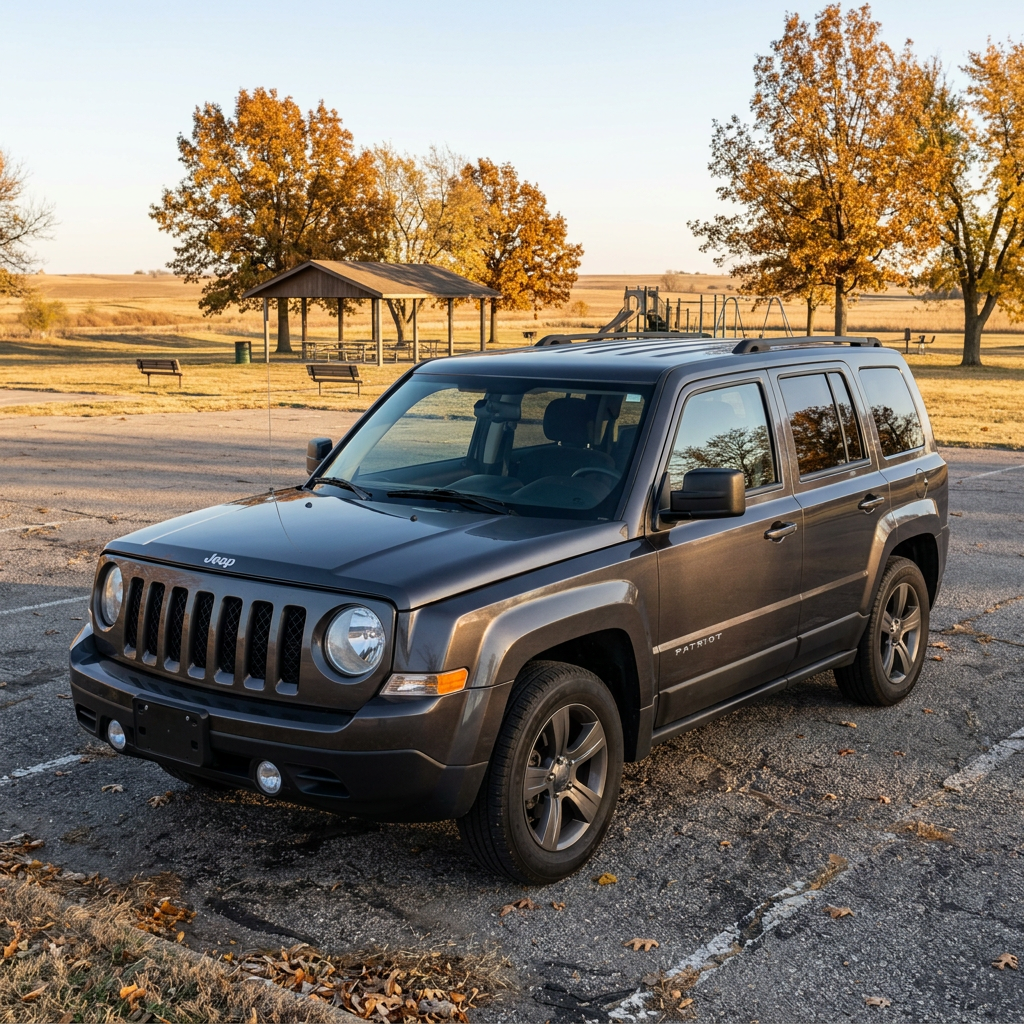
Why Was the Jeep Patriot Discontinued After 2017? The Bottom Line Strategy Fiat Chrysler Automobiles (FCA) officially discontinued the Jeep Patriot following the 2017 model year as part of a comprehensive global vehicle consolidation strategy. At its core, the decision was driven by three primary operational pillars: eliminating redundancy within the compact SUV segment, retiring the aging Mitsubishi-co-developed MK architecture, and aligning the Jeep lineup with increasingly stringent global crash safety standards. For a decade, the Jeep Patriot and its mechanical twin, the first-generation Jeep Compass, occupied virtually the same showroom footprint. Both compact crossovers shared identical wheelbases, engines, transmissions, and interior frameworks. While the Patriot appealed to traditionalists with its classic, boxy Cherokee-inspired profile and ultra-accessible price point, having two distinct nameplates competing for the exact same entry-level buyer split marketing dollars and engineering focus. By retiring both the Patriot and the first-generation Compass after 2017, FCA was able to launch a single, completely re-engineered global Jeep Compass built on the advanced Small Wide 4x4 platform. This move streamlined manufacturing efficiency, improved structural integrity across the board, and allowed Jeep to deliver a far more refined compact SUV to drivers throughout Junction City, Fort Riley, and Manhattan. Platform Overhaul: How FCA Streamlined the Patriot and Compass Lineup The foundation of the 2017 Jeep Patriot traced back to the mid-2000s MK platform, a joint architecture originally co-developed by Chrysler and Mitsubishi Motors. Also shared with the Dodge Caliber, the MK chassis served its purpose by delivering affordable unit-body construction, but by 2017 it had reached the absolute limits of its engineering lifespan. As crash testing protocols evolved—most notably the Insurance Institute for Highway Safety (IIHS) small overlap front crash test—the MK platform required substantial structural overhaul to maintain top tier safety ratings. Rather than pouring capital into redesigning two separate legacy platforms, FCA transitioned to the modular Small Wide 4x4 architecture (shared with the Jeep Renegade and modern Compass). The new Small Wide architecture yielded dramatic improvements in torsional rigidity, noise, vibration, and harshness (NVH) suppression, and ride comfort. Drivers stepping out of a 2017 Patriot and into a modern platform immediately notice reduced wind noise on highway stretches along I-70 and enhanced cabin acoustics. What Was the Original Starting MSRP of a 2017 Jeep Patriot? One of the main reasons the 2017 Jeep Patriot retains a passionate fanbase is its historical positioning as America's most affordable 4x4 SUV. Below is a breakdown of the original starting trim tiers that defined its market appeal. Sport Trim With an initial base MSRP starting around $18,040 for front-wheel drive, the Patriot Sport was built for value-focused buyers. Standard equipment included 16-inch steel wheels, fog lamps, roof side rails, tilt steering, and cloth bucket seats, offering functional utility without extra frills. Latitude Trim Stepping up to the Latitude trim unlocked essential everyday conveniences like power windows, power door locks, heated front seats, keyless entry, air conditioning, 17-inch aluminum wheels, and a leather-wrapped steering wheel, delivering maximum value for commuters. High Altitude Trim The High Altitude edition brought premium touches to the compact Patriot, including leather-trimmed seats, a power driver's seat, a power sunroof, bright chrome exterior fascia accents, and unique 17-inch polished aluminum wheels. Trim Level Est. Original MSRP (FWD) Standard Engine Key Standard Features Sport $18,040 2.0L World Gas I4 16-inch Steel Wheels, Fog Lamps, Cloth Seats Latitude $22,395 2.4L World Gas I4 Power Lock/Windows, Heated Front Seats, A/C High Altitude $25,740 2.4L World Gas I4 Leather Seating, Power Sunroof, Chrome Trim What 4WD System Makes the 2017 Jeep Patriot Trail Rated? Not every 2017 Jeep Patriot earned the prestigious Trail Rated badge. While standard four-wheel-drive Patriots utilized the Freedom Drive I system—a full-time active electronic system designed primarily for light snow and rain—off-road enthusiasts opted for the specialized Freedom Drive II Off-Road Package. Freedom Drive II transformed the compact crossover into a genuine trail vehicle by pairing the 2.4L engine with a Continuously Variable Transmission with Low Ratio (CVT2L). This setup provided a 19:1 crawl ratio, ideal for managing steep inclines and rocky terrain across the Flint Hills near Riley County. The Freedom Drive II package also added a one-inch factory ride height lift, full-underbody skid plates, front and rear tow hooks, engine oil cooler, all-terrain tires, and water-fording seals capable of crossing up to 19 inches of water. Finding a pre-owned Patriot with FDII is a great win for local budget trail runners. Browse Pre-Owned Inventory 2017 Jeep Patriot vs Gladiator: Comparing Engines, Transmissions, and Capability 2017 Jeep Patriot Powertrain The 2017 Patriot offered two four-cylinder World Gas Engine options: a 2.0L producing 158 horsepower and 141 lb-ft of torque, or a 2.4L delivering 172 horsepower and 165 lb-ft of torque. Transmission options included a 5-speed manual, a Hyundai 6-speed automatic, or the Jatco CVT. Max towing capacity was capped at 2,000 lbs with the Prep Package. Jeep Gladiator Powertrain By contrast, the Jeep Gladiator comes standard with a robust 3.6L Pentastar V6 generating 285 horsepower and 260 lb-ft of torque, mated to a 6-speed manual or an 8-speed TorqueFlite automatic. Built with heavy-duty solid Dana 44 axles front and rear, the Gladiator boasts a towing capacity of up to 7,700 lbs and a payload rating up to 1,725 lbs. Specification 2017 Jeep Patriot (2.4L) Jeep Gladiator (3.6L V6) Horsepower 172 hp 285 hp 盛り Torque 165 lb-ft 260 lb-ft Max Towing Up to 2,000 lbs Up to 7,700 lbs Drivetrain Type FWD / Freedom Drive I & II AWD Command-Trac / Rock-Trac 4WD Is a Jeep Gladiator Practical for Daily Commuting Around Junction City and Manhattan? Commuter Fuel & Ride Despite its mid-size truck chassis, the Gladiator utilizes a five-link coil rear suspension system adapted from the Ram 1500. This provides impressive highway composure during daily drives on I-70 between Fort Riley, Junction City, and Kansas State University. Modern sound insulation and refined top options make the cabin surprisingly quiet for a vehicle with removable doors and roof panels. Open-Air Truck Utility The 5-foot steel bed with available spray-in bedliner and 115V outlet easily handles tailgating gear for K-State football games, camping equipment, or hardware store runs, offering dual-purpose versatility that small crossovers simply cannot match. Why Would a Vehicle Buyer Choose a 2017 Jeep Patriot Over a Jeep Gladiator? Pre-Owned Value Option While a pre-owned or new Gladiator represents a serious investment in heavy-duty off-road truck capability, a used 2017 Jeep Patriot occupies an entirely different budget tier. For military personnel arriving at Fort Riley or college students needing reliable 4WD transportation contact the dealership for current pricing, a late-model Patriot offers unmatched entry value. Compact Size & Fuel Efficiency The Patriot's compact length (173.8 inches vs. Gladiator's 218 inches) makes it effortless to park in tight apartment lots, downtown Manhattan parking structures, or crowded driveways. Furthermore, its lighter curb weight translates to lower routine fuel consumption during short city trips. Is a Jeep Gladiator Significantly More Expensive to Maintain Than a 2017 Jeep Patriot? When evaluating long-term ownership costs, physical vehicle size and mechanical complexity play major roles. The 2017 Jeep Patriot is a lightweight compact crossover utilizing standard passenger vehicle components, which generally means lower costs for routine wear items like replacement tires, brake pads, and rotors. The Jeep Gladiator, being a body-on-frame truck equipped with heavy-duty solid axles, transfer cases, and optional 33-inch or 35-inch all-terrain tires, requires larger fluid capacities (e.g., differential fluid service for front and rear Dana 44 axles) and higher-capacity brake hardware. However, the Gladiator's Pentastar V6 and 8-speed transmission have proven remarkably durable over long service intervals. Regardless of which Jeep model you drive, maintaining regular oil changes, tire rotations, and fluid flushes is easy at Valor CDJR. You can quick-schedule service through our Express Lane or book an appointment online with our certified technicians at our Service Scheduler. Schedule Certified Service Winter Weather Traction in Kansas: Patriot Freedom Drive vs. Gladiator Command-Trac Freedom Drive I (AWD) The Patriot's Freedom Drive I operates as an automatic full-time system. On icy paved roads around Junction City, it continuously adjusts torque between front and rear wheels without driver intervention, providing smooth, predictable slick-road traction. Command-Trac (Part-Time 4WD) Standard on Gladiator, Command-Trac allows drivers to manually lock the front and rear axles into a 50/50 split (4H mode). This provides ultimate traction when pushing through heavy Kansas snowdrifts or unplowed backroads. Selec-Trac (Full-Time 4WD) Available on select Gladiator trims, Selec-Trac adds a full-time 4WD mode that can remain engaged constantly on mixed surfaces—offering the seamless automatic operation of a Patriot with truck-grade mechanical muscle. Trade-In Value and Used Market Demand for 2017 Jeep Patriots in Geary County Because the 2017 Patriot was the final model year of its generation, well-maintained units remain in high demand throughout Geary County and surrounding areas. Reliable 4WD vehicles priced affordably sell rapidly to military personnel at Fort Riley and local students needing dependable winter transport. If you currently own a 2017 Patriot, its sustained market popularity means you likely hold significant trade-in equity. You can evaluate your vehicle's current market value instantly using our online Trade In Evaluation tool before stepping into a newer SUV or truck. Our trade team at Valor CDJR provides competitive trade-in offers for clean pre-owned Patriots, making your upgrade to a newer Compass, Cherokee, or Gladiator smooth and affordable. Upgrading From a Discontinued Patriot: Modern Tech and Towing Alternatives Modern Tech Upgrades Drivers transitioning out of a 2017 Patriot will enjoy massive technology upgrades in newer models. Modern Jeep Compass and Cherokee options feature Uconnect touchscreens with Apple CarPlay, Android Auto, digital driver displays, and advanced safety tech like Adaptive Cruise Control and Lane Keep Assist. Explore options in our Used Vehicle Listings. Expanded Towing & Utility If your lifestyle demands hauling boats, campers, or equipment trailers across Kansas, stepping up to a Gladiator or Grand Cherokee expands your towing limits from 2,000 lbs up to 7,700 lbs. You can start your upgrade process online by visiting Get Pre-Approved. Get Pre-Approved Online Find Your Next Capable Jeep Model at Valor CDJR in Junction City, KS Whether you are seeking a quality pre-owned 2017 Jeep Patriot, a refined modern Jeep Compass, or the rugged open-air capability of a Jeep Gladiator, Valor CDJR in Junction City is your trusted local resource. Our knowledgeable team serves drivers from Fort Riley, Manhattan, Geary County, and beyond with transparent pricing and exceptional customer care. Explore our full range of inventory in our New Vehicle Listings or check out our specialized Commercial Vehicle Inventory. For authentic replacement components and accessories, visit our expert Parts Department. Visit us today at 1825 Goldenbelt Blvd, Junction City, KS 66441. Get Directions to Valor CDJR or Call us at (785) 238-5114 to speak directly with our team. Explore Available Inventory
RAM 4500 Chassis Cab Commercial Guide: An Interview with Valor CDJR's Jace Grabouski

RAM 4500 Chassis Cab Commercial Guide: An Interview with Valor CDJR's Jace Grabouski

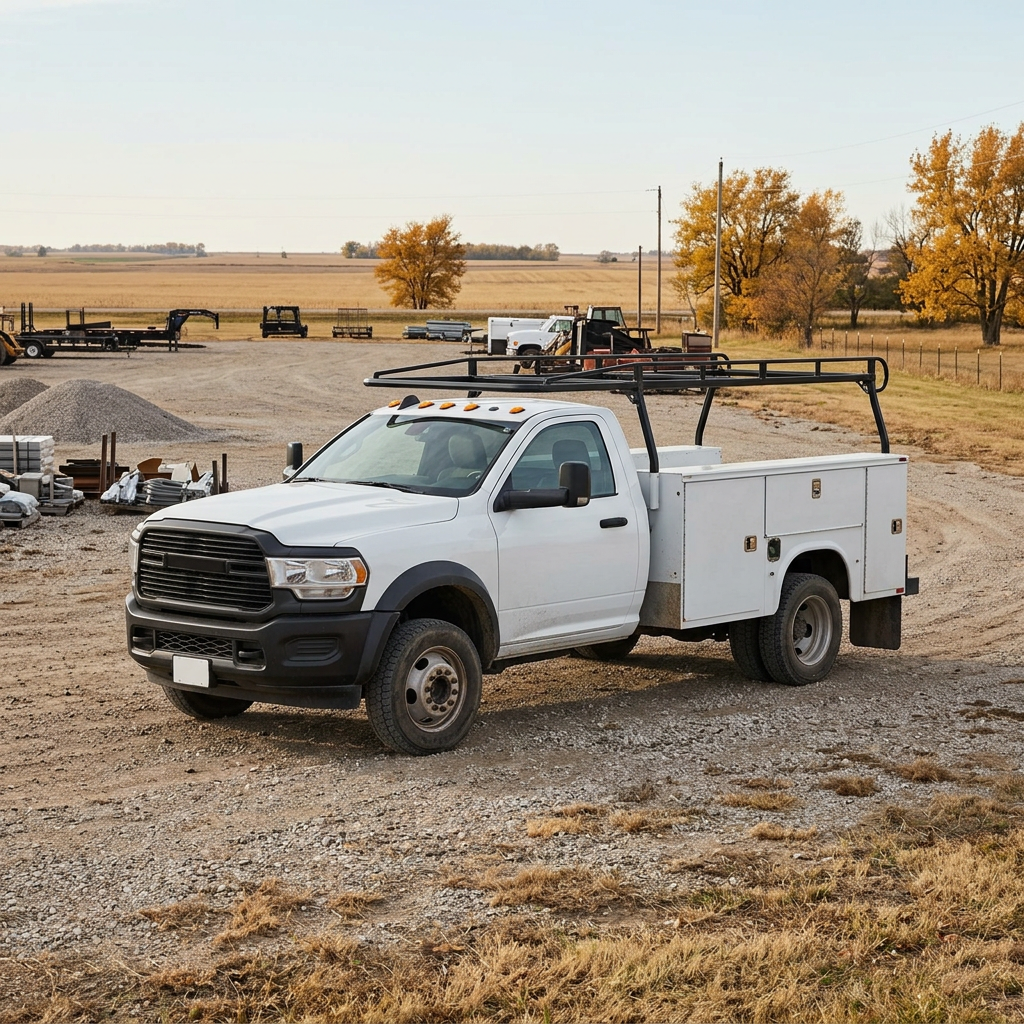
RAM 4500 Chassis Cab Commercial Guide: An Interview with Valor CDJR's Jace Grabouski The fundamental difference between a Ram 3500 Chassis Cab and a Ram 4500 Chassis Cab centers on gross vehicle weight rating, frame strength, and axle capability. While the Ram 3500 tops out at a 12,000-pound GVWR, the Ram 4500 increases commercial capacity to a 16,500-pound GVWR with heavier-duty commercial axles and a thicker steel frame designed for severe upfits. We sit down with Jace Grabouski, General Manager at Valor CDJR, who brings 20 years of commercial vehicle experience to explain how local fleets and independent contractors can maximize performance and operational longevity from the Ram 4500 Chassis Cab. What Is the Difference Between a Ram 3500 and Ram 4500 Chassis Cab? Q: What is the main difference between a Ram 3500 Chassis Cab and a Ram 4500 Chassis Cab? A: The Ram 4500 steps into Class 4 commercial capability with a 16,500-pound GVWR and reinforced frame rails that accommodate heavier dump bodies, crane packages, and utility boxes than a Class 3 Ram 3500 can support. The Ram 3500 maxes out at a 12,000-pound GVWR, making it ideal for lighter service bodies or goose-neck trailers, but businesses hauling heavy equipment or mounting heavy hydraulic tools need the larger axle ratings and wider front track of the Ram 4500. Commercial operators surrounding Junction City routinely deal with mixed terrain and heavy agricultural loads where frame flex and payload limits become daily operational factors. Upgrading to the Ram 4500 gives upfitters C-channel frame steel rated at 50,000 psi yield strength, providing the structural integrity required for persistent heavy-duty applications. Anyone looking to compare chassis configurations in person can drop by our showroom location at 1825 Goldenbelt Blvd or give our commercial staff a quick call to review axle ratios and cab-to-axle measurements. Table of Contents What Engine and Transmission Options Power the Ram 4500 Chassis Cab? How Does the Ram 4500 Chassis Cab Compare to the Ford F-450 Super Duty? What Auxiliary Switches and Factory Upfitter Options Come on the Ram 4500? Does Operating a Ram 4500 Chassis Cab Require a Commercial Driver's License? How Do You Reset the Oil Life Indicator and Access Digital Manuals on a Ram 4500? How Can Commercial Buyers Test Drive and Secure Financing for a Ram 4500 in Junction City? What Engine and Transmission Options Power the Ram 4500 Chassis Cab? Q: What engine options and transmissions can commercial buyers get in the Ram 4500 Chassis Cab? A: The Ram 4500 comes standard with a commercial-grade 6.4-liter HEMI V8 engine producing 375 horsepower and 429 lb-ft of torque, while buyers seeking maximum continuous torque can choose the available 6.7-liter Cummins turbo-diesel inline-six delivering 360 horsepower and 800 lb-ft of torque. Gasoline models use a heavy-duty eight-speed automatic transmission designed for smooth shift sequencing under load, whereas diesel configurations partner with a heavy-duty AISIN six-speed automatic engineered specifically to manage sustained commercial torque demands. Choosing between gas and diesel engines generally comes down to daily duty cycles and annual mileage requirements. The 6.4-liter HEMI V8 provides a lower initial capital expenditure and excellent performance for lower-mileage work trucks, supporting up to 20,400 pounds of maximum towing and a 28,500-pound maximum GCWR. Businesses running long-distance routes or continuous heavy towing benefit from the 6.7-liter Cummins turbo-diesel, which increases towing capacity up to 28,550 pounds of maximum towing and raises the GCWR to 37,500 pounds. Shoppers comparing overall fleet costs can also explore our pre-owned commercial truck inventory to view available powertrain setups. How Does the Ram 4500 Chassis Cab Compare to the Ford F-450 Super Duty? Q: How does the Ram 4500 Chassis Cab stack up against the Ford F-450 Super Duty on real jobsites? A: While the Ford F-450 Super Duty chassis offers strong horsepower numbers from its diesel engine options, the Ram 4500 offers PTO versatility, heavier commercial rear axle capabilities, and lower instrument panel upfitter controls. The Ram chassis utilizes a flat frame-rail design behind the cab with standardized rivet-less top flanges, making secondary body mounting significantly faster and less costly for commercial upfitters. "The Ram 4500 flat frame-rail structure simplifies body installation so contractors spend less time in the upfit shop and more time on the job." Durability on harsh job sites relies on how effectively a truck transfers engine output to ground traction under payload. The Ram 4500 features left-side and right-side Power Take-Off capability on its AISIN transmission, allowing operators to power hydraulic pumps for bucket lifts or dump beds with exceptional mechanical efficiency. Fleet managers evaluating their current fleet value can evaluate your trade-in vehicle online to see how upgrading to a Ram chassis fits their operational budget. What Auxiliary Switches and Factory Upfitter Options Come on the Ram 4500? Q: What auxiliary switches and upfitter capabilities are built into the factory build of a Ram 4500? A: Ram builds the 4500 with a clean-seal wiring system and five factory-installed auxiliary switches mounted directly on the lower center instrument panel. These switches connect to an integrated upfitter module that offers programmable outputs for momentary, latching, or ignition-switched power, eliminating the need to splice into main harness looms when installing strobe lights, winches, or hydraulic pumps. Having factory-integrated wiring prevents electrical system faults and keeps upfit installations covered under original equipment parameters. Ram provides dedicated fused power feeds and ground points accessible beneath the cab and inside the engine compartment. Business owners preparing for new equipment builds can get pre-approved online before ordering specific upfitter wiring packages to streamline fleet acquisition. Does Operating a Ram 4500 Chassis Cab Require a Commercial Driver's License? Q: Jace, what are the CDL requirements for driving or towing with a Ram 4500? A: Operating a standalone Ram 4500 with a standard 16,500-pound GVWR does not require a Commercial Driver's License when driven without a heavy trailer. Federal regulations dictate that a driver only needs a CDL if the single vehicle GVWR exceeds 26,000 pounds, or if the combined weight rating of the vehicle and trailer exceeds 26,000 pounds with the trailer itself rated over 10,000 pounds. Contractors operating around the Flint Hills area near Manhattan frequently ask us about combination weight math when hauling backhoes or heavy skid steers. If you hook a trailer rated at 12,000 pounds behind a Ram 4500 with a 16,500-pound GVWR, the total GCWR reaches 28,500 pounds, which pushes the driver into CDL requirements. Our commercial team helps buyers review total rig ratings across our new commercial lineup and coordinates with our commercial parts department for appropriate hitch systems. How Do You Reset the Oil Life Indicator and Access Digital Manuals on a Ram 4500? Q: What step-by-step process resets the oil life indicator, and where can owners access digital manuals? A: Resetting the oil life monitor on a Ram 4500 requires turning the ignition switch to the ON position without cranking the engine, scrolling through the steering wheel controls to the Vehicle Info screen, selecting Oil Life, and holding the OK button until the percentage resets to 100 percent. Alternatively, drivers can turn the key to the ON position and fully press the accelerator pedal three times within ten seconds before switching the ignition off. Managing fleet maintenance schedules is further simplified through digital access to complete vehicle documentation. Ram owners can view digital manuals directly through the Uconnect mobile application or download complete PDF owner guides from the official Ram owner portal. When routine maintenance intervals arrive, fleet managers can conveniently schedule a service appointment with our factory-trained commercial technicians. How Can Commercial Buyers Test Drive and Secure Financing for a Ram 4500 in Junction City? Q: What should commercial buyers do next to test drive and configure a Ram 4500 Chassis Cab? A: Commercial buyers should start by auditing their payload and body requirements, then schedule a dedicated consultation with our commercial truck team to select the right cab-to-axle dimension, rear axle ratio, and engine package. Experiencing the turning radius, cab comfort, and visibility of the Ram 4500 firsthand gives fleet managers greater confidence before finalizing equipment purchases. Our commercial specialists can help you review current financing options and terms. You can explore our complete inventory of new trucks online, give our team a call to check specific upfit availability, or stop by for an in-person test drive by visiting our facility today. © 2026 Valor CDJR. All rights reserved.
2025 Dodge Durango vs 2025 Chevrolet Traverse: The Bottom-Line SUV Comparison

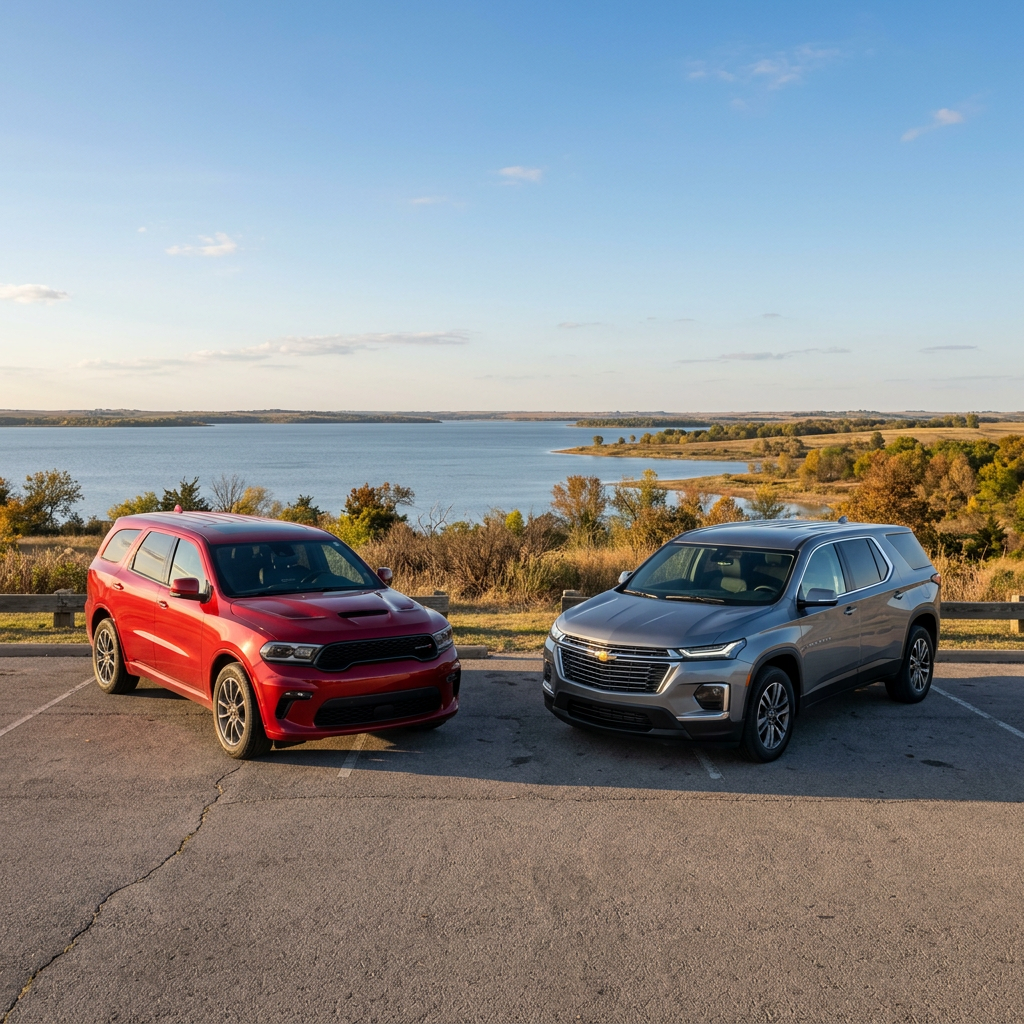
2025 Dodge Durango vs 2025 Chevrolet Traverse: The Bottom-Line SUV Comparison

2025 Dodge Durango vs 2025 Chevrolet Traverse: An SUV Comparison When shopping for a three-row family SUV in Junction City, Fort Riley, or Manhattan, Kansas, buyers quickly discover two distinct philosophies represented by the 2025 Dodge Durango and the 2025 Chevrolet Traverse. The bottom-line takeaway for local drivers comes down to capability versus sheer interior volume. The 2025 Dodge Durango stands tall as a muscle-infused, rear-wheel-drive-based SUV designed for maximum towing capacity, aggressive acceleration, and unyielding mechanical durability. On the other hand, the 2025 Chevrolet Traverse focuses purely on maximum passenger seating density and expansive cargo cubics utilizing a turbocharged four-cylinder setup. For active Kansas families, military personnel at Fort Riley needing to haul heavy trailers across the state, and adventure seekers frequenting Milford Lake, the Dodge Durango offers an unmatched blend of muscle and utility. With available V8 powertrains and a maximum towing capacity of up to 8,700 pounds, the Durango is built to pull boats, campers, and heavy equipment with absolute confidence—specs where the Traverse's 5,000-pound maximum rating simply falls short. How Do the 2025 Durango and Traverse Compare on Starting Price and Towing Value? Evaluating the baseline entry prices of the 2025 Dodge Durango and 2025 Chevrolet Traverse reveals key structural differences in value packaging. While baseline MSRP numbers sit in a competitive window starting around the low-to-mid $40,000 range, the performance-per-dollar ratio favors the Dodge Durango for driver-focused utility. The standard Durango trim equips a robust 3.6-liter Pentastar V6 engine mated to a proven 8-speed automatic transmission, offering raw engineering muscle and standard rear-wheel drive architecture. By contrast, Chevrolet equips the 2025 Traverse exclusively with a smaller displacement 2.5-liter turbocharged 4-cylinder engine across all trim levels. While entry pricing for the Traverse appears attractive on surface spec sheets, factorizing long-term return on investment (ROI) reveals the Durango's superior value retention—especially when factorizing heavy-duty towing demands and powertrain longevity in demanding Kansas weather conditions. Value & Specs Metric 2025 Dodge Durango 2025 Chevrolet Traverse Standard Base Powertrain 3.6L Pentastar V6 (295 hp) 2.5L Turbocharged I4 (328 hp) Available Engines 5.7L HEMI V8 / 6.4L SRT V8 Single 4-Cylinder Option Only Base Towing Capacity 6,200 lbs 3,500 lbs (5,000 lbs max package) Maximum Towing Capacity 8,700 lbs 5,000 lbs Standard Drive Layout Rear-Wheel Drive (RWD / AWD) Front-Wheel Drive (FWD / AWD) What Engine Options Are Available in the 2025 Dodge Durango vs the 2025 Chevrolet Traverse? Engine variety is where the 2025 Dodge Durango dramatically distances itself from the Chevrolet Traverse. Dodge understands that SUV buyers have vastly different demands, offering a versatile lineup of engines. The standard 3.6L Pentastar V6 pumps out 295 horsepower with proven reliability. For drivers craving classic American muscle and high-load confidence, the legendary 5.7L HEMI V8 steps up with 360 horsepower and 390 lb-ft of torque. For ultimate performance enthusiasts, the Durango SRT models feature high-output V8 options delivering breath-taking highway acceleration. In stark contrast, Chevrolet has eliminated all V6 powerplants from the 2025 Traverse, forcing buyers into a single 2.5-liter turbocharged inline-4 engine. While this turbo-four produces competitive numbers on paper (328 hp), smaller forced-induction engines often work harder and rev higher under heavy loads, highway merging, or steep incline pulls. Merging onto I-70 between Junction City and Manhattan with a fully loaded cabin and a trailer in tow highlights the effortless torque delivery of Dodge's naturally aspirated V6 and V8 engines. How Do the Towing Capabilities of the 2025 Dodge Durango Compare to the 2025 Chevrolet Traverse? Tow Ratings The 2025 Dodge Durango rules the three-row SUV class with a massive maximum towing capacity of up to 8,700 lbs when properly equipped with the HEMI V8 or SRT powertrains. Even the entry-level Pentastar V6 Durango pulls up to 6,200 lbs standard, effortlessly outpacing the Chevrolet Traverse's hard ceiling. Traverse Towing Limits The 2025 Chevrolet Traverse tops out at a maximum tow rating of 5,000 lbs only when spec'd with optional trailering equipment. Without that package, baseline Traverse models are capped at just 3,500 lbs, severely limiting what you can pull during weekend getaways or work trips. Real-World Kansas Utility Whether launching a speed boat at Milford Lake State Park, towing double-axle camper trailers through the rolling Flint Hills, or moving heavy equipment across Riley County, the Durango provides the extra thermal cooling and chassis backbone required for severe duty. Explore Towing-Ready Durango Inventory How Does Interior Cargo Space Compare Between the 2025 Dodge Durango and 2025 Chevrolet Traverse? Interior space allocation reflects the underlying priorities of both vehicles. The 2025 Chevrolet Traverse features a boxier rear design that delivers maximum cubic cargo volume (up to 98 cubic feet with rear rows folded flat). It is engineered primarily as a high-density passenger mover, seating up to eight in select configurations. Conversely, the 2025 Dodge Durango optimizes interior dimensions around passenger comfort, sport seating ergonomics, and accessible utility. Offering up to 85 cubic feet of maximum cargo capacity and over 50 versatile seating configurations, the Durango easily handles PCS military family move-in gear for Fort Riley residents, youth sports equipment, and camping supplies. Third-row seating in the Durango offers easy fold-and-tumble functionality, giving passengers smooth entry and exit while maintaining sporty proportions that fit easily into standard home garages. Infotainment, Cockpit Tech, and Family Safety Technology Side-by-Side Uconnect 5 System Dodge equips the Durango with the award-winning Uconnect 5 infotainment system featuring an available 10.1-inch flush-mounted touchscreen. Recognized for its intuitive driver-centric angle, crisp graphics, lightning-fast response times, and dual wireless smartphone pairing via Apple CarPlay and Android Auto. Driver-Assistance Suites Both vehicles prioritize occupant safety. The Durango includes adaptive cruise control with stop-and-go, blind-spot monitoring with trailer detection, full-speed forward collision warning with active braking, and rear cross-path detection to keep your family protected on every highway journey. Cabin Convenience & Audio The Durango cabin offers driver-focused ergonomics, available Harman Kardon 19-speaker premium audio, multi-zone climate control, and wireless device charging pads. Chevy features a large screen setup, but relies heavily on digital menu navigation rather than physical buttons. Which SUV Retains Better Long-Term Resale Value: Durango or Traverse? Long-term resale value is a critical factor when making a new vehicle investment. Historical depreciation data across Kansas pre-owned markets shows high demand for naturally aspirated V6 and powerful HEMI V8 engines. Pre-owned SUV buyers in agricultural and rural regions value the time-tested reliability and simple maintenance requirements of Dodge's engine platforms. Small-displacement turbocharged engines in heavy three-row crossover utility vehicles often face skepticism from second-hand buyers concerned about long-term turbo longevity. As a result, the Dodge Durango routinely holds a strong trade-in valuation, allowing drivers to preserve initial equity when upgrading down the road. You can check current pre-owned market value anytime through our online Trade In Evaluation tool. Moreover, Dodge's muscle car styling heritage gives the Durango a timeless design presence that resists rapid aesthetic aging. While traditional crossovers like the Traverse tend to blend into parking lots, a well-maintained Durango maintains strong consumer desire in used vehicle markets for 3 to 5 years and beyond. Browse our quality Used Vehicle Listings to see how pre-owned Dodge models retain their residual worth. Get Your Trade-In Estimate What Are Average Annual Maintenance Costs for a Dodge Durango? Routine ownership expenses for the Dodge Durango compare favorably against full-size and mid-size three-row competitors. Thanks to decades of engineering refinement, the 3.6L V6 and 5.7L HEMI V8 benefit from widespread Mopar OEM parts availability and simple servicing protocols. Annual routine maintenance costs average between $600 and $750, covering standard synthetic oil changes, tire rotations, fluid checks, and cabin filter replacements. Junction City owners can keep routine upkeep fast and simple through our dedicated Express Lane or schedule certified technician visits using our online Service Scheduler. Furthermore, genuine factory replacement components are readily accessible directly from our Parts Department. Driving Dynamics and Flint Hills All-Weather AWD Performance RWD Performance Chassis The Dodge Durango is constructed on a rear-wheel-drive architecture with near 50/50 weight distribution. This delivers responsive steering feedback, flatter cornering through windy Kansas roads, and athletic handling that front-wheel-drive biased crossovers like the Traverse cannot match. Kansas Winter Traction When winter storms hit Central Kansas, the Durango's active All-Wheel-Drive (AWD) system constantly transfers torque between front and rear axles. It provides exceptional stability on ice-slicked bridges along I-70 and snow-covered streets in Junction City and Manhattan. Flint Hills Gravel & Hills Traversing unpaved country roads and steep grades across rural Riley and Geary counties requires robust underbody protection and surefooted traction. Durango AWD models feature low-range transfer cases on select V8 models for ultimate off-pavement control. Are There Finance or Lease Offers Available for Purchasing a 2025 Dodge Durango? At Valor CDJR, purchasing or leasing a new 2025 Dodge Durango is seamless and tailored to your budget. We take immense pride in supporting active-duty military personnel, veterans, and military families stationed at nearby Fort Riley with available military financing assistance and finance options. Whether you prefer flexible lease options or competitive financing options through regional and national lenders, our experienced finance specialists structure terms around your goals. Get started on your purchase and Get Pre-Approved online in minutes. Apply For Financing Online Which 3-Row SUV Fits Your Junction City or Manhattan Daily Drive Best? Choose the 2025 Dodge Durango If: • You require robust towing power (6,200 to 8,700 lbs) for boats, campers, or work trailers. • You prefer the muscular rumble and highway responsiveness of V6 or HEMI V8 engines. • You value sporty rear-wheel-drive architecture and athletic handling dynamics. • You want aggressive, head-turning performance styling that stands out on Kansas roads. Choose the 2025 Chevrolet Traverse If: • Your sole priority is maximum cubic cargo volume behind the front seats. • You prefer a 4-cylinder engine setup geared strictly toward suburban commuting. • You don't intend to pull heavy trailers exceeding standard crossover limits. • You prefer boxier, traditional crossover proportions. Test Drive the 2025 Dodge Durango at Valor CDJR in Junction City, KS Ready to experience the strong performance, capable towing, and refined interior comfort of the 2025 Dodge Durango firsthand? The knowledgeable team at Valor CDJR is here to guide you through every trim level, powertrain configuration, and option package. Explore our full line of New Vehicle Listings to find your ideal Durango today. Visit our dealership at 1825 Goldenbelt Blvd, Junction City, KS 66441, Get Directions to Valor CDJR, or Call us at (785) 238-5114 to set up your test drive experience! Browse New Durango Inventory

Optimizing 2021 Jeep Grand Cherokee Off-Road Capability: Expert Q&A with Valor CDJR

Optimizing 2021 Jeep Grand Cherokee Off-Road Capability: Expert Q&A with Valor CDJR

Optimizing 2021 Jeep Grand Cherokee Off-Road Capability: Expert Q&A with Valor CDJR In this exclusive interview, Dustin Zeck, Dealer Principal at Valor CDJR with 36 years of automotive leadership experience, delivers detailed technical insights on maximizing the trail performance, suspension clearance, and towing potential of the 2021 Jeep Grand Cherokee. Q: What approach and departure angles does the Trailhawk have compared to standard 2021 Jeep Grand Cherokee trims? A: The 2021 Jeep Grand Cherokee Trailhawk achieves nearly 36 degrees of approach angle, 22 degrees of breakover angle, and 27 degrees of departure angle when raised to Off-Road II height, compared to standard trims that deliver roughly 26 degrees of approach angle and 24 degrees of departure angle. That mechanical difference allows off-road drivers to clear steep rock ledges and deep trail washouts without damaging bodywork or chassis components. Zeck points out that dedicated body geometry and air suspension height adjustments account for this dramatic improvement. Standard Grand Cherokee trims utilize fixed coil spring setups or street-oriented body valances, designed primarily for highway aerodynamic efficiency. The Trailhawk combines specialized front and rear bumpers with adjustable air bladders, giving drivers elevated clearance precisely where the vehicle meets steep terrain. When drivers visit our dealership at 1825 Goldenbelt Blvd in Junction City to inspect the Trailhawk, Zeck usually points out how the front underbody skid plates shield vulnerable steering components during sharp vertical climbs. For personalized trim consultations or stock inquiries, customers are always welcome to give our sales team a quick call at (785) 238-5114. Q: What standard off-road capability features come on the 2021 Jeep Grand Cherokee? A: Standard off-road equipment begins with advanced four-wheel-drive configurations, including Quadra-Trac I, Quadra-Trac II with its two-speed transfer case, and Quadra-Drive II featuring a Rear Electronic Limited-Slip Differential. These robust mechanical systems continuously monitor wheel traction and redistribute engine torque to maintain forward momentum across low-grip surfaces. Zeck notes that Jeep builds true trail capability into the structural foundation of the lineup. Models equipped with Quadra-Trac II actively route up to 100 percent of available torque to the specific axle with the most grip when tire slip is detected. Trail-rated models add heavy-gauge steel skid plates that protect the fuel tank, transfer case, front suspension, and engine oil pan from severe trail impacts. Shoppers interested in exploring available factory four-wheel-drive options can browse our new-vehicle inventory to see current model configurations. Standard hill descent control further supports trail driving by automatically managing brake pressure on steep declines so the driver can focus entirely on steering navigation. Q: How high does Quadra-Lift Air Suspension raise the 2021 Jeep Grand Cherokee? A: The Quadra-Lift Air Suspension system features five distinct height settings that adjust ground clearance from a baseline of 8 inches up to a maximum ground clearance of nearly 11 inches in Off-Road II setting. Selecting Off-Road I elevates the vehicle by roughly 1 inch to achieve over 9 inches of total clearance for navigating rutted roads. Zeck explains that the pneumatic air springs adapt smoothly to various driving environments, automatically dropping the body into Aero Mode at cruising speeds to optimize fuel economy or Park Mode for effortless passenger loading. Raised into its highest Off-Road II setting, the Grand Cherokee can safely forge through up to 20 inches of standing water without risking water ingestion into the intake or axle breathers. "When local drivers visit our showroom to inspect a Grand Cherokee, they usually ask whether the Quadra-Lift air suspension alters highway ride quality before they ask about trail clearance." To evaluate how pre-owned models equipped with air suspension perform on local roads, customers can inspect our pre-owned vehicle lineup. Zeck emphasizes that pneumatic air springs deliver exceptional highway ride comfort while maintaining rigid support across rough terrain. Q: What drive modes are selectable with the Selec-Terrain system? A: The Selec-Terrain Traction Management System provides five driver-selectable settings: Auto, Sport, Snow, Sand/Mud, and Rock. Rotating the center console dial recalibrates up to 12 powertrain and stability sub-systems, including throttle response, transmission shift mapping, transfer case torque distribution, and traction control intervention. Zeck highlights how each setting customizes vehicle mechanicals for specific surface conditions. Auto mode continuously adapts to changing road conditions, while Sport mode lowers the ride height and holds transmission gears longer for spirited paved-road performance. The Snow setting splits drive torque evenly between front and rear axles while starting in second gear to minimize wheel spin on slick winter roads in Manhattan. In Sand/Mud and Rock settings, electronic throttle sensitivity adjusts and hill descent control readies itself to maximize tire traction over loose earth or uneven boulders. Drivers planning to trade in their current vehicle for a trail-ready SUV can easily value their trade-in online to begin the upgrade process. Q: Which SUV offers higher payload and towing capacities between the Grand Cherokee and Toyota 4Runner? A: The 2021 Jeep Grand Cherokee delivers superior towing and payload capabilities, offering a maximum towing capacity of up to 7,200 lbs when equipped with the 5.7-liter V8 engine and 6,200 lbs with the 3.6-liter V6 engine, easily outperforming the Toyota 4Runner's maximum 5,000-lb towing limit. Zeck explains that powertrain options drive this major performance advantage. The base 3.6-liter V6 engine generates 295 horsepower and 260 lb-ft of torque through an eight-speed automatic transmission, while the available 5.7-liter V8 engine pushes output to 360 horsepower and 390 lb-ft of torque. Combined with a maximum payload capacity of up to 1,380 lbs, the Grand Cherokee offers far greater utility for hauling heavy trailers and equipment. For drivers hauling utility trailers or camper rigs across Riley County, Zeck stresses the value of factory-integrated towing hardware. Prospective buyers can streamline their purchasing journey by prequalifying online prior to visiting our sales department. Q: What equipment is included in the Trailer Tow Group IV package? A: The Trailer Tow Group IV package includes a heavy-duty Class IV receiver hitch, 7-pin and 4-pin wiring harnesses, heavy-duty engine cooling, a 180-amp alternator, rear load-leveling suspension, and a full-size spare tire. This comprehensive factory equipment ensures the vehicle operates within safe thermal and structural limits while towing maximum capacity loads. Zeck emphasizes that heavy-duty cooling components and high-output electrical charging are essential for maintaining engine efficiency during long highway pulls under load. The rear load-leveling shocks use internal hydraulic valving to automatically counteract tongue weight, keeping the vehicle stance level and preserving headlamp alignment and steering control. Integrated factory wiring connections ensure reliable operation of electronic trailer brake controllers and trailer signal lights. Owners seeking replacement hardware or towing add-ons can consult our dedicated parts department for authentic factory equipment. Q: What is the largest tire size that fits on a stock 2021 Jeep Grand Cherokee? A: On an unmodified 2021 Jeep Grand Cherokee with factory suspension, the largest all-terrain tire size that fits without causing wheel well rubbing is 265/60R18, which measures approximately 30 inches in overall diameter, or 265/50R20 on 20-inch wheels. Zeck advises that mounting oversized tires without installing a suspension lift kit or modifying inner fender liners will lead to tire contact against the suspension control arms and body plastics during full lock turns or heavy suspension flex. Keeping close to factory tire dimensions also preserves proper speedometer calibration, transmission shift points, and electronic stability system tuning. For expert tire mounting, custom alignment, or general maintenance care, drivers can visit our Junction City showroom location or connect directly with our service advisors by calling (785) 238-5114. You can also reserve your next service appointment using our online service scheduler to keep your Grand Cherokee performing at its absolute best. © 2026 Valor CDJR. All rights reserved.
2025 Dodge Durango Local Market Evidence in Junction City, KS

2025 Dodge Durango Local Market Evidence in Junction City, KS

2025 Dodge Durango Local Market Evidence in Junction City, KS When evaluating whether there is strong local market evidence for shopping a 2025 Dodge Durango in Junction City, Kansas, the data points overwhelmingly to yes. Central Kansas buyers, particularly across Geary County and neighboring Riley County, consistently prioritize versatile three-row SUVs that blend true muscle-car performance with heavy-duty towing capability and confident all-weather control. The 2025 Dodge Durango fulfills these regional demands better than almost any alternative in the midsize SUV segment. Local market evidence is reflected in three distinct trends: steady incoming inventory allocations at local dealerships like Valor CDJR, exceptional regional resale values for all-wheel-drive three-row vehicles, and specialized lifestyle demand. Families commuting daily between Junction City and Fort Riley or driving into Manhattan require winter-ready traction during severe Kansas weather spells. Concurrently, outdoor enthusiasts pulling boats to Milford Lake require serious trailering stamina. Whether comparing the efficient SXT or the muscular R/T trim, the 2025 Durango stands out as a prime investment tailored for life in the Kansas River Valley. To explore live inventory allocations and test drive a new Durango in person, Get Directions to Valor CDJR today. Durango Metric 2025 Dodge Durango SXT 2025 Dodge Durango R/T Engine Option 3.6L Pentastar V6 5.7L HEMI V8 Horsepower & Torque 295 hp / 260 lb-ft 360 hp / 390 lb-ft Max Towing Capacity Up to 6,200 lbs Up to 8,700 lbs Drive System Available AWD Performance AWD Standard/Available Infotainment Uconnect 5 w/ 8.4-inch or 10.1-inch Uconnect 5 w/ 10.1-inch Display Browse New Durango Inventory Key Local Factors Driving 2025 Durango Demand Near Fort Riley and Riley County Living and working around Junction City involves unique geographic and demographic considerations. A major engine of local demand is the active military community at Fort Riley. Service members and military families frequently undergo Permanent Change of Station (PCS) moves, requiring versatile vehicles capable of cross-country highway travel, carrying full family loads, and towing trailers without breaking a sweat. Furthermore, winter commuting along Interstate 70 between Junction City, Ogden, and Manhattan can quickly turn hazardous during sudden plains snowstorms and freezing rain. The Dodge Durango's available all-wheel-drive system continuously monitors road conditions, automatically distributing power between front and rear axles to maintain stability on icy overpasses. Beyond winter safety, the rolling topography of the Flint Hills demands responsive power. Negotiating steep grades along Highway 77 or carrying heavy weekend cargo requires an engine and chassis tuned for endurance. The Durango delivers muscle-car heritage in a utility framework, explaining why it remains a top choice throughout Geary County. What Are the Main Performance Differences Between the 2025 Dodge Durango SXT and R/T? 2025 Dodge Durango SXT: 3.6L Pentastar V6 Engine The entry point to the Durango lineup features the proven 3.6-liter Pentastar V6 engine paired with a smooth TorqueFlite 8-speed automatic transmission. Generating 295 horsepower and 260 lb-ft of torque, the SXT provides energetic acceleration for everyday highway merging and town driving. It offers a strong maximum towing capacity of up to 6,200 pounds when properly equipped, making it ideal for lighter campers, small utility trailers, and family watercraft. 2025 Dodge Durango R/T: 5.7L HEMI V8 Engine Stepping up to the Durango R/T unleashes legendary V8 rumble. Powered by the 5.7-liter HEMI V8, the R/T delivers 360 horsepower and 390 lb-ft of torque. Featuring performance transmission calibration, sport-tuned steering, and an available active exhaust, the R/T accelerates with authority. More importantly for local towers, maximum towing capacity increases to an impressive 8,700 pounds, effortlessly handling heavy travel trailers and larger ski boats. Performance Feature Durango SXT (3.6L V6) Durango R/T (5.7L V8) Horsepower 295 hp @ 6,400 rpm 360 hp @ 5,150 rpm Torque 260 lb-ft @ 4,000 rpm 390 lb-ft @ 4,250 rpm Transmission 8-Speed Automatic 8-Speed Performance Auto Standard Towing 6,200 lbs 7,400 lbs (Up to 8,700 lbs w/ Tow N Go) Exhaust Note Quiet / Smooth Signature Performance Active Exhaust How Much More Expensive Is the 2025 Dodge Durango R/T Than the SXT? Trim MSRP Gaps The entry-level Durango SXT offers an accessible starting price point for value-focused families. Stepping up to the R/T typically represents an MSRP increment of roughly $9,000 to $12,000, depending on optional packages like the Tow N Go or Blacktop Package. Standard Equipment Value That price bump brings significant standard upgrades beyond the 5.7L V8 engine. The R/T includes standard Uconnect 5 10.1-inch navigation touchscreen, leather-trimmed sport seating, power liftgate, 20-inch aluminum wheels, and Dodge Performance Pages. Monthly Financing & Trade Offset On a standard 60-month or 72-month finance term, the monthly payment difference usually ranges between $150 and $220. However, utilizing high trade-in valuations at Valor CDJR can significantly offset this monthly gap. Get Pre-Approved Online Standard Features vs Upgrades Across 2025 Durango SXT vs R/T Configurations Uconnect 5 Infotainment The SXT comes standard with an 8.4-inch display, while higher configurations and the R/T boast the crisp 10.1-inch high-definition Uconnect 5 screen. Both systems support wireless Apple CarPlay and Android Auto, dual-phone Bluetooth connectivity, and over-the-air map updates. Seating & Interior Flex The SXT features comfortable 7-passenger seating with a 60/40 fold-flat second row. The R/T unlocks available second-row captain's chairs for effortless pass-through to the third row, combined with heated/ventilated front seats and leather seating surfaces. Safety & Exterior Style Standard driver assistance includes Blind Spot Monitoring and Rear Cross Path Detection. R/T adds Adaptive Cruise Control with Stop, Forward Collision Warning with Active Braking, performance hood scoops, and optional dark exterior accents via the Blacktop Package. Real-World Highway and Flint Hills Fuel Economy for V6 vs V8 Models 3.6L V6 Daily Efficiency For commuters traveling back and forth between Junction City, Fort Riley, and Manhattan on I-70, the 3.6L Pentastar V6 delivers great highway fuel efficiency. Achieving an EPA-estimated rating up to 26 mpg highway in rear-wheel drive or 25 mpg highway with AWD, the V6 maximizes range on long weekly drives while maintaining plenty of passing power. 5.7L V8 Fuel Saver MDS Technology While the 5.7L HEMI V8 yields around 22 mpg highway, Dodge engineers integrated clever Fuel Saver Multi-Displacement System (MDS) technology. Under light throttle conditions during steady highway cruising across flat stretches of Geary County, MDS seamlessly deactivates four cylinders to conserve fuel without sacrificing engine responsiveness when accelerating up Flint Hills grades. Trade-In Valuation and Resale Trends in Central Kansas Pre-owned three-row SUVs remain in extremely high demand throughout Central Kansas. Due to constant PCS cycles at Fort Riley and the strong preference for AWD capability among regional buyers, high-quality trade-in vehicles command premium appraisal values. Dodge Durango models historically retain strong resale equity thanks to their muscular styling, durable drivetrains, and versatile towing capacity. At Valor CDJR, our trade valuation experts leverage real-time local market data to provide top market value for your current sedan, truck, or crossover. Start your appraisal online with our quick Trade In Evaluation tool to see how much equity you can apply toward your new 2025 Dodge Durango. Value Your Trade-In Now Towing Boats, Campers, and Trailers Around Milford Lake and the Kansas River Valley Milford Lake—the largest body of water in Kansas—is located right in Junction City's backyard. Weekend outdoor recreation is a way of life for local residents, whether hauling ski boats, pontoon craft, camper trailers, or jet skis to local boat ramps. The Durango standard trailer sway control tech automatically detects trailer movement and applies targeted brake pressure to maintain rock-solid tracking. While the SXT model's 6,200-pound limit easily handles personal watercraft and midsize pop-up campers, the R/T model's 8,700-pound maximum rating with the Tow N Go package equips you to tow full-size double-axle travel trailers and heavy speedboats without strain. Total Cost of Ownership: Maintenance, Insurance, and Service Support Routine Maintenance Both V6 and V8 Durango engines feature proven Mopar engineering designed for long-term reliability. Quick oil changes, tire rotations, and multi-point inspections can be handled rapidly at our dedicated Express Lane service center in Junction City without needing an advance appointment. Insurance Considerations Insurance rates for the Durango SXT typically reflect standard midsize family SUV insurance brackets. The R/T trim may carry slightly higher premiums due to its V8 performance package, though advanced standard driver safety suites help keep policy rates competitive. Certified Service & Parts Valor CDJR maintains a comprehensive stock of OEM Mopar components via our local Parts Department. You can easily schedule scheduled maintenance through our online Service Scheduler or Call us at (785) 238-5114. How to Compare 2025 Dodge Durango Inventory in Junction City and Manhattan Shopping for a 2025 Durango across Junction City and nearby Manhattan is straightforward when working with Valor CDJR. Rather than driving between multiple dealer lots, buyers can filter online inventory by trim, engine, exterior paint color, and trailering packages. Browse our New Vehicle Listings or explore pre-owned models in our Used Vehicle Listings. If you have specific preferences for paint shades or interior seating configurations, our sales team can track incoming factory allocations or assist with a direct custom order from Dodge. Buyer Decision Framework: Choosing the Right 2025 Durango Trim for Your Needs Step 1: Determine Towing Capacity Needs If your recreational towing involves lightweight trailers or boats under 6,000 lbs, the SXT V6 is fully capable. If pulling heavy travel trailers over 7,000 lbs, select the R/T with the 5.7L V8. Step 2: Calculate Commute & Fuel Priorities High-mileage daily commuters driving I-70 between Junction City and Manhattan will appreciate the Pentastar V6's 25+ highway mpg. Weekend cruisers and performance fans will prefer the HEMI V8 sound. Step 3: Evaluate Interior Tech & Budget Compare monthly finance targets against desired tech features like the 10.1-inch Uconnect 5 display or captain's chairs. Use our online financing tools to lock in rates. Apply for Durango Financing Test Drive the 2025 Dodge Durango at Valor CDJR in Junction City Ready to experience the 2025 Dodge Durango for yourself? Visit Valor CDJR at 1825 Goldenbelt Blvd in Junction City, KS. Our knowledgeable sales staff is ready to help you compare SXT and R/T models side-by-side, answer questions about military incentive programs, and walk you through competitive financing options. Whether you are stopping by after work or visiting from nearby Manhattan or Fort Riley, we welcome you to schedule a relaxed, no-pressure test drive today. Take the wheel and discover why the Durango remains the premier 3-row SUV for Kansas drivers. Schedule Your Test Drive Today

Direct Answer: What Mopar Accessories Best Protect Jeep Seats and Cargo Areas for Kansas Winters?

Direct Answer: What Mopar Accessories Best Protect Jeep Seats and Cargo Areas for Kansas Winters?

Direct Answer: What Mopar Accessories Best Protect Jeep Seats and Cargo Areas for Kansas Winters? When late autumn transitions into full-fledged winter across the Flint Hills, Kansas drivers face a brutal combination of freezing rain, thick mud, wet slush, and corrosive road salt. Protecting the cabin and cargo bay of your Jeep Wrangler, Gladiator, Grand Cherokee, or Compass requires purpose-built interior armor. The absolute best original equipment manufacturer (OEM) solution comes directly from Mopar—Jeep's official service, parts, and customer care division. Authentic Mopar winterization accessories are specifically engineered to fit the exact contours of your vehicle's floor pans, seating frames, and trunk bays, providing an unyielding shield against the worst elements Kansas winters can throw at your cabin. The essential lineup for complete Jeep interior winter defense includes four cornerstone Mopar components: 1. Custom-Fit All-Weather Slush Mats: Built with deep reservoir channels, high retention walls, and specialized drain-plug compatibility (on Wrangler and Gladiator models) that allow melted snow to drain directly through the vehicle floor. 2. Heavy-Duty Molded Cargo Trays: Constructed from flexible, cold-resilient thermoplastic elastomer (TPE) that flexes under heavy loads without cracking in sub-zero temperatures. 3. Waterproof Neoprene and Heavy Canvas Seat Covers: Custom tailored to seal out wet hunting gear, mud-slicked coveralls, and spilled hot coffee while remaining fully side-airbag compliant. 4. Cargo Area Seatback Protectors: Molded rubberized barriers that attach directly to the rear of second-row seats, ensuring seamless protection whether seats are raised upright or folded flat for bulky cargo. To explore these fitted upgrades in person, stop by our Parts Department at Valor CDJR in Junction City. Why Factory Mopar All-Weather Floor Mats and Cargo Liners Outperform Universal Options Universal off-the-shelf floor mats bought at general retail stores may seem convenient initially, but they fall drastically short when exposed to genuine Kansas winter conditions. Generic mats rely on flat trim-to-fit designs that shift constantly underfoot, curl up at the edges when temperatures plunge below freezing, and fail to block liquid runoff from soaking into under-carpet acoustic insulation. Once salt-laden slush penetrates carpet padding, it breeds stubborn mildew odors, causes sub-floor rust, and degrades vehicle trade-in values over time. Factory Mopar all-weather mats are engineered using precise 3D digital CAD data straight from the Jeep vehicle design teams. This guarantees millimeter-perfect fitment against every swell, pedal mount, and seat rail anchored to your floor pan. On Jeep Wrangler and Gladiator models, Mopar mats feature patented integrated drain-plug grommets. When snow melts inside your cabin, you can unplug the floor drains directly through the mat, letting water escape without removing the liner. Furthermore, Mopar's proprietary rubber compound remains pliable in extreme freeze conditions down to sub-zero temperatures, ensuring the high retention walls never distort or leak onto your carpet. Key Mopar Seat Accessories: Heavy-Duty Covers, Waterproof Barriers, and Heated Comfort Upgrades Canvas & Neoprene Covers Mopar heavy-gauge canvas and neoprene seat covers offer an impenetrable barrier against damp winter coats, mud, and active lifestyle wear. Tailor-fit to specific seat configurations, these covers preserve factory leather and cloth upholstery while incorporating engineered side seams that ensure full deployment of seat-mounted side airbags in an emergency. Seatback Storage Systems Keep winter emergency gear organized and off the wet floorboards with Mopar MOLLE-style seatback storage panels. Engineered for heavy utility, these tactical grid panels accept modular pouches for ice scrapers, thermal gloves, flashlights, tow straps, and first-aid kits, keeping essential equipment secure and rapidly accessible. Heated Seat Accessory Kits If your Jeep came from the factory with standard cloth seats, Mopar offers heated seat accessory kits. These systems integrate seamlessly with your vehicle's electrical harness and dashboard controls, delivering rapid warming comfort to front seats during freezing morning commutes across Geary and Riley Counties. Preparing Your Jeep or Ram 1500 for Late-Autumn Tailgating and Farm Work in Riley and Geary Counties Life in Junction City, Manhattan, and surrounding rural Riley and Geary counties demands exceptional versatility from your vehicle. On Saturday afternoon, your truck or SUV might be parked outside Bill Snyder Family Stadium supporting K-State game day tailgating; by Monday morning, it is navigating muddy pastures, towing livestock trailers, or hauling heavy equipment across unpaved county roads. Transitioning seamlessly between agricultural labor, outdoor recreation, and family transport requires a multi-layered interior protection strategy. For dual-purpose duty, local drivers frequently combine heavy-duty Mopar floor slush mats with Mopar bed liners and tonneau covers on Ram 1500 trucks, or rear cargo trays and seatback covers on Jeep Grand Cherokee models. This setup ensures that clay-heavy Kansas soil, agricultural chemicals, and wet hunting gear stay completely contained. Whether you are transporting livestock feed in the morning or loading tailgate coolers in the afternoon, Mopar accessories let you hose down your protective liners in minutes, keeping the underlying vehicle spotless. If you need expanded utility for your operations, browse our current Commercial Vehicle Inventory to find heavy-duty work trucks built for tough Kansas workloads. View Commercial Inventory How Cargo Volume Capacities Compare Between the Ram 1500 Bed and Grand Cherokee Interior Space Understanding the distinction between open bed volume and climate-controlled interior cargo space is critical when planning winter farm work or outdoor excursions. The Ram 1500 offers substantial exterior cargo space designed for rugged, weather-resistant equipment, while the Jeep Grand Cherokee provides locked, heated interior storage optimal for sensitive tools, luggage, and perishable supplies. A Ram 1500 equipped with a 5-foot-7-inch short box delivers approximately 54 cubic feet of cargo space, expanding to 61.5 cubic feet with a 6-foot-4-inch bed box. In contrast, the Jeep Grand Cherokee provides up to 38 cubic feet behind the second-row seats, expanding to 71 cubic feet when the rear seats are folded flat. Pairing a Ram 1500 with a Mopar spray-in bedliner and tri-fold tonneau cover creates weather-protected exterior storage, while equipping a Grand Cherokee with Mopar molded cargo liners keeps high-capacity interior space protected against snow and mud. Vehicle & Configuration Primary Storage Type Max Usable Volume Recommended Winter Liner Ram 1500 5'7" Bed Open / Covered Bed 53.9 cu ft Mopar Spray-In Liner + Tonneau Ram 1500 6'4" Bed Open / Covered Bed 61.5 cu ft Mopar Bed Mat + Lockable Box Jeep Grand Cherokee (Seats Up) Enclosed Climate-Controlled 37.7 cu ft Mopar Molded Rubber Cargo Tray Jeep Grand Cherokee (Seats Folded) Enclosed Climate-Controlled 70.8 cu ft Mopar Cargo Tray + Seatback Shield Can the Ram 1500 Bed Power Outlet Run Electric Heaters or Tailgating Appliances Simultaneously? Wattage Limits & Ratings The Ram 1500 optional truck bed outlet delivers 115-volt AC power rated up to 400 watts. While 400 watts easily powers LED stadium lights, slow cookers (which draw 150–250W), and battery chargers, high-draw ceramic space heaters typically demand 1,200 to 1,500 watts and will trip the inverter's internal breaker. Tailgating Appliance Load You can safely run low-wattage tailgating appliances simultaneously, such as a 180W crockpot alongside a 50W television or LED lighting array (totaling ~230W). Managing cumulative draw ensures stable operation without interrupting power to your tailgate setup. Battery & Engine Idle Rules To prevent draining your starter battery during cold weather, run the engine while operating high-demand accessories. The system automatically regulates voltage to ensure your truck starts reliably, even when running auxiliary devices in freezing temperatures. How the Ram 1500 Onboard Power Inverter Supports Farm Electrical Equipment and Tailgate Accessories For farmers and landowners in Geary and Riley counties, the Ram 1500 onboard power inverter acts as a mobile electrical hub out in remote pastures. Powering 18-volt cordless tool battery chargers, electric fence chargers, portable soldering irons, and emergency work lights directly from the truck bed eliminates the need to haul heavy, noisy gas generators for minor fence repairs or equipment maintenance. When non-working weekend hours roll around, that same inverter seamlessly transitions to power outdoor entertainment gear. Combined with Mopar heavy-duty truck bed outlet protective weather caps, the system keeps electrical contacts clean and dry regardless of rain, mud, or snow, providing reliable mobile power year-round. What Should Junction City-Area Jeep and Ram Owners Check Before Late-Autumn Farm Work and Tailgating? Before winter frost settles over central Kansas, completing a comprehensive seasonal inspection ensures your vehicle stays dependable when navigating remote county roads or cold morning starts. Key maintenance items include: 1. Battery Cold-Cranking Amps (CCA): Sub-freezing temperatures reduce battery output by up to 50%. Have your battery load-tested to confirm adequate starting power. 2. Tire Pressure & Tread Depth: Cold air lowers tire pressure by approximately 1 PSI per 10°F drop. Ensure tread depth is above 4/32" for effective snow traction. 3. Engine Coolant / Antifreeze Mix: Test your coolant mixture to ensure freeze protection down to -25°F. 4. Mopar Beam Wiper Blades & Winter Fluid: Replace worn blades with heavy-duty Mopar synthetic beam blades that resist ice buildup. 5. Cabin Air Filter: Replace clogged filters to maintain maximum defroster airflow and cabin heating efficiency. 6. Interior Mopar Slush Mat Fitment: Snap all floor mats securely onto factory floor retainers to prevent interference with pedals. You can quickly schedule an inspection through our online Service Scheduler or visit our Express Lane for maintenance without an appointment. Schedule Winter Service How Does Quadra-Lift Air Suspension Improve Ground Clearance on Jeep Vehicles During Winter Snow? Jeep's available Quadra-Lift® Air Suspension system is a useful feature for severe Kansas winter driving. By utilizing closed-loop air springs at all four wheels, Quadra-Lift allows drivers to electronically adjust ride height depending on terrain requirements, offering up to 10.9 inches of maximum ground clearance in Off-Road 2 setting. When drifting snow buries rural county roads or unpaved farm lanes around Junction City, raising the vehicle prevents the undercarriage from snow-plugging or high-centering. Combined with Jeep's Selec-Terrain® traction control set to 'Snow' mode, the system optimizes torque distribution, throttle response, and suspension height to maintain steady forward momentum through deep slush and ice. To explore new models featuring Quadra-Lift, browse our latest New Vehicle Listings or explore pre-owned models in our Used Vehicle Listings. Selecting Mopar Cargo Management Accessories for Snowboards, Hunting Gear, and Emergency Kits Under-Seat Lockable Bins Secure valuable hunting gear, tools, and electronics in lockable Mopar heavy-gauge steel under-seat storage bins. These lockboxes integrate directly under second-row seating in Ram trucks and Jeep Wranglers, keeping contents concealed and safe. Roof-Mounted Gear Carriers Free up interior cabin space by installing Mopar crossbars paired with lockable ski and snowboard carriers or hard-shell cargo boxes. Built with corrosion-resistant aluminum, these carriers handle wet sports gear without cluttering your interior. Mopar Roadside Winter Kits Official Mopar roadside safety kits come packed with essential winter recovery tools: heavy-duty jumper cables, thermal blankets, work gloves, a folding shovel, flashlight, and reflective warning triangles packaged in a durable canvas bag. Where Can Riley and Geary County Drivers Arrange Local Jeep or Ram Seasonal Service? Finding reliable, factory-certified service and genuine Mopar accessory installation is convenient for drivers throughout Junction City, Fort Riley, Manhattan, and the surrounding Flint Hills region. Valor CDJR is your dedicated local hub for authentic Mopar parts, seasonal vehicle maintenance, and professional accessory installation. Located at 1825 Goldenbelt Blvd in Junction City, KS 66441, our team of factory-trained technicians ensures your floor mats, seat covers, cargo trays, and power accessories are installed precisely according to manufacturer specifications. You can Get Directions to Valor CDJR or Call us at (785) 238-5114 to consult directly with our parts and service specialists. If you are considering upgrading your vehicle before winter arrives, check your current vehicle value with our Trade In Evaluation tool or Get Pre-Approved online. Winterize Your Jeep Cargo and Seating Areas at Valor CDJR in Junction City Don't let freezing weather, slush, and salt damage your Jeep or Ram interior this season. Equip your vehicle with authentic Mopar slush mats, molded cargo trays, waterproof seat covers, and cargo organization systems designed specifically for your model. Visit Valor CDJR today at 1825 Goldenbelt Blvd in Junction City, KS, or contact our team online to order accessories, schedule maintenance, or explore our complete line of new and pre-owned vehicles. Order Mopar Accessories Schedule Service Appointment

Understanding the 2021 Jeep Compass Sport: Maintenance and Ownership Q&A

Understanding the 2021 Jeep Compass Sport: Maintenance and Ownership Q&A

Understanding the 2021 Jeep Compass Sport: Maintenance and Ownership Q&A The 2021 Jeep Compass Sport comes standard with a 2.4-liter Tigershark MultiAir 2 4-cylinder engine producing 180 hp and 175 lb-ft of torque, paired with a six-speed automatic transmission on front-wheel-drive models or a nine-speed automatic transmission on four-wheel-drive configurations. To break down what drivers need to know about long-term maintenance, mechanical dependability, running costs, and interior technology, we spoke with Jace Grabouski, General Manager at Valor CDJR, who brings 20 years of automotive expertise to guide crossover shoppers through every detail of ownership. Q: What engine and transmission come standard in the 2021 Jeep Compass Sport? A: The standard powertrain in every 2021 Jeep Compass Sport features a 2.4-liter Tigershark MultiAir 2 4-cylinder engine that generates 180 hp at 6,400 rpm and 175 lb-ft of torque at 3,900 rpm. When buyers choose the standard front-wheel-drive configuration, this engine connects to a six-speed automatic transmission. For those who opt for the available Jeep Active Drive 4x4 system, Jeep upgrades the gearbox to a nine-speed automatic transmission designed to optimize crawl ratios and highway fuel efficiency. When drivers visit our dealership address on Goldenbelt Blvd for a test drive, they immediately notice how responsive the engine feels during everyday driving in Junction City, especially around high-traffic routes near the military base. The combination of variable valve timing and electronic throttle control helps deliver smooth power delivery for merging onto the highway or navigating city traffic. Properly equipped with four-wheel drive, the Compass Sport offers a maximum towing capacity of up to 2,000 lbs, making it capable of hauling light trailers or recreational equipment for weekend outings. If you have specific questions about performance capabilities, you can reach out directly by giving our team a quick call. Q: What fuel is recommended and how much does a routine oil change cost for a 2021 Jeep Compass Sport? A: Standard regular unleaded gasoline with an 87 octane rating is fully recommended for the 2.4-liter engine in the 2021 Jeep Compass Sport, meaning owners do not need to pay extra for premium fuel at the pump. In terms of fuel economy, the front-wheel-drive variant earns EPA estimates of 22 city / 31 hwy / 25 combined MPG, while the four-wheel-drive version achieves 22 city / 30 hwy / 25 combined MPG with its 13.5-gallon fuel tank. On the base trim, the Sport carries a starting base MSRP of $24,495 for front-wheel drive and $25,995 for the Sport 4X4, with a standard $1,495 destination charge applied. When it comes to regular service, a full synthetic oil change and filter replacement for the 2021 Compass Sport generally ranges between $65 and $110 at professional service centers. Keeping up with factory-scheduled oil changes every 7,500 to 10,000 miles helps protect the engine's MultiAir valve actuation system and ensures long-term efficiency. Shoppers comparing ownership expenses against other crossover options can explore our current new vehicle inventory to see how updated engineering features compare with pre-owned crossover models. "Maintaining a compact crossover like the Jeep Compass Sport is straightforward when you stick to routine oil changes and factory service intervals." Q: What are the estimated annual maintenance and repair costs for a 2021 Jeep Compass Sport? A: On average, the estimated annual maintenance and repair cost for a 2021 Jeep Compass Sport ranges between $525 and $650, which aligns well with standard ownership expenses for the compact crossover segment. During the first few years, costs remain relatively low and consist primarily of routine wear items such as tire rotations, cabin air filter replacements, brake pad servicing, and multi-point safety inspections. To ensure your vehicle stays protected over time, the Compass Sport comes backed from the factory by a 3-year/36,000-mile basic warranty and a 5-year/60,000-mile powertrain warranty, along with 5-year/60,000-mile roadside assistance. Keeping to the manufacturer maintenance schedule outlined in the owner's manual helps prevent unexpected mechanical issues and maintains resale value. Owners can easily book routine appointments through our online service scheduling portal, source factory-certified replacement parts through our Mopar parts department, or browse our pre-owned vehicle listings if they are considering trading up to a newer model year. Q: How fast does a 2021 Jeep Compass Sport depreciate and is it expensive to insure? A: Over a standard five-year ownership window, a 2021 Jeep Compass Sport typically experiences a value depreciation of approximately 40% to 45%, which is typical for mainstream compact crossovers. Value retention tends to stabilize significantly after the initial two years, making a well-maintained pre-owned Compass Sport a solid financial choice for practical buyers looking for strong utility at a reasonable entry price. Insurance premiums for the 2021 Jeep Compass Sport average between $1,350 and $1,550 annually, depending on individual driver profile, deductible levels, and coverage choices. The vehicle benefits from strong crash-test performance, including a four-star overall rating in the NHTSA 5-Star Safety Ratings program, which helps keep comprehensive and collision insurance rates competitive. Drivers looking to evaluate their current vehicle's value toward a Compass purchase can utilize our online trade-in appraisal tool to get an accurate market estimate instantly. Q: How much passenger legroom and space does the 2021 Jeep Compass Sport offer? A: The interior of the 2021 Jeep Compass Sport provides impressive passenger room for a compact crossover, offering 41.8 inches of front legroom and 38.3 inches of rear legroom. Front row occupants enjoy 39.2 inches of headroom and 56.7 inches of shoulder room, while rear passengers get 38.5 inches of headroom and 55.1 inches of shoulder room, ensuring that adults can sit comfortably in either row during extended road trips. In addition to passenger comfort, the cabin provides generous cargo flexibility with about 27 cu ft of cargo volume behind the second-row seats. Folding down the 60/40 split rear seatback expands total cargo capacity to about 60 cu ft, creating a flat load floor for carrying bulkier gear or luggage. The overall about 127 cu ft EPA interior volume ensures a spacious feel throughout the cabin. Shoppers interested in exploring ownership options and establishing a budget can start the process by completing our online credit pre-approval application prior to scheduling a showroom visit. Q: How does the 2021 Jeep Compass Sport interior tech compare to the Toyota RAV4 LE for Junction City drivers? A: When comparing interior technology, the 2021 Jeep Compass Sport and Toyota RAV4 LE both come standard with 7-inch touchscreen displays featuring seamless Apple CarPlay and Android Auto smartphone integration. However, Jeep's Uconnect 4 infotainment system is widely recognized for its intuitive layout, fast touch response, clear graphic menus, and physical climate and volume controls that are easy to operate while driving. Drivers navigating the rolling hills and highway stretches around Manhattan appreciate how easily Uconnect 4 connects to smartphone navigation and media streaming without unnecessary menu clutter. The Compass Sport also includes standard dual-zone automatic climate control, integrated voice command with Bluetooth, and a 6-speaker audio setup that delivers clean sound throughout the cabin. To compare technology features in person or schedule a test drive, stop by our showroom location or get in touch by calling our sales staff today. Pricing Pricing by trim Feature 80th Spec. Edition 80th Spec. Edition 4X4 Altitude Altitude 4X4 Base MSRP $28,695 $30,195 $27,845 $29,345 Destination charge $1,495 $1,495 $1,495 $1,495 Pricing (continued) Feature Freedom 4X4 Latitude Latitude 4X4 Limited Base MSRP $27,490 $26,425 $27,925 $29,895 Destination charge $1,495 $1,495 $1,495 $1,495 Pricing (continued) Feature Limited 4X4 Sport Sport 4X4 Trailhawk 4X4 Base MSRP $31,395 $24,495 $25,995 $31,395 Destination charge $1,495 $1,495 $1,495 $1,495 Fuel Economy Fuel economy and range by trim Feature 80th Spec. Edition 80th Spec. Edition 4X4 Altitude Altitude 4X4 MPG 22 city / 31 hwy / 25 combined 22 city / 30 hwy / 25 combined 22 city / 31 hwy / 25 combined 22 city / 30 hwy / 25 combined Fuel Economy (continued) Feature Freedom 4X4 Latitude Latitude 4X4 Limited MPG 22 city / 30 hwy / 25 combined 22 city / 31 hwy / 25 combined 22 city / 30 hwy / 25 combined 22 city / 31 hwy / 25 combined Fuel Economy (continued) Feature Limited 4X4 Sport Sport 4X4 Trailhawk 4X4 MPG 22 city / 30 hwy / 25 combined 22 city / 31 hwy / 25 combined 22 city / 30 hwy / 25 combined 22 city / 30 hwy / 25 combined © 2026 Valor CDJR. All rights reserved. Vehicle specification data © JATO Dynamics Limited.
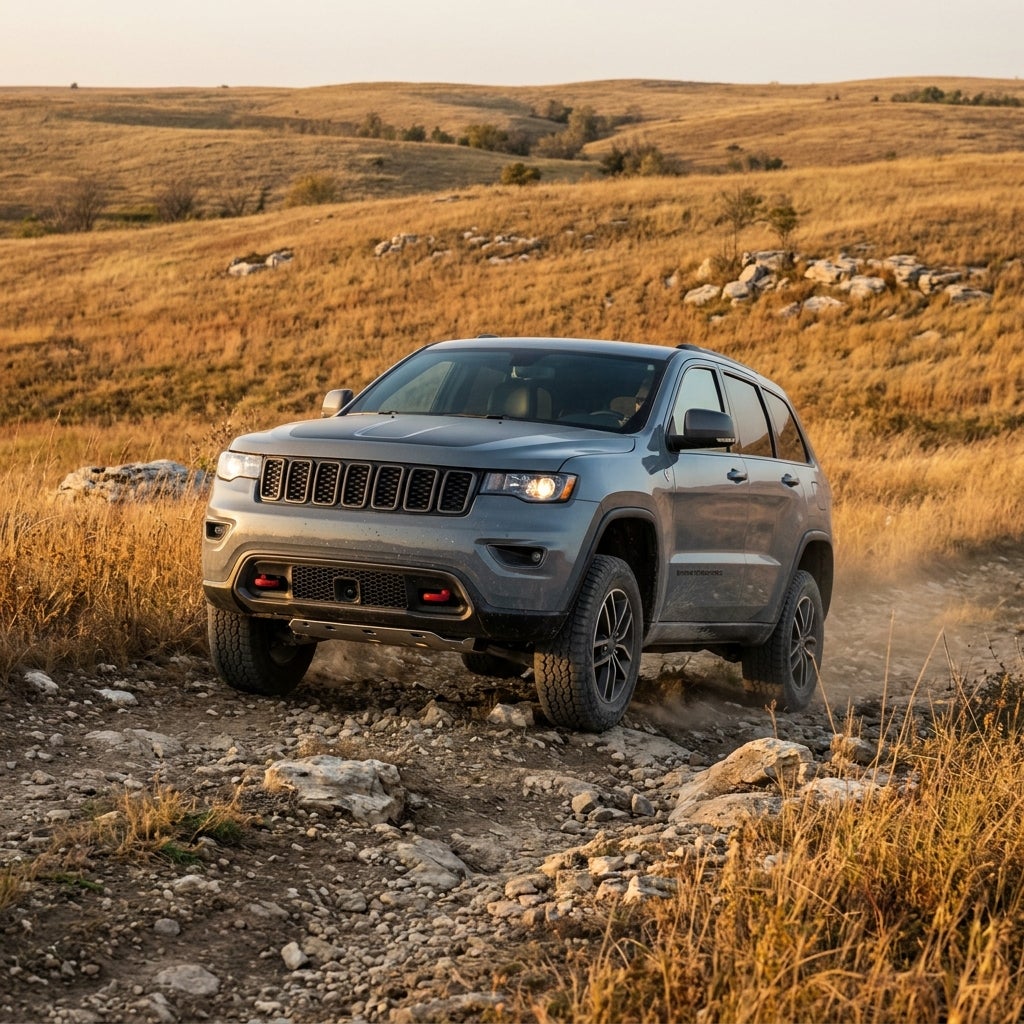
Is All-Wheel Drive Worth the Extra Cost for Kansas Winters? The Bottom-Line Verdict from 20 Years in the Dealer Seat

Is All-Wheel Drive Worth the Extra Cost for Kansas Winters? The Bottom-Line Verdict from 20 Years in the Dealer Seat

Is All-Wheel Drive Worth the Extra Cost for Kansas Winters? A 20-Year Perspective from the Dealership As the General Manager at Valor CDJR here in Junction City, I get asked the exact same question as temperatures drop each fall: "Jace, do I really need to spend the extra $2,000 to $3,000 for All-Wheel Drive, or am I just buying into clever dealership marketing?" After two decades sitting in the dealer seat, watching how vehicles perform across thousands of Kansas winter commutes, evaluating trade-ins, and analyzing real-world accident reports, my short answer is unequivocally YES. However, that affirmative comes with one critical, non-negotiable caveat: an advanced AWD system is only as effective as the mechanical grip of the rubber touching the pavement. Kansas winter driving is notoriously deceptive. Unlike regions that receive consistent, dry powder snowfall, the weather patterns across Geary, Riley, and Dickinson counties deliver freezing rain, sudden black ice on I-70 bridges over the Smoky Hill River, unplowed rural farm routes, and deep sludgy slush on hill inclines throughout Manhattan. Rear-wheel drive vehicles—traditionally loved for their raw American muscle dynamics—can quickly transform into stressful challenges when torque breaks rear traction. Front-wheel drive offers decent pull over the front axle, but it lacks the active dynamic torque distribution required to climb frozen grades or recover from sudden lateral slippage. All-Wheel Drive changes the safety equation completely by transforming wheelspin into forward momentum within milliseconds. Throughout this deep-dive report, I am going to break down the mechanical engineering behind modern Dodge all-wheel drive systems, contrast rear-wheel drive muscle against four-corner traction, evaluate winter tire physics, examine cold-weather electric vehicle range retention, and calculate the true monetary return on investment. Whether you are driving an daily commuter across Junction City or navigating backroads near Fort Riley, understanding how AWD technology operates will empower you to make an informed, safety-first automotive decision. Meet Jace Grabouski: Two Decades Navigating Flint Hills Roads and Automotive Engineering My perspective isn't derived from press releases or vehicle brochures; it comes from 20 continuous years on the frontlines of dealership operations right here in Junction City. Over two decades serving as General Manager at Get Directions to Valor CDJR, I have personally assisted thousands of local drivers, military service members from nearby Fort Riley, and local farm families select vehicles tailored to our rugged regional topography. Having spent decades evaluating Chrysler, Dodge, Jeep, and Ram engineering evolutions—from early mechanical transfer cases to modern electro-hydraulic active axle disconnections—I have developed a granular appreciation for drivetrain engineering. When winter storms sweep through the Flint Hills, bringing sub-zero temperatures and packed sheet ice, knowing exactly how your car's transfer case shifts torque between axles isn't just automotive trivia—it's essential knowledge for keeping your family safe on rural state highways. How Does the Dodge Charger All-Wheel Drive System Perform in Snow and Winter Conditions? To understand why the Dodge Charger AWD system is uniquely qualified for Midwestern winter storms, you have to look under its sheet metal. Unlike traditional basic all-wheel drive setups that drag all four wheels continuously—sucking fuel efficiency dry—Dodge engineered an active transfer case with complete front-axle disconnect technology. Under ideal summer driving conditions or dry autumn highway cruising, the system can disengage the front driveshaft. The vehicle operates as a 100% rear-wheel drive sedan, preserving classic muscle car steering dynamics and maximizing fuel economy. However, the moment ambient temperatures drop below approximately 40°F, or sensors detect wheel slip, windshield wiper activation, or rapid acceleration inputs, an electro-hydraulic clutch pack seamlessly engages the front axle in under 17 milliseconds. This lightning-fast engagement happens without any driver intervention. On frozen asphalt or unpaved backroads across Riley County, torque is dynamically shifted up to a 38/62 front-to-rear ratio, ensuring instant stability before micro-slips turn into major loss of control. Furthermore, Dodge pairs this active transfer case with Electronic Stability Control (ESC) and All-Speed Traction Control tuned specifically for icy conditions. When the Charger detects one side of the vehicle resting on snow while the other sits on pavement (a common occurrence when pulls off onto shoulder gravel), the system applies micro-braking pressure to spinning wheels while re-routing torque across the open differentials to wheels with grip. The result is a heavy, balanced four-door sedan that plants itself with total confidence into winter corners. Having driven Charger AWD test units through heavy blizzards along US-77, I can attest that the level of lateral stability and directional tracking provides peace of mind that lightweight front-wheel drive economy cars simply cannot match. How Does Dodge Charger AWD Compare to RWD in Winter Driving Across Junction City? Rear-Wheel Drive (RWD) Dynamics RWD delivers unmatched acceleration geometry on dry asphalt because vehicle weight transfers to the rear axle during launch. However, on freezing rain or slick ice, pushing a vehicle from behind while using front wheels solely for steering creates inherent instability. Under heavy throttle on icy Junction City streets, rear wheels easily break traction, causing oversteer ('fishtailing') that requires quick counter-steering. All-Wheel Drive (AWD) Traction AWD pulls and pushes simultaneously. By transferring engine output across four contact patches, engine torque per wheel is effectively cut in half. This drastically reduces the likelihood of exceeding any single tire's threshold of static friction. Starting from a complete stop on an icy uphill stoplight becomes effortless, eliminating panic and wheelspin completely. Flint Hills Commuting Realities Cruising I-70 between Junction City and Manhattan during severe squalls presents high-speed crosswinds combined with slush accumulation between lanes. RWD vehicles experience severe lateral drift during lane changes. AWD provides directional stability, locking the sedan onto its intended path even when crossing frozen slush ruts at speed. Browse New AWD Inventory How Does the Next-Gen Dodge Charger’s Wet/Snow Mode Help in Winter Conditions? Modern drivetrain engineering extends far beyond mechanical gears; software algorithms dictate how power reaches the cold asphalt. In next-generation Dodge Charger platforms, the selectable Wet/Snow Drive Mode fundamentally recalibrates the vehicle’s brain to prioritize stability over aggressive performance. When engaged, Wet/Snow mode alters electronic throttle mapping. Even if a driver presses heavy on the accelerator pedal out of habit, the ECU dampens engine response, delivering smooth, progressive torque build-up rather than sudden bursts that break tire adhesion. The transmission logic shifts early to keep engine RPM low, reducing peak torque torque at the wheels. Simultaneously, the active transfer case locks into a fixed 50/50 static torque split, ensuring both front and rear axles share initial movement duties instantly upon acceleration. The ABS and ESC systems adopt ultra-sensitive threshold settings, intervening subtly before driver-perceptible slip occurs. For drivers facing deep snow drifts or packed ice near Milford Lake, this software integration transforms high-horsepower machinery into a predictable, compliant winter transport. It removes driver error from throttle management during slippery maneuvers. Are Factory All-Season Tires Sufficient for Winter Driving in a Dodge Charger AWD? The All-Season Myth Factory all-season tires are engineered for low rolling resistance and long tread life in moderate conditions. However, once ambient temperatures drop below 45°F (7°C), standard all-season rubber compounds harden like hockey pucks. Regardless of how sophisticated your AWD system is, hard rubber cannot conform to ice micro-texture. Dedicated Winter Rubber Dedicated winter tires utilize silica-rich soft rubber compounds that remain flexible in sub-zero Kansas deep freezes. High-density 3D siping cuts through surface water films to bite directly into hard ice. Pairing Dodge AWD with dedicated winter tires yields stopping distances up to 35% shorter than AWD with all-season rubber. Remember: All-wheel drive helps you accelerate, but all four wheels already brake on every car. AWD does not reduce stopping distance on ice—tires do. If you plan to navigate extreme winter conditions across Kansas, combining AWD technology with proper winter tires or severe-snow-rated 3PMSF (Three-Peak Mountain Snowflake) tires at our Parts Department is the ultimate safety solution. Jace’s Core Insight: "Traction Tech Gets You Moving, But Tread Physics Keeps You Off the Shoulder "In my 20 years managing dealerships in Junction City, the most dangerous driver on the road during a winter storm is the one who believes an 'AWD' badge makes them immune to the laws of physics. All-Wheel Drive gives you incredible confidence getting out of snowy driveways and climbing icy Flint Hills grades. But when it comes to steering around an obstacle or emergency stopping on freezing rain, your drivetrain won't save you if your tires are bald or unsuited for sub-zero temperatures. Respect the road, maintain your vehicle, drive with sensible speed, and let technology work for you." — Jace Grabouski, General Manager at Valor CDJR Schedule Winter Service Checkup Is the Dodge Charger AWD Platform Identical to the Chrysler 300 AWD? A frequent technical query from pre-owned vehicle buyers visiting our showroom is whether the Dodge Charger AWD system is identical to the Chrysler 300 AWD setup. From an architecture standpoint, yes—they share core mechanical DNA. Both flagship sedans utilize Stellantis' unibody full-size platform, sharing the BorgWarner active transfer case, front axle disconnect hardware, and 3.6L Pentastar V6 powertrain pairing. However, executive chassis tuning separates their road personalities. The Chrysler 300 AWD is calibrated for plush, luxury isolation, utilizing softer dampening rates, quieter compliance bushings, and smoother throttle mapping. It absorbs highway expansion joints effortlessly while delivering quiet winter confidence. In contrast, the Dodge Charger AWD receives sport-calibrated steering gear ratios, firmer anti-roll bars, stiffer damper valving, and aggressive transmission shift schedules. The electronic stability control thresholds in the Charger allow slightly more dynamic rotation before intervening, providing a sportier feel on winding Kansas country roads. Both sedans offer exceptional winter capability, but choosing between them depends on whether your preference leans toward executive comfort or muscular performance. Explore our Used Vehicle Listings to compare both models side-by-side. How Does Cold Weather Affect the Battery Range and AWD of the Electric Dodge Charger Daytona? As Dodge ushers in the electrified era with the all-electric Dodge Charger Daytona, winter performance dynamics undergo a radical revolution. The Daytona replaces mechanical driveshafts and transfer cases with dual Electric Drive Modules (EDMs)—one powering the front axle and one powering the rear. This dual-motor electric AWD configuration delivers instant torque vectoring across four wheels within microseconds, eliminating mechanical engagement delays entirely. However, extreme Midwestern cold impacts high-voltage lithium-ion battery chemistry. During sub-zero Kansas cold snaps, chemical reactions slow down, and cabin heating demands energy from the traction battery. Drivers can expect a temporary range reduction of 20% to 30% during severe freezing conditions if proper thermal management protocols aren't followed. To mitigate range loss, the Charger Daytona features automated battery pre-conditioning. When scheduled while plugged into your Level 2 home charger prior to morning departure in Junction City, the system warms the battery pack to its optimal electrochemical operating window (around 70°F) using grid power rather than stored battery energy. This preserves maximum driving range and ensures full dual-motor AWD power availability from the instant you back out of your driveway. Calculating the ROI: Upfront Costs, Resale Value, and Winter Safety Peace of Mind Initial Purchase Cost Selecting All-Wheel Drive can affect a vehicle's MSRP. For current pricing and payment information, contact the dealership. Additionally, active front-axle disconnect technology keeps fuel economy penalties negligible (typically less than 1 MPG difference compared to RWD). Resale & Trade Equity In Midwestern resale markets like Kansas, AWD vehicles retain a significantly higher percentage of their initial value compared to RWD sedans. At trade-in time, AWD vehicles may retain stronger resale value compared with similar RWD models. Accident Avoidance ROI Insurance deductibles and related costs vary. AWD may help improve winter confidence and could reduce the risk of weather-related incidents. Evaluate Your Trade-In Equity Jace Grabouski’s Winter Readiness Checklist for Riley County Drivers Before the first severe freeze hits Junction City, I recommend every driver complete this 4-step winter readiness protocol to ensure total vehicle reliability: 1. Battery Load Testing: Cold weather reduces battery capacity by up to 50%. Have your 12V battery load-tested at our Express Lane to avoid getting stranded in freezing temperatures. 2. Transfer Case Fluid Inspection: AWD transfer cases rely on clean synthetic fluid to actuate clutch packs smoothly. Check your maintenance schedule or visit service every 30,000 to 50,000 miles. 3. Tire Tread Depth & Pressure: Inspect tread depth using a depth gauge (minimum 4/32" for winter driving). Remember that tire pressure drops approximately 1 PSI for every 10°F drop in outside temperature. 4. Verify Drive Modes & Emergency Kit: Familiarize yourself with how to engage Wet/Snow drive modes in your vehicle controls, and pack a trunk kit containing jumper cables, a tow strap, blanket, flashlight, and bag of ice melt. Test Drive All-Wheel Drive Performance at Valor CDJR in Junction City If you are considering winter readiness to find out if your vehicle is equipped for Kansas roads. My team and I at Valor CDJR are ready to help you navigate your winter vehicle search with transparent expert guidance, competitive financing offers, and world-class service support. Visit our showroom at 1825 Goldenbelt Blvd, Junction City, KS 66441 or Call us at (785) 238-5114 to speak directly with our product specialists. Experience the security, power, and engineering precision of modern Dodge and Chrysler All-Wheel Drive firsthand. Get Pre-Approved Online

2021 Jeep Grand Cherokee Towing Capacity: 6,200 to 7,200 lbs Maximum Rating

2021 Jeep Grand Cherokee Towing & Capability Guide: Q&A With Dustin Zeck

2021 Jeep Grand Cherokee Towing & Capability Guide: Q&A With Dustin Zeck When hauling a travel trailer or boat, a 2021 Jeep Grand Cherokee typically achieves a practical highway driving range of 250 to 300 miles on a single tank of gas. To break down the trailering limits, factory equipment requirements, and fuel expectations of this popular SUV, we interviewed Dustin Zeck, Dealer Principal at Valor CDJR, who brings 36 years of automotive industry experience to help local drivers tow with complete confidence. Q: How Far Can a 2021 Jeep Grand Cherokee Go on a Tank of Gas While Towing? A: Drivers can expect a 2021 Jeep Grand Cherokee to travel between 250 and 300 miles on a full tank while pulling a loaded trailer under normal highway conditions. The vehicle features a 25-gallon fuel tank, and when trailering weight approaches maximum ratings, real-world fuel economy generally settles between 11 mpg and 13 mpg. On an unladen highway cruise, a model with the 3.6-liter Pentastar V6 reaches up to 26 mpg highway, but the aerodynamic drag and mass of a travel trailer or boat pull those figures down significantly. A range of 250 miles gives you plenty of margin to reach your destination without stressing over the next fuel station, even when pulling heavy loads across windy Kansas highways. If you opt for the 5.7-liter HEMI V8, fuel consumption will be slightly higher under heavy acceleration, though its Fuel Saver Technology helps deactivate cylinders during steady cruising to preserve range. Before setting out on a long trip with a camper in tow toward Milford Lake near Junction City, I always recommend calculating your fuel stops around a conservative 200-mile mark. If you have questions about prepping your vehicle for long-distance trailering, you can reach our service team with a quick call or drop by our Junction City showroom address to speak with our experts. Q: What Is the Maximum Towing Capacity of the 2021 Jeep Grand Cherokee and What Equipment Is Required? A: Maximum towing capacity reaches 6,200 pounds on models powered by the 3.6-liter Pentastar V6 and tops out at 7,200 pounds on models equipped with the 5.7-liter HEMI V8, provided the vehicle has the factory tow package. It is critical to recognize that any 2021 Grand Cherokee lacking the factory setup is restricted to a bumper rating of just 3,500 pounds. Reaching those higher thresholds requires the factory-installed Trailer Tow Group IV package, which equips the SUV for the thermal and structural demands of heavy trailering. The Trailer Tow Group IV package installs a heavy-duty Class IV hitch receiver, a dual 7-and-4-pin wiring harness, high-output engine cooling, a 180-amp or 220-amp alternator, rear load-leveling suspension, and a full-size spare tire. For pull weights above 3,500 pounds, Jeep recommends using a weight distribution hitch to balance the vehicle's front and rear axles, which prevents headlight aim distortion and keeps front-wheel steering traction firm. Maximum tongue weight is capped at 620 pounds for V6 models and 720 pounds for V8 configurations, adhering to the standard 10 percent tongue weight guideline. If you are planning to upgrade your current vehicle to handle a larger camper, you can start by using our online trade-in evaluation tool to see what your current ride is worth. Q: Does the 2021 Jeep Grand Cherokee Come With an Integrated Brake Controller? A: The 2021 Jeep Grand Cherokee does not include an integrated electronic trailer brake controller from the factory, but every model equipped with the factory tow package comes pre-wired with a dedicated harness plug located under the driver-side dashboard. This factory wiring connector allows for a clean, plug-and-play installation of an aftermarket brake controller without slicing into existing vehicle electrical lines. Because electric trailer brakes are required by law for heavier loads, installing a quality brake controller is essential before hitching up a dual-axle travel trailer or car hauler. The pre-wired harness connects directly into the vehicle's electrical infrastructure, feeding signal to the rear 7-pin wiring harness. Our certified technicians can easily wire and mount a sleek controller right below the steering column. You can order genuine towing accessories through our parts department and book an installation appointment using our online service scheduler. "A proper tow package does far more than bolt a hitch receiver to the back frame of an SUV." Q: How Does the 2021 Jeep Grand Cherokee Towing Capacity Compare to the Dodge Durango? A: When comparing standard trim levels, the Grand Cherokee and Dodge Durango offer identical maximum ratings of 6,200 pounds with the 3.6-liter Pentastar V6 and 7,200 pounds with the 5.7-liter HEMI V8. Both midsize SUVs share a strong unibody architecture engineered for heavy trailering stability. However, the Durango offers specialized performance packages that raise its peak capacity higher than the Grand Cherokee. Specifically, the Durango offers the Tow N Go package on its V8 variants, which increases maximum towing capacity up to 8,700 pounds. While the Durango takes the lead on absolute maximum pulling weight, the Grand Cherokee counters with superior off-road trailering capability. With its available multi-mode 4x4 drive systems and adjustable air suspension, the Grand Cherokee is better prepared to pull trailers over unpaved launch ramps, muddy pastures, and rutted trails where ground clearance and traction matter most. Q: What Inspection Points Are Important When Buying a Used 2021 Grand Cherokee Used for Towing? A: When inspecting a pre-owned 2021 Grand Cherokee that was previously used for trailering, buyers should start by evaluating the rear differential fluid and transmission fluid condition. Continuous heavy pulling generates high operating temperatures that can degrade gear oil and automatic transmission fluid prematurely. Smooth transmission shift performance during a test drive is a clear sign that the internal clutch packs and torque converter remain in healthy condition. Next, examine the rear load-leveling shocks or air suspension bladders for signs of fluid weeping, cracking, or physical wear. Inspect the front brake rotors for heat scoring or warping, as heavy stopping duty places extra stress on friction hardware. Finally, check the receiver hitch for heavy rust or stress cracks around the mounting welds, and review the vehicle's maintenance history to verify regular severe-duty service intervals. Shoppers can explore our thoroughly inspected pre-owned inventory or look at our new vehicle inventory to compare options, and our team can help you get started with an online credit pre-approval application. Q: How Do Quadra-Lift Air Suspension and 4x4 Systems Enhance Towing Capability? A: Quadra-Lift air suspension automatically levels the vehicle when a heavy trailer tongue is lowered onto the hitch ball, preventing rear-end squat and maintaining proper headlight alignment and front tire contact. The system replaces standard steel coil springs with air bladders at all four wheels, automatically inflating to compensate for cargo and tongue weight. It also provides adjustable ride height modes, allowing the vehicle to lift up to about 11 inches of ground clearance for off-road navigation or lower for easier trailer hitching. Complementing the suspension are Jeep's advanced four-wheel-drive systems, including Quadra-Trac II with a two-speed transfer case and Quadra-Drive II with a rear Electronic Limited-Slip Differential. When pulling a heavy boat up a slippery ramp or navigating rolling prairie highways around Manhattan, these systems continuously monitor wheel slip and transfer engine torque to the tires with the most grip. Furthermore, standard Trailer Sway Control uses yaw sensors within the Electronic Stability Control system to detect trailer oscillation, automatically applying individual wheel brakes to pull the trailer back into a straight line without driver panic. Q: Where Can You Find a Pre-Owned 2021 Jeep Grand Cherokee With a Tow Package in Junction City? A: You can find high-quality pre-owned 2021 Jeep Grand Cherokee models equipped with factory tow packages right here at Valor CDJR. When shopping for a tow-ready SUV, it is vital to verify that the vehicle was built with the Trailer Tow Group IV package from the factory rather than equipped with an aftermarket bumper hitch later. Our sales team can pull the original factory build sheet and review the door jamb payload ratings to ensure the exact vehicle you choose matches your trailering requirements. Our showroom is conveniently located at 1825 Goldenbelt Blvd, Junction City, KS 66441, where our experienced staff can walk you through hitch setup, tongue weight limits, and four-wheel-drive controls in person. Whether you need assistance verifying equipment options or setting up a test drive, give our team a call at (785) 238-5114 today to get expert guidance on your next tow-ready SUV. © 2026 Valor CDJR. All rights reserved.
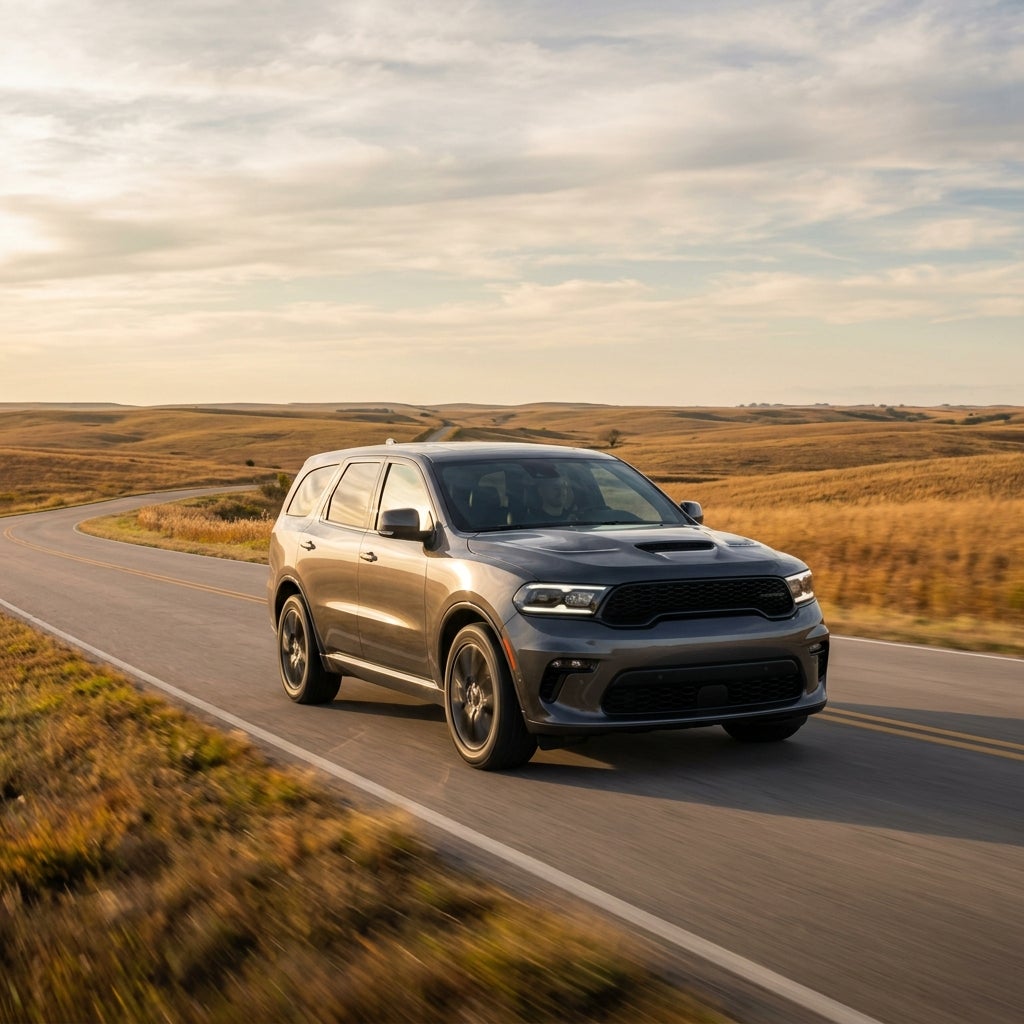
Is the RAM 4500 Chassis Cab the Right Work Truck for Kansas Contractors?

Is the RAM 4500 Chassis Cab the Right Work Truck for Kansas Contractors?

Is the RAM 4500 Chassis Cab the Right Work Truck for Kansas Contractors? The Ram 4500 Chassis Cab is an ideal work truck for Kansas contractors who require commercial payload and towing strength without forcing drivers into a Commercial Driver's License. Rated up to 16,500 pounds Gross Vehicle Weight Rating, it allows standard Class C licensed crew members to operate a heavy-duty platform. Combined with high-strength C-channel frame rails and up to 28,550 pounds of diesel towing capacity, it delivers vocational muscle for demanding job sites. For commercial operations in Central Kansas, licensing efficiency directly impacts daily labor scheduling and payroll costs. Because federal regulations set the single-vehicle Commercial Driver's License threshold at 26,001 pounds Gross Vehicle Weight Rating (GVWR), a standalone Ram 4500 Chassis Cab sits comfortably beneath that legal boundary. Fleet owners can assign non-CDL drivers to transport heavy loads, operate auxiliary equipment, and maneuver essential vocational bodies without paying specialized CDL wages or managing complex commercial driver compliance tracking. However, business owners must account for total combination weight when pulling trailing equipment. Under Federal Motor Carrier Safety Administration guidelines, a Class A CDL becomes mandatory if the combined rating of the truck and trailer exceeds 26,001 pounds Gross Combined Weight Rating (GCWR) and the trailer itself carries a manufacturer GVWR tag over 10,000 pounds. For example, pairing a 16,500-pound GVWR Ram 4500 with a 12,000-pound equipment trailer yields a combined rating of 28,500 pounds, requiring a CDL operator. Matching the truck with a trailer rated at or under 9,500 pounds keeps total GCWR at or below 26,000 pounds, preserving non-CDL status for everyday operations. Selecting the right chassis configuration ensures your business maximizes job site capability while maintaining full regulatory compliance. To discuss chassis configurations and examine available models, stop by our Junction City showroom location or connect directly with our commercial specialists by calling our sales team at (785) 238-5114. Table of Contents What Engine Options and Towing Capabilities Power the Ram 4500 Chassis Cab? What Are the Maximum Payload Capacity and GVWR Ratings for the Ram 4500? What Cab, Frame, and Dual Alternator Upfits Work Best for Junction City Contractors? How Does the Ram 4500 Compare to the Ford F-450 Super Duty Chassis Cab? What Commercial Financing and BusinessLink Options Help Contractors Buy at Valor CDJR? Common Questions About the Ram 4500 Chassis Cab Upgrade Your Commercial Fleet with the Ram 4500 at Valor CDJR What Engine Options and Towing Capabilities Power the Ram 4500 Chassis Cab? The Ram 4500 Chassis Cab offers two commercial powertrains: a standard 6.4-liter HEMI V8 gas engine generating 370 horsepower and 429 lb-ft of torque, and an available 6.7-liter Cummins turbo-diesel inline-six delivering 360 horsepower and 800 lb-ft of torque. Both engines are paired with heavy-duty commercial transmissions engineered to sustain severe-duty work cycles under heavy loads. The 6.4-liter HEMI V8 gas engine utilizes variable cam timing and fuel-saving cylinder deactivation to deliver responsive performance for regional service tasks. Paired with a commercial automatic transmission, the gas configuration supports a Gross Combined Weight Rating of 28,500 pounds and enables conventional and gooseneck towing capacities up to 21,240 pounds. Because gas engines weigh less than heavy iron-block diesels, choosing the HEMI V8 maximizes available chassis payload capacity for heavy mounted bodies like service cranes or concrete mixers. For extreme towing applications, the 6.7-liter Cummins turbo-diesel inline-six provides low-end pulling power essential for heavy equipment transportation. Mated exclusively to the heavy-duty AISIN six-speed automatic transmission, the Cummins diesel generates its peak 800 lb-ft of torque low in the RPM band. This low-end torque makes pulling heavy skid-steers, MINI-excavators, and multi-ton material trailers up steep, unpaved inclines simple and controlled. When properly configured with a gooseneck hitch, a diesel-powered Ram 4500 4x4 delivers a maximum towing rating up to 28,550 pounds with a maximum GCWR of 37,500 pounds. Heavy-duty commercial stopping power is maintained by oversized 15.4-inch front brake rotors paired with twin-piston calipers. On diesel models, an integrated smart exhaust brake provides supplemental retarding force down rolling hills around Manhattan, reducing wear on brake pads and maintaining thermal stability during heavy descents. Business owners seeking reliable work vehicles can explore our current pre-owned commercial truck inventory to compare high-capability pre-owned options. What Are the Maximum Payload Capacity and GVWR Ratings for the Ram 4500? The Ram 4500 Chassis Cab delivers a maximum Gross Vehicle Weight Rating of 16,500 pounds, yielding maximum payload capacities up to 9,390 pounds with the gas engine and up to 8,560 pounds with the Cummins turbo-diesel. Net payload is calculated by subtracting the unladen curb weight of the bare chassis and cab from the total factory GVWR. Achieving high payload ratings requires a severe-duty structural foundation. The Ram 4500 is constructed with flat, high-strength 50,000-PSI steel C-channel rear frame rails utilizing industry-standard 34-inch spacing. Unlike curved pickup frames, this flat structural layout provides a clean mounting plane that accepts aftermarket bodies without requiring custom frame brackets or structural alterations. Key chassis component ratings supporting severe-duty payloads include: Heavy-duty front axle rated up to 7,000 pounds Gross Axle Weight Rating (GAWR) for supporting heavy front-mounted equipment or snowplows Commercial rear axle assembly supporting up to 12,000 pounds rear GAWR to absorb vertical pin weights from gooseneck trailers Commercial-grade 15.4-inch disc brake assemblies engineered for repeatable thermal heat dissipation under continuous gross weight conditions Dual rear wheel axle configurations with heavy-duty multi-leaf rear suspension assemblies designed to prevent rear-end squat under capacity loads Whether mounting a steel dump body loaded with aggregate or installing a fully equipped service utility body with heavy onboard tool storage, the Class 4 frame handles structural loads with minimal flex. Contractors evaluating fleet upgrades can begin by evaluating your current fleet trade-in value to determine the trade equity available in existing work vehicles. What Cab, Frame, and Dual Alternator Upfits Work Best for Junction City Contractors? The Ram 4500 Chassis Cab supports service bodies, dump beds, flatbed hauler platforms, and crane bodies across four cab-to-axle lengths ranging from 60-inch to 120-inch spacing in Regular Cab and Crew Cab layouts. Matching the correct Cab-to-Axle (CA) dimension to body builder specifications guarantees balanced weight distribution across both axles. The available cab-to-axle configurations support distinct vocational requirements: 60-inch CA: Recommended for compact 9-foot to 11-foot utility service bodies, short dump beds, and municipal service trucks needing tight turning radii 84-inch CA: Designed for 12-foot flatbeds, contractor stake bodies, and medium-length mechanic service bodies with hydraulic cranes 108-inch CA: Suited for 14-foot platform bodies, landscape hauler beds, and specialized livestock transport structures 120-inch CA: Built for 16-foot high-volume flatbeds, enclosed van bodies, and long-reach aerial bucket platforms For equipment requiring high auxiliary electrical power, the Ram 4500 offers an available dual alternator configuration generating up to 440 amps total output using twin 220-amp alternators. This high electrical output powers onboard inverter systems, auxiliary LED work lights, electric-over-hydraulic pumps, and heavy job site power tools without draining starter batteries. Auxiliary mechanical equipment is supported by an available Power Take-Off ( PTO) system integrated into the AISIN six-speed automatic transmission. Featuring left-side and right-side mounting access, the PTO system operates in stationary or mobile modes, allowing operators to run hydraulic dump pumps while parked or run salt spreaders while driving. The factory Vehicle System Interface Module ( VSIM) supplies over 70 hardwired circuits to connect aftermarket cab switches, safety interlocks, and engine speed controls. Utility and trade fleets near Junction City can prepare for upcoming equipment additions by getting pre-approved for commercial financing online. How Does the Ram 4500 Compare to the Ford F-450 Super Duty Chassis Cab? The Ram 4500 Chassis Cab distinguishes itself from the Ford F-450 Super Duty Chassis Cab through its heavy-duty 6.7-liter Cummins turbo-diesel inline-six engine layout, standard 50,000-PSI flat steel C-channel frame rails, and dual-sided PTO mounting capabilities. Both vehicles occupy the Class 4 commercial truck segment with Gross Vehicle Weight Ratings extending up to 16,500 pounds, but key engineering differences influence daily operation and upfit simplicity. The inline-six design of the Cummins turbo-diesel features fewer moving parts than Ford's 6.7-liter Power Stroke V8 diesel. Inline-six engines utilize larger connecting rod bearings and a forged steel crankshaft, generating peak torque lower in the engine RPM band. This low-end torque delivery gives the Ram 4500 smooth pulling power when moving heavy equipment trailers from a complete stop. Frame design presents another key commercial distinction: Structural & Feature Criteria Ram 4500 Chassis Cab Ford F-450 Chassis Cab Rear Frame Rail Type Flat 50,000-PSI steel C-channel C-channel rear frame rails Rear Frame Spacing Standard 34-inch spacing Standard 34-inch spacing Available Diesel Engine 6.7-liter Cummins turbo-diesel inline-six 6.7-liter Power Stroke V8 diesel Diesel Torque Output 800 lb-ft of torque 825 lb-ft of torque Transmission Type Heavy-duty AISIN six-speed automatic 10-speed commercial automatic Power Take-Off Access Dual-side (Left or Right side mounting) Single-side transmission access Auxiliary Alternator Output Available dual alternators ( 440 amps) Available dual alternators (410 amps) The Ram 4500 commercial transmission provides dual-sided Power Take-Off access, letting body builders mount hydraulic pumps on either side of the transmission case. This placement flexibility simplifies hydraulic line routing for crane bodies and dump beds, avoiding heat sources and exhaust components. What Commercial Financing and BusinessLink Options Help Contractors Buy at Valor CDJR? Commercial buyers purchasing a Ram 4500 Chassis Cab at Valor CDJR can leverage Ram BusinessLink commercial account perks, flexible commercial lines of credit, TRAC leases, and federal Section 179 tax deduction eligibility for vehicles over 6,000 pounds GVWR. Structuring commercial vehicle acquisitions through specialized commercial programs protects operating capital while maintaining updated fleet equipment. Enrolling in the complimentary Ram BusinessLink program grants business owners access to dedicated commercial advantages, including: Priority commercial service queuing to minimize vehicle downtime Dedicated commercial account managers familiar with vocational vehicle specs Commercial lines of credit that keep personal credit lines separate from business vehicle financing Terminal Rental Adjustment Clause (TRAC) leasing options tailored to business cash flow needs Tax incentives under Internal Revenue Code Section 179 allow qualified business buyers to deduct up to 100% of the purchase price of eligible commercial vehicles placed in service during the tax year, subject to current federal limits. Because the Ram 4500 Chassis Cab carries a GVWR above 6,000 pounds, it meets federal structural requirements for full vehicle expense deductions. Business owners should consult a qualified CPA or tax professional to confirm specific eligibility for their company. Our commercial sales staff assists with selecting axle ratios, calculating combined weights, and coordinating with body upfitters. To evaluate current chassis options and view available commercial inventory, browse our new Ram Chassis Cab inventory, or visit our Junction City dealership location. You can also reach our commercial sales department by calling (785) 238-5114. Common Questions About the Ram 4500 Chassis Cab Q: Do drivers need a CDL to operate a standalone Ram 4500 Chassis Cab in Kansas? In Kansas, drivers can operate the Ram 4500 Chassis Cab commercially without needing a Commercial Driver's License, simplifying fleet management. With a Gross Vehicle Weight Rating between 14,000 pounds and 16,500 pounds, the truck sits below the 26,001-pound single-vehicle CDL mandate threshold. Any employee holding a valid Class C driver's license can operate the truck itself. However, if the truck pulls a trailer with a GVWR over 10,000 pounds and the total combined weight rating exceeds 26,001 pounds, a Class A CDL is legally required for that driver. Q: Does the Ram 4500 offer a dual alternator option for heavy electrical tools? The Ram 4500 Chassis Cab offers an available dual alternator system delivering a combined maximum output of 440 amps. Utilizing two 220-amp alternators, this setup provides consistent electrical current for high-draw onboard systems, power inverters, exterior job site lighting arrays, and electric-over-hydraulic lift equipment without overtaxing the vehicle's primary starting battery. Q: What cab-to-axle lengths are available on the Ram 4500 Chassis Cab? The Ram 4500 Chassis Cab is manufactured in four distinct Cab-to-Axle (CA) lengths: 60-inch, 84-inch, 108-inch, and 120-inch spacing. These dimensional options allow contractors and body builders to mount utility beds, dump bodies, platform flatbeds, and mechanic crane bodies ranging from 9 feet to 16 feet in length while maintaining balanced axle loading. Q: Can the Ram 4500 power hydraulic upfits while the truck is moving? The Ram 4500 Power Take-Off ( PTO) system integrated with the AISIN six-speed automatic transmission supports mobile and stationary operating modes. Stationary mode powers stationary equipment like dump beds, bucket booms, and cranes while parked. Mobile mode supplies mechanical or hydraulic power to accessories like salt spreaders or street sweepers while the vehicle remains in motion. Q: How does the Ram 4500 qualify for commercial Section 179 tax benefits? Because the Ram 4500 Chassis Cab has a Gross Vehicle Weight Rating exceeding 6,000 pounds, it meets federal criteria for Section 179 tax treatment. Eligible commercial businesses may write off up to 100% of the vehicle's purchase cost in the year it is placed into service rather than depreciating the asset over multiple years. Business owners should consult their financial advisor or tax preparer for specific application details. Upgrade Your Commercial Fleet with the Ram 4500 at Valor CDJR Valor CDJR offers the Ram 4500 Chassis Cab, a vehicle built with a severe-duty frame and payload capacities tailored for Kansas contractors. Whether your business requires a heavy-duty dump truck, a mobile service body with crane capability, or a high-capacity equipment hauler, the Ram 4500 offers the structural foundation and powertrain options required for demanding job site work. Our commercial sales team at Valor CDJR is ready to help you configure the ideal chassis cab layout for your operational requirements. From analyzing gross weight calculations and upfit dimensions to structuring current commercial financing options, our specialists provide straightforward guidance through every step of the purchase process. Visit our showroom at 1825 Goldenbelt Blvd, Junction City, KS 66441, browse our complete inventory online, or contact our commercial sales team today to schedule an in-person fleet consultation. Keep Your Vehicle Running Strong Keep your vehicle performing at its best with our service team: Parts Department Service Scheduler © 2026 Valor CDJR. All rights reserved.
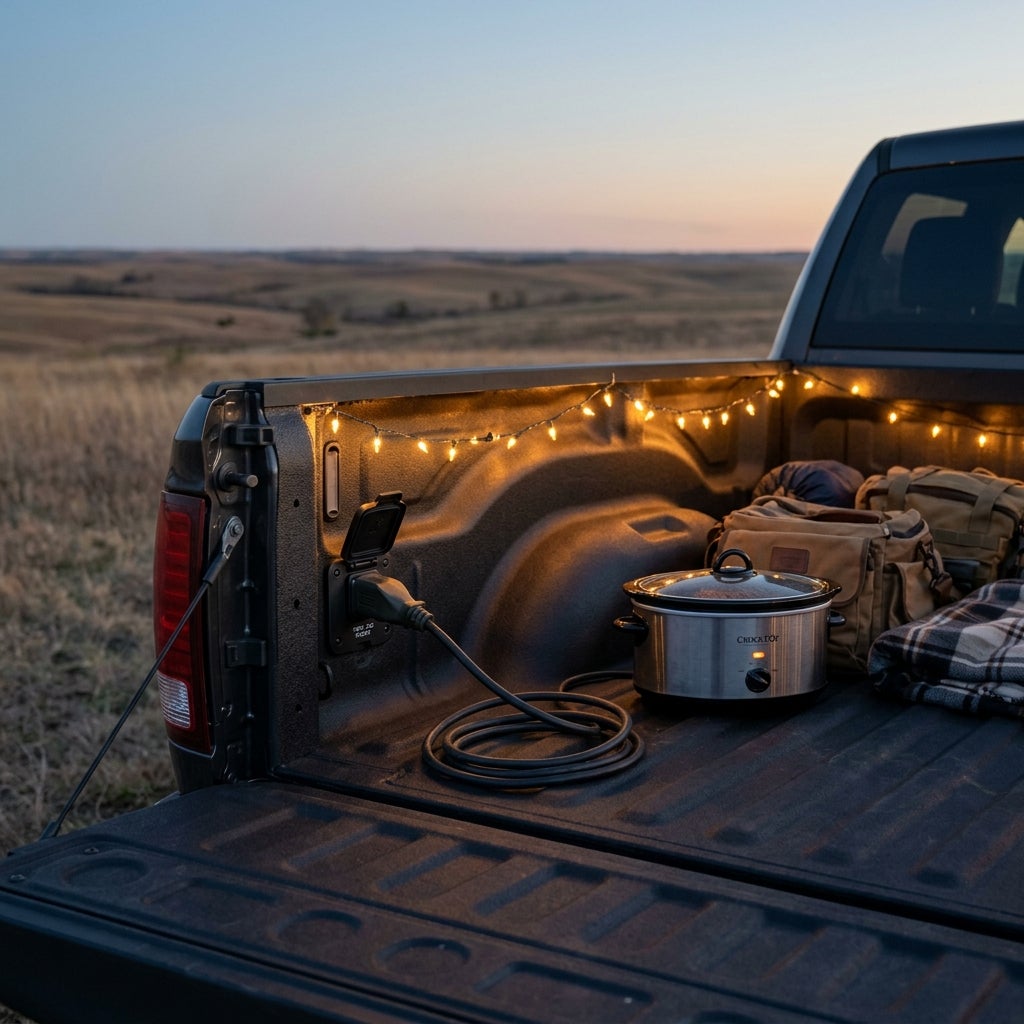
Standard and Available Safety Features on the 2021 Jeep Compass Sport: Direct Breakdown

Standard and Available Safety Features on the 2021 Jeep Compass Sport: Direct Breakdown

Standard and Available Safety Features on the 2021 Jeep Compass Sport: Direct Breakdown When evaluating a compact SUV for daily commutes through Junction City, long highway drives along Interstate 70, or gravel country roads across Riley and Geary counties, active safety and driver-assist capabilities are paramount. The 2021 Jeep Compass Sport serves as an accessible entry point to the Jeep SUV lineup, combining signature off-road capability with a protective shield of engineered safety features. Out of the box, every 2021 Compass Sport base trim delivers fundamental protection including a high-strength steel unibody chassis, comprehensive multistage airbag coverage, Electronic Stability Control, and the ParkView Rear Back-Up Camera. For drivers seeking modern automated driver assistance, Jeep offered powerful optional packages on the Sport trim—including Full-Speed Forward Collision Warning Plus with Active Braking, LaneSense Lane Departure Warning Plus, Blind-Spot Monitoring with Rear Cross Path Detection, and Adaptive Cruise Control with Stop and Go. Standard Safety Equipment Built into Every 2021 Compass Sport Base Trim Structural Architecture & Passive Restraint Safety on the 2021 Jeep Compass Sport starts with its physical core. Built on a rigid safety cage architecture engineered with over 65% high-strength steel, the chassis is designed to absorb and redirect impact energy away from cabin occupants in the event of a collision. Passive occupant protection is comprehensive, featuring advanced multistage driver and front passenger airbags, supplemental front-seat side airbags, and full-length side-curtain airbags extending across both rows. Additionally, a driver inflatable knee-bolster airbag comes standard, providing tailored lower-body collision support that is often omitted in competing base trims. Active Vehicle Control & Back-Up Assistance To prevent accidents before they happen, the standard 2021 Compass Sport incorporates dynamic active chassis control systems. Electronic Stability Control (ESC) works alongside Electronic Roll Mitigation and All-Speed Traction Control to continuously monitor steering input and vehicle trajectory, intervening instantly if wheel slippage or destabilization occurs. Hill Start Assist holds brake pressure on steep inclines in Manhattan or Fort Riley terrain to prevent unwanted roll-back. For tight parking maneuvering, the standard ParkView Rear Back-Up Camera displays high-resolution rear video with dynamic gridlines directly on the Uconnect display, helping you spot obstacles, curbs, and pedestrians effortlessly. Which Advanced Driver-Assist Packages Can You Add to the 2021 Compass Sport? Forward Collision Mitigation Full-Speed Forward Collision Warning Plus: Utilizes radar and optical sensors to detect stopped or slow-moving traffic ahead. If a potential frontal impact is detected, it alerts the driver with visual and audible prompts. If the driver hesitates, Active Braking automatically engages the brakes to mitigate or eliminate impact velocity. Lane Keeping & Blind-Spot Protection LaneSense & Blind-Spot Monitoring: LaneSense Lane Departure Warning Plus monitors highway lane lines, gently nudging the steering wheel and sounding alerts if unintentional lane drift occurs. Blind-Spot Monitoring scans hard-to-see side zones, while Rear Cross Path Detection alerts you to approaching vehicles when reversing out of driveway or parking spaces. Adaptive Cruise & Park Assist Adaptive Cruise Control with Stop & Go: Automatically maintains a set distance behind traffic in front of you on multi-lane highways. It can bring the vehicle to a full stop in stop-and-go highway traffic and resume speed seamlessly. Available ParkSense Rear Park Assist adds distance sensors that chime when backing into tight spots. Explore Safety Features and Pre-Owned Inventory at Valor CDJR Whether you are looking for a fuel-efficient daily driver equipped with core safety technology or a pre-owned 2021 Jeep Compass Sport outfitted with full active safety packages, Valor CDJR in Junction City carries a curated inventory of reliable pre-owned SUVs. Our vehicle specialists are happy to walk you through option packages, show you how active safety sensors operate during a road test, and help you inspect our clean vehicle history reports. Explore our Used Vehicle Listings today to find a quality pre-owned Compass that matches your safety requirements and budget. Browse Pre-Owned Inventory What Engine and Drivetrain Specs Does the 2021 Jeep Compass Sport Feature? 2.4L Tigershark Engine & Transmissions Under the hood, the 2021 Jeep Compass Sport comes equipped with a dependable 2.4-liter Tigershark MultiAir 2 inline 4-cylinder engine generating 180 horsepower and 175 lb-ft of torque. Power delivery depends on the drivetrain selection. Front-wheel-drive (FWD) models utilize a smooth-shifting 6-speed automatic transmission designed for optimized highway fuel economy. If you choose the 4x4 configuration, the engine couples with an advanced 9-speed automatic transmission, providing shorter low-end gear ratios for confident acceleration and off-road traction alongside tall overdrive gears for quiet, efficient cruising. Jeep Active Drive 4x4 & Selec-Terrain System For Kansas drivers confronting variable Midwest weather, the available Jeep Active Drive 4x4 system is a major advantage. Operating seamlessly behind the scenes, it features a rear-axle disconnect that runs in 2WD mode during steady cruising to save fuel, instantly engaging 4WD when slip is detected. The included Selec-Terrain Traction Management System allows drivers to select custom drive modes (Auto, Snow, Sand, Mud) via a console dial, adjusting throttle response, transmission shifting, and torque distribution to conquer icy morning roads or muddy rural lanes. Is the 2021 Jeep Compass Sport Considered a Reliable Vehicle? IIHS Crash Test Performance The Insurance Institute for Highway Safety (IIHS) gave the 2021 Jeep Compass high marks across primary crashworthiness evaluations, earning top 'Good' ratings in moderate overlap front, driver-side small overlap front, passenger-side small overlap front, side impact, and roof strength tests. Its occupant cell structure provides impressive resilience during high-energy collisions. NHTSA Star Ratings The National Highway Traffic Safety Administration (NHTSA) awarded the 2021 Jeep Compass a 4-Star Overall Safety Rating, featuring strong 5-star performance in side crash testing. Standard electronic stability control and advanced multistage restraint systems contribute to predictable vehicle dynamics and high occupant protection levels. Midwestern Climate Durability Owners in Kansas report long-term satisfaction with the Compass Sport's physical durability. High ground clearance, zinc-coated steel rust protection, and robust suspension components allow the vehicle to handle unpaved county roads, winter road salt, and summer heat cycles reliably when routinely maintained according to factory specifications. How Does the 2021 Jeep Compass Sport Compare to the 2021 Ford Escape? Jeep Compass Sport vs. Ford Escape S When comparing entry-level compact crossovers, the 2021 Jeep Compass Sport and 2021 Ford Escape S are common cross-shoppers. While the Ford Escape relies on a 1.5L 3-cylinder base engine, the Compass Sport features a proven 2.4L 4-cylinder Tigershark engine delivering standard 180 horsepower. On the road, the Compass Sport provides superior off-road geometry with higher ground clearance (up to 8.2 inches on 4x4 models) and a dedicated Selec-Terrain system, making it more capable on unpaved trails or unplowed Kansas snow. Feature Spec 2021 Jeep Compass Sport 2021 Ford Escape S Base Engine 2.4L 4-Cylinder (180 hp) 1.5L 3-Cylinder (181 hp) Standard Touchscreen 7.0-inch Uconnect 4 4.2-inch Non-Touch LCD Apple CarPlay / Android Auto Standard Not Standard on Base Traction Modes Selec-Terrain (Auto, Snow, Sand, Mud) Basic Drive Modes Ground Clearance (4x4) 8.2 Inches 7.3 Inches Interior Tech & All-Weather Value In terms of standard cabin tech, the 2021 Compass Sport outperforms the base Escape S. Jeep equips the Sport with a vibrant 7-inch Uconnect touchscreen including standard Apple CarPlay and Android Auto integration. In contrast, the base Ford Escape S offers a basic 4.2-inch non-touch radio display, requiring paid trim upgrades to get smartphone projection. For pre-owned shoppers, the Compass Sport delivers a more modern infotainment interface and robust 4x4 options at a competitive market position. Looking to Upgrade Your Drive? Estimate Trade-In Value or Apply for Financing Upgrading to a safety-packed 2021 Jeep Compass Sport is straightforward at Valor CDJR. If you have a current trade-in vehicle, use our quick online Trade In Evaluation tool to receive a competitive market valuation in minutes. Ready to discuss financing options that fit your budget? Complete our secure online Get Pre-Approved form to lock in rates before visiting our Junction City dealership. Get Pre-Approved Online 2021 Jeep Compass Sport: Ownership Maintenance Guide for Kansas Drivers Local Driving Conditions in Junction City & Riley County Driving in central Kansas presents unique environmental demands. From hot Flint Hills summers to freezing winter snowstorms and fine agricultural dust on unpaved roads, your Jeep Compass Sport requires proactive maintenance to retain optimal safety performance. Dust and debris can settle on exterior camera lenses and front bumper radar sensors, potentially causing false warnings or temporary disabling of LaneSense and Forward Collision Warning systems. Regularly wiping clean camera housings and radar cutouts ensures active driver assistance functions reliably. Seasonal Inspection Checklist As autumn transitions into winter, Kansas drivers should inspect wiper blades, washer fluid levels, and tire tread depth. Proper tire pressure is critical for radar-calibrated braking systems and Electronic Stability Control to execute emergency stops accurately. In addition, routine underbody washing removes road salt accumulation, preserving frame integrity and preventing sensor connector corrosion. What Is the Recommended Maintenance Schedule for a 2021 Jeep Compass Sport? 10,000 - 20,000 Miles • Change engine oil & Mopar filter • Rotate tires & inspect tread wear • Inspect brake pads, rotors & hoses • Replace cabin air filter • Clean camera & radar housings 30,000 - 60,000 Miles • Replace engine air cleaner element • Inspect CV joints, boots & steering link • Test battery performance & terminals • Replace spark plugs (at 60k miles) • Inspect 4x4 transfer case & rear axle 100,000 Miles & Beyond • Flush & replace engine coolant • Inspect serpentine accessory drive belt • Perform full safety sensor calibration • Inspect suspension shocks & struts • Service automatic transmission fluid How Often Does a 2021 Jeep Compass Sport Need an Oil Change? Automatic Oil Life Monitoring System The 2021 Jeep Compass Sport features an intelligent Automatic Oil Life Monitoring System (OLMS) that calculates oil degradation based on engine operating temperatures, towing loads, idle time, and vehicle speed. Under normal highway driving conditions using recommended synthetic 0W-20 engine oil, service intervals typically range between 7,500 and 10,000 miles (or 1 year, whichever comes first). You should never exceed 10,000 miles or 12 months between oil changes. Severe Duty Adjustments & Mopar Filters If your daily routine involves severe driving conditions—such as frequent short trips in sub-zero winter weather, extensive idling, off-road driving, or traveling on dusty gravel roads around Manhattan and Geary County—oil changes should be scheduled sooner, typically every 4,000 to 5,000 miles. Always insist on genuine Mopar oil filters and OEM-approved full synthetic oil to protect internal MultiAir valve actuation hardware. Where Can a 2021 Jeep Compass Sport Owner in Junction City Arrange Local Dealer Service? Valor CDJR Mopar Certified Service Center For specialized maintenance and safety sensor calibration, trust the certified Mopar service team at Valor CDJR. Conveniently located at 1825 Goldenbelt Blvd in Junction City, KS 66441, our state-of-the-art facility features factory-trained technicians, specialized diagnostic equipment, and genuine Mopar parts. Need directions? Get Directions to Valor CDJR or Call us at (785) 238-5114 to speak with a service advisor directly. Express Maintenance & Online Scheduling We respect your busy schedule. For routine oil changes, tire rotations, and multi-point safety checks without an appointment, take advantage of our Express Lane service. If your vehicle requires comprehensive maintenance or safety sensor realignment, booking an appointment takes less than two minutes through our online portal. Schedule Service Online Schedule Service or Test Drive Your Next Jeep Compass at Valor CDJR The 2021 Jeep Compass Sport combines foundational high-strength steel protection with optional cutting-edge active driver assistance, robust 2.4L Tigershark performance, and legendary Jeep 4x4 capability. Whether you are maintaining your current Compass Sport or searching for a pre-owned pre-owned SUV for your family, Valor CDJR is your trusted local automotive partner in central Kansas. Visit our showroom in Junction City, explore our Parts Department, or schedule your next test drive today! Explore Used Vehicles

Fall Harvest Hauling: Preparing Your RAM 1500 for High-Payload Driving

Fall Harvest Hauling: Preparing Your RAM 1500 for High-Payload Driving

Fall Harvest Hauling: Preparing Your RAM 1500 for High-Payload Driving ## How Does Active-Level Four-Corner Air Suspension Benefit High-Payload Driving? Active-Level Four-Corner Air Suspension maintains a level vehicle profile under load by automatically adjusting pneumatic pressure at each wheel. This automatic leveling prevents rear-end sag, keeps headlamps properly aimed, preserves front-wheel steering geometry, and optimizes ground clearance across uneven terrain when carrying up to 2,360 pounds of payload. Over my 20 years heading the service department at Valor CDJR, I have seen every type of heavy hauling scenario imaginable during the agricultural season. When you load hundreds of pounds of feed, seed, or grain into the bed of a standard light-duty truck, the rear suspension compresses significantly. That squatting effect lifts the front end, which lightens steering feedback, misaligns your headbeams into the night sky, and reduces braking stability. Ram solved this engineering challenge by offering an available pneumatic system that actively monitors load sensors at all four corners. When sensors detect added bed weight, an onboard air compressor pumps high-pressure air into the spring bladders to raise the chassis back to its nominal ride height. For drivers bringing grain totes across dirt roads near Junction City, this automatic balance ensures consistent control whether the bed is completely empty or loaded to maximum capacity. The system also features selectable height modes, including an Off-Road position that increases ground clearance for rutted farm tracks, and an Entry/Exit mode that lowers the truck bed to ease heavy manual loading. If you want to experience how this system responds under real conditions, feel free to drop by our service center on Goldenbelt Blvd or give our service advisors a quick call with any technical questions. Table of Contents What Is the Maximum Payload Capacity of the Ram 1500 and Where Is It Listed? Which Light-Duty Truck Delivers Smooth Ride Quality and Payload Stability When Loaded? How Reliable Is the Hurricane Inline-Six Engine Compared to the 5.7L HEMI V8 for Hauling? What Tire Pressure and Pre-Haul Maintenance Keep Your Ram 1500 Safe During Harvest? Are Commercial Incentives or Agricultural Fleet Discounts Available for Ram 1500 Trucks? What Is the Maximum Payload Capacity of the Ram 1500 and Where Is It Listed? The 2026 Ram 1500 achieves its maximum rated payload capacity of 2,360 pounds on the Tradesman Quad Cab 4x2 configuration fitted with the 3.6L Pentastar V6 engine and 6-foot-4-inch bed. The exact legally binding payload limit for any individual truck is printed on the Safety Compliance Certification Label located on the driver-side door jamb. A common point of confusion during harvest season involves distinguishing advertised maximum ratings from a specific vehicle's actual payload limit. Advertised figures represent the absolute highest payload rating achievable across the entire model lineup under ideal specification rules. Adding features like a Crew Cab, four-wheel drive, leather seating, or skid plates increases the base curb weight of the vehicle, which directly subtracts from available payload capacity. For example, higher-tier trims or four-wheel-drive models equipped with the twin-turbo engine generally feature payload capacities ranging between 1,500 and 1,900 pounds. To calculate your truck's true capacity before hauling equipment or agricultural supplies, open the driver door and check the tire and loading information placard. This sticker lists the maximum combined weight of occupants and cargo that your specific build can safely carry. You must subtract the weight of driver, passengers, cab cargo, and any hitch tongue weight from this figure to determine how much weight you can put in the bed. If you need heavy-duty bed liners, tie-down anchors, or suspension upgrades, our team can help you source genuine parts through our Ram parts department or help you explore our new Ram 1500 inventory configured for maximum bed capability. Which Light-Duty Truck Delivers Smooth Ride Quality and Payload Stability When Loaded? The Ram 1500 delivers superior ride quality and loaded stability compared to competitors like the Ford F-150 and Chevrolet Silverado 1500 because it utilizes a multi-link rear suspension with coil springs or optional four-corner air suspension rather than traditional leaf springs. Traditional leaf-spring designs used by rival truck manufacturers rely on stacked metal blades friction-sliding against each other. While leaf springs are inexpensive to manufacture, they create a harsh, bouncy ride when the truck is empty and suffer from lateral axle shift under heavy cornering loads. Ram engineers revolutionized the light-duty segment by fitting a five-link rear suspension featuring progressive-rate coil springs and a solid rear axle. This design isolates road harshness, reduces unspring weight, and keeps the rear axle precisely centered during heavy acceleration or braking. When hauling heavy loads across pitted gravel roads or highway pavement, progressive coil springs stiffen gradually as compression increases. This dynamic damping maintains steady tire contact with the road surface, reducing vehicle sway and chassis jitter. Drivers transitioning out of older light-duty trucks consistently notice how grounded the Ram 1500 feels under heavy payload conditions. For truck owners considering an upgrade to a late-model work vehicle, reviewing our current pre-owned truck inventory provides access to pre-owned Ram 1500 models built with this same progressive suspension engineering. How Reliable Is the Hurricane Inline-Six Engine Compared to the 5.7L HEMI V8 for Hauling? The 3.0L Hurricane Inline-Six engine offers exceptional structural reliability for heavy work through its cast-aluminum block, plasma transfer wire arc cylinder wall coatings, and forged steel crankshaft, generating 420 hp and 469 lb-ft of torque in standard output trim to match or exceed the output and durability of the legacy 5.7L HEMI V8. Farmers and fleet operators stepping into our service bays frequently ask how twin turbochargers handle continuous heavy loads compared to naturally aspirated V8 engines. The Hurricane engine was engineered from the ground up for severe-duty operation. Its inline-six architecture inherently balances primary and secondary engine forces, eliminating the lateral vibration typical of V8 configurations. Furthermore, the dual low-inertia turbochargers feed peak torque into the drivetrain at just 3,500 rpm, delivering immediate low-end pulling power right where high-payload driving demands it most. Thermal management is another crucial factor during long autumn workdays. The Hurricane engine incorporates dual water pumps, liquid-to-air intercoolers, and high-flow oil jets that spray cooling oil directly onto the undersides of the pistons. Combined with a heavy-duty 8-speed automatic transmission, this powertrain delivers consistent torque without thermal degradation during sustained climbs under load. While the 5.7L HEMI V8 earned an incredible reputation over two decades, the Hurricane engine delivers higher torque, better fuel efficiency at 20 mpg city / 25 mpg highway on standard builds, and superior structural rigidity. If you are planning to upgrade your farm rig this season, our sales staff can help you evaluate your trade-in value online before stopping by. What Tire Pressure and Pre-Haul Maintenance Keep Your Ram 1500 Safe During Harvest? Proper pre-haul maintenance requires setting cold tire inflation pressure to the exact specification listed on the driver-door placard rather than the maximum pressure molded on the tire sidewall, combined with inspecting brake pad thickness and checking rear differential fluid before hauling heavy payloads. Navigating the rolling agricultural routes across Riley County during fall harvest subjects your truck to heavy mechanical stress. Operating a fully loaded truck on underinflated tires generates excessive internal heat, which drastically increases the risk of tire sidewall blowout under load. Always adjust tire pressure when the tires are cold, meaning the truck has been parked for at least three hours. If you frequently haul near the maximum gross vehicle weight rating, maintain the exact front and rear cold pressures recommended on the vehicle placard to ensure proper tread contact and load distribution. In addition to tire pressure, a complete pre-harvest service inspection should cover the following key wear areas: Inspection of front and rear brake pads and rotors to handle increased stopping distances under heavy load. Verification of rear differential fluid level and condition, especially for trucks routinely operating in dusty field conditions. Visual check of air filter condition to prevent intake restriction from crop dust and debris. Testing battery cold-cranking amps and charging system output prior to cooler autumn mornings. Addressing these routine maintenance items prevents unexpected downtime during peak harvest operations. You can conveniently book an inspection with our factory-trained technicians through our online service scheduler, or speak with our finance team to contact us for current financing information if you are considering adding a new truck to your farm setup. Are Commercial Incentives or Agricultural Fleet Discounts Available for Ram 1500 Trucks? Qualifying agricultural operators and small business owners can access Stellantis On The Job commercial incentives, which provide financial allowances for upfit equipment, spray-in bedliners, graphic overlays, or extended service coverage on new Ram 1500 models. Running an efficient farming operation or commercial trade business requires maximizing your equipment investment. The On The Job program is designed specifically to assist business owners by offsetting the cost of essential work accessories. Whether you need a heavy-duty Mopar spray-in bedliner to protect against cargo scuffs, commercial toolboxes, or towing upfits, these incentives provide direct financial support at the time of purchase. Furthermore, commercial buyers benefit from Ram's standard 10-year/100,000-mile powertrain limited warranty, providing long-term protection for your core drivetrain components. To qualify for commercial programs, business owners typically need to present proof of business ownership, such as an agricultural tax exemption certificate, business license, or commercial tax documentation. Our team can walk you through the qualification process, review current vehicle inventory, and coordinate professional upfit installations tailored to your daily work requirements. You can browse our commercial vehicle inventory online, visit our Junction City showroom, or speak directly with our commercial specialists by giving us a call at our main desk today. © 2026 Valor CDJR. All rights reserved.
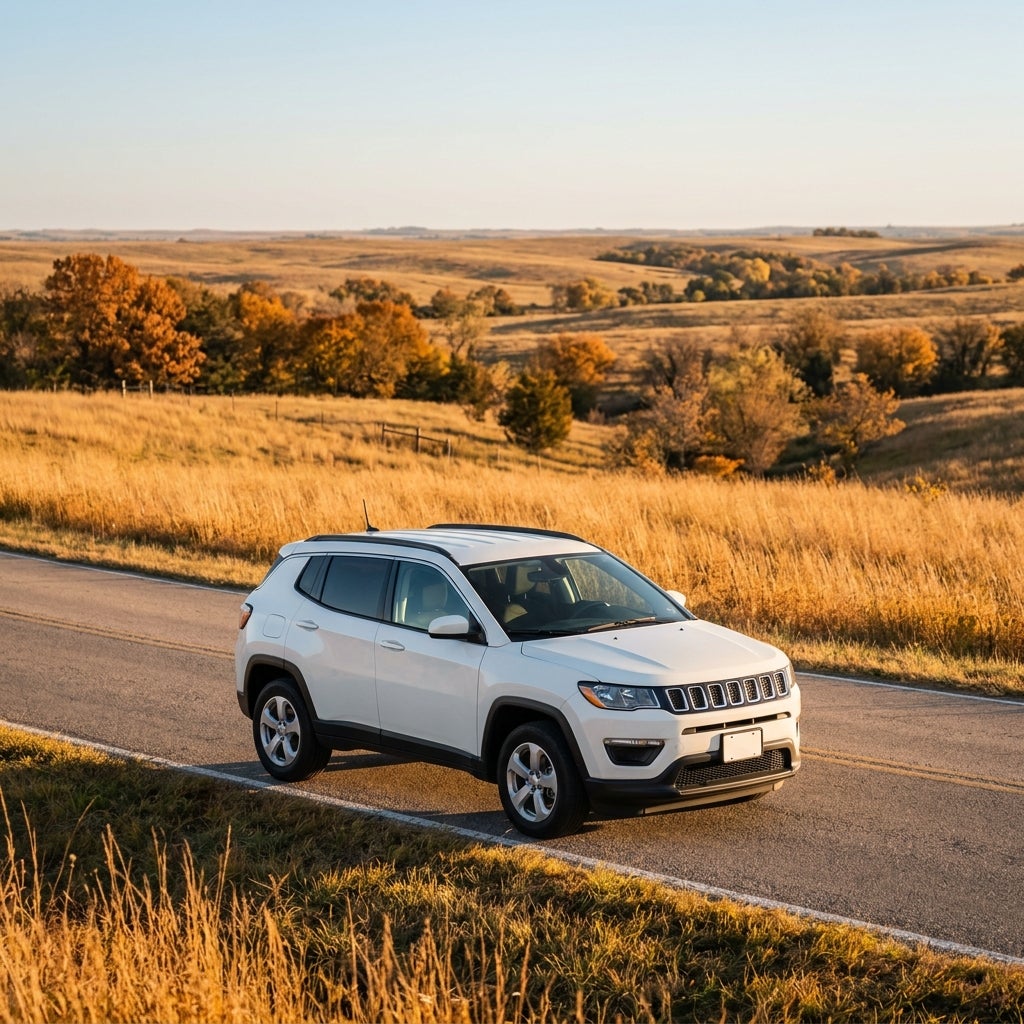
Contact Us

Fill out this form below and we'll contact you shortly
*Required Fields