How to Find the Exact Engine Oil Type Your Car Requires: The Direct Answer
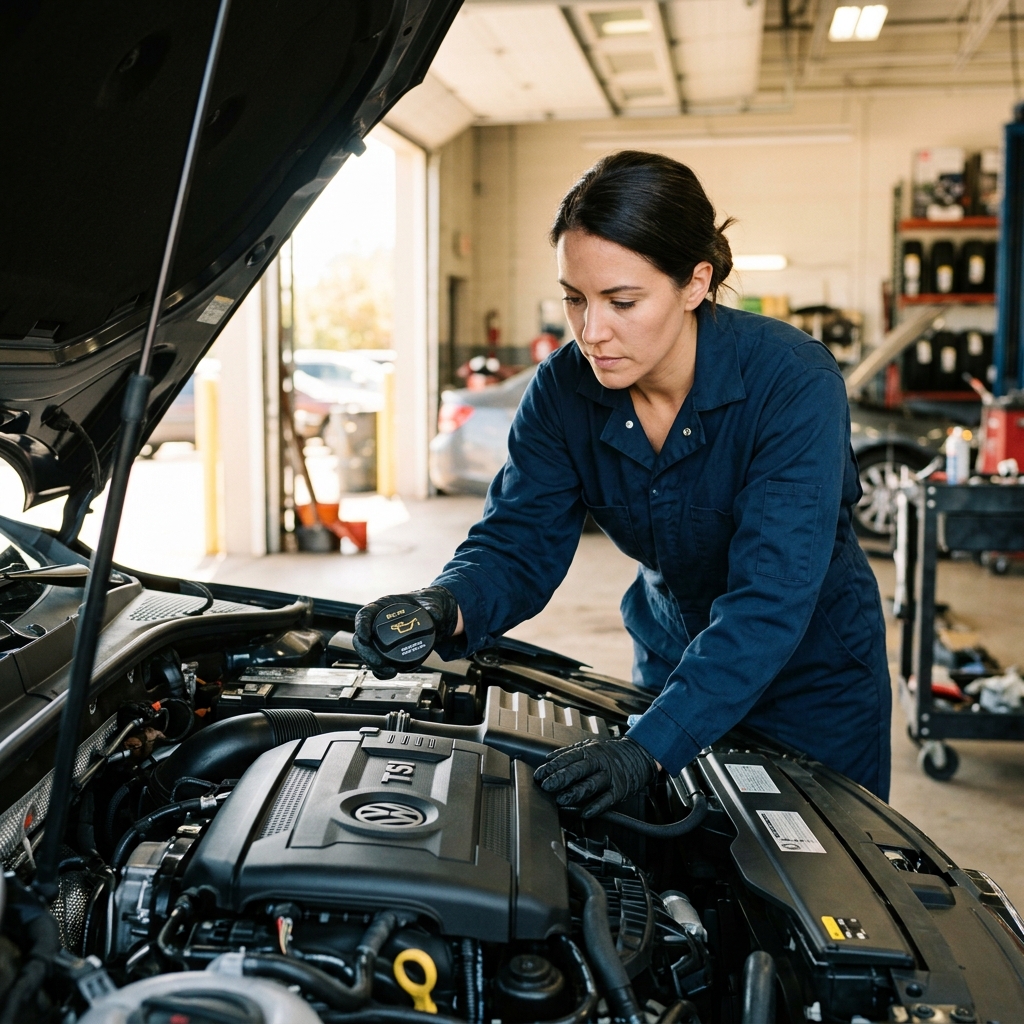
Determining the exact engine oil specification for your automobile does not require an engineering degree or hours of guessing. In fact, automobile manufacturers design vehicles with multiple immediate visual indicators and documentation checkpoints to ensure you never pour the wrong fluid into your crankcase. The single fastest method to verify your car’s required oil viscosity is to pop open the hood and inspect the yellow or black engine oil filler cap located directly on top of the engine valve cover. On modern Chrysler, Dodge, Jeep, and Ram vehicles, as well as virtually all modern domestic and import vehicles, the manufacturer explicitly stamps or molds the exact viscosity designation directly onto the cap surface—such as 0W-20, 5W-20, or 5W-30.
If your oil cap is worn, faded, missing, or aftermarket, your second immediate reference point is your vehicle’s physical owner’s manual. Turning directly to the index at the back under ‘Engine Oil Specifications’ or the ‘Maintaining Your Vehicle’ chapter will yield a detailed technical table. This table specifies not only the exact viscosity grade required for varying ambient temperature ranges, but also the specific OEM specification standards—such as Chrysler Material Standard MS-6395—and the precise total oil capacity including filter replacement (e.g., 5.0 quarts for a Pentastar 3.6L V6 or 7.0 quarts for a 5.7L HEMI V8). A third quick reference location is the tire pressure and loading placard printed on the driver-side door jamb, which occasionally cross-references fluid maintenance schedules for commercial and light-duty passenger platforms.
Using the precise motor oil grade specified by your car’s manufacturer is fundamental to long-term mechanical survival. Modern internal combustion engines utilize intricate micro-machined internal tolerances, variable valve timing (VVT) hydraulic solenoids, active fuel management/multi-displacement systems (MDS), and integrated turbochargers that depend entirely on instant oil pressure and specific fluid dynamics. Filling your crankcase with an incorrect viscosity—such as substituting a thick 10W-40 into an engine engineered for ultra-thin 0W-20—can restrict micro-channel oil flow during cold startups, causing severe metal-on-metal friction, hydraulic lifter noise, premature camshaft wear, and reduced fuel economy. When in doubt, visiting our Express Lane or speaking directly with our certified technicians at the Parts Department guarantees you receive the exact factory-approved lubricant tailored to your vehicle’s precise engine code.
How Do I Read the Numbers on My Oil Cap and Owner's Manual?
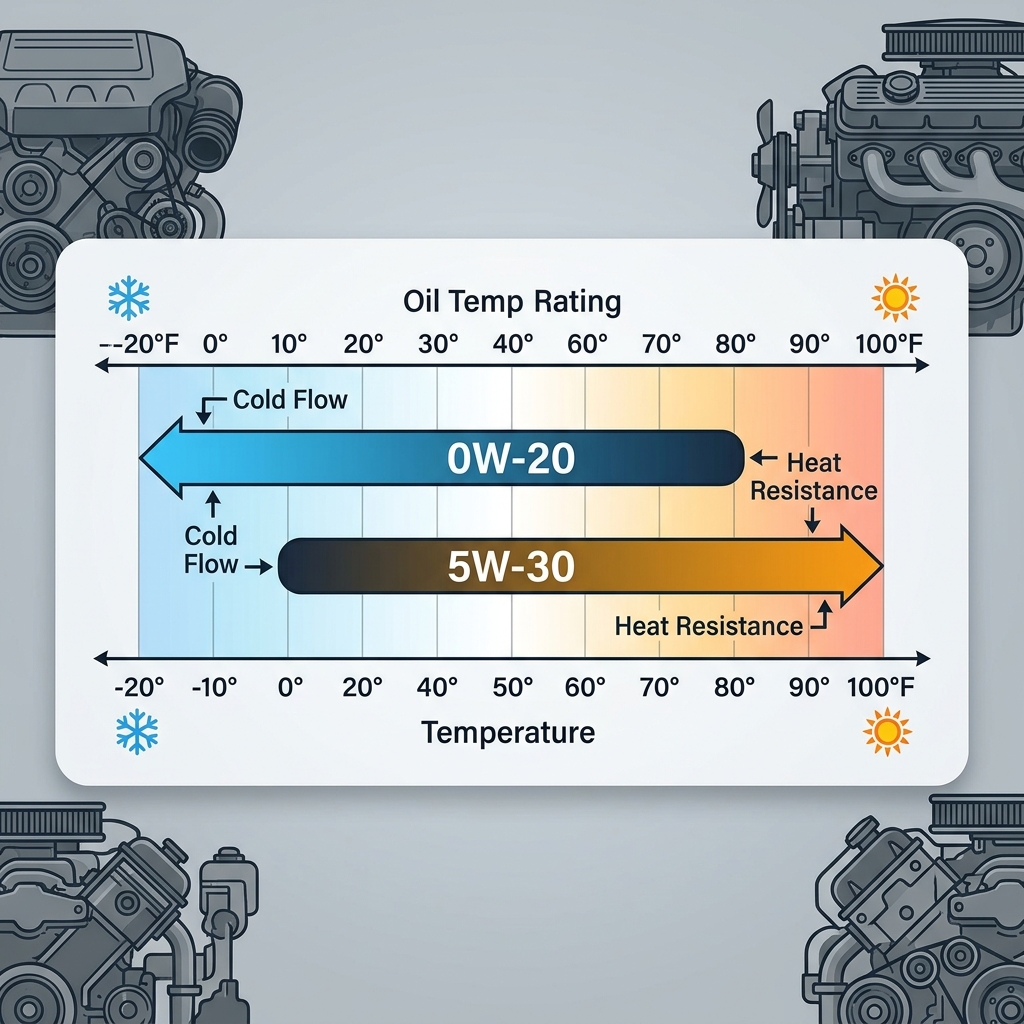
Deciphering motor oil labels requires understanding the standardized alphanumeric codes established by the Society of Automotive Engineers (SAE). When you see a rating like 5W-30, you are reading a multi-grade viscosity rating designed to perform across drastically different temperature extremes. The first number preceding the letter ‘W’(which officially stands for Winter, not weight) indicates the oil’s flow rate at low cold temperatures during engine startup. A lower rating—such as 0W or 5W—means the oil remains remarkably thin and fluid in sub-freezing conditions, pumping instantly to critical top-end engine components like overhead camshafts within milliseconds of cranking.
The second number following the hyphen (such as 20 or 30) represents the oil’s kinetic viscosity measured at normal operating engine temperatures (212°F / 100°C). A higher second number indicates that the oil maintains a thicker protective lubrication film under severe heat and high engine loads, preventing metal contact when towing or climbing steep highway grades. For example, 0W-20 flows extremely fast on freezing morning starts while maintaining adequate thin-film strength when warm, maximizing fuel efficiency in late-model engines.
However, matching the viscosity numbers on the cap is only half the battle. Modern vehicle manufacturers enforce mandatory OEM Material Specifications. For Chrysler, Dodge, Jeep, and Ram vehicles, motor oils must meet Chrysler MS-6395 certification. This rigorous internal specification tests oil anti-wear additives, sludge resistance, oxidation stability, and shear performance over tens of thousands of test miles. Merely buying off-the-shelf 5W-20 without checking for the MS-6395 approval seal on the back label can lead to premature carbon buildup, VVT actuator failure, and potential warranty claim complications.
Full Synthetic, Synthetic Blend, or Conventional: Which Engine Oil Do You Need?
Full Synthetic Oil
Chemically engineered from purified base stocks with uniform molecular sizes. Provides ultimate thermal resistance, prevents high-temperature varnish buildup, and flows effortlessly in extreme cold (-40°F). Mandatory for turbocharged engines (like the Hurricane 3.0L Inline-6) and high-compression modern V6/V8 powertrains.
Synthetic Blend Oil
A balanced mixture of conventional mineral oils combined with full synthetic base stocks. Offers improved resistance to oxidation and breakdown compared to conventional oils at a mid-tier price point. Often used in older non-turbocharged light-duty vehicles with standard maintenance schedules.
Conventional Mineral Oil
Refined directly from crude oil with natural molecular variations. Highly susceptible to thermal breakdown, breakdown sludge creation, and breakdown thinning under heavy load. Generally suitable only for vintage pre-2000s engine designs with wider tolerance gaps and strict 3,000-mile drain intervals.
Modern automotive engineering has made conventional motor oil less common in many modern Stellantis vehicles. Modern Chrysler Pentastar 3.6L V6 engines, 5.7L/6.4L HEMI V8 powertrains, and Hurricane Twin-Turbo engines utilize tight internal clearances and hydraulic MultiAir/VVT systems that require full synthetic formulations. Full synthetic oil maintains its viscosity index across extreme heat and shear force, ensuring that critical oil film layers do not break down when hauling trailers across Kansas highways.
How Many Miles Can You Actually Go Between Oil Changes?
The blanket rule of changing engine oil every 3,000 miles is an outdated relic of 1970s carbureted engine technology and low-grade conventional oils. Advanced full synthetic oil formulations combined with precision electronic fuel injection allow modern engines to safely extend oil drain intervals significantly under normal driving parameters. Today, many vehicles may have full synthetic service intervals around 7,500 to 10,000 miles or 12 months—whichever comes first, depending on the vehicle and driving conditions.
Rather than relying strictly on odometer distance, modern vehicles come equipped with an intelligent Oil Life Monitoring System (OLMS). The OLMS does not physically test the oil with an optical sensor; instead, complex software algorithms track total engine revolutions, ambient outside temperatures, cold startup cycles, stop-and-go idle time, engine load factors, and continuous operating durations. When the cluster light reads ‘Oil Change Required’ or shows 15% life remaining, service should be scheduled promptly.
It is critical to note that time is just as crucial as mileage. Even if you drive only 3,000 miles in a calendar year, moisture condensation, unburned fuel blow-by, and atmospheric combustion acids collect inside the engine oil pan. Over time, these corrosive elements degrade additive packages, making an annual oil change mandatory regardless of low mileage counts.
How Does Hot Kansas Summer Weather and Flint Hills Terrain Affect Engine Oil Life?
Driving conditions in Junction City, Manhattan, and surrounding Riley and Geary counties place distinct stress on internal engine oil chemistries. During Kansas summers, ambient temperatures frequently surpass 90°F to 100°F with severe humidity. High ambient heat elevates internal crankcase oil temperatures beyond 230°F, accelerating thermal oxidation. Thermal oxidation rapidly shears down oil viscosity, strips away anti-wear zinc/phosphorus additives, and promotes toxic varnish and carbon deposit buildup on cylinder walls.
Furthermore, rural Flint Hills driving involves unique environmental stressors. Navigating unpaved gravel backroads introduces microscopic airborne silica dust into engine bays. Severe temperature cycling—from scorching summer afternoons to rapid thunderstorm drops—creates thermal contraction that draws ambient airborne fine dust into air intake systems.
For soldiers and commuters traveling between Fort Riley, Junction City, and Manhattan along I-70 or K-18, daily stop-and-go gate traffic combined with prolonged idling drastically increases engine combustion hours relative to odometer miles. Additionally, towing boats, campers, or livestock trailers through rolling Flint Hills elevation gradients places intense pressure loads on main crankshaft bearings.
Because these regional operating factors fit manufacturer definitions for ‘Severe Duty Operating Conditions’, local vehicle owners should shorten standard oil drain intervals from 10,000 miles down to 5,000 to 6,000 miles. Protecting your powertrain against Kansas summer heat is essential whether maintaining your commuter car or considering a Trade In Evaluation on a new heavy-duty truck.
What Does an Oil Filter Do and Should It Be Replaced with Every Oil Change?
Trapping Contaminants
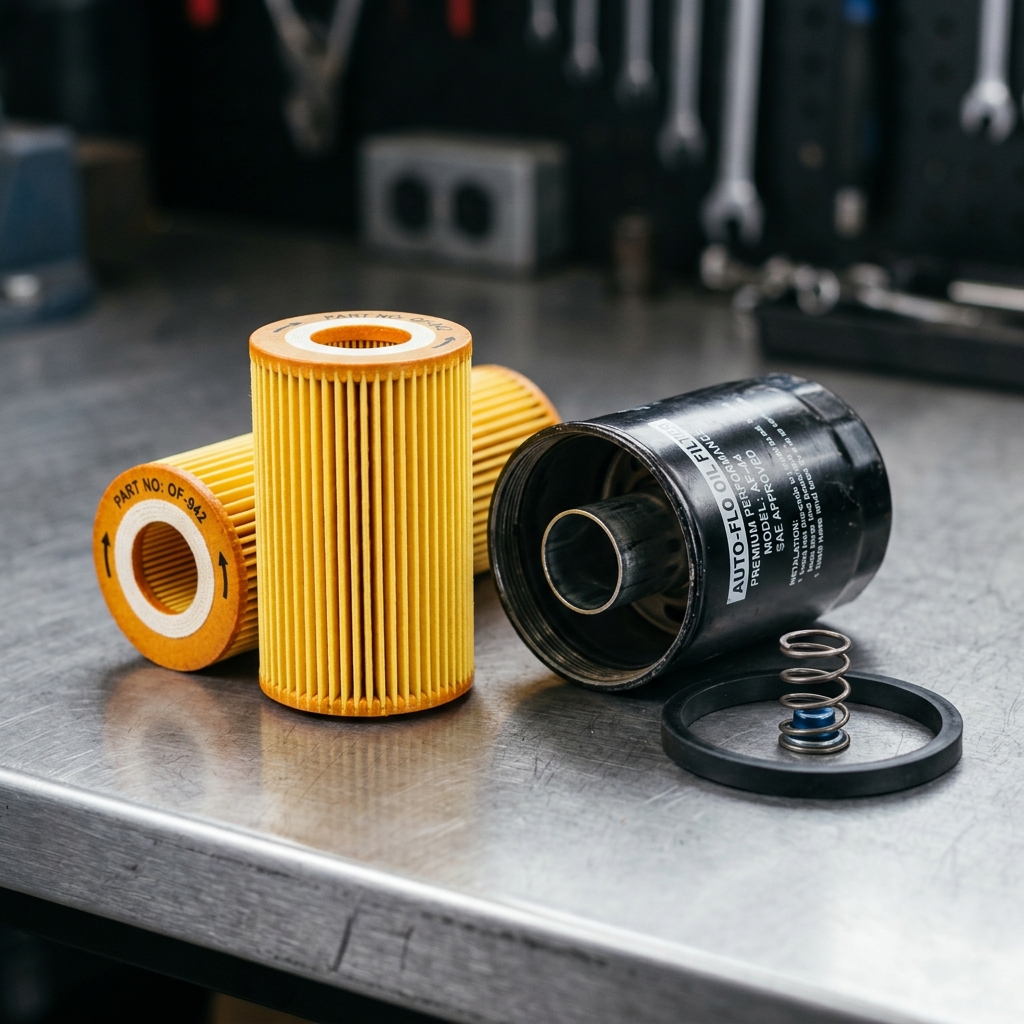
The engine oil filter acts as the primary defense system, capturing microscopic particles down to 25 microns (0.00098 inches). It traps metallic wear filings, soot, carbon ash, and atmospheric dust before they can circulate into delicate crankshaft bearings and camshaft journals.
Bypass Valve Operation
If an old oil filter becomes clogged with dirt and carbon, internal safety bypass relief valves open to prevent total oil starvation. When this occurs, unfiltered dirty oil pumps directly through the engine, causing catastrophic abrasive wear on engine components.
100% Replacement Rule
Replacing your oil filter during every oil change is generally recommended. An old filter holds roughly 0.5 to 1.0 quarts of dirty, oxidized oil. Leaving an old filter installed instantly contaminates brand-new synthetic oil the moment you turn the key.
What Additional Services Are Included in a Professional Oil Change Package?
When you choose certified dealership service at Valor CDJR rather than a high-speed express shop, an oil change is never just an isolated oil swap. It is an end-to-end multi-point preventive health check designed to identify minor mechanical issues before they turn into expensive breakdowns on the highway.
|
Service Checkpoint
|
Quick Lube Shop Routine
|
Valor CDJR Professional Package
|
|
Engine Oil & Filter
|
Generic bulk oil & basic paper filter
|
OEM Mopar filter & MS-6395 certified synthetic oil
|
|
Fluid Level Top-Offs
|
Basic windshield washer fluid only
|
Coolant, brake, transmission, washer, differential fluids
|
|
Battery Health Test
|
Visual check only
|
Digital conductance test with printed cold-cranking output
|
|
Brake & Tire Inspection
|
Tread depth visual glance
|
4-wheel brake pad digital millimeter check & tire inspection
|
|
Factory Recalls & Codes
|
Not checked
|
Automated Stellantis wiTECH recall check & system diagnostics
|
This holistic service process guarantees that every vital component under your vehicle’s hood—from cooling fan operation to suspension ball joints—is verified by factory-trained specialists. If your vehicle requires extensive upgrades or replacement, explore our New Vehicle Listings to see our latest inventory.
Can I Get a Tire Rotation Done at the Same Time as My Oil Change?
Combining your scheduled engine oil service with a 4-wheel or 5-wheel tire rotation is one of the smartest, most convenient maintenance routines you can establish. Because both tire manufacturers and vehicle engineers recommend rotating tires every 5,000 to 7,500 miles, the service intervals align perfectly with standard full synthetic oil change timing.
Front and rear tires experience vastly different wearing forces. On front-wheel drive and four-wheel drive vehicles, front tires handle steering forces, weight transfer under heavy braking, and cornering friction, causing front shoulders to wear twice as fast as rear treads. On Ram 1500 and Jeep 4×4 vehicles, executing proper cross-forward or rearward-cross rotation patterns balances tread wear across all four positions.
Regular rotation extends total tire service life by up to 20,000 miles, protects 4WD transfer cases from electronic strain caused by mismatched tire circumferences, and ensures maximum wet-traction safety during sudden Flint Hills rainstorms. If you are searching for pre-owned trucks or cars, review our quality Used Vehicle Listings for well-maintained options.
Will Getting an Oil Change at an Independent Shop Void My Vehicle Warranty?
A common fear among vehicle owners is whether having an oil change performed at an independent repair shop or quick-lube location will void their original factory powertrain warranty. Federal law provides clear protection on this exact subject under the Magnuson-Moss Warranty Act of 1975. Under this federal legislation, vehicle manufacturers cannot require you to use dealership service departments for routine scheduled maintenance to maintain warranty coverage.
However, this consumer protection comes with crucial obligations. To preserve your warranty rights, you must prove that scheduled maintenance was performed at required intervals using engine oil and oil filters that strictly comply with manufacturer specifications (e.g., Chrysler MS-6395 specification). If an independent facility uses generic bulk oil that lacks required additives and your engine suffers internal VVT failure, the warranty claim can be legally denied due to lubricant failure.
To safeguard yourself when using independent facilities, you must retain itemized receipts showing exact mileage, oil viscosity, oil brand, spec approvals, and part numbers. Alternatively, servicing your vehicle directly at Valor CDJR can reduce record-keeping burdens. Every oil change performed at our service department is automatically logged into the official Stellantis global service database, providing seamless proof of warranty compliance across North America.
Choosing Quality Oil Changes in Manhattan, KS, and Junction City Service Centers
Factory Technicians
Our service technicians undergo specialized Stellantis factory training. They know exact oil drain plug torque ratings, canister o-ring seal positioning, and specific oil capacity requirements for every Chrysler, Dodge, Jeep, and Ram engine architecture.
Genuine Mopar Parts
We exclusively install genuine Mopar oil filters engineered with synthetic media designed for high flow rates and strict particulate filtration, coupled with MS-6395 certified synthetic lubricants formulated specifically for your vehicle.
Advanced Diagnostics
While your oil is draining, our technicians run wiTECH factory diagnostic scans to verify PCM software updates, monitor sensor fault codes, and confirm safety recall statuses before you hit the road.
For vehicle owners living in Manhattan, KS, Fort Riley, Abilene, and Junction City, choosing high-rated service centers means balancing speed, expertise, and long-term value. While express quick-lube outlets prioritize rapid volume turnaround, they frequently utilize universal bulk oils and low-cost aftermarket filters that lack proper valving. Investing in factory-grade maintenance protects your vehicle’s resale value when looking to trade in or explore financing options through our Get Pre-Approved financing portal.
DIY Engine Oil Changes vs. Professional Certified Dealer Service
Performing a DIY engine oil change in your home garage can be a rewarding hands-on task, but modern automotive design has introduced significant complexity. Changing oil on modern vehicles requires specific equipment: hydraulic jack stands, specialized oil filter socket wrenches, low-profile drain pans, torque wrenches to prevent stripped oil pan threads, and proper disposal containers for hazardous fluids.
Environmental regulations in Riley and Geary counties strictly prohibit dumping used oil or filters in residential trash bins or storm drains. Transferring dirty oil into transport containers and transporting it to hazardous waste recycling collection hubs adds significant time and hassle to home maintenance attempts.
When comparing total costs—including purchasing 6 to 7 quarts of premium full synthetic oil, a high-grade filter, copper drain plug washers, and personal labor time—the financial savings of DIY oil changes are minimal. At Valor CDJR, our efficient service workflow, professional fluid recycling, and comfortable customer lounge with high-speed Wi-Fi deliver superior value and complete peace of mind.
Business owners managing fleets can also explore our dedicated Commercial Vehicle Inventory for heavy-duty work trucks backed by professional dealer maintenance packages.
Schedule Your Factory-Approved Oil Change at Valor CDJR in Junction City, KS
Protecting your engine’s longevity, horsepower, and fuel efficiency starts with applying the correct oil formulation at certified intervals. Whether you drive a Ram 1500 truck, a Jeep Grand Cherokee, a Dodge Charger, or a Chrysler Pacifica, the certified service team at Valor CDJR is here to deliver exceptional vehicle care tailored to Kansas driving conditions.
Tags: certified oil change service, engine lubrication care, engine oil specification, engine oil type, motor oil maintenance, OEM oil standards, oil change intervals, oil filter replacement, oil viscosity guide, professional vehicle maintenance, synthetic oil change, vehicle oil service
Posted in
Automotive Repair, Maintenance & Service, Service, Vehicle Ownership Care, Warranty & Coverage |
No Comments »