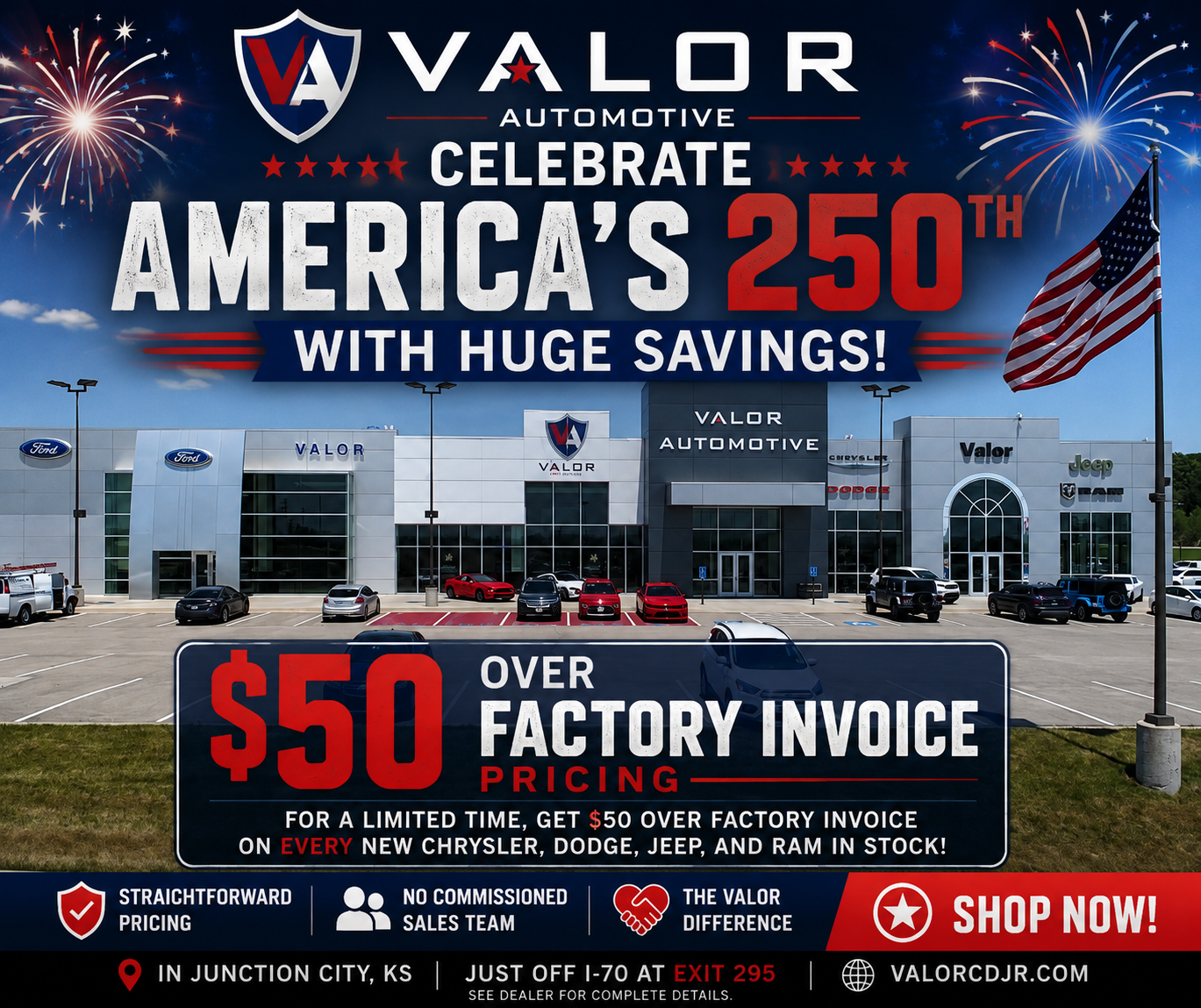
Save Big on $50 Over Invoice Pricing at Valor!
What Does $50 Over Factory Invoice Pricing Actually Mean for Your Total Cost?
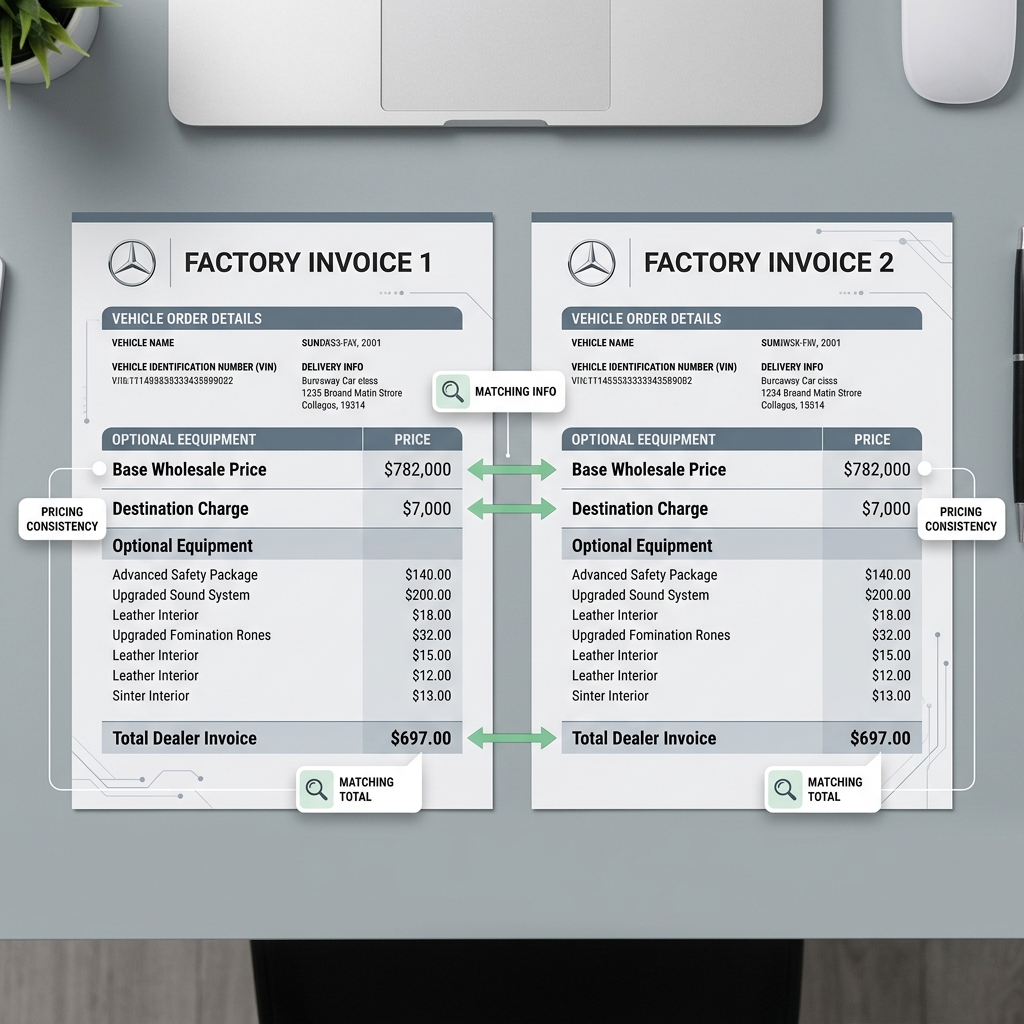
To understand the true mechanics of $50 over factory invoice pricing, one must distinguish between top-down pricing (MSRP discounts) and bottom-up pricing (building up from wholesale dealer cost). The MSRP—Manufacturer’s Suggested Retail Price—is the sticker price posted on the window. Factory invoice, on the other hand, represents the baseline cost charged by the manufacturer to the dealership for the specific vehicle build.
When a dealership agrees to $50 over factory invoice, the starting baseline sale price (Vehicle Selling Price line item) on your contract should equal the total invoice amount listed on the official OEM invoice sheet plus exactly $50.00. This calculation occurs before applying government taxes, state licensing fees, and applicable customer rebates.
It is crucial to remember that $50 over invoice is not necessarily your final ‘out-of-the-door’ price. Out-of-door price includes state and county sales taxes, motor vehicle registration/title fees, and dealer documentation fees. However, by establishing a firm, verified selling price at $50 above factory invoice, you eliminate inflated retail markups.
Whether you are shopping for a heavy-duty truck or an efficient sedan, establishing an unassailable baseline gives you complete financial clarity during negotiations across Geary and Riley counties.
What Is Included on an Official Car Factory Invoice Sheet?
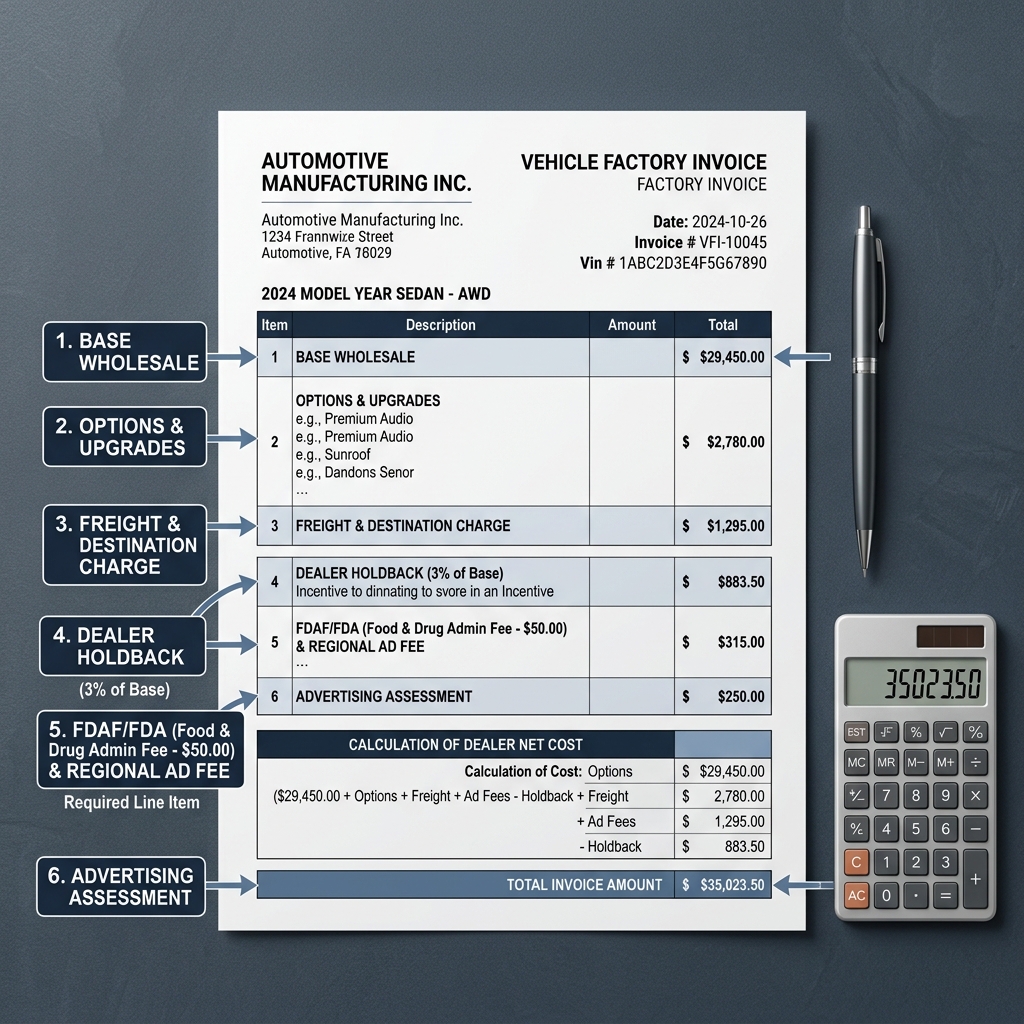
Base Wholesale & Options
The top lines of an authentic manufacturer invoice list the base model wholesale price alongside factory-installed options and packages. Each package (such as leather interior, tow packages, or advanced safety tech) has both an MSRP cost and a lower invoice cost. Verify that option codes match the window sticker exactly.
Destination & Freight
Destination or transportation charges are set by the manufacturer to ship the vehicle from assembly plant to dealership. Freight charges are identical on both MSRP and invoice sheets. Pay close attention to ensure the contract does not add a second ‘dealer freight’ charge on top of factory destination.
Regional Ad & Holdback
Official invoices often include legitimate regional advertising association fees (such as FDAF or TDA fees mandatory for local dealer groups). In addition, factory invoices display the dealer holdback amount and wholesale financial codes used internally by the manufacturer.
Can a Buyer Request to View the Actual Factory Invoice Document?
Yes, absolutely. A reputable dealership offering invoice-based pricing will readily share a copy of the official OEM factory invoice sheet. In fact, requesting to view the document is standard practice when verifying a $50 over invoice arrangement.
When reviewing the document, look for official manufacturer logos, specific vehicle identification numbers (VIN), vehicle order tracking numbers, and distinct columns showing ‘MSRP’ alongside ‘Invoice’. Beware of internal computerized dealer quote sheets that mimic the layout of a factory invoice but are generated internally.
At Valor CDJR, transparency is paramount. Whether you are reviewing New Vehicle Listings or visiting our showroom in Junction City, our team provides real factory documentation so you can audit every dollar with complete confidence.
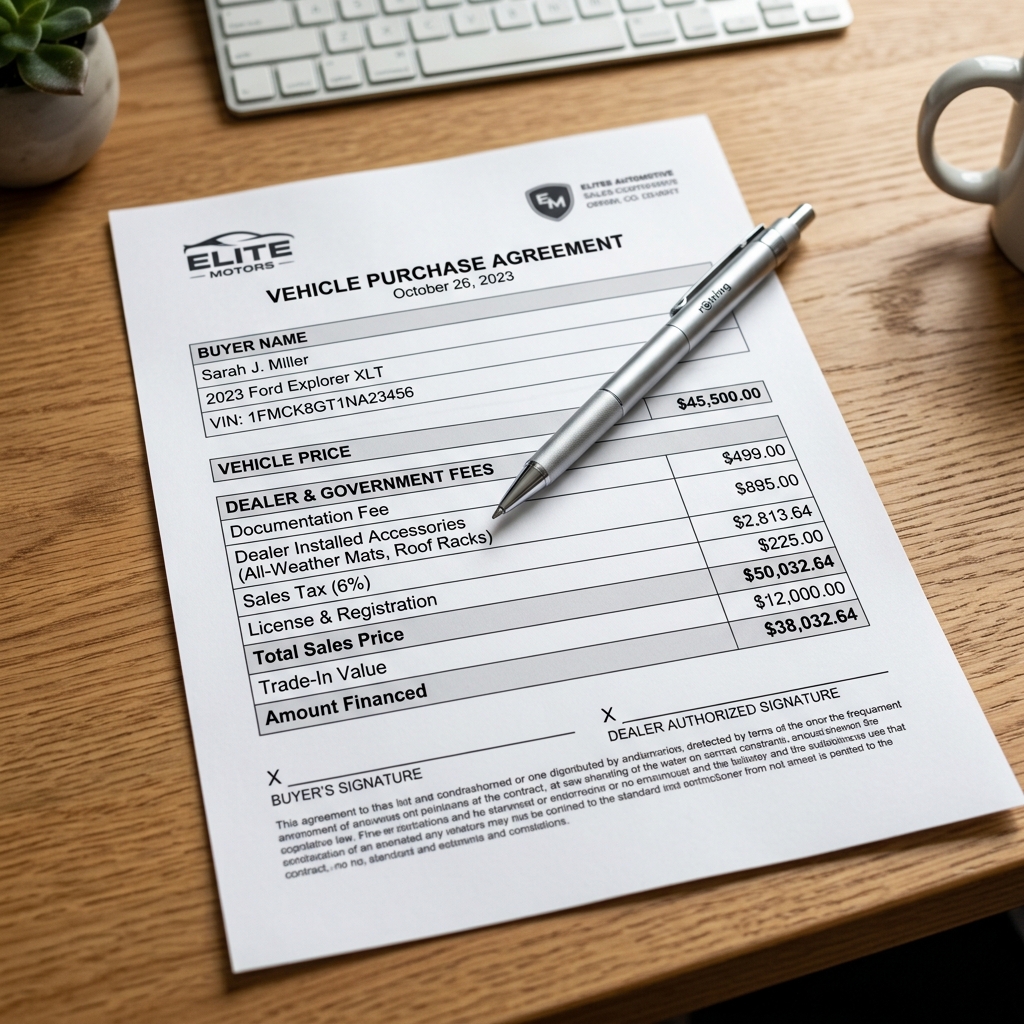
How Documentation Fees and Dealer Add-ons Can Alter a $50 Over Invoice Deal
The most common pitfall in invoice-based car buying involves backend administrative fees and dealer add-ons. You might successfully negotiate the selling price to $50 over invoice, only to find $1,200 in unexpected line items added to the final contract. Understanding these charges is essential to protecting your savings.
|
Paperwork Line Item
|
Legitimate vs. Red Flag
|
What to Check On Your Contract
|
|
Dealer Documentation Fee
|
Legitimate within reasonable limits
|
Ensure doc fee is stated upfront and not inflated post-negotiation.
|
|
Dealer Protection Packages
|
Red Flag if forced/unwanted
|
Verify tint, fabric guard, or nitrogen fills are optional, not mandatory.
|
|
Destination / Freight Charge
|
Legitimate when matching OEM invoice
|
Ensure destination fee isn’t listed twice (once on invoice, once as dealer charge).
|
|
VIN Etching / Theft Protection
|
Red Flag if auto-added
|
Check for pre-printed add-on lines and request removal if unrequested.
|
If you notice mandatory add-on fees on your contract, ask for them to be removed or credited back. A true $50 over factory invoice offer remains clean and transparent without artificial padding.
How Factory Incentives and Customer Rebates Apply to Invoice Pricing
A frequent point of confusion is whether factory rebates are included in the $50 over invoice price or applied on top of it. In proper car purchase accounting, customer rebates are funded directly by the vehicle manufacturer, not the dealership. Therefore, rebates apply after establishing the agreed vehicle purchase price.
For example, if factory invoice is $40,000 and you negotiate $50 over invoice, your starting sale price is $40,050. If the manufacturer offers $2,500 in consumer cash rebates, that rebate may be applied separately according to program rules and before taxes and state fees. The dealership still receives reimbursement from the factory for that $2,500 rebate.
Special targeted incentives—such as military discounts, college graduate rebates, or trade-in assistance programs—should also reduce your out-of-pocket obligation line by line. Be sure to audit your rebate eligibility with our finance specialists.
Ready to discuss financing options with rebate savings? You can easily Get Pre-Approved online to contact the dealership for current financing terms.
What Is Dealer Holdback and How Does It Impact Invoice Pricing?
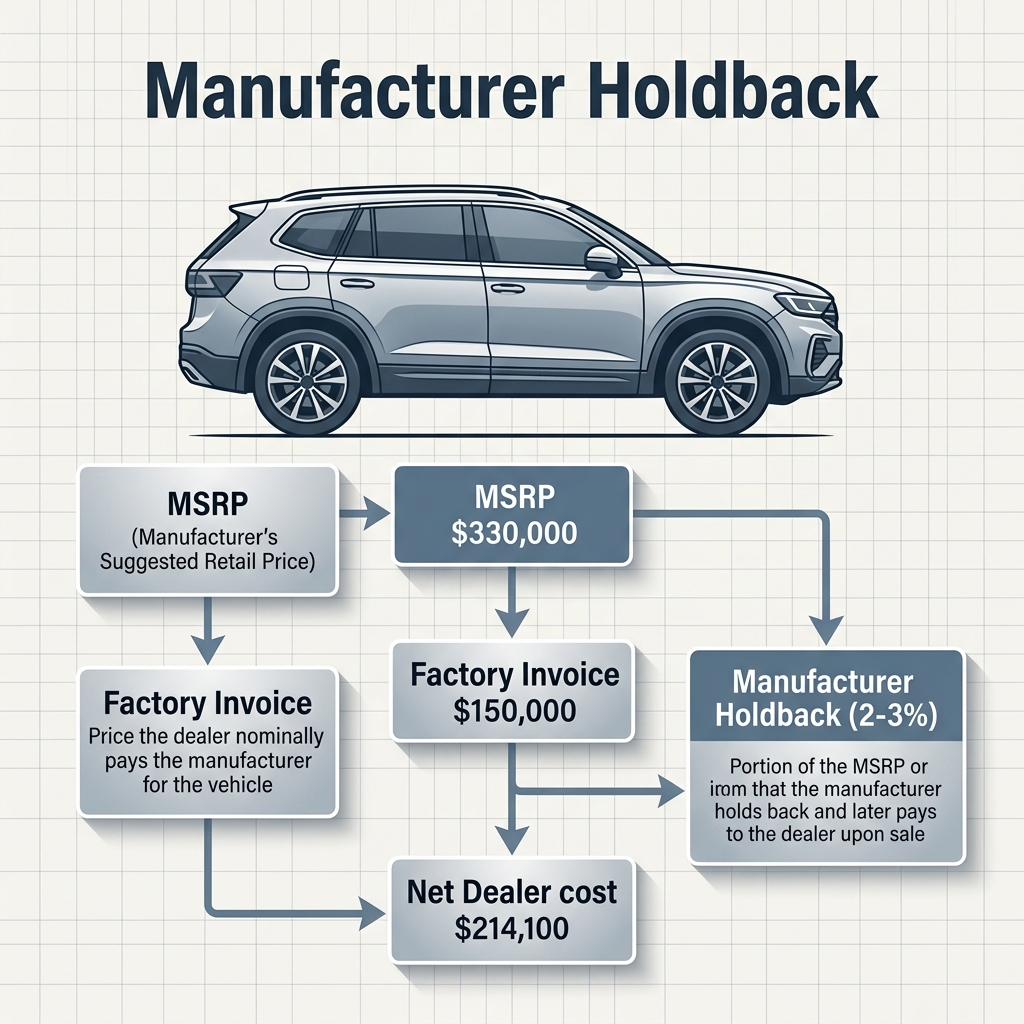
Definition of Holdback
Dealer holdback is a financial allowance paid by the automaker to the dealer after a vehicle is sold. It typically ranges between 2% and 3% of either the total MSRP or total invoice amount, depending on the manufacturer brand.
Why Dealers Offer It
Because holdback provides backend revenue to offset inventory floor plan expenses, a dealership can sell a vehicle at or near factory invoice while remaining financially viable and sustaining daily dealership operations.
Contract Accounting
Holdback is an internal factory accounting line item and is rarely deducted directly on consumer purchase agreements. However, understanding holdback gives buyers peace of mind that $50 over invoice is a fair, sustainable business model.
Is It Better to Negotiate Off MSRP or Off Factory Invoice When Looking for Value?
Top-down negotiation involves taking the window sticker price (MSRP) and asking for arbitrary dollar amounts or percentages off. While common, top-down negotiating can lead to confusion when comparing different vehicle trims, factory options, or competing dealer offers.
Bottom-up negotiation starting from factory invoice provides an objective financial anchor. Because factory invoice directly reflects manufacturer wholesale baseline numbers, negotiating $50 above invoice creates absolute consistency across diverse inventory choices.
Whether you are trading in a vehicle or buying outright, invoice-based clarity simplifies every aspect of the transaction. You can instantly test vehicle trade values using our online Trade In Evaluation tool before finalizing contract numbers.
Does Factory Invoice Pricing Vary From Dealer to Dealer?
For two identical vehicles with the exact same equipment, options, and trim levels, the base factory invoice price issued by the manufacturer is completely identical across dealerships nationwide. A Ram 1500 or Jeep Grand Cherokee ordered with identical package codes will have the exact same wholesale factory invoice sheet whether delivered in Kansas or elsewhere.
However, minor invoice differences can arise due to regional destination adjustments or factory price updates during mid-model-year production shifts. When comparing offers across local dealerships in Junction City, Manhattan, or Salina, inspecting the physical invoice sheet confirms whether you are looking at true identical vehicle specs.
Line-by-Line Paperwork Audit Checklist Before Signing Your Contract
Step 1: Match Invoice Baseline
Compare the top line item of the contract (‘Vehicle Selling Price’) against the OEM factory invoice sheet. Ensure it equals the invoice total plus exactly $50 before any additions.
Step 2: Audit Destination Charge
Confirm that factory destination and delivery charges are included in the invoice total, not listed a second time on the buyer’s order as a separate line item.
Step 3: Review Documentation Fees
Verify that the dealer doc fee matches what was disclosed during negotiations and is clearly itemized without unexpected administrative surcharge additions.
Step 4: Confirm Rebate Credits
Ensure all consumer cash rebates, bonus cash, or military incentives are subtracted below the vehicle purchase price line, reducing total tax burden where applicable.
Step 5: Check Trade Allowance
Verify your agreed trade-in value is accurately entered along with remaining loan payoff figures, ensuring correct tax credit application in Kansas.
Step 6: Remove Mandatory Add-Ons
Check for dealer accessories, tire protection, or window etch fees. Ensure optional protection plans are included only if specifically requested by you.
How Invoice Pricing Compares to Market Evaluation Pricing Tools
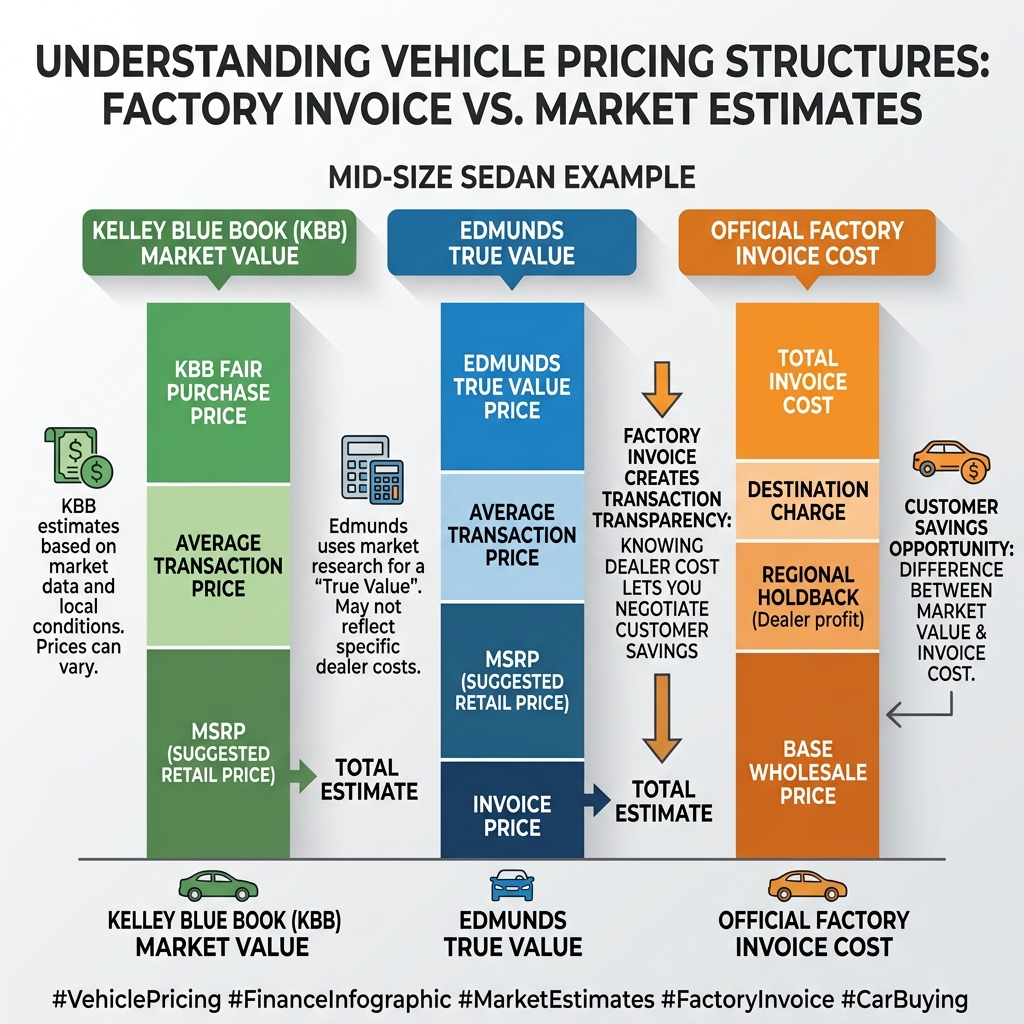
Third-party valuation platforms like Kelley Blue Book (Fair Purchase Price) and Edmunds (True Market Value) aggregate local transaction data to report average regional vehicle sale prices. Comparing these metrics against a $50 over invoice offer gives shoppers immediate context.
In most competitive vehicle markets across Flint Hills, negotiating a new vehicle at $50 over invoice lands well below the median market price reported by third-party tools. This confirms you are receiving a top-tier price without drawn-out negotiations.
Why $50 Over Invoice Is Considered Fair for Buyers and Dealers in Junction City
A transparent $50 over factory invoice pricing structure represents a true win-win model for military service members, university personnel, and families near Fort Riley and Junction City. For buyers, it delivers complete pricing certainty and eliminates stressful hours spent haggling over retail margins. For dealerships, it builds long-term community trust and supports sustainable business operations through steady transaction volume.
Whether you are looking for dependable work vehicles from our Commercial Vehicle Inventory or seeking a personal vehicle, straightforward invoice-based pricing guarantees equal financial respect for every customer.
Review Transparent Invoice Pricing and Plan Your Visit to Valor CDJR
If you are ready to experience a modern, transparent vehicle purchase, our dedicated team at Valor CDJR is here to assist. We invite you to review our transparent invoice offers, browse our quality pre-owned selection in Used Vehicle Listings, or stop by our Quick-Service Express Lane for quick vehicle care.
Tags: $50 Over Invoice Deals, Auto Financing Offers, Car Buying Process, Car Sales Tips, Dealer Documentation Fees, Factory Invoice Pricing, Invoice-Based Car Deals, Manufacturer Incentives, New Car Inventory, trade-in value, Transparent Car Buying, Vehicle Purchase Negotiation
Posted in
Buying Guides, Buying Guides & Dealership Services, Car Purchase Tips, Dealership Sales Strategies, Financing & Insurance, Local Automotive Events, Trade in Advice, Valor CDJR, Vehicle Financing & Trade-In Tips, Vehicle Pricing Strategies, Vehicle Trade-In Tips |
No Comments »