Why Should You Inspect Engine Fluids When the Engine Is Cold?
Checking your vehicle’s engine fluids when the motor is completely cold is not merely a old-school mechanic’s rule of thumb—it is an absolute physical necessity for diagnostic accuracy and personal safety. When an engine has sat overnight or for several hours, every drop of engine oil, coolant, brake fluid, and power steering fluid has stabilized into its true static equilibrium. Operating temperatures inside a modern internal combustion engine or heavy-duty turbodiesel range between 190°F and 230°F. At these high operating temperatures, fluid mechanics change dramatically: liquids expand in volume, oil actively circulates through tight engine passages, high-pressure cooling circuits build upwards of 18 PSI, and fluid levels on dipsticks become significantly distorted.
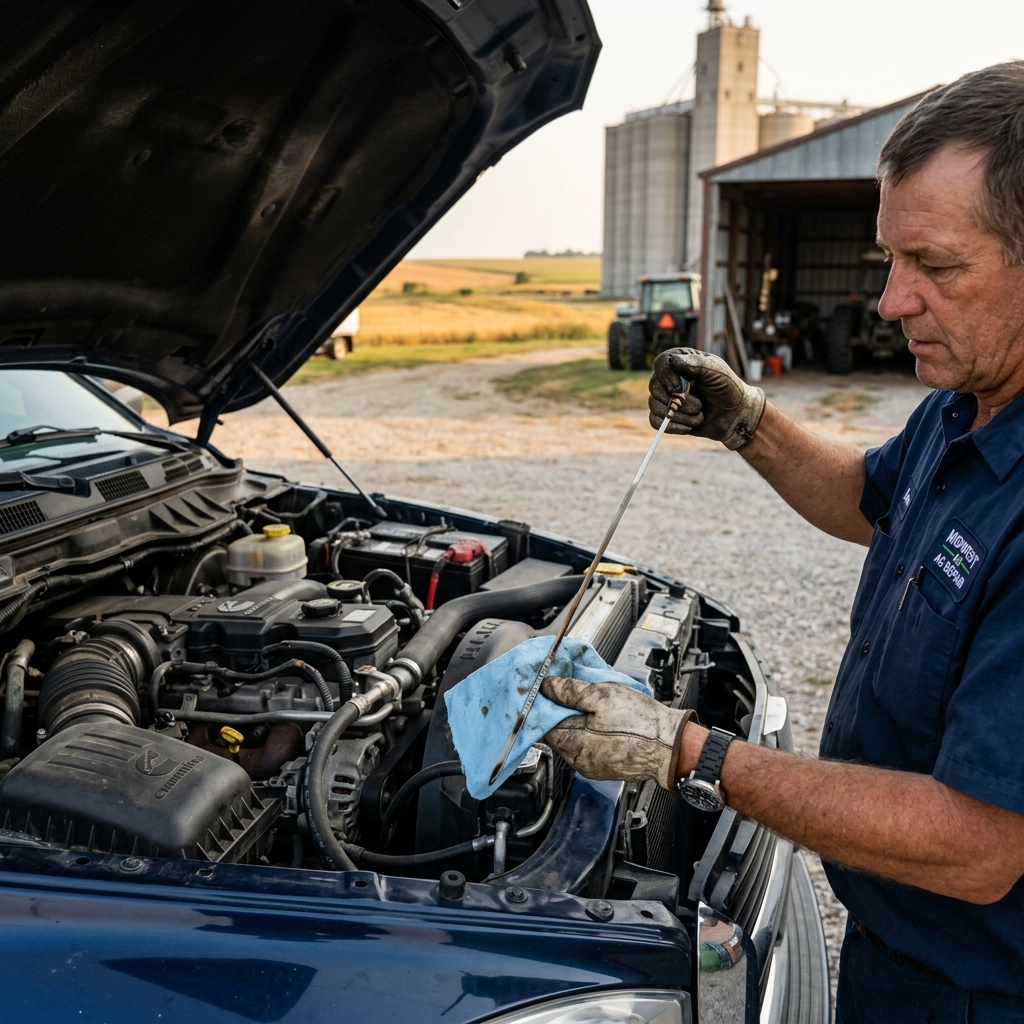
When you pull a dipstick out of an engine that was turned off just minutes prior, you are viewing an inaccurate picture. Up to a quart of oil remains trapped in the upper cylinder heads, lifter valley, valve train, oil cooler lines, and internal passages waiting to drain back down into the crankcase oil pan. If you read the dipstick at that exact moment, the level will appear falsely low. A well-meaning vehicle owner who immediately dumps a quart of oil into the filler neck will severely overfill the crankcase. Once the vehicle reaches full highway operating temperature on I-70 or Highway 77, that excess oil is churned into a thick, aerated foam by the rapidly spinning crankshaft. This aerated foam starves critical bearings of lubrication, ruins engine seals, and can cause catastrophic engine failure.
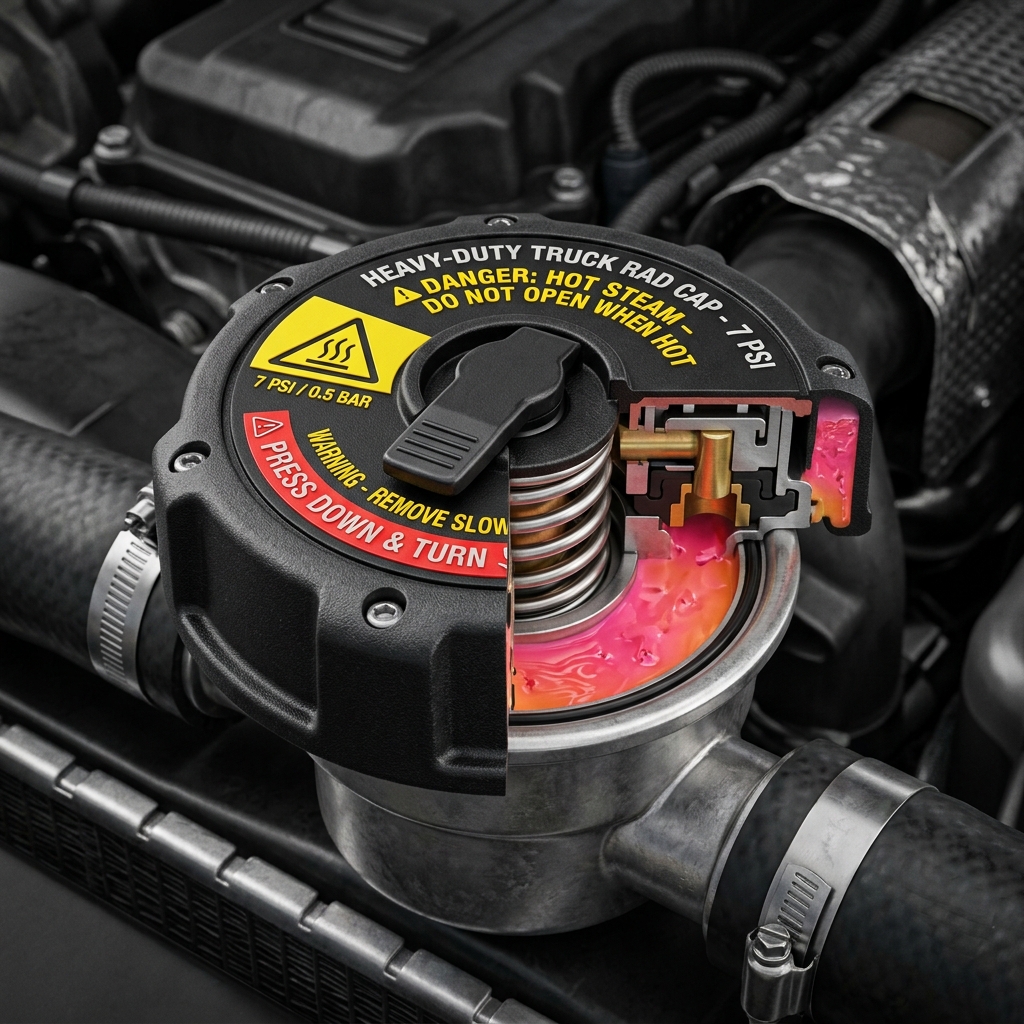
Beyond preventing costly misreadings, cold fluid inspections protect you from life-altering physical injuries. Modern pressurized cooling expansion tanks contain superheated ethylene glycol and water under immense thermal pressure. Opening a hot radiator cap or pressurized surge tank forces instantaneous depressurization, causing boiling liquid to flash into steam and erupt in a scalding shower. Inspecting fluids when the powertrain is resting cold eliminates the danger of pressurized fluid spray, protects your skin from burning hot metal components, and guarantees that every measurement you take matches OEM dipstick calibration marks.
Meet Mike Hogg: 20 Years of Service Direction in Northeast Kansas
For over two decades, Mike Hogg has served as the Service Director at Valor CDJR in Junction City, Kansas. Having overseen tens of thousands of repair orders, routine service procedures, fleet maintenance programs, and complex powertrain overhauls, Mike has established himself as one of Northeast Kansas’s premier mechanical authorities. His diagnostic background spans heavy agricultural equipment, commercial haulers, Ram HD work trucks, and daily passenger commuters across Geary, Riley, and Dickinson counties.
Mike’s technical perspective is rooted in real-world prairie conditions. In Northeast Kansas, vehicles contend with severe temperature swings—ranging from sub-zero winter mornings to 105°F summer harvest heat. ‘In my 20 years in this shop,’ Mike notes, ‘the single most common reason we see blown crankshaft seals, leaking valve covers, or premature turbocharger bearing wear on heavy-duty diesels is poor fluid maintenance habits. People check their oil at a gas station right after running 70 mph down I-70, see a low reading on a bone-hot dipstick, dump in extra oil, and accidentally destroy their engine seals. Understanding basic fluid physics saves drivers thousands of dollars.’
Under Mike’s leadership, the service department at Valor CDJR has expanded its specialized diagnostic suites for Mopar powertrains, including the 5.7L and 6.4L HEMI V8s, 3.6L Pentastar V6s, and high-output 6.7L Cummins Turbo Diesel engines. Mike works directly with agricultural operators, commercial fleet managers, and local family drivers to establish proactive preventative maintenance routines tailored to local terrain and severe duty cycles.
Thermal Expansion and Fluid Physics: How Engine Heat Distorts Volume Readings
1. Volumetric Thermal Expansion
All liquid automotive fluids expand as their kinetic temperature increases. Engine oil, transmission fluid, and glycol-based coolants have specific volumetric expansion coefficients. When engine oil warms from a room temperature of 68°F to an operating temperature of 210°F, its total volume expands by approximately 4% to 6%. In a large commercial engine or a 12-quart Cummins 6.7L Turbo Diesel system, that thermal expansion accounts for nearly half a quart of liquid volume expansion. Inspecting hot fluid without accounting for expansion leads to misjudging true oil mass.
2. Drain-Back & Retention Delays
When a engine runs, the high-displacement oil pump forces several gallons of fluid per minute through internal oil galleries, pushrods, overhead camshaft channels, variable valve timing phasers, and turbocharger cooling circuits. When you shut off the ignition, gravity slowly draws this oil back into the lower pan. Completing full thermal drain-back takes anywhere from 15 to 30 minutes. Reading the dipstick immediately after engine shutdown guarantees a reading that misses the substantial volume still coating internal engine surfaces.
3. Hydraulic Sloshing & Aeration
In a running or recently stopped engine, fluid sloshes vigorously inside reservoirs and oil pans. Rapid mechanical motion introduces micro-air bubbles into the fluid matrix—a phenomenon known as fluid aeration. Aerated oil clings to dipsticks unevenly, producing streaky, inaccurate oil lines above or below the true level mark. Cold engine fluids have settled completely, releasing all trapped air pockets, providing a crisp, sharp, non-distorted liquid line against factory gauge cross-hatch marks.
Preventing Severe Burns: Pressurized Cooling Systems and Hot Fluid Hazards
Safety is the paramount reason automobile manufacturers universally recommend cold fluid inspections in owner manuals. Automotive cooling systems operate under pressure—typically 14 to 18 pounds per square inch (PSI). Raising the system pressure elevates the boiling point of the 50/50 coolant mixture from 212°F to upwards of 265°F. When you loosen a pressure cap on a hot expansion tank, you instantly reduce system pressure back to ambient atmospheric level. Superheated fluid immediately violently boils into expanding steam.
The sudden expansion causes scalding coolant spray to erupt from the filler neck, posing extreme risk of severe second- and third-degree facial and hand burns. Furthermore, engine exhaust manifolds, turbochargers, and EGR piping reach temperatures well over 500°F during normal driving. Reaching around hot manifolds to pull oil dipsticks or open brake fluid reservoirs presents severe burn hazards. Inspecting fluids when the vehicle has cooled completely eliminates all pressure risks and thermal burn hazards.
If you suspect a cooling leak or need professional assistance checking your powertrain safety, schedule an appointment through our Service Scheduler today.
In 20 Years of Service, Overfilling from Hot Dipstick Checks Is the Most Common DIY Mistake
“Over my 20 years directing automotive service in Junction City, I’ve seen hundreds of engines severely damaged not because drivers ignored their fluid levels, but because they checked them at the wrong time,” explains Mike Hogg, Service Director at Valor CDJR.
When a driver stops at a highway rest stop or fueling station and immediately pulls the dipstick, 15% to 20% of the engine’s oil is still clinging to internal cylinder walls, timing chains, and cylinder head drain passages. The dipstick reads below the ‘SAFE’ crosshatch zone. Thinking the engine is dangerously low, the driver adds a quart or two from an auto parts store shelf. When that vehicle sits overnight and all the oil drains back down, the crankcase is now overfilled by up to 1.5 quarts. During high-RPM highway driving, the rotating crankshaft counterweights physically whip the surface oil into a frothy air-filled whip. Oil pumps cannot pump aerated foam effectively. Oil pressure drops, hydraulic valve lifters collapse, crankcase pressure blows out main rear radial seals, and turbocharger oil seals fail. All of this damage traces back to a single hot dipstick check.
Cold Engine Fluid Checklist: Step-by-Step Breakdown for Oil, Coolant, and Brake Fluid
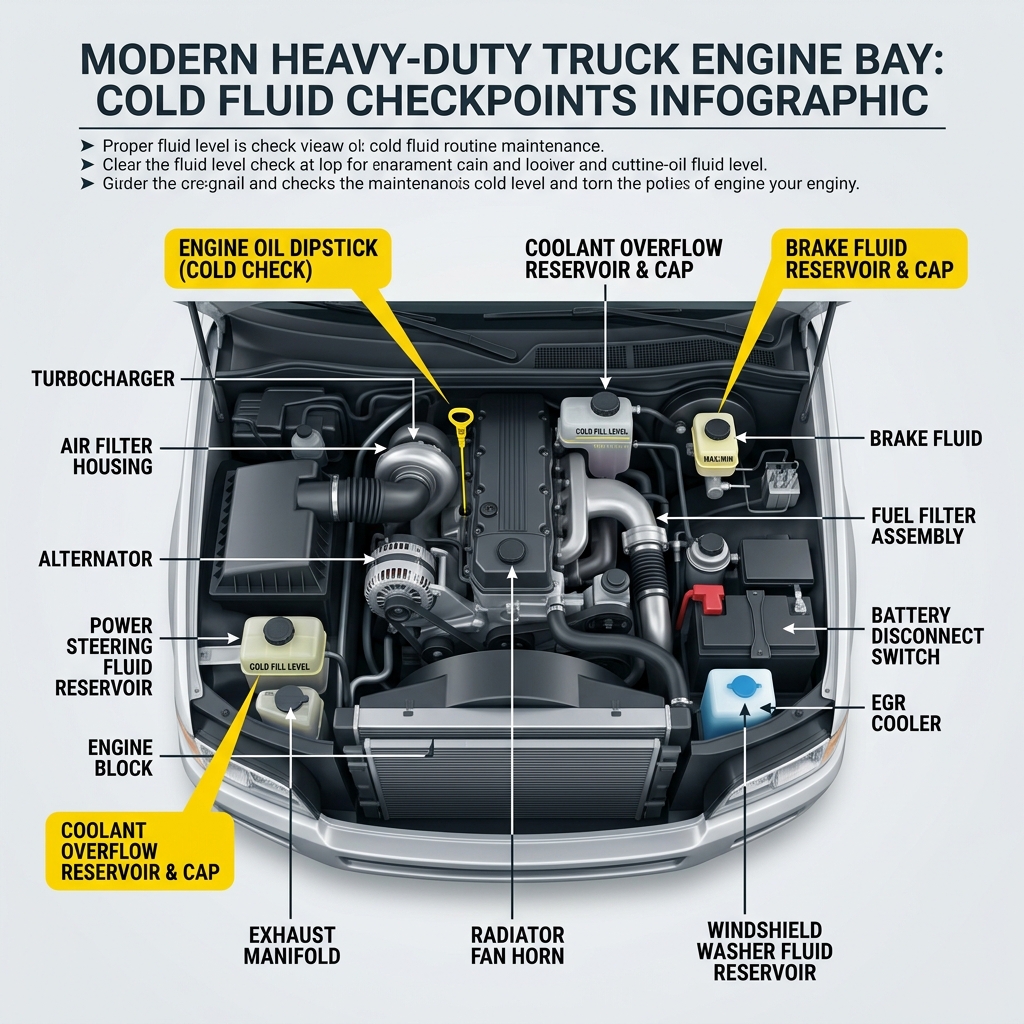
Engine Oil Check Procedure
1. Park on Flat Level Ground: Vehicle angle severely shifts oil pan liquid level.
2. Pull & Wipe Clean: Pull dipstick out completely, wipe clean with lint-free shop towel.
3. Full Re-Insertion: Push dipstick all the way down until seat locks.
4. Verify Level: Ensure oil line rests between MIN and MAX crosshatches. Liquid should be amber to light brown.
Coolant Reservoir Check
1. Cold System Only: Verify engine has been off for at least 3-4 hours.
2. Visual Translucent Tank Check: Look at translucent expansion tank side wall.
3. Observe COLD FILL Line: Liquid must align precisely with external COLD MIN/MAX indicators.
4. Inspect Fluid Integrity: Check for cloudy contamination, oil sheen, or rust discoloration.
Brake & Steering Check
1. Master Cylinder Reservoir: Inspect translucent reservoir level without opening cap to prevent moisture contamination.
2. Fluid Clarity: Fresh DOT 3/4 brake fluid is clear/amber; dark moisture-contaminated fluid requires flushing.
3. Power Steering Cold Indicator: Dipsticks have distinct HOT and COLD hash marks; read COLD side only.
|
Fluid Type
|
Optimal Cold Inspection Condition
|
Target Gauge Level
|
Common Warning Signs
|
|
Engine Oil
|
Cold engine, 30+ mins after shutoff
|
Middle of crosshatch grid
|
Milkshake emulsion, milky residue
|
|
Engine Coolant
|
Ambient morning temperature
|
COLD FILL line on translucent tank
|
Oily film surface, rusty brown color
|
|
Brake Fluid
|
Cold vehicle on level surface
|
MAX line on master cylinder
|
Dark brown/black color (moisture absorbed)
|
|
Power Steering
|
Engine off, unpressurized
|
COLD mark on reservoir dipstick
|
Burnt odor, foamy micro-bubbles
|
Preparing Your Ram Heavy-Duty Truck for the Northeast Kansas Harvest Season
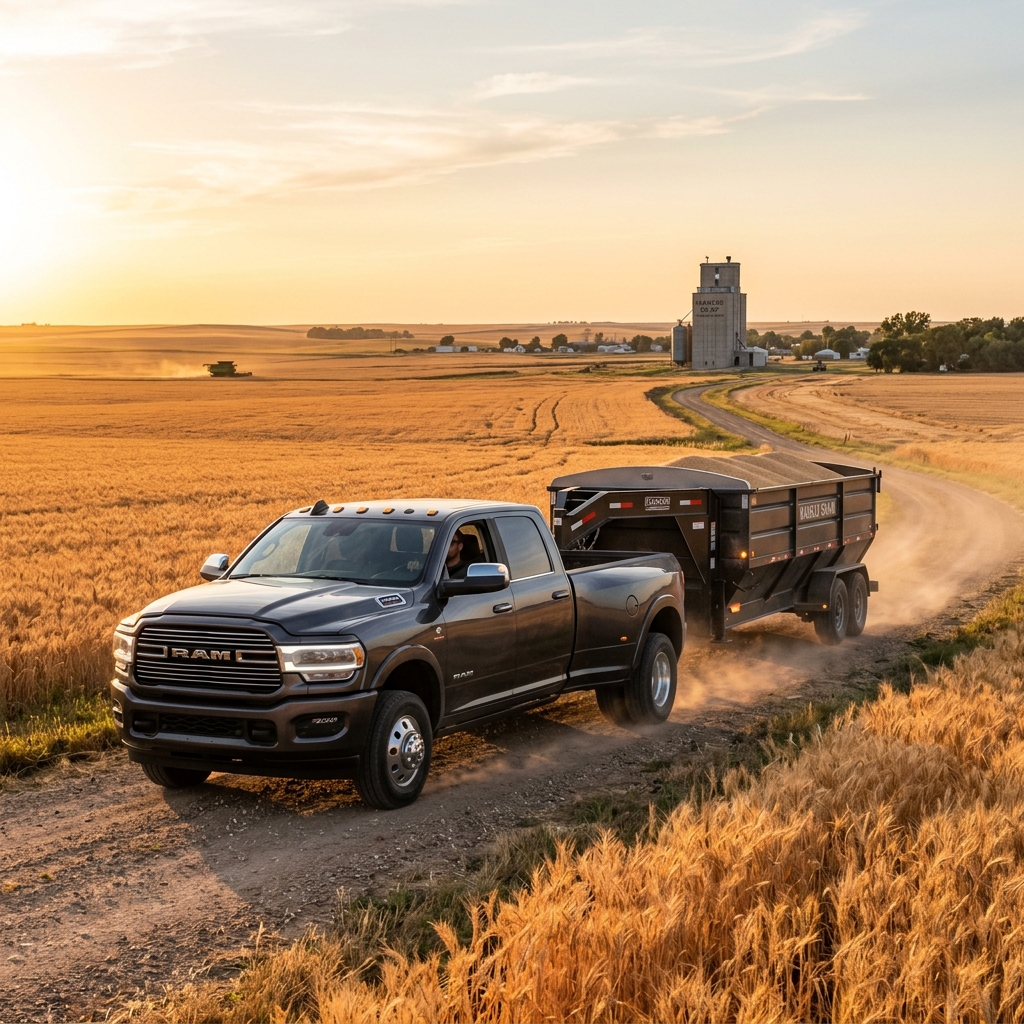
Late summer and early autumn bring intensive harvest operations across Geary, Riley, and Dickinson counties. Farmers and commercial livestock transporters rely heavily on Ram 2500 and Ram 3500 workhorses to move massive grain hoppers, equipment trailers, and livestock trailers. Harvest season driving demands continuous maximum duty cycles under ambient prairie heat that often exceeds 95°F.
Before hitching up heavy loads, performing a comprehensive morning cold fluid inspection is vital. A 6.7L Cummins Turbo Diesel pulling 15,000+ pounds up rolling Flint Hills inclines generates tremendous thermal stress. Oil viscosity breaks down exponentially faster under continuous thermal load. Verifying correct cold oil, coolant, transmission, and differential fluid levels each morning before starting harvest operations prevents roadside breakdowns during time-critical farm schedules.
Need quick walk-in maintenance before header transport starts? Stop by our quick-service Express Lane for quick fluid checks and filter services.
Can a Ram 2500 Legally Haul a Fully Loaded 14,000 lb Livestock or Grain Trailer in Kansas?
Yes, a properly configured 2024 Ram 2500 Heavy Duty can legally and safely pull a 14,000 lb livestock or grain trailer in Kansas. When equipped with the 6.7L Cummins Turbo Diesel I6 engine, the 2024 Ram 2500 delivers a maximum conventional towing capacity of up to 19,990 lbs and a maximum gooseneck/5th-wheel towing capacity approaching 20,000 lbs (depending on cab configuration, axle ratio, and option packages).
However, legal compliance in Kansas depends on Gross Combination Weight Rating (GCWR), Gross Axle Weight Ratings (GAWR), tongue/pin weight limits, and class of driver’s license (CDL requirements kick in when combined GVWR exceeds 26,001 lbs in commercial usage). Hauling 14,000 lbs subjects the transmission fluid, rear axle differential lubricant, and engine cooling system to extreme mechanical forces. Verifying pristine cold fluid integrity prior to hitching up is critical to prevent severe thermal degradation and rear axle bearing failure.
Ram 2500 Heavy-Duty Towing Overview
• Engine: 6.7L Cummins Turbo Diesel / 6.4L Heavy Duty HEMI V8
• Max Conventional Towing: Up to 19,990 lbs
• Max Payload: Up to 4,010 lbs (6.4L HEMI)
• Target Trailer Weight: 14,000 lbs (Well within capacity limits)
• Critical Maintenance: Cold fluid checks on engine oil, 68RFE transmission fluid, transfer case, and AAM rear differential.
Which Truck Has a Higher Payload Capacity Between the Ram 3500 and Ford F-350?
Ram 3500 Dual Rear Wheel Capabilities
When maxed out in Regular Cab 4×2 Dually configuration with the 6.4L HEMI V8, the Ram 3500 delivers an impressive maximum payload capacity of up to 7,680 lbs. When equipped with the High-Output 6.7L Cummins Diesel, payload remains elite while offering an astounding 1,075 lb-ft of torque for heavy trailer pin loads.
Ford F-350 DRW Payload Comparison
The Ford F-350 DRW in Regular Cab 4×2 gas configuration offers a maximum payload capacity of up to 8,000 lbs. Both heavy-duty trucks trade top ranks depending on specific cab, bed, engine, gas vs diesel, and axle trim specifications selected.
Thermal Fluid Strain Under Max Payload
Carrying 7,000+ lbs of payload in the truck bed exerts intense load on rear axle differential fluids and heavy-duty transmission torque converters. Higher payload forces fluid temperatures over 220°F. Checking cold differential fluid level and clarity before loading heavy farm supplies is vital.
|
Spec Category
|
2024 Ram 3500 Heavy Duty
|
2024 Ford F-350 Super Duty
|
|
Max Gas Payload
|
Up to 7,680 lbs (6.4L V8)
|
Up to 8,000 lbs (7.3L V8)
|
|
Max Diesel Torque
|
1,075 lb-ft (6.7L HO Cummins)
|
1,050 lb-ft (6.7L Power Stroke)
|
|
Max Gooseneck Towing
|
Up to 37,090 lbs
|
Up to 38,000 lbs
|
|
Rear Differential Oil Capacity
|
4.2 Quarts (AAM 12.0 Axle)
|
4.0 Quarts (Dana M300)
|
Can a Dealer Set Up a Maintenance Plan for My Work Truck or Commercial Fleet?
Absolutely. Valor CDJR specializes in customized commercial fleet maintenance plans designed specifically for agricultural operations, trade contractors, municipal vehicles, and business fleets in Junction City, Manhattan, and surrounding Geary County. We recognize that downtime directly impacts your bottom line.
Our structured commercial maintenance plans incorporate scheduled fluid analysis, OEM Mopar synthetic lubricant refills, heavy-duty cooling system flushes, transmission service, and routine multi-point inspections. We set up pre-scheduled morning drop-offs or priority bay servicing to ensure cold fluid checks and routine maintenance are performed with zero disruption to your daily work schedule.
Need genuine OEM fluids or thinking about updating your commercial fleet? Visit our Parts Department or schedule a commercial fleet appraisal with our Trade In Evaluation team.
Where Is the Nearest Dealership for Ram Service and Fluid Maintenance in Junction City?
Valor CDJR Service Center Location
Valor CDJR is conveniently located at 1825 Goldenbelt Blvd, Junction City, KS 66441. Located directly off Interstate 70 and Highway 77, our service center is easily accessible for drivers from Junction City, Manhattan, Fort Riley, Abilene, and surrounding rural communities across Northeast Kansas.
Contact & Express Lane Service
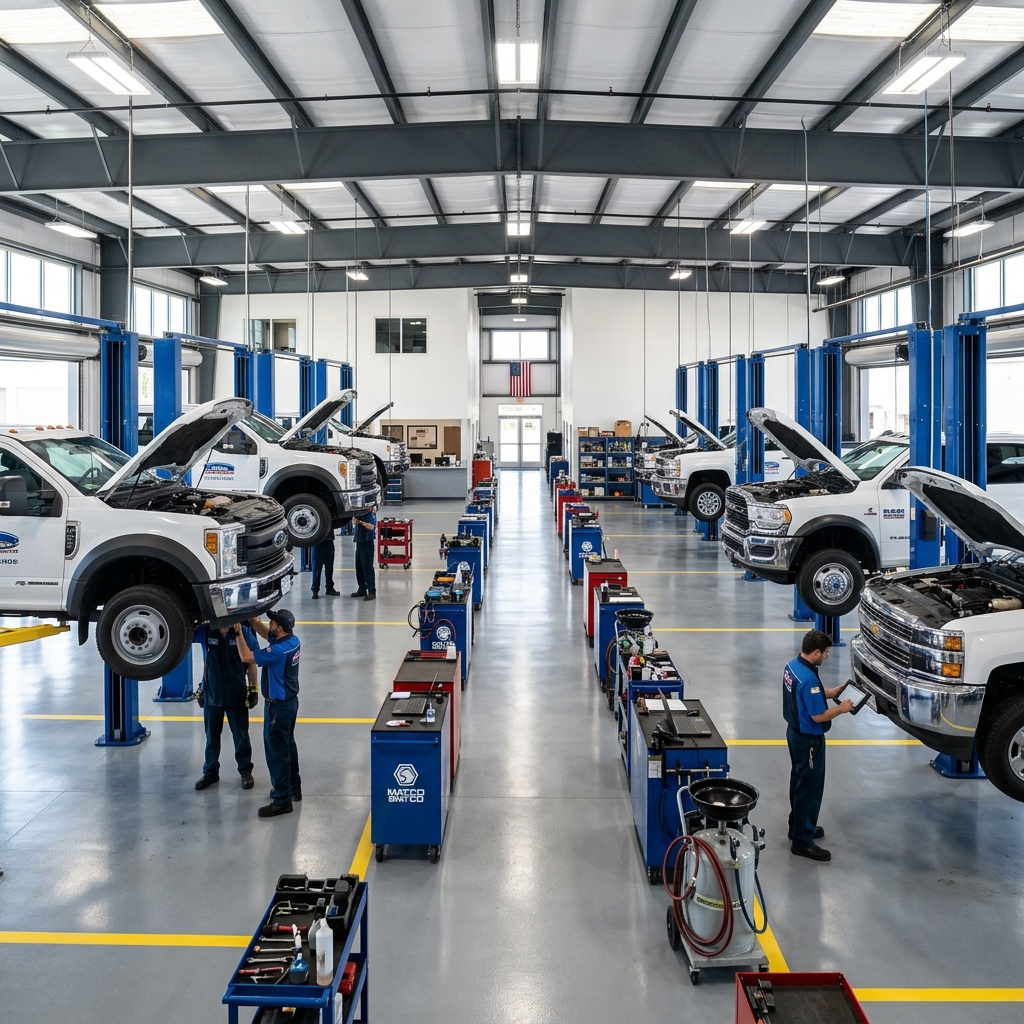
Our service center features factory-trained Mopar master technicians, high-capacity heavy-duty hydraulic lifts capable of accommodating commercial Ram trucks, full fluid analysis tools, and complete genuine Mopar parts inventory.
Schedule Your Heavy-Duty Service and Professional Fluid Inspection at Valor CDJR
Don’t gamble with inaccurate fluid readings or thermal engine wear. Protect your heavy-duty truck, commercial fleet, or daily family vehicle with expert maintenance backed by 20 years of regional service experience in Northeast Kansas. Book your appointment online today or visit Valor CDJR in Junction City.