Gas vs. Diesel for Short-Trip Kansas Farmland Driving: The Bottom-Line Answer from 20 Years in the Service Bay
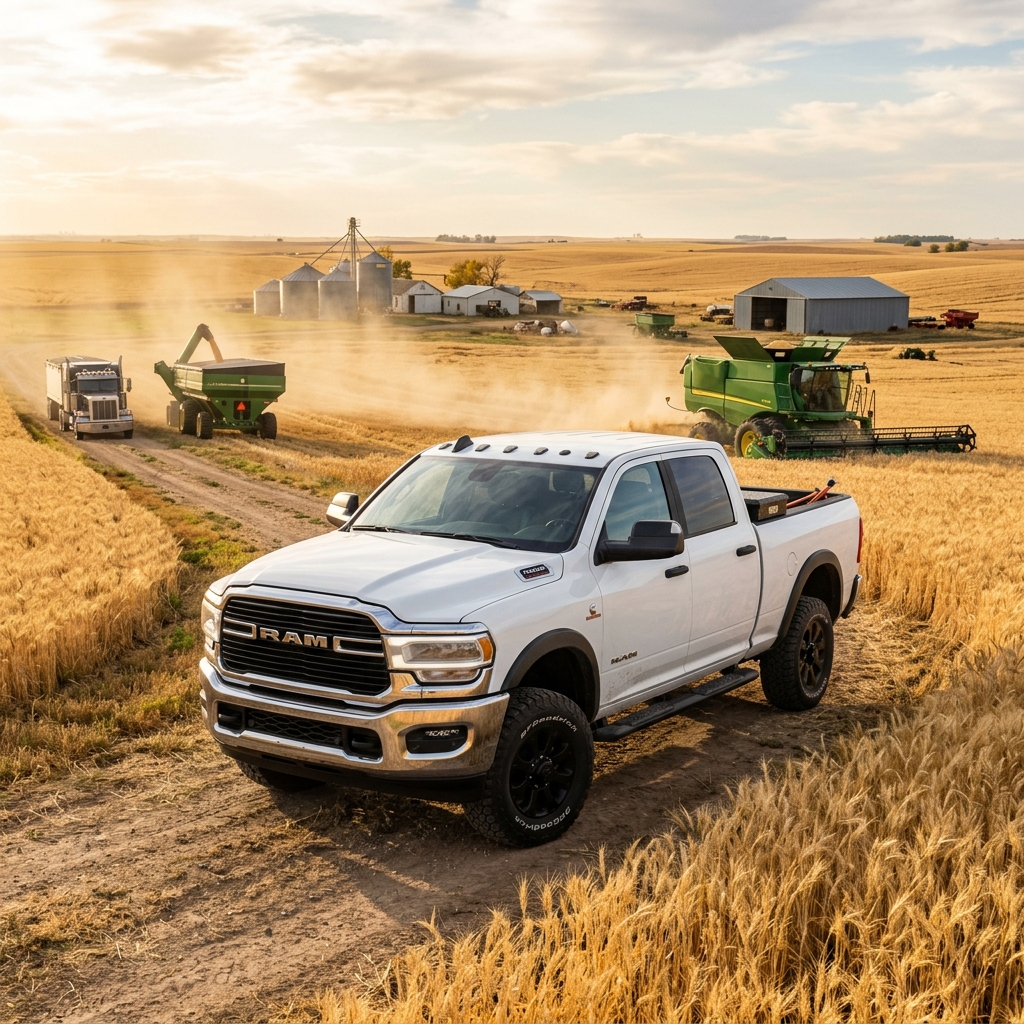
If your daily agricultural routine consists of starting your truck in the driveway, driving 3 miles to check cattle, idling for twenty minutes at the gate, hauling a trailer down a dirt range road, and shuttling between crop fields around Geary and Riley counties, a heavy-duty gas engine—specifically the 6.4L HEMI V8 in the 2026 Ram 2500—is often the better choice over a diesel powertrain.
While modern turbo-diesels deliver legendary torque for cross-country grain hauling, modern emissions architecture renders them inherently ill-suited for short-duration, low-speed duty cycles. Diesel Particulate Filters (DPF) and Selective Catalytic Reduction (SCR) systems require prolonged operational temperatures exceeding 1,000°F to perform active soot regeneration. When a truck operates exclusively on 5 to 15-minute field trips, the exhaust system never gets warm enough to burn off accumulated particulates. The result is rapid DPF soot loading, premature DEF crystallization, frequent instrument cluster warnings, limp-mode triggers, and frustrating shop downtime right when harvest schedules are tightest. The 6.4L HEMI V8 gas engine completely eliminates aftertreatment headaches while supplying 410 horsepower, rapid winter warmups, and class-leading payload capacities tailored for working Kansas farms.
Meet Mike Hogg: 20 Years of Servicing Agricultural Heavy-Duty Trucks in Junction City, KS
As the Service Director at Valor CDJR in Junction City, I have spent the last two decades under the hoods of heavy-duty pickup trucks serving agricultural operations across Central and Northeast Kansas. From small family grain farms along the Smoky Hill River to large livestock ranches deep in the Flint Hills, I have personally diagnosed thousands of farm trucks brought in during spring planting and fall harvest.
My primary goal in the service bay is keeping farm equipment operational when every daylight hour counts. Over the past ten years—since the introduction of strict Tier 4 diesel emissions standards—the most common non-scheduled repair issue we diagnose during harvest season involves diesel aftertreatment failures on trucks that spend 90% of their lives doing low-speed farmland errands. Understanding how your daily mileage patterns impact internal engine mechanics is the single best way to avoid expensive repairs and prevent downtime. If you ever need technical advice or want to schedule a pre-harvest system diagnostic, access our online Service Scheduler to bring your truck in for inspection.
Why Frequent Short Field-to-Barn Trips Damage Modern Diesel Aftertreatment Systems
To understand why short trips harm diesel engines, you have to look at how modern exhaust aftertreatment systems function. Every modern heavy-duty diesel truck incorporates a Diesel Particulate Filter (DPF) designed to trap unburned carbon particulates (soot) from the exhaust stream. Once trapped, the vehicle relies on an automated self-cleaning cycle known as regeneration to incinerate that soot into fine ash.
Passive regeneration requires continuous highway driving under load, where exhaust gas temperatures (EGTs) naturally reach 500°F to 800°F. Active regeneration occurs when the engine computer intentionally injects raw diesel fuel into the exhaust stream to raise EGTs above 1,100°F. If a farm truck only makes 3-mile trips between field gates and barn stalls, the engine coolant rarely hits normal operating temperature, let alone the exhaust system. The active regeneration process gets interrupted midway through or never initiates at all, causing soot to pack tightly into the silicon carbide substrate of the filter.
In addition to DPF clogging, short trips create severe secondary issues within the Selective Catalytic Reduction (SCR) and Diesel Exhaust Fluid (DEF) delivery hardware. DEF is a liquid mixture of 32.5% high-purity synthetic urea and 67.5% deionized water. When injected into cold exhaust lines during low-speed idling, the water content fails to evaporate cleanly. Instead, urea crystals form on the inner walls of the decomposition tube and dosing valve nozzle.
Over time, these crystalline deposits restrict fluid flow, triggering check engine lights and initiating automated countdown timers that lock the vehicle into a 5-mph ‘limp mode’. Exhaust Gas Recirculation (EGR) valves also become coated in oily carbon sludge when diesel fuel burns incompletely during cold short cycles, leading to sticky valves and reduced intake flow. Fixing these issues requires manual forced regenerations, ultrasonic injector cleaning, or full assembly replacements that can cost thousands out of warranty.
Why the 6.4L Heavy-Duty Gas Engine Thrives on Short-Range Kansas Farm Duty Cycles
Rapid Warmup & Engine Health
Gasoline combustion generates rapid thermal energy compared to diesel. The 6.4L Heavy-Duty HEMI V8 reaches optimal oil and coolant temperatures within minutes of startup. This rapid warmup protects internal cylinder walls from raw fuel washouts, ensures immediate cab heating on freezing Kansas winter mornings, and maintains ideal lubrication viscosity across short stop-and-go farm trips.
Zero Exhaust Fluid Maintenance
The 6.4L HEMI V8 uses conventional three-way catalytic converters without DPF filters, SCR systems, or DEF fluid tanks. You may spend less time dealing with DEF jugs, fluid freezing concerns, and active regeneration issues while navigating pasture gates or moving seed bags between barns.
Instant Torque & Lower Capital Cost
Pairing 410 horsepower and 429 lb-ft of torque with the TorqueFlite 8-speed automatic transmission delivers crisp throttle response without turbo lag. Furthermore, choosing the 6.4L gas engine may offer a lower starting MSRP compared to the diesel option—capital you can immediately reinvest back into your agricultural operations.
Which 2026 Ram 2500 Engine is Better for Towing Heavy Grain Carts and Equipment During Harvest Season?
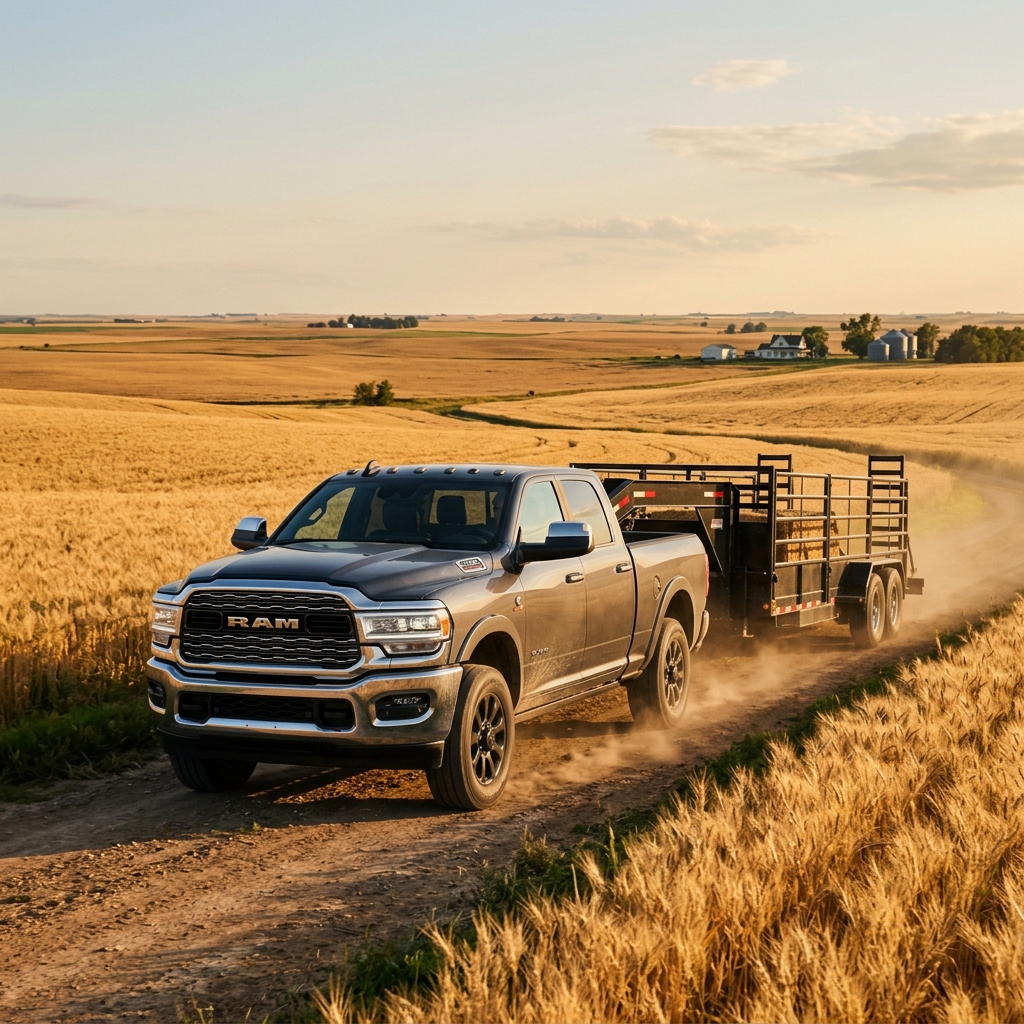
When deciding between the 6.4L Heavy-Duty HEMI V8 and the 6.7L Cummins Turbo Diesel for harvest towing, the answer depends entirely on continuous haul distance and payload weight. If your farm involves towing 14,000-lb grain carts or gooseneck livestock trailers 5 to 15 miles from field to elevator along country roads, the 6.4L HEMI V8 has more than enough capability while offering a critical advantage: higher net payload capacity.
Because cast-iron diesel engine blocks and aftertreatment hardware add approximately 800 to 1,000 lbs of curb weight to the front axle, a gas-powered Ram 2500 has a significantly higher Gross Vehicle Weight Rating (GVWR) payload buffer. That means you can carry more vertical tongue weight in a gooseneck hitch or load more seed boxes directly into the bed without exceeding vehicle payload limits.
|
Engine Spec / Feature
|
6.4L Heavy-Duty HEMI V8
|
6.7L Cummins Turbo Diesel
|
|
Horsepower
|
410 hp @ 5,600 rpm
|
370 hp @ 2,800 rpm
|
|
Torque
|
429 lb-ft @ 4,000 rpm
|
850 lb-ft @ 1,700 rpm
|
|
Transmission
|
8-Speed Automatic
|
6-Speed Automatic
|
|
Max Payload (lbs)
|
Up to 4,000 lbs
|
Up to 3,150 lbs
|
|
Emissions Aftertreatment
|
Standard Catalytic Converter
|
DPF, SCR & DEF System
|
|
Best Application
|
Short-trip farmland runs, local towing & idling
|
Long-distance heavy highway towing (>50 mi)
|
Conversely, if your operation involves pulling 18,000-lb gooseneck trailers across state lines, hauling grain 60 miles down Interstate 70 to Topeka daily, or long mountain passes, the massive 850 lb-ft of low-end torque from the 6.7L Cummins Diesel is unmatchable. The continuous heavy load keeps exhaust temperatures elevated, allowing the diesel filter to auto-regenerate efficiently while keeping fuel consumption low during extended highway pulls.
Mike Hogg's Direct Advice: Matching Your Ram Powertrain to Your Actual Farmland Mileage
“Over my 20 years managing our service department in Junction City, I’ve had hundreds of local producers come to my desk frustrated by exhaust light warnings. When I look at their trip meters, I see an average trip distance of 4 miles and an average speed of 18 mph. That’s a classic duty cycle mismatch. Here is my straightforward rule of thumb for any Kansas farmer shopping for a 2026 Ram 2500:”
1. Choose the 6.4L Heavy-Duty Gas Engine if: You drive under 15,000 total miles per year, your typical drive is under 20 miles per leg, you spend considerable time idling while checking fences or gate-checking fields, or your heavy towing is limited to short distances around Geary, Riley, and Dickinson counties. 2. Choose the 6.7L Cummins Turbo Diesel if: You log over 25,000 miles per year, routinely tow heavy loads (15,000+ lbs) over continuous 45-minute highway stretches, or rely on long-distance interstate transport. Matching the powertrain to your true operational cycle will save you thousands of dollars in maintenance over the lifetime of your work truck.
What Configurations and Trims of the 2026 Ram 2500 Are Best Suited for Agricultural Harvest Work?
Tradesman Trim Workhorse
The Tradesman trim is a capable work-focused package. Equipped with heavy-duty vinyl seating and cleanable rubberized floor covering, it withstands mud, manure, and harvest chaff effortlessly. Equipping it with the factory 220-amp alternator package ensures plenty of electrical juice for auxiliary diesel transfer tanks and work lights.
Big Horn & Laramie Balance
For producers who use their truck as both a farm workhorse and a daily family vehicle, the Big Horn and Laramie trims offer premium cloth or leather upholstery, anti-spin differential rear axles, multi-zone climate control, and advanced 12-inch Uconnect navigation displays to track weather radar patterns during active harvest.
Bed Lengths & 4×4 Off-Road
We strongly recommend the 8-foot long bed configuration for farm work to accommodate 4×8 plywood sheets, full-size hay bales, and transfer tanks with room to spare. Consider 4×4 models equipped with BorgWarner transfer cases and skid plates to protect vital components on rugged Flint Hills range trails.
How Frequently Should the Engine Air Filter Be Replaced During Dusty Harvest Conditions?
Fall harvest in Northeast Kansas creates some of the most severe dust and airborne chaff conditions anywhere in the country. Dry topsoil particulate mixed with corn and soybean chaff can blind an engine air filter in a fraction of the time stated in standard owner manuals.
Under standard highway driving, engine air filters last 20,000 to 30,000 miles. However, during active harvest in Riley and Geary counties, we recommend inspecting your air filter every week or 1,000 miles, and replacing it immediately following the harvest season. A restricted air filter forces the engine to pull harder, reducing fuel economy, robbing horsepower, and allowing ultra-fine dust past degraded filter media seals into internal cylinders.
Don’t forget cabin air filter maintenance as well. Replacing your cabin filter every harvest prevents crop dust allergens and soil particulate from entering the heating and cooling ductwork, protecting your HVAC blower motor resistor from overheating.
Need genuine Mopar heavy-duty air filters or fast oil changes during harvest peak? Stop by our Express Lane service bay for zero-appointment filter changes, or pick up OEM replacement filters directly from our Parts Department.
What Specific Steps Should I Take to Get My 2026 Ram 2500 Harvest-Ready?
Preparing your heavy-duty Ram 2500 for the demanding rigors of Kansas fall harvest requires a systematic checklist before hitting field tracks:
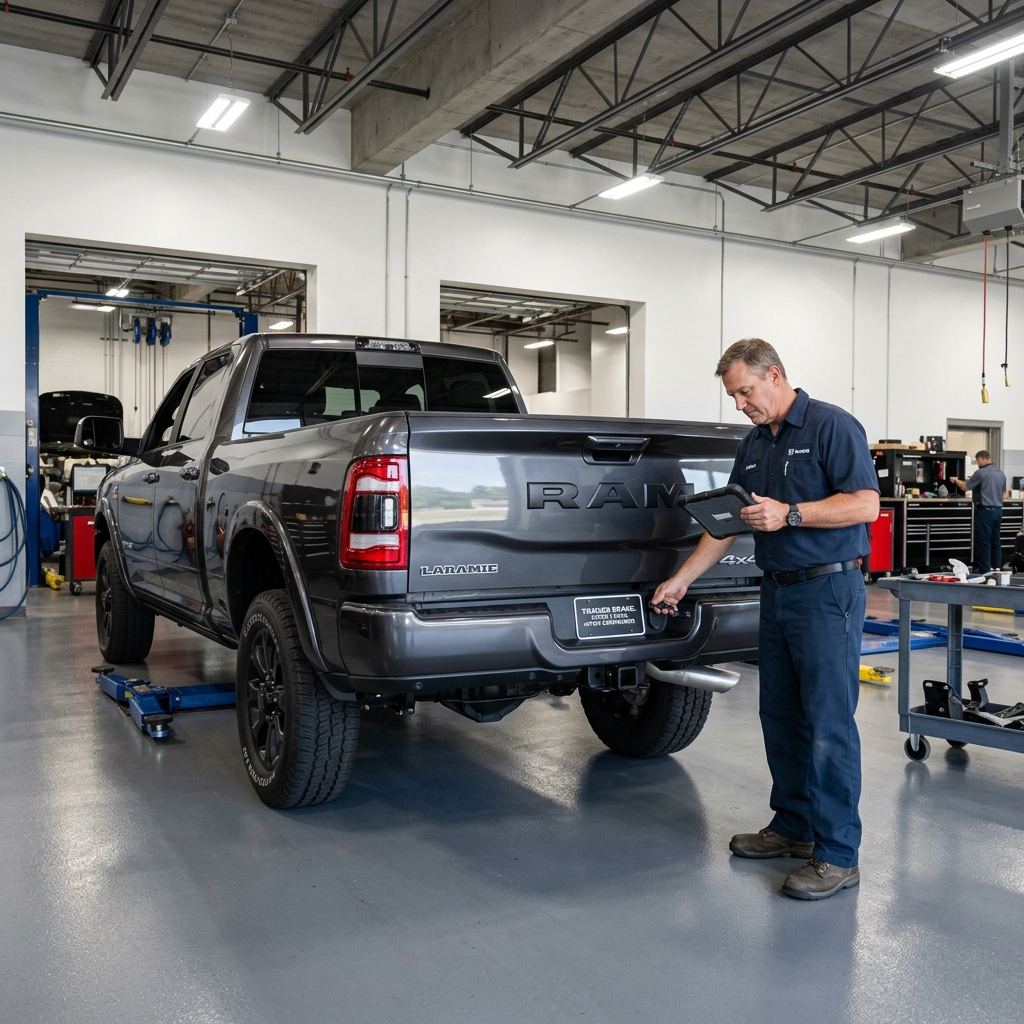
1. Trailer Wiring & Voltage Test: Inspect 7-pin and 4-pin trailer connectors for corrosion or loose wiring pins caused by dirt and moisture. 2. Integrated Trailer Brake Controller Calibration: Recalibrate gain settings on the factory trailer brake controller based on the loaded weight of your grain wagons or gooseneck trailers. 3. Tire Load Index & Pressure Verification: Check heavy-duty E-rated light truck tires for punctures, sidewall cracks, and correct cold inflation pressures (typically 60 PSI front / 80 PSI rear under full load). 4. Liquid Transfer Tank Security: Ensure auxiliary fuel transfer tanks in the truck bed are firmly bolted down, grounded, and wired with dedicated fused lines.
5. Suspension & Gooseneck Inspection: Torque gooseneck ball bolts to factory specification, grease rear suspension bushings, and visually check shock absorbers for fluid leaks prior to hitching heavy agricultural equipment.
What Are the Main Advantages of the 2026 Ram 2500 Versus Other Three-Quarter-Ton Trucks for Harvest Towing?
Class-Exclusive Rear Coil Suspension
Unlike traditional leaf-spring setups on competing 3/4-ton trucks, the Ram 2500 features a standard multi-link rear coil spring design. This dramatically reduces wheel chatter and axle hop when driving unladen across washboard gravel roads or bumpy dirt field entrances in Geary County.
Active-Level Rear Air Suspension
Available factory active-level rear air suspension automatically inflates to level the truck when dropping a heavy 16,000-lb gooseneck grain trailer onto the hitch. This maintains proper headlight aim, steering geometry, and braking stability under high vertical tongue loads.
High-Strength Steel Frame Rigidity
Built with a 50,000 PSI high-strength steel frame featuring eight crossmembers, the 2026 Ram 2500 delivers exceptional structural rigidity. It resists frame twisting when crossing uneven terraced fields while offering the quietest cab ergonomics in its class during 14-hour harvest days.
Where Can I Buy a 2026 Ram 2500 Set Up for Harvest Near Junction City, KS?
Valor CDJR is your dedicated commercial and agricultural truck headquarters in Junction City, serving farmers across Geary, Riley, and Dickinson counties. We stock a comprehensive selection of heavy-duty trucks pre-configured with factory gooseneck prep packages, fifth-wheel towing capabilities, skid plates, and heavy-duty alternator setups ready for immediate field deployment.
Consult with Mike Hogg and the Valor CDJR Service Team in Junction City Today
Don’t let powertrain mismatches or maintenance issues disrupt your upcoming fall harvest. Whether you need expert service advice from Service Director Mike Hogg, a pre-harvest fluid checkup, or assistance selecting the perfect 2026 Ram 2500 Heavy-Duty gas truck, the team at Valor CDJR is here to support your agricultural operation.