Blog / Towing & Hauling

2021 Jeep Grand Cherokee Towing Capacity: 6,200 to 7,200 lbs Maximum Rating

2021 Jeep Grand Cherokee Towing Capacity: 6,200 to 7,200 lbs Maximum Rating

2021 Jeep Grand Cherokee Towing Capacity: 6,200 to 7,200 lbs Maximum Rating

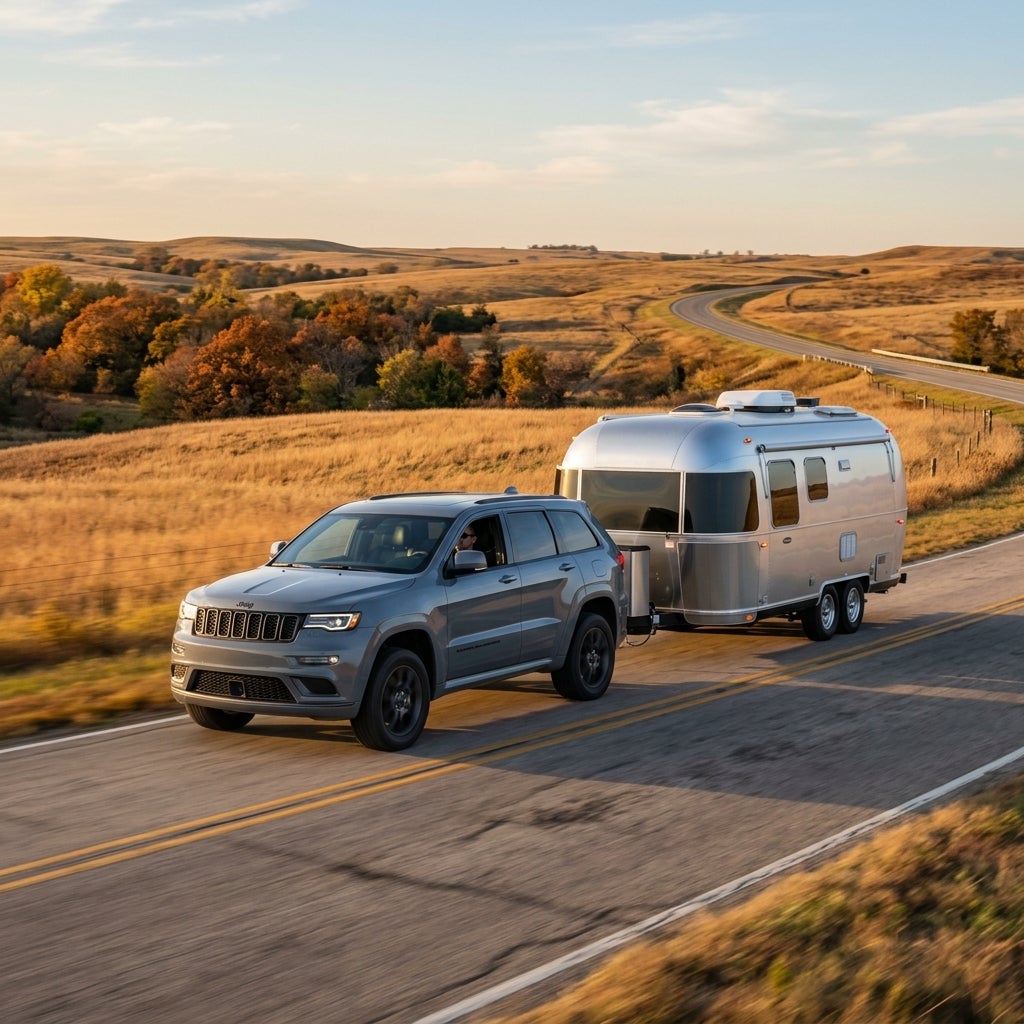
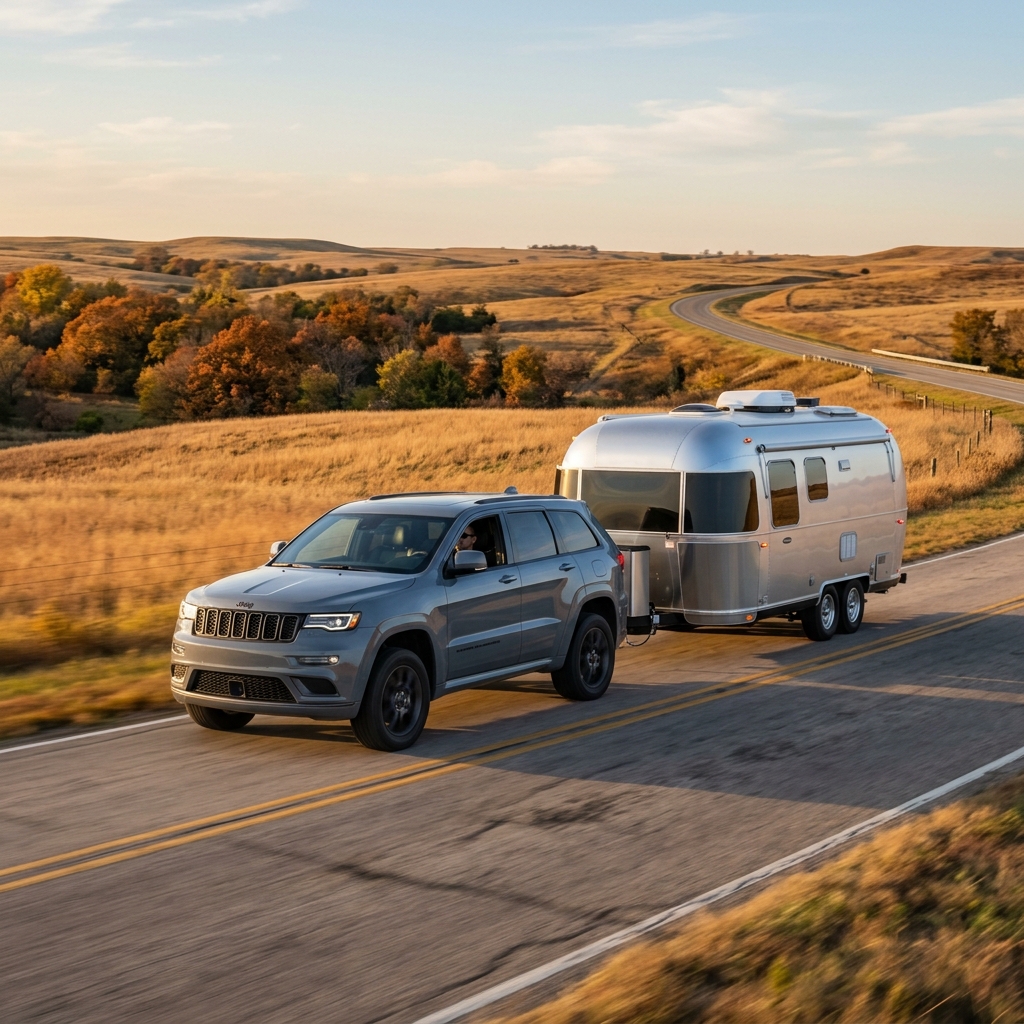
A grey Jeep Grand Cherokee towing a silver Airstream travel trailer along a scenic country road at sunset. (Representative image for illustration purposes only. Actual vehicle may vary based on trim and configuration.)
When evaluating midsize SUVs for heavy-duty towing around Junction City, Manhattan, and the scenic Flint Hills of Kansas, few vehicles command the respect and reputation of the 2021 Jeep Grand Cherokee. Engineered with high-strength steel chassis construction, robust powertrain offerings, and sophisticated 4x4 drive systems, the 2021 Grand Cherokee delivers remarkable trailering capability. However, its exact maximum towing rating hinges directly on the powertrain selected and whether the vehicle is equipped with the factory Trailer Tow Group IV package. At its peak, the 2021 Jeep Grand Cherokee achieves a impressive maximum towing capacity of 7,200 pounds when powered by one of three legendary V8 engines—the 5.7L HEMI® V8, the 6.4L SRT® V8, or the supercharged 6.2L HEMI® V8 in the Trackhawk edition—provided it features the factory-installed Class IV towing package. For models equipped with the acclaimed standard 3.6L Pentastar® V6 engine and the factory tow package, maximum towing capacity reaches an authoritative 6,200 pounds. It is essential for drivers to note that any 2021 Grand Cherokee without a factory trailer tow package is capped at a standard bumper towing rating of 3,500 pounds across all trim levels and engine choices.
Whether you are hauling a dual-axle camper out to Milford State Park, launching a speedboat at Milford Lake, or pulling a utility car trailer across windy stretches of Interstate 70, knowing your Grand Cherokee's specific configuration ensures safe, confident, and stress-free travel. At Valor CDJR in Junction City, KS, our team is dedicated to providing clear, practical guidance so you can maximize your SUV's utility while maintaining peak vehicle health and longevity.

Engine Spec

Horsepower & Torque

Standard Towing

Max Towing (Tow Group IV)

3.6L Pentastar® V6

295 hp / 260 lb-ft

3,500 lbs

6,200 lbs

5.7L HEMI® V8

360 hp / 390 lb-ft

3,500 lbs

7,200 lbs

6.4L SRT® V8

475 hp / 470 lb-ft

3,500 lbs

7,200 lbs

6.2L Supercharged V8

707 hp / 645 lb-ft

3,500 lbs

7,200 lbs

How Does Towing Capacity Vary Across the 2021 Grand Cherokee Engine Lineup?

The 2021 Jeep Grand Cherokee offers four distinct engine options, each catering to different driving habits, fuel efficiency expectations, and performance needs. Torque delivery, engine cooling capacity, and axle ratio gearing vary between these powerplants, directly influencing how effortlessly each model handles heavy trailering dynamics.

3.6L Pentastar® V6 Engine

Standard across most trims (Laredo, Limited, Trailhawk, Overland, Summit), the 3.6-liter Pentastar V6 generates 295 horsepower and 260 lb-ft of torque. Featuring Variable Valve Timing (VVT) and electronic throttle control, this refined engine delivers a smooth powerband. When coupled with the factory Trailer Tow Group IV, it easily handles trailers up to 6,200 pounds. It serves as an ideal balance between everyday fuel efficiency and robust recreational towing capability.

5.7L HEMI® V8 Engine

Available on 4x4 models of the Limited, Trailhawk, Overland, and Summit trims, the iconic 5.7L HEMI V8 pushes output to 360 horsepower and 390 lb-ft of low-end torque. This extra low-end grunt is what lifts the towing capacity to the maximum rating of 7,200 pounds. Fuel Saver Technology (cylinder deactivation) seamlessly transitions between eight and four cylinders to conserve fuel during steady highway cruising while retaining full hauling muscle when pulling grades.

6.4L SRT® & 6.2L Supercharged V8

For extreme performance enthusiasts, the Grand Cherokee SRT features a naturally aspirated 6.4L V8 producing 475 hp and 470 lb-ft of torque, while the supercharged 6.2L Trackhawk produces a staggering 707 hp and 645 lb-ft of torque. Both high-performance trims maintain the full 7,200-pound maximum towing capacity when equipped with factory tow hardware, combining supercar acceleration with heavy trailer pulling stability.

What Equipment Is Included in the 2021 Jeep Grand Cherokee Trailer Tow Group IV Package?

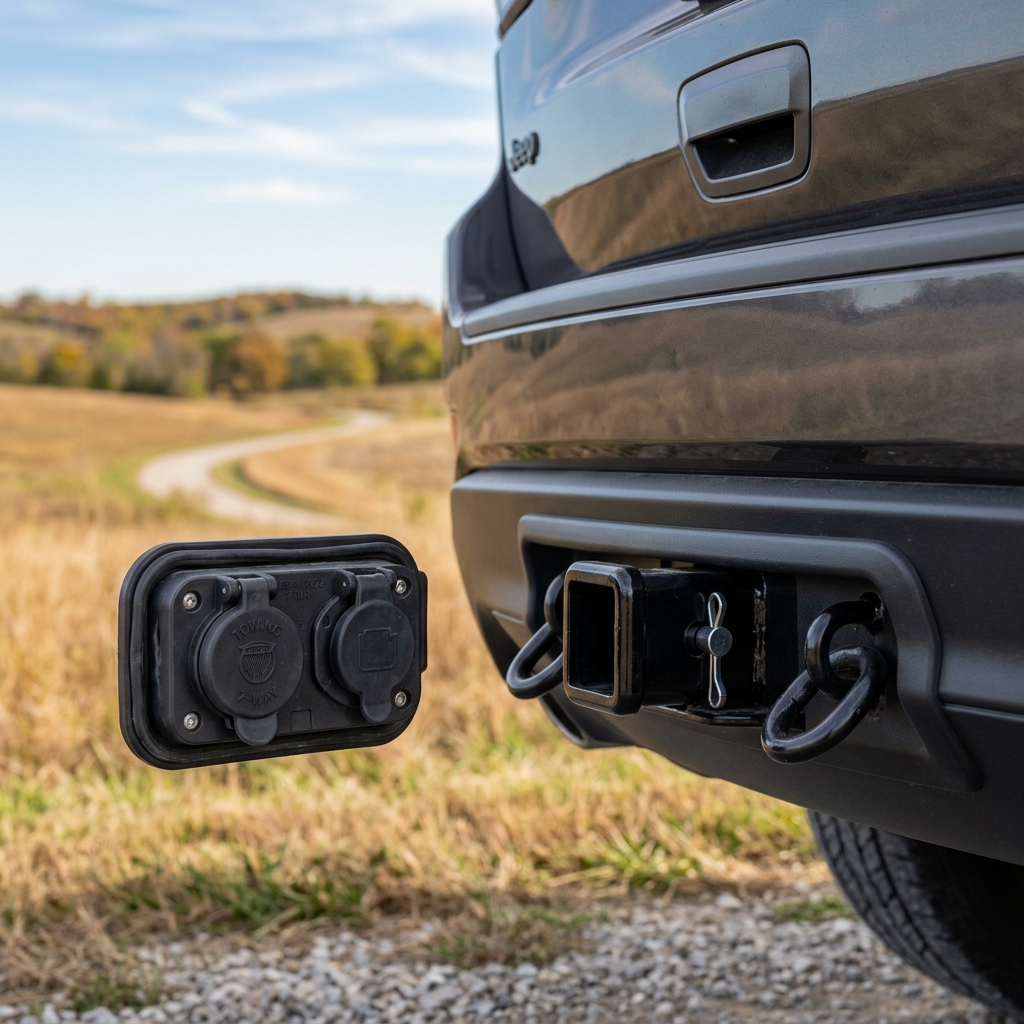
Rear view of a dark grey SUV showing a square trailer receiver hitch, hitch pin, safety loops, and trailer wiring box. (Representative image for illustration purposes only. Actual vehicle may vary based on trim and configuration.)
To safely achieve maximum ratings of 6,200 lbs (V6) or 7,200 lbs (V8), the 2021 Jeep Grand Cherokee must be equipped with the factory-installed Trailer Tow Group IV package. This package is far more than just a receiver hitch bolted to the rear bumper; it integrates critical heavy-duty cooling, electrical, and mechanical components engineered specifically to withstand continuous heavy loads. Key Components Included in Trailer Tow Group IV:• Class IV Hitch Receiver: Heavy-duty frame-mounted receiver rated for maximum trailer loads. • 7-and-4-Pin Wiring Harness: Factory-integrated dual electrical connectors supporting electric trailer brakes, brake lights, turn signals, and auxiliary power. • Heavy-Duty Engine Cooling: Expanded radiator capacity and high-output cooling fans to prevent overheating under sustained load. • 180-Amp or 220-Amp Alternator: High-output electrical generation to power trailering accessories and charge trailer batteries on the go. • Rear Load-Leveling Suspension: Mechanical shocks that self-adjust to maintain level ride height under heavy tongue weight. • Full-Size Spare Tire: Matched steel wheel and tire ensuring full mobility in the event of a flat tire while towing far from home.

Does the 2021 Grand Cherokee Come with Rear Load-Leveling Suspension?

Yes, properly equipped 2021 Jeep Grand Cherokee models feature advanced suspension technology designed specifically to prevent rear end 'sag' when hauling heavy tongue weights. When a heavy trailer is hitched, excessive rear-end drop can compromise front-tire steering traction, headlight alignment, and overall vehicle handling. Jeep addresses this through two distinct systems: 1. Mechanical Rear Load-Leveling Dampers: Included in the Trailer Tow Group IV on models with standard coil springs (such as Laredo, Limited, and Trailhawk without air suspension). As the vehicle drives over initial bumps, hydraulic motion inside the specialized Nivomat shock absorbers automatically pumps fluid to raise the vehicle back to its factory level stance without requiring external pumps or electronics. 2. Quadra-Lift® Air Suspension System: Standard or available on higher trims like Overland, Summit, and Trailhawk, Quadra-Lift replaces conventional coil springs with four-corner air springs. It features automatic load leveling that detects extra payload or trailer tongue weight and instantly inflates the air bladders to restore optimum ride height.
In addition to automatic leveling, Quadra-Lift allows drivers to manually adjust vehicle height through five selectable modes: Normal Ride Height (8.4 inches ground clearance), Off-Road 1 (adds 1.1 inches), Off-Road 2 (adds 2.0 inches for up to 10.8 inches clearance), Aero Mode (lowers 0.6 inches for optimized highway aerodynamics and improved fuel economy), and Park Mode (lowers 1.6 inches for easy entry, loading, and trailer hitching). Whether negotiating uneven boat ramps at Milford Lake or cruising along I-70 through Riley County, these suspension technologies ensure your Grand Cherokee maintains maximum traction, steering control, and headlight aim under all trailer conditions. For expert inspection or maintenance on your suspension systems, you can book an appointment with our team via our Service Scheduler.

What Hitch and Tongue-Weight Limits Should You Check Before Towing?

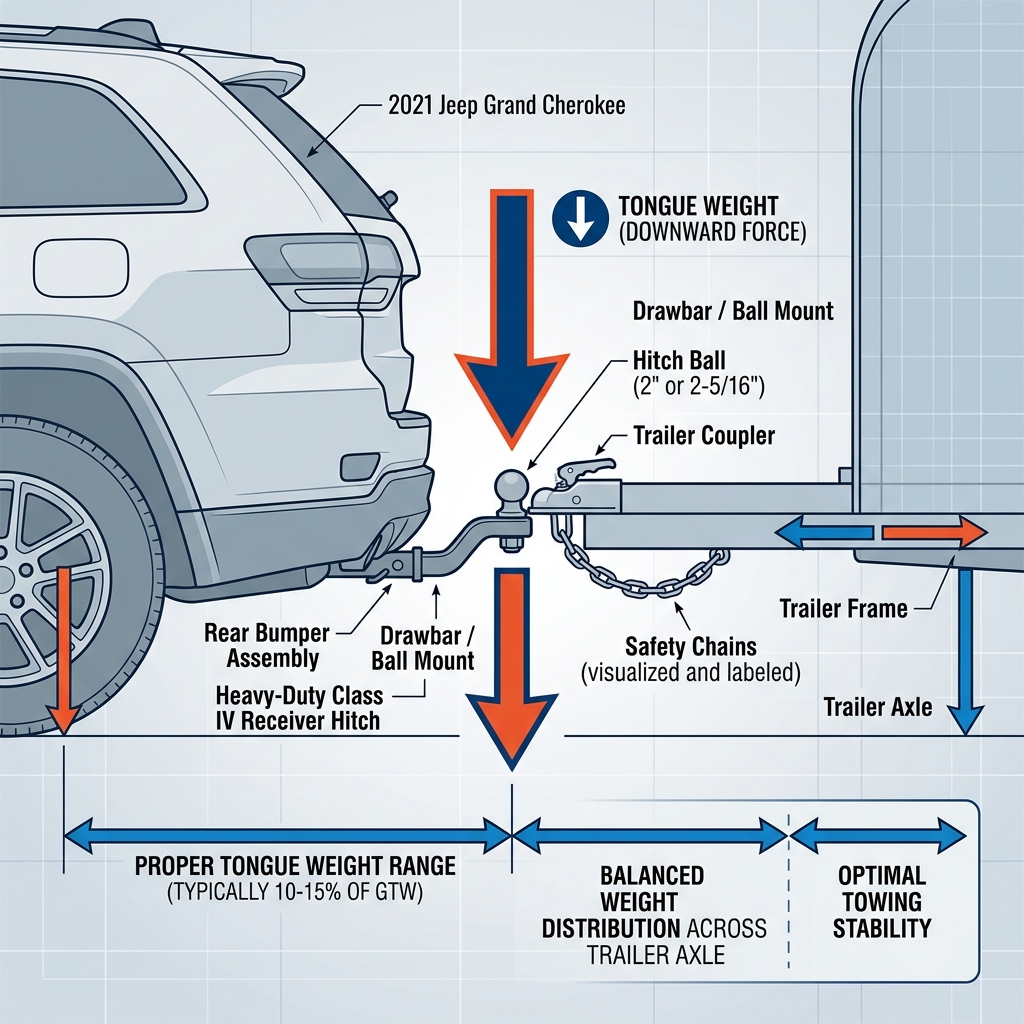
Understanding overall towing capacity is only part of the equation—proper weight distribution is critical to safe highway trailering. Safe towing requires managing several distinct weight metrics before setting off from Junction City: • Maximum Tongue Weight: Tongue weight is the downward force exerted by the trailer coupler directly onto the vehicle hitch ball. For the 2021 Grand Cherokee, maximum allowed tongue weight is 620 lbs for 3.6L V6 models and 720 lbs for V8 models(10% of maximum trailer rating). Ideal tongue weight should always fall between 10% and 15% of the total loaded trailer weight. • Gross Vehicle Weight Rating (GVWR): The maximum permissible total weight of the vehicle itself, including all passengers, cargo, fuel, and the trailer tongue weight. Exceeding GVWR strains brakes and tires. • Gross Combined Weight Rating (GCWR): The combined weight of the fully loaded tow vehicle and the fully loaded trailer together. Jeep engineers calculate GCWR to ensure braking and powertrain cooling operate safely under Kansas heat. • Payload Capacity: Cargo and passenger weight inside the SUV reduces available allowable tongue weight pound-for-pound.
Diagram explaining trailer tongue weight and proper weight distribution for a 2021 Jeep Grand Cherokee hitch system. (Representative image for illustration purposes only. Actual vehicle may vary based on trim and configuration.)

What Size Travel Trailer or Boat Can a 2021 Jeep Grand Cherokee Pull?

To put these numbers into real-world terms, what kind of weekend gear and campers can you haul around Kansas and neighboring states with a 2021 Jeep Grand Cherokee? Here is how common trailer types align with the vehicle's capacity ratings:

Up to 3,500 lbs (Standard Hitch)

Without factory tow group IV, any 2021 Grand Cherokee comfortably handles: • Single-axle utility trailers with lawn equipment or ATVs • Personal watercraft (PWC / Jet Skis) on dual trailers • Teardrop campers & lightweight pop-up tent trailers • Small fiberglass fishing boats (under 16 feet)

Up to 6,200 lbs (V6 Tow Package)

With the 3.6L V6 and Trailer Tow Group IV, you gain access to serious recreational gear: • Single-axle or light dual-axle travel trailers (up to 22-24 feet dry) • Ski boats, pontoon boats, and bowriders up to 22 feet • Two-horse aluminum trailers (unloaded or single horse) • Tandem-axle utility trailers carrying side-by-sides

Up to 7,200 lbs (V8 Tow Package)

Selecting a 5.7L V8 or higher model with tow group IV elevates capabilities to full-size demands: • Dual-axle travel trailers up to 26 feet (dry weight ~5,000-5,800 lbs) • Large cabin cruisers and deep-V fishing boats • Enclosed car haulers or loaded dual-horse trailers • Heavy equipment and tilt-deck trailers

Standard Bumper Towing vs. Factory Tow Package: Why Package Upgrades Matter

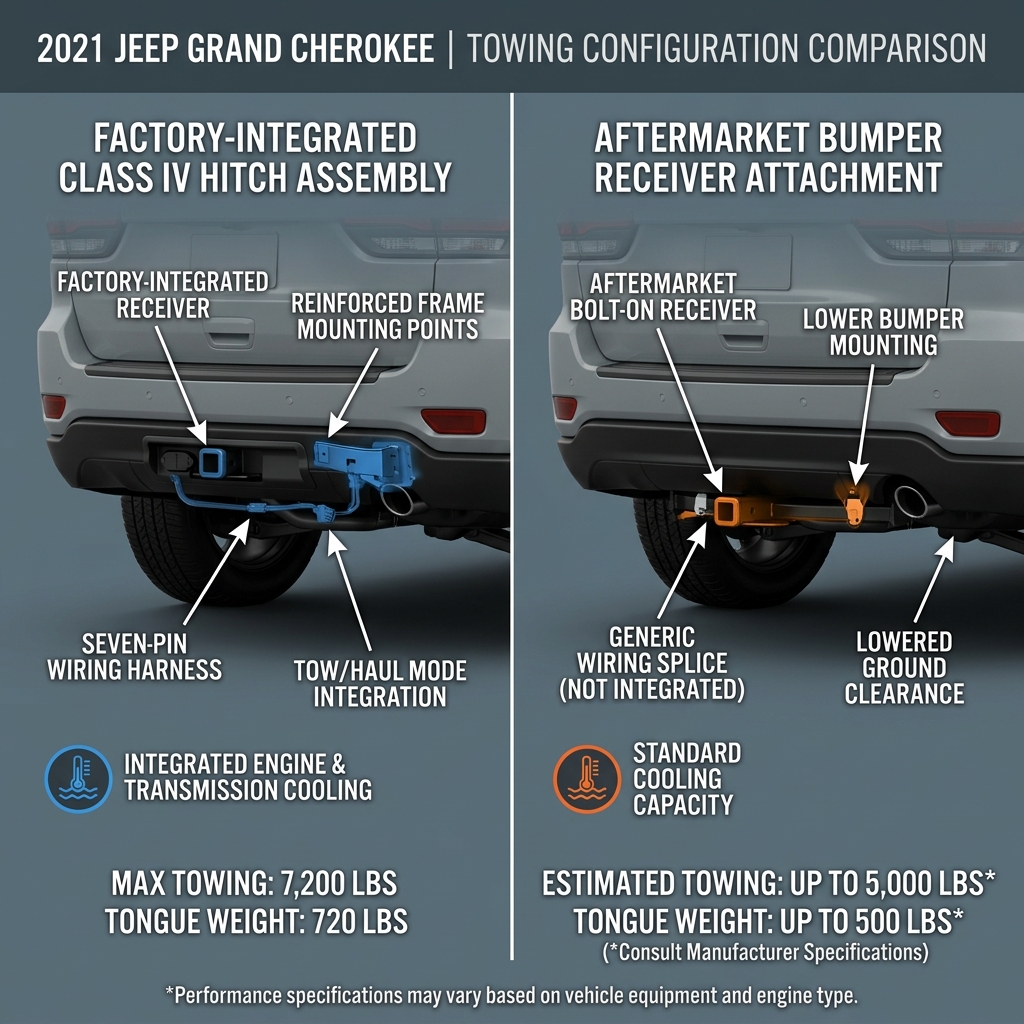
Diagram comparing a factory-integrated Class IV hitch assembly with an aftermarket bumper receiver attachment on a Jeep. (Representative image for illustration purposes only. Actual vehicle may vary based on trim and configuration.)
A common misconception among SUV owners is that installing an aftermarket receiver hitch onto a base V6 Grand Cherokee automatically grants the 6,200-lb max towing capability. This is incorrect and potentially dangerous. While an aftermarket hitch allows you to physically connect a trailer ball to your bumper frame, it does not alter engine cooling capacity, transmission thermal regulation, alternator output, or brake controller wiring. Pulling 5,000+ pounds with a base cooling system during hot Kansas summers can lead to severe engine overheating, premature transmission clutch wear, and dangerous brake fade. Factory Trailer Tow Group IV includes heavy-duty engine oil coolers and transmission fluid heat exchangers designed to keep temperatures within safe parameters under load. To ensure your vehicle is fitted with genuine Mopar towing hardware, visit our Parts Department or consult with our master technicians.

How 4x4 Systems and Trailer Sway Control Handle Kansas Highway and Trail Towing

Towing across Kansas highway corridors like I-70 or K-18 often means encountering sudden crosswinds, passing semi-trucks, and steep rolling hills. The 2021 Jeep Grand Cherokee incorporates sophisticated active safety electronics engineered to maintain rock-solid stability in challenging driving environments: • Standard Trailer Sway Control (TSC): Integrated into the Electronic Stability Control (ESC) system, TSC uses vehicle yaw sensors to detect trailer oscillation or sway. If sway is detected, the system automatically applies individual vehicle wheel brakes and reduces engine torque to pull the trailer back into alignment—without requiring driver intervention. • Quadra-Trac I® & Quadra-Trac II® 4WD: Quadra-Trac II features a two-speed transfer case with active torque management that can direct up to 100% of available engine torque to the axle with the most grip if slippage occurs when pulling a boat up a slippery ramp. • Quadra-Drive® II with Rear ELSD: Features an Electronic Limited-Slip Differential that instantly transfers power to whichever rear wheel has traction, ensuring maximum stability when pulling heavy loads over loose gravel or mud.
These safety systems operate invisibly in the background, continuously making hundreds of micro-adjustments per second. The result is superior peace of mind, reduced driver fatigue, and predictable vehicle dynamics whether you're navigating urban traffic in Manhattan or off-road boat launches near Milford Lake. Looking for a reliable pre-owned or new Grand Cherokee equipped with full 4x4 capability? Browse our current inventory through our New Vehicle Listings or explore high-quality pre-owned options in our Used Vehicle Listings.

Essential Pre-Towing Setup Checklist for 2021 Grand Cherokee Owners

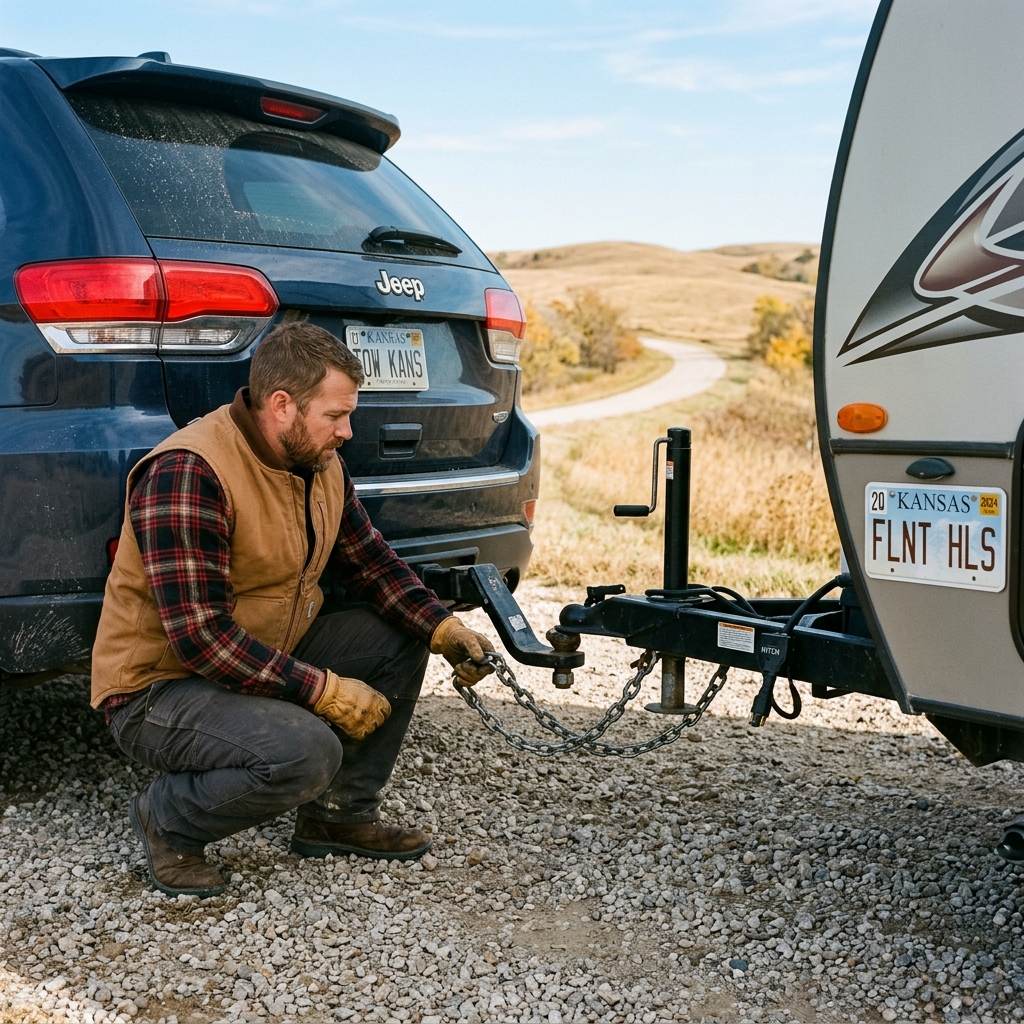
A man in work gloves attaches safety chains between a blue SUV and a camper trailer on a gravel road. (Representative image for illustration purposes only. Actual vehicle may vary based on trim and configuration.)

1. Tires & Pressures

• Verify tire pressure on both Grand Cherokee and trailer tires when cold. • Inflate rear SUV tires to maximum recommended cold PSI listed on the driver door placard when carrying heavy tongue weight. • Check trailer wheel lug nuts for correct torque specs before every journey.

2. Brakes & Harness

• Ensure electric trailer brake controller is calibrated for trailer weight. • Plug into 7-pin or 4-pin harness and verify operation of brake lights, turn signals, and running lights. • Cross safety chains underneath trailer tongue to catch hitch if breakaway occurs.

3. Mirrors & Weight

• Adjust side view mirrors or attach towing mirror extensions to clear trailer sides. • Confirm trailer coupler is fully locked over ball and safety pin is inserted. • Re-check tongue weight balance (10%-15%) to avoid trailer sway.

Maintaining Engine Cooling and Transmission Health When Hauling Heavy Loads

Towing heavy loads creates significant thermal load on engine oil, automatic transmission fluid, differential gear oil, and brake friction components. To keep your 2021 Jeep Grand Cherokee performing reliably for decades, adhering to Jeep's 'Severe Duty' maintenance schedule is highly recommended whenever regular trailering is performed. Key Maintenance Guidelines for Towing:• Transmission Fluid Service: Continuous trailering breaks down transmission fluid thermal viscosity. Regular fluid inspections ensure slick shifts and prevent internal clutch slippage. • Differential & Transfer Case Fluids: Front and rear axle differentials work harder under heavy loads. Service gear oil at recommended intervals, especially after water immersion at boat ramps. • Brake System Inspections: Heavy loads increase stopping distance and heat buildup. Regular pad thickness and rotor thickness checks are vital for safe stopping. For quick routine maintenance like oil changes and tire rotations, drop by our Express Lane service bay or Call us at (785) 238-5114.
Engine Cooling System Care: Kansas summer heat combined with long highway pulls requires a cooling system operating at 100% efficiency. Always check coolant levels and inspect radiator hoses for cracks or swelling prior to peak trailering season. Flush engine coolant according to factory intervals using genuine Mopar HOAT/OAT coolant formulations. At Valor CDJR in Junction City, our factory-certified Mopar technicians specialize in heavy-duty SUV care. We stock genuine Mopar replacement parts, brake components, and trailer brake controller harnesses through our Parts Department, ensuring your Grand Cherokee remains 100% tow-ready year-round.

Upgrade or Value Your Trade for a Tow-Ready Jeep Grand Cherokee in Junction City

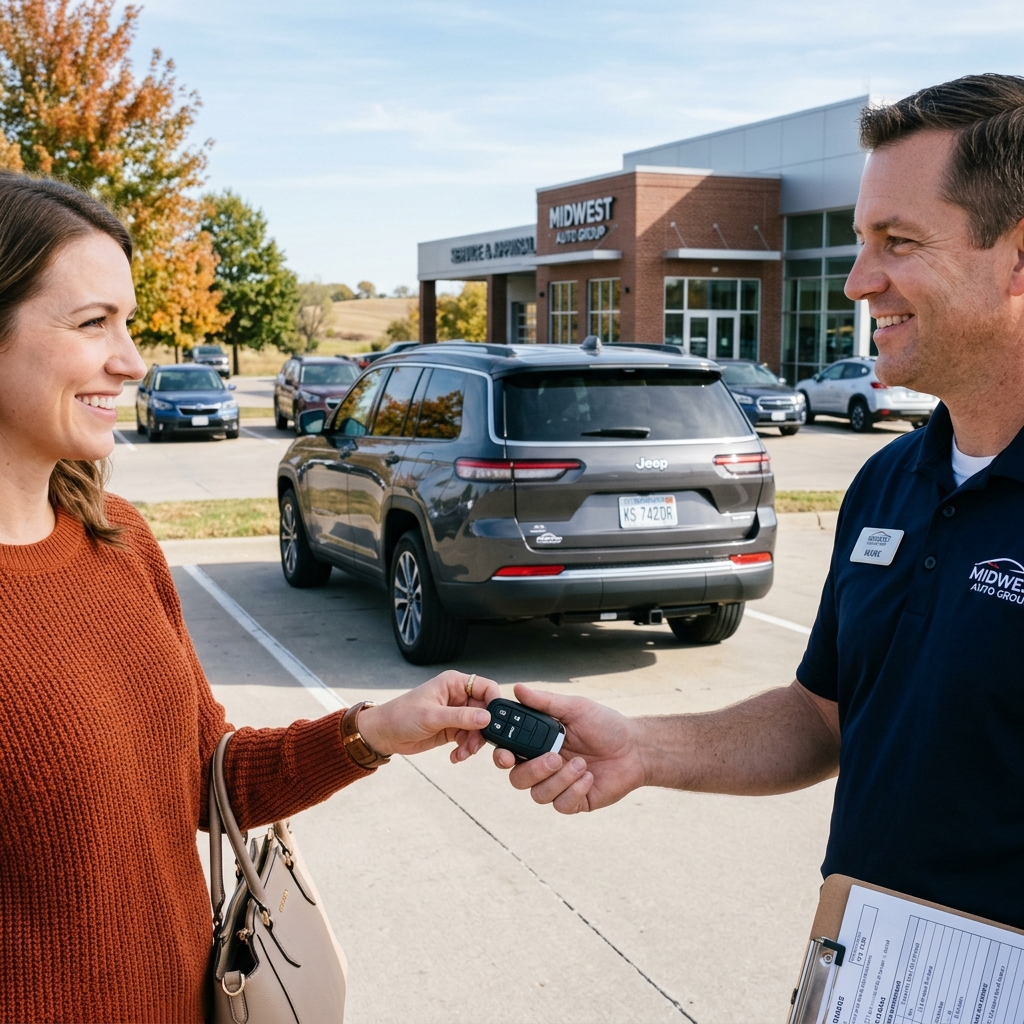
A dealership employee exchanging car keys with a woman in front of a Midwest Auto Group building. (Representative image for illustration purposes only. Actual vehicle may vary based on trim and configuration.)
If your current vehicle lacks the trailering muscle needed for your growing family camper or new boat, it may be a good time to trade up to a tow-ready 2021 Jeep Grand Cherokee at Valor CDJR. Our trade appraisal specialists offer top market value for your trade-in vehicle. You can get an instant, transparent valuation from the comfort of your home using our online Trade In Evaluation tool. Once you know your vehicle's value, our finance team can assist you in securing current financing options or pre-approval via our online Get Pre-Approved application. Explore our high-quality pre-owned Grand Cherokee inventory featuring factory-installed Trailer Tow Group IV packages in our online Used Vehicle Listings, or speak with our sales team to find the exact engine and trim tailored to your towing demands.

Find Your Tow-Ready 2021 Jeep Grand Cherokee at Valor CDJR Today

Valor Automotive logo featuring a blue shield with a red V and white A monogram above company text.
Whether you require the efficient 6,200-lb towing capacity of the 3.6L Pentastar V6 or the maximum 7,200-lb muscle of the 5.7L HEMI V8, the 2021 Jeep Grand Cherokee is purpose-built to conquer Kansas highways and outdoor trail adventures alike. At Valor CDJR, we take pride in serving drivers throughout Junction City, Manhattan, Fort Riley, and surrounding Riley County with honest advice, fair pricing, and certified Mopar service. Visit our showroom today at 1825 Goldenbelt Blvd, Junction City, KS 66441 to test drive a tow-equipped Grand Cherokee, or Get Directions to Valor CDJR. Have questions about hitch setup, payload limits, or service schedules? Call us at (785) 238-5114 to speak directly with our team of team members!

Posted in:

Related Posts

How Do Gooseneck Hitch Ratings Differ From Standard Receiver Hitches for Heavy Farm Loads?

How Do Gooseneck Hitch Ratings Differ From Standard Receiver Hitches for Heavy Farm Loads?

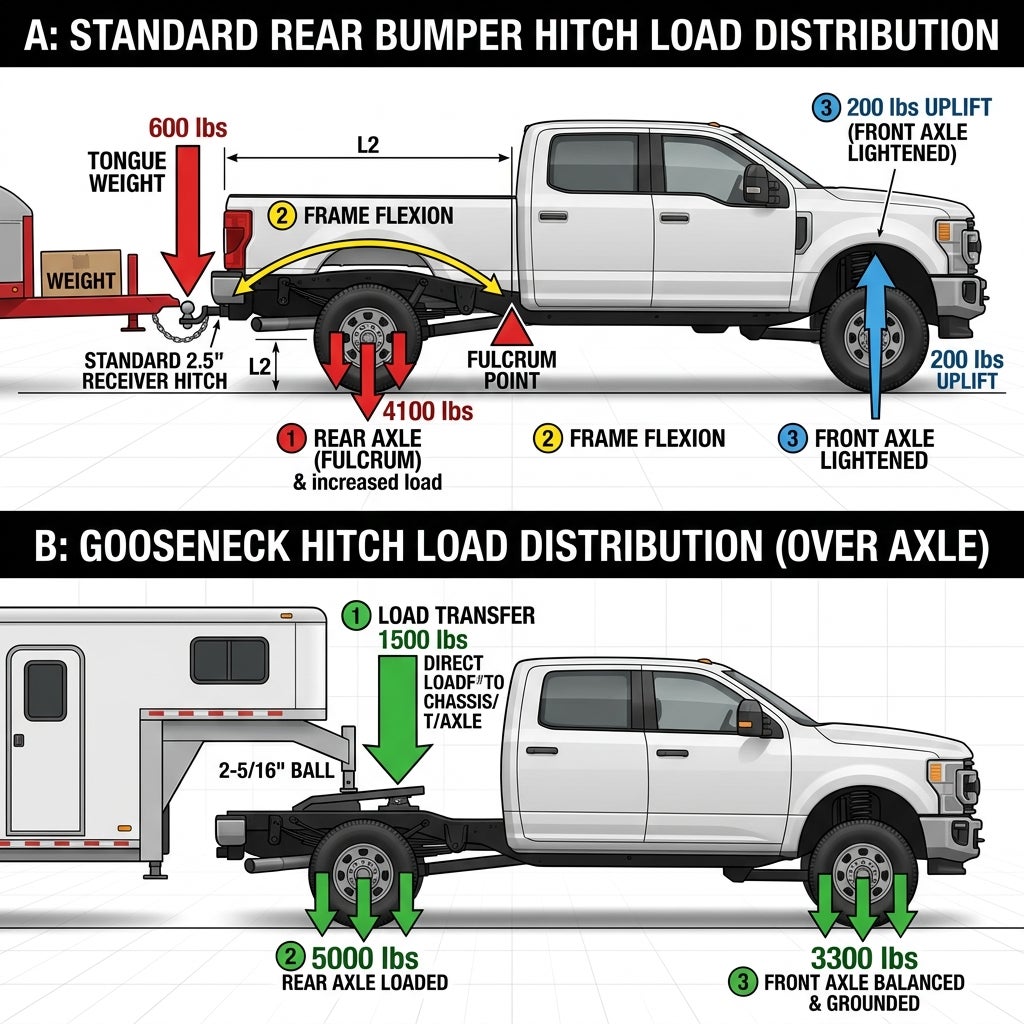
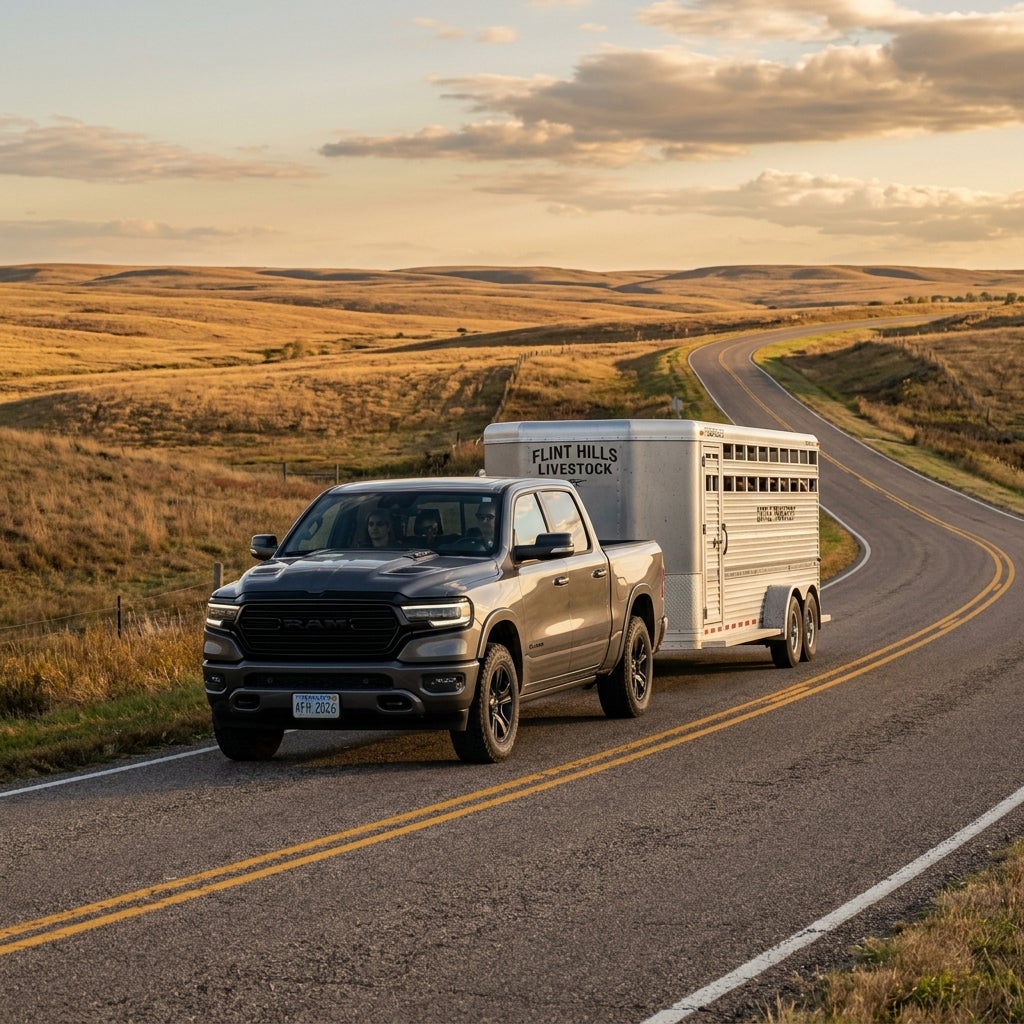
How Do Gooseneck Hitch Ratings Differ From Standard Receiver Hitches for Heavy Farm Loads? When transporting heavy agricultural loads across Kansas pastures and highways, understanding the mechanical and rated differences between gooseneck hitches and traditional rear receiver hitches is essential for safety, vehicle longevity, and legal compliance. Gooseneck hitches mount directly inside the truck bed over or slightly in front of the rear axle, transferring the trailer's tongue weight straight into the vehicle frame and rear suspension chassis. This structural configuration enables massive towing capabilities—routinely between 30,000 to 38,000+ lbs Gross Trailer Weight Rating (GTWR) and vertical tongue weight capacities exceeding 7,500 lbs on heavy-duty pickups like the Ram 3500. In contrast, traditional bumper-mounted receiver hitches (Class 3 through Class 5) extend behind the rear bumper, creating a leverage arm that exerts upward force on the front axle while pushing down on the rear overhang. Class 5 commercial receivers max out at approximately 20,000 lbs GTWR and 2,000 to 2,400 lbs of tongue weight. For Flint Hills producers hauling cattle trailers, heavy seed tenders, round bales, or combines, switching to a gooseneck setup drastically reduces trailer sway, restores front axle steering authority, and unlocks full heavy-duty payload potential. Gooseneck vs. Standard Receiver Hitches: Weight Ratings and Distribution Mechanics The Physics of Receiver Hitches: A rear receiver hitch connects 3 to 4 feet behind the truck's rear axle centerline. When you place 2,000 lbs of tongue weight on that ball, physics turns the rear axle into a fulcrum. This leverages weight away from your front tires, lifting the front end, lifting headlight beams into oncoming traffic, and degrading steering precision and front braking efficacy. Even with weight distribution bars, mechanical transfer remains constrained by bumper frame flex. The Gooseneck Advantage: By anchoring a 2-5/16-inch hitch ball directly to cross-members integrated into the truck frame over the rear axle, vertical forces compress the rear leaf or air suspension directly down into the tires. The front axle retains full pavement contact, preserving emergency braking, steering dynamics, and wheel alignment integrity when navigating muddy farm lanes or unpaved rural roads. For agricultural operators in Clay, Ottawa, and Geary counties, this fundamental physics distinction determines whether a loaded livestock or grain trailer feels balanced and predictable at highway speeds or unstable in crosswinds. Comparing Tongue Weight, Max GTWR, and Axle Load Dynamics on Farm Trucks To visualize how tow ratings scale across hitch classes and mounting configurations, review the key structural metrics below before selecting equipment for your agricultural operations: Hitch Category / System Mounting Location Max GTWR Range Max Tongue Weight Primary Ag Applications Class 3 Receiver Rear Frame / Bumper 5,000 – 8,000 lbs 500 – 800 lbs Utility trailers, small ag sprayers Class 4 Receiver Rear Frame Rail 10,000 – 12,000 lbs 1,000 – 1,200 lbs Medium equipment, small livestock tandem Class 5 Heavy Duty Receiver Rear Chassis Frame 18,000 – 20,000 lbs 1,800 – 2,400 lbs Large bumper-pull grain trailers, skid steers Gooseneck Hitch System In-Bed Over Rear Axle 30,000 – 38,500+ lbs 7,500 – 9,500 lbs Heavy livestock, multi-bale trailers, combines Class 3 to 5 Limits: Standard receiver hitches excel for general farm maintenance, moving diesel fuel tanks, or pulling light implement trailers. However, once combined trailer and load weights cross 15,000 lbs, vertical leverage causes excessive frame twist and severe rear squat. Gooseneck Authority: Anchoring the hitch directly to the vehicle chassis frame rails permits tongue weight ratios up to 20-25% of total trailer weight without exceeding rear Gross Axle Weight Ratings (GAWR), providing unmatched stability for shiftable livestock or grain loads. Sway Elimination: Because the trailer pivot point aligns with the rear axle centerline, lateral side-winds and shifting live cargo produce minimal torque on the truck chassis, eliminating the dangerous fishtailing common with heavy bumper-pull trailers. What Are the Payload Limit Differences Between Fifth-Wheel and Gooseneck Hitches? While both fifth-wheel and gooseneck hitches mount inside the truck bed over the rear axle, their mechanical designs serve distinct purposes on Kansas farms. Fifth-wheel hitches utilize a large plate mechanism and pin box primary to large recreational vehicles and specialized semi-style haulers. Gooseneck hitches utilize a compact 2-5/16-inch ball coupler that occupies minimal bed footprint. When unhitched or equipped with a flip-ball design, the gooseneck system leaves an entirely flat truck bed for hauling feed sacks, toolboxes, hay bales, or fencing materials. Furthermore, gooseneck ball hitches provide superior multi-axis articulation when traversing rutted pasture trails, steep terrace dips, and uneven field entrances. While fifth-wheel heads have limited side-to-side tilt angles, a gooseneck coupler rotates smoothly over a spherical ball, preventing binding and frame stress under extreme off-road terrain angles. Factory-installed Mopar gooseneck prep packages on Ram 2500 and Ram 3500 trucks include heavy-duty frame cross-members, integrated bed pucks, and chassis electrical connectors engineered specifically for maximum agricultural durability. Explore Commercial Work Trucks What Gross Vehicle Weight Rating (GVWR) Determines If a Harvest Truck Needs a CDL in Kansas? Federal & Kansas GCWR Thresholds: In Kansas, a Commercial Driver's License (CDL) is required when the Gross Combination Weight Rating (GCWR)—the manufacturer's assigned weight rating of the truck plus trailer—exceeds 26,001 lbs, provided the trailer's GVWR exceeds 10,000 lbs. Because gooseneck trailers routinely carry GVWRs of 14,000 to 24,000 lbs, pairing one with a Ram 3500 (GVWR 14,000 lbs) easily surpasses the 26,001 lb threshold on paper. Kansas Agricultural Exemptions: Kansas law provides critical exemptions for farmers, farm employees, and family operators. Under Kansas Statute, covered farm vehicles operated by a farmer, carrying ag products, machinery, or supplies within 150 air miles of the farm are exempt from CDL requirements when registered under farm plates, even if the GCWR exceeds 26,001 lbs. Note: Custom harvest operators, commercial custom haulers, or trips crossing state lines outside reciprocal ag boundaries must strictly maintain CDL compliance and DOT health cards. What Are the Registration and Insurance Fee Differences Between Class 3 and Class 5 Trucks in Kansas? Class 3 Heavy-Duty (e.g., Ram 3500): GVWR: 10,001 to 14,000 lbs. • Annual Kansas Tag Fee: $150 – $350 depending on farm vs. commercial designation. • Personal Property Tax: Assessed locally in Geary, Clay, or Ottawa county based on vehicle value. • Commercial Insurance: Lower baseline rates for personal/farm utilization. Class 5 Medium-Duty (e.g., Ram 5500 Chassis Cab): GVWR: 16,001 to 19,500 lbs. • Annual Tag Fee: $450 – $800+ under registered gross weight schedules. • Commercial Fleet Policies: Requires commercial liability coverage brackets. • Property Tax: Classified under commercial or agricultural equipment schedules. Financial Strategy for Ag Operators: Choosing between a Class 3 pickup and a Class 5 chassis cab involves weighing higher registration and policy premiums against massive frame payload upgrades, larger braking packages, and prolonged service life when pulling maximum 30,000+ lb harvest loads daily. How Should Heavy-Duty Truck Tire Pressure Be Adjusted When Towing Maximum Harvest Payloads? Cold Inflation for Full Payloads: Tire pressure management is critical when subjecting heavy-duty trucks to gooseneck pin weights exceeding 6,000 lbs. When operating unloaded around town, running maximum cold pressure (e.g., 80 PSI rear) causes severe center tread wear and harsh ride quality. However, when hitching to maximum harvest loads, tires MUST be inflated to their full sidewall cold rating (typically 80 PSI for Load Range E/F) to prevent excessive sidewall flexing. Dual Rear Wheel (DRW) Considerations: On dual-rear-wheel Ram 3500 trucks, equal inflation between inner and outer duals is vital. Unequal pressure causes the tighter tire to carry disproportionate weight, leading to thermal buildup, ply separation, or sudden blowout under heavy field loads. Under-inflated sidewalls generate rapid internal thermal friction at highway speeds. Always check tire pressures in the cold morning before heading out into the Flint Hills fields. Explore Heavy-Duty Ag-Ready Trucks and Towing Accessories at Valor CDJR At Valor CDJR in Junction City, KS, we specialize in equipping Central Kansas agriculture producers with heavy-duty vehicles built for serious work. Our inventory includes factory-prepped Ram 2500, Ram 3500, and Ram Chassis Cab models equipped with the legendary 6.7L Cummins® Turbo Diesel engine, factory fifth-wheel/gooseneck prep packages, integrated trailer brake controllers, power-folding trailer tow mirrors, and auto-level rear air suspension. View our New Vehicle Listings today to find your harvest-ready pickup. Browse New Ram Truck Inventory How Often Should Transmission Fluid Be Changed on Heavy-Duty Trucks Towing Heavy Loads? Severe-Duty Schedule: While owner manuals quote normal fluid intervals up to 60,000+ miles, agricultural towing falls strictly under severe-duty operation. Continuous heavy gooseneck hauling breaks down fluid friction modifiers rapidly. We recommend transmission fluid and filter changes every 30,000 to 45,000 miles for Aisin and 68RFE automatic transmissions. Thermal Friction Control: Fluid temperatures spiking above 220°F cause oxidation and varnish accumulation on valve bodies and clutch plates. Timely fluid flushes remove particulate wear debris generated during heavy low-speed maneuvering in field entrances. Cooler System Checks: During every service, ensure transmission cooler fins are cleared of chaff, dirt, and road debris. Proper airflow through auxiliary coolers is your primary defense against transmission overheating during hot September harvest runs. Fall Harvest Towing Checklist: Preparing Heavy-Duty Trucks in Clay and Ottawa Counties Before hauling grain or heavy machinery across Clay, Ottawa, and Geary county routes this fall, perform this critical pre-harvest safety check: • Gooseneck Ball & Latch: Inspect hitch ball for pitting or excessive wear; grease hitch ball and verify safety latch spring mechanism moves freely. • Trailer Wiring Harness: Test 7-way blade connector pins for corrosion; verify electric brake power and turn signals. • Emergency Breakaway System: Test breakaway switch cable and verify 12V breakaway battery holds full charge. • Brake Pad Thickness: Inspect front and rear truck brake pads; ensure at least 5mm friction material remains. • Differential Fluid: Check rear axle differential fluid level and change if contaminated after river crossings or heavy mileage. Need quick maintenance before harvest peaks? Stop by our Express Lane for quick oil changes, tire pressure checks, and fluid inspections without an appointment. How Much Does a Pre-Harvest Heavy-Duty Truck Inspection and Service Cost? Multipoint Inspection & Safety Check: Estimated Cost: $120 – $220 Includes complete chassis, brake pad depth, suspension linkage, gooseneck hardware, and 7-way lighting diagnostic. Fluid Flush & Filter Service: Estimated Cost: $350 – $650 Severe-duty transmission fluid swap, heavy-duty fuel filter dual replacements (Cummins® diesel), and rear differential gear lube service. Hitch & Brake Maintenance: Estimated Cost: $150 – $300 Integrated brake controller output calibration, gooseneck puck torque verification, and electric brake system testing via our certified Service Scheduler. Maximize Trade-In Value and Secure Ag Financing in Junction City, KS Upgrading your harvest fleet is a strategic business decision. At Valor CDJR, we work directly with local producers across Junction City, Manhattan, and rural Kansas to maximize trade-in allowances on older farm trucks and commercial haulers. Submit your vehicle details via our Trade In Evaluation tool to receive a competitive valuation. We offer flexible agricultural finance programs, seasonal payment schedules aligned with crop harvest cycles, and guidance on Section 179 tax deductions for qualifying commercial farm equipment. Fill out our online application to Get Pre-Approved in minutes. Visit us in person or Get Directions to Valor CDJR located conveniently at 1825 Goldenbelt Blvd. Value Your Farm Trade-In Schedule Your Pre-Harvest Truck Service or Heavy-Duty Test Drive at Valor CDJR Avoid downtime when grain bins are filling and harvest deadlines approach. Whether you need gooseneck hitch installation support, severe-duty transmission servicing, or a powerful new Ram 3500 dually with factory prep, Valor CDJR is your trusted heavy-duty truck partner in Geary, Riley, Clay, and Ottawa counties. Call us at (785) 238-5114 or book your service appointment online today. Schedule Pre-Harvest Service Now

What Is the Maximum Towing Capacity of the 2026 RAM 1500 Ramcharger?

What Is the Maximum Towing Capacity of the 2026 RAM 1500 Ramcharger?

What Is the Maximum Towing Capacity of the 2026 Ram 1500 Ramcharger? The maximum towing capacity of the advanced 2026 Ram 1500 Ramcharger is up to 14,000 pounds, complemented by an extraordinary maximum payload capacity of 2,625 pounds. This category-defining capability establishes the Ramcharger as a true pioneer in the light-duty pickup segment, blending the immense, instantaneous torque of an electric powertrain with the uninterrupted endurance of a liquid-fueled onboard generator. Unlike traditional electric trucks that lose significant towing range when pulling heavy loads across long distances, the Ramcharger utilizes a 3.6-liter Pentastar V6 mechanical generator to supply dynamic electrical power directly to dual Electric Drive Modules (EDMs) whenever needed. Whether you are hauling heavy agricultural machinery through the rolling hills of Geary County, pulling a multi-horse trailer down Interstate 70, or towing a large cabin cruiser to Milford Lake, the 2026 Ram 1500 Ramcharger helps reduce range concerns. Drivers at Valor CDJR in Junction City can experience truck capability redefined—delivering heavy-duty towing thresholds without sacrificing zero-emission local commute capability or long-distance highway performance. How the 2026 Ram 1500 Ramcharger Powertrain Works to Deliver Peak Towing Performance To understand how the 2026 Ram 1500 Ramcharger achieves its staggering 14,000-pound towing limit, one must look closely at its groundbreaking range-extended electric vehicle (REEV) architecture. Unlike a conventional parallel hybrid where a gas engine mechanically turns the driveshaft, the Ramcharger’s wheels are powered exclusively by high-output electric drive modules. A 250 kW front Electric Drive Module and a 238 kW rear Electric Drive Module combine to deliver constant, instantaneous torque straight to the pavement. Energy is stored in a liquid-cooled 92-kWh battery pack positioned flat beneath the cabin floor. When the battery charge depletes or when demanding towing conditions require sustained peak amperage, the onboard 130-kW mechanical generator powered by a 3.6-liter Pentastar V6 3.6-liter Pentastar V6 engine automatically ignites. The engine never mechanically drives the wheels; instead, it generates clean electrical power that directly feeds the electric drive motors or recharges the battery pack seamlessly while driving. This continuous loop of power generation means that even when pulling maximum loads up steep grades or into strong Kansas headwinds, the Ramcharger maintains unyielding power without running out of battery electrical potential. What Are the Ramcharger’s Powertrain, Horsepower, and Total-Range Specifications? The 2026 Ram 1500 Ramcharger combines raw supercar performance metrics with heavy-duty truck engineering specs. Below is a comprehensive breakdown of total vehicle outputs, mechanical ratings, and efficiency capability. Specification Metric Ram 1500 Ramcharger Specs Real-World Value Max Towing Capacity Up to 14,000 lbs Class-Leading Light-Duty Towing Max Payload Capacity Up to 2,625 lbs Exceptional Cargo Flexibility Total Horsepower 663 hp Instant Electric Acceleration Total Torque 615 lb-ft Immediate Low-End Pulling Power Targeted Total Range Up to 690 Miles Battery + Onboard V6 Generator Pure Electric Range Up to 145 Miles Zero-Emission Daily Commuting 0-60 MPH Acceleration 4.4 Seconds Unloaded Muscle Performance 663 HP & 615 LB-FT Torque Dual electric drive modules supply full rotational force instantly, enabling effortless highway merging even when pulling 14,000 lbs. 690-Mile Total Driving Range By pairing a 27-gallon fuel tank with a 92-kWh battery pack, drivers can travel across Kansas and beyond with fewer charging stops along the way. 4.4 Second 0-60 MPH Speed When unhooked from heavy equipment, the Ramcharger delivers rapid throttle response and athletic performance with quick acceleration. Which Vehicle Offers a Higher Towing Capacity: Ramcharger or Ram 1500 REV? Both the 2026 Ram 1500 Ramcharger and the all-electric Ram 1500 REV share an identical top-tier maximum towing rating of up to 14,000 pounds. However, operational flexibility under heavy towing conditions sets them apart significantly for drivers in rural and regional travel routes. The pure battery-electric Ram 1500 REV relies strictly on fast-charging stations along highway corridors. When pulling a heavy box trailer, aerodynamic drag and trailer weight typically cut battery range in half. While the Ram 1500 REV is suitable for regional towing with predictable charging infrastructure, the Ramcharger is designed for long-distance highway hauling across remote stretches of Kansas where high-speed DC fast chargers may be spaced far apart. Explore New Ram Vehicles Can the Ram 1500 Ramcharger Provide Export Power to External Electronics or Homes? Yes! The 2026 Ram 1500 Ramcharger functions as a mobile power plant equipped with Vehicle-to-Load (V2L) and bi-directional charging capabilities. With up to 7.2 kW of export power panel capacity in the truck bed and an available 4.8 kW output in the front trunk (frunk), owners can run power tools, compressors, welders, camping gear, or tailgating setups directly off the truck's energy store. In severe weather events or emergency utility grid outages across Central Kansas, the Ramcharger can provide home backup power. When connected to a compatible home energy gateway, the 3.6L V6 onboard generator can automatically cycle on to continuously generate power, running critical household appliances, heating systems, and refrigeration for days on end. Real-World Towing and Hauling Across Central Kansas and the Flint Hills Living and working around Junction City, Manhattan, and Fort Riley requires a truck that handles real work under demanding geographic conditions. The Flint Hills region features steep gradient changes, heavy winds, and unpaved county roads where low-end torque is crucial for controlling heavy loads. With a 14,000-pound maximum towing capacity, local drivers at Valor CDJR can easily haul: • Large dual-axle livestock and horse trailers • Heavy agricultural equipment, seed tenders, and utility flatbeds • 35-foot travel trailers and luxury fifth-wheel campers to Milford Lake State Park • Commercial enclosed construction trailers loaded with equipment and supplies What Charging Ports and Connection Standards Does the Ramcharger Use? Level 1 AC (120V) Plugs directly into standard household three-prong wall outlets. Ideal for overnight trickle charging during daily work breaks or off-grid jobsite stays. Level 2 AC (240V) Utilizes standard J1772 charge connectors (or NACS adapters). Restores daily electric commute range quickly overnight when paired with home or shop wall boxes. 145 kW DC Fast Charge High-speed 400V DC fast charging adds up to 50 miles of pure electric driving range under favorable charging conditions at public fast-charging stations. 2026 Ram 1500 Ramcharger Performance and Charging Guide Managing power delivery while pulling heavy equipment is seamless thanks to three selectable drive modes integrated into the central touchscreen console: • Electric Mode: Prioritizes battery power alone until depleted. Excellent for short trips around town or quiet low-speed maneuverability. • E-Save Mode: Preserves battery state of charge for later use (such as jobsite export power) by relying on the 3.6L V6 generator. • Charge Mode: Maximizes generator output while driving to actively recharge the battery reserve back to target thresholds. Explore Commercial Inventory Does the 2026 Ram 1500 Ramcharger Qualify for Federal EV Tax Credits? Federal clean vehicle tax incentives under Section 30D for consumer purchases and Section 45W for commercial fleet purchases depend on total vehicle MSRP limits, final assembly locations, and battery component sourcing compliance. Commercial entities purchasing or leasing the Ramcharger through Valor CDJR may be eligible for federal clean vehicle tax credits, subject to current rules and IRS requirements. Additionally, business operators and agricultural producers in Kansas can consult their tax advisors to explore depreciation strategies (such as Section 179) when placing a heavy-duty work vehicle into commercial service. Contact our finance specialists to Get Pre-Approved and verify current federal and state eligibility guidelines. Preparing Your Ramcharger for Heavy Towing with Genuine Accessories Air Suspension Systems Available active-level four-corner air suspension automatically levels heavy trailer tongue weight, improving stability, steering feel, and headlight aiming. Trailer Brake Control Integrated factory trailer brake controllers modulate electronic or hydraulic trailer brakes dynamically for safe stopping power on steep downhill grades. Mopar Towing Packages Equip your pickup with factory-engineered Class IV hitches, trailer reverse steering control systems, and heavy-duty wiring harnesses through our Parts Department. Evaluating Your Vehicle Trade-In and Financing Options at Valor CDJR Upgrading to the groundbreaking 2026 Ram 1500 Ramcharger is straightforward at Valor CDJR in Junction City. We offer competitive trade-in valuations for pre-owned trucks, SUVs, and commercial vehicles. Our finance team works closely with local banks and national lending institutions to secure competitive rates. Start your upgrade journey by utilizing our quick online Trade In Evaluation tool to estimate your current vehicle’s market value, or check out our curated Used Vehicle Listings for comparison. Value Your Trade-In Reserve Your 2026 Ram 1500 Ramcharger Today at Valor CDJR in Junction City Experience class-defining 14,000-pound maximum towing power combined with unlimited driving confidence. Visit Valor CDJR today at 1825 Goldenbelt Blvd in Junction City, KS to speak with our Ram powertrain experts, build your custom order specification, or schedule your preview test drive. Call us at (785) 238-5114 or Get Directions to Valor CDJR to get started on your reservation today! Get Pre-Approved

Direct Answer: What Mopar Accessories Best Protect Jeep Seats and Cargo Areas for Kansas Winters?

Direct Answer: What Mopar Accessories Best Protect Jeep Seats and Cargo Areas for Kansas Winters?

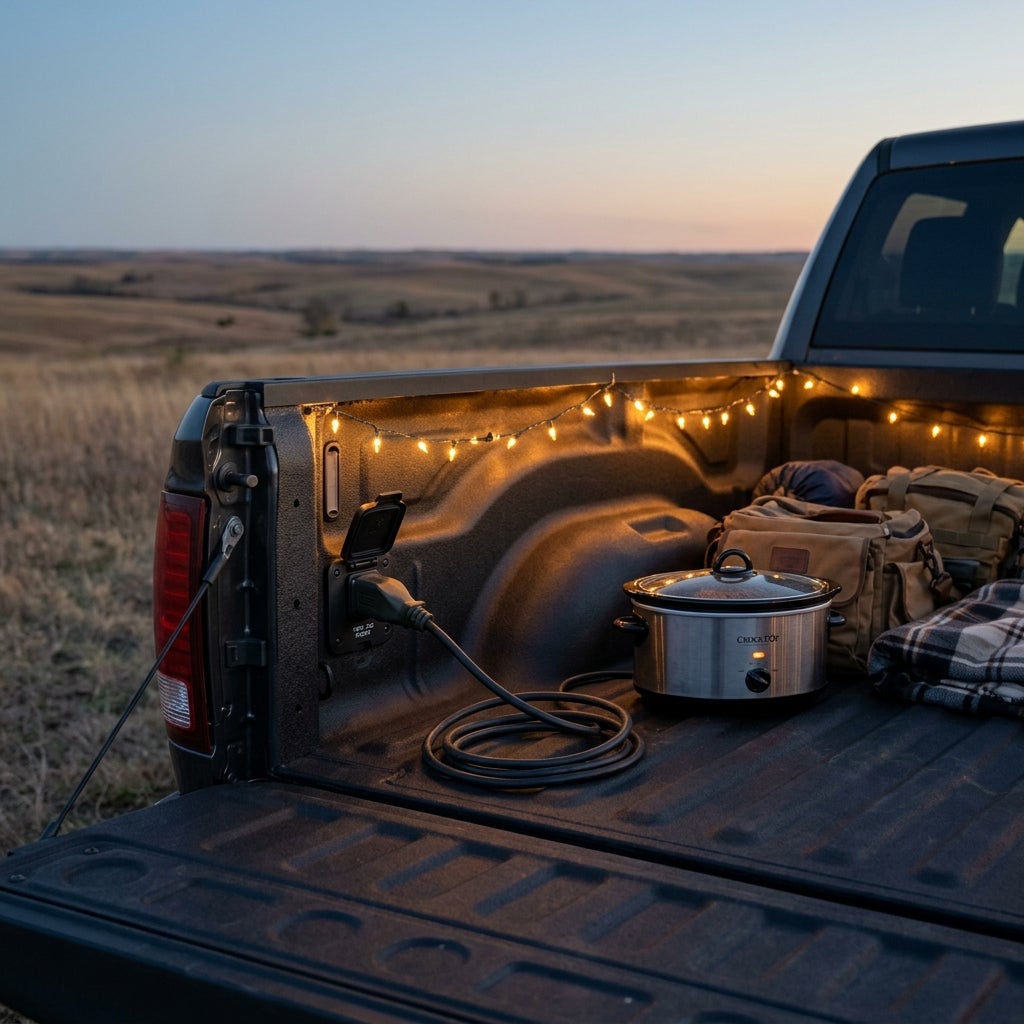
Direct Answer: What Mopar Accessories Best Protect Jeep Seats and Cargo Areas for Kansas Winters? When late autumn transitions into full-fledged winter across the Flint Hills, Kansas drivers face a brutal combination of freezing rain, thick mud, wet slush, and corrosive road salt. Protecting the cabin and cargo bay of your Jeep Wrangler, Gladiator, Grand Cherokee, or Compass requires purpose-built interior armor. The absolute best original equipment manufacturer (OEM) solution comes directly from Mopar—Jeep's official service, parts, and customer care division. Authentic Mopar winterization accessories are specifically engineered to fit the exact contours of your vehicle's floor pans, seating frames, and trunk bays, providing an unyielding shield against the worst elements Kansas winters can throw at your cabin. The essential lineup for complete Jeep interior winter defense includes four cornerstone Mopar components: 1. Custom-Fit All-Weather Slush Mats: Built with deep reservoir channels, high retention walls, and specialized drain-plug compatibility (on Wrangler and Gladiator models) that allow melted snow to drain directly through the vehicle floor. 2. Heavy-Duty Molded Cargo Trays: Constructed from flexible, cold-resilient thermoplastic elastomer (TPE) that flexes under heavy loads without cracking in sub-zero temperatures. 3. Waterproof Neoprene and Heavy Canvas Seat Covers: Custom tailored to seal out wet hunting gear, mud-slicked coveralls, and spilled hot coffee while remaining fully side-airbag compliant. 4. Cargo Area Seatback Protectors: Molded rubberized barriers that attach directly to the rear of second-row seats, ensuring seamless protection whether seats are raised upright or folded flat for bulky cargo. To explore these fitted upgrades in person, stop by our Parts Department at Valor CDJR in Junction City. Why Factory Mopar All-Weather Floor Mats and Cargo Liners Outperform Universal Options Universal off-the-shelf floor mats bought at general retail stores may seem convenient initially, but they fall drastically short when exposed to genuine Kansas winter conditions. Generic mats rely on flat trim-to-fit designs that shift constantly underfoot, curl up at the edges when temperatures plunge below freezing, and fail to block liquid runoff from soaking into under-carpet acoustic insulation. Once salt-laden slush penetrates carpet padding, it breeds stubborn mildew odors, causes sub-floor rust, and degrades vehicle trade-in values over time. Factory Mopar all-weather mats are engineered using precise 3D digital CAD data straight from the Jeep vehicle design teams. This guarantees millimeter-perfect fitment against every swell, pedal mount, and seat rail anchored to your floor pan. On Jeep Wrangler and Gladiator models, Mopar mats feature patented integrated drain-plug grommets. When snow melts inside your cabin, you can unplug the floor drains directly through the mat, letting water escape without removing the liner. Furthermore, Mopar's proprietary rubber compound remains pliable in extreme freeze conditions down to sub-zero temperatures, ensuring the high retention walls never distort or leak onto your carpet. Key Mopar Seat Accessories: Heavy-Duty Covers, Waterproof Barriers, and Heated Comfort Upgrades Canvas & Neoprene Covers Mopar heavy-gauge canvas and neoprene seat covers offer an impenetrable barrier against damp winter coats, mud, and active lifestyle wear. Tailor-fit to specific seat configurations, these covers preserve factory leather and cloth upholstery while incorporating engineered side seams that ensure full deployment of seat-mounted side airbags in an emergency. Seatback Storage Systems Keep winter emergency gear organized and off the wet floorboards with Mopar MOLLE-style seatback storage panels. Engineered for heavy utility, these tactical grid panels accept modular pouches for ice scrapers, thermal gloves, flashlights, tow straps, and first-aid kits, keeping essential equipment secure and rapidly accessible. Heated Seat Accessory Kits If your Jeep came from the factory with standard cloth seats, Mopar offers heated seat accessory kits. These systems integrate seamlessly with your vehicle's electrical harness and dashboard controls, delivering rapid warming comfort to front seats during freezing morning commutes across Geary and Riley Counties. Preparing Your Jeep or Ram 1500 for Late-Autumn Tailgating and Farm Work in Riley and Geary Counties Life in Junction City, Manhattan, and surrounding rural Riley and Geary counties demands exceptional versatility from your vehicle. On Saturday afternoon, your truck or SUV might be parked outside Bill Snyder Family Stadium supporting K-State game day tailgating; by Monday morning, it is navigating muddy pastures, towing livestock trailers, or hauling heavy equipment across unpaved county roads. Transitioning seamlessly between agricultural labor, outdoor recreation, and family transport requires a multi-layered interior protection strategy. For dual-purpose duty, local drivers frequently combine heavy-duty Mopar floor slush mats with Mopar bed liners and tonneau covers on Ram 1500 trucks, or rear cargo trays and seatback covers on Jeep Grand Cherokee models. This setup ensures that clay-heavy Kansas soil, agricultural chemicals, and wet hunting gear stay completely contained. Whether you are transporting livestock feed in the morning or loading tailgate coolers in the afternoon, Mopar accessories let you hose down your protective liners in minutes, keeping the underlying vehicle spotless. If you need expanded utility for your operations, browse our current Commercial Vehicle Inventory to find heavy-duty work trucks built for tough Kansas workloads. View Commercial Inventory How Cargo Volume Capacities Compare Between the Ram 1500 Bed and Grand Cherokee Interior Space Understanding the distinction between open bed volume and climate-controlled interior cargo space is critical when planning winter farm work or outdoor excursions. The Ram 1500 offers substantial exterior cargo space designed for rugged, weather-resistant equipment, while the Jeep Grand Cherokee provides locked, heated interior storage optimal for sensitive tools, luggage, and perishable supplies. A Ram 1500 equipped with a 5-foot-7-inch short box delivers approximately 54 cubic feet of cargo space, expanding to 61.5 cubic feet with a 6-foot-4-inch bed box. In contrast, the Jeep Grand Cherokee provides up to 38 cubic feet behind the second-row seats, expanding to 71 cubic feet when the rear seats are folded flat. Pairing a Ram 1500 with a Mopar spray-in bedliner and tri-fold tonneau cover creates weather-protected exterior storage, while equipping a Grand Cherokee with Mopar molded cargo liners keeps high-capacity interior space protected against snow and mud. Vehicle & Configuration Primary Storage Type Max Usable Volume Recommended Winter Liner Ram 1500 5'7" Bed Open / Covered Bed 53.9 cu ft Mopar Spray-In Liner + Tonneau Ram 1500 6'4" Bed Open / Covered Bed 61.5 cu ft Mopar Bed Mat + Lockable Box Jeep Grand Cherokee (Seats Up) Enclosed Climate-Controlled 37.7 cu ft Mopar Molded Rubber Cargo Tray Jeep Grand Cherokee (Seats Folded) Enclosed Climate-Controlled 70.8 cu ft Mopar Cargo Tray + Seatback Shield Can the Ram 1500 Bed Power Outlet Run Electric Heaters or Tailgating Appliances Simultaneously? Wattage Limits & Ratings The Ram 1500 optional truck bed outlet delivers 115-volt AC power rated up to 400 watts. While 400 watts easily powers LED stadium lights, slow cookers (which draw 150–250W), and battery chargers, high-draw ceramic space heaters typically demand 1,200 to 1,500 watts and will trip the inverter's internal breaker. Tailgating Appliance Load You can safely run low-wattage tailgating appliances simultaneously, such as a 180W crockpot alongside a 50W television or LED lighting array (totaling ~230W). Managing cumulative draw ensures stable operation without interrupting power to your tailgate setup. Battery & Engine Idle Rules To prevent draining your starter battery during cold weather, run the engine while operating high-demand accessories. The system automatically regulates voltage to ensure your truck starts reliably, even when running auxiliary devices in freezing temperatures. How the Ram 1500 Onboard Power Inverter Supports Farm Electrical Equipment and Tailgate Accessories For farmers and landowners in Geary and Riley counties, the Ram 1500 onboard power inverter acts as a mobile electrical hub out in remote pastures. Powering 18-volt cordless tool battery chargers, electric fence chargers, portable soldering irons, and emergency work lights directly from the truck bed eliminates the need to haul heavy, noisy gas generators for minor fence repairs or equipment maintenance. When non-working weekend hours roll around, that same inverter seamlessly transitions to power outdoor entertainment gear. Combined with Mopar heavy-duty truck bed outlet protective weather caps, the system keeps electrical contacts clean and dry regardless of rain, mud, or snow, providing reliable mobile power year-round. What Should Junction City-Area Jeep and Ram Owners Check Before Late-Autumn Farm Work and Tailgating? Before winter frost settles over central Kansas, completing a comprehensive seasonal inspection ensures your vehicle stays dependable when navigating remote county roads or cold morning starts. Key maintenance items include: 1. Battery Cold-Cranking Amps (CCA): Sub-freezing temperatures reduce battery output by up to 50%. Have your battery load-tested to confirm adequate starting power. 2. Tire Pressure & Tread Depth: Cold air lowers tire pressure by approximately 1 PSI per 10°F drop. Ensure tread depth is above 4/32" for effective snow traction. 3. Engine Coolant / Antifreeze Mix: Test your coolant mixture to ensure freeze protection down to -25°F. 4. Mopar Beam Wiper Blades & Winter Fluid: Replace worn blades with heavy-duty Mopar synthetic beam blades that resist ice buildup. 5. Cabin Air Filter: Replace clogged filters to maintain maximum defroster airflow and cabin heating efficiency. 6. Interior Mopar Slush Mat Fitment: Snap all floor mats securely onto factory floor retainers to prevent interference with pedals. You can quickly schedule an inspection through our online Service Scheduler or visit our Express Lane for maintenance without an appointment. Schedule Winter Service How Does Quadra-Lift Air Suspension Improve Ground Clearance on Jeep Vehicles During Winter Snow? Jeep's available Quadra-Lift® Air Suspension system is a useful feature for severe Kansas winter driving. By utilizing closed-loop air springs at all four wheels, Quadra-Lift allows drivers to electronically adjust ride height depending on terrain requirements, offering up to 10.9 inches of maximum ground clearance in Off-Road 2 setting. When drifting snow buries rural county roads or unpaved farm lanes around Junction City, raising the vehicle prevents the undercarriage from snow-plugging or high-centering. Combined with Jeep's Selec-Terrain® traction control set to 'Snow' mode, the system optimizes torque distribution, throttle response, and suspension height to maintain steady forward momentum through deep slush and ice. To explore new models featuring Quadra-Lift, browse our latest New Vehicle Listings or explore pre-owned models in our Used Vehicle Listings. Selecting Mopar Cargo Management Accessories for Snowboards, Hunting Gear, and Emergency Kits Under-Seat Lockable Bins Secure valuable hunting gear, tools, and electronics in lockable Mopar heavy-gauge steel under-seat storage bins. These lockboxes integrate directly under second-row seating in Ram trucks and Jeep Wranglers, keeping contents concealed and safe. Roof-Mounted Gear Carriers Free up interior cabin space by installing Mopar crossbars paired with lockable ski and snowboard carriers or hard-shell cargo boxes. Built with corrosion-resistant aluminum, these carriers handle wet sports gear without cluttering your interior. Mopar Roadside Winter Kits Official Mopar roadside safety kits come packed with essential winter recovery tools: heavy-duty jumper cables, thermal blankets, work gloves, a folding shovel, flashlight, and reflective warning triangles packaged in a durable canvas bag. Where Can Riley and Geary County Drivers Arrange Local Jeep or Ram Seasonal Service? Finding reliable, factory-certified service and genuine Mopar accessory installation is convenient for drivers throughout Junction City, Fort Riley, Manhattan, and the surrounding Flint Hills region. Valor CDJR is your dedicated local hub for authentic Mopar parts, seasonal vehicle maintenance, and professional accessory installation. Located at 1825 Goldenbelt Blvd in Junction City, KS 66441, our team of factory-trained technicians ensures your floor mats, seat covers, cargo trays, and power accessories are installed precisely according to manufacturer specifications. You can Get Directions to Valor CDJR or Call us at (785) 238-5114 to consult directly with our parts and service specialists. If you are considering upgrading your vehicle before winter arrives, check your current vehicle value with our Trade In Evaluation tool or Get Pre-Approved online. Winterize Your Jeep Cargo and Seating Areas at Valor CDJR in Junction City Don't let freezing weather, slush, and salt damage your Jeep or Ram interior this season. Equip your vehicle with authentic Mopar slush mats, molded cargo trays, waterproof seat covers, and cargo organization systems designed specifically for your model. Visit Valor CDJR today at 1825 Goldenbelt Blvd in Junction City, KS, or contact our team online to order accessories, schedule maintenance, or explore our complete line of new and pre-owned vehicles. Order Mopar Accessories Schedule Service Appointment