PCS Vehicle Guide: Helping Military Families Navigate Out-of-State Trades and Relocation Purchases
Welcome to our comprehensive Permanent Change of Station (PCS) vehicle transition guide, specifically designed for active-duty service members, National Guard and Reserve personnel, and military families transitioning to Fort Riley, Junction City, Manhattan, and the surrounding Flint Hills region of Kansas. Receiving your PCS orders brings a wave of mixed emotions: the excitement of a new assignment, the anticipation of new professional opportunities, and the inevitable logistical stress of packing up your entire life. Between the endless checklists of housing clearance, packing household goods (HHG), coordinating school transfers, and managing military administrative paperwork, one critical factor is often left to the last minute: managing your personal vehicles.
Vehicles are among the most valuable and logistically complex assets that military families own. Navigating out-of-state registration requirements, managing auto loans with out-of-state lienholders, timing a trade-in to avoid double-taxation, or deciding whether your current sedan is rugged enough to survive a harsh Kansas winter can become an overwhelming burden. This guide is crafted to take the mystery out of the vehicle relocation process. As a proud, military-focused partner located just minutes from the main gates of Fort Riley, Valor CDJR has helped thousands of service members navigate the unique financial and logistical hurdles of out-of-state vehicle trades, buying from afar, and preparing vehicles for relocation. Let’s dive deep into the strategies that will make your next PCS vehicle transition more manageable.
How does a PCS move change the way I should plan to buy, sell, or trade my vehicle?
The timing of a PCS move introduces distinct complications to vehicle ownership. If you own a vehicle with an active loan, moving across state lines requires direct coordination with your lienholder. Many auto finance companies require formal notification before a vehicle is permanently relocated to another state, as registration and titling must be updated to comply with local laws. This out-of-state transition can lead to administrative delays, particularly if you are trying to sell or trade your vehicle mid-move. If your registration is about to expire, you face a critical timing decision: do you pay to renew your registration in your current state, only to pay registration and titling fees again in Kansas a few weeks later? Or do you risk driving on expired tags during a cross-country relocation?
To prevent these expensive overlaps and administrative headaches, remote planning is your strongest tool. At Valor CDJR, we specialize in simplifying out-of-state vehicle trades. We understand that your time is extremely valuable when preparing for a PCS. Rather than forcing you to wait until you arrive in Kansas to begin the trade process, we offer powerful digital tools to help you secure your vehicle’s value from the comfort of your current home. By using our digital portals, you can lock in an accurate market valuation, organize your financing paperwork, and align your vehicle trade-in exactly with your physical moving date.
Our remote trade program is designed specifically around the hectic military lifestyle. Through our virtual consultation platform, we can assess your vehicle’s condition, review your service history, and provide a trade-in value estimate before you ever pack your first moving box. This is particularly advantageous for families trying to consolidate their household. Trading in your secondary vehicle or upgrading to a highly reliable family SUV prior to your road trip can eliminate the logistical nightmare of driving two vehicles across several states. It also saves thousands of dollars in fuel, lodging, and wear-and-tear costs.
If you are planning to trade in your current vehicle, you can start the process right now by accessing our Trade In Evaluation tool. Knowing the precise equity or trade value of your car allows you to build a highly accurate PCS financial budget, ensuring you don’t face unexpected out-of-pocket expenses during your transition. We make it easy to clear your old loan, handle the title transfer across state lines, and ensure that your new or pre-owned vehicle is ready and waiting for you upon your arrival at Fort Riley.
Does PCS status change whether I should drive my current car or buy a different one before moving?
One of the most common debates among relocating military families is whether to keep their existing vehicle or upgrade before making the trek. To make an informed decision, you must carefully analyze your current vehicle’s mechanical condition, its suitability for your new duty station’s climate, and its overall utility during a long-distance move. If you are currently driving a fuel-efficient compact car but are moving with a family of four, pets, and several trunks of military gear, the lack of cargo space can quickly turn a cross-country drive into an uncomfortable and exhausting trial. Upgrading to a spacious SUV or a versatile truck prior to your move can provide the critical cargo capacity and passenger comfort needed for a multi-day road trip.
Furthermore, mechanical reliability is paramount. A breakdown on an isolated stretch of highway during a PCS move is not just a minor inconvenience; it can disrupt your travel timeline, leading to missed report dates, expensive emergency towing, and unexpected lodging costs that may not be covered by your military travel allowances. If your current car has high mileage, lingering mechanical issues, or lacks modern safety features like adaptive cruise control, lane-keep assist, or emergency braking, upgrading to a newer, more dependable vehicle before your road trip is a highly practical choice. If you want to explore your options, you can browse our extensive Used Vehicle Listings or check out our latest inventory of reliable new models by exploring our New Vehicle Listings.
Does the military pay to ship a vehicle (POV) during a CONUS PCS?
Understanding Joint Travel Regulations (JTR)
The Joint Travel Regulations (JTR) outline strict rules regarding the shipment of Privately Owned Vehicles (POVs). Under normal circumstances, the military does not pay to ship a vehicle for a CONUS-to-CONUS (Continental United States) relocation. This means if you are moving from Fort Bragg (Fort Liberty) to Fort Riley, or from Fort Hood (Fort Cavazos) to Manhattan, Kansas, you are expected to drive your vehicle to your new duty station, or pay a private shipping company out-of-pocket to transport it.
Exceptions and Special Allowances
There are very specific exceptions to this CONUS policy. The military may authorize POV shipment if you are medically unable to drive, if your physical separation time prevents driving, or if you are on a homeport change. However, for the vast majority of active-duty relocations within the United States, driving is the primary required method. This makes owning a highly reliable, mechanically sound vehicle an absolute necessity for active-duty personnel.
OCONUS vs. CONUS Rules
If you are transitioning from an OCONUS (Outside Continental United States) location—such as Hawaii, Alaska, Germany, or Japan—to Fort Riley, the government will typically cover the cost of shipping one POV to a designated port on the U.S. mainland. If you own a second vehicle, you will need to arrange and fund its transportation yourself. Planning ahead for these transport rules prevents unexpected multi-thousand dollar logistics bills.
How does the Vehicle Processing Center system work for PCS car shipping?
For military families who are authorized to ship a vehicle—primarily those relocating from OCONUS to the mainland—the process is managed through a military Vehicle Processing Center (VPC). Navigating the VPC system requires strict adherence to physical and administrative guidelines. The first major hurdle is clean-out requirements. Your vehicle must undergo a highly detailed, professional-grade cleaning. VPC inspectors check for any traces of soil, plant material, or organic debris to comply with strict USDA agricultural inspection guidelines. This means you must clean the engine bay, wash the undercarriage, vacuum every crevice of the interior, and ensure no pet hair or food crumbs remain.
Additionally, there are strict mechanical and safety standards. Any fluid leaks—whether engine oil, coolant, brake fluid, or transmission fluid—will result in immediate rejection by the VPC. Your fuel level must be at or below a quarter tank (1/4) of gas for safety during shipping. Administratively, if your vehicle is currently financed, you must obtain a formal ‘Lienholder Authorization Letter’ from your auto lender. This letter explicitly grants you permission to ship the vehicle out-of-country or across state lines. Failing to secure this letter prior to your VPC appointment can result in immediate cancellation, derailing your relocation schedule.
What are the practical advantages of driving my vehicle myself during PCS?
Financial Perks of MALT and Per Diem
Executing a Personally Procured Move (PPM), formerly known as a DITY (Do-It-Yourself) move, allows you to take control of your timeline and finances. When you drive your own vehicle, the government compensates you via Monetary Allowance in Lieu of Transportation (MALT), which is paid out on a per-mile basis for up to two authorized POVs. Additionally, you receive daily Per Diem allowances for lodging and meals for your family during travel.
Securing Valuables and Family Needs
Driving your own vehicle lets you keep essential belongings safe. Important military paperwork, family birth certificates, medical records, jewelry, laptops, and expensive gear should never be packed into a moving truck. By driving, you can secure these items in your car, ensuring they are always under your direct control. It also allows you to travel comfortably with pets, bypassing expensive and stressful airline shipping policies.
Exploring the Historic Flint Hills
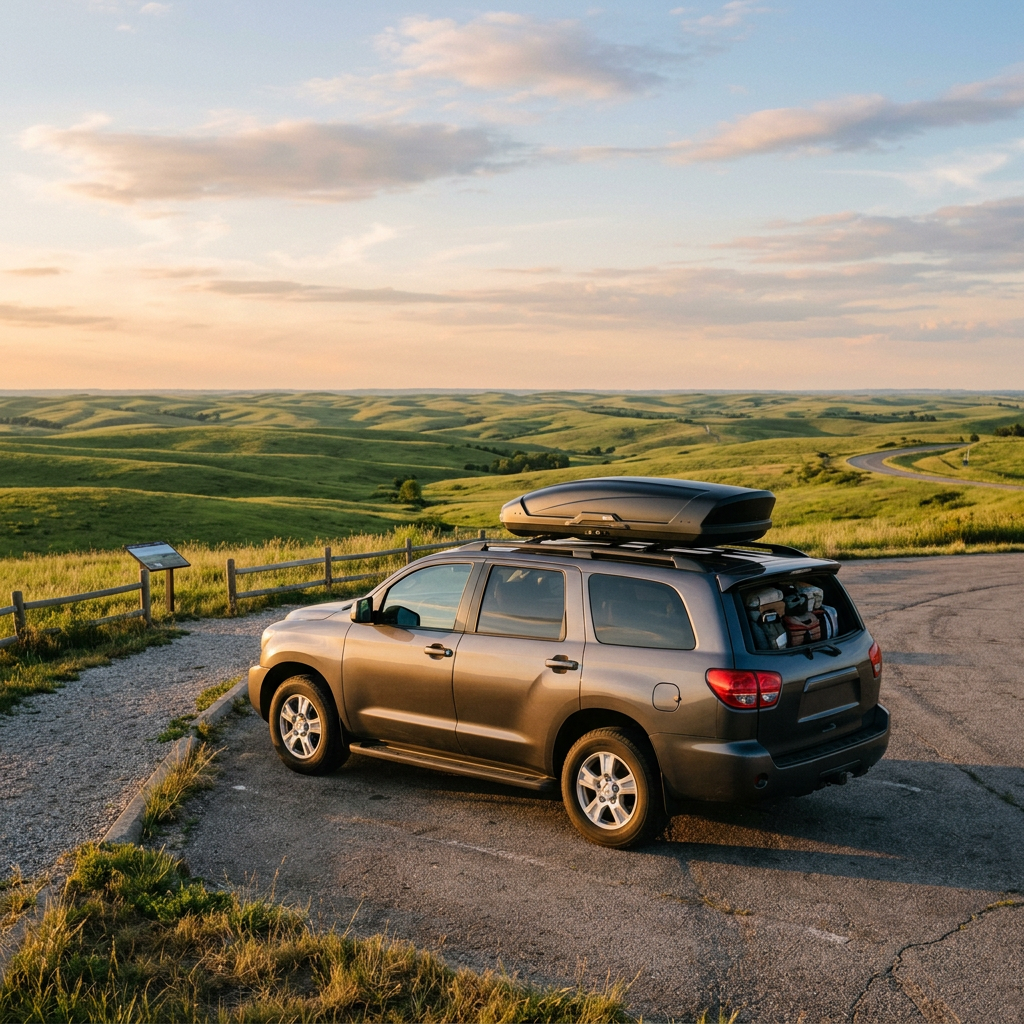
A cross-country PCS drive doesn’t have to be purely administrative—it can be a memorable family road trip. Driving to your new assignment at Fort Riley allows you to experience the natural beauty of the United States, culminating in a scenic drive through the rolling Flint Hills of Kansas. Turning a mandatory relocation into a scenic adventure helps relieve stress and builds positive family memories during a period of major change.
What should I include when budgeting PCS-related vehicle expenses?
A successful PCS relocation requires a granular, well-planned budget. Far too many families focus exclusively on housing costs, only to find themselves short on cash during their drive due to overlooked vehicle expenses. When constructing your budget, you must factor in fuel costs based on your route’s total mileage and your vehicle’s average MPG. You must also budget for road tolls, overnight hotel stays, and daily food. Setting aside a dedicated emergency fund of an appropriate amount for unexpected automotive issues (like flat tires, dead batteries, or belt failures) is vital for peace of mind during your journey.
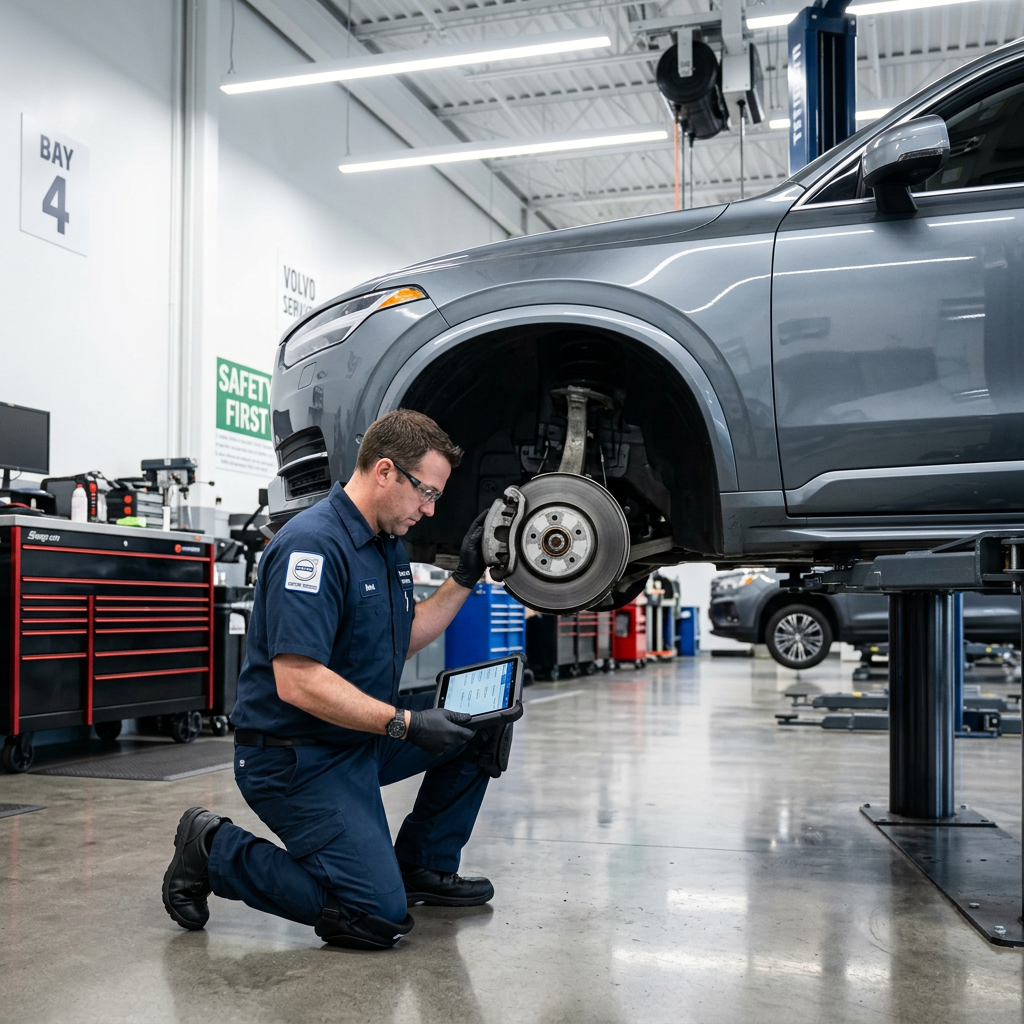
The absolute most critical step of your budgeting process is pre-travel vehicle maintenance. Spending a small amount on preventative care before you leave is infinitely cheaper than paying for emergency repairs on the highway. We highly recommend scheduling a comprehensive multi-point safety inspection to check your brakes, fluid levels, tire tread, and battery health. You can easily schedule an appointment with our factory-trained technicians using our online Service Scheduler. Taking this step ensures your vehicle is fully prepared to handle the demands of a long-distance drive, protecting both your family and your relocation budget.
How does the depreciation of a new car compare to a used car for military families who move frequently?
For military families who relocate every 2 to 3 years, understanding vehicle depreciation is a crucial part of long-term financial health. Brand-new vehicles experience their most rapid depreciation during the first 12 to 24 months of ownership, often losing up to 20% of their initial value. If you buy a brand-new vehicle, finance it with a low down payment, and then receive PCS orders two years later, you run a high risk of being ‘upside-down’ on your auto loan—meaning you owe more on the vehicle than its current market value. This can make trading in or selling the vehicle extremely difficult when it’s time to relocate.
In contrast, purchasing a Certified Pre-Owned (CPO) or high-quality used vehicle allows you to bypass that initial, steep drop in depreciation. Used vehicles hold their value much more stably over a typical 2-to-3-year military assignment. This means when your next PCS cycle comes around, you will have built more positive equity, allowing for a seamless trade-in or sale. Aligning your auto financing options with your PCS timeline is key. To help you structure an current financing options that helps you plan, we encourage you to utilize our quick and secure credit portal to Get Pre-Approved today.
Does Kansas charge sales tax on out-of-state vehicle purchases made by military members?
Understanding sales tax and registration rules in Kansas is essential to avoid unexpected fees. Kansas tax laws offer specific relief and exemptions for active-duty military personnel, but navigating them requires careful attention to detail. Under the Military Spouses Residency Relief Act (MSRRA) and Kansas state statutes, active-duty service members stationed in Kansas on military orders may be exempt from certain local personal property taxes on their vehicles, depending on their legal state of residence (Home of Record).
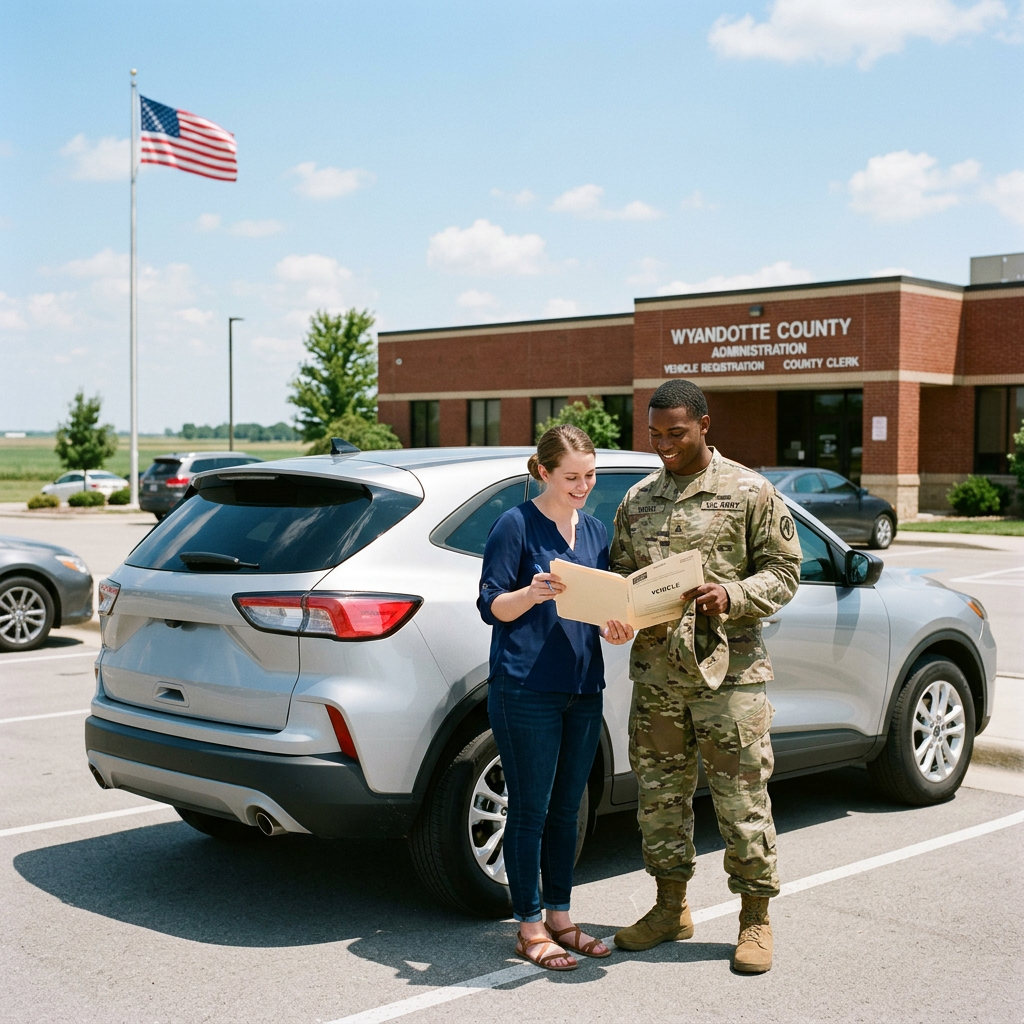
When you purchase a vehicle out-of-state and bring it to Kansas, or buy a vehicle locally in Geary County (Junction City) or Riley County (Manhattan), sales tax is generally determined by your legal residence and where the vehicle will be registered. If you maintain your legal residency in a state other than Kansas, you may register your vehicle in your home state, or you can choose to register it locally in Kansas. If you register in Kansas, you must present a copy of your active military orders, a current Leave and Earnings Statement (LES), and a military tax exemption form (typically Form TR-601) to the county treasurer’s office. This exempts non-resident active-duty members from the annual personal property tax, saving you hundreds of dollars each year. Our finance team at Valor CDJR is deeply experienced in processing these specific military exemptions and will walk you through every step to ensure you get the maximum legal tax benefits.
Navigating Out-of-State Trades and Relocation Purchases in Junction City and Manhattan
Seamless Out-of-State Title Coordination
Handling vehicle titles across different states can be incredibly frustrating during a move. Valor CDJR simplifies this by managing the paperwork for you. Whether your vehicle is currently titled in Texas, North Carolina, Washington, or any other state, our dedicated administrative team will coordinate with your financial institution to secure the title, process the trade, and transfer ownership cleanly.
Virtual Purchases and Base Delivery
If you want to buy your new car before you arrive at Fort Riley, we offer a comprehensive virtual buying experience. You can select your vehicle, complete your financing, and sign your purchase paperwork digitally. We can even coordinate a direct delivery of your vehicle to your on-base housing at Fort Riley, or to your off-base residence in Junction City or Manhattan as soon as you arrive.
Commercial and Heavy-Duty Support
If your relocation requires heavy-duty hauling capacity, or if you run a small business or need a rugged commercial vehicle for your transition, we have you covered. Our specialist commercial team can help you find a heavy-duty truck or van that fits your specific hauling needs. You can browse our specialized selection of heavy-duty trucks by visiting our Commercial Vehicle Inventory.
The Fort Riley Relocation Checklist: Preparing Your Car for Kansas Seasons
Transitioning to Kansas means preparing your vehicle for a highly dynamic, seasonal climate. Located in the heart of the Midwest, Junction City and Manhattan experience the full spectrum of weather extremes. While the summers are hot and humid, the winters bring freezing temperatures, heavy snowfall, and icy roads. If you are relocating from a warm southern climate like Georgia, Texas, or Florida, your vehicle likely isn’t equipped to handle a harsh Kansas winter. Preparing your vehicle for these dramatic changes is critical for your safety on the road.
Your local winterization checklist must include checking your engine’s antifreeze/coolant levels, verifying that your battery has strong cold-cranking amps (CCA), and ensuring your windshield wiper fluid is rated for sub-zero temperatures. Most importantly, you must inspect your tires; having all-weather or dedicated winter tires with deep tread is crucial for navigating icy midwestern roads. If you need any replacement parts, winter wiper blades, or all-weather floor mats to protect your car’s interior from mud and snow, you can easily order them through our specialized Parts Department. For quick, no-appointment routine maintenance, feel free to pull into our convenient Express Lane.
Get Expert PCS Vehicle Support at Valor CDJR in Junction City
At Valor CDJR, we are incredibly proud to serve the dedicated men, women, and families of our armed forces. We understand that a PCS move is a massive undertaking, and we are committed to making your vehicle transition the easiest part of your entire relocation. Whether you are looking to trade in your current vehicle from out-of-state, buy a dependable new or used vehicle before you arrive, or service your current car to survive the Kansas seasons, our expert, military-focused team stands ready to assist you. Our showroom is conveniently located near Fort Riley. Get Directions to Valor CDJR and stop by, or simply Call us at (785) 238-5114 to speak with a dedicated advisor today. Let us help you drive into your next assignment with absolute confidence.
Tags: Fort Riley car deals, Military auto loan coordination, Military family vehicle sales, Military relocation car deals, Military vehicle tax exemptions, Military vehicle trade-ins, Out-of-state vehicle purchase, PCS vehicle inventory, PCS vehicle sales, Remote vehicle buying military, Trade-in valuation military, Vehicle financing for military
Posted in
Buying Guides, Financing & Insurance, Model Comparisons, Used Vehicle Guides |
No Comments »