Is Factory Invoice Price Lower Than True Market Value? The Direct Answer for Buyers
The direct answer is yes — under typical market conditions, factory invoice price is generally lower than True Market Value (TMV) and Manufacturer’s Suggested Retail Price (MSRP). However, car buying in today’s economy is rarely one-size-fits-all. True Market Value is a fluid metric driven dynamically by regional supply, localized demand, and vehicle availability. During periods of tight inventory or high demand for specific trucks and SUVs in Kansas, TMV can equal or even surpass MSRP. Conversely, during year-end clearance events, high-inventory quarters, or aggressive manufacturer incentive pushes, True Market Value can drop down to match—or even dip below—factory invoice.
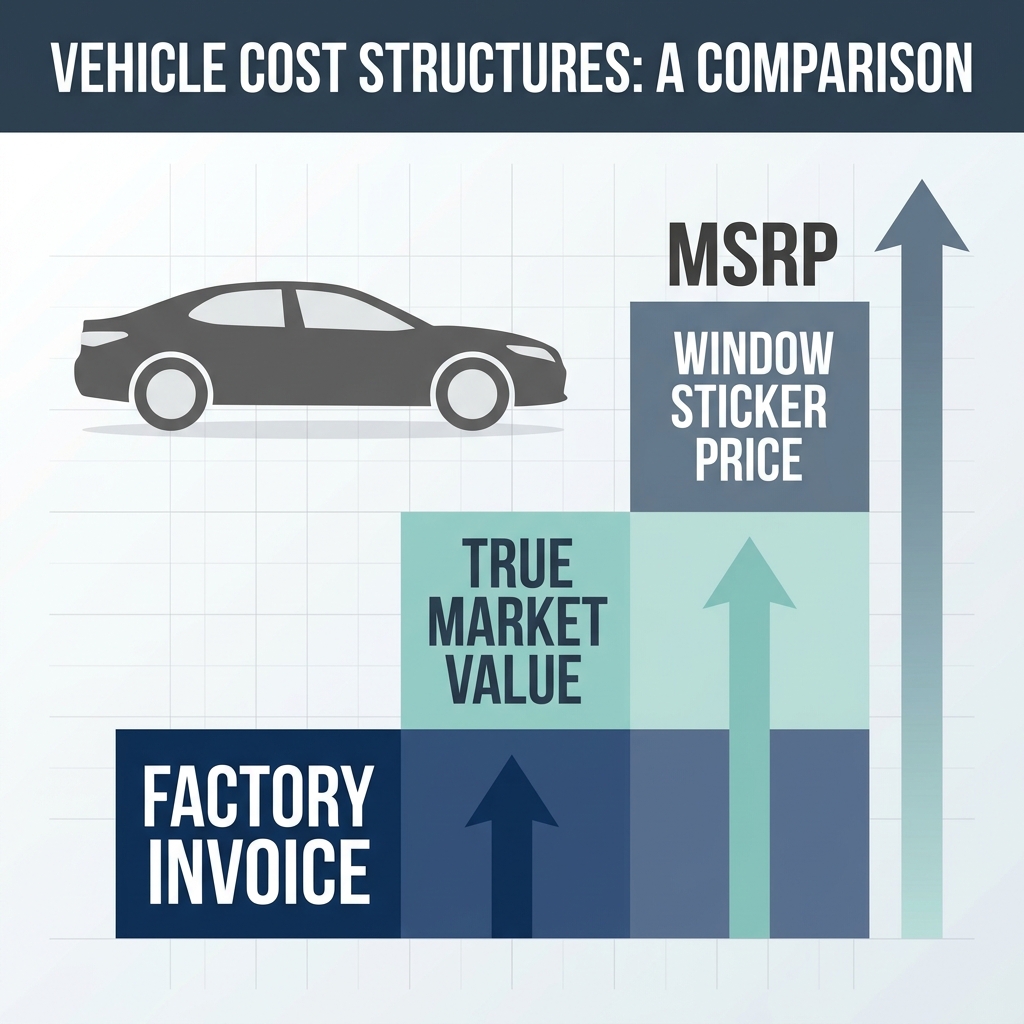
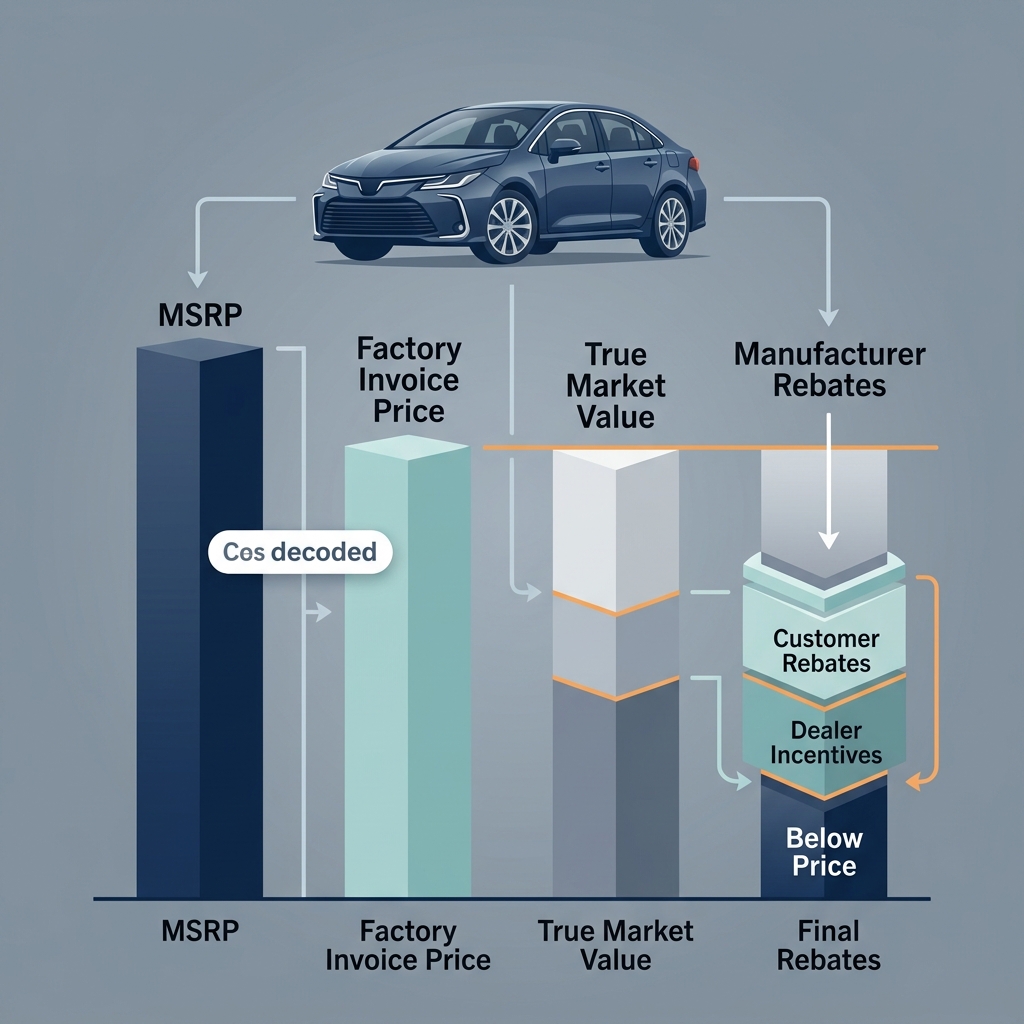
Understanding where factory invoice sits relative to True Market Value is your single most effective tool as a shopper. Factory invoice represents the initial wholesale charge billed by the vehicle manufacturer to the dealership on paper. True Market Value represents what actual buyers in your area are currently paying out-the-door for that exact trim level and feature configuration. When you know both numbers, you transform from a passive customer into an informed, confident car buyer.
Understanding the Technical Differences Between Invoice Price, MSRP, and True Market Value
Factory Invoice Price
The baseline dollar figure listed on the manufacturer’s invoice document to the dealership. It includes the base model cost, factory-installed options, and destination charges. While it reflects the initial wholesale transaction, it does not factor in hidden factory subsidies, performance bonuses, or holdbacks that lower the dealer’s final net cost.
MSRP (Window Sticker)
The Manufacturer’s Suggested Retail Price, visible on the official Monroney sticker affixed to the side window. It is set uniformly across the nation by the automaker and acts as the recommended retail ceiling. MSRP serves as the starting point for consumer retail pricing before discounts, incentives, or trade credits.
True Market Value (TMV)
Also known as Fair Purchase Price, TMV calculates the real-time average purchase price paid by customers in a specific geographic area for a specific vehicle. Calculated by aggregating thousands of recent sales transactions, TMV dynamically adjusts for local supply, buyer demand, and regional promotional pushes.
How Does a Dealer Make Money When Selling a Car for $50 Over Invoice?
It sounds almost impossible on the surface: how can a full-service dealership maintain facilities, pay certified technicians, and employ sales consultants if they sell a brand-new car for just $50 above the paper invoice price? The answer lies in the multi-tiered revenue ecosystem of automotive retail.
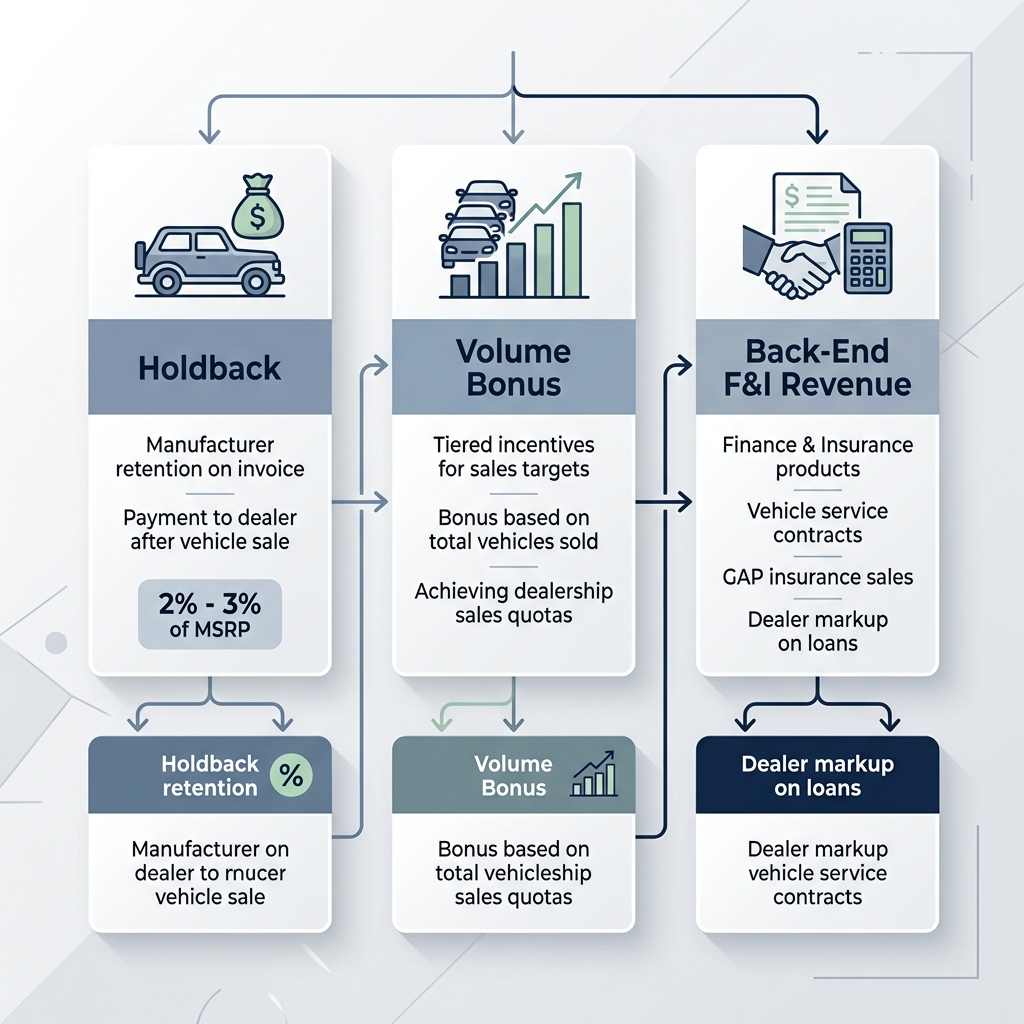
Dealership profitability relies heavily on back-end manufacturer programs and finance operations rather than front-end vehicle markups:
1. Dealer Holdback: Automakers return a percentage (typically 2% to 3% of MSRP or total invoice) to the dealership after the sale. On a $45,000 truck, a 3% holdback generates $1,350 in profit for the dealer even if sold exactly at invoice. 2. Manufacturer Volume Bonuses: Dealerships earn substantial quarterly bonuses by hitting factory-set target thresholds. 3. Floorplan Interest Credits: Manufacturers provide interest allowances for inventory management. 4. Finance & Insurance (F&I): Back-end commissions from competitive financing rates, extended protection plans, and GAP insurance.
Because high-volume dealerships benefit significantly from factory performance bonuses, selling vehicles at or near factory invoice is a sustainable, win-win sales philosophy.
Is $50 Over Factory Invoice Pricing Considered a Good Deal for a New Vehicle?
In virtually every vehicle segment across Kansas, securing a purchase contract structured at $50 over factory invoice represents an exceptionally favorable transaction for the buyer. Because MSRP is frequently several thousand dollars above factory invoice, buying at $50 over invoice eliminates the traditional high-margin retail markup.
When evaluating a $50 over invoice offer, shoppers should consider overall market trends. On high-demand modern pickup trucks or family SUVs, MSRP or near-MSRP is common across many regions. Finding a dealer willing to transparently present factory invoice pricing plus a minimal $50 margin saves buyers substantial money upfront.
To maximize total savings, pair an invoice-based purchase price with an updated Trade In Evaluation to maximize the equity from your current vehicle.
Key Considerations for Invoice Pricing Deals:• Vehicle Popularity: On high-demand limited trims, invoice pricing is extremely rare. • Factory Rebates: Customer rebates apply ON TOP of invoice pricing, lowering your price even further. • Trade-In Equity: Capturing top market value for your trade-in produces maximum total out-the-door savings. • Clear Line Items: Ensure fees are transparent without hidden reconditioning charges.
Can a Vehicle Be Bought Below Factory Invoice Price?
Yes, buying a vehicle below factory invoice price occurs regularly in modern automotive sales. When manufacturers offer direct consumer Cash Back Rebates or targeted military and bonus allowances, those incentives reduce the transaction price directly below invoice cost on the final bill of sale. Furthermore, when automakers offer Dealer Cash or unadvertised factory-to-dealer subsidies, dealerships can sell a vehicle below factory invoice price on paper while remaining profitable thanks to back-end factory compensation and quarterly volume targets.
|
Pricing Level
|
Typical Scenario
|
Buyer Advantage
|
|
MSRP Retail
|
High demand / new release vehicles
|
Standard retail pricing ceiling
|
|
Factory Invoice Pricing
|
Transparent volume dealership pricing
|
Saves $1,500 – $3,500 over MSRP
|
|
Below Invoice Pricing
|
Model year clearance + active factory rebates
|
Maximum possible consumer savings
|
What Extra Fees Can Be Added to a $50 Over Invoice Agreement?
Mandatory Factory Fees
Destination & Freight Charges: Uniform transportation charges assessed by the vehicle manufacturer to ship the automobile from assembly plant to dealership. This mandatory line item appears on both invoice and window stickers.
State & Administrative
Documentation Fees & Taxes: Kansas state sales tax, county licensing, title, and standard dealer administrative documentation fees (doc fees). Legitimate doc fees cover title work, compliance processing, and registration filings.
Optional Dealer Additions
Dealer Accessories: Optional protection packages, tint, wheel locks, or floor liners. Transparent dealers list these optionally so buyers decide whether to include them in the final out-the-door agreement.
How Much Do Regional Advertising Fees Cost on an Invoice?
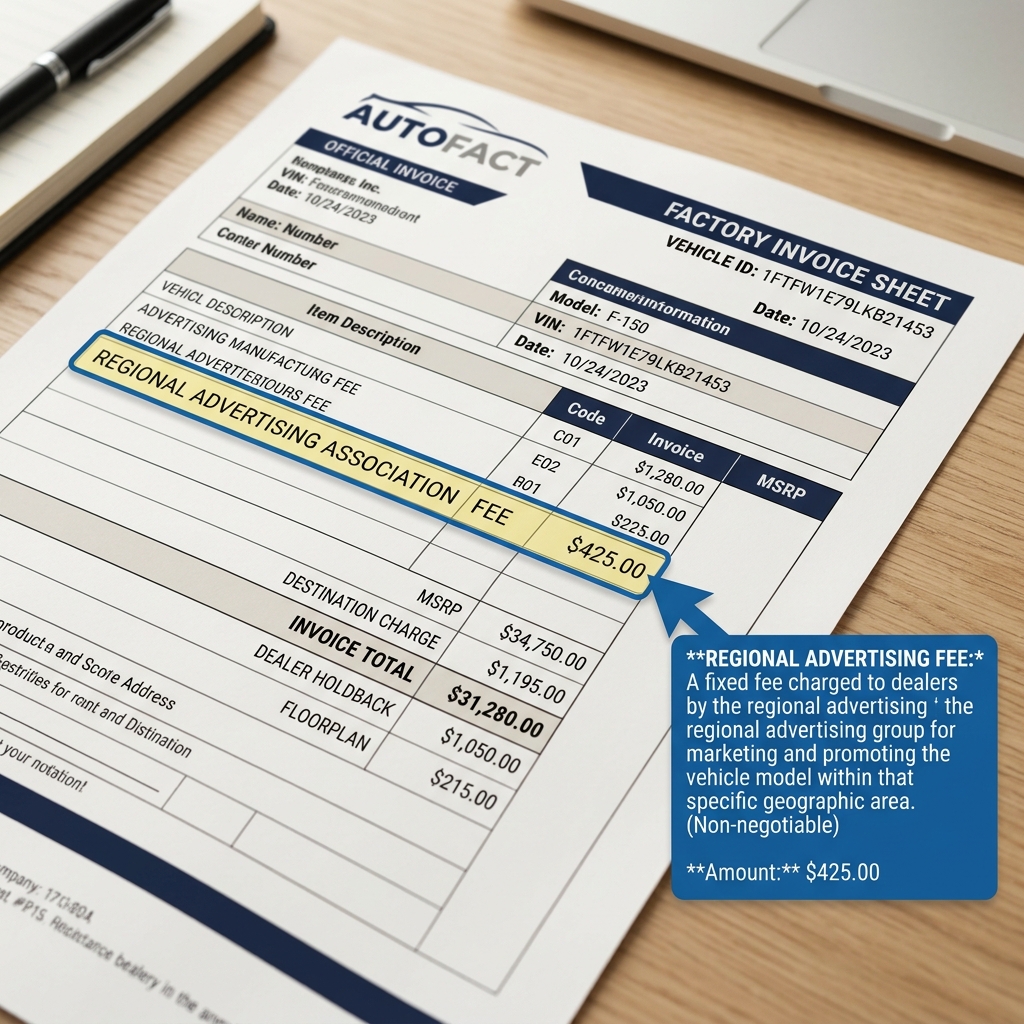
Regional advertising fees—often listed as FDAF (Ford Dealer Advertising Fund), TDA (Toyota Dealer Advertising), or regional marketing association line items—are official expenses assessed directly by the vehicle manufacturer.
Typical Cost Ranges:
• Fixed amounts ranging from $200 to $600 per vehicle
• Percentage-based charges between 1% and 2% of the base vehicle price
Because the factory bills these charges directly to the dealership on the master invoice sheet, they are genuine wholesale expenses paid by the dealer when receiving the vehicle from the factory assembly facility.
Can Regional Advertising Fees Be Negotiated Out of the Invoice Price?
A common point of confusion for vehicle shoppers is whether official regional advertising fees can be negotiated away or removed. Because genuine regional ad fees are printed directly on the automaker’s factory invoice sheet, the dealership actually pays that exact dollar amount to the manufacturer.
While a dealer cannot alter line items on a factory-issued invoice document, buyers can always negotiate the net out-the-door purchase price. When evaluating your purchase contract, focus on the total bottom-line figure rather than individual factory cost components.
Browse our extensive New Vehicle Listings to compare models and see upfront, transparent pricing options.
Out-the-Door Negotiation Strategy:
1. Ask to see the official factory invoice sheet.
2. Verify that the ad fee is printed directly on the manufacturer document.
3. Negotiate your selling price based on the total net out-the-door price including rebates, incentives, and dealer fees.
4. Avoid focusing on individual factory mandatory charges when total discounts exceed factory line item costs.
How Can You Tell a Real Ad Fee from a Fake Dealer Markup?
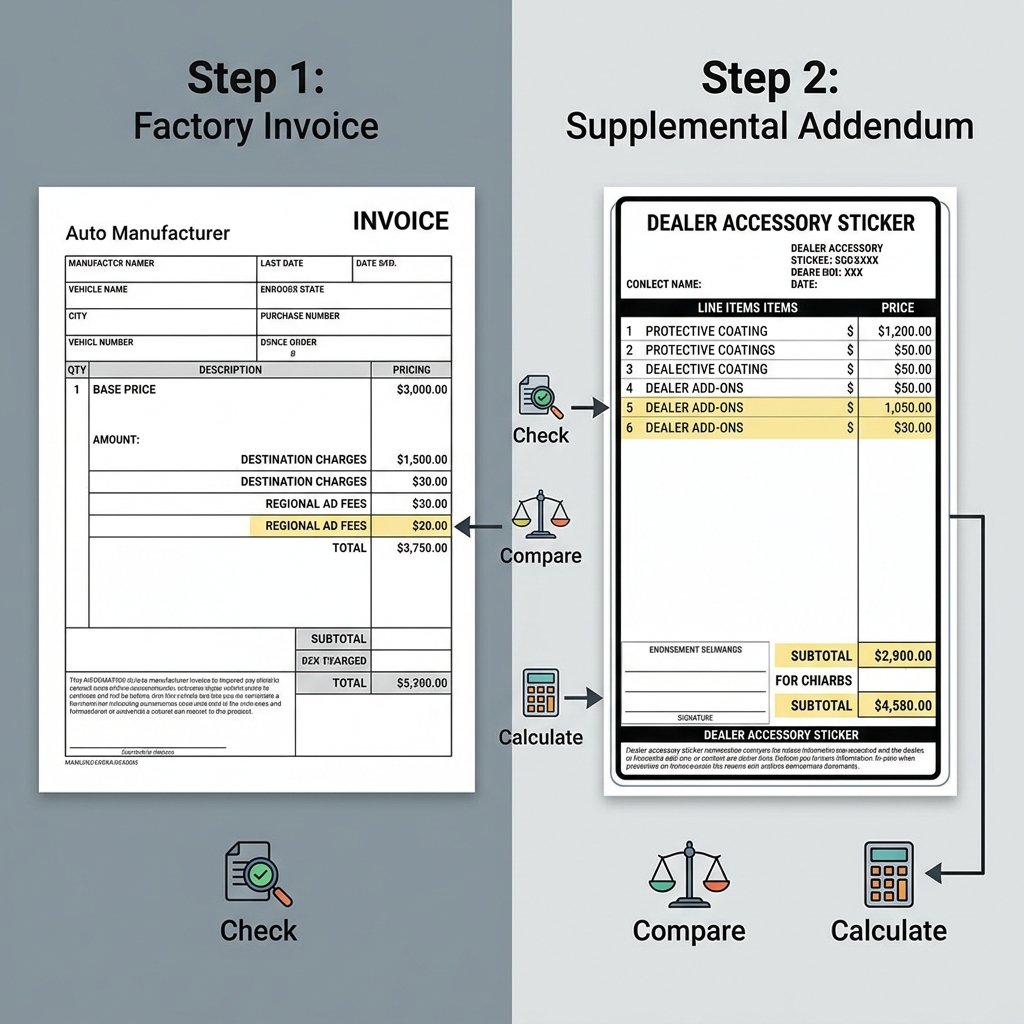
Step 1: Inspect Factory Paperwork
Request to view the computer-printed factory invoice document. Real ad fees are embedded directly into the factory line items printed by the manufacturer prior to delivery.
Step 2: Check Supplemental Stickers
Examine the window addendum sticker next to the official Monroney label. If an ad fee or ‘marketing charge’ appears on a dealer-printed sticker, it is a dealer markup rather than a factory fee.
Step 3: Verify Line Items
Watch for duplicate charges. If an official ad fee already appears on the factory invoice, ensure no second ‘dealer preparation fee’ or ‘administrative marketing fee’ is added to the worksheet.
Navigating New Vehicle Market Pricing in Junction City and Riley County
For military families serving at Fort Riley, faculty and students in Manhattan, and long-time residents across Geary and Riley Counties, transparent auto buying is paramount. Finding a straightforward dealership near home makes all the difference when shopping for your next truck, SUV, or sedan.
At Valor CDJR, located right off Goldenbelt Blvd in Junction City, KS, we believe in complete pricing transparency. Whether you are seeking factory invoice pricing, researching competitive finance rates, or seeking a trade valuation, our team is dedicated to providing clear, upfront details every step of the way.
Ready to visit us? Get Directions to Valor CDJR or Call us at (785) 238-5114 to speak with a specialist today.
Explore tailored financing tools before visiting: start with our online pre-approval application to get pre-approved, or review our curated Used Vehicle Listings for additional value-oriented choices.
Key Checklist Before Signing an Out-the-Door Purchase Agreement
Before placing your signature on a final buyer’s order, complete this quick 5-point audit to ensure you are receiving maximum transparency and every savings credit available:
|
Checklist Item
|
Action Required
|
What to Verify
|
|
1. Factory Invoice Review
|
Compare worksheet against paper invoice
|
Confirm base invoice, options, and freight match
|
|
2. Customer Rebates
|
Audit active factory incentives
|
Ensure all qualifying rebates are subtracted
|
|
3. Trade-In Allowance
|
Review final trade credit
|
Verify trade value matches evaluation quote
|
|
4. Mandatory Fees
|
Inspect doc fee & state taxes
|
Check that doc fees are standard and transparent
|
|
5. Out-the-Door Total
|
Review final bottom line
|
Ensure no duplicate or mandatory dealer add-ons
|
Experience Transparent Pricing and Value at Valor CDJR in Junction City
At Valor CDJR, our commitment to our Kansas community goes far beyond standard automotive sales. We believe that empowering car buyers with full pricing clarity—explaining factory invoice, MSRP, and True Market Value—creates lifelong customer relationships built on trust.
Whether you are shopping for a powerful truck for work, a family-friendly SUV, or a versatile commercial vehicle from our Commercial Vehicle Inventory, our dedicated sales team is here to answer your questions clearly without high-pressure tactics. We also support vehicle owners throughout their vehicle ownership journey. Visit our fully stocked Parts Department, utilize our online Service Scheduler for maintenance appointments, or drop by our quick-service Express Lane for quick oil changes and tire rotations.
Tags: Auto Sales Negotiation, car buying tips, Competitive Auto Financing, Dealer Incentives, Factory Invoice Pricing, MSRP Deals, New Car Sales, trade-in value, Transparent Pricing, Truck and SUV Deals, True Market Value, vehicle financing options
Posted in
Buying Guides, Car Buying Tips, Dealership Offers & Promotions, Dealership Sales Strategies, Dealership Visit Preparation, Financing & Insurance, Financing & Trade-In Options |
No Comments »