What’s the Best Way to Compare Two Complex Car Offers That Reference Invoice or MSRP?
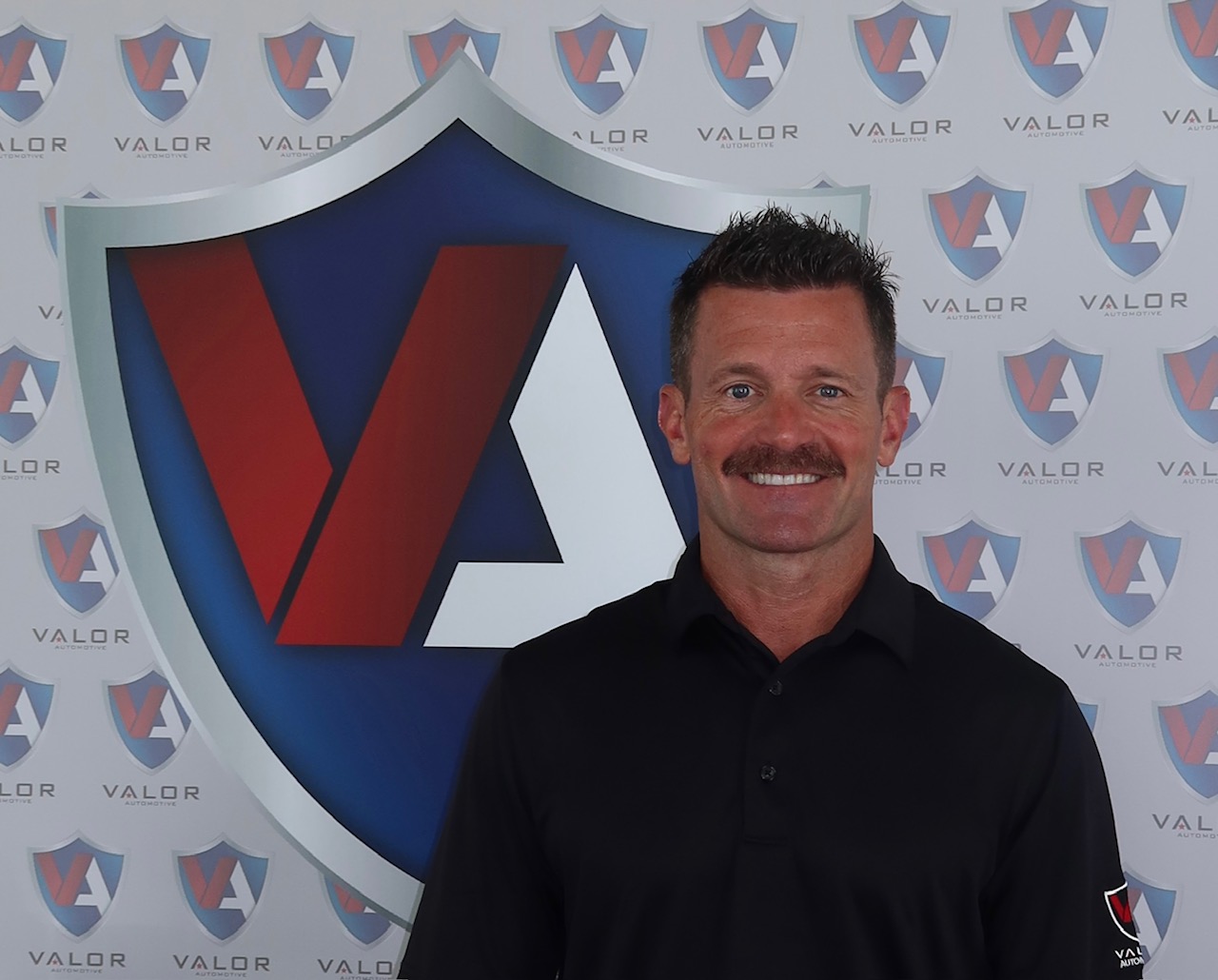
Interviewer: Buying a new truck or SUV in Riley County or Geary County often turns into a maze of conflicting terms—MSRP, dealer invoice, factory holdback, regional ad fees, doc fees, and trade-in allowances. When two other dealerships present quotes using completely different baselines, how can a car buyer tell which deal actually costs less? To unpack the mechanics of automotive pricing, we sat down with Jace Grabouski, General Manager at Valor CDJR in Junction City, Kansas, who brings over 20 years of hands-on dealership management experience. Jace breaks down how to strip away confusing marketing headlines and uncover the true bottom-line figure. Jace Grabouski:“The short answer is that you have to completely ignore baseline labels like ‘MSRP’ during your initial comparison. Dealers use different baseline anchors to make quotes appear lower than they really are. The absolute best way to compare two complex offers is to normalize both quotes down to a total out-the-door (OTD) cash figure by stripping away baseline headlines, auditing every non-governmental dealer fee and mandatory add-on line item by line item, and calculating the exact net outlay after adjusting for true trade-in equity and current financing information.
Interviewer: Why do headline discounts mislead buyers when comparing vehicle proposals from different stores? Jace Grabouski:“I’ve seen it thousands of times in my 20 years in this business. A buyer gets a quote from a dealership in Manhattan or Salina advertising and assumes it must beat a competing quote from a Junction City store. But when you inspect the back page of that proposal, you find a $799 documentation fee, a $495 mandatory paint protection package, a $295 nitrogen tire fee, and an undervalued trade-in allowance that strips away $1,500 in real equity. Meanwhile, the ‘$50 over invoice’ offer carries a low standardized fee, zero dealer add-ons, and a true market-value trade allowance. To make an accurate side-by-side assessment, you must insist on seeing a complete, itemized buyer’s order that lists the base vehicle price, individual factory option costs, destination charges, dealer documentation fees, dealer-installed accessories, government taxes, title fees, and trade-in valuation. If you want to explore transparent baseline pricing today, feel free to browse our New Vehicle Listings or start with an online Trade In Evaluation before stepping foot in the showroom.
What Is the Difference Between MSRP and Factory Invoice Pricing?
Interviewer: Jace, let’s start with basic definitions. Consumers see MSRP on the window sticker and hear about ‘factory invoice’ in car ads. What do these terms really mean under federal law and dealer accounting? Jace Grabouski:“Let’s break them down clearly: 1. MSRP (Manufacturer’s Suggested Retail Price): Also known as the Monroney sticker price, MSRP is the retail pricing calculated by the vehicle manufacturer (like Stellantis for Chrysler, Dodge, Jeep, and Ram). Federal law requires this sticker to remain on every new vehicle until delivery. It includes the base vehicle retail price, factory-installed options at retail, destination charges, and EPA fuel economy estimates. Crucially, MSRP is purely a *suggested* selling price—it is not what the dealership paid for the vehicle. 2. Factory Invoice Price: This represents the initial baseline charge sent from the manufacturer to the dealership when the vehicle is shipped. It reflects the base invoice cost of the vehicle plus option package invoice prices and destination charges. Many buyers mistakenly believe factory invoice is the dealer’s absolute net cost, but that is rarely the case due to behind-the-scenes manufacturer allowances like holdback and quarterly volume bonuses.
Interviewer: Why shouldn’t a buyer in Junction City or Manhattan view either figure as the final benchmark of dealer cost? Jace Grabouski:“Because neither MSRP nor factory invoice accounts for local market realities, dealer operating overhead, or backend manufacturer financial credits. MSRP is an arbitrary ceiling set at headquarters; factory invoice is a standardized wholesale starting point. Neither number tells you what the vehicle is worth in Kansas today or what final out-the-door price a store can offer. When you buy at Valor CDJR, we show you the actual factory document line by line so you see both the retail sticker price and the invoice baseline side-by-side. Transparency removes the mystery. If you ever have questions on a specific Ram 1500 or Jeep Grand Cherokee invoice, you can simply Call us at (785) 238-5114 and our sales coordinators will walk you through every row.
What Does '$50 Over Factory Invoice Pricing' Actually Mean on a Quote?
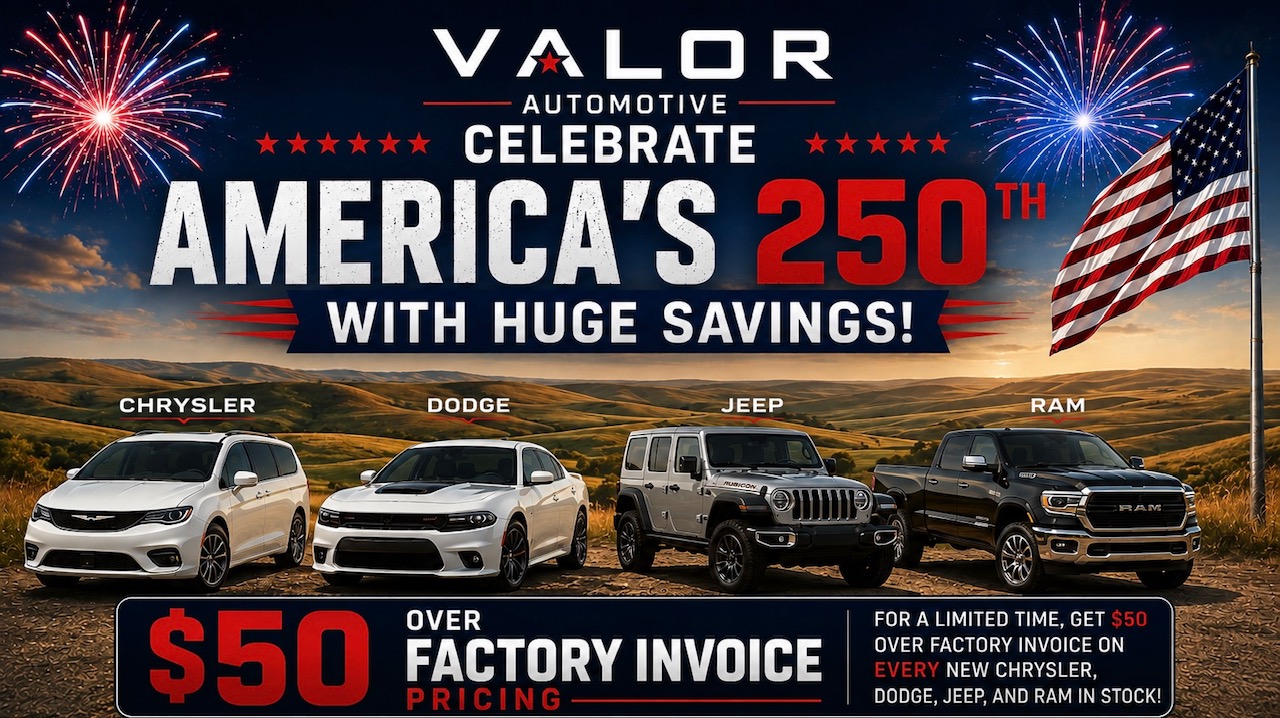
Interviewer: A popular headline offer across Kansas is ‘$50 over factory invoice’ or ‘$100 over invoice.’ What does that actually mean when a customer receives a vehicle proposal? Jace Grabouski:“When a dealer quotes ‘$50 over factory invoice,’ they are taking the sum of the total wholesale vehicle price, total factory option invoice charges, and factory destination fees as printed on the official manufacturer invoice sheet, and adding $50 to that subtotal as the vehicle selling price. For example, if a Ram 2500 Heavy Duty has a total factory invoice subtotal of $54,250 (including destination and cold weather packages), a ‘$50 over invoice’ vehicle quote sets the selling price of the truck at $54,300 prior to dealer processing fees, state sales tax, title charges, and trade adjustments.” Interviewer: What items are already included in that factory invoice starting figure, and what is added afterward?
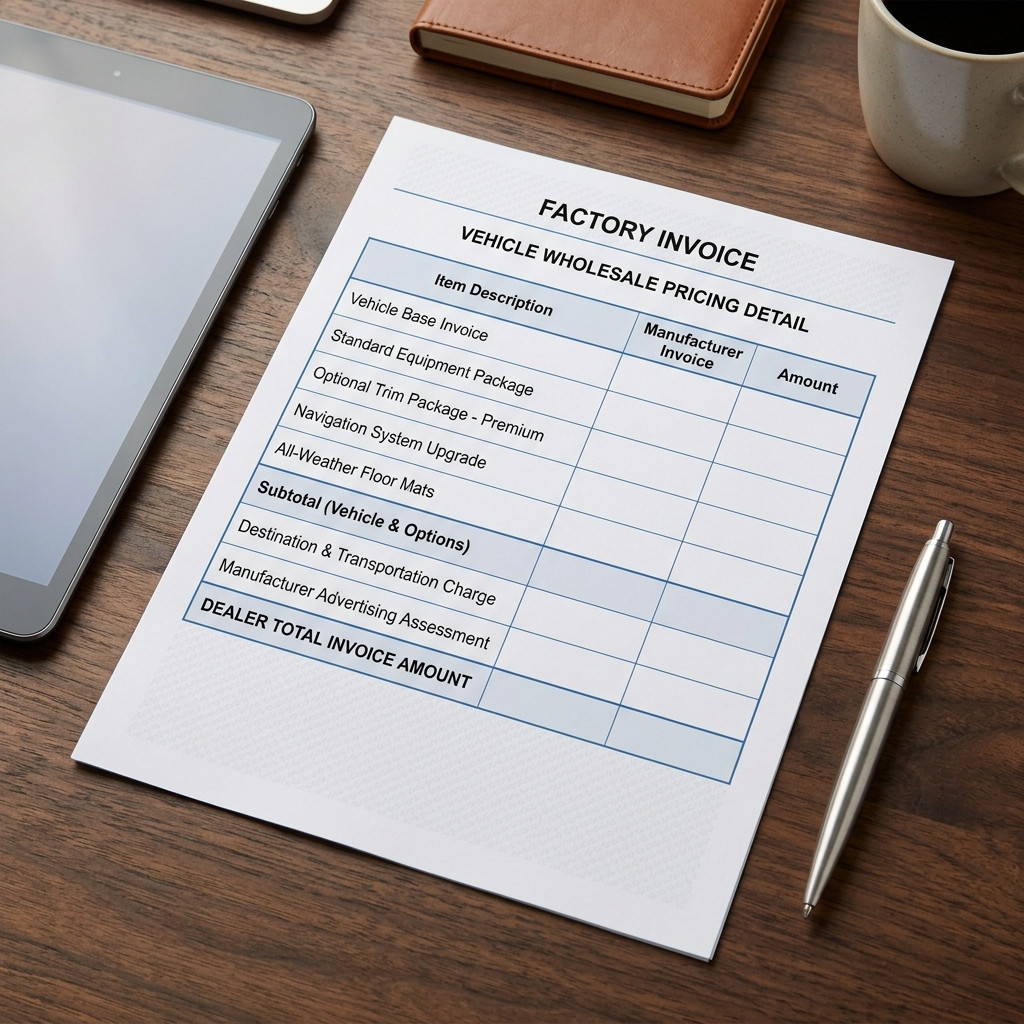
Jace Grabouski: “The official factory invoice sheet *includes* the base vehicle invoice price, optional packages (like 4WD trim, leather interior, towing packages), and the manufacturer destination fee (transporting the vehicle from factory to dealership). What it does *not* include are dealer administrative doc fees, local sales taxes, licensing fees, or dealer-installed items like bedliners or window tint. That’s why ‘$50 over invoice’ is an initial benchmark, not the final check amount.
Are Factory-Installed Options Included in the Invoice Price?
Interviewer: Jace, how do factory options like navigation, sunroofs, or trailer tow packages affect the invoice price? Are they billed at retail or invoice rates? Jace Grabouski: “Every factory-installed option code has both an MSRP retail price and an invoice wholesale price printed on the manufacturer’s invoice sheet. When a quote references ‘$50 over invoice,’ option packages are billed at their wholesale invoice amounts, not retail MSRP.
Auditing Option Codes: “When inspecting an invoice sheet for a vehicle at our store or anywhere else, compare the sales code (e.g., ‘A23’ or ‘XHC’) against the window sticker. The invoice column shows the exact dealer charge for each package. For instance, a $1,800 technology package might carry a $1,602 invoice charge. A legitimate invoice quote uses the $1,602 figure as its baseline.
Dealer-Installed vs Factory: “Beware of dealer-added accessories labeled as ‘factory options.’ Premium floor mats, rust proofing, or wheel locks added in a service department after delivery do not carry a factory invoice code. They are dealer add-ons and must be evaluated separately on the buyer’s order.
|
Vehicle Component / Option Code
|
Factory MSRP (Retail)
|
Factory Invoice (Wholesale)
|
Wholesale Savings Baseline
|
|
2026 Ram 1500 Crew Cab 4×4 Base
|
$47,200.00
|
$44,368.00
|
$2,832.00
|
|
5.7L HEMI V8 eTorque Engine
|
$2,295.00
|
$2,066.00
|
$229.00
|
|
Level 2 Equipment Group (A23)
|
$3,850.00
|
$3,465.00
|
$385.00
|
|
Anti-Spin Differential Rear Axle
|
$495.00
|
$446.00
|
$49.00
|
|
Factory Destination Charge
|
$1,995.00
|
$1,995.00
|
$0.00
|
|
Total Factory Baseline Subtotal
|
$55,835.00
|
$52,340.00
|
$3,495.00
|
Are Regional Advertising Fees Legitimate Dealer Charges?
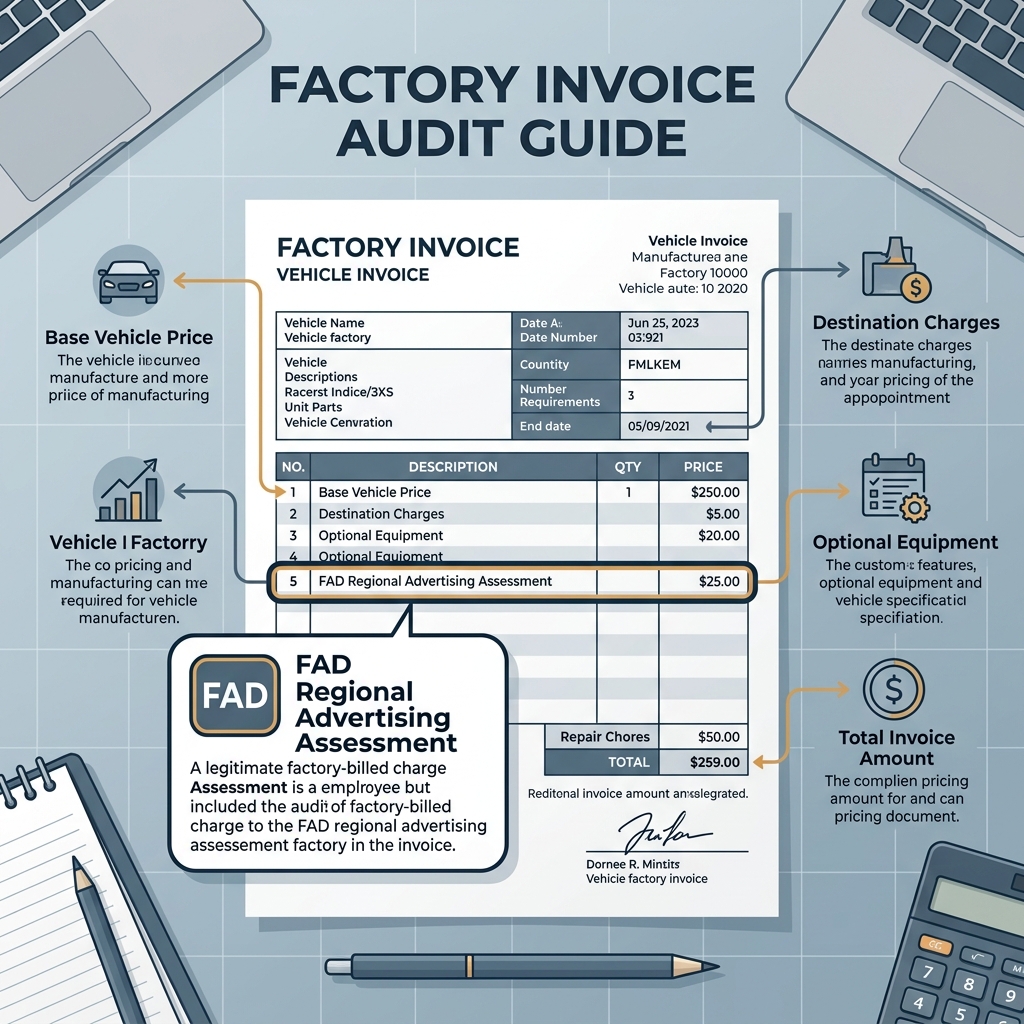
Interviewer: Many buyers notice charges labeled ‘FAD,’ ‘FDAF,’ or ‘Regional Advertising Assessment’ on custom quotes. Are these legitimate fees or hidden dealer markups? Jace Grabouski:“This is one of the most frequently asked questions from buyers in Junction City and Manhattan. The short answer is: it depends on where the fee appears on the paperwork. Factory Advertising Charges (Legitimate): Automotive manufacturers (including Stellantis, Ford, and GM) charge regional dealer advertising associations a standardized fee for regional marketing campaigns. This charge (often labeled FAD or FDAF, typically ranging from $250 to $600) is automatically billed by the OEM directly on the official factory invoice. It is part of the vehicle’s true wholesale invoice cost charged by the manufacturer to every franchised dealer in that sales region. Dealer-Added Advertising Fees (Red Flag): If a dealership writes in a separate line item for ‘Local Dealer Advertising Fee’ or ‘Market Admin Fee’ on their dealer proposal sheet that is not printed on the factory invoice document, that is an internal dealer markup created to recapture overhead. When reviewing quotes, always ask to see the OEM factory invoice sheet to confirm whether the ad fee is a factory-billed charge or a dealer add-on.
Why Might a Higher Quoted Price Over Invoice Still Be Cheaper at One Dealer Than Another?
Documentation & Admin Fees:
“In Kansas and neighboring states, dealer documentation fees vary widely. One store might charge $199 while a competing dealer in a major metro charges $699 or $899. A deal quoted at ‘$500 below invoice’ with an $899 doc fee is more expensive than a deal quoted at ‘$50 over invoice’ with a $199 doc fee.
Mandatory Protection Packages:
“Watch out for mandatory dealer prep add-ons. Etch protection, window tint, mud flaps, fabric protection, and nitrogen fill can add $1,200 to $2,500 to a quote. If store A offers $100 over invoice with no mandatory add-ons, and store B offers $500 below invoice with $1,800 in forced add-ons, store A wins easily.
Trade-In Equity Realism:“The trade-in is where many deals fall apart. Dealer A might sell the new car at invoice but offer you $18,000 for your trade. Dealer B might quote $300 over invoice but give you $20,000 using real market valuation tools. Check your value on our Trade In Evaluation tool first to know your floor.
Jace Grabouski: “This is why comparing selling prices alone is a trap. You have to sum the selling price + total dealer fees + mandatory protection packages – trade-in allowance = true net vehicle cost before government taxes. That net figure is the only number that tells you who has the better deal.
How Do Dealers Still Profit When Selling a Car at $50 Over Factory Invoice?
Interviewer: Jace, consumers often wonder: if a dealership sells a $50,000 Jeep or Ram for just $50 over invoice, how can the store stay open and pay its staff? What transparent revenue streams exist behind the front-end price? Jace Grabouski:“I believe in total transparency with our customers in Junction City. Dealerships operate on a multi-faceted revenue model. Selling a vehicle at or near invoice is a volume-based strategy supported by several backend mechanisms: 1. Factory Holdback: Manufacturers provide franchised dealers a cash allowance called holdback, typically calculated as 2% to 3% of total MSRP or invoice. When a vehicle is sold, the manufacturer refunds this holdback amount to the dealer on a monthly or quarterly basis. On a $50,000 vehicle, holdback can represent $1,000 to $1,500 in gross margin. 2. Wholesale Volume Incentives: Manufacturers set monthly and quarterly sales volume benchmarks for dealerships. Reaching these targets unlocks significant factory dealer-cash bonuses on every unit sold across the entire month. 3. Financing & Trade Resale: Auto lenders provide fee credits when dealerships place competitive financing contracts, and taking in quality pre-owned vehicles allows our service center to recondition and list them in our Used Vehicle Listings, keeping our technicians busy.
How Do You Negotiate a Car Purchase Starting from Factory Invoice Price?
Interviewer: Jace, what step-by-step negotiation strategy should a buyer use when comparing two complex quotes in Geary County or Riley County? Jace Grabouski:“Here is my step-by-step negotiation playbook for getting a clean, transparent deal every time: Step 1: Request the Factory Invoice Sheet First Before discussing monthly payments or trade-ins, ask the salesperson for a copy of the vehicle’s official factory invoice sheet. A professional store will provide it willingly. Verify that the VIN matches the window sticker. Step 2: Demand an Itemized Out-the-Door (OTD) Worksheet Ask for a full line-item price breakdown. It must include: Base Selling Price, Mandatory Dealer Fees (Doc fee), Optional Accessories (if any), State Sales Tax, Title/Registration Fees, Trade Equity Allowance, and Factory Consumer Rebates. If a store refuses to give you an itemized sheet in writing, move on. Step 3: Separate Financing and Trade-In Discussions Negotiate the vehicle’s net out-the-door price first. Once the OTD purchase price is fixed, bring in your trade-in evaluation using tools like our Trade In Evaluation. Finally, review finance rates—or get pre-approved ahead of time via our Get Pre-Approved portal to set a benchmark interest rate. Step 4: Line Up Competing Quotes Line-by-Line
Place both deal worksheets side-by-side. If Dealer A is offering $200 less on vehicle price but charging $400 more in administrative fees, ask Dealer A to match the total out-the-door price of Dealer B. Focus entirely on the final check amount.
Is a Financial Deposit Required to Order a Car at Invoice Price?
Interviewer: Many buyers order custom vehicles directly from the factory to lock in invoice pricing. Is a deposit required, and what protects the buyer against mid-year factory price increases? Jace Grabouski:“Custom factory ordering is a fantastic way to get the exact trim, axle ratio, color, and options you want without paying for lot accessories you don’t need. Here is how deposit and price protection rules work at professional dealerships: 1. Standard Deposit Policies: Dealerships typically ask for a small deposit (usually $500 to $1,000) to submit a custom factory order. At Valor CDJR, deposits on standard production models are 100% refundable if your circumstances change prior to delivery. 2. Factory Price Protection: What happens if the manufacturer increases MSRP or invoice pricing while your vehicle is being built at the assembly plant? Stellantis offers factory price protection for custom sold orders. As long as your order is logged under your name with a signed order sheet, the factory locks in the wholesale price level at the time of order entry, protecting you against unexpected price increases.
How Should Junction City and Manhattan Buyers Line Up Two Offers Side-by-Side?
Interviewer: Jace, let’s look at a practical example. Here is a side-by-side template showing how two seemingly equal offers can differ drastically once all line items are revealed.
|
Quote Line Item
|
Dealership A (‘$500 Over Invoice’)
|
Dealership B / Valor CDJR (‘$50 Over Invoice’)
|
Comparison Notes & Impact
|
|
Base MSRP / Sticker Price
|
$50,000.00
|
$50,000.00
|
Identical vehicle MSRP baseline
|
|
Factory Invoice Baseline
|
$47,000.00
|
$47,000.00
|
Identical factory wholesale invoice
|
|
Advertised Selling Price
|
$46,500.00 (-$500 off invoice)
|
$47,050.00 (+$50 over invoice)
|
Dealer A appears $550 cheaper initially
|
|
Dealer Documentation Fee
|
$799.00
|
$199.00
|
Dealer A adds $600 in extra admin fees
|
|
Mandatory Add-On Packages
|
$1,295.00 (Protection pkg)
|
$0.00 (No forced add-ons)
|
Dealer A forces paint/nitrogen add-ons
|
|
Trade-In Allowance (2020 SUV)
|
$18,500.00
|
$20,000.00
|
Dealer B gives fair trade equity
|
|
Net Pre-Tax Customer Outlay
|
$30,094.00
|
$27,249.00
|
Dealer B is $2,845 CHEAPER overall!
|
1. Audit Headline Price vs Admin Fees: Always check if a headline discount below invoice is offset by high processing or documentation fees.
2. Reject Forced Dealer Protection Add-Ons: Make sure optional protection packages are truly optional and not added without prior consent.
3. Demand Fair Market Trade Valuation: Evaluate trade offers using neutral resources like our Trade In Evaluation portal before agreeing to sales price.
Jace Grabouski’s Key Takeaway: Out-the-Door Price Is the Only Metric That Matters
Interviewer: Jace, as we wrap up this Q&A, what is your ultimate piece of advice for car shoppers in Junction City, Manhattan, and surrounding Kansas communities after 20 years in automotive leadership? Jace Grabouski:“My core advice is simple: forget marketing buzzwords and focus entirely on the bottom-line out-the-door check figure.‘Thousands off MSRP,’ ‘$500 below invoice,’ and ‘market pricing’ are marketing hooks designed to get you into the door. What pays for the vehicle is the final number written on the check or financed through your loan. When you evaluate offers, insist on an itemized worksheet, audit dealer fees, confirm trade value, and compare the final out-the-door numbers. At Valor CDJR, our sales policy is built on straightforward, line-item clarity—no hidden surprises, no mandatory protection add-ons, and no inflated admin fees.” If you ever need routine maintenance on your current vehicle, you can schedule through our Service Scheduler or swing by our Express Lane. Need OEM parts? Visit our Parts Department or check our Commercial Vehicle Inventory for business fleets.
Get a Transparent, Line-Item Quote at Valor CDJR Today
Ready to experience completely transparent car buying in Junction City, KS? Bring in any competing quote from Manhattan, Salina, or Topeka, and let Jace Grabouski and the team at Valor CDJR give you a clear, itemized out-the-door comparison.
Visit us today at 1825 Goldenbelt Blvd, Junction City, KS 66441 or Call us at (785) 238-5114 to speak directly with our team. You can also Get Directions to Valor CDJR online.
Tags: Auto Financing Tips, Car Deals, Dealer Fees Explained, Kansas Car Sales, MSRP vs Invoice, Negotiating Car Prices, New Vehicle Inventory, Out-the-Door Price, Trade-In Evaluation, Transparent Car Buying, Truck and SUV Sales, Vehicle Pricing Comparison
Posted in
Dealer Profiles & Interviews, Dealership Sales Strategies, Financing & Insurance, Financing & Trade-In Options, Trade in Advice, Vehicle Pricing Strategies |
No Comments »