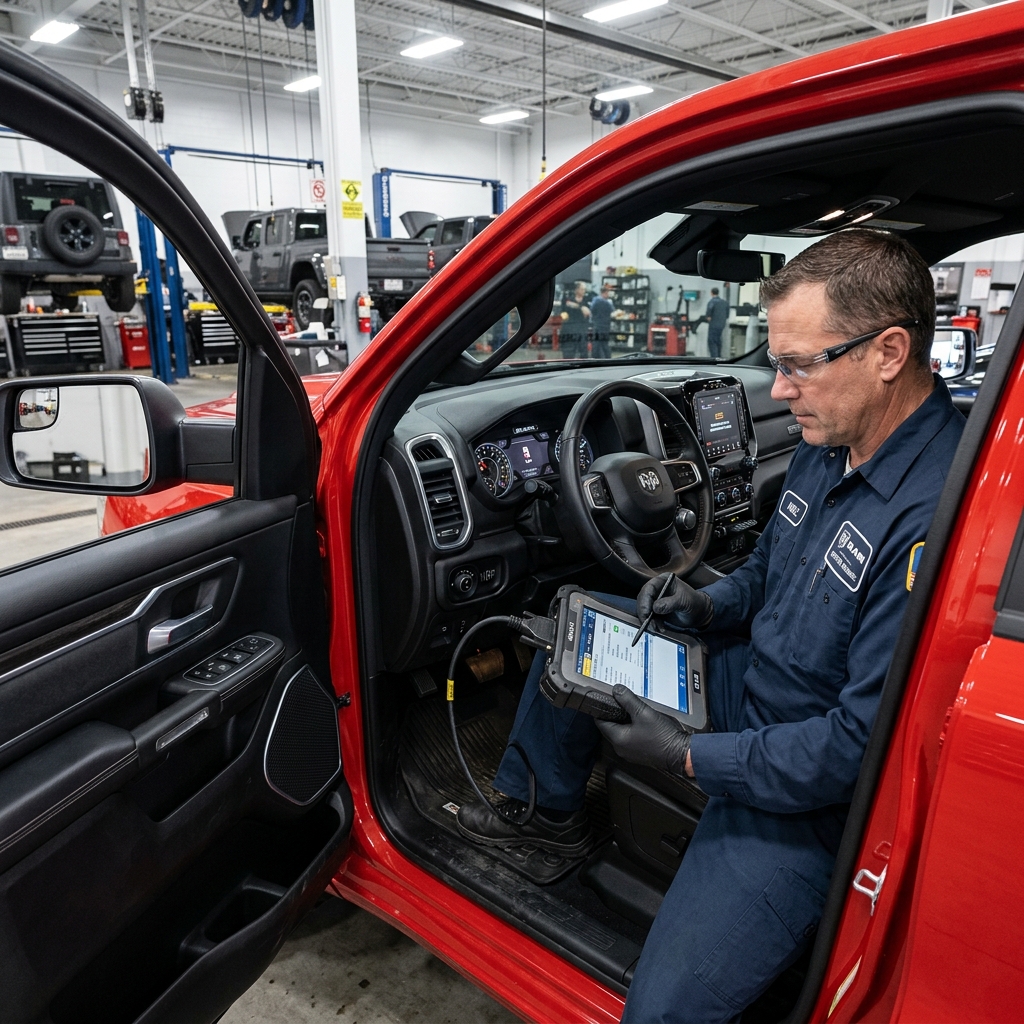
Mastering Heavy Hauls: How the 2021 Ram 1500 Trailer Brake Controller Keeps You in Control
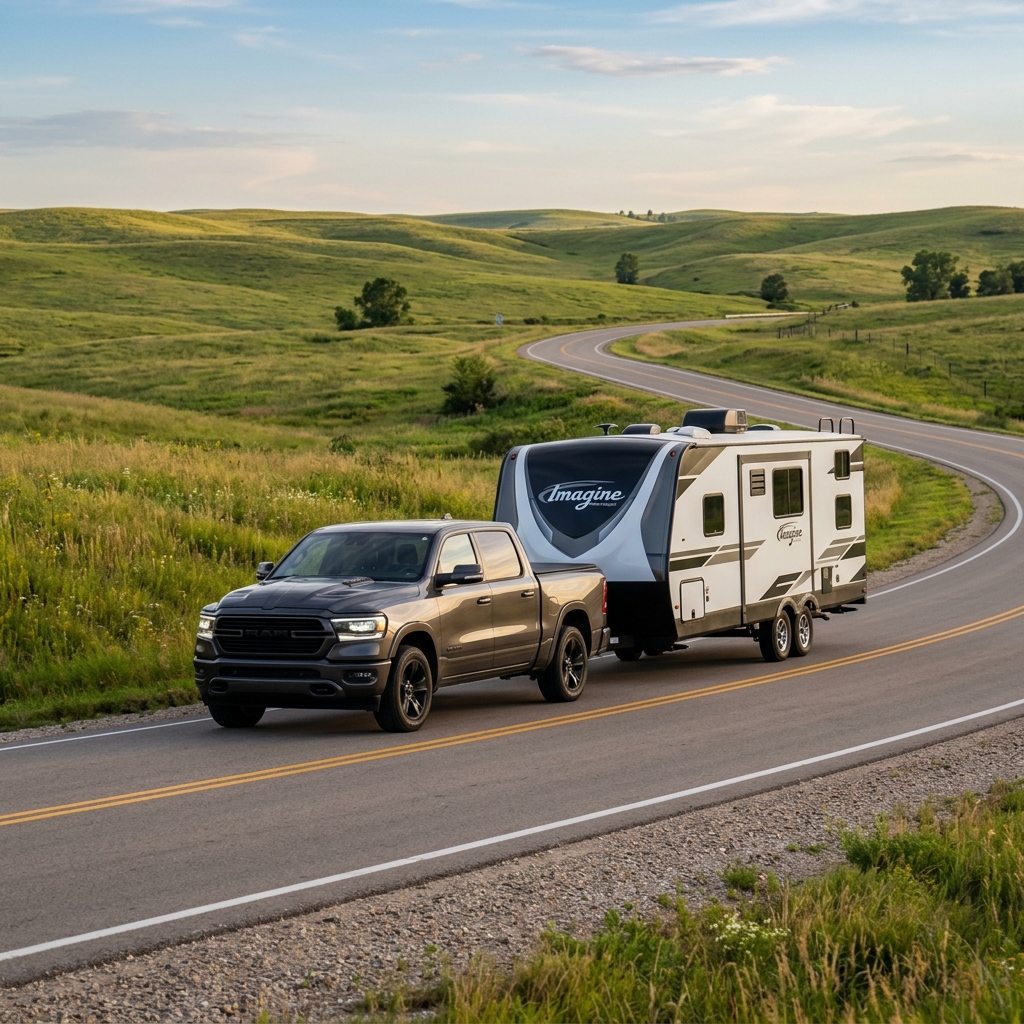
Towing across the rolling landscapes of the Flint Hills or heading out for a weekend at Milford Lake requires more than just raw horsepower; it demands total, unyielding control over your rig. When you are pulling a multi-ton travel trailer, a heavy boat, or a loaded flatbed utility trailer behind your 2021 Ram 1500, stopping safely is just as critical as moving forward. This is where the Integrated Trailer Brake Controller (ITBC) steps in. Far from being a simple, passive add-on, this sophisticated system acts as the primary communication link between your truck’s advanced braking architecture and your trailer’s electronic brakes. Rather than forcing your truck’s brakes to bear the brunt of stopping both vehicles, the ITBC orchestrates a synchronized braking effort that makes towing feel smooth, predictable, and remarkably stress-free.
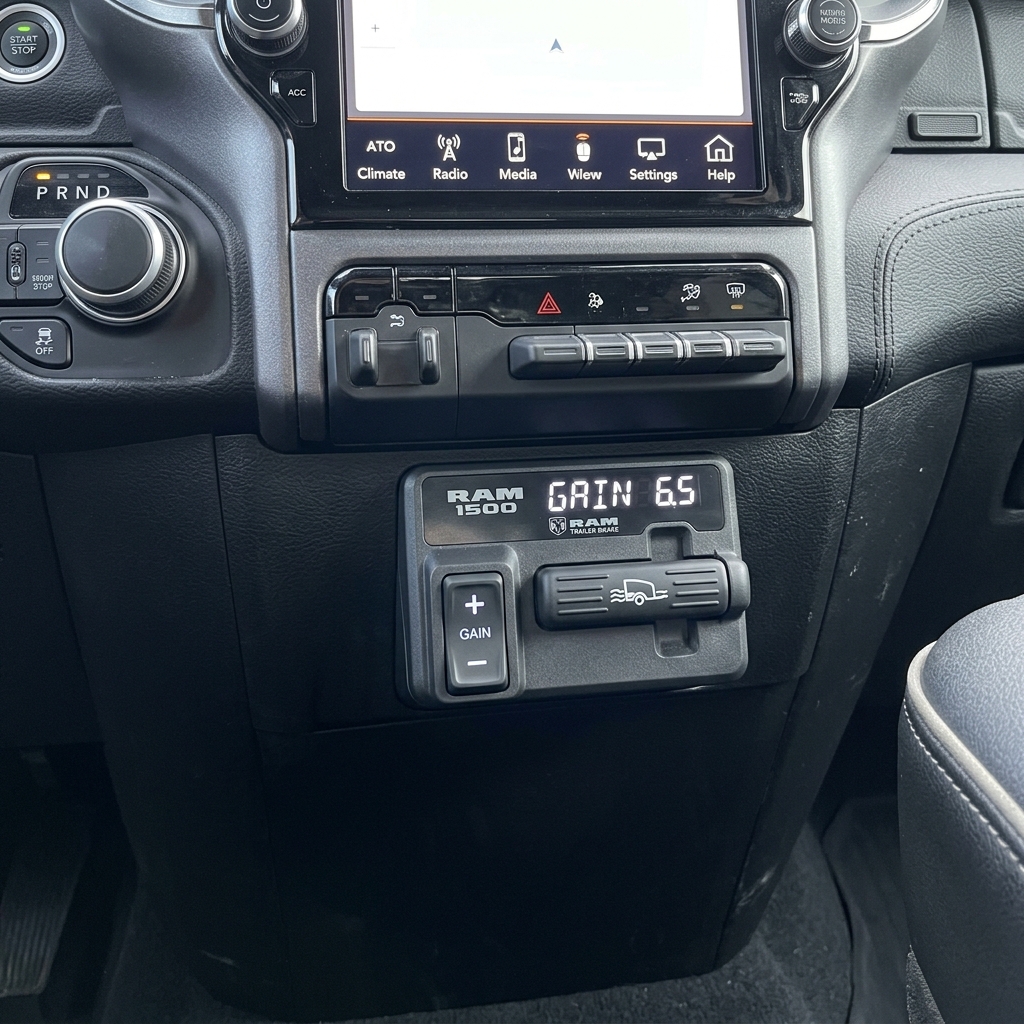
For Ram truck owners in Junction City, KS, and the surrounding Manhattan areas, mastering this technology is key to safe driving. The Flint Hills are famous for their sudden, sweeping elevation changes, and navigating these grades with a massive load can quickly turn hazardous without properly synchronized braking. The 2021 Ram 1500’s optional factory trailer brake controller is neatly integrated into the lower dashboard, just below the climate controls, placing tactile control right at your fingertips. By seamlessly linking the truck’s hydraulic brake pressure and deceleration sensors with the trailer’s electric brakes, this system ensures that when you tap the pedal, your trailer slows down in perfect harmony with your truck, preventing the trailer from pushing against the tow vehicle or jackknifing.
Whether you are a seasoned towing veteran or a newcomer preparing to hook up your first camper, understanding the inner workings of this system is essential. From its foundational electronic programming to real-world adjustment techniques, the 2021 Ram 1500 trailer brake controller is engineered to provide peace of mind on every journey. Let’s dive deep into the mechanics, calibration, and optimization of this vital towing tool, ensuring that your next trek down I-70 is as secure as possible.
Is the 2021 Ram 1500’s Trailer Brake Controller Proportional or Time-Delay?
When evaluating trailer brake controllers, the most critical technical distinction lies in how they apply stopping power. We are proud to confirm that the 2021 Ram 1500 features a fully proportional integrated trailer brake controller. In the world of towing, a proportional system is the common benchmark. It uses internal inertia sensors (accelerometers) and monitors the truck’s hydraulic brake pressure to measure exactly how hard the tow vehicle is decelerating. It then instantly applies a matching, proportional amount of braking voltage to the trailer’s brakes.
This means that if you gently tap your truck’s brakes while approaching a stoplight in Riley County, the trailer will apply light, gentle braking. If you must slam on the brakes in an emergency on the highway, the controller sends maximum power to the trailer instantly, ensuring both vehicles stop in a straight, controlled line. It creates a unified, single-vehicle braking feel that minimizes stress on your truck’s rotors and pads.
In contrast, aftermarket systems often use time-delay technology. Time-delay controllers do not sense how hard you are braking; instead, they apply a pre-set amount of braking power that increases over a predetermined period whenever you press the brake pedal. This means if you brake gently, the trailer might still apply heavy, jerky stopping force after a few seconds, leading to premature wear and a highly uncomfortable ‘tugging’ sensation behind your truck.
Conversely, in a sudden emergency, a time-delay system will not deliver immediate full power, potentially increasing your stopping distance when you need it most. The Ram’s proportional system completely eliminates this lag, adapting dynamically to real-time road conditions. This is particularly beneficial when navigating the winding, hilly terrain of Kansas, where continuous, smooth adjustment is the difference between a relaxing drive and a white-knuckled ordeal.
How Does the Trailer Brake Controller Work on the 2021 Ram 1500 in Real-World Towing?
In practice, the integrated trailer brake controller functions as an intelligent translator. When you connect your trailer’s 7-pin wiring harness to the bumper of your 2021 Ram 1500, the truck instantly recognizes the connection and begins communicating with the trailer’s electric or electric-over-hydraulic (EOH) braking systems. As you drive, the truck’s central computer monitors variables such as speed, brake pedal force, and stability control data. The moment you apply pressure to the brake pedal, the controller sends an electrical current down the dedicated brake line in the 7-pin connector. This current activates the electromagnets inside the trailer’s brake drums, which pull against the spinning armature, forcing the brake shoes outward against the drum to slow the trailer down. This happens in milliseconds, ensuring that the trailer slows down concurrently with the truck.
Beyond this automated braking sequence, the physical interface on the dashboard gives you complete manual control when needed. The controller features a manual override slider—two pinch-style tabs that you can squeeze together with your fingers. Squeezing this slider applies the trailer brakes independently of the truck’s brakes. This is an incredibly useful safety feature; if you feel your trailer beginning to sway or fish-tail due to a sudden gust of Kansas wind, gently squeezing the manual slider will immediately apply the trailer’s brakes, pulling the trailer back into a straight line behind the truck. The dashboard cluster also provides instant visual feedback, showing a dedicated trailer brake menu that displays the output voltage and gain settings in real-time, keeping you fully informed of your system’s status as you cruise through Junction City.
To ensure your vehicle’s physical connections are secure before a big haul, check out our comprehensive Used Vehicle Listings or explore brand-new configurations in our New Vehicle Listings to see models already equipped with this state-of-the-art tech. This real-world integration ensures that whether you’re climbing up steep highway ramps or descending into valleys, the trailer remains a cooperative extension of your truck, rather than an unpredictable weight pushing from behind.
What Does the Gain Setting on the Ram 1500 Trailer Brake Controller Do?
The ‘Gain’ setting is the heart of customizing your Ram 1500’s towing dynamics. Think of the gain as a volume knob for your trailer’s brakes—it controls the maximum amount of electrical current (or voltage) sent to the trailer brakes when you step on the truck’s brake pedal. A higher gain setting means the trailer brakes will apply more stopping power, while a lower gain setting reduces the braking force. Because trailers vary wildly in weight—from a lightweight, empty single-axle utility trailer to a dual-axle 5th wheel camper loaded with water, gear, and supplies—a single static braking profile simply won’t work.
Adjusting the gain ensures that your trailer always contributes its fair share of stopping power without locking its tires or causing the truck’s brakes to overheat. It allows you to dial in the perfect balance of stopping power for whatever load you are pulling.
If your gain is set too low, the trailer’s brakes won’t have enough power to slow its weight, forcing your Ram 1500 to do all the work, which rapidly accelerates brake wear and increases your stopping distance. If the gain is set too high, the trailer’s brakes will grab too aggressively, potentially locking up the tires, flat-spotting your rubber, and causing a highly unstable towing experience.
Our dedicated service department is always on hand to help you master these settings. If you ever feel like your brakes aren’t responding as they should, or if you need an inspection before a long road trip, don’t hesitate to utilize our online Service Scheduler to book an appointment with our master technicians.
What Is the Correct Way to Set the Initial Gain on a Ram 1500 Trailer Brake Controller?
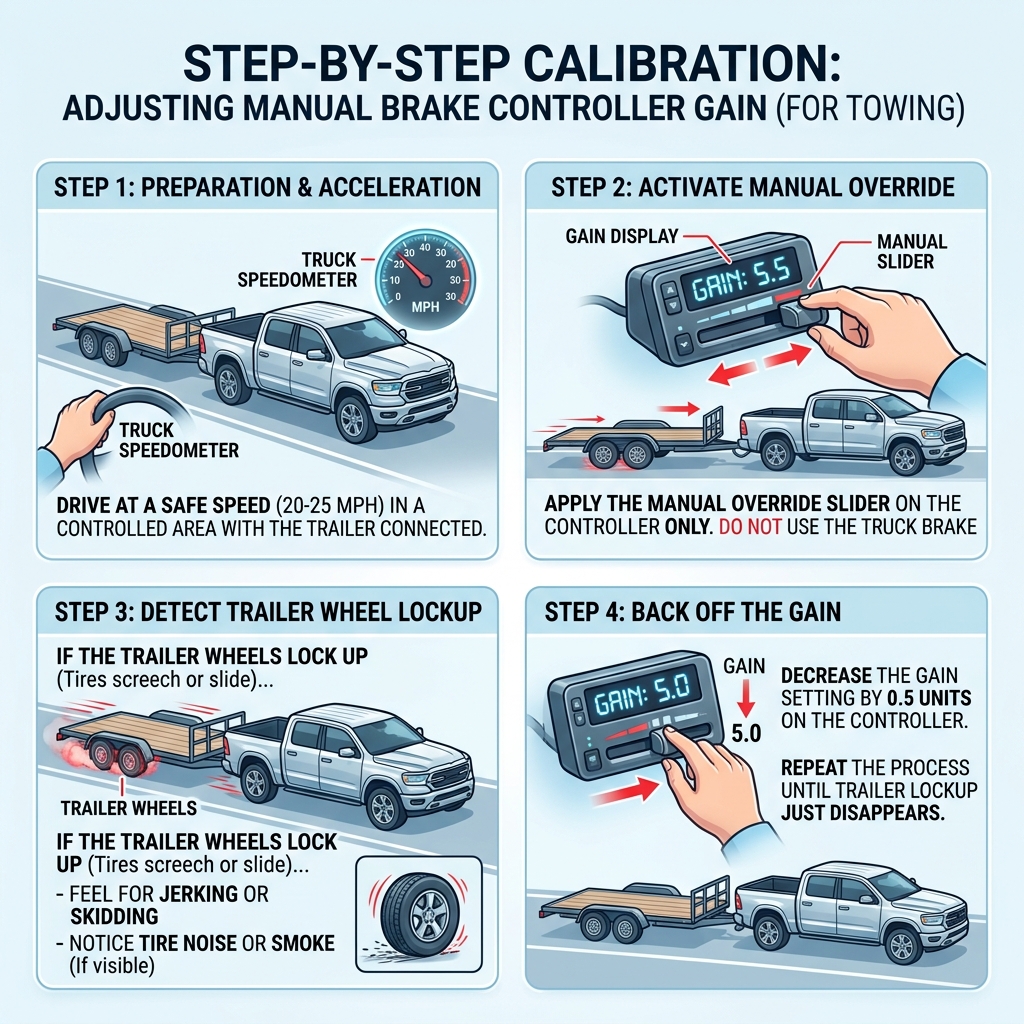
Step 1: Prep & Find an Open Area
Before making any adjustments, ensure your trailer is fully loaded to its typical towing weight, as empty versus loaded weights require completely different gain settings. Connect the 7-pin harness and verify that all lights are functioning. Find a large, open, and flat paved area with zero traffic—such as an empty parking lot or a quiet, level rural road near Junction City. This allows you to perform calibration maneuvers safely without worrying about surrounding vehicles.
Step 2: Perform the Calibration Test
With your Ram 1500 in gear, accelerate slowly to a steady speed of 20 to 25 mph. Once you reach this speed, let off the accelerator pedal completely. Using only your fingers, gently squeeze the manual slider on your integrated trailer brake controller on the dashboard. Do not press the truck’s brake pedal. The trailer brakes should engage, slowing both the truck and the trailer to a gentle stop.
Step 3: Adjust Until Lockup, Then Back Off
If the trailer brakes do not slow the vehicle, increase the gain using the buttons next to the slider and try again. Repeat this process, gradually increasing the gain, until you feel the trailer tires begin to lock up or skid slightly. Once you find that lockup point, immediately decrease the gain setting by 0.5 units. This ensures you have the absolute maximum stopping power available without the risk of skidding during an emergency stop.
How Do You Adjust the Integrated Trailer Brake Controller on a 2021 Ram 1500 for Different Trailers?
The 2021 Ram 1500’s towing capability is further enhanced by its seamless integration with the Uconnect infotainment system. Unlike older trucks where you had to rely solely on physical knobs, the Ram allows you to program specific trailer profiles directly through your touchscreen display. This is critical because different trailers utilize different braking technologies. Some trailers feature standard electric drum brakes, while others—particularly larger boat trailers or high-end RVs—use Electric-over-Hydraulic (EOH) systems.
EOH systems use an electric pump to drive hydraulic fluid to disc or drum brakes, which requires a completely different electrical voltage profile from the controller to operate smoothly and prevent lag. If you try to run an EOH trailer on a standard electric drum profile, you may experience delayed braking or erratic performance.
To configure these settings, turn your truck’s ignition to ‘On’ or run the engine, then navigate to the Uconnect screen. Select the ‘Settings’ menu, scroll down to ‘Trailer’, and choose the specific trailer profile you wish to edit. Here, you can select the trailer type and, crucially, the brake type: Light Electric, Heavy Electric, or Electric-Over-Hydraulic. Selecting the correct type changes how the ITBC pulses and delivers voltage.
For example, EOH systems require a steady, sustained voltage signal to keep the hydraulic pump primed, whereas standard electric brakes utilize rapid, variable pulses. By matching these settings to your physical trailer, you ensure optimal braking response, preventing jerkiness and protecting your trailer’s braking components from electrical strain, making every trip through Riley County incredibly safe.
Can I Add a Trailer Brake Controller to a 2021 Ram 1500 That Didn’t Come with One?
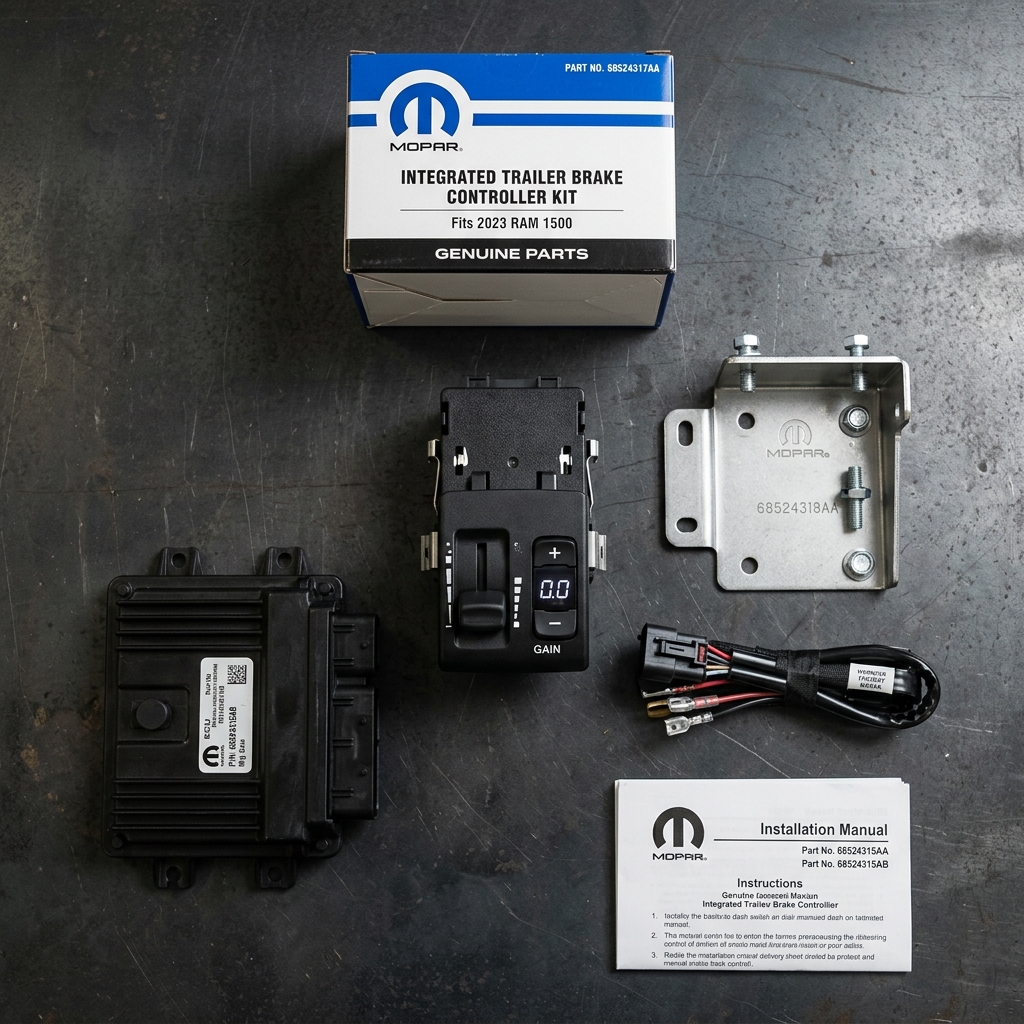
If you purchased a pre-owned 2021 Ram 1500 that didn’t include the factory-installed integrated trailer brake controller, you might worry that you’re limited to ugly, knee-bumping aftermarket boxes. Fortunately, you can absolutely retrofit the genuine OEM Mopar integrated trailer brake controller to your truck! This factory-style upgrade replaces the small storage cubby on your lower dash with the official dual-pinch manual slider and adjustment buttons, giving your truck the exact same clean, integrated look and high-end proportional functionality as a Ram that rolled off the assembly line with it.
However, this is not a simple plug-and-play DIY project. While physically mounting the switch and the module behind the dash is relatively straightforward, the truck’s central computer (the Body Control Module) will not recognize the new hardware automatically. To activate the system and enable it to communicate with your instrument cluster and Uconnect screen, the truck must be connected to a dealer diagnostic computer to flash the official sales code (typically code XHC). Our certified service technicians at Valor CDJR are fully equipped to perform this programming, ensuring your new controller integrates seamlessly with your truck’s safety and display systems.
To order the necessary Mopar parts, visit our Parts Department or get started by applying for financing on upgrades with our secure Get Pre-Approved form. Our team is ready to assist you in selecting the precise module for your truck’s specific trim level and completing the installation quickly.
Why Do Some Owners Prefer Aftermarket Trailer Brake Controllers Over the OEM Ram Controller?
While the vast majority of Ram owners prefer the clean, factory-integrated look of the OEM controller, some high-volume towers occasionally consider aftermarket alternatives, such as units from Tekonsha, Curt, or Redarc. The primary argument in favor of aftermarket controllers is often initial cost or niche customization. For example, some advanced aftermarket units allow users to store multiple independent trailer profiles with completely custom braking curves that can be fine-tuned via smartphone apps.
Additionally, if a truck was purchased without the factory wiring pre-installed, installing a basic aftermarket controller can sometimes be less intensive than performing a full OEM retrofit, which requires dealer-level software flashing. For budget-conscious towers, aftermarket models present a simple alternative.
However, aftermarket controllers come with significant drawbacks that make the OEM controller the clear winner for most drivers. Aftermarket units must be physically mounted somewhere under or on top of the dashboard, which often results in exposed wiring, knee-bruising brackets, or damaged trim panels. They disrupt the beautiful, clean design of your Ram 1500’s cabin.
More importantly, aftermarket controllers do not integrate with the Ram’s safety systems. The factory OEM trailer brake controller works in perfect tandem with the Ram 1500’s Electronic Stability Control, Trailer Sway Control, and anti-lock braking systems. If the truck detects a dangerous sway condition, it can automatically apply precise trailer braking to stabilize the vehicle—a level of safety and integration that aftermarket units simply cannot replicate.
Is There a Recall or Technical Service Bulletin (TSB) for the Ram 1500 Trailer Brake Module?
When it comes to safety-critical components like trailer brakes, staying informed about manufacturer recalls and Technical Service Bulletins (TSBs) is paramount. Over the years, Ram has issued a few specific TSBs and software updates addressing the trailer brake module on the 2021 Ram 1500. Some owners have reported occasional ‘Trailer Brake Disconnected’ warnings appearing on their digital instrument cluster, even when the trailer is securely plugged in. In many cases, this is not a mechanical failure of the trailer’s brakes, but rather a software glitch within the truck’s module that causes it to misinterpret minor voltage fluctuations as a physical disconnection.
Fortunately, these issues are highly manageable. Ram has released targeted software updates that recalibrate the diagnostic sensitivity of the controller, effectively eliminating false disconnect warnings. In some instances, physical connectors behind the bumper may need to be inspected for moisture intrusion or corrosion, which can also trigger these alerts. If you suspect your truck is experiencing these issues, or if you want to verify whether your vehicle has any outstanding recall campaigns, our service team in Junction City is ready to help.
Bring your truck in to our center, and our technicians can pull up your vehicle’s VIN, perform a quick diagnostic scan, and flash the latest official software to your controller to restore flawless operation. Reach out to us or use our online Service Scheduler to keep your truck in peak condition and ensure total towing reliability.
Safe Hauling Across the Flint Hills: A Pre-Trip Towing Checklist
Step 1: Hitch & Safety Connections
Ensure the coupler is completely locked onto the ball and secured with a safety pin. Cross the safety chains under the trailer tongue to create a cradle, attaching them securely to the truck’s receiver. Ensure the emergency breakaway cable is clipped directly to the truck’s frame, not wrapped around the safety chains or hitch ball.
Step 2: Electrical & Brake Sync
Plug in the 7-pin connector and verify that all running lights, brake lights, and turn signals are fully operational on both the truck and trailer. Start the engine and look at your Ram’s digital cluster to confirm that the ‘Trailer Connected’ message is displayed and that no error codes or warning lights are present.
Step 3: Gain & Road Verification
Before hitting the highway or heading out to Milford Lake, perform a quick manual brake check at low speed. Squeeze the controller’s manual slider to confirm the trailer brakes engage immediately. If you’ve changed your load since your last trip, re-calibrate your gain settings to match the new weight profile.
Get Your Ram 1500 Tow-Ready at Valor CDJR in Junction City
At Valor CDJR, we are passionate about helping our customers tow with confidence, safety, and ease. Our state-of-the-art service facility in Junction City, KS, is staffed by factory-certified Chrysler, Dodge, Jeep, and Ram technicians who understand every nuance of your truck’s complex electrical and mechanical systems. Whether you need a brand-new OEM integrated trailer brake controller installed and programmed, a diagnostic check on a finicky electrical connection, or a complete brake system inspection on both your truck and trailer, our team has the specialized tools and genuine Mopar parts to get the job done right the first time.
We also make it easy to maintain your vehicle without disrupting your busy schedule. For quick oil changes, tire rotations, and multi-point inspections, feel free to stop by our convenient Express Lane—no appointment necessary. If you’re managing a local business or agricultural operation in Riley County, explore our robust Commercial Vehicle Inventory to find heavy-duty haulers equipped with maximum trailering packages. No matter what your towing needs may be, we are dedicated to providing the expert advice, quality service, and friendly local hospitality you deserve.
Our dealership is proud to serve the entire Junction City, Manhattan, and Fort Riley community, offering a trustworthy destination for all things Ram. Beyond installations, we are happy to walk you through your truck’s towing menus, help you set up your trailer profiles, and demonstrate how to adjust your gain for different loads. We treat our customers like family, meaning we prioritize your safety on the road above all else.
When you choose Valor CDJR, you’re choosing a partner dedicated to keeping your truck performing at its absolute best, whether you’re hauling hay across the Flint Hills or pulling your family camper to Milford Lake. Experience the difference that expert care and factory-authorized engineering can make for your vehicle’s performance and longevity.
Ready to Tow with Confidence? Schedule Your Ram Service or Upgrade Today
Don’t let trailer brake worries hold you back from your next big adventure or demanding job. Whether you need a software update for your 2021 Ram 1500’s brake module, a brand-new OEM controller retrofitted, or a complete tow-readiness check, the expert team at Valor CDJR is here to help you hit the road with absolute peace of mind. Get Directions to Valor CDJR and visit our modern facility today, or Call us at (785) 238-5114 to speak directly with one of our friendly service advisors.
You can also use our convenient online Service Scheduler to book your appointment in seconds. Let’s make sure your Ram 1500 is fully equipped, perfectly calibrated, and ready for every haul!
Tags: integrated trailer brake controller service, proportional trailer brakes, RAM 1500 trailer brake controller, RAM truck brake inspection, towing equipment maintenance, towing safety tips, trailer brake calibration, trailer brake controller adjustment, trailer brake controller installation, trailer brake system maintenance, trailer brake troubleshooting, truck brake system repair
Posted in
Maintenance & Service, Parts & Accessories, Technology & Innovation in Vehicle Service, Towing & Hauling Safety, Vehicle Maintenance & Preparation, Vehicle Repair & Diagnostics |
No Comments »