Conquering the Late Summer Haul: Preparing Your Ram for Heavy Payloads in Clay and Riley Counties
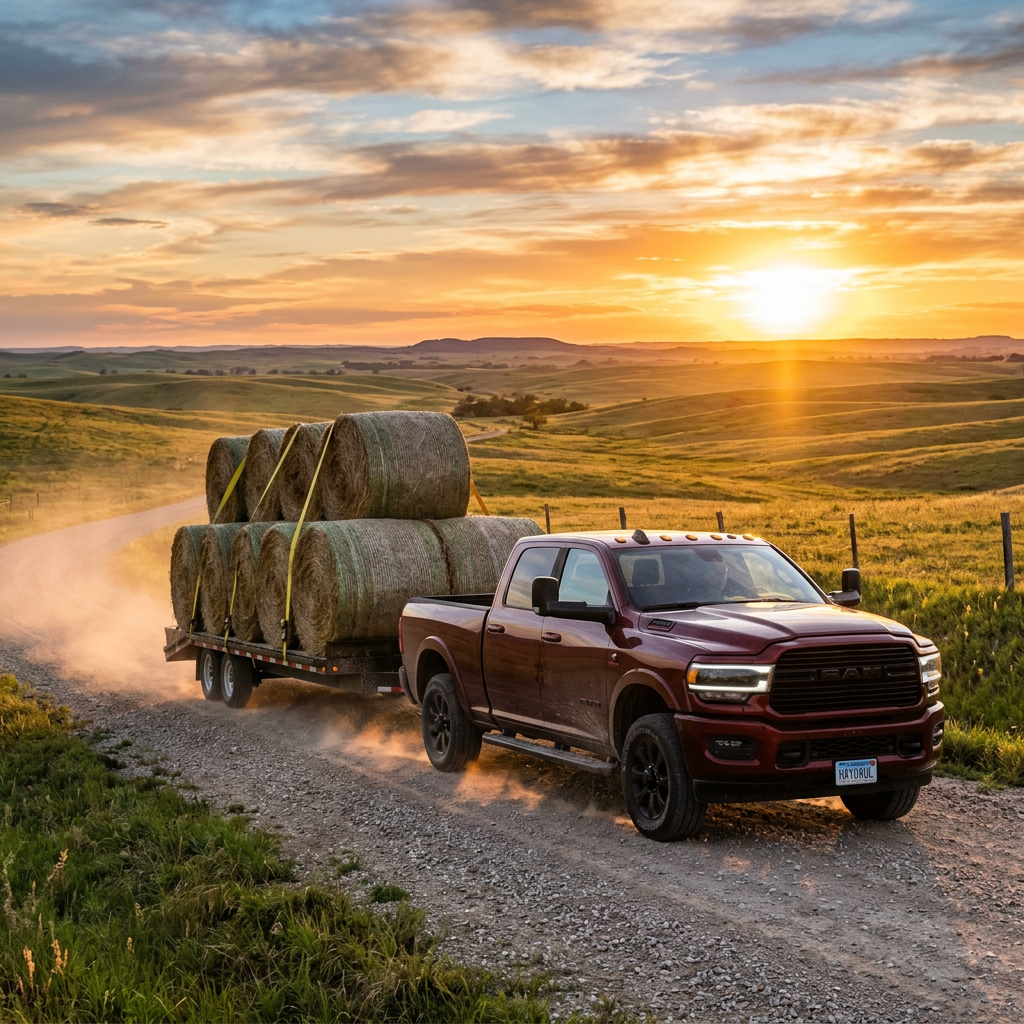
As July shifts into late August and early September, the Flint Hills region experiences some of its most demanding driving conditions of the year. In Clay and Riley Counties, this transition brings a unique combination of blistering prairie heat, dusty county roads, and the seasonal rush of heavy agricultural, recreational, and commercial hauling. Whether you are moving round bales across Clay Center, transporting heavy equipment down to Junction City, or pulling a massive horse trailer near Manhattan, your Ram truck is the backbone of your operations. However, high payloads coupled with extreme late-summer temperatures place unprecedented stress on your vehicle’s mechanical systems, demanding proactive preparation and a deep understanding of your truck’s limits.
Operating a truck under maximum load in 90-degree-plus weather requires more than just raw power. It demands that every system—from your cooling loops and transmission lines to your braking surfaces and tire compounds—functions in perfect harmony. At Valor CDJR, we serve as your premier local resource, dedicated to keeping the hardworking drivers of Junction City, Clay Center, and Manhattan moving safely. This comprehensive guide is designed to help you navigate the physics of heavy hauling in high temperatures, ensuring your Ram remains an unyielding force on the Kansas highways. From analyzing payload metrics to exploring the thermal dynamics of your powertrain, we will provide the actionable expertise you need to protect your investment and secure your cargo.
Payload vs. Towing Capacity: What Is the Difference and Why Does It Matter in the Flint Hills?
To safely transport heavy loads through the undulating topography of Clay and Riley Counties, a clear understanding of your vehicle’s structural and mechanical limits is absolutely vital. Many drivers use the terms “payload” and “towing capacity” interchangeably, but confusing these two distinct metrics can lead to severe mechanical strain, compromised handling, and structural failure. Payload capacity refers to the total weight your truck can carry within its own footprint, including passengers, cabin gear, bed cargo, and the tongue weight exerted by any attached trailer. Every pound resting directly on the truck’s frame, axles, and tires contributes to this limit.
Conversely, towing capacity represents the maximum weight your truck can pull behind it, where the bulk of the trailer’s mass is supported by its own axles. While a Ram might be rated to pull 15,000 pounds, it cannot support that amount directly in its bed. When navigating the rolling terrain of the Flint Hills, the physics of these two forces shift continuously. Climbing a steep grade transfers additional weight to the rear axle, while descending places immense downward pressure on the front suspension and brakes. Overloading your payload capacity is particularly dangerous on these slopes, as it can lift weight off the front steering axle, leading to a dangerous loss of traction and control.
To calculate your Ram’s exact available payload, always consult the tire and loading information placard located on the driver’s side B-pillar. Subtract the combined weight of your passengers, aftermarket accessories (like toolboxes or brush guards), and cargo from the maximum capacity listed. Keep in mind that when towing a conventional trailer, the tongue weight—which should be roughly 10% to 15% of the total loaded trailer weight—directly consumes your available payload. For fifth-wheel or gooseneck configurations, the pin weight can consume up to 25% of your payload. Neglecting this calculation before heading out on a hot Kansas afternoon can rapidly overheat your rear differential, warp your brake rotors, and compromise your suspension geometry.
Before loading up, take a moment to perform a Trade In Evaluation on your current truck to see if it is time to upgrade to a vehicle with higher structural limits. Ensuring you are operating within your vehicle’s intended engineering tolerances is the single most effective way to prevent catastrophic failures during extreme summer hauls.
What Is the Maximum Payload Capacity of the 2026 Ram 1500?
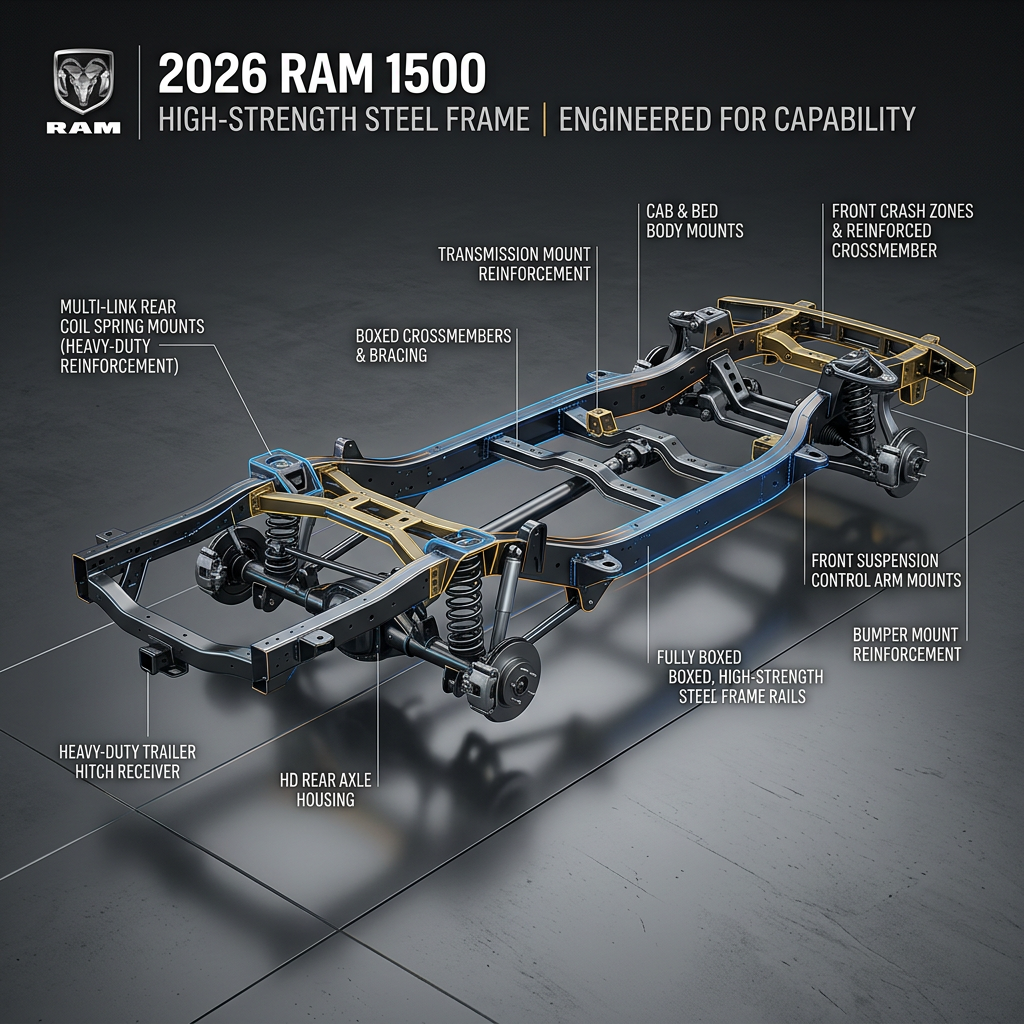
The 2026 Ram 1500 redefines light-duty capability, offering an outstanding maximum payload capacity of up to 2,300 pounds when properly configured. This impressive capacity is made possible by a high-strength steel frame that is both exceptionally rigid and lightweight, providing a rock-solid foundation for hauling gravel, feed, or building materials across the Flint Hills.
To maintain structural integrity under maximum load, the 2026 Ram 1500 utilizes advanced multi-link rear coil spring suspension. Unlike traditional leaf springs, this layout reduces friction, optimizes lateral stiffness, and ensures the tires maintain a flat footprint on the pavement. This technology is incredibly beneficial when tackling off-camber agricultural turnouts in Clay County.
Furthermore, the available class-exclusive Active-Level Four-Corner Air Suspension system automatically levels the truck when loaded, ensuring consistent headlight aim, optimal aerodynamics, and maximum ground clearance even when carrying heavy late-summer payloads.
The standard high-strength chassis works in tandem with the thermal management systems of the new Hurricane twin-turbo engines to ensure that high payloads do not result in high operating temperatures. Active grille shutters and a highly efficient engine oil cooler keep vital fluids within safe operating ranges, even when climbing steep highway grades in extreme heat.
To see how these advanced suspension and chassis systems handle firsthand, we encourage you to browse our latest New Vehicle Listings to find a truck engineered to tackle the heavy-duty demands of your local operations.
Schedule Your Late-Summer Multi-Point Inspection at Valor CDJR
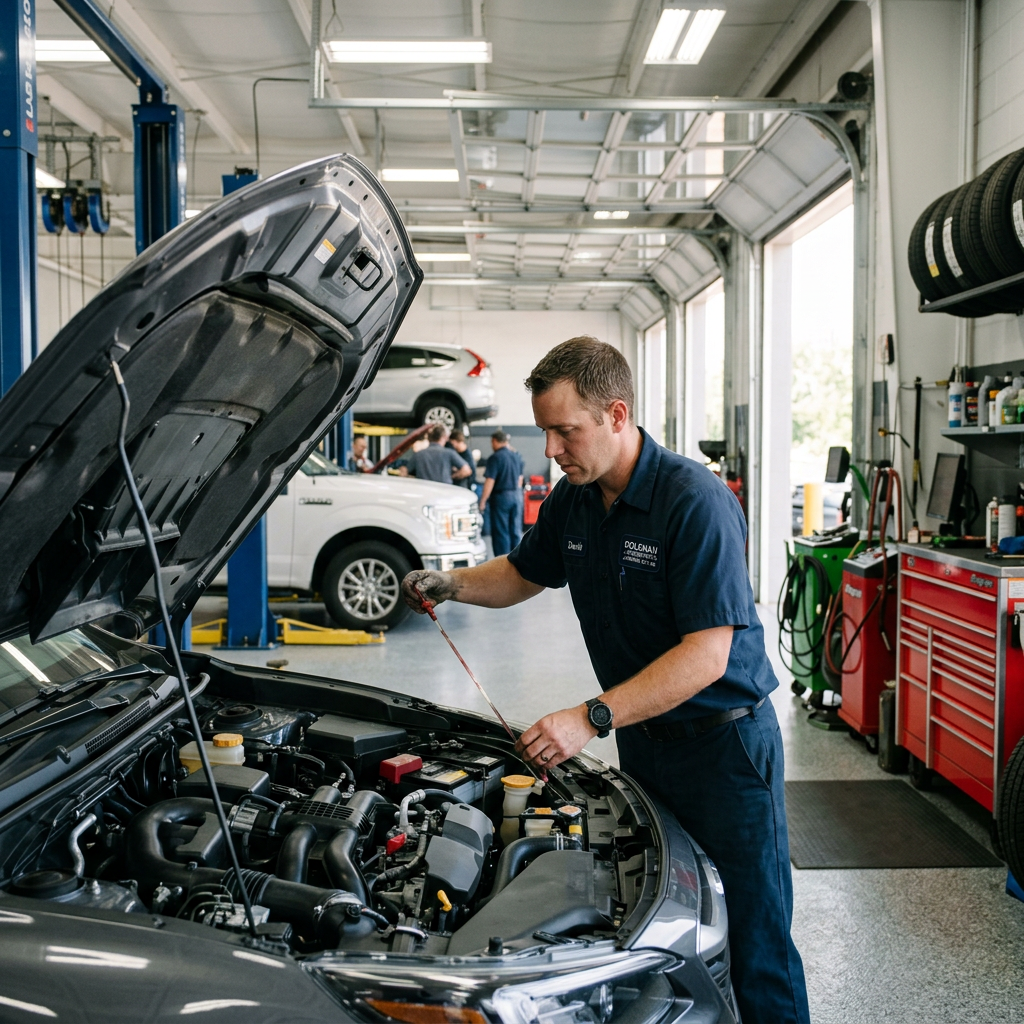
Do not let the harsh Kansas heat compromise your truck’s reliability when you need it most. Before hookups, long hauls, or heavy harvests, bring your truck to the certified experts at Valor CDJR in Junction City. Our factory-trained technicians will thoroughly examine your suspension, check your cooling loops, inspect your braking surfaces, and verify tire pressures to ensure your Ram is operating at peak physical health. Trust our team to keep your truck running cool, strong, and safe all season long.
What Is the Towing Capacity of the Ram 2500 with the Cummins Turbo Diesel?
When light-duty limits are not enough for the demanding agricultural and industrial needs of the Flint Hills, the Ram 2500 equipped with the legendary 6.7L Cummins Turbo Diesel engine steps in. This powerhouse delivers an extraordinary towing capacity of up to 20,000 pounds when properly equipped. Generating a massive 850 lb-ft of torque, the Cummins diesel offers the low-end grunt required to pull massive payloads up steep gravel inclines, pull loaded flatbeds out of muddy fields, and maintain highway speeds effortlessly against Kansas headwinds.
To maintain this level of performance during late-summer heatwaves, the Ram 2500 Cummins Turbo Diesel is engineered with a highly sophisticated cooling infrastructure. Extreme ambient temperatures coupled with high-load towing create immense thermal energy within the engine and transmission. Ram addresses this with an oversized radiator, a high-efficiency charge air cooler, and a heavy-duty transmission fluid cooler that utilize advanced airflow dynamics to continuously reject heat from the engine bay.
Furthermore, the smart diesel exhaust brake system helps manage descending speeds on rolling hills without placing excessive strain on your friction brakes. By utilizing the variable geometry turbocharger to restrict exhaust flow, the system creates backpressure that slows the vehicle naturally, preventing brake fade and preserving your service brakes for when you truly need them.
This level of thermal management and mechanical engineering ensures that your truck maintains its structural integrity and pulling power, even during the peak of summer. To explore these heavy-duty capabilities in detail, check out our dedicated Commercial Vehicle Inventory to find the perfect workhorse for your business or farm operations.
How Does Ram Heavy-Duty Towing Capacity Compare with Ford and Chevy in the Same Class?
When comparing heavy-duty trucks, raw capability figures tell only part of the story. While Ford and Chevrolet offer highly competitive maximum towing and payload ratings in the three-quarter-ton and one-ton segments, Ram heavy-duty models offer a different set of capabilities, including ride comfort and suspension features under load. The table below outlines how these class competitors compare across key metrics:
|
Feature / Metric
|
Ram 2500 / 3500 HD
|
Ford F-250 / F-350
|
Chevy Silverado 2500 / 3500
|
|
Max Diesel Towing (3500)
|
Up to 37,090 lbs
|
Comparable Class Limit
|
Comparable Class Limit
|
|
Rear Suspension Design
|
Five-Link Coil / Auto-Level Air
|
Multi-Leaf Spring
|
Multi-Leaf Spring
|
|
Ride Quality Under Load
|
Excellent (Compliant, Controlled)
|
Firm / Stiff
|
Firm / Stiff
|
|
Engine Braking Tech
|
Smart Diesel Exhaust Brake
|
Standard Exhaust Brake
|
Standard Exhaust Brake
|
Suspension Architecture: While Ford and Chevy continue to rely on traditional multi-leaf spring configurations on their 2500 series, Ram employs a sophisticated five-link coil rear suspension. This design provides vastly superior lateral stiffness, keeping the axle centered and eliminating the ‘squirm’ and lateral sway common in leaf-spring trucks when trailering heavy loads over rough surfaces.
Unmatched Cabin Comfort: Long hauls under the hot summer sun can be physically draining. Ram’s interior quality and acoustic insulation are widely recognized as class-leading. This premium environment reduces driver fatigue on long journeys, turning demanding utility work into a remarkably comfortable and controlled driving experience.
Auto-Leveling Air: Ram’s available rear air suspension system can lower the rear suspension for easier trailer hookup and then automatically level the truck once loaded. This ensures optimal bumper height and level weight distribution, preventing the ‘nose-high’ stance that compromises steering control and tire traction on competitive leaf-spring trucks.
How Often Should I Check My Ram’s Tire Pressures During a Heat Wave?
Tires are the single most critical link between your loaded Ram and the blistering asphalt of Kansas highways. During a summer heat wave, checking your tire pressures is not a task that can be left to monthly maintenance. You should check your tire pressures daily, specifically before the truck is driven and while the tires are still cold. The physics of tire pressure dictate that for every 10-degree Fahrenheit change in ambient temperature, tire pressure changes by approximately 1 PSI. On a hot summer day, as road temperatures climb well over 100 degrees, internal tire pressures can spike dramatically once you get moving.
When you load your truck to its maximum payload or hook up a heavy trailer, the sidewalls of your tires flex continually. This flexing generates internal friction, which creates additional heat inside the tire. If your tires are underinflated, this flexing increases exponentially, causing rapid thermal buildup that can degrade the tire’s structural components and lead to a sudden, catastrophic blowout. Conversely, overinflating tires beyond their cold rating reduces the contact patch, leading to uneven center tread wear and compromised braking performance on hot, dry pavement.
To prevent these dangerous scenarios, always refer to the recommended cold tire inflation pressures listed on the B-pillar placard. Do not bleed air out of hot tires that read higher than the recommended cold pressure; this is a natural pressure increase designed into the tire’s safety tolerances. Simply ensure they are at the correct specification first thing in the morning before the sun heats up the rubber.
If you notice uneven wear patterns, a slow leak, or suspect your tires are nearing the end of their service life, visit our Parts Department to find heavy-duty, high-load-rated tires designed to withstand the extreme temperatures and high payloads of late-summer hauling.
Explore Our Heavy-Duty Ram Inventory Near Manhattan and Junction City
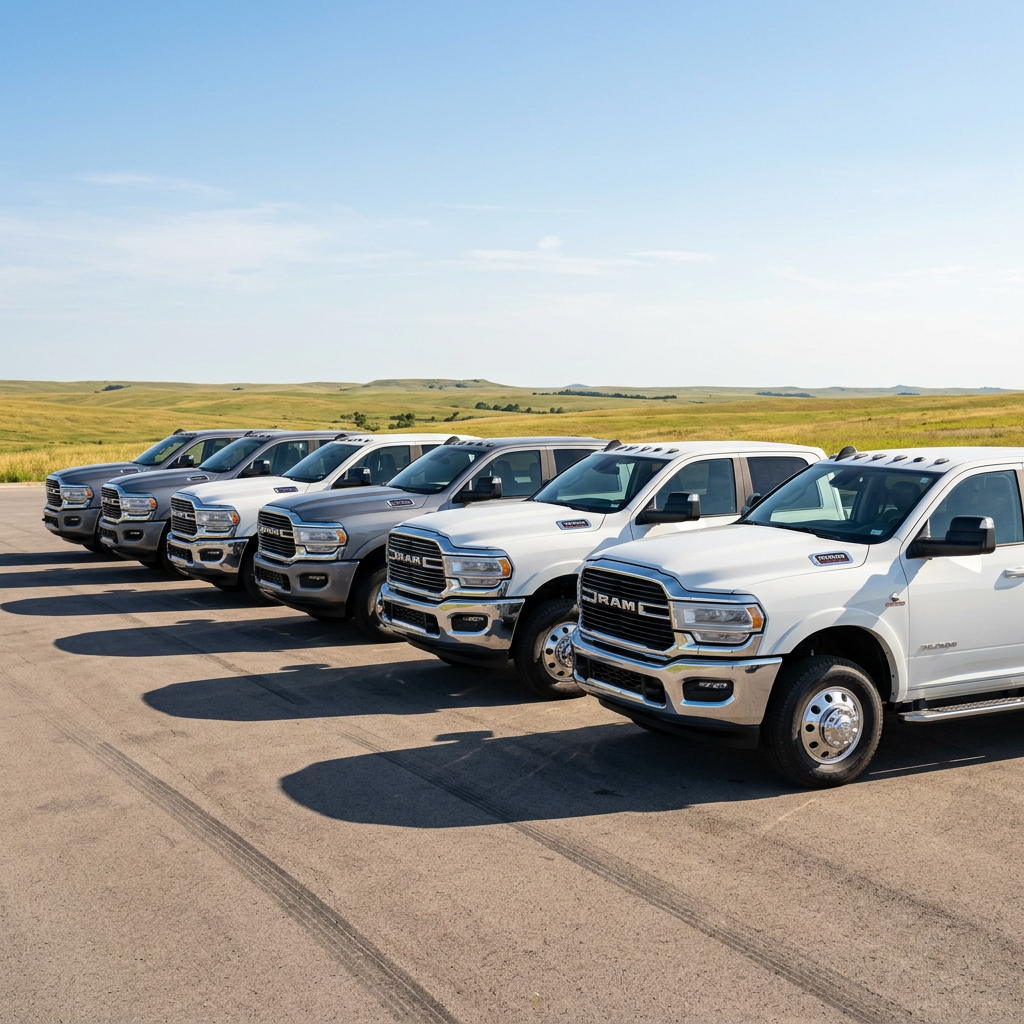
Ready to elevate your hauling game? At Valor CDJR, we carry a premier selection of rugged Ram 1500, 2500, and 3500 trucks engineered to tackle the toughest tasks in Kansas. Whether you need a daily driver capable of supporting weekend projects or a heavy-duty workhorse to power your farm or job site, our professional sales team is here to help you configure the ideal truck with the exact towing and payload ratings your lifestyle demands.
How Often Should I Change Oil and Transmission Fluid on a Ram Used for Heavy Summer Hauling?
Heavy hauling in high ambient temperatures is classified as “severe duty” operation by vehicle manufacturers. Under normal driving conditions, modern engine oils and transmission fluids can last for thousands of miles before needing replacement. However, when your Ram is consistently pulling near its maximum capacity or carrying a heavy payload in 90-degree heat, the thermal load placed on these fluids increases exponentially. High operating temperatures cause engine oil to oxidize and break down much faster, reducing its viscosity and compromising its ability to lubricate critical internal engine components.
For Ram trucks subjected to frequent heavy hauling in the summer, we recommend following the severe-duty maintenance schedule. This typically involves changing your engine oil and filter every 4,000 to 5,000 miles, rather than the standard 7,500-to-10,000-mile interval. This ensures that fresh, clean oil with robust anti-wear additives is always circulating through your engine.
Transmission fluid is equally vulnerable to heat. Your transmission transfers massive amounts of torque from the engine to the driveshaft, a process that generates immense heat within the torque converter and clutches. If the transmission fluid temperature consistently exceeds 220 degrees Fahrenheit, the fluid can varnish, causing clutches to slip and accelerating wear on internal gears and seals. Under severe hauling conditions, we recommend having your transmission fluid and filter serviced every 30,000 to 45,000 miles to prevent costly transmission failures down the road.
If you need a quick oil change or fluid check, remember that you can stop by our convenient Express Lane for fast, professional service with no appointment required. Keeping your fluids fresh is one of the most cost-effective safeguards you can buy for your heavy-duty powertrain.
What Services Do Local Ram Dealers Offer for Hot-Weather Preparation?
Cooling System Flushes & Inspections: To battle the summer heat, your engine relies heavily on its coolant. Over time, coolant can degrade, lose its anti-corrosive properties, and accumulate debris. At Valor CDJR, we offer comprehensive cooling system flushes, pressure-testing the system for leaks and ensuring your radiator and hoses can handle the pressure of heavy hauling.
Brake System Upgrades & Inspections: Stopping a heavily loaded truck and trailer requires immense friction, which generates extreme heat on your rotors and pads. Our factory-trained technicians will inspect your brake pad thickness, check for rotor warping, and test your brake fluid. Moisture-contaminated brake fluid can boil under heavy braking, leading to a spongy pedal and reduced stopping power.
Battery Testing & Electrical Diagnostics: High heat is actually more damaging to car batteries than extreme cold. Summer temperatures accelerate internal corrosion and evaporate vital battery electrolytes. We will perform a load-test on your battery, inspect your charging system, and ensure your alternator is fully prepared to handle the load of your truck’s accessories and trailer brake controllers.
In addition to these core services, our technicians can perform digital multi-point inspections that look at suspension bushings, drive belts, and wheel bearings—ensuring every component of your Ram is structurally prepared to handle heavy payloads in the heat. To get your truck inspected before your next major haul, simply utilize our convenient online Service Scheduler to book an appointment that fits your busy schedule.
Get Expert Advice and Ram Service at Valor CDJR in Junction City
As the late-summer hauling season ramps up across Clay and Riley Counties, keeping your vehicle in peak operating condition is not just about convenience—it is about safety, efficiency, and protecting your hard-earned investment. From ensuring your tire pressures are adjusted correctly to servicing your transmission fluid and choosing the right heavy-duty truck for your needs, every detail matters. At Valor CDJR, we are committed to providing the community with the highest quality automotive care and exceptional vehicle inventory.
Whether you want to Get Pre-Approved for a more powerful Ram truck, find reliable replacement components in our parts department, or simply stop in to chat with our friendly staff, we are here to support you. We invite you to Get Directions to Valor CDJR and visit us today at 1825 Goldenbelt Blvd in Junction City, or feel free to Call us at (785) 238-5114 with any questions you may have. Let us help you conquer the late-summer haul with total confidence and peace of mind.
Tags: Clay County hauling, Cummins Turbo Diesel, Flint Hills trucking, Heavy payload hauling, Heavy-duty truck suspension, Kansas truck service, Late summer truck maintenance, Ram 1500 payload capacity, Ram 2500 towing capacity, Ram truck cooling system, Ram Trucks, Riley County trucking, Severe duty truck maintenance, Truck tire pressure tips, Valor CDJR service
Posted in
Buying Guides, Maintenance & Service, New Vehicle Reviews, Seasonal Vehicle Care, Technology & Innovation |
No Comments »