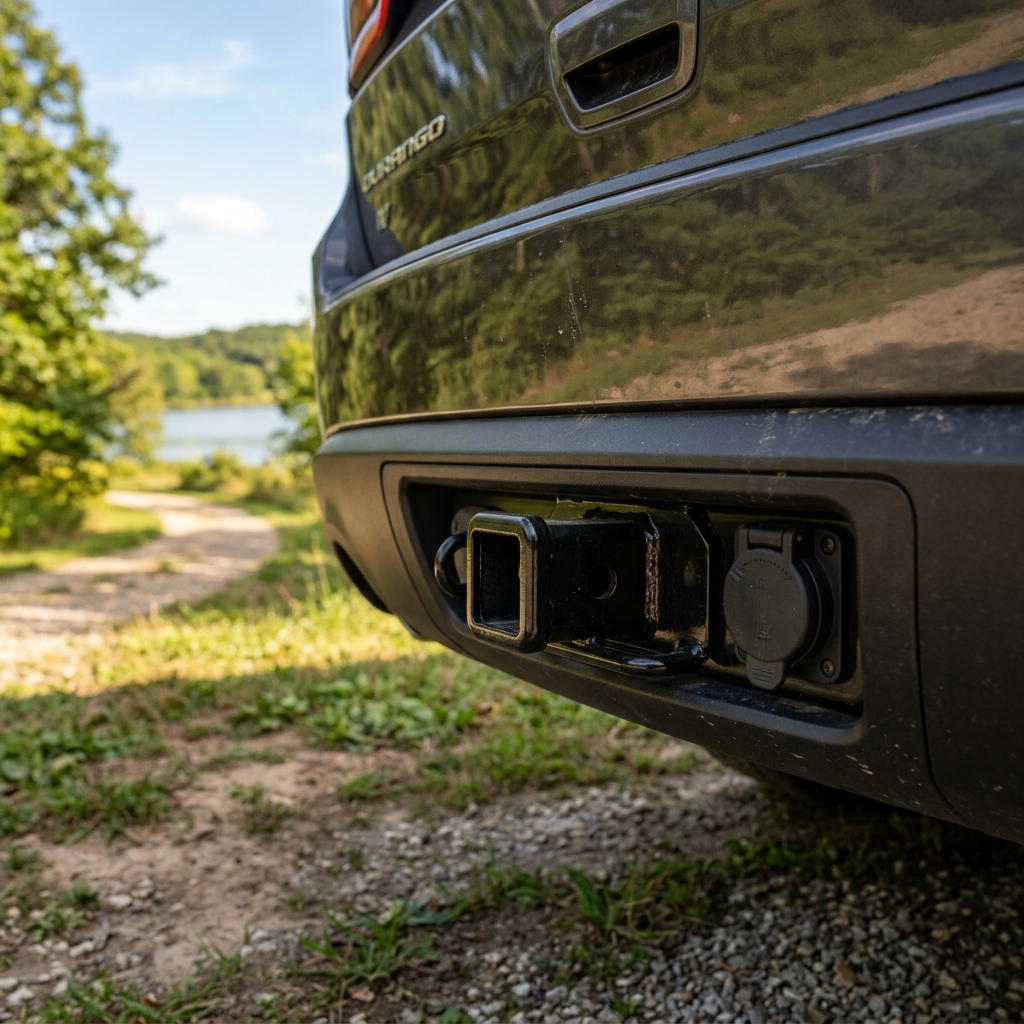
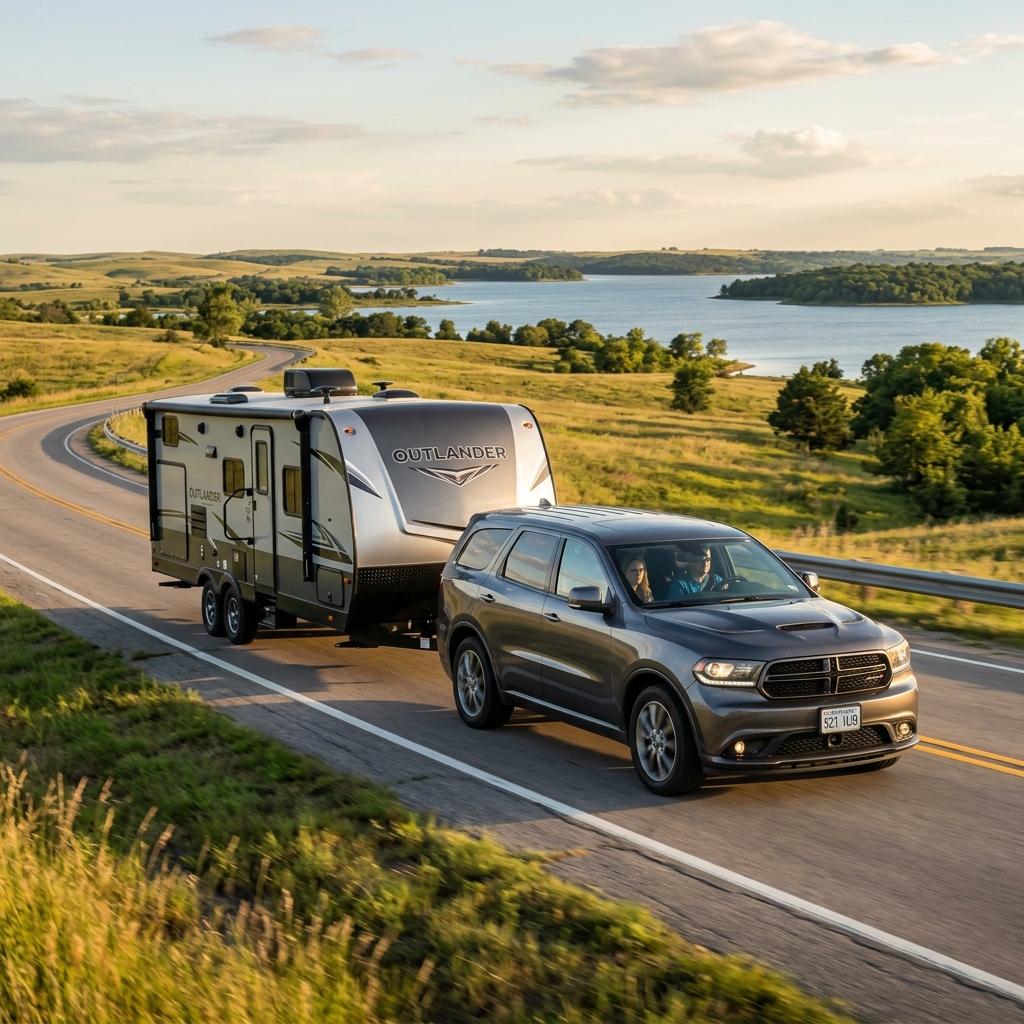
What Is the Maximum Towing Capacity Available on a Properly Equipped Dodge Durango?
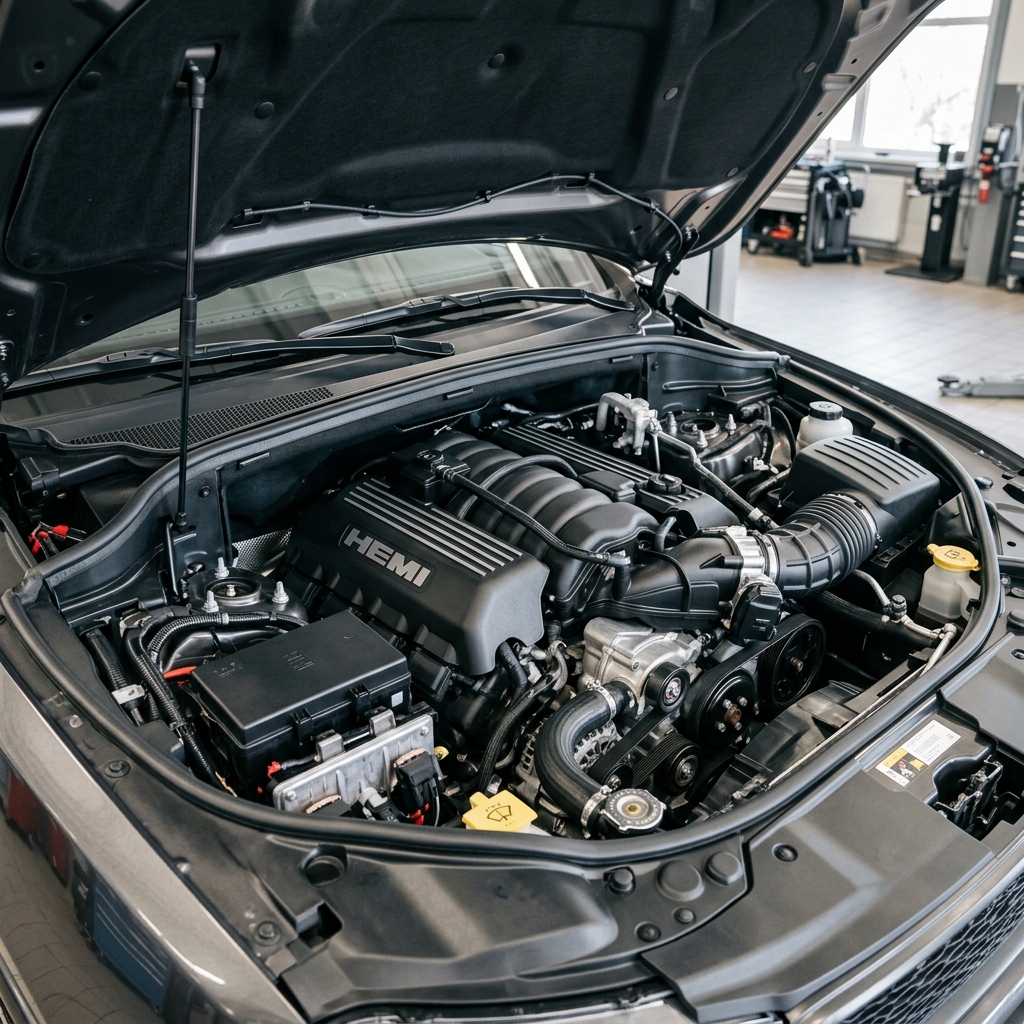
When properly equipped, the Dodge Durango achieves a impressive maximum towing capacity of 8,700 pounds. This standout pulling power is available across multiple high-performance V8 powertrains, including the 5.7L HEMI® V8 equipped with the factory Tow N Go Package, the 6.4L SRT® 392 V8, and the supercharged 6.2L SRT® Hellcat V8. For drivers choosing the standard 3.6L Pentastar® V6 engine, the Durango still delivers an impressive maximum towing capacity of 6,200 pounds, easily outpacing standard entry-level crossovers.
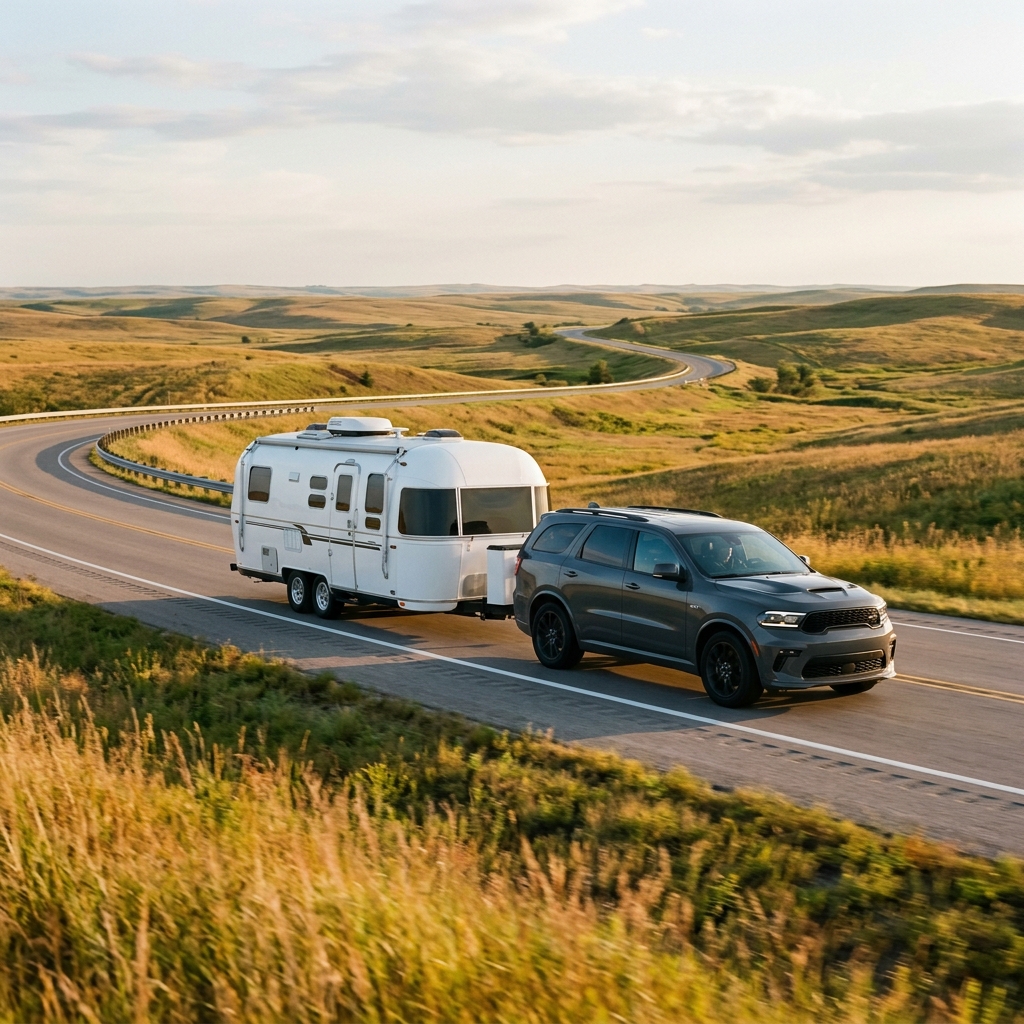
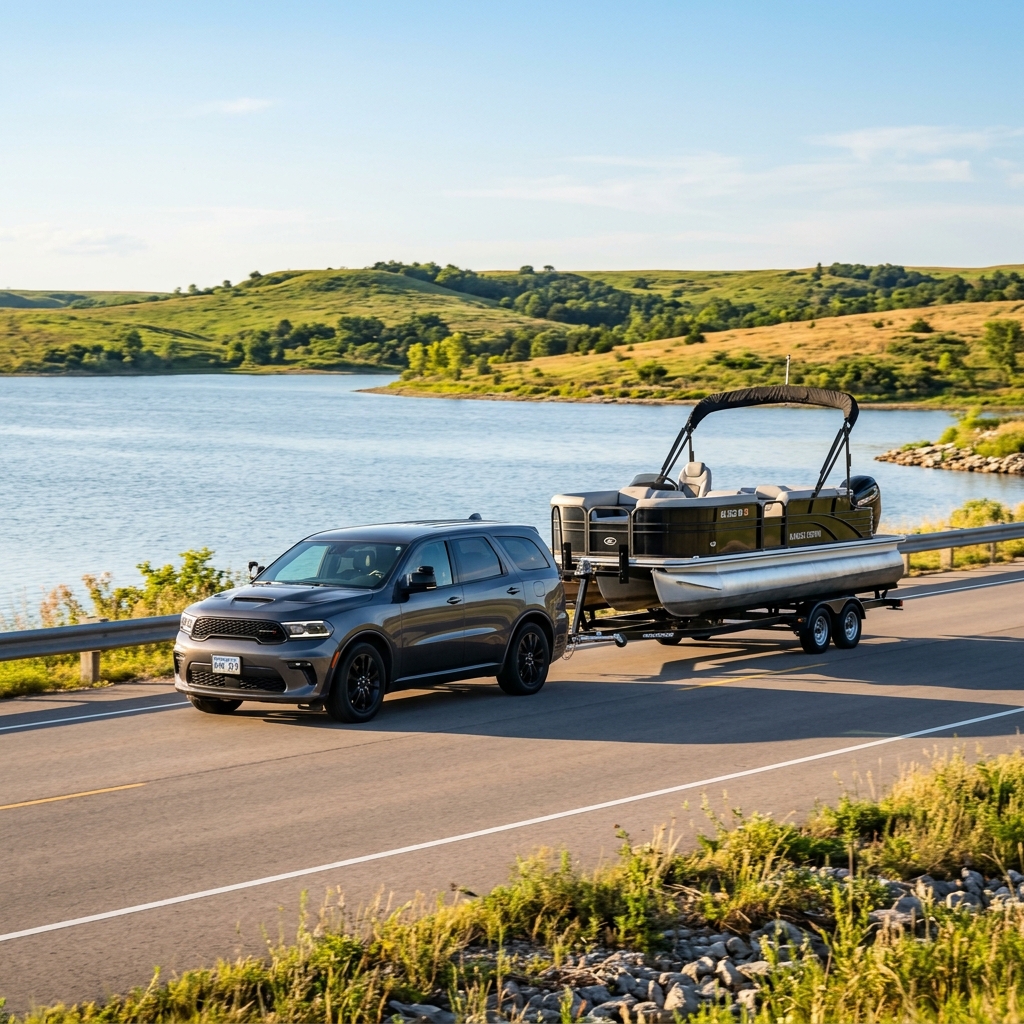
What sets the Dodge Durango apart from conventional three-row midsize SUVs is its rear-wheel-drive-based muscle architecture and unibody platform constructed with high-strength steel. Unlike front-wheel-drive competitors that struggle with traction when hauling heavy trailers up incline ramps, the Durango distributes tongue weight evenly over its drive wheels. Whether you are transporting a ski boat to the marina, pulling a two-axle camper through rolling state parks, or hauling heavy equipment across Junction City, the Durango bridges the gap between midsize SUV passenger comfort and full-size truck pulling performance.
Dodge Durango Towing Capacity Breakdown by Engine and Trim Level
Understanding the precise towing capability of your Dodge Durango starts with identifying the underlying engine and factory packages. Dodge offers four distinct engine options across trims like SXT, GT, R/T, Citadel, SRT 392, and SRT Hellcat. Standard non-Tow N Go 5.7L HEMI models deliver a generous 7,200-pound rating, while adding the factory Tow N Go Package unlocks standard SRT performance hardware and jumps the capacity directly to 8,700 pounds. Check out our New Vehicle Listings to compare trim features.
|
Engine Powertrain
|
Horsepower / Torque
|
Standard Max Towing
|
Tow N Go Max Towing
|
Max Payload Range
|
|
3.6L Pentastar V6
|
295 hp / 260 lb-ft
|
6,200 lbs
|
N/A
|
1,380 – 1,420 lbs
|
|
5.7L HEMI V8
|
360 hp / 390 lb-ft
|
7,200 lbs
|
8,700 lbs
|
1,330 – 1,410 lbs
|
|
6.4L SRT 392 V8
|
475 hp / 470 lb-ft
读 |
8,700 lbs
|
Standard (8,700 lbs)
|
1,390 lbs
|
|
6.2L Supercharged V8
|
710 hp / 645 lb-ft
|
8,700 lbs
|
Standard (8,700 lbs)
|
1,350 lbs
|
Tongue Weight Recommendations: Always observe the standard 10% to 15% rule when balancing your trailer. For an 8,700-pound maximum trailer, maximum allowed tongue weight sits between 870 and 1,200 pounds (subject to hitch receiver ratings). Keep in mind that tongue weight counts directly toward your vehicle’s overall interior payload limit.
What Size Camper Can You Tow with a V6 Dodge Durango?
Drivers often wonder if the standard 3.6L Pentastar® V6 engine has enough muscle for weekend outdoor adventures. Rated at 6,200 pounds of max towing capacity, the V6 Durango is exceptionally capable and versatile for most light-to-medium recreational trailering needs. You do not necessarily need a V8 to enjoy camping excursions across Kansas. Compatible recreational options for the V6 Durango include: • Pop-Up Campers & A-Frame Trailers: Typically weighing 1,500 to 3,000 lbs dry, these are effortlessly pulled with minimal impact on fuel economy. • Teardrop & Overland Trailers: Ranging from 1,200 to 2,500 lbs, perfect for off-grid camping trips. • Lightweight Ultra-Lite Travel Trailers (up to 24 feet): Many modern single-axle camper models feature dry weights between 3,200 and 4,500 lbs, leaving ample margin for gear, propane, and water tanks under the 6,200-lb threshold. • Watercraft & Powersports: Easily hauls dual jet ski trailers, aluminum fishing boats, or twin ATV utility trailers.
When evaluating campers for a V6 Durango, pay close attention to the trailer’s Gross Vehicle Weight Rating (GVWR) rather than just its published dry weight. A camper listed with a 3,800-lb dry weight can quickly reach 5,000 lbs once loaded with freshwater, batteries, gear, and supplies. The TorqueFlite® 8-speed automatic transmission paired with the Pentastar V6 uses optimized gear ratios to keep the engine in its sweet spot. Electronic stability control with integrated Trailer Sway Control continuously monitors vehicle motion to counteract trailer movement caused by passing semi-trucks or crosswinds. Explore pre-owned options in our Used Vehicle Listings.
Dodge Durango Towing Capacity Breakdown: Pulling Campers and Trailers in Northeast Kansas
Milford Lake Boating & Launching: Located right near Junction City, Milford Lake requires dependable pulling power and wet-ramp traction. Launching a heavy pontoon or ski boat demands instant low-end torque and confident four-wheel-drive traction. The Durango’s available AWD system easily grips slick concrete boat ramps when pulling watercraft back onto dry land.
Flint Hills Rolling Terrain: Towing campers through Manhattan, Riley County, and the rolling Flint Hills along I-70 tests powertrain endurance. Heavy-duty cooling systems on V8 Tow N Go models prevent thermal buildup during sustained uphill pulls on warm Kansas summer afternoons.
Kansas Crosswinds & Highway Stability: Strong regional winds across open farmland require vehicle weight and structural rigidity. The Durango’s near 50/50 weight distribution and dynamic damping suspension keep your rig tracking straight. Visit our dealership to inspect inventory— Get Directions to Valor CDJR.
Is a Pickup Truck Better for Towing Campers Than a Dodge Durango?
For decades, conventional wisdom dictated that pulling any travel trailer required a traditional light-duty body-on-frame pickup truck like the Ram 1500. However, modern SUV engineering has changed the landscape. Choosing between a Dodge Durango and a full-size pickup comes down to how you balance passenger transport, cargo weatherproofing, and maneuverability.
Advantages of the Dodge Durango over a Pickup Truck:• Enclosed 3-Row Seating: Seats up to seven passengers comfortably in climate-controlled luxury, whereas crew-cab pickups max out at five or six. • Weatherproof Indoor Cargo: Keep luggage, coolers, sleeping bags, and electronics secure and protected from rain, dust, and outdoor elements inside the cabin. • Shorter Wheelbase Maneuverability: Parallel parking, backing into tight campsite slips, and navigating suburban driveways are significantly easier in a Durango than in a 20-foot-long pickup truck.
When a Pickup Truck Might Be Preferred: Full-size trucks excel when you need an open bed for hauling dirty cargo like gravel, firewood, dirt bikes, or fifth-wheel/gooseneck hitches. Pickups also generally offer higher maximum payload ratings in the bed. However, for families who spend 90% of their time commuting, running errands, and carpooling, but still want to tow an 8,000-pound travel trailer on weekends, the Dodge Durango offers the ideal compromise. You get genuine muscle-car performance, premium 3-row comfort, and heavy-duty towing capacity without driving a cumbersome truck every day. Thinking about upgrading? Start with a quick Trade In Evaluation.
Which Factory Packages and Equipment Are Required for Maximum Durango Towing?
Tow N Go Package (5.7L V8): Transforms the 5.7L HEMI Durango into an 8,700-lb towing juggernaut. Includes Brembo® performance brakes, active damping suspension, electronic rear limited-slip differential, performance exhaust, and drive modes (Track, Sport, Tow, Snow).
Trailer Tow Group IV: Includes heavy-duty engine cooling, Class IV hitch receiver, integrated trailer brake controller, load-leveling rear suspension, 7-pin/4-pin wiring harness, and full-size spare tire.
Why Factory Hardware Superiority Matters: Integrated trailer brake controls allow subtle electric brake adjustments right from the dashboard. Non-factory aftermarket hitches often lack load-leveling suspension integration and dynamic brake calibrations. Contact our Parts Department for factory accessories.
What Driving Habits Help Protect a Durango While Towing Near Its Capacity?
Driving near your vehicle’s maximum towing capacity requires deliberate driving habits to protect transmission gears, brake rotors, and suspension components. Simple operational adjustments preserve long-term vehicle health:
• Engage Tow/Haul Mode: Always activate Tow/Haul mode when pulling heavy loads. This recalibrates transmission shift points, holding gears longer during acceleration and providing engine braking when coasting downhill. • Smooth Throttle Management: Avoid wide-open throttle bursts from complete stops. Smooth progression minimizes strain on torque converters, driveshafts, and rear differentials. • Manual Gear Selection on Steep Grades: When descending rolling hills around the Flint Hills region, manually downshift using steering-wheel paddle shifters to engine-brake, reducing brake heat fade.
• Increase Following Distances: Give yourself 4 to 6 seconds of stopping gap behind leading traffic. Even with trailer brakes properly gain-adjusted, stopping an extra 7,000+ pounds takes increased distance. • Monitor Gauge Cluster Temperatures: Use the Durango’s customizable digital instrument cluster to monitor engine coolant, oil temperature, and transmission fluid temperatures during hot summer drives. • Verify Tire Pressures Cold: Under-inflated trailer or SUV tires generate excessive heat under heavy loads, increasing blowout risk. Adjust pressures to door-jamb specifications prior to loading.
How Often Should You Change Transmission Fluid If Towing Regularly?
Towing heavy trailers puts significantly higher thermal and mechanical stress on your Durango’s powertrain. Under severe duty conditions—defined as towing a trailer, boat, or camper for more than 50% of your driving miles—standard fluid service intervals must be shortened to prevent premature fluid degradation and component wear.
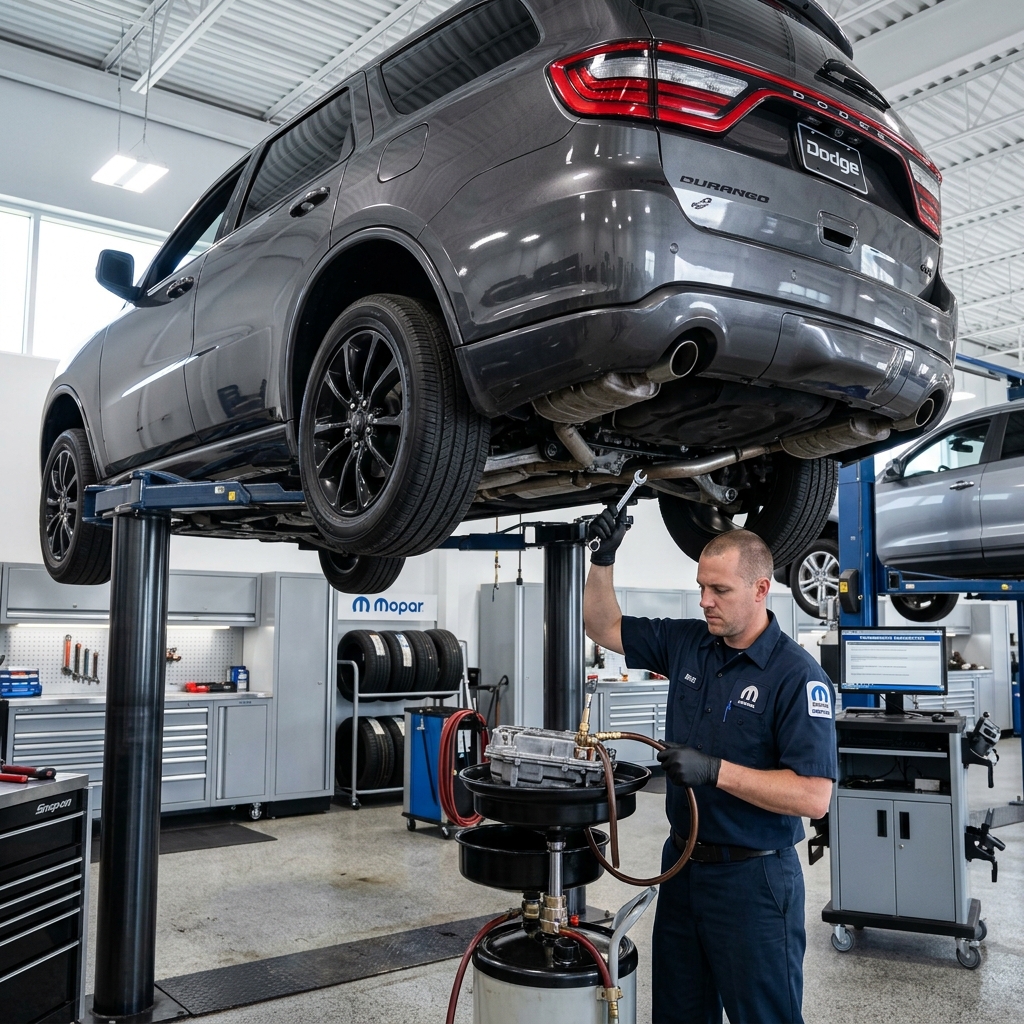
Recommended Severe-Duty Maintenance Schedule:• Transmission Fluid & Filter Replacement: Every 30,000 to 50,000 miles(compared to 100,000 miles under normal commuting conditions). • Front & Rear Differential Fluid Changes: Every 30,000 miles to clear metal shearing particles generated by heavy torque loading. • Transfer Case Fluid (AWD Models): Inspect and change every 30,000 to 45,000 miles. • Brake Fluid Flush: Flush brake lines every 2 years to remove absorbed atmospheric moisture that lowers fluid boiling points during downhill braking. • Cooling System Maintenance: Inspect coolant strength and hose integrity annually before summer trailering season starts. Keep your vehicle running smoothly with help from certified technicians at Valor CDJR. Stop by our Express Lane or book ahead using our Service Scheduler.
Understanding Towing Math: Gross Combined Weight Rating, Payload, and Tongue Weight
Safe towing requires understanding key weight terms so you don’t exceed your vehicle’s structural capacity:
• Curb Weight: Total weight of the empty vehicle with standard equipment and full fuel tank, but no passengers or cargo. • GVWR (Gross Vehicle Weight Rating): Maximum allowable total weight of the vehicle itself, including passengers, cabin cargo, fuel, and trailer tongue weight. • GCWR (Gross Combined Weight Rating): The maximum permissible combined weight of the fully loaded Durango PLUS the fully loaded trailer combined. • Payload Capacity: The total weight you can add inside the cabin and cargo bay (typically 1,330 to 1,420 lbs depending on Durango trim).
How Cabin Weight Directly Reduces Max Towing Limit:
If your Durango has a Payload Limit of 1,400 lbs, and you load 5 passengers (total 800 lbs) plus 200 lbs of camping gear in the trunk, you have consumed 1,000 lbs of payload. This leaves only 400 lbs of remaining payload capacity for trailer tongue weight.
Since tongue weight must equal roughly 10% to 15% of total trailer weight, a 400-lb tongue weight cap effectively restricts your maximum trailer weight to approximately 3,500–4,000 pounds, regardless of whether your SUV engine is rated for 8,700 lbs. Always perform your towing math before setting out!
What Questions Should You Ask a Dealer About Durango Towing Specs Before Buying?
1. Is the Tow Package Factory-Installed? Confirm whether the vehicle features factory Trailer Tow Group IV or Tow N Go, rather than an aftermarket hitch receiver lacking heavy-duty engine cooling.
2. What Does the Door-Jamb Payload Sticker Say? Ask to inspect the physical tire/loading sticker on the driver door-jamb to confirm exact payload capacity for that vehicle’s optional equipment package.
How Does the Dodge Durango Towing Rating Compare to Other 3-Row Midsize SUVs?
When comparing 3-row midsize crossovers, the Dodge Durango offers strong towing capability in its class. While most competitors max out between 5,000 and 5,600 pounds, the Durango’s 8,700-pound maximum rating gives drivers up to 3,700 additional pounds of pulling capacity—making the difference between hauling a full-size travel trailer or leaving it behind.
|
Make & Model
|
Engine Options
|
Max Towing Capacity
|
Drive Architecture
|
|
Dodge Durango
|
3.6L V6 / 5.7L V8 / 6.4L V8 / 6.2L SC V8
|
8,700 lbs
|
RWD / AWD
|
|
Ford Explorer
|
2.3L I4 / 3.0L EcoBoost V6
|
5,600 lbs
|
RWD / AWD
|
|
Honda Pilot
|
3.5L V6
|
5,000 lbs
|
FWD / AWD
|
|
Toyota Grand Highlander
|
2.4L Turbo / 2.5L Hybrid / Max Hybrid
|
5,000 lbs
|
FWD / AWD
|
|
Kia Telluride
|
3.8L V6
|
5,500 lbs (X-Pro)
|
FWD / AWD
|
|
Hyundai Palisade
|
3.8L V6
|
5,000 lbs
|
FWD / AWD
|
Ready to experience strong 3-row towing power, muscular exhaust note, and luxury cabin comfort? Visit Valor CDJR in Junction City today to test drive the new Dodge Durango!
Tags: 3-row SUV towing, Dodge Durango camper towing, Dodge Durango Tow N Go package, Dodge Durango towing capacity, Dodge Durango towing performance, Dodge Durango towing tips, Dodge Durango trailer towing, Dodge Durango V6 towing, Dodge Durango V8 towing, Dodge Durango vs pickup truck, Flint Hills towing, midsize SUV towing, Milford Lake boat launch towing, towing in Kansas
Posted in
Buying Guides, Maintenance & Service, New Vehicle Inventory, New Vehicle Reviews, Towing & Hauling Safety, Towing & Roadside Assistance |
No Comments »