Blog / Winter Driving Tips

4WD High vs 4WD Low on I-70: The Direct Answer for Driving on Icy Kansas Highways

4wd

4WD High vs 4WD Low on I-70: The Direct Answer for Driving on Icy Kansas Highways

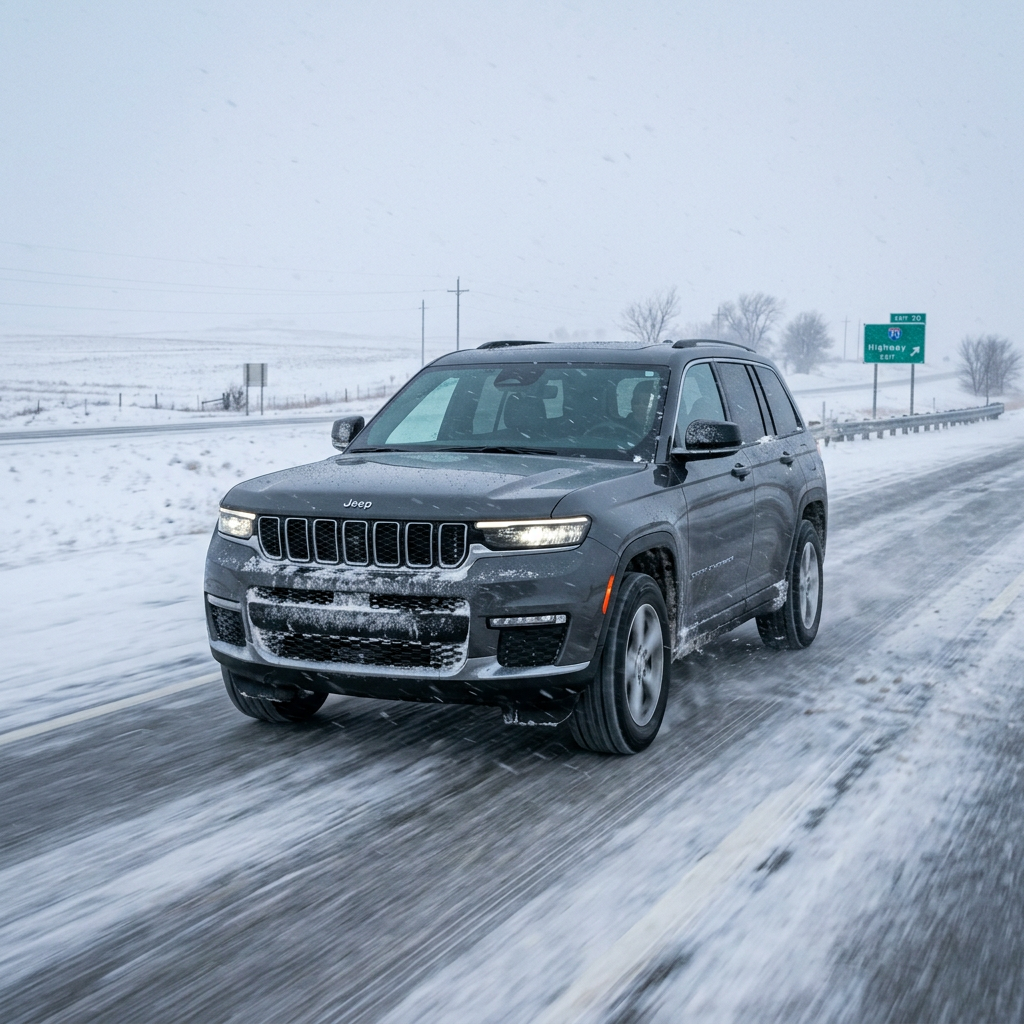
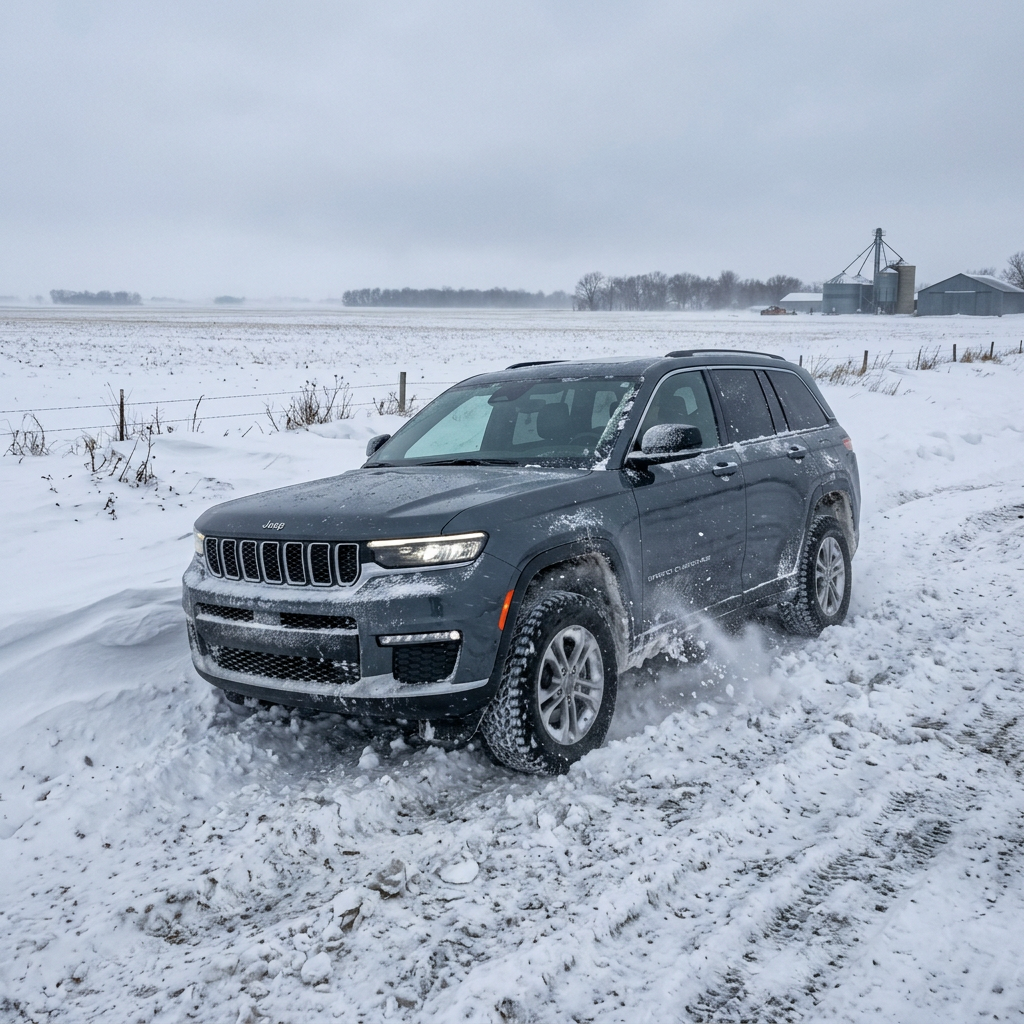
A dark grey Jeep Grand Cherokee drives down an icy highway during a winter snowfall. (Representative image for illustration purposes only. Actual vehicle may vary based on trim and configuration.)
When winter storms hit Central Kansas and transform Interstate 70 into a sheet of packed ice and slush between Junction City, Manhattan, and Salina, clear mechanical decision-making is essential. The practical recommendation for driving on icy highways like I-70 is to use 4WD High (or Auto / Snow Mode) when traveling at highway speeds, and to avoid using 4WD Low on an open interstate.
Understanding the mechanical difference between 4WD High and 4WD Low can save your vehicle's drivetrain and prevent catastrophic accidents. Four-Wheel Drive High (4WD High) provides continuous four-wheel traction while maintaining full engine speed range, active vehicle electronic stability control (ESC), and wheel anti-lock braking systems (ABS). It is specifically engineered for slippery surfaces encountered at normal driving speeds, such as snow-covered interstates, slushy highways, and wet gravel roads.
In contrast, Four-Wheel Drive Low (4WD Low) engages a secondary set of planetary gears within your vehicle's transfer case, dramatically multiplying gear reduction (typically 2.72:1 or up to 4.0:1 in Rubicon models). This massive torque multiplication is designed exclusively for extreme low-speed power under 25 mph—such as pulling a stranded vehicle out of a ditch or crawling out of deep snowdrifts. Attempting to drive in 4WD Low on open highways forces high engine RPMs at low speeds, mechanically locks front and rear driveshafts together, disables vital stability assistance systems, and risks severe driveline binding, mechanical failure, or sudden lock-up of wheels causing immediate loss of vehicle control.

What Is the Maximum Safe Speed When Driving in 4WD Low versus 4WD High?

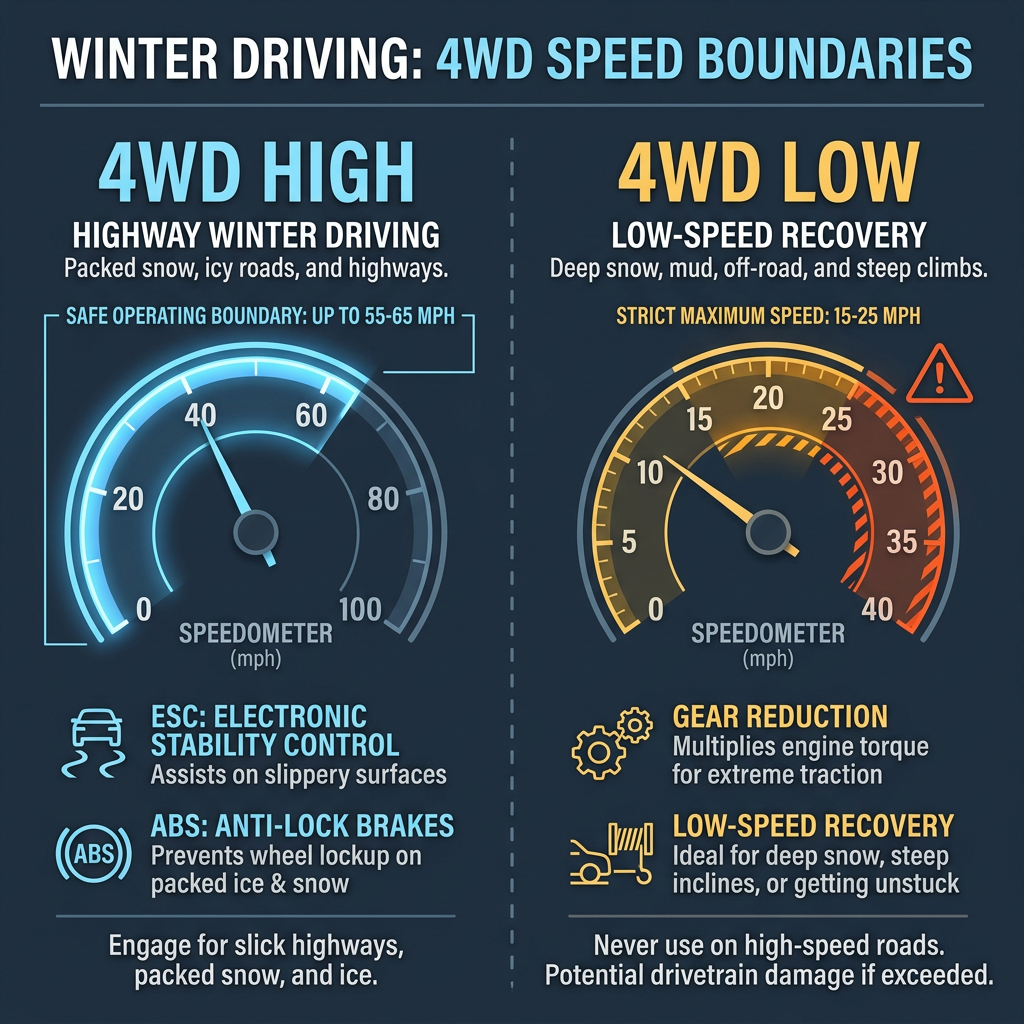
4WD Low Speed Operating Envelope: The absolute maximum mechanical safe speed when operating in 4WD Low is 25 mph. However, automotive engineers strongly recommend keeping speeds strictly below 15 mph when 4WD Low is active. Because 4WD Low uses maximum gear reduction to deliver extreme wheel torque, high engine speeds are generated at very low road speeds. Driving over 25 mph in 4WD Low causes internal transfer case overheating, extreme engine wear, and severe mechanical stress on front and rear differentials. Furthermore, turning on dry or partially clear pavement in 4WD Low can create driveline bind, where front and rear axles may rotate at different speeds during a turn and may lead to axle hopping or other drivetrain damage.
Infographic detailing speed limits and conditions for 4WD High and 4WD Low winter driving modes. (Representative image for illustration purposes only. Actual vehicle may vary based on trim and configuration.)
4WD High Speed Operating Envelope: 4WD High is designed for normal highway travel speeds adjusted for road conditions (typically up to 55–65 mph depending on icy surfaces). In 4WD High, full vehicle speed range is preserved, engine RPM remains in normal bands, and sophisticated vehicle electronics like Electronic Stability Control (ESC) and Anti-lock Braking Systems (ABS) remain fully operational to prevent spinouts on I-70.

4x4 Mode Feature

4WD High (4H / Auto)

4WD Low (4L)

Max Safe Operating Speed

Standard Highway Speeds (Adjusted for weather)

Strictly Under 25 mph (Ideal < 15 mph)

Transfer Case Reduction

1.0:1 (Direct Drive)

2.72:1 up to 4.0:1 (High Reduction)

Active Stability Control (ESC)

Fully Active

Deactivated / Calibrated Off

Anti-Lock Braking (ABS)

Fully Active

Modified Low-Speed Off-Road Mode

Primary Use Case

Icy interstates (I-70), packed snow, slush

Deep snow drift extraction, severe mud, rock crawling

How Jeep Selec-Terrain Management System Works in Snow and Ice

Snow Mode Calibration

When you rotate the console dial to Snow Mode in a Jeep Grand Cherokee, the system maintains the transfer case in 4WD High while altering vehicle behavior. It splits front-to-rear drive torque at a 60/40 ratio to maximize directional control. The transmission automatically launches in second gear rather than first to minimize initial wheelspin on frozen pavement.

Auto Mode Intelligence

In Auto Mode, the Selec-Terrain system continuously monitors wheel speed sensors, throttle position, and steering angle. If slip is detected along I-70, torque is instantly redirected to the axle with traction. However, selecting Snow Mode pre-emptively tunes throttle response to be smooth and progressive, preventing sudden wheel spin when accelerating on black ice.

Mode Distinctions

Unlike Sand/Mud Mode or Rock Mode(which engage 4WD Low and allow aggressive wheelspin to clear mud or climb obstacles), Snow Mode is specifically tailored to keep wheels glued to slick road surfaces by coordinating engine, transmission, braking, and transfer case controllers into full high-speed stability unison.

How Quadra-Trac II Differs from Quadra-Drive II on Winter Roads

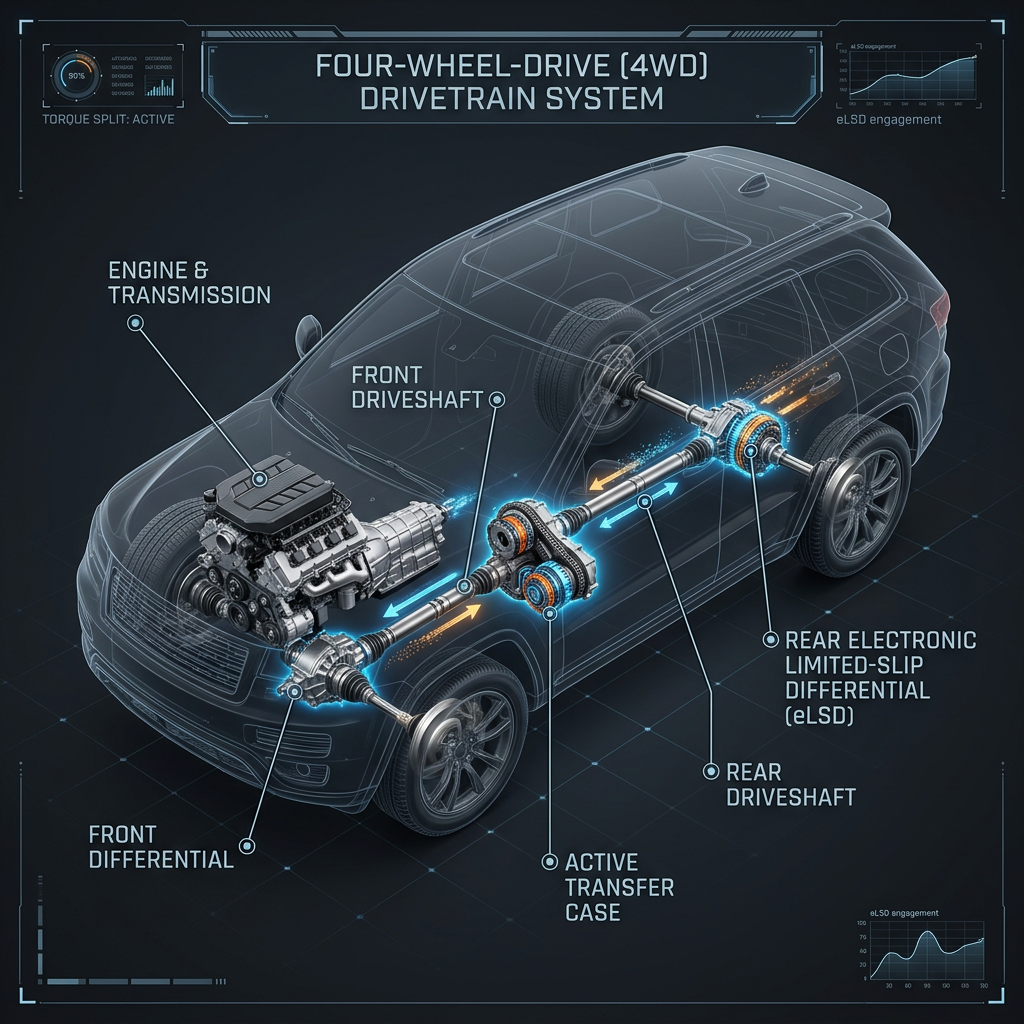
Quadra-Trac II® System: Quadra-Trac II utilizes a two-speed active transfer case equipped with a center clutch pack. When wheel slip is detected by vehicle sensors, the system can route up to 100% of available engine torque to the axle with the most grip. On cross-axle slip, Quadra-Trac II utilizes Brake Lock Differential (BLD) technology—applying individual brakes to a spinning wheel so torque naturally flows across the open differential to the wheel on solid surface.
Quadra-Drive II® with Rear ELSD: Quadra-Drive II builds upon Quadra-Trac II by incorporating a rear Electronic Limited-Slip Differential (ELSD). Instead of waiting for a wheel to spin and applying the brake, the rear ELSD uses electronic clutch packs to anticipate slip. On patch-ice highways like I-70 or packed gravel roads in Riley County, Quadra-Drive II can transfer up to 100% of available rear engine torque to a single rear wheel, providing unrivaled winter acceleration and cornering stability.

Is a Jeep Grand Cherokee 4x4 Worth the Extra Cost over a 2WD Model for Kansas Winter Driving?

Severe Flint Hills Weather

Kansas winter weather is infamous for rapid thermal drops. A morning rain can freeze into black ice on I-70 within an hour. While 2WD vehicles rely solely on front or rear traction, a 4x4 Jeep Grand Cherokee distributes motive force across all four tire contact patches, drastically reducing initial wheelspin and enabling confident hill climbing throughout the rolling Flint Hills terrain.

Superior Resale Value Retention

In Geary, Riley, and Saline counties, pre-owned vehicle buyers prioritize four-wheel-drive capabilities. 4x4 SUVs may retain value well on the Midwest pre-owned market compared with some 2WD variants, which can make them a practical choice for winter driving.

Uncompromising Emergency Safety

Whether navigating unplowed backroads near Fort Riley or coping with sudden ground blizzards between Junction City and Salina, 4x4 provides safety margins that 2WD simply cannot match. With 4WD High and Selec-Terrain, drivers gain emergency maneuverability when avoiding road hazards on ice.

Navigating I-70 Winter Hazards Between Junction City, Manhattan, and Salina

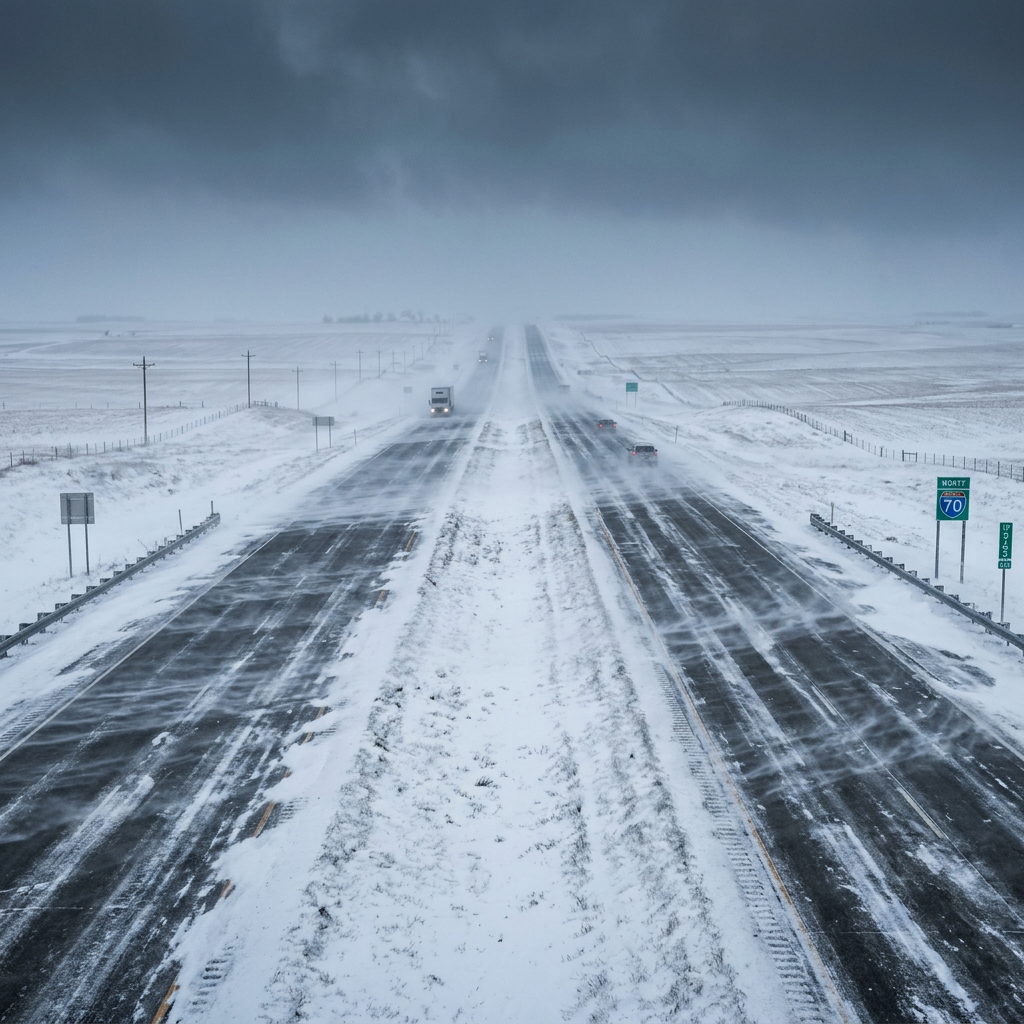
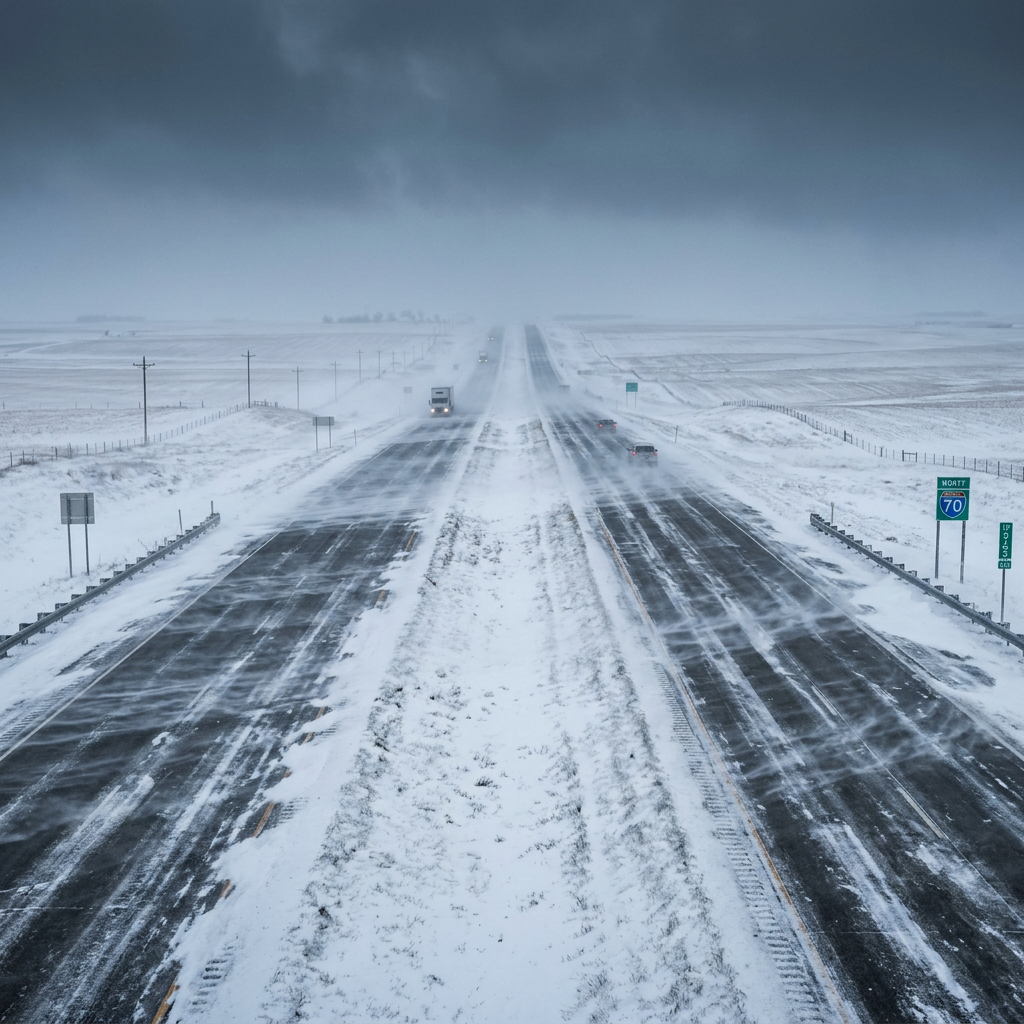
Snowy Interstate 70 highway with blowing snow and distant vehicles under dark, stormy skies. (Representative image for illustration purposes only. Actual vehicle may vary based on trim and configuration.)
Driving Interstate 70 in Central Kansas presents unique geographical and atmospheric challenges during winter. The corridor between Junction City (Exit 296), Manhattan (via K-18 / K-177), and Salina is prone to intense crosswinds sweeping across open prairie ridges. High lateral wind gusts combined with slick highway surfaces can easily push high-profile vehicles out of their lane. Operating in 4WD High increases vehicle directional tracking stability, giving the driver better steering control against crosswind buffeting.
Elevated bridge decks—such as the bridges over the Republican River near Junction City and the Smoky Hill River near Salina—freeze long before adjacent roadbeds due to air circulating beneath the bridge structure. Drivers transitioning from wet pavement to invisible black ice on bridges require smooth throttle management. Avoid sudden braking or hard steering inputs; let your vehicle's 4WD High system and anti-lock systems assist stability without jarring gear shifts. If you need local route guidance or emergency assistance, you can Get Directions to Valor CDJR for expert vehicle support.

When Dedicated Winter Tires Beat Factory All-Seasons on Rural Gravel and Early-Morning Commutes

Rubber Thermodynamics Below 45°F

Factory all-season tire rubber compounds begin to harden and lose elasticity when ambient temperatures drop below 45°F (7°C). Once hardened, all-season tires cannot flex into road micro-textures, significantly lengthening stopping distances on icy pavement regardless of whether your vehicle is 2WD or 4x4. Dedicated winter tires feature specialized hydrophilic rubber compounds that remain soft in sub-zero weather, combined with thousands of microscopic sipes that create biting edges on glare ice.

Rural Gravel & 3PMSF Performance

For early morning commuters near Junction City, Fort Riley, and rural Geary/Riley counties, unpaved gravel roads present a mixture of frozen mud, rutted gravel, and drifting snow. Tires carrying the 3-Peak Mountain Snowflake (3PMSF) rating offer up to 30% shorter stopping distances on packed snow than standard M+S rated all-seasons. While 4WD accelerates your vehicle, only tire tread grip stops it.

Step-by-Step Guide: How to Shift into 4WD Low to Get Unstuck from Deep Snow Drifts

A dark grey Jeep Grand Cherokee driving through deep snow on a rural country road in winter. (Representative image for illustration purposes only. Actual vehicle may vary based on trim and configuration.)

Step 1: Complete Stop & Neutral Shift

Bring your vehicle to a complete stop. Press the brake pedal firmly and shift the main automatic transmission lever into NEUTRAL (N). Shifting into 4WD Low while in Drive or Reverse will cause gear clash or transfer case lock-out rejection.

Step 2: Engage 4WD LOW Button

Press and hold the 4WD LOW switch(or rotate the dial to 4L / Rock mode). Wait until the instrument cluster display turns solid with the 4WD LOW indicator light before shifting transmission back into Drive or Reverse.

Step 3: Gentle Rocking & Return to 4H

Disable Traction Control to allow wheel spin if rocking out of deep drifts. Apply gentle throttle (do not exceed 15 mph). Once freed onto paved or cleared road surfaces, stop, shift to NEUTRAL, and switch back to 4WD HIGH immediately.

Essential Pre-Winter Maintenance Checklist for 4x4 Transfer Cases and Differentials

4x4 Fluid Inspection & Service: Before severe freeze cycles arrive in Geary County, inspecting your 4x4 drivetrain fluid condition is vital:
  • Transfer Case Fluid: Fresh synthetic transfer case fluid ensures rapid clutch engagement and internal cooling when shifting between 4WD High and 4WD Low.
  • Front & Rear Differential Gear Oils: Inspect gear oil for water contamination or metal shavings. Cold temperatures increase fluid viscosity; fresh fluid prevents cold-start wear.
  • Brake Lock Differential Sensor Checks: Verify wheel speed sensor harnesses are free of debris and corrosion.
Battery & Electrical System Health: Extreme cold places severe loads on your vehicle's 12-volt battery. 4x4 electronic transfer case actuators, ELSD solenoids, and Selec-Terrain modules require steady electrical voltage. A battery with degraded Cold Cranking Amps (CCA) can fail to shift your transfer case when freezing temp drops occur overnight.

Component

Inspection Interval

Recommended Winter Action

Transfer Case Fluid

Every 30,000 - 60,000 Miles

Check level & fluid clarity before November freezes

Front & Rear Differentials

Every 20,000 - 40,000 Miles

Replace fluid if exposed to deep mud/water

Tread Depth (Winter)

Monthly

Ensure minimum 4/32" tread (6/32" preferred)

Battery Health (CCA)

Bi-Annually

Load-test battery for sub-zero performance

Demystifying 4x4 Low-Range and Selec-Terrain: Safe Driving on I-70 and Rural Kansas Gravel

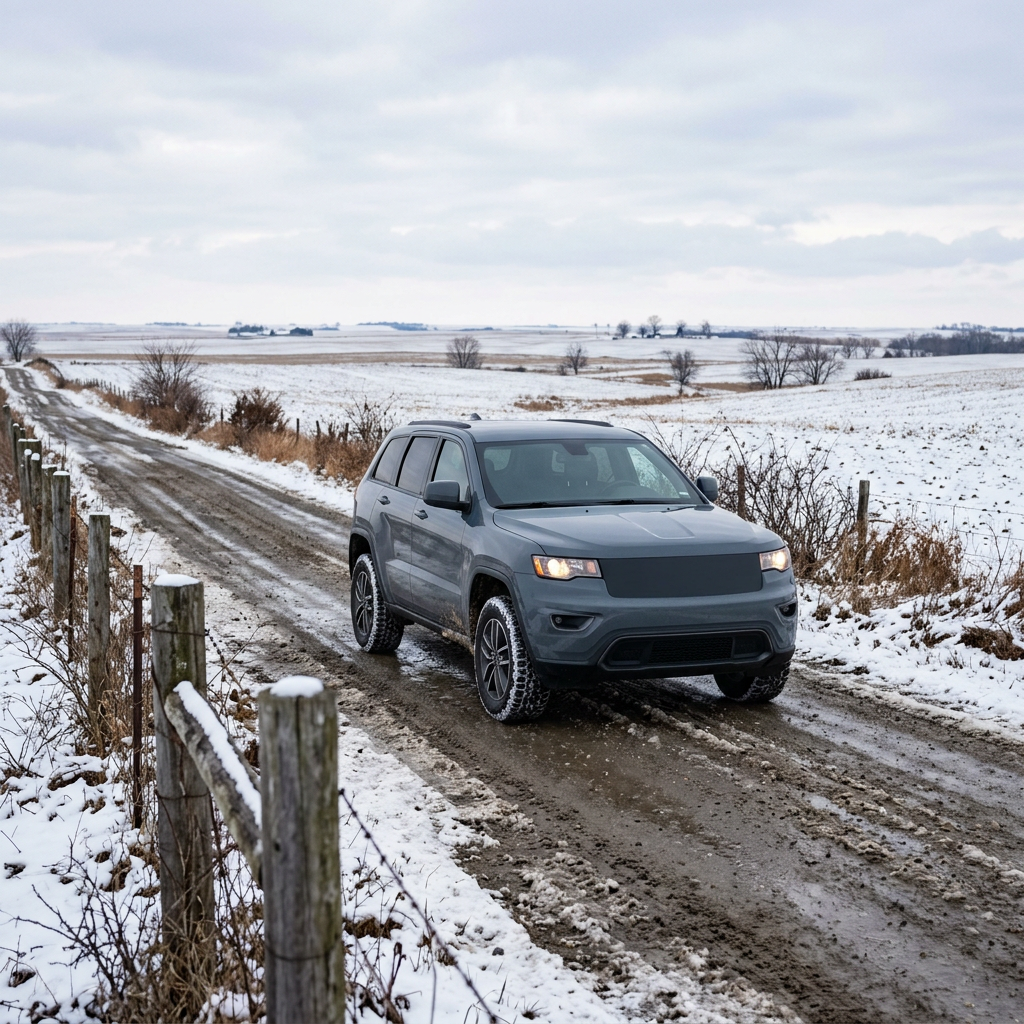
Dark gray SUV driving down a muddy dirt road in a snowy rural landscape next to a wooden fence. (Representative image for illustration purposes only. Actual vehicle may vary based on trim and configuration.)
Synthesizing safe 4x4 operational rules comes down to matching transfer case range with speed and surface traction. On open interstates like I-70 where speeds exceed 25 mph, keep your transfer case in 4WD High or Selec-Terrain Snow Mode. This maintains full vehicle control, engine cooling, ABS, and stability control systems without putting strain on driveline hardware.
When venturing onto rutted gravel roads or unpaved farm lanes in Riley or Dickinson counties, loose gravel allows tire slippage that relieves driveline tension. However, reserve 4WD Low strictly for low-speed recovery scenarios under 15–25 mph where maximum gear reduction is needed to crawl out of heavy snowdrifts. If considering upgrading your current vehicle before peak winter, you can explore your vehicle's value with a Trade In Evaluation.

Winter Highway Survival Gear to Keep in Your Jeep for Central Kansas Travel

Recovery Hardware

  • 20 ft / 20,000 lb Heavy-Duty Tow Strap
  • Collapsible Metal Snow Shovel
  • Traction Boards / Escaper Mats
  • Heavy Work Gloves & Ice Cleats

Emergency Power & Warmth

  • Portable Lithium Battery Jump Starter
  • Mylar Thermal Blankets & Wool Throw
  • LED Flashlight with Extra Batteries
  • Non-Perishable Energy Bars & Water

Visibility & Fluids

  • Brass-Blade Ice Scraper & Snow Brush
  • 2 Gallons Sub-Zero (-30°F) Washer Fluid
  • LED Road Flares / Reflective Triangles
  • First Aid Kit & Multi-Tool

Prepare Your Vehicle for Winter Driving at Valor CDJR in Junction City

Valor Automotive logo featuring a blue shield with a red V and white A monogram above company text.
If you want to prepare before the first severe blizzard, have your vehicle's 4x4 system inspected. At Valor CDJR in Junction City, our factory-certified Chrysler, Dodge, Jeep, and Ram technicians are ready to inspect your transfer case, test battery cold-cranking output, check differential fluids, and mount 3PMSF winter tires tailored for Central Kansas highways.
Serving Junction City, Manhattan, Fort Riley, and Salina, Valor CDJR is your trusted regional authority for winter safety and 4x4 excellence. Call (785) 238-5114 or stop by our dealership located at 1825 Goldenbelt Blvd, Junction City, KS 66441 today.

Posted in:

Related Posts

Is All-Wheel Drive Worth the Extra Cost for Kansas Winters? The Bottom-Line Verdict from 20 Years in the Dealer Seat

Is All-Wheel Drive Worth the Extra Cost for Kansas Winters? The Bottom-Line Verdict from 20 Years in the Dealer Seat

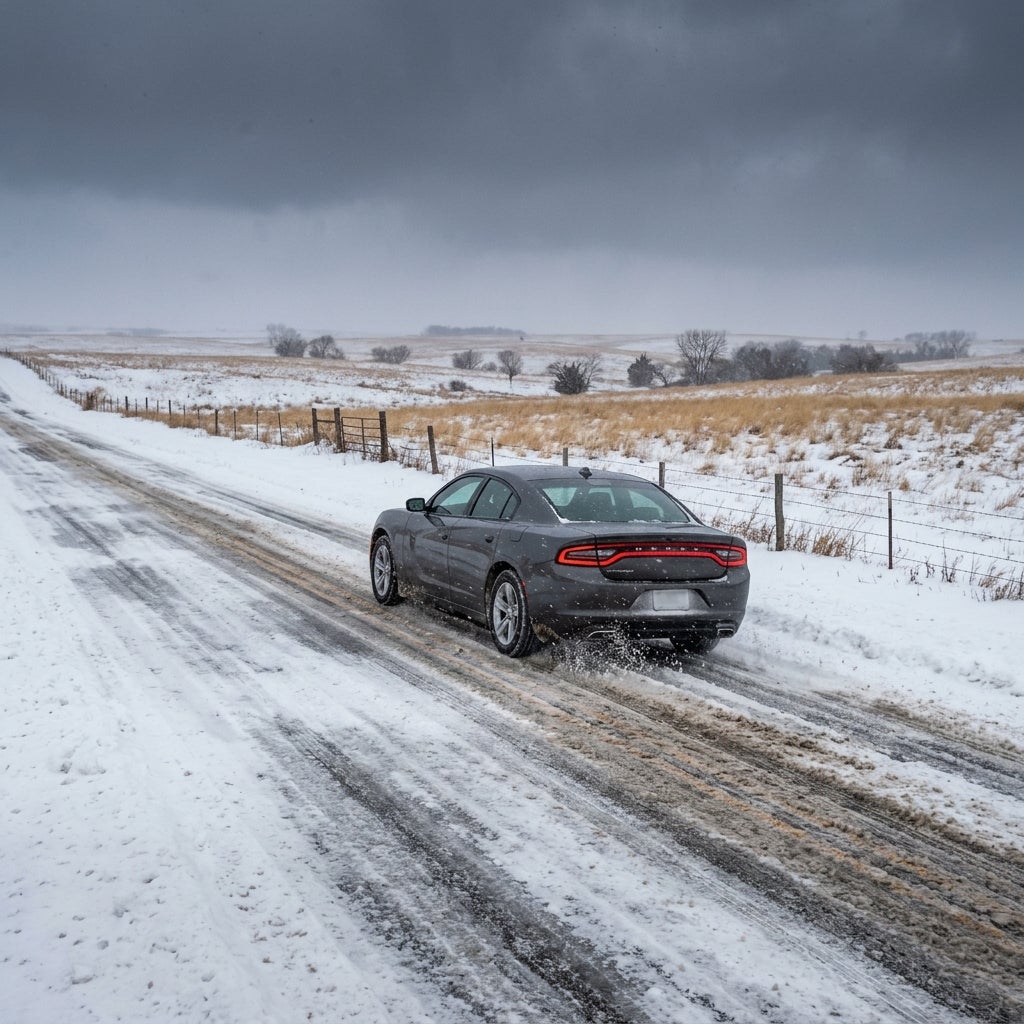
Is All-Wheel Drive Worth the Extra Cost for Kansas Winters? A 20-Year Perspective from the Dealership As the General Manager at Valor CDJR here in Junction City, I get asked the exact same question as temperatures drop each fall: "Jace, do I really need to spend the extra $2,000 to $3,000 for All-Wheel Drive, or am I just buying into clever dealership marketing?" After two decades sitting in the dealer seat, watching how vehicles perform across thousands of Kansas winter commutes, evaluating trade-ins, and analyzing real-world accident reports, my short answer is unequivocally YES. However, that affirmative comes with one critical, non-negotiable caveat: an advanced AWD system is only as effective as the mechanical grip of the rubber touching the pavement. Kansas winter driving is notoriously deceptive. Unlike regions that receive consistent, dry powder snowfall, the weather patterns across Geary, Riley, and Dickinson counties deliver freezing rain, sudden black ice on I-70 bridges over the Smoky Hill River, unplowed rural farm routes, and deep sludgy slush on hill inclines throughout Manhattan. Rear-wheel drive vehicles—traditionally loved for their raw American muscle dynamics—can quickly transform into stressful challenges when torque breaks rear traction. Front-wheel drive offers decent pull over the front axle, but it lacks the active dynamic torque distribution required to climb frozen grades or recover from sudden lateral slippage. All-Wheel Drive changes the safety equation completely by transforming wheelspin into forward momentum within milliseconds. Throughout this deep-dive report, I am going to break down the mechanical engineering behind modern Dodge all-wheel drive systems, contrast rear-wheel drive muscle against four-corner traction, evaluate winter tire physics, examine cold-weather electric vehicle range retention, and calculate the true monetary return on investment. Whether you are driving an daily commuter across Junction City or navigating backroads near Fort Riley, understanding how AWD technology operates will empower you to make an informed, safety-first automotive decision. Meet Jace Grabouski: Two Decades Navigating Flint Hills Roads and Automotive Engineering My perspective isn't derived from press releases or vehicle brochures; it comes from 20 continuous years on the frontlines of dealership operations right here in Junction City. Over two decades serving as General Manager at Get Directions to Valor CDJR, I have personally assisted thousands of local drivers, military service members from nearby Fort Riley, and local farm families select vehicles tailored to our rugged regional topography. Having spent decades evaluating Chrysler, Dodge, Jeep, and Ram engineering evolutions—from early mechanical transfer cases to modern electro-hydraulic active axle disconnections—I have developed a granular appreciation for drivetrain engineering. When winter storms sweep through the Flint Hills, bringing sub-zero temperatures and packed sheet ice, knowing exactly how your car's transfer case shifts torque between axles isn't just automotive trivia—it's essential knowledge for keeping your family safe on rural state highways. How Does the Dodge Charger All-Wheel Drive System Perform in Snow and Winter Conditions? To understand why the Dodge Charger AWD system is uniquely qualified for Midwestern winter storms, you have to look under its sheet metal. Unlike traditional basic all-wheel drive setups that drag all four wheels continuously—sucking fuel efficiency dry—Dodge engineered an active transfer case with complete front-axle disconnect technology. Under ideal summer driving conditions or dry autumn highway cruising, the system can disengage the front driveshaft. The vehicle operates as a 100% rear-wheel drive sedan, preserving classic muscle car steering dynamics and maximizing fuel economy. However, the moment ambient temperatures drop below approximately 40°F, or sensors detect wheel slip, windshield wiper activation, or rapid acceleration inputs, an electro-hydraulic clutch pack seamlessly engages the front axle in under 17 milliseconds. This lightning-fast engagement happens without any driver intervention. On frozen asphalt or unpaved backroads across Riley County, torque is dynamically shifted up to a 38/62 front-to-rear ratio, ensuring instant stability before micro-slips turn into major loss of control. Furthermore, Dodge pairs this active transfer case with Electronic Stability Control (ESC) and All-Speed Traction Control tuned specifically for icy conditions. When the Charger detects one side of the vehicle resting on snow while the other sits on pavement (a common occurrence when pulls off onto shoulder gravel), the system applies micro-braking pressure to spinning wheels while re-routing torque across the open differentials to wheels with grip. The result is a heavy, balanced four-door sedan that plants itself with total confidence into winter corners. Having driven Charger AWD test units through heavy blizzards along US-77, I can attest that the level of lateral stability and directional tracking provides peace of mind that lightweight front-wheel drive economy cars simply cannot match. How Does Dodge Charger AWD Compare to RWD in Winter Driving Across Junction City? Rear-Wheel Drive (RWD) Dynamics RWD delivers unmatched acceleration geometry on dry asphalt because vehicle weight transfers to the rear axle during launch. However, on freezing rain or slick ice, pushing a vehicle from behind while using front wheels solely for steering creates inherent instability. Under heavy throttle on icy Junction City streets, rear wheels easily break traction, causing oversteer ('fishtailing') that requires quick counter-steering. All-Wheel Drive (AWD) Traction AWD pulls and pushes simultaneously. By transferring engine output across four contact patches, engine torque per wheel is effectively cut in half. This drastically reduces the likelihood of exceeding any single tire's threshold of static friction. Starting from a complete stop on an icy uphill stoplight becomes effortless, eliminating panic and wheelspin completely. Flint Hills Commuting Realities Cruising I-70 between Junction City and Manhattan during severe squalls presents high-speed crosswinds combined with slush accumulation between lanes. RWD vehicles experience severe lateral drift during lane changes. AWD provides directional stability, locking the sedan onto its intended path even when crossing frozen slush ruts at speed. Browse New AWD Inventory How Does the Next-Gen Dodge Charger’s Wet/Snow Mode Help in Winter Conditions? Modern drivetrain engineering extends far beyond mechanical gears; software algorithms dictate how power reaches the cold asphalt. In next-generation Dodge Charger platforms, the selectable Wet/Snow Drive Mode fundamentally recalibrates the vehicle’s brain to prioritize stability over aggressive performance. When engaged, Wet/Snow mode alters electronic throttle mapping. Even if a driver presses heavy on the accelerator pedal out of habit, the ECU dampens engine response, delivering smooth, progressive torque build-up rather than sudden bursts that break tire adhesion. The transmission logic shifts early to keep engine RPM low, reducing peak torque torque at the wheels. Simultaneously, the active transfer case locks into a fixed 50/50 static torque split, ensuring both front and rear axles share initial movement duties instantly upon acceleration. The ABS and ESC systems adopt ultra-sensitive threshold settings, intervening subtly before driver-perceptible slip occurs. For drivers facing deep snow drifts or packed ice near Milford Lake, this software integration transforms high-horsepower machinery into a predictable, compliant winter transport. It removes driver error from throttle management during slippery maneuvers. Are Factory All-Season Tires Sufficient for Winter Driving in a Dodge Charger AWD? The All-Season Myth Factory all-season tires are engineered for low rolling resistance and long tread life in moderate conditions. However, once ambient temperatures drop below 45°F (7°C), standard all-season rubber compounds harden like hockey pucks. Regardless of how sophisticated your AWD system is, hard rubber cannot conform to ice micro-texture. Dedicated Winter Rubber Dedicated winter tires utilize silica-rich soft rubber compounds that remain flexible in sub-zero Kansas deep freezes. High-density 3D siping cuts through surface water films to bite directly into hard ice. Pairing Dodge AWD with dedicated winter tires yields stopping distances up to 35% shorter than AWD with all-season rubber. Remember: All-wheel drive helps you accelerate, but all four wheels already brake on every car. AWD does not reduce stopping distance on ice—tires do. If you plan to navigate extreme winter conditions across Kansas, combining AWD technology with proper winter tires or severe-snow-rated 3PMSF (Three-Peak Mountain Snowflake) tires at our Parts Department is the ultimate safety solution. Jace’s Core Insight: "Traction Tech Gets You Moving, But Tread Physics Keeps You Off the Shoulder "In my 20 years managing dealerships in Junction City, the most dangerous driver on the road during a winter storm is the one who believes an 'AWD' badge makes them immune to the laws of physics. All-Wheel Drive gives you incredible confidence getting out of snowy driveways and climbing icy Flint Hills grades. But when it comes to steering around an obstacle or emergency stopping on freezing rain, your drivetrain won't save you if your tires are bald or unsuited for sub-zero temperatures. Respect the road, maintain your vehicle, drive with sensible speed, and let technology work for you." — Jace Grabouski, General Manager at Valor CDJR Schedule Winter Service Checkup Is the Dodge Charger AWD Platform Identical to the Chrysler 300 AWD? A frequent technical query from pre-owned vehicle buyers visiting our showroom is whether the Dodge Charger AWD system is identical to the Chrysler 300 AWD setup. From an architecture standpoint, yes—they share core mechanical DNA. Both flagship sedans utilize Stellantis' unibody full-size platform, sharing the BorgWarner active transfer case, front axle disconnect hardware, and 3.6L Pentastar V6 powertrain pairing. However, executive chassis tuning separates their road personalities. The Chrysler 300 AWD is calibrated for plush, luxury isolation, utilizing softer dampening rates, quieter compliance bushings, and smoother throttle mapping. It absorbs highway expansion joints effortlessly while delivering quiet winter confidence. In contrast, the Dodge Charger AWD receives sport-calibrated steering gear ratios, firmer anti-roll bars, stiffer damper valving, and aggressive transmission shift schedules. The electronic stability control thresholds in the Charger allow slightly more dynamic rotation before intervening, providing a sportier feel on winding Kansas country roads. Both sedans offer exceptional winter capability, but choosing between them depends on whether your preference leans toward executive comfort or muscular performance. Explore our Used Vehicle Listings to compare both models side-by-side. How Does Cold Weather Affect the Battery Range and AWD of the Electric Dodge Charger Daytona? As Dodge ushers in the electrified era with the all-electric Dodge Charger Daytona, winter performance dynamics undergo a radical revolution. The Daytona replaces mechanical driveshafts and transfer cases with dual Electric Drive Modules (EDMs)—one powering the front axle and one powering the rear. This dual-motor electric AWD configuration delivers instant torque vectoring across four wheels within microseconds, eliminating mechanical engagement delays entirely. However, extreme Midwestern cold impacts high-voltage lithium-ion battery chemistry. During sub-zero Kansas cold snaps, chemical reactions slow down, and cabin heating demands energy from the traction battery. Drivers can expect a temporary range reduction of 20% to 30% during severe freezing conditions if proper thermal management protocols aren't followed. To mitigate range loss, the Charger Daytona features automated battery pre-conditioning. When scheduled while plugged into your Level 2 home charger prior to morning departure in Junction City, the system warms the battery pack to its optimal electrochemical operating window (around 70°F) using grid power rather than stored battery energy. This preserves maximum driving range and ensures full dual-motor AWD power availability from the instant you back out of your driveway. Calculating the ROI: Upfront Costs, Resale Value, and Winter Safety Peace of Mind Initial Purchase Cost Selecting All-Wheel Drive can affect a vehicle's MSRP. For current pricing and payment information, contact the dealership. Additionally, active front-axle disconnect technology keeps fuel economy penalties negligible (typically less than 1 MPG difference compared to RWD). Resale & Trade Equity In Midwestern resale markets like Kansas, AWD vehicles retain a significantly higher percentage of their initial value compared to RWD sedans. At trade-in time, AWD vehicles may retain stronger resale value compared with similar RWD models. Accident Avoidance ROI Insurance deductibles and related costs vary. AWD may help improve winter confidence and could reduce the risk of weather-related incidents. Evaluate Your Trade-In Equity Jace Grabouski’s Winter Readiness Checklist for Riley County Drivers Before the first severe freeze hits Junction City, I recommend every driver complete this 4-step winter readiness protocol to ensure total vehicle reliability: 1. Battery Load Testing: Cold weather reduces battery capacity by up to 50%. Have your 12V battery load-tested at our Express Lane to avoid getting stranded in freezing temperatures. 2. Transfer Case Fluid Inspection: AWD transfer cases rely on clean synthetic fluid to actuate clutch packs smoothly. Check your maintenance schedule or visit service every 30,000 to 50,000 miles. 3. Tire Tread Depth & Pressure: Inspect tread depth using a depth gauge (minimum 4/32" for winter driving). Remember that tire pressure drops approximately 1 PSI for every 10°F drop in outside temperature. 4. Verify Drive Modes & Emergency Kit: Familiarize yourself with how to engage Wet/Snow drive modes in your vehicle controls, and pack a trunk kit containing jumper cables, a tow strap, blanket, flashlight, and bag of ice melt. Test Drive All-Wheel Drive Performance at Valor CDJR in Junction City If you are considering winter readiness to find out if your vehicle is equipped for Kansas roads. My team and I at Valor CDJR are ready to help you navigate your winter vehicle search with transparent expert guidance, competitive financing offers, and world-class service support. Visit our showroom at 1825 Goldenbelt Blvd, Junction City, KS 66441 or Call us at (785) 238-5114 to speak directly with our product specialists. Experience the security, power, and engineering precision of modern Dodge and Chrysler All-Wheel Drive firsthand. Get Pre-Approved Online

Is the Ram ProMaster a Good Commercial Van to Buy?

Is the Ram ProMaster a Good Commercial Van to Buy?

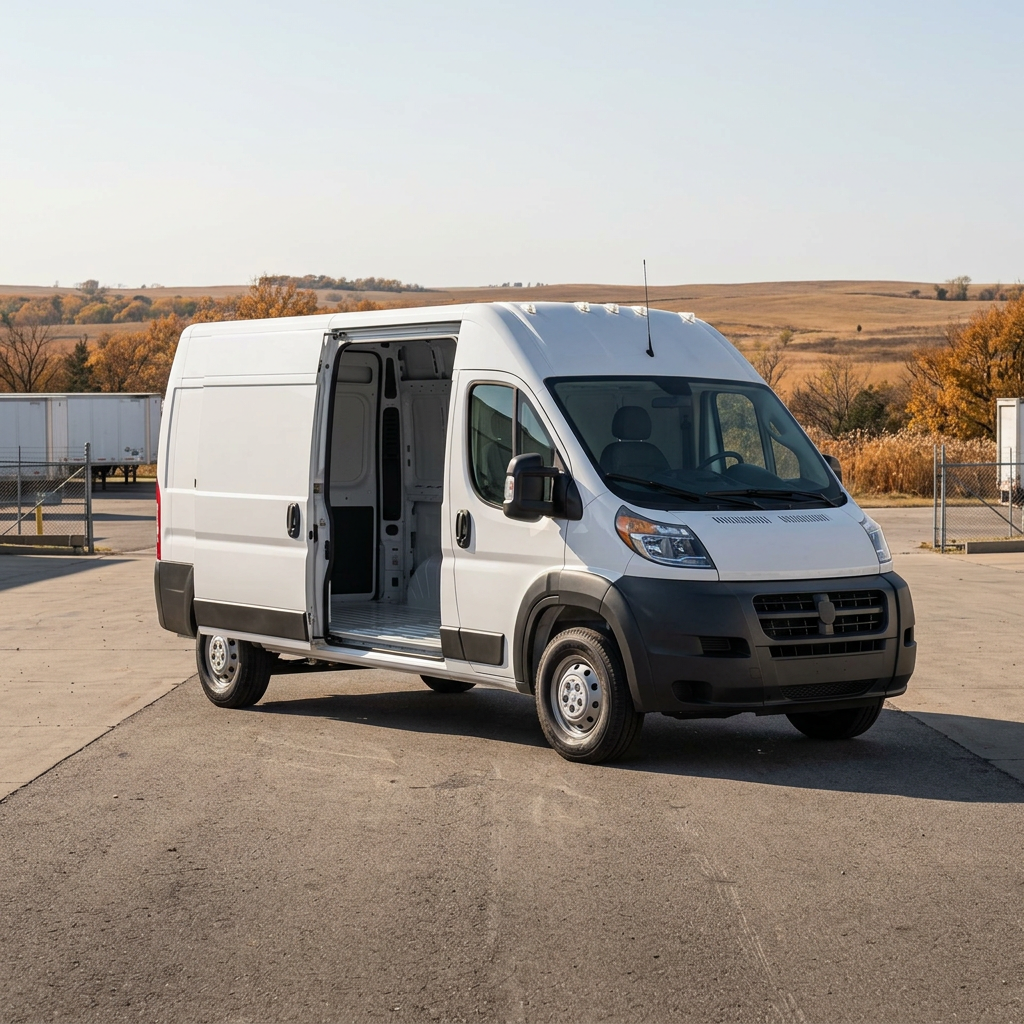
Is the Ram ProMaster a Good Commercial Van to Buy? Yes, the Ram ProMaster is an exceptional commercial van to buy for commercial operators requiring maximum interior volume, easy cargo loading, and front-wheel-drive efficiency. Powered by a standard 3.6-liter Pentastar V6 engine producing 276 hp, it delivers up to 4,820 pounds of payload capacity, up to 6,910 pounds of towing capacity, and a class-leading low floor height that simplifies daily loading operations. For local business owners and fleet managers evaluating total utility, the ProMaster excels by placing its entire propulsion system forward of the cargo area. This unique front-wheel-drive architecture eliminates a rear driveshaft, lowering the cargo load floor to just 21 inches off the ground. That lower height reduces physical fatigue when stepping in and out of the vehicle hundreds of times a day and allows for taller interior dimensions without increasing overall roof height. Beyond sheer cargo efficiency, the ProMaster lineup offers extensive configurability with three wheelbase lengths, three roof heights, and three capacity series ( 1500, 2500, and 3500). Modern active safety tech—including standard Forward Collision Warning-Plus, Crosswind Assist, and Drowsy Driver Detection —provides essential protection on high-mileage routes. Combined with straightforward maintenance requirements and durable mechanical components, the ProMaster represents a highly practical asset for any commercial fleet. When you are ready to evaluate a van built specifically for demanding work environments, our commercial sales team at Valor CDJR is here to assist. You can explore our new Ram commercial inventory online, visit our Junction City location for a side-by-side comparison, or give us a quick call at (785) 238-5114 to discuss fleet pricing. Table of Contents How Much Does a Ram ProMaster Cost Across Trims and Configurations? What Engine Options, Towing, and Payload Capacities Power the ProMaster? What Are the Interior Dimensions and Cargo Capacities of the Ram ProMaster? What Features, Performance, and Range Does the Ram ProMaster EV Offer? How Does the Ram ProMaster Compare to the Ford Transit for Local Fleets? Is Leasing or Buying a Ram ProMaster Better for Small Businesses? Frequently Asked Questions About the Ram ProMaster Empower Your Commercial Operations at Valor CDJR How Much Does a Ram ProMaster Cost Across Trims and Configurations? The starting MSRP for a gasoline-powered Ram ProMaster begins around $45,000 for an entry-level 1500 Tradesman Low Roof, while larger 2500 and 3500 configurations with higher roofs and extended wheelbases span from $50,000 to over $63,525 MSRP. Commercial buyers shopping for a versatile entry point frequently inspect the 1500 Low Roof cargo van. A typical dealer-listed snapshot for a 1500 Tradesman Low Roof shows an MSRP of $52,900 with MSRP pricing near $50,226 before applicable commercial rebates. This specific configuration features an 8,550-lb GVWR, a 4.08 axle ratio, a 3.6-liter Pentastar V6 engine, and a 9-speed automatic transmission, creating a well-balanced foundation for delivery routes and service trades. The ProMaster lineup branches across three primary trim levels: Tradesman, SLT, and SLT+. The Tradesman trim emphasizes durability with cloth or vinyl bucket seats, 16-inch steel wheels, a 7-inch Uconnect 5 touchscreen, and keyless push-button start. Upgrading to the SLT trim adds exterior enhancements such as body-color bumpers, fog lamps, and elevated interior convenience features. The SLT+ trim introduces premium commercial tech, including a 10.1-inch touchscreen, integrated navigation, wireless charging, and active driver-assist packages. For businesses looking to minimize upfront capital expenditures while adding dependable transport, reviewing our pre-owned commercial vehicle inventory provides access to late-model work vans equipped with proven powertrains and existing upfit hardware. What Engine Options, Towing, and Payload Capacities Power the ProMaster? The gasoline-powered Ram ProMaster is driven exclusively by a 3.6-liter Pentastar V6 engine that generates 276 hp and 250 lb-ft of torque, mated to a torque-flight nine-speed automatic transmission. This powertrain configuration is specifically calibrated for heavy commercial duty. The nine-speed automatic transmission provides smooth gear shifts and optimal engine speeds whether cruising on open highways or stop-and-go city streets. Because power is delivered directly to the front wheels, the van maintains excellent traction under load and in slippery road conditions without needing a heavy transfer case or rear differential. In terms of raw work capacity, the ProMaster delivers serious haulage numbers across its trim tiers: Maximum towing capacity reaches up to 6,910 pounds when properly equipped with the factory Class IV Receiver Hitch. Maximum payload capacity scales up to 4,820 pounds on 3500 series models. Gross Vehicle Weight Ratings ( GVWR) range up to 8,550 pounds on 1500 models and scale higher on 2500 and 3500 chassis. These ratings allow service businesses to haul heavy machinery, pallets of materials, or specialized trade tools without compromising performance. To help offset the purchase cost of upgrading your commercial haulers, you can easily evaluate your current trade-in value through our online appraisal tool. What Are the Interior Dimensions and Cargo Capacities of the Ram ProMaster? Interior cargo volume on the Ram ProMaster ranges from 259 to 524 cubic feet, depending on whether you select the 118-inch, 136-inch, or 159-inch wheelbase, alongside low, high, or super high roof heights. Cargo floor length measures 105 inches on shorter wheelbases and extends up to 160 inches on extended 159-inch models. Interior cargo height starts at 65 inches in low roof models, increases to 76 inches in high roof models, and reaches an expansive 86 inches on super high roof versions. This vertical clearance allows technicians up to six feet, two inches tall to stand completely upright while working inside the cargo hold. Width between the wheel wells is a broad 56 inches, which is wide enough to load standard four-foot-wide plywood sheets or cargo pallets flat on the floor between the wheelhouses. Rear doors open a full 260 degrees, folding almost flat against the exterior side walls to allow forklifts unhindered access during loading operations. When local tradespeople inspect the cargo bay on our lot, they usually measure the floor width between the wheel wells before discussing custom upfitting packages. For contractors managing job sites across Junction City, having nearly vertical side walls makes mounting custom shelving, tool racks, and ladder storage straightforward. You can browse our new commercial lineup to compare different roof heights and floor lengths in person. What Features, Performance, and Range Does the Ram ProMaster EV Offer? The Ram ProMaster EV operates on a 110 kWh battery pack paired with a front-mounted electric motor delivering 268 hp and 302 lb-ft of torque, producing an estimated city driving range of up to 162 miles. Designed specifically for last-mile delivery fleets and urban service routes, the electric ProMaster delivers instant torque response from a complete stop. Its under-floor battery placement lowers the vehicle's center of gravity, which improves stability and ride composition compared to traditional combustion vans. Charging is efficient, supporting 150-kW DC fast-charging that can replenish the battery quickly during driver downtime. Capability numbers remain strong for an electric commercial van: Cargo models offer a maximum payload capacity of up to 3,020 pounds. Specialized Delivery configurations offer a payload capacity of up to 2,030 pounds with integrated shelving and pass-through partitions. Maximum cargo volume reaches up to 463 cubic feet on a 159-inch wheelbase. Inside the cab, the ProMaster EV comes standard with advanced connectivity tools. A 10.1-inch Uconnect 5 touchscreen features wireless Apple CarPlay and Android Auto, while telematics software allows fleet managers to monitor battery state, route efficiency, and driver performance in real time. Standard safety systems include Forward Collision Warning-Plus, Blind Spot Monitoring, and Rear Cross Path Detection. How Does the Ram ProMaster Compare to the Ford Transit for Local Fleets? When compared side-by-side with the Ford Transit, the Ram ProMaster holds distinct structural advantages in load floor height, interior width, and tight-space maneuverability. The primary distinction lies in the drivetrain architecture. The standard front-wheel-drive system of the ProMaster allows for a load floor height of 21 inches, whereas the rear-wheel-drive or all-wheel-drive layout of the Transit results in a higher step-in height. Furthermore, the ProMaster features steeper side wall angles and a 56-inch width between the rear wheel wells, granting more usable interior width for shelving installation than the Transit. The ProMaster also delivers a city-friendly turning diameter of just 36 feet on short-wheelbase models, making it nimble when navigating tight alleyways, congested parking lots, or residential streets. In contrast, the Ford Transit offers optional all-wheel drive and higher maximum towing limits, making it attractive for off-pavement applications. However, for commercial operators delivering goods or running service calls in urban environments like Manhattan, the ProMaster van's lower loading height, superior turning radius, and wider cargo floor make daily loading tasks significantly less taxing. Is Leasing or Buying a Ram ProMaster Better for Small Businesses? Leasing a Ram ProMaster is ideal for small businesses seeking lower initial cash outlays, predictable monthly expenses, and turnkey vehicle replacements every three to four years, whereas buying is better for operators who plan to retain assets long-term and install heavy custom upfits. Commercial leasing structures allow fleet operators to conserve working capital for daily operations while writing off lease payments as tax-deductible operational expenses. Leasing also ensures your business consistently operates newer vehicles backed by factory coverage, avoiding out-of-warranty mechanical repairs. Purchasing outright or utilizing commercial vehicle loans provides complete asset ownership, no mileage restrictions, and total operational freedom. Small business owners who need to weld custom steel racking, install specialized exterior racks, or accumulate high annual mileage benefit from ownership. Every new gasoline-powered Ram ProMaster comes protected by comprehensive factory warranties: 3-year/36,000-mile basic warranty covering bumper-to-bumper components. 5-year/60,000-mile roadside assistance warranty for emergency towing and support. 5-year/100,000-mile powertrain warranty protecting the engine and transmission. To explore tailored commercial finance packages, visit our dealership address, speak with our commercial finance team at (785) 238-5114, or prequalify for commercial financing online to review current rates. Frequently Asked Questions About the Ram ProMaster Q: Does the Ram ProMaster offer all-wheel drive on gasoline models? No, gasoline-powered Ram ProMaster models are built exclusively with a front-wheel-drive system. This design eliminates a rear driveshaft and rear differential, providing superior snow and rain traction over the drive wheels while maintaining the lowest cargo load floor height in its vehicle class. Q: What safety features come standard on the Ram ProMaster? Standard safety equipment across the ProMaster lineup includes Forward Collision Warning-Plus, Crosswind Assist, Drowsy Driver Detection, Traffic Sign Recognition, and a ParkView Rear Back-Up Camera. Available active driver aids include Adaptive Cruise Control with Stop and Go, Lane Departure Warning Plus, and Blind Spot Monitoring. Q: How wide do the rear cargo doors open on the Ram ProMaster? The split rear cargo doors on the Ram ProMaster swing open up to 260 degrees. The doors latch nearly flat against the exterior side panels, eliminating obstacles so forklift operators can load standard pallets directly into the rear cargo hold. Q: Can the Ram ProMaster EV be used for towing commercial trailers? Ram does not recommend trailer towing with the Ram ProMaster EV. The electric model is engineered exclusively for payload hauling, last-mile package delivery, and urban service trades, utilizing its 110 kWh battery pack to optimize driving range and cargo capacity up to 3,020 pounds. Q: What is the load floor height of the Ram ProMaster? The cargo load floor height of the Ram ProMaster measures approximately 21 inches from the ground to the top of the load floor. This ultra-low step-in height is made possible by its front-wheel-drive architecture, making manual loading and unloading significantly easier for drivers. Empower Your Commercial Operations at Valor CDJR Selecting the right commercial van comes down to matching payload demands, cargo volume requirements, and fleet budget goals with a vehicle engineered for long-term productivity. The Ram ProMaster delivers a winning combination of standard V6 power, uncompromised interior volume, and low step-in heights that help working professionals complete jobs efficiently. Our team at Valor CDJR is dedicated to supporting local contractors, delivery operators, and business owners with specialized commercial vehicle sales, flexible credit terms, and expert upfitting guidance. Visit our showroom today to test drive the ProMaster, inspect floor dimensions firsthand, and consult with our commercial specialists on building out your fleet. Keep Your Vehicle Running Strong Keep your vehicle performing at its best with our service team: Parts Department Service Scheduler © 2026 Valor CDJR. All rights reserved.

Is Your 2024 Jeep Wagoneer Affected by the Driver Airbag Recall?

Is Your 2024 Jeep Wagoneer Affected by the Driver Airbag Recall?

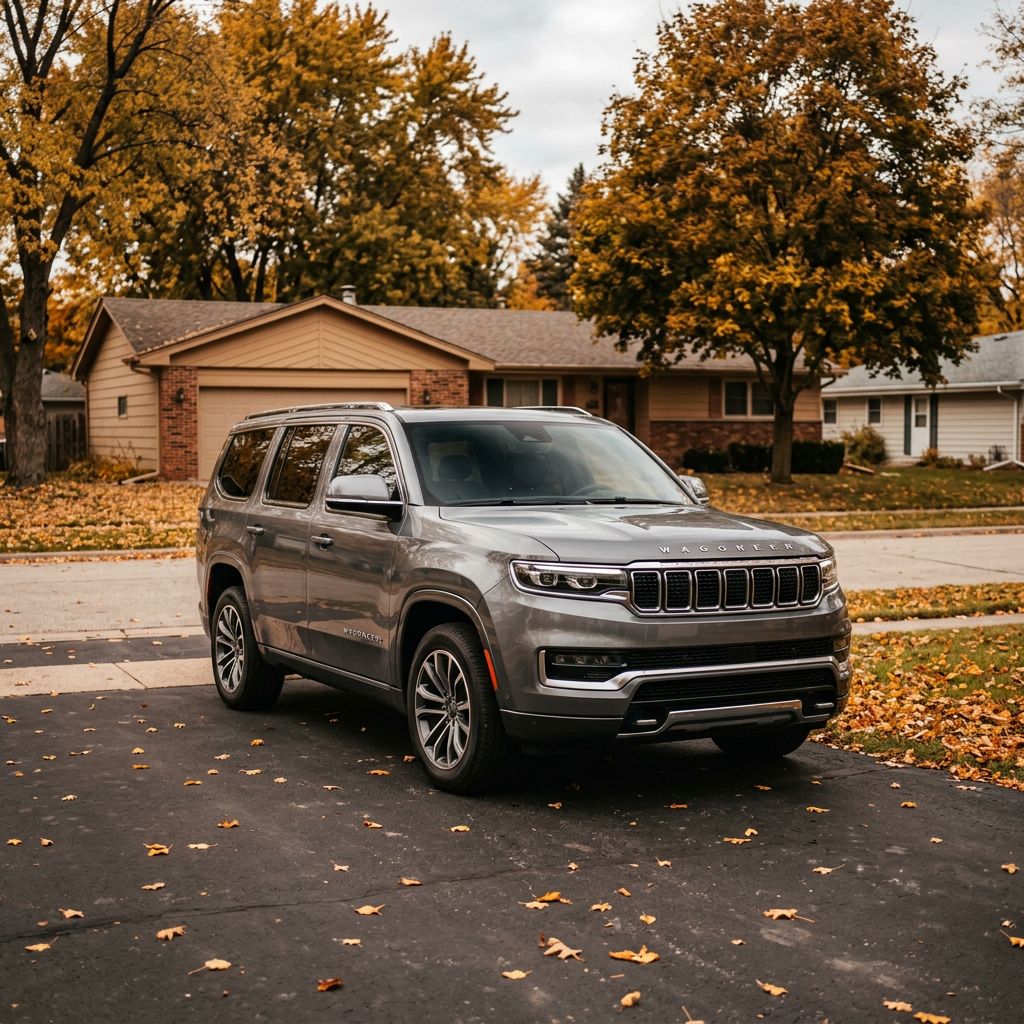
Is Your 2024 Jeep Wagoneer Affected by the Driver Airbag Recall? National Highway Traffic Safety Administration recall campaign 24V199000 affects select 2023 and 2024 Jeep Wagoneer models due to an improperly welded steering column control module. This structural defect can sever internal electrical connections to the driver frontal airbag, preventing it from deploying during a collision. Because this issue does not apply to every vehicle produced, owners must verify their specific 17-character Vehicle Identification Number to confirm whether an unrepaired recall exists on their vehicle. Safety recalls are critical matters for full-size family SUVs. The steering column control module houses the electrical clockspring assembly, which routes wiring to the driver airbag, horn, and steering wheel controls. When internal welds fail, electrical continuity breaks down. If a vehicle involved in this recall experiences a crash, the restraint system cannot fire the driver frontal airbag, failing to meet Federal Motor Vehicle Safety Standard No. 208. Our team understands that full-size SUV owners in Junction City rely on their vehicles for daily family transportation, long-distance road trips, and commutes near Fort Riley. Driving a vehicle with a compromised restraint system creates unnecessary risk for driver safety. Fortunately, auto manufacturers provide full remedy support through authorized dealerships. If you own or drive a 2024 Jeep Wagoneer, checking your recall status takes only a minute. You can visit our Junction City service center location in person or give our service desk (785) 238-5114 a quick call to check your VIN immediately. Table of Contents What Is the 2024 Jeep Wagoneer Clockspring Recall and How Does It Impact Driver Safety? How to Verify If Your VIN Has an Open Airbag Recall and Get Free Repairs at Valor CDJR What Safety Features and Driver Assistance Systems Come Standard on the 2024 Jeep Wagoneer? 2024 Jeep Wagoneer Trim Breakdown, Starting Price, and Estimated Total Cost of Ownership Common Questions About the 2024 Jeep Wagoneer Recall and Safety Systems Schedule Your Free 2024 Jeep Wagoneer Recall Repair at Valor CDJR What Is the 2024 Jeep Wagoneer Clockspring Recall and How Does It Impact Driver Safety? The driver airbag clockspring recall stems from a manufacturing flaw in the steering column control module where improper welding can cause internal electrical ribbon cables to fracture or disconnect. When this electrical circuit breaks, the vehicle control unit loses communication with the driver frontal airbag module, rendering the airbag inoperable during an impact. The clockspring—also known as a spiral cassette—is a rotating electrical connector mounted between the steering wheel and the steering column. It allows the steering wheel to turn continuously while maintaining constant electrical contact for the driver frontal airbag, steering wheel audio controls, cruise control switches, and horn. If the internal welding on the steering column control module fails, the spiral cassette mechanism degrades. Warning signs of a damaged or disconnected clockspring include: An illuminated Supplemental Restraint System or driver airbag warning light on the instrument cluster. Steering wheel-mounted controls for audio or cruise control becoming unresponsive. The vehicle horn failing to sound when pressed. Clicking or scraping noises originating from directly behind the steering wheel during turns. In crash testing conducted by safety agencies, the 2024 Jeep Wagoneer earned strong ratings, including an NHTSA four-star overall safety rating and five-star individual ratings for frontal crash and side barrier protection. However, those crash protection scores depend entirely on operational seatbelts and functional frontal airbags. If a fractured clockspring prevents airbag inflation during an accident, driver injury risks increase dramatically. Our advisors notice that drivers often first spot this issue when the dashboard airbag light stays on after engine startup or when steering wheel buttons stop responding. While evaluating your current SUV or browsing our inventory of new Jeep models, keeping safety hardware fully maintained ensures complete peace of mind on every journey. How to Verify If Your VIN Has an Open Airbag Recall and Get Free Repairs at Valor CDJR Vehicle owners can check for open safety recalls by locating their 17-character Vehicle Identification Number on the driver-side lower windshield corner or registration documents and entering it into official Mopar or NHTSA recall lookup tools. When an open recall is identified, certified dealership technicians inspect the steering column control module and replace defective components free of charge. Federal law mandates that all safety recall repairs are completed at zero cost to the vehicle owner, regardless of whether the vehicle is still within its factory warranty period or has accumulated high mileage. Every repair uses genuine OEM replacement components engineered to meet strict factory tolerances. When you bring a 2024 Jeep Wagoneer to our service department for recall campaign 24V199000, our factory-trained technicians follow a precise repair protocol: Technicians scan the vehicle diagnostic system to check for active Supplemental Restraint System fault codes. The 12-volt battery is disconnected to safely depower the electrical restraint system. Technicians remove the steering wheel housing and inspect the steering column control module assembly. If a defective or improperly welded control module is present, technicians replace the module and clockspring unit with an updated factory assembly. The steering angle sensor is recalibrated, system power is restored, and technicians clear diagnostic codes to verify full driver airbag communication. For drivers commuting along the K-177 corridor through Manhattan or traveling across the Flint Hills region, maintaining proper safety systems is essential for seasonal road conditions. You can schedule a recall appointment online with our service team, contact our factory parts department for component availability, or view our pre-owned vehicle inventory to compare high-quality full-size SUVs. What Safety Features and Driver Assistance Systems Come Standard on the 2024 Jeep Wagoneer? The 2024 Jeep Wagoneer comes standard with an expansive suite of active safety systems, including Full-Speed Forward Collision Warning with Active Braking, Blind-Spot Monitoring, Rear Cross Path Detection, and Active Lane Management. These driver-assistance systems work alongside traditional passive restraint hardware to provide comprehensive occupant protection. Modern full-size SUVs utilize multi-layered technology to monitor surrounding traffic and help prevent collisions before they occur. Key standard and available driver-assist technologies on the 2024 Jeep Wagoneer include: Full-Speed Forward Collision Warning with Active Braking: Uses front-facing radar and camera sensors to detect stopping vehicles, pedestrians, or cyclists, providing visual alerts and applying automatic braking if the driver does not react in time. Blind-Spot Monitoring and Rear Cross Path Detection: Monitors adjacent driving lanes and detects approaching cross-traffic when reversing out of parking spaces or driveways. Active Lane Management: Monitors lane markings, providing steering wheel torque alerts and gentle steering guidance if the vehicle begins to drift out of its lane without a turn signal. ParkSense Automated Parking System: Assists drivers with parallel and perpendicular parking maneuvers by automatically steering the vehicle into detected parking spots. Night Vision: Uses thermal imaging technology to highlight pedestrians and large animals in dark rural environments well beyond headlight range. In official NHTSA safety evaluations, the 2024 Jeep Wagoneer earned five-star ratings in both frontal barrier crash testing and side barrier impact testing, along with a three-star rollover resistance rating. Combined with heavy-duty steel frame construction and advanced cabin air bags, these technologies make the Wagoneer a standout choice for big families. If you are considering upgrading your family transport, you can evaluate your current trade-in value to see how much equity you can apply toward a feature-packed three-row SUV. 2024 Jeep Wagoneer Trim Breakdown, Starting Price, and Estimated Total Cost of Ownership The 2024 Jeep Wagoneer model lineup is offered across standard, Series II, and Series III trim levels, with original new-vehicle MSRP starting prices ranging from $62,945 for base entry models to $81,630 for fully equipped Series III configurations. Power across all trims comes from a high-output twin-turbocharged 3.0-liter Hurricane inline-six engine paired with an 8-speed automatic transmission. Replacing the previous model year's V8 engine, the Hurricane inline-six engine generates 420 hp and 468 lb-ft of torque. This powertrain enables a maximum towing capacity of 10,000 lb when properly equipped with the heavy-duty trailer tow package. Rear-wheel drive comes standard, while three distinct four-wheel-drive systems are available for buyers seeking enhanced traction in mud, snow, or rough terrain. EPA fuel economy estimates for the 2024 Wagoneer stand at 16 mpg city / 23 mpg highway for four-wheel-drive configurations and up to 17 mpg city / 24 mpg highway for two-wheel-drive versions. Extended-length Wagoneer L models feature a larger 26.5-gallon fuel tank, providing an estimated highway driving range exceeding 600 miles. Factory coverage for the 2024 Jeep Wagoneer includes: 3-year/36,000-mile basic warranty covering bumper-to-bumper components. 5-year/60,000-mile powertrain warranty protecting the engine, transmission, and axle assemblies. 3 years of complimentary scheduled maintenance coverage. When calculating the total cost of ownership, accounting for routine oil changes, tire rotations, and depreciation is standard practice. Addressing open safety recall items promptly at an authorized dealer protects both your family's safety and the vehicle's long-term resale value. Shoppers looking to finance their next SUV purchase can get pre-approved for financing online to review customized payment options. Common Questions About the 2024 Jeep Wagoneer Recall and Safety Systems Q: What warning signs indicate a faulty clockspring in a 2024 Jeep Wagoneer? Dashboard warning lights, such as the Supplemental Restraint System indicator, often signal critical airbag system faults requiring immediate attention. Drivers may also notice that steering wheel-mounted buttons for audio and cruise control stop functioning, the horn fails to sound when pressed, or a clicking noise originates from the steering column during sharp turns. Q: Is it safe to drive my 2024 Jeep Wagoneer if the clockspring recall is active? If your vehicle has an unrepaired clockspring recall and the driver airbag warning light is illuminated, the driver frontal airbag may fail to deploy during an impact. While the vehicle remains mechanically drivable, drivers should minimize vehicle use and contact an authorized dealership service center immediately to schedule a free inspection and repair. Q: How long does the clockspring recall replacement take at the service department? The physical replacement of the steering column control module and clockspring assembly typically takes between one and two hours of service time. Certified technicians replace the defective module, calibrate the internal steering angle sensors, clear diagnostic fault codes, and test restraint communication before returning the vehicle to the owner. Q: Are extended-length Wagoneer L models included in the clockspring recall? NHTSA recall campaign 24V199000 applies to specific standard-length Wagoneer models as well as extended-length Wagoneer L models built within specific production dates. Because inclusion depends on exact manufacturing dates and installed steering column module batch numbers, checking your vehicle's 17-character Vehicle Identification Number is the only accurate way to confirm eligibility. Q: Does the 2024 Jeep Wagoneer require premium fuel for its twin-turbo engine? The twin-turbocharged 3.0-liter Hurricane inline-six engine is engineered to operate safely on standard 87-octane regular unleaded gasoline. However, 89-octane mid-grade fuel is recommended by the manufacturer to unlock peak horsepower, torque, and heavy-duty towing capability. Schedule Your Free 2024 Jeep Wagoneer Recall Repair at Valor CDJR Valor CDJR offers no-cost recall repairs for the 2024 Jeep Wagoneer to keep drivers safe and compliant with safety standards. Recall campaign 24V199000 involves the driver frontal airbag assembly, making prompt verification and repair essential for complete crash protection. Our certified service department provides complete recall inspections, genuine OEM parts replacement, and software calibrations at zero cost to you. Whether you drive a standard Wagoneer or an extended Wagoneer L, our team is prepared to complete your service efficiently and restore full confidence behind the wheel. Taking care of an open safety recall is simple and straightforward. Have your 17-character Vehicle Identification Number ready, then reach out to our service team directly. You can find our Junction City dealership location off Goldenbelt Boulevard or call our service department at (785) 238-5114 to verify your recall status and reserve your appointment today. © 2026 Valor CDJR. All rights reserved.