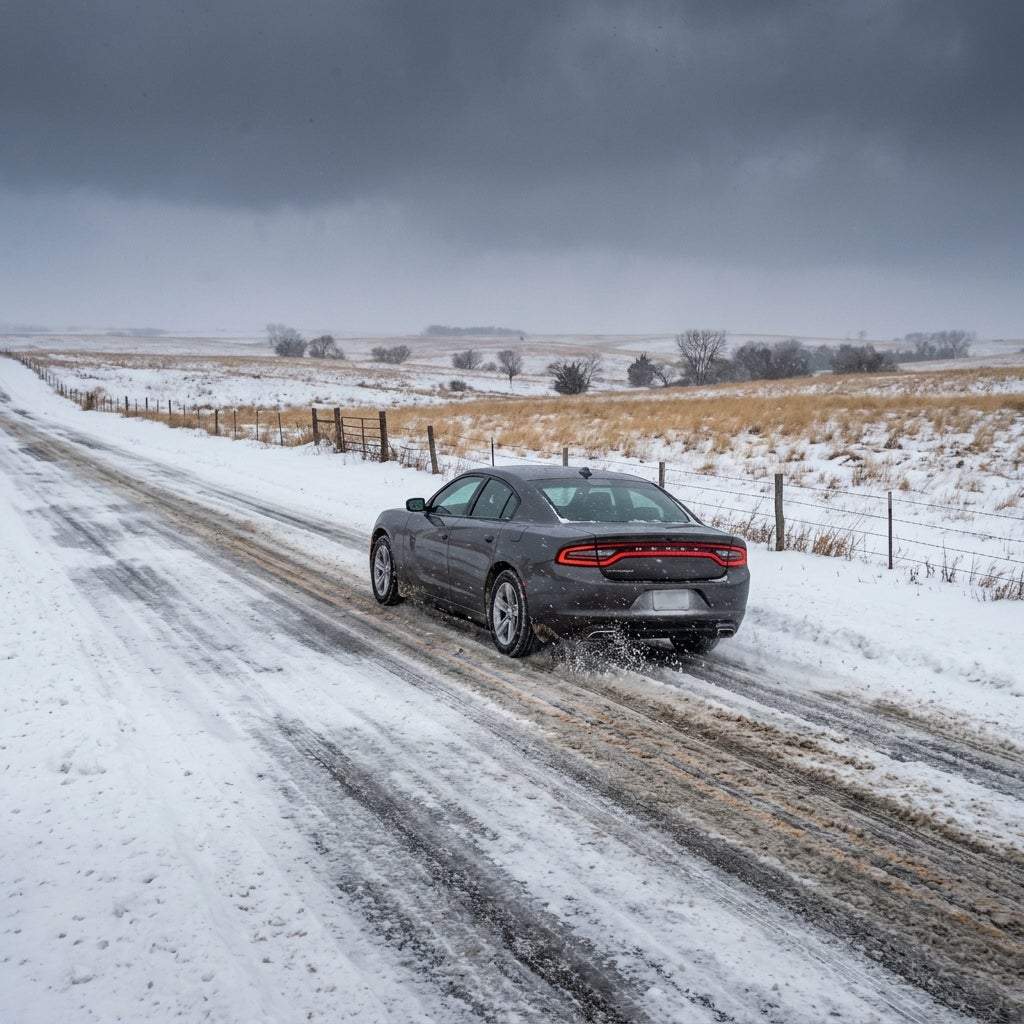





Is All-Wheel Drive Worth the Extra Cost for Kansas Winters? A 20-Year Perspective from the Dealership As the General Manager at Valor CDJR here in Junction City, I get asked the exact same question as temperatures drop each fall: "Jace, do I really need to spend the extra $2,000 to $3,000 for All-Wheel Drive, or am I just buying into clever dealership marketing?" After two decades sitting in the dealer seat, watching how vehicles perform across thousands of Kansas winter commutes, evaluating trade-ins, and analyzing real-world accident reports, my short answer is unequivocally YES. However, that affirmative comes with one critical, non-negotiable caveat: an advanced AWD system is only as effective as the mechanical grip of the rubber touching the pavement. Kansas winter driving is notoriously deceptive. Unlike regions that receive consistent, dry powder snowfall, the weather patterns across Geary, Riley, and Dickinson counties deliver freezing rain, sudden black ice on I-70 bridges over the Smoky Hill River, unplowed rural farm routes, and deep sludgy slush on hill inclines throughout Manhattan. Rear-wheel drive vehicles—traditionally loved for their raw American muscle dynamics—can quickly transform into stressful challenges when torque breaks rear traction. Front-wheel drive offers decent pull over the front axle, but it lacks the active dynamic torque distribution required to climb frozen grades or recover from sudden lateral slippage. All-Wheel Drive changes the safety equation completely by transforming wheelspin into forward momentum within milliseconds. Throughout this deep-dive report, I am going to break down the mechanical engineering behind modern Dodge all-wheel drive systems, contrast rear-wheel drive muscle against four-corner traction, evaluate winter tire physics, examine cold-weather electric vehicle range retention, and calculate the true monetary return on investment. Whether you are driving an daily commuter across Junction City or navigating backroads near Fort Riley, understanding how AWD technology operates will empower you to make an informed, safety-first automotive decision. Meet Jace Grabouski: Two Decades Navigating Flint Hills Roads and Automotive Engineering My perspective isn't derived from press releases or vehicle brochures; it comes from 20 continuous years on the frontlines of dealership operations right here in Junction City. Over two decades serving as General Manager at Get Directions to Valor CDJR, I have personally assisted thousands of local drivers, military service members from nearby Fort Riley, and local farm families select vehicles tailored to our rugged regional topography. Having spent decades evaluating Chrysler, Dodge, Jeep, and Ram engineering evolutions—from early mechanical transfer cases to modern electro-hydraulic active axle disconnections—I have developed a granular appreciation for drivetrain engineering. When winter storms sweep through the Flint Hills, bringing sub-zero temperatures and packed sheet ice, knowing exactly how your car's transfer case shifts torque between axles isn't just automotive trivia—it's essential knowledge for keeping your family safe on rural state highways. How Does the Dodge Charger All-Wheel Drive System Perform in Snow and Winter Conditions? To understand why the Dodge Charger AWD system is uniquely qualified for Midwestern winter storms, you have to look under its sheet metal. Unlike traditional basic all-wheel drive setups that drag all four wheels continuously—sucking fuel efficiency dry—Dodge engineered an active transfer case with complete front-axle disconnect technology. Under ideal summer driving conditions or dry autumn highway cruising, the system can disengage the front driveshaft. The vehicle operates as a 100% rear-wheel drive sedan, preserving classic muscle car steering dynamics and maximizing fuel economy. However, the moment ambient temperatures drop below approximately 40°F, or sensors detect wheel slip, windshield wiper activation, or rapid acceleration inputs, an electro-hydraulic clutch pack seamlessly engages the front axle in under 17 milliseconds. This lightning-fast engagement happens without any driver intervention. On frozen asphalt or unpaved backroads across Riley County, torque is dynamically shifted up to a 38/62 front-to-rear ratio, ensuring instant stability before micro-slips turn into major loss of control. Furthermore, Dodge pairs this active transfer case with Electronic Stability Control (ESC) and All-Speed Traction Control tuned specifically for icy conditions. When the Charger detects one side of the vehicle resting on snow while the other sits on pavement (a common occurrence when pulls off onto shoulder gravel), the system applies micro-braking pressure to spinning wheels while re-routing torque across the open differentials to wheels with grip. The result is a heavy, balanced four-door sedan that plants itself with total confidence into winter corners. Having driven Charger AWD test units through heavy blizzards along US-77, I can attest that the level of lateral stability and directional tracking provides peace of mind that lightweight front-wheel drive economy cars simply cannot match. How Does Dodge Charger AWD Compare to RWD in Winter Driving Across Junction City? Rear-Wheel Drive (RWD) Dynamics RWD delivers unmatched acceleration geometry on dry asphalt because vehicle weight transfers to the rear axle during launch. However, on freezing rain or slick ice, pushing a vehicle from behind while using front wheels solely for steering creates inherent instability. Under heavy throttle on icy Junction City streets, rear wheels easily break traction, causing oversteer ('fishtailing') that requires quick counter-steering. All-Wheel Drive (AWD) Traction AWD pulls and pushes simultaneously. By transferring engine output across four contact patches, engine torque per wheel is effectively cut in half. This drastically reduces the likelihood of exceeding any single tire's threshold of static friction. Starting from a complete stop on an icy uphill stoplight becomes effortless, eliminating panic and wheelspin completely. Flint Hills Commuting Realities Cruising I-70 between Junction City and Manhattan during severe squalls presents high-speed crosswinds combined with slush accumulation between lanes. RWD vehicles experience severe lateral drift during lane changes. AWD provides directional stability, locking the sedan onto its intended path even when crossing frozen slush ruts at speed. Browse New AWD Inventory How Does the Next-Gen Dodge Charger’s Wet/Snow Mode Help in Winter Conditions? Modern drivetrain engineering extends far beyond mechanical gears; software algorithms dictate how power reaches the cold asphalt. In next-generation Dodge Charger platforms, the selectable Wet/Snow Drive Mode fundamentally recalibrates the vehicle’s brain to prioritize stability over aggressive performance. When engaged, Wet/Snow mode alters electronic throttle mapping. Even if a driver presses heavy on the accelerator pedal out of habit, the ECU dampens engine response, delivering smooth, progressive torque build-up rather than sudden bursts that break tire adhesion. The transmission logic shifts early to keep engine RPM low, reducing peak torque torque at the wheels. Simultaneously, the active transfer case locks into a fixed 50/50 static torque split, ensuring both front and rear axles share initial movement duties instantly upon acceleration. The ABS and ESC systems adopt ultra-sensitive threshold settings, intervening subtly before driver-perceptible slip occurs. For drivers facing deep snow drifts or packed ice near Milford Lake, this software integration transforms high-horsepower machinery into a predictable, compliant winter transport. It removes driver error from throttle management during slippery maneuvers. Are Factory All-Season Tires Sufficient for Winter Driving in a Dodge Charger AWD? The All-Season Myth Factory all-season tires are engineered for low rolling resistance and long tread life in moderate conditions. However, once ambient temperatures drop below 45°F (7°C), standard all-season rubber compounds harden like hockey pucks. Regardless of how sophisticated your AWD system is, hard rubber cannot conform to ice micro-texture. Dedicated Winter Rubber Dedicated winter tires utilize silica-rich soft rubber compounds that remain flexible in sub-zero Kansas deep freezes. High-density 3D siping cuts through surface water films to bite directly into hard ice. Pairing Dodge AWD with dedicated winter tires yields stopping distances up to 35% shorter than AWD with all-season rubber. Remember: All-wheel drive helps you accelerate, but all four wheels already brake on every car. AWD does not reduce stopping distance on ice—tires do. If you plan to navigate extreme winter conditions across Kansas, combining AWD technology with proper winter tires or severe-snow-rated 3PMSF (Three-Peak Mountain Snowflake) tires at our Parts Department is the ultimate safety solution. Jace’s Core Insight: "Traction Tech Gets You Moving, But Tread Physics Keeps You Off the Shoulder "In my 20 years managing dealerships in Junction City, the most dangerous driver on the road during a winter storm is the one who believes an 'AWD' badge makes them immune to the laws of physics. All-Wheel Drive gives you incredible confidence getting out of snowy driveways and climbing icy Flint Hills grades. But when it comes to steering around an obstacle or emergency stopping on freezing rain, your drivetrain won't save you if your tires are bald or unsuited for sub-zero temperatures. Respect the road, maintain your vehicle, drive with sensible speed, and let technology work for you." — Jace Grabouski, General Manager at Valor CDJR Schedule Winter Service Checkup Is the Dodge Charger AWD Platform Identical to the Chrysler 300 AWD? A frequent technical query from pre-owned vehicle buyers visiting our showroom is whether the Dodge Charger AWD system is identical to the Chrysler 300 AWD setup. From an architecture standpoint, yes—they share core mechanical DNA. Both flagship sedans utilize Stellantis' unibody full-size platform, sharing the BorgWarner active transfer case, front axle disconnect hardware, and 3.6L Pentastar V6 powertrain pairing. However, executive chassis tuning separates their road personalities. The Chrysler 300 AWD is calibrated for plush, luxury isolation, utilizing softer dampening rates, quieter compliance bushings, and smoother throttle mapping. It absorbs highway expansion joints effortlessly while delivering quiet winter confidence. In contrast, the Dodge Charger AWD receives sport-calibrated steering gear ratios, firmer anti-roll bars, stiffer damper valving, and aggressive transmission shift schedules. The electronic stability control thresholds in the Charger allow slightly more dynamic rotation before intervening, providing a sportier feel on winding Kansas country roads. Both sedans offer exceptional winter capability, but choosing between them depends on whether your preference leans toward executive comfort or muscular performance. Explore our Used Vehicle Listings to compare both models side-by-side. How Does Cold Weather Affect the Battery Range and AWD of the Electric Dodge Charger Daytona? As Dodge ushers in the electrified era with the all-electric Dodge Charger Daytona, winter performance dynamics undergo a radical revolution. The Daytona replaces mechanical driveshafts and transfer cases with dual Electric Drive Modules (EDMs)—one powering the front axle and one powering the rear. This dual-motor electric AWD configuration delivers instant torque vectoring across four wheels within microseconds, eliminating mechanical engagement delays entirely. However, extreme Midwestern cold impacts high-voltage lithium-ion battery chemistry. During sub-zero Kansas cold snaps, chemical reactions slow down, and cabin heating demands energy from the traction battery. Drivers can expect a temporary range reduction of 20% to 30% during severe freezing conditions if proper thermal management protocols aren't followed. To mitigate range loss, the Charger Daytona features automated battery pre-conditioning. When scheduled while plugged into your Level 2 home charger prior to morning departure in Junction City, the system warms the battery pack to its optimal electrochemical operating window (around 70°F) using grid power rather than stored battery energy. This preserves maximum driving range and ensures full dual-motor AWD power availability from the instant you back out of your driveway. Calculating the ROI: Upfront Costs, Resale Value, and Winter Safety Peace of Mind Initial Purchase Cost Selecting All-Wheel Drive can affect a vehicle's MSRP. For current pricing and payment information, contact the dealership. Additionally, active front-axle disconnect technology keeps fuel economy penalties negligible (typically less than 1 MPG difference compared to RWD). Resale & Trade Equity In Midwestern resale markets like Kansas, AWD vehicles retain a significantly higher percentage of their initial value compared to RWD sedans. At trade-in time, AWD vehicles may retain stronger resale value compared with similar RWD models. Accident Avoidance ROI Insurance deductibles and related costs vary. AWD may help improve winter confidence and could reduce the risk of weather-related incidents. Evaluate Your Trade-In Equity Jace Grabouski’s Winter Readiness Checklist for Riley County Drivers Before the first severe freeze hits Junction City, I recommend every driver complete this 4-step winter readiness protocol to ensure total vehicle reliability: 1. Battery Load Testing: Cold weather reduces battery capacity by up to 50%. Have your 12V battery load-tested at our Express Lane to avoid getting stranded in freezing temperatures. 2. Transfer Case Fluid Inspection: AWD transfer cases rely on clean synthetic fluid to actuate clutch packs smoothly. Check your maintenance schedule or visit service every 30,000 to 50,000 miles. 3. Tire Tread Depth & Pressure: Inspect tread depth using a depth gauge (minimum 4/32" for winter driving). Remember that tire pressure drops approximately 1 PSI for every 10°F drop in outside temperature. 4. Verify Drive Modes & Emergency Kit: Familiarize yourself with how to engage Wet/Snow drive modes in your vehicle controls, and pack a trunk kit containing jumper cables, a tow strap, blanket, flashlight, and bag of ice melt. Test Drive All-Wheel Drive Performance at Valor CDJR in Junction City If you are considering winter readiness to find out if your vehicle is equipped for Kansas roads. My team and I at Valor CDJR are ready to help you navigate your winter vehicle search with transparent expert guidance, competitive financing offers, and world-class service support. Visit our showroom at 1825 Goldenbelt Blvd, Junction City, KS 66441 or Call us at (785) 238-5114 to speak directly with our product specialists. Experience the security, power, and engineering precision of modern Dodge and Chrysler All-Wheel Drive firsthand. Get Pre-Approved Online