




Blog / Brake System Care

How Long Does It Take for a Dealership to Replace a RAM 1500 Brake Master Cylinder?

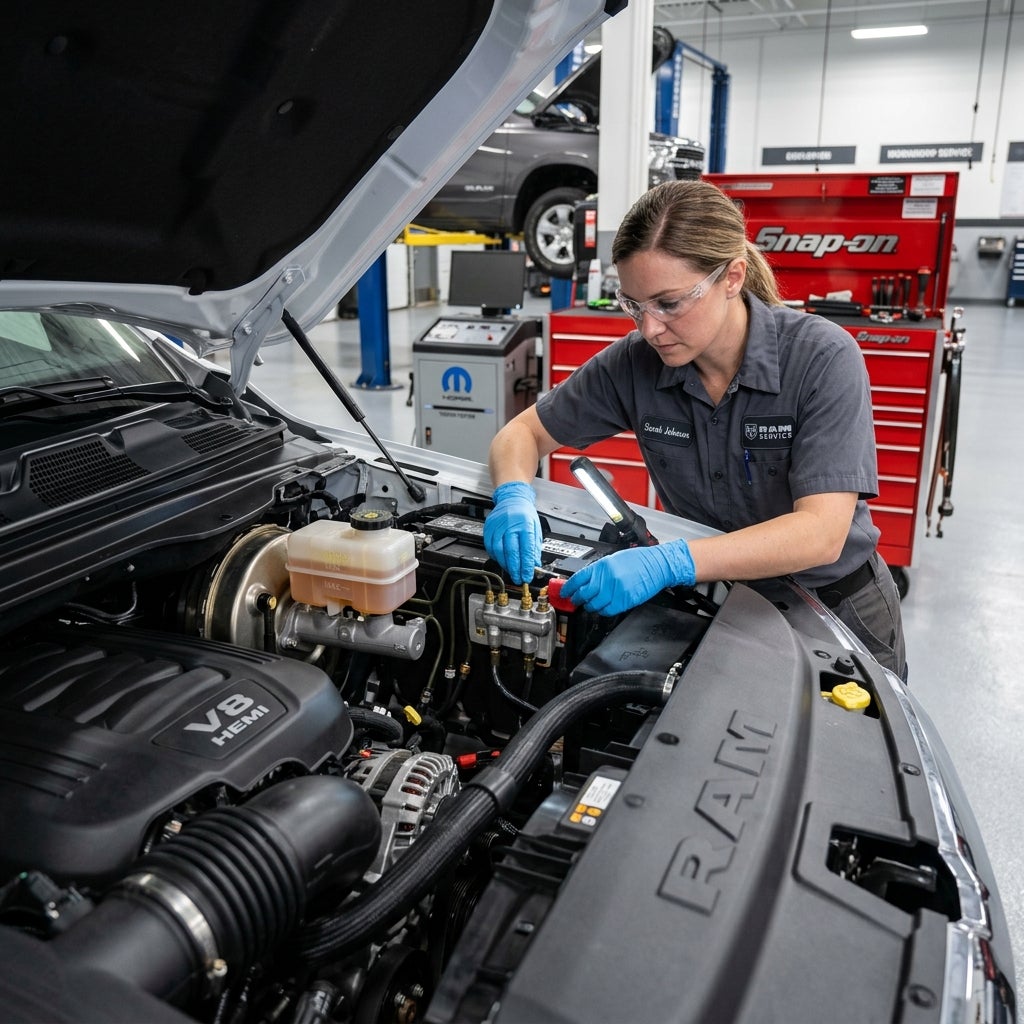
A female mechanic wearing safety glasses and blue gloves inspects the engine of a white Ram truck in a service garage. (Representative image for illustration purposes only. Actual vehicle may vary based on trim and configuration.)

How Long Does It Take for a Dealership to Replace a Ram 1500 Brake Master Cylinder?

When it comes to maintaining the safety and stopping power of your Ram 1500, few components play a more critical role than the brake master cylinder. This component acts as the heart of your truck's hydraulic braking system, converting the physical force of your foot on the pedal into the hydraulic pressure that clamps your brake pads against the rotors. If your master cylinder is starting to fail, you are likely asking a very practical question: how long will it take to get it fixed? At a certified dealership like Valor CDJR, replacing a Ram 1500 brake master cylinder typically takes between 2 to 4 hours under normal circumstances. While the physical swap of the cylinder itself might seem straightforward, the process of ensuring that your entire hydraulic braking system is free of air, correctly calibrated, and thoroughly road-tested is a meticulous process that cannot be rushed. Our service department at Valor CDJR in Junction City, KS, is staffed by factory-certified Ram technicians who understand the specific nuances of your truck's braking system. Whether you drive a classic fourth-generation Ram 1500 (DS platform) or a state-of-the-art fifth-generation model (DT platform), the hydraulic system design requires specialized tools and diagnostic equipment to service correctly. A professional replacement involves much more than simply unbolting the old unit and putting a new one in. It requires draining the old glycol-ether-based brake fluid, bench-bleeding the new OEM Mopar master cylinder to purge trapped air from its internal piston chambers, installing the unit, and then performing a comprehensive pressure bleed of all four wheel lines. Choosing a certified dealership like Valor CDJR means that your vehicle is being handled by specialists who do this every day. Our team has direct access to Mopar technical databases, ensuring that every bolt is torqued to exact factory specifications and that the fluid used matches the precise viscosity and boiling point characteristics required for your Ram. In the sections below, we will dive deep into the signs that indicate your master cylinder is on its way out, the step-by-step process our technicians follow, the true cost breakdown of parts versus labor, and why cutting corners with cheap aftermarket parts or independent shops can compromise your safety on the roads of Junction City, Manhattan, and the surrounding Flint Hills region.

What Are the Primary Symptoms of a Failing Brake Master Cylinder on a Ram 1500?

Recognizing the early warning signs of a failing brake master cylinder is absolutely paramount to preventing a dangerous brake failure scenario. The most common symptom Ram 1500 owners report is a spongy or sinking brake pedal. When you press down on the brake pedal, it should feel firm and offer progressive resistance. If the pedal slowly sinks all the way to the floorboard while you are holding pressure—such as when standing still at a red light on Washington Street in Junction City—the internal rubber seals of the master cylinder are likely bypassing. This means hydraulic fluid is slipping past the piston cups inside the cylinder bore instead of being pushed down the brake lines to the wheels. Another telling symptom is highly contaminated brake fluid. Over time, the internal seals of a failing master cylinder degrade, shedding tiny dark rubber particles into the reservoir. If you pop the hood of your Ram and notice that the brake fluid is dark brown or black, rather than a clear golden hue, it is a strong indicator of internal wear. External leaks can also occur where the master cylinder bolts to the vacuum brake booster. Fluid leaking from this junction can damage the booster's internal diaphragm, turning a relatively simple cylinder replacement into a much more expensive repair that requires replacing both components.

These symptoms are not just minor inconveniences; they pose severe safety risks for drivers traveling through Junction City, Manhattan, and throughout Riley County. A sinking brake pedal significantly increases your vehicle's overall stopping distance, which can be catastrophic during sudden highway stops on I-70 or during rainy summer afternoon downpours. Furthermore, if the brake system's internal pressure drops below a safe threshold, your Ram's onboard diagnostic computer will detect the imbalance. This will illuminate the red brake warning light or trigger the ABS (Anti-lock Braking System) light on your instrument cluster. Driving with a compromised master cylinder means you cannot rely on your truck's emergency braking performance. If you are towing a camper to Milford Lake or hauling agricultural supplies, the added momentum makes absolute hydraulic integrity vital. At Valor CDJR, we urge drivers never to ignore a soft or inconsistent pedal. If you notice any of these signs, please use our online Service Scheduler to book an immediate inspection. Our team can quickly diagnose whether your symptoms are caused by a failing master cylinder, air in the lines, or worn pads, ensuring your truck remains safe and reliable on every Kansas road.

What Are the Main Steps in Replacing a Brake Master Cylinder?
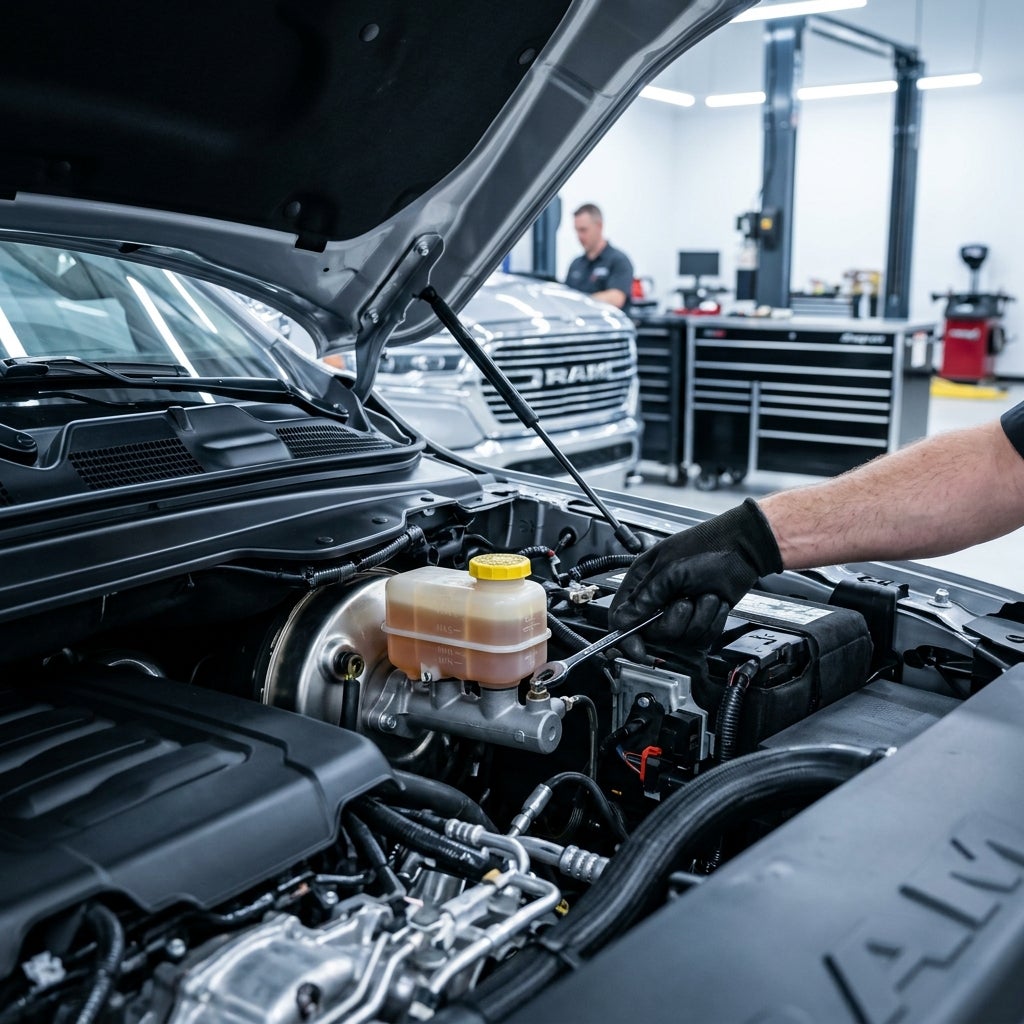
1. Fluid Extraction & Disassembly The first step our technicians take is to safely extract the old, contaminated brake fluid from the master cylinder reservoir using specialized suction equipment. Once empty, they carefully disconnect the electrical sensor plug for the fluid level indicator. Next, they use precision flare nut wrenches to disconnect the steel hydraulic lines. Using correct tools is essential here to prevent rounding off the soft metal fittings. Finally, the mounting nuts securing the cylinder to the brake booster are removed, and the old master cylinder is lifted out of the engine bay.

2. Bench-Bleeding the New Unit You cannot simply bolt a dry master cylinder onto a truck and expect it to work. Our technicians perform a critical process called "bench-bleeding" on a sturdy workbench. They temporarily install bleed tubes from the exit ports of the new Mopar cylinder back into its own fluid reservoir, fill it with fresh fluid, and manually compress the piston repeatedly. This forces all trapped air out of the internal cylinder chambers and replaces it with pure fluid. Skipping or rushing this step leaves micro-bubbles inside the cylinder that are nearly impossible to remove later.

3. Installation & Full Bleed The bench-bled cylinder is carefully mounted back onto the brake booster and torqued to exact factory specification. The steel hydraulic lines are reattached. Next, the technician performs a comprehensive pressure flush and bleed of the entire braking system at all four wheels. Starting from the wheel furthest from the master cylinder (typically the passenger rear) and working inward, they purge any air that entered the lines during assembly. For modern Ram 1500s, they also utilize a diagnostic scan tool to cycle the ABS valves, ensuring no air remains trapped in the ABS hydraulic control unit.

A mechanic in black gloves uses a wrench to adjust a brake fluid reservoir under a car's open hood. (Representative image for illustration purposes only. Actual vehicle may vary based on trim and configuration.)

How Much of the Master Cylinder Replacement Cost Is Labor vs. Parts?

When evaluating the financial side of a brake master cylinder replacement, the total invoice is split between high-quality Mopar parts and certified dealership labor. A genuine OEM Mopar brake master cylinder for a late-model Ram 1500 generally ranges from $150 to $300, depending on your truck's specific model year, trim level, and electronic braking features. While some cheap aftermarket options might cost slightly less, they often lack the premium seals and exact bore tolerances required to match factory braking performance. Investing in the genuine part guarantees long-term durability and structural integrity. On the labor side, the job is billed according to standard flat-rate times, which usually range from 2 to 3.5 hours depending on whether your truck has advanced electronic brake booster systems or standard vacuum assists. Labor accounts for the master technician's specialized training, the use of proprietary diagnostic computers to perform the ABS module bleed, and the disposal of toxic old brake fluid. While dealership labor rates reflect this high level of expertise, you are paying for peace of mind knowing that your 5,000-pound truck's primary safety system is functioning flawlessly.

At Valor CDJR, we believe that critical safety repairs should never put a stressful strain on your household budget. That is why we offer flexible and convenient service financing options designed to keep your vehicle safe without immediate financial hardship. If you need to spread the cost of your brake system repair, please contact us for current financing options. We encourage you to visit our online finance center to Get Pre-Approved for service financing in just a few clicks. This simple tool allows you to plan your repair confidently, ensuring you do not have to delay vital brake work. Our service advisors are always here to walk you through the pricing structure transparently, providing a detailed written estimate before any wrenches turn on your vehicle. We believe in honest communication, so you will never face surprise fees when you pick up your keys.

Do Independent Mechanics Use OEM Mopar Parts for Ram 1500 Brake Repairs?

A common dilemma Ram owners face is deciding whether to visit an independent repair shop or a certified dealership. While local independent mechanics are capable of performing general maintenance, they may use genuine OEM Mopar parts, but some rely on third-party aftermarket parts sourced from local retail auto parts chains. These aftermarket master cylinders are often built to "consolidated" specifications, meaning a single part number might be designed to fit five or six different truck platforms with slight variations. This one-size-fits-all approach can lead to minor fitment issues, differences in pedal travel, or a less-than-perfect seal. At Valor CDJR, we source every replacement directly from our own factory-authorized Parts Department. This ensures that the replacement master cylinder installed on your truck is a direct match engineered by Mopar specifically for your vehicle's VIN. Mopar components are manufactured with the exact same metallurgy, rubber compounds, and bore tolerances as the unit that came on your Ram from the factory. Furthermore, OEM parts installed at our dealership carry a comprehensive nationwide warranty that covers both the part and the labor to replace it if it fails prematurely. Many aftermarket parts carry limited warranties that only cover the cost of the physical part, leaving you to pay the expensive labor fees all over again if the component fails in six months. When it comes to your truck's stopping power, compromising on parts quality is a risk simply not worth taking.
Nissan brake rotors, master cylinder, and NISMO brake pads neatly arranged on a concrete floor. (Representative image for illustration purposes only. Actual vehicle may vary based on trim and configuration.)

Does Mopar Vehicle Protection Cover Brake Master Cylinders?

For many Ram 1500 owners, the cost of a master cylinder replacement may be completely covered under an active warranty. If you purchased a Mopar Vehicle Protection plan—such as the comprehensive "Maximum Care" or "Added Care Plus" extended warranties—your brake master cylinder is a listed covered component. Maximum Care, which is Mopar’s gold-standard exclusionary coverage, explicitly covers over 5,000 mechanical and electrical components, including the master cylinder, power booster, ABS assembly, brake lines, and calipers. Even with the slightly more streamlined Added Care Plus plan, the master cylinder is covered under the major mechanical systems category. These protection plans are designed to give Ram owners absolute confidence, ensuring that when unexpected component wear occurs, you are only responsible for your plan's small deductible (often $100 or even $0 depending on how your policy was structured). Having a warranty claim handled at Valor CDJR is incredibly simple because we interface directly with Mopar, meaning we handle all the paperwork, approvals, and direct billing behind the scenes.

If you live in Riley, Geary, or Clay County and are unsure about your vehicle's warranty status, our service advisors are happy to perform a complimentary coverage check for you. All we need is your Ram 1500's 17-digit Vehicle Identification Number (VIN) to access the official Mopar database and determine if you have active coverage. We encourage you to Call us at (785) 238-5114 before scheduling your appointment so we can verify your coverage upfront. Knowing your warranty status ahead of time can turn a stressful repair scenario into a highly satisfying, low-cost visit. If you do have coverage, we will secure immediate approval from Mopar, order the necessary parts, and get your truck back on the road in prime condition with minimal disruption to your daily routine.

How Do I Check Whether My Ram 1500 Brake Issue Is Part of a Recall?
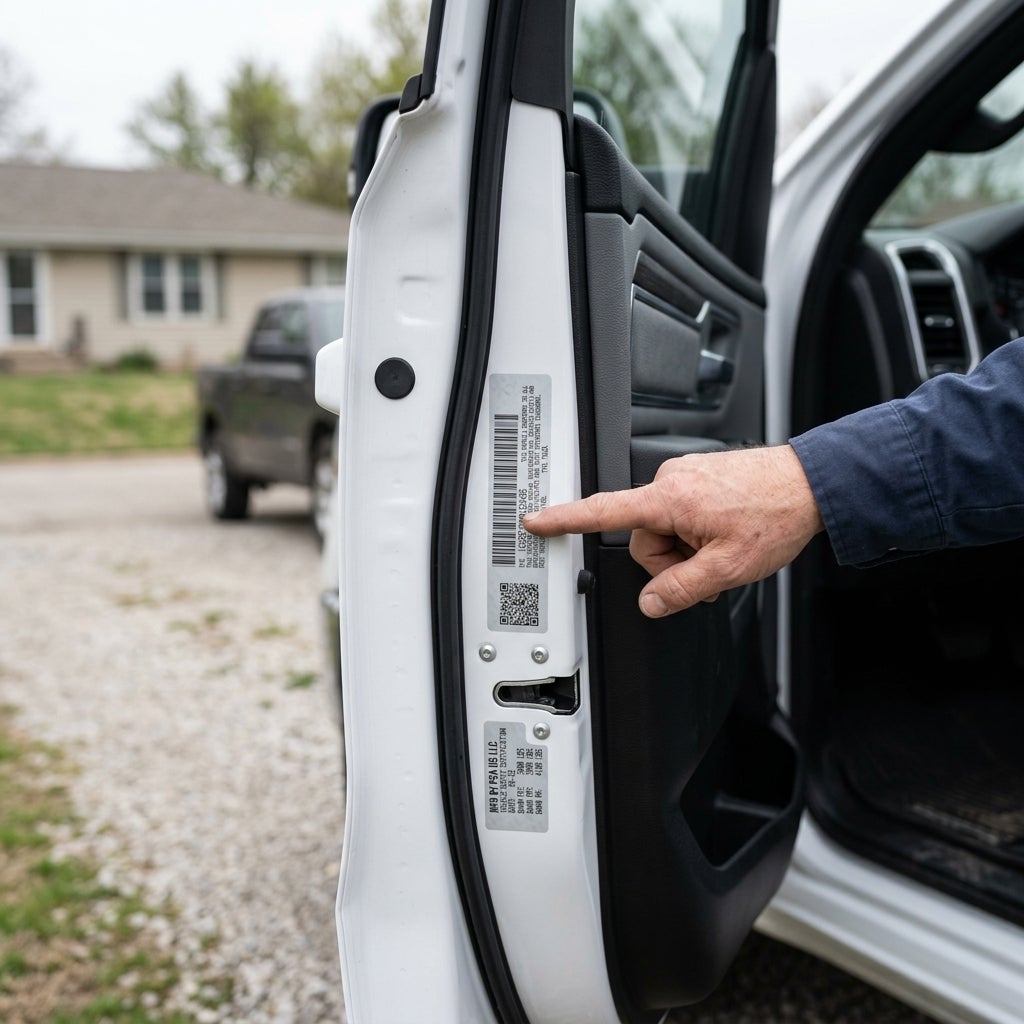
1. Find Your 17-Digit VIN Your truck's Vehicle Identification Number (VIN) is a unique 17-character code that acts as its digital fingerprint. You can find it printed on a metal plate visible through the driver's side corner of the windshield, on the safety certification label inside the driver's side door jamb, or on your vehicle's insurance card and registration documents. Write this number down carefully.

2. Search Safety Databases Once you have your VIN, you can input it directly into the National Highway Traffic Safety Administration (NHTSA) recall lookup tool or the official Mopar recall portal. These search engines will immediately display any active safety recalls or customer satisfaction campaigns associated with your specific truck, including those involving hydraulic brake components.

3. Get Free Repairs at Valor CDJR If your search reveals an open recall related to your Ram 1500's brake master cylinder or hydraulic booster, do not panic. As an authorized Ram dealership, Valor CDJR will perform the required recall repairs completely free of charge to you. Contact our service team, and we will secure the factory-allocated recall parts and schedule your priority service appointment.

A hand points to a VIN and barcode sticker on the inner door frame of a white truck. (Representative image for illustration purposes only. Actual vehicle may vary based on trim and configuration.)

Why Having Your Ram 1500 Serviced at a Junction City Dealership Saves Time

Time is one of your most valuable assets, and having your Ram 1500 serviced at a specialized local dealership like Valor CDJR is the fastest way to get your truck back on the road. Independent shops often struggle with scheduling delays because they have to wait for parts delivery trucks to transport components from regional warehouses. In contrast, our on-site Parts Department maintains a massive, highly curated inventory of genuine OEM Mopar parts, meaning we usually have the exact master cylinder, fluid, and lines your truck needs sitting on our shelves the moment you arrive. Furthermore, our diagnostic workflow is highly optimized. We utilize the proprietary wiTECH 2.0 diagnostic platform, which connects directly to Ram's secure gateway module. This tool allows our technicians to perform rapid digital health scans, identify pressure sensor faults, and run automated ABS brake bleeding sequences in a fraction of the time it takes an independent shop using a generic multi-brand scan tool. What takes a general mechanic hours of troubleshooting and manual labor often takes our experienced team just minutes to isolate and resolve.

Our technicians work exclusively on Chrysler, Dodge, Jeep, and Ram vehicles every single day. This extreme specialization means they are intimately familiar with the exact bolt locations, clearance requirements, and physical plumbing layout of your truck. They do not need to consult internet forums or repair manuals to figure out how to access your master cylinder—they have successfully completed this exact job dozens of times before. If you are ready to experience the fast, professional, and efficient service that only a factory-authorized dealership can provide, we invite you to book an appointment with us today. Our online system makes it simple to choose a time that fits into your busy week. Go ahead and utilize our Service Scheduler to reserve your slot and let our master technicians handle the rest with speed and precision.

How a Weak Master Cylinder Affects Towing and Driving in the Flint Hills

The rolling landscape of the Flint Hills in Kansas is incredibly scenic, but it places unique demands on your truck's mechanical components—especially the braking system. Navigating steep inclines and declines on K-177 or hauling heavy agricultural loads along the gravel backroads of Geary County requires flawless braking response. When your Ram 1500 is pulling a trailer loaded with livestock, hay, or recreational boats for a weekend at Milford Lake, your vehicle's kinetic energy is multiplied significantly. In these towing scenarios, your brakes must work twice as hard to slow the vehicle down. If your master cylinder has worn internal seals, the immense heat generated during prolonged downhill braking can cause the brake fluid to warm up rapidly. As fluid temperature increases, its viscosity changes, and the bypassing effect inside a weak master cylinder becomes significantly worse. You might start a descent with a relatively firm pedal, only to feel it suddenly turn soft and sink toward the floorboard halfway down the hill. This phenomenon, known as brake fade combined with hydraulic bypass, can lead to a terrifying loss of stopping control. Keeping your hydraulic system in peak condition with a fresh, leak-free master cylinder is not just about keeping your truck running—it is about ensuring you have the necessary stopping power to handle the challenging, rolling geography of our beautiful Kansas landscape safely.
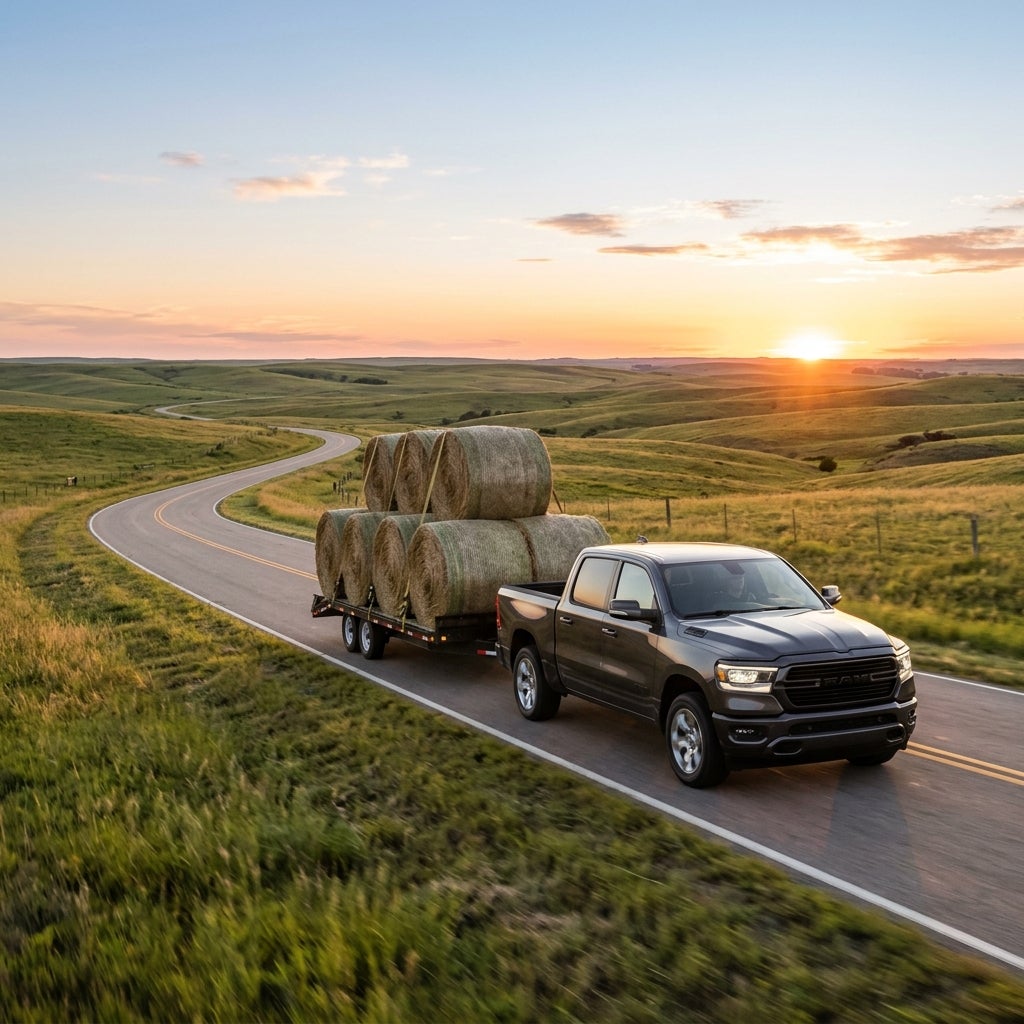
A dark grey pickup truck towing a trailer of large round hay bales down a winding country road at sunset. (Representative image for illustration purposes only. Actual vehicle may vary based on trim and configuration.)

What to Do While Your Ram 1500 Is in the Shop at Valor CDJR

Relax in Our Comfortable Lounge While our master technicians are replacing your brake master cylinder, we invite you to relax in our clean, modern waiting area. We offer high-speed Wi-Fi, comfortable seating, flat-screen televisions, and a selection of premium complimentary coffee, bottled water, and snacks. It is the perfect environment to reply to emails, get some remote work done, or simply unwind while we restore your truck's stopping power.

Shuttle Services & Stay Mobile We know that you have a busy schedule and cannot always sit at the dealership. To minimize disruption to your day, Valor CDJR offers a complimentary local shuttle service. Our shuttle can drop you off at your home, office, or local shopping centers in Junction City, and pick you up once your Ram 1500's brake service is completely finished. Ask our service advisors for details when you check in.

Try Our Express Lane Service If you have minor routine maintenance tasks that need attention—such as an oil change, tire rotation, windshield wiper replacement, or cabin air filter swap—you can have them completed simultaneously. Our dedicated Mopar Express Lane is optimized for lightning-fast, high-quality maintenance without requiring a pre-scheduled appointment, helping you save valuable time by combining your services.

Considering an Upgrade? Explore Your Ram 1500 Trade-In Value
As trucks age, owners occasionally find themselves weighing the cost of ongoing mechanical repairs against the value of transitioning into a newer, more advanced vehicle. If your Ram 1500 has high mileage and is beginning to require multiple repairs—such as master cylinder replacement, suspension work, or engine service—it might make strong financial sense to explore your vehicle's current market value. Trading in your truck allows you to apply its equity toward a brand-new or pristine certified pre-owned vehicle, cutting down on future repair bills and giving you access to the latest safety and towing technology. At Valor CDJR, we make valuing your current truck incredibly straightforward. Our online Trade In Evaluation tool provides a quick, transparent, and highly competitive appraisal based on real-time market data in the Junction City and Manhattan areas. You can input your truck's details from the comfort of your home and receive an instant estimate of its worth. From there, our finance and sales teams can help you explore how that trade equity can help you choose a newer, highly capable model.

Once you have an idea of your truck's trade value, we invite you to browse our extensive inventory of vehicles. Whether you are looking for a brand-new light-duty truck with active safety features or a solid commercial rig, we have options to fit your lifestyle. You can explore our updated New Vehicle Listings to see the latest Ram 1500 models, or check out our high-quality Used Vehicle Listings for value-conscious alternatives. If your work demands even more capability, we also offer a dedicated Commercial Vehicle Inventory featuring heavy-duty trucks built to handle the toughest jobs Kansas has to offer.

A diagonal lineup of colorful Ram 1500 pickup trucks parked on an asphalt lot under a blue sky. (Representative image for illustration purposes only. Actual vehicle may vary based on trim and configuration.)

Schedule Your Ram 1500 Brake Service at Valor CDJR in Junction City Today

Your Ram 1500's brakes are its single most important safety feature. Driving with a weak, spongy, or bypassing master cylinder compromises your vehicle's stopping distance and puts you, your family, and other drivers at risk on Kansas highways. Do not wait for a complete brake system failure before taking action. At Valor CDJR, our factory-trained master technicians are ready to diagnose, service, and restore your truck's hydraulic braking performance back to original factory standards using only genuine Mopar components. We make getting professional, trustworthy service as convenient as possible. You can easily Get Directions to Valor CDJR to visit our dealership at 1825 Goldenbelt Blvd, Junction City, KS 66441. If you prefer to speak directly with one of our experienced service advisors to ask questions or discuss pricing, please feel free to Call us at (785) 238-5114. Alternatively, you can book your appointment online in just a few seconds using our digital tool. Click the button below to access our Service Scheduler and pick a date and time that fits seamlessly into your schedule. Let our team provide the reliable, expert care your Ram truck deserves!
Posted in:

Related Posts

What Is RAM Smart Exhaust Braking on 6.7L Cummins Turbo Diesel Models?

What Is RAM Smart Exhaust Braking on 6.7L Cummins Turbo Diesel Models?

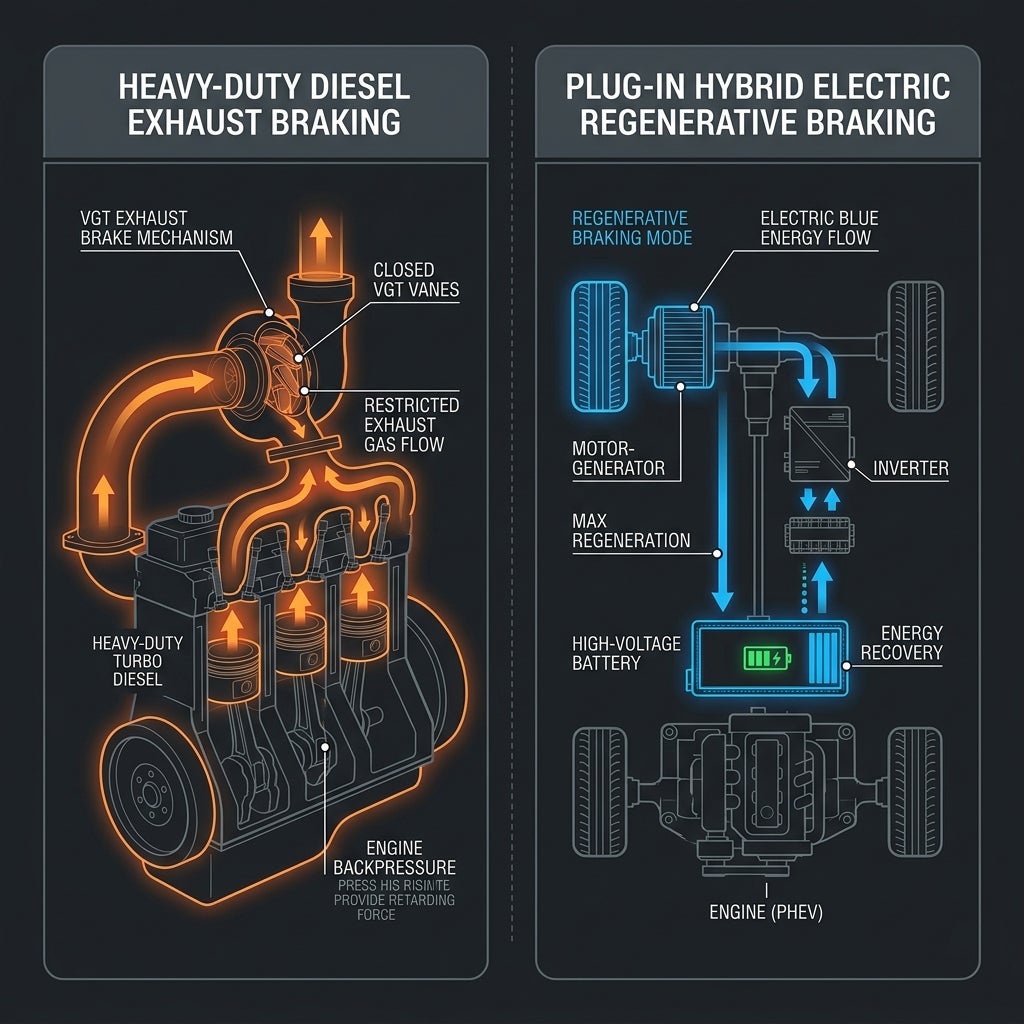
What Is Ram Smart Exhaust Braking on 6.7L Cummins Turbo Diesel Models? When you are towing a 16,000-pound livestock trailer or a heavy fifth-wheel camper down steep, rolling grade shifts in central Kansas, keeping control without overheating your vehicle's service brakes is paramount. Ram Heavy Duty trucks equipped with the legendary 6.7L Cummins Turbo Diesel engine feature an advanced technology designed specifically for this challenge: Ram Smart Exhaust Braking. To get a deep technical breakdown and practical advice on operating this system, we sat down with Mike Hogg, Service Director at Valor CDJR in Junction City, Kansas. With over 20 years of hands-on experience servicing heavy-duty Chrysler, Dodge, Jeep, and Ram powertrain systems, Mike brings invaluable expertise to truck owners navigating highway grades across Riley County and beyond. Interviewer: Mike, to start off with the bottom line: how would you summarize Ram Smart Exhaust Braking for a driver who is new to the 6.7L Cummins Turbo Diesel platform? Mike Hogg: At its core, Ram Smart Exhaust Braking is an intelligent electronic engine braking feature that utilizes the Cummins engine's Variable Geometry Turbocharger (VGT) to restrict exhaust gas flow out of the manifold. By restricting that flow, it creates backpressure in the engine cylinder during exhaust strokes. That backpressure acts like a natural retarding force against the pistons, smoothly slowing down the vehicle without relying heavily on your traditional mechanical service brakes. What makes the 'Smart' setting unique compared to a traditional mechanical Jake brake or older exhaust brakes is that it actively senses pedal position and vehicle momentum to hold a steady downhill speed automatically. Q: How Does Ram Smart Exhaust Braking Work on Flint Hills Grade Downhills? Interviewer: Drivers around Junction City, Manhattan, and along I-70 know how quickly the Flint Hills topography can stress a brake system, especially when pulling heavy equipment. How does this system handle those specific downhill stretches? Mike Hogg: That is where the engineering really shines. When you are pulling a heavy load down a steep incline like the grades along K-18 or I-70 through the Flint Hills, gravity is constantly trying to accelerate your vehicle rig. If you rely solely on friction brakes—your foot pedal pushing pads against rotors—those brakes quickly generate extreme friction heat. That leads to brake fade, where the pads lose their effectiveness, and in severe cases, rotor warping or complete fluid boiling. When you engage Smart Exhaust Braking on your 6.7L Cummins, an electronic actuator swivels internal sliding nozzles inside the variable-geometry turbocharger into a closed restriction position. This creates measurable retarding horsepower inside the engine cylinder block. Mike Hogg (continued): In Smart mode, if you gently apply the foot brake to bring your speed down from 65 mph to 55 mph while descending a 6% grade and then release the brake pedal, the Cummins VGT system locks on to 55 mph. It modulates backpressure smoothly to maintain that precise speed without requiring you to ride the brake pedal. It keeps your service brakes cool, completely fresh, and ready in reserve in case of emergency stops. Q: What Is the Difference Between Full Exhaust Braking and Smart Exhaust Braking? Interviewer: On the Ram instrument cluster, owners can toggle between Full Exhaust Braking, Smart (Auto) Exhaust Braking, and Off. What is the operational distinction between Full and Smart modes? Mike Hogg: It comes down to aggressiveness versus variable cruise-like speed holding. • Full Exhaust Braking (Yellow Icon): The instant you lift completely off the accelerator pedal, the VGT sliding nozzle closes to maximum restriction. It delivers 100% available backpressure deceleration immediately. This is ideal when descending extremely steep mountain passes or carrying maximum payload ratings where you want instant, maximum slowing power the second your foot leaves the gas pedal. • Smart Exhaust Braking (Green Auto Icon): In Smart mode, the engine computer monitors your braking inputs. It measures how fast the vehicle is accelerating or decelerating. Rather than slamming on full exhaust backpressure, it dynamically varies nozzle restriction to hold whatever vehicle speed you set when you let off the brakes. It creates a smooth, continuous downhill descent that significantly reduces driver fatigue during long trips across Kansas highways. Exhaust Brake Feature Full Exhaust Brake Mode Smart / Auto Exhaust Brake Mode Dashboard Indicator Yellow Engine Brake Icon Green 'Auto' Engine Brake Icon Activation Trigger Immediate upon zero accelerator pedal input Initiated when driver presses service brake to set target speed Backpressure Modulation Maximum available retarding power immediately Variable VGT modulation to lock and hold target mph Primary Driving Application Extreme steep grades, maximum payload, heavy descent Highway towing, rolling hills, varying traffic flows Q: How Long Do OEM Mopar Brake Pads Usually Last on Ram Turbo Diesels? Interviewer: Mike, friction brake pad wear is a major cost factor for heavy truck owners. How much difference does consistent exhaust brake usage make on pad longevity? Mike Hogg: The difference is night and day. On heavy-duty Ram 2500 and 3500 trucks where drivers never use their exhaust brake, we frequently see original front friction pads wearing down to 3mm or less in 25,000 to 30,000 miles, especially if they tow heavy trailers. Mike Hogg (continued): Conversely, drivers who keep their Smart Exhaust Brake engaged consistently can easily extract 50,000, 70,000, or even 80,000+ miles out of a set of genuine OEM Mopar brake pads. The engine performs 60% to 80% of the stopping duty during typical highway descents. Mopar Brake Compounds: Genuine Mopar heavy-duty brake pads available at Valor CDJR feature specific semi-metallic and ceramic-blend compounds engineered precisely for high thermal transfer and low rotor wear. Keeping original equipment Mopar components on your Cummins ensures seamless integration with factory anti-lock braking (ABS) and electronic stability control systems. Schedule Heavy-Duty Brake Inspection Q: What Are the Warning Signs That a CDJR Vehicle Needs New Brake Pads? Interviewer: Even with active Smart Exhaust Braking, friction pads eventually wear down. What physical and sensory indicators tell a Ram or CDJR vehicle owner that service is required? Mike Hogg: Heavy-duty truck stopping systems communicate wear through clear physical symptoms. Recognizing these early prevents costly damage to brake rotors and calipers: 1. High-Pitched Acoustic Wear Squeal: Mopar brake pads include mechanical metal wear tabs. When pad friction material wears down to approximately 2mm to 3mm, these tabs contact the rotor, creating a persistent metallic squeal under mild braking. 2. Brake Pedal Vibration or Pulsation: If you feel a rhythmic thumping or vibration through the brake pedal or steering wheel while slowing, it indicates thermal warping or uneven friction material transfer across the rotors. 3. Deep Metallic Grinding Noise: A harsh grinding sound means friction material is completely depleted, and the metal backing plate is cutting directly into the rotor surface. Immediate service is required to prevent caliper damage. 4. Spongy Brake Pedal or Extended Travel: A pedal that feels mushy or sinks close to the floorboard can signal air in hydraulic brake lines, low fluid levels, or extreme pad wear. 5. Dashboard Brake Warning Lights: If your instrument panel illuminates the ABS light, electronic brake control light, or red brake fluid warning light, bring your truck in right away. You can also Call us at (785) 238-5114 to consult directly with our service team at Valor CDJR. Q: How Does Ram Smart Exhaust Braking Compare to Jeep Max Regeneration Mode? Interviewer: We often hear drivers ask about how different CDJR vehicles preserve friction brakes. What is Jeep Max Regeneration mode, and how does mechanical exhaust braking compare to high-voltage electric regeneration on plug-in hybrids like the Wrangler or Grand Cherokee 4xe? Mike Hogg: That is a great comparison because while the underlying engineering technologies are completely different, their primary goal—reducing friction brake wear while maintaining precise speed control—is identical. Mike Hogg (continued): On a Ram 6.7L Cummins Turbo Diesel, braking force is purely mechanical and pneumatic. The VGT turbo nozzle restricts exhaust gas, turning the diesel engine into an air compressor that physically holds back a 20,000+ lb combined weight rig. In contrast, Jeep 4xe Max Regeneration mode uses high-voltage electric generator-motors. When you lift off the accelerator pedal in a Jeep Wrangler 4xe or Grand Cherokee 4xe, the electric traction motor reverses function, turning vehicle kinetic energy into electrical current fed back into the 17.3 kWh lithium-ion battery pack. Both systems vastly extend friction pad lifespan, but Ram uses compressed exhaust backpressure while Jeep uses electromagnetic force. Q: Does Mopar Vehicle Protection Include Brake Wear-and-Tear Coverage? Interviewer: Many buyers ask about warranty coverage. Does Mopar Vehicle Protection cover brake components and turbo exhaust brake hardware? Mike Hogg: It is crucial to distinguish between mechanical powertrain components and consumable wear items. Factory warranties and extended Mopar Vehicle Protection (MVP) plans offer robust protection, but they apply differently. Turbo Actuator & Mechanical Components: The variable geometry turbocharger assembly, electronic VGT actuator, exhaust valve hardware, and control modules are fully covered under Cummins Powertrain warranties and MVP Maximum Care plans. If the VGT actuator fails or sticks, replacement is covered under warranty guidelines. Friction Wear Items & Maintenance: Standard brake pads, rotors, and shoes are categorized as wear-and-tear friction components. Unless covered under specific Mopar Service Contracts or initial delivery adjustments (such as 12-month/12,000-mile basic coverage), routine pad replacements are customer maintenance. You can order original factory replacement parts through our Parts Department. Explore OEM Mopar Parts & Coverage Q: What Diesel Service Prevents VGT Turbo Soot Accumulation and Actuator Failure? Interviewer: Mike, because Ram Smart Exhaust Braking relies directly on the variable geometry turbocharger's moving internal nozzle mechanism, soot and carbon buildup can present a challenge over time. What maintenance routines prevent VGT sticking? Mike Hogg: That is one of the most important operational points for any 6.7L Cummins diesel owner. Soot is an inherent byproduct of diesel combustion. If a truck undergoes excessive short city trips or prolonged idling without reaching full operating temperature, unburned soot deposits on the sliding VGT nozzle ring. Mike Hogg's Top Maintenance Practices for VGT Longevity: 1. Run the Exhaust Brake Regularly: Turn your Smart Exhaust Brake on frequently, even when driving unloaded around Junction City and Manhattan. Cycling the nozzle sliding mechanism prevents soot from caking and binding the mechanical linkages. 2. Avoid Prolonged Excessive Idling: Idling cools down combustion chambers, leading to incomplete combustion and heavy soot loading inside the turbo charger manifold. 3. Strict Fuel & Oil Maintenance: Change your engine oil and fuel filters at recommended Mopar factory intervals. Clean oil prevents thermal coking inside the liquid-cooled VGT center housing bearings. 4. Perform Highway Drive Cycles: Ensure your truck experiences periodic extended highway drives under load to allow active Diesel Particulate Filter (DPF) regeneration and naturally burn off carbon deposits. Q: Are CDJR Brake Service Coupons and Specials Available Near Junction City? Interviewer: What seasonal offers or service specials does Valor CDJR offer local drivers seeking maintenance for their heavy-duty braking systems? Mike Hogg: We regularly update our service incentives to keep premium factory maintenance affordable. Fall is an especially critical season to inspect heavy-duty brake systems before winter frost and towing demands arrive. Our seasonal promotions often include: • Mopar OEM brake pad replacement offers across front and rear axles • Brake rotor resurfacing and precision machining packages • Full multi-point brake system inspections including brake line hydraulic pressure checks • Heavy-duty Cummins diesel maintenance packages (fuel filters, oil service, DPF check) Fast Service Options: For routine maintenance, fluid checks, or initial brake pad wear thickness measurements, drivers can take advantage of our Express Lane service for fast turnarounds without requiring a lengthy appointment. Whether you need a quick pad thickness check or complete heavy-duty rotor replacement, our certified technicians ensure your truck stops safely every time. Q: Where Can I Get CDJR Brake Service in Junction City, Kansas? State-of-the-Art Facility: Valor CDJR operates a modern service center equipped with high-capacity heavy-duty lifts specifically engineered to accommodate Ram 2500, 3500, 4500, and 5500 chassis cabs and commercial vehicles. Cummins Certified Techs: Our factory-trained service team is lead by Service Director Mike Hogg (20 years experience), ensuring expert diagnostic accuracy for VGT exhaust braking systems and Cummins diesels. Location & Directions: Conveniently located at 1825 Goldenbelt Blvd, Junction City, KS 66441. Get Directions to Valor CDJR for expert heavy-duty diesel and brake service. Book Appointment via Service Scheduler Expert Summary: Maximizing Towing Safety and Brake Life with Ram Smart Exhaust Braking Mike Hogg's Final Takeaway: Ram Smart Exhaust Braking is one of the standard-setting innovations for heavy-duty towing safety. By understanding how to activate Smart mode, using it consistently during daily driving to keep the VGT turbo mechanism clear of soot, and replacing worn components with genuine OEM Mopar brake friction parts, you maximize both vehicle safety and long-term ownership value. Whether you are upgrading your truck from our New Vehicle Listings, looking for a pre-owned HD diesel in our Used Vehicle Listings, or evaluating commercial options in our Commercial Vehicle Inventory, our team is dedicated to supporting your towing needs across Kansas. Schedule Your Ram Turbo Diesel Service at Valor CDJR Today Ready to experience peak stopping performance and ensure your 6.7L Cummins Turbo Diesel is operating flawlessly? Trust the experts at Valor CDJR. You can evaluate your vehicle value with our Trade In Evaluation tool, contact the dealership for current financing information, or book your next service directly through our Service Scheduler. Visit us at 1825 Goldenbelt Blvd, Junction City, KS 66441 or Call us at (785) 238-5114 today! Schedule Service Now

What Does Chrysler Factory-Recommended Service Include?

What Does Chrysler Factory-Recommended Service Include?

What Does Chrysler Factory-Recommended Service Include? Chrysler factory-recommended service includes scheduled oil and filter changes, tire rotations, brake system inspections, cabin and engine air filter replacements, fluid updates, and multi-point safety checks. Performed at established mileage or time intervals guided by the onboard Oil Change Indicator System, these factory-specified maintenance routines protect mechanical integrity, optimize fuel efficiency, and ensure long-term powertrain reliability. Automotive engineers design vehicle service schedules around the exact mechanical tolerances and operating parameters of each model. Following a structured schedule ensures that wearable components, such as brake friction materials, engine air filters, and synthetic lubricants, are renewed before degradation affects vehicle performance or causes damage to surrounding parts. Routine factory service is divided into minor and major maintenance appointments: Minor maintenance visits occur every 7,500 to 10,000 miles or 12 months, focusing on essential engine oil replacement, oil filter installation, tire rotation to promote even tread wear, and a comprehensive visual inspection of underbody components. Major maintenance appointments take place at larger milestones—typically 30,000, 60,000, and 90,000 miles—adding air intake updates, cabin air filtration service, spark plug replacements, and fluid renewals for braking and cooling systems. Adhering to these service guidelines provided by Mopar keeps your Chrysler operating as intended by its designers. To maintain your vehicle's scheduled service or learn more about specific maintenance guidelines, visit our physical location on Goldenbelt Blvd or speak directly with our service team by giving us a quick call today. Table of Contents Why Is Following Recommended Maintenance Important for Your Chrysler Pacifica? What Services Are Needed at 30,000, 60,000, and 90,000-Mile Intervals? What Synthetic Oil Is Recommended for Chrysler 3.6L Pentastar V6 Engines? What Is Chrysler's Recommended Brake Service Schedule and Inspection Process? Why Are Mopar Genuine Parts and Certified Technicians Essential for Chrysler Repairs? How Does Documented Maintenance Preserve Chrysler Resale Value? Frequently Asked Questions About Chrysler Maintenance Schedule Your Chrysler Recommended Maintenance at Valor CDJR Why Is Following Recommended Maintenance Important for Your Chrysler Pacifica? Following recommended maintenance for a Chrysler Pacifica prevents unexpected mechanical wear, maintains smooth power delivery from the 3.6L Pentastar V6 engine, and safeguards delicate family safety electronics. Regular servicing prevents minor fluid degradation or component friction from evolving into costly repairs. Modern minivans serve as complex mobile environments combining advanced mechanical engines with intricate electrical networks. Routine maintenance preserves the calibrated efficiency of the 9-speed automatic transmission, supports proper cabin climate control function, and ensures onboard driver-assist sensors operate accurately. Skipping scheduled service allows contaminants to accumulate in vital fluids, accelerating wear on engine bearings, valvetrain components, and brake hydraulics. Our service advisors observe that minivan owners often ask how the vehicle's automated indicator system calculates oil life during seasonal family trips before booking routine visits. The system monitors engine operating temperatures, revolutions, and idle duration to alert drivers when service is needed, protecting the engine long before thermal breakdown occurs. Maintaining a consistent service routine also preserves your factory coverage under the 5-year/60,000-mile powertrain warranty, ensuring covered components remain protected against unforeseen mechanical issues. What Services Are Needed at 30,000, 60,000, and 90,000-Mile Intervals? Chrysler 30,000-mile service focuses on engine air filter and cabin air filter replacements alongside full brake system evaluations. The 60,000-mile interval adds spark plug inspections, transmission fluid checks, and suspension component testing, while the 90,000-mile mark demands comprehensive drive belt renewals, full fluid flushes, and cooling system checks. Mileage milestones mark critical points in a vehicle's service lifecycle, where wear items require systematic replacement to maintain factory performance levels: 30,000-Mile Milestone: Technicians replace the engine air filter to maintain proper air-fuel ratios and install a clean cabin air filter to preserve HVAC efficiency. The service includes measuring brake pad thickness, checking rotor surfaces, and inspecting steering linkage. 60,000-Mile Milestone: Service expands to include spark plug condition checks or replacements to prevent engine misfires, testing battery health, inspecting suspension bushings, and checking transmission fluid clarity. 90,000-Mile Milestone: Focus shifts toward major component preservation. Technicians replace auxiliary drive belts, inspect radiator and heater hoses for rubber degradation, flush and refill engine coolant, and renew brake hydraulic fluid. Drivers navigating daily routines through Junction City experience consistent vehicle response and greater long-term mechanical reliability when adhering strictly to these mileage-based service benchmarks. What Synthetic Oil Is Recommended for Chrysler 3.6L Pentastar V6 Engines? Chrysler requires API Certified SAE 0W-20 or SAE 5W-20 full synthetic motor oil that meets Chrysler Material Standard MS-6395 for the 3.6L Pentastar V6 engine. Using the specified oil weight and specification ensures correct oil pressure across variable valve timing actuators and reduces internal engine friction. The 3.6L Pentastar V6 relies on precise hydraulic oil pressure to operate its variable valve timing (VVT) phasers and variable-displacement oil pump. Synthetic lubricants engineered to meet the MS-6395 material standard contain specialized additive packages that resist oxidation, prevent sludge formation, and maintain stable viscosity across wide operating temperature ranges. Using conventional engine oil or an incorrect viscosity can slow hydraulic response within the valvetrain, leading to reduced engine efficiency, increased fuel consumption, or premature component wear. Full synthetic motor oil maintains fluid flow during cold engine starts, protecting upper valvetrain components instantly upon ignition while sustaining thermal stability during extended highway driving. What Is Chrysler's Recommended Brake Service Schedule and Inspection Process? Chrysler recommends inspecting brake pads, rotors, calipers, and fluid lines at every oil change or 10,000-mile interval, with a complete brake fluid flush performed every two to three years. Technicians measure pad thickness, evaluate rotor surface condition, and check hydraulic pressure to maintain stopping performance. Brake maintenance involves a multi-point technical assessment to verify every part of the stopping system functions correctly: Technicians measure remaining friction material on outer and inner brake pads using precision calipers. Rotor surfaces are inspected for heat scoring, grooves, or lateral runout that could cause pedal pulsation. Caliper slide pins and hardware are cleaned and lubricated to ensure even pad pressure distribution. Hydraulic brake lines and flexible rubber hoses are checked for leaks, cracks, or outer sheath wear. Brake fluid is tested for moisture contamination, which lowers fluid boiling points and reduces pedal firmness under heavy braking. Navigating the rolling terrain around Manhattan puts distinct demands on stopping systems, making routine rotor checks critical for consistent braking power. You can arrange a comprehensive brake evaluation using our online appointment scheduling tool. Why Are Mopar Genuine Parts and Certified Technicians Essential for Chrysler Repairs? Genuine Mopar parts are engineered specifically for Chrysler vehicles to mirror original factory dimensions, safety crush performance, and metallurgy, while certified technicians complete rigorous Stellantis factory training. This combination ensures precise fitment, long-term durability, and complete protection under factory warranties. Factory-certified repair components differ significantly from generic aftermarket alternatives in material composition and manufacturing standards: Maintenance Component Genuine Mopar Parts Generic Aftermarket Parts Engineering Standards Designed to exact Stellantis factory specifications Reverse-engineered universal fitment Material Quality Tested for long-term heat resistance and durability Variable material quality and performance Warranty Backing Supported by official factory parts coverage Limited manufacturer or retailer warranties Electrical Integration Fully compatible with vehicle software architecture Potential signal distortion or fault codes Stellantis-certified technicians undergo hundreds of hours of specialized instruction to diagnose mechanical systems and software networks accurately. Using factory diagnostic computers, our service team identifies potential system errors before they result in component failures. Our team maintains authentic components directly through our dedicated Mopar parts department. How Does Documented Maintenance Preserve Chrysler Resale Value? Comprehensive, documented factory service records prove to future buyers and dealership appraisers that a Chrysler vehicle received scheduled fluid changes, OEM replacement parts, and timely inspections. A documented maintenance history commands a higher trade-in value by eliminating buyer uncertainty regarding mechanical condition. When a vehicle enters the secondary market, its recorded service history serves as tangible proof of proper ownership care. A complete history showing regular oil changes, filter updates, and milestone inspections confirms that internal components were protected from fluid starvation and thermal stress. Vehicles with verified Mopar maintenance records routinely trade at premium values compared to similar models lacking documentation. Detailed records eliminate doubts regarding deferred maintenance, helping prospective buyers and trade-in evaluators offer higher valuations with confidence. To review your vehicle's maintenance plan or schedule upcoming service, stop by our service center address or reach out to our service team by giving us a quick phone call. Frequently Asked Questions About Chrysler Maintenance Q: How does the Oil Change Indicator System inform vehicle maintenance timing? Chrysler's Oil Change Indicator System uses engine operating software to track thermal exposure, engine revolutions, idle time, and trip distances. Instead of relying strictly on fixed mileage, the system calculates actual oil breakdown and illuminates a dashboard prompt when service is required, ensuring oil changes match actual driving conditions up to a 10,000-mile or 12-month limit. Q: Can factory warranty repairs be completed at any authorized dealership? Warranty repairs covered under Chrysler's 3-year/36,000-mile basic warranty or 5-year/60,000-mile powertrain warranty can be performed at any authorized Stellantis dealership service center. Performing scheduled maintenance according to factory guidelines protects these warranty protections against claims caused by deferred care. Q: What is the difference between minor and major service visits? Minor service visits occur every 7,500 to 10,000 miles and focus on foundational items like motor oil replacement, oil filter updates, tire rotations, and multi-point visual safety checks. Major service intervals at 30,000, 60,000, and 90,000 miles incorporate comprehensive component updates, including cabin air filters, engine air intake filters, spark plugs, drive belts, and hydraulic flushes. Q: Is full synthetic oil strictly required for every oil change? Chrysler engines designed for specific viscosities, such as the 3.6L Pentastar V6, require full synthetic oils meeting strict material standards like MS-6395. Using conventional oil or non-compliant formulations can compromise variable valve timing performance and lead to premature component wear. Q: How often should engine air filters and cabin filters be replaced? Engine and cabin air filters are typically scheduled for replacement every 30,000 miles under normal driving conditions. However, driving on unpaved roads or in dusty environments may require more frequent updates to preserve engine air intake efficiency and maintain clean cabin airflow. Schedule Your Chrysler Recommended Maintenance at Valor CDJR Keeping up with Chrysler factory-recommended service intervals is the most effective way to protect your vehicle's mechanical integrity, preserve fuel efficiency, and ensure long-term reliability on every drive. From routine oil changes and brake inspections to major 30,000, 60,000, and 90,000-mile milestone services, using authentic Mopar parts and relying on factory-certified technicians preserves your vehicle's performance and trade-in value. Our team at Valor CDJR is dedicated to providing transparent, professional care for your Chrysler. Whether you drive a Pacifica or another Chrysler model, our service center is fully equipped with advanced diagnostic equipment and genuine components to handle all your maintenance needs efficiently. Take the next step in protecting your automotive investment today. Contact our team to speak with a service advisor, order genuine replacement parts, or conveniently reserve your next maintenance appointment using our online service scheduling tool. © 2026 Valor CDJR. All rights reserved. Vehicle specification data © JATO Dynamics Limited.

2021 Jeep Grand Cherokee Laredo Maintenance Guide: Q&A Expert Insights

2021 Jeep Grand Cherokee Laredo Maintenance Guide: Q&A Expert Insights

2021 Jeep Grand Cherokee Laredo Maintenance Guide: Q&A Expert Insights The factory maintenance schedule for a 2021 Jeep Grand Cherokee Laredo mandates engine oil and filter changes along with tire rotations at intervals not to exceed 10,000 miles or 12 months, managed by the onboard automatic oil change indicator system. Standard maintenance checkpoints include replacing the cabin air filter and engine air filter every 12,000 to 20,000 miles, exchanging brake fluid every 24 months, and completing a full fluid service and spark plug replacement at 100,000 miles. To explain these maintenance milestones and long-term care practices, we sat down with Dustin Zeck, Dealer Principal at Valor CDJR, who brings 36 years of automotive experience to SUV owners across the region. Q: Dustin, what is the official recommended maintenance schedule for a 2021 Jeep Grand Cherokee Laredo? A: Standard routine maintenance on the 2021 Jeep Grand Cherokee Laredo follows a 10,000-mile or 12-month maximum interval, driven primarily by the automatic oil change indicator. Whenever the message center displays an oil change prompt, service should be completed within 500 miles, comprising a fresh engine oil and filter replacement, a tire rotation, and a comprehensive multi-point inspection. Operating under severe conditions, such as frequent short trips, extensive idling, or regular trailering across the flat to gently rolling plains of Junction City, often prompts the system to request service closer to the 6,000-mile mark. As mileage accumulates, specific inspection and replacement services become necessary to maintain vehicle safety and drivability. At every 12,000 to 15,000 miles, technicians inspect the brake pads, rotors, cooling system, and suspension joint boots while replacing both the engine air filter and the cabin air filter. At 30,000-mile steps, inspection expands to the transfer case, axle differentials, and transmission fluid conditions. Once the vehicle reaches 100,000 miles, the factory schedule calls for installing new spark plugs, refreshing the engine coolant, and servicing gear fluids to protect critical drivetrains. Drivers seeking tailored maintenance tracking can visit our dealership service facility or contact our team directly at (785) 238-5114 to review their vehicle's service history. Q: What engine specifications and mechanical components drive the maintenance needs on this 2021 Grand Cherokee Laredo? A: The standard powertrain under the hood of the 2021 Jeep Grand Cherokee Laredo is the proven 3.6-liter Pentastar V6 engine paired with an 8-speed automatic transmission, producing 293 hp and 260 lb-ft of torque. This engine utilizes an internal oil cooler housing and double overhead camshafts that rely heavily on clean, properly specified lubricants. The factory specification calls for synthetic SAE 0W-20 engine oil meeting Chrysler Material Standard MS-6395. Using oil that meets this precise standard prevents sludge build-up in the variable valve timing system and protects internal bearings during cold starts. Transmitting power to the ground requires specialized maintenance depending on whether the vehicle is equipped with rear-wheel drive or the available Quadra-Trac I single-speed four-wheel-drive system. Vehicles equipped with four-wheel drive use front and rear differentials that require routine fluid checks for contamination, particularly after driving through standing water or mud. Brake components on this midsize SUV handle a curb weight of roughly 4,500 lb, making regular brake pad thickness measurements and rotor checks essential to offset thermal wear. When replacement components are required, sourcing factory-certified parts through our Mopar parts department guarantees proper fitment and restores original engineering tolerances. Q: How much should owners budget for estimated annual maintenance costs on a 2021 Grand Cherokee Laredo? A: Average annual maintenance and repair costs for a 2021 Jeep Grand Cherokee Laredo range between $600 and $700 under normal driving conditions. During the initial three years or 36,000 miles, primary expenses remain minimal, consisting mostly of scheduled synthetic oil services, air filter replacements, and tire rotations. Because the vehicle came standard with a 3-year/36,000-mile limited warranty and a 5-year/60,000-mile powertrain warranty, warrantable mechanical repairs during the early ownership period carry zero out-of-pocket expense for parts or labor. Budget requirements increase moderately as the vehicle approaches higher mileage milestones where wearable mechanical items need replacement. Between 40,000 and 60,000 miles, items such as brake pads, brake rotors, and tires naturally reach the end of their first service lifecycle. Budgeting for these wear-and-tear components alongside scheduled fluid services prevents unexpected repair bills and maintains optimal mechanical reliability over time. Q: What are the most common mechanical repairs that show up on a 2021 Jeep Grand Cherokee as mileage increases? A: High-mileage service trends on the 2021 Grand Cherokee point to specific wear items, including engine coolant thermostats, engine oil cooler housing gaskets, control arm suspension bushings, and front brake components. The thermostat and oil cooler housing assemblies reside in the valley of the V engine block, where heat cycles over time can degrade plastic housings or rubber seals, leading to minor coolant or oil seepage. Identifying these minor leaks during routine oil change inspections allows technicians to resolve them before fluid levels drop enough to cause thermal distress. "Adhering to the 10,000-mile cap on synthetic oil changes and catching minor fluid leaks early is what keeps a Grand Cherokee running smoothly past 100,000 miles." Commuters who bring in a 2021 model for routine service often ask if their engine oil cooler housing needs attention when they notice minor fluid drips during garage parking. Addressing suspension arm bushings and sway bar links is another common maintenance item past 60,000 miles, as worn rubber bushings can lead to uneven tire wear or front-end clunks over road undulations. Promptly replacing worn suspension joints preserves steering feel and protects the vehicle's alignment geometry. Q: How does the 2021 Grand Cherokee Laredo compare to rivals like the Toyota 4Runner and Ford Explorer in terms of reliability and capability? A: Comparing capability and upkeep between the Grand Cherokee Laredo, Toyota 4Runner, and Ford Explorer highlights clear mechanical differences across the midsize SUV segment. The Toyota 4Runner utilizes a body-on-frame platform powered by a 270-hp V6 and a 5-speed automatic transmission, which offers strong predicted durability but sacrifices fuel efficiency at an EPA-rated 17 mpg combined and requires higher steering effort on paved roads. In contrast, the unibody Grand Cherokee Laredo delivers refined road manners with an EPA rating of 18 mpg city / 25 mpg highway in four-wheel-drive configuration while maintaining a strong 6,200 lb maximum towing capacity. When measured against the Ford Explorer on off-road readiness, the Grand Cherokee Laredo holds a distinct chassis advantage with 8.6 inches of standard ground clearance compared to the Explorer's 7.9 inches. Jeep's four-wheel-drive system delivers continuous traction control without requiring manual driver inputs, making it exceptionally reliable for drivers navigating the rolling hills of Manhattan during winter weather conditions. While rivals offer varied strengths, the Grand Cherokee balances daily ride comfort, towing muscle, and true all-terrain capability with reasonable long-term upkeep expenses. Q: Can owners handle basic maintenance like oil changes and air filter swaps on a 2021 Grand Cherokee Laredo themselves, or should they visit your service center? A: Do-it-yourself enthusiasts can comfortably perform simple maintenance tasks like changing the engine air filter, replacing the cabin air filter, and checking under-hood fluid levels using standard hand tools. Swapping air filters requires no specialized diagnostic equipment and takes only a few minutes, making it an accessible weekend task. However, changing the engine oil on the 3.6-liter Pentastar V6 requires careful attention to the top-mounted oil filter cap, which must be torqued precisely to avoid cracking the plastic filter housing. Complex tasks, routine brake service, diagnostic resets, and multi-point inspections are best handled by factory-trained technicians equipped with professional diagnostic tools. Our certified mechanics inspect safety systems like blind-spot monitoring, check for factory recall updates, and ensure all electronic control modules are running current software calibrations. To maintain your vehicle's factory maintenance record, visit our service department at 1825 Goldenbelt Blvd, Junction City, KS 66441, give our service team a call, or convenient schedule a service appointment online today. © 2026 Valor CDJR. All rights reserved.