




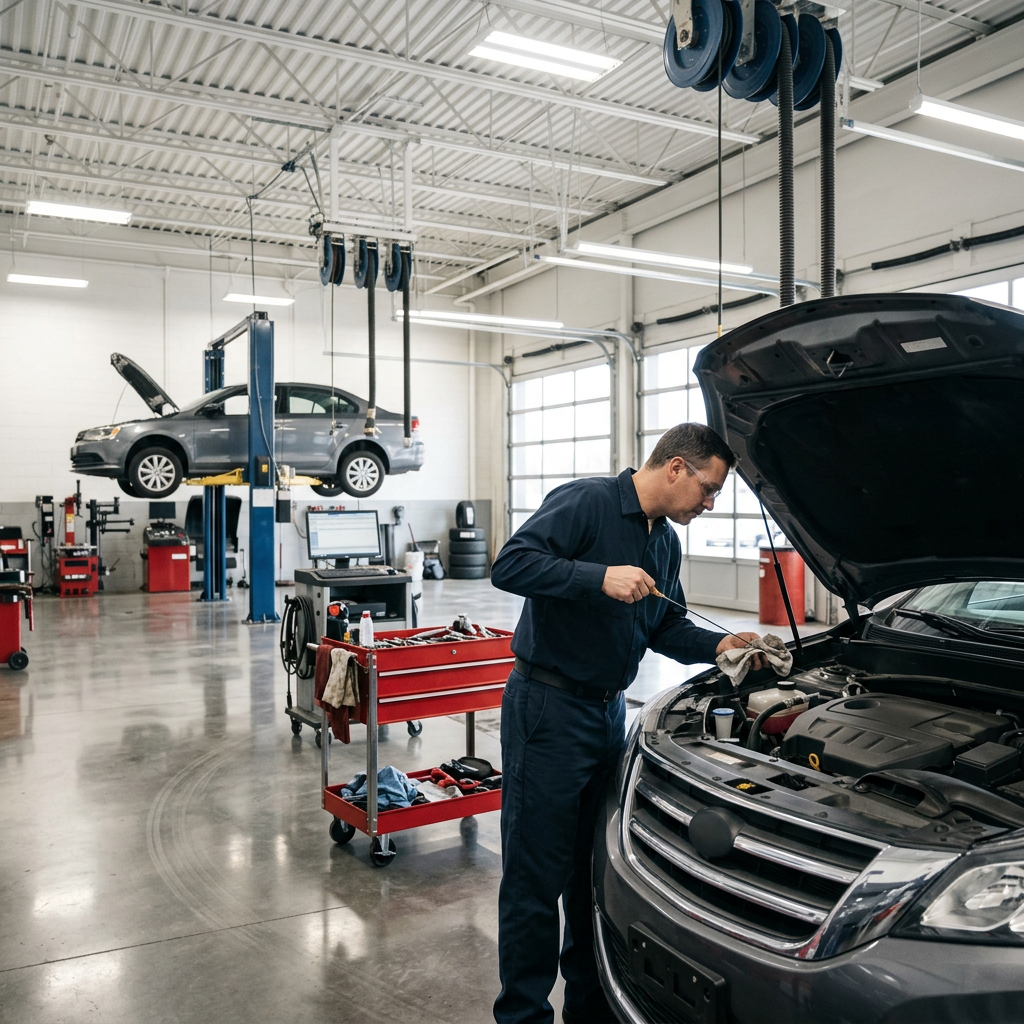
What Does Chrysler Factory-Recommended Service Include?
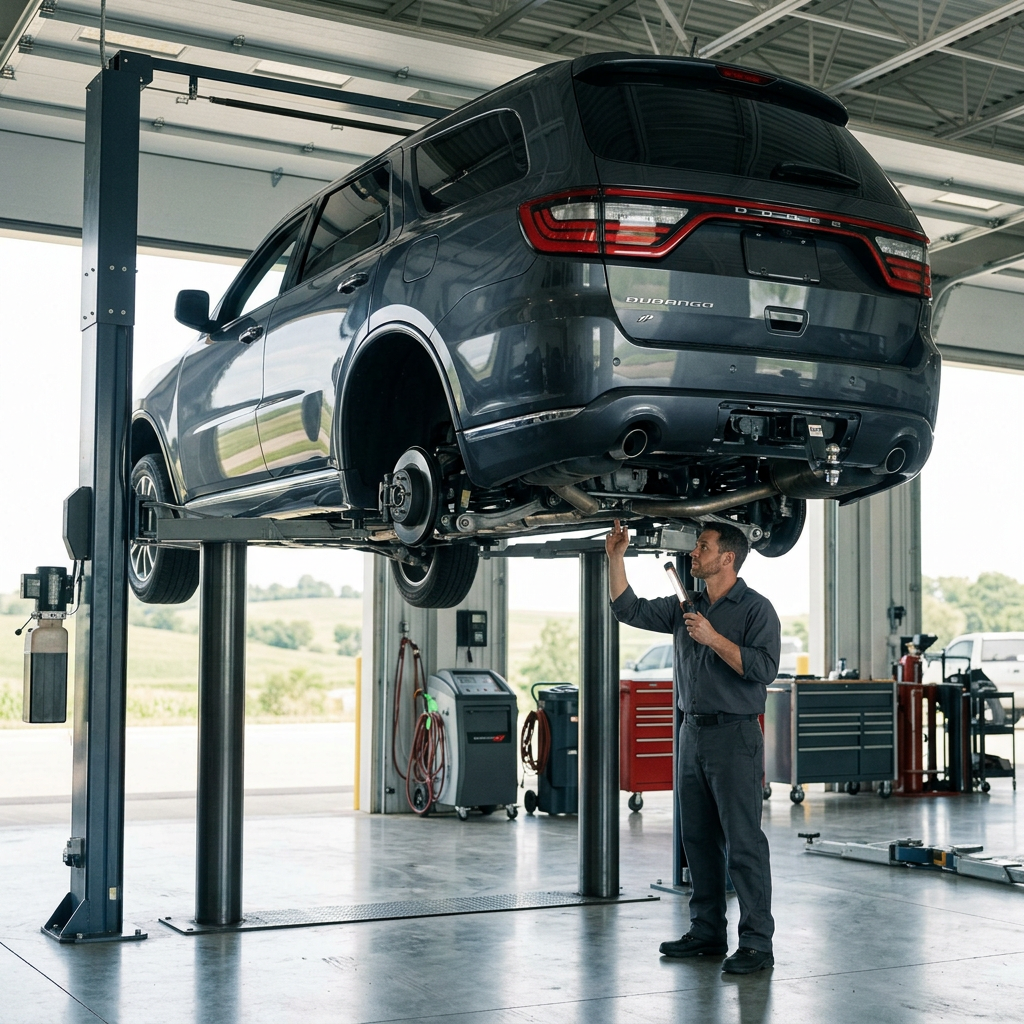
Chrysler factory-recommended service includes scheduled oil and filter changes, tire rotations, brake system inspections, cabin and engine air filter replacements, fluid updates, and multi-point safety checks. Performed at established mileage or time intervals guided by the onboard Oil Change Indicator System, these factory-specified maintenance routines protect mechanical integrity, optimize fuel efficiency, and ensure long-term powertrain reliability.
Automotive engineers design vehicle service schedules around the exact mechanical tolerances and operating parameters of each model. Following a structured schedule ensures that wearable components, such as brake friction materials, engine air filters, and synthetic lubricants, are renewed before degradation affects vehicle performance or causes damage to surrounding parts.
Routine factory service is divided into minor and major maintenance appointments:
- Minor maintenance visits occur every 7,500 to 10,000 miles or 12 months, focusing on essential engine oil replacement, oil filter installation, tire rotation to promote even tread wear, and a comprehensive visual inspection of underbody components.
- Major maintenance appointments take place at larger milestones—typically 30,000, 60,000, and 90,000 miles—adding air intake updates, cabin air filtration service, spark plug replacements, and fluid renewals for braking and cooling systems.
Adhering to these service guidelines provided by Mopar keeps your Chrysler operating as intended by its designers. To maintain your vehicle's scheduled service or learn more about specific maintenance guidelines, visit our physical location on Goldenbelt Blvd or speak directly with our service team by giving us a quick call today.
Table of Contents
- Why Is Following Recommended Maintenance Important for Your Chrysler Pacifica?
- What Services Are Needed at 30,000, 60,000, and 90,000-Mile Intervals?
- What Synthetic Oil Is Recommended for Chrysler 3.6L Pentastar V6 Engines?
- What Is Chrysler's Recommended Brake Service Schedule and Inspection Process?
- Why Are Mopar Genuine Parts and Certified Technicians Essential for Chrysler Repairs?
- How Does Documented Maintenance Preserve Chrysler Resale Value?
- Frequently Asked Questions About Chrysler Maintenance
- Schedule Your Chrysler Recommended Maintenance at Valor CDJR
Why Is Following Recommended Maintenance Important for Your Chrysler Pacifica?
Following recommended maintenance for a Chrysler Pacifica prevents unexpected mechanical wear, maintains smooth power delivery from the 3.6L Pentastar V6 engine, and safeguards delicate family safety electronics. Regular servicing prevents minor fluid degradation or component friction from evolving into costly repairs.
Modern minivans serve as complex mobile environments combining advanced mechanical engines with intricate electrical networks. Routine maintenance preserves the calibrated efficiency of the 9-speed automatic transmission, supports proper cabin climate control function, and ensures onboard driver-assist sensors operate accurately.
Skipping scheduled service allows contaminants to accumulate in vital fluids, accelerating wear on engine bearings, valvetrain components, and brake hydraulics. Our service advisors observe that minivan owners often ask how the vehicle's automated indicator system calculates oil life during seasonal family trips before booking routine visits. The system monitors engine operating temperatures, revolutions, and idle duration to alert drivers when service is needed, protecting the engine long before thermal breakdown occurs. Maintaining a consistent service routine also preserves your factory coverage under the 5-year/60,000-mile powertrain warranty, ensuring covered components remain protected against unforeseen mechanical issues.
What Services Are Needed at 30,000, 60,000, and 90,000-Mile Intervals?
Chrysler 30,000-mile service focuses on engine air filter and cabin air filter replacements alongside full brake system evaluations. The 60,000-mile interval adds spark plug inspections, transmission fluid checks, and suspension component testing, while the 90,000-mile mark demands comprehensive drive belt renewals, full fluid flushes, and cooling system checks.
Mileage milestones mark critical points in a vehicle's service lifecycle, where wear items require systematic replacement to maintain factory performance levels:
- 30,000-Mile Milestone: Technicians replace the engine air filter to maintain proper air-fuel ratios and install a clean cabin air filter to preserve HVAC efficiency. The service includes measuring brake pad thickness, checking rotor surfaces, and inspecting steering linkage.
- 60,000-Mile Milestone: Service expands to include spark plug condition checks or replacements to prevent engine misfires, testing battery health, inspecting suspension bushings, and checking transmission fluid clarity.
- 90,000-Mile Milestone: Focus shifts toward major component preservation. Technicians replace auxiliary drive belts, inspect radiator and heater hoses for rubber degradation, flush and refill engine coolant, and renew brake hydraulic fluid.
Drivers navigating daily routines through Junction City experience consistent vehicle response and greater long-term mechanical reliability when adhering strictly to these mileage-based service benchmarks.
What Synthetic Oil Is Recommended for Chrysler 3.6L Pentastar V6 Engines?
Chrysler requires API Certified SAE 0W-20 or SAE 5W-20 full synthetic motor oil that meets Chrysler Material Standard MS-6395 for the 3.6L Pentastar V6 engine. Using the specified oil weight and specification ensures correct oil pressure across variable valve timing actuators and reduces internal engine friction.
The 3.6L Pentastar V6 relies on precise hydraulic oil pressure to operate its variable valve timing (VVT) phasers and variable-displacement oil pump. Synthetic lubricants engineered to meet the MS-6395 material standard contain specialized additive packages that resist oxidation, prevent sludge formation, and maintain stable viscosity across wide operating temperature ranges.
Using conventional engine oil or an incorrect viscosity can slow hydraulic response within the valvetrain, leading to reduced engine efficiency, increased fuel consumption, or premature component wear. Full synthetic motor oil maintains fluid flow during cold engine starts, protecting upper valvetrain components instantly upon ignition while sustaining thermal stability during extended highway driving.
What Is Chrysler's Recommended Brake Service Schedule and Inspection Process?
Chrysler recommends inspecting brake pads, rotors, calipers, and fluid lines at every oil change or 10,000-mile interval, with a complete brake fluid flush performed every two to three years. Technicians measure pad thickness, evaluate rotor surface condition, and check hydraulic pressure to maintain stopping performance.
Brake maintenance involves a multi-point technical assessment to verify every part of the stopping system functions correctly:
- Technicians measure remaining friction material on outer and inner brake pads using precision calipers.
- Rotor surfaces are inspected for heat scoring, grooves, or lateral runout that could cause pedal pulsation.
- Caliper slide pins and hardware are cleaned and lubricated to ensure even pad pressure distribution.
- Hydraulic brake lines and flexible rubber hoses are checked for leaks, cracks, or outer sheath wear.
- Brake fluid is tested for moisture contamination, which lowers fluid boiling points and reduces pedal firmness under heavy braking.
Navigating the rolling terrain around Manhattan puts distinct demands on stopping systems, making routine rotor checks critical for consistent braking power. You can arrange a comprehensive brake evaluation using our online appointment scheduling tool.
Why Are Mopar Genuine Parts and Certified Technicians Essential for Chrysler Repairs?
Genuine Mopar parts are engineered specifically for Chrysler vehicles to mirror original factory dimensions, safety crush performance, and metallurgy, while certified technicians complete rigorous Stellantis factory training. This combination ensures precise fitment, long-term durability, and complete protection under factory warranties.
Factory-certified repair components differ significantly from generic aftermarket alternatives in material composition and manufacturing standards:
| Maintenance Component | Genuine Mopar Parts | Generic Aftermarket Parts |
|---|---|---|
| Engineering Standards | Designed to exact Stellantis factory specifications | Reverse-engineered universal fitment |
| Material Quality | Tested for long-term heat resistance and durability | Variable material quality and performance |
| Warranty Backing | Supported by official factory parts coverage | Limited manufacturer or retailer warranties |
| Electrical Integration | Fully compatible with vehicle software architecture | Potential signal distortion or fault codes |
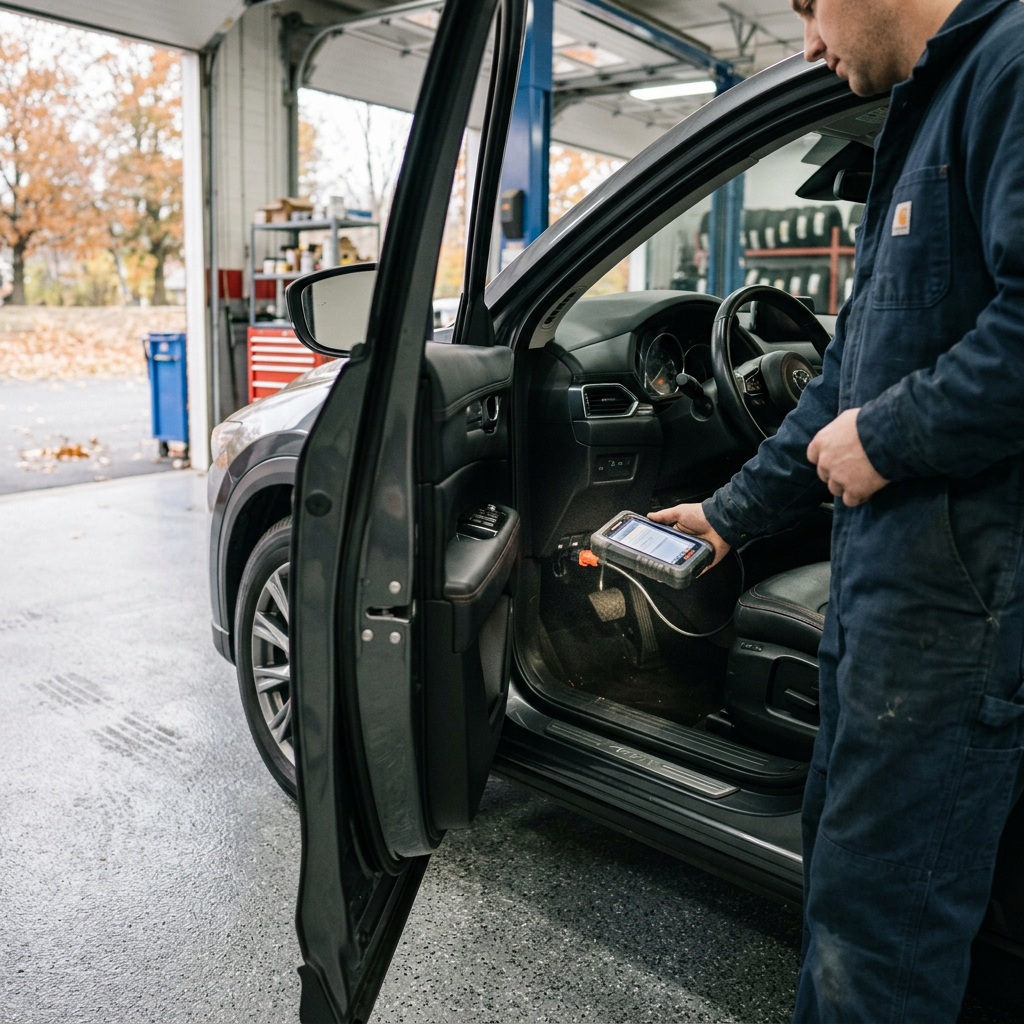
Stellantis-certified technicians undergo hundreds of hours of specialized instruction to diagnose mechanical systems and software networks accurately. Using factory diagnostic computers, our service team identifies potential system errors before they result in component failures. Our team maintains authentic components directly through our dedicated Mopar parts department.
How Does Documented Maintenance Preserve Chrysler Resale Value?
Comprehensive, documented factory service records prove to future buyers and dealership appraisers that a Chrysler vehicle received scheduled fluid changes, OEM replacement parts, and timely inspections. A documented maintenance history commands a higher trade-in value by eliminating buyer uncertainty regarding mechanical condition.
When a vehicle enters the secondary market, its recorded service history serves as tangible proof of proper ownership care. A complete history showing regular oil changes, filter updates, and milestone inspections confirms that internal components were protected from fluid starvation and thermal stress.
Vehicles with verified Mopar maintenance records routinely trade at premium values compared to similar models lacking documentation. Detailed records eliminate doubts regarding deferred maintenance, helping prospective buyers and trade-in evaluators offer higher valuations with confidence.
To review your vehicle's maintenance plan or schedule upcoming service, stop by our service center address or reach out to our service team by giving us a quick phone call.
Frequently Asked Questions About Chrysler Maintenance
Q: How does the Oil Change Indicator System inform vehicle maintenance timing?
Chrysler's Oil Change Indicator System uses engine operating software to track thermal exposure, engine revolutions, idle time, and trip distances. Instead of relying strictly on fixed mileage, the system calculates actual oil breakdown and illuminates a dashboard prompt when service is required, ensuring oil changes match actual driving conditions up to a 10,000-mile or 12-month limit.
Q: Can factory warranty repairs be completed at any authorized dealership?
Warranty repairs covered under Chrysler's 3-year/36,000-mile basic warranty or 5-year/60,000-mile powertrain warranty can be performed at any authorized Stellantis dealership service center. Performing scheduled maintenance according to factory guidelines protects these warranty protections against claims caused by deferred care.
Q: What is the difference between minor and major service visits?
Minor service visits occur every 7,500 to 10,000 miles and focus on foundational items like motor oil replacement, oil filter updates, tire rotations, and multi-point visual safety checks. Major service intervals at 30,000, 60,000, and 90,000 miles incorporate comprehensive component updates, including cabin air filters, engine air intake filters, spark plugs, drive belts, and hydraulic flushes.
Q: Is full synthetic oil strictly required for every oil change?
Chrysler engines designed for specific viscosities, such as the 3.6L Pentastar V6, require full synthetic oils meeting strict material standards like MS-6395. Using conventional oil or non-compliant formulations can compromise variable valve timing performance and lead to premature component wear.
Q: How often should engine air filters and cabin filters be replaced?
Engine and cabin air filters are typically scheduled for replacement every 30,000 miles under normal driving conditions. However, driving on unpaved roads or in dusty environments may require more frequent updates to preserve engine air intake efficiency and maintain clean cabin airflow.
Schedule Your Chrysler Recommended Maintenance at Valor CDJR
Keeping up with Chrysler factory-recommended service intervals is the most effective way to protect your vehicle's mechanical integrity, preserve fuel efficiency, and ensure long-term reliability on every drive. From routine oil changes and brake inspections to major 30,000, 60,000, and 90,000-mile milestone services, using authentic Mopar parts and relying on factory-certified technicians preserves your vehicle's performance and trade-in value.
Our team at Valor CDJR is dedicated to providing transparent, professional care for your Chrysler. Whether you drive a Pacifica or another Chrysler model, our service center is fully equipped with advanced diagnostic equipment and genuine components to handle all your maintenance needs efficiently.
Take the next step in protecting your automotive investment today. Contact our team to speak with a service advisor, order genuine replacement parts, or conveniently reserve your next maintenance appointment using our online service scheduling tool.