Blog / Maintenance & Service

What Is RAM Smart Exhaust Braking on 6.7L Cummins Turbo Diesel Models?

What Is RAM Smart Exhaust Braking on 6.7L Cummins Turbo Diesel Models?

What Is Ram Smart Exhaust Braking on 6.7L Cummins Turbo Diesel Models?

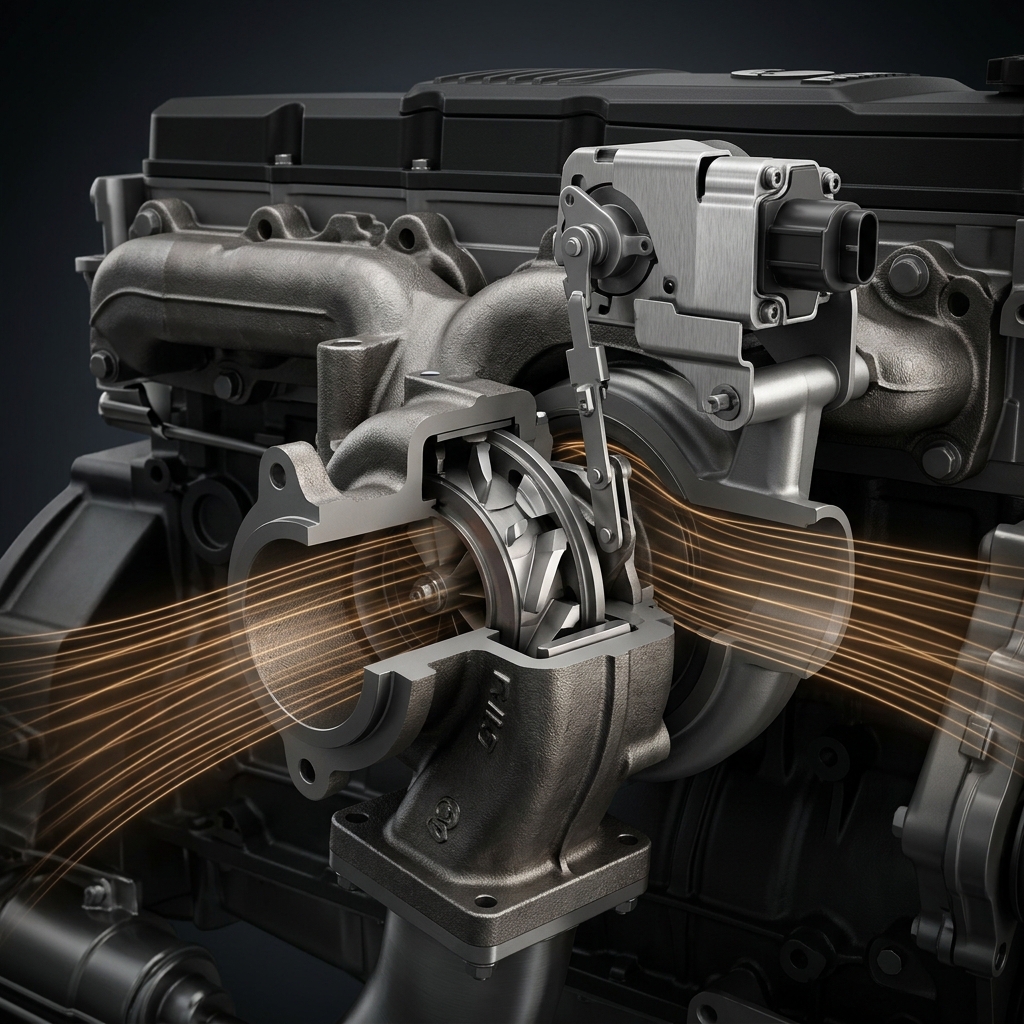
Cutaway view of a car engine variable geometry turbocharger showing internal turbine blades and glowing airflow lines. (Representative image for illustration purposes only. Actual vehicle may vary based on trim and configuration.)
When you are towing a 16,000-pound livestock trailer or a heavy fifth-wheel camper down steep, rolling grade shifts in central Kansas, keeping control without overheating your vehicle's service brakes is paramount. Ram Heavy Duty trucks equipped with the legendary 6.7L Cummins Turbo Diesel engine feature an advanced technology designed specifically for this challenge: Ram Smart Exhaust Braking.
To get a deep technical breakdown and practical advice on operating this system, we sat down with Mike Hogg, Service Director at Valor CDJR in Junction City, Kansas. With over 20 years of hands-on experience servicing heavy-duty Chrysler, Dodge, Jeep, and Ram powertrain systems, Mike brings invaluable expertise to truck owners navigating highway grades across Riley County and beyond.
Interviewer: Mike, to start off with the bottom line: how would you summarize Ram Smart Exhaust Braking for a driver who is new to the 6.7L Cummins Turbo Diesel platform? Mike Hogg: At its core, Ram Smart Exhaust Braking is an intelligent electronic engine braking feature that utilizes the Cummins engine's Variable Geometry Turbocharger (VGT) to restrict exhaust gas flow out of the manifold. By restricting that flow, it creates backpressure in the engine cylinder during exhaust strokes. That backpressure acts like a natural retarding force against the pistons, smoothly slowing down the vehicle without relying heavily on your traditional mechanical service brakes. What makes the 'Smart' setting unique compared to a traditional mechanical Jake brake or older exhaust brakes is that it actively senses pedal position and vehicle momentum to hold a steady downhill speed automatically.

Q: How Does Ram Smart Exhaust Braking Work on Flint Hills Grade Downhills?

Interviewer: Drivers around Junction City, Manhattan, and along I-70 know how quickly the Flint Hills topography can stress a brake system, especially when pulling heavy equipment. How does this system handle those specific downhill stretches? Mike Hogg: That is where the engineering really shines. When you are pulling a heavy load down a steep incline like the grades along K-18 or I-70 through the Flint Hills, gravity is constantly trying to accelerate your vehicle rig. If you rely solely on friction brakes—your foot pedal pushing pads against rotors—those brakes quickly generate extreme friction heat. That leads to brake fade, where the pads lose their effectiveness, and in severe cases, rotor warping or complete fluid boiling. When you engage Smart Exhaust Braking on your 6.7L Cummins, an electronic actuator swivels internal sliding nozzles inside the variable-geometry turbocharger into a closed restriction position. This creates measurable retarding horsepower inside the engine cylinder block.
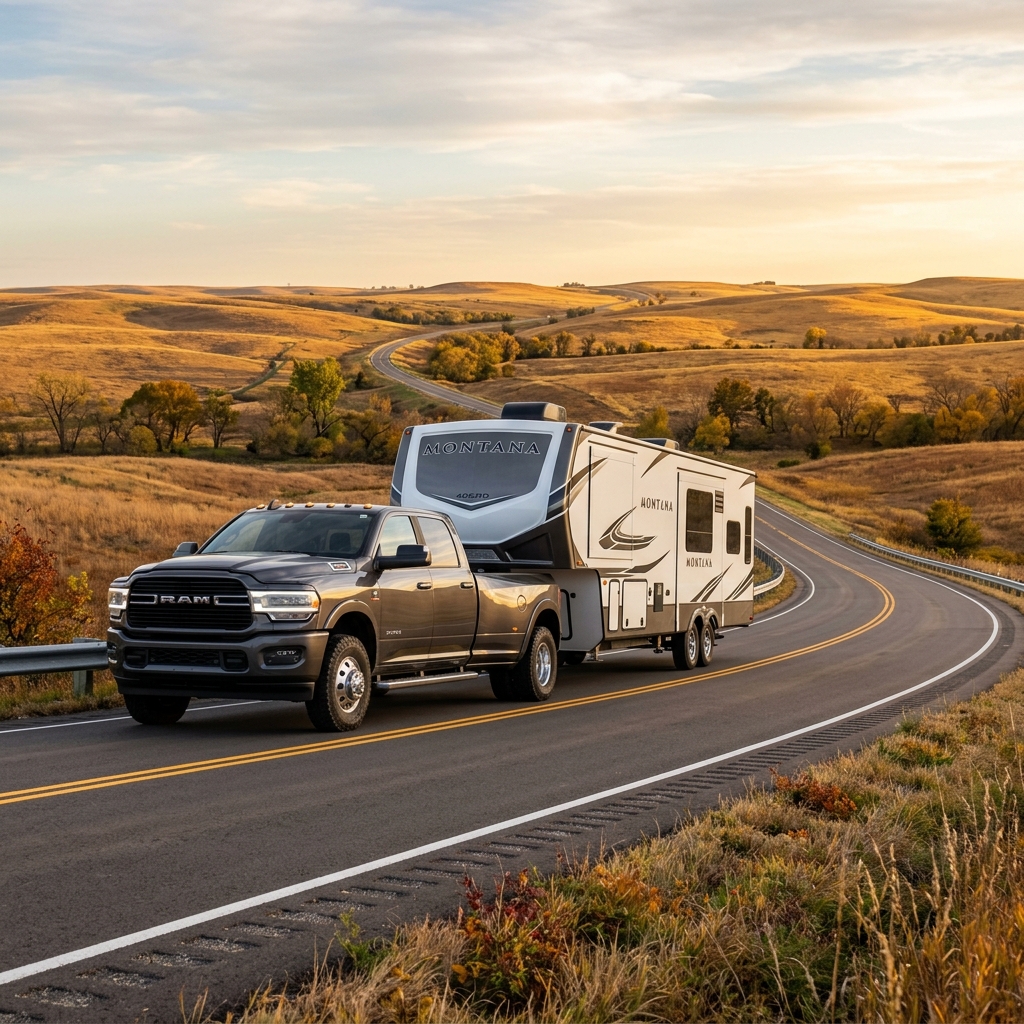
A grey Ram dually pickup truck towing a white Montana fifth-wheel RV along a winding two-lane road in rolling hills. (Representative image for illustration purposes only. Actual vehicle may vary based on trim and configuration.)
Mike Hogg (continued): In Smart mode, if you gently apply the foot brake to bring your speed down from 65 mph to 55 mph while descending a 6% grade and then release the brake pedal, the Cummins VGT system locks on to 55 mph. It modulates backpressure smoothly to maintain that precise speed without requiring you to ride the brake pedal. It keeps your service brakes cool, completely fresh, and ready in reserve in case of emergency stops.

Q: What Is the Difference Between Full Exhaust Braking and Smart Exhaust Braking?

Interviewer: On the Ram instrument cluster, owners can toggle between Full Exhaust Braking, Smart (Auto) Exhaust Braking, and Off. What is the operational distinction between Full and Smart modes? Mike Hogg: It comes down to aggressiveness versus variable cruise-like speed holding. • Full Exhaust Braking (Yellow Icon): The instant you lift completely off the accelerator pedal, the VGT sliding nozzle closes to maximum restriction. It delivers 100% available backpressure deceleration immediately. This is ideal when descending extremely steep mountain passes or carrying maximum payload ratings where you want instant, maximum slowing power the second your foot leaves the gas pedal. • Smart Exhaust Braking (Green Auto Icon): In Smart mode, the engine computer monitors your braking inputs. It measures how fast the vehicle is accelerating or decelerating. Rather than slamming on full exhaust backpressure, it dynamically varies nozzle restriction to hold whatever vehicle speed you set when you let off the brakes. It creates a smooth, continuous downhill descent that significantly reduces driver fatigue during long trips across Kansas highways.

Exhaust Brake Feature

Full Exhaust Brake Mode

Smart / Auto Exhaust Brake Mode

Dashboard Indicator

Yellow Engine Brake Icon

Green 'Auto' Engine Brake Icon

Activation Trigger

Immediate upon zero accelerator pedal input

Initiated when driver presses service brake to set target speed

Backpressure Modulation

Maximum available retarding power immediately

Variable VGT modulation to lock and hold target mph

Primary Driving Application

Extreme steep grades, maximum payload, heavy descent

Highway towing, rolling hills, varying traffic flows

Q: How Long Do OEM Mopar Brake Pads Usually Last on Ram Turbo Diesels?

Interviewer: Mike, friction brake pad wear is a major cost factor for heavy truck owners. How much difference does consistent exhaust brake usage make on pad longevity? Mike Hogg: The difference is night and day. On heavy-duty Ram 2500 and 3500 trucks where drivers never use their exhaust brake, we frequently see original front friction pads wearing down to 3mm or less in 25,000 to 30,000 miles, especially if they tow heavy trailers.
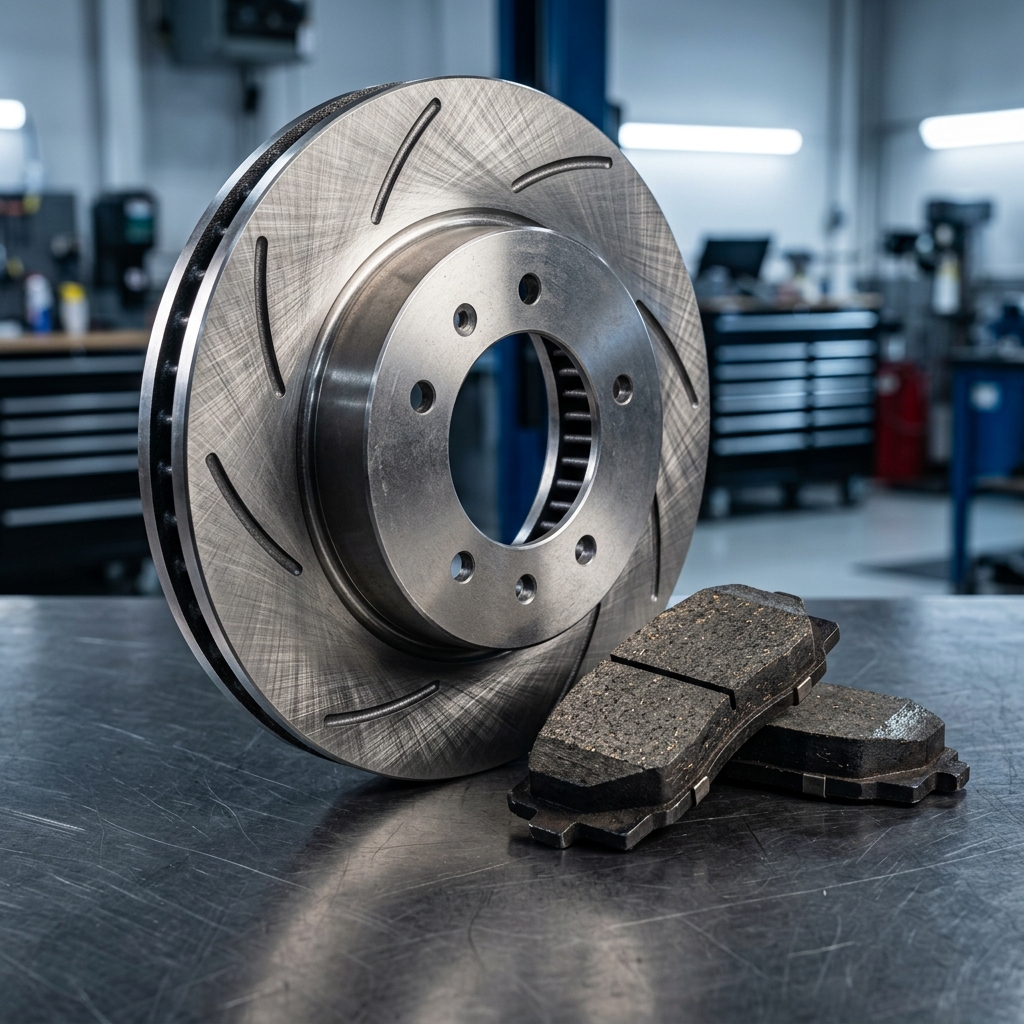
Slotted automotive brake rotor standing next to a set of brake pads on a metal workbench in a garage. (Representative image for illustration purposes only. Actual vehicle may vary based on trim and configuration.)
Mike Hogg (continued): Conversely, drivers who keep their Smart Exhaust Brake engaged consistently can easily extract 50,000, 70,000, or even 80,000+ miles out of a set of genuine OEM Mopar brake pads. The engine performs 60% to 80% of the stopping duty during typical highway descents.
Mopar Brake Compounds: Genuine Mopar heavy-duty brake pads available at Valor CDJR feature specific semi-metallic and ceramic-blend compounds engineered precisely for high thermal transfer and low rotor wear. Keeping original equipment Mopar components on your Cummins ensures seamless integration with factory anti-lock braking (ABS) and electronic stability control systems.

Q: What Are the Warning Signs That a CDJR Vehicle Needs New Brake Pads?

Interviewer: Even with active Smart Exhaust Braking, friction pads eventually wear down. What physical and sensory indicators tell a Ram or CDJR vehicle owner that service is required? Mike Hogg: Heavy-duty truck stopping systems communicate wear through clear physical symptoms. Recognizing these early prevents costly damage to brake rotors and calipers: 1. High-Pitched Acoustic Wear Squeal: Mopar brake pads include mechanical metal wear tabs. When pad friction material wears down to approximately 2mm to 3mm, these tabs contact the rotor, creating a persistent metallic squeal under mild braking. 2. Brake Pedal Vibration or Pulsation: If you feel a rhythmic thumping or vibration through the brake pedal or steering wheel while slowing, it indicates thermal warping or uneven friction material transfer across the rotors.
3. Deep Metallic Grinding Noise: A harsh grinding sound means friction material is completely depleted, and the metal backing plate is cutting directly into the rotor surface. Immediate service is required to prevent caliper damage. 4. Spongy Brake Pedal or Extended Travel: A pedal that feels mushy or sinks close to the floorboard can signal air in hydraulic brake lines, low fluid levels, or extreme pad wear. 5. Dashboard Brake Warning Lights: If your instrument panel illuminates the ABS light, electronic brake control light, or red brake fluid warning light, bring your truck in right away. You can also Call us at (785) 238-5114 to consult directly with our service team at Valor CDJR.

Q: How Does Ram Smart Exhaust Braking Compare to Jeep Max Regeneration Mode?

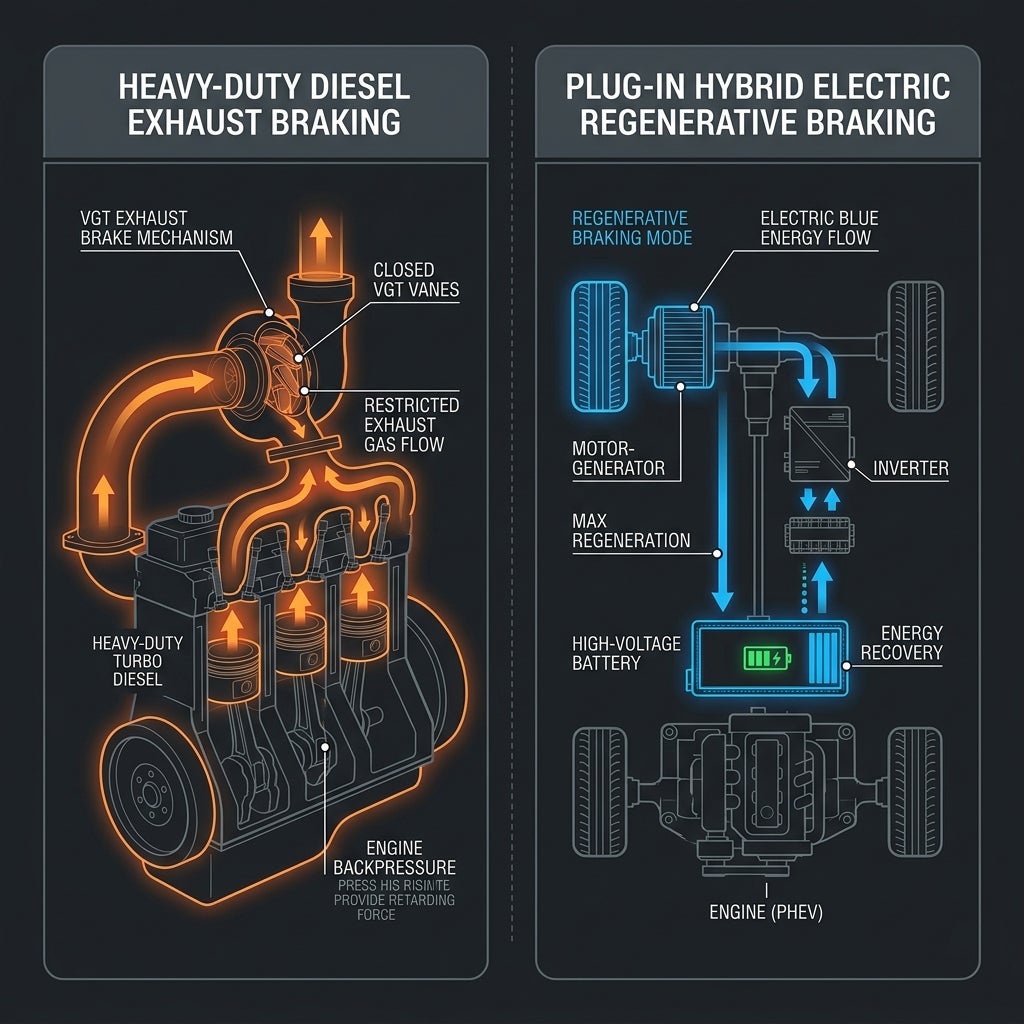
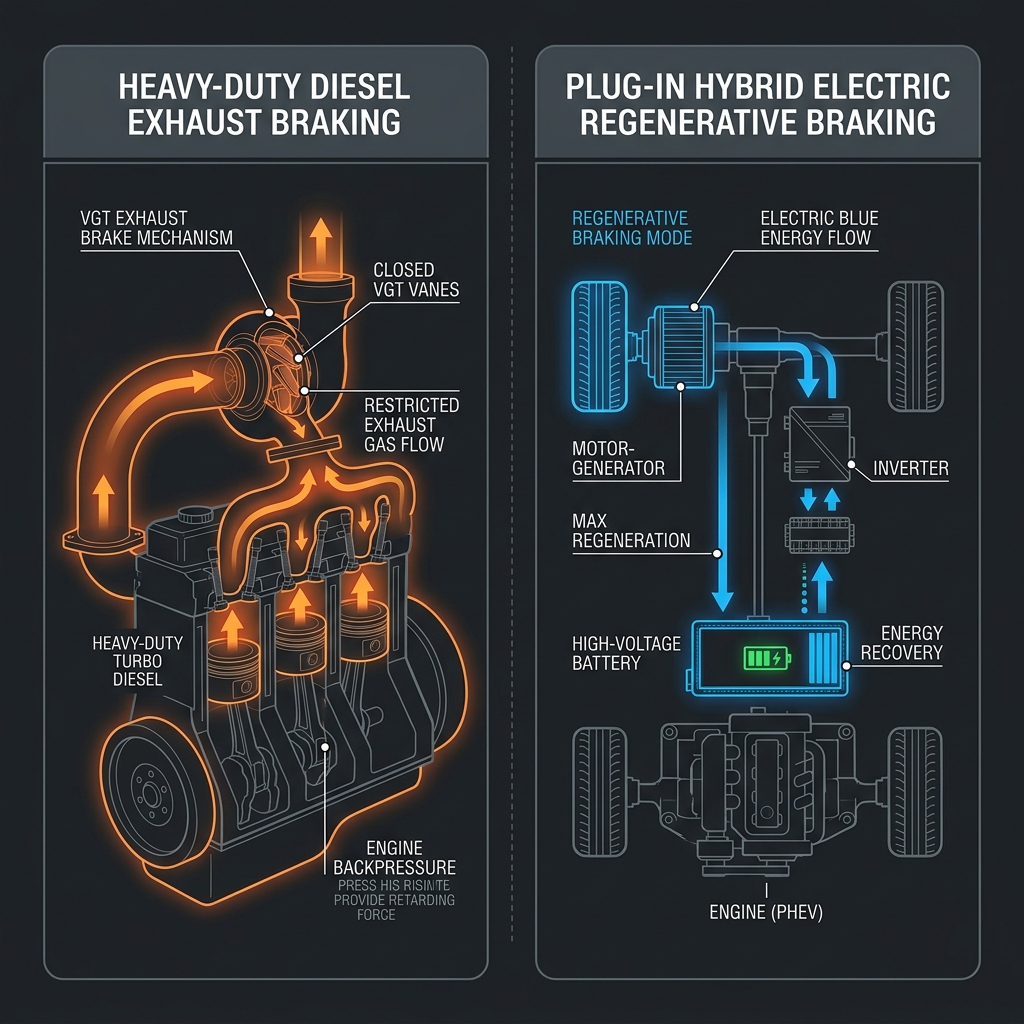
Interviewer: We often hear drivers ask about how different CDJR vehicles preserve friction brakes. What is Jeep Max Regeneration mode, and how does mechanical exhaust braking compare to high-voltage electric regeneration on plug-in hybrids like the Wrangler or Grand Cherokee 4xe? Mike Hogg: That is a great comparison because while the underlying engineering technologies are completely different, their primary goal—reducing friction brake wear while maintaining precise speed control—is identical.
Visual diagram comparing heavy-duty diesel exhaust braking with plug-in hybrid electric regenerative braking systems. (Representative image for illustration purposes only. Actual vehicle may vary based on trim and configuration.)
Mike Hogg (continued): On a Ram 6.7L Cummins Turbo Diesel, braking force is purely mechanical and pneumatic. The VGT turbo nozzle restricts exhaust gas, turning the diesel engine into an air compressor that physically holds back a 20,000+ lb combined weight rig. In contrast, Jeep 4xe Max Regeneration mode uses high-voltage electric generator-motors. When you lift off the accelerator pedal in a Jeep Wrangler 4xe or Grand Cherokee 4xe, the electric traction motor reverses function, turning vehicle kinetic energy into electrical current fed back into the 17.3 kWh lithium-ion battery pack. Both systems vastly extend friction pad lifespan, but Ram uses compressed exhaust backpressure while Jeep uses electromagnetic force.

Q: Does Mopar Vehicle Protection Include Brake Wear-and-Tear Coverage?

Interviewer: Many buyers ask about warranty coverage. Does Mopar Vehicle Protection cover brake components and turbo exhaust brake hardware? Mike Hogg: It is crucial to distinguish between mechanical powertrain components and consumable wear items. Factory warranties and extended Mopar Vehicle Protection (MVP) plans offer robust protection, but they apply differently.
Turbo Actuator & Mechanical Components: The variable geometry turbocharger assembly, electronic VGT actuator, exhaust valve hardware, and control modules are fully covered under Cummins Powertrain warranties and MVP Maximum Care plans. If the VGT actuator fails or sticks, replacement is covered under warranty guidelines.
Friction Wear Items & Maintenance: Standard brake pads, rotors, and shoes are categorized as wear-and-tear friction components. Unless covered under specific Mopar Service Contracts or initial delivery adjustments (such as 12-month/12,000-mile basic coverage), routine pad replacements are customer maintenance. You can order original factory replacement parts through our Parts Department.

Q: What Diesel Service Prevents VGT Turbo Soot Accumulation and Actuator Failure?

Interviewer: Mike, because Ram Smart Exhaust Braking relies directly on the variable geometry turbocharger's moving internal nozzle mechanism, soot and carbon buildup can present a challenge over time. What maintenance routines prevent VGT sticking? Mike Hogg: That is one of the most important operational points for any 6.7L Cummins diesel owner. Soot is an inherent byproduct of diesel combustion. If a truck undergoes excessive short city trips or prolonged idling without reaching full operating temperature, unburned soot deposits on the sliding VGT nozzle ring.
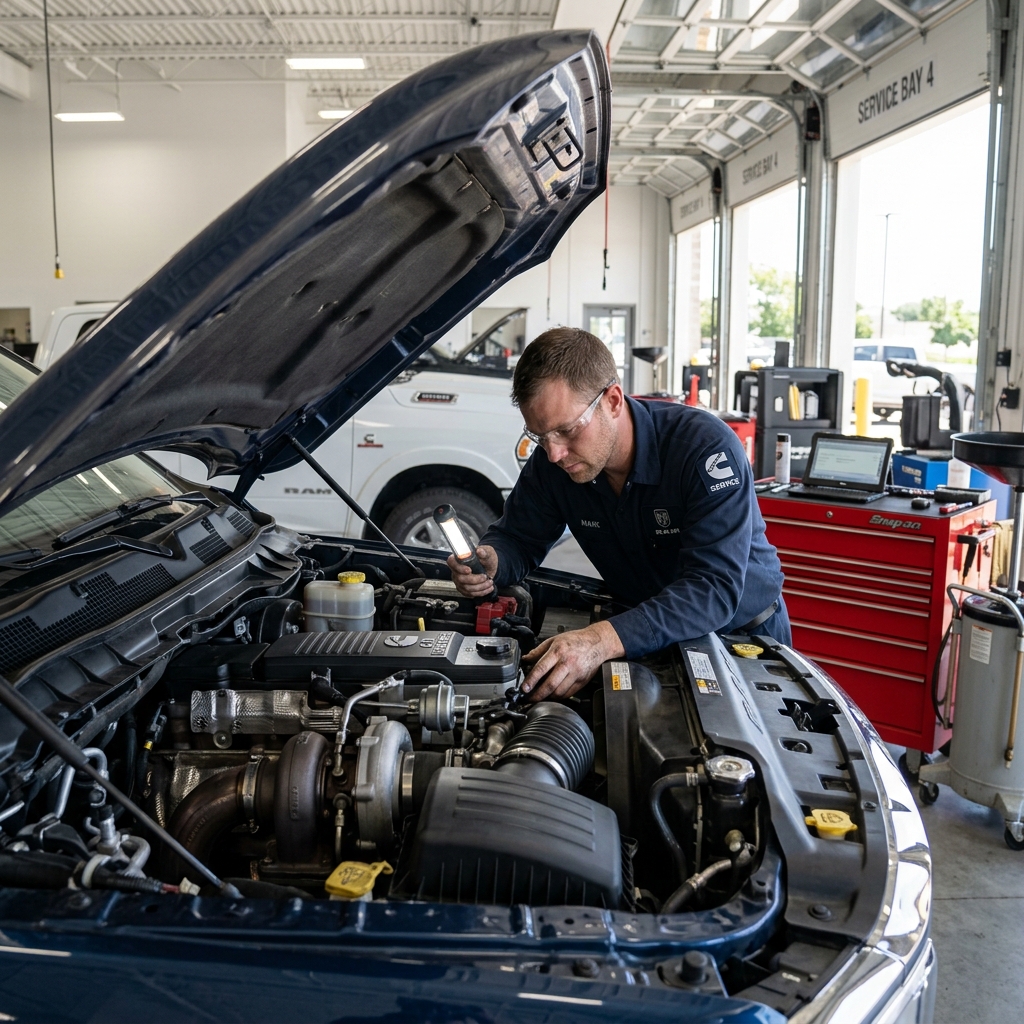
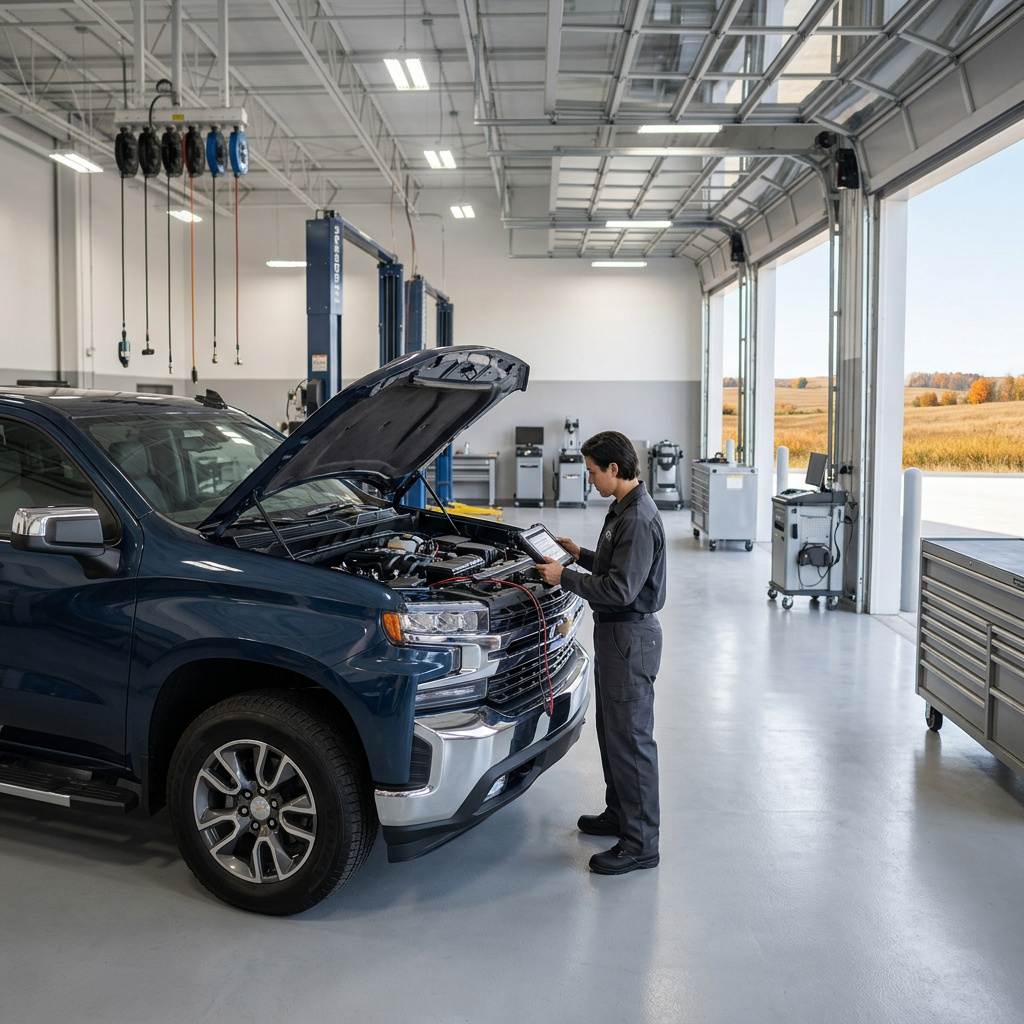
A mechanic wearing safety glasses uses a hand light to inspect a blue truck engine inside an auto service garage. (Representative image for illustration purposes only. Actual vehicle may vary based on trim and configuration.)
Mike Hogg's Top Maintenance Practices for VGT Longevity: 1. Run the Exhaust Brake Regularly: Turn your Smart Exhaust Brake on frequently, even when driving unloaded around Junction City and Manhattan. Cycling the nozzle sliding mechanism prevents soot from caking and binding the mechanical linkages. 2. Avoid Prolonged Excessive Idling: Idling cools down combustion chambers, leading to incomplete combustion and heavy soot loading inside the turbo charger manifold. 3. Strict Fuel & Oil Maintenance: Change your engine oil and fuel filters at recommended Mopar factory intervals. Clean oil prevents thermal coking inside the liquid-cooled VGT center housing bearings. 4. Perform Highway Drive Cycles: Ensure your truck experiences periodic extended highway drives under load to allow active Diesel Particulate Filter (DPF) regeneration and naturally burn off carbon deposits.

Q: Are CDJR Brake Service Coupons and Specials Available Near Junction City?

Interviewer: What seasonal offers or service specials does Valor CDJR offer local drivers seeking maintenance for their heavy-duty braking systems? Mike Hogg: We regularly update our service incentives to keep premium factory maintenance affordable. Fall is an especially critical season to inspect heavy-duty brake systems before winter frost and towing demands arrive. Our seasonal promotions often include: • Mopar OEM brake pad replacement offers across front and rear axles • Brake rotor resurfacing and precision machining packages • Full multi-point brake system inspections including brake line hydraulic pressure checks • Heavy-duty Cummins diesel maintenance packages (fuel filters, oil service, DPF check)
Fast Service Options: For routine maintenance, fluid checks, or initial brake pad wear thickness measurements, drivers can take advantage of our Express Lane service for fast turnarounds without requiring a lengthy appointment. Whether you need a quick pad thickness check or complete heavy-duty rotor replacement, our certified technicians ensure your truck stops safely every time.

Q: Where Can I Get CDJR Brake Service in Junction City, Kansas?

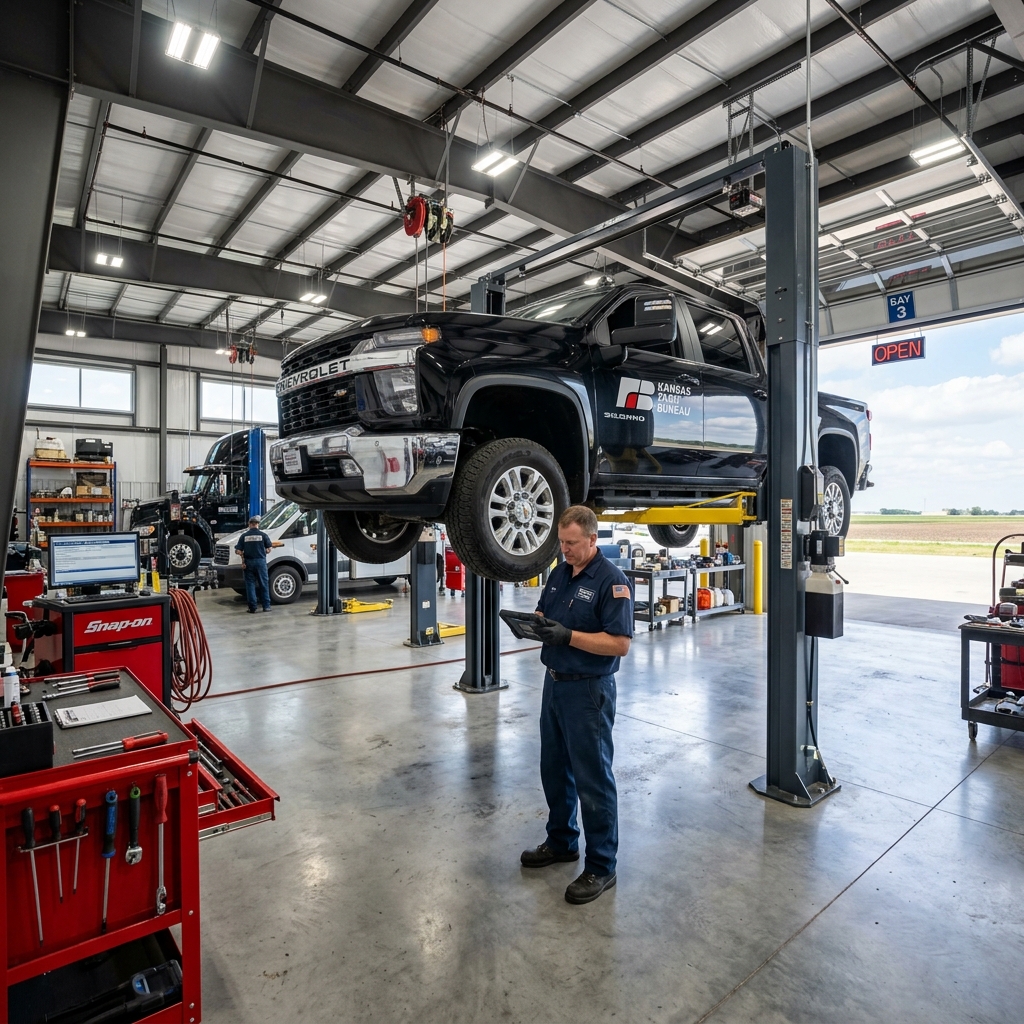
State-of-the-Art Facility: Valor CDJR operates a modern service center equipped with high-capacity heavy-duty lifts specifically engineered to accommodate Ram 2500, 3500, 4500, and 5500 chassis cabs and commercial vehicles.
A mechanic using a tablet stands underneath a black pickup truck raised on a hydraulic lift inside an auto shop. (Representative image for illustration purposes only. Actual vehicle may vary based on trim and configuration.)
Cummins Certified Techs: Our factory-trained service team is lead by Service Director Mike Hogg (20 years experience), ensuring expert diagnostic accuracy for VGT exhaust braking systems and Cummins diesels.
Location & Directions: Conveniently located at 1825 Goldenbelt Blvd, Junction City, KS 66441. Get Directions to Valor CDJR for expert heavy-duty diesel and brake service.

Expert Summary: Maximizing Towing Safety and Brake Life with Ram Smart Exhaust Braking

Mike Hogg's Final Takeaway: Ram Smart Exhaust Braking is one of the standard-setting innovations for heavy-duty towing safety. By understanding how to activate Smart mode, using it consistently during daily driving to keep the VGT turbo mechanism clear of soot, and replacing worn components with genuine OEM Mopar brake friction parts, you maximize both vehicle safety and long-term ownership value. Whether you are upgrading your truck from our New Vehicle Listings, looking for a pre-owned HD diesel in our Used Vehicle Listings, or evaluating commercial options in our Commercial Vehicle Inventory, our team is dedicated to supporting your towing needs across Kansas.

Schedule Your Ram Turbo Diesel Service at Valor CDJR Today

Valor Automotive logo featuring a blue shield with a red V and white A monogram above company text.
Ready to experience peak stopping performance and ensure your 6.7L Cummins Turbo Diesel is operating flawlessly? Trust the experts at Valor CDJR. You can evaluate your vehicle value with our Trade In Evaluation tool, contact the dealership for current financing information, or book your next service directly through our Service Scheduler. Visit us at 1825 Goldenbelt Blvd, Junction City, KS 66441 or Call us at (785) 238-5114 today!

Posted in:

Related Posts

4x4 Low Range Guide: Expert Interview with Valor CDJR

4x4 Low Range Guide: Expert Interview with Valor CDJR

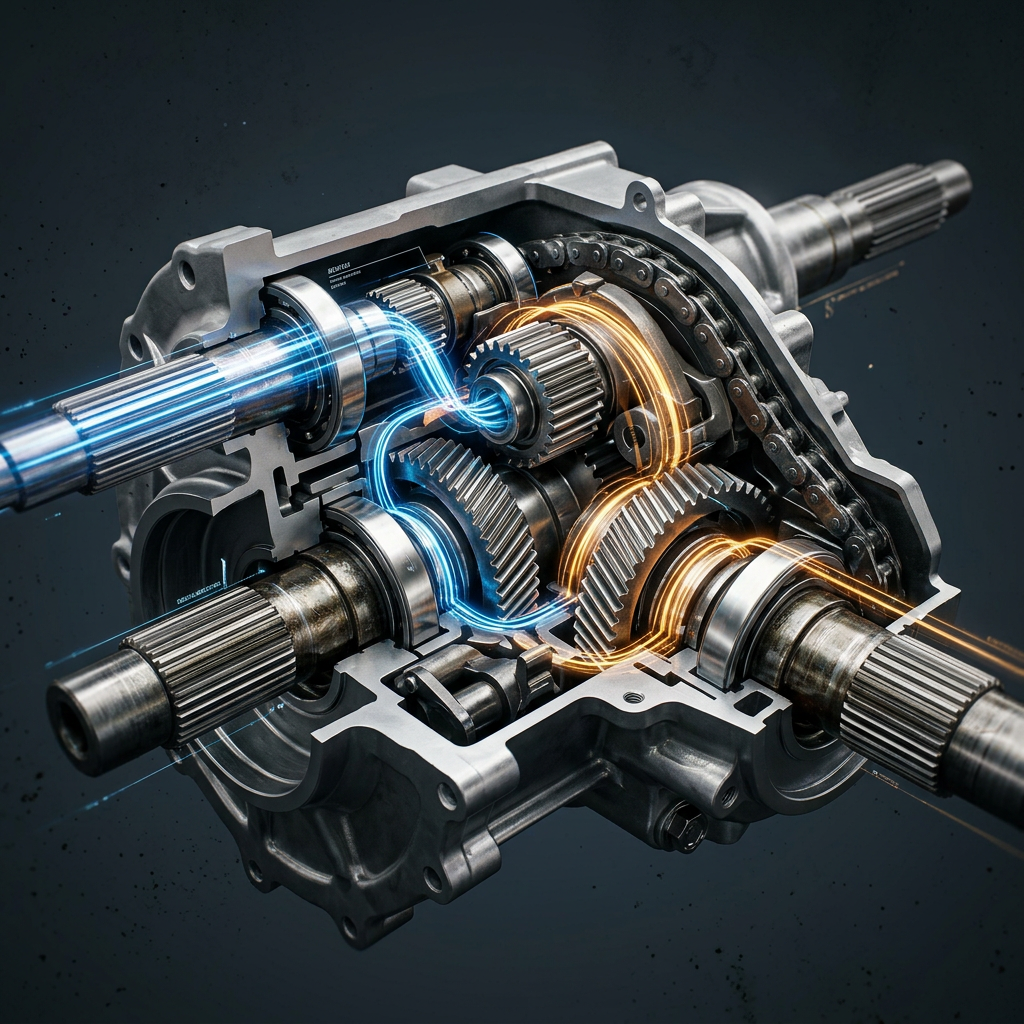
4x4 Low Range Guide: Expert Interview with Valor CDJR 4x4 low range is an auxiliary gear setting inside a four-wheel-drive transfer case that uses secondary planetary gearing to reduce wheel rotation speed while multiplying torque delivered to the axles. This mechanical reduction trades road speed for maximum low-end pulling power and precise vehicle control on treacherous terrain. Today, we sit down with Mike Hogg, Service Director at Valor CDJR, who brings 20 years of hands-on automotive expertise to explain how low-range gearing operates, when to engage it, and how to protect your driveline. Q: What is 4WD Low range and how does it work? A: 4WD Low range operates by routing engine power through a secondary planetary gear set inside the transfer case to deliver an extra stage of gear reduction before torque reaches the drive shafts. In standard two-wheel drive or four-wheel drive high range, power passes through the transfer case at a direct 1:1 drive ratio or through a high-speed output gear. When you select low range, internal shift forks slide a lock sleeve that forces input torque through planet gears spinning within a stationary ring gear. This mechanical gear set slows shaft rotation while multiplying total engine torque delivered to all four wheels. That torque multiplication changes how your vehicle interacts with ground surfaces. By trading rotational wheel speed for raw torque, low range allows your truck or SUV to crawl over obstacles at a walking pace without requiring high engine revs or slipping the clutch or torque converter. This mechanical advantage provides exceptional throttle control over loose gravel, deep mud, or steep inclines across local river valleys. If you ever want to see how these mechanical systems operate up close, our technicians at our Junction City service center can walk you through the transfer case setup during your next scheduled maintenance. You can also give us a call at (785) 238-5114 with any specific technical questions about your vehicle's driveline. Q: When should you shift into 4WD Low instead of 4WD High? A: You should shift into 4WD Low whenever driving situations demand slow, controlled wheel speed alongside maximum torque, such as creeping over steep rock obstacles, descending extreme unpaved inclines, or wading through deep mud. 4WD High is intended for slippery conditions where you still need momentum and higher road speeds, like driving across snow-covered highways or dirt roads. In contrast, low range shines when momentum is dangerous or impossible, and you need pure gear reduction to keep the vehicle moving forward smoothly. Using 4WD Low on dry, high-traction pavement causes driveline binding because the front and rear axles are mechanically locked together and forced to turn at identical speeds. On high-friction surfaces, tires cannot slip during turns, sending intense mechanical stress back into the transfer case gears, axle shafts, and universal joints. Drivers exploring the rolling Flint Hills trails around Manhattan need to reserve low range strictly for off-pavement, low-speed challenges. If you are shopping for a broad selection of vehicles equipped with factory low-range transfer cases, explore our new Jeep inventory to compare model capabilities. Q: Can you shift from 4WD High to 4WD Low while driving? A: No, you cannot shift from 4WD High to 4WD Low while driving at speed because internal transfer case gears require the vehicle to be stopped or moving under 3 mph with the transmission placed in Neutral to mesh cleanly without gear clash. First-time 4x4 owners often ask if they can pull the transfer case lever or turn the electronic dial while cruising down the highway, but doing so forces non-synchronized planetary gears against fast-spinning input shafts, which causes severe gear grinding and expensive mechanical failure. To execute a safe shift into 4WD Low, bring your vehicle to a complete stop or let it roll forward very slowly at a crawling pace. Shift your transmission selector into Neutral, which removes active torque load from the transfer case input shaft. Engage the low-range switch or pull the transfer case lever firmly into the 4L detent, then return your transmission to Drive or First gear. If you are looking for a capable pre-owned rig with a proven shift-on-the-fly or manual transfer case, take a look through our pre-owned 4x4 truck lineup. Q: What is a low range crawl ratio and how is it calculated? A: A crawl ratio measures total mechanical torque multiplication from engine to wheels, calculated by multiplying the transmission first-gear ratio by the transfer case low-range ratio and the final-drive axle ratio. The mathematical formula is simple: transmission first gear ratio multiplied by transfer case low-range ratio multiplied by axle differential ratio. A higher overall crawl ratio means the wheels turn slower relative to engine rpm, giving you finer throttle control and higher effective torque at the tire contact patch. "Understanding crawl ratio helps drivers maintain absolute control on steep slopes without constantly riding the brake pedal." For example, a 2026 Jeep Wrangler Rubicon equipped with the Rock-Trac transfer case features a 4.0:1 low-range ratio. When paired with an automatic transmission, this setup delivers a 77.2:1 crawl ratio. The six-speed manual configuration paired with standard 4.10 axles yields an 84.1:1 crawl ratio, while choosing the optional 4.88:1 axle ratio elevates the total crawl ratio to roughly 100:1. High crawl ratios allow the engine's compression to naturally slow the vehicle on steep downhill descents, reducing reliance on wheel brakes. If you are thinking about upgrading to a vehicle with advanced trail gearing, our team can assist by valuing your vehicle trade-in. Q: Is 4WD High or 4WD Low better for pulling a boat up a steep boat ramp? A: 4WD Low is significantly better for pulling a heavy boat up a steep, slick boat ramp because torque multiplication prevents wheel spin and eliminates excessive heat buildup inside your automatic transmission. Wet concrete ramps covered in algae offer very little traction, and launching a heavy load uphill requires significant power at zero road speed. In 4WD High, drivers frequently stomp on the accelerator pedal, causing tires to break traction or forcing the transmission torque converter to generate extreme fluid temperatures while trying to move the load. When you select low range on a boat ramp, the extra gear reduction delivers instant pulling power at idle or minimal throttle input. This allows your tires to maintain mechanical grip on slippery concrete while your engine and transmission operate effortlessly without overheating. Heavy-duty haulers like the 2026 Ram 2500 Power Wagon leverage low range to pull massive trailers out of challenging inclines without straining the driveline. Before taking your boat out for the season, consider getting pre-approved for financing on a tow vehicle engineered for high-capacity hauling. Q: How does transfer case planetary gear reduction multiply torque? A: Planetary gear reduction multiplies torque by locking the outer ring gear while driving the center sun gear from the transmission output, forcing the surrounding planet gears to rotate around the ring gear at a reduced rotational speed. Because the planet carrier attached to the output shaft rotates slower than the input sun gear, power output decreases in rotational speed and increases proportionally in force. Torque multiplication follows an inverse mechanical relationship: if shaft speed is cut in half, output torque is effectively doubled at the transfer case output shaft. Standard light-duty transfer cases typically offer low-range reduction ratios between 2.0:1 and 2.72:1, whereas specialized off-road systems feature 3.0:1 to 4.0:1 reductions. This mechanical multiplication happens entirely through precision-cut steel gears without demanding extra horsepower from the engine. Keeping these gear sets properly lubricated with fresh fluid prevents metal-on-metal wear and gear breakdown. If you ever need fluid flushes or internal seal replacements, our specialized OEM parts department supplies genuine factory fluids and components designed for your exact driveline specs. Q: How much does it cost to repair or replace a 4x4 transfer case, and what maintenance keeps it healthy? A: Replacing a four-wheel-drive transfer case typically costs between $1,500 and $4,500 including parts and labor, depending on whether you install a new, remanufactured, or unitized assembly. Minor repairs like replacing leaky output shaft seals, shift motor actuators, or fluid pumps fall on the lower end of the cost spectrum, whereas complete internal gear failure requiring a replacement unit occupies the upper end. Preventing these major costs comes down to consistent maintenance and operating your transfer case according to manufacturer guidelines. Regular transfer case fluid changes remove worn friction material and metallic particles before they damage planetary gear teeth or chain drives. It is equally vital to address any fluid leaks immediately and avoid driving in part-time 4WD modes on dry pavement. If you suspect your transfer case is grinding, slipping, or leaking fluid, drop by our dealership address at 1825 Goldenbelt Blvd for a complete diagnostic evaluation. You can reach our service advisors directly by calling (785) 238-5114 or save time by scheduling your service appointment online today. © 2026 Valor CDJR. All rights reserved.
10% Service discount for Military and Veterans at Valor

10% Service discount for Military and Veterans at Valor

10% Service discount for Military and Veterans at Valor What Is the service event for military and veterans at Valor CDJR? The service event for military and veterans takes place from Wednesday, November 11, 2026 at 10:40 AM through Monday, November 11, 2030 at 10:40 AM at 1825 Goldenbelt Blvd, Junction City, KS 66441. This dedicated program provides vehicle maintenance and factory-certified repairs for active duty personnel, veterans, and military families living in Junction City and Manhattan. Attendees gain access to certified Chrysler, Dodge, Jeep, and Ram technicians, genuine parts, and expert care. Valor CDJR hosts this multi-year initiative to honor dedicated service members and ensure their vehicles remain in peak operating condition. Whether your vehicle requires routine oil adjustments, brake inspections, tire rotations, or multi-point system diagnostics, our service center delivers reliable vehicle care. Drivers can reach our service staff at (785) 238-5114 to discuss appointment availability or ask questions regarding vehicle maintenance schedules. During your visit, expert service advisors guide you through comprehensive vehicle assessments designed to maintain engine performance and roadside safety. Vehicles that regularly travel the rolling Flint Hills roads in Manhattan face demanding driving conditions that require consistent maintenance. Our service team utilizes specialized diagnostic machinery and genuine Mopar fluids and components to keep every system working smoothly. Vehicles ranging from the Ram 1500 with its 3.6L Pentastar V6 engine to the family-focused Chrysler Pacifica receive detailed care tailored to manufacturer specifications. Performance models like the Dodge Charger and off-road vehicles like the Jeep Wrangler benefit from factory-trained technicians who understand exact mechanical requirements. Active duty personnel connected to Fort Riley rely on dependable transportation every day, making precise automotive service essential for routine base commutes and long-distance travel. Visitors to our service facility experience a welcoming environment focused on clear communication and practical vehicle care. By scheduling service during this event, military members and veterans maintain their vehicle warranty coverage and enhance long-term reliability on every drive. Which Vehicle Maintenance Services and Genuine Parts Are Covered in Junction City? The service event for military and veterans covers a wide array of routine vehicle maintenance procedures, system diagnostics, and factory-authorized component replacements at Valor CDJR. Active duty personnel, veterans, and military families can utilize this event for essential vehicle upkeep, including synthetic oil changes, tire rotations, brake system inspections, and battery testing. Our certified technicians perform every maintenance task using specialized diagnostic equipment and OEM components tailored specifically to Chrysler, Dodge, Jeep, and Ram vehicles. Whether your truck requires a heavy-duty fluid exchange before hauling or your family SUV needs fresh brake pads, our service team ensures optimal reliability on every route through Junction City. Covered services and OEM components include: Engine oil and filter replacement utilizing premium synthetic fluids. Brake pad installation, rotor resurfacing, and fluid flush services. Battery health diagnostics, terminal cleaning, and replacement with high-performance battery units. Suspension checks, wheel alignments, and multi-point vehicle safety audits. Replacement of factory air filters, cabin air filters, wiper blades, and drive belts through our Parts Department. Using original equipment manufacturer components preserves your vehicle's engineering standards, factory warranty coverage, and overall operating life. Maintaining your vehicle with authentic components ensures that systems like 4WD transfer cases, heavy-duty cooling networks, and advanced safety tech function according to factory specifications. Drivers interested in evaluating maintenance options alongside potential model upgrades are also welcome to browse our New Vehicle Listings while visiting the dealership. To lock in a convenient time for your vehicle care, you can Service Scheduler prior to your visit. How Can Military Families and Veterans Schedule Maintenance at Valor CDJR? Military families and veterans can easily reserve a vehicle maintenance appointment at Valor CDJR online through our intuitive digital portal or by visiting our service center in person. Booking ahead guarantees a dedicated time slot for your truck, SUV, or sedan during the ongoing service event for military and veterans. Our online reservation tool allows service customers to select convenient dates and specify exact vehicle requirements, whether your Ram truck requires a synthetic oil change, your Jeep Wrangler needs a multi-point 4WD system inspection, or your Chrysler Pacifica requires brake rotor maintenance. Active duty service members balancing duty schedules or commuters managing busy routines in Manhattan will appreciate a streamlined scheduling process designed to get vehicles into the work bay without unnecessary delays. When arriving for your scheduled appointment, simply present your active military identification, retiree card, or veteran status verification to our service advisors. While our factory-trained technicians complete your scheduled maintenance using genuine Chrysler, Dodge, Jeep, and Ram components, you are welcome to relax in our customer lounge or explore our high-quality Used Vehicle Listings on the lot. Our team remains focused on providing prompt, reliable, and practical maintenance care for everyone who serves our country. Why Upgrade or Value Your Trade-In During Your Service Visit? Valuing your current vehicle during a routine maintenance appointment allows you to explore vehicle upgrade options efficiently while factory-trained technicians handle your vehicle care. Taking advantage of your downtime during the service event for military and veterans provides clear insight into your current market equity without adding extra trips to your calendar. Active-duty service members and working families in Junction City often find that transitioning to a newer model better addresses changing demands for payload strength, towing capacity, or cabin comfort. Utilizing our straightforward digital tools to Trade In Evaluation delivers a prompt, transparent market estimate while your car or truck is in the service bay. For drivers navigating the gravel back roads and rolling hills of Riley County, upgrading to a vehicle equipped with legendary 4WD capabilities, advanced safety tech, or intuitive infotainment systems adds long-term peace of mind. Our team helps you explore flexible financing paths, and you can easily Get Pre-Approved directly from your phone while waiting in our customer lounge. Combining your scheduled maintenance visit with a vehicle evaluation offers a convenient, practical strategy for modern drivers. It allows you to gather essential vehicle valuation data and review future transportation options seamlessly on your schedule. Where Is Valor CDJR Located and What Should You Bring to Your Appointment? Valor CDJR is conveniently located in Junction City, positioned near Fort Riley and accessible directly via Interstate 70. When attending your scheduled appointment during the service event for military and veterans, you should bring a valid active-duty or veteran military identification card, your vehicle registration, current insurance documentation, and any relevant vehicle service records. Presenting your valid military credential allows our service team to confirm event participation for military members and veterans smoothly. Arriving prepared with your key fobs and documented maintenance notes ensures our factory-trained technicians can perform your Chrysler, Dodge, Jeep, or Ram vehicle maintenance efficiently without unnecessary delays. If you drive a heavy-duty truck or rely on a business fleet for work around local job sites, our service facility is equipped to accommodate larger utility vehicles and work trucks. While your vehicle is undergoing thorough care in our service bays, you are welcome to examine our modern Commercial Vehicle Inventory on the lot to see how heavy-duty trucks deliver impressive payload strength and towing capability. Preparing these key items ahead of time helps ensure a seamless, efficient visit from arrival to check-out. Our friendly team is dedicated to respecting your time and delivering dependable, professional vehicle care for drivers across Riley County. Frequently Asked Questions About the service event for military and veterans The service event for military and veterans provides verified service members, veterans, and military families with structured maintenance support and genuine OEM care. Below are answers to common questions regarding eligibility, required verification, service coverage, and appointment planning. Q: Who is eligible to participate in the service event for military and veterans? Active duty personnel, members of the Reserves and National Guard, retired military members, veterans, and immediate military family members are welcome to participate. Proof of military service is verified during check-in to apply event benefits directly to your vehicle maintenance work order. Q: What documentation should I bring to verify military service? Please present a valid military identification card, Veteran Health Identification Card (VHIC), state-issued driver's license with a veteran designation, or a DD Form 214 at check-in. Providing this documentation ensures our service advisors can quickly confirm eligibility and process your service visit efficiently. Q: Which vehicle maintenance services are included during this event? Standard vehicle maintenance services, including synthetic oil changes, tire rotations, brake system inspections, fluid flushes, battery replacements, and multi-point safety checks, are included. Factory-certified technicians use authentic Mopar components to maintain your vehicle's long-term performance and durability. Q: Do I need an advance appointment to participate in the event? While walk-in visits for routine maintenance are accepted, reserving your appointment in advance helps minimize wait times. Scheduling ahead allows our dedicated service department to reserve technician time and ensure all required replacement parts are prepared for your vehicle upon arrival. Schedule Your Service Appointment at Valor CDJR Today Reserving your spot for the service event for military and veterans at Valor CDJR takes only a few moments using our straightforward scheduling tools or by speaking with our friendly staff directly. Service members, veterans, and military families can easily arrange professional care for their Chrysler, Dodge, Jeep, or Ram vehicles online or over the phone. Whether your vehicle needs routine fluid replacement, tire rotation, brake service, or specialized engine diagnostic work before heading out on Junction City roads, our factory-trained technicians provide comprehensive maintenance using high-grade components. We take pride in supporting our local military families and delivering straightforward, high-quality care that fits your busy routine. To confirm your visit, Call us at (785) 238-5114 or Get Directions to Valor CDJR. Our team looks forward to welcoming you to the service event for military and veterans and keeping your truck, SUV, or sedan performing at its absolute best. © 2026 Valor CDJR. All rights reserved.

What I Tell Drivers About Managing Jeep Cherokee Maintenance and Ownership Costs

What I Tell Drivers About Managing Jeep Cherokee Maintenance and Ownership Costs

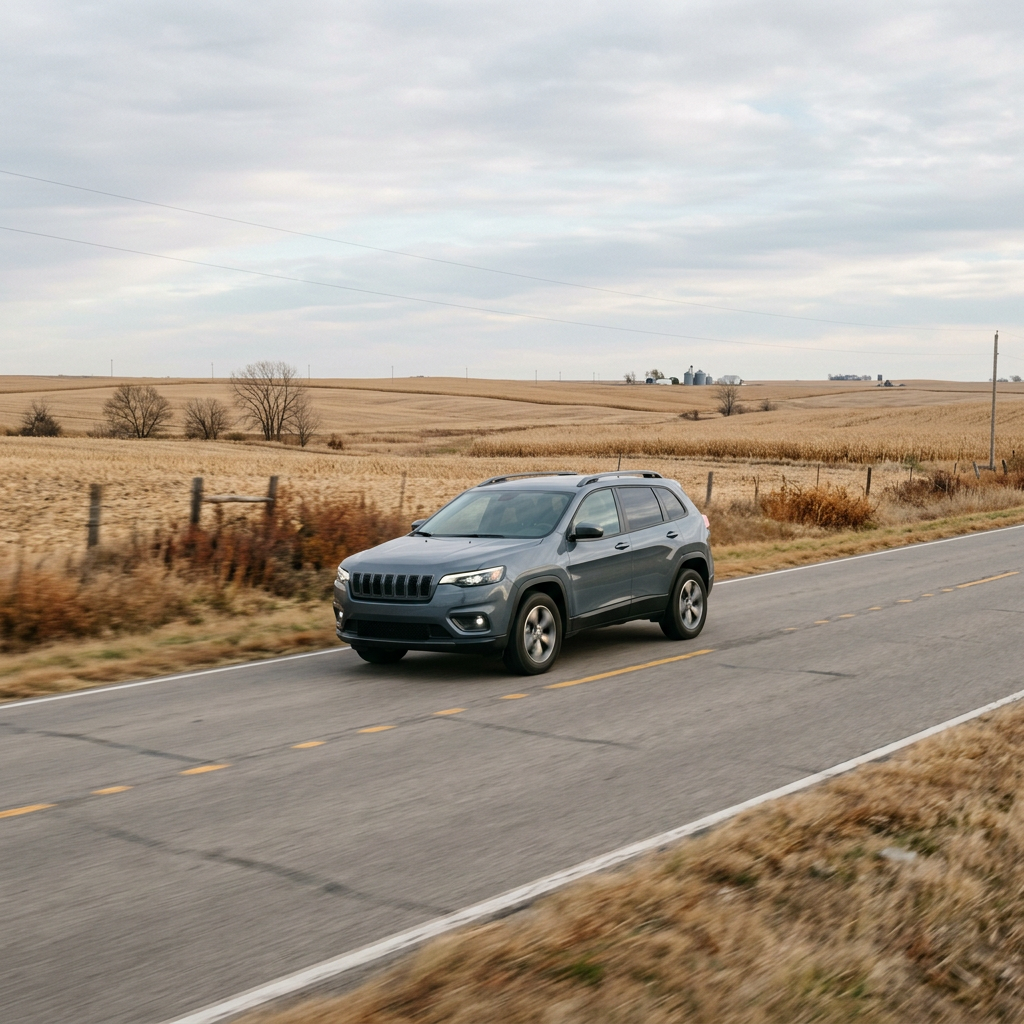
What I Tell Drivers About Managing Jeep Cherokee Maintenance and Ownership Costs What Routine Service Intervals Should a Jeep Cherokee Owner Plan Around? A Jeep Cherokee owner should plan routine maintenance around an oil-change indicator cycle that caps service at a maximum of 10,000 miles, 12 months, or 350 engine hours. Key maintenance milestones include inspecting universal joints every 10,000 miles, replacing cabin air filters every 12,000 miles, checking suspension and brakes every 20,000 miles, replacing the engine air filter at 30,000 miles, changing spark plugs at 60,000 miles on turbocharged engines, and performing a full coolant flush at 150,000 miles. In my 20 years as Service Director, I always advise drivers that following the onboard oil-change indicator is your first line of defense against premature engine wear. Jeep builds an intelligent system into the dashboard that calculates oil degradation based on engine revolutions, ambient temperatures, short trips, and towing loads. Whenever that "Oil Change Required" message pops up, you should schedule service within 500 miles. Even if you drive infrequently, synthetic motor oil breaks down over time, which is why the factory manual mandates a strict one-year or 350-hour limit regardless of mileage. Every time your Cherokee comes into our service bay for an oil and filter change, my technicians perform a comprehensive multi-point inspection. We check battery terminal connections, examine constant-velocity (CV) joints, inspect brake pads and hydraulic hoses, verify cooling system integrity, and evaluate tire tread wear. Rotating your tires at the very first sign of irregular wear helps distribute drive torque evenly across the standard 4x4 system, extending tread life significantly across Kansas highways. If you ever have questions about your dashboard alerts or need help setting up your service routine, you can use our dealership map and location to stop by for a quick check, or give my team a quick call to speak with a technician. Table of Contents What Are the Estimated Annual Maintenance and Ownership Costs for a Jeep Cherokee? How Much Does the Jeep Cherokee Cost Across Its Available Trim Levels? What Routine Maintenance Schedule Keeps a Jeep Cherokee Running Reliably? How Does the Jeep Cherokee Compare to Competitors Like the Toyota RAV4 and Subaru Forester? How Can Junction City Drivers Protect Their Vehicle and Manage Long-Term Ownership Costs? What Are the Estimated Annual Maintenance and Ownership Costs for a Jeep Cherokee? A Jeep Cherokee averages approximately $520 per year in routine maintenance and minor repairs, placing its ongoing maintenance expense right in line with the compact SUV class. When factoring in tires, unexpected wear items, fuel, and standard maintenance over a five-year period, total operational costs average roughly $1,746 to $1,769 annually depending on driving habits and annual mileage. When owners come into our service bay asking about annual routine maintenance, I tell them that keeping costs predictable comes down to staying ahead of wear items before they turn into major repairs. A standard synthetic oil and filter service typically runs between $80 and $130, while routine tire rotations and multi-point checks add minimal cost to your annual budget. Because modern Cherokee models feature advanced standard equipment like a 1.6-liter turbocharged four-cylinder hybrid powertrain paired with standard 4x4, keeping clean fluids in the transfer case and front/rear differentials prevents high-dollar driveline overhauls down the road. Unscheduled repairs on the Cherokee occur less frequently than on many class competitors, with average shop visit rates calculated at roughly 0.64 visits per year. To help keep those annual out-of-pocket costs at zero during your early years of vehicle ownership, Jeep backs every new Cherokee with a 3-year/36,000-mile basic limited warranty alongside a 5-year/60,000-mile powertrain warranty. That factory backing covers major mechanical components while you settle into a regular maintenance routine. If you are planning your annual service budget or managing a fleet of vehicles for your business, you can easily set your next appointment through our online service scheduler. We also work with customers upgrading their personal commute by evaluating pre-owned inventory listings or reviewing specialized commercial vehicle options to meet specific budget requirements. How Much Does the Jeep Cherokee Cost Across Its Available Trim Levels? The Jeep Cherokee starts at a standard MSRP of $35,000 for the entry trim, with fully equipped top-tier trims reaching up to $44,995. Selected trims may offer an efficient hybrid powertrain, all-wheel drive, a digital instrument cluster, and a 12.3-inch touchscreen running the Uconnect system. The base Cherokee trim delivers exceptional baseline value at $35,000, giving you 210 hp and 230 lb-ft of torque alongside an EPA rating of 39 mpg city / 35 mpg highway and 37 mpg combined. Stepping up to the Laredo trim brings additional comfort features and upgraded interior touches for drivers seeking enhanced daily convenience. For buyers looking for premium cabin appointments, the Limited trim adds synthetic leather seating, a heated steering wheel, a wireless charging pad, and a power liftgate. The top-tier Overland and off-road-focused Trailhawk trims incorporate advanced terrain response systems, upgraded suspension components, and premium audio options for maximum versatility. Trim Level Starting MSRP Key Features Cherokee Base 4x4 $35,000 Standard Hybrid 4x4, 12.3-inch Touchscreen, 10.3-inch Digital Gauge Cluster Cherokee Laredo 4x4 $39,995 Upgraded Interior Trim, Advanced Driver Assist Tech, Keyless Enter 'n Go Cherokee Limited 4x4 $41,995 Synthetic Leather Upholstery, Heated Steering Wheel, Power Liftgate Cherokee Limited Altitude 4x4 $42,590 Gloss Black Exterior Accents, 18-inch Dark Wheels, Premium Cabin Lighting Cherokee 85th Anniversary Edition $42,900 Commemorative Badging, Unique Interior Stitching, Panoramic Sunroof Cherokee Overland 4x4 $44,995 Premium Leather Seating, Surround-View Camera Option, Ventilated Seats Before deciding which trim fits your garage best, you can use our online trade-in evaluation tool to get an accurate estimate of your current vehicle's trade value toward a new Cherokee. What Routine Maintenance Schedule Keeps a Jeep Cherokee Running Reliably? Jeep Cherokee owners should follow a detailed maintenance schedule that adjusts based on mileage and driving habits to ensure vehicle reliability. Performing fluid checks at every oil change, replacing air filters on schedule, and servicing the differential and transfer case fluids under severe driving conditions will preserve the hybrid drivetrain for hundreds of thousands of miles. I tell my service clients that "severe driving conditions" apply to more people than they think. If you frequently make short trips under five miles, tow trailers, drive in dusty environments, or commute through harsh winter weather, your engine and gear oils work much harder. Under severe use, transfer case and axle fluids should be inspected frequently and changed near 70,000 miles rather than waiting for the standard 120,000-mile interval. Maintaining the cooling system is equally critical, especially on modern hybrid engines where coolant loops regulate both internal combustion engine temperatures and electric drive electronics. The factory-fill organic additive technology (OAT) coolant is rated for 10 years or 150,000 miles, but checking fluid levels visually every month ensures no air pockets or micro-leaks develop. Here is a quick checklist of proactive maintenance items every Cherokee owner should follow: Check engine oil level and windshield washer fluid monthly. Inspect brake pads, rotors, and hoses every 20,000 miles. Replace the cabin air filter every 12,000 miles to keep heating and air conditioning performing at its peak. Replace engine air filters every 30,000 miles (or sooner if driving on unpaved roads). Replace spark plugs at 60,000 miles on the 1.6-liter turbocharged four-cylinder engine. If you are planning your next vehicle purchase and want to discuss current financing options, you can prequalify for financing online through our secure application process. How Does the Jeep Cherokee Compare to Competitors Like the Toyota RAV4 and Subaru Forester? The Jeep Cherokee distinguishes itself from rivals like the Toyota RAV4 and Subaru Forester by offering standard hybrid 4x4 capability across every trim, a maximum towing capacity of 3,500 lbs, and superior off-road geometry. While the Toyota RAV4 starts with standard front-wheel drive on non-hybrid models and the Subaru Forester uses a traditional naturally aspirated engine, the Cherokee pairs turbocharged torque with dual electric motors out of the box. On paper, the Cherokee's 210 hp and 230 lb-ft of torque provide brisk low-speed acceleration through city traffic, matching the maximum 3,500-lb towing rating of the RAV4 when properly equipped. Inside the cabin, the Cherokee offers about 34 cubic feet of cargo space behind the second row and opens up to about 68 cubic feet with the rear seats folded flat. Rear seat passengers enjoy 38.5 inches of legroom, providing ample space for growing families and adult passengers on long road trips. When taking off-road capability into account, the Cherokee's optional Active Drive II system with a locking rear differential gives it a distinct advantage on uneven trails compared to the light-duty all-wheel-drive setups found in basic crossover competitors. The Cherokee also features standard modern tech like a 10.3-inch digital driver display and a 12.3-inch touchscreen, which cost extra on competing base models. If you ever need replacement wiper blades, specialized fluid filters, or factory towing accessories for your crossover, our genuine Mopar parts department stocks exact OEM components designed specifically for your vehicle. How Can Junction City Drivers Protect Their Vehicle and Manage Long-Term Ownership Costs? Drivers around Junction City can protect their Jeep Cherokee and lower ownership costs by combining timely factory maintenance with protective driving habits tailored to Kansas weather and road conditions. Regular undercarriage washes during winter months remove corrosive road salt, while routine fluid checks prevent heat-related wear during hot summer commutes along I-70. The rolling plains and agricultural roads around Junction City expose your vehicle's air filters and suspension components to dust and loose gravel. Checking your engine air filter every 15,000 miles instead of waiting for the 30,000-mile service mark keeps your turbocharged engine breathing cleanly and maintains your 37 mpg combined fuel efficiency rating. Furthermore, paying attention to tire pressures during major seasonal temperature shifts keeps your tread wearing evenly, saving you hundreds of dollars in early tire replacements. For college students commuting toward Manhattan or military families balancing daily duty schedules, keeping up with small service items prevents unexpected breakdowns and protects your vehicle's resale value over time. Our factory-trained technicians know these vehicles inside and out, using specialized diagnostic tools to flash system updates and verify hybrid battery health during every visit. When you are ready to experience the comfort and capability of the Cherokee firsthand, stop by our Junction City service center address on Goldenbelt Blvd, give our advisors (785) 238-5114 a call, or explore our current selection of new Jeep models today. © 2026 Valor CDJR. All rights reserved.