




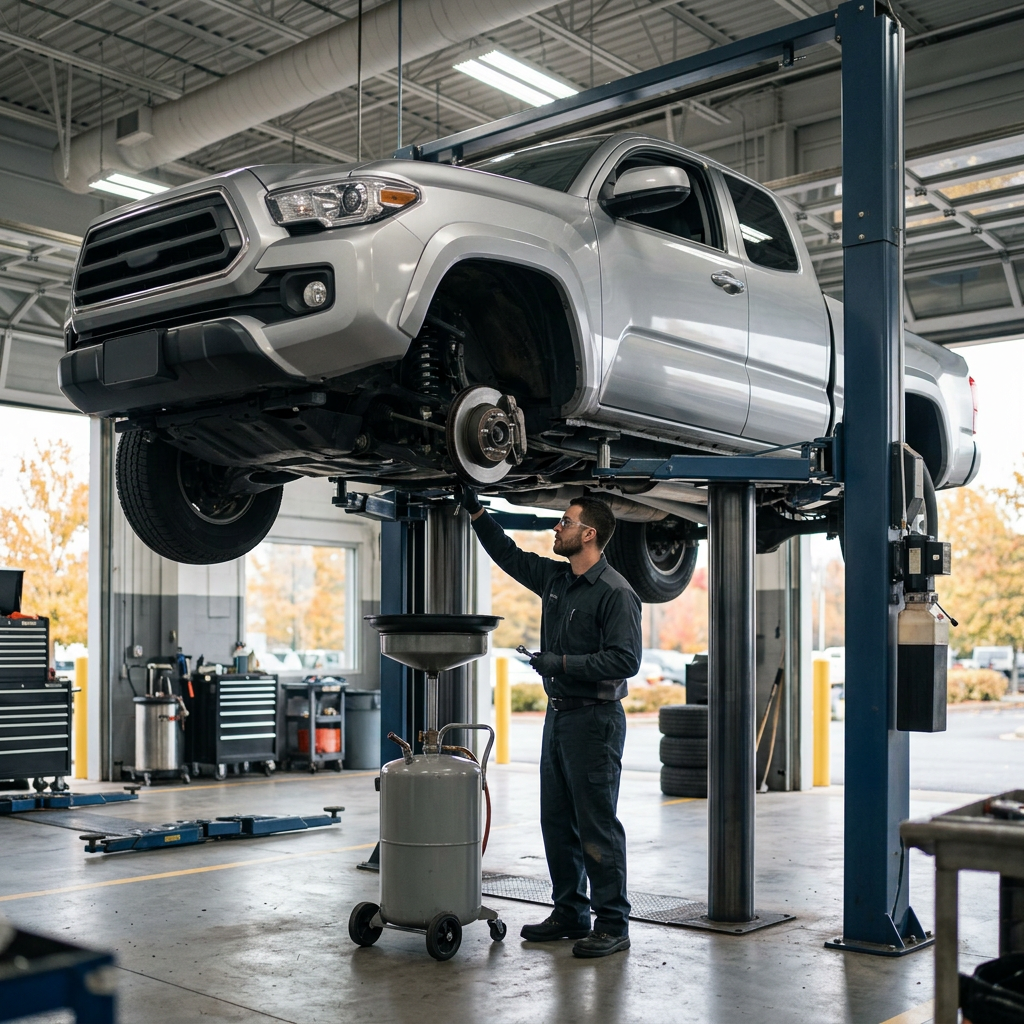
RAM 1500 Long-Term Reliability Insights: What 20 Years in Service Taught Me
How Many Miles Can a Ram 1500 Last With Proper Maintenance?
A well-maintained Ram 1500 can comfortably exceed 200,000 to 250,000 miles over its service life when owners stay disciplined with routine fluid renewals and preventative mechanical care. Reaching this high-mileage milestone requires adhering to strict engine oil change intervals every 5,000 to 7,500 miles, servicing transmission fluid every 60,000 miles, and replacing differential lubricants around 50,000 to 60,000 miles.
In my 20 years as a Service Director, I have watched hundreds of half-ton trucks cross the 200,000-mile mark without major engine overhauls. Crossing that threshold in a full-size pickup comes down to mechanical consistency rather than luck. For any powertrain, the single most important task is running high-grade full synthetic oil. While onboard oil life monitoring systems allow extended intervals during light highway cruising, trucks used for frequent towing, short trips, or heavy hauling need that 5,000-to-7,500-mile schedule to prevent internal sludge formation and protect sensitive valve train components.
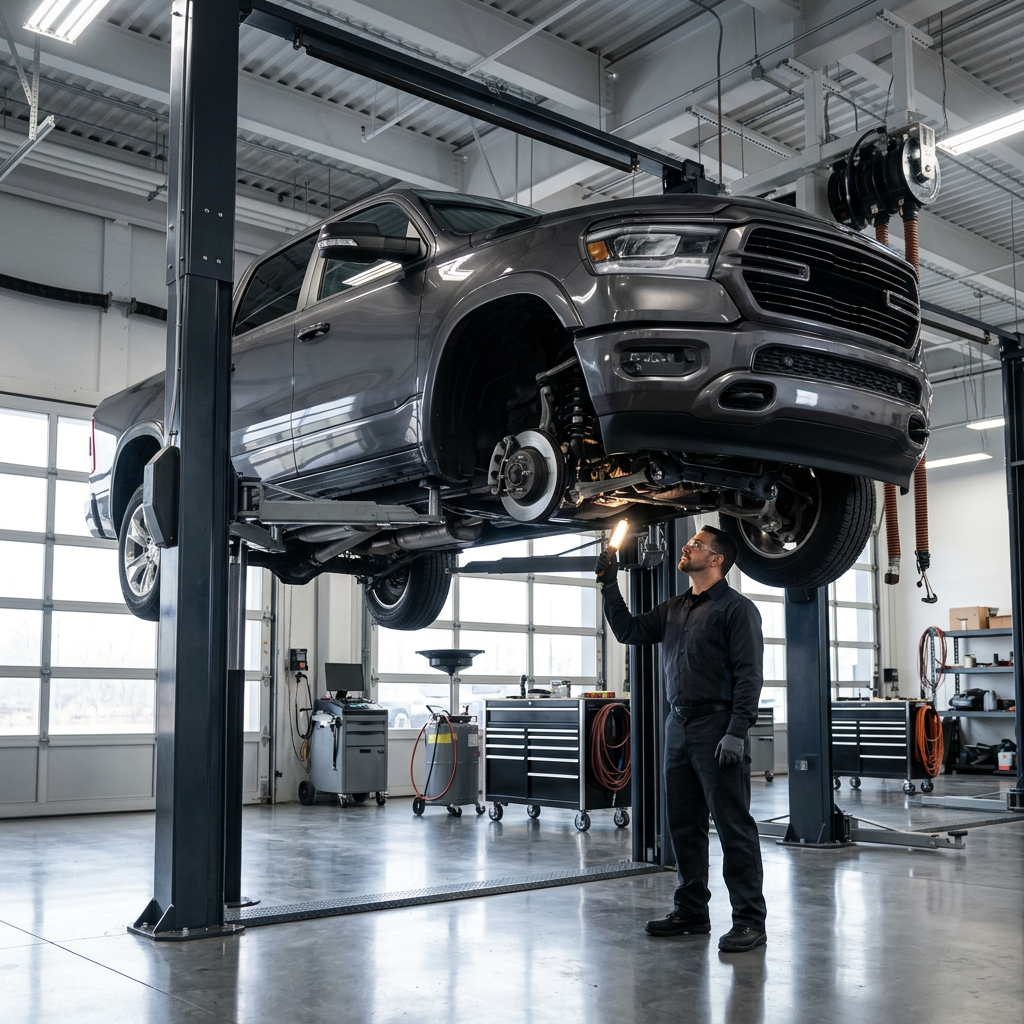
Beyond the engine bay, critical drivetrain components demand scheduled attention to sustain long-term durability. The eight-speed automatic transmission performs at its best when fresh fluid and a new pan filter are installed every 60,000 miles. Front and rear differentials, along with four-wheel-drive transfer cases, experience substantial thermal breakdown during routine operation, making gear lubricant exchanges essential at 50,000 to 60,000 miles. Replacing spark plugs at 100,000 miles, executing cooling system flushes every 60,000 miles, and periodically inspecting front suspension ball joints will keep the chassis tight and responsive. If you want to review your truck's maintenance history or map out a preventative maintenance plan, you can easily stop by our Goldenbelt Boulevard service center or give our team a quick call to speak with a factory-trained technician.
Table of Contents
- Why Did Ram Transition from the 5.7L HEMI V8 to the 3.0L Hurricane Engine?
- What Are the Primary Service Focus Areas and Known Issues on the Hurricane Twin-Turbo?
- What Cooling Upgrades Protect the Ram 1500 During Heavy Towing around Junction City?
- How Do Ram 1500 Long-Term Maintenance Costs and 5-Year Value Retention Compare?
- How Do High-Mileage 5.7L HEMI Models Compare to Newer Powertrains over Time?
Why Did Ram Transition from the 5.7L HEMI V8 to the 3.0L Hurricane Engine?
Ram replaced the legendary 5.7L HEMI V8 with the 3.0L Hurricane twin-turbo inline-six engine to deliver significantly higher horsepower and torque while simultaneously reducing overall tailpipe emissions and improving fuel efficiency. The forced-induction inline-six design delivers broader torque curves that peak much lower in the RPM range, giving truck owners superior towing pull and acceleration compared to naturally aspirated V8 architectures.
When reviewing output figures in our service bay, the mechanical advantages of the new engine family become obvious. The outgoing 5.7L HEMI V8 produced 395 hp and 410 lb-ft of torque. By comparison, the Standard Output 3.0L Hurricane twin-turbo inline-six generates 420 hp and 469 lb-ft of torque, while the High Output variant produces a massive 540 hp and 521 lb-ft of torque. Even the baseline 3.6L Pentastar V6 engine remains a reliable entry point at 305 hp, but the Hurricane inline-six represents a technological leap forward for heavy-duty work needs. Every engine variant pairs with a durable eight-speed automatic transmission calibrated to manage high torque loads cleanly.
From an engineering perspective, modern forced-induction inline engines offer exceptional structural integrity. The Hurricane utilizes a deep-skirt cast-aluminum block, plasma transfer wire arc cylinder coatings to minimize friction, and forged steel crankshafts and connecting rods engineered to handle high cylinder pressures. These heavy-duty internal components ensure the engine withstands sustained thermal stress without sacrificing long-term durability. For truck owners looking to source genuine oil filters, spark plugs, or specialized fluids for these modern powertrains, our Mopar parts department stocks factory-approved components designed specifically for your vehicle's engine.
What Are the Primary Service Focus Areas and Known Issues on the Hurricane Twin-Turbo?
Primary service focus areas for the 3.0L Hurricane twin-turbo inline-six engine involve minor electronic calibrations, wastegate actuator sensor adjustments, and monitoring oil cooler line fittings rather than structural internal engine wear. Early field notices center largely on software recalibrations for the powertrain control module to optimize boost management and throttle response.
When truck owners ask me about long-term forced-induction reliability, I explain that twin-turbo engines require a slightly different maintenance mindset than naturally aspirated engines. Auxiliary components such as turbochargers, intercoolers, and wastegate bypass valves experience elevated operating temperatures, making clean oil essential. Factory service intervals recommend full synthetic oil and filter changes every 7,500 to 10,000 miles, engine air filter replacements at 30,000 miles, spark plug updates at 100,000 miles, and engine coolant exchanges at 10 years or 150,000 miles. Keeping air filters clean is critical because debris entering the intake tract can score compressor wheel blades over time.
Practicing smart operational habits also extends turbocharger lifespan significantly. After pulling heavy trailers up steep grades or running at highway speeds for extended periods, letting the engine idle for one to two minutes before shutdown allows engine oil to circulate through the turbo bearings, carrying away residual heat. This prevents oil coking inside the center cartridge bearings. Staying proactive with routine checks helps avoid unscheduled downtime, and drivers can easily set up their next vehicle inspection through our online service scheduler.
What Cooling Upgrades Protect the Ram 1500 During Heavy Towing around Junction City?
Factory trailer tow packages protect the Ram 1500 drivetrain during frequent heavy hauling by combining heavy-duty engine cooling radiators, auxiliary transmission fluid coolers, integrated trailer brake controllers, and specialized tow drive modes. These integrated systems manage thermal loads under heavy engine stress, preventing fluid breakdown and keeping operating temperatures within safe mechanical thresholds.
The surrounding agricultural terrain and livestock operations around Junction City demand maximum effort from half-ton trucks year-round. Whether you are pulling a heavy equipment trailer along highway corridors or hauling recreational boats out to Milford Lake, heat is the ultimate enemy of automatic transmissions and engine bearings. With a maximum rated towing capacity of 11,610 pounds when properly equipped, keeping the truck's thermal management systems in peak condition is vital for long-term survival.
Auxiliary transmission coolers play a central role in protecting the eight-speed automatic transmission. When pulling heavy loads, torque converter slippage generates substantial heat; the auxiliary cooler routes fluid through dedicated heat exchangers before returning it to the transmission case. Engaging the truck's Tow/Haul drive mode alters transmission shift logic, delaying upshifts to keep the engine in its optimal power band and applying engine braking on downhill grades. This reduces strain on the mechanical service brakes while maintaining cooler overall running temperatures across the entire power assembly.
How Do Ram 1500 Long-Term Maintenance Costs and 5-Year Value Retention Compare?
The Ram 1500 delivers highly competitive long-term ownership value, averaging $650 to $850 annually in routine maintenance expenses while retaining roughly 52% to 57% of its initial retail value after five years of ownership. Industry evaluation data from RepairPal gives the Ram 1500 a reliability score of 3.5 out of 5, ranking it #3 out of 19 full-size trucks, with an average annual repair cost of $652 compared to the $752 segment average.
In J.D. Power's 2026 Vehicle Dependability Study, the Ram 1500 achieved the lowest rate of reported problems among large light-duty pickup trucks. Over a typical 5-year ownership cycle, total scheduled maintenance and repair costs generally accumulate between $3,500 and $4,500. This places the truck on equal footing with major half-ton competitors while offering superior cabin comfort and ride refinement. Initial factory coverage includes a 3-year/36,000-mile basic warranty alongside a 5-year/60,000-mile powertrain warranty, offering comprehensive protection during early ownership years.
Commuters driving through the rolling Flint Hills terrain into Manhattan benefit directly from keeping their maintenance records up to date. Documented dealership service histories consistently boost trade-in values when it comes time to upgrade. Buyers in the pre-owned market place a strong premium on verified fluid services, completed safety recalls, and clean mechanical inspections, allowing well-maintained trucks to command top dollar on appraisal day.
How Do High-Mileage 5.7L HEMI Models Compare to Newer Powertrains over Time?
The most common high-mileage mechanical issue associated with older 5.7L HEMI V8 models is cracked or broken exhaust manifold bolts, which create a distinct ticking noise during cold starts. Over thousands of heating and cooling cycles, thermal expansion strains the rear exhaust manifold hardware, eventually causing the factory bolts to snap.
In addition to exhaust manifold bolt fatigue, earlier V8 engines equipped with the Multi-Displacement System require strict adherence to recommended 5W-20 oil viscosity. Using incorrect oil weights or allowing excessive engine idling can restrict oil flow to the hydraulic lifters and camshaft rollers, leading to premature valvetrain wear. Resolving broken manifold bolts involves removing the heat shields, extracting the broken studs, and installing upgraded hardware with fresh exhaust gaskets to eliminate the noise permanently.
By comparison, baseline powertrains like the 3.6L Pentastar V6 with the eTorque mild-hybrid system replace traditional alternators with a belt-driven motor generator unit connected to a compact 48-volt battery pack. This setup supplies electric torque assistance during initial acceleration, reducing low-end mechanical strain on the internal combustion engine without adding complex high-voltage maintenance requirements. Whether you drive a classic V8 or a newer inline-six, routine care keeps your pickup running smoothly for years to come. To speak with our service team about maintaining your truck, visit our Junction City dealership address or call us at (785) 238-5114 today.