




Blog / Vehicle Ownership Care

Blog

All Vehicle Ownership Care Buying Guides New Vehicle Reviews Maintenance & Service Technology & Innovation Financing & Insurance Model Comparisons New Vehicle Inventory Safety Features Used Vehicle Guides Valor CDJR Trade in Advice Towing & Hauling Safety Family & Lifestyle Vehicles Vehicle Financing & Trade-In Tips Dealership Sales Strategies KS Community Parts & Accessories Junction City Military & Veteran Benefits Automotive Repair Buying Guides & Dealership Services Financing & Trade-In Options Seasonal Vehicle Care Service Military Vehicle Buying Guides Off-Road & Adventure Vehicles Hybrid & Electric Vehicles Parts Performance & Powertrain Automotive Recalls Commercial Truck Reviews Dealership Inventory Highlights Dealership Visit Preparation Heavy-Duty Truck Features Inventory & Pricing Insights Jeep Lifestyle & Accessories Military & Community Car Buying Programs Repair & Diagnostics Vehicle Features & Accessories Vehicle Maintenance & Preparation Vehicle Pricing Strategies Vehicle Safety & Compliance Vehicle Trade-In Tips Warranty & Coverage Automotive News Car Buying Tips Car Purchase Tips Dealer Profiles & Interviews Dealership Offers & Promotions Dealership Service Experience Financing & Insurance for Military Families Genuine Parts & Accessories Local Automotive Events OEM Parts & Warranty Coverage Pre-Owned Vehicle Sales Road Trip & Travel Tips Special Offers & Promotions Tailgating & Outdoor Adventures Tailgating & Outdoor Recreation Towing & Roadside Assistance Vehicle Registration & Legal Advice for Military Personnel Vehicle Repair & Diagnostics Vehicle Sales Experience Warranty & Protection Plans Brake System Care Certified Pre-Owned Programs Commercial Fleet Management Commercial Vehicle Comparisons Community & Military Support Initiatives Dealership Events Engine & Performance Insights Luxury SUVs Out-of-State Purchasing Guides Part & Warranty Services Parts & Repair Reimbursement Recall & Warranty Repairs Seasonal Sales Events Technology & Innovation in Vehicle Service Vehicle Incentives & Promotions Vehicle Maintenance & Winter Care Vehicle Technology & Features Weekend Dealership Events and Services
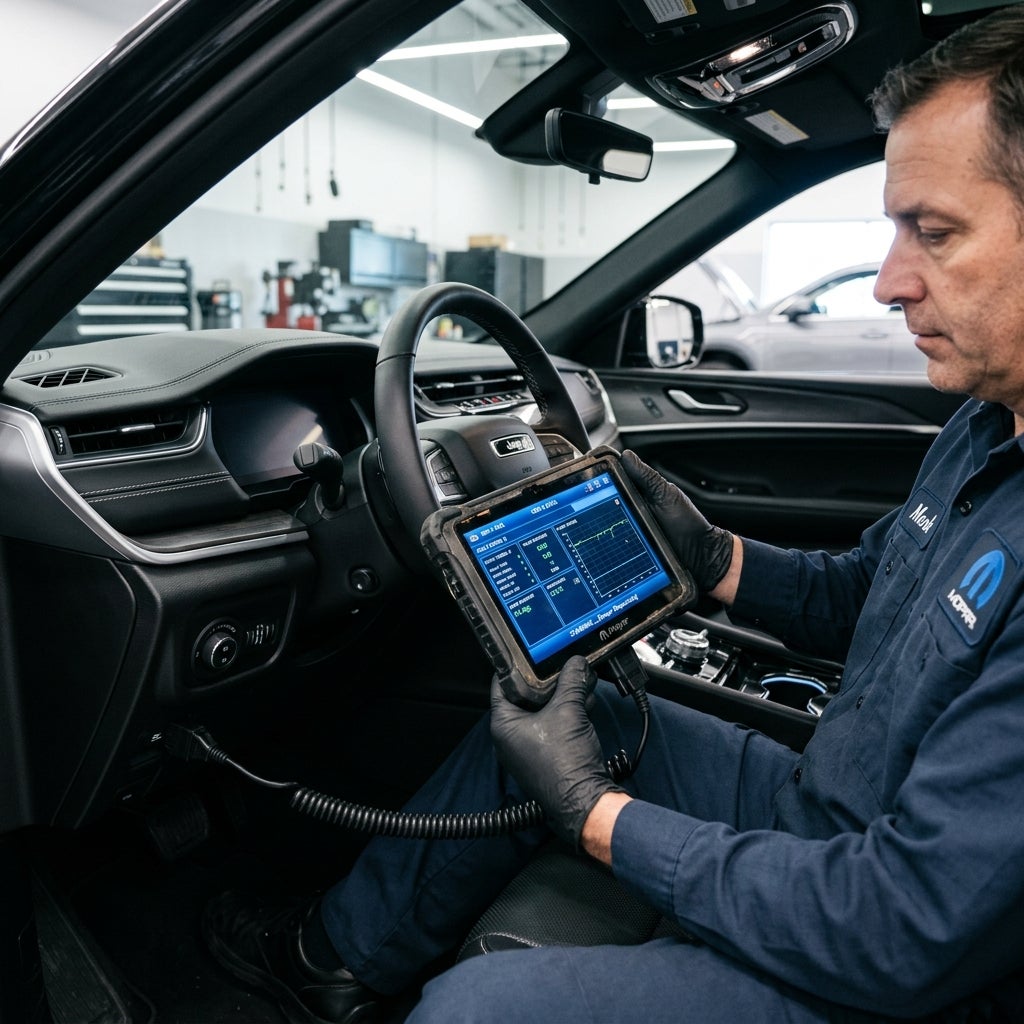
Automotive technician holding a diagnostic tablet connected to a car dashboard in a repair shop. (Representative image for illustration purposes only. Actual vehicle may vary based on trim and configuration.)

Recall Repair Timeline: How Long Software Reflashes and Mechanical Repairs Take

.hrizn-visual-root a { color: #566BA1; } .hrizn-visual-root a { color: inherit; } .hrizn-visual-root p { margin: 0 0 1em; } .hrizn-visual-root p:last-child { margin-bottom: 0; } @media (max-width: 640px) { .hrizn-visual-root { text-align: center !important; } .hrizn-visual-root a { display: block; width: 100%; max-width: 320px; margin-left: auto; margin-right: auto; box-sizing: border-box; } .hrizn-visual-root + a { margin-top: 8px; } } @media (max-width: 640px) { #hrizn-cols-1 { flex-direction: column !important; align-items: stretch !important; } #hrizn-cols-1 > .hrizn-col { flex: 1 1 100% !important; width: 100% !important; } } @media (max-width: 640px) { #hrizn-3cols-1 { flex-direction: column !important; align-items: stretch !important; } #hrizn-3cols-1 > .hrizn-col { flex: 1 1 100% !important; width: 100% !important; } } #hrizn-table-tbl-sec3 table{width:100%;table-layout:auto;border-collapse:collapse;font-family:'Open Sans',sans-serif;font-size:0.9rem} #hrizn-table-tbl-sec3 th,#hrizn-table-tbl-sec3 td{border:1px solid #e0e4ed;padding:8px;color:#595959;word-break:break-word;overflow-wrap:break-word} #hrizn-table-tbl-sec3 th{background:#fafafa;color:#1a1a22;font-weight:700;font-size:14px;text-align:left;vertical-align:middle;padding:10px} #hrizn-table-tbl-sec3 tr:nth-child(even) td{background:rgba(86,107,161,0.04)} #hrizn-table-tbl-sec3 .tableWrapper{overflow-x:hidden} @media (max-width: 640px) { #hrizn-cols-2 { flex-direction: column !important; align-items: stretch !important; } #hrizn-cols-2 > .hrizn-col { flex: 1 1 100% !important; width: 100% !important; } } @media (max-width: 640px) { #hrizn-3cols-2 { flex-direction: column !important; align-items: stretch !important; } #hrizn-3cols-2 > .hrizn-col { flex: 1 1 100% !important; width: 100% !important; } } #hrizn-table-tbl-sec6 table{width:100%;table-layout:auto;border-collapse:collapse;font-family:'Open Sans',sans-serif;font-size:0.9rem} #hrizn-table-tbl-sec6 th,#hrizn-table-tbl-sec6 td{border:1px solid #e0e4ed;padding:8px;color:#595959;word-break:break-word;overflow-wrap:break-word} #hrizn-table-tbl-sec6 th{background:#fafafa;color:#1a1a22;font-weight:700;font-size:14px;text-align:left;vertical-align:middle;padding:10px} #hrizn-table-tbl-sec6 tr:nth-child(even) td{background:rgba(86,107,161,0.04)} #hrizn-table-tbl-sec6 .tableWrapper{overflow-x:hidden} @media (max-width: 640px) { #hrizn-cols-3 { flex-direction: column !important; align-items: stretch !important; } #hrizn-cols-3 > .hrizn-col { flex: 1 1 100% !important; width: 100% !important; } } #hrizn-table-tbl-sec8 table{width:100%;table-layout:auto;border-collapse:collapse;font-family:'Open Sans',sans-serif;font-size:0.9rem} #hrizn-table-tbl-sec8 th,#hrizn-table-tbl-sec8 td{border:1px solid #e0e4ed;padding:8px;color:#595959;word-break:break-word;overflow-wrap:break-word} #hrizn-table-tbl-sec8 th{background:#fafafa;color:#1a1a22;font-weight:700;font-size:14px;text-align:left;vertical-align:middle;padding:10px} #hrizn-table-tbl-sec8 tr:nth-child(even) td{background:rgba(86,107,161,0.04)} #hrizn-table-tbl-sec8 .tableWrapper{overflow-x:hidden} @media (max-width: 640px) { #hrizn-3cols-3 { flex-direction: column !important; align-items: stretch !important; } #hrizn-3cols-3 > .hrizn-col { flex: 1 1 100% !important; width: 100% !important; } } @media (max-width: 640px) { #hrizn-cols-4 { flex-direction: column !important; align-items: stretch !important; } #hrizn-cols-4 > .hrizn-col { flex: 1 1 100% !important; width: 100% !important; } } Recall Repair Timeline: How Long Software Reflashes and Mechanical Repairs Take When safety recall notices arrive in the mail, vehicle owners across Junction City, Manhattan, and Riley County often ask one primary question: How long is this going to take out of my day? The answer depends significantly on whether your vehicle requires an electronic software reflash or physical mechanical hardware replacement. A typical dealer recall software reflash takes between 30 to 60 minutes to connect, flash, and verify, while complex mechanical repairs range from 1 to 4+ hours depending on component accessibility and calibration requirements. At Valor CDJR in Junction City, KS, all factory safety recall services—including software re-calibrations and physical part replacements—are performed at zero cost to the vehicle owner. Whether you drive a 2024 Jeep Grand Cherokee or another Chrysler, Dodge, Jeep, or Ram model, safety notices should never be ignored. Our factory-trained technicians utilize official Mopar diagnostic equipment to complete updates efficiently, ensuring your SUV remains reliable, safe, and fully compliant with national safety standards. You can easily schedule your recall appointment online using our Service Scheduler or call our team directly for immediate assistance. 2024 Jeep Grand Cherokee Safety Recalls: Software, Airbag, and Lighting Fixes in Junction City Modern vehicles like the 2024 Jeep Grand Cherokee are advanced computing platforms on wheels. While this provides unprecedented luxury, driver assistance, and off-road capability, it also means modern safety campaigns frequently center on microprocessors and firmware rather than traditional mechanical linkages. Recent active recall campaigns affecting select 2024 Grand Cherokee models in the Flint Hills area include: • Electronic Control Unit (ECU) & PCM Software Reflashes: Adjustments to power distribution, transmission logic, and hybrid battery management parameters. • Steering Wheel Airbag Wiring Harnesses: Inspections and minor mechanical modifications to prevent harness chafing or signal interruption during steering wheel rotation. • Auto-Headlight Control Module Updates: Electronic re-calibrations to resolve software glitches causing automatic headlight control systems to drop communication intermittently. If you suspect your vehicle is impacted, stop by our dealership or Get Directions to Valor CDJR to have our team perform a quick system scan. Software Flash vs. Mechanical Hardware Repair: Turnaround Times Compared Understanding the fundamental difference between software re-flashing and hardware replacement helps drivers plan their day when booking service. Here is how turnaround times compare in a certified dealership setting: Software Reflashes (30–60 Min) Technicians plug directly into the OBD-II port using wiTECH 2.0 software to download updated factory firmware to powertrain or body control modules. Quick, non-invasive, and completed inside our climate-controlled service bay. Minor Mechanical (1–2 Hours) Includes replacement of minor sensor assemblies, electrical harnesses, door latch mechanisms, or external trim fasteners. Requires manual disassembly and torque check. Major Mechanical (2–5+ Hours) Involves heavy component replacement such as steering columns, brake master cylinders, suspension linkages, or internal drivetrain components requiring fluid flushes and alignment checks. Repair Category Typical Work Duration Total Bay / Intake Time Customer Lounge Feasible? Software Reflash (ECU/PCM/BCM) 20 - 45 Minutes 30 - 60 Minutes Yes (Complimentary Wi-Fi) Airbag Clockspring / Harness Repair 45 - 90 Minutes 1.5 - 2.5 Hours Yes Lighting & Module Re-calibration 30 - 60 Minutes 1 Hour Yes Steering Column / Linkage Replacement 2 - 4 Hours Half-Day Shuttle Service Available What Is the Shifter-Module Software Defect Recall on the 2024 Grand Cherokee, and How Is It Fixed? One specific recall campaign that Grand Cherokee owners have inquired about involves the Electronic Transmission Control Module (TCM) and shifter software parameters. In affected vehicles, a software glitch in the rotary gear selector module could theoretically prevent the transmission from engaging 'Park' correctly or display a false transmission error light on the cluster dashboard. How Factory Technicians Fix It: 1. Our certified technician connects the vehicle to Mopar's secure diagnostic database using the wiTECH 2.0 system interface. 2. The current software code version in the Transmission Control Module is scanned and analyzed. 3. Updated factory code containing revised handshaking protocols between the rotary dial shifter and transmission control unit is uploaded. 4. The technician performs a clear-code command and a quick drive cycle test to verify gear engagement accuracy. The entire procedure requires no physical parts replacement and takes less than 45 minutes in our service department. Schedule Your Free Shifter Software Reflash What Documents Should Owners Bring to the Dealer for a Safety Recall Appointment? To ensure your intake process is as smooth and quick as possible at Valor CDJR, drivers traveling from Manhattan, Ogden, or Fort Riley should bring the following items: • Official Recall Notification Letter: While not mandatory (we can look up open recalls via VIN), having your safety recall notice speeds up check-in. • Vehicle Registration: Confirms active vehicle ownership and current license plate registration details. • Valid Driver's License: Required for intake and if you plan to utilize our courtesy shuttle or loaner vehicle program. • Current Proof of Insurance: Standard dealer check-in requirement when vehicle servicing is conducted. If you need maintenance work done simultaneously (such as an oil change through our Express Lane), let your service advisor know during check-in! Engine Reliability and Specs: 3.6L Pentastar V6 Specifications and Horsepower At the heart of the 2024 Jeep Grand Cherokee lies the award-winning 3.6-liter Pentastar V6 engine. Known for its smooth power delivery and durable architecture, keeping factory PCM software up-to-date is vital for preserving engine timing, fuel efficiency, and overall powertrain health. Powertrain Output Generates 293 horsepower and 260 lb-ft of torque, providing capable passing power and towing performance across Kansas highways. Variable Valve Timing Dual Variable Valve Timing (VVT) with electronic stop-start technology optimizes fuel economy during city driving in Junction City. PCM Software Impact Factory software updates refine spark calibration, transmission shift points, and thermal management to ensure optimal engine longevity. Engine Feature Specification Engine Displacement 3.6 Liters (3,604 cc) Horsepower Output 293 hp @ 6,400 RPM Torque Output 260 lb-ft @ 4,000 RPM Maximum Towing Capacity Up to 6,200 lbs (when properly equipped) Transmission TorqueFlite 8-Speed Automatic Safety Ratings Breakdown: What Overall Crash Test Rating Did the 2024 Jeep Grand Cherokee Earn from the IIHS? Safety is paramount for Kansas families. The 2024 Jeep Grand Cherokee achieved top honors, earning a prestigious TOP SAFETY PICK award from the Insurance Institute for Highway Safety (IIHS). Key collision and safety technology achievements include: • Good Ratings in Small Overlap Front (Driver & Passenger) tests. • Good Ratings in Moderate Overlap Front structural crash testing. • Advanced/Superior Ratings for Daytime and Nighttime Front Crash Prevention system performance. Completing factory safety recalls—especially those concerning active driver assistance sensors, software modules, and airbag harnesses—ensures your vehicle continues to perform exactly as engineered during critical emergency situations. What Are the Main Trim Levels for the 2024 Grand Cherokee, and How Do Their Prices Differ? The 2024 Jeep Grand Cherokee is offered in several distinct trim levels, ranging from practical core models to ultra-luxurious, feature-packed variants. Whether you are shopping for a new vehicle or checking service parameters, understanding trim configurations helps align your preferences and budget. Trim Tier Starting MSRP Range Key Standard Features Laredo Starting MSRP: $40,000 Uconnect 5 (8.4-inch screen), LED headlights, Blind-Spot Monitoring Altitude $44,000 - $46,000 Gloss-black exterior accents, 20-inch black wheels, heated front seats Limited $47,000 - $49,000 Capri leatherette seating, heated steering wheel, power liftgate Overland $60,000 - $63,000 Nappa leather interior, Quadra-Lift air suspension, dual-pane sunroof Summit / Summit Reserve $65,000 - $72,000 Palermo leather, 19-speaker McIntosh audio, 360-degree Surround View Thinking about upgrading while your vehicle is serviced? Explore our current New Vehicle Listings or check out high-quality options in our Used Vehicle Listings. You can also start your financing application online with our Get Pre-Approved form or evaluate your vehicle's trade-in value using our Trade In Evaluation tool. Browse New Grand Cherokee Inventory What to Expect During Your Service Visit at Valor CDJR Near Manhattan, KS Customer Comfort Lounge Relax in our clean, comfortable customer waiting area equipped with complimentary high-speed Wi-Fi, fresh coffee, and workstation desks while your software update is completed. Shuttle & Military Convenience Serving Fort Riley and Manhattan drivers! If your repair requires extra mechanical labor time, take advantage of our local shuttle transportation service to get on with your day. Why Certified Mopar Service Matters for Recall Repairs in Riley County Independent repair shops simply do not have direct access to proprietary Mopar firmware server feeds or specialized wiTECH diagnostic tooling required to flash factory control modules. Having safety recall work performed at a certified franchise dealer like Valor CDJR guarantees: • Direct Factory Logging: Your official vehicle safety history in the national Mopar database is updated immediately upon completion. • Genuine OEM Parts: If a mechanical recall requires hardware replacement, only authentic Mopar components engineered specifically for your vehicle are installed. • Warranty Protection: Certified repairs preserve your factory bumper-to-bumper and powertrain warranty coverages without friction. For genuine factory components or replacement accessories, our authorized Parts Department carries authentic Mopar parts stocked right here in Junction City. Business owners managing work fleets can also explore our dedicated Commercial Vehicle Inventory for heavy-duty truck and van service support. How to Look Up Open Recalls Using Your Vehicle Identification Number (VIN) Not sure if your vehicle has an uncompleted software reflash or safety campaign? Locating your 17-digit Vehicle Identification Number (VIN) takes less than a minute: 1. Driver-side Dashboard: Look through the bottom corner of the windshield on the driver's side. 2. Driver-side Door Pillar: Check the safety certification label inside the driver's door jamb. 3. Registration Documents: Your vehicle insurance card or state title lists the complete VIN. Once you have your VIN, call our team at Call us at (785) 238-5114 and our advisors will instantly check national Mopar database records for open safety notices. Check Open Recalls with Our Service Team Schedule Your Free Recall Service or Software Reflash at Valor CDJR Today Don't let open safety recalls compromise your peace of mind or vehicle reliability. Software re-flashes take as little as 30 to 60 minutes, and all recall repairs are completely free of charge at Valor CDJR. Our certified team proudly serves vehicle owners throughout Junction City, Manhattan, Riley County, and surrounding communities. Visit us at 1825 Goldenbelt Blvd, Junction City, KS 66441 or click below to reserve your appointment slot online today! Book Complimentary Recall Service Today
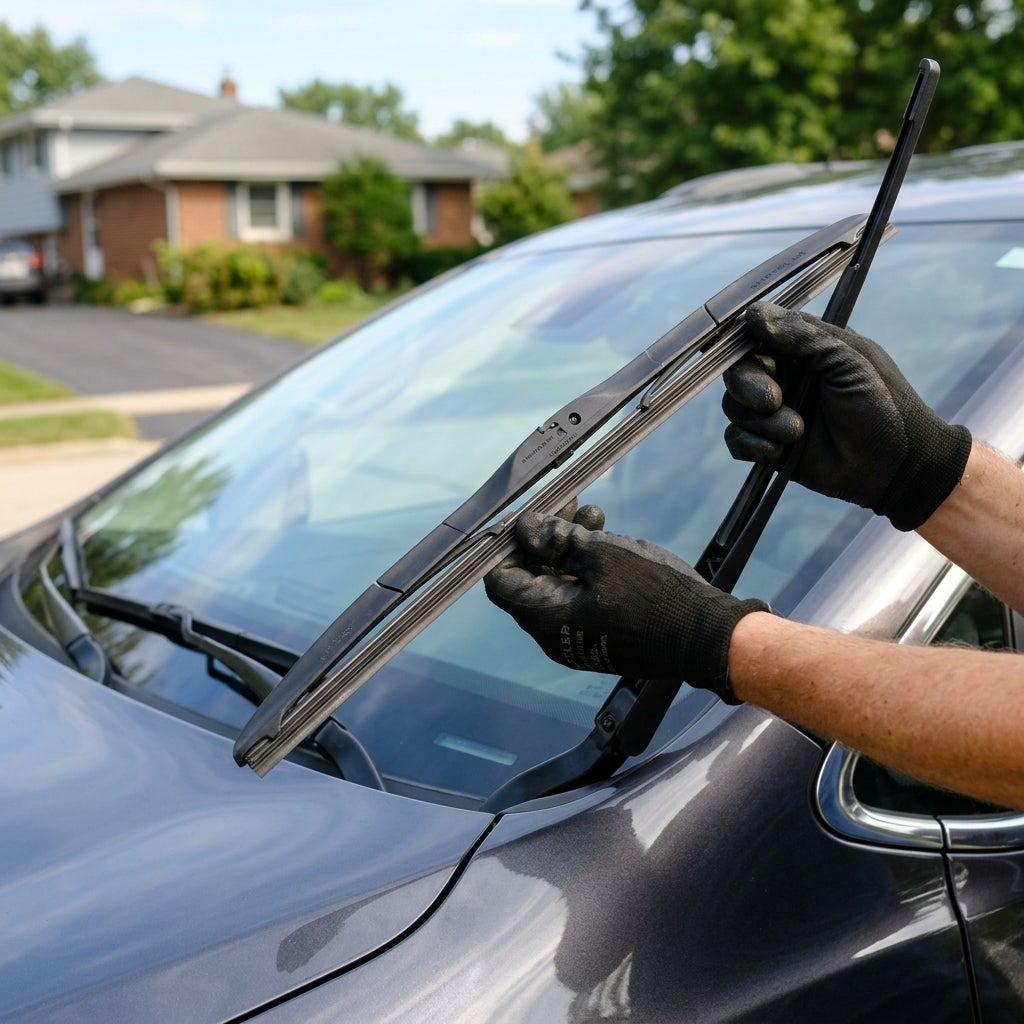
Gloved hands installing a replacement windshield wiper blade onto the wiper arm of a dark gray car outdoors. (Representative image for illustration purposes only. Actual vehicle may vary based on trim and configuration.)

How Often Should You Replace Wiper Blades on a Chrysler Pacifica?

.hrizn-visual-root a { color: #566BA1; } .hrizn-visual-root a { color: inherit; } .hrizn-visual-root p { margin: 0 0 1em; } .hrizn-visual-root p:last-child { margin-bottom: 0; } @media (max-width: 640px) { .hrizn-visual-root { text-align: center !important; } .hrizn-visual-root a { display: block; width: 100%; max-width: 320px; margin-left: auto; margin-right: auto; box-sizing: border-box; } .hrizn-visual-root + a { margin-top: 8px; } } @media (max-width: 640px) { #hrizn-cols-1 { flex-direction: column !important; align-items: stretch !important; } #hrizn-cols-1 > .hrizn-col { flex: 1 1 100% !important; width: 100% !important; } } @media (max-width: 640px) { #hrizn-3cols-1 { flex-direction: column !important; align-items: stretch !important; } #hrizn-3cols-1 > .hrizn-col { flex: 1 1 100% !important; width: 100% !important; } } @media (max-width: 640px) { #hrizn-cols-2 { flex-direction: column !important; align-items: stretch !important; } #hrizn-cols-2 > .hrizn-col { flex: 1 1 100% !important; width: 100% !important; } } #hrizn-table-tbl-wiper-types table{width:100%;table-layout:auto;border-collapse:collapse;font-family:'Open Sans',sans-serif;font-size:0.9rem} #hrizn-table-tbl-wiper-types th,#hrizn-table-tbl-wiper-types td{border:1px solid #e0e4ed;padding:8px;color:#595959;word-break:break-word;overflow-wrap:break-word} #hrizn-table-tbl-wiper-types th{background:#1a1a22;color:#ffffff;font-weight:700;font-size:14px;text-align:left;vertical-align:middle;padding:10px} #hrizn-table-tbl-wiper-types tr:nth-child(even) td{background:rgba(86,107,161,0.04)} #hrizn-table-tbl-wiper-types .tableWrapper{overflow-x:hidden} @media (max-width: 640px) { #hrizn-cols-3 { flex-direction: column !important; align-items: stretch !important; } #hrizn-cols-3 > .hrizn-col { flex: 1 1 100% !important; width: 100% !important; } } @media (max-width: 640px) { #hrizn-3cols-2 { flex-direction: column !important; align-items: stretch !important; } #hrizn-3cols-2 > .hrizn-col { flex: 1 1 100% !important; width: 100% !important; } } @media (max-width: 640px) { #hrizn-cols-4 { flex-direction: column !important; align-items: stretch !important; } #hrizn-cols-4 > .hrizn-col { flex: 1 1 100% !important; width: 100% !important; } } #hrizn-table-tbl-pricing table{width:100%;table-layout:auto;border-collapse:collapse;font-family:'Open Sans',sans-serif;font-size:0.9rem} #hrizn-table-tbl-pricing th,#hrizn-table-tbl-pricing td{border:1px solid #e0e4ed;padding:8px;color:#595959;word-break:break-word;overflow-wrap:break-word} #hrizn-table-tbl-pricing th{background:#1a1a22;color:#ffffff;font-weight:700;font-size:14px;text-align:left;vertical-align:middle;padding:8px} #hrizn-table-tbl-pricing tr:nth-child(even) td{background:rgba(86,107,161,0.04)} #hrizn-table-tbl-pricing .tableWrapper{overflow-x:hidden} @media (max-width: 640px) { #hrizn-3cols-3 { flex-direction: column !important; align-items: stretch !important; } #hrizn-3cols-3 > .hrizn-col { flex: 1 1 100% !important; width: 100% !important; } } @media (max-width: 640px) { #hrizn-cols-5 { flex-direction: column !important; align-items: stretch !important; } #hrizn-cols-5 > .hrizn-col { flex: 1 1 100% !important; width: 100% !important; } } @media (max-width: 640px) { #hrizn-cols-6 { flex-direction: column !important; align-items: stretch !important; } #hrizn-cols-6 > .hrizn-col { flex: 1 1 100% !important; width: 100% !important; } } How Often Should You Replace Wiper Blades on a Chrysler Pacifica? As a rule of thumb, you should replace the windshield wiper blades on your Chrysler Pacifica every 6 to 12 months. However, for drivers navigating the diverse weather conditions of Junction City, KS, and the surrounding Flint Hills region, standard replacement schedules often need adjusting based on localized environmental wear. Your Chrysler Pacifica is engineered to keep your family safe and comfortable, boasting advanced safety suites and sweeping panoramic windshield views. But even the most sophisticated Driver Assist technologies rely on clear visibility through the glass. When seasonal temperature shifts hit Kansas—ranging from freezing winter ice storms to intense summer heatwaves—the rubber compound on wiper blades breaks down faster than standard national averages suggest. If you notice chattering across the glass, persistent streaking, or missed spots during sudden summer downpours along Interstate 70, you should replace your wiper blades immediately regardless of when they were last changed. Keeping fresh blades installed ensures clear visibility during critical family road trips and daily commutes around Junction City. Visual and Audible Signs Your Chrysler Pacifica Wiper Blades Need Immediate Replacement 1. Windshield Streaking & Film Hazing When wiper squeegees age, tiny tears or hardened edges prevent complete water removal. Instead of a clean sweep, they leave narrow water lines or a lingering film across the glass, causing dangerous glare during nighttime driving. 2. Chattering Noise & Skipping Motion A functioning wiper glides smoothly and quietly across wet glass. If your Pacifica wipers stutter, vibrate, or emit a high-pitched squeak, the rubber element has likely set into a permanent curve or hardened from ultraviolet radiation. 3. Cracked or Splitting Rubber Edges Visual inspections often reveal degradation before rainy weather catches you off guard. Lift the wiper arm away from the glass and run your finger along the squeegee edge. Cracks, physical splitting, or detaching rubber segments require immediate replacement. 4. Bent or Loose Frame Assemblies Winter ice buildup and automated car washes can bend metal or composite wiper frames. A bent frame creates uneven contact pressure across your Pacifica’s large windshield, leaving wide patches of untouched moisture right in your direct line of sight. How Kansas Climate and Weather Accelerate Wiper Blade Wear in Junction City Freezing Winter Ice Junction City winters introduce overnight frost and heavy ice freezing directly onto windshield glass. Operating wipers over frozen windshields tears delicate rubber edges instantly, while road salt spray accelerates frame corrosion. Blazing Summer Heat High summer temperatures in Kansas turn windshield glass into a hot baking surface. Direct solar radiation bakes natural rubber squeegees, causing them to dry out, lose flexibility, and crack prematurely. Flint Hills Dust & Humidity Agricultural dust, tree pollen, and road grime blown across Geary and Riley counties act like sandpaper on wiper blades. Combined with high humidity, abrasive fine dust degrades wiper efficiency rapidly. Selecting the Best Wiper Blades for Your Chrysler Pacifica: Beam vs. Hybrid vs. OEM Mopar Choosing the right wiper design is critical for the wide curvature of the Chrysler Pacifica windshield. Traditional conventional frame blades often leave uncleaned gaps near the outer passenger edge because they rely on fixed pressure points. Beam Blades vs. Hybrid Designs: Beam blades feature a frameless curved spring steel beam that wraps evenly around aerodynamically contoured glass. Hybrid blades combine a protective shell over traditional linkages to resist ice clogging. Why Genuine Mopar OEM Blades Win: Genuine Mopar replacement blades are designed specifically for your Chrysler Pacifica’s windshield glass profile and wiper arm geometry. They match exact factory length specs, utilize top-tier synthetic rubber compounds, and feature integrated washer jet clearance. You can easily order genuine Chrysler accessories and factory-spec blades directly through our local Parts Department at Valor CDJR. Wiper Type Pressure Distribution Winter Ice Performance Recommended For Pacifica Conventional Frame 4-6 fixed points Poor (Ice builds in brackets) Not Recommended Beam Blade Infinite uniform curve Excellent (Frameless design) Highly Recommended Hybrid Blade Internal frame + shell Good (Shielded mechanism) Good Alternative Genuine Mopar OEM Precision factory curvature Superior (All-season formulation) Best Choice (Exact Fit) Order OEM Mopar Wiper Blades Which Seasonal Maintenance Tasks on My Chrysler Pacifica Are Safe to Do at Home? DIY-Friendly Basic Tasks: • Wiper Blade Replacement: Pacifica push-button connector arm clips allow fast installation at home. • Washer Fluid Top-Offs: Refilling the washer fluid reservoir with seasonal formulas (de-icer in winter, bug remover in summer) is simple. • Tire Pressure Checks: Monitoring cold tire pressure with a digital gauge prevents uneven tread wear. • Cabin Air Filter Refresh: Replaced easily behind the glovebox every 12,000 miles to clear pollen and dust. Tasks Requiring Certified Professional Care: Modern Chrysler vehicles feature sophisticated electrical architecture, high-voltage hybrid batteries (on Plug-In Hybrid models), and electronic brake modules. Brake fluid flushes, transmission fluid service, high-voltage battery cooling inspections, and electronic safety sensor recalibrations require specialized Mopar diagnostic equipment. What Should I Include in a Spring Maintenance Checklist for My Chrysler Pacifica in Junction City? 1. Wipers & Washer System Replace winter-worn wiper blades, inspect front/rear spray nozzles for salt blockage, and fill washer fluid with summer bug cleaner solution. 2. Battery & Brakes Perform a digital battery health load test after cold winter drain, and inspect brake pads, rotors, and calipers for winter road salt corrosion. 3. Suspension & Alignment Inspect shocks, struts, and tire alignment following winter pothole season on Geary County roads to prevent rapid or irregular tire wear. The Complete Chrysler Seasonal Maintenance Guide for Junction City Drivers Maintaining your Chrysler Pacifica according to seasonal milestones keeps your vehicle reliable year-round. Our seasonal maintenance guide helps you plan ahead for Kansas climate transitions: Spring Refresh: Focus on removing winter grime, replacing cracked wiper blades, checking wheel alignment, and servicing cabin air filters before allergen counts spike across the Flint Hills. Summer Prep: Test engine cooling systems, inspect air conditioning efficiency, check tire tread depth, and top off washer fluid for cross-country family road trips. Fall Readiness: Replace wiper blades after summer sun exposure, check battery charging output, test heating and defrosting circuits, and inspect headlight bulbs for shorter autumn daylight hours. Winter Protection: Install winter-rated wipers, fill windshield fluid with anti-freeze washer solution, check engine coolant freeze protection levels, and test tire tread traction. Schedule Seasonal Service Appointment Typical Price Ranges for Seasonal Maintenance Tasks on Chrysler and Jeep Vehicles Understanding routine maintenance costs allows local owners to plan their vehicle budget transparently. Standard seasonal upkeep for Chrysler Pacifica minivans and Jeep Cherokee models remains highly affordable—especially when preventing major mechanical failures down the line. For quick maintenance items like wiper blade installations or oil changes, drivers can take advantage of our convenient Express Lane service with no appointment necessary. Service Task Estimated Cost Range Interval OEM Mopar Wiper Pair $35 - $65 6 - 12 Months Synthetic Oil & Filter $65 - $110 7,500 Miles Tire Rotation & Balance $35 - $60 6,000 Miles Cabin & Engine Air Filters $45 - $90 12,000 Miles Multi-Point Inspection Complimentary / $30 Every Season How Staying on Top of Seasonal Service Affects the Long-Term Durability of Your Ram 1500 or Chrysler Preserve Resale Value Consistent service records increase vehicle value. When upgrading in the future, check our Trade In Evaluation tool to see how proper maintenance protects resale pricing. Maximize Fuel Efficiency Fresh motor oil, clean air filters, properly aligned wheels, and correct tire pressures optimize mpg performance whether driving a Pacifica or a Ram 1500 truck. Prevent Emergency Repairs Catching worn brake pads, degraded wiper squeegees, or weak batteries during routine checkups prevents unexpected roadside breakdowns. Can You Schedule Chrysler Service Online at Valor CDJR in Junction City? Yes! Scheduling vehicle service at Valor CDJR is simple, convenient, and accessible 24/7. Our online booking portal allows drivers across Junction City, Manhattan, and Riley County to reserve convenient drop-off times in under two minutes. Simply access our online Service Scheduler, enter your vehicle details, select desired maintenance items (such as wiper installation, brake service, or oil change), and choose an available time slot that fits your busy schedule. Whether you are interested in exploring our New Vehicle Listings or browsing high-quality pre-owned minivans via our Used Vehicle Listings, our certified service department is here to support you throughout your entire ownership journey. Looking to upgrade your work fleet? Explore our dedicated Commercial Vehicle Inventory options today. Book Your Service Appointment Online Seasonal Maintenance Insights for Riley County and Manhattan Area Drivers Commuting between Junction City, Fort Riley, and Manhattan via Highway 18 puts unique wear on your Chrysler Pacifica. High-speed highway driving increases bug impact debris and wind lifting forces on wiper blades. For current financing information on new models or maintenance packages, please contact our online finance center. Visit Valor CDJR in Junction City for Professional Chrysler Pacifica Service and Genuine Mopar Parts When it comes to maintaining clear visibility and long-term performance for your Chrysler Pacifica, trust the certified factory-trained technicians at Valor CDJR. Located conveniently at 1825 Goldenbelt Blvd in Junction City, KS 66441, we are your local home for genuine Mopar parts, expert diagnostic care, and friendly customer service. Need immediate assistance or directions to our service center? Get Directions to Valor CDJR or Call us at (785) 238-5114 today to speak directly with our friendly service advisors. Schedule Chrysler Pacifica Service Now

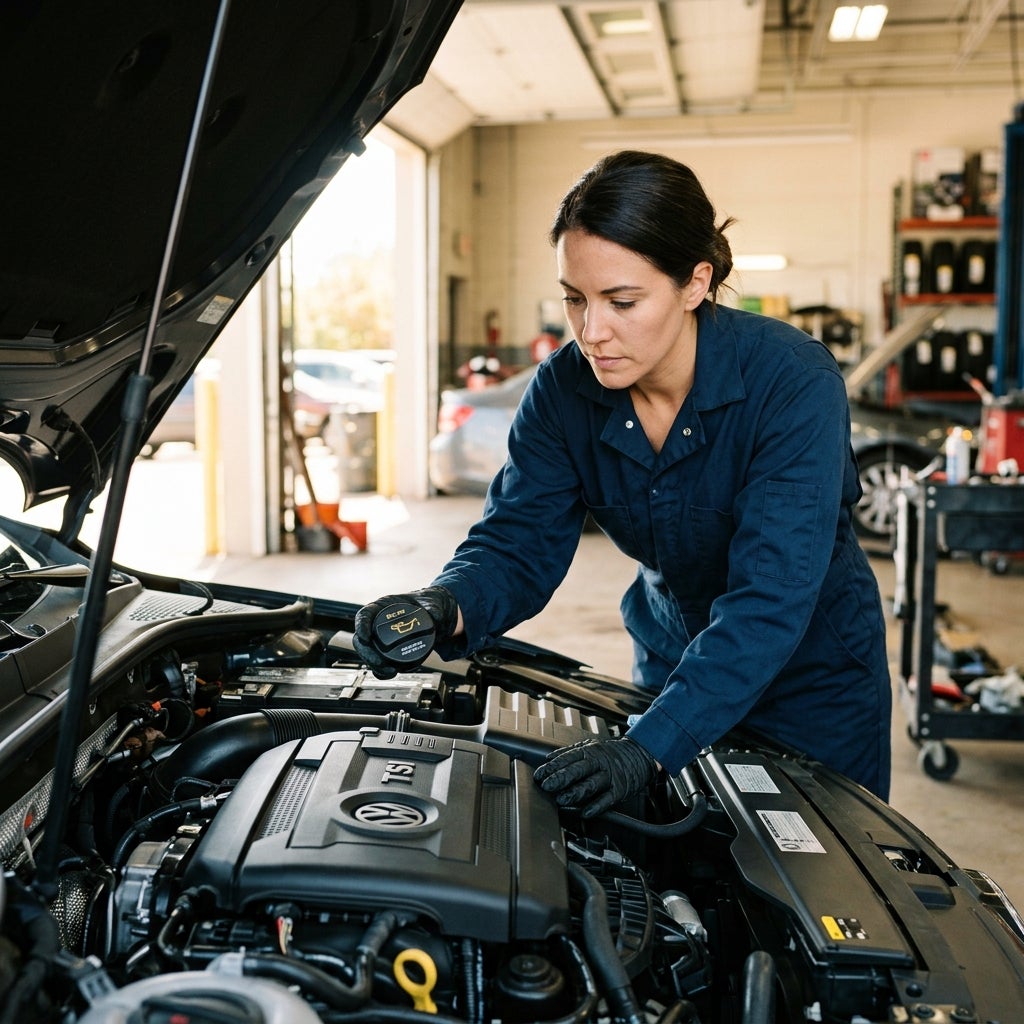
A female mechanic in dark blue coveralls inspects a Volkswagen car engine while holding an oil cap. (Representative image for illustration purposes only. Actual vehicle may vary based on trim and configuration.)

How to Find the Exact Engine Oil Type Your Car Requires: The Direct Answer

.hrizn-visual-root a { color: #566BA1; } .hrizn-visual-root a { color: inherit; } .hrizn-visual-root p { margin: 0 0 1em; } .hrizn-visual-root p:last-child { margin-bottom: 0; } @media (max-width: 640px) { .hrizn-visual-root { text-align: center !important; } .hrizn-visual-root a { display: block; width: 100%; max-width: 320px; margin-left: auto; margin-right: auto; box-sizing: border-box; } .hrizn-visual-root + a { margin-top: 8px; } } @media (max-width: 640px) { #hrizn-cols-1 { flex-direction: column !important; align-items: stretch !important; } #hrizn-cols-1 > .hrizn-col { flex: 1 1 100% !important; width: 100% !important; } } @media (max-width: 640px) { #hrizn-3cols-1 { flex-direction: column !important; align-items: stretch !important; } #hrizn-3cols-1 > .hrizn-col { flex: 1 1 100% !important; width: 100% !important; } } @media (max-width: 640px) { #hrizn-cols-2 { flex-direction: column !important; align-items: stretch !important; } #hrizn-cols-2 > .hrizn-col { flex: 1 1 100% !important; width: 100% !important; } } @media (max-width: 640px) { #hrizn-cols-3 { flex-direction: column !important; align-items: stretch !important; } #hrizn-cols-3 > .hrizn-col { flex: 1 1 100% !important; width: 100% !important; } } @media (max-width: 640px) { #hrizn-3cols-2 { flex-direction: column !important; align-items: stretch !important; } #hrizn-3cols-2 > .hrizn-col { flex: 1 1 100% !important; width: 100% !important; } } #hrizn-table-puck-tbl-7 table{width:100%;table-layout:auto;border-collapse:collapse;font-family:'Open Sans',sans-serif;font-size:0.9rem} #hrizn-table-puck-tbl-7 th,#hrizn-table-puck-tbl-7 td{border:1px solid #e0e4ed;padding:8px;color:#595959;word-break:break-word;overflow-wrap:break-word} #hrizn-table-puck-tbl-7 th{background:#1a1a22;color:#ffffff;font-weight:700;font-size:15px;text-align:left;vertical-align:middle;padding:10px} #hrizn-table-puck-tbl-7 tr:nth-child(even) td{background:rgba(86,107,161,0.04)} #hrizn-table-puck-tbl-7 .tableWrapper{overflow-x:hidden} @media (max-width: 640px) { #hrizn-cols-4 { flex-direction: column !important; align-items: stretch !important; } #hrizn-cols-4 > .hrizn-col { flex: 1 1 100% !important; width: 100% !important; } } @media (max-width: 640px) { #hrizn-cols-5 { flex-direction: column !important; align-items: stretch !important; } #hrizn-cols-5 > .hrizn-col { flex: 1 1 100% !important; width: 100% !important; } } @media (max-width: 640px) { #hrizn-3cols-3 { flex-direction: column !important; align-items: stretch !important; } #hrizn-3cols-3 > .hrizn-col { flex: 1 1 100% !important; width: 100% !important; } } @media (max-width: 640px) { #hrizn-cols-6 { flex-direction: column !important; align-items: stretch !important; } #hrizn-cols-6 > .hrizn-col { flex: 1 1 100% !important; width: 100% !important; } } How to Find the Exact Engine Oil Type Your Car Requires: The Direct Answer Determining the exact engine oil specification for your automobile does not require an engineering degree or hours of guessing. In fact, automobile manufacturers design vehicles with multiple immediate visual indicators and documentation checkpoints to ensure you never pour the wrong fluid into your crankcase. The single fastest method to verify your car's required oil viscosity is to pop open the hood and inspect the yellow or black engine oil filler cap located directly on top of the engine valve cover. On modern Chrysler, Dodge, Jeep, and Ram vehicles, as well as virtually all modern domestic and import vehicles, the manufacturer explicitly stamps or molds the exact viscosity designation directly onto the cap surface—such as 0W-20, 5W-20, or 5W-30. If your oil cap is worn, faded, missing, or aftermarket, your second immediate reference point is your vehicle's physical owner's manual. Turning directly to the index at the back under 'Engine Oil Specifications' or the 'Maintaining Your Vehicle' chapter will yield a detailed technical table. This table specifies not only the exact viscosity grade required for varying ambient temperature ranges, but also the specific OEM specification standards—such as Chrysler Material Standard MS-6395 —and the precise total oil capacity including filter replacement (e.g., 5.0 quarts for a Pentastar 3.6L V6 or 7.0 quarts for a 5.7L HEMI V8). A third quick reference location is the tire pressure and loading placard printed on the driver-side door jamb, which occasionally cross-references fluid maintenance schedules for commercial and light-duty passenger platforms. Using the precise motor oil grade specified by your car's manufacturer is fundamental to long-term mechanical survival. Modern internal combustion engines utilize intricate micro-machined internal tolerances, variable valve timing (VVT) hydraulic solenoids, active fuel management/multi-displacement systems (MDS), and integrated turbochargers that depend entirely on instant oil pressure and specific fluid dynamics. Filling your crankcase with an incorrect viscosity—such as substituting a thick 10W-40 into an engine engineered for ultra-thin 0W-20—can restrict micro-channel oil flow during cold startups, causing severe metal-on-metal friction, hydraulic lifter noise, premature camshaft wear, and reduced fuel economy. When in doubt, visiting our Express Lane or speaking directly with our certified technicians at the Parts Department guarantees you receive the exact factory-approved lubricant tailored to your vehicle's precise engine code. How Do I Read the Numbers on My Oil Cap and Owner's Manual? Deciphering motor oil labels requires understanding the standardized alphanumeric codes established by the Society of Automotive Engineers (SAE). When you see a rating like 5W-30, you are reading a multi-grade viscosity rating designed to perform across drastically different temperature extremes. The first number preceding the letter 'W' (which officially stands for Winter, not weight) indicates the oil's flow rate at low cold temperatures during engine startup. A lower rating—such as 0W or 5W—means the oil remains remarkably thin and fluid in sub-freezing conditions, pumping instantly to critical top-end engine components like overhead camshafts within milliseconds of cranking. The second number following the hyphen (such as 20 or 30) represents the oil's kinetic viscosity measured at normal operating engine temperatures (212°F / 100°C). A higher second number indicates that the oil maintains a thicker protective lubrication film under severe heat and high engine loads, preventing metal contact when towing or climbing steep highway grades. For example, 0W-20 flows extremely fast on freezing morning starts while maintaining adequate thin-film strength when warm, maximizing fuel efficiency in late-model engines. However, matching the viscosity numbers on the cap is only half the battle. Modern vehicle manufacturers enforce mandatory OEM Material Specifications. For Chrysler, Dodge, Jeep, and Ram vehicles, motor oils must meet Chrysler MS-6395 certification. This rigorous internal specification tests oil anti-wear additives, sludge resistance, oxidation stability, and shear performance over tens of thousands of test miles. Merely buying off-the-shelf 5W-20 without checking for the MS-6395 approval seal on the back label can lead to premature carbon buildup, VVT actuator failure, and potential warranty claim complications. Full Synthetic, Synthetic Blend, or Conventional: Which Engine Oil Do You Need? Full Synthetic Oil Chemically engineered from purified base stocks with uniform molecular sizes. Provides ultimate thermal resistance, prevents high-temperature varnish buildup, and flows effortlessly in extreme cold (-40°F). Mandatory for turbocharged engines (like the Hurricane 3.0L Inline-6) and high-compression modern V6/V8 powertrains. Synthetic Blend Oil A balanced mixture of conventional mineral oils combined with full synthetic base stocks. Offers improved resistance to oxidation and breakdown compared to conventional oils at a mid-tier price point. Often used in older non-turbocharged light-duty vehicles with standard maintenance schedules. Conventional Mineral Oil Refined directly from crude oil with natural molecular variations. Highly susceptible to thermal breakdown, breakdown sludge creation, and breakdown thinning under heavy load. Generally suitable only for vintage pre-2000s engine designs with wider tolerance gaps and strict 3,000-mile drain intervals. Modern automotive engineering has made conventional motor oil less common in many modern Stellantis vehicles. Modern Chrysler Pentastar 3.6L V6 engines, 5.7L/6.4L HEMI V8 powertrains, and Hurricane Twin-Turbo engines utilize tight internal clearances and hydraulic MultiAir/VVT systems that require full synthetic formulations. Full synthetic oil maintains its viscosity index across extreme heat and shear force, ensuring that critical oil film layers do not break down when hauling trailers across Kansas highways. How Many Miles Can You Actually Go Between Oil Changes? The blanket rule of changing engine oil every 3,000 miles is an outdated relic of 1970s carbureted engine technology and low-grade conventional oils. Advanced full synthetic oil formulations combined with precision electronic fuel injection allow modern engines to safely extend oil drain intervals significantly under normal driving parameters. Today, many vehicles may have full synthetic service intervals around 7,500 to 10,000 miles or 12 months—whichever comes first, depending on the vehicle and driving conditions. Rather than relying strictly on odometer distance, modern vehicles come equipped with an intelligent Oil Life Monitoring System (OLMS). The OLMS does not physically test the oil with an optical sensor; instead, complex software algorithms track total engine revolutions, ambient outside temperatures, cold startup cycles, stop-and-go idle time, engine load factors, and continuous operating durations. When the cluster light reads 'Oil Change Required' or shows 15% life remaining, service should be scheduled promptly. It is critical to note that time is just as crucial as mileage. Even if you drive only 3,000 miles in a calendar year, moisture condensation, unburned fuel blow-by, and atmospheric combustion acids collect inside the engine oil pan. Over time, these corrosive elements degrade additive packages, making an annual oil change mandatory regardless of low mileage counts. Schedule Your Next Service Appointment How Does Hot Kansas Summer Weather and Flint Hills Terrain Affect Engine Oil Life? Driving conditions in Junction City, Manhattan, and surrounding Riley and Geary counties place distinct stress on internal engine oil chemistries. During Kansas summers, ambient temperatures frequently surpass 90°F to 100°F with severe humidity. High ambient heat elevates internal crankcase oil temperatures beyond 230°F, accelerating thermal oxidation. Thermal oxidation rapidly shears down oil viscosity, strips away anti-wear zinc/phosphorus additives, and promotes toxic varnish and carbon deposit buildup on cylinder walls. Furthermore, rural Flint Hills driving involves unique environmental stressors. Navigating unpaved gravel backroads introduces microscopic airborne silica dust into engine bays. Severe temperature cycling—from scorching summer afternoons to rapid thunderstorm drops—creates thermal contraction that draws ambient airborne fine dust into air intake systems. For soldiers and commuters traveling between Fort Riley, Junction City, and Manhattan along I-70 or K-18, daily stop-and-go gate traffic combined with prolonged idling drastically increases engine combustion hours relative to odometer miles. Additionally, towing boats, campers, or livestock trailers through rolling Flint Hills elevation gradients places intense pressure loads on main crankshaft bearings. Because these regional operating factors fit manufacturer definitions for 'Severe Duty Operating Conditions', local vehicle owners should shorten standard oil drain intervals from 10,000 miles down to 5,000 to 6,000 miles. Protecting your powertrain against Kansas summer heat is essential whether maintaining your commuter car or considering a Trade In Evaluation on a new heavy-duty truck. What Does an Oil Filter Do and Should It Be Replaced with Every Oil Change? Trapping Contaminants The engine oil filter acts as the primary defense system, capturing microscopic particles down to 25 microns (0.00098 inches). It traps metallic wear filings, soot, carbon ash, and atmospheric dust before they can circulate into delicate crankshaft bearings and camshaft journals. Bypass Valve Operation If an old oil filter becomes clogged with dirt and carbon, internal safety bypass relief valves open to prevent total oil starvation. When this occurs, unfiltered dirty oil pumps directly through the engine, causing catastrophic abrasive wear on engine components. 100% Replacement Rule Replacing your oil filter during every oil change is generally recommended. An old filter holds roughly 0.5 to 1.0 quarts of dirty, oxidized oil. Leaving an old filter installed instantly contaminates brand-new synthetic oil the moment you turn the key. What Additional Services Are Included in a Professional Oil Change Package? When you choose certified dealership service at Valor CDJR rather than a high-speed express shop, an oil change is never just an isolated oil swap. It is an end-to-end multi-point preventive health check designed to identify minor mechanical issues before they turn into expensive breakdowns on the highway. Service Checkpoint Quick Lube Shop Routine Valor CDJR Professional Package Engine Oil & Filter Generic bulk oil & basic paper filter OEM Mopar filter & MS-6395 certified synthetic oil Fluid Level Top-Offs Basic windshield washer fluid only Coolant, brake, transmission, washer, differential fluids Battery Health Test Visual check only Digital conductance test with printed cold-cranking output Brake & Tire Inspection Tread depth visual glance 4-wheel brake pad digital millimeter check & tire inspection Factory Recalls & Codes Not checked Automated Stellantis wiTECH recall check & system diagnostics This holistic service process guarantees that every vital component under your vehicle's hood—from cooling fan operation to suspension ball joints—is verified by factory-trained specialists. If your vehicle requires extensive upgrades or replacement, explore our New Vehicle Listings to see our latest inventory. Explore New Vehicle Inventory Can I Get a Tire Rotation Done at the Same Time as My Oil Change? Combining your scheduled engine oil service with a 4-wheel or 5-wheel tire rotation is one of the smartest, most convenient maintenance routines you can establish. Because both tire manufacturers and vehicle engineers recommend rotating tires every 5,000 to 7,500 miles, the service intervals align perfectly with standard full synthetic oil change timing. Front and rear tires experience vastly different wearing forces. On front-wheel drive and four-wheel drive vehicles, front tires handle steering forces, weight transfer under heavy braking, and cornering friction, causing front shoulders to wear twice as fast as rear treads. On Ram 1500 and Jeep 4x4 vehicles, executing proper cross-forward or rearward-cross rotation patterns balances tread wear across all four positions. Regular rotation extends total tire service life by up to 20,000 miles, protects 4WD transfer cases from electronic strain caused by mismatched tire circumferences, and ensures maximum wet-traction safety during sudden Flint Hills rainstorms. If you are searching for pre-owned trucks or cars, review our quality Used Vehicle Listings for well-maintained options. Will Getting an Oil Change at an Independent Shop Void My Vehicle Warranty? A common fear among vehicle owners is whether having an oil change performed at an independent repair shop or quick-lube location will void their original factory powertrain warranty. Federal law provides clear protection on this exact subject under the Magnuson-Moss Warranty Act of 1975. Under this federal legislation, vehicle manufacturers cannot require you to use dealership service departments for routine scheduled maintenance to maintain warranty coverage. However, this consumer protection comes with crucial obligations. To preserve your warranty rights, you must prove that scheduled maintenance was performed at required intervals using engine oil and oil filters that strictly comply with manufacturer specifications (e.g., Chrysler MS-6395 specification). If an independent facility uses generic bulk oil that lacks required additives and your engine suffers internal VVT failure, the warranty claim can be legally denied due to lubricant failure. To safeguard yourself when using independent facilities, you must retain itemized receipts showing exact mileage, oil viscosity, oil brand, spec approvals, and part numbers. Alternatively, servicing your vehicle directly at Valor CDJR can reduce record-keeping burdens. Every oil change performed at our service department is automatically logged into the official Stellantis global service database, providing seamless proof of warranty compliance across North America. Choosing Quality Oil Changes in Manhattan, KS, and Junction City Service Centers Factory Technicians Our service technicians undergo specialized Stellantis factory training. They know exact oil drain plug torque ratings, canister o-ring seal positioning, and specific oil capacity requirements for every Chrysler, Dodge, Jeep, and Ram engine architecture. Genuine Mopar Parts We exclusively install genuine Mopar oil filters engineered with synthetic media designed for high flow rates and strict particulate filtration, coupled with MS-6395 certified synthetic lubricants formulated specifically for your vehicle. Advanced Diagnostics While your oil is draining, our technicians run wiTECH factory diagnostic scans to verify PCM software updates, monitor sensor fault codes, and confirm safety recall statuses before you hit the road. For vehicle owners living in Manhattan, KS, Fort Riley, Abilene, and Junction City, choosing high-rated service centers means balancing speed, expertise, and long-term value. While express quick-lube outlets prioritize rapid volume turnaround, they frequently utilize universal bulk oils and low-cost aftermarket filters that lack proper valving. Investing in factory-grade maintenance protects your vehicle's resale value when looking to trade in or explore financing options through our Get Pre-Approved financing portal. Get Pre-Approved Online DIY Engine Oil Changes vs. Professional Certified Dealer Service Performing a DIY engine oil change in your home garage can be a rewarding hands-on task, but modern automotive design has introduced significant complexity. Changing oil on modern vehicles requires specific equipment: hydraulic jack stands, specialized oil filter socket wrenches, low-profile drain pans, torque wrenches to prevent stripped oil pan threads, and proper disposal containers for hazardous fluids. Environmental regulations in Riley and Geary counties strictly prohibit dumping used oil or filters in residential trash bins or storm drains. Transferring dirty oil into transport containers and transporting it to hazardous waste recycling collection hubs adds significant time and hassle to home maintenance attempts. When comparing total costs—including purchasing 6 to 7 quarts of premium full synthetic oil, a high-grade filter, copper drain plug washers, and personal labor time—the financial savings of DIY oil changes are minimal. At Valor CDJR, our efficient service workflow, professional fluid recycling, and comfortable customer lounge with high-speed Wi-Fi deliver superior value and complete peace of mind. Business owners managing fleets can also explore our dedicated Commercial Vehicle Inventory for heavy-duty work trucks backed by professional dealer maintenance packages. Schedule Your Factory-Approved Oil Change at Valor CDJR in Junction City, KS Protecting your engine's longevity, horsepower, and fuel efficiency starts with applying the correct oil formulation at certified intervals. Whether you drive a Ram 1500 truck, a Jeep Grand Cherokee, a Dodge Charger, or a Chrysler Pacifica, the certified service team at Valor CDJR is here to deliver exceptional vehicle care tailored to Kansas driving conditions. Visit us at 1825 Goldenbelt Blvd, Junction City, KS 66441, located right off I-70 for quick access from Manhattan and Fort Riley. Click here to Get Directions to Valor CDJR or Call us at (785) 238-5114 to book your service appointment directly with our team today. Book Service Online Now

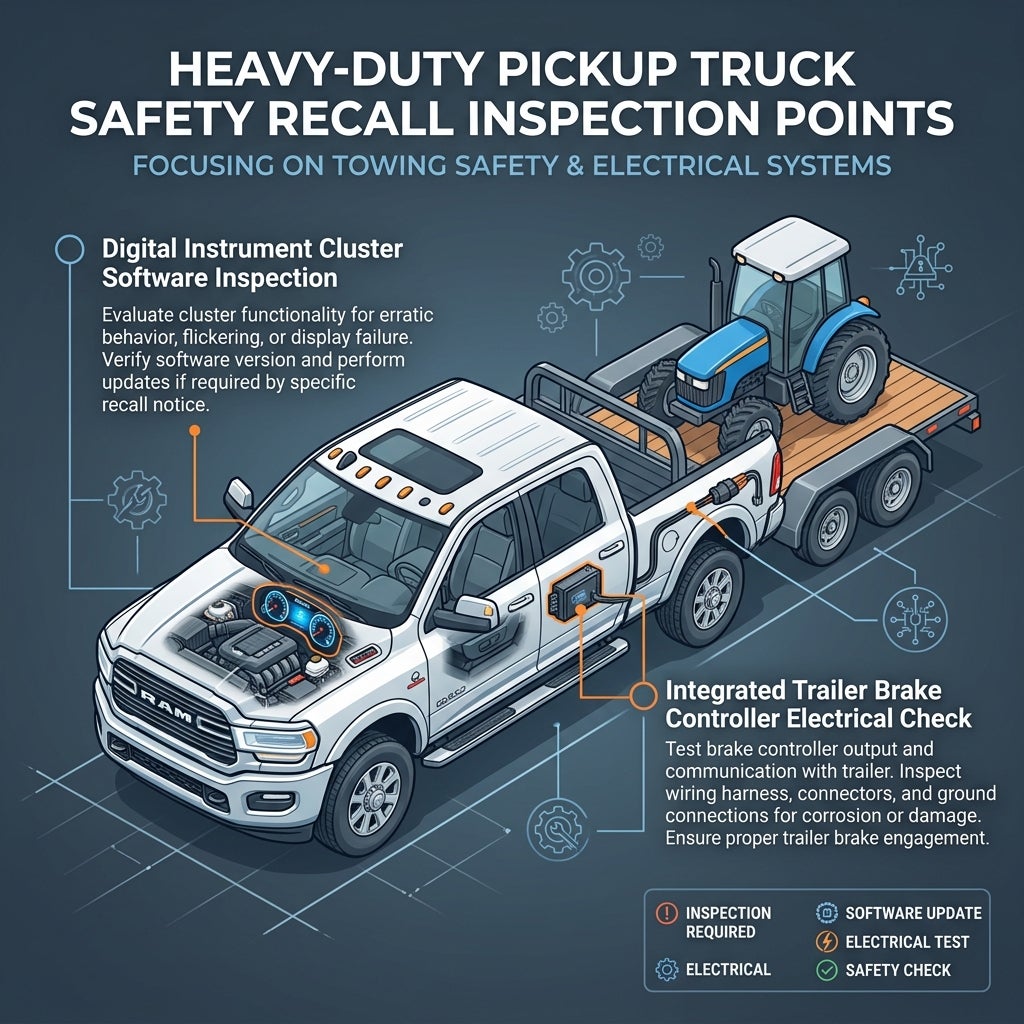
Diagram of heavy-duty pickup truck safety recall points showing instrument cluster and trailer brake controller checks. (Representative image for illustration purposes only. Actual vehicle may vary based on trim and configuration.)

2026 RAM 1500 and 2500 Recall: Instrument Cluster and Trailer Brake Safety Updates Explained

.hrizn-visual-root a { color: #566BA1; } .hrizn-visual-root a { color: inherit; } .hrizn-visual-root p { margin: 0 0 1em; } .hrizn-visual-root p:last-child { margin-bottom: 0; } @media (max-width: 640px) { .hrizn-visual-root { text-align: center !important; } .hrizn-visual-root a { display: block; width: 100%; max-width: 320px; margin-left: auto; margin-right: auto; box-sizing: border-box; } .hrizn-visual-root + a { margin-top: 8px; } } @media (max-width: 640px) { #hrizn-cols-1 { flex-direction: column !important; align-items: stretch !important; } #hrizn-cols-1 > .hrizn-col { flex: 1 1 100% !important; width: 100% !important; } } #hrizn-table-tbl-affected-trucks table{width:100%;table-layout:auto;border-collapse:collapse;font-family:'Open Sans',sans-serif;font-size:0.9rem} #hrizn-table-tbl-affected-trucks th,#hrizn-table-tbl-affected-trucks td{border:1px solid #e0e4ed;padding:8px;color:#595959;word-break:break-word;overflow-wrap:break-word} #hrizn-table-tbl-affected-trucks th{background:#e0e0e0;color:#1a1a22;font-weight:700;font-size:14px;text-align:left;vertical-align:middle;padding:8px} #hrizn-table-tbl-affected-trucks tr:nth-child(even) td{background:rgba(86,107,161,0.04)} #hrizn-table-tbl-affected-trucks .tableWrapper{overflow-x:hidden} @media (max-width: 640px) { #hrizn-cols-2 { flex-direction: column !important; align-items: stretch !important; } #hrizn-cols-2 > .hrizn-col { flex: 1 1 100% !important; width: 100% !important; } } @media (max-width: 640px) { #hrizn-3cols-1 { flex-direction: column !important; align-items: stretch !important; } #hrizn-3cols-1 > .hrizn-col { flex: 1 1 100% !important; width: 100% !important; } } @media (max-width: 640px) { #hrizn-cols-3 { flex-direction: column !important; align-items: stretch !important; } #hrizn-cols-3 > .hrizn-col { flex: 1 1 100% !important; width: 100% !important; } } @media (max-width: 640px) { #hrizn-cols-4 { flex-direction: column !important; align-items: stretch !important; } #hrizn-cols-4 > .hrizn-col { flex: 1 1 100% !important; width: 100% !important; } } @media (max-width: 640px) { #hrizn-3cols-2 { flex-direction: column !important; align-items: stretch !important; } #hrizn-3cols-2 > .hrizn-col { flex: 1 1 100% !important; width: 100% !important; } } @media (max-width: 640px) { #hrizn-cols-5 { flex-direction: column !important; align-items: stretch !important; } #hrizn-cols-5 > .hrizn-col { flex: 1 1 100% !important; width: 100% !important; } } @media (max-width: 640px) { #hrizn-3cols-3 { flex-direction: column !important; align-items: stretch !important; } #hrizn-3cols-3 > .hrizn-col { flex: 1 1 100% !important; width: 100% !important; } } @media (max-width: 640px) { #hrizn-cols-6 { flex-direction: column !important; align-items: stretch !important; } #hrizn-cols-6 > .hrizn-col { flex: 1 1 100% !important; width: 100% !important; } } 2026 Ram 1500 and 2500 Recall: Instrument Cluster and Trailer Brake Safety Updates Explained Stellantis has recently issued safety recall notices affecting certain 2026 Ram 1500 light-duty and Ram 2500 heavy-duty pickup trucks. The primary safety concerns revolve around two core electronic systems: a software timing glitch within the available 12-inch fully digital instrument cluster that can cause the screen to go completely blank or continuously reboot while driving, and an intermittent signal communication error in the Integrated Trailer Brake Controller Module (ITBM) that can lead to a loss of electric trailer braking synchronization. Both conditions compromise driver safety and fail to meet Federal Motor Vehicle Safety Standards (FMVSS). When an instrument cluster blanks out, crucial driver information such as vehicle speed, gear selection, engine temperature, low fuel warnings, and active safety telltale lights become instantly invisible. Simultaneously, if your truck experiences an ITBM signal drop while hauling a heavy load, the electric trailer brakes may fail to actuate when you depress the brake pedal, significantly increasing your stopping distance. At Valor CDJR in Junction City, KS, our primary mission is keeping local truck owners informed, safe, and fully supported with official factory remedies. Which 2026 Ram 1500 and 2500 Trucks Are Affected by the Safety Recalls? The recall actions specifically target late 2025 and model year 2026 Ram 1500 and 2500 vehicles equipped with specific option packages. For the 12-inch Digital Instrument Cluster recall, affected vehicles include select Big Horn, Laramie, Rebel, Limited, and Tungsten trim levels produced during specific assembly windows. Base models equipped with analog gauges or the 7-inch driver information display are generally unaffected by this specific digital cluster display bug. For the Integrated Trailer Brake Module (ITBM) recall, the affected population includes both Ram 1500 and heavy-duty Ram 2500 trucks equipped with the factory Trailer Tow Group (option code AHC or equivalent). Production dates range across early-to-mid 2026 builds. To determine whether your individual truck is impacted, you should check your 17-digit Vehicle Identification Number (VIN). The VIN can be found on your Kansas vehicle registration card, insurance documentation, or printed on the driver's side dashboard near the bottom of the windshield. If you purchased your vehicle locally or are considering browsing our New Vehicle Listings or certified Used Vehicle Listings, rest assured that all vehicles sold at Valor CDJR undergo mandatory safety recall verification prior to delivery. Model Affected Feature Primary Concern 2026 Ram 1500 12-Inch Digital Cluster Display Blanking / Reset 2026 Ram 2500 Heavy Duty 12-Inch Digital Cluster Display Blanking / Reset 2026 Ram 1500 / 2500 Factory Trailer Tow Package ITBM Signal Interruption What Exactly Is Wrong with the 12-Inch Digital Instrument Cluster on 2026 Ram 1500 and 2500 Trucks? The underlying issue with the 12-inch digital instrument cluster stems from software memory logic within the Instrument Cluster Module (ICM). During specific vehicle startup sequences or rapid CAN-bus communication cycles—such as starting the vehicle immediately after unlocking or switching drive modes—the cluster's central processing logic experiences a boot timing conflict. This logic loop causes the screen backlight to remain dark or forces the module to execute a hard reset while the truck is in motion. When a reset occurs, the display goes completely black for 5 to 15 seconds before showing the Ram startup animation and repopulating your speed gauges, oil pressure, tire pressure, and warning lights. Because driver assistance alerts and warning lights are non-functional during this reboot phase, the vehicle fails FMVSS 101 requirements. Fortunately, the engine, power steering, and fundamental mechanical braking continue to function normally during a display reboot. How Does the 2026 Ram Trailer Brake Recall Affect Real-World Towing Safety and What Should Owners Do? Towing safety depends entirely on predictable, synchronized braking between your truck and your trailer. In affected 2026 Ram 1500 and 2500 trucks, a software communication fault inside the Integrated Trailer Brake Controller Module (ITBM) can prevent the module from transmitting electrical brake power signals to the rear trailer connector plug. When this happens, depressing your truck's brake pedal slows down the truck, but the trailer's electric or electric-over-hydraulic brakes fail to engage. This condition poses significant hazards when towing heavy agricultural loads, horse trailers, or camper trailers along steep highway downgrades. The added inertia of an unbraked trailer pushes hard against the rear axle of your vehicle, dramatically extending stopping distances and increasing jackknife risks in emergency braking situations. Owners experiencing this issue should immediately schedule an inspection via our online Service Scheduler or contact our dealership directly. Schedule Recall Service Appointment What Are the Main Documented Problems with the 2026 Ram 1500, and Which Are Considered Critical? Critical Safety Recalls Trailer Brake Controller Failure: High severity safety risk causing complete loss of electric trailer braking output. Instrument Cluster Blackouts: Moderate-to-high safety risk resulting in sudden loss of speed display and indicator lights while driving. Software & Electrical Bugs Uconnect 5 Screen Freeze: Temporary infotainment display lockups resolved via software patches. Central Body Controller Software: Minor CAN-bus timing bugs affecting ambient interior lighting logic and keyless entry detection delays. Factory Technical Service Bulletins Powertrain Control Module (PCM) Updates: Calibration updates for smooth transmission shifting under heavy payload. HVAC Actuator Noise: Minor mechanical calibration adjustments addressed under standard bumper-to-bumper warranty. How Do Dealers Verify That Trailer Lights and Brakes Work Correctly After Recall Repairs on a Ram Truck? At Valor CDJR, performing recall repairs requires far more than just updating software. Once our factory-certified technicians complete the software flash update on the Instrument Cluster Module and Integrated Trailer Brake Control Module using Stellantis's proprietary wiTECH 2.0 diagnostic tool, we execute a rigorous multi-step verification protocol. First, our technicians connect a specialized electrical load tester directly to the truck's rear 7-pin trailer receptacle. This tool simulates the exact electrical resistance, power draw, and ground circuit conditions of a real trailer equipped with electric brakes and LED lighting systems. Second, we test the manual override slider and proportional brake pedal application while monitoring real-time voltage and amperage output levels through the wiTECH system. This guarantees that proportional braking output ramps up smoothly without unexpected signal drops. Finally, we perform a key-cycle test and operational sweep of all trailer lighting circuits—including brake lights, turn signals, reverse lights, and continuous 12V auxiliary charging power—ensuring your towing setup is 100% compliant and road-ready. If you need replacement trailer plug adapters or towing accessories, visit our local Parts Department. How Can I Check Recall Status and Schedule Repairs for My 2026 Ram at a Local Dealer Near Junction City, KS? Checking whether your 2026 Ram 1500 or 2500 has outstanding safety recalls is fast, easy, and completely free of charge. You can search your vehicle's status online using the official NHTSA Recall Lookup Tool or the Mopar Recall Portal by entering your 17-digit VIN. Alternatively, you can call our service team at Call us at (785) 238-5114. Our team will instantly look up your vehicle across all Stellantis databases to identify any pending recall repairs, open customer satisfaction notifications, or required software updates. Evaluate Your Current Trade-In Navigating Flint Hills Towing and Heavy-Duty Hauling Safety Near Junction City and Manhattan, KS Agricultural & Farm Hauling Driving across local farm roads throughout Geary and Riley Counties with livestock or equipment trailers demands 100% reliable trailer brake actuation. Sudden stop demands on unpaved gravel roads require functional trailer control. Recreational Towing at Milford Lake Summer weekend trips launching boats at Milford Lake or hauling campers through the Flint Hills involve rolling topography. Functioning trailer brakes prevent overheating your truck's primary service brakes. Highway Driving on I-70 & K-18 At 75 MPH on Interstate 70 or State Route 18 toward Manhattan, a sudden cluster blackout or brake signal loss creates high stress. Visiting Valor CDJR keeps your towing setup compliant and worry-free. What to Expect During Your Ram Recall Service Appointment at Valor CDJR When you bring your 2026 Ram 1500 or 2500 to Valor CDJR for recall updates, you can expect prompt, professional, zero-cost service under federal law. Recall repairs are completely covered by the manufacturer—you will pay $0 out-of-pocket for parts or labor related to official safety recall remedies. Most software flash recalibrations for the instrument cluster and trailer brake module take approximately 45 to 90 minutes to complete. If you require routine maintenance like an oil change during the same visit, ask our service advisors about our rapid Express Lane options. Why Certified Factory Updates Matter for Ram Electrical and Towing Systems Direct Factory Software Third-party diagnostic tools cannot write official encrypted firmware updates to modern Security Gateway Modules (SGW). Certified CDJR dealerships have direct cloud authentication with Stellantis engineering servers. Warranty Integrity Having recall repairs logged in the official Mopar database protects your factory bumper-to-bumper and powertrain warranties, ensuring smooth trade-in valuation and resale documentation down the road. Commercial Fleet Support For business owners managing heavy-duty work fleets, keeping trucks operational is critical. Explore our Commercial Vehicle Inventory for dedicated heavy-duty vehicle support. Explore Commercial Work Trucks Pre-Repair Safety Checklist and Frequently Asked Questions for 2026 Ram Owners Q: Can I safely drive my 2026 Ram before the recall service is performed? A: Yes, you can continue driving your truck, but take extra precautions. If towing heavy loads, verify that your trailer brake system responds before entering highway traffic. If your digital display turns off while driving, remain calm, maintain safe vehicle spacing, and pull over safely to perform a key restart if necessary. Q: Is there any cost associated with recall repairs? A: No. Under federal safety law, all official recall repairs—including software updates, recalibrations, and module replacements—are provided completely free of charge to vehicle owners at authorized dealerships like Valor CDJR. Q: How long will the repair appointment take? A: Most software updates require under an hour of active reflashing time. However, we recommend allowing approximately 1.5 hours for full diagnostic sweep and trailer plug load verification. You can easily book an appointment using our online Service Scheduler. Q: What if I am considering upgrading my truck or financing a new model? A: If you are exploring upgrading your current vehicle, feel free to submit a quick credit inquiry via our online tool to Contact us for financing information before visiting our showroom. Schedule Your Certified 2026 Ram Recall Service at Valor CDJR in Junction City Today Keep your towing safety and driver information display on track. The certified service team at Valor CDJR in Junction City, KS is ready to execute all factory software flashes, module recalibrations, and towing system load tests for your 2026 Ram 1500 or 2500. We proudly serve truck owners throughout Geary County, Riley County, Manhattan, Fort Riley, and Salina. Contact our service team today at Call us at (785) 238-5114 or click below to schedule your appointment online. You can also Get Directions to Valor CDJR located at 1825 Goldenbelt Blvd, Junction City, KS 66441. Schedule Recall Service Apply For Financing Pre-Approval

A grey SUV drives along a winding asphalt road through rolling green hills during golden hour. (Representative image for illustration purposes only. Actual vehicle may vary based on trim and configuration.)

Getting Reliable Oil Changes in Manhattan, KS and Junction City: Keep Your Engine Running Strong in the Flint Hills

.hrizn-visual-root a { color: #566BA1; } .hrizn-visual-root a { color: inherit; } .hrizn-visual-root p { margin: 0 0 1em; } .hrizn-visual-root p:last-child { margin-bottom: 0; } @media (max-width: 640px) { .hrizn-visual-root { text-align: center !important; } .hrizn-visual-root a { display: block; width: 100%; max-width: 320px; margin-left: auto; margin-right: auto; box-sizing: border-box; } .hrizn-visual-root + a { margin-top: 8px; } } @media (max-width: 640px) { #hrizn-cols-1 { flex-direction: column !important; align-items: stretch !important; } #hrizn-cols-1 > .hrizn-col { flex: 1 1 100% !important; width: 100% !important; } } @media (max-width: 640px) { #hrizn-3cols-1 { flex-direction: column !important; align-items: stretch !important; } #hrizn-3cols-1 > .hrizn-col { flex: 1 1 100% !important; width: 100% !important; } } @media (max-width: 640px) { #hrizn-cols-2 { flex-direction: column !important; align-items: stretch !important; } #hrizn-cols-2 > .hrizn-col { flex: 1 1 100% !important; width: 100% !important; } } #hrizn-table-puck-tbl-5 table{width:100%;table-layout:auto;border-collapse:collapse;font-family:'Open Sans',sans-serif;font-size:0.9rem} #hrizn-table-puck-tbl-5 th,#hrizn-table-puck-tbl-5 td{border:1px solid #e0e4ed;padding:8px;color:#595959;word-break:break-word;overflow-wrap:break-word} #hrizn-table-puck-tbl-5 th{background:#eeeeee;color:#1a1a22;font-weight:700;font-size:14px;text-align:left;vertical-align:middle;padding:10px} #hrizn-table-puck-tbl-5 tr:nth-child(even) td{background:rgba(86,107,161,0.04)} #hrizn-table-puck-tbl-5 .tableWrapper{overflow-x:hidden} @media (max-width: 640px) { #hrizn-cols-3 { flex-direction: column !important; align-items: stretch !important; } #hrizn-cols-3 > .hrizn-col { flex: 1 1 100% !important; width: 100% !important; } } @media (max-width: 640px) { #hrizn-3cols-2 { flex-direction: column !important; align-items: stretch !important; } #hrizn-3cols-2 > .hrizn-col { flex: 1 1 100% !important; width: 100% !important; } } @media (max-width: 640px) { #hrizn-cols-4 { flex-direction: column !important; align-items: stretch !important; } #hrizn-cols-4 > .hrizn-col { flex: 1 1 100% !important; width: 100% !important; } } @media (max-width: 640px) { #hrizn-cols-5 { flex-direction: column !important; align-items: stretch !important; } #hrizn-cols-5 > .hrizn-col { flex: 1 1 100% !important; width: 100% !important; } } @media (max-width: 640px) { #hrizn-3cols-3 { flex-direction: column !important; align-items: stretch !important; } #hrizn-3cols-3 > .hrizn-col { flex: 1 1 100% !important; width: 100% !important; } } @media (max-width: 640px) { #hrizn-cols-6 { flex-direction: column !important; align-items: stretch !important; } #hrizn-cols-6 > .hrizn-col { flex: 1 1 100% !important; width: 100% !important; } } Getting Reliable Oil Changes in Manhattan, KS and Junction City: Keep Your Engine Running Strong in the Flint Hills Driving through the Flint Hills region presents a unique set of challenges for any vehicle. Whether you are commuting daily between Manhattan and Junction City on I-70, taking short trips across the Kansas State University campus, or navigating the demanding schedules of Fort Riley, your engine works under intense conditions. The rolling hills, seasonal gravel dust, and Kansas weather extremes—ranging from freezing sub-zero winters to blistering summer afternoons—mean your engine oil has to perform at its peak every single day. Regular oil changes are not just routine maintenance; they are the literal lifeblood of your vehicle's engine, preserving its longevity and performance. At Valor CDJR, located right off I-70 in Junction City, we understand the specific driving conditions that local motorists face. Our goal is to serve as your trusted regional automotive partner, offering clear, honest advice and professional care. We recognize that keeping your vehicle in peak condition is vital for your daily life, your budget, and your safety. In this comprehensive guide, we will answer the most pressing questions about engine lubrication, maintenance intervals, and local service options to help you make informed decisions for your car, truck, or SUV. What is the Difference Between Full Synthetic and Conventional Motor Oil for Kansas Driving? To understand which oil is right for your vehicle, it helps to examine how they are made. Conventional motor oil is refined directly from crude oil, containing natural impurities and molecules of varying sizes. While it provides adequate lubrication under normal driving conditions, it is highly susceptible to breaking down under extreme thermal stress. In contrast, full synthetic motor oil undergoes a complex chemical synthesis and purification process. This creates uniform molecular structures and allows chemical engineers to include highly advanced additive packages designed to prevent friction, resist oxidation, and eliminate deposit buildup. For drivers in Riley and Geary counties, this scientific difference translates directly into real-world protection. During hot Kansas summers, conventional oil can thin out rapidly, losing its ability to cushion vital engine components. Synthetic oil, however, maintains its viscosity and protective barrier even under intense heat. This protection is especially crucial if you are towing a trailer down I-70 or sitting in heavy stop-and-go traffic near Tuttle Creek Boulevard during peak hours. Winter weather in the Manhattan area presents the opposite challenge. Cold starts are incredibly harsh on an engine because conventional oil thickens in low temperatures, taking longer to flow from the oil pan to the top of the engine. During those critical seconds after a cold start, your engine components experience elevated friction and wear. Full synthetic oil is engineered to flow quickly at sub-zero temperatures, ensuring almost instantaneous lubrication and protection the moment you turn the key on a freezing January morning. Additionally, many modern turbocharged engines—common in both newer commuter cars and heavy-duty trucks—strictly require full synthetic oil. Turbochargers operate at extremely high speeds and temperatures; conventional oil can easily vaporize or leave behind carbon deposits (sludge) inside the turbo's delicate oil passages, leading to catastrophic component failures. Choosing synthetic is a smart investment in your vehicle's mechanical health. Why Are Synthetic Oil Changes More Expensive Than Conventional Ones? Advanced Chemical Refinement The upfront cost difference is primarily due to the expensive manufacturing and chemical processing required to create synthetic base oils. Generating uniform molecules and removing all natural impurities requires highly specialized refining equipment and costly additive chemicals, which naturally increases the wholesale price of the oil. Extended Service Intervals While conventional oil typically requires replacement every 3,000 to 5,000 miles, synthetic oil is engineered to maintain its protective qualities for 7,500 to even 10,000 miles under normal driving conditions. This means you will need fewer service visits throughout the year, saving you valuable time. Long-Term Financial Savings When you calculate the cost per mile, synthetic oil is often the more economical choice. By reducing the frequency of oil changes by half, you offset the higher per-visit cost. More importantly, the superior protection of synthetic oil helps prevent costly engine wear and parts failures down the road. Does Driving Short Distances Frequently Require More Frequent Oil Changes? It might seem counterintuitive, but vehicles that are driven only short distances often require more frequent oil changes than vehicles that regularly cruise down the highway. Automotive manufacturers define 'severe driving conditions' in a way that surprises many drivers. One of the primary indicators of severe service is making frequent short trips of less than five to ten miles, particularly in cold weather. Think about a typical day for a student or faculty member commuting to the Kansas State University campus, or a soldier stationed at Fort Riley driving short distances from their housing to their duty station. These quick trips often take less than ten minutes. In this short timeframe, the engine never actually reaches its optimal operating temperature. Why does this matter? When an engine runs, combustion byproducts like water vapor and unburned fuel seep past the piston rings and enter the crankcase, mixing with your oil. If you drive on the highway for 20 minutes or more, the engine oil heats up sufficiently to boil off these liquid contaminants, venting them safely through the PCV system. However, on short trips, the oil never gets hot enough. Instead, the moisture and fuel accumulate in the oil pan, diluting the lubricant and reacting chemically to form corrosive acids and thick, jelly-like engine sludge. Over time, this sludge blocks oil passages, starves critical components of lubrication, and accelerates engine wear. If your daily routine consists mostly of short, local trips around Manhattan, KS, we highly recommend following your vehicle's 'severe duty' maintenance schedule. This typically involves changing your oil and filter every 3,000 to 5,000 miles, or every six months, regardless of how few miles you have actually driven. To make this easy, you can use our Service Scheduler to keep your vehicle on a regular, protective maintenance cadence. Schedule Oil Change Online Where Can I Find My Vehicle's Oil Capacity and Correct Viscosity? Using the wrong oil viscosity or incorrect volume can lead to reduced fuel efficiency, increased wear, or even immediate engine damage. Fortunately, finding your vehicle's exact requirements is straightforward if you know where to look. Your absolute best resource is the original owner's manual, which contains a detailed specifications section. Here, you will find both the recommended oil viscosity (such as 0W-20, 5W-30, or 10W-30) and the total system capacity, which is typically measured in quarts. If you don't have the manual handy, you can also look under your vehicle's hood. Most manufacturers print the recommended oil weight directly on the engine's oil fill cap. Additionally, a emissions control or vehicle specification sticker is often located on the underside of the hood or near the radiator support, listing crucial fluid details. If you are doing a DIY oil change or want to double-check before buying supplies, you can contact our factory-certified Parts Department. Our team has direct access to manufacturer databases and can instantly pull up the exact specifications for your specific year, make, and model. Engine Type Typical Viscosity Average Capacity Recommended Type 4-Cylinder Commuter Engines (e.g., 2.0L, 2.4L) 0W-20 or 5W-20 4.5 - 5.5 Quarts Full Synthetic Mid-Size V6 / Turbo Engines (e.g., 3.6L Pentastar) 5W-20 or 5W-30 5.0 - 6.0 Quarts Synthetic Blend / Full Synthetic Full-Size V8 Truck Engines (e.g., 5.7L HEMI) 0W-20 or 5W-30 7.0 Quarts Full Synthetic Heavy-Duty Turbo Diesel Engines (e.g., 6.7L Cummins) 10W-30 or 15W-40 12.0 Quarts Heavy-Duty Diesel Synthetic Should I Get My Oil Changed at a Dealership or a Quick Lube Service Center? When it's time for an oil change, drivers in the Manhattan and Junction City area have two main choices: a national quick-lube franchise or a factory-authorized dealership service center like Valor CDJR. While quick-lube shops focus heavily on fast turnarounds and high volume, they often rely on entry-level, generalist technicians who work on dozens of different makes and models every day. This rapid-pace environment increases the risk of simple but costly mistakes, such as stripping the oil pan drain plug, using a generic or ill-fitting oil filter, or over/under-filling your engine's oil reservoir. A dealership service center, on the other hand, relies on factory-certified technicians who undergo continuous, brand-specific training. Our technicians understand the exact engineering, tolerances, and unique mechanical quirks of your Chrysler, Dodge, Jeep, Ram, or other major brand vehicle. We also use original equipment manufacturer (OEM) filters and fluids, ensuring your engine receives the precise replacement components it was designed to run on. If you want specialized care without the long wait, we offer a dedicated Express Lane designed for rapid, high-quality routine maintenance. What Are the Wait Times for a Quick Lube Shop Versus a Dealership Service Bay? The Quick-Lube 'In and Out' Model Quick-lube shops are built for rapid, assembly-line speed, aiming to get your vehicle out of the bay in 15 to 20 minutes. While this is highly convenient when you are in a rush, it means the technician has very little time to inspect your vehicle's overall health. Minor issues that are easily caught during a thorough inspection can easily go completely unnoticed. The Dealership's Multi-Point Inspection A standard dealership oil change might take slightly longer—usually 45 to 60 minutes. This extra time is spent performing a comprehensive multi-point safety inspection. Certified technicians check your brake pad wear, battery health, fluid levels, tire tread depth, suspension components, and drive belts, identifying minor issues before they become major breakdowns. Convenience and Comfort Amenities To make your stay enjoyable, dealerships invest in highly comfortable waiting lounges equipped with complimentary Wi-Fi, fresh coffee, clean workspaces, and charging areas. If you are on a tight schedule, you can take advantage of express service options or schedule your visit in advance to minimize waiting times. Is It More Expensive to Get an Oil Change at a Dealership Than at a Quick Lube Shop? There is a common misconception that dealership service departments are always significantly more expensive than independent quick-lube shops. In reality, pricing is highly competitive. A standard conventional oil change near Manhattan or Junction City may vary in price, and a full synthetic oil change may cost more depending on oil capacity and filter requirements. For current service pricing, please contact us or visit our service center. Additionally, service recommendations can vary by provider, and it is important to review any recommended maintenance to determine what is appropriate for your vehicle. At Valor CDJR, we pride ourselves on transparent, pressure-free service. We only recommend services that are genuinely necessary based on your manufacturer guidelines. While you are here, we can also help you look at options if you are considering a change, like looking at our current Used Vehicle Listings or doing a fast Trade In Evaluation to see what your current ride is worth. View Service & Maintenance Specials Why Do Some Drivers Prefer Dealership Service Departments for Oil Changes? For many vehicle owners, the preference for dealership service departments comes down to trust, accountability, and the long-term value of their vehicle. Dealerships maintain comprehensive digital records of every service visit, creating a documented maintenance history that can significantly boost your vehicle's resale value. When potential buyers see that a vehicle was consistently maintained by factory-trained specialists using genuine OEM parts, they feel far more confident in its mechanical integrity. Furthermore, if your vehicle is covered by an active manufacturer warranty or an extended service contract, having your maintenance completed at an authorized dealer ensures seamless compliance with all warranty terms. Certified technicians also check for any outstanding safety recalls or manufacturer software updates every time your vehicle is brought into the service bay, performing these vital updates free of charge. It is a level of comprehensive, proactive vehicle care that independent quick-lube shops simply cannot provide. Are There Major National Quick Lube Chains Located in Manhattan, KS? Yes, Manhattan, KS features several national quick-lube chains, primarily situated along high-traffic corridors like Tuttle Creek Boulevard, Seth Child Road, and Fort Riley Boulevard. Brands like Jiffy Lube, Valvoline Instant Oil Change, and Walmart Auto Care Centers are common options for drivers looking for a fast, drive-through service. These franchises are designed to get drivers back on the road rapidly, utilizing highly standardized processes to manage high daily car counts. While these national chains excel at basic convenience, they are rarely able to build a personalized, long-term relationship with you and your vehicle. Because of high staff turnover rates, you will rarely see the same technician twice. At Valor CDJR, we pride ourselves on our deep roots in the community. We focus on building authentic, long-term relationships, treating you like family every time you visit. Our team gets to know your driving habits, your vehicle's history, and your budget, ensuring personalized care tailored specifically to you. How Do You Safely Dispose of Used Motor Oil and Oil Filters in Riley or Geary County? Environmental Responsibility If you prefer to change your engine oil yourself, disposing of the waste fluids safely is extremely important. Just one gallon of used motor oil can contaminate up to one million gallons of fresh water if poured down a storm drain or onto the ground. Proper disposal is critical for keeping our local Kansas waterways clean. Riley County Facilities For residents in Manhattan, the Riley County Household Hazardous Waste (HHW) facility accepts used motor oil, filters, and other automotive fluids at no charge. Many local auto parts retailers also accept used oil for recycling, provided it is stored in clean, sealed containers and has not been mixed with other solvents. Geary County Resources If you live or work closer to Junction City, the Geary County Transfer Station offers designated drop-off options for hazardous materials, including used automotive fluids. Alternatively, when you bring your vehicle to Valor CDJR, we handle the proper disposal and recycling of all fluids and filters automatically. Schedule Your Next Certified Oil Change at Valor CDJR in Junction City Keep your vehicle running smoothly with professional, stress-free routine maintenance. At Valor CDJR, we combine deep local expertise, highly trained factory technicians, and premium OEM parts to provide superior care for your car, truck, or SUV. Whether you are driving a brand-new vehicle or maintaining a high-mileage commuter, we are here to help you protect your investment and travel the roads of Manhattan, Junction City, and Fort Riley with absolute confidence. To find our service center, you can easily Get Directions to Valor CDJR located at 1825 Goldenbelt Blvd, Junction City, KS 66441. Have a quick question about our services or need to check current bay availability? Feel free to Call us at (785) 238-5114 to speak directly with our friendly service advisory team. If you are in the market for an upgrade, you can also browse our latest New Vehicle Listings or explore our commercial solutions in our Commercial Vehicle Inventory. If you need financing for a major purchase or future maintenance, you can quickly Get Pre-Approved online today. Schedule Service Appointment Get Directions to Dealership

Contact Us

Fill out this form below and we'll contact you shortly
*Required Fields