




Fall Harvest Hauling: Preparing Your RAM 1500 for High-Payload Driving
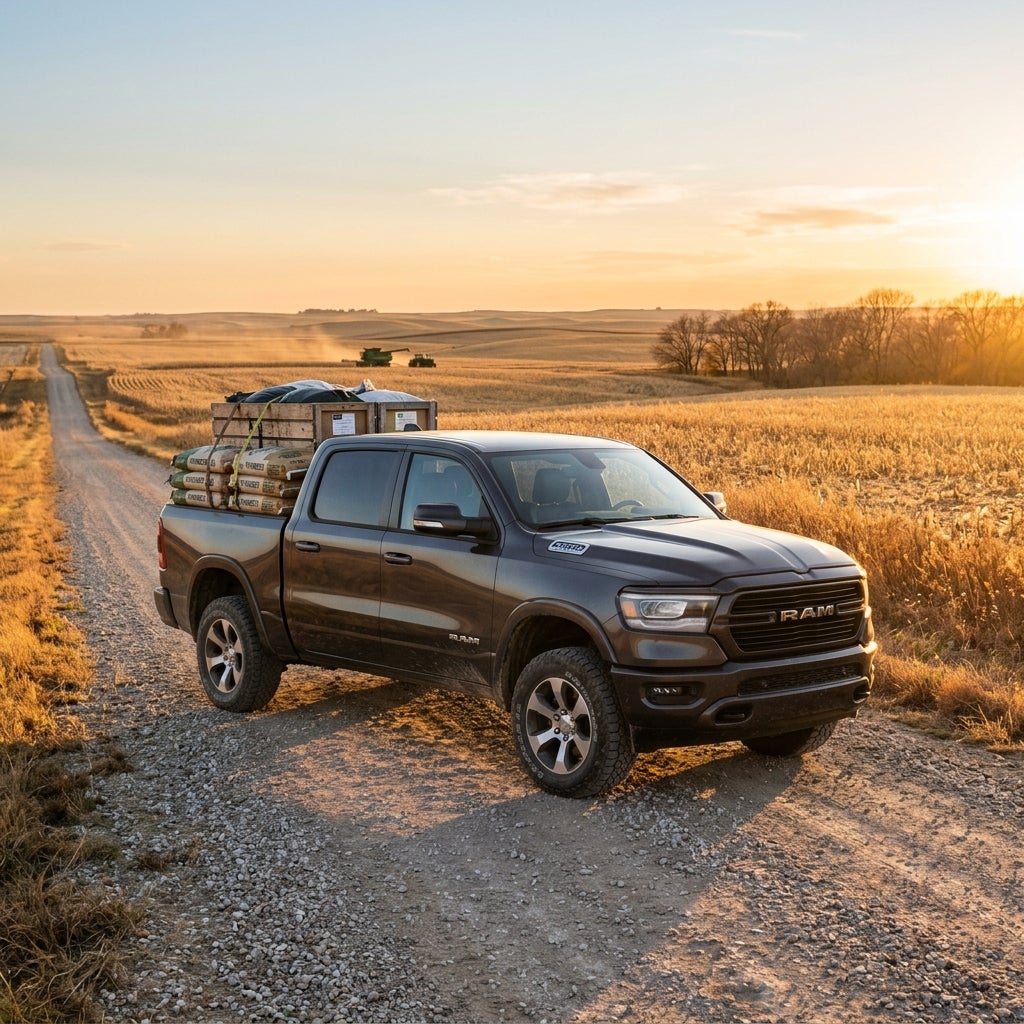
Active-Level Four-Corner Air Suspension maintains a level vehicle profile under load by automatically adjusting pneumatic pressure at each wheel. This automatic leveling prevents rear-end sag, keeps headlamps properly aimed, preserves front-wheel steering geometry, and optimizes ground clearance across uneven terrain when carrying up to 2,360 pounds of payload.
Over my 20 years heading the service department at Valor CDJR, I have seen every type of heavy hauling scenario imaginable during the agricultural season. When you load hundreds of pounds of feed, seed, or grain into the bed of a standard light-duty truck, the rear suspension compresses significantly. That squatting effect lifts the front end, which lightens steering feedback, misaligns your headbeams into the night sky, and reduces braking stability. Ram solved this engineering challenge by offering an available pneumatic system that actively monitors load sensors at all four corners.
When sensors detect added bed weight, an onboard air compressor pumps high-pressure air into the spring bladders to raise the chassis back to its nominal ride height. For drivers bringing grain totes across dirt roads near Junction City, this automatic balance ensures consistent control whether the bed is completely empty or loaded to maximum capacity. The system also features selectable height modes, including an Off-Road position that increases ground clearance for rutted farm tracks, and an Entry/Exit mode that lowers the truck bed to ease heavy manual loading. If you want to experience how this system responds under real conditions, feel free to drop by our service center on Goldenbelt Blvd or give our service advisors a quick call with any technical questions.
Table of Contents
- What Is the Maximum Payload Capacity of the Ram 1500 and Where Is It Listed?
- Which Light-Duty Truck Delivers Smooth Ride Quality and Payload Stability When Loaded?
- How Reliable Is the Hurricane Inline-Six Engine Compared to the 5.7L HEMI V8 for Hauling?
- What Tire Pressure and Pre-Haul Maintenance Keep Your Ram 1500 Safe During Harvest?
- Are Commercial Incentives or Agricultural Fleet Discounts Available for Ram 1500 Trucks?
What Is the Maximum Payload Capacity of the Ram 1500 and Where Is It Listed?
The 2026 Ram 1500 achieves its maximum rated payload capacity of 2,360 pounds on the Tradesman Quad Cab 4x2 configuration fitted with the 3.6L Pentastar V6 engine and 6-foot-4-inch bed. The exact legally binding payload limit for any individual truck is printed on the Safety Compliance Certification Label located on the driver-side door jamb.
A common point of confusion during harvest season involves distinguishing advertised maximum ratings from a specific vehicle's actual payload limit. Advertised figures represent the absolute highest payload rating achievable across the entire model lineup under ideal specification rules. Adding features like a Crew Cab, four-wheel drive, leather seating, or skid plates increases the base curb weight of the vehicle, which directly subtracts from available payload capacity. For example, higher-tier trims or four-wheel-drive models equipped with the twin-turbo engine generally feature payload capacities ranging between 1,500 and 1,900 pounds.
To calculate your truck's true capacity before hauling equipment or agricultural supplies, open the driver door and check the tire and loading information placard. This sticker lists the maximum combined weight of occupants and cargo that your specific build can safely carry. You must subtract the weight of driver, passengers, cab cargo, and any hitch tongue weight from this figure to determine how much weight you can put in the bed. If you need heavy-duty bed liners, tie-down anchors, or suspension upgrades, our team can help you source genuine parts through our Ram parts department or help you explore our new Ram 1500 inventory configured for maximum bed capability.
Which Light-Duty Truck Delivers Smooth Ride Quality and Payload Stability When Loaded?
The Ram 1500 delivers superior ride quality and loaded stability compared to competitors like the Ford F-150 and Chevrolet Silverado 1500 because it utilizes a multi-link rear suspension with coil springs or optional four-corner air suspension rather than traditional leaf springs.
Traditional leaf-spring designs used by rival truck manufacturers rely on stacked metal blades friction-sliding against each other. While leaf springs are inexpensive to manufacture, they create a harsh, bouncy ride when the truck is empty and suffer from lateral axle shift under heavy cornering loads. Ram engineers revolutionized the light-duty segment by fitting a five-link rear suspension featuring progressive-rate coil springs and a solid rear axle. This design isolates road harshness, reduces unspring weight, and keeps the rear axle precisely centered during heavy acceleration or braking.
When hauling heavy loads across pitted gravel roads or highway pavement, progressive coil springs stiffen gradually as compression increases. This dynamic damping maintains steady tire contact with the road surface, reducing vehicle sway and chassis jitter. Drivers transitioning out of older light-duty trucks consistently notice how grounded the Ram 1500 feels under heavy payload conditions. For truck owners considering an upgrade to a late-model work vehicle, reviewing our current pre-owned truck inventory provides access to pre-owned Ram 1500 models built with this same progressive suspension engineering.
How Reliable Is the Hurricane Inline-Six Engine Compared to the 5.7L HEMI V8 for Hauling?
The 3.0L Hurricane Inline-Six engine offers exceptional structural reliability for heavy work through its cast-aluminum block, plasma transfer wire arc cylinder wall coatings, and forged steel crankshaft, generating 420 hp and 469 lb-ft of torque in standard output trim to match or exceed the output and durability of the legacy 5.7L HEMI V8.
Farmers and fleet operators stepping into our service bays frequently ask how twin turbochargers handle continuous heavy loads compared to naturally aspirated V8 engines. The Hurricane engine was engineered from the ground up for severe-duty operation. Its inline-six architecture inherently balances primary and secondary engine forces, eliminating the lateral vibration typical of V8 configurations. Furthermore, the dual low-inertia turbochargers feed peak torque into the drivetrain at just 3,500 rpm, delivering immediate low-end pulling power right where high-payload driving demands it most.
Thermal management is another crucial factor during long autumn workdays. The Hurricane engine incorporates dual water pumps, liquid-to-air intercoolers, and high-flow oil jets that spray cooling oil directly onto the undersides of the pistons. Combined with a heavy-duty 8-speed automatic transmission, this powertrain delivers consistent torque without thermal degradation during sustained climbs under load. While the 5.7L HEMI V8 earned an incredible reputation over two decades, the Hurricane engine delivers higher torque, better fuel efficiency at 20 mpg city / 25 mpg highway on standard builds, and superior structural rigidity. If you are planning to upgrade your farm rig this season, our sales staff can help you evaluate your trade-in value online before stopping by.
What Tire Pressure and Pre-Haul Maintenance Keep Your Ram 1500 Safe During Harvest?
Proper pre-haul maintenance requires setting cold tire inflation pressure to the exact specification listed on the driver-door placard rather than the maximum pressure molded on the tire sidewall, combined with inspecting brake pad thickness and checking rear differential fluid before hauling heavy payloads.
Navigating the rolling agricultural routes across Riley County during fall harvest subjects your truck to heavy mechanical stress. Operating a fully loaded truck on underinflated tires generates excessive internal heat, which drastically increases the risk of tire sidewall blowout under load. Always adjust tire pressure when the tires are cold, meaning the truck has been parked for at least three hours. If you frequently haul near the maximum gross vehicle weight rating, maintain the exact front and rear cold pressures recommended on the vehicle placard to ensure proper tread contact and load distribution.
In addition to tire pressure, a complete pre-harvest service inspection should cover the following key wear areas:
- Inspection of front and rear brake pads and rotors to handle increased stopping distances under heavy load.
- Verification of rear differential fluid level and condition, especially for trucks routinely operating in dusty field conditions.
- Visual check of air filter condition to prevent intake restriction from crop dust and debris.
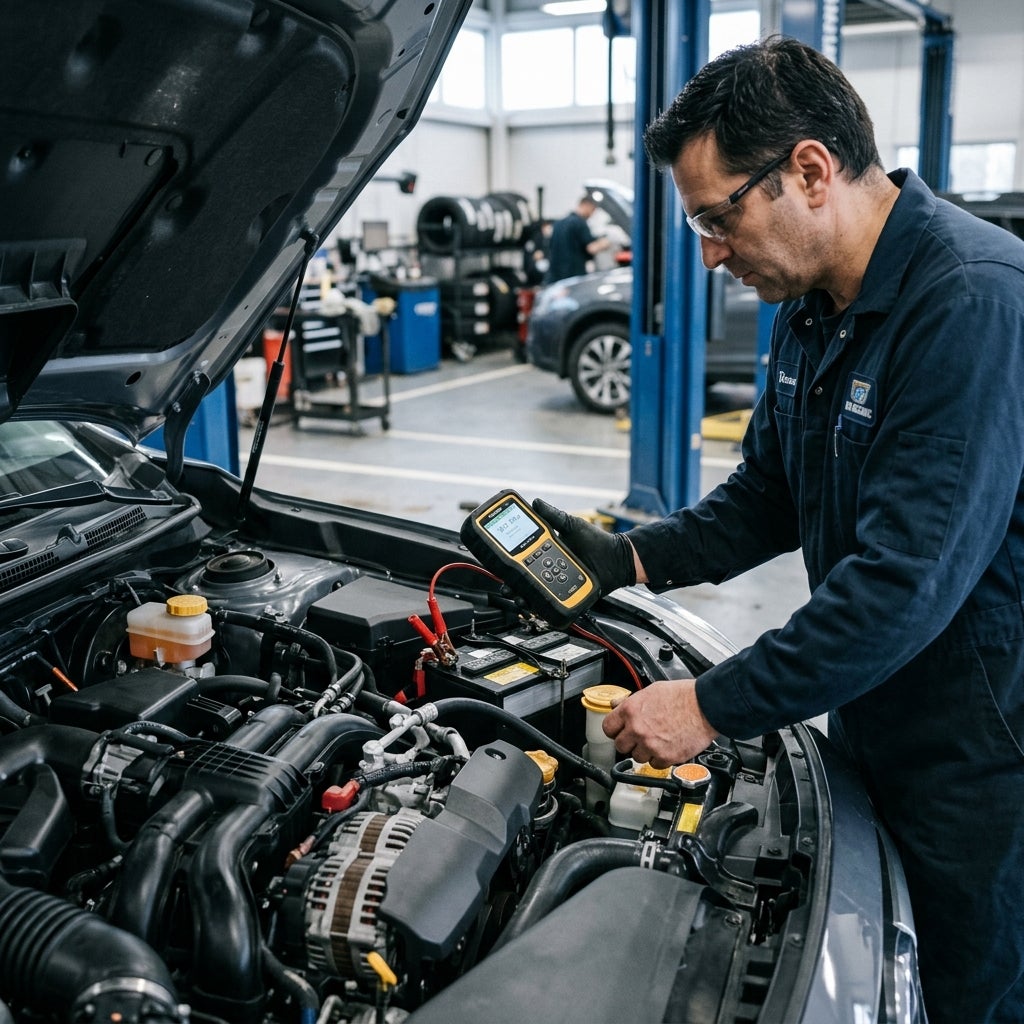
- Testing battery cold-cranking amps and charging system output prior to cooler autumn mornings.
Addressing these routine maintenance items prevents unexpected downtime during peak harvest operations. You can conveniently book an inspection with our factory-trained technicians through our online service scheduler, or speak with our finance team to contact us for current financing information if you are considering adding a new truck to your farm setup.
Are Commercial Incentives or Agricultural Fleet Discounts Available for Ram 1500 Trucks?
Qualifying agricultural operators and small business owners can access Stellantis On The Job commercial incentives, which provide financial allowances for upfit equipment, spray-in bedliners, graphic overlays, or extended service coverage on new Ram 1500 models.
Running an efficient farming operation or commercial trade business requires maximizing your equipment investment. The On The Job program is designed specifically to assist business owners by offsetting the cost of essential work accessories. Whether you need a heavy-duty Mopar spray-in bedliner to protect against cargo scuffs, commercial toolboxes, or towing upfits, these incentives provide direct financial support at the time of purchase. Furthermore, commercial buyers benefit from Ram's standard 10-year/100,000-mile powertrain limited warranty, providing long-term protection for your core drivetrain components.
To qualify for commercial programs, business owners typically need to present proof of business ownership, such as an agricultural tax exemption certificate, business license, or commercial tax documentation. Our team can walk you through the qualification process, review current vehicle inventory, and coordinate professional upfit installations tailored to your daily work requirements. You can browse our commercial vehicle inventory online, visit our Junction City showroom, or speak directly with our commercial specialists by giving us a call at our main desk today.