




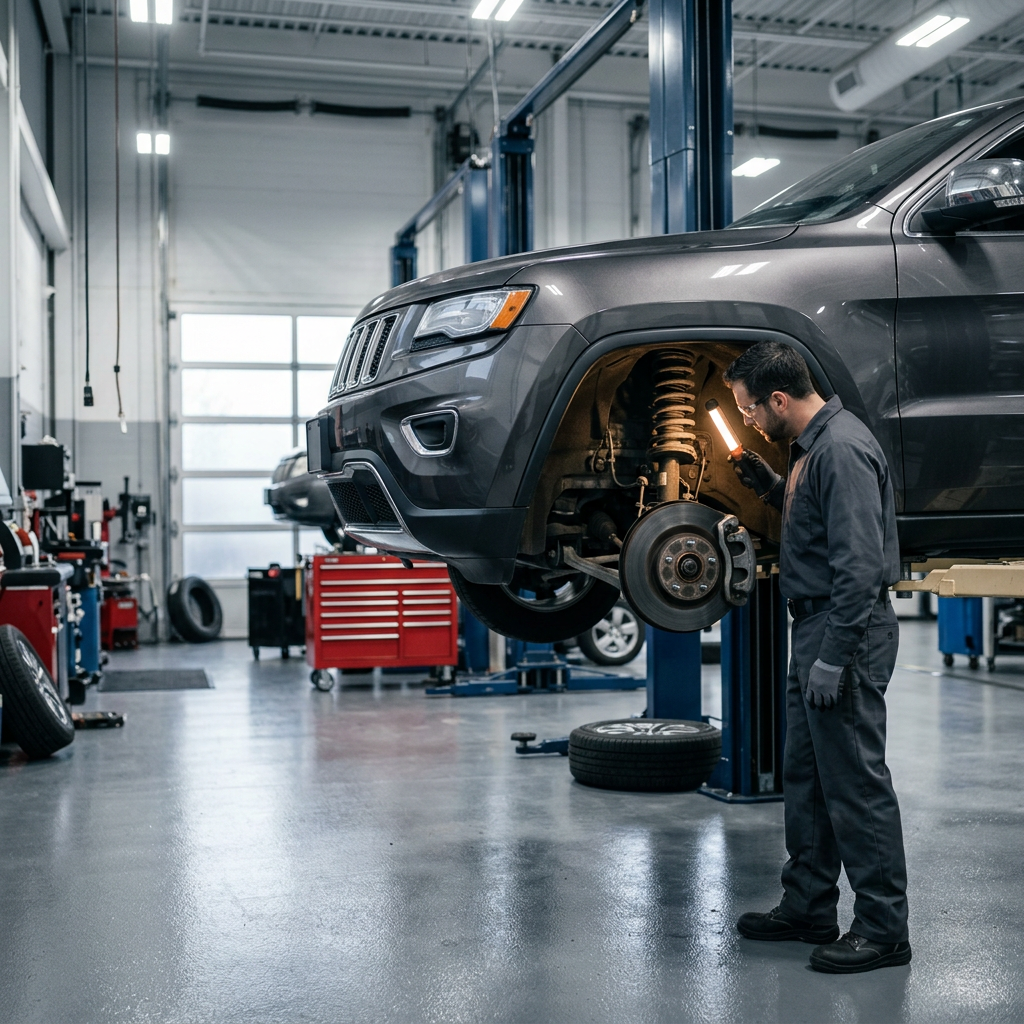
Jeep Grand Cherokee Maintenance Cost: Expert Ownership and Service Insights
The Jeep Grand Cherokee delivers its strongest long-term value in the Limited trim, which pairs durable mechanical equipment with essential creature comforts without adding the complex, high-maintenance components found on higher luxury tiers. To break down realistic upkeep schedules, routine service expenses, and long-term mechanical care, we sat down with Jace Grabouski, General Manager at Valor CDJR, who brings 20 years of practical automotive leadership to help local drivers keep their vehicles running dependably.
Q: Which trim level of the Jeep Grand Cherokee offers the best value when considering long-term ownership and maintenance?
A: The Limited trim hits the ideal financial and mechanical sweet spot because it includes durable comfort features like leather-trimmed seating, a power liftgate, and remote start, while avoiding specialized, high-cost chassis systems that require expensive upkeep later in life. Base trims like the Laredo provide solid basic utility, but the Limited introduces durable interior materials that withstand heavy family use and harsh seasonal weather. More importantly, it relies on a proven conventional steel-spring suspension rather than the height-adjustable air suspension standard on higher trims.
Top-tier models like the Summit or Overland offer undeniable luxury, yet their air spring compressors, electronic damping actuators, and larger wheels substantially increase maintenance requirements over time. A conventional coil-spring setup on the Limited eliminates pneumatic bladder leaks and compressor fatigue, translating to far lower suspension maintenance bills past the 60,000-mile mark. The Limited also gives owners access to the proven 3.6-liter Pentastar V6 producing 293 horsepower or the available 2.0-liter turbocharged four-cylinder engine delivering 324 horsepower and 332 lb-ft of torque, both routed through the durable eight-speed TorqueFlite® automatic transmission.
For families commuting across Geary County, opting for the Limited keeps scheduled service visits predictable and parts replacement straightforward. Drivers wanting to map out a clear service timeline for their specific setup can arrange a conversation by giving our team a quick call or setting their navigation directly to our service center to review component longevity with an advisor.
Q: Jace, what is the average annual maintenance cost for a Jeep Grand Cherokee under regular driving conditions?
A: Routine maintenance and minor mechanical upkeep for a Jeep Grand Cherokee average approximately $666 per year across its lifespan, with early-year ownership typically running between $520 and $750 annually. In the initial years, scheduled workshop visits focus on standard oil and filter exchanges, engine air filter renewals, cabin filtration changes, and regular tire rotations. As the vehicle accumulates miles and enters the second half of its first decade, annual expenditures rise closer to $1,000 to cover secondary fluid replacements and standard wearable components like brake pads and drive belts.
Everyday driving conditions play a major role in how quickly those wear items degrade. The onboard oil-life monitoring system measures engine hours, cold starts, and operating temperatures to indicate exactly when fresh motor oil is required, typically scheduling services between 8,000 and 10,000 miles or at least once every 12 months. Vehicles subjected to frequent stop-and-go driving or heavy dirt-road dust around Junction City require six-month oil and filter intervals to keep internal components protected against premature carbon accumulation.
Even tread wear is equally critical on all-wheel-drive platforms to avoid driveline strain. Rotating tires at every routine oil service maintains identical rolling circumferences across all four tires, preventing the internal clutches in transfer cases from overworking. Owners can easily stay on top of these essential factory services by using our convenient online scheduling tool to reserve a bay with our certified technicians.
Q: Is the Jeep Grand Cherokee expensive to maintain compared to other midsize SUVs on the road?
A: Total maintenance and repair expenses for the Grand Cherokee sit directly in the middle of the midsize SUV segment, running slightly higher than simple front-wheel-drive Japanese competitors while remaining drastically more affordable to maintain than European luxury alternatives. Mainstream crossovers like the Toyota Highlander or Honda Pilot often post annual routine maintenance totals around $573, giving them a slight edge on purely preventative fluid services. However, European alternatives in this size class routinely demand specialized diagnostic software, higher shop labor rates, and imported replacement hardware that easily push annual upkeep past $1,100.
Repair records reflect this middle-tier reliability profile. RepairPal awards the Grand Cherokee an above-average reliability rating of 3.5 out of 5.0, ranking it 15th out of 26 midsize SUVs. Owners experience an average of 0.3 unscheduled repair visits annually compared to the category average of 0.4 visits, showing that while routine parts cost slightly more than economy crossovers, unexpected breakdowns happen less frequently.
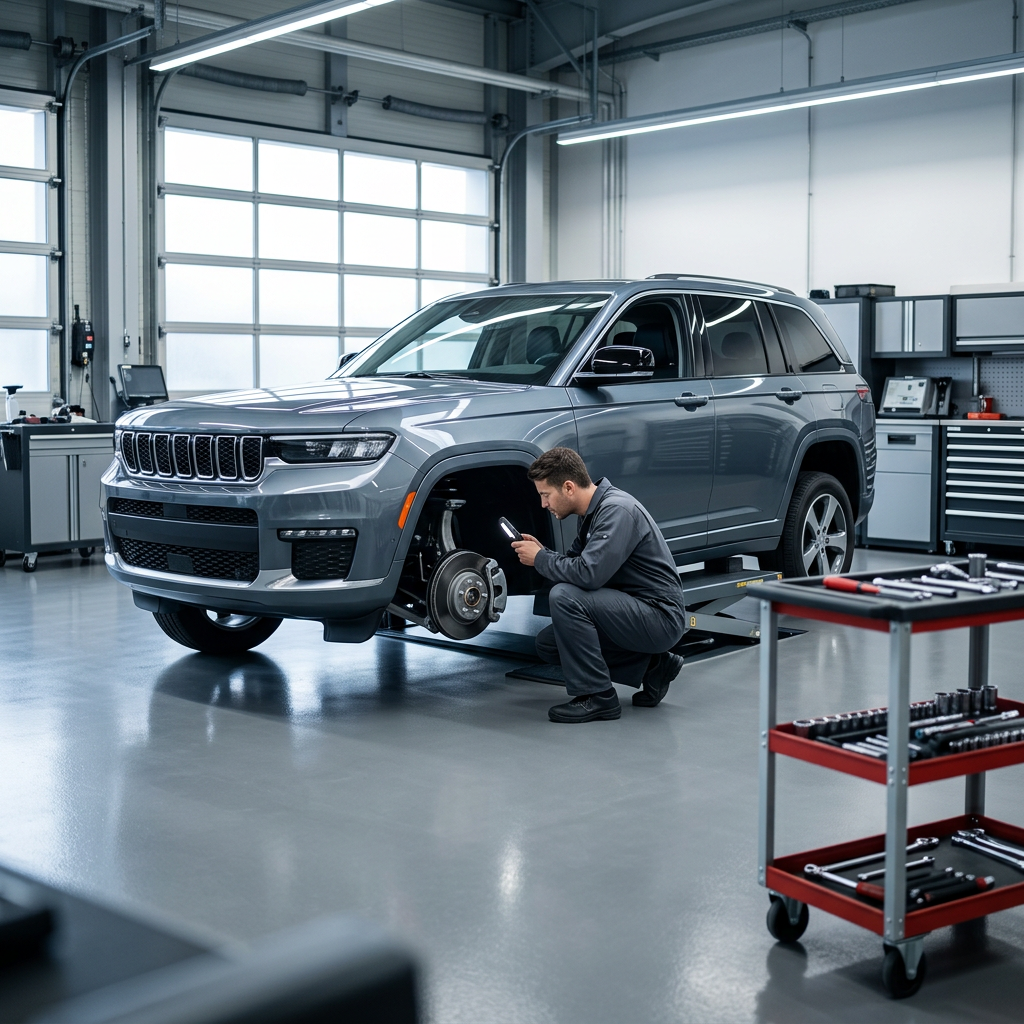
The engineering behind the vehicle explains that slight cost difference. The Grand Cherokee is built on a heavy-duty platform engineered for genuine 4WD capability and a maximum towing capacity of up to 6,200 lbs. Accommodating those mechanical workloads requires heavier brake assemblies, beefier driveline components, and higher fluid capacities than lightweight family crossovers, making routine component servicing slightly more involved but far more rugged.
"A conventional coil-spring setup on the Limited eliminates pneumatic bladder leaks and compressor fatigue, translating to far lower suspension maintenance bills past the 60,000-mile mark."
Q: How often should differential and transfer case fluid be changed on a Grand Cherokee 4x4?
A: Axle differential fluids and transfer case lubricants must be inspected every 20,000 to 30,000 miles, with complete fluid exchanges completed every 40,000 to 60,000 miles under normal driving schedules. If the vehicle regularly pulls campers, hauls heavy gear, or navigates unpaved rural terrain, factory severe-service guidelines recommend changing both axle lubricants and the center transfer case fluid at 30,000-mile intervals.
Transfer case housings and differential gear sets generate substantial internal heat, which causes gear lubricants to shear down and lose their protective viscosity over time. Condensation can also accumulate inside gear housings during short trips in fluctuating Midwestern temperatures, creating water contamination that weakens lubricating film strength. Replacing gear oils on schedule prevents friction wear on the ring and pinion gears, keeps differential bearings cool, and protects internal limited-slip clutch packs from chattering during tight turns.
Vehicles equipped with Quadra-Trac II or Quadra-Drive II systems rely on specialized electronic actuators and multi-plate clutch packs submerged in synthetic fluid. Using the precise factory-specified Mopar lubricant formulation is essential during a service drain and refill, as improper aftermarket fluids lack the correct friction modifiers, leading to rough engagement and premature clutch wear.
Q: What are the most common long-term repairs that surface on a Jeep Grand Cherokee as mileage climbs?
A: Long-term mechanical repairs past 80,000 miles most commonly involve engine cooling thermostats, water pump bearing wear, oil filter housing adapter seals on V6 engines, and air suspension hardware on models equipped with Quadra-Lift. The 3.6-liter Pentastar engine uses an oil filter adapter housing seated in the engine valley that can develop hairline cracks or gasket hardening after years of thermal cycling, allowing small oil leaks to develop if unaddressed. Replacing this assembly with an updated factory unit cures the issue permanently.
Cooling system components also endure significant heat cycles over years of service. Thermostat assemblies and electric radiator fan relays tend to require replacement as they approach high-mileage marks, and catching a sticking thermostat early prevents secondary overheating that could damage cylinder head gaskets. On higher trims with air suspension, rubber air springs develop microscopic fissures around the lower folds, forcing the pneumatic compressor to cycle constantly until it burns out.
Addressing these common wear items with original equipment ensures tight fitment and factory durability. When components do wear out, our dealership parts counter supplies genuine Mopar mechanical assemblies, gaskets, and sensors engineered specifically to restore your Grand Cherokee back to factory performance standards.
Q: Walk me through what happens when an owner replaces a windshield—how much does it cost to calibrate driver assist sensors?
A: Calibrating the forward-facing optical cameras and radar arrays after a windshield replacement typically costs between $300 and $700, depending on whether the safety systems require static target alignment, dynamic driving calibration, or a dual-step procedure. That forward camera, mounted directly behind the rearview mirror against the glass, serves as the primary visual sensor for standard active safety technologies like Full-Speed Forward Collision Warning and active lane-keeping systems.
Even a microscopic variance in windshield curvature, glass thickness, or camera bracket mounting angle alters the sensor's field of view. A pitch discrepancy of just a single degree can throw off the camera's depth perception by dozens of feet down the highway. Without proper electronic recalibration using specialized optical target boards and diagnostic software, automated emergency braking systems may initiate false warnings or fail to detect stopping traffic in time.
Drivers who commute along the open highway stretches into Manhattan frequently encounter stone chips that turn into spreading windshield cracks. If replacement glass is installed, owners should ensure that camera calibration is scheduled immediately alongside the physical glass replacement to verify that all advanced driver-assist systems operate safely and accurately.
Q: What total annual upkeep budget should owners plan for as their Grand Cherokee ages past 100,000 miles?
A: Owners keeping a Grand Cherokee past the six-figure mileage mark should budget roughly $1,000 to $1,200 annually for mechanical maintenance and wearable parts replenishment. During this high-mileage phase of ownership, baseline services like synthetic oil changes and tire rotations are accompanied by milestone services, including spark plug replacements, accessory drive belt swaps, complete coolant system flushes, and suspension bushing refreshes.
Proactive preventative maintenance is the single most effective way to keep high-mileage operating expenses predictable. Routine multipoint inspections catch sweating coolant hoses, weeping shock absorbers, and minor axle seal leaks months before they cause on-road failures or damage adjacent mechanical hardware. Following factory maintenance timelines turns unexpected major breakdowns into routine, scheduled wear-item replacements.
Staying ahead of mechanical wear protects your vehicle's capability and dependability across every season. Whether your vehicle needs a comprehensive milestone service or an inspection before a long road trip, contact our service team at (785) 238-5114 or stop by our service drive at 1825 Goldenbelt Blvd, Junction City, KS 66441 to keep your Grand Cherokee running strong.