




Blog / Ownership & Service

What My Years in the Service Bay Say About RAM 1500 Reliability

What My Years in the Service Bay Say About RAM 1500 Reliability

What My Years in the Service Bay Say About RAM 1500 Reliability

What Are the Common Mechanical Issues with the Ram 1500 Hurricane Engine?

The most common mechanical concerns on the 3.0L Hurricane twin-turbo inline-six involve early electronic sensor alerts, three-way coolant control valve codes, and thermal management calibration rather than internal rotating assembly failures. Most drivability hiccups trace back to factory powertrain control module calibration updates, cooling loop sensor thresholds, and auxiliary water pump circulation codes that our technicians resolve with factory software reflashes and targeted sensor replacements.

In my two decades overseeing truck service, new engine architectures always arrive with a learning curve for owners and technicians alike. The twin-turbo Hurricane engine replaced the long-running naturally aspirated HEMI architecture, introducing direct fuel injection running up to high pressures, water-to-air charge coolers, and dual overhead camshafts with variable valve timing. While the cast-aluminum block and forged steel crankshaft deliver tremendous internal strength, the supporting subsystems have generated the bulk of real-world visits. Owners occasionally see a check engine light triggered by cooling circuit divergence codes, where the truck's computer detects a temperature variation between the primary engine cooling loop and the intercooler loop.

A small batch of early production units experienced minor throttle body harness seating concerns and auxiliary turbocharger coolant pump faults. These issues do not point to block cracking or turbocharger impeller destruction. Instead, they represent electronic growing pains where the engine control module misinterprets minor pressure swings across the intake tract. When an issue does surface, our certified technicians connect straight to factory diagnostic tools to run precise actuator tests and verify that the latest software calibrations are active. If your truck ever illuminates an alert on the dash or feels hesitant under load, stop by for a diagnostic check at our service facility by finding our location on Goldenbelt Boulevard, or give our team (785) 238-5114 a quick call so we can pull the exact fault codes.

Table of Contents

How Does Ram 1500 Reliability Rate Across the Segment?

The Ram 1500 demonstrates solid mechanical durability across its core structural components, backed by segment-leading awards and competitive independent dependability evaluations. In J.D. Power's 2026 Vehicle Dependability Study, the truck ranked highest in the Large Light Duty Pickup segment, while J.D. Power also assigned the 2026 model a Quality and Reliability score of 73 out of 100, which sits in their Average category.

Independent ratings reflect a split between heavy-duty hardware durability and modern cabin electronic sensitivity. The structural frame, eight-speed automatic transmission, and coil-spring rear suspension rank among the sturdiest setups on American roads today, easily logging hundreds of thousands of miles when properly maintained. Where initial quality scores take a dip is almost exclusively in digital convenience features, such as infotainment touchscreens and driver-assistance sensor false positives, rather than major mechanical breakdowns that leave a driver stranded.

When looking at full-size truck competitors from Ford and Chevrolet, every modern half-ton now relies on sophisticated electronic controls and boosted powertrains. The Ram platform sets itself apart with its coil-sprung rear axle and available four-corner active-level air suspension, which isolates road shocks and protects chassis components from severe vibration over unpaved routes. If you are shopping for a pre-owned truck that has already proven its durability, browsing our quality pre-owned truck inventory is a great way to inspect dependable configurations and past service records firsthand.

What Twin-Turbo Cooling System Checks Keep Your Engine Running Strong?

Forced-induction engines generate intense under-hood heat, making routine inspection of the primary engine radiator and the secondary charge-air cooling circuit the single most important preventative task for Hurricane owners. Technicians must inspect both coolant expansion tanks, check the dual cooling loop electric pumps, test the three-way thermostat control valve, and clean road debris from the heat exchangers to preserve long-term reliability.

The Hurricane engine runs two distinct liquid cooling circuits. The high-temperature circuit cools the cylinder heads, aluminum block, and turbocharger bearing housings, while a separate low-temperature circuit circulates coolant through the charge-air coolers integrated directly into the intake manifold. If air bubbles enter either loop or if road grit coats the front-mounted intercooler radiator, intake air temperatures rise, forcing the computer to pull ignition timing and reduce power output. During regular service visits, we pressure-test both reservoirs and inspect all molded silicone turbocharger coolant lines for thermal hardening or seepage.

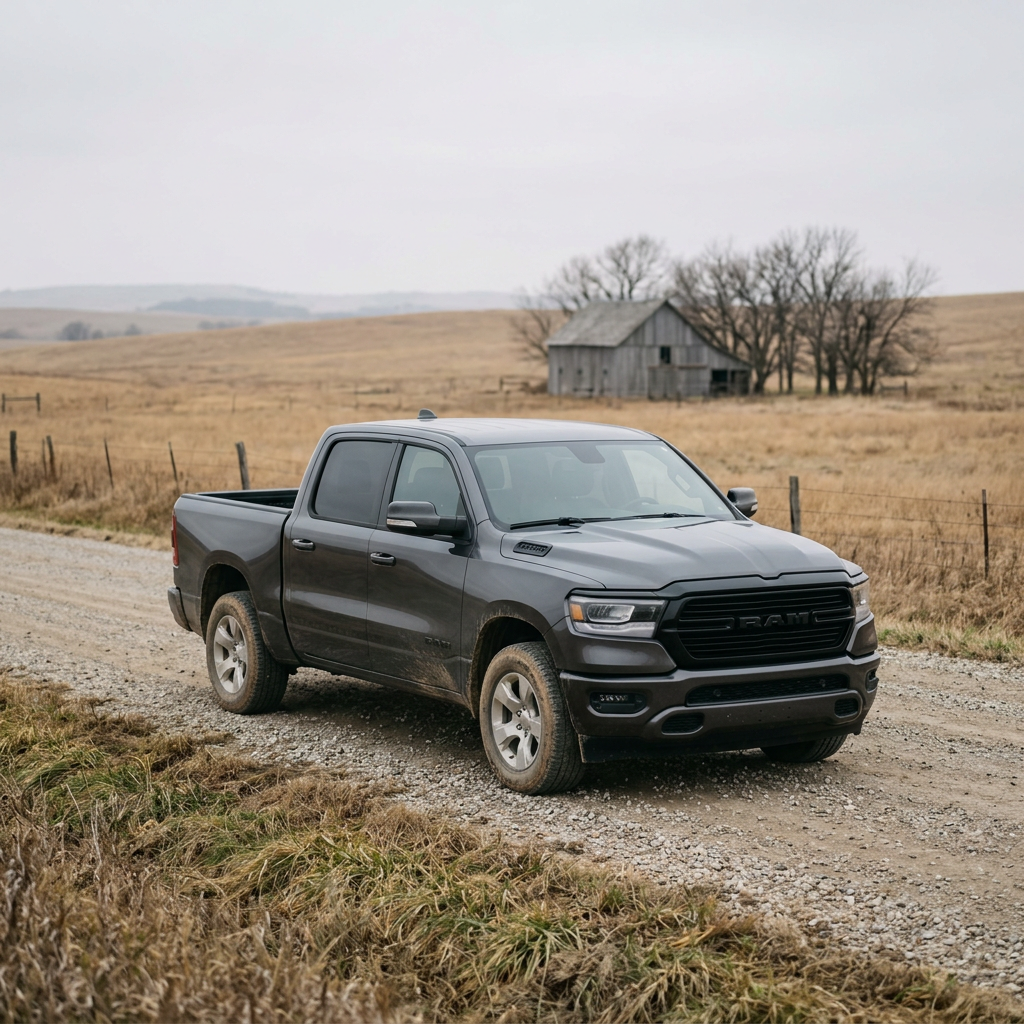
Severe duty cycles, such as pulling heavy equipment across the tallgrass prairie grades around Manhattan, put elevated thermal stress on the cooling module. Drivers should periodically peer through the front grille shutters to ensure that dried mud, bugs, and agricultural chaff have not accumulated against the radiator fins. If your current vehicle is struggling to handle demanding payloads or frequent towing, evaluating your equity through our online vehicle trade evaluation tool can help you step into a modern truck engineered for heavy-duty thermal capacity.

How Often Should Engine Oil Be Changed on a Turbocharged Ram?

Owners driving a turbocharged Ram should generally change their engine oil and filter every 5,000 to 7,500 miles, depending on driving conditions and the owner's manual. Twin turbochargers spin past 150,000 rpm, subjecting engine oil to extreme shear forces and elevated temperatures that break down conventional lubricants much faster than in an older naturally aspirated V8.

Modern turbochargers rely entirely on clean engine oil to lubricate their center cartridge bearings and carry away heat after the engine shuts down. Extended drain intervals cause oil thermal breakdown, which creates microscopic carbon deposits inside the turbo oil feed lines and restricts lubrication to the turbine shaft. For this reason, the Hurricane engine demands strict adherence to full synthetic motor oil meeting factory material standards, paired with a high-capacity filter designed to trap fine soot particles without reducing flow volume.

Whenever truck owners ask me about severe driving habits, I point out that frequent short commutes, prolonged idling, dust exposure, and heavy trailer hauling fall under severe maintenance schedules. In these conditions, sticking to a strict 5,000-mile interval is cheap insurance against camshaft wear and turbo bearing degradation. You can easily book your next lube and multi-point inspection using our online service appointment scheduler, or order authentic factory filters and approved lubricants directly through our dealership parts department.

What Recurring Electrical and Tech Quirks Should Truck Buyers Inspect?

Prospective truck buyers should thoroughly test the center touchscreen, digital instrument cluster, battery voltage stability, and sensor calibration before completing their purchase. Recent owner complaints and shop diagnostic logs indicate that occasional touchscreen software freezes, parasitic 12-volt battery draw, and rear camera lag represent the most frequent non-mechanical issues reported on late-model pickups.

During your pre-purchase walk-around, cycle through every menu on the Uconnect 5 infotainment system, test the wireless smartphone projection, and engage the 360-degree surround view camera multiple times in reverse and drive. Ensure that over-the-air cellular software updates have been completed, as factory patches regularly address screen freeze-ups and camera latency. Battery health is equally vital; modern trucks with dual electronic control modules, electric steering racks, and active safety systems can experience voltage drops if parked for weeks, leading to spurious dashboard warning codes.

On the safety front, the crew cab configuration earned Good marks from the Insurance Institute for Highway Safety in both small-overlap front and updated side crash tests, and the truck includes standard blind-spot monitoring, lane-departure warning, and rear automatic braking. Verifying that the front radar behind the grille and windshield cameras are clean and firmly aligned ensures that features like adaptive cruise control with stop and go operate smoothly. When you are ready to evaluate a new pickup, you can explore our selection of brand-new Ram trucks and streamline your visit by getting started with our online financing pre-approval before visiting our showroom.

Does the Ram 1500 Still Offer a V8 Alongside the Twin-Turbo Lineup?

The standard light-duty lineup phased out the long-running 5.7L HEMI V8 after the 2024 model year to establish the twin-turbo Hurricane inline-six as the primary powerplant, though specialized performance variants have reintroduced high-displacement V8 options for dedicated performance buyers. For everyday work, recreation, and towing, the core lineup focuses on modern six-cylinder architecture.

The classic HEMI earned a legendary reputation over two decades for simple pushrod reliability and a signature exhaust rumble, making its departure a big talking point among longtime truck owners. However, the standard-output 3.0L Hurricane straight-six produces 420 hp and 469 lb-ft of torque, easily outmuscling the old HEMI's 395 hp and 410 lb-ft. For drivers who crave extreme V8 performance, specialized limited-production street trucks and performance trims continue to showcase supercharged V8 powerplants delivering up to 777 hp, but everyday work trims are built around the high-efficiency turbo six and Pentastar platforms.

This transition brings major gains in usable low-rpm torque, which is where real towing work happens. While a naturally aspirated V8 requires you to rev past 4,000 rpm to find maximum pulling force, the twin turbochargers spool up rapidly, delivering peak torque at just 3,500 rpm. That broad torque curve makes pulling a heavy flatbed or boat feel effortless, with fewer transmission downshifts when climbing highway overpasses and rolling hills.

How Reliable Are the Ram 1500 Engine Options for Daily Work and Hauling?

The current engine lineup offers three highly dependable choices engineered to match distinct operational workloads, ranging from commercial fleet routes to severe payload hauling. Whether you opt for the proven naturally aspirated base engine or one of the twin-turbo powertrains, matching your truck's mechanical hardware to your typical trailering demands ensures outstanding long-term durability.

  • 3.6L Pentastar V6 with eTorque: Delivering 305 hp and 271 lb-ft of torque, this mild-hybrid workhorse has powered millions of vehicles for over a decade. It earns an EPA-estimated 20 mpg city / 25 mpg highway on rear-wheel-drive models, making it the most cost-effective choice for light utility work and long highway commutes.
  • 3.0L Hurricane Twin-Turbo Inline-Six (Standard Output): Generating 420 hp and 469 lb-ft of torque, this powerplant handles a maximum towing capacity of up to 11,580 pounds with a maximum payload rating of 2,300 pounds, providing the ideal sweet spot of heavy pulling muscle and smooth driving dynamics.
  • 3.0L Hurricane Twin-Turbo Inline-Six (High Output): Cranking out 540 hp and 521 lb-ft of torque, this engine features upgraded forged internals and higher boost pressure for immediate acceleration and robust high-speed performance in premium and off-road models like the RHO and Tungsten.

Every new truck is backed by factory warranty protection, including a 3-year/36,000-mile basic warranty and a 5-year/60,000-mile powertrain warranty, providing complete peace of mind while you put your truck through its paces. For complete confidence on remote back roads or trailering across rural terrain, you are also protected by genuine manufacturer roadside assistance, reachable anytime at Chrysler, Dodge, Jeep, Ram Roadside Assistance: 1-800-521-2779.

Our experienced service and sales team is always ready to help you navigate trim levels, review maintenance schedules, and keep your truck operating at factory standards. Whether you are trailering boats near the reservoirs around Junction City or hauling materials across rural job sites, we invite you to stop by our showroom for a thorough walk-around and test drive using our convenient map directions, or simply speak with our knowledgeable staff directly at (785) 238-5114 today.
© 2026 Valor CDJR. All rights reserved.


Posted in:

Related Posts

Jeep Grand Cherokee Maintenance Cost: Expert Ownership and Service Insights

Jeep Grand Cherokee Maintenance Cost: Expert Ownership and Service Insights

Jeep Grand Cherokee Maintenance Cost: Expert Ownership and Service Insights The Jeep Grand Cherokee delivers its strongest long-term value in the Limited trim, which pairs durable mechanical equipment with essential creature comforts without adding the complex, high-maintenance components found on higher luxury tiers. To break down realistic upkeep schedules, routine service expenses, and long-term mechanical care, we sat down with Jace Grabouski, General Manager at Valor CDJR, who brings 20 years of practical automotive leadership to help local drivers keep their vehicles running dependably. Q: Which trim level of the Jeep Grand Cherokee offers the best value when considering long-term ownership and maintenance? A: The Limited trim hits the ideal financial and mechanical sweet spot because it includes durable comfort features like leather-trimmed seating, a power liftgate, and remote start, while avoiding specialized, high-cost chassis systems that require expensive upkeep later in life. Base trims like the Laredo provide solid basic utility, but the Limited introduces durable interior materials that withstand heavy family use and harsh seasonal weather. More importantly, it relies on a proven conventional steel-spring suspension rather than the height-adjustable air suspension standard on higher trims. Top-tier models like the Summit or Overland offer undeniable luxury, yet their air spring compressors, electronic damping actuators, and larger wheels substantially increase maintenance requirements over time. A conventional coil-spring setup on the Limited eliminates pneumatic bladder leaks and compressor fatigue, translating to far lower suspension maintenance bills past the 60,000-mile mark. The Limited also gives owners access to the proven 3.6-liter Pentastar V6 producing 293 horsepower or the available 2.0-liter turbocharged four-cylinder engine delivering 324 horsepower and 332 lb-ft of torque, both routed through the durable eight-speed TorqueFlite® automatic transmission. For families commuting across Geary County, opting for the Limited keeps scheduled service visits predictable and parts replacement straightforward. Drivers wanting to map out a clear service timeline for their specific setup can arrange a conversation by giving our team a quick call or setting their navigation directly to our service center to review component longevity with an advisor. Q: Jace, what is the average annual maintenance cost for a Jeep Grand Cherokee under regular driving conditions? A: Routine maintenance and minor mechanical upkeep for a Jeep Grand Cherokee average approximately $666 per year across its lifespan, with early-year ownership typically running between $520 and $750 annually. In the initial years, scheduled workshop visits focus on standard oil and filter exchanges, engine air filter renewals, cabin filtration changes, and regular tire rotations. As the vehicle accumulates miles and enters the second half of its first decade, annual expenditures rise closer to $1,000 to cover secondary fluid replacements and standard wearable components like brake pads and drive belts. Everyday driving conditions play a major role in how quickly those wear items degrade. The onboard oil-life monitoring system measures engine hours, cold starts, and operating temperatures to indicate exactly when fresh motor oil is required, typically scheduling services between 8,000 and 10,000 miles or at least once every 12 months. Vehicles subjected to frequent stop-and-go driving or heavy dirt-road dust around Junction City require six-month oil and filter intervals to keep internal components protected against premature carbon accumulation. Even tread wear is equally critical on all-wheel-drive platforms to avoid driveline strain. Rotating tires at every routine oil service maintains identical rolling circumferences across all four tires, preventing the internal clutches in transfer cases from overworking. Owners can easily stay on top of these essential factory services by using our convenient online scheduling tool to reserve a bay with our certified technicians. Q: Is the Jeep Grand Cherokee expensive to maintain compared to other midsize SUVs on the road? A: Total maintenance and repair expenses for the Grand Cherokee sit directly in the middle of the midsize SUV segment, running slightly higher than simple front-wheel-drive Japanese competitors while remaining drastically more affordable to maintain than European luxury alternatives. Mainstream crossovers like the Toyota Highlander or Honda Pilot often post annual routine maintenance totals around $573, giving them a slight edge on purely preventative fluid services. However, European alternatives in this size class routinely demand specialized diagnostic software, higher shop labor rates, and imported replacement hardware that easily push annual upkeep past $1,100. Repair records reflect this middle-tier reliability profile. RepairPal awards the Grand Cherokee an above-average reliability rating of 3.5 out of 5.0, ranking it 15th out of 26 midsize SUVs. Owners experience an average of 0.3 unscheduled repair visits annually compared to the category average of 0.4 visits, showing that while routine parts cost slightly more than economy crossovers, unexpected breakdowns happen less frequently. The engineering behind the vehicle explains that slight cost difference. The Grand Cherokee is built on a heavy-duty platform engineered for genuine 4WD capability and a maximum towing capacity of up to 6,200 lbs. Accommodating those mechanical workloads requires heavier brake assemblies, beefier driveline components, and higher fluid capacities than lightweight family crossovers, making routine component servicing slightly more involved but far more rugged. "A conventional coil-spring setup on the Limited eliminates pneumatic bladder leaks and compressor fatigue, translating to far lower suspension maintenance bills past the 60,000-mile mark." Q: How often should differential and transfer case fluid be changed on a Grand Cherokee 4x4? A: Axle differential fluids and transfer case lubricants must be inspected every 20,000 to 30,000 miles, with complete fluid exchanges completed every 40,000 to 60,000 miles under normal driving schedules. If the vehicle regularly pulls campers, hauls heavy gear, or navigates unpaved rural terrain, factory severe-service guidelines recommend changing both axle lubricants and the center transfer case fluid at 30,000-mile intervals. Transfer case housings and differential gear sets generate substantial internal heat, which causes gear lubricants to shear down and lose their protective viscosity over time. Condensation can also accumulate inside gear housings during short trips in fluctuating Midwestern temperatures, creating water contamination that weakens lubricating film strength. Replacing gear oils on schedule prevents friction wear on the ring and pinion gears, keeps differential bearings cool, and protects internal limited-slip clutch packs from chattering during tight turns. Vehicles equipped with Quadra-Trac II or Quadra-Drive II systems rely on specialized electronic actuators and multi-plate clutch packs submerged in synthetic fluid. Using the precise factory-specified Mopar lubricant formulation is essential during a service drain and refill, as improper aftermarket fluids lack the correct friction modifiers, leading to rough engagement and premature clutch wear. Q: What are the most common long-term repairs that surface on a Jeep Grand Cherokee as mileage climbs? A: Long-term mechanical repairs past 80,000 miles most commonly involve engine cooling thermostats, water pump bearing wear, oil filter housing adapter seals on V6 engines, and air suspension hardware on models equipped with Quadra-Lift. The 3.6-liter Pentastar engine uses an oil filter adapter housing seated in the engine valley that can develop hairline cracks or gasket hardening after years of thermal cycling, allowing small oil leaks to develop if unaddressed. Replacing this assembly with an updated factory unit cures the issue permanently. Cooling system components also endure significant heat cycles over years of service. Thermostat assemblies and electric radiator fan relays tend to require replacement as they approach high-mileage marks, and catching a sticking thermostat early prevents secondary overheating that could damage cylinder head gaskets. On higher trims with air suspension, rubber air springs develop microscopic fissures around the lower folds, forcing the pneumatic compressor to cycle constantly until it burns out. Addressing these common wear items with original equipment ensures tight fitment and factory durability. When components do wear out, our dealership parts counter supplies genuine Mopar mechanical assemblies, gaskets, and sensors engineered specifically to restore your Grand Cherokee back to factory performance standards. Q: Walk me through what happens when an owner replaces a windshield—how much does it cost to calibrate driver assist sensors? A: Calibrating the forward-facing optical cameras and radar arrays after a windshield replacement typically costs between $300 and $700, depending on whether the safety systems require static target alignment, dynamic driving calibration, or a dual-step procedure. That forward camera, mounted directly behind the rearview mirror against the glass, serves as the primary visual sensor for standard active safety technologies like Full-Speed Forward Collision Warning and active lane-keeping systems. Even a microscopic variance in windshield curvature, glass thickness, or camera bracket mounting angle alters the sensor's field of view. A pitch discrepancy of just a single degree can throw off the camera's depth perception by dozens of feet down the highway. Without proper electronic recalibration using specialized optical target boards and diagnostic software, automated emergency braking systems may initiate false warnings or fail to detect stopping traffic in time. Drivers who commute along the open highway stretches into Manhattan frequently encounter stone chips that turn into spreading windshield cracks. If replacement glass is installed, owners should ensure that camera calibration is scheduled immediately alongside the physical glass replacement to verify that all advanced driver-assist systems operate safely and accurately. Q: What total annual upkeep budget should owners plan for as their Grand Cherokee ages past 100,000 miles? A: Owners keeping a Grand Cherokee past the six-figure mileage mark should budget roughly $1,000 to $1,200 annually for mechanical maintenance and wearable parts replenishment. During this high-mileage phase of ownership, baseline services like synthetic oil changes and tire rotations are accompanied by milestone services, including spark plug replacements, accessory drive belt swaps, complete coolant system flushes, and suspension bushing refreshes. Proactive preventative maintenance is the single most effective way to keep high-mileage operating expenses predictable. Routine multipoint inspections catch sweating coolant hoses, weeping shock absorbers, and minor axle seal leaks months before they cause on-road failures or damage adjacent mechanical hardware. Following factory maintenance timelines turns unexpected major breakdowns into routine, scheduled wear-item replacements. Staying ahead of mechanical wear protects your vehicle's capability and dependability across every season. Whether your vehicle needs a comprehensive milestone service or an inspection before a long road trip, contact our service team at (785) 238-5114 or stop by our service drive at 1825 Goldenbelt Blvd, Junction City, KS 66441 to keep your Grand Cherokee running strong. © 2026 Valor CDJR. All rights reserved. Vehicle specification data © JATO Dynamics Limited.

What It Really Costs to Own a Jeep Grand Cherokee for Five Years

What It Really Costs to Own a Jeep Grand Cherokee for Five Years

What It Really Costs to Own a Jeep Grand Cherokee for Five Years Routine maintenance and repairs on a Jeep Grand Cherokee typically cost between $5,200 and $6,100 over the first five years of ownership, with total five-year operating expenses landing between $48,000 and $60,000 once fuel, insurance, and routine upkeep are factored in. Today we are speaking with Jace Grabouski, General Manager at Valor CDJR, who brings 20 years of automotive leadership to break down realistic service expectations for local drivers. Q: What is the total 5-year cost to own for a Jeep Grand Cherokee when factoring in maintenance and running expenses? A: Over a standard five-year ownership cycle covering roughly 75,000 miles, routine maintenance and minor mechanical repairs for a Jeep Grand Cherokee generally total between $5,200 and $6,100. When you calculate the comprehensive five-year cost of ownership—which combines scheduled workshop visits with fuel, state registrations, comprehensive insurance premiums, and vehicle depreciation—most drivers can expect their total operating investment to range from $48,000 to $60,000. That broader figure fluctuates primarily based on your specific drivetrain configuration and how many miles you log across northeastern Kansas each year. A Grand Cherokee equipped with the 2.0-liter Hurricane turbo four-cylinder engine has EPA ratings of 20 city / 25 hwy and 23 mpg combined, while the proven 3.6-liter Pentastar V6 achieves 22 mpg combined. Those efficiency variations, paired with a standard 23-gallon fuel tank, directly dictate your ongoing monthly fuel budget. Preventative upkeep is what protects the vehicle from costly unscheduled downtime. Staying ahead of fluid intervals and suspension inspections keeps minor wear from cascading into major mechanical bills down the road. Local drivers planning their long-term service schedules can drop by our facility by checking our showroom address or reach our service advisors directly with a quick call to map out personalized maintenance intervals. Q: How much does routine maintenance cost annually for a Jeep Grand Cherokee? A: Scheduled routine maintenance and minor wearable component replacements average approximately $666 to $750 per year during the first several years of driving. During this early lifecycle, regular service visits center around oil and filter changes, multi-point visual checkups, cabin and engine air filtration elements, and tire rotations. As the odometer crosses beyond 100,000 miles, that annual budget typically shifts closer to $1,000 to account for secondary fluid flushes, mechanical wear items, and cooling system servicing. The onboard Oil Life Monitor system dictates your engine service frequency, signaling when fresh motor oil is required based on engine hours and operating temperatures. Factory intervals recommend completing oil changes and tire rotations every 8,000 to 10,000 miles, or at minimum once every 12 months. Vehicles that tow utility trailers or tackle demanding gravel roads around Junction City fall under severe operating schedules, where six-month fluid inspections become critical to maintaining mechanical longevity. Tire management also represents a notable share of your scheduled upkeep budget. Routine tire rotations completed at every scheduled oil change ensure even tread depth across all four corners, which is crucial for protecting the internal clutch packs in full-time 4x4 drivetrains. Neglecting regular rotations causes premature outer tread scrubbing, resulting in uneven rolling diameters that stress driveline transfer cases. Q: What does the Jeep Wave customer care program cover for scheduled maintenance? A: For qualifying model years between 2021 and 2025, the Jeep Wave customer care program covers the first two scheduled oil changes and tire rotations during the initial 24 months of ownership. These scheduled visits must be completed by factory-trained technicians using genuine Mopar lubricants and filters to maintain full factory records. The program also bundles complimentary same-day rental vehicle allowances during eligible mechanical service and provides up to $1,000 in trip interruption reimbursement. "Staying ahead of fluid intervals and suspension inspections keeps minor wear from cascading into major mechanical bills down the road." Starting with model year 2026 vehicles, factory-backed maintenance shifts to the FlexCare Vehicle Protection Program, which provides structured service contracts and extended coverage plans backed directly by Stellantis. These plans provide owners with predictable, pre-funded routine maintenance expenses rather than out-of-pocket costs at the service drive. When you are ready to book factory-backed maintenance, you can arrange your appointment through our online service scheduling portal. Jeep Wave and FlexCare programs eliminate early ownership maintenance surprises while reinforcing proper maintenance habits. Even with covered early visits, having certified technicians complete multi-point inspections ensures brake linings, battery terminals, and suspension boots are reviewed regularly. Q: Is the Jeep Grand Cherokee more reliable than the Ford Explorer over several years of ownership? A: Independent repair records show that the Jeep Grand Cherokee and the Ford Explorer run closely matched in long-term reliability rankings, though the vehicles experience wear differently. The Grand Cherokee stands out with durable interior appointments and refined drivelines, whereas the Explorer often benefits from slightly lower average parts pricing on aftermarket commodity items. When you compare their mechanical foundations, the Grand Cherokee offers robust driveline choices that hold up exceptionally well under heavy workloads. Its available 2.0-liter Hurricane turbo engine generates 324 horsepower and 332 lb-ft of torque, while the venerable 3.6-liter Pentastar V6 produces 293 horsepower and 260 lb-ft of torque. Properly equipped models achieve up to 6,200 lbs of maximum towing capacity, backed by heavy-duty rear axles and an eight-speed TorqueFlite® automatic transmission that manages sustained pulling without excessive thermal breakdown. Owners who take their Grand Cherokee across uneven terrain or commute daily into Manhattan appreciate the added chassis rigidity and underbody protection. When specialized suspension components or driveline seals require replacement, our certified parts department stocks genuine factory parts engineered specifically for these chassis configurations to avoid compatibility problems. Q: How much does it cost to replace the hybrid battery pack on a Jeep Grand Cherokee 4xe out of warranty? A: Replacing a depleted high-voltage traction battery pack on a Grand Cherokee 4xe outside of warranty coverage generally runs between $8,000 and $11,000, which includes the specialized lithium-ion battery assembly, dedicated high-voltage safety disconnects, and technician labor. That number can sound intimidating at first glance, but out-of-pocket battery replacements remain rare because these components are backed by an extensive 8-year/100,000-mile high-voltage factory warranty. Routine service on the 4xe plug-in hybrid actually offsets certain conventional mechanical wear costs over time. Thanks to regenerative braking, the electric motor absorbs a significant portion of kinetic energy during deceleration, capturing electrical energy while dramatically reducing friction wear on brake pads and rotors. As a result, 4xe models frequently double the brake pad lifespan of purely gasoline-powered utility vehicles. Shoppers considering pre-owned 4xe models often ask about tax incentives as part of their total budget calculations. Federal incentive eligibility can change over time, so shoppers should contact the dealership for the latest information on available tax credits and ownership costs. Q: Can routine maintenance on a Jeep Grand Cherokee be performed DIY to save money? A: Performing standard maintenance tasks at home—such as replacing engine and cabin air filters, installing fresh wiper blades, and conducting standard oil and filter changes—can save owners roughly 40% to 60% compared to professional labor rates. Those straightforward services require basic garage hand tools and allow hands-on owners to monitor basic fluid conditions between major dealer intervals. Modern Grand Cherokee engineering incorporates complex networked electronics that establish clear boundaries for home mechanics. Factory 4WD systems like Quadra-Trac I, Quadra-Trac II, and Quadra-Drive II utilize electronic transfer cases and electronic limited-slip differentials that require precise fluid formulations and specific filling procedures. Advanced driver-assist systems—such as blind-spot sensors, adaptive cruise radar arrays, and lane management cameras—also demand specialized electronic scan equipment and dynamic alignment targets whenever chassis geometry is altered. While swapping out an engine air filter at home is simple, clearing diagnostic trouble codes and recalibrating suspension height sensors requires specialized shop equipment. Entrusting complex drivetrains to factory-trained technicians ensures the computerized modules communicate properly without throwing erroneous system faults. Q: What preventative service steps keep a Grand Cherokee running smoothly past 100,000 miles? A: The most critical maintenance step for sustaining high-mileage dependability is addressing fluid degradation in the cooling, transmission, and differential systems before physical symptoms appear. While early ownership focuses on routine engine oil and tire rotations, vehicles approaching the six-figure mileage mark require fresh synthetic fluid in the front and rear axles, transfer case fluid flushes, and scheduled coolant exchanges to protect engine water jackets and heater cores. Watch for age-related wear items that commonly develop past 100,000 miles, including air suspension bladders on models with height-adjustable suspension, cooling thermostat housings, water pump bearings, and oil filter housing seals on V6 powertrains. Catching small seepage around the oil filter housing early prevents oil from collecting in the engine valley and fouling wiring harnesses. If you notice any fluid spots on your garage floor or experience sluggish gear engagement, our team at Valor CDJR can run a full inspection to pinpoint the source. Our certified technicians understand how varying Midwest weather and rural highway driving impact long-term mechanical wear. Drivers can schedule their next fluid service by giving us a quick call or setting a GPS route directly to our service entrance so we can keep your Grand Cherokee dependable for years to come. © 2026 Valor CDJR. All rights reserved. Vehicle specification data © JATO Dynamics Limited.

Winter 4x4 Readiness Guide: Q&A With Valor CDJR

Winter 4x4 Readiness Guide: Q&A With Valor CDJR

Winter 4x4 Readiness Guide: Q&A With Valor CDJR An Absorbent Glass Mat (AGM) battery typically delivers three to five years of reliable service in severe winter climates, maintaining necessary cold cranking power despite sub-zero temperatures that cut conventional battery output in half. To help regional commuters and military personnel navigate severe highway conditions along the corridor, we spoke with Nino Williams, F&I Manager at Valor CDJR, who brings 11 years of practical automotive experience helping drivers protect vehicle dependability and mechanical longevity through harsh Kansas seasons. Q: Nino, what is the realistic lifespan of an AGM battery when facing harsh winter conditions? A: Under severe winter conditions, an AGM battery reliably lasts between three and five years, whereas a traditional flooded lead-acid battery often begins faltering by its third winter. The internal chemistry of an Absorbent Glass Mat design uses tightly compressed fiberglass separators saturated with electrolyte, which prevents acid stratification and provides far superior resistance to vibration and thermal shock. Sub-zero temperatures reduce an automotive battery's available electrical capacity by roughly 30 to 50 percent, while cold engine oil forces the starter motor to draw significantly more amperage. Vehicles such as the Ram 1500 and Dodge Durango depend on robust electrical reserves to power high-draw comfort accessories, electronic transfer case actuators, and modern driver-assist systems. When a vehicle sits outside overnight in sub-freezing temperatures, an aging battery develops increased internal resistance that slows cranking speed and starves sensitive onboard control modules of consistent voltage during ignition. If your battery is approaching four years of age, scheduling a professional conductance test before December is the most dependable preventative step you can take. Motorists can visit our service center on Goldenbelt Boulevard to test cold cranking amps and inspect terminal connections for microscopic corrosion that restricts starter current. Q: How many winter seasons can commuters expect from a set of dedicated snow tires? A: A high-quality set of dedicated winter tires delivers between four and six seasons of dependable traction, which translates to roughly 20,000 to 30,000 miles of cold-weather driving. Dedicated winter rubber utilizes specialized hydrophilic tread compounds engineered to remain pliable at temperatures well below 45 degrees, unlike all-season compounds that harden and lose surface adhesion when the mercury drops. Commuters traveling between residential neighborhoods in Junction City and regional employment centers experience prolonged highway wear that demands strict seasonal changeover timing. Preserving tire longevity requires removing winter tires promptly in early spring when sustained pavement temperatures rise above 50 degrees. Operating winter compounds on hot, dry asphalt accelerates tread degradation because the softer silica-infused rubber wears rapidly under high highway friction. Storing your off-season set in a dry, temperature-controlled environment away from direct sunlight and ozone sources prevents rubber oxidation and extends compound flexibility. Proper tire maintenance includes periodic balancing and verifying cold inflation pressure every two weeks throughout winter. Because ambient temperature drops cause tire pressure to fall by roughly one pound per square inch for every ten-degree drop, underinflated winter tires can suffer irregular shoulder wear. Drivers can schedule a seasonal tire inspection online to ensure proper mounting, and our team in our parts department can source factory-approved winter compounds specifically balanced for your vehicle platform. Q: What do drivers usually get wrong about minimum tire tread depth for winter highway driving? A: The most dangerous misconception among highway commuters is assuming the legal minimum tread depth of 2/32-inch is safe for driving in snow and slush. While 2/32-inch meets basic state inspection criteria on bone-dry roads, winter tire performance deteriorates drastically once tread depth wears past 5/32-inch. At 4/32-inch or below, tire voids lose the volumetric capacity required to compress, bite into packed snow, and evacuate slush away from the contact patch. When slush cannot escape through the directional grooves of a tire, the vehicle begins riding on a hydroplaning wedge of semi-frozen water, leading to complete loss of directional steering. On an elevated highway stretch where crosswinds and freezing moisture collide, insufficient tread depth turns an all-wheel-drive platform into an uncontrollable sled during sudden deceleration. Measuring tread depth requires a calibrated gauge or a quick check using a standard quarter rather than a penny. Inserting a quarter upside down into the tread should obscure the top of Washington's head; if the space above his hair is fully visible, your tires measure less than 4/32-inch and lack sufficient biting edges for severe Midwestern highway winter weather. Q: Why mount winter tires on dedicated steel wheels rather than swapping tires on factory alloy rims? A: Investing in a dedicated set of painted steel wheels pays for itself within three seasons while shielding expensive factory alloy rims from road brine and magnesium chloride pitting. Dismounting and remounting tires twice a year subjects delicate tire beads to mechanical stretching and risks damaging alloy wheel lips during seasonal bead seating. Having a pre-mounted set on rugged steel wheels streamlines changeovers, allowing for rapid seasonal swaps with minimal labor. Road salt and anti-icing brines sprayed heavily along major transit routes seep into microscopic crevices between the tire bead and aluminum wheel rims, creating bead oxidation that causes slow air leaks in winter. Steel wheels eliminate chemical corrosion concerns and feature greater ductility, allowing them to absorb severe impacts from hidden winter potholes without cracking or catastrophic pressure loss. "Investing in a dedicated set of painted steel wheels pays for itself within three seasons while shielding expensive factory alloy rims from road brine." A slightly narrower steel wheel combined with a higher-profile winter tire size provides superior surface pressure, cutting directly through slush to find pavement grip instead of floating over wet snow accumulation. Q: What mechanical 4x4 drivetrain maintenance is critical before freezing temperatures set in? A: Pre-winter four-wheel-drive maintenance centers on replacing aged transfer case fluid, draining contaminated differential gear oils, and verifying proper vacuum or electronic actuator engagement. Transfer cases and differential housings operate under significant thermal stress, and internal condensation introduces moisture that deteriorates lubricating film and risks freezing inside shift mechanisms. If water emulsifies with gear lubricant, freezing overnight temperatures can cause ice crystals that block fluid flow and cause gear tooth scouring. Inspecting constant velocity boots, universal joints, and front axle seals prevents road salt from penetrating precision needle bearings during winter operation. In vehicles like the Jeep Grand Cherokee, ensuring the electronic shift motors and transfer case clutches receive clean synthetic fluids guarantees seamless engagement when switching into traction-management drive modes. Technicians also test the mechanical front-axle disconnect system to confirm that drive splines mesh instantaneously without hesitation or grinding. Neglecting transfer case fluid intervals leads to sticky shift forks and delayed 4WD engagement, leaving you immobilized right when sudden freezing rain coats highway exit ramps. Q: Walk me through what happens when a part-time 4x4 truck encounters patchy black ice on the highway. A: Drivers heading down the corridor often ask our service desk why their rear end kicked out on a bridge when their truck was equipped with four-wheel drive. In a traditional part-time four-wheel-drive truck, operating the vehicle in 2WD mode on dry highway pavement leaves all driving torque directed to the rear axle. When the vehicle crosses a shaded overpass coated in black ice, the light rear end loses lateral traction instantly, inducing snap oversteer before the driver can react. If a part-time 4WD system is left locked in 4H across dry highway pavement to prevent that slide, the lack of a center differential forces front and rear driveshafts to rotate at identical speeds. As the truck negotiates subtle highway curves, driveline binding occurs, which puts immense mechanical strain on universal joints, transfer case chains, and tires, potentially destabilizing the vehicle on patchy surfaces. Commuters traveling past open crosswind zones near Manhattan benefit greatly from automatic four-wheel-drive systems or modern all-wheel-drive setups found on models like the Dodge Durango, which distribute torque automatically without causing driveline bind. For traditional trucks, maintaining safe highway speeds, adding ballast over the rear axle, and understanding the mechanical limits of your transfer case prevents dangerous fishtailing. Q: When should drivers engage 4WD High versus 4WD Low, and what is the best first step to prep a 4x4 for winter? A: Four-Wheel Drive High ( 4H) is engineered for slippery road conditions such as continuous packed snow, slush, or ice at moderate travel speeds up to 45 mph, whereas Four-Wheel Drive Low ( 4L) is strictly a low-speed crawling gear for deep snowdrifts or vehicle recovery below 25 mph. Engaging 4L multiplies engine torque through a low-range reduction gear set, which delivers incredible pulling power but produces immediate wheel spin if applied on slick highway ice. Drivers should never activate 4L on public roads during regular winter travel; it belongs in off-road recovery scenarios or when crawling out of an unplowed rural driveway. Before freezing weather arrives, your primary step is performing a bumper-to-bumper pre-winter inspection that covers battery reserve, tire tread, driveline lubricants, and wiper assemblies. For unexpected winter emergencies, warranty-backed protection through official factory coverage offers invaluable peace of mind, and motorists can reach Chrysler, Dodge, Jeep, Ram Roadside Assistance: 1-800-521-2779 for emergency towing and roadside recovery directly to authorized service facilities. Our service department is dedicated to keeping your vehicle operating at peak mechanical reliability all winter long. To confirm your four-wheel-drive system, battery reserves, and winter tires are fully prepared for the cold weather ahead, give our service team a call directly at (785) 238-5114 to discuss maintenance intervals or stop by our service counter to speak with our technicians. © 2026 Valor CDJR. All rights reserved. Vehicle specification data © JATO Dynamics Limited.