




Blog / Vehicle Maintenance & Preparation

Blog

All Vehicle Maintenance & Preparation Buying Guides Maintenance & Service New Vehicle Reviews Technology & Innovation Financing & Insurance Model Comparisons Used Vehicle Guides Safety Features New Vehicle Inventory Valor CDJR Vehicle Ownership Care Seasonal Vehicle Care Towing & Hauling Safety Parts & Accessories Commercial Truck Reviews Trade in Advice Ownership & Service Vehicle Financing & Trade-In Tips Commercial Fleet Management Military & Veteran Benefits Service Commercial Vehicles Family & Lifestyle Vehicles KS Community Automotive Repair Buying Guides & Dealership Services Dealership Sales Strategies Heavy-Duty Truck Features Military Vehicle Buying Guides Junction City Off-Road & Adventure Vehicles Model Research Automotive Recalls Financing & Trade-In Options Fleet & Upfit Buying Guides Military & Community Car Buying Programs Towing & Hauling Warranty & Coverage Hybrid & Electric Vehicles Parts Repair & Diagnostics Automotive News Dealership Visit Preparation Performance & Powertrain Vehicle Features & Accessories Vehicle Registration & Legal Advice for Military Personnel Vehicle Safety & Compliance Brake System Care Dealership Inventory Highlights Financing & Insurance for Military Families Inventory & Pricing Insights Jeep Lifestyle & Accessories Pre-Owned Vehicle Sales Tailgating & Outdoor Recreation Vehicle Pricing Strategies Vehicle Sales Experience Vehicle Trade-In Tips Warranty & Protection Plans Car Buying Tips Car Purchase Tips Commercial Vehicle Comparisons Community & Military Support Initiatives Dealer Profiles & Interviews Dealership Offers & Promotions Dealership Service Experience Diesel Engine Technology Genuine Parts & Accessories Local Automotive Events OEM Parts & Warranty Coverage Recall & Warranty Repairs Road Trip & Travel Tips Special Offers & Promotions Tailgating & Outdoor Adventures Towing & Roadside Assistance Vehicle Maintenance & Winter Care Vehicle Repair & Diagnostics Winter Driving Tips 4WD and AWD Systems Agricultural Vehicles & Equipment Certified Pre-Owned Programs Dealership Events Engine & Performance Insights Lease & Lease-End Information Leasing Options Luxury SUVs Out-of-State Purchasing Guides Part & Warranty Services Parts & Repair Reimbursement Seasonal Sales Events Technology & Innovation in Vehicle Service Tire & Traction Guides Vehicle Care & Upkeep Vehicle Incentives & Promotions Vehicle Technology & Features Weekend Dealership Events and Services
What Does Chrysler Factory-Recommended Service Include?

What Does Chrysler Factory-Recommended Service Include?

What Does Chrysler Factory-Recommended Service Include? Chrysler factory-recommended service includes scheduled oil and filter changes, tire rotations, brake system inspections, cabin and engine air filter replacements, fluid updates, and multi-point safety checks. Performed at established mileage or time intervals guided by the onboard Oil Change Indicator System, these factory-specified maintenance routines protect mechanical integrity, optimize fuel efficiency, and ensure long-term powertrain reliability. Automotive engineers design vehicle service schedules around the exact mechanical tolerances and operating parameters of each model. Following a structured schedule ensures that wearable components, such as brake friction materials, engine air filters, and synthetic lubricants, are renewed before degradation affects vehicle performance or causes damage to surrounding parts. Routine factory service is divided into minor and major maintenance appointments: Minor maintenance visits occur every 7,500 to 10,000 miles or 12 months, focusing on essential engine oil replacement, oil filter installation, tire rotation to promote even tread wear, and a comprehensive visual inspection of underbody components. Major maintenance appointments take place at larger milestones—typically 30,000, 60,000, and 90,000 miles—adding air intake updates, cabin air filtration service, spark plug replacements, and fluid renewals for braking and cooling systems. Adhering to these service guidelines provided by Mopar keeps your Chrysler operating as intended by its designers. To maintain your vehicle's scheduled service or learn more about specific maintenance guidelines, visit our physical location on Goldenbelt Blvd or speak directly with our service team by giving us a quick call today. Table of Contents Why Is Following Recommended Maintenance Important for Your Chrysler Pacifica? What Services Are Needed at 30,000, 60,000, and 90,000-Mile Intervals? What Synthetic Oil Is Recommended for Chrysler 3.6L Pentastar V6 Engines? What Is Chrysler's Recommended Brake Service Schedule and Inspection Process? Why Are Mopar Genuine Parts and Certified Technicians Essential for Chrysler Repairs? How Does Documented Maintenance Preserve Chrysler Resale Value? Frequently Asked Questions About Chrysler Maintenance Schedule Your Chrysler Recommended Maintenance at Valor CDJR Why Is Following Recommended Maintenance Important for Your Chrysler Pacifica? Following recommended maintenance for a Chrysler Pacifica prevents unexpected mechanical wear, maintains smooth power delivery from the 3.6L Pentastar V6 engine, and safeguards delicate family safety electronics. Regular servicing prevents minor fluid degradation or component friction from evolving into costly repairs. Modern minivans serve as complex mobile environments combining advanced mechanical engines with intricate electrical networks. Routine maintenance preserves the calibrated efficiency of the 9-speed automatic transmission, supports proper cabin climate control function, and ensures onboard driver-assist sensors operate accurately. Skipping scheduled service allows contaminants to accumulate in vital fluids, accelerating wear on engine bearings, valvetrain components, and brake hydraulics. Our service advisors observe that minivan owners often ask how the vehicle's automated indicator system calculates oil life during seasonal family trips before booking routine visits. The system monitors engine operating temperatures, revolutions, and idle duration to alert drivers when service is needed, protecting the engine long before thermal breakdown occurs. Maintaining a consistent service routine also preserves your factory coverage under the 5-year/60,000-mile powertrain warranty, ensuring covered components remain protected against unforeseen mechanical issues. What Services Are Needed at 30,000, 60,000, and 90,000-Mile Intervals? Chrysler 30,000-mile service focuses on engine air filter and cabin air filter replacements alongside full brake system evaluations. The 60,000-mile interval adds spark plug inspections, transmission fluid checks, and suspension component testing, while the 90,000-mile mark demands comprehensive drive belt renewals, full fluid flushes, and cooling system checks. Mileage milestones mark critical points in a vehicle's service lifecycle, where wear items require systematic replacement to maintain factory performance levels: 30,000-Mile Milestone: Technicians replace the engine air filter to maintain proper air-fuel ratios and install a clean cabin air filter to preserve HVAC efficiency. The service includes measuring brake pad thickness, checking rotor surfaces, and inspecting steering linkage. 60,000-Mile Milestone: Service expands to include spark plug condition checks or replacements to prevent engine misfires, testing battery health, inspecting suspension bushings, and checking transmission fluid clarity. 90,000-Mile Milestone: Focus shifts toward major component preservation. Technicians replace auxiliary drive belts, inspect radiator and heater hoses for rubber degradation, flush and refill engine coolant, and renew brake hydraulic fluid. Drivers navigating daily routines through Junction City experience consistent vehicle response and greater long-term mechanical reliability when adhering strictly to these mileage-based service benchmarks. What Synthetic Oil Is Recommended for Chrysler 3.6L Pentastar V6 Engines? Chrysler requires API Certified SAE 0W-20 or SAE 5W-20 full synthetic motor oil that meets Chrysler Material Standard MS-6395 for the 3.6L Pentastar V6 engine. Using the specified oil weight and specification ensures correct oil pressure across variable valve timing actuators and reduces internal engine friction. The 3.6L Pentastar V6 relies on precise hydraulic oil pressure to operate its variable valve timing (VVT) phasers and variable-displacement oil pump. Synthetic lubricants engineered to meet the MS-6395 material standard contain specialized additive packages that resist oxidation, prevent sludge formation, and maintain stable viscosity across wide operating temperature ranges. Using conventional engine oil or an incorrect viscosity can slow hydraulic response within the valvetrain, leading to reduced engine efficiency, increased fuel consumption, or premature component wear. Full synthetic motor oil maintains fluid flow during cold engine starts, protecting upper valvetrain components instantly upon ignition while sustaining thermal stability during extended highway driving. What Is Chrysler's Recommended Brake Service Schedule and Inspection Process? Chrysler recommends inspecting brake pads, rotors, calipers, and fluid lines at every oil change or 10,000-mile interval, with a complete brake fluid flush performed every two to three years. Technicians measure pad thickness, evaluate rotor surface condition, and check hydraulic pressure to maintain stopping performance. Brake maintenance involves a multi-point technical assessment to verify every part of the stopping system functions correctly: Technicians measure remaining friction material on outer and inner brake pads using precision calipers. Rotor surfaces are inspected for heat scoring, grooves, or lateral runout that could cause pedal pulsation. Caliper slide pins and hardware are cleaned and lubricated to ensure even pad pressure distribution. Hydraulic brake lines and flexible rubber hoses are checked for leaks, cracks, or outer sheath wear. Brake fluid is tested for moisture contamination, which lowers fluid boiling points and reduces pedal firmness under heavy braking. Navigating the rolling terrain around Manhattan puts distinct demands on stopping systems, making routine rotor checks critical for consistent braking power. You can arrange a comprehensive brake evaluation using our online appointment scheduling tool. Why Are Mopar Genuine Parts and Certified Technicians Essential for Chrysler Repairs? Genuine Mopar parts are engineered specifically for Chrysler vehicles to mirror original factory dimensions, safety crush performance, and metallurgy, while certified technicians complete rigorous Stellantis factory training. This combination ensures precise fitment, long-term durability, and complete protection under factory warranties. Factory-certified repair components differ significantly from generic aftermarket alternatives in material composition and manufacturing standards: Maintenance Component Genuine Mopar Parts Generic Aftermarket Parts Engineering Standards Designed to exact Stellantis factory specifications Reverse-engineered universal fitment Material Quality Tested for long-term heat resistance and durability Variable material quality and performance Warranty Backing Supported by official factory parts coverage Limited manufacturer or retailer warranties Electrical Integration Fully compatible with vehicle software architecture Potential signal distortion or fault codes Stellantis-certified technicians undergo hundreds of hours of specialized instruction to diagnose mechanical systems and software networks accurately. Using factory diagnostic computers, our service team identifies potential system errors before they result in component failures. Our team maintains authentic components directly through our dedicated Mopar parts department. How Does Documented Maintenance Preserve Chrysler Resale Value? Comprehensive, documented factory service records prove to future buyers and dealership appraisers that a Chrysler vehicle received scheduled fluid changes, OEM replacement parts, and timely inspections. A documented maintenance history commands a higher trade-in value by eliminating buyer uncertainty regarding mechanical condition. When a vehicle enters the secondary market, its recorded service history serves as tangible proof of proper ownership care. A complete history showing regular oil changes, filter updates, and milestone inspections confirms that internal components were protected from fluid starvation and thermal stress. Vehicles with verified Mopar maintenance records routinely trade at premium values compared to similar models lacking documentation. Detailed records eliminate doubts regarding deferred maintenance, helping prospective buyers and trade-in evaluators offer higher valuations with confidence. To review your vehicle's maintenance plan or schedule upcoming service, stop by our service center address or reach out to our service team by giving us a quick phone call. Frequently Asked Questions About Chrysler Maintenance Q: How does the Oil Change Indicator System inform vehicle maintenance timing? Chrysler's Oil Change Indicator System uses engine operating software to track thermal exposure, engine revolutions, idle time, and trip distances. Instead of relying strictly on fixed mileage, the system calculates actual oil breakdown and illuminates a dashboard prompt when service is required, ensuring oil changes match actual driving conditions up to a 10,000-mile or 12-month limit. Q: Can factory warranty repairs be completed at any authorized dealership? Warranty repairs covered under Chrysler's 3-year/36,000-mile basic warranty or 5-year/60,000-mile powertrain warranty can be performed at any authorized Stellantis dealership service center. Performing scheduled maintenance according to factory guidelines protects these warranty protections against claims caused by deferred care. Q: What is the difference between minor and major service visits? Minor service visits occur every 7,500 to 10,000 miles and focus on foundational items like motor oil replacement, oil filter updates, tire rotations, and multi-point visual safety checks. Major service intervals at 30,000, 60,000, and 90,000 miles incorporate comprehensive component updates, including cabin air filters, engine air intake filters, spark plugs, drive belts, and hydraulic flushes. Q: Is full synthetic oil strictly required for every oil change? Chrysler engines designed for specific viscosities, such as the 3.6L Pentastar V6, require full synthetic oils meeting strict material standards like MS-6395. Using conventional oil or non-compliant formulations can compromise variable valve timing performance and lead to premature component wear. Q: How often should engine air filters and cabin filters be replaced? Engine and cabin air filters are typically scheduled for replacement every 30,000 miles under normal driving conditions. However, driving on unpaved roads or in dusty environments may require more frequent updates to preserve engine air intake efficiency and maintain clean cabin airflow. Schedule Your Chrysler Recommended Maintenance at Valor CDJR Keeping up with Chrysler factory-recommended service intervals is the most effective way to protect your vehicle's mechanical integrity, preserve fuel efficiency, and ensure long-term reliability on every drive. From routine oil changes and brake inspections to major 30,000, 60,000, and 90,000-mile milestone services, using authentic Mopar parts and relying on factory-certified technicians preserves your vehicle's performance and trade-in value. Our team at Valor CDJR is dedicated to providing transparent, professional care for your Chrysler. Whether you drive a Pacifica or another Chrysler model, our service center is fully equipped with advanced diagnostic equipment and genuine components to handle all your maintenance needs efficiently. Take the next step in protecting your automotive investment today. Contact our team to speak with a service advisor, order genuine replacement parts, or conveniently reserve your next maintenance appointment using our online service scheduling tool. © 2026 Valor CDJR. All rights reserved. Vehicle specification data © JATO Dynamics Limited.
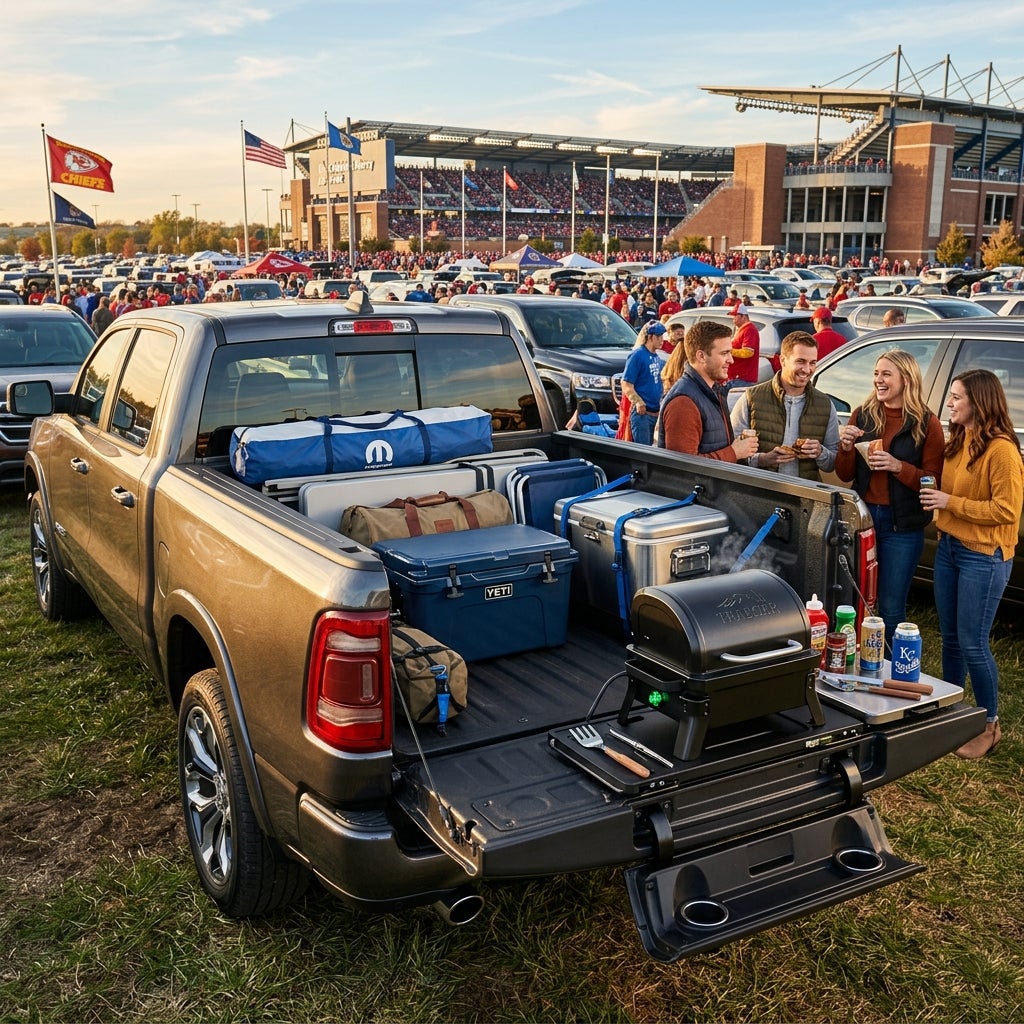
A grey pickup truck packed with tailgating gear and a portable grill, with friends standing nearby outside a stadium. (Representative image for illustration purposes only. Actual vehicle may vary based on trim and configuration.)

Yes, Genuine Mopar Tailgating Accessories Are Available at Valor Near Junction City

Yes, Genuine Mopar Tailgating Accessories Are Available at Valor CDJR Near Junction City As autumn approaches across the Flint Hills of Central Kansas, local sports enthusiasts and truck owners begin turning their attention to game-day preparations. Whether you are gearing up for Saturday afternoon college football in Manhattan or planning a weekend outdoor festival along the Republican River, having authentic gear designed specifically for your vehicle makes all the difference. For vehicle owners asking whether genuine Mopar tailgating accessories are readily available near Junction City, the definitive answer is yes. Parts Department specialists at Valor CDJR maintain an extensive inventory of Original Equipment Manufacturer (OEM) accessories designed, engineered, and tested by Chrysler, Dodge, Jeep, and Ram. Unlike generic aftermarket gadgets that rely on universal brackets, suction cups, or ill-fitting straps, authentic Mopar tailgating gear integrates directly into your truck bed or SUV cargo hold. From RamBox cargo bed storage dividers and lockable security lids to deployable tailgate steps, custom-fit tailgate awnings, and auxiliary power harness kits, local drivers can equip their vehicles with confidence. Located right here at 1825 Goldenbelt Blvd in Junction City, KS 66441, our team provides instant access to official Mopar catalogs, rapid parts fulfillment, and factory-trained technicians to handle complete installation before your next big game kickoff. Must-Have Genuine Mopar Accessories to Elevate Game-Day Tailgates Transforming your Ram truck or Jeep 4x4 into the ultimate game-day command post requires equipment built for durability, security, and extreme convenience. Mopar offers a curated suite of tailgating equipment specifically built for Kansas weather variations, heavy gear loads, and fast setup times. Cargo & Bed Access Deployable Bed Steps: Retracts smoothly with a foot tap, providing non-slip access to heavy coolers and grills even with the tailgate open. RamBox Storage System: Weather-resistant, lockable, and drainable bed side bins that function as built-in ice chests for beverages. Tri-Fold Tonneau Covers: Keeps tables, chairs, and electronics dry and secure during highway transit. Shade & Comfort Setup Custom Tailgate Tents: Connects directly to the rear aperture of your Jeep Wrangler, Gladiator, or Grand Cherokee for seamless indoor-outdoor shade. Mopar Retractable Awnings: Mounts to roof racks or bed rails to deliver instant relief from sunny Kansas afternoons. Tailgate Seating Pads: Cushioned, weatherproof padding tailored to fit your tailgate contour. Protection & Utility All-Weather Floor Liners: Deep-ribbed rubber mats engineered to contain mud, spilled drinks, and crushed grass from football fields. Bedliners & Protection: Spray-in or drop-in liners that prevent scratch damage from heavy metal grills and generator frames. Utility Power Outlets: Auxiliary 115V power upgrades to run fans, monitors, and sound systems. Preparing Your Jeep or Ram Truck for K-State Football Tailgating Season in Manhattan For fans traveling east from Junction City along K-18 Highway or US-40 to Bill Snyder Family Stadium in Manhattan, KS, game-day travel requires deliberate preparation. Game days bring dense traffic, tight parking spaces, and long hours in stadium lots where your vehicle acts as your home base. A smooth trip starts with a thorough pre-game vehicle check. Before loading your gear, verify tire pressures, engine oil levels, and brake performance, especially if you plan to pull a custom tailgating trailer. It is also wise to stop by our Express Lane for quick fluid top-offs and routine maintenance without needing an appointment. Organizing your truck bed or cargo area logically reduces stress upon arrival. Place large items—such as portable generators, heavy rotomolded coolers, and canopy weights—toward the front of the bed over the rear axle. Store quick-access items like folding chairs, trash bins, and table linens near the tailgate opening so you can begin setting up the moment you park. Can You Power a TV and Grill Using the Ram 1500 Onboard Power Outlets? Yes, absolutely. Modern Ram trucks, including the 2026 Ram 1500, offer advanced onboard power inverter systems capable of delivering up to 2.0 kW (2,000 Watts) of continuous household AC power through bed-mounted outlets and cabin receptacles. This system completely eliminates the need to haul noisy, heavy gas generators into stadium parking lots. With a 2.0 kW power output, you can simultaneously operate a 55-inch LED television (approx. 100-150W), a high-definition soundbar (approx. 50-100W), an electric pellet grill or slow cooker (approx. 300-800W continuous), and multiple smartphone charging docks without exceeding system thresholds. Best Practices for Game-Day Power: • Monitor Starting Surge Watts: Appliances like electric grills or blenders require a momentary starting surge higher than their running wattage. Keep total surge loads under 2,000 watts. • Engine Auto-Start Management: Ram's smart power management safe-guards your starting battery by cycling engine power automatically when battery threshold drop limits are met. • Weather-Protected Outlets: Ensure Mopar outlet covers remain snapped shut when not in use to protect against moisture or spilled liquid. Explore 2026 Ram 1500 Inventory Which Engine Options in the 2026 Ram 1500 Are Best for Towing a Loaded Tailgating Trailer? 3.6L Pentastar V6 with eTorque • Horsepower: 305 hp • Torque: 269 lb-ft (+90 lb-ft launch torque via eTorque) • Max Towing: Up to 7,730 lbs • Best For: Light trailers, pop-up canopy rigs, and daily driving efficiency around Junction City. 3.0L Hurricane I6 Turbo • Horsepower: 420 hp • Torque: 469 lb-ft • Max Towing: Up to 11,580 lbs • Best For: Heavy enclosed trailers, dual-smoker rigs, and effortlessly climbing rolling Flint Hills highways. High-Output 3.0L Hurricane I6 • Horsepower: 540 hp • Torque: 521 lb-ft • Max Towing: Up to 10,740 lbs • Best For: Maximum performance acceleration, heavy gear payload combinations, and ultimate towing power. How Much Can a 2026 Ram 1500 Tow for Hauling a Tailgating Trailer to K-State Football Games? When equipped with the 3.0L Hurricane I6 engine and Max Tow Package, the 2026 Ram 1500 delivers a maximum towing capacity of up to 11,580 pounds along with a maximum payload rating of 2,300 pounds. This capability ensures that even the largest tailgating mobile kitchens, flatbed trailer sound stages, or heavy pop-up campers can be hauled across Kansas highways with complete control. Beyond raw towing power, genuine Mopar towing technology built into the Ram 1500 provides crucial safety features on high-traffic game days. Towing Specification Ram 1500 Rating Max Towing Capacity Up to 11,580 lbs Max Payload Capacity Up to 2,300 lbs Hitch Receiver Class Class IV Integrated Receiver Trailer Brake Control Integrated Electronic Controller Guidance Tech Trailer Reverse Steering Control Which Vehicle Offers More Bed Space for Coolers, Tents, and Tailgating Gear? Choosing the right vehicle for game-day travel depends on the volume and type of tailgating gear you haul: • Ram 1500 Crew Cab (5'7" or 6'4" Bed): Offers maximum square footage (up to 61.5 cubic feet in 6'4" configuration). Ideal for large 100+ quart coolers, dual pop-up awnings, folding tables, and large smokers. • Jeep Gladiator (5' All-Steel Bed): Features 35.5 cubic feet of bed volume paired with integrated trail rails, 115V bed power, and open-air convertible freedom. Perfect for medium-sized groups heading down K-18. • Jeep Wrangler 4-Door (Rear Cargo Area): Provides 32 cu. ft. behind the rear seats and up to 72 cu. ft. with rear seats folded flat—great for enclosed, weather-protected storage. Explore our Used Vehicle Listings or browse new trucks at Valor CDJR to compare bed dimensions in person. What Are the Best Cargo Tie-Down Strategies to Prevent Gear Shift En Route to Manhattan, KS? 1. Mopar Bed Cleats Utilize factory heavy-duty adjustable bed cleats mounted on side rails. Adjust cleat locations to directly align anchor points with cooler handles and grill legs. 2. Cross-Pattern Strapping Apply heavy-duty ratchet straps in an 'X' cross-pattern across heavy items like generators and smokers to prevent lateral movement during cornering. 3. Elastic Cargo Nets Secure lighter loose items (folding chairs, canopy bags, sports balls) with a Mopar envelope cargo net stretched completely across the rear threshold. Shop Mopar Cargo Nets & Cleats How Do You Inspect and Prepare Battery Systems for Powering Accessories During Long Tailgates? There is nothing worse than finishing a day of pre-game celebrations only to find your battery drained when it is time to drive home. Running electrical devices, stereo speakers, and bed lighting for 6 to 8 hours puts significant demand on vehicle electrical systems. Pre-Game Electrical Checklist: 1. Battery Health Test: Have your battery load-tested at Valor CDJR. A healthy AGM starting battery should register 12.6V+ at rest and stay above 10V under crank load. 2. Terminal Cleaning: Ensure battery posts are clean and free of white corrosion crust, which hinders charging efficiency. 3. Auxiliary Power Monitors: Utilize Mopar auxiliary battery isolation kits if you run heavy continuous electrical draw. Schedule a fast battery diagnostic via our online Service Scheduler before game day. Why Genuine Mopar Accessories Outperform Generic Aftermarket Tailgating Gear While low-cost aftermarket accessories are common online, genuine Mopar accessories provide fundamental advantages engineered specifically for Chrysler, Dodge, Jeep, and Ram vehicles: Feature Comparison Genuine Mopar Accessories Generic Aftermarket Parts Fitment & Alignment Exact factory CAD precision; zero drilling Universal fit; often requires modifications Electrical Safety Plug-and-play factory harness integration Wire splicing required; potential fire risk Material Durability OEM weather, UV & corrosion testing Variable quality; subject to rust & fading Warranty Coverage Backed by CDJR Factory Warranty Limited third-party standard seller warranty Ordering and Installing Mopar Tailgating Accessories at Valor CDJR Near Junction City Equipping your vehicle for tailgating season is simple with Valor CDJR. Residents in Junction City, Manhattan, Fort Riley, and Abilene can easily search our digital Mopar eStore or consult directly with our certified parts advisors. Whether you need a simple bed step added or a full electrical inverter harness wired into your truck, our master technicians handle installation quickly to preserve factory warranties. Check out our financial options or Get Pre-Approved to learn more about current financing information. Order Genuine Mopar Parts Online Gear Up for Tailgating Season at Valor CDJR in Junction City, KS If your tailgating gear falls short, we can help you get prepared. Stop by Valor CDJR today to explore our complete lineup of new Ram trucks, Jeep SUVs, and genuine Mopar accessories designed to make every game day unforgettable. Whether evaluating your current vehicle with a Trade In Evaluation or looking for work-and-play capability with our Commercial Vehicle Inventory, our local dealership is here to help. Visit us at 1825 Goldenbelt Blvd, Junction City, KS 66441 or Call us at (785) 238-5114 to speak with a specialist today! Get Directions to Valor CDJR

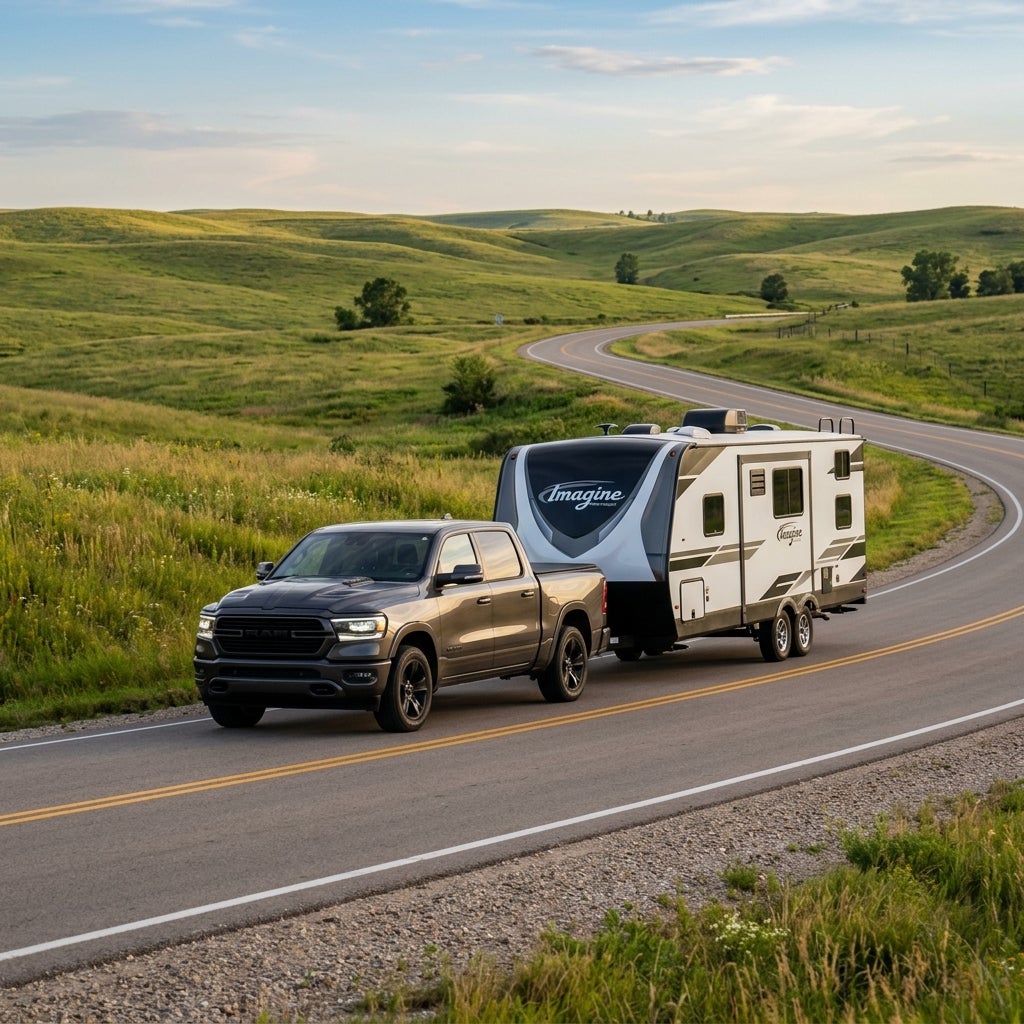
Grey pickup truck towing a white Imagine travel trailer along a winding road through rolling green hills. (Representative image for illustration purposes only. Actual vehicle may vary based on trim and configuration.)

Mastering Heavy Hauls: How the 2021 RAM 1500 Trailer Brake Controller Keeps You in Control

Mastering Heavy Hauls: How the 2021 Ram 1500 Trailer Brake Controller Keeps You in Control Towing across the rolling landscapes of the Flint Hills or heading out for a weekend at Milford Lake requires more than just raw horsepower; it demands total, unyielding control over your rig. When you are pulling a multi-ton travel trailer, a heavy boat, or a loaded flatbed utility trailer behind your 2021 Ram 1500, stopping safely is just as critical as moving forward. This is where the Integrated Trailer Brake Controller (ITBC) steps in. Far from being a simple, passive add-on, this sophisticated system acts as the primary communication link between your truck's advanced braking architecture and your trailer's electronic brakes. Rather than forcing your truck's brakes to bear the brunt of stopping both vehicles, the ITBC orchestrates a synchronized braking effort that makes towing feel smooth, predictable, and remarkably stress-free. For Ram truck owners in Junction City, KS, and the surrounding Manhattan areas, mastering this technology is key to safe driving. The Flint Hills are famous for their sudden, sweeping elevation changes, and navigating these grades with a massive load can quickly turn hazardous without properly synchronized braking. The 2021 Ram 1500’s optional factory trailer brake controller is neatly integrated into the lower dashboard, just below the climate controls, placing tactile control right at your fingertips. By seamlessly linking the truck's hydraulic brake pressure and deceleration sensors with the trailer's electric brakes, this system ensures that when you tap the pedal, your trailer slows down in perfect harmony with your truck, preventing the trailer from pushing against the tow vehicle or jackknifing. Whether you are a seasoned towing veteran or a newcomer preparing to hook up your first camper, understanding the inner workings of this system is essential. From its foundational electronic programming to real-world adjustment techniques, the 2021 Ram 1500 trailer brake controller is engineered to provide peace of mind on every journey. Let's dive deep into the mechanics, calibration, and optimization of this vital towing tool, ensuring that your next trek down I-70 is as secure as possible. Is the 2021 Ram 1500’s Trailer Brake Controller Proportional or Time-Delay? When evaluating trailer brake controllers, the most critical technical distinction lies in how they apply stopping power. We are proud to confirm that the 2021 Ram 1500 features a fully proportional integrated trailer brake controller. In the world of towing, a proportional system is the common benchmark. It uses internal inertia sensors (accelerometers) and monitors the truck's hydraulic brake pressure to measure exactly how hard the tow vehicle is decelerating. It then instantly applies a matching, proportional amount of braking voltage to the trailer's brakes. This means that if you gently tap your truck's brakes while approaching a stoplight in Riley County, the trailer will apply light, gentle braking. If you must slam on the brakes in an emergency on the highway, the controller sends maximum power to the trailer instantly, ensuring both vehicles stop in a straight, controlled line. It creates a unified, single-vehicle braking feel that minimizes stress on your truck's rotors and pads. In contrast, aftermarket systems often use time-delay technology. Time-delay controllers do not sense how hard you are braking; instead, they apply a pre-set amount of braking power that increases over a predetermined period whenever you press the brake pedal. This means if you brake gently, the trailer might still apply heavy, jerky stopping force after a few seconds, leading to premature wear and a highly uncomfortable 'tugging' sensation behind your truck. Conversely, in a sudden emergency, a time-delay system will not deliver immediate full power, potentially increasing your stopping distance when you need it most. The Ram's proportional system completely eliminates this lag, adapting dynamically to real-time road conditions. This is particularly beneficial when navigating the winding, hilly terrain of Kansas, where continuous, smooth adjustment is the difference between a relaxing drive and a white-knuckled ordeal. How Does the Trailer Brake Controller Work on the 2021 Ram 1500 in Real-World Towing? In practice, the integrated trailer brake controller functions as an intelligent translator. When you connect your trailer's 7-pin wiring harness to the bumper of your 2021 Ram 1500, the truck instantly recognizes the connection and begins communicating with the trailer's electric or electric-over-hydraulic (EOH) braking systems. As you drive, the truck's central computer monitors variables such as speed, brake pedal force, and stability control data. The moment you apply pressure to the brake pedal, the controller sends an electrical current down the dedicated brake line in the 7-pin connector. This current activates the electromagnets inside the trailer’s brake drums, which pull against the spinning armature, forcing the brake shoes outward against the drum to slow the trailer down. This happens in milliseconds, ensuring that the trailer slows down concurrently with the truck. Beyond this automated braking sequence, the physical interface on the dashboard gives you complete manual control when needed. The controller features a manual override slider—two pinch-style tabs that you can squeeze together with your fingers. Squeezing this slider applies the trailer brakes independently of the truck's brakes. This is an incredibly useful safety feature; if you feel your trailer beginning to sway or fish-tail due to a sudden gust of Kansas wind, gently squeezing the manual slider will immediately apply the trailer's brakes, pulling the trailer back into a straight line behind the truck. The dashboard cluster also provides instant visual feedback, showing a dedicated trailer brake menu that displays the output voltage and gain settings in real-time, keeping you fully informed of your system's status as you cruise through Junction City. To ensure your vehicle's physical connections are secure before a big haul, check out our comprehensive Used Vehicle Listings or explore brand-new configurations in our New Vehicle Listings to see models already equipped with this state-of-the-art tech. This real-world integration ensures that whether you're climbing up steep highway ramps or descending into valleys, the trailer remains a cooperative extension of your truck, rather than an unpredictable weight pushing from behind. What Does the Gain Setting on the Ram 1500 Trailer Brake Controller Do? The 'Gain' setting is the heart of customizing your Ram 1500's towing dynamics. Think of the gain as a volume knob for your trailer's brakes—it controls the maximum amount of electrical current (or voltage) sent to the trailer brakes when you step on the truck's brake pedal. A higher gain setting means the trailer brakes will apply more stopping power, while a lower gain setting reduces the braking force. Because trailers vary wildly in weight—from a lightweight, empty single-axle utility trailer to a dual-axle 5th wheel camper loaded with water, gear, and supplies—a single static braking profile simply won't work. Adjusting the gain ensures that your trailer always contributes its fair share of stopping power without locking its tires or causing the truck's brakes to overheat. It allows you to dial in the perfect balance of stopping power for whatever load you are pulling. If your gain is set too low, the trailer's brakes won't have enough power to slow its weight, forcing your Ram 1500 to do all the work, which rapidly accelerates brake wear and increases your stopping distance. If the gain is set too high, the trailer's brakes will grab too aggressively, potentially locking up the tires, flat-spotting your rubber, and causing a highly unstable towing experience. Our dedicated service department is always on hand to help you master these settings. If you ever feel like your brakes aren't responding as they should, or if you need an inspection before a long road trip, don't hesitate to utilize our online Service Scheduler to book an appointment with our master technicians. Schedule Towing Inspection What Is the Correct Way to Set the Initial Gain on a Ram 1500 Trailer Brake Controller? Step 1: Prep & Find an Open Area Before making any adjustments, ensure your trailer is fully loaded to its typical towing weight, as empty versus loaded weights require completely different gain settings. Connect the 7-pin harness and verify that all lights are functioning. Find a large, open, and flat paved area with zero traffic—such as an empty parking lot or a quiet, level rural road near Junction City. This allows you to perform calibration maneuvers safely without worrying about surrounding vehicles. Step 2: Perform the Calibration Test With your Ram 1500 in gear, accelerate slowly to a steady speed of 20 to 25 mph. Once you reach this speed, let off the accelerator pedal completely. Using only your fingers, gently squeeze the manual slider on your integrated trailer brake controller on the dashboard. Do not press the truck's brake pedal. The trailer brakes should engage, slowing both the truck and the trailer to a gentle stop. Step 3: Adjust Until Lockup, Then Back Off If the trailer brakes do not slow the vehicle, increase the gain using the buttons next to the slider and try again. Repeat this process, gradually increasing the gain, until you feel the trailer tires begin to lock up or skid slightly. Once you find that lockup point, immediately decrease the gain setting by 0.5 units. This ensures you have the absolute maximum stopping power available without the risk of skidding during an emergency stop. How Do You Adjust the Integrated Trailer Brake Controller on a 2021 Ram 1500 for Different Trailers? The 2021 Ram 1500’s towing capability is further enhanced by its seamless integration with the Uconnect infotainment system. Unlike older trucks where you had to rely solely on physical knobs, the Ram allows you to program specific trailer profiles directly through your touchscreen display. This is critical because different trailers utilize different braking technologies. Some trailers feature standard electric drum brakes, while others—particularly larger boat trailers or high-end RVs—use Electric-over-Hydraulic (EOH) systems. EOH systems use an electric pump to drive hydraulic fluid to disc or drum brakes, which requires a completely different electrical voltage profile from the controller to operate smoothly and prevent lag. If you try to run an EOH trailer on a standard electric drum profile, you may experience delayed braking or erratic performance. To configure these settings, turn your truck's ignition to 'On' or run the engine, then navigate to the Uconnect screen. Select the 'Settings' menu, scroll down to 'Trailer', and choose the specific trailer profile you wish to edit. Here, you can select the trailer type and, crucially, the brake type: Light Electric, Heavy Electric, or Electric-Over-Hydraulic. Selecting the correct type changes how the ITBC pulses and delivers voltage. For example, EOH systems require a steady, sustained voltage signal to keep the hydraulic pump primed, whereas standard electric brakes utilize rapid, variable pulses. By matching these settings to your physical trailer, you ensure optimal braking response, preventing jerkiness and protecting your trailer’s braking components from electrical strain, making every trip through Riley County incredibly safe. Can I Add a Trailer Brake Controller to a 2021 Ram 1500 That Didn’t Come with One? If you purchased a pre-owned 2021 Ram 1500 that didn't include the factory-installed integrated trailer brake controller, you might worry that you're limited to ugly, knee-bumping aftermarket boxes. Fortunately, you can absolutely retrofit the genuine OEM Mopar integrated trailer brake controller to your truck! This factory-style upgrade replaces the small storage cubby on your lower dash with the official dual-pinch manual slider and adjustment buttons, giving your truck the exact same clean, integrated look and high-end proportional functionality as a Ram that rolled off the assembly line with it. However, this is not a simple plug-and-play DIY project. While physically mounting the switch and the module behind the dash is relatively straightforward, the truck's central computer (the Body Control Module) will not recognize the new hardware automatically. To activate the system and enable it to communicate with your instrument cluster and Uconnect screen, the truck must be connected to a dealer diagnostic computer to flash the official sales code (typically code XHC). Our certified service technicians at Valor CDJR are fully equipped to perform this programming, ensuring your new controller integrates seamlessly with your truck's safety and display systems. To order the necessary Mopar parts, visit our Parts Department or get started by applying for financing on upgrades with our secure Get Pre-Approved form. Our team is ready to assist you in selecting the precise module for your truck's specific trim level and completing the installation quickly. Order OEM Mopar Parts Why Do Some Owners Prefer Aftermarket Trailer Brake Controllers Over the OEM Ram Controller? While the vast majority of Ram owners prefer the clean, factory-integrated look of the OEM controller, some high-volume towers occasionally consider aftermarket alternatives, such as units from Tekonsha, Curt, or Redarc. The primary argument in favor of aftermarket controllers is often initial cost or niche customization. For example, some advanced aftermarket units allow users to store multiple independent trailer profiles with completely custom braking curves that can be fine-tuned via smartphone apps. Additionally, if a truck was purchased without the factory wiring pre-installed, installing a basic aftermarket controller can sometimes be less intensive than performing a full OEM retrofit, which requires dealer-level software flashing. For budget-conscious towers, aftermarket models present a simple alternative. However, aftermarket controllers come with significant drawbacks that make the OEM controller the clear winner for most drivers. Aftermarket units must be physically mounted somewhere under or on top of the dashboard, which often results in exposed wiring, knee-bruising brackets, or damaged trim panels. They disrupt the beautiful, clean design of your Ram 1500’s cabin. More importantly, aftermarket controllers do not integrate with the Ram's safety systems. The factory OEM trailer brake controller works in perfect tandem with the Ram 1500's Electronic Stability Control, Trailer Sway Control, and anti-lock braking systems. If the truck detects a dangerous sway condition, it can automatically apply precise trailer braking to stabilize the vehicle—a level of safety and integration that aftermarket units simply cannot replicate. Is There a Recall or Technical Service Bulletin (TSB) for the Ram 1500 Trailer Brake Module? When it comes to safety-critical components like trailer brakes, staying informed about manufacturer recalls and Technical Service Bulletins (TSBs) is paramount. Over the years, Ram has issued a few specific TSBs and software updates addressing the trailer brake module on the 2021 Ram 1500. Some owners have reported occasional 'Trailer Brake Disconnected' warnings appearing on their digital instrument cluster, even when the trailer is securely plugged in. In many cases, this is not a mechanical failure of the trailer's brakes, but rather a software glitch within the truck's module that causes it to misinterpret minor voltage fluctuations as a physical disconnection. Fortunately, these issues are highly manageable. Ram has released targeted software updates that recalibrate the diagnostic sensitivity of the controller, effectively eliminating false disconnect warnings. In some instances, physical connectors behind the bumper may need to be inspected for moisture intrusion or corrosion, which can also trigger these alerts. If you suspect your truck is experiencing these issues, or if you want to verify whether your vehicle has any outstanding recall campaigns, our service team in Junction City is ready to help. Bring your truck in to our center, and our technicians can pull up your vehicle's VIN, perform a quick diagnostic scan, and flash the latest official software to your controller to restore flawless operation. Reach out to us or use our online Service Scheduler to keep your truck in peak condition and ensure total towing reliability. Safe Hauling Across the Flint Hills: A Pre-Trip Towing Checklist Step 1: Hitch & Safety Connections Ensure the coupler is completely locked onto the ball and secured with a safety pin. Cross the safety chains under the trailer tongue to create a cradle, attaching them securely to the truck's receiver. Ensure the emergency breakaway cable is clipped directly to the truck's frame, not wrapped around the safety chains or hitch ball. Step 2: Electrical & Brake Sync Plug in the 7-pin connector and verify that all running lights, brake lights, and turn signals are fully operational on both the truck and trailer. Start the engine and look at your Ram's digital cluster to confirm that the 'Trailer Connected' message is displayed and that no error codes or warning lights are present. Step 3: Gain & Road Verification Before hitting the highway or heading out to Milford Lake, perform a quick manual brake check at low speed. Squeeze the controller's manual slider to confirm the trailer brakes engage immediately. If you've changed your load since your last trip, re-calibrate your gain settings to match the new weight profile. Value Your Current Trade-In Get Your Ram 1500 Tow-Ready at Valor CDJR in Junction City At Valor CDJR, we are passionate about helping our customers tow with confidence, safety, and ease. Our state-of-the-art service facility in Junction City, KS, is staffed by factory-certified Chrysler, Dodge, Jeep, and Ram technicians who understand every nuance of your truck's complex electrical and mechanical systems. Whether you need a brand-new OEM integrated trailer brake controller installed and programmed, a diagnostic check on a finicky electrical connection, or a complete brake system inspection on both your truck and trailer, our team has the specialized tools and genuine Mopar parts to get the job done right the first time. We also make it easy to maintain your vehicle without disrupting your busy schedule. For quick oil changes, tire rotations, and multi-point inspections, feel free to stop by our convenient Express Lane —no appointment necessary. If you're managing a local business or agricultural operation in Riley County, explore our robust Commercial Vehicle Inventory to find heavy-duty haulers equipped with maximum trailering packages. No matter what your towing needs may be, we are dedicated to providing the expert advice, quality service, and friendly local hospitality you deserve. Our dealership is proud to serve the entire Junction City, Manhattan, and Fort Riley community, offering a trustworthy destination for all things Ram. Beyond installations, we are happy to walk you through your truck's towing menus, help you set up your trailer profiles, and demonstrate how to adjust your gain for different loads. We treat our customers like family, meaning we prioritize your safety on the road above all else. When you choose Valor CDJR, you're choosing a partner dedicated to keeping your truck performing at its absolute best, whether you're hauling hay across the Flint Hills or pulling your family camper to Milford Lake. Experience the difference that expert care and factory-authorized engineering can make for your vehicle's performance and longevity. Ready to Tow with Confidence? Schedule Your Ram Service or Upgrade Today Don't let trailer brake worries hold you back from your next big adventure or demanding job. Whether you need a software update for your 2021 Ram 1500's brake module, a brand-new OEM controller retrofitted, or a complete tow-readiness check, the expert team at Valor CDJR is here to help you hit the road with absolute peace of mind. Get Directions to Valor CDJR and visit our modern facility today, or Call us at (785) 238-5114 to speak directly with one of our friendly service advisors. You can also use our convenient online Service Scheduler to book your appointment in seconds. Let's make sure your Ram 1500 is fully equipped, perfectly calibrated, and ready for every haul! Schedule Your Service Now

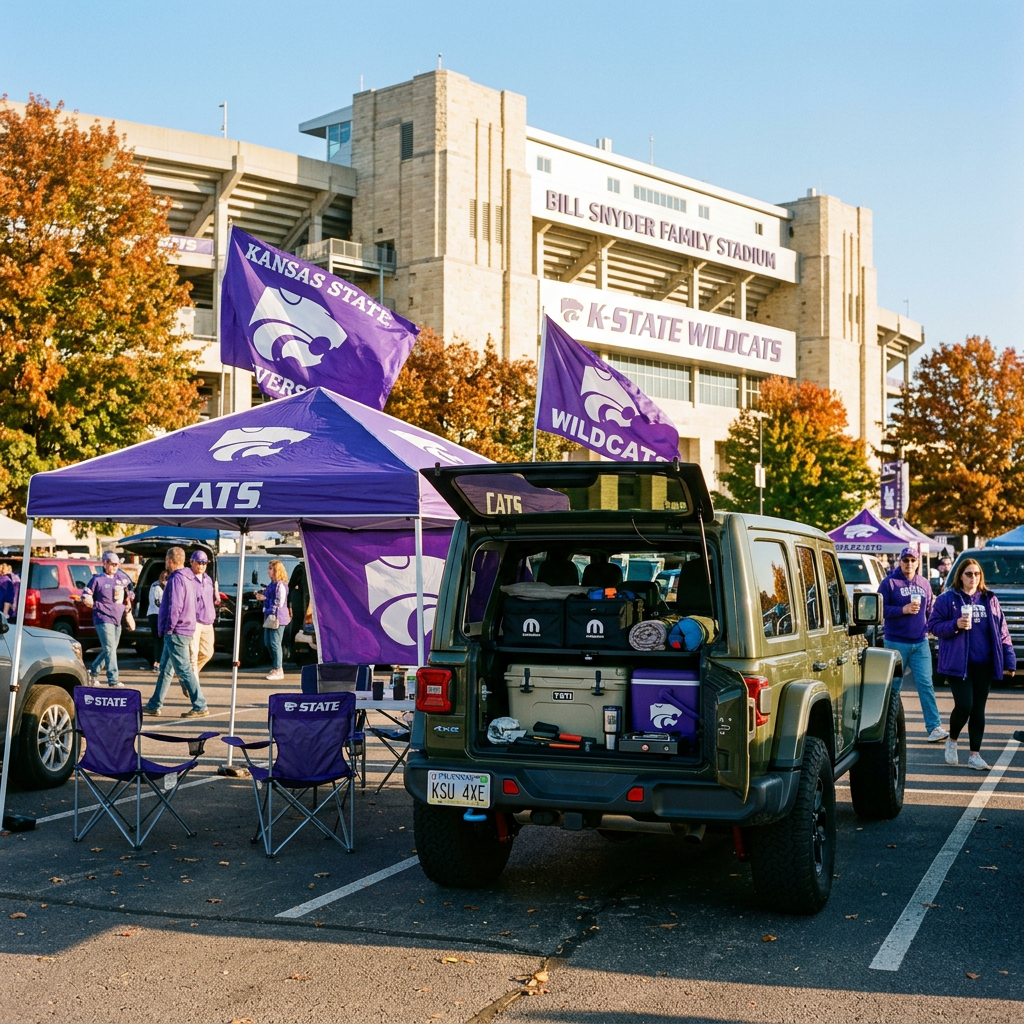
A tailgate party with a purple K-State tent and a green Jeep in front of Bill Snyder Family Stadium. (Representative image for illustration purposes only. Actual vehicle may vary based on trim and configuration.)

Gear Up for Game Day: How to Prepare Your Jeep for Tailgating Season at Kansas State University

Gear Up for Game Day: How to Prepare Your Jeep for Tailgating Season at Kansas State University There is a distinct, electric magic that fills the crisp autumn air in Manhattan, Kansas, on a Saturday morning. Long before the opening kickoff at Bill Snyder Family Stadium, the parking lots transform into a sea of royal purple, the smell of sizzling bratwursts drifts through the breeze, and the rhythmic chant of 'EMAW' echoes from corner to corner. For Kansas State University sports fans, tailgating isn't just a pre-game ritual; it's a cherished way of life. And if you are lucky enough to own a Jeep, you hold the golden ticket to the ultimate tailgating experience. The rugged versatility, open-air design, and sheer utility of a Jeep make it the perfect platform for creating a game-day hub that will make your crew the envy of the East or West stadium lots. At Valor CDJR, located just down the road in Junction City, we know that prepping your rig for the ultimate Wildcat tailgate requires careful planning, the right gear, and a deep understanding of your vehicle's capabilities. Whether you are driving a legendary Wrangler, a versatile Gladiator, or a spacious Grand Cherokee, your Jeep is engineered to do far more than just transport you to the game. It can serve as your kitchen, your living room, your power station, and your sanctuary from the elements. In this comprehensive guide, we will break down exactly how to maximize your cargo capacity, leverage hybrid technology, set up comfortable shelter, and ensure your vehicle is in peak running condition so you can focus on what matters most: supporting K-State to victory. From calculated packing strategies that take advantage of every square inch of your cargo hold to configuring high-tech power options on the revolutionary Wrangler 4xe, we will cover the technical details that elevate a standard parking spot into a professional-grade hospitality suite. We'll also dive into practical DIY guides for mounting awnings, tips for enjoying an open-air drive down Highway 18, and a checklist of must-have items to make your next trip to Manhattan unforgettable. So grab your purple gear, prep your appetite, and let's dive into the ultimate manual for K-State Jeep tailgating. Maximizing Your Space: Cargo Dimensions and Tailgate Capacities Successfully packing for a premier Kansas State tailgate is an exercise in spatial geometry. Between massive heavy-duty coolers, portable flat-top grills, fold-out tables, canopy tents, and chairs for the entire crew, your storage space is tested to its absolute limits. Fortunately, the 2026 Jeep Wrangler is engineered with smart storage solutions and robust load capacities designed to handle heavy, bulky gear without breaking a sweat. In a standard four-door 2026 Jeep Wrangler, you have access to a generous 32 cubic feet of cargo volume behind the rear seats. This is typically more than enough space for a mid-sized cooler, a compact grill, and a couple of storage bins. However, if you are hosting a larger gathering and choose to fold the rear seats flat, that cargo space expands to an impressive 72 cubic feet. This massive volume allows you to load up oversized items like large-format pop-up tents, commercial-grade catering warmers, and even portable generators if necessary. But volume is only half the equation; weight capacity is where the Wrangler truly shines. The rear swing-gate is built with heavy-duty cast aluminum hinges designed to carry a full-sized spare wheel and tire. When stationary, the tailgate can support substantial weight, making it a perfect mounting point for aftermarket fold-down trail tables. These Mopar accessories create an instant food prep surface or a convenient place to rest your condiments and plates. To ensure you do not exceed limits, always place your heaviest items—like ice-filled coolers and iron cooktops—closest to the vehicle floor and as far forward as possible, keeping the center of gravity low and stable. To help you plan your loadout precisely, here is a quick breakdown of the physical capabilities and storage metrics of the 2026 Jeep Wrangler lineup: Wrangler Cargo Metric Specification Value Cargo Volume (Seats Up) 31.7 Cubic Feet Cargo Volume (Seats Folded) 72.4 Cubic Feet Payload Capacity (Approx.) 1,000 to 1,350 lbs Optimal Swing-Gate Load Limit Up to 150 lbs (Standard Hinges) When utilizing the rear area, remember to take advantage of the under-floor storage bin to hide away valuable items like wallets, keys, or premium wireless speakers when you head into the stadium. Utilizing cargo nets and heavy-duty tie-down straps anchored to the built-in cargo tie-down loops is also highly recommended to prevent heavy grills or coolers from shifting during dynamic driving on the way to Manhattan. Silent Power in the Parking Lot: The 2026 Jeep Wrangler 4xe Hybrid Traditional tailgating setups often rely on loud, exhaust-belching gas generators to power televisions, speakers, and cooking appliances. This creates a noisy and unpleasant atmosphere for you and your neighboring fans. Enter the revolutionary 2026 Jeep Wrangler 4xe plug-in hybrid. Featuring a high-voltage 17.3 kWh lithium-ion battery pack, the Wrangler 4xe is essentially a massive, silent mobile power bank. Using the available Jeep Power Box accessory, which plugs directly into the vehicle's charge port, you can convert the high-voltage hybrid battery into 120-volt household electricity. This system provides up to 30 amps of total output, allowing you to run a large-screen TV, a premium sound system, electric pellet grills, slow cookers, and high-velocity cooling fans all at the same time. The best part? It operates in absolute silence. No engine fumes, no pull-cords, and no screaming generator motors to drown out the pre-game radio broadcasts. A common question many prospective buyers ask is: How much extra does the 4xe plug-in hybrid drivetrain cost on a 2026 Wrangler? Typically, the 4xe hybrid models carry a manufacturer-suggested retail price premium of approximately $6,000 to $8,000 over their equivalent conventional gas-powered counterparts (such as the standard 2.0L Turbo or 3.6L Pentastar V6 models). However, this initial difference is frequently offset by federal, state, or local clean-vehicle tax incentives, along with long-term fuel savings from commuting on pure electricity. When you factor in the incredible utility of having a built-in power station for camping, tailgating, and emergency home backup, the cost-to-benefit ratio of the 4xe becomes exceptionally compelling. At Valor CDJR, we keep a diverse selection of these high-tech rigs in stock. You can browse our current New Vehicle Listings to compare trims like the Sahara 4xe, Rubicon 4xe, and Sport S 4xe to find the perfect blend of luxury and capability for your lifestyle. Explore New Wrangler 4xe Inventory Creating the Ultimate Shade: Mounting a Retractable Awning The Kansas sun can be relentless, especially during those early-season September games when temperatures on the asphalt easily climb into the 90s. While standard stand-alone canopies are popular, they are notoriously difficult to set up in windy conditions, take up valuable cargo space, and can easily blow away if not properly weighted down. A vehicle-mounted retractable awning solves all of these issues, turning your Jeep into a highly wind-resistant, self-contained shade oasis. Here is our step-by-step DIY guide to choosing and mounting an awning to your Jeep's roof rack: Step 1: Choose the Right Rack & Awning Before purchasing an awning, you must ensure you have a stout, high-quality roof rack system installed on your Jeep. For Wranglers, look for rain-gutter mounts or heavy-duty cage systems. Choose an awning size that matches your vehicle length; a 4.5-foot to 6.5-foot awning is ideal for Wranglers, while Gladiators can easily support 8-foot models. Look for durable, waterproof canvas with UV protection. Step 2: Install Mounting Brackets Most premium awnings include universal L-brackets. Secure these brackets firmly to the outer track of your roof rack crossbars. Ensure they are spaced apart according to the manufacturer's recommendations to distribute the load evenly. Use stainless steel hardware and apply a mild thread-locking compound (like blue Loctite) to prevent the bolts from vibrating loose during highway driving. Step 3: Mount and Secure the Unit With a friend's help, lift the protective awning case up to the mounted L-brackets. Align the sliding bolts on the rear of the awning track with the holes in the brackets. Tighten the lock nuts securely. Once mounted, test-deploy the awning in your driveway before game day. Adjust the telescoping support legs to your desired height, and practice securing the integrated guy lines to handle heavy Kansas gusts. The Open-Air Drive to Manhattan: Wrangler vs. Gladiator Half the fun of tailgating at Kansas State is the journey there. Cruising down scenic Highway 18 with the wind in your hair and the collective anticipation of a stadium full of fans is unmatched. But when it comes to stripping down your vehicle for that pure, open-air driving experience, which model has the advantage: the iconic Wrangler or the versatile Gladiator truck? Both vehicles share the same legendary DNA, featuring lightweight aluminum doors that are remarkably simple to remove. Using the standard Torx tool kit provided in your Jeep's glove box, you simply roll down the windows, remove the interior trim panel to unplug the wiring harness, back out the hinge pins, and lift the doors straight off. Both models also feature a fold-down windshield and removable top options, allowing for a fully exposed cabin configuration. However, the Wrangler holds a slight edge in pure open-air convenience due to its shorter body length and available Sky One-Touch Power Top. With the push of a button, this full-length canvas roof retracts in about 20 seconds at speeds up to 60 mph, allowing you to instantly enjoy the open sky without having to store heavy hardtop panels. On the other hand, the Gladiator makes up for it with its massive 5-foot steel truck bed, allowing you to easily haul dirty grills and bulky coolers without worrying about staining a carpeted interior. Whichever you prefer, both vehicles deliver an unmatched sense of freedom on the road. Get Game-Day Ready at Valor CDJR: Certified Jeep Service Nothing ruins a game-day weekend faster than a mechanical breakdown on your way to the stadium. If you are searching for the most reliable certified Jeep service center near Junction City, KS, look no further than Valor CDJR. Located conveniently at 1825 Goldenbelt Blvd, our state-of-the-art facility is staffed by factory-trained technicians who know every system of your Jeep inside and out. Before the tailgating season kicks off, we highly recommend bringing your rig in for a comprehensive multi-point inspection. Our team will perform crucial battery strength diagnostics (vital if you plan to run accessories), test your cooling system to prevent overheating in traffic, check and top off vital fluids, and inspect your braking system. For quick services like oil changes and tire rotations, you can take advantage of our specialized Express Lane service—no appointment necessary! For larger maintenance needs, our online Service Scheduler makes it incredibly simple to reserve a time slot that fits your busy schedule. Schedule Your Pre-Game Service Now Upgrade Your Rig with Genuine OEM Mopar Accessories To truly elevate your Jeep's tailgating utility, aftermarket accessories are key. However, third-party parts can vary in fitment, materials, and integration. By choosing genuine OEM Mopar performance parts and accessories, you get equipment designed by the exact same engineers who built your vehicle. This guarantees perfect fitment, matching finishes, and long-lasting durability. Through our dedicated Parts Department at Valor CDJR, you can order highly functional lifestyle gear to prep your rig. Popular tailgating upgrades include the Mopar Fold-Out Tailgate Table (which mounts securely to the inner swing-gate), heavy-duty all-weather slush mats to protect your carpets from spilled drinks, and cargo organizers that keep your gear from sliding around on the drive. Ordering parts is seamless; simply fill out our online request form or visit our boutique showroom to consult with a parts specialist today. Essential Kansas State Tailgating Checklist for Jeep Owners Before you load up and make the drive to Manhattan, review our quick-reference checklist. These items are tailored specifically for Jeep setups to ensure you have a seamless, safe, and wildly fun game day: 1. Stadium Parking & Access • Ensure your physical East or West lot parking passes are hung clearly from your rearview mirror. • Pack heavy-duty tie-down straps to secure loose items during highway travel. • Keep a printout of stadium lot rules regarding tent sizes and propane grill usage. 2. Power & Utility Prep • For 4xe owners: Fully charge your hybrid battery overnight to maximize electrical runtime. • Bring high-quality extension cords designed for outdoor wet-weather use. • Pack a portable power bank as a backup for charging smartphones and accessories. 3. Crew Comfort & Safety • Pack plenty of purple outdoor chairs, blankets for late-season games, and sunscreen. • Keep a compact first-aid kit and basic recovery tools (jumper cables, tow strap) in your Jeep. • Bring garbage bags to ensure you leave your tailgating spot as clean as you found it. Ready to Rule the Parking Lot? Find Your Tailgate-Ready Jeep There is no better companion for K-State game days, outdoor adventures, and daily Kansas commutes than a legendary Jeep vehicle. At Valor CDJR, we are proud to be your local automotive resource in Junction City, serving Manhattan, Fort Riley, and the surrounding communities. Whether you want to explore our extensive Used Vehicle Listings for a great value on a rugged Wrangler, or browse our fresh New Vehicle Listings to find a high-tech hybrid, we have the inventory and expertise to match you with your dream ride. If you are planning to upgrade, you can get a fast and accurate valuation of your current trade-in by utilizing our digital Trade In Evaluation tool. Additionally, you can streamline the buying process from the comfort of your couch by applying for financing through our secure portal to Get Pre-Approved today. Our professional finance team works with a wide network of local and national lenders to secure the most competitive rates possible. Browse New Jeep Inventory Get Pre-Approved Online Have questions or want to schedule a test drive? Call us at (785) 238-5114 or stop by our showroom at 1825 Goldenbelt Blvd in Junction City. Get Directions to Valor CDJR and let's get you ready to rule the stadium parking lots this fall! Go Wildcats!

Contact Us

Fill out this form below and we'll contact you shortly
*Required Fields