




Blog / Parts & Accessories

Blog

All Parts & Accessories Buying Guides New Vehicle Reviews Maintenance & Service Technology & Innovation Financing & Insurance Model Comparisons Safety Features New Vehicle Inventory Used Vehicle Guides Valor CDJR Towing & Hauling Safety Trade in Advice Family & Lifestyle Vehicles Vehicle Financing & Trade-In Tips Dealership Sales Strategies KS Community Seasonal Vehicle Care Junction City Military & Veteran Benefits Automotive Repair Buying Guides & Dealership Services Financing & Trade-In Options Heavy-Duty Truck Features Off-Road & Adventure Vehicles Service Vehicle Ownership Care Hybrid & Electric Vehicles Military Vehicle Buying Guides Commercial Truck Reviews Parts Performance & Powertrain Vehicle Features & Accessories Automotive Recalls Dealership Inventory Highlights Dealership Visit Preparation Inventory & Pricing Insights Jeep Lifestyle & Accessories Military & Community Car Buying Programs Repair & Diagnostics Vehicle Maintenance & Preparation Vehicle Pricing Strategies Vehicle Safety & Compliance Vehicle Trade-In Tips Warranty & Coverage Automotive News Car Buying Tips Car Purchase Tips Commercial Fleet Management Commercial Vehicle Comparisons Dealer Profiles & Interviews Dealership Offers & Promotions Dealership Service Experience Financing & Insurance for Military Families Genuine Parts & Accessories Local Automotive Events OEM Parts & Warranty Coverage Pre-Owned Vehicle Sales Road Trip & Travel Tips Special Offers & Promotions Tailgating & Outdoor Adventures Tailgating & Outdoor Recreation Towing & Hauling Towing & Roadside Assistance Vehicle Registration & Legal Advice for Military Personnel Vehicle Repair & Diagnostics Vehicle Sales Experience Warranty & Protection Plans Agricultural Vehicles & Equipment Brake System Care Certified Pre-Owned Programs Community & Military Support Initiatives Dealership Events Diesel Engine Technology Engine & Performance Insights Fleet & Upfit Buying Guides Luxury SUVs Out-of-State Purchasing Guides Part & Warranty Services Parts & Repair Reimbursement Recall & Warranty Repairs Seasonal Sales Events Technology & Innovation in Vehicle Service Vehicle Incentives & Promotions Vehicle Maintenance & Winter Care Vehicle Technology & Features Weekend Dealership Events and Services
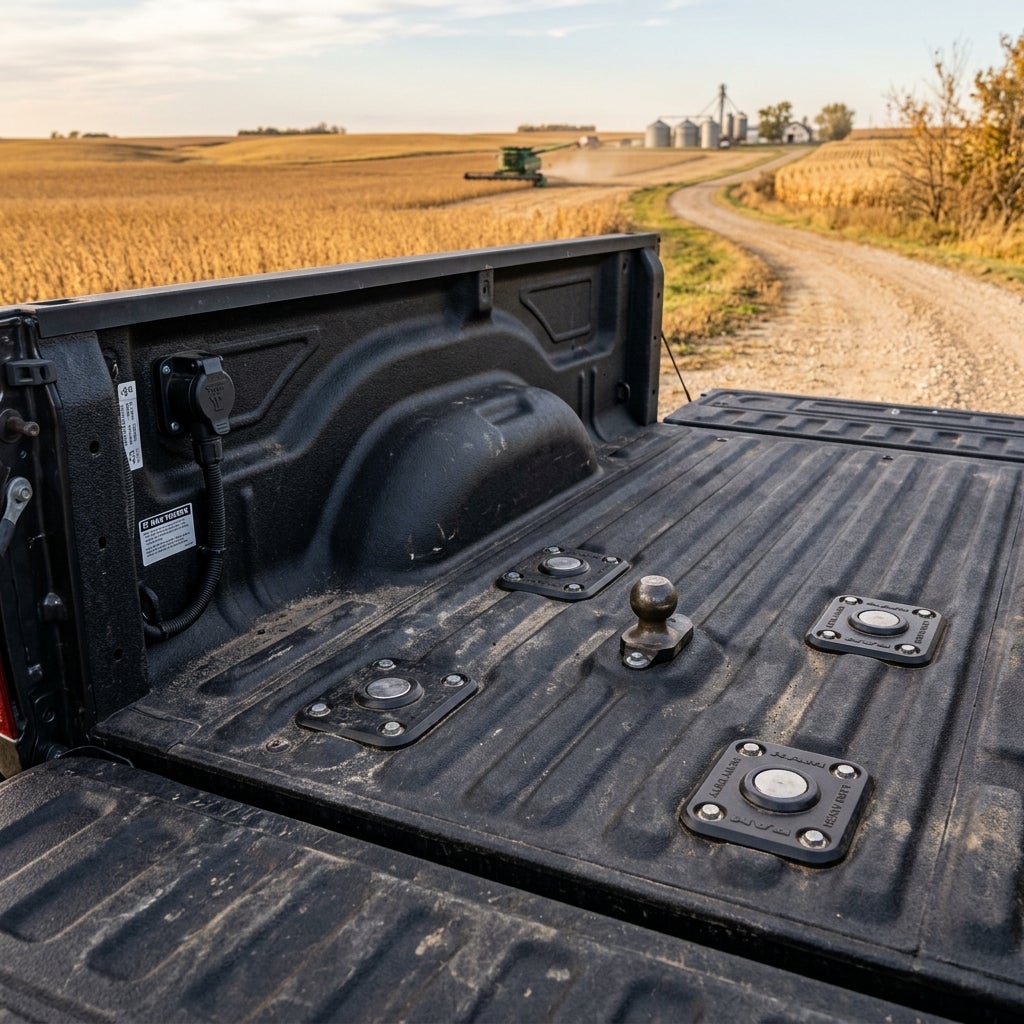
Bed of a black pickup truck fitted with a gooseneck hitch ball and puck system against a rural farm background. (Representative image for illustration purposes only. Actual vehicle may vary based on trim and configuration.)

What Factory Hardware Is Included in the RAM Fifth-Wheel / Gooseneck Prep Group?

.hrizn-visual-root a { color: #566BA1; } .hrizn-visual-root a { color: inherit; } .hrizn-visual-root p { margin: 0 0 1em; } .hrizn-visual-root p:last-child { margin-bottom: 0; } @media (max-width: 640px) { .hrizn-visual-root { text-align: center !important; } .hrizn-visual-root a { display: block; width: 100%; max-width: 320px; margin-left: auto; margin-right: auto; box-sizing: border-box; } .hrizn-visual-root + a { margin-top: 8px; } } @media (max-width: 640px) { #hrizn-cols-1 { flex-direction: column !important; align-items: stretch !important; } #hrizn-cols-1 > .hrizn-col { flex: 1 1 100% !important; width: 100% !important; } } #hrizn-table-tbl-sec-3 table{width:100%;table-layout:auto;border-collapse:collapse;font-family:'Open Sans',sans-serif;font-size:0.9rem} #hrizn-table-tbl-sec-3 th,#hrizn-table-tbl-sec-3 td{border:1px solid #e0e4ed;padding:8px;color:#595959;word-break:break-word;overflow-wrap:break-word} #hrizn-table-tbl-sec-3 th{background:#1a1a22;color:#ffffff;font-weight:700;font-size:14px;text-align:left;vertical-align:middle;padding:8px} #hrizn-table-tbl-sec-3 tr:nth-child(even) td{background:rgba(86,107,161,0.04)} #hrizn-table-tbl-sec-3 .tableWrapper{overflow-x:hidden} @media (max-width: 640px) { #hrizn-3cols-1 { flex-direction: column !important; align-items: stretch !important; } #hrizn-3cols-1 > .hrizn-col { flex: 1 1 100% !important; width: 100% !important; } } @media (max-width: 640px) { #hrizn-cols-2 { flex-direction: column !important; align-items: stretch !important; } #hrizn-cols-2 > .hrizn-col { flex: 1 1 100% !important; width: 100% !important; } } #hrizn-table-tbl-sec-5 table{width:100%;table-layout:auto;border-collapse:collapse;font-family:'Open Sans',sans-serif;font-size:0.9rem} #hrizn-table-tbl-sec-5 th,#hrizn-table-tbl-sec-5 td{border:1px solid #e0e4ed;padding:8px;color:#595959;word-break:break-word;overflow-wrap:break-word} #hrizn-table-tbl-sec-5 th{background:#1a1a22;color:#ffffff;font-weight:700;font-size:14px;text-align:left;vertical-align:middle;padding:8px} #hrizn-table-tbl-sec-5 tr:nth-child(even) td{background:rgba(86,107,161,0.04)} #hrizn-table-tbl-sec-5 .tableWrapper{overflow-x:hidden} @media (max-width: 640px) { #hrizn-cols-3 { flex-direction: column !important; align-items: stretch !important; } #hrizn-cols-3 > .hrizn-col { flex: 1 1 100% !important; width: 100% !important; } } @media (max-width: 640px) { #hrizn-3cols-2 { flex-direction: column !important; align-items: stretch !important; } #hrizn-3cols-2 > .hrizn-col { flex: 1 1 100% !important; width: 100% !important; } } @media (max-width: 640px) { #hrizn-3cols-3 { flex-direction: column !important; align-items: stretch !important; } #hrizn-3cols-3 > .hrizn-col { flex: 1 1 100% !important; width: 100% !important; } } #hrizn-table-tbl-sec-8 table{width:100%;table-layout:auto;border-collapse:collapse;font-family:'Open Sans',sans-serif;font-size:0.9rem} #hrizn-table-tbl-sec-8 th,#hrizn-table-tbl-sec-8 td{border:1px solid #e0e4ed;padding:8px;color:#595959;word-break:break-word;overflow-wrap:break-word} #hrizn-table-tbl-sec-8 th{background:#1a1a22;color:#ffffff;font-weight:700;font-size:14px;text-align:left;vertical-align:middle;padding:8px} #hrizn-table-tbl-sec-8 tr:nth-child(even) td{background:rgba(86,107,161,0.04)} #hrizn-table-tbl-sec-8 .tableWrapper{overflow-x:hidden} @media (max-width: 640px) { #hrizn-3cols-4 { flex-direction: column !important; align-items: stretch !important; } #hrizn-3cols-4 > .hrizn-col { flex: 1 1 100% !important; width: 100% !important; } } @media (max-width: 640px) { #hrizn-cols-4 { flex-direction: column !important; align-items: stretch !important; } #hrizn-cols-4 > .hrizn-col { flex: 1 1 100% !important; width: 100% !important; } } What Factory Hardware Is Included in the Ram Fifth-Wheel / Gooseneck Prep Group? When you are preparing for heavy agricultural hauling across Riley County or hitching up a 35-foot livestock trailer in Junction City, knowing exactly what equipment comes integrated into your truck bed is critical. The Ram Heavy Duty Production Option Code AHU—officially designated as the Fifth-Wheel / Gooseneck Towing Prep Group—is a factory-engineered structural system built directly into the frame assembly during production. Rather than relying on aftermarket brackets, bed drilling, or welded subframes that compromise factory rust warranties, Option Code AHU delivers a seamless, flush-mounted towing foundation engineered specifically for extreme structural loads. Every Ram 2500 and 3500 equipped with the factory AHU Prep Group includes five essential hardware components engineered directly into the bed floor and frame architecture: • Integrated Fully Welded Frame Crossmembers: Below the stamped steel bed floor sit massive, factory-welded structural steel crossmembers attached directly to the hydroformed box frame rails. These crossmembers distribute tongue weights and vertical pin loads directly to the chassis rather than stressing the bed sheet metal. • Five In-Bed Mounting Pucks: Four outer receiver pucks arranged in a standard footprint for quick drop-in fifth-wheel hitches, plus a centralized fifth puck specifically designed for a 2-5/16 inch gooseneck ball. • Removable Cast-Aluminum Puck Covers: Durable, flush-fitting covers that seal each receiver hole when hitches are removed, preserving a completely flat bed floor for loose grain bags, tools, or lumber. • In-Bed 7-Pin Electrical Wiring Connector: Mounted conveniently into the rear driver-side bed wall, keeping trailer wiring harnesses off the tailgate and safely isolated inside the bed. • Pre-Drilled Bed Floor Ports with Reinforced Collars: Factory-punched bed openings featuring structural collars that prevent moisture penetration, bed flexing, and metal fatigue around the mounting points. Whether you are shopping our New Vehicle Listings or upgrading your current fleet, understanding this factory architecture ensures you maximize your truck's towing potential safely and legally. Anatomical Breakdown: Beneath the Bed Cover of Ram Production Option Code AHU Hydroformed Frame Integration & Structural Metallurgy To appreciate why option code AHU is superior to aftermarket hitches, you must look underneath the truck bed. Ram Heavy Duty chassis frames utilize 50,000 PSI steel hydroformed frame rails with fully boxed cross-sections. In factory AHU builds, additional structural steel crossmembers are Robotically Metal Inert Gas (MIG) welded directly between the main frame rails at the assembly plant in Saltillo. This direct frame attachment creates an uninterrupted load path. When a heavy gooseneck trailer applies 5,000 lbs of vertical pin weight while rolling down bumpy rural roads in Geary County, that force travels directly down through the cast steel puck housings, into the factory welded crossmembers, and evenly across both frame rails. Because no aftermarket drilling is performed on the high-strength frame flanges, structural integrity and factory rust-through warranties remain 100% intact. In-Bed Electrical Integration & Corrosion Prevention Beyond heavy iron, Option Code AHU includes a fully integrated 7-pin electrical harness extension connected directly to the primary vehicle body harness. Unlike aftermarket installations that splice into rear bumper wiring using clip-on connectors—which frequently corrode from winter road salt or mud—the factory harness uses weatherproof Deutsch-style sealed connectors. The bed-side outlet is inset flush into the rear driver-side inner quarter panel. This placement prevents cargo from crushing the plug while allowing full wire clearance when making sharp jackknife turns with tall gooseneck couplers. The integrated circuitry communicates seamlessly with the truck's central Body Control Module (BCM), enabling automatic trailer light checks, trailer anti-lock brake integration, and blind-spot monitoring trailer length detection. 2026 Ram 2500 vs. 3500: Realistic Towing and Payload Capacities for Heavy Agricultural Hauling Choosing between a 2026 Ram 2500 and Ram 3500 for high-payload fall harvest towing requires evaluating more than just horsepower. While both trucks offer the legendary 6.7L Cummins Turbo Diesel and the 6.4L HEMI V8, their rear suspension designs and Gross Vehicle Weight Ratings (GVWR) create distinctly different real-world capabilities when hooked to heavy gooseneck grain wagons or multi-axle livestock trailers. Model / Engine Configuration Rear Suspension Architecture Max Gooseneck Towing Max Payload Capacity Ideal Kansas Hauling Role 2026 Ram 2500 6.4L HEMI V8 5-Link Coil Spring / Auto-Level Air Up to 17,730 lbs Up to 4,010 lbs General ranch work, utility trailers, equipment shuttle 2026 Ram 2500 6.7L Cummins Diesel 5-Link Coil Spring / Auto-Level Air Up to 19,990 lbs Up to 3,150 lbs Medium livestock trailers, round-bale transportation 2026 Ram 3500 SRW 6.7L Cummins Hotchkiss Leaf Spring System Up to 25,650 lbs Up to 4,580 lbs Heavy gooseneck flatbeds, heavy machinery haulers 2026 Ram 3500 DRW 6.7L HO Cummins High-Capacity Leaf Springs + Air Up to 37,090 lbs Up to 7,680 lbs Maximum commercial grain hauling, multi-head livestock Ram 2500 Coil vs Air The Ram 2500 features a proprietary 5-link rear coil spring suspension that provides unmatched unladen ride quality. For gooseneck towing, opting for the factory Rear Auto-Level Air Suspension levels the truck bed automatically under high pin weights, preserving headlight alignment and front axle steering traction. Ram 3500 Leaf Springs Ram 3500 models utilize heavy-duty Hotchkiss leaf spring rear suspensions. This stiff architecture supports severe vertical pin weights (up to 7,680 lbs payload on dual-rear-wheel models) without excessive suspension squat, maintaining vehicle stability on Kansas highway routes. High-Output Cummins Power Paired with the AISIN 6-speed heavy-duty automatic transmission, the High-Output 6.7L Cummins Turbo Diesel generates up to 1,075 lb-ft of low-end torque. This torque peak arrives as low as 1,800 RPM, allowing heavy grain loads to pull smoothly out of soft field conditions. Browse Commercial Vehicle Inventory Understanding Gross Combined Weight Rating (GCWR) and How It Limits Ram Truck Hauling Defining Key Weight Limits: GCWR vs. GVWR vs. GAWR A common mistake among agricultural operators in Geary County is assuming that if a trailer hitch is rated for 30,000 lbs, the truck can legally tow 30,000 lbs under all conditions. Safety and legal compliance depend on respecting three distinct ratings specified on the driver's door pillar label: 1. Gross Vehicle Weight Rating (GVWR): The maximum total allowable weight of the truck alone, including fuel, passengers, cargo, and trailer pin weight. 2. Gross Axle Weight Rating (GAWR): The maximum weight allowed on the individual front and rear axles. On heavy goosenecks, rear GAWR is frequently breached before hitting total towing capacity. 3. Gross Combined Weight Rating (GCWR): The total maximum allowable combined weight of the fully loaded truck AND the fully loaded trailer together. Practical Calculation for Kansas Harvest Operations To calculate your true legal payload capability, consider a Ram 3500 Crew Cab 4x4 with a GCWR of 43,000 lbs. If the scale weight of the truck equipped with tools, auxiliary fuel tanks, driver, and passengers totals 9,200 lbs, your maximum allowable trailer weight (including trailer tare weight plus grain cargo) cannot exceed 33,800 lbs (43,000 - 9,200 = 33,800). Furthermore, gooseneck trailers transfer roughly 20% to 25% of their total weight onto the truck's bed as pin weight. A 20,000 lb gooseneck trailer places 4,000 to 5,000 lbs directly onto the truck's rear axle. If your truck has a payload capacity of only 3,200 lbs, you will exceed rear GAWR and GVWR even though you are well under maximum GCWR. To check your vehicle's payload status or evaluate your trade, visit our Trade In Evaluation page. Calibrating the Integrated Trailer Brake Controller: Recommended Gain Settings for Harvest Trailers Every Ram Heavy Duty truck equipped with Option Code AHU or towing packages includes an Integrated Trailer Brake Controller (ITBC) built directly into the center stack. This unit uses electronic proportional braking, sending voltage to trailer brakes based on hydraulic brake pressure generated by the truck's master cylinder. Calibrating gain settings correctly before hauling heavy harvest loads is crucial for preventing jackknifing or premature brake overheating. Trailer Type & Braking System Trailer Weight Condition ITBC Setting Mode Recommended Starting Gain Dual-Axle Electric Drum Brakes Unladen / Light Load Light Electric 4.0 to 5.5 Triple-Axle Electric Drum (Livestock) Fully Loaded (Harvest / Cattle) Heavy Electric 6.5 to 8.5 Electric-Over-Hydraulic Disc Brakes Loaded Commercial Flatbed EOH Heavy 5.5 to 7.5 Heavy Grain Gooseneck (Surge/EOH) Peak Harvest Weight (25k+ lbs) EOH Heavy 7.5 to 9.5 Step-by-Step Brake Calibration Procedure for Rural Kansas Roads: 1. Select the Correct Brake Type: In the Ram Instrument Cluster menu, navigate to Trailer Tow -> Trailer Select -> Brake Type. Choose between 'Light Electric', 'Heavy Electric', 'Light EOH', or 'Heavy EOH'. Electric-over-hydraulic (EOH) systems require specific pulse timings to prevent pump delay. 2. Set Initial Gain On Flat Ground: Accelerate truck and trailer to approximately 20 MPH on a clean, paved road (such as Goldenbelt Blvd near Junction City). 3. Manual Squeeze Test: Without touching the foot brake pedal, squeeze the manual slider switch on the dashboard brake controller completely. 4. Adjust Until Lockup Threshold: If trailer brakes lock up and slide tires, reduce gain by 0.5 increments. If trailer pushes the truck during braking, increase gain until you feel a firm, smooth drag that decelerates the rig without wheel lockup. 5. Gravel Road Verification: When operating on dirt or gravel township roads around Manhattan and Geary County, reduce gain settings by 1.0 to 1.5 points to prevent trailer tires from skidding on loose stone. Tire Pressure Best Practices: Should Heavy Harvest Trailer Tires Be Adjusted to Max PSI? Cold Inflation Ratings vs. Heat Expansion During peak fall harvest, ambient temperatures across Kansas fluctuate dramatically between crisp autumn mornings and warm afternoon highway runs on I-70. A critical question for agricultural haulers is whether heavy trailer and truck tires should be inflated to maximum sidewall PSI ratings. The unequivocal technical answer is **YES: Under full payload conditions, tires must be inflated to the manufacturer cold maximum PSI rating listed on the tire sidewall and vehicle certification label.** Heavy HD truck tires (typically Load Range E or F rated at 80 PSI cold) rely on internal air pressure to support vertical loads. Under-inflating a tire by just 10 PSI reduces load capacity by nearly 12% and causes rapid sidewall flexing. Avoiding Thermal Blowouts & Tire Degradation Sidewall flexing generates extreme thermal heat. When hauling a 24,000 lb gooseneck trailer across the Flint Hills at 65 MPH, an under-inflated tire can quickly exceed internal temperatures of 200°F, leading to tread separation or catastrophic blowouts. Never bleed air pressure from hot tires during mid-day stops. Tire manufacturers design tire carcasses to accommodate normal thermal pressure rises (10 to 15 PSI above cold rating) during highway operation. For fast tire inspections, routine fluid checks, and rapid maintenance, stop by our Express Lane at Valor CDJR. Schedule Service at Valor CDJR Fall Harvest Towing Checklist: Preparing Heavy-Duty Ram Trucks for High-Payload Hauling Before taking heavy gooseneck trailers into field harvest operations or embarking on multi-state livestock transports, complete this essential 8-point technical checklist engineered specifically for Ram Heavy Duty trucks equipped with the AHU Prep Group. 1. Ball & Pin Box Lubrication Apply heavy lithium grease to the 2-5/16 inch gooseneck ball surface or install a high-density polyethylene lubricant plate on fifth-wheel kingpins to prevent metal grinding and binding. 2. Safety Chain Anchor Torque Inspect drop-in safety chain loops in the bed pucks. Ensure the quarter-turn locking pins seat fully and retaining cotter pins are engaged without rust deformation. 3. 7-Pin Plug Voltage Testing Test auxiliary 12V charging terminals and trailer brake signal pins inside the in-bed 7-pin socket using a digital multimeter to confirm clean 13.8V+ alternator output. 4. Tire Tread & Sidewall Inspection Verify minimum 4/32 inch tread depth on truck drive tires and inspect inner duals for trapped stones or sidewall bulges that cause high-speed thermal failure. 5. Transmission Fluid & Cooler Check transmission fluid levels on 68RFE and AISIN transmissions. Ensure auxiliary transmission oil cooler fins behind the front grille are clear of crop chaff and debris. 6. Emergency Breakaway Battery Test the 12V gel-cell battery on the trailer breakaway system. Ensure the lanyard cable is correctly length-adjusted and clipped to a rigid bed anchor, never around the ball. Factory-Installed Puck System vs. Aftermarket Gooseneck Hitches: Cost, Warranty, and Structural Integrity When configuring a commercial or agricultural Ram Heavy Duty truck, buyers often evaluate whether ordering Option Code AHU from the factory is worth the investment compared to installing an aftermarket under-bed hitch later. A head-to-head comparison illustrates the long-term operational advantages of factory integration. Evaluation Criterion Ram Factory AHU Prep Group Aftermarket Under-Bed Gooseneck Hitch Installation Requirement 100% Robotically Welded at Factory 4-8 Hours Labor; Bed Removal or Cutting Required Bed Floor Finish Flush-fit puck covers; 100% flat bed when removed Exposed center hole; aftermarket trim rings can catch cargo Powertrain & Frame Warranty Preserves 5-Year/100,000-Mile Factory Warranty Risk of voiding frame anti-corrosion coverage due to drilling Integrated 7-Pin Electrical Factory sealed in-bed wiring harness included Requires aftermarket harness splicing into rear bumper wire Fifth-Wheel Compatibility Direct drop-in for standard 5th-wheel hitches Requires bulky adapter rails mounted above bed floor Essential Mopar Gooseneck & Fifth-Wheel Adapter Kits Available at Valor CDJR To turn your Ram factory prep group into a fully functional towing rig, Valor CDJR stocks authentic Mopar towing accessories engineered specifically for Option Code AHU receiver pucks. Ordering factory-approved components ensures proper metallurgy and precise lock-pin tolerances. Mopar 2-5/16 Gooseneck Ball Kit Features a patented lever-action quick-release locking mechanism that drops directly into the center bed puck. Includes two heavy-duty safety chain tie-down loops and a custom molded carrying case. Picture-Frame Fifth-Wheel Adapter Adapts outer bed pucks to accept traditional industry-standard fifth-wheel hitches from Curt, B&W, and Reese without installing elevated bed rails. In-Bed Plug Replacement Caps UV-resistant, weather-sealed replacement puck caps and 7-pin dust covers designed to withstand extreme winter weather and agricultural chemical exposure. Order Parts from Valor CDJR Navigating Flint Hills Terrain and Kansas Rural Highway Demands in Manhattan & Junction City Managing Steep Rolling Grades on I-70 & US-77 Towing heavy agricultural loads around Fort Riley, Junction City, and Manhattan presents distinct topographic challenges. Navigating the steep, rolling grade transitions of Interstate 70 through the Flint Hills requires constant vehicle control. When descending 6% grades with a 25,000 lb gooseneck trailer, relying solely on mechanical service brakes can lead to dangerous brake fade. Ram Heavy Duty trucks equipped with Cummins Turbo Diesel engines feature a driver-selectable **Smart Exhaust Brake**. Operating in either 'Full' or 'Automatic' mode, this system adjusts variable-geometry turbocharger vanes to generate reverse engine backpressure. Automatic mode maintains a set vehicle speed during downhill descents without requiring pedal input, dramatically extending brake pad life. Crosswind Stability & Prairie Road Traction Kansas prairie winds frequently blow sustained 35+ MPH gusts across north-south corridors like Highway 77. High-profile livestock or enclosed gooseneck trailers act like massive sails, creating lateral sway that tests chassis rigidity. The Ram AHU prep group places the gooseneck ball pivot point approximately 2 inches forward of the rear axle centerline. Positioning vertical tongue weight forward of the rear axle creates natural stability, transferring downward force to both front and rear axles. Combined with Ram Electronic Stability Control (ESC) and Trailer Sway Mitigation, your rig remains firmly planted in high crosswinds. If you are exploring pre-owned heavy-duty options, browse our Used Vehicle Listings. Step-by-Step Guide: How to Connect a Gooseneck Trailer to the Ram In-Bed Puck System Connecting a gooseneck trailer to the Ram factory puck system is a streamlined process that takes less than five minutes when following proper mechanical safety protocols: 1. Remove Center Puck Cover: Rotate the central cast-aluminum bed cover counterclockwise and lift it out to expose the factory gooseneck receiver socket. 2. Insert Gooseneck Ball: Lift the center locking lever on your Mopar 2-5/16 ball, insert the shank into the socket, and drop the lever down to engage the dual locking ball bearings underneath. 3. Install Safety Chain Loops: Insert the two drop-in safety chain loops into the designated rear diagonal outer puck sockets. Rotate each loop 90 degrees until the locking tab drops securely into place. 4. Align Truck & Coupler: Lower tailgate (or open 5th-wheel cutout gate), back truck into position until the trailer coupler aligns directly over the ball, and lower the trailer jack. 5. Lock Coupler & Engage Pin: Close the trailer coupler locking handle and insert the safety pin. Verify that the coupler collar has seated fully beneath the ball shoulder. 6. Attach Safety Chains & Breakaway Lanyard: Cross safety chains beneath the drawbar and hook into bed loops. Attach the breakaway cable to a rigid bed anchor. 7. Plug in 7-Pin Harness: Insert trailer electrical plug into the bed-wall socket and latch the spring-loaded socket lid over the plug connector lock edge. 8. Verify Dashboard Display: Start truck and check instrument cluster for 'Trailer Connected' notification and automated exterior trailer light check cycle. Schedule Heavy-Duty Ram Towing Service and Order Factory Parts at Valor CDJR in Junction City, KS Whether you are equipping a brand-new 2026 Ram 3500 dually for peak harvest or maintaining a commercial fleet in Junction City, Valor CDJR is your trusted regional heavy-duty truck authority. Our dealership features factory-trained Chrysler Dodge Jeep Ram Master Technicians who understand the exacting demands of Kansas agricultural and commercial towing. Visit our showroom at 1825 Goldenbelt Blvd to inspect our inventory of factory AHU-equipped Ram 2500 and 3500 models, order genuine Mopar gooseneck ball kits, or perform a pre-harvest towing system checkup. For current financing options for your farm or commercial business, contact our team through our Finance Center page. You can also Get Directions to Valor CDJR or Call us at (785) 238-5114 to speak directly with a truck specialist. Schedule Towing Service Inspection
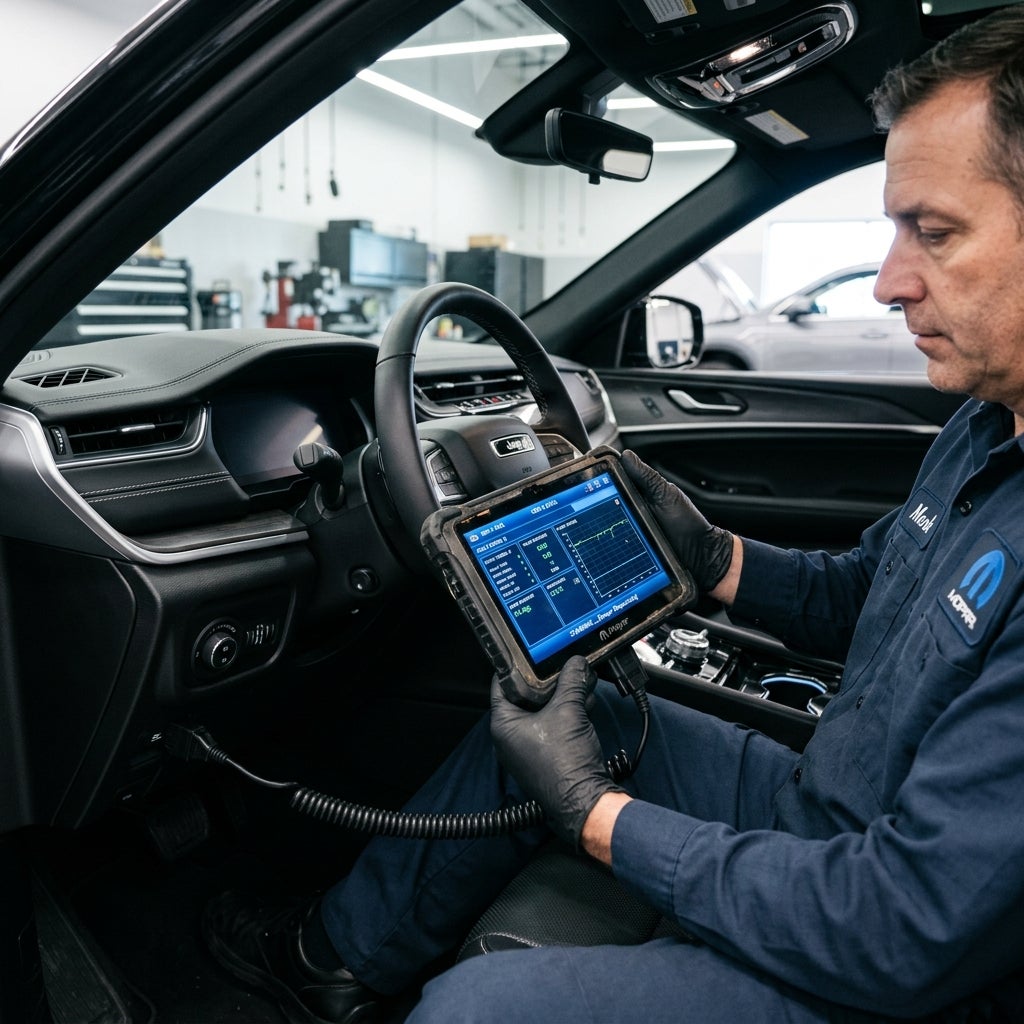
Automotive technician holding a diagnostic tablet connected to a car dashboard in a repair shop. (Representative image for illustration purposes only. Actual vehicle may vary based on trim and configuration.)

Recall Repair Timeline: How Long Software Reflashes and Mechanical Repairs Take

.hrizn-visual-root a { color: #566BA1; } .hrizn-visual-root a { color: inherit; } .hrizn-visual-root p { margin: 0 0 1em; } .hrizn-visual-root p:last-child { margin-bottom: 0; } @media (max-width: 640px) { .hrizn-visual-root { text-align: center !important; } .hrizn-visual-root a { display: block; width: 100%; max-width: 320px; margin-left: auto; margin-right: auto; box-sizing: border-box; } .hrizn-visual-root + a { margin-top: 8px; } } @media (max-width: 640px) { #hrizn-cols-1 { flex-direction: column !important; align-items: stretch !important; } #hrizn-cols-1 > .hrizn-col { flex: 1 1 100% !important; width: 100% !important; } } @media (max-width: 640px) { #hrizn-3cols-1 { flex-direction: column !important; align-items: stretch !important; } #hrizn-3cols-1 > .hrizn-col { flex: 1 1 100% !important; width: 100% !important; } } #hrizn-table-tbl-sec3 table{width:100%;table-layout:auto;border-collapse:collapse;font-family:'Open Sans',sans-serif;font-size:0.9rem} #hrizn-table-tbl-sec3 th,#hrizn-table-tbl-sec3 td{border:1px solid #e0e4ed;padding:8px;color:#595959;word-break:break-word;overflow-wrap:break-word} #hrizn-table-tbl-sec3 th{background:#fafafa;color:#1a1a22;font-weight:700;font-size:14px;text-align:left;vertical-align:middle;padding:10px} #hrizn-table-tbl-sec3 tr:nth-child(even) td{background:rgba(86,107,161,0.04)} #hrizn-table-tbl-sec3 .tableWrapper{overflow-x:hidden} @media (max-width: 640px) { #hrizn-cols-2 { flex-direction: column !important; align-items: stretch !important; } #hrizn-cols-2 > .hrizn-col { flex: 1 1 100% !important; width: 100% !important; } } @media (max-width: 640px) { #hrizn-3cols-2 { flex-direction: column !important; align-items: stretch !important; } #hrizn-3cols-2 > .hrizn-col { flex: 1 1 100% !important; width: 100% !important; } } #hrizn-table-tbl-sec6 table{width:100%;table-layout:auto;border-collapse:collapse;font-family:'Open Sans',sans-serif;font-size:0.9rem} #hrizn-table-tbl-sec6 th,#hrizn-table-tbl-sec6 td{border:1px solid #e0e4ed;padding:8px;color:#595959;word-break:break-word;overflow-wrap:break-word} #hrizn-table-tbl-sec6 th{background:#fafafa;color:#1a1a22;font-weight:700;font-size:14px;text-align:left;vertical-align:middle;padding:10px} #hrizn-table-tbl-sec6 tr:nth-child(even) td{background:rgba(86,107,161,0.04)} #hrizn-table-tbl-sec6 .tableWrapper{overflow-x:hidden} @media (max-width: 640px) { #hrizn-cols-3 { flex-direction: column !important; align-items: stretch !important; } #hrizn-cols-3 > .hrizn-col { flex: 1 1 100% !important; width: 100% !important; } } #hrizn-table-tbl-sec8 table{width:100%;table-layout:auto;border-collapse:collapse;font-family:'Open Sans',sans-serif;font-size:0.9rem} #hrizn-table-tbl-sec8 th,#hrizn-table-tbl-sec8 td{border:1px solid #e0e4ed;padding:8px;color:#595959;word-break:break-word;overflow-wrap:break-word} #hrizn-table-tbl-sec8 th{background:#fafafa;color:#1a1a22;font-weight:700;font-size:14px;text-align:left;vertical-align:middle;padding:10px} #hrizn-table-tbl-sec8 tr:nth-child(even) td{background:rgba(86,107,161,0.04)} #hrizn-table-tbl-sec8 .tableWrapper{overflow-x:hidden} @media (max-width: 640px) { #hrizn-3cols-3 { flex-direction: column !important; align-items: stretch !important; } #hrizn-3cols-3 > .hrizn-col { flex: 1 1 100% !important; width: 100% !important; } } @media (max-width: 640px) { #hrizn-cols-4 { flex-direction: column !important; align-items: stretch !important; } #hrizn-cols-4 > .hrizn-col { flex: 1 1 100% !important; width: 100% !important; } } Recall Repair Timeline: How Long Software Reflashes and Mechanical Repairs Take When safety recall notices arrive in the mail, vehicle owners across Junction City, Manhattan, and Riley County often ask one primary question: How long is this going to take out of my day? The answer depends significantly on whether your vehicle requires an electronic software reflash or physical mechanical hardware replacement. A typical dealer recall software reflash takes between 30 to 60 minutes to connect, flash, and verify, while complex mechanical repairs range from 1 to 4+ hours depending on component accessibility and calibration requirements. At Valor CDJR in Junction City, KS, all factory safety recall services—including software re-calibrations and physical part replacements—are performed at zero cost to the vehicle owner. Whether you drive a 2024 Jeep Grand Cherokee or another Chrysler, Dodge, Jeep, or Ram model, safety notices should never be ignored. Our factory-trained technicians utilize official Mopar diagnostic equipment to complete updates efficiently, ensuring your SUV remains reliable, safe, and fully compliant with national safety standards. You can easily schedule your recall appointment online using our Service Scheduler or call our team directly for immediate assistance. 2024 Jeep Grand Cherokee Safety Recalls: Software, Airbag, and Lighting Fixes in Junction City Modern vehicles like the 2024 Jeep Grand Cherokee are advanced computing platforms on wheels. While this provides unprecedented luxury, driver assistance, and off-road capability, it also means modern safety campaigns frequently center on microprocessors and firmware rather than traditional mechanical linkages. Recent active recall campaigns affecting select 2024 Grand Cherokee models in the Flint Hills area include: • Electronic Control Unit (ECU) & PCM Software Reflashes: Adjustments to power distribution, transmission logic, and hybrid battery management parameters. • Steering Wheel Airbag Wiring Harnesses: Inspections and minor mechanical modifications to prevent harness chafing or signal interruption during steering wheel rotation. • Auto-Headlight Control Module Updates: Electronic re-calibrations to resolve software glitches causing automatic headlight control systems to drop communication intermittently. If you suspect your vehicle is impacted, stop by our dealership or Get Directions to Valor CDJR to have our team perform a quick system scan. Software Flash vs. Mechanical Hardware Repair: Turnaround Times Compared Understanding the fundamental difference between software re-flashing and hardware replacement helps drivers plan their day when booking service. Here is how turnaround times compare in a certified dealership setting: Software Reflashes (30–60 Min) Technicians plug directly into the OBD-II port using wiTECH 2.0 software to download updated factory firmware to powertrain or body control modules. Quick, non-invasive, and completed inside our climate-controlled service bay. Minor Mechanical (1–2 Hours) Includes replacement of minor sensor assemblies, electrical harnesses, door latch mechanisms, or external trim fasteners. Requires manual disassembly and torque check. Major Mechanical (2–5+ Hours) Involves heavy component replacement such as steering columns, brake master cylinders, suspension linkages, or internal drivetrain components requiring fluid flushes and alignment checks. Repair Category Typical Work Duration Total Bay / Intake Time Customer Lounge Feasible? Software Reflash (ECU/PCM/BCM) 20 - 45 Minutes 30 - 60 Minutes Yes (Complimentary Wi-Fi) Airbag Clockspring / Harness Repair 45 - 90 Minutes 1.5 - 2.5 Hours Yes Lighting & Module Re-calibration 30 - 60 Minutes 1 Hour Yes Steering Column / Linkage Replacement 2 - 4 Hours Half-Day Shuttle Service Available What Is the Shifter-Module Software Defect Recall on the 2024 Grand Cherokee, and How Is It Fixed? One specific recall campaign that Grand Cherokee owners have inquired about involves the Electronic Transmission Control Module (TCM) and shifter software parameters. In affected vehicles, a software glitch in the rotary gear selector module could theoretically prevent the transmission from engaging 'Park' correctly or display a false transmission error light on the cluster dashboard. How Factory Technicians Fix It: 1. Our certified technician connects the vehicle to Mopar's secure diagnostic database using the wiTECH 2.0 system interface. 2. The current software code version in the Transmission Control Module is scanned and analyzed. 3. Updated factory code containing revised handshaking protocols between the rotary dial shifter and transmission control unit is uploaded. 4. The technician performs a clear-code command and a quick drive cycle test to verify gear engagement accuracy. The entire procedure requires no physical parts replacement and takes less than 45 minutes in our service department. Schedule Your Free Shifter Software Reflash What Documents Should Owners Bring to the Dealer for a Safety Recall Appointment? To ensure your intake process is as smooth and quick as possible at Valor CDJR, drivers traveling from Manhattan, Ogden, or Fort Riley should bring the following items: • Official Recall Notification Letter: While not mandatory (we can look up open recalls via VIN), having your safety recall notice speeds up check-in. • Vehicle Registration: Confirms active vehicle ownership and current license plate registration details. • Valid Driver's License: Required for intake and if you plan to utilize our courtesy shuttle or loaner vehicle program. • Current Proof of Insurance: Standard dealer check-in requirement when vehicle servicing is conducted. If you need maintenance work done simultaneously (such as an oil change through our Express Lane), let your service advisor know during check-in! Engine Reliability and Specs: 3.6L Pentastar V6 Specifications and Horsepower At the heart of the 2024 Jeep Grand Cherokee lies the award-winning 3.6-liter Pentastar V6 engine. Known for its smooth power delivery and durable architecture, keeping factory PCM software up-to-date is vital for preserving engine timing, fuel efficiency, and overall powertrain health. Powertrain Output Generates 293 horsepower and 260 lb-ft of torque, providing capable passing power and towing performance across Kansas highways. Variable Valve Timing Dual Variable Valve Timing (VVT) with electronic stop-start technology optimizes fuel economy during city driving in Junction City. PCM Software Impact Factory software updates refine spark calibration, transmission shift points, and thermal management to ensure optimal engine longevity. Engine Feature Specification Engine Displacement 3.6 Liters (3,604 cc) Horsepower Output 293 hp @ 6,400 RPM Torque Output 260 lb-ft @ 4,000 RPM Maximum Towing Capacity Up to 6,200 lbs (when properly equipped) Transmission TorqueFlite 8-Speed Automatic Safety Ratings Breakdown: What Overall Crash Test Rating Did the 2024 Jeep Grand Cherokee Earn from the IIHS? Safety is paramount for Kansas families. The 2024 Jeep Grand Cherokee achieved top honors, earning a prestigious TOP SAFETY PICK award from the Insurance Institute for Highway Safety (IIHS). Key collision and safety technology achievements include: • Good Ratings in Small Overlap Front (Driver & Passenger) tests. • Good Ratings in Moderate Overlap Front structural crash testing. • Advanced/Superior Ratings for Daytime and Nighttime Front Crash Prevention system performance. Completing factory safety recalls—especially those concerning active driver assistance sensors, software modules, and airbag harnesses—ensures your vehicle continues to perform exactly as engineered during critical emergency situations. What Are the Main Trim Levels for the 2024 Grand Cherokee, and How Do Their Prices Differ? The 2024 Jeep Grand Cherokee is offered in several distinct trim levels, ranging from practical core models to ultra-luxurious, feature-packed variants. Whether you are shopping for a new vehicle or checking service parameters, understanding trim configurations helps align your preferences and budget. Trim Tier Starting MSRP Range Key Standard Features Laredo Starting MSRP: $40,000 Uconnect 5 (8.4-inch screen), LED headlights, Blind-Spot Monitoring Altitude $44,000 - $46,000 Gloss-black exterior accents, 20-inch black wheels, heated front seats Limited $47,000 - $49,000 Capri leatherette seating, heated steering wheel, power liftgate Overland $60,000 - $63,000 Nappa leather interior, Quadra-Lift air suspension, dual-pane sunroof Summit / Summit Reserve $65,000 - $72,000 Palermo leather, 19-speaker McIntosh audio, 360-degree Surround View Thinking about upgrading while your vehicle is serviced? Explore our current New Vehicle Listings or check out high-quality options in our Used Vehicle Listings. You can also start your financing application online with our Get Pre-Approved form or evaluate your vehicle's trade-in value using our Trade In Evaluation tool. Browse New Grand Cherokee Inventory What to Expect During Your Service Visit at Valor CDJR Near Manhattan, KS Customer Comfort Lounge Relax in our clean, comfortable customer waiting area equipped with complimentary high-speed Wi-Fi, fresh coffee, and workstation desks while your software update is completed. Shuttle & Military Convenience Serving Fort Riley and Manhattan drivers! If your repair requires extra mechanical labor time, take advantage of our local shuttle transportation service to get on with your day. Why Certified Mopar Service Matters for Recall Repairs in Riley County Independent repair shops simply do not have direct access to proprietary Mopar firmware server feeds or specialized wiTECH diagnostic tooling required to flash factory control modules. Having safety recall work performed at a certified franchise dealer like Valor CDJR guarantees: • Direct Factory Logging: Your official vehicle safety history in the national Mopar database is updated immediately upon completion. • Genuine OEM Parts: If a mechanical recall requires hardware replacement, only authentic Mopar components engineered specifically for your vehicle are installed. • Warranty Protection: Certified repairs preserve your factory bumper-to-bumper and powertrain warranty coverages without friction. For genuine factory components or replacement accessories, our authorized Parts Department carries authentic Mopar parts stocked right here in Junction City. Business owners managing work fleets can also explore our dedicated Commercial Vehicle Inventory for heavy-duty truck and van service support. How to Look Up Open Recalls Using Your Vehicle Identification Number (VIN) Not sure if your vehicle has an uncompleted software reflash or safety campaign? Locating your 17-digit Vehicle Identification Number (VIN) takes less than a minute: 1. Driver-side Dashboard: Look through the bottom corner of the windshield on the driver's side. 2. Driver-side Door Pillar: Check the safety certification label inside the driver's door jamb. 3. Registration Documents: Your vehicle insurance card or state title lists the complete VIN. Once you have your VIN, call our team at Call us at (785) 238-5114 and our advisors will instantly check national Mopar database records for open safety notices. Check Open Recalls with Our Service Team Schedule Your Free Recall Service or Software Reflash at Valor CDJR Today Don't let open safety recalls compromise your peace of mind or vehicle reliability. Software re-flashes take as little as 30 to 60 minutes, and all recall repairs are completely free of charge at Valor CDJR. Our certified team proudly serves vehicle owners throughout Junction City, Manhattan, Riley County, and surrounding communities. Visit us at 1825 Goldenbelt Blvd, Junction City, KS 66441 or click below to reserve your appointment slot online today! Book Complimentary Recall Service Today

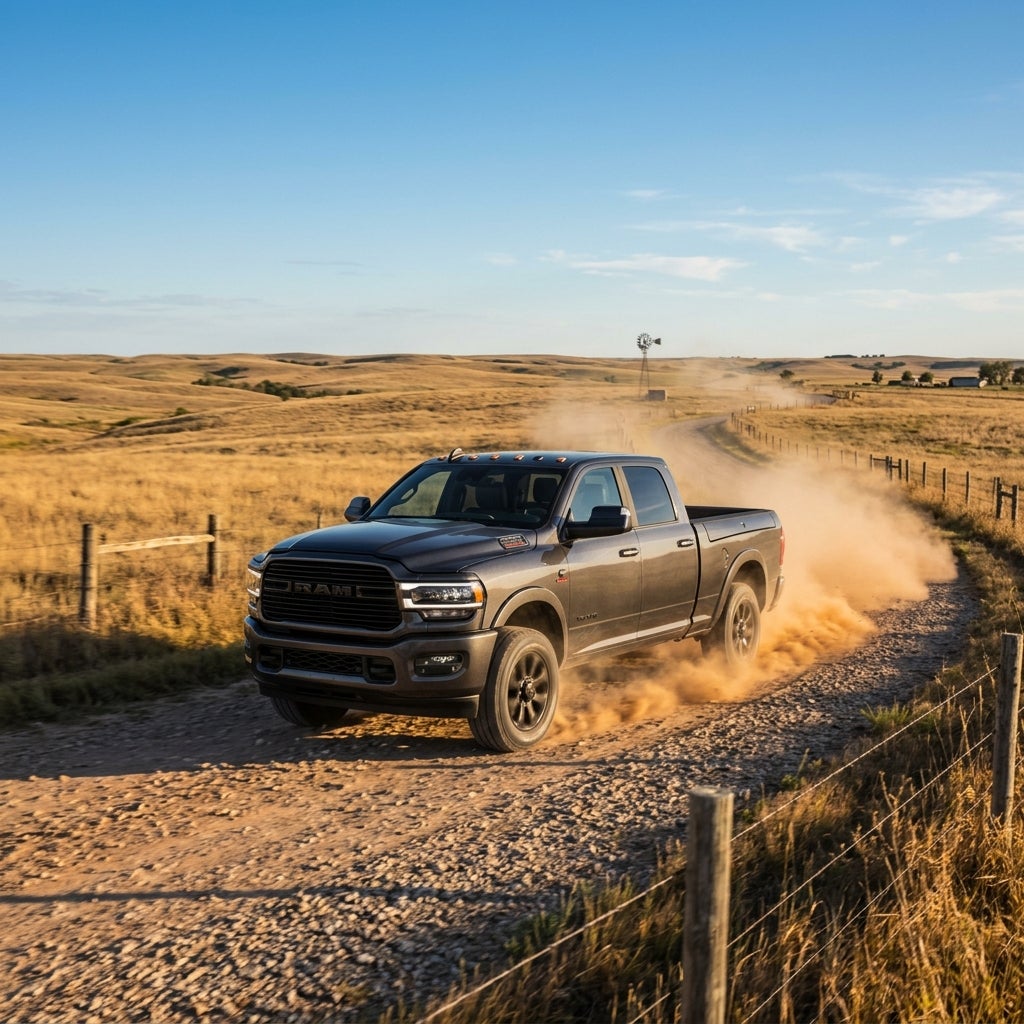
Dark grey Ram pickup truck kicking up dust on a rural dirt road through rolling golden grassy hills. (Representative image for illustration purposes only. Actual vehicle may vary based on trim and configuration.)

Essential Mopar Maintenance for Rural Driving: Key Takeaways from 20 Years in the Service Bay

.hrizn-visual-root a { color: #566BA1; } .hrizn-visual-root a { color: inherit; } .hrizn-visual-root p { margin: 0 0 1em; } .hrizn-visual-root p:last-child { margin-bottom: 0; } @media (max-width: 640px) { .hrizn-visual-root { text-align: center !important; } .hrizn-visual-root a { display: block; width: 100%; max-width: 320px; margin-left: auto; margin-right: auto; box-sizing: border-box; } .hrizn-visual-root + a { margin-top: 8px; } } @media (max-width: 640px) { #hrizn-cols-1 { flex-direction: column !important; align-items: stretch !important; } #hrizn-cols-1 > .hrizn-col { flex: 1 1 100% !important; width: 100% !important; } } @media (max-width: 640px) { #hrizn-cols-2 { flex-direction: column !important; align-items: stretch !important; } #hrizn-cols-2 > .hrizn-col { flex: 1 1 100% !important; width: 100% !important; } } @media (max-width: 640px) { #hrizn-3cols-1 { flex-direction: column !important; align-items: stretch !important; } #hrizn-3cols-1 > .hrizn-col { flex: 1 1 100% !important; width: 100% !important; } } @media (max-width: 640px) { #hrizn-cols-3 { flex-direction: column !important; align-items: stretch !important; } #hrizn-cols-3 > .hrizn-col { flex: 1 1 100% !important; width: 100% !important; } } @media (max-width: 640px) { #hrizn-cols-4 { flex-direction: column !important; align-items: stretch !important; } #hrizn-cols-4 > .hrizn-col { flex: 1 1 100% !important; width: 100% !important; } } @media (max-width: 640px) { #hrizn-3cols-2 { flex-direction: column !important; align-items: stretch !important; } #hrizn-3cols-2 > .hrizn-col { flex: 1 1 100% !important; width: 100% !important; } } #hrizn-table-tbl-sec10-checklist table{width:100%;table-layout:auto;border-collapse:collapse;font-family:'Open Sans',sans-serif;font-size:0.9rem} #hrizn-table-tbl-sec10-checklist th,#hrizn-table-tbl-sec10-checklist td{border:1px solid #e0e4ed;padding:8px;color:#595959;word-break:break-word;overflow-wrap:break-word} #hrizn-table-tbl-sec10-checklist th{background:#1a1a22;color:#ffffff;font-weight:700;font-size:14px;text-align:left;vertical-align:middle;padding:10px} #hrizn-table-tbl-sec10-checklist tr:nth-child(even) td{background:rgba(86,107,161,0.04)} #hrizn-table-tbl-sec10-checklist .tableWrapper{overflow-x:hidden} @media (max-width: 640px) { #hrizn-cols-5 { flex-direction: column !important; align-items: stretch !important; } #hrizn-cols-5 > .hrizn-col { flex: 1 1 100% !important; width: 100% !important; } } Essential Mopar Maintenance for Rural Driving: Key Takeaways from 20 Years in the Service Bay The Bottom-Line Answer: Driving on unpaved roads, loose gravel, and demanding agricultural terrain throughout rural Kansas may shorten brake and suspension maintenance intervals significantly. Severe-duty inspections every 5,000 miles—focusing on gravel-abraded brake rotors, dust-contaminated caliper pins, and premature ball joint or bushing play—are essential to maintaining vehicle safety, occupant comfort, and full towing capacity across Junction City, Riley County, and the Flint Hills region. When OEM engineers design maintenance schedules published in your owner's manual, their baseline numbers assume ideal highway conditions: smooth asphalt, moderate ambient temperatures, clean paved roads, and lightweight passenger loads. However, central Kansas drivers operate in an environment far removed from paved highways. Daily transit over unpaved county roads subjects Ram 1500, 2500, 3500 trucks and Jeep 4x4 SUVs to severe mechanical grinding from fine airborne silica dust and high-velocity stone strikes. Over time, these conditions accelerate friction wear, compromise rubber dust boots, and breakdown hydraulic fluids far ahead of factory schedules. At Valor CDJR, our factory-certified service team sees firsthand how Flint Hills washboard tracks impact suspension dampers and brake calipers. By adopting a proactive severe-duty maintenance regimen, owners preserve factory ride quality, prevent secondary system wear, and protect the overall resale value of their vehicle. Whether you are hauling livestock trailers along county lines or commuting between Manhattan and Junction City, staying ahead of rural wear ensures your Ram truck or Jeep 4x4 delivers unwavering reliability when you need it most. Check out our New Vehicle Listings to explore the newest severe-duty equipped models. Meet Mike Hogg: 20 Years of Keeping Mopar Vehicles Performing in Central Kansas As Service Director at Valor CDJR, Mike Hogg brings two decades of hands-on automotive diagnostic expertise directly to vehicle owners across central Kansas. Over 20 years in the service bay, Mike has personally evaluated thousands of Ram pickup trucks, Jeep Wranglers, Grand Cherokees, and Dodge Durangos subjected to the harsh conditions of rural farming, ranching, and cross-county trailering. "Standard service manuals give you a great starting point for city driving, but rural Kansas is a different proving ground altogether," explains Mike. "Fine limestone dust gets past rubber boots, gravel chops up brake rotor surfaces, and continuous washboard chatter works chassis fasteners loose. Understanding how rural conditions degrade Mopar components is what separates a minor preventative service from a costly breakdown in the field." Mike's technical leadership at Valor CDJR ensures every service customer receives expert guidance grounded in real-world local experience. His team focuses on targeted preventative care to keep agricultural equipment operators, small business fleets, and rural commuters running safely year-round. If you're considering expanding your fleet, view our Commercial Vehicle Inventory or stop by to consult directly with our service team. How Rural Dirt and Gravel Roads Impact Mopar Brake Pads and Rotors Silica Dust Contamination: Dry unpaved roads in rural Kansas generate micro-abrasive silica dust that settles directly on open brake assemblies. When you step on the pedal, this fine grit acts like sandpaper between the friction material and rotor face, creating severe scoring, deep grooves, and rapid thickness variation across the disc surface. Caliper Pin and Slide Binding: Fine dirt particles easily bypass worn caliper guide pin boots. As dust mixes with high-temperature lubricant, it creates a thick sludge that binds caliper slides. Bound caliper pins force brake pads to drag constantly against the rotor, causing localized thermal hot spots, pad glazing, and uneven inner-versus-outer pad wear. Gravel Chipping & Thermal Cracking: Loose gravel flung from tires can strike brake dust shields and lodge between the backing plate and rotor. Small stones caught in the assembly gouge metallic compounds and create heat concentration spots. Under heavy braking, these hotspots can cause thermal stress cracking across the cast iron rotor web. Adjusting Your Inspection Frequency: Under standard paved driving conditions, Mopar recommends inspecting brake components every 10,000 miles. However, for vehicles frequently exposed to Kansas gravel roads, Mike Hogg recommends shortening inspection intervals to every 5,000 miles (or every oil change). If you suspect pad wear, drop by our Express Lane for a rapid check. Ceramic vs. Semi-Metallic Mopar Brake Pads: Choosing the Right Compound for Rural Use Ceramic Mopar Pads Quiet & Clean: Ceramic friction formulations combine dense ceramic material with fine copper flakes to deliver smooth, quiet stopping power. They generate minimal dark brake dust, making them ideal for light trucks and SUVs driven primarily on mixed commuter routes between Manhattan and Junction City. However, ceramic pads can take slightly longer to reach optimal thermal grip in extreme sub-zero Kansas winter mornings. Semi-Metallic Mopar Pads Heavy-Duty Heat Resistance: Engineered with 30% to 65% steel, iron, and copper fibers, semi-metallic pads excel at dissipating extreme heat generated by heavy payload hauling, farm implement towing, and steep Flint Hills grade descents. They offer strong cold-bite performance from the moment you turn the key, though they produce more visible wheel dust and increase rotor wear under light-duty driving. Expert Recommendation Matching Duty to Material: For working Ram 2500/3500 trucks regularly pulling livestock or equipment trailers over unpaved routes, semi-metallic Mopar pads are the clear winner for safety and fade resistance. For daily passenger commuters in Ram 1500 or Jeep Cherokee models operating on mixed surfaces, ceramic pads offer superior longevity and quieter operation. Consult our factory-trained specialists at the Parts Department to select the ideal compound. Is Your Ram Truck or Jeep SUV Due for a Rural Road Brake Inspection? If your vehicle experiences increased brake pedal travel, grinding noises over gravel, or steering wheel pulsation during highway stops, do not wait for complete component breakdown. Our certified Mopar technicians at Valor CDJR are equipped with specialized precision tools to measure rotor runout, assess caliper slide lubrication, and test fluid boiling points. Schedule Your Brake Inspection Online Which Mopar Suspension Components Are Most Vulnerable to Gravel Road Damage? Continuous travel across corrugated washboard surfaces subjects every suspension pivot point to thousands of rapid micro-impacts per mile. Understanding which components bear the heaviest burden helps you address wear before total component failure occurs on isolated country roads. 1. Shock Absorbers & Strut Seals: High-frequency shaft oscillations generate intense hydraulic fluid temperatures inside dampers. Continuous dust exposure abrades shaft seals, causing oil leaks, nitrogen gas loss, and loss of rebound damping control. 2. Ball Joints & Tie Rod Ends: Fine agricultural dust penetrates torn rubber dust boots, turning grease into an abrasive grinding compound that creates hazardous looseness, excessive tire wear, and loose steering response. 3. Sway Bar End Links & Bushings: Lateral weight transfers on rutted dirt tracks place immense side-loads on stabilizer links. Worn bushings create distinct metallic clunking sounds over low-speed bumps and increase body roll in highway maneuvers. How Frequent Towing in Rural Areas Changes Mopar Brake Maintenance Needs Towing heavy agricultural loads, gooseneck livestock trailers, or equipment flatbeds introduces severe thermal and mechanical stresses to your vehicle's braking system. When heavy trailering is combined with unpaved road vibration, brake maintenance schedules must adapt accordingly. Thermal Fluid Degradation: Heavy towing elevates caliper temperatures significantly. Glycol-based DOT 3 and DOT 4 brake fluid is hygroscopic—meaning it absorbs ambient moisture over time. Water contamination lowers fluid boiling points, causing fluid vaporization and soft pedal feel under sustained downhill braking. Severe-Duty Caliper Lubrication: Heavy trailering forces caliper slides to work under extreme loads. High-temperature synthetic Mopar slide grease must be reapplied periodically to prevent guide pins from seizing under heat stress. Trailer Brake Controller Calibration: Proper synchronization between your vehicle's integrated Mopar trailer brake controller and trailer electric/hydraulic brakes prevents trailering push-pull wear. If you are upgrading your tow vehicle, explore options to Trade In Evaluation your current truck today. Service Director Insights: Why Severe-Duty Maintenance Isn't Optional in the Flint Hills "In my 20 years managing Mopar service departments across central Kansas, I've seen standard maintenance schedules fall short when applied to daily rural driving. When a truck spends half its life on gravel roads pulling a fully loaded trailer, waiting 10,000 or 12,000 miles for a brake check is a risk you shouldn't take. Minor ball joint play or minor caliper pin sticking left unchecked will quickly snowball into ruined tires, warped rotors, or an unwanted breakdown miles away from cell service." — Mike Hogg, Service Director at Valor CDJR Proactive maintenance is not about spending more money; it's about protecting your investment. Replacing a $15 dust boot or lubricating caliper pins during a routine 5,000-mile tire rotation prevents $800 rotor and caliper overhauls down the road. At Valor CDJR, our technicians perform multi-point chassis checks tailored specifically to the terrain demands of Junction City, Manhattan, and surrounding agricultural areas. Feel free to Call us at (785) 238-5114 to consult with our service advisors. Upgrade Your Suspension with Genuine Mopar Parts at Valor CDJR Mopar HD Shocks Factory-engineered severe-duty shock absorbers built with twin-tube gas charge technology and hardened steel shafts to withstand washboard gravel vibration and heavy bed loads without fading. Severe-Duty Brake Kits Heavy-duty ceramic and semi-metallic friction kits paired with anti-corrosion coated Mopar rotors designed to shed dust, resist thermal warping, and maximize pad service life on unpaved roads. Vehicle Financing Options Looking to upgrade to a newer Ram 2500 Heavy Duty or Jeep Rubicon built for rugged terrain? You can easily Contact us for current financing options online through our simple finance department portal. Order Mopar Parts & Accessories What Does a Severe-Duty Mopar Brake and Suspension Inspection Include? Our certified technicians follow a comprehensive 21-point severe-duty evaluation checklist specifically formulated for vehicles operating in rural, agricultural, and unpaved conditions across Geary and Riley counties. Inspection Phase Component Checked Severe-Duty Evaluation Criteria Phase 1: Friction & Rotors Pad thickness & rotor runout Micrometer verification of thickness; check for gravel scoring and thermal cracking. Phase 2: Caliper Hardware Slide pins & rubber boots Inspect boot integrity, clean dust contamination, apply high-temp synthetic lubricant. Phase 3: Hydraulic System Brake fluid moisture content Refractometer boiling point test; inspect flexible rubber brake hoses for stone impacts. Phase 4: Shock Dampening Strut seals & shaft dampening Check for hydraulic fluid leakage, pitting on piston shaft, and rebound degradation. Phase 5: Chassis & Steering Ball joints & tie rod ends Dial indicator measurement of axial/radial play; verify dust boot seal integrity. Book your severe-duty check-up online using our convenient Service Scheduler to keep your truck or SUV performing at factory standards. Recognizing Early Warning Signs of Brake Fade and Suspension Wear Steering Wheel Shimmy over Gravel: If your steering wheel oscillates excessively when driving across light washboard dirt roads, your shock dampers or inner tie rod ends may no longer be stabilizing the front axle movement. Spongy Brake Pedal Under Load: A brake pedal that feels soft or requires pump-braking when towing a trailer indicates moisture contamination in the brake fluid or overheating caliper piston seals. Uneven Tire Tread Cupping: Scalloped or cupped wear patterns along the inside edge of your aggressive all-terrain tires point directly to worn shock absorbers failing to keep the tire firmly planted against bumpy rural roads. Catching these early symptoms prevents catastrophic component failure while hauling heavy payloads. If you're looking for a reliable pre-owned truck equipped for rural conditions, browse our Used Vehicle Listings today. Schedule Your Severe-Duty Mopar Inspection at Valor CDJR Today Don't let unpaved county roads compromise the performance, towing capacity, or safety of your Ram truck or Jeep SUV. Visit Mike Hogg and the factory-certified service team at Valor CDJR in Junction City, KS. Conveniently located at 1825 Goldenbelt Blvd, we are dedicated to keeping central Kansas drivers moving safely across every square mile of rural terrain. Get Directions to Valor CDJR | Call us at (785) 238-5114 Book Severe-Duty Service Online

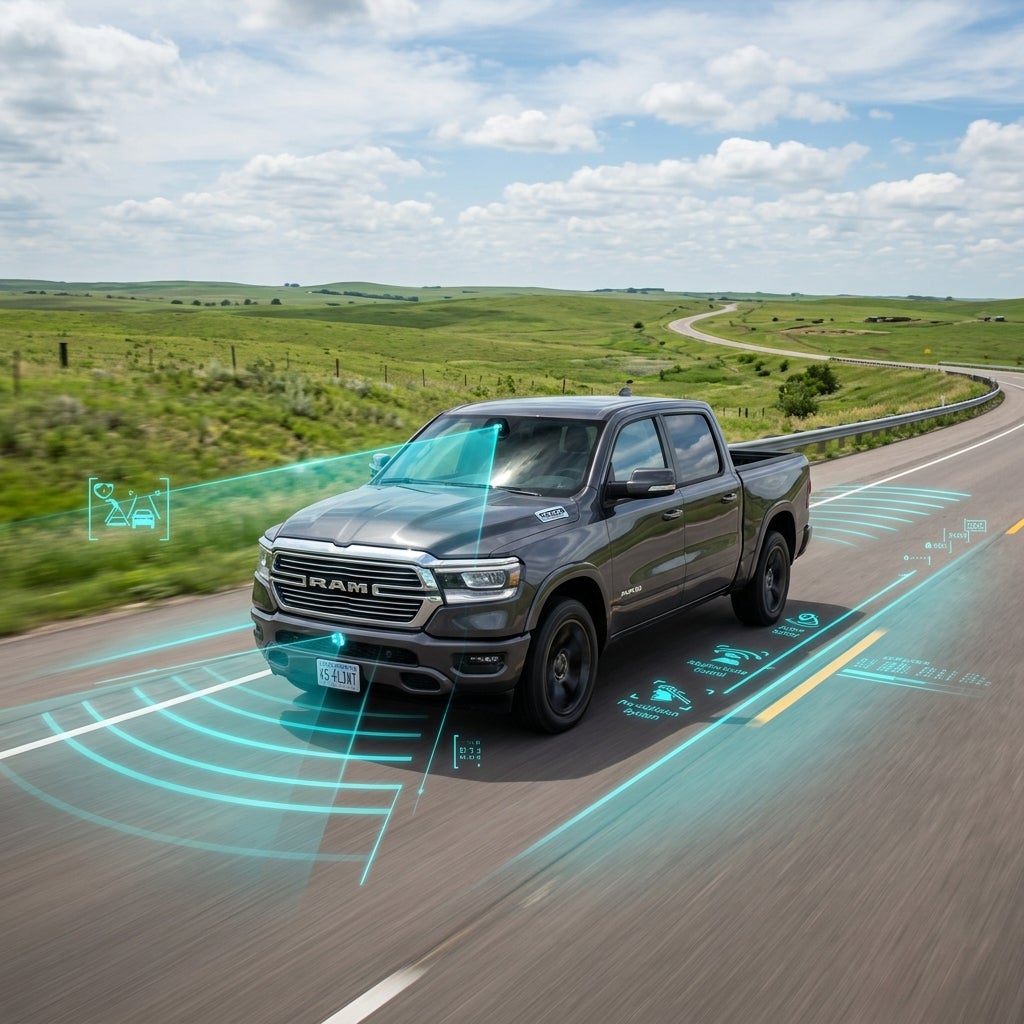
A grey RAM pickup truck driving on a rural road with futuristic cyan sensor graphics illustrating driver-assist features. (Representative image for illustration purposes only. Actual vehicle may vary based on trim and configuration.)

Expert Interview: What Crash Avoidance Systems Does the RAM 1500 Offer?

.hrizn-visual-root a { color: #566BA1; } .hrizn-visual-root a { color: inherit; } .hrizn-visual-root p { margin: 0 0 1em; } .hrizn-visual-root p:last-child { margin-bottom: 0; } @media (max-width: 640px) { .hrizn-visual-root { text-align: center !important; } .hrizn-visual-root a { display: block; width: 100%; max-width: 320px; margin-left: auto; margin-right: auto; box-sizing: border-box; } .hrizn-visual-root + a { margin-top: 8px; } } @media (max-width: 640px) { #hrizn-cols-1 { flex-direction: column !important; align-items: stretch !important; } #hrizn-cols-1 > .hrizn-col { flex: 1 1 100% !important; width: 100% !important; } } @media (max-width: 640px) { #hrizn-cols-2 { flex-direction: column !important; align-items: stretch !important; } #hrizn-cols-2 > .hrizn-col { flex: 1 1 100% !important; width: 100% !important; } } #hrizn-table-trim-safety-table table{width:100%;table-layout:auto;border-collapse:collapse;font-family:'Open Sans',sans-serif;font-size:0.9rem} #hrizn-table-trim-safety-table th,#hrizn-table-trim-safety-table td{border:1px solid #e0e4ed;padding:8px;color:#595959;word-break:break-word;overflow-wrap:break-word} #hrizn-table-trim-safety-table th{background:#1a1a22;color:#ffffff;font-weight:700;font-size:14px;text-align:left;vertical-align:middle;padding:10px} #hrizn-table-trim-safety-table tr:nth-child(even) td{background:rgba(86,107,161,0.04)} #hrizn-table-trim-safety-table .tableWrapper{overflow-x:hidden} @media (max-width: 640px) { #hrizn-3cols-1 { flex-direction: column !important; align-items: stretch !important; } #hrizn-3cols-1 > .hrizn-col { flex: 1 1 100% !important; width: 100% !important; } } @media (max-width: 640px) { #hrizn-cols-3 { flex-direction: column !important; align-items: stretch !important; } #hrizn-cols-3 > .hrizn-col { flex: 1 1 100% !important; width: 100% !important; } } @media (max-width: 640px) { #hrizn-cols-4 { flex-direction: column !important; align-items: stretch !important; } #hrizn-cols-4 > .hrizn-col { flex: 1 1 100% !important; width: 100% !important; } } @media (max-width: 640px) { #hrizn-3cols-2 { flex-direction: column !important; align-items: stretch !important; } #hrizn-3cols-2 > .hrizn-col { flex: 1 1 100% !important; width: 100% !important; } } #hrizn-table-Ram-vs-Ford-table table{width:100%;table-layout:auto;border-collapse:collapse;font-family:'Open Sans',sans-serif;font-size:0.9rem} #hrizn-table-Ram-vs-Ford-table th,#hrizn-table-Ram-vs-Ford-table td{border:1px solid #e0e4ed;padding:8px;color:#595959;word-break:break-word;overflow-wrap:break-word} #hrizn-table-Ram-vs-Ford-table th{background:#1a1a22;color:#ffffff;font-weight:700;font-size:14px;text-align:left;vertical-align:middle;padding:10px} #hrizn-table-Ram-vs-Ford-table tr:nth-child(even) td{background:rgba(86,107,161,0.04)} #hrizn-table-Ram-vs-Ford-table .tableWrapper{overflow-x:hidden} @media (max-width: 640px) { #hrizn-cols-5 { flex-direction: column !important; align-items: stretch !important; } #hrizn-cols-5 > .hrizn-col { flex: 1 1 100% !important; width: 100% !important; } } @media (max-width: 640px) { #hrizn-cols-6 { flex-direction: column !important; align-items: stretch !important; } #hrizn-cols-6 > .hrizn-col { flex: 1 1 100% !important; width: 100% !important; } } @media (max-width: 640px) { #hrizn-3cols-3 { flex-direction: column !important; align-items: stretch !important; } #hrizn-3cols-3 > .hrizn-col { flex: 1 1 100% !important; width: 100% !important; } } @media (max-width: 640px) { #hrizn-cols-7 { flex-direction: column !important; align-items: stretch !important; } #hrizn-cols-7 > .hrizn-col { flex: 1 1 100% !important; width: 100% !important; } } @media (max-width: 640px) { #hrizn-cols-8 { flex-direction: column !important; align-items: stretch !important; } #hrizn-cols-8 > .hrizn-col { flex: 1 1 100% !important; width: 100% !important; } } Expert Interview: What Crash Avoidance Systems Does the 2021 Ram 1500 Offer? Key Takeaways & Executive Summary: The 2021 Ram 1500 stands as one of the most technologically sophisticated full-size pickup trucks on American roads today, engineered from the ground up to prevent accidents before they occur. Equipping an array of cutting-edge active crash avoidance technologies—including Forward Collision Warning with Active Braking, Adaptive Cruise Control with Stop and Go, LaneSense Lane Departure Warning Plus, Blind Spot Monitoring with Rear Cross Path and Trailer Detection, and Parallel/Perpendicular Park Assist—the 2021 Ram 1500 transforms full-size truck safety. In this comprehensive, in-depth Q&A session, Valor CDJR Service Director Mike Hogg brings two decades of hands-on automotive service experience in Junction City, KS, to analyze how these complex sensor suites operate in real-world Midwestern driving conditions, how they achieve top industry safety honors, and what local owners need to know about system maintenance. When full-size light-duty pickups transitioned from simple workhorses into primary family transportation, high-tech vehicle safety shifted from a luxury feature to an absolute necessity. Navigating Kansas highways like I-70, tackling severe weather conditions across Geary and Riley counties, or maneuvering a heavily loaded trailer through tight job sites demands equipment that keeps eyes on every angle of the vehicle. To help truck buyers and current owners evaluate the active crash avoidance technology inside the 2021 Ram 1500, we sat down in the Valor CDJR service center with Service Director Mike Hogg. Throughout this interview, Mike provides clear, technical, and practical insights into how these sophisticated radar, camera, and sonar systems function, how they hold up over time, and why they give Ram drivers a distinct safety advantage. Explore Pre-Owned Ram 1500 Inventory Meet Mike Hogg: 20 Years of Truck Service Expertise at Valor CDJR Interviewer: Welcome, Mike. Thanks for taking the time out of your busy morning in the shop to break down the active safety architecture on the 2021 Ram 1500. Before we jump into radar modules and automatic emergency braking, could you share a bit about your background here in Junction City? Mike Hogg: Thanks for having me. I've been working in automotive service for over 20 years right here at Valor CDJR in Junction City, Kansas. Over two decades, I’ve seen pickup trucks evolve in ways most people couldn't have imagined back when I started as a technician. We used to focus almost entirely on mechanical durability—transmissions, solid rear axles, leaf springs, and iron block V8s. While mechanical reliability is still the foundation, modern trucks are essentially sophisticated supercomputers on wheels. Living and working near Fort Riley, Manhattan, and surrounding agricultural communities, our team sees how local truck owners put their Ram 1500s to work. They’re hauling heavy farm equipment, towing livestock trailers down gravel country roads, commuting in heavy winter storms along I-70, and driving their families on cross-country road trips. When Ram redesigned the 1500 for this fifth generation and rolled out the expanded 2021 safety suites, it represented a major milestone in crash avoidance technology. Mike Hogg: My priority as Service Director isn't just fixing vehicles when something breaks—it's helping our customers understand how these complex safety systems protect them every single day. When a camera or radar module prevents a front-end crash on Highway 77, that’s technology saving real lives right here in our community. That's why understanding how these crash avoidance features work, how to operate them, and how to keep them properly calibrated is so vital for truck owners. Q: What safety features come standard on the 2021 Ram 1500, and what systems are optional? Interviewer: Truck buyers often get confused by trim levels and option packages when shopping for safety equipment. What active and passive safety features come standard across the 2021 Ram 1500 trim lineup, and how do buyers get access to advanced crash avoidance tech? Mike Hogg: That is easily one of the most common questions our sales and service teams answer. Ram structured the 2021 model year so that every single truck—from the entry-level Tradesman up to the luxurious Limited and high-performance TRX—includes a robust baseline foundation of structural passive safety and fundamental active safety controls. Every 2021 Ram 1500 comes standard with six multi-stage advanced airbags, Electronic Stability Control (ESC) with Roll Mitigation, Traction Control, Trailer Sway Control, Hill Start Assist, Ready-Alert Braking, and Rain Brake Support. Ready-Alert Braking is a clever system people often don't realize they have: when you quickly lift your foot off the accelerator, the system anticipates emergency braking and pre-pressures the brake calipers against the rotors to reduce stopping distance by crucial milliseconds. Mike Hogg: Now, when we step into advanced active crash avoidance —systems that actively monitor radar frequencies and camera feeds to steer or brake autonomously—those are categorized into option packages or included standard on higher trims: • Tradesman & Big Horn / Lone Star: Standard baseline safety. The Safety Group package is available, adding Forward Collision Warning with Active Braking, LaneSense Lane Departure Warning Plus, and auto-dimming rearview mirrors. • Laramie & Rebel: Standard rear park sensors and available Advanced Safety Group, which unlocks 360-degree Surround View Camera, Adaptive Cruise Control with Stop & Go, Parallel and Perpendicular Park Assist, and Pedestrian Emergency Braking. • Limited Longhorn & Limited: Advanced driver assist features like Blind Spot Monitoring with Rear Cross Path and Trailer Detection become standard, with optional packages adding full semi-autonomous park assist and head-up display tech. 2021 Ram 1500 Trim Level Standard Safety Equipment Available Crash Avoidance Packages Tradesman 6 Airbags, ESC, Ready-Alert Braking, ParkView Backup Camera Level 1 Safety Group (FCW, LaneSense) Big Horn / Lone Star Standard Airbags, ESC, Brake Assist, ParkView Camera Safety Group, Blind Spot & Cross Path Detection Laramie / Rebel ParkSense Front/Rear, LED Lighting, ParkView Camera Advanced Safety Group (Adaptive Cruise, 360 Camera, Park Assist) Limited Longhorn Premium LED Lighting, ParkSense, Rain-Sensing Wipers Advanced Safety Group, Trailer Tow Group Limited Blind Spot Monitoring with Trailer Detection, Full LED Headlights Advanced Safety Group, Head-Up Display Package Q: How do Forward Collision Warning and Active Braking work on Kansas highways around Junction City? Interviewer: Let's dive deeper into specific active technologies. Forward Collision Warning with Active Braking is headline tech for modern vehicles. How does this system function sensor-wise when a driver is navigating high-speed highways like I-70 or Highway 77 around Junction City? Mike Hogg: Forward Collision Warning with Active Braking relies on sensor fusion. Ram combines long-range 77 GHz radar mounted lower behind the front fascia with a high-definition optical camera mounted near the rearview mirror inside the windshield header. The radar measures distance and relative velocity of objects ahead, while the camera classifies targets like cars, semi-trucks, and pedestrians. Mike Hogg: On high-speed corridors like I-70 between Junction City and Manhattan, traffic flow can suddenly drop from 75 mph to a dead stop due to highway construction, agricultural transport, or abrupt weather changes. The system constantly calculates your stopping distance based on current truck speed, weight, and distance to the vehicle ahead. Mike Hogg: If the vehicle ahead slows down rapidly, the system operates in three staged escalation steps: 1. Visual & Audible Warnings: A bright red 'BRAKE!' notification flashes on the digital gauge cluster accompanied by rapid warning beeps. 2. Tactile Brake Pulse: If the driver doesn't react immediately, the system delivers a quick haptic brake jolt to snap the driver's attention back to the road. 3. Active Emergency Braking: If no collision-avoidance action is taken, the system automatically applies maximum braking power through the ABS hydraulic module to bring the truck to a complete stop or drastically reduce impact velocity. Mike Hogg: I had a local farm client come into our service center last winter who told me point-blank that this system saved his truck. He was driving east toward Abilene during early morning fog when a deer jumped onto the highway, causing the SUV in front of him to slam on its brakes. Before he even visually registered the brake lights through the thick fog, his 2021 Ram 1500's millimeter-wave radar detected the rapid deceleration, alerted him, and began applying brake force. He avoided hitting the SUV by just a couple of feet. Stories like that prove these aren't just fancy marketing features—they are functional safety nets. Q: What headlights are required for the 2021 Ram 1500 Top Safety Pick rating? Interviewer: The Insurance Institute for Highway Safety (IIHS) dramatically tightened headlight evaluation criteria for earning coveted Top Safety Pick status. What specific headlight configurations are required on the 2021 Ram 1500 to qualify for this top rating, and how do they perform in dark, rural Kansas driving conditions? Mike Hogg: That headlight requirement is an crucial detail that many truck shoppers miss. In past years, auto safety ratings were based almost entirely on crash structures. But the IIHS recognized that nearly half of all fatal crashes occur at night, even though night driving accounts for only a fraction of total miles driven. To earn a 2021 IIHS Top Safety Pick rating, a vehicle must offer 'Good' or 'Acceptable' rated headlights across designated trim configurations. On the 2021 Ram 1500, Ram offers three distinct front headlight systems: 1. Base Halogen Reflectors: Found on base Tradesman and Big Horn models. While adequate, they earned 'Marginal' scores in IIHS glare and illumination distance tests. 2. LED Reflector Headlamps: Available on mid-level trims, offering clean white spectrum output and improved lateral roadway illumination. 3. Premium LED Projector Headlamps with Adaptive Front-Lighting System (AFS) & Auto High Beams: Standard on Limited and available on Longhorn/Laramie. This is the top-tier system that earned the IIHS 'Good' rating. The AFS system actually swivels the projector beam up to 15 degrees into turns based on steering wheel angle, illuminating dark curves along unlit rural roads around Geary County before you enter the turn. Schedule a Lighting & Safety Inspection with Service Q: How did the 2021 Ram 1500 perform in IIHS crashworthiness tests and NHTSA safety ratings? Interviewer: Beyond collision avoidance, how does the underlying structure of the 2021 Ram 1500 perform when an unavoidable impact takes place? What official scores did it earn from the IIHS and NHTSA? Mike Hogg: The 2021 Ram 1500 achieved benchmark results in both federal government crash testing and independent institute evaluations, earning a 5-Star Overall Safety Rating from the National Highway Traffic Safety Administration (NHTSA) on Crew Cab models, alongside an IIHS Top Safety Pick award when equipped with optional front crash prevention and specific LED projector headlights. In IIHS structural crashworthiness evaluation, the 2021 Ram 1500 achieved the highest possible rating of 'Good' across all six core crash tests: • Driver-side Small Overlap Front • Passenger-side Small Overlap Front • Moderate Overlap Front • Side Impact Evaluation • Roof Strength Test (handling over 4x the truck's total weight) • Head Restraints & Seats for rear-end whip protection. Mike Hogg: What makes these scores so impressive from a technician's viewpoint is the frame architecture. Ram built this chassis using 98% high-strength steel. It features patented splay-out front frame-rail tech that directs energy outwards away from the passenger cabin during a offset frontal crash. Combining an unyielding safety cage with soft crash-avoidance intervention gives drivers the best of both worlds. Q: How does the 2021 Ram 1500 compare to the 2021 Ford F-150 in safety technology? Interviewer: The light-duty truck market in Kansas is fiercely competitive, especially between Ram and Ford. How does the active safety tech on the 2021 Ram 1500 stack up directly against the 2021 Ford F-150 with Ford Co-Pilot360? Mike Hogg: Both trucks stepped up their game significantly for the 2021 model year, but Ram designed its driver assist architecture with different driver feedback, display integration, and trailer setup efficiency. System Integration & Displays: Ram's available 12-inch Uconnect touchscreen and high-resolution driver information cluster provide cleaner, larger visual representations of surrounding traffic. When Adaptive Cruise or Blind Spot Monitoring is active, Ram gives clearer distance iconography. Automatic Trailer Length Sensing: The 2021 Ram 1500 automatically calculates the length of your trailer as you make a few standard street turns, adjusting blind-spot zones instantly without requiring manual tape measurements typed into a screen. Ride Stability during Braking: Ram’s exclusive multi-link rear coil spring suspension (or available active four-corner air suspension) prevents rear axle chatter and nose-dive during emergency hard braking events far better than traditional leaf-spring setups on the F-150. Safety Feature Comparison 2021 Ram 1500 2021 Ford F-150 Trailer Blind Spot Calibration Automatic length detection via radar Manual trailer dimension entry Rear Suspension Stability 5-Link Coil or 4-Corner Air Suspension Standard Leaf Spring Setup IIHS Top Safety Pick Status Earned (Select Trims w/ LED Projectors) Earned (Select Trims w/ Co-Pilot360) Park Assist Capability Parallel & Perpendicular with Autonomous Braking Active Park Assist 2.0 (Optional) Adaptive Lighting (AFS) 15-Degree Dynamic Swivel Projectors Dynamic Bending Headlamps (High Trims) Q: How does Trailer Blind Spot Detection assist drivers towing around Riley County and Manhattan? Interviewer: Towing is a daily reality for truck owners in Kansas, whether hauling boats to Milford Lake or cattle trailers through Riley County. How does Ram’s specialized Trailer Blind Spot Detection function when a trailer is hitched? Mike Hogg: Traditional blind spot systems are practically useless when you hook up a trailer because the trailer body blocks standard radar sensors, causing constant false alarms. Ram solved this with dual radar sensors housed directly inside the rear taillight assemblies. When you connect a trailer's 7-pin wiring harness, the Ram 1500 automatically prompts you on the dash screen. As you drive down the road and complete a couple of normal 90-degree street turns, the radar system automatically calculates the exact length of the trailer—up to 39.5 feet—extending your blind spot detection zone all the way to the back of your load. Mike Hogg: Coupled with Rear Cross Path Detection, this system is a game-changer when backing out of tight parking spaces or farm supply lanes in Manhattan. The radar scans 90 degrees left and right behind the truck bumper to alert you of incoming cross-traffic before you can physically see around adjacent parked vehicles. Get an Instant Trade-In Evaluation for Your Current Truck Q: Are there any safety recalls on the 2021 Ram 1500 that owners should know about? Interviewer: Transparency is key when dealing with pre-owned trucks. Are there any notable factory safety recalls or Technical Service Bulletins (TSBs) on the 2021 Ram 1500, and how does Valor CDJR handle them? Mike Hogg: I always encourage total transparency when talking about recalls. No manufacturer is immune to technical bulletins, but what matters is taking care of the customer quickly and correctly using genuine parts. For the 2021 Ram 1500, there were a few minor safety recalls and service campaigns issued by Stellantis depending on build dates: • Rearview Camera Software Update: A firmware bug in certain Uconnect radio software versions caused the backup image to occasionally freeze or display a blank screen. This is resolved via a simple factory software flash in our service department. • Windshield Wiper Arm Nut Torque: Certain early 2021 builds required checking wiper arm nut tightness to prevent slipping during heavy snowfall or rain. • Trailer Brake Control Module Software: Select models equipped with factory trailer brake controllers received an updated flash to ensure flawless electronic communication with heavy electric trailer brakes. Mike Hogg: Here at Valor CDJR, anytime a Ram 1500 pulls into our service bay—or when someone considers purchasing a certified pre-owned truck from our lot—we run a comprehensive VIN check through the official OEM database. All recall repairs are performed 100% free of charge to the vehicle owner using genuine Mopar factory parts. If you're unsure if your truck has open safety recalls, you can always visit our Parts Department or drop by for a quick check. Q: Is the 2021 Ram 1500 expensive to insure compared to other light-duty trucks? Interviewer: Owners are always looking at the total cost of ownership. Does the advanced crash avoidance technology on the 2021 Ram 1500 lower auto insurance premiums, or do expensive sensors make collision repairs pricier? Mike Hogg: It's a balance, but overall, high crashworthiness scores and active collision prevention work strongly in favor of the policy holder. Driver-Assist Discounts: Most major auto insurance carriers offer specific policy discounts for trucks equipped with Forward Collision Warning, Automatic Emergency Braking, and Lane Departure Warning. These systems significantly decrease statistically probability of rear-end collisions. Sensor Calibration & OEM Standards: While replacing a windshield or front bumper with embedded ADAS radar requires specialized digital recalibration, utilizing certified repair facilities like Valor CDJR ensures repairs adhere strictly to factory specifications, preserving maximum resale value. Q: How do LaneSense and Park Assist enhance everyday driving safety? Interviewer: Let's talk about daily convenience and low-speed safety. How do LaneSense Lane Departure Warning Plus and Parallel/Perpendicular Park Assist reduce driver fatigue and prevent minor parking lot bumps? Mike Hogg: LaneSense Lane Departure Warning Plus uses the windshield camera to track lane markings on paved roads. If you start drifting out of your lane without signaling—say, on a long drive back from Topeka—it provides a subtle haptic torque feedback through the Electric Power Steering wheel to guide you back toward the center of your lane. If drift continues, it visually alerts you on the gauge display. Mike Hogg: Parking a full-size truck in crowded spaces like downtown Junction City or shopping centers can be stressful. The available Parallel and Perpendicular Park Assist system takes control of the steering wheel while guiding you via on-screen prompts when to shift gears, apply throttle, and brake. Combine that with the 360-Degree Surround View Camera, and parking a half-ton pickup becomes as easy as driving a compact sedan. Contact Us for Financing Information Schedule Your 2021 Ram 1500 Safety Check or Test Drive at Valor CDJR Mike Hogg: Whether you currently own a 2021 Ram 1500 and want your active safety systems inspected, calibrated, or serviced, or you are looking to purchase a reliable, safety-focused truck for your family, our expert team at Valor CDJR is here to serve you. As a factory-authorized dealer in Junction City, KS, our service department is equipped with factory ADAS calibration targets, diagnostic tools, and certified Mopar technicians trained specifically on Ram sensor architecture. We invite you to stop by our dealership located at 1825 Goldenbelt Blvd in Junction City, KS. Take a test drive to experience Forward Collision Warning, Adaptive Cruise Control, and 360-degree camera systems firsthand. You can Get Directions to Valor CDJR online, or Call us at (785) 238-5114 to speak directly with our team today. Schedule Service via Online Scheduler Browse New Ram Inventory Looking for quick service or commercial trucks? Check out our quick service options at Express Lane or explore heavy-duty fleet solutions in our Commercial Vehicle Inventory.

Grey pickup truck towing a white Imagine travel trailer along a winding road through rolling green hills. (Representative image for illustration purposes only. Actual vehicle may vary based on trim and configuration.)

Mastering Heavy Hauls: How the 2021 RAM 1500 Trailer Brake Controller Keeps You in Control

.hrizn-visual-root a { color: #566BA1; } .hrizn-visual-root a { color: inherit; } .hrizn-visual-root p { margin: 0 0 1em; } .hrizn-visual-root p:last-child { margin-bottom: 0; } @media (max-width: 640px) { .hrizn-visual-root { text-align: center !important; } .hrizn-visual-root a { display: block; width: 100%; max-width: 320px; margin-left: auto; margin-right: auto; box-sizing: border-box; } .hrizn-visual-root + a { margin-top: 8px; } } @media (max-width: 640px) { #hrizn-cols-1 { flex-direction: column !important; align-items: stretch !important; } #hrizn-cols-1 > .hrizn-col { flex: 1 1 100% !important; width: 100% !important; } } @media (max-width: 640px) { #hrizn-cols-2 { flex-direction: column !important; align-items: stretch !important; } #hrizn-cols-2 > .hrizn-col { flex: 1 1 100% !important; width: 100% !important; } } @media (max-width: 640px) { #hrizn-3cols-1 { flex-direction: column !important; align-items: stretch !important; } #hrizn-3cols-1 > .hrizn-col { flex: 1 1 100% !important; width: 100% !important; } } @media (max-width: 640px) { #hrizn-cols-3 { flex-direction: column !important; align-items: stretch !important; } #hrizn-cols-3 > .hrizn-col { flex: 1 1 100% !important; width: 100% !important; } } @media (max-width: 640px) { #hrizn-cols-4 { flex-direction: column !important; align-items: stretch !important; } #hrizn-cols-4 > .hrizn-col { flex: 1 1 100% !important; width: 100% !important; } } @media (max-width: 640px) { #hrizn-3cols-2 { flex-direction: column !important; align-items: stretch !important; } #hrizn-3cols-2 > .hrizn-col { flex: 1 1 100% !important; width: 100% !important; } } @media (max-width: 640px) { #hrizn-cols-5 { flex-direction: column !important; align-items: stretch !important; } #hrizn-cols-5 > .hrizn-col { flex: 1 1 100% !important; width: 100% !important; } } Mastering Heavy Hauls: How the 2021 Ram 1500 Trailer Brake Controller Keeps You in Control Towing across the rolling landscapes of the Flint Hills or heading out for a weekend at Milford Lake requires more than just raw horsepower; it demands total, unyielding control over your rig. When you are pulling a multi-ton travel trailer, a heavy boat, or a loaded flatbed utility trailer behind your 2021 Ram 1500, stopping safely is just as critical as moving forward. This is where the Integrated Trailer Brake Controller (ITBC) steps in. Far from being a simple, passive add-on, this sophisticated system acts as the primary communication link between your truck's advanced braking architecture and your trailer's electronic brakes. Rather than forcing your truck's brakes to bear the brunt of stopping both vehicles, the ITBC orchestrates a synchronized braking effort that makes towing feel smooth, predictable, and remarkably stress-free. For Ram truck owners in Junction City, KS, and the surrounding Manhattan areas, mastering this technology is key to safe driving. The Flint Hills are famous for their sudden, sweeping elevation changes, and navigating these grades with a massive load can quickly turn hazardous without properly synchronized braking. The 2021 Ram 1500’s optional factory trailer brake controller is neatly integrated into the lower dashboard, just below the climate controls, placing tactile control right at your fingertips. By seamlessly linking the truck's hydraulic brake pressure and deceleration sensors with the trailer's electric brakes, this system ensures that when you tap the pedal, your trailer slows down in perfect harmony with your truck, preventing the trailer from pushing against the tow vehicle or jackknifing. Whether you are a seasoned towing veteran or a newcomer preparing to hook up your first camper, understanding the inner workings of this system is essential. From its foundational electronic programming to real-world adjustment techniques, the 2021 Ram 1500 trailer brake controller is engineered to provide peace of mind on every journey. Let's dive deep into the mechanics, calibration, and optimization of this vital towing tool, ensuring that your next trek down I-70 is as secure as possible. Is the 2021 Ram 1500’s Trailer Brake Controller Proportional or Time-Delay? When evaluating trailer brake controllers, the most critical technical distinction lies in how they apply stopping power. We are proud to confirm that the 2021 Ram 1500 features a fully proportional integrated trailer brake controller. In the world of towing, a proportional system is the common benchmark. It uses internal inertia sensors (accelerometers) and monitors the truck's hydraulic brake pressure to measure exactly how hard the tow vehicle is decelerating. It then instantly applies a matching, proportional amount of braking voltage to the trailer's brakes. This means that if you gently tap your truck's brakes while approaching a stoplight in Riley County, the trailer will apply light, gentle braking. If you must slam on the brakes in an emergency on the highway, the controller sends maximum power to the trailer instantly, ensuring both vehicles stop in a straight, controlled line. It creates a unified, single-vehicle braking feel that minimizes stress on your truck's rotors and pads. In contrast, aftermarket systems often use time-delay technology. Time-delay controllers do not sense how hard you are braking; instead, they apply a pre-set amount of braking power that increases over a predetermined period whenever you press the brake pedal. This means if you brake gently, the trailer might still apply heavy, jerky stopping force after a few seconds, leading to premature wear and a highly uncomfortable 'tugging' sensation behind your truck. Conversely, in a sudden emergency, a time-delay system will not deliver immediate full power, potentially increasing your stopping distance when you need it most. The Ram's proportional system completely eliminates this lag, adapting dynamically to real-time road conditions. This is particularly beneficial when navigating the winding, hilly terrain of Kansas, where continuous, smooth adjustment is the difference between a relaxing drive and a white-knuckled ordeal. How Does the Trailer Brake Controller Work on the 2021 Ram 1500 in Real-World Towing? In practice, the integrated trailer brake controller functions as an intelligent translator. When you connect your trailer's 7-pin wiring harness to the bumper of your 2021 Ram 1500, the truck instantly recognizes the connection and begins communicating with the trailer's electric or electric-over-hydraulic (EOH) braking systems. As you drive, the truck's central computer monitors variables such as speed, brake pedal force, and stability control data. The moment you apply pressure to the brake pedal, the controller sends an electrical current down the dedicated brake line in the 7-pin connector. This current activates the electromagnets inside the trailer’s brake drums, which pull against the spinning armature, forcing the brake shoes outward against the drum to slow the trailer down. This happens in milliseconds, ensuring that the trailer slows down concurrently with the truck. Beyond this automated braking sequence, the physical interface on the dashboard gives you complete manual control when needed. The controller features a manual override slider—two pinch-style tabs that you can squeeze together with your fingers. Squeezing this slider applies the trailer brakes independently of the truck's brakes. This is an incredibly useful safety feature; if you feel your trailer beginning to sway or fish-tail due to a sudden gust of Kansas wind, gently squeezing the manual slider will immediately apply the trailer's brakes, pulling the trailer back into a straight line behind the truck. The dashboard cluster also provides instant visual feedback, showing a dedicated trailer brake menu that displays the output voltage and gain settings in real-time, keeping you fully informed of your system's status as you cruise through Junction City. To ensure your vehicle's physical connections are secure before a big haul, check out our comprehensive Used Vehicle Listings or explore brand-new configurations in our New Vehicle Listings to see models already equipped with this state-of-the-art tech. This real-world integration ensures that whether you're climbing up steep highway ramps or descending into valleys, the trailer remains a cooperative extension of your truck, rather than an unpredictable weight pushing from behind. What Does the Gain Setting on the Ram 1500 Trailer Brake Controller Do? The 'Gain' setting is the heart of customizing your Ram 1500's towing dynamics. Think of the gain as a volume knob for your trailer's brakes—it controls the maximum amount of electrical current (or voltage) sent to the trailer brakes when you step on the truck's brake pedal. A higher gain setting means the trailer brakes will apply more stopping power, while a lower gain setting reduces the braking force. Because trailers vary wildly in weight—from a lightweight, empty single-axle utility trailer to a dual-axle 5th wheel camper loaded with water, gear, and supplies—a single static braking profile simply won't work. Adjusting the gain ensures that your trailer always contributes its fair share of stopping power without locking its tires or causing the truck's brakes to overheat. It allows you to dial in the perfect balance of stopping power for whatever load you are pulling. If your gain is set too low, the trailer's brakes won't have enough power to slow its weight, forcing your Ram 1500 to do all the work, which rapidly accelerates brake wear and increases your stopping distance. If the gain is set too high, the trailer's brakes will grab too aggressively, potentially locking up the tires, flat-spotting your rubber, and causing a highly unstable towing experience. Our dedicated service department is always on hand to help you master these settings. If you ever feel like your brakes aren't responding as they should, or if you need an inspection before a long road trip, don't hesitate to utilize our online Service Scheduler to book an appointment with our master technicians. Schedule Towing Inspection What Is the Correct Way to Set the Initial Gain on a Ram 1500 Trailer Brake Controller? Step 1: Prep & Find an Open Area Before making any adjustments, ensure your trailer is fully loaded to its typical towing weight, as empty versus loaded weights require completely different gain settings. Connect the 7-pin harness and verify that all lights are functioning. Find a large, open, and flat paved area with zero traffic—such as an empty parking lot or a quiet, level rural road near Junction City. This allows you to perform calibration maneuvers safely without worrying about surrounding vehicles. Step 2: Perform the Calibration Test With your Ram 1500 in gear, accelerate slowly to a steady speed of 20 to 25 mph. Once you reach this speed, let off the accelerator pedal completely. Using only your fingers, gently squeeze the manual slider on your integrated trailer brake controller on the dashboard. Do not press the truck's brake pedal. The trailer brakes should engage, slowing both the truck and the trailer to a gentle stop. Step 3: Adjust Until Lockup, Then Back Off If the trailer brakes do not slow the vehicle, increase the gain using the buttons next to the slider and try again. Repeat this process, gradually increasing the gain, until you feel the trailer tires begin to lock up or skid slightly. Once you find that lockup point, immediately decrease the gain setting by 0.5 units. This ensures you have the absolute maximum stopping power available without the risk of skidding during an emergency stop. How Do You Adjust the Integrated Trailer Brake Controller on a 2021 Ram 1500 for Different Trailers? The 2021 Ram 1500’s towing capability is further enhanced by its seamless integration with the Uconnect infotainment system. Unlike older trucks where you had to rely solely on physical knobs, the Ram allows you to program specific trailer profiles directly through your touchscreen display. This is critical because different trailers utilize different braking technologies. Some trailers feature standard electric drum brakes, while others—particularly larger boat trailers or high-end RVs—use Electric-over-Hydraulic (EOH) systems. EOH systems use an electric pump to drive hydraulic fluid to disc or drum brakes, which requires a completely different electrical voltage profile from the controller to operate smoothly and prevent lag. If you try to run an EOH trailer on a standard electric drum profile, you may experience delayed braking or erratic performance. To configure these settings, turn your truck's ignition to 'On' or run the engine, then navigate to the Uconnect screen. Select the 'Settings' menu, scroll down to 'Trailer', and choose the specific trailer profile you wish to edit. Here, you can select the trailer type and, crucially, the brake type: Light Electric, Heavy Electric, or Electric-Over-Hydraulic. Selecting the correct type changes how the ITBC pulses and delivers voltage. For example, EOH systems require a steady, sustained voltage signal to keep the hydraulic pump primed, whereas standard electric brakes utilize rapid, variable pulses. By matching these settings to your physical trailer, you ensure optimal braking response, preventing jerkiness and protecting your trailer’s braking components from electrical strain, making every trip through Riley County incredibly safe. Can I Add a Trailer Brake Controller to a 2021 Ram 1500 That Didn’t Come with One? If you purchased a pre-owned 2021 Ram 1500 that didn't include the factory-installed integrated trailer brake controller, you might worry that you're limited to ugly, knee-bumping aftermarket boxes. Fortunately, you can absolutely retrofit the genuine OEM Mopar integrated trailer brake controller to your truck! This factory-style upgrade replaces the small storage cubby on your lower dash with the official dual-pinch manual slider and adjustment buttons, giving your truck the exact same clean, integrated look and high-end proportional functionality as a Ram that rolled off the assembly line with it. However, this is not a simple plug-and-play DIY project. While physically mounting the switch and the module behind the dash is relatively straightforward, the truck's central computer (the Body Control Module) will not recognize the new hardware automatically. To activate the system and enable it to communicate with your instrument cluster and Uconnect screen, the truck must be connected to a dealer diagnostic computer to flash the official sales code (typically code XHC). Our certified service technicians at Valor CDJR are fully equipped to perform this programming, ensuring your new controller integrates seamlessly with your truck's safety and display systems. To order the necessary Mopar parts, visit our Parts Department or get started by applying for financing on upgrades with our secure Get Pre-Approved form. Our team is ready to assist you in selecting the precise module for your truck's specific trim level and completing the installation quickly. Order OEM Mopar Parts Why Do Some Owners Prefer Aftermarket Trailer Brake Controllers Over the OEM Ram Controller? While the vast majority of Ram owners prefer the clean, factory-integrated look of the OEM controller, some high-volume towers occasionally consider aftermarket alternatives, such as units from Tekonsha, Curt, or Redarc. The primary argument in favor of aftermarket controllers is often initial cost or niche customization. For example, some advanced aftermarket units allow users to store multiple independent trailer profiles with completely custom braking curves that can be fine-tuned via smartphone apps. Additionally, if a truck was purchased without the factory wiring pre-installed, installing a basic aftermarket controller can sometimes be less intensive than performing a full OEM retrofit, which requires dealer-level software flashing. For budget-conscious towers, aftermarket models present a simple alternative. However, aftermarket controllers come with significant drawbacks that make the OEM controller the clear winner for most drivers. Aftermarket units must be physically mounted somewhere under or on top of the dashboard, which often results in exposed wiring, knee-bruising brackets, or damaged trim panels. They disrupt the beautiful, clean design of your Ram 1500’s cabin. More importantly, aftermarket controllers do not integrate with the Ram's safety systems. The factory OEM trailer brake controller works in perfect tandem with the Ram 1500's Electronic Stability Control, Trailer Sway Control, and anti-lock braking systems. If the truck detects a dangerous sway condition, it can automatically apply precise trailer braking to stabilize the vehicle—a level of safety and integration that aftermarket units simply cannot replicate. Is There a Recall or Technical Service Bulletin (TSB) for the Ram 1500 Trailer Brake Module? When it comes to safety-critical components like trailer brakes, staying informed about manufacturer recalls and Technical Service Bulletins (TSBs) is paramount. Over the years, Ram has issued a few specific TSBs and software updates addressing the trailer brake module on the 2021 Ram 1500. Some owners have reported occasional 'Trailer Brake Disconnected' warnings appearing on their digital instrument cluster, even when the trailer is securely plugged in. In many cases, this is not a mechanical failure of the trailer's brakes, but rather a software glitch within the truck's module that causes it to misinterpret minor voltage fluctuations as a physical disconnection. Fortunately, these issues are highly manageable. Ram has released targeted software updates that recalibrate the diagnostic sensitivity of the controller, effectively eliminating false disconnect warnings. In some instances, physical connectors behind the bumper may need to be inspected for moisture intrusion or corrosion, which can also trigger these alerts. If you suspect your truck is experiencing these issues, or if you want to verify whether your vehicle has any outstanding recall campaigns, our service team in Junction City is ready to help. Bring your truck in to our center, and our technicians can pull up your vehicle's VIN, perform a quick diagnostic scan, and flash the latest official software to your controller to restore flawless operation. Reach out to us or use our online Service Scheduler to keep your truck in peak condition and ensure total towing reliability. Safe Hauling Across the Flint Hills: A Pre-Trip Towing Checklist Step 1: Hitch & Safety Connections Ensure the coupler is completely locked onto the ball and secured with a safety pin. Cross the safety chains under the trailer tongue to create a cradle, attaching them securely to the truck's receiver. Ensure the emergency breakaway cable is clipped directly to the truck's frame, not wrapped around the safety chains or hitch ball. Step 2: Electrical & Brake Sync Plug in the 7-pin connector and verify that all running lights, brake lights, and turn signals are fully operational on both the truck and trailer. Start the engine and look at your Ram's digital cluster to confirm that the 'Trailer Connected' message is displayed and that no error codes or warning lights are present. Step 3: Gain & Road Verification Before hitting the highway or heading out to Milford Lake, perform a quick manual brake check at low speed. Squeeze the controller's manual slider to confirm the trailer brakes engage immediately. If you've changed your load since your last trip, re-calibrate your gain settings to match the new weight profile. Value Your Current Trade-In Get Your Ram 1500 Tow-Ready at Valor CDJR in Junction City At Valor CDJR, we are passionate about helping our customers tow with confidence, safety, and ease. Our state-of-the-art service facility in Junction City, KS, is staffed by factory-certified Chrysler, Dodge, Jeep, and Ram technicians who understand every nuance of your truck's complex electrical and mechanical systems. Whether you need a brand-new OEM integrated trailer brake controller installed and programmed, a diagnostic check on a finicky electrical connection, or a complete brake system inspection on both your truck and trailer, our team has the specialized tools and genuine Mopar parts to get the job done right the first time. We also make it easy to maintain your vehicle without disrupting your busy schedule. For quick oil changes, tire rotations, and multi-point inspections, feel free to stop by our convenient Express Lane —no appointment necessary. If you're managing a local business or agricultural operation in Riley County, explore our robust Commercial Vehicle Inventory to find heavy-duty haulers equipped with maximum trailering packages. No matter what your towing needs may be, we are dedicated to providing the expert advice, quality service, and friendly local hospitality you deserve. Our dealership is proud to serve the entire Junction City, Manhattan, and Fort Riley community, offering a trustworthy destination for all things Ram. Beyond installations, we are happy to walk you through your truck's towing menus, help you set up your trailer profiles, and demonstrate how to adjust your gain for different loads. We treat our customers like family, meaning we prioritize your safety on the road above all else. When you choose Valor CDJR, you're choosing a partner dedicated to keeping your truck performing at its absolute best, whether you're hauling hay across the Flint Hills or pulling your family camper to Milford Lake. Experience the difference that expert care and factory-authorized engineering can make for your vehicle's performance and longevity. Ready to Tow with Confidence? Schedule Your Ram Service or Upgrade Today Don't let trailer brake worries hold you back from your next big adventure or demanding job. Whether you need a software update for your 2021 Ram 1500's brake module, a brand-new OEM controller retrofitted, or a complete tow-readiness check, the expert team at Valor CDJR is here to help you hit the road with absolute peace of mind. Get Directions to Valor CDJR and visit our modern facility today, or Call us at (785) 238-5114 to speak directly with one of our friendly service advisors. You can also use our convenient online Service Scheduler to book your appointment in seconds. Let's make sure your Ram 1500 is fully equipped, perfectly calibrated, and ready for every haul! Schedule Your Service Now

A grey SUV drives along a winding asphalt road through rolling green hills during golden hour. (Representative image for illustration purposes only. Actual vehicle may vary based on trim and configuration.)

Getting Reliable Oil Changes in Manhattan, KS and Junction City: Keep Your Engine Running Strong in the Flint Hills

.hrizn-visual-root a { color: #566BA1; } .hrizn-visual-root a { color: inherit; } .hrizn-visual-root p { margin: 0 0 1em; } .hrizn-visual-root p:last-child { margin-bottom: 0; } @media (max-width: 640px) { .hrizn-visual-root { text-align: center !important; } .hrizn-visual-root a { display: block; width: 100%; max-width: 320px; margin-left: auto; margin-right: auto; box-sizing: border-box; } .hrizn-visual-root + a { margin-top: 8px; } } @media (max-width: 640px) { #hrizn-cols-1 { flex-direction: column !important; align-items: stretch !important; } #hrizn-cols-1 > .hrizn-col { flex: 1 1 100% !important; width: 100% !important; } } @media (max-width: 640px) { #hrizn-3cols-1 { flex-direction: column !important; align-items: stretch !important; } #hrizn-3cols-1 > .hrizn-col { flex: 1 1 100% !important; width: 100% !important; } } @media (max-width: 640px) { #hrizn-cols-2 { flex-direction: column !important; align-items: stretch !important; } #hrizn-cols-2 > .hrizn-col { flex: 1 1 100% !important; width: 100% !important; } } #hrizn-table-puck-tbl-5 table{width:100%;table-layout:auto;border-collapse:collapse;font-family:'Open Sans',sans-serif;font-size:0.9rem} #hrizn-table-puck-tbl-5 th,#hrizn-table-puck-tbl-5 td{border:1px solid #e0e4ed;padding:8px;color:#595959;word-break:break-word;overflow-wrap:break-word} #hrizn-table-puck-tbl-5 th{background:#eeeeee;color:#1a1a22;font-weight:700;font-size:14px;text-align:left;vertical-align:middle;padding:10px} #hrizn-table-puck-tbl-5 tr:nth-child(even) td{background:rgba(86,107,161,0.04)} #hrizn-table-puck-tbl-5 .tableWrapper{overflow-x:hidden} @media (max-width: 640px) { #hrizn-cols-3 { flex-direction: column !important; align-items: stretch !important; } #hrizn-cols-3 > .hrizn-col { flex: 1 1 100% !important; width: 100% !important; } } @media (max-width: 640px) { #hrizn-3cols-2 { flex-direction: column !important; align-items: stretch !important; } #hrizn-3cols-2 > .hrizn-col { flex: 1 1 100% !important; width: 100% !important; } } @media (max-width: 640px) { #hrizn-cols-4 { flex-direction: column !important; align-items: stretch !important; } #hrizn-cols-4 > .hrizn-col { flex: 1 1 100% !important; width: 100% !important; } } @media (max-width: 640px) { #hrizn-cols-5 { flex-direction: column !important; align-items: stretch !important; } #hrizn-cols-5 > .hrizn-col { flex: 1 1 100% !important; width: 100% !important; } } @media (max-width: 640px) { #hrizn-3cols-3 { flex-direction: column !important; align-items: stretch !important; } #hrizn-3cols-3 > .hrizn-col { flex: 1 1 100% !important; width: 100% !important; } } @media (max-width: 640px) { #hrizn-cols-6 { flex-direction: column !important; align-items: stretch !important; } #hrizn-cols-6 > .hrizn-col { flex: 1 1 100% !important; width: 100% !important; } } Getting Reliable Oil Changes in Manhattan, KS and Junction City: Keep Your Engine Running Strong in the Flint Hills Driving through the Flint Hills region presents a unique set of challenges for any vehicle. Whether you are commuting daily between Manhattan and Junction City on I-70, taking short trips across the Kansas State University campus, or navigating the demanding schedules of Fort Riley, your engine works under intense conditions. The rolling hills, seasonal gravel dust, and Kansas weather extremes—ranging from freezing sub-zero winters to blistering summer afternoons—mean your engine oil has to perform at its peak every single day. Regular oil changes are not just routine maintenance; they are the literal lifeblood of your vehicle's engine, preserving its longevity and performance. At Valor CDJR, located right off I-70 in Junction City, we understand the specific driving conditions that local motorists face. Our goal is to serve as your trusted regional automotive partner, offering clear, honest advice and professional care. We recognize that keeping your vehicle in peak condition is vital for your daily life, your budget, and your safety. In this comprehensive guide, we will answer the most pressing questions about engine lubrication, maintenance intervals, and local service options to help you make informed decisions for your car, truck, or SUV. What is the Difference Between Full Synthetic and Conventional Motor Oil for Kansas Driving? To understand which oil is right for your vehicle, it helps to examine how they are made. Conventional motor oil is refined directly from crude oil, containing natural impurities and molecules of varying sizes. While it provides adequate lubrication under normal driving conditions, it is highly susceptible to breaking down under extreme thermal stress. In contrast, full synthetic motor oil undergoes a complex chemical synthesis and purification process. This creates uniform molecular structures and allows chemical engineers to include highly advanced additive packages designed to prevent friction, resist oxidation, and eliminate deposit buildup. For drivers in Riley and Geary counties, this scientific difference translates directly into real-world protection. During hot Kansas summers, conventional oil can thin out rapidly, losing its ability to cushion vital engine components. Synthetic oil, however, maintains its viscosity and protective barrier even under intense heat. This protection is especially crucial if you are towing a trailer down I-70 or sitting in heavy stop-and-go traffic near Tuttle Creek Boulevard during peak hours. Winter weather in the Manhattan area presents the opposite challenge. Cold starts are incredibly harsh on an engine because conventional oil thickens in low temperatures, taking longer to flow from the oil pan to the top of the engine. During those critical seconds after a cold start, your engine components experience elevated friction and wear. Full synthetic oil is engineered to flow quickly at sub-zero temperatures, ensuring almost instantaneous lubrication and protection the moment you turn the key on a freezing January morning. Additionally, many modern turbocharged engines—common in both newer commuter cars and heavy-duty trucks—strictly require full synthetic oil. Turbochargers operate at extremely high speeds and temperatures; conventional oil can easily vaporize or leave behind carbon deposits (sludge) inside the turbo's delicate oil passages, leading to catastrophic component failures. Choosing synthetic is a smart investment in your vehicle's mechanical health. Why Are Synthetic Oil Changes More Expensive Than Conventional Ones? Advanced Chemical Refinement The upfront cost difference is primarily due to the expensive manufacturing and chemical processing required to create synthetic base oils. Generating uniform molecules and removing all natural impurities requires highly specialized refining equipment and costly additive chemicals, which naturally increases the wholesale price of the oil. Extended Service Intervals While conventional oil typically requires replacement every 3,000 to 5,000 miles, synthetic oil is engineered to maintain its protective qualities for 7,500 to even 10,000 miles under normal driving conditions. This means you will need fewer service visits throughout the year, saving you valuable time. Long-Term Financial Savings When you calculate the cost per mile, synthetic oil is often the more economical choice. By reducing the frequency of oil changes by half, you offset the higher per-visit cost. More importantly, the superior protection of synthetic oil helps prevent costly engine wear and parts failures down the road. Does Driving Short Distances Frequently Require More Frequent Oil Changes? It might seem counterintuitive, but vehicles that are driven only short distances often require more frequent oil changes than vehicles that regularly cruise down the highway. Automotive manufacturers define 'severe driving conditions' in a way that surprises many drivers. One of the primary indicators of severe service is making frequent short trips of less than five to ten miles, particularly in cold weather. Think about a typical day for a student or faculty member commuting to the Kansas State University campus, or a soldier stationed at Fort Riley driving short distances from their housing to their duty station. These quick trips often take less than ten minutes. In this short timeframe, the engine never actually reaches its optimal operating temperature. Why does this matter? When an engine runs, combustion byproducts like water vapor and unburned fuel seep past the piston rings and enter the crankcase, mixing with your oil. If you drive on the highway for 20 minutes or more, the engine oil heats up sufficiently to boil off these liquid contaminants, venting them safely through the PCV system. However, on short trips, the oil never gets hot enough. Instead, the moisture and fuel accumulate in the oil pan, diluting the lubricant and reacting chemically to form corrosive acids and thick, jelly-like engine sludge. Over time, this sludge blocks oil passages, starves critical components of lubrication, and accelerates engine wear. If your daily routine consists mostly of short, local trips around Manhattan, KS, we highly recommend following your vehicle's 'severe duty' maintenance schedule. This typically involves changing your oil and filter every 3,000 to 5,000 miles, or every six months, regardless of how few miles you have actually driven. To make this easy, you can use our Service Scheduler to keep your vehicle on a regular, protective maintenance cadence. Schedule Oil Change Online Where Can I Find My Vehicle's Oil Capacity and Correct Viscosity? Using the wrong oil viscosity or incorrect volume can lead to reduced fuel efficiency, increased wear, or even immediate engine damage. Fortunately, finding your vehicle's exact requirements is straightforward if you know where to look. Your absolute best resource is the original owner's manual, which contains a detailed specifications section. Here, you will find both the recommended oil viscosity (such as 0W-20, 5W-30, or 10W-30) and the total system capacity, which is typically measured in quarts. If you don't have the manual handy, you can also look under your vehicle's hood. Most manufacturers print the recommended oil weight directly on the engine's oil fill cap. Additionally, a emissions control or vehicle specification sticker is often located on the underside of the hood or near the radiator support, listing crucial fluid details. If you are doing a DIY oil change or want to double-check before buying supplies, you can contact our factory-certified Parts Department. Our team has direct access to manufacturer databases and can instantly pull up the exact specifications for your specific year, make, and model. Engine Type Typical Viscosity Average Capacity Recommended Type 4-Cylinder Commuter Engines (e.g., 2.0L, 2.4L) 0W-20 or 5W-20 4.5 - 5.5 Quarts Full Synthetic Mid-Size V6 / Turbo Engines (e.g., 3.6L Pentastar) 5W-20 or 5W-30 5.0 - 6.0 Quarts Synthetic Blend / Full Synthetic Full-Size V8 Truck Engines (e.g., 5.7L HEMI) 0W-20 or 5W-30 7.0 Quarts Full Synthetic Heavy-Duty Turbo Diesel Engines (e.g., 6.7L Cummins) 10W-30 or 15W-40 12.0 Quarts Heavy-Duty Diesel Synthetic Should I Get My Oil Changed at a Dealership or a Quick Lube Service Center? When it's time for an oil change, drivers in the Manhattan and Junction City area have two main choices: a national quick-lube franchise or a factory-authorized dealership service center like Valor CDJR. While quick-lube shops focus heavily on fast turnarounds and high volume, they often rely on entry-level, generalist technicians who work on dozens of different makes and models every day. This rapid-pace environment increases the risk of simple but costly mistakes, such as stripping the oil pan drain plug, using a generic or ill-fitting oil filter, or over/under-filling your engine's oil reservoir. A dealership service center, on the other hand, relies on factory-certified technicians who undergo continuous, brand-specific training. Our technicians understand the exact engineering, tolerances, and unique mechanical quirks of your Chrysler, Dodge, Jeep, Ram, or other major brand vehicle. We also use original equipment manufacturer (OEM) filters and fluids, ensuring your engine receives the precise replacement components it was designed to run on. If you want specialized care without the long wait, we offer a dedicated Express Lane designed for rapid, high-quality routine maintenance. What Are the Wait Times for a Quick Lube Shop Versus a Dealership Service Bay? The Quick-Lube 'In and Out' Model Quick-lube shops are built for rapid, assembly-line speed, aiming to get your vehicle out of the bay in 15 to 20 minutes. While this is highly convenient when you are in a rush, it means the technician has very little time to inspect your vehicle's overall health. Minor issues that are easily caught during a thorough inspection can easily go completely unnoticed. The Dealership's Multi-Point Inspection A standard dealership oil change might take slightly longer—usually 45 to 60 minutes. This extra time is spent performing a comprehensive multi-point safety inspection. Certified technicians check your brake pad wear, battery health, fluid levels, tire tread depth, suspension components, and drive belts, identifying minor issues before they become major breakdowns. Convenience and Comfort Amenities To make your stay enjoyable, dealerships invest in highly comfortable waiting lounges equipped with complimentary Wi-Fi, fresh coffee, clean workspaces, and charging areas. If you are on a tight schedule, you can take advantage of express service options or schedule your visit in advance to minimize waiting times. Is It More Expensive to Get an Oil Change at a Dealership Than at a Quick Lube Shop? There is a common misconception that dealership service departments are always significantly more expensive than independent quick-lube shops. In reality, pricing is highly competitive. A standard conventional oil change near Manhattan or Junction City may vary in price, and a full synthetic oil change may cost more depending on oil capacity and filter requirements. For current service pricing, please contact us or visit our service center. Additionally, service recommendations can vary by provider, and it is important to review any recommended maintenance to determine what is appropriate for your vehicle. At Valor CDJR, we pride ourselves on transparent, pressure-free service. We only recommend services that are genuinely necessary based on your manufacturer guidelines. While you are here, we can also help you look at options if you are considering a change, like looking at our current Used Vehicle Listings or doing a fast Trade In Evaluation to see what your current ride is worth. View Service & Maintenance Specials Why Do Some Drivers Prefer Dealership Service Departments for Oil Changes? For many vehicle owners, the preference for dealership service departments comes down to trust, accountability, and the long-term value of their vehicle. Dealerships maintain comprehensive digital records of every service visit, creating a documented maintenance history that can significantly boost your vehicle's resale value. When potential buyers see that a vehicle was consistently maintained by factory-trained specialists using genuine OEM parts, they feel far more confident in its mechanical integrity. Furthermore, if your vehicle is covered by an active manufacturer warranty or an extended service contract, having your maintenance completed at an authorized dealer ensures seamless compliance with all warranty terms. Certified technicians also check for any outstanding safety recalls or manufacturer software updates every time your vehicle is brought into the service bay, performing these vital updates free of charge. It is a level of comprehensive, proactive vehicle care that independent quick-lube shops simply cannot provide. Are There Major National Quick Lube Chains Located in Manhattan, KS? Yes, Manhattan, KS features several national quick-lube chains, primarily situated along high-traffic corridors like Tuttle Creek Boulevard, Seth Child Road, and Fort Riley Boulevard. Brands like Jiffy Lube, Valvoline Instant Oil Change, and Walmart Auto Care Centers are common options for drivers looking for a fast, drive-through service. These franchises are designed to get drivers back on the road rapidly, utilizing highly standardized processes to manage high daily car counts. While these national chains excel at basic convenience, they are rarely able to build a personalized, long-term relationship with you and your vehicle. Because of high staff turnover rates, you will rarely see the same technician twice. At Valor CDJR, we pride ourselves on our deep roots in the community. We focus on building authentic, long-term relationships, treating you like family every time you visit. Our team gets to know your driving habits, your vehicle's history, and your budget, ensuring personalized care tailored specifically to you. How Do You Safely Dispose of Used Motor Oil and Oil Filters in Riley or Geary County? Environmental Responsibility If you prefer to change your engine oil yourself, disposing of the waste fluids safely is extremely important. Just one gallon of used motor oil can contaminate up to one million gallons of fresh water if poured down a storm drain or onto the ground. Proper disposal is critical for keeping our local Kansas waterways clean. Riley County Facilities For residents in Manhattan, the Riley County Household Hazardous Waste (HHW) facility accepts used motor oil, filters, and other automotive fluids at no charge. Many local auto parts retailers also accept used oil for recycling, provided it is stored in clean, sealed containers and has not been mixed with other solvents. Geary County Resources If you live or work closer to Junction City, the Geary County Transfer Station offers designated drop-off options for hazardous materials, including used automotive fluids. Alternatively, when you bring your vehicle to Valor CDJR, we handle the proper disposal and recycling of all fluids and filters automatically. Schedule Your Next Certified Oil Change at Valor CDJR in Junction City Keep your vehicle running smoothly with professional, stress-free routine maintenance. At Valor CDJR, we combine deep local expertise, highly trained factory technicians, and premium OEM parts to provide superior care for your car, truck, or SUV. Whether you are driving a brand-new vehicle or maintaining a high-mileage commuter, we are here to help you protect your investment and travel the roads of Manhattan, Junction City, and Fort Riley with absolute confidence. To find our service center, you can easily Get Directions to Valor CDJR located at 1825 Goldenbelt Blvd, Junction City, KS 66441. Have a quick question about our services or need to check current bay availability? Feel free to Call us at (785) 238-5114 to speak directly with our friendly service advisory team. If you are in the market for an upgrade, you can also browse our latest New Vehicle Listings or explore our commercial solutions in our Commercial Vehicle Inventory. If you need financing for a major purchase or future maintenance, you can quickly Get Pre-Approved online today. Schedule Service Appointment Get Directions to Dealership

Three Stellantis vehicles—a red Ram truck, a grey Jeep Wrangler, and a white Chrysler Pacifica—parked by a lake. (Representative image for illustration purposes only. Actual vehicle may vary based on trim and configuration.)

Explore the New CDJR Cars, Trucks, and SUVs Driving Into Junction City and Manhattan

.hrizn-visual-root a { color: #566BA1; } .hrizn-visual-root a { color: inherit; } .hrizn-visual-root p { margin: 0 0 1em; } .hrizn-visual-root p:last-child { margin-bottom: 0; } @media (max-width: 640px) { .hrizn-visual-root { text-align: center !important; } .hrizn-visual-root a { display: block; width: 100%; max-width: 320px; margin-left: auto; margin-right: auto; box-sizing: border-box; } .hrizn-visual-root + a { margin-top: 8px; } } @media (max-width: 640px) { #hrizn-cols-1 { flex-direction: column !important; align-items: stretch !important; } #hrizn-cols-1 > .hrizn-col { flex: 1 1 100% !important; width: 100% !important; } } @media (max-width: 640px) { #hrizn-cols-2 { flex-direction: column !important; align-items: stretch !important; } #hrizn-cols-2 > .hrizn-col { flex: 1 1 100% !important; width: 100% !important; } } #hrizn-table-comp-table table{width:100%;table-layout:auto;border-collapse:collapse;font-family:'Open Sans',sans-serif;font-size:0.9rem} #hrizn-table-comp-table th,#hrizn-table-comp-table td{border:1px solid #eeeeee;padding:8px;color:#595959;word-break:break-word;overflow-wrap:break-word} #hrizn-table-comp-table th{background:#f5f5f5;color:#1a1a22;font-weight:700;font-size:15px;text-align:left;vertical-align:middle;padding:10px} #hrizn-table-comp-table tr:nth-child(even) td{background:rgba(86,107,161,0.04)} #hrizn-table-comp-table .tableWrapper{overflow-x:hidden} @media (max-width: 640px) { #hrizn-3cols-1 { flex-direction: column !important; align-items: stretch !important; } #hrizn-3cols-1 > .hrizn-col { flex: 1 1 100% !important; width: 100% !important; } } @media (max-width: 640px) { #hrizn-cols-3 { flex-direction: column !important; align-items: stretch !important; } #hrizn-cols-3 > .hrizn-col { flex: 1 1 100% !important; width: 100% !important; } } @media (max-width: 640px) { #hrizn-3cols-2 { flex-direction: column !important; align-items: stretch !important; } #hrizn-3cols-2 > .hrizn-col { flex: 1 1 100% !important; width: 100% !important; } } @media (max-width: 640px) { #hrizn-cols-4 { flex-direction: column !important; align-items: stretch !important; } #hrizn-cols-4 > .hrizn-col { flex: 1 1 100% !important; width: 100% !important; } } @media (max-width: 640px) { #hrizn-3cols-3 { flex-direction: column !important; align-items: stretch !important; } #hrizn-3cols-3 > .hrizn-col { flex: 1 1 100% !important; width: 100% !important; } } @media (max-width: 640px) { #hrizn-cols-5 { flex-direction: column !important; align-items: stretch !important; } #hrizn-cols-5 > .hrizn-col { flex: 1 1 100% !important; width: 100% !important; } } Explore the New CDJR Cars, Trucks, and SUVs Driving Into Junction City and Manhattan Welcome to a helpful resource of capability and performance in the heart of the Flint Hills. At Valor CDJR, located conveniently in Junction City, KS, we understand that living and working in northeastern Kansas demands a vehicle that is as versatile as the changing seasons. Whether you are navigating the daily commute between Manhattan and Fort Riley, managing a sprawling agricultural operation in Riley County, or planning weekend getaways to Milford Lake, our massive inventory of new Chrysler, Dodge, Jeep, and Ram vehicles is engineered to elevate every single mile of your journey. This summer, we invite you to explore a lineup that seamlessly blends rugged durability, refined luxury, and cutting-edge hybrid technology designed for our unique Kansas landscape. Our commitment at Valor CDJR goes far beyond merely showing you a brochure. We are here to serve as your trusted automotive resource, providing deep, practical insights into how these vehicles fit into your actual daily life. From the raw towing muscle of our redesigned Ram trucks to the zero-emission trail-riding capability of our Jeep 4xe plug-in hybrids, our goal is to match your specific lifestyle with a vehicle that feels custom-built for you. Explore our digital showroom, read through our detailed breakdowns, and feel free to Call us at (785) 238-5114 if you have any questions or want to schedule an immediate personalized walkaround. We believe that finding your next vehicle should be an exciting, transparent, and educational process. That is why we have crafted this comprehensive guide to answer the most common questions our customers ask when researching new CDJR models. From warranty coverages to real-world charging speeds and exact payload specifications, we have gathered all the vital data right here. Let us take a deep dive into what makes our current lineup the premier choice for drivers throughout Junction City, Manhattan, and the surrounding military and agricultural communities. Every brand under the CDJR umbrella brings a distinct personality to the road. Chrysler represents premium family utility and progressive engineering. Dodge satisfies the craving for performance, muscle-car heritage, and aggressive styling. Jeep unlocks boundless adventure and unparalleled off-road freedom, while Ram redefines what a modern light-duty or commercial workhorse can achieve. Together, they represent a versatile matrix of transportation solutions. Read on to see how these legendary brands are rewriting the rules of the road for Kansas drivers this year. What Is the Towing Capacity of the 2026 Ram 1500 for Kansas Farms and Lake Trips? For generations, Kansas farmers, contractors, and weekend outdoor enthusiasts have relied on the Ram 1500 to handle the heavy lifting. The highly anticipated 2026 Ram 1500 continues this legacy, introducing remarkable updates that elevate its utility to unprecedented heights. At the heart of this evolution is the introduction of the advanced Hurricane Inline-6 engine family. Replacing the traditional naturally aspirated V8 options, these 3.0-liter twin-turbocharged powerhouses deliver more horsepower, more torque, and greater efficiency, ensuring you never have to compromise when hauling agricultural equipment across Riley County or towing your premium pontoon boat out to Milford Lake for a hot summer weekend. When properly equipped, the 2026 Ram 1500 boasts a maximum towing capacity of up to 11,580 pounds and a maximum payload capacity of 2,300 pounds. This is made possible by a high-strength steel frame, an advanced thermal management system that keeps the twin-turbo Hurricane cool under load, and sophisticated trailering technologies. Drivers can select from multiple engine tunes, including the Standard Output Hurricane delivering 420 horsepower and 469 lb-ft of torque, or the High Output variant raising the stakes to a blistering 540 horsepower and 521 lb-ft of torque. This means ascending steep highway grades around the Flint Hills with a fully loaded trailer feels effortless and remarkably controlled. Beyond raw numbers, the 2026 Ram 1500 incorporates intelligent towing helpers designed to eliminate stress. The available Trailer Reverse Steering Control allows you to control your trailer's direction using a simple dashboard dial while the system handles the steering wheel inputs. Combined with the absolute crystal-clear views from the 360-degree Surround View Camera system and specialized trailer camera angles, hitching up and backing down narrow boat ramps or tight barn alleys has never been more straightforward or safer for solo operators. The Hurricane I6 engine represents a massive leap forward in powertrain design, delivering V8-beating torque early in the RPM band. This translates to instant throttle response when pulling heavy livestock trailers or flatbeds loaded with construction materials across northeastern Kansas. Which Truck Has a Better Ride Quality, the Ram or the F-150 on Rugged Kansas Roads? When comparing the daily driving experience of America's leading light-duty trucks, ride quality emerges as a major deciding factor. Kansas roads can be notoriously demanding—unforgiving gravel paths, deep potholes from seasonal temperature swings, and endless highway miles on I-70. While the Ford F-150 remains a highly capable vehicle, it continues to utilize a traditional rear leaf-spring suspension setup on most configurations. This design is highly functional for payload support but historically transmits more vibrations, skips, and harshness directly into the cabin when the truck bed is empty, leading to a stiffer, less settled ride during daily commutes. In stark contrast, the Ram 1500 features a class-exclusive link-coil rear suspension system as standard equipment. By replacing leaf springs with heavy-duty coil springs, Ram isolates the cabin from harsh road surfaces, offering a smooth, car-like ride quality that the F-150 may offer a different ride feel. For the ultimate in comfort, Ram also offers an available Active-Level Four-Corner Air Suspension. This advanced system automatically adjusts the truck's ride height to reduce aerodynamic drag on the highway, raises the vehicle for off-road ground clearance, and lowers it for easy entry and loading—all while maintaining a perfectly level load balance and plush ride comfort regardless of cargo weight. The difference becomes soon apparent during the commute between Junction City and Manhattan. While an unladen F-150 might jitter over expansion joints, the Ram 1500 glides smoothly, keeping passengers relaxed and comfortable. Combine this superior suspension engineering with Ram's award-winning cabin insulation, active noise cancellation technology, and premium acoustic glass, and you have a truck that doubles as a serene luxury sanctuary after a hard day's work on the farm or job site. Ride & Comfort Feature 2026 Ram 1500 2026 Ford F-150 Standard Rear Suspension Five-Link Coil Spring Suspension Traditional Leaf Spring Suspension Available Air Suspension Active-Level Four-Corner Air Not Available (Standard Shocks Only) Cabin Noise Dampening Active Noise Cancellation Standard Passive Sound Insulation Only Premium Seating Materials Available 24-Way Power Massage Seats Available Multi-Contour (Limited Trims Only) As shown above, the Ram 1500 prioritizes premium comfort-oriented engineering, which may appeal to drivers who spend hours behind the wheel. Ready to experience the difference for yourself? Take a look at our extensive New Vehicle Listings to find your perfect Ram trim level today. Browse New Ram 1500 Inventory How Long Does It Take to Charge a Wrangler 4xe for an Off-Road Adventure? Level 1 Charging (120V Home Outlet) Every Jeep Wrangler 4xe and Grand Cherokee 4xe comes standard with a Level 1 charging cable that plugs directly into any standard three-prong 120-volt household electrical outlet. This method is incredibly convenient as it requires absolutely no electrical modifications to your home or garage. A full charge from 0% to 100% takes approximately 12 hours using Level 1. It is the perfect option for overnight charging—plug your Jeep in when you get home from dinner, and you will wake up to a fully charged battery ready to tackle your morning commute completely gas-free. Level 2 Charging (240V Charger) For busy active lifestyles, upgrading to a Level 2 240-volt charging station is a game-changer. These chargers can be professionally installed in your home or found at growing numbers of public charging hubs around Junction City and Manhattan. A Level 2 charger slashes your charging time down to just about 2 to 2.5 hours for a full charge. This rapid turnaround time allows you to easily top off your hybrid battery during lunch, between running errands, or right before heading out to an afternoon trail-riding session in the scenic Flint Hills. The Plug-In Hybrid Advantage The beauty of Jeep's plug-in hybrid (PHEV) technology is that you never have to suffer from range anxiety. The Wrangler 4xe combines a highly efficient 2.0-liter turbocharged four-cylinder engine with advanced electric motors, delivering a total driving range of up to 370 miles. If your battery runs low while exploring remote backroads or crawling over rocky trails, the vehicle automatically and seamlessly transitions to using its gas engine. You continue your adventure uninterrupted, benefiting from the immediate electric torque and impressive hybrid efficiency whenever you need it most. Is the Dodge Durango SRT Hellcat Still Available for 2026? For performance purists who refuse to compromise on power, space, or capability, the Dodge Durango SRT Hellcat stands as an absolute titan of the automotive industry. As emission standards continue to evolve, high-horsepower supercharged V8 engines are rapidly becoming rare treasures. The good news for driving enthusiasts in northeastern Kansas is that Dodge continues to celebrate its legendary muscle-car heritage by offering limited-run, extremely high-performance Durango editions that maintain this tire-shredding performance legacy. Under the hood of these high-performance SUVs lies the legendary supercharged 6.2-liter HEMI V8 engine, pumping out a breathtaking 710 horsepower and 645 lb-ft of torque. This massive power is channeled through a heavy-duty TorqueFlite eight-speed automatic transmission to a sophisticated performance all-wheel-drive system, propelling this three-row family machine from 0 to 60 mph in an astonishing 3.5 seconds. Whether you are merging onto the highway or enjoying a spirited drive on local Kansas roads, the Durango SRT Hellcat provides an auditory and sensory experience that simply cannot be replicated by standard family crossovers. Because these elite high-performance trims are produced in highly limited numbers, they represent a unique opportunity for collectors and speed enthusiasts alike. At Valor CDJR, we pride ourselves on securing exclusive, highly sought-after inventory for our local community. If you have been dreaming of putting one of these supercharged powerhouses in your garage, we recommend contacting our dedicated sales team immediately. We can help you track down dynamic configurations, explore current ordering windows, and help you explore the opportunity to own a true piece of American high-performance muscle history. How Much Does the Chrysler Pacifica Plug-In Hybrid Cost and What Are the Savings? The Chrysler Pacifica Plug-In Hybrid stands unchallenged as the ultimate family vehicle, blending luxury, incredible utility, and forward-thinking efficiency. Pricing for the Pacifica Plug-In Hybrid typically starts in the mid-$50,000 range, depending on your selected trim level and optional luxury packages. While the initial investment might be slightly higher than standard gas-only minivans, the long-term value makes the Pacifica Hybrid a smart choice an active household in Junction City can make. First and foremost, because of its large on-board battery pack, the Pacifica Plug-In Hybrid is historically eligible for substantial federal tax credits, which can drastically lower your net purchase price right from the start. On top of those initial tax savings, the real value can be seen over time. Offering an EPA-estimated 82 MPGe (Miles Per Gallon equivalent) and an all-electric driving range of up to 32 miles, most local families can complete their entire daily routine—school drop-offs, grocery runs, and sports practices—without using a single drop of gasoline. When the battery does deplete, the Pacifica automatically switches to its highly efficient 3.6-liter V6 hybrid engine, offering an impressive total driving range of 520 miles. This means you can enjoy the pure economic benefits of an electric vehicle during the busy workweek while retaining complete freedom for long-distance summer family road trips without stopping to charge. Over several years of ownership, the savings in fuel costs and potential tax incentives can easily add up to thousands of dollars back into your family budget. With its luxurious interior, premium safety features, and incredible hybrid savings, the Chrysler Pacifica Plug-In Hybrid is the perfect family companion. Ready to calculate your potential savings and value your current ride? Try our simple Trade In Evaluation tool to see what your vehicle is worth today. Estimate Your Trade-In Value Now What Is Covered Under the Standard Jeep Manufacturer Warranty? Bumper-To-Bumper Coverage Every new Jeep vehicle is backed by a robust 3-year or 36,000-mile (whichever comes first) Basic Limited Warranty. This comprehensive coverage covers the cost of all parts and labor needed to repair any item on your vehicle that is defective in material, workmanship, or assembly from the factory. From high-tech touchscreen infotainment systems to premium climate controls, you can drive through northeastern Kansas with absolute confidence knowing your vehicle's essential systems are fully protected. Powertrain & Hybrid Protection To ensure your mechanical core is protected, standard Jeep models feature a 5-year or 60,000-mile Powertrain Limited Warranty, which covers vital components like your engine, transmission, and drive systems. If you purchase an advanced Jeep 4xe plug-in hybrid model, your peace of mind is extended even further with a specialized 8-year or 100,000-mile limited warranty covering the high-voltage battery pack and delicate hybrid electronics, ensuring long-term reliability for your eco-friendly adventures. Jeep Wave & Roadside Aid Buying a new Jeep unlocks membership into the prestigious Jeep Wave program. This premium owner loyalty program includes your first year of complimentary worry-free maintenance (including professional oil changes and tire rotations), 24/7 Roadside Assistance for 5 years or 60,000 miles, and dedicated customer support lines. Whether you need a flat tire changed, a jumpstart, or emergency towing to our certified service center, Jeep is always by your side. Do Kansas Dealerships Deliver Newly Purchased Vehicles to Junction City and Manhattan? At Valor CDJR, we believe that your automotive purchasing experience should adapt to your personal schedule, not the other way around. We understand that local military personnel stationed at Fort Riley, busy agricultural business owners, and active families split between Junction City and Manhattan have highly demanding schedules. That is why we are proud to offer premier, stress-free vehicle delivery services directly to your driveway, workplace, or preferred meeting point throughout northeastern Kansas. Our modern, streamlined buying process allows you to handle virtually every step of your purchase from the absolute comfort of your home. You can easily browse our dynamic online inventory, submit your application for financing, value your current trade-in, and contact us for current payment options directly through our secure online portal. Once everything is configured to your satisfaction, our friendly team will coordinate a delivery time that fits seamlessly into your day. When we deliver your new CDJR vehicle, a knowledgeable product specialist will bring all the final paperwork directly to you for quick signatures. They will also take all the time you need to sit inside the vehicle and walk you through its features. We will help you pair your smartphone to the infotainment system, configure your driver assistance settings, explain the advanced hybrid controls, and answer any questions you might have. It is luxury service redefined, putting the keys to your dream car in your hand without you ever having to step foot inside our showroom. Smart Financing and Trade-In Solutions for Your New CDJR Purchase Navigating the financial aspects of purchasing a new vehicle can sometimes feel overwhelming, but the expert finance team at Valor CDJR is dedicated to making the process simple, transparent, and completely customized to your budget. We maintain close working relationships with a wide network of local Kansas banks, credit unions, and national lenders to secure the most competitive interest rates and flexible loan terms available. Whether you have pristine credit or are working to rebuild your score, we are here to craft a plan that works for you. As a proud community partner, we specialize in supporting military personnel from nearby Fort Riley. We understand the unique aspects of military pay structures, PCS moves, and specialized military lending solutions. We work tirelessly to help our service members explore available programs and current financing options. To speed up your process, you can easily use our online tools to Get Pre-Approved before ever visiting our showroom. Additionally, maximizing the value of your current vehicle is a powerful way to reduce the cost of your new purchase. Our digital trade-in tool offers instant, objective valuations based on real-time market data across Kansas. Trading your car with Valor CDJR can help you apply your trade-in value toward your next purchase. Ask our team for details about available savings and tax implications. Once you have your valuation, our finance experts will integrate it directly into your customized finance package. We invite you to take the first step today. By pre-qualifying online, you save valuable time at the dealership and get a clear picture of your buying power. Let us handle the details so you can focus on the excitement of choosing your next Chrysler, Dodge, Jeep, or Ram. Apply For Financing & Get Pre-Approved Maintain Your Investment with Certified CDJR Service and OEM Parts Expert Certified Maintenance Keeping your new CDJR vehicle running at its absolute peak performance requires professional care. The state-of-the-art service center at Valor CDJR is staffed by factory-trained, certified technicians who understand the intricate mechanics of your specific model. From routine synthetic oil changes and tire rotations to complex electronic diagnostics and brake system services, we use specialized tools to ensure every repair is performed to the highest factory standards. Keep your car in perfect shape by using our convenient Service Scheduler to book your next visit. Genuine Mopar OEM Parts When your vehicle requires replacement components or custom performance upgrades, settling for generic aftermarket parts can compromise its long-term reliability and potentially void your manufacturer warranty. Our on-site Parts Department maintains a comprehensive inventory of genuine Mopar Original Equipment Manufacturer (OEM) parts. These components are designed and engineered specifically for your Chrysler, Dodge, Jeep, or Ram, ensuring a flawless fit and unmatched durability for the road ahead. Mopar Express Lane Convenience We know your time is highly valuable, which is why we created our dedicated Mopar Express Lane service. Designed for drivers on the go, our Express Lane provides rapid, expert maintenance for routine services like oil changes, tire wear checks, battery testing, and wiper blade replacements—all with absolutely no appointment necessary. Simply drive up when it is convenient for you, and our dedicated technicians will have you safely back on the road in no time. Test Drive the Latest New CDJR Cars at Valor CDJR in Junction City Today There is absolutely no substitute for the feeling of sitting behind the wheel, smelling the fresh leather, and experiencing the incredible power and refinement of a brand-new vehicle firsthand. Whether you want to experience the raw torque of the Hurricane engine in a new Ram, feel the responsive handling of a Jeep 4xe, or explore the luxurious cabin of a Chrysler Pacifica, our friendly and knowledgeable team is ready to make your dream ride a reality. We invite you to visit our beautiful showroom in Junction City, KS, or contact us online to plan your personalized VIP test drive experience today. Explore New Inventory Schedule Service Appointment Need navigation help? Easily Get Directions to Valor CDJR to find our physical showroom. You can also explore our quality Used Vehicle Listings, or check out our Commercial Vehicle Inventory if you are seeking a reliable work vehicle for your growing Kansas business.

A dark gray Ram pickup truck parked on a grassy, rocky overlook during a vibrant sunset over green hills. (Representative image for illustration purposes only. Actual vehicle may vary based on trim and configuration.)

Expert Servicing for CDJR Vehicles in the Flint Hills Region

.hrizn-visual-root a { color: #566BA1; } .hrizn-visual-root a { color: inherit; } .hrizn-visual-root p { margin: 0 0 1em; } .hrizn-visual-root p:last-child { margin-bottom: 0; } @media (max-width: 640px) { .hrizn-visual-root { text-align: center !important; } .hrizn-visual-root a { display: block; width: 100%; max-width: 320px; margin-left: auto; margin-right: auto; box-sizing: border-box; } .hrizn-visual-root + a { margin-top: 8px; } } @media (max-width: 640px) { #hrizn-3cols-1 { flex-direction: column !important; align-items: stretch !important; } #hrizn-3cols-1 > .hrizn-col { flex: 1 1 100% !important; width: 100% !important; } } @media (max-width: 640px) { #hrizn-cols-1 { flex-direction: column !important; align-items: stretch !important; } #hrizn-cols-1 > .hrizn-col { flex: 1 1 100% !important; width: 100% !important; } } @media (max-width: 640px) { #hrizn-3cols-2 { flex-direction: column !important; align-items: stretch !important; } #hrizn-3cols-2 > .hrizn-col { flex: 1 1 100% !important; width: 100% !important; } } @media (max-width: 640px) { #hrizn-cols-2 { flex-direction: column !important; align-items: stretch !important; } #hrizn-cols-2 > .hrizn-col { flex: 1 1 100% !important; width: 100% !important; } } @media (max-width: 640px) { #hrizn-cols-3 { flex-direction: column !important; align-items: stretch !important; } #hrizn-cols-3 > .hrizn-col { flex: 1 1 100% !important; width: 100% !important; } } @media (max-width: 640px) { #hrizn-cols-4 { flex-direction: column !important; align-items: stretch !important; } #hrizn-cols-4 > .hrizn-col { flex: 1 1 100% !important; width: 100% !important; } } Expert Servicing for CDJR Vehicles in the Flint Hills Region When it comes to protecting your automotive investment, nothing matches the peace of mind that comes from certified factory care. Here in the heart of the Flint Hills, drivers from Junction City, Manhattan, and throughout Riley County rely on their Chrysler, Dodge, Jeep, and Ram vehicles to power through demanding daily commutes, rugged agricultural tasks, and weekend adventures alike. At Valor CDJR, we do not just spin wrenches; we deliver a comprehensive, highly specialized service experience designed to keep your vehicle performing exactly as the engineers intended. Our state-of-the-art facility is fully equipped with factory-grade diagnostic computers, heavy-duty vehicle lifts, and specialized alignment machinery tailored to the precise specifications of the CDJR lineup. Every vehicle that rolls into our service drive represents a complex ecosystem of mechanical and electrical systems. Modern Ram trucks feature sophisticated torque-management systems and multi-link rear suspensions; Jeep vehicles utilize complex four-wheel-drive transfer cases and Selec-Terrain matrices; Dodge muscle cars rely on high-output cooling configurations; and Chrysler minivans integrate intricate hybrid powertrains and Stow 'n Go seating layouts. Entrusting these specialized machines to a generic, all-brand lube shop can result in overlooked signs of wear, incorrect fluid applications, and diagnosis errors. Our certified master technicians undergo rigorous, ongoing training directly from Mopar to master the unique architectures of these four iconic brands, ensuring every diagnostic cycle and mechanical repair is executed flawlessly. We understand that your time is incredibly valuable, which is why we have streamlined our service processes to minimize disruption to your busy schedule. From our comfortable waiting lounge equipped with high-speed Wi-Fi and complimentary beverages to our efficient check-in procedures, our entire operation is structured around your convenience. Whether you are driving a high-performance Dodge Charger, a legendary Jeep Wrangler, or a commercial-grade Ram 3500, you will receive clear explanations of all necessary repairs, upfront pricing estimates with no hidden fees, and the absolute assurance that only genuine OEM components are used. For quick, routine maintenance items, you can take advantage of our dedicated Express Lane, where no appointment is required for oil changes, tire rotations, and multi-point inspections. Beyond technical excellence, our service philosophy is rooted in building lifelong relationships with our guests. We treat every vehicle as if it belonged to a member of our own family, inspecting critical safety components such as brake pads, steering linkages, and tire treads during every single visit. This proactive approach helps identify minor issues before they escalate into costly road-side emergencies. If you are ready to experience the high standard of CDJR maintenance, we invite you to explore our specialized services, meet our expert team, and schedule your next service interval with us today. Let us help you preserve the safety, value, and performance of your vehicle for miles and years to come. What Maintenance Schedule Is Recommended for Chrysler, Dodge, Jeep, and Ram Vehicles? Maintaining your vehicle according to factory-recommended intervals is the single most effective way to prevent premature wear, maximize fuel efficiency, and protect your manufacturer warranty. However, a standardized schedule in an owner's manual does not always account for the unique geographical and environmental demands of the Flint Hills region. The driving landscape around Manhattan and Riley County presents a distinct set of challenges: dusty rural gravel roads, sharp elevation changes, intense summer heat waves, freezing winter blizzards, and the stop-and-go pattern of university commuter traffic near Kansas State University. These local driving conditions mean your vehicle often operates under what manufacturers classify as 'severe duty' cycles, requiring more frequent maintenance checks than standard highway driving. The 8,000-Mile Checkpoint At this early interval, your vehicle requires foundational maintenance. This includes a comprehensive synthetic oil and filter change to flush out contaminants, followed by a precise tire rotation to distribute tread wear evenly across all four corners. Our technicians perform a thorough visual inspection of the braking system, check all fluid levels (windshield washer, engine coolant, transmission, and power steering), and test the battery health to ensure strong cranking power. For local drivers regularly traversing dusty country lanes or gravel pathways, we also inspect and clean the engine air filter and cabin air filter, as agricultural dust can rapidly clog these vital pathways and restrict airflow. The 16,000-Mile Checkpoint Building upon the basic oil and tire services, the 16,000-mile mark introduces deeper mechanical inspections. We perform a complete chassis lubrication to keep suspension joints moving smoothly and quiet. Technicians inspect the front suspension, tie rod ends, and boot seals for signs of wear or cracking. We also perform a comprehensive brake inspection, measuring rotor thickness and brake pad wear to guarantee your stopping power. The cabin air filter is typically replaced at this point to maintain crisp, allergen-free climate control inside your cabin, which is especially important during the intense Kansas pollen and harvest seasons. The 30,000-Mile Checkpoint This major service milestone is critical for long-term mechanical reliability. In addition to our standard oil and tire services, we replace the engine air filter and fuel filter to maintain optimal combustion efficiency. For Jeep and Ram four-wheel-drive vehicles, we perform a vital fluid exchange for the transfer case and front/rear differentials. The fluid in these components can break down over time due to heavy towing loads or off-road excursions, and fresh fluid is vital to prevent gear friction. We also conduct a detailed inspection of the engine cooling system, hoses, and clamps to ensure your vehicle can handle extreme temperature swings. Operating a vehicle in Junction City or Manhattan often means navigating short trips where the engine does not have sufficient time to reach its full operating temperature. This is highly common for students and faculty commuting to university campuses or families running quick errands. Short-trip driving leads to moisture accumulation inside the engine oil, which degrades its lubricating properties much faster than continuous highway driving. Furthermore, our region's heavy winter road salting can accelerate underbody corrosion, making routine multi-point inspections of brake lines, suspension components, and exhaust systems absolutely essential. By adhering to a proactive, severe-duty maintenance schedule, you can protect your powertrain, extend your vehicle's lifespan, and avoid unexpected breakdowns. To keep track of these complex intervals without any stress, we highly recommend utilizing our convenient online Service Scheduler. Our digital system allows you to log in, view your vehicle's specific maintenance history, select from recommended manufacturer service packages, and reserve a convenient time slot that fits seamlessly into your day. Whether you require a quick oil change before a weekend road trip or a comprehensive 30,000-mile service, our factory-trained technicians are ready to handle it with absolute precision and care. Understanding Your Ram Truck: Does the Ram Hurricane Engine Require Premium Fuel? The automotive industry has witnessed a massive technological shift, and nowhere is this more evident than in the powerhouse heart of the new Ram 1500: the Hurricane twin-turbo inline-six engine. This modern engineering marvel replaces traditional naturally aspirated V8 configurations, delivering significantly more horsepower, torque, and efficiency through advanced turbocharging, high-pressure direct fuel injection, and state-of-the-art thermal management. However, with this leap in high-performance engineering comes a very common question from truck owners throughout Riley County: Does the new Ram Hurricane engine require premium fuel to run safely, or can you get by with standard regular unleaded? To understand the fuel requirements, we must look at the two distinct variants of this incredible powerplant. The Standard Output (SO) Hurricane engine, which produces a robust 420 horsepower and 469 lb-ft of torque, is engineered with a high degree of flexibility. While premium fuel (91 octane or higher) is officially recommended by Mopar engineers to achieve maximum performance and peak towing efficiency, the Standard Output variant can run safely on regular unleaded fuel (87 octane) without causing any damage to the engine. The truck's advanced engine control module (ECM) instantly detects the octane level of the fuel and adjusts ignition timing to prevent pre-detonation or 'engine knock.' However, when using regular fuel, you may notice a slight reduction in total horsepower and torque under heavy loads, such as towing a livestock trailer or hauling construction materials up steep Kansas inclines. Conversely, the High Output (HO) Hurricane engine—pumping out an astonishing 540 horsepower and 521 lb-ft of torque—is a different beast entirely. Built with higher boost pressures and a specialized mechanical compression ratio, the High Output variant may require premium fuel (91 octane or higher) depending on configuration for daily operation. Using lower octane fuel in the High Output engine can severely restrict its performance, trigger electronic engine safeguards, and potentially lead to severe engine damage over extended periods. For truck owners who demand the absolute peak capability of their Ram 1500, investing in premium fuel is non-negotiable to maintain the structural integrity and high-output performance of this twin-turbocharged masterpiece. Beyond octane levels, long-term care for a twin-turbocharged engine like the Hurricane requires strict adherence to maintenance best practices. Turbochargers operate at incredibly high rotational speeds and extreme temperatures, relying heavily on clean, high-quality engine oil for both lubrication and cooling. Neglecting oil changes or using non-approved oil weights can lead to oil carbonization inside the turbo bearings, resulting in premature turbocharger failure. Our service department utilizes premium synthetic oils specifically formulated to meet the rigorous MS-6395 standards required by Mopar, ensuring your turbochargers remain perfectly lubricated under all operating conditions. If you are shopping for a powerful new truck or want to learn more about our commercial line, we invite you to browse our extensive Commercial Vehicle Inventory to find the perfect Ram for your business or personal needs. Explore New Ram Truck Inventory Are Dealership Extended Warranties Worth It for Jeep Vehicles? Jeep vehicles are engineered to conquer some of the most unforgiving terrain on earth, from muddy trails and rocky creek beds to snow-packed Kansas highways. This exceptional off-road capability is made possible by sophisticated mechanical and electronic systems: electronic sway bar disconnects, locking differentials, complex Selec-Trac transfer cases, and advanced Quadra-Lift air suspension systems. Because Jeep owners often push their vehicles to the absolute limit, the question of whether to invest in a dealership extended warranty—specifically a genuine Mopar Vehicle Protection plan—is a highly relevant topic for buyers planning their long-term ownership journey. Unlike third-party aftermarket warranty companies, which are notorious for fine-print exclusions, complex claims processes, and requiring the use of lower-cost aftermarket parts, a Mopar Vehicle Protection plan is backed directly by Stellantis. This means your coverage is honored at any CDJR dealership across North America, including Valor CDJR. It guarantees that any necessary repairs will be executed by factory-certified technicians using genuine, identical Mopar parts. For Jeep owners, this level of protection is incredibly valuable. If an advanced electrical component, an electronic locking differential, or a touchscreen infotainment system experiences a failure years down the road, the cost of a single major repair can easily exceed the entire upfront cost of the protection plan itself. Mopar offers several tiers of coverage to fit different budgets and ownership goals, with 'Maximum Care' standing out as a comprehensive 'bumper-to-bumper' plan. Covering over 5,000 individual mechanical and electrical components, Maximum Care provides complete peace of mind for drivers who plan to keep their Jeep well beyond the standard 3-year/36,000-mile factory warranty. This coverage is especially relevant for modern Jeep models like the Grand Cherokee L or the Wrangler 4xe plug-in hybrid, which feature extensive digital displays, advanced driver assistance safety suites, and complex high-voltage hybrid electronics. Knowing that these highly advanced components are protected against unexpected failures allows you to enjoy every trail and highway journey with total confidence. When evaluating whether an extended warranty is right for you, consider your driving habits, budget flexibility, and long-term vehicle plans. If you prefer a predictable ownership cost over the risk of unpredictable out-of-pocket repair bills, or if you plan to drive your Jeep for the next five to ten years, a Mopar Vehicle Protection plan represents an exceptional value. Additionally, these plans are fully transferable if you decide to sell your vehicle to a private party in the future, significantly increasing your Jeep's resale value. If you are looking to purchase a reliable, pre-owned Jeep, you can explore our certified Used Vehicle Listings, many of which are eligible for extended warranty coverage, or contact our team to discuss current financing options and available vehicle protection packages. What Are Common Repair Issues for the Jeep Grand Cherokee? The Jeep Grand Cherokee stands as a global icon of refined capability, blending luxurious interior appointments with legendary off-road hardware. However, like any sophisticated, high-end vehicle, certain model years are prone to specific wear-and-tear items and known mechanical issues. Understanding these common repair points is incredibly helpful for current owners and prospective buyers alike, as early diagnostic detection and preventative maintenance can save thousands of dollars in major repair costs down the road. Quadra-Lift Air Suspension The optional Quadra-Lift air suspension provides a cloud-like ride and adjustable ground clearance, but it is a complex system of air bags, lines, sensors, and a pressurized compressor. Over time, and especially when exposed to freezing Kansas winters and abrasive road salt, the rubber air bladders can develop microscopic cracks, leading to slow air leaks. If left unaddressed, the compressor must run constantly to maintain vehicle height, leading to total compressor burnout. Our technicians can perform specialized pressure tests to locate leaks early, replacing individual lines or bags before a complete system failure occurs. Electrical & Infotainment Updates With the integration of advanced Uconnect touchscreens, digital gauge clusters, and electronic safety suites, modern Grand Cherokees rely heavily on stable electrical currents and software. Over time, owners may experience minor glitches, frozen screens, or false warning lights. In many cases, these issues do not require expensive hardware replacements. Instead, they can be resolved through official Mopar software flashes and system recalibrations. Our service bay has direct digital access to the latest factory software releases, allowing us to update your vehicle's computers and restore flawless operation quickly. Cooling System Components On older Grand Cherokee models, particularly those powered by the legendary 3.6L Pentastar V6, we occasionally see wear-and-tear failures in the engine cooling system, such as minor leaks from the oil filter housing or the water pump. During our routine multi-point inspections, we pay incredibly close attention to these areas, checking for the faint smell of burning coolant or minor residue. Catching a weak water pump or a small housing leak early prevents engine overheating, which is the leading cause of warped cylinder heads and catastrophic engine failure. The key to minimizing ownership costs for a Jeep Grand Cherokee is proactive, expert diagnostics. At Valor CDJR, our team uses specialized factory scan tools that read deep manufacturer-specific codes that generic auto-parts store scanners simply cannot access. This allows us to pinpoint the exact root cause of a warning light, preventing costly guess-and-check parts replacements. If you are noticing any unusual noises, a slightly rougher ride, or a persistent warning light on your dashboard, do not wait for a minor issue to become a major repair bills. Schedule a diagnostic evaluation with our certified service team to ensure your Grand Cherokee remains in pristine operating condition. Schedule Your Next CDJR Certified Service Visit Today Keep your Chrysler, Dodge, Jeep, or Ram vehicle performing at its absolute peak. Our user-friendly online scheduler makes it easier than ever to book your certified maintenance or repair service. Simply choose your preferred date and time, let us know what your vehicle needs, and our factory-trained technicians will handle the rest. Schedule service today to protect your automotive investment. Book Your Service Appointment Now Which Truck Has a More Comfortable Ride: Ram 1500 or Chevy Silverado? For decades, full-size light-duty pickup trucks were viewed strictly as work tools, with ride quality and cabin comfort treated as secondary considerations. However, today's truck buyers demand a vehicle that can haul heavy payloads during the workweek and comfortably carry the family on long interstate road trips. When comparing the ride quality of the Ram 1500 against its chief rival, the Chevrolet Silverado 1500, the engineering differences under the chassis reveal why the Ram 1500 is known for its comfortable ride in the pickup segment. The secret to the Ram 1500's legendary ride comfort lies in its class-exclusive rear suspension design. While the Chevy Silverado continues to utilize traditional, rigid leaf springs—a design that has remained largely unchanged for over a century—the Ram 1500 features a standard five-link coil-spring rear suspension. Coil springs allow each rear wheel to react independently to road imperfections, significantly reducing the harsh vertical impacts and lateral 'skittering' that leaf-spring trucks experience when traversing bumpy surfaces or highway expansion joints with an empty bed. For those seeking the absolute pinnacle of luxury, the Ram 1500 is also available with a four-corner Active-Level air suspension system. This system automatically adapts to changing road conditions, lowers the truck at highway speeds to maximize aerodynamics, and keeps the vehicle perfectly level even when carrying a heavy payload or towing a trailer. To preserve this signature, buttery-smooth ride over Kansas highways, proper suspension maintenance is absolutely critical. The complex bushings, shocks, control arms, and air lines that make the Ram 1500 ride so beautifully require regular inspections by experienced technicians. Over time, worn shock absorbers can lose their dampening ability, leading to excessive body roll and bounce, while cracked rubber bushings can cause annoying clunks and suspension misalignment. At Valor CDJR, we specialize in maintaining and repairing Ram suspension systems, ensuring your truck continues to glide effortlessly over the road. If you want to experience this unparalleled comfort for yourself, we encourage you to check out our New Vehicle Listings and schedule a test drive, or let us evaluate your current truck's trade-in value with our online Trade In Evaluation tool. Can I Look Up Active CDJR Recalls for My Vehicle Online? Vehicle safety is our absolute highest priority at Valor CDJR. From time to time, automotive manufacturers issue safety recalls to address potential design or manufacturing defects. While recalls are a normal part of the automotive lifecycle, staying informed and taking prompt action when a recall is issued is vital to protect yourself, your passengers, and your vehicle's mechanical integrity. Fortunately, checking to see if your Chrysler, Dodge, Jeep, or Ram vehicle has any open safety recalls is an incredibly simple, transparent process that can be completed entirely online from the comfort of your home. To check for active recalls, you will first need your vehicle's unique 17-digit Vehicle Identification Number (VIN). Your VIN serves as a unique fingerprint for your vehicle and can be found in several convenient locations: printed on a small metal plate on the driver's side dashboard (visible through the windshield), on the safety certification label inside the driver's door jamb, or on your vehicle's registration card and auto insurance documentation. Once you have located your VIN, you can visit our website or the official Mopar recall lookup portal, enter the 17-digit code, and instantly receive a comprehensive report showing any outstanding safety recalls or campaign services required for your specific vehicle. If you discover that your vehicle does have an active recall, there is absolutely no need to panic. Simply use our online Service Scheduler or call our dedicated service desk. As an authorized CDJR dealership, Valor CDJR performs all manufacturer safety recall repairs completely free of charge to the owner. Our service department will order the necessary OEM recall parts, schedule a convenient time for you to bring your vehicle in, and complete the repair with minimal disruption to your day. We work closely with the manufacturer to ensure all recall procedures are performed exactly according to official engineering bulletins, restoring your vehicle's safety and peace of mind. Genuine OEM Mopar Parts vs. Aftermarket Alternatives When your vehicle requires a replacement part—whether it's a routine item like front brake pads or a major mechanical component like an alternator—you will face a critical decision: should you choose genuine OEM Mopar parts, or opt for aftermarket alternatives? While third-party auto parts stores often promote aftermarket parts as a cost-conscious option, a closer look at the engineering, safety, and long-term durability reveals why using genuine Mopar parts is always the smartest, most cost-effective choice for your Chrysler, Dodge, Jeep, or Ram vehicle. Genuine Mopar parts are designed and engineered by the exact same team that built your vehicle. This means each component is manufactured to meet precise tolerances, utilizing the exact same materials, dimensions, and quality control standards as the parts that originally rolled off the assembly line. This perfect fit and finish guarantees that the replacement part will integrate seamlessly with your vehicle's existing mechanical and electrical systems, preserving the original factory performance, safety ratings, and fuel efficiency. In contrast, aftermarket manufacturers often design parts to fit a wide variety of vehicle makes and models to cut costs, resulting in minor dimensional discrepancies that can lead to premature wear, annoying squeaks, and potential compatibility issues. Furthermore, genuine Mopar parts are backed by an extensive manufacturer warranty, giving you complete confidence on the road. If a Mopar part fails due to a manufacturing defect, it is covered for both parts and labor at any authorized CDJR dealership nationwide. At Valor CDJR, our dedicated Parts Department maintains a massive, fully stocked inventory of genuine Mopar components, fluids, and accessories, ensuring we have the exact part your vehicle needs when you need it. Investing in genuine Mopar parts protects your vehicle's mechanical health, safeguards your warranty, and preserves its resale value over time. Visit Our Parts Department Preparing Your CDJR Vehicle for Kansas Winters and Summer Heat Living in the Flint Hills means navigating a climate of extremes. The blazing, humid heat waves of a Kansas summer can push engine cooling systems and vehicle batteries to their absolute limits, while the freezing, bone-chilling blizzards of winter demand flawless electrical performance and reliable traction. Because our local weather changes so dramatically, seasonal preventative maintenance is absolutely essential to ensure your Chrysler, Dodge, Jeep, or Ram vehicle remains safe, reliable, and comfortable all year round. During the intense heat of summer, your vehicle's cooling system is under immense stress. Engine coolant must flow efficiently to prevent overheating, while the air conditioning compressor works overtime to keep the cabin comfortable. Our service technicians can perform comprehensive cooling system flushes, inspect all radiator hoses for weak spots or bulges, and test your AC system's refrigerant pressure. Summer heat is also a silent killer of car batteries, accelerating internal corrosion and evaporating vital liquid electrolytes. We recommend having your battery load-tested before the peak heat sets in to avoid being stranded with a dead battery. Conversely, preparing for a Kansas winter requires a different set of maintenance priorities. Sub-zero temperatures drastically reduce a battery's cranking power while thickening engine oil, making winter starting incredibly difficult. We check your battery's cold cranking amps (CCA), test your engine's heater and defroster functions, and inspect your windshield wiper blades for cracking. We also evaluate your tire tread depth and pressure, as cold air causes tire pressure to drop, and adequate tread is vital for maintaining grip on icy roads. For added winter peace of mind, we can help you transition to specialized winter tires designed to handle heavy snow and slick surfaces. No matter the season, a proactive approach to maintenance is the best way to protect your vehicle and ensure your family's safety. Our service team at Valor CDJR is fully equipped to perform seasonal inspections and safety checks tailored to the specific demands of the local Junction City and Manhattan climate. Take a moment to schedule your seasonal service check-up today, and let us help you drive with absolute confidence through every season of the year. Visit Valor CDJR in Junction City for Trusted, Certified Care At Valor CDJR, we are incredibly proud to serve as the premier destination for certified automotive care throughout the Junction City, Manhattan, and greater Riley County areas. Our unwavering commitment to technical excellence, transparent pricing, and exceptional guest service has earned us the trust of drivers throughout the region. Whether your vehicle requires a simple routine oil change, advanced computer diagnostics, or a major mechanical repair, you can trust our factory-trained technicians to complete the work quickly, precisely, and with the absolute highest standards of professionalism. We make finding and visiting our dealership completely stress-free. Conveniently located at 1825 Goldenbelt Blvd, Junction City, KS 66441, we are just a short drive from Manhattan and surrounding communities. You can easily Get Directions to Valor CDJR online and plan your visit. Our friendly service team is always available to answer your questions, discuss your maintenance needs, and help you keep your vehicle performing beautifully for miles to come. Call us at (785) 238-5114 to speak with a service advisor directly, or schedule your next visit online today. We look forward to welcoming you to the Valor CDJR family! Schedule Service Order OEM Parts

Contact Us

Fill out this form below and we'll contact you shortly
*Required Fields