Blog / Parts & Accessories

Cost Breakdown: OEM All-Weather Floor Mats and Engine Block Heaters for Jeep & RAM Vehicles

Cost Breakdown: OEM All-Weather Floor Mats and Engine Block Heaters for Jeep & RAM Vehicles

Cost Breakdown: OEM All-Weather Floor Mats and Engine Block Heaters for Jeep & Ram Vehicles

Preparing your vehicle for extreme Midwestern freeze cycles requires authentic factory protection engineered specifically for your vehicle's exact contours and electrical architecture. For Jeep and Ram owners navigating Kansas freezes, official Mopar OEM all-weather floor mats are available at MSRP, depending on cab style and model configuration. Meanwhile, authentic Mopar engine block heater components are available at MSRP, with professional installation priced based on vehicle configuration. Contact us for current pricing.
When sub-zero blasts sweep across Geary County, generic aftermarket accessories frequently fall short. Universal mats lack deep-channel fluid retention and precise anchor alignment, leading to pedal interference or carpet saturation from melted slush. Similarly, improper aftermarket heating elements risk electrical harness overload or cooling system leaks. Genuine Mopar OEM equipment guarantees factory fitment, seamless integration with onboard electronics, and preservation of your vehicle's full warranty coverage.

Accessory Type

Vehicle Application

Mopar OEM Parts Cost

Est. Installation Cost

All-Weather Slush Mats (Front/Rear)

Jeep Wrangler & Gladiator

$165 – $215

Self-Install / Contact us for pricing

High-Wall Slush Mats (Front/Rear/Cargo)

Jeep Grand Cherokee

$185 – $265

Self-Install / Contact us for pricing

Deep-Bucket All-Weather Mats

Ram 1500 Crew Cab / Quad Cab

$175 – $240

Self-Install / Contact us for pricing

Heavy-Duty All-Weather Mats

Ram 2500 / 3500 HD

$190 – $275

Self-Install / Contact us for pricing

Engine Block Heater Element & Harness

3.6L Pentastar V6 (Jeep / Ram)

$95 – $140

$150 – $220

Engine Block Heater Element & Harness

5.7L HEMI V8 (Ram 1500)

$110 – $165

$180 – $250

Engine Block Heater Cord & Sub-System

6.7L Cummins Turbo Diesel (Ram HD)

$140 – $220

$175 – $300

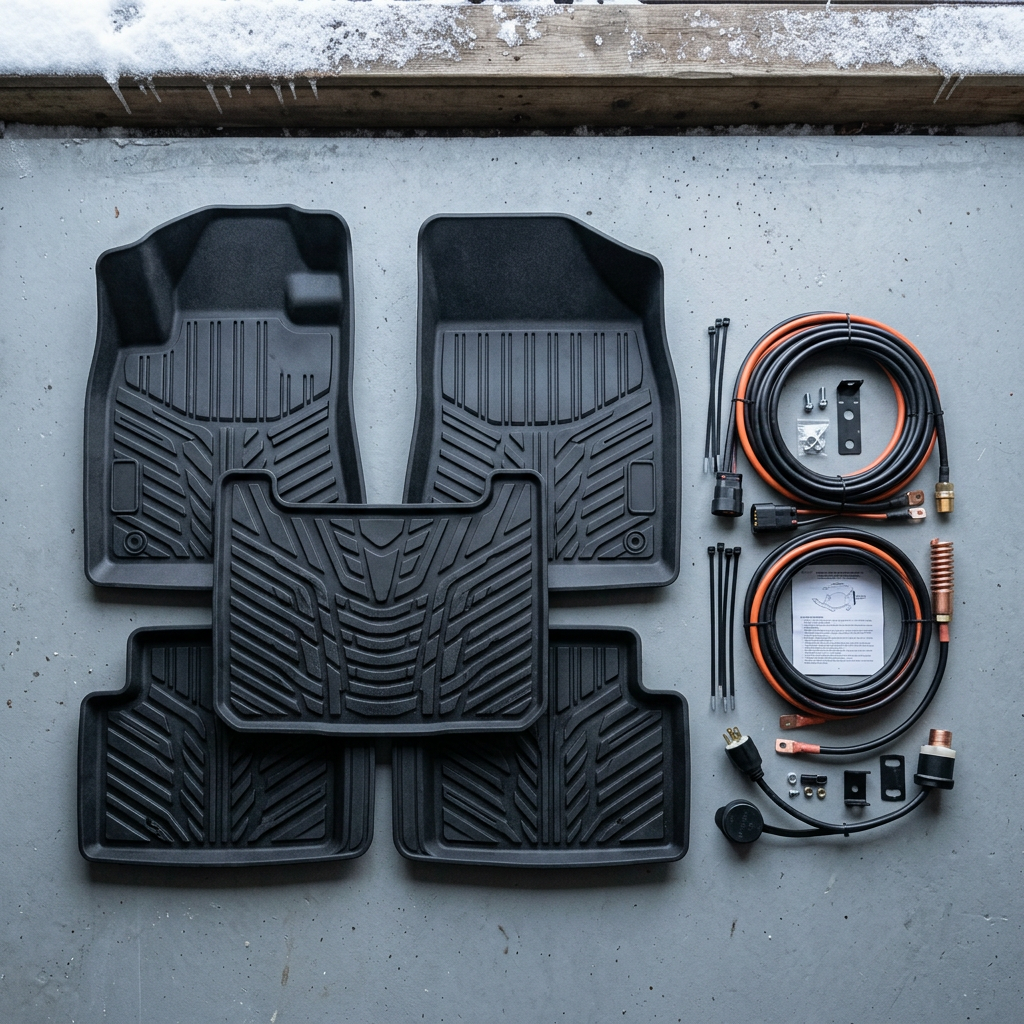
Black rubber all-weather car floor mats laid out alongside an electrical wiring kit on a concrete floor. (Representative image for illustration purposes only. Actual vehicle may vary based on trim and configuration.)

Jeep and Ram OEM All-Weather Floor Mats: Pricing, Fitment, and Protection Ratings

Mopar OEM all-weather floor mats are engineered using advanced 3D digital laser scans of vehicle footwells. This precise manufacturing process ensures edge-to-edge coverage that generic store-bought mats simply cannot match. For Jeep Wrangler and Gladiator owners, authentic Mopar slush mats feature high perimeter walls designed to trap up to two quarts of melted snow, mud, and road debris. Exclusive drain plug integration lines up perfectly with floor pan drain valves, allowing water to be flushed out directly without removing the mat setup. On Ram 1500 and Heavy Duty trucks, factory slush mats feature deep sculpted channels that lock away slush and road salt. The heavy-duty rubberized compound remains pliable even when temperatures plummet down to -40°F, eliminating the cracking, curling, and shifting common in budget alternatives.
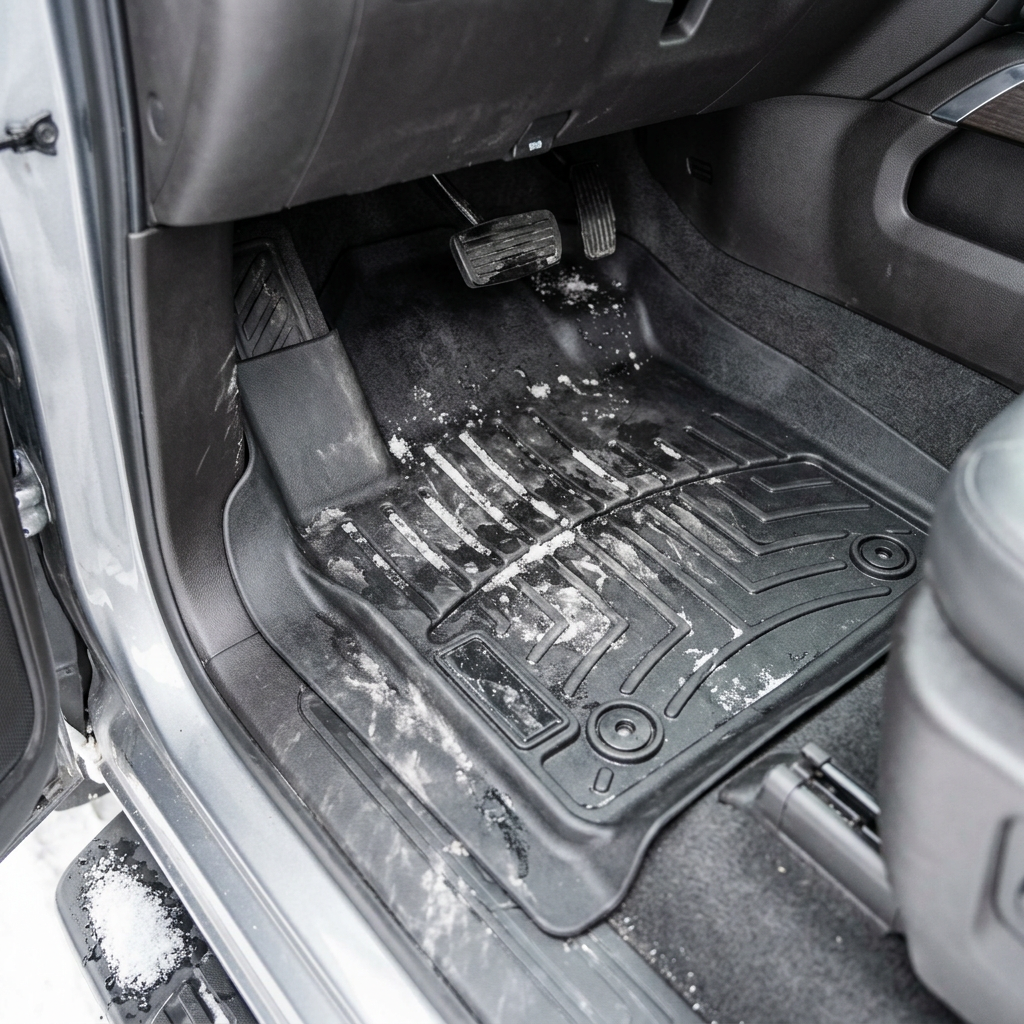
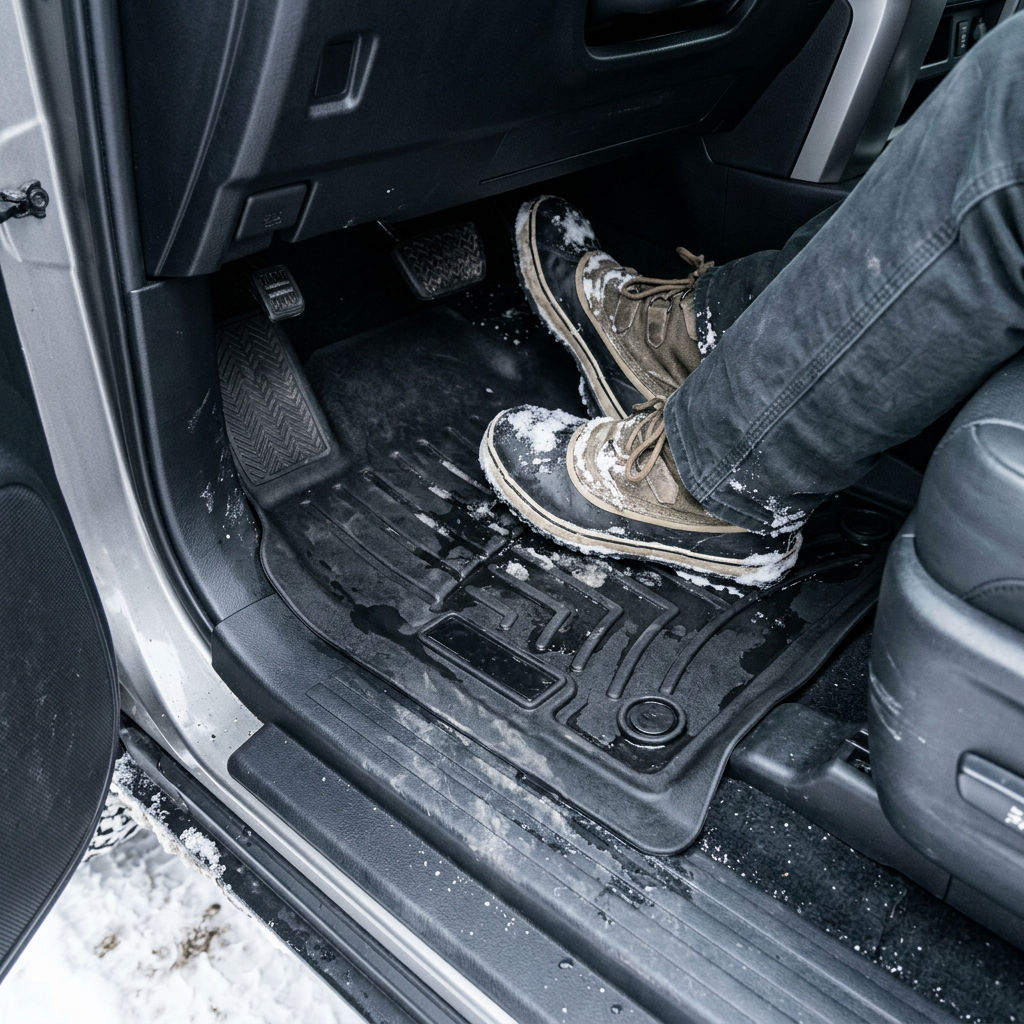
Black rubber all-weather floor mat covered in snow and dirt inside a vehicle's driver footwell. (Representative image for illustration purposes only. Actual vehicle may vary based on trim and configuration.)
Safety is another critical advantage of OEM design. Mopar mats utilize custom dual-retention hook cutouts that snap directly onto factory carpet posts. This positive locking mechanism guarantees the mat will never slide forward under heavy braking or crowd the accelerator and brake pedals.

Engine Block Heater Costs and Installation Guide for 3.6L Pentastar, 5.7L HEMI, and Cummins Diesel

Cold-weather starting places severe thermal and mechanical stress on engine components. In sub-freezing Kansas winter mornings, cold oil flows slowly, delaying lubrication to critical valvetrain components. Installing a factory Mopar engine block heater warms the engine coolant and block directly, maintaining crankcase warmth for instant oil circulation, rapid cabin warm-up, and significantly reduced starter motor strain. For vehicles equipped with the 3.6L Pentastar V6(found across Jeep Grand Cherokee, Wrangler, and Ram 1500 models), the element costs approximately $95 to $140, with professional installation taking 1.5 to 2 hours. The iconic 5.7L HEMI V8 utilizes a thread-in or frost-plug heating element running $110 to $165 for the harness and element assembly. For heavy-duty haulers powered by the 6.7L Cummins Turbo Diesel, block heater cords and elements range from $140 to $220. Cummins engines rely heavily on pre-heating to prevent diesel cold-gelling and ignition hesitation during hard frosts.
Because installing a block heater involves working near engine blocks, draining coolant, and routing weather-sealed wiring harnesses away from hot exhaust manifolds, professional installation at a certified facility is highly recommended. Our factory-trained technicians ensure leak-free seal seating and proper wiring alignment. Ready to equip your truck or SUV for winter? Book your appointment easily through our Service Scheduler at Valor CDJR.

Winter 4x4 Readiness for Fort Riley Military Families: Jeep & Ram Capabilities in Kansas Snow

Severe Commute Protection

Service members commuting daily between Junction City, Fort Riley, and Manhattan encounter sudden snow squalls, black ice on state highways, and unplowed dirt access roads. Outfitting your Jeep or Ram with all-weather mats prevents snow and mud tracking from heavy combat boots into interior cabin carpets.

Deployment & Outdoor Readiness

Vehicles parked outdoors on base during freezing weather cycles experience severe temperature stress. An OEM block heater plugged into outdoor power stations ensures your truck or 4x4 starts on the first crank, protecting battery health and engine bearings during freezing weather alerts.

Resale Value Preservation

Military relocations and PCS moves demand high vehicle resale retention. Guarding interior floors against permanent salt stains and avoiding cold-start engine wear keeps your vehicle trade-in value high when order changes arrive.
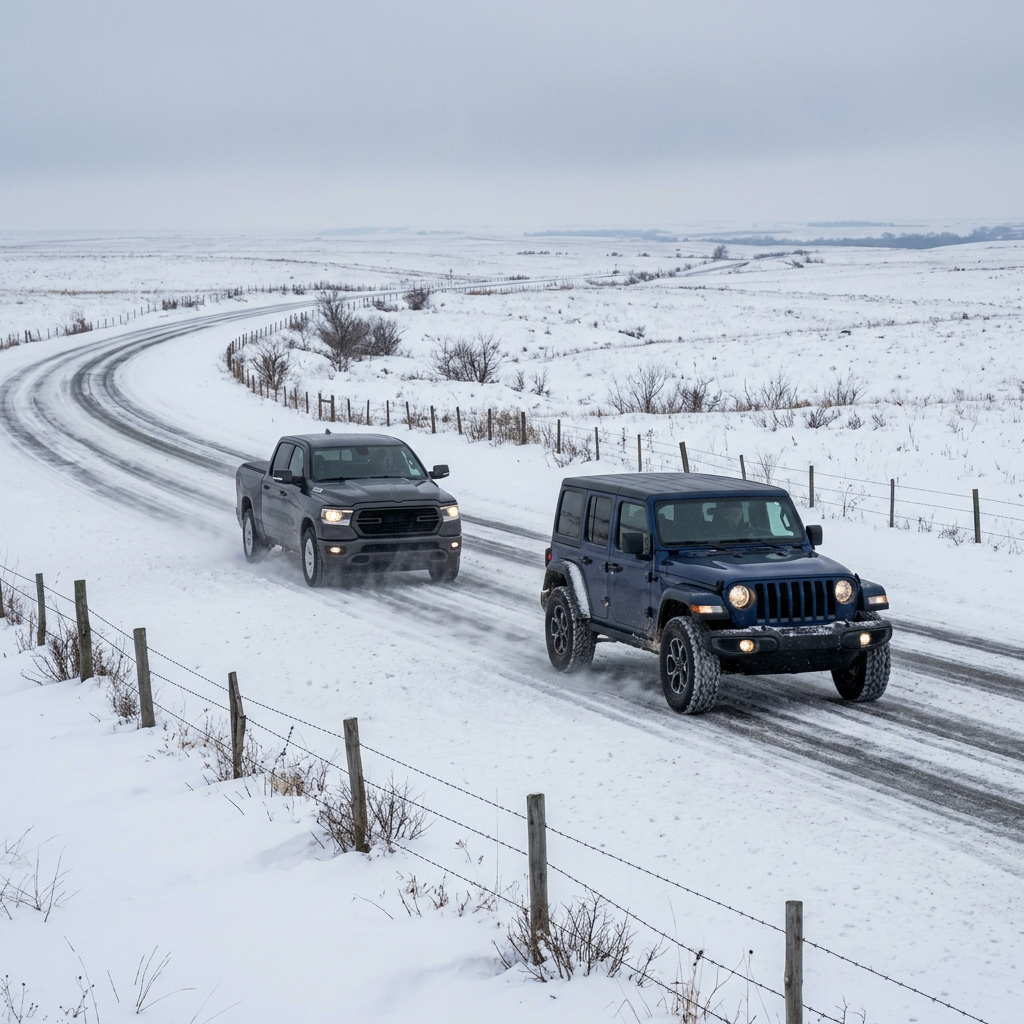
Dark blue Jeep Wrangler and grey pickup truck driving on a snow-covered rural road. (Representative image for illustration purposes only. Actual vehicle may vary based on trim and configuration.)

What is the Difference Between Quadra-Trac I, Quadra-Trac II, and Quadra-Drive II on Jeep 4x4 Models?

Quadra-Trac I vs. Quadra-Trac II

Navigating winter roads requires understanding how your Jeep transfer case manages traction: • Quadra-Trac I®: Standard on select Grand Cherokee models, this full-time single-speed four-wheel-drive system operates automatically without driver input. Utilizing a single-speed transfer case, it continuously distributes torque across front and rear axles, relying on brake-based traction control to stop slipping wheels. It is ideal for general winter rain and light highway snowpack. • Quadra-Trac II®: Adds a two-speed active transfer case featuring 4-Low gear reduction. It constantly monitors wheel slip, instantly routing up to 100% of available torque to the axle with the most grip. When deep Kansas drifts or icy grade inclines threaten forward motion, engaging 4-Low locks torque distribution for maximum crawl control.

Quadra-Drive II® Advanced Capability

• Quadra-Drive II®: The ultimate system for severe ice and winter off-roading. Pairing the two-speed active transfer case with a rear Electronic Limited-Slip Differential (ELSD), Quadra-Drive II can anticipate slip and proactively deliver torque across individual rear wheels. Even if three wheels lose traction completely on sheer ice, Quadra-Drive II can send up to 100% of engine torque to the single rear wheel with grip, keeping you moving through extreme snowdrifts.

What is the Difference Between 4WD High, 4WD Low, and 4WD Auto in Ram 1500 Trucks?

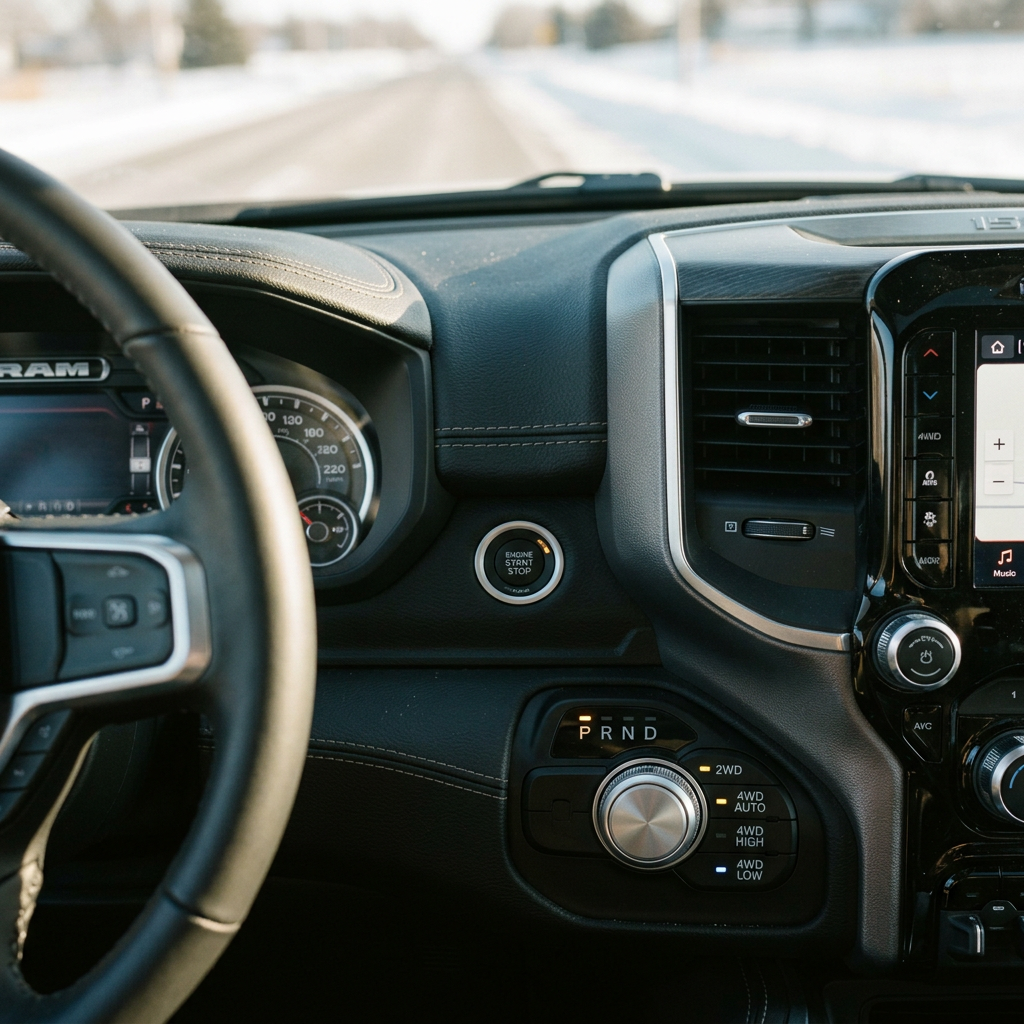
Ram 1500 trucks offer versatile electronic transfer case modes engineered for changing road conditions. Knowing when to select each mode preserves drivetrain components and optimizes stability: • 4WD Auto: Designed for variable conditions, such as driving down I-70 when dry pavement alternates with icy patches or slushy bridges. In 4WD Auto, the truck operates primarily in rear-wheel drive to save fuel, but automatically engages the front axle clutch in milliseconds when rear wheel slip is detected. • 4WD High: Locks the front and rear driveshafts together at a 50/50 split. Use 4WD High on consistently slick surfaces, unplowed rural routes, or deep mud. Note: Avoid using 4WD High on dry pavement, as drivetrain binding can occur during tight turns.• 4WD Low: Engages lower gear ratios for maximum torque at slow speeds (typically under 25 mph). Use 4WD Low for extracting stuck vehicles, pulling trailers up icy ramps, or navigating heavy snow drifts.
Driver's view of a RAM truck dashboard featuring a rotary gear shifter, push-start button, and a snowy road ahead. (Representative image for illustration purposes only. Actual vehicle may vary based on trim and configuration.)
Looking for a winter-ready truck capable of tackling Kansas snowstorms? Explore our full lineup of brand-new 4x4 trucks in our New Vehicle Listings.

How Does Truck Bed Weight Distribution Affect Ram 1500 Stability on Icy Highways?

The Physics of Rear Axle Traction

Pickup trucks are engineered to carry significant payload in the bed, which means an unladen truck has a naturally front-heavy weight distribution. Under normal driving conditions, this presents no issue. However, on slick ice or packed snow across the Flint Hills, an empty truck bed reduces downward force on the rear drive wheels, decreasing tire tread contact patch grip. Placing 200 to 300 pounds of ballast (such as secure sandbags or rubberized ballast weights) directly over or slightly ahead of the rear axle provides immediate stabilization benefits. This added downward mass improves mechanical traction during acceleration and prevents rear-end fishtailing when navigating icy highway curves.

Electronic Stability & Brake Synergy

Proper bed ballast also enhances Electronic Stability Control (ESC) and Anti-Lock Braking (ABS) efficiency. When front-to-rear weight balance is stabilized, hydraulic brake pressure is distributed more evenly across all four wheels during panic stops, preventing early ABS engagement on the rear axle and shortening stopping distances on slick asphalt.

Factory Mopar Accessories vs. Generic Aftermarket: Long-Term Value and Warranty Coverage

Full Factory Warranty Protection

Genuine Mopar accessories installed by an authorized CDJR dealership carry full Stellantis warranty protection. If an OEM block heater element or wiring harness experiences a manufacturing defect, repair is covered nationwide across authorized dealer networks.

Precision OEM Contour Fit

Generic auto parts store mats utilize universal trimming lines that often leave carpet exposed or bunch up near pedals. Mopar mats are cast from exact CAD digital files, delivering seamless contour fitment that guards against salt corrosion.

Sub-Zero Material Quality

Mopar slush mats use heavy-duty thermopolymer compounds engineered to withstand extreme freeze-thaw cycles without becoming brittle, curling at the edges, or emitting foul chemical odors inside heated cabins.
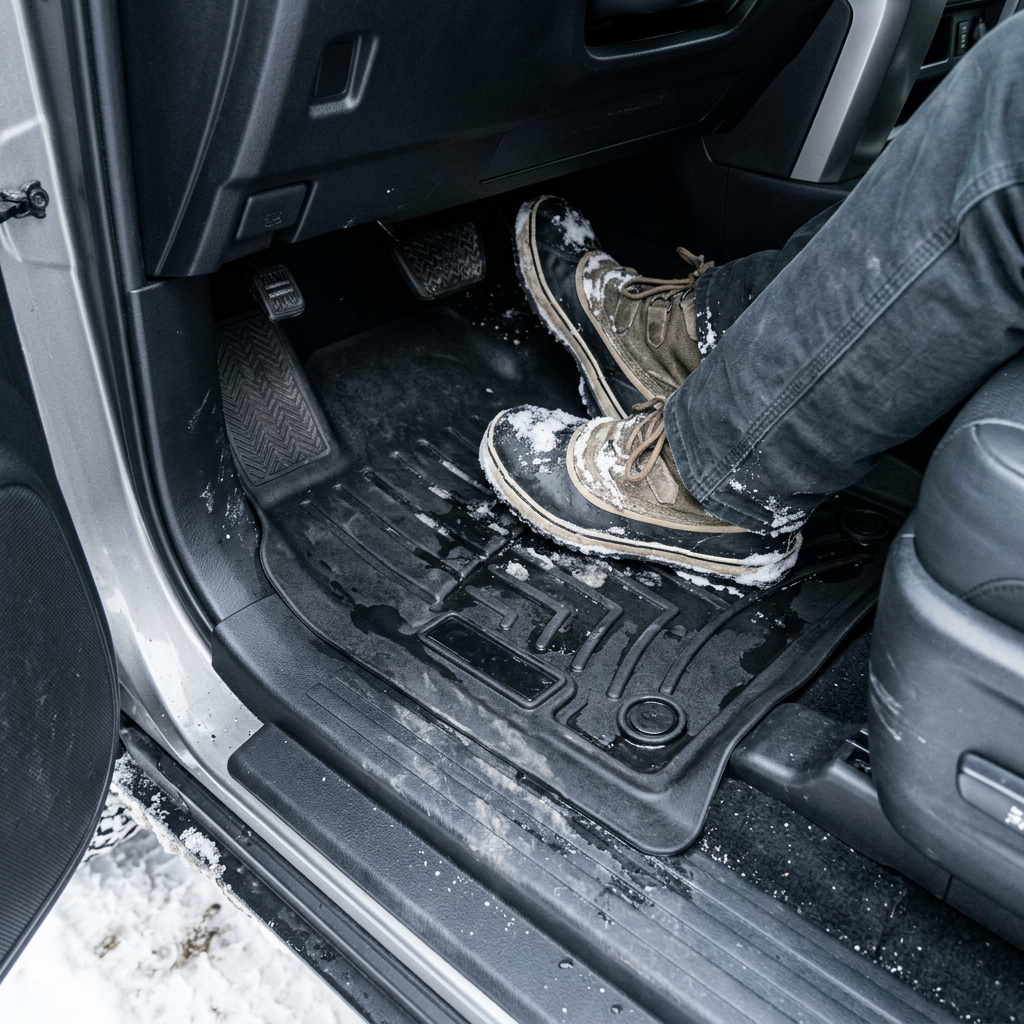
Person wearing snowy winter boots resting their feet on custom-fit black rubber car floor mats inside a vehicle. (Representative image for illustration purposes only. Actual vehicle may vary based on trim and configuration.)

Who Qualifies for the Stellantis Military Incentive Program at Chrysler Dodge Jeep Ram Dealers?

At Valor CDJR, we are proud to serve the military personnel stationed at Fort Riley and surrounding Kansas communities. The Stellantis Military Bonus Cash Program provides eligible military personnel with $500 in direct bonus cash toward the purchase or lease of eligible new Jeep and Ram vehicles. Eligible Participants Include: • Active Duty Service Members (Army, Navy, Air Force, Marines, Coast Guard, Space Force) • Active Reserve and National Guard personnel • Retired Military Veterans (with 20+ years of active service) • Honorably Discharged Veterans within 12 months of separation • Spouses and surviving spouses of eligible military personnel
Military savings can easily offset cold-weather accessory packages, engine block heater installations, or winter wheel upgrades. Applying your military bonus cash is fast and hassle-free. Take advantage of your military benefits today by getting pre-approved online via our secure Get Pre-Approved financing portal, or evaluate your current vehicle with our quick Trade In Evaluation tool.

Flint Hills Winter Maintenance Checklist: Battery, Coolant, and Underbody Protection

1. Battery & CCA Testing

Cold weather drastically reduces battery chemical activity, cutting cranking power by up to 50% at 0°F. Have your battery tested for Cold Cranking Amps (CCA) and terminal voltage before winter sets in.

2. Antifreeze Freeze-Point

Engine coolant must maintain an exact 50/50 water-to-antifreeze ratio to prevent internal block cracking and radiator freeze-ups during overnight Kansas cold snaps down to -35°F.

3. Salt & Underbody Protection

Highway de-icing salts accelerate chassis and brake line corrosion. Schedule periodic underbody washes and inspect rubber door gaskets to keep winter salt and ice out of your cab.
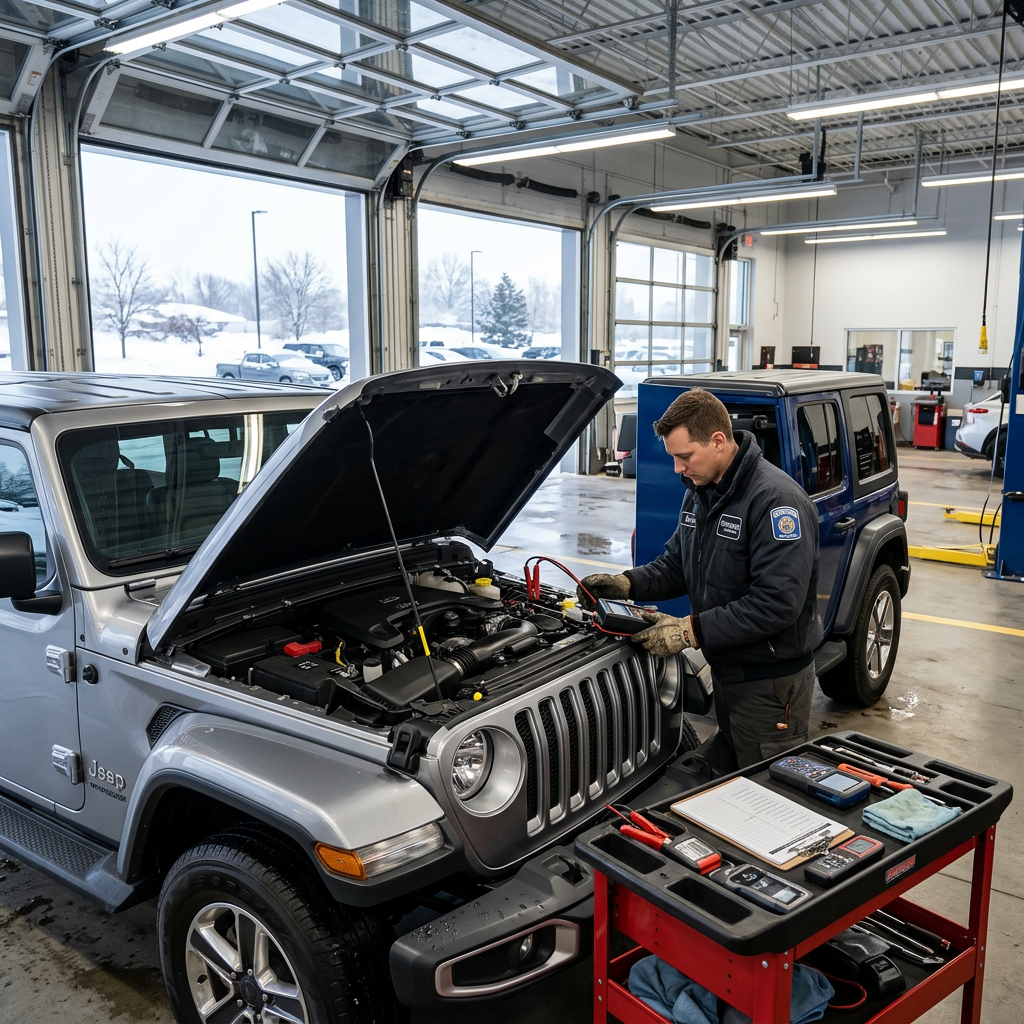
Mechanic using a diagnostic scanner on a silver Jeep Wrangler inside an auto service bay. (Representative image for illustration purposes only. Actual vehicle may vary based on trim and configuration.)

Ordering Genuine Mopar Accessories and Scheduling Winter Service in Junction City, KS

Getting your vehicle fully winterized at Valor CDJR is simple and convenient. Our dedicated Parts Department stocks a complete inventory of factory-matched Mopar slush mats, engine block heater elements, heavy-duty batteries, and all-weather accessories tailored specifically to your VIN. Whether you need rapid maintenance through our quick-turn service options or want certified installation for complex engine block heater harnesses, our factory-certified technicians ensure every component is fitted according to strict manufacturer standards.
Conveniently located at 1825 Goldenbelt Blvd in Junction City, KS, Valor CDJR proudly serves Junction City, Fort Riley, Manhattan, and the greater Flint Hills region. You can easily Get Directions to Valor CDJR or Call us at (785) 238-5114 to speak directly with an accessory specialist.

Equip Your Jeep or Ram for Kansas Winter at Valor Chrysler Dodge Jeep Ram Today

Don't wait for freezing weather and winter snowstorms to compromise your daily drive or deployment readiness. Protect your vehicle interior with genuine Mopar all-weather floor mats and guarantee reliable engine starts with a certified Mopar block heater package. Contact our team today, explore our full inventory of winter-ready 4x4 trucks and SUVs, apply your military savings, or schedule your installation before cold weather arrives!

Posted in:

Related Posts

What You Need to Know About Dodge Durango Towing: Capacity, Equipment, and Service

What You Need to Know About Dodge Durango Towing: Capacity, Equipment, and Service

What You Need to Know About Dodge Durango Towing: Capacity, Equipment, and Service What Is the Maximum Towing Capacity of the Dodge Durango? The maximum towing capacity of the Dodge Durango reaches 8,700 lb when equipped with either the 6.4L HEMI V8 engine or the 5.7L HEMI V8 paired with the factory-installed Tow N Go Package. Models equipped with the standard 3.6L Pentastar V6 generate 295 hp and provide a substantial maximum towing capacity of 6,200 lb. In my 20 years managing service bays, I see plenty of owners who rely on their three-row SUVs to haul heavy loads every weekend. When local boaters head out to Milford Lake from Junction City, they often ask me how the Durango handles a heavy boat trailer compared to a full-size pickup. The secret lies in its unibody architecture paired with rear-wheel-drive or all-wheel-drive chassis dynamics. This combination gives you the pull of a traditional truck without sacrificing daily ride comfort. Keeping that maximum capacity safe over thousands of miles comes down to proactive maintenance. Heavy trailering places extra demands on your transmission, rear differential, and braking system. If you ever have questions about your specific vehicle's door-jamb weight ratings or tow setup, you can give our service team a quick call or drop by our Junction City service center to inspect your hitch receiver and fluid condition before taking your next trip. Table of Contents Which Dodge Durango Engines and Packages Reach the 8,700-Pound Towing Limit? Can You Add the Factory Tow N Go Package After Buying a Dodge Durango? How Do Tongue Weight, GVWR, and GCWR Limits Impact Safe Durango Towing? Dodge Durango vs Chevrolet Tahoe: Which SUV Handles Heavy Towing Maintenance Better? What Essential Maintenance Keeps Your Dodge Durango Ready for Heavy Towing? Which Dodge Durango Engines and Packages Reach the 8,700-Pound Towing Limit? Achieving the peak 8,700 lb tow rating requires either the 6.4L HEMI V8 producing 475 hp and 470 lb-ft of torque or the 5.7L HEMI V8 rated at 360 hp when paired with the factory Tow N Go Package. Without the Tow N Go Package, standard 5.7L HEMI V8 models carry a maximum trailering limit of 7,200 lb, while the 3.6L Pentastar V6 engine tops out at 6,200 lb. The Tow N Go Package upgrades more than just the hitch receiver. It fits the vehicle with an integrated trailer brake controller, heavy-duty engine cooling, a load-leveling rear suspension, an electronic limited-slip rear axle, and specialized drive modes including Tow Mode. These components control engine temperatures and trailer sway under heavy loads. If you are setting up a Durango for light-duty trailering, our experts at the Valor CDJR parts center can supply genuine OEM Mopar hitches, wiring harnesses, and ball mounts designed specifically for your trim. However, matching your powertrain hardware to your trailer's gross weight is critical to preventing premature transmission wear. Can You Add the Factory Tow N Go Package After Buying a Dodge Durango? The complete factory Tow N Go Package cannot be added to a Dodge Durango after it leaves the assembly line because it requires integrated wiring harnesses, specialized electronic control modules, and structural suspension mounting points fitted during vehicle production. While dealers can install individual aftermarket or Mopar towing accessories post-purchase, these add-ons will not upgrade a standard vehicle's official Gross Combined Weight Rating ( GCWR) or maximum tow limit to 8,700 lb. When drivers ask me about adding towing capability to an existing Durango GT or R/T, I walk them through the technical difference between dealer-installed hardware and factory equipment packages. A dealer-installed Class IV hitch receiver and 7-pin wiring harness allow a 3.6L Pentastar V6 or standard 5.7L HEMI V8 to safely tow up to its factory-certified rating of 6,200 lb or 7,200 lb, respectively. However, retrofitting the adaptive suspension dampening, active exhaust, and factory-calibrated anti-sway software of the Tow N Go Package is neither mechanically practical nor factory-sanctioned. Attempting to exceed your vehicle's factory door-jamb weight label by adding heavy-duty aftermarket springs or helper bags can lead to mechanical strain. Auxiliary air bags may level the vehicle visually, but they do not increase the thermal capacity of the transmission cooler or the load limits of the rear axle bearings. How Do Tongue Weight, GVWR, and GCWR Limits Impact Safe Durango Towing? Safe towing requires balancing trailer weight while staying strictly under your vehicle's Gross Vehicle Weight Rating ( GVWR) and Gross Combined Weight Rating ( GCWR), with tongue weight maintained at 10 to 15 percent of the total loaded trailer mass. For a Durango setup rated at 8,700 lb, the maximum weight-distributing tongue load is 870 lb, while a 3.6L Pentastar V6 model rated for 6,200 lb carries a maximum tongue weight limit of 620 lb. Understanding how these numbers interact prevents severe handling issues on the road. For example, a Durango GT configured with a 7,100 lb GVWR and a 13,100 lb GCWR must account for the combined weight of the vehicle, passengers, cargo, fuel, and trailer tongue weight. If you pack six passengers and several coolers into the cabin, that interior weight directly subtracts from the payload capacity remaining for tongue weight. Pulling a heavy camper up the steep highway grades through Manhattan demands proper tongue weight distribution to keep the front tires planted for steering control and braking grip. Excessive tongue weight forces the rear suspension to squat, lifting the front end and reducing steering response while overloading the rear axle bearings. Conversely, insufficient tongue weight causes low trailer pin pressure, which triggers dangerous high-speed trailer sway. Dodge Durango vs Chevrolet Tahoe: Which SUV Handles Heavy Towing Maintenance Better? The Dodge Durango matches the midsize maneuverability and 8,700 lb maximum towing limit of larger body-on-frame SUVs like the Chevrolet Tahoe, while offering lower long-term service costs on routine suspension, brake, and drivetrain wear items. While the Chevrolet Tahoe relies on a wider truck chassis with heavier solid-axle components, the Durango uses a four-wheel independent suspension and an 8-speed automatic transmission designed for smooth power delivery and straightforward serviceability. From a maintenance perspective, servicing a heavy-duty Dodge Durango is highly efficient for SUV owners. The Durango's TorqueFlite 8-speed automatic transmission utilizes advanced thermal management that resists fluid breakdown better during hot-weather hauling than older four-speed or six-speed truck gearboxes. Additionally, Brembo high-performance brake options on upper Durango trims supply exceptional stopping power with easy-to-service fixed calipers and vented rotors. Dodge Durango Towing Highlights: Maximum towing up to 8,700 lb, compact unibody footprint for easier parking, available integrated trailer brake controller, and accessible severe-duty service schedules. Chevrolet Tahoe Towing Highlights: Full-size truck platform, maximum towing up to 8,400 lb to 8,800 lb depending on engine choice, larger overall footprint, and solid rear axle maintenance requirements. When evaluating maintenance over a 100,000-mile ownership period, the Durango's proven HEMI V8 engines and Pentastar V6 platforms avoid many of the complex multi-turbo plumbing issues found in modern downsized engine alternatives. You can easily schedule a service appointment online to have our technicians inspect your Durango's tow prep gear, differential fluid, and trailer brake connections. What Essential Maintenance Keeps Your Dodge Durango Ready for Heavy Towing? Sustained towing subjects your engine, transmission, differentials, and braking system to severe-duty operational stress, making strict adherence to accelerated fluid change intervals essential for long-term vehicle reliability. Dodge recommends following the severe-service schedule whenever you frequently tow trailers, carry heavy loads, or drive in mountainous terrain. To keep your powertrain operating reliably under heavy tongue loads and high thermal stress, our certified technicians monitor key wear components during every severe-duty service visit: Automatic Transmission Fluid: Fresh fluid prevents varnish accumulation and clutch plate slippage caused by high operating temperatures under load. Front and Rear Differential Gear Oil: Heavy towing breaks down synthetic gear lubricants; changing differential fluid every 30,000 miles protects ring-and-pinion gears. Transfer Case Fluid (AWD Models): Frequent load transfers demand clean fluid to protect internal chain drives and multi-plate clutch packs. Brake Pads and Vented Rotors: Heavy trailering generates intense friction heat; routine pad thickness and rotor thickness inspections prevent brake fade. Engine Cooling System: Radiator fins must remain clear of debris, and coolant strength should be tested to preserve heat-dissipation efficiency. Taking care of your vehicle before hitting the highway ensures stress-free travel wherever your trailer takes you. For personalized maintenance recommendations or an inspection of your trailer wiring and receiver assembly, stop by Valor CDJR or get in touch with our team directly by calling (785) 238-5114 today. © 2026 Valor CDJR. All rights reserved. Vehicle specification data © JATO Dynamics Limited.

Direct Answer: What Mopar Accessories Best Protect Jeep Seats and Cargo Areas for Kansas Winters?

Direct Answer: What Mopar Accessories Best Protect Jeep Seats and Cargo Areas for Kansas Winters?

Direct Answer: What Mopar Accessories Best Protect Jeep Seats and Cargo Areas for Kansas Winters? When late autumn transitions into full-fledged winter across the Flint Hills, Kansas drivers face a brutal combination of freezing rain, thick mud, wet slush, and corrosive road salt. Protecting the cabin and cargo bay of your Jeep Wrangler, Gladiator, Grand Cherokee, or Compass requires purpose-built interior armor. The absolute best original equipment manufacturer (OEM) solution comes directly from Mopar—Jeep's official service, parts, and customer care division. Authentic Mopar winterization accessories are specifically engineered to fit the exact contours of your vehicle's floor pans, seating frames, and trunk bays, providing an unyielding shield against the worst elements Kansas winters can throw at your cabin. The essential lineup for complete Jeep interior winter defense includes four cornerstone Mopar components: 1. Custom-Fit All-Weather Slush Mats: Built with deep reservoir channels, high retention walls, and specialized drain-plug compatibility (on Wrangler and Gladiator models) that allow melted snow to drain directly through the vehicle floor. 2. Heavy-Duty Molded Cargo Trays: Constructed from flexible, cold-resilient thermoplastic elastomer (TPE) that flexes under heavy loads without cracking in sub-zero temperatures. 3. Waterproof Neoprene and Heavy Canvas Seat Covers: Custom tailored to seal out wet hunting gear, mud-slicked coveralls, and spilled hot coffee while remaining fully side-airbag compliant. 4. Cargo Area Seatback Protectors: Molded rubberized barriers that attach directly to the rear of second-row seats, ensuring seamless protection whether seats are raised upright or folded flat for bulky cargo. To explore these fitted upgrades in person, stop by our Parts Department at Valor CDJR in Junction City. Why Factory Mopar All-Weather Floor Mats and Cargo Liners Outperform Universal Options Universal off-the-shelf floor mats bought at general retail stores may seem convenient initially, but they fall drastically short when exposed to genuine Kansas winter conditions. Generic mats rely on flat trim-to-fit designs that shift constantly underfoot, curl up at the edges when temperatures plunge below freezing, and fail to block liquid runoff from soaking into under-carpet acoustic insulation. Once salt-laden slush penetrates carpet padding, it breeds stubborn mildew odors, causes sub-floor rust, and degrades vehicle trade-in values over time. Factory Mopar all-weather mats are engineered using precise 3D digital CAD data straight from the Jeep vehicle design teams. This guarantees millimeter-perfect fitment against every swell, pedal mount, and seat rail anchored to your floor pan. On Jeep Wrangler and Gladiator models, Mopar mats feature patented integrated drain-plug grommets. When snow melts inside your cabin, you can unplug the floor drains directly through the mat, letting water escape without removing the liner. Furthermore, Mopar's proprietary rubber compound remains pliable in extreme freeze conditions down to sub-zero temperatures, ensuring the high retention walls never distort or leak onto your carpet. Key Mopar Seat Accessories: Heavy-Duty Covers, Waterproof Barriers, and Heated Comfort Upgrades Canvas & Neoprene Covers Mopar heavy-gauge canvas and neoprene seat covers offer an impenetrable barrier against damp winter coats, mud, and active lifestyle wear. Tailor-fit to specific seat configurations, these covers preserve factory leather and cloth upholstery while incorporating engineered side seams that ensure full deployment of seat-mounted side airbags in an emergency. Seatback Storage Systems Keep winter emergency gear organized and off the wet floorboards with Mopar MOLLE-style seatback storage panels. Engineered for heavy utility, these tactical grid panels accept modular pouches for ice scrapers, thermal gloves, flashlights, tow straps, and first-aid kits, keeping essential equipment secure and rapidly accessible. Heated Seat Accessory Kits If your Jeep came from the factory with standard cloth seats, Mopar offers heated seat accessory kits. These systems integrate seamlessly with your vehicle's electrical harness and dashboard controls, delivering rapid warming comfort to front seats during freezing morning commutes across Geary and Riley Counties. Preparing Your Jeep or Ram 1500 for Late-Autumn Tailgating and Farm Work in Riley and Geary Counties Life in Junction City, Manhattan, and surrounding rural Riley and Geary counties demands exceptional versatility from your vehicle. On Saturday afternoon, your truck or SUV might be parked outside Bill Snyder Family Stadium supporting K-State game day tailgating; by Monday morning, it is navigating muddy pastures, towing livestock trailers, or hauling heavy equipment across unpaved county roads. Transitioning seamlessly between agricultural labor, outdoor recreation, and family transport requires a multi-layered interior protection strategy. For dual-purpose duty, local drivers frequently combine heavy-duty Mopar floor slush mats with Mopar bed liners and tonneau covers on Ram 1500 trucks, or rear cargo trays and seatback covers on Jeep Grand Cherokee models. This setup ensures that clay-heavy Kansas soil, agricultural chemicals, and wet hunting gear stay completely contained. Whether you are transporting livestock feed in the morning or loading tailgate coolers in the afternoon, Mopar accessories let you hose down your protective liners in minutes, keeping the underlying vehicle spotless. If you need expanded utility for your operations, browse our current Commercial Vehicle Inventory to find heavy-duty work trucks built for tough Kansas workloads. View Commercial Inventory How Cargo Volume Capacities Compare Between the Ram 1500 Bed and Grand Cherokee Interior Space Understanding the distinction between open bed volume and climate-controlled interior cargo space is critical when planning winter farm work or outdoor excursions. The Ram 1500 offers substantial exterior cargo space designed for rugged, weather-resistant equipment, while the Jeep Grand Cherokee provides locked, heated interior storage optimal for sensitive tools, luggage, and perishable supplies. A Ram 1500 equipped with a 5-foot-7-inch short box delivers approximately 54 cubic feet of cargo space, expanding to 61.5 cubic feet with a 6-foot-4-inch bed box. In contrast, the Jeep Grand Cherokee provides up to 38 cubic feet behind the second-row seats, expanding to 71 cubic feet when the rear seats are folded flat. Pairing a Ram 1500 with a Mopar spray-in bedliner and tri-fold tonneau cover creates weather-protected exterior storage, while equipping a Grand Cherokee with Mopar molded cargo liners keeps high-capacity interior space protected against snow and mud. Vehicle & Configuration Primary Storage Type Max Usable Volume Recommended Winter Liner Ram 1500 5'7" Bed Open / Covered Bed 53.9 cu ft Mopar Spray-In Liner + Tonneau Ram 1500 6'4" Bed Open / Covered Bed 61.5 cu ft Mopar Bed Mat + Lockable Box Jeep Grand Cherokee (Seats Up) Enclosed Climate-Controlled 37.7 cu ft Mopar Molded Rubber Cargo Tray Jeep Grand Cherokee (Seats Folded) Enclosed Climate-Controlled 70.8 cu ft Mopar Cargo Tray + Seatback Shield Can the Ram 1500 Bed Power Outlet Run Electric Heaters or Tailgating Appliances Simultaneously? Wattage Limits & Ratings The Ram 1500 optional truck bed outlet delivers 115-volt AC power rated up to 400 watts. While 400 watts easily powers LED stadium lights, slow cookers (which draw 150–250W), and battery chargers, high-draw ceramic space heaters typically demand 1,200 to 1,500 watts and will trip the inverter's internal breaker. Tailgating Appliance Load You can safely run low-wattage tailgating appliances simultaneously, such as a 180W crockpot alongside a 50W television or LED lighting array (totaling ~230W). Managing cumulative draw ensures stable operation without interrupting power to your tailgate setup. Battery & Engine Idle Rules To prevent draining your starter battery during cold weather, run the engine while operating high-demand accessories. The system automatically regulates voltage to ensure your truck starts reliably, even when running auxiliary devices in freezing temperatures. How the Ram 1500 Onboard Power Inverter Supports Farm Electrical Equipment and Tailgate Accessories For farmers and landowners in Geary and Riley counties, the Ram 1500 onboard power inverter acts as a mobile electrical hub out in remote pastures. Powering 18-volt cordless tool battery chargers, electric fence chargers, portable soldering irons, and emergency work lights directly from the truck bed eliminates the need to haul heavy, noisy gas generators for minor fence repairs or equipment maintenance. When non-working weekend hours roll around, that same inverter seamlessly transitions to power outdoor entertainment gear. Combined with Mopar heavy-duty truck bed outlet protective weather caps, the system keeps electrical contacts clean and dry regardless of rain, mud, or snow, providing reliable mobile power year-round. What Should Junction City-Area Jeep and Ram Owners Check Before Late-Autumn Farm Work and Tailgating? Before winter frost settles over central Kansas, completing a comprehensive seasonal inspection ensures your vehicle stays dependable when navigating remote county roads or cold morning starts. Key maintenance items include: 1. Battery Cold-Cranking Amps (CCA): Sub-freezing temperatures reduce battery output by up to 50%. Have your battery load-tested to confirm adequate starting power. 2. Tire Pressure & Tread Depth: Cold air lowers tire pressure by approximately 1 PSI per 10°F drop. Ensure tread depth is above 4/32" for effective snow traction. 3. Engine Coolant / Antifreeze Mix: Test your coolant mixture to ensure freeze protection down to -25°F. 4. Mopar Beam Wiper Blades & Winter Fluid: Replace worn blades with heavy-duty Mopar synthetic beam blades that resist ice buildup. 5. Cabin Air Filter: Replace clogged filters to maintain maximum defroster airflow and cabin heating efficiency. 6. Interior Mopar Slush Mat Fitment: Snap all floor mats securely onto factory floor retainers to prevent interference with pedals. You can quickly schedule an inspection through our online Service Scheduler or visit our Express Lane for maintenance without an appointment. Schedule Winter Service How Does Quadra-Lift Air Suspension Improve Ground Clearance on Jeep Vehicles During Winter Snow? Jeep's available Quadra-Lift® Air Suspension system is a useful feature for severe Kansas winter driving. By utilizing closed-loop air springs at all four wheels, Quadra-Lift allows drivers to electronically adjust ride height depending on terrain requirements, offering up to 10.9 inches of maximum ground clearance in Off-Road 2 setting. When drifting snow buries rural county roads or unpaved farm lanes around Junction City, raising the vehicle prevents the undercarriage from snow-plugging or high-centering. Combined with Jeep's Selec-Terrain® traction control set to 'Snow' mode, the system optimizes torque distribution, throttle response, and suspension height to maintain steady forward momentum through deep slush and ice. To explore new models featuring Quadra-Lift, browse our latest New Vehicle Listings or explore pre-owned models in our Used Vehicle Listings. Selecting Mopar Cargo Management Accessories for Snowboards, Hunting Gear, and Emergency Kits Under-Seat Lockable Bins Secure valuable hunting gear, tools, and electronics in lockable Mopar heavy-gauge steel under-seat storage bins. These lockboxes integrate directly under second-row seating in Ram trucks and Jeep Wranglers, keeping contents concealed and safe. Roof-Mounted Gear Carriers Free up interior cabin space by installing Mopar crossbars paired with lockable ski and snowboard carriers or hard-shell cargo boxes. Built with corrosion-resistant aluminum, these carriers handle wet sports gear without cluttering your interior. Mopar Roadside Winter Kits Official Mopar roadside safety kits come packed with essential winter recovery tools: heavy-duty jumper cables, thermal blankets, work gloves, a folding shovel, flashlight, and reflective warning triangles packaged in a durable canvas bag. Where Can Riley and Geary County Drivers Arrange Local Jeep or Ram Seasonal Service? Finding reliable, factory-certified service and genuine Mopar accessory installation is convenient for drivers throughout Junction City, Fort Riley, Manhattan, and the surrounding Flint Hills region. Valor CDJR is your dedicated local hub for authentic Mopar parts, seasonal vehicle maintenance, and professional accessory installation. Located at 1825 Goldenbelt Blvd in Junction City, KS 66441, our team of factory-trained technicians ensures your floor mats, seat covers, cargo trays, and power accessories are installed precisely according to manufacturer specifications. You can Get Directions to Valor CDJR or Call us at (785) 238-5114 to consult directly with our parts and service specialists. If you are considering upgrading your vehicle before winter arrives, check your current vehicle value with our Trade In Evaluation tool or Get Pre-Approved online. Winterize Your Jeep Cargo and Seating Areas at Valor CDJR in Junction City Don't let freezing weather, slush, and salt damage your Jeep or Ram interior this season. Equip your vehicle with authentic Mopar slush mats, molded cargo trays, waterproof seat covers, and cargo organization systems designed specifically for your model. Visit Valor CDJR today at 1825 Goldenbelt Blvd in Junction City, KS, or contact our team online to order accessories, schedule maintenance, or explore our complete line of new and pre-owned vehicles. Order Mopar Accessories Schedule Service Appointment

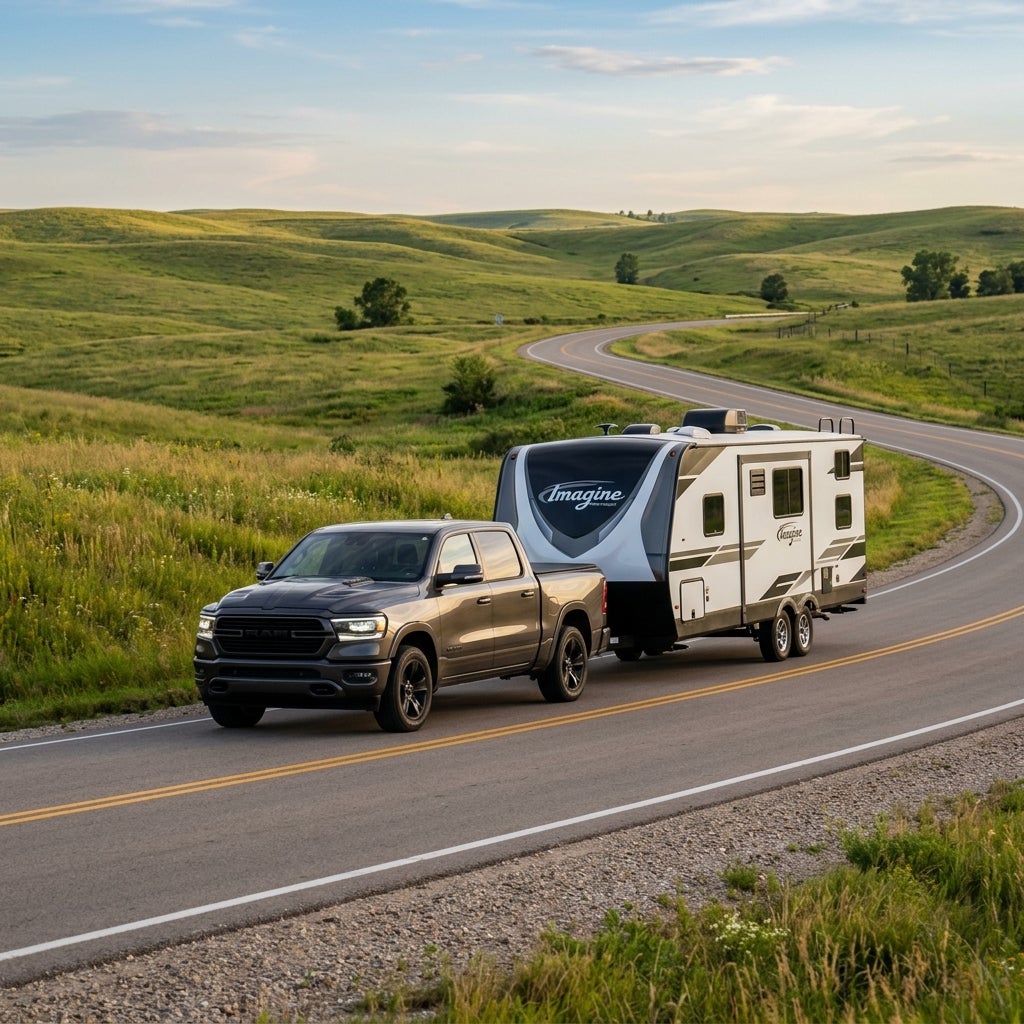
Grey pickup truck towing a white Imagine travel trailer along a winding road through rolling green hills. (Representative image for illustration purposes only. Actual vehicle may vary based on trim and configuration.)

Mastering Heavy Hauls: How the 2021 RAM 1500 Trailer Brake Controller Keeps You in Control

Mastering Heavy Hauls: How the 2021 Ram 1500 Trailer Brake Controller Keeps You in Control Towing across the rolling landscapes of the Flint Hills or heading out for a weekend at Milford Lake requires more than just raw horsepower; it demands total, unyielding control over your rig. When you are pulling a multi-ton travel trailer, a heavy boat, or a loaded flatbed utility trailer behind your 2021 Ram 1500, stopping safely is just as critical as moving forward. This is where the Integrated Trailer Brake Controller (ITBC) steps in. Far from being a simple, passive add-on, this sophisticated system acts as the primary communication link between your truck's advanced braking architecture and your trailer's electronic brakes. Rather than forcing your truck's brakes to bear the brunt of stopping both vehicles, the ITBC orchestrates a synchronized braking effort that makes towing feel smooth, predictable, and remarkably stress-free. For Ram truck owners in Junction City, KS, and the surrounding Manhattan areas, mastering this technology is key to safe driving. The Flint Hills are famous for their sudden, sweeping elevation changes, and navigating these grades with a massive load can quickly turn hazardous without properly synchronized braking. The 2021 Ram 1500’s optional factory trailer brake controller is neatly integrated into the lower dashboard, just below the climate controls, placing tactile control right at your fingertips. By seamlessly linking the truck's hydraulic brake pressure and deceleration sensors with the trailer's electric brakes, this system ensures that when you tap the pedal, your trailer slows down in perfect harmony with your truck, preventing the trailer from pushing against the tow vehicle or jackknifing. Whether you are a seasoned towing veteran or a newcomer preparing to hook up your first camper, understanding the inner workings of this system is essential. From its foundational electronic programming to real-world adjustment techniques, the 2021 Ram 1500 trailer brake controller is engineered to provide peace of mind on every journey. Let's dive deep into the mechanics, calibration, and optimization of this vital towing tool, ensuring that your next trek down I-70 is as secure as possible. Is the 2021 Ram 1500’s Trailer Brake Controller Proportional or Time-Delay? When evaluating trailer brake controllers, the most critical technical distinction lies in how they apply stopping power. We are proud to confirm that the 2021 Ram 1500 features a fully proportional integrated trailer brake controller. In the world of towing, a proportional system is the common benchmark. It uses internal inertia sensors (accelerometers) and monitors the truck's hydraulic brake pressure to measure exactly how hard the tow vehicle is decelerating. It then instantly applies a matching, proportional amount of braking voltage to the trailer's brakes. This means that if you gently tap your truck's brakes while approaching a stoplight in Riley County, the trailer will apply light, gentle braking. If you must slam on the brakes in an emergency on the highway, the controller sends maximum power to the trailer instantly, ensuring both vehicles stop in a straight, controlled line. It creates a unified, single-vehicle braking feel that minimizes stress on your truck's rotors and pads. In contrast, aftermarket systems often use time-delay technology. Time-delay controllers do not sense how hard you are braking; instead, they apply a pre-set amount of braking power that increases over a predetermined period whenever you press the brake pedal. This means if you brake gently, the trailer might still apply heavy, jerky stopping force after a few seconds, leading to premature wear and a highly uncomfortable 'tugging' sensation behind your truck. Conversely, in a sudden emergency, a time-delay system will not deliver immediate full power, potentially increasing your stopping distance when you need it most. The Ram's proportional system completely eliminates this lag, adapting dynamically to real-time road conditions. This is particularly beneficial when navigating the winding, hilly terrain of Kansas, where continuous, smooth adjustment is the difference between a relaxing drive and a white-knuckled ordeal. How Does the Trailer Brake Controller Work on the 2021 Ram 1500 in Real-World Towing? In practice, the integrated trailer brake controller functions as an intelligent translator. When you connect your trailer's 7-pin wiring harness to the bumper of your 2021 Ram 1500, the truck instantly recognizes the connection and begins communicating with the trailer's electric or electric-over-hydraulic (EOH) braking systems. As you drive, the truck's central computer monitors variables such as speed, brake pedal force, and stability control data. The moment you apply pressure to the brake pedal, the controller sends an electrical current down the dedicated brake line in the 7-pin connector. This current activates the electromagnets inside the trailer’s brake drums, which pull against the spinning armature, forcing the brake shoes outward against the drum to slow the trailer down. This happens in milliseconds, ensuring that the trailer slows down concurrently with the truck. Beyond this automated braking sequence, the physical interface on the dashboard gives you complete manual control when needed. The controller features a manual override slider—two pinch-style tabs that you can squeeze together with your fingers. Squeezing this slider applies the trailer brakes independently of the truck's brakes. This is an incredibly useful safety feature; if you feel your trailer beginning to sway or fish-tail due to a sudden gust of Kansas wind, gently squeezing the manual slider will immediately apply the trailer's brakes, pulling the trailer back into a straight line behind the truck. The dashboard cluster also provides instant visual feedback, showing a dedicated trailer brake menu that displays the output voltage and gain settings in real-time, keeping you fully informed of your system's status as you cruise through Junction City. To ensure your vehicle's physical connections are secure before a big haul, check out our comprehensive Used Vehicle Listings or explore brand-new configurations in our New Vehicle Listings to see models already equipped with this state-of-the-art tech. This real-world integration ensures that whether you're climbing up steep highway ramps or descending into valleys, the trailer remains a cooperative extension of your truck, rather than an unpredictable weight pushing from behind. What Does the Gain Setting on the Ram 1500 Trailer Brake Controller Do? The 'Gain' setting is the heart of customizing your Ram 1500's towing dynamics. Think of the gain as a volume knob for your trailer's brakes—it controls the maximum amount of electrical current (or voltage) sent to the trailer brakes when you step on the truck's brake pedal. A higher gain setting means the trailer brakes will apply more stopping power, while a lower gain setting reduces the braking force. Because trailers vary wildly in weight—from a lightweight, empty single-axle utility trailer to a dual-axle 5th wheel camper loaded with water, gear, and supplies—a single static braking profile simply won't work. Adjusting the gain ensures that your trailer always contributes its fair share of stopping power without locking its tires or causing the truck's brakes to overheat. It allows you to dial in the perfect balance of stopping power for whatever load you are pulling. If your gain is set too low, the trailer's brakes won't have enough power to slow its weight, forcing your Ram 1500 to do all the work, which rapidly accelerates brake wear and increases your stopping distance. If the gain is set too high, the trailer's brakes will grab too aggressively, potentially locking up the tires, flat-spotting your rubber, and causing a highly unstable towing experience. Our dedicated service department is always on hand to help you master these settings. If you ever feel like your brakes aren't responding as they should, or if you need an inspection before a long road trip, don't hesitate to utilize our online Service Scheduler to book an appointment with our master technicians. Schedule Towing Inspection What Is the Correct Way to Set the Initial Gain on a Ram 1500 Trailer Brake Controller? Step 1: Prep & Find an Open Area Before making any adjustments, ensure your trailer is fully loaded to its typical towing weight, as empty versus loaded weights require completely different gain settings. Connect the 7-pin harness and verify that all lights are functioning. Find a large, open, and flat paved area with zero traffic—such as an empty parking lot or a quiet, level rural road near Junction City. This allows you to perform calibration maneuvers safely without worrying about surrounding vehicles. Step 2: Perform the Calibration Test With your Ram 1500 in gear, accelerate slowly to a steady speed of 20 to 25 mph. Once you reach this speed, let off the accelerator pedal completely. Using only your fingers, gently squeeze the manual slider on your integrated trailer brake controller on the dashboard. Do not press the truck's brake pedal. The trailer brakes should engage, slowing both the truck and the trailer to a gentle stop. Step 3: Adjust Until Lockup, Then Back Off If the trailer brakes do not slow the vehicle, increase the gain using the buttons next to the slider and try again. Repeat this process, gradually increasing the gain, until you feel the trailer tires begin to lock up or skid slightly. Once you find that lockup point, immediately decrease the gain setting by 0.5 units. This ensures you have the absolute maximum stopping power available without the risk of skidding during an emergency stop. How Do You Adjust the Integrated Trailer Brake Controller on a 2021 Ram 1500 for Different Trailers? The 2021 Ram 1500’s towing capability is further enhanced by its seamless integration with the Uconnect infotainment system. Unlike older trucks where you had to rely solely on physical knobs, the Ram allows you to program specific trailer profiles directly through your touchscreen display. This is critical because different trailers utilize different braking technologies. Some trailers feature standard electric drum brakes, while others—particularly larger boat trailers or high-end RVs—use Electric-over-Hydraulic (EOH) systems. EOH systems use an electric pump to drive hydraulic fluid to disc or drum brakes, which requires a completely different electrical voltage profile from the controller to operate smoothly and prevent lag. If you try to run an EOH trailer on a standard electric drum profile, you may experience delayed braking or erratic performance. To configure these settings, turn your truck's ignition to 'On' or run the engine, then navigate to the Uconnect screen. Select the 'Settings' menu, scroll down to 'Trailer', and choose the specific trailer profile you wish to edit. Here, you can select the trailer type and, crucially, the brake type: Light Electric, Heavy Electric, or Electric-Over-Hydraulic. Selecting the correct type changes how the ITBC pulses and delivers voltage. For example, EOH systems require a steady, sustained voltage signal to keep the hydraulic pump primed, whereas standard electric brakes utilize rapid, variable pulses. By matching these settings to your physical trailer, you ensure optimal braking response, preventing jerkiness and protecting your trailer’s braking components from electrical strain, making every trip through Riley County incredibly safe. Can I Add a Trailer Brake Controller to a 2021 Ram 1500 That Didn’t Come with One? If you purchased a pre-owned 2021 Ram 1500 that didn't include the factory-installed integrated trailer brake controller, you might worry that you're limited to ugly, knee-bumping aftermarket boxes. Fortunately, you can absolutely retrofit the genuine OEM Mopar integrated trailer brake controller to your truck! This factory-style upgrade replaces the small storage cubby on your lower dash with the official dual-pinch manual slider and adjustment buttons, giving your truck the exact same clean, integrated look and high-end proportional functionality as a Ram that rolled off the assembly line with it. However, this is not a simple plug-and-play DIY project. While physically mounting the switch and the module behind the dash is relatively straightforward, the truck's central computer (the Body Control Module) will not recognize the new hardware automatically. To activate the system and enable it to communicate with your instrument cluster and Uconnect screen, the truck must be connected to a dealer diagnostic computer to flash the official sales code (typically code XHC). Our certified service technicians at Valor CDJR are fully equipped to perform this programming, ensuring your new controller integrates seamlessly with your truck's safety and display systems. To order the necessary Mopar parts, visit our Parts Department or get started by applying for financing on upgrades with our secure Get Pre-Approved form. Our team is ready to assist you in selecting the precise module for your truck's specific trim level and completing the installation quickly. Order OEM Mopar Parts Why Do Some Owners Prefer Aftermarket Trailer Brake Controllers Over the OEM Ram Controller? While the vast majority of Ram owners prefer the clean, factory-integrated look of the OEM controller, some high-volume towers occasionally consider aftermarket alternatives, such as units from Tekonsha, Curt, or Redarc. The primary argument in favor of aftermarket controllers is often initial cost or niche customization. For example, some advanced aftermarket units allow users to store multiple independent trailer profiles with completely custom braking curves that can be fine-tuned via smartphone apps. Additionally, if a truck was purchased without the factory wiring pre-installed, installing a basic aftermarket controller can sometimes be less intensive than performing a full OEM retrofit, which requires dealer-level software flashing. For budget-conscious towers, aftermarket models present a simple alternative. However, aftermarket controllers come with significant drawbacks that make the OEM controller the clear winner for most drivers. Aftermarket units must be physically mounted somewhere under or on top of the dashboard, which often results in exposed wiring, knee-bruising brackets, or damaged trim panels. They disrupt the beautiful, clean design of your Ram 1500’s cabin. More importantly, aftermarket controllers do not integrate with the Ram's safety systems. The factory OEM trailer brake controller works in perfect tandem with the Ram 1500's Electronic Stability Control, Trailer Sway Control, and anti-lock braking systems. If the truck detects a dangerous sway condition, it can automatically apply precise trailer braking to stabilize the vehicle—a level of safety and integration that aftermarket units simply cannot replicate. Is There a Recall or Technical Service Bulletin (TSB) for the Ram 1500 Trailer Brake Module? When it comes to safety-critical components like trailer brakes, staying informed about manufacturer recalls and Technical Service Bulletins (TSBs) is paramount. Over the years, Ram has issued a few specific TSBs and software updates addressing the trailer brake module on the 2021 Ram 1500. Some owners have reported occasional 'Trailer Brake Disconnected' warnings appearing on their digital instrument cluster, even when the trailer is securely plugged in. In many cases, this is not a mechanical failure of the trailer's brakes, but rather a software glitch within the truck's module that causes it to misinterpret minor voltage fluctuations as a physical disconnection. Fortunately, these issues are highly manageable. Ram has released targeted software updates that recalibrate the diagnostic sensitivity of the controller, effectively eliminating false disconnect warnings. In some instances, physical connectors behind the bumper may need to be inspected for moisture intrusion or corrosion, which can also trigger these alerts. If you suspect your truck is experiencing these issues, or if you want to verify whether your vehicle has any outstanding recall campaigns, our service team in Junction City is ready to help. Bring your truck in to our center, and our technicians can pull up your vehicle's VIN, perform a quick diagnostic scan, and flash the latest official software to your controller to restore flawless operation. Reach out to us or use our online Service Scheduler to keep your truck in peak condition and ensure total towing reliability. Safe Hauling Across the Flint Hills: A Pre-Trip Towing Checklist Step 1: Hitch & Safety Connections Ensure the coupler is completely locked onto the ball and secured with a safety pin. Cross the safety chains under the trailer tongue to create a cradle, attaching them securely to the truck's receiver. Ensure the emergency breakaway cable is clipped directly to the truck's frame, not wrapped around the safety chains or hitch ball. Step 2: Electrical & Brake Sync Plug in the 7-pin connector and verify that all running lights, brake lights, and turn signals are fully operational on both the truck and trailer. Start the engine and look at your Ram's digital cluster to confirm that the 'Trailer Connected' message is displayed and that no error codes or warning lights are present. Step 3: Gain & Road Verification Before hitting the highway or heading out to Milford Lake, perform a quick manual brake check at low speed. Squeeze the controller's manual slider to confirm the trailer brakes engage immediately. If you've changed your load since your last trip, re-calibrate your gain settings to match the new weight profile. Value Your Current Trade-In Get Your Ram 1500 Tow-Ready at Valor CDJR in Junction City At Valor CDJR, we are passionate about helping our customers tow with confidence, safety, and ease. Our state-of-the-art service facility in Junction City, KS, is staffed by factory-certified Chrysler, Dodge, Jeep, and Ram technicians who understand every nuance of your truck's complex electrical and mechanical systems. Whether you need a brand-new OEM integrated trailer brake controller installed and programmed, a diagnostic check on a finicky electrical connection, or a complete brake system inspection on both your truck and trailer, our team has the specialized tools and genuine Mopar parts to get the job done right the first time. We also make it easy to maintain your vehicle without disrupting your busy schedule. For quick oil changes, tire rotations, and multi-point inspections, feel free to stop by our convenient Express Lane —no appointment necessary. If you're managing a local business or agricultural operation in Riley County, explore our robust Commercial Vehicle Inventory to find heavy-duty haulers equipped with maximum trailering packages. No matter what your towing needs may be, we are dedicated to providing the expert advice, quality service, and friendly local hospitality you deserve. Our dealership is proud to serve the entire Junction City, Manhattan, and Fort Riley community, offering a trustworthy destination for all things Ram. Beyond installations, we are happy to walk you through your truck's towing menus, help you set up your trailer profiles, and demonstrate how to adjust your gain for different loads. We treat our customers like family, meaning we prioritize your safety on the road above all else. When you choose Valor CDJR, you're choosing a partner dedicated to keeping your truck performing at its absolute best, whether you're hauling hay across the Flint Hills or pulling your family camper to Milford Lake. Experience the difference that expert care and factory-authorized engineering can make for your vehicle's performance and longevity. Ready to Tow with Confidence? Schedule Your Ram Service or Upgrade Today Don't let trailer brake worries hold you back from your next big adventure or demanding job. Whether you need a software update for your 2021 Ram 1500's brake module, a brand-new OEM controller retrofitted, or a complete tow-readiness check, the expert team at Valor CDJR is here to help you hit the road with absolute peace of mind. Get Directions to Valor CDJR and visit our modern facility today, or Call us at (785) 238-5114 to speak directly with one of our friendly service advisors. You can also use our convenient online Service Scheduler to book your appointment in seconds. Let's make sure your Ram 1500 is fully equipped, perfectly calibrated, and ready for every haul! Schedule Your Service Now