




Blog / Seasonal Vehicle Care

Blog

All Seasonal Vehicle Care Buying Guides New Vehicle Reviews Maintenance & Service Technology & Innovation Financing & Insurance Model Comparisons New Vehicle Inventory Safety Features Used Vehicle Guides Valor CDJR Trade in Advice Towing & Hauling Safety Family & Lifestyle Vehicles Vehicle Financing & Trade-In Tips Dealership Sales Strategies KS Community Parts & Accessories Junction City Military & Veteran Benefits Automotive Repair Buying Guides & Dealership Services Financing & Trade-In Options Service Military Vehicle Buying Guides Off-Road & Adventure Vehicles Vehicle Ownership Care Hybrid & Electric Vehicles Parts Performance & Powertrain Automotive Recalls Commercial Truck Reviews Dealership Inventory Highlights Dealership Visit Preparation Heavy-Duty Truck Features Inventory & Pricing Insights Jeep Lifestyle & Accessories Military & Community Car Buying Programs Repair & Diagnostics Vehicle Features & Accessories Vehicle Maintenance & Preparation Vehicle Pricing Strategies Vehicle Safety & Compliance Vehicle Trade-In Tips Warranty & Coverage Automotive News Car Buying Tips Car Purchase Tips Dealer Profiles & Interviews Dealership Offers & Promotions Dealership Service Experience Financing & Insurance for Military Families Genuine Parts & Accessories Local Automotive Events OEM Parts & Warranty Coverage Pre-Owned Vehicle Sales Road Trip & Travel Tips Special Offers & Promotions Tailgating & Outdoor Adventures Tailgating & Outdoor Recreation Towing & Roadside Assistance Vehicle Registration & Legal Advice for Military Personnel Vehicle Repair & Diagnostics Vehicle Sales Experience Warranty & Protection Plans Brake System Care Certified Pre-Owned Programs Commercial Fleet Management Commercial Vehicle Comparisons Community & Military Support Initiatives Dealership Events Engine & Performance Insights Luxury SUVs Out-of-State Purchasing Guides Part & Warranty Services Parts & Repair Reimbursement Recall & Warranty Repairs Seasonal Sales Events Technology & Innovation in Vehicle Service Vehicle Incentives & Promotions Vehicle Maintenance & Winter Care Vehicle Technology & Features Weekend Dealership Events and Services
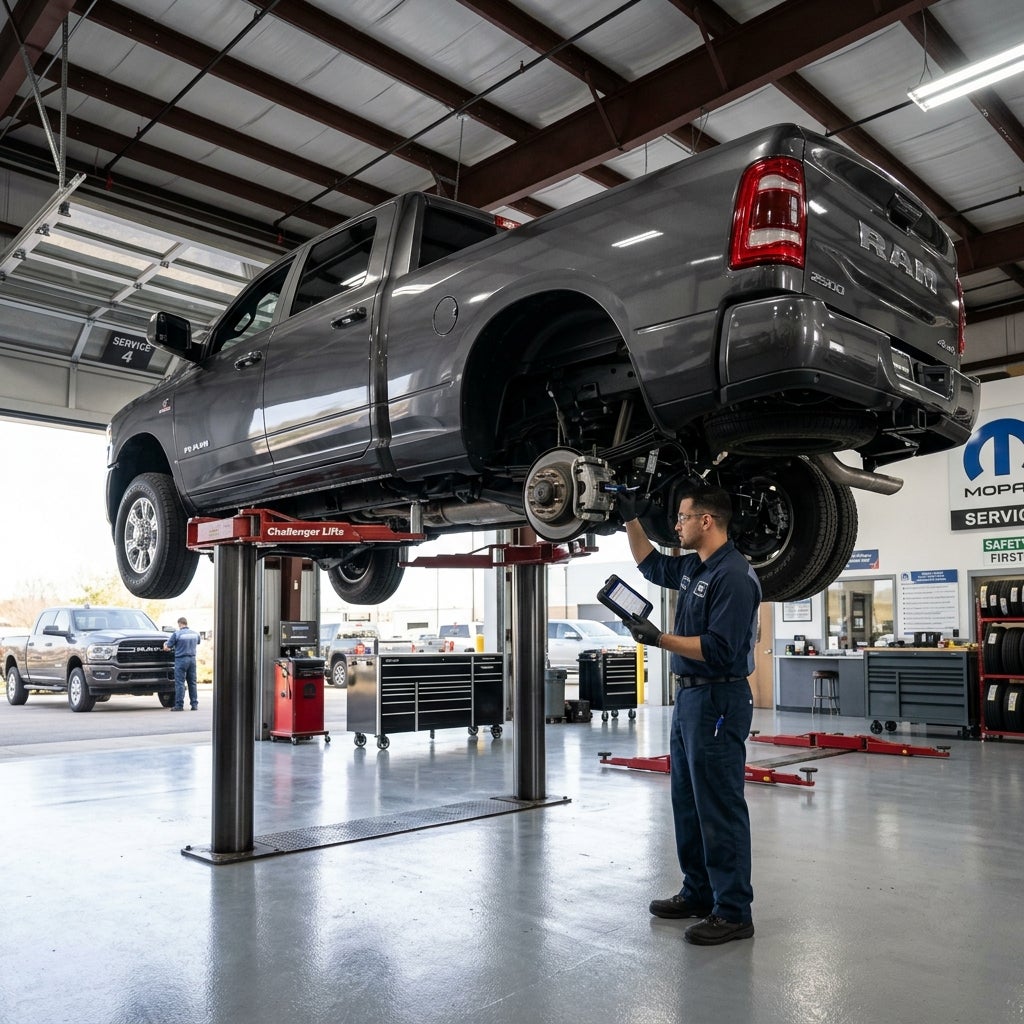
A mechanic in blue workwear uses a tablet to inspect the brake system of a dark grey pickup truck raised on a lift. (Representative image for illustration purposes only. Actual vehicle may vary based on trim and configuration.)

Does RAM Factory Warranty Cover Brake Pad Wear or Trailer Safety Checks? Direct Answer & Coverage Breakdown

.hrizn-visual-root a { color: #566BA1; } .hrizn-visual-root a { color: inherit; } .hrizn-visual-root p { margin: 0 0 1em; } .hrizn-visual-root p:last-child { margin-bottom: 0; } @media (max-width: 640px) { .hrizn-visual-root { text-align: center !important; } .hrizn-visual-root a { display: block; width: 100%; max-width: 320px; margin-left: auto; margin-right: auto; box-sizing: border-box; } .hrizn-visual-root + a { margin-top: 8px; } } @media (max-width: 640px) { #hrizn-cols-1 { flex-direction: column !important; align-items: stretch !important; } #hrizn-cols-1 > .hrizn-col { flex: 1 1 100% !important; width: 100% !important; } } @media (max-width: 640px) { #hrizn-cols-2 { flex-direction: column !important; align-items: stretch !important; } #hrizn-cols-2 > .hrizn-col { flex: 1 1 100% !important; width: 100% !important; } } #hrizn-table-table-sec-3 table{width:100%;table-layout:auto;border-collapse:collapse;font-family:'Open Sans',sans-serif;font-size:0.9rem} #hrizn-table-table-sec-3 th,#hrizn-table-table-sec-3 td{border:1px solid #e0e4ed;padding:8px;color:#595959;word-break:break-word;overflow-wrap:break-word} #hrizn-table-table-sec-3 th{background:#eeeeee;color:#1a1a22;font-weight:700;font-size:14px;text-align:left;vertical-align:middle;padding:8px} #hrizn-table-table-sec-3 tr:nth-child(even) td{background:rgba(86,107,161,0.04)} #hrizn-table-table-sec-3 .tableWrapper{overflow-x:hidden} @media (max-width: 640px) { #hrizn-3cols-1 { flex-direction: column !important; align-items: stretch !important; } #hrizn-3cols-1 > .hrizn-col { flex: 1 1 100% !important; width: 100% !important; } } @media (max-width: 640px) { #hrizn-cols-3 { flex-direction: column !important; align-items: stretch !important; } #hrizn-cols-3 > .hrizn-col { flex: 1 1 100% !important; width: 100% !important; } } @media (max-width: 640px) { #hrizn-cols-4 { flex-direction: column !important; align-items: stretch !important; } #hrizn-cols-4 > .hrizn-col { flex: 1 1 100% !important; width: 100% !important; } } @media (max-width: 640px) { #hrizn-3cols-2 { flex-direction: column !important; align-items: stretch !important; } #hrizn-3cols-2 > .hrizn-col { flex: 1 1 100% !important; width: 100% !important; } } @media (max-width: 640px) { #hrizn-cols-5 { flex-direction: column !important; align-items: stretch !important; } #hrizn-cols-5 > .hrizn-col { flex: 1 1 100% !important; width: 100% !important; } } @media (max-width: 640px) { #hrizn-3cols-3 { flex-direction: column !important; align-items: stretch !important; } #hrizn-3cols-3 > .hrizn-col { flex: 1 1 100% !important; width: 100% !important; } } @media (max-width: 640px) { #hrizn-cols-6 { flex-direction: column !important; align-items: stretch !important; } #hrizn-cols-6 > .hrizn-col { flex: 1 1 100% !important; width: 100% !important; } } Does Ram Factory Warranty Cover Brake Pad Wear or Trailer Safety Checks? Direct Answer & Coverage Breakdown When heavy-duty truck owners pull into Valor CDJR in Junction City, KS with severe brake squeal or a trailer brake warning light on the dashboard, the first question they usually ask is simple: “Is this covered under my Ram factory warranty?” The concise, definitive answer is both nuanced and critical for anyone hauling heavy gooseneck livestock trailers, farm machinery, or commercial equipment across Central Kansas. Under the standard Ram 3-Year / 36,000-Mile Basic Limited Warranty, normal wear-and-tear items—specifically brake pads, linings, shoes, and rotor surface friction wear—are covered against defects in material and workmanship for a strictly limited period of 12 months or 12,000 miles (whichever occurs first). Once your truck passes 12,000 miles or one year from its original in-service date, friction material consumption is classified as routine owner maintenance. If your brake pads wear down to the backing plate due to heavy towing across Riley County or high-mileage highway driving along I-70, replacement costs fall outside factory warranty coverage. Regarding trailer safety checks, trailer hitch mechanical integrity, trailer brake shoe adjustment, and 7-pin trailer wiring diagnostics: these procedures are strictly classified as non-warranty maintenance services. Factory warranty coverage protects solely against manufacturing defects in parts manufactured or installed by Stellantis/Ram. Standard trailer maintenance, trailer side wiring faults, damaged trailer breakaway switches, and pre-trip hitch safety checks are the operational responsibility of the truck owner. However, there is a crucial exception regarding truck-side electronic towing controls. If your 2024 or 2025 Ram 2500 or 3500 experiences a failure within the truck's Integrated Trailer Brake Module (ITBM), the factory trailer tow wiring harness, the 7-pin bumper receptacle, or the trailer light control module due to a factory material or assembly defect, those components are fully covered under the 3/36 Basic Warranty. If you are preparing for agricultural hauling season, stop by our service center or schedule an appointment online using our Service Scheduler to verify your truck's electronic trailer controller performance. Meet Mike Hogg: 20 Years of Heavy-Duty Ram Service Experience in Central Kansas As Service Director at Valor CDJR in Junction City, KS, Mike Hogg brings over 20 years of hands-on technical expertise in diagnosing and maintaining Ram Heavy-Duty powertrain, braking, and towing systems. Throughout his two decades in Central Kansas, Mike has worked directly with local farmers, cattle ranchers, construction contractors, and military families from Fort Riley who rely on their Ram 2500 and 3500 trucks for severe-duty hauling. “In Kansas agriculture and heavy commercial transport, your truck’s braking capacity isn’t just a convenience—it’s your primary safety lifeline,” says Mike. “I’ve seen drivers haul 20,000-pound livestock trailers down steep grades along Highway 18 and K-177 in blistering summer heat and sudden autumn downpours. Understanding where factory warranty ends and proactive maintenance begins is what prevents cataclysmic brake fade and costly roadside breakdowns.” Under Mike’s leadership, Valor CDJR has developed specialized, heavy-duty towing inspection protocols that go far beyond standard quick-lube checklists. His team of factory-certified Chrysler, Dodge, Jeep, and Ram master technicians evaluates friction shear points, rotor thermal checking, electronic gain signaling, and breakaway voltage systems to keep Kansas drivers safe on every mile of road. Mike Hogg, Service Director at Valor CDJR in Junction City, KS, supervising heavy-duty brake diagnostics. Understanding Ram Factory Warranty Limits on Wear Items vs. Defect Coverage Navigating manufacturer warranty documentation can be frustrating when unexpected repair bills arise. Stellantis establishes distinct boundaries between defect coverage and wear-and-tear maintenance. Understanding these parameters ensures Ram owners are never caught off guard when servicing their vehicles at our Junction City dealership. The 3-Year / 36,000-Mile Basic Limited Warranty protects almost every factory-installed component against material defects or factory assembly mistakes. However, high-friction and high-wear items have shortened coverage windows: • Brake Pads & Linings: Covered for 12 months or 12,000 miles against premature debonding, uneven backing plate cracking, or manufacturing defects. • Brake Rotors & Drums: Covered for 12 months / 12,000 miles for defect-related warpage or casting stress cracks. Wear caused by metal-to-metal pad contact due to neglected pad friction is non-warrantable. • Powertrain Warranty (5-Year / 60,000-Mile or 5-Year / 100,000-Mile Diesel): Covers internal engine, transmission, drivelines, and axle assemblies. It does not cover wheel brake hardware, calipers, rotors, or trailer braking interfaces. Component / Service Warranty Coverage Window Classification Brake Pads & Shoes 12 Months / 12,000 Miles Wear Item (Defect Only) Brake Rotors (Surface Wear) 12 Months / 12,000 Miles Wear Item (Defect Only) Brake Calipers & Master Cylinder 3 Years / 36,000 Miles Bumper-to-Bumper Warranty Integrated Trailer Brake Module (ITBM) 3 Years / 36,000 Miles Bumper-to-Bumper Electrical 7-Pin Trailer Wiring Socket (Truck Side) 3 Years / 36,000 Miles Bumper-to-Bumper Electrical Brake Fluid Flushing & Moisture Check None (Owner Maintenance) Scheduled Maintenance Trailer Safety Checks & Hitch Inspection None (Owner Maintenance) Owner Operational Check Schedule Factory Warranty Inspection Expert Commentary: Mike Hogg on Heavy-Duty Towing Realities and Stopping Safety “One of the most dangerous assumptions a truck owner can make is assuming that because their 2024 or 2025 Ram 3500 is under factory warranty, the braking system on their loaded rig is fully protected against failure during heavy towing,” notes Mike Hogg. “When you pull a 16,000-pound dual-axle stock trailer through the Flint Hills, kinetic energy converts into immense thermal energy at the wheel ends. Factory ceramic and semi-metallic friction pads can withstand incredible temperatures, but friction material wears away proportionately to load mass and stopping frequency. If you rely on warranty coverage to catch worn pads, you will likely end up with ruined rotors, severe brake fade, or complete friction glazing halfway down a 6% highway grade.” “Proactive brake maintenance and trailer safety checks aren't arbitrary dealership recommendations—they are essential protocols for anyone pulling serious payload. At Valor CDJR, we treat every towing rig as if our own families were sitting in the cab. If you ever need advice on brake wear rates or upgrading your friction pads, Call us at (785) 238-5114 to talk directly with our service advisory team.” What Trailer Brake Control Features Are Integrated into 2025 Ram Heavy-Duty Trucks? Integrated Trailer Brake Module (ITBM) The factory-installed ITBM allows seamless proportional electric or electric-over-hydraulic trailer brake engagement. Drivers can store unique trailer profiles, adjust gain output from +0.5 to +10.0 directly from the dash, and activate manual squeeze lever override in emergency sway conditions. Defect coverage: Covered 3 Yrs / 36,000 Miles. Trailer Light Check & Diagnostics 2025 Ram HD trucks feature an automated Trailer Light Check routine accessible via the Uconnect 5 touchscreen or key fob. It cycles turn signals, brake lights, and running lamps so a solo driver can verify light function before pulling onto public roads. Reverse Guidance & Trailer Cameras Equipped with Digital Rearview Mirrors, 360-degree Surround View, and dual trailer camera inputs, 2025 Ram HD models feed real-time visual streams directly into the central display. Bumper trailer wiring connectors integrate auxiliary camera links and trailer reverse guidance gridlines. If you are interested in exploring new high-capability haulers equipped with factory ITBM technology, browse our latest New Vehicle Listings or explore our heavy-duty inventory in person at Valor CDJR. How the Ram Heavy-Duty Diesel Exhaust Brake Works During Trailer Deceleration One of the greatest engineering achievements on Cummins 6.7L Turbo Diesel-powered Ram 2500 and 3500 trucks is the driver-selectable Smart Diesel Exhaust Brake. Operating via the Variable Geometry Turbocharger (VGT), this system dynamically restricts exhaust gas flow when the accelerator pedal is released, creating negative backpressure inside the engine cylinders. The exhaust brake features two distinct operating modes: • Full Exhaust Braking Mode: Delivers maximum engine retardant force immediately upon lifting off the accelerator. This mode is ideal for steep downhill grades with heavy payload gross combination weights (GCWR). • Smart (Auto) Mode: Automatically modulates exhaust backpressure to maintain the speed set by the driver. If you tap the wheel brakes while descending a hill, the Smart Exhaust Brake locks in that speed and continuously modulates exhaust pressure to hold velocity without driver pedal input. By utilizing engine compression to absorb vehicle momentum during downhill descent, the Smart Exhaust Brake dramatically reduces the thermal friction load placed on wheel brake pads and rotors. In real-world testing across hilly terrain in Central Kansas, consistent use of the diesel exhaust brake can double or triple the service life of service brake pads. If you are upgrading your agricultural fleet or commercial towing rig, check out our current Commercial Vehicle Inventory to inspect Cummins-powered trucks with factory exhaust brake technology. Schedule Your Pre-Tow Brake Inspection at Valor CDJR in Junction City, KS If you notice a brake squeal or a trailer signal error message, consider having your towing system checked. Whether you are hauling grain, livestock, or heavy equipment across Junction City, Manhattan, or Fort Riley, our certified Ram master technicians are ready to perform a comprehensive friction and electrical diagnostic. Book Towing Safety Inspection Online Recommended Brake Component Inspection Intervals for Severe-Duty and Rural Driving Conditions Severe-Duty & Agricultural Schedule (5,000-Mile Interval) Ram owner manuals specify severe-duty maintenance schedules for trucks operating under any of the following conditions: frequent trailer towing over 10,000 lbs, operation on gravel or unpaved farm roads, dusty trail driving, continuous stop-and-go idling, or off-road mud exposure. • Every 5,000 Miles / 6 Months: Inspect brake pad thickness, caliper slide pin movement, and rotor friction surfaces. Perform visual inspection of 7-pin plug pins for corrosion. • Every 15,000 Miles: Check trailer breakaway battery voltage, inspect trailer brake wire harnesses, test brake fluid moisture content (flush if boiling point is reduced). Standard Highway Towing Schedule (10,000-Mile Interval) For Ram trucks driven primarily on paved interstate highways with light to moderate towing frequency: • Every 10,000 Miles / 12 Months: Measure inner and outer pad friction depth with a digital gauge. Inspect rotor thickness against minimum throwaway specifications stamped on the rotor hat. • Every 20,000 Miles: Inspect emergency parking brake shoe linings, lubricate parking brake cables, and verify ITBM voltage output curves under simulated trailer resistance. For fast routine checks without an appointment, visit our Express Lane service bay at Valor CDJR. What Are the Common Signs of Warped Brake Rotors on a Ram 3500 Dually? 1. Brake Pedal Pulsation & Steering Vibration When applying brakes under load on a Ram 3500 Dual Rear Wheel (DRW) truck, a rhythmic pulsation felt through the brake pedal or rapid steering wheel flutter usually indicates Disc Thickness Variation (DTV) caused by localized overheating and friction material transfer. 2. Heat Checking & Surface Micro-Cracking Severe thermal cycles generate thin hairline stress cracks on rotor friction faces known as heat checking. If rotor temperatures exceed 1,200°F during hard mountain braking, the iron matrix alters, causing permanent structural hard spots (cementite formation). 3. Squealing, Groaning, or Extended Distance Glazed rotor surfaces and hardened pad friction compounds produce high-frequency squealing or low-frequency groaning under brake application. Stopping distances increase significantly as the coefficient of friction drops under extreme heat. What Practical Trailer Safety Inspection Steps Should Ram Owners Follow Before Towing Farm or Utility Trailers? Electrical & Electronic Pre-Tow Checklist 1. 7-Pin Socket Contact Tension: Clean terminal blade contacts with electrical contact cleaner and apply dielectric grease to prevent green copper oxidation. 2. Breakaway Battery Test: Verify the trailer emergency breakaway battery voltage reads at least 12.6 volts using a multimeter. Pull breakaway pin to confirm magnets lock trailer hubs. 3. ITBM Gain Calibration: Test manual squeeze lever at 5 mph on dry pavement. Adjust gain until trailer brakes lock slightly, then dial back gain 0.5 units. Mechanical & Hardware Pre-Tow Checklist 1. Coupler & Safety Chains: Ensure hitch ball matches coupler size (e.g., 2-5/16" vs 2"). Cross safety chains under coupler to form a support basket and verify chain class rating. 2. Trailer Brake Shoe Adjustment: Manually adjust star wheels on drum brake assemblies so shoes drag lightly against drum before backing off one notch. 3. Cold Tire Inflation: Set trailer tire pressures to maximum PSI stamped on sidewall to minimize sidewall flex and heat buildup along highway speeds. Order OEM Mopar Towing Accessories Ram Heavy-Duty Towing Brake and Trailer Safety Service Protocol at Valor CDJR Step 1: Mechanical Friction Diagnostic • Micrometer rotor thickness measurement at 8 points. • Digital caliper pad remaining friction depth check. • Caliper slide pin removal, cleaning, and high-temp synthetic lubrication. • Parking brake shoe lining and cable tension inspection. Step 2: Electronic ITBM & Towing Scan • WiTECH 2.0 factory diagnostic scan of Integrated Trailer Brake Controller. • Oscilloscope signal output testing at 7-pin bumper receptacle. • Voltage drop testing across factory tow wiring harness harness connections. Step 3: Fluid & Hydraulic Integrity • Digital copper/water moisture test of DOT 4 brake fluid. • Master cylinder pressure decay holding check. • Hydraulic flexible rubber brake hose expansion inspection under pedal pressure. Choosing Genuine Mopar OEM Heavy-Duty Brake Pads and Towing Accessories When replacing worn friction components on your Ram truck, choosing Genuine Mopar OEM Heavy-Duty Brake Pads and Rotors ensures optimal stopping performance and factory fitment. Mopar severe-duty friction formulations are engineered specifically for Ram caliper piston hydraulic pressures and anti-lock brake control algorithms. Key benefits of Mopar OEM Brake Friction Parts: • Engineered Thermal Capacity: High-density semi-metallic or ceramic matrix withstands operating temperatures up to 1,400°F without friction shear or pad debonding. • Multi-Layer Constrained Dampening Shims: Eliminates low-speed squeal and high-frequency brake noise. • 2-Year / Unlimited Mile Mopar Replacement Warranty: All genuine Mopar parts installed by our dealership carry full nationwide warranty protection. Generic aftermarket brake pads may vary in materials and performance under heavy towing loads. Overheating low-grade pads creates a slippery glazed film on rotors, dramatically increasing stopping distances when hauling trailers across Kansas highways. Order factory-certified parts directly through our specialized Parts Department or consult with our service advisors today. Book Your Ram Towing Safety Check & Friction Service at Valor CDJR Today Whether you need a quick brake pad wear check, trailer light diagnostics, or are thinking about upgrading to a brand new 2025 Ram 2500 or 3500 Heavy-Duty truck, the team at Valor CDJR in Junction City, KS is here to assist you every step of the way. Visit us at 1825 Goldenbelt Blvd, Junction City, KS 66441 or Get Directions to Valor CDJR. Looking to upgrade your current truck? Check your trade value using our Trade In Evaluation tool, Contact us for financing information for financing online, or explore our Used Vehicle Listings today. Schedule Service at Valor CDJR
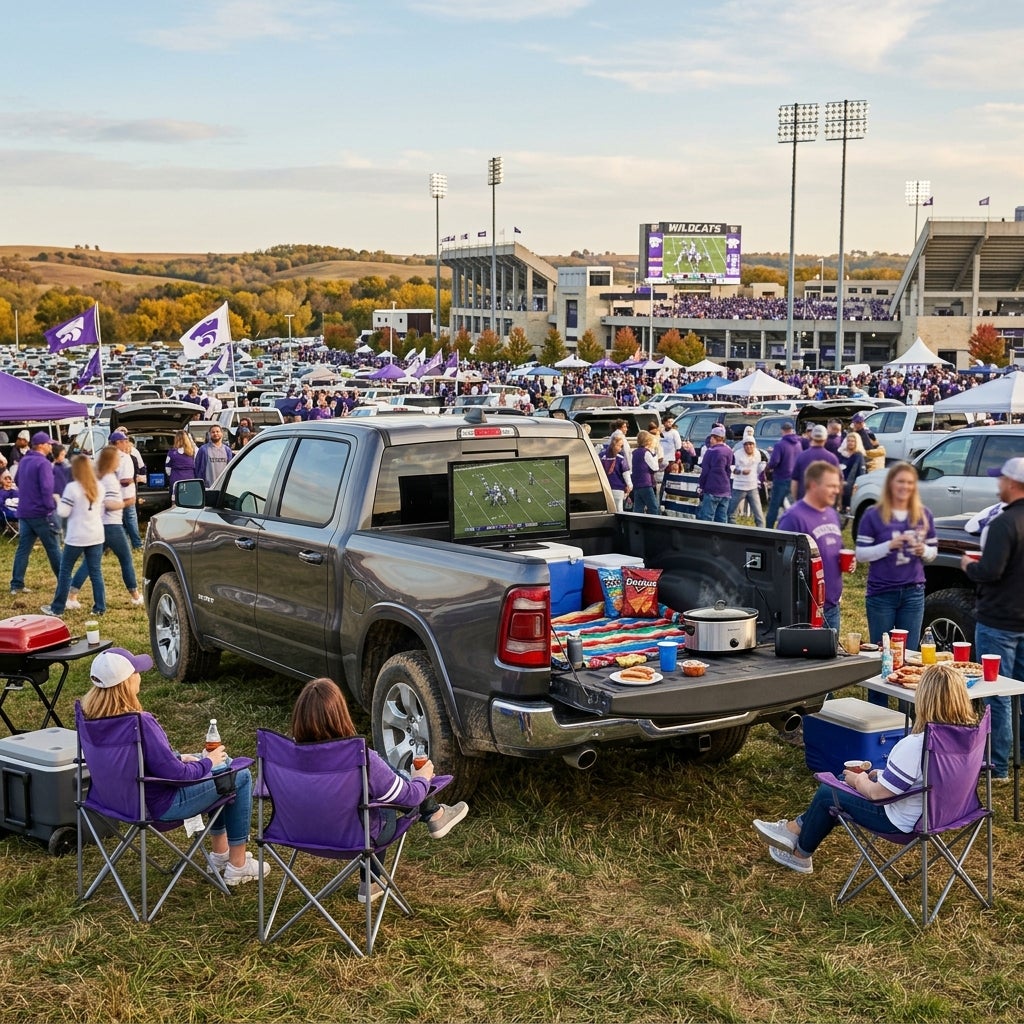
People tailgating around a grey pickup truck with a TV in the bed outside a college football stadium. (Representative image for illustration purposes only. Actual vehicle may vary based on trim and configuration.)

Can a 400-Watt Truck Outlet Power a Slow Cooker and TV Simultaneously? The Bottom-Line Answer

.hrizn-visual-root a { color: #566BA1; } .hrizn-visual-root a { color: inherit; } .hrizn-visual-root p { margin: 0 0 1em; } .hrizn-visual-root p:last-child { margin-bottom: 0; } @media (max-width: 640px) { .hrizn-visual-root { text-align: center !important; } .hrizn-visual-root a { display: block; width: 100%; max-width: 320px; margin-left: auto; margin-right: auto; box-sizing: border-box; } .hrizn-visual-root + a { margin-top: 8px; } } @media (max-width: 640px) { #hrizn-cols-1 { flex-direction: column !important; align-items: stretch !important; } #hrizn-cols-1 > .hrizn-col { flex: 1 1 100% !important; width: 100% !important; } } #hrizn-table-tbl-2 table{width:100%;table-layout:auto;border-collapse:collapse;font-family:'Open Sans',sans-serif;font-size:0.9rem} #hrizn-table-tbl-2 th,#hrizn-table-tbl-2 td{border:1px solid #e0e4ed;padding:8px;color:#595959;word-break:break-word;overflow-wrap:break-word} #hrizn-table-tbl-2 th{background:#e0e0e0;color:#1a1a22;font-weight:700;font-size:14px;text-align:left;vertical-align:middle;padding:8px} #hrizn-table-tbl-2 tr:nth-child(even) td{background:rgba(86,107,161,0.04)} #hrizn-table-tbl-2 .tableWrapper{overflow-x:hidden} @media (max-width: 640px) { #hrizn-cols-2 { flex-direction: column !important; align-items: stretch !important; } #hrizn-cols-2 > .hrizn-col { flex: 1 1 100% !important; width: 100% !important; } } @media (max-width: 640px) { #hrizn-3cols-1 { flex-direction: column !important; align-items: stretch !important; } #hrizn-3cols-1 > .hrizn-col { flex: 1 1 100% !important; width: 100% !important; } } @media (max-width: 640px) { #hrizn-cols-3 { flex-direction: column !important; align-items: stretch !important; } #hrizn-cols-3 > .hrizn-col { flex: 1 1 100% !important; width: 100% !important; } } @media (max-width: 640px) { #hrizn-3cols-2 { flex-direction: column !important; align-items: stretch !important; } #hrizn-3cols-2 > .hrizn-col { flex: 1 1 100% !important; width: 100% !important; } } @media (max-width: 640px) { #hrizn-cols-4 { flex-direction: column !important; align-items: stretch !important; } #hrizn-cols-4 > .hrizn-col { flex: 1 1 100% !important; width: 100% !important; } } @media (max-width: 640px) { #hrizn-3cols-3 { flex-direction: column !important; align-items: stretch !important; } #hrizn-3cols-3 > .hrizn-col { flex: 1 1 100% !important; width: 100% !important; } } @media (max-width: 640px) { #hrizn-cols-5 { flex-direction: column !important; align-items: stretch !important; } #hrizn-cols-5 > .hrizn-col { flex: 1 1 100% !important; width: 100% !important; } } #hrizn-table-tbl-10 table{width:100%;table-layout:auto;border-collapse:collapse;font-family:'Open Sans',sans-serif;font-size:0.9rem} #hrizn-table-tbl-10 th,#hrizn-table-tbl-10 td{border:1px solid #e0e4ed;padding:8px;color:#595959;word-break:break-word;overflow-wrap:break-word} #hrizn-table-tbl-10 th{background:#e0e0e0;color:#1a1a22;font-weight:700;font-size:14px;text-align:left;vertical-align:middle;padding:8px} #hrizn-table-tbl-10 tr:nth-child(even) td{background:rgba(86,107,161,0.04)} #hrizn-table-tbl-10 .tableWrapper{overflow-x:hidden} @media (max-width: 640px) { #hrizn-3cols-4 { flex-direction: column !important; align-items: stretch !important; } #hrizn-3cols-4 > .hrizn-col { flex: 1 1 100% !important; width: 100% !important; } } Can a 400-Watt Truck Outlet Power a Slow Cooker and TV Simultaneously? The Bottom-Line Answer The short answer is generally no, not if the slow cooker is actively heating on high. A standard 400-watt truck or vehicle inverter is designed to handle light-to-moderate electrical loads. A typical 6-quart slow cooker operating on its High temperature setting draws between 250 and 300 watts of continuous power, but it can spike beyond 350 watts when its heating element initially cycles on. When you pair that with a modern 43-inch to 55-inch LED television—which draws anywhere from 60 to 120 watts—the combined continuous demand quickly reaches 310 to 420 watts. Add in initial power surge requirements, and you will almost certainly trip the vehicle inverter's automatic internal circuit breaker, instantly cutting power to both appliances. However, there is a very simple workaround that makes simultaneous operation very effective If you cook your meal completely at home, bring it to the tailgate hot, and switch the slow cooker setting to 'Warm' (which consumes only 50 to 80 watts continuous), your total load with a 65-watt LED TV will remain safely under 150 watts. Alternatively, powering devices sequentially—bringing stew or dip to temperature before plugging in the big screen—allows a standard 400-watt outlet to manage game day duties without issue. For drivers seeking seamless power without wattage juggling, high-capacity onboard power systems found on modern vehicles like the Ram 1500 and Chrysler Pacifica at Valor CDJR offer robust solutions tailored for outdoor activities. Calculating Electrical Load: Slow Cooker and LED TV Power Draw Explained To understand electrical management in your truck or minivan, you must master the difference between running (continuous) watts and starting (surge) watts. Vehicle inverters convert 12V DC power from the automotive battery into 115V AC power suitable for household electronics. Standard automotive inverters are rated for peak surge capacity for fractions of a second, but their sustained output rating is what dictates real-world usability. A slow cooker uses resistive heating coils. When first turned on High, these coils demand peak amperage to reach operating temperature. Similarly, televisions feature power supply capacitors that draw a brief surge when turned on. If the total combined surge exceeds 400 watts, the inverter trips to protect your vehicle's wiring harness and battery from overheating or short-circuit damage. Tailgate Device Running Watts Peak Surge Watts Compatibility (400W Limit) 3.5-Qt Slow Cooker (Low) 120W - 150W 180W Safe Alone or with Small TV 6-Qt Slow Cooker (High) 275W - 320W 400W Single Device Only Slow Cooker (Warm Mode) 50W - 75W 90W Safe for Dual Device Use 32-inch LED Television 35W - 55W 75W Very Low Power Draw 55-inch Smart LED TV 75W - 110W 150W Moderate Power Draw HD Satellite Receiver 20W - 30W 40W Minimal Power Draw What Is the Onboard Power Inverter Capacity Available on the Ram 1500? The Ram 1500 has long set the benchmark for work site utility and game day versatility. Most Ram 1500 models equipped with the Bed Utility Group feature a 115V/400W AC outlet mounted directly into the interior sidewall of the truck bed, complemented by a secondary 115V outlet on the rear of the center console inside the cabin. These outlets are fed by a heavy-duty power inverter tied directly to the vehicle's charging network. Ram's intelligent battery protection control unit monitors the truck's 12-volt battery voltage continuously. If you are running devices with the ignition in accessory mode and voltage drops below a safe starting threshold, the system automatically cuts inverter power to preserve cranking battery reserve. Browse our latest New Vehicle Listings to explore Ram models equipped with factory inverter packages. Explore Ram 1500 Inventory How Does the Onboard Electrical Outlet System Work on the Chrysler Pacifica? 115V AC Inverter Power The Chrysler Pacifica features an available 115-volt AC auxiliary power outlet located convenient to the second-row seats or rear cargo trim panel. Providing up to 150W continuous (and up to 400W on select high-spec trims), it powers gaming consoles, laptops, and outdoor displays directly from the vehicle battery. Plug-In Hybrid Efficiency On the Chrysler Pacifica Plug-In Hybrid, the onboard electrical setup is capable. The vehicle pulls electrical power directly from its massive 16 kWh high-voltage lithium-ion traction battery, allowing you to run small electronics for hours without idling a gasoline engine continuously. Whisper-Quiet Operation Because the hybrid system only cycles the V6 gas engine occasionally to top off the battery reserve, your tailgate setup stays whisper quiet. Enjoy pristine sound quality from television broadcasts and music without noisy generator humming or exhaust odor. Is a Minivan or a Full-Size Truck Better for Family Game Day Setups at College Football Games? Choosing between a Ram 1500 and a Chrysler Pacifica for college game days in Manhattan comes down to how your family tailgates. The Ram 1500 provides strong rugged capability. High ground clearance, durable spray-in bedliners, RamBox cargo management units with built-in drain plugs for ice and drinks, and massive towing capacity make it ideal for pulling large smoker trailers or heavy equipment platforms. Conversely, the Chrysler Pacifica shines in weather protection and passenger comfort. Its rear power liftgate serves as an instant rain canopy or sun shade over rear-facing seating. Power sliding doors make loading fragile electronics effortless, while weather-sealed interior flooring handles muddy boots during rainy autumn kickoffs across Riley County. What Is the Cargo Capacity of the Chrysler Pacifica for Hauling Tailgating Equipment? 140.5 Cu. Ft. Max Space With exclusive Stow 'n Go seating folded effortlessly into the floor bins, the Chrysler Pacifica opens up a massive 140.5 cubic feet of flat cargo space. That is more enclosed cargo volume than many full-size SUV options on the market. Enclosed Protection Protect expensive 65-inch 4K screens, soundbars, satellite dishes, and digital slow cookers inside a climate-controlled, lockable cabin while traveling from Junction City to Manhattan before game kickoff. Upgrade Your Rig Ready to trade in your current vehicle for a tailgate-ready minivan or truck? Get a current valuation today with our official Trade In Evaluation tool. Value Your Trade-In K-State Game Day Setup: Using Chrysler Pacifica and Ram 1500 Onboard Power at Bill Snyder Stadium For K-State Wildcats fans driving up from Junction City or surrounding Geary County, a smooth game day experience at Bill Snyder Family Stadium requires a solid electrical timeline. Parking lots open 5 hours before kickoff, giving you plenty of time to build the ultimate tailgate station. Recommended Timeline & Power Strategy: • Hour -4.5 (Arrival & Set Up): Park vehicle, extend your pop-up tent, and position your 14-gauge heavy-duty extension cord from the Ram 1500 bed outlet or Pacifica rear plug. • Hour -4.0 (Food Preparation): Plug in your pre-heated slow cooker set strictly to 'Warm' (50W-80W). If you need to boost food heat initially, run the crockpot alone for 20 minutes before powering on video gear. • Hour -3.5 (Entertainment Power On): Connect your LED TV (65W) and satellite/streaming device (25W). Total draw will settle around 140W to 170W—well within your 400W system threshold. • Hour -1.0 (Pre-Kickoff Wind Down): Unplug non-essential devices, secure equipment, and head into the stadium with total peace of mind! What Stadium Tailgating Rules Around Power Use and Generators Should Owners Consider? Traditional Generator Restrictions K-State Athletics and Bill Snyder Family Stadium enforce specific tailgating policies regarding standalone gas generators. Loud portable generators that disrupt neighboring tailgaters or produce heavy exhaust fumes are strictly monitored. Furthermore, storing extra liquid gasoline cans near hot vehicle tailpipes poses severe fire safety hazards in crowded stadium parking lots. Onboard Power Advantage Vehicle-integrated onboard outlets give Ram 1500 and Chrysler Pacifica owners a massive advantage. Factory inverters produce zero extra noise beyond standard engine idle or operate in complete silence when powered by the Pacifica Plug-In Hybrid. You comply with all stadium rules, save space by leaving external generators at home, and eliminate gas cans entirely. How to Manage 400-Watt Outlets Safely Without Tripping Truck Inverter Breakers 1. Stagger Startup Times Never plug in and turn on the slow cooker, TV, and audio receiver simultaneously. Turn on devices one by one, allowing peak initial surge currents to settle before starting the next appliance. 2. High-Efficiency Tech Choose modern LED or OLED displays and compact soundbars rather than older plasma screens or high-wattage home theater receivers that consume excessive electricity. 3. Electrical Maintenance Ensure your battery terminals, alternator output, and fuses are in top condition before football season. Book a multi-point inspection through our Service Scheduler. Schedule Electrical Service What Is the Starting Price for a Ram 1500 Equipped with Truck Bed Power Outlets? The Ram 1500 lineup offers onboard 115V/400W outlets across multiple trim levels. On entry-level trims like the Tradesman and popular Big Horn, the 400-watt power inverter is included when equipped with the optional Bed Utility Group or Level 2 Equipment Package. Mid-to-upper trims such as the Laramie, Rebel, and Limited come standard with cabin and bed-mounted auxiliary power outlets. At Valor CDJR, our finance specialists help Junction City and Manhattan buyers with current financing information. Start your application early by visiting Get Pre-Approved. Ram 1500 Trim Outlet Configuration Inverter Rating Tailgate Package Availability Tradesman Bed & Console Outlets 400W Peak / Continuous Optional (Bed Utility Group) Big Horn Bed & Console Outlets 400W Peak / Continuous Optional (Level 2 Group) Laramie Bed, Console & Rear Seat 400W Continuous Standard Equipment Rebel Bed, Console & Rear Seat 400W Continuous Standard Equipment Limited Bed & Multi-Cabin Sockets 400W Continuous Standard Premium Feature Tailgating and Camping Power Setups Across Junction City and Riley County Milford Lake Camping Heading out for weekend camping at Milford Lake? Onboard 400W outlets easily power air mattress inflators, LED campsite lanterns, portable coffee makers, and electric insect zappers without carrying heavy power banks. Tuttle Creek Excursions At Tuttle Creek State Park, recharge 18V power tool batteries, run portable tire pumps for off-road trail riding, or keep handheld radios powered up during multi-day family outdoor adventures. Rural Work & Jobsite Power Across rural Geary and Riley counties, local agricultural and contractor teams rely on Ram truck bed power to run mobile laptops, diagnostic scanners, and battery chargers right in the field. Test Drive a Tailgate-Ready Ram 1500 or Chrysler Pacifica at Valor CDJR in Junction City Whether you are getting ready for K-State game days at Bill Snyder Family Stadium or gearing up for outdoor family camping across Riley and Geary counties, having reliable onboard AC power elevates your entire experience. A standard 400-watt outlet can seamlessly run a slow cooker on 'Warm' alongside a large LED television, making your vehicle the ultimate tailgate command center. Visit Valor CDJR in Junction City, KS today to inspect power inverter options on our New Vehicle Listings and Used Vehicle Listings. Our team is ready to assist you with everything from vehicle feature demonstrations to maintaining your electrical system at our Parts Department and Express Lane. Explore our Commercial Vehicle Inventory or Get Directions to Valor CDJR today. Have questions right now? Call us at (785) 238-5114! Schedule Your Test Drive Today

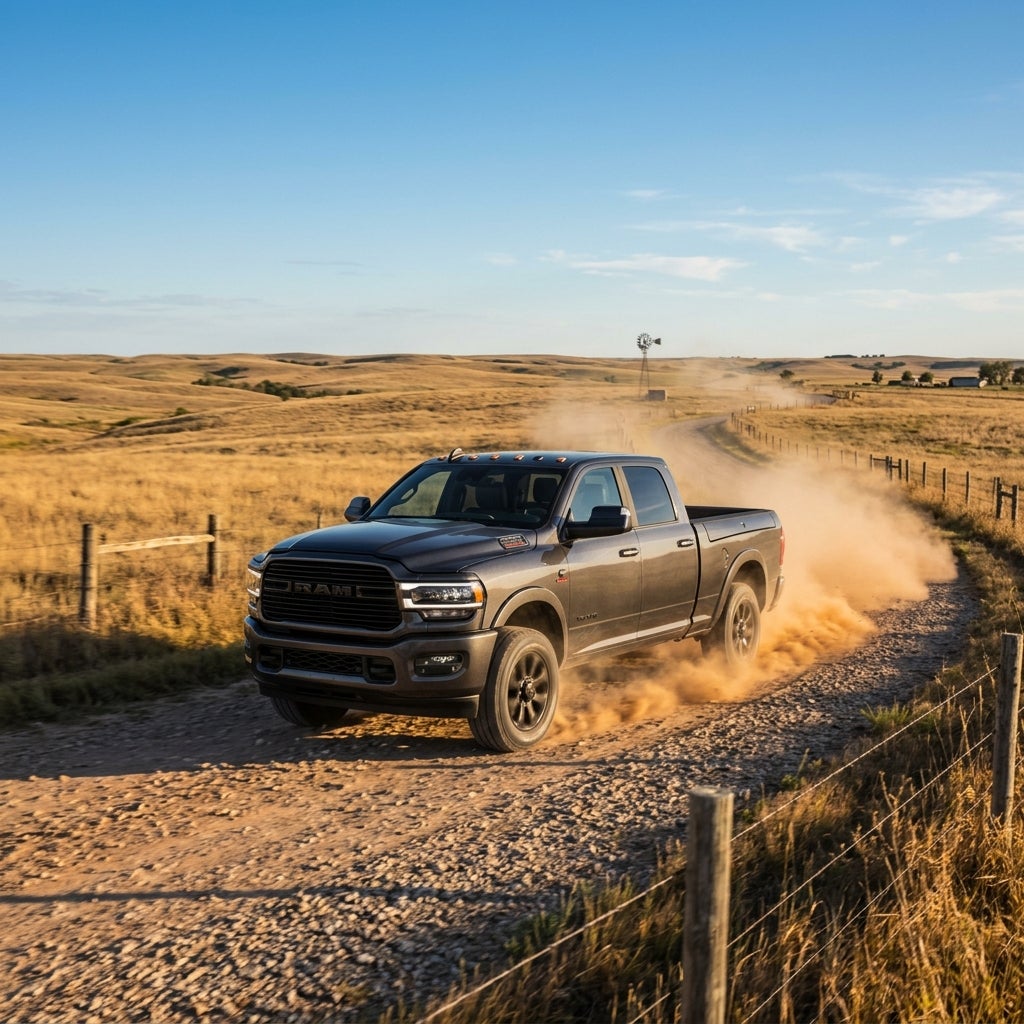
Dark grey Ram pickup truck kicking up dust on a rural dirt road through rolling golden grassy hills. (Representative image for illustration purposes only. Actual vehicle may vary based on trim and configuration.)

Essential Mopar Maintenance for Rural Driving: Key Takeaways from 20 Years in the Service Bay

.hrizn-visual-root a { color: #566BA1; } .hrizn-visual-root a { color: inherit; } .hrizn-visual-root p { margin: 0 0 1em; } .hrizn-visual-root p:last-child { margin-bottom: 0; } @media (max-width: 640px) { .hrizn-visual-root { text-align: center !important; } .hrizn-visual-root a { display: block; width: 100%; max-width: 320px; margin-left: auto; margin-right: auto; box-sizing: border-box; } .hrizn-visual-root + a { margin-top: 8px; } } @media (max-width: 640px) { #hrizn-cols-1 { flex-direction: column !important; align-items: stretch !important; } #hrizn-cols-1 > .hrizn-col { flex: 1 1 100% !important; width: 100% !important; } } @media (max-width: 640px) { #hrizn-cols-2 { flex-direction: column !important; align-items: stretch !important; } #hrizn-cols-2 > .hrizn-col { flex: 1 1 100% !important; width: 100% !important; } } @media (max-width: 640px) { #hrizn-3cols-1 { flex-direction: column !important; align-items: stretch !important; } #hrizn-3cols-1 > .hrizn-col { flex: 1 1 100% !important; width: 100% !important; } } @media (max-width: 640px) { #hrizn-cols-3 { flex-direction: column !important; align-items: stretch !important; } #hrizn-cols-3 > .hrizn-col { flex: 1 1 100% !important; width: 100% !important; } } @media (max-width: 640px) { #hrizn-cols-4 { flex-direction: column !important; align-items: stretch !important; } #hrizn-cols-4 > .hrizn-col { flex: 1 1 100% !important; width: 100% !important; } } @media (max-width: 640px) { #hrizn-3cols-2 { flex-direction: column !important; align-items: stretch !important; } #hrizn-3cols-2 > .hrizn-col { flex: 1 1 100% !important; width: 100% !important; } } #hrizn-table-tbl-sec10-checklist table{width:100%;table-layout:auto;border-collapse:collapse;font-family:'Open Sans',sans-serif;font-size:0.9rem} #hrizn-table-tbl-sec10-checklist th,#hrizn-table-tbl-sec10-checklist td{border:1px solid #e0e4ed;padding:8px;color:#595959;word-break:break-word;overflow-wrap:break-word} #hrizn-table-tbl-sec10-checklist th{background:#1a1a22;color:#ffffff;font-weight:700;font-size:14px;text-align:left;vertical-align:middle;padding:10px} #hrizn-table-tbl-sec10-checklist tr:nth-child(even) td{background:rgba(86,107,161,0.04)} #hrizn-table-tbl-sec10-checklist .tableWrapper{overflow-x:hidden} @media (max-width: 640px) { #hrizn-cols-5 { flex-direction: column !important; align-items: stretch !important; } #hrizn-cols-5 > .hrizn-col { flex: 1 1 100% !important; width: 100% !important; } } Essential Mopar Maintenance for Rural Driving: Key Takeaways from 20 Years in the Service Bay The Bottom-Line Answer: Driving on unpaved roads, loose gravel, and demanding agricultural terrain throughout rural Kansas may shorten brake and suspension maintenance intervals significantly. Severe-duty inspections every 5,000 miles—focusing on gravel-abraded brake rotors, dust-contaminated caliper pins, and premature ball joint or bushing play—are essential to maintaining vehicle safety, occupant comfort, and full towing capacity across Junction City, Riley County, and the Flint Hills region. When OEM engineers design maintenance schedules published in your owner's manual, their baseline numbers assume ideal highway conditions: smooth asphalt, moderate ambient temperatures, clean paved roads, and lightweight passenger loads. However, central Kansas drivers operate in an environment far removed from paved highways. Daily transit over unpaved county roads subjects Ram 1500, 2500, 3500 trucks and Jeep 4x4 SUVs to severe mechanical grinding from fine airborne silica dust and high-velocity stone strikes. Over time, these conditions accelerate friction wear, compromise rubber dust boots, and breakdown hydraulic fluids far ahead of factory schedules. At Valor CDJR, our factory-certified service team sees firsthand how Flint Hills washboard tracks impact suspension dampers and brake calipers. By adopting a proactive severe-duty maintenance regimen, owners preserve factory ride quality, prevent secondary system wear, and protect the overall resale value of their vehicle. Whether you are hauling livestock trailers along county lines or commuting between Manhattan and Junction City, staying ahead of rural wear ensures your Ram truck or Jeep 4x4 delivers unwavering reliability when you need it most. Check out our New Vehicle Listings to explore the newest severe-duty equipped models. Meet Mike Hogg: 20 Years of Keeping Mopar Vehicles Performing in Central Kansas As Service Director at Valor CDJR, Mike Hogg brings two decades of hands-on automotive diagnostic expertise directly to vehicle owners across central Kansas. Over 20 years in the service bay, Mike has personally evaluated thousands of Ram pickup trucks, Jeep Wranglers, Grand Cherokees, and Dodge Durangos subjected to the harsh conditions of rural farming, ranching, and cross-county trailering. "Standard service manuals give you a great starting point for city driving, but rural Kansas is a different proving ground altogether," explains Mike. "Fine limestone dust gets past rubber boots, gravel chops up brake rotor surfaces, and continuous washboard chatter works chassis fasteners loose. Understanding how rural conditions degrade Mopar components is what separates a minor preventative service from a costly breakdown in the field." Mike's technical leadership at Valor CDJR ensures every service customer receives expert guidance grounded in real-world local experience. His team focuses on targeted preventative care to keep agricultural equipment operators, small business fleets, and rural commuters running safely year-round. If you're considering expanding your fleet, view our Commercial Vehicle Inventory or stop by to consult directly with our service team. How Rural Dirt and Gravel Roads Impact Mopar Brake Pads and Rotors Silica Dust Contamination: Dry unpaved roads in rural Kansas generate micro-abrasive silica dust that settles directly on open brake assemblies. When you step on the pedal, this fine grit acts like sandpaper between the friction material and rotor face, creating severe scoring, deep grooves, and rapid thickness variation across the disc surface. Caliper Pin and Slide Binding: Fine dirt particles easily bypass worn caliper guide pin boots. As dust mixes with high-temperature lubricant, it creates a thick sludge that binds caliper slides. Bound caliper pins force brake pads to drag constantly against the rotor, causing localized thermal hot spots, pad glazing, and uneven inner-versus-outer pad wear. Gravel Chipping & Thermal Cracking: Loose gravel flung from tires can strike brake dust shields and lodge between the backing plate and rotor. Small stones caught in the assembly gouge metallic compounds and create heat concentration spots. Under heavy braking, these hotspots can cause thermal stress cracking across the cast iron rotor web. Adjusting Your Inspection Frequency: Under standard paved driving conditions, Mopar recommends inspecting brake components every 10,000 miles. However, for vehicles frequently exposed to Kansas gravel roads, Mike Hogg recommends shortening inspection intervals to every 5,000 miles (or every oil change). If you suspect pad wear, drop by our Express Lane for a rapid check. Ceramic vs. Semi-Metallic Mopar Brake Pads: Choosing the Right Compound for Rural Use Ceramic Mopar Pads Quiet & Clean: Ceramic friction formulations combine dense ceramic material with fine copper flakes to deliver smooth, quiet stopping power. They generate minimal dark brake dust, making them ideal for light trucks and SUVs driven primarily on mixed commuter routes between Manhattan and Junction City. However, ceramic pads can take slightly longer to reach optimal thermal grip in extreme sub-zero Kansas winter mornings. Semi-Metallic Mopar Pads Heavy-Duty Heat Resistance: Engineered with 30% to 65% steel, iron, and copper fibers, semi-metallic pads excel at dissipating extreme heat generated by heavy payload hauling, farm implement towing, and steep Flint Hills grade descents. They offer strong cold-bite performance from the moment you turn the key, though they produce more visible wheel dust and increase rotor wear under light-duty driving. Expert Recommendation Matching Duty to Material: For working Ram 2500/3500 trucks regularly pulling livestock or equipment trailers over unpaved routes, semi-metallic Mopar pads are the clear winner for safety and fade resistance. For daily passenger commuters in Ram 1500 or Jeep Cherokee models operating on mixed surfaces, ceramic pads offer superior longevity and quieter operation. Consult our factory-trained specialists at the Parts Department to select the ideal compound. Is Your Ram Truck or Jeep SUV Due for a Rural Road Brake Inspection? If your vehicle experiences increased brake pedal travel, grinding noises over gravel, or steering wheel pulsation during highway stops, do not wait for complete component breakdown. Our certified Mopar technicians at Valor CDJR are equipped with specialized precision tools to measure rotor runout, assess caliper slide lubrication, and test fluid boiling points. Schedule Your Brake Inspection Online Which Mopar Suspension Components Are Most Vulnerable to Gravel Road Damage? Continuous travel across corrugated washboard surfaces subjects every suspension pivot point to thousands of rapid micro-impacts per mile. Understanding which components bear the heaviest burden helps you address wear before total component failure occurs on isolated country roads. 1. Shock Absorbers & Strut Seals: High-frequency shaft oscillations generate intense hydraulic fluid temperatures inside dampers. Continuous dust exposure abrades shaft seals, causing oil leaks, nitrogen gas loss, and loss of rebound damping control. 2. Ball Joints & Tie Rod Ends: Fine agricultural dust penetrates torn rubber dust boots, turning grease into an abrasive grinding compound that creates hazardous looseness, excessive tire wear, and loose steering response. 3. Sway Bar End Links & Bushings: Lateral weight transfers on rutted dirt tracks place immense side-loads on stabilizer links. Worn bushings create distinct metallic clunking sounds over low-speed bumps and increase body roll in highway maneuvers. How Frequent Towing in Rural Areas Changes Mopar Brake Maintenance Needs Towing heavy agricultural loads, gooseneck livestock trailers, or equipment flatbeds introduces severe thermal and mechanical stresses to your vehicle's braking system. When heavy trailering is combined with unpaved road vibration, brake maintenance schedules must adapt accordingly. Thermal Fluid Degradation: Heavy towing elevates caliper temperatures significantly. Glycol-based DOT 3 and DOT 4 brake fluid is hygroscopic—meaning it absorbs ambient moisture over time. Water contamination lowers fluid boiling points, causing fluid vaporization and soft pedal feel under sustained downhill braking. Severe-Duty Caliper Lubrication: Heavy trailering forces caliper slides to work under extreme loads. High-temperature synthetic Mopar slide grease must be reapplied periodically to prevent guide pins from seizing under heat stress. Trailer Brake Controller Calibration: Proper synchronization between your vehicle's integrated Mopar trailer brake controller and trailer electric/hydraulic brakes prevents trailering push-pull wear. If you are upgrading your tow vehicle, explore options to Trade In Evaluation your current truck today. Service Director Insights: Why Severe-Duty Maintenance Isn't Optional in the Flint Hills "In my 20 years managing Mopar service departments across central Kansas, I've seen standard maintenance schedules fall short when applied to daily rural driving. When a truck spends half its life on gravel roads pulling a fully loaded trailer, waiting 10,000 or 12,000 miles for a brake check is a risk you shouldn't take. Minor ball joint play or minor caliper pin sticking left unchecked will quickly snowball into ruined tires, warped rotors, or an unwanted breakdown miles away from cell service." — Mike Hogg, Service Director at Valor CDJR Proactive maintenance is not about spending more money; it's about protecting your investment. Replacing a $15 dust boot or lubricating caliper pins during a routine 5,000-mile tire rotation prevents $800 rotor and caliper overhauls down the road. At Valor CDJR, our technicians perform multi-point chassis checks tailored specifically to the terrain demands of Junction City, Manhattan, and surrounding agricultural areas. Feel free to Call us at (785) 238-5114 to consult with our service advisors. Upgrade Your Suspension with Genuine Mopar Parts at Valor CDJR Mopar HD Shocks Factory-engineered severe-duty shock absorbers built with twin-tube gas charge technology and hardened steel shafts to withstand washboard gravel vibration and heavy bed loads without fading. Severe-Duty Brake Kits Heavy-duty ceramic and semi-metallic friction kits paired with anti-corrosion coated Mopar rotors designed to shed dust, resist thermal warping, and maximize pad service life on unpaved roads. Vehicle Financing Options Looking to upgrade to a newer Ram 2500 Heavy Duty or Jeep Rubicon built for rugged terrain? You can easily Contact us for current financing options online through our simple finance department portal. Order Mopar Parts & Accessories What Does a Severe-Duty Mopar Brake and Suspension Inspection Include? Our certified technicians follow a comprehensive 21-point severe-duty evaluation checklist specifically formulated for vehicles operating in rural, agricultural, and unpaved conditions across Geary and Riley counties. Inspection Phase Component Checked Severe-Duty Evaluation Criteria Phase 1: Friction & Rotors Pad thickness & rotor runout Micrometer verification of thickness; check for gravel scoring and thermal cracking. Phase 2: Caliper Hardware Slide pins & rubber boots Inspect boot integrity, clean dust contamination, apply high-temp synthetic lubricant. Phase 3: Hydraulic System Brake fluid moisture content Refractometer boiling point test; inspect flexible rubber brake hoses for stone impacts. Phase 4: Shock Dampening Strut seals & shaft dampening Check for hydraulic fluid leakage, pitting on piston shaft, and rebound degradation. Phase 5: Chassis & Steering Ball joints & tie rod ends Dial indicator measurement of axial/radial play; verify dust boot seal integrity. Book your severe-duty check-up online using our convenient Service Scheduler to keep your truck or SUV performing at factory standards. Recognizing Early Warning Signs of Brake Fade and Suspension Wear Steering Wheel Shimmy over Gravel: If your steering wheel oscillates excessively when driving across light washboard dirt roads, your shock dampers or inner tie rod ends may no longer be stabilizing the front axle movement. Spongy Brake Pedal Under Load: A brake pedal that feels soft or requires pump-braking when towing a trailer indicates moisture contamination in the brake fluid or overheating caliper piston seals. Uneven Tire Tread Cupping: Scalloped or cupped wear patterns along the inside edge of your aggressive all-terrain tires point directly to worn shock absorbers failing to keep the tire firmly planted against bumpy rural roads. Catching these early symptoms prevents catastrophic component failure while hauling heavy payloads. If you're looking for a reliable pre-owned truck equipped for rural conditions, browse our Used Vehicle Listings today. Schedule Your Severe-Duty Mopar Inspection at Valor CDJR Today Don't let unpaved county roads compromise the performance, towing capacity, or safety of your Ram truck or Jeep SUV. Visit Mike Hogg and the factory-certified service team at Valor CDJR in Junction City, KS. Conveniently located at 1825 Goldenbelt Blvd, we are dedicated to keeping central Kansas drivers moving safely across every square mile of rural terrain. Get Directions to Valor CDJR | Call us at (785) 238-5114 Book Severe-Duty Service Online

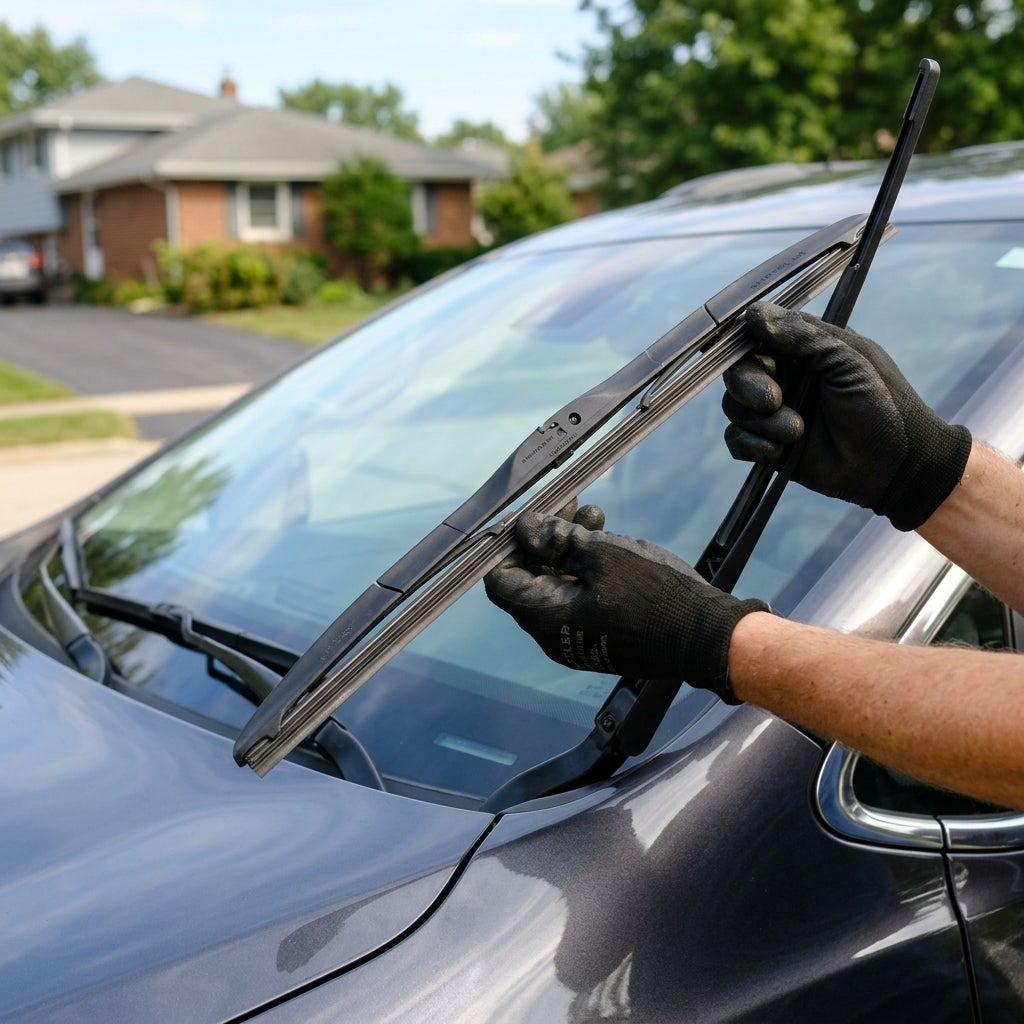
Gloved hands installing a replacement windshield wiper blade onto the wiper arm of a dark gray car outdoors. (Representative image for illustration purposes only. Actual vehicle may vary based on trim and configuration.)

How Often Should You Replace Wiper Blades on a Chrysler Pacifica?

.hrizn-visual-root a { color: #566BA1; } .hrizn-visual-root a { color: inherit; } .hrizn-visual-root p { margin: 0 0 1em; } .hrizn-visual-root p:last-child { margin-bottom: 0; } @media (max-width: 640px) { .hrizn-visual-root { text-align: center !important; } .hrizn-visual-root a { display: block; width: 100%; max-width: 320px; margin-left: auto; margin-right: auto; box-sizing: border-box; } .hrizn-visual-root + a { margin-top: 8px; } } @media (max-width: 640px) { #hrizn-cols-1 { flex-direction: column !important; align-items: stretch !important; } #hrizn-cols-1 > .hrizn-col { flex: 1 1 100% !important; width: 100% !important; } } @media (max-width: 640px) { #hrizn-3cols-1 { flex-direction: column !important; align-items: stretch !important; } #hrizn-3cols-1 > .hrizn-col { flex: 1 1 100% !important; width: 100% !important; } } @media (max-width: 640px) { #hrizn-cols-2 { flex-direction: column !important; align-items: stretch !important; } #hrizn-cols-2 > .hrizn-col { flex: 1 1 100% !important; width: 100% !important; } } #hrizn-table-tbl-wiper-types table{width:100%;table-layout:auto;border-collapse:collapse;font-family:'Open Sans',sans-serif;font-size:0.9rem} #hrizn-table-tbl-wiper-types th,#hrizn-table-tbl-wiper-types td{border:1px solid #e0e4ed;padding:8px;color:#595959;word-break:break-word;overflow-wrap:break-word} #hrizn-table-tbl-wiper-types th{background:#1a1a22;color:#ffffff;font-weight:700;font-size:14px;text-align:left;vertical-align:middle;padding:10px} #hrizn-table-tbl-wiper-types tr:nth-child(even) td{background:rgba(86,107,161,0.04)} #hrizn-table-tbl-wiper-types .tableWrapper{overflow-x:hidden} @media (max-width: 640px) { #hrizn-cols-3 { flex-direction: column !important; align-items: stretch !important; } #hrizn-cols-3 > .hrizn-col { flex: 1 1 100% !important; width: 100% !important; } } @media (max-width: 640px) { #hrizn-3cols-2 { flex-direction: column !important; align-items: stretch !important; } #hrizn-3cols-2 > .hrizn-col { flex: 1 1 100% !important; width: 100% !important; } } @media (max-width: 640px) { #hrizn-cols-4 { flex-direction: column !important; align-items: stretch !important; } #hrizn-cols-4 > .hrizn-col { flex: 1 1 100% !important; width: 100% !important; } } #hrizn-table-tbl-pricing table{width:100%;table-layout:auto;border-collapse:collapse;font-family:'Open Sans',sans-serif;font-size:0.9rem} #hrizn-table-tbl-pricing th,#hrizn-table-tbl-pricing td{border:1px solid #e0e4ed;padding:8px;color:#595959;word-break:break-word;overflow-wrap:break-word} #hrizn-table-tbl-pricing th{background:#1a1a22;color:#ffffff;font-weight:700;font-size:14px;text-align:left;vertical-align:middle;padding:8px} #hrizn-table-tbl-pricing tr:nth-child(even) td{background:rgba(86,107,161,0.04)} #hrizn-table-tbl-pricing .tableWrapper{overflow-x:hidden} @media (max-width: 640px) { #hrizn-3cols-3 { flex-direction: column !important; align-items: stretch !important; } #hrizn-3cols-3 > .hrizn-col { flex: 1 1 100% !important; width: 100% !important; } } @media (max-width: 640px) { #hrizn-cols-5 { flex-direction: column !important; align-items: stretch !important; } #hrizn-cols-5 > .hrizn-col { flex: 1 1 100% !important; width: 100% !important; } } @media (max-width: 640px) { #hrizn-cols-6 { flex-direction: column !important; align-items: stretch !important; } #hrizn-cols-6 > .hrizn-col { flex: 1 1 100% !important; width: 100% !important; } } How Often Should You Replace Wiper Blades on a Chrysler Pacifica? As a rule of thumb, you should replace the windshield wiper blades on your Chrysler Pacifica every 6 to 12 months. However, for drivers navigating the diverse weather conditions of Junction City, KS, and the surrounding Flint Hills region, standard replacement schedules often need adjusting based on localized environmental wear. Your Chrysler Pacifica is engineered to keep your family safe and comfortable, boasting advanced safety suites and sweeping panoramic windshield views. But even the most sophisticated Driver Assist technologies rely on clear visibility through the glass. When seasonal temperature shifts hit Kansas—ranging from freezing winter ice storms to intense summer heatwaves—the rubber compound on wiper blades breaks down faster than standard national averages suggest. If you notice chattering across the glass, persistent streaking, or missed spots during sudden summer downpours along Interstate 70, you should replace your wiper blades immediately regardless of when they were last changed. Keeping fresh blades installed ensures clear visibility during critical family road trips and daily commutes around Junction City. Visual and Audible Signs Your Chrysler Pacifica Wiper Blades Need Immediate Replacement 1. Windshield Streaking & Film Hazing When wiper squeegees age, tiny tears or hardened edges prevent complete water removal. Instead of a clean sweep, they leave narrow water lines or a lingering film across the glass, causing dangerous glare during nighttime driving. 2. Chattering Noise & Skipping Motion A functioning wiper glides smoothly and quietly across wet glass. If your Pacifica wipers stutter, vibrate, or emit a high-pitched squeak, the rubber element has likely set into a permanent curve or hardened from ultraviolet radiation. 3. Cracked or Splitting Rubber Edges Visual inspections often reveal degradation before rainy weather catches you off guard. Lift the wiper arm away from the glass and run your finger along the squeegee edge. Cracks, physical splitting, or detaching rubber segments require immediate replacement. 4. Bent or Loose Frame Assemblies Winter ice buildup and automated car washes can bend metal or composite wiper frames. A bent frame creates uneven contact pressure across your Pacifica’s large windshield, leaving wide patches of untouched moisture right in your direct line of sight. How Kansas Climate and Weather Accelerate Wiper Blade Wear in Junction City Freezing Winter Ice Junction City winters introduce overnight frost and heavy ice freezing directly onto windshield glass. Operating wipers over frozen windshields tears delicate rubber edges instantly, while road salt spray accelerates frame corrosion. Blazing Summer Heat High summer temperatures in Kansas turn windshield glass into a hot baking surface. Direct solar radiation bakes natural rubber squeegees, causing them to dry out, lose flexibility, and crack prematurely. Flint Hills Dust & Humidity Agricultural dust, tree pollen, and road grime blown across Geary and Riley counties act like sandpaper on wiper blades. Combined with high humidity, abrasive fine dust degrades wiper efficiency rapidly. Selecting the Best Wiper Blades for Your Chrysler Pacifica: Beam vs. Hybrid vs. OEM Mopar Choosing the right wiper design is critical for the wide curvature of the Chrysler Pacifica windshield. Traditional conventional frame blades often leave uncleaned gaps near the outer passenger edge because they rely on fixed pressure points. Beam Blades vs. Hybrid Designs: Beam blades feature a frameless curved spring steel beam that wraps evenly around aerodynamically contoured glass. Hybrid blades combine a protective shell over traditional linkages to resist ice clogging. Why Genuine Mopar OEM Blades Win: Genuine Mopar replacement blades are designed specifically for your Chrysler Pacifica’s windshield glass profile and wiper arm geometry. They match exact factory length specs, utilize top-tier synthetic rubber compounds, and feature integrated washer jet clearance. You can easily order genuine Chrysler accessories and factory-spec blades directly through our local Parts Department at Valor CDJR. Wiper Type Pressure Distribution Winter Ice Performance Recommended For Pacifica Conventional Frame 4-6 fixed points Poor (Ice builds in brackets) Not Recommended Beam Blade Infinite uniform curve Excellent (Frameless design) Highly Recommended Hybrid Blade Internal frame + shell Good (Shielded mechanism) Good Alternative Genuine Mopar OEM Precision factory curvature Superior (All-season formulation) Best Choice (Exact Fit) Order OEM Mopar Wiper Blades Which Seasonal Maintenance Tasks on My Chrysler Pacifica Are Safe to Do at Home? DIY-Friendly Basic Tasks: • Wiper Blade Replacement: Pacifica push-button connector arm clips allow fast installation at home. • Washer Fluid Top-Offs: Refilling the washer fluid reservoir with seasonal formulas (de-icer in winter, bug remover in summer) is simple. • Tire Pressure Checks: Monitoring cold tire pressure with a digital gauge prevents uneven tread wear. • Cabin Air Filter Refresh: Replaced easily behind the glovebox every 12,000 miles to clear pollen and dust. Tasks Requiring Certified Professional Care: Modern Chrysler vehicles feature sophisticated electrical architecture, high-voltage hybrid batteries (on Plug-In Hybrid models), and electronic brake modules. Brake fluid flushes, transmission fluid service, high-voltage battery cooling inspections, and electronic safety sensor recalibrations require specialized Mopar diagnostic equipment. What Should I Include in a Spring Maintenance Checklist for My Chrysler Pacifica in Junction City? 1. Wipers & Washer System Replace winter-worn wiper blades, inspect front/rear spray nozzles for salt blockage, and fill washer fluid with summer bug cleaner solution. 2. Battery & Brakes Perform a digital battery health load test after cold winter drain, and inspect brake pads, rotors, and calipers for winter road salt corrosion. 3. Suspension & Alignment Inspect shocks, struts, and tire alignment following winter pothole season on Geary County roads to prevent rapid or irregular tire wear. The Complete Chrysler Seasonal Maintenance Guide for Junction City Drivers Maintaining your Chrysler Pacifica according to seasonal milestones keeps your vehicle reliable year-round. Our seasonal maintenance guide helps you plan ahead for Kansas climate transitions: Spring Refresh: Focus on removing winter grime, replacing cracked wiper blades, checking wheel alignment, and servicing cabin air filters before allergen counts spike across the Flint Hills. Summer Prep: Test engine cooling systems, inspect air conditioning efficiency, check tire tread depth, and top off washer fluid for cross-country family road trips. Fall Readiness: Replace wiper blades after summer sun exposure, check battery charging output, test heating and defrosting circuits, and inspect headlight bulbs for shorter autumn daylight hours. Winter Protection: Install winter-rated wipers, fill windshield fluid with anti-freeze washer solution, check engine coolant freeze protection levels, and test tire tread traction. Schedule Seasonal Service Appointment Typical Price Ranges for Seasonal Maintenance Tasks on Chrysler and Jeep Vehicles Understanding routine maintenance costs allows local owners to plan their vehicle budget transparently. Standard seasonal upkeep for Chrysler Pacifica minivans and Jeep Cherokee models remains highly affordable—especially when preventing major mechanical failures down the line. For quick maintenance items like wiper blade installations or oil changes, drivers can take advantage of our convenient Express Lane service with no appointment necessary. Service Task Estimated Cost Range Interval OEM Mopar Wiper Pair $35 - $65 6 - 12 Months Synthetic Oil & Filter $65 - $110 7,500 Miles Tire Rotation & Balance $35 - $60 6,000 Miles Cabin & Engine Air Filters $45 - $90 12,000 Miles Multi-Point Inspection Complimentary / $30 Every Season How Staying on Top of Seasonal Service Affects the Long-Term Durability of Your Ram 1500 or Chrysler Preserve Resale Value Consistent service records increase vehicle value. When upgrading in the future, check our Trade In Evaluation tool to see how proper maintenance protects resale pricing. Maximize Fuel Efficiency Fresh motor oil, clean air filters, properly aligned wheels, and correct tire pressures optimize mpg performance whether driving a Pacifica or a Ram 1500 truck. Prevent Emergency Repairs Catching worn brake pads, degraded wiper squeegees, or weak batteries during routine checkups prevents unexpected roadside breakdowns. Can You Schedule Chrysler Service Online at Valor CDJR in Junction City? Yes! Scheduling vehicle service at Valor CDJR is simple, convenient, and accessible 24/7. Our online booking portal allows drivers across Junction City, Manhattan, and Riley County to reserve convenient drop-off times in under two minutes. Simply access our online Service Scheduler, enter your vehicle details, select desired maintenance items (such as wiper installation, brake service, or oil change), and choose an available time slot that fits your busy schedule. Whether you are interested in exploring our New Vehicle Listings or browsing high-quality pre-owned minivans via our Used Vehicle Listings, our certified service department is here to support you throughout your entire ownership journey. Looking to upgrade your work fleet? Explore our dedicated Commercial Vehicle Inventory options today. Book Your Service Appointment Online Seasonal Maintenance Insights for Riley County and Manhattan Area Drivers Commuting between Junction City, Fort Riley, and Manhattan via Highway 18 puts unique wear on your Chrysler Pacifica. High-speed highway driving increases bug impact debris and wind lifting forces on wiper blades. For current financing information on new models or maintenance packages, please contact our online finance center. Visit Valor CDJR in Junction City for Professional Chrysler Pacifica Service and Genuine Mopar Parts When it comes to maintaining clear visibility and long-term performance for your Chrysler Pacifica, trust the certified factory-trained technicians at Valor CDJR. Located conveniently at 1825 Goldenbelt Blvd in Junction City, KS 66441, we are your local home for genuine Mopar parts, expert diagnostic care, and friendly customer service. Need immediate assistance or directions to our service center? Get Directions to Valor CDJR or Call us at (785) 238-5114 today to speak directly with our friendly service advisors. Schedule Chrysler Pacifica Service Now

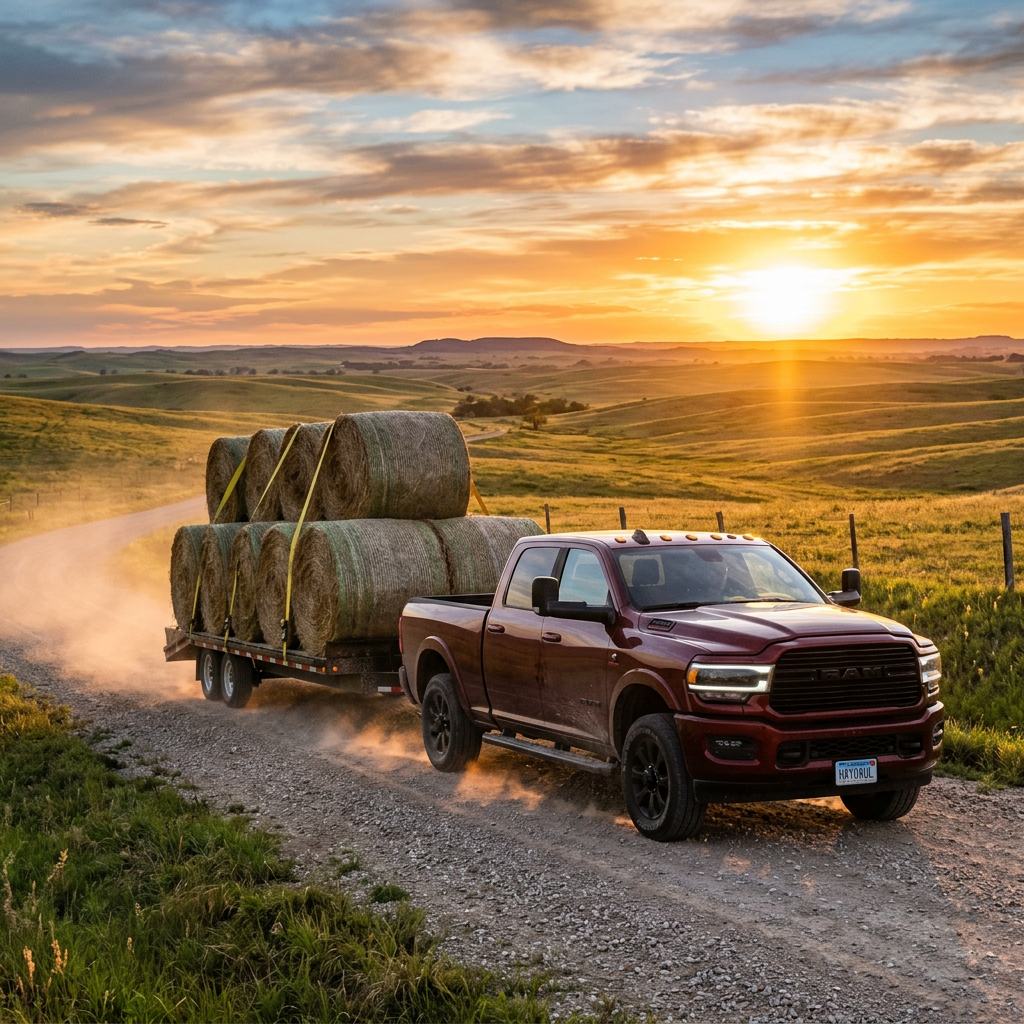
A maroon Ram pickup truck pulls a flatbed trailer loaded with large hay bales down a dusty dirt road at sunset. (Representative image for illustration purposes only. Actual vehicle may vary based on trim and configuration.)

Conquering the Late Summer Haul: Preparing Your Ram for Heavy Payloads in Clay and Riley Counties

.hrizn-visual-root a { color: #566BA1; } .hrizn-visual-root a { color: inherit; } .hrizn-visual-root p { margin: 0 0 1em; } .hrizn-visual-root p:last-child { margin-bottom: 0; } @media (max-width: 640px) { .hrizn-visual-root { text-align: center !important; } .hrizn-visual-root a { display: block; width: 100%; max-width: 320px; margin-left: auto; margin-right: auto; box-sizing: border-box; } .hrizn-visual-root + a { margin-top: 8px; } } @media (max-width: 640px) { #hrizn-cols-1 { flex-direction: column !important; align-items: stretch !important; } #hrizn-cols-1 > .hrizn-col { flex: 1 1 100% !important; width: 100% !important; } } @media (max-width: 640px) { #hrizn-3cols-1 { flex-direction: column !important; align-items: stretch !important; } #hrizn-3cols-1 > .hrizn-col { flex: 1 1 100% !important; width: 100% !important; } } @media (max-width: 640px) { #hrizn-cols-2 { flex-direction: column !important; align-items: stretch !important; } #hrizn-cols-2 > .hrizn-col { flex: 1 1 100% !important; width: 100% !important; } } #hrizn-table-tbl-comp table{width:100%;table-layout:auto;border-collapse:collapse;font-family:'Open Sans',sans-serif;font-size:0.9rem} #hrizn-table-tbl-comp th,#hrizn-table-tbl-comp td{border:1px solid #e0e4ed;padding:8px;color:#595959;word-break:break-word;overflow-wrap:break-word} #hrizn-table-tbl-comp th{background:#1a1a22;color:#ffffff;font-weight:700;font-size:14px;text-align:left;vertical-align:middle;padding:12px} #hrizn-table-tbl-comp tr:nth-child(even) td{background:rgba(86,107,161,0.04)} #hrizn-table-tbl-comp .tableWrapper{overflow-x:hidden} @media (max-width: 640px) { #hrizn-3cols-2 { flex-direction: column !important; align-items: stretch !important; } #hrizn-3cols-2 > .hrizn-col { flex: 1 1 100% !important; width: 100% !important; } } @media (max-width: 640px) { #hrizn-cols-3 { flex-direction: column !important; align-items: stretch !important; } #hrizn-cols-3 > .hrizn-col { flex: 1 1 100% !important; width: 100% !important; } } @media (max-width: 640px) { #hrizn-cols-4 { flex-direction: column !important; align-items: stretch !important; } #hrizn-cols-4 > .hrizn-col { flex: 1 1 100% !important; width: 100% !important; } } @media (max-width: 640px) { #hrizn-cols-5 { flex-direction: column !important; align-items: stretch !important; } #hrizn-cols-5 > .hrizn-col { flex: 1 1 100% !important; width: 100% !important; } } @media (max-width: 640px) { #hrizn-3cols-3 { flex-direction: column !important; align-items: stretch !important; } #hrizn-3cols-3 > .hrizn-col { flex: 1 1 100% !important; width: 100% !important; } } Conquering the Late Summer Haul: Preparing Your Ram for Heavy Payloads in Clay and Riley Counties As July shifts into late August and early September, the Flint Hills region experiences some of its most demanding driving conditions of the year. In Clay and Riley Counties, this transition brings a unique combination of blistering prairie heat, dusty county roads, and the seasonal rush of heavy agricultural, recreational, and commercial hauling. Whether you are moving round bales across Clay Center, transporting heavy equipment down to Junction City, or pulling a massive horse trailer near Manhattan, your Ram truck is the backbone of your operations. However, high payloads coupled with extreme late-summer temperatures place unprecedented stress on your vehicle's mechanical systems, demanding proactive preparation and a deep understanding of your truck's limits. Operating a truck under maximum load in 90-degree-plus weather requires more than just raw power. It demands that every system—from your cooling loops and transmission lines to your braking surfaces and tire compounds—functions in perfect harmony. At Valor CDJR, we serve as your premier local resource, dedicated to keeping the hardworking drivers of Junction City, Clay Center, and Manhattan moving safely. This comprehensive guide is designed to help you navigate the physics of heavy hauling in high temperatures, ensuring your Ram remains an unyielding force on the Kansas highways. From analyzing payload metrics to exploring the thermal dynamics of your powertrain, we will provide the actionable expertise you need to protect your investment and secure your cargo. Payload vs. Towing Capacity: What Is the Difference and Why Does It Matter in the Flint Hills? To safely transport heavy loads through the undulating topography of Clay and Riley Counties, a clear understanding of your vehicle's structural and mechanical limits is absolutely vital. Many drivers use the terms "payload" and "towing capacity" interchangeably, but confusing these two distinct metrics can lead to severe mechanical strain, compromised handling, and structural failure. Payload capacity refers to the total weight your truck can carry within its own footprint, including passengers, cabin gear, bed cargo, and the tongue weight exerted by any attached trailer. Every pound resting directly on the truck's frame, axles, and tires contributes to this limit. Conversely, towing capacity represents the maximum weight your truck can pull behind it, where the bulk of the trailer's mass is supported by its own axles. While a Ram might be rated to pull 15,000 pounds, it cannot support that amount directly in its bed. When navigating the rolling terrain of the Flint Hills, the physics of these two forces shift continuously. Climbing a steep grade transfers additional weight to the rear axle, while descending places immense downward pressure on the front suspension and brakes. Overloading your payload capacity is particularly dangerous on these slopes, as it can lift weight off the front steering axle, leading to a dangerous loss of traction and control. To calculate your Ram's exact available payload, always consult the tire and loading information placard located on the driver's side B-pillar. Subtract the combined weight of your passengers, aftermarket accessories (like toolboxes or brush guards), and cargo from the maximum capacity listed. Keep in mind that when towing a conventional trailer, the tongue weight—which should be roughly 10% to 15% of the total loaded trailer weight—directly consumes your available payload. For fifth-wheel or gooseneck configurations, the pin weight can consume up to 25% of your payload. Neglecting this calculation before heading out on a hot Kansas afternoon can rapidly overheat your rear differential, warp your brake rotors, and compromise your suspension geometry. Before loading up, take a moment to perform a Trade In Evaluation on your current truck to see if it is time to upgrade to a vehicle with higher structural limits. Ensuring you are operating within your vehicle's intended engineering tolerances is the single most effective way to prevent catastrophic failures during extreme summer hauls. What Is the Maximum Payload Capacity of the 2026 Ram 1500? The 2026 Ram 1500 redefines light-duty capability, offering an outstanding maximum payload capacity of up to 2,300 pounds when properly configured. This impressive capacity is made possible by a high-strength steel frame that is both exceptionally rigid and lightweight, providing a rock-solid foundation for hauling gravel, feed, or building materials across the Flint Hills. To maintain structural integrity under maximum load, the 2026 Ram 1500 utilizes advanced multi-link rear coil spring suspension. Unlike traditional leaf springs, this layout reduces friction, optimizes lateral stiffness, and ensures the tires maintain a flat footprint on the pavement. This technology is incredibly beneficial when tackling off-camber agricultural turnouts in Clay County. Furthermore, the available class-exclusive Active-Level Four-Corner Air Suspension system automatically levels the truck when loaded, ensuring consistent headlight aim, optimal aerodynamics, and maximum ground clearance even when carrying heavy late-summer payloads. The standard high-strength chassis works in tandem with the thermal management systems of the new Hurricane twin-turbo engines to ensure that high payloads do not result in high operating temperatures. Active grille shutters and a highly efficient engine oil cooler keep vital fluids within safe operating ranges, even when climbing steep highway grades in extreme heat. To see how these advanced suspension and chassis systems handle firsthand, we encourage you to browse our latest New Vehicle Listings to find a truck engineered to tackle the heavy-duty demands of your local operations. Schedule Your Late-Summer Multi-Point Inspection at Valor CDJR Do not let the harsh Kansas heat compromise your truck's reliability when you need it most. Before hookups, long hauls, or heavy harvests, bring your truck to the certified experts at Valor CDJR in Junction City. Our factory-trained technicians will thoroughly examine your suspension, check your cooling loops, inspect your braking surfaces, and verify tire pressures to ensure your Ram is operating at peak physical health. Trust our team to keep your truck running cool, strong, and safe all season long. Schedule Your Service Now What Is the Towing Capacity of the Ram 2500 with the Cummins Turbo Diesel? When light-duty limits are not enough for the demanding agricultural and industrial needs of the Flint Hills, the Ram 2500 equipped with the legendary 6.7L Cummins Turbo Diesel engine steps in. This powerhouse delivers an extraordinary towing capacity of up to 20,000 pounds when properly equipped. Generating a massive 850 lb-ft of torque, the Cummins diesel offers the low-end grunt required to pull massive payloads up steep gravel inclines, pull loaded flatbeds out of muddy fields, and maintain highway speeds effortlessly against Kansas headwinds. To maintain this level of performance during late-summer heatwaves, the Ram 2500 Cummins Turbo Diesel is engineered with a highly sophisticated cooling infrastructure. Extreme ambient temperatures coupled with high-load towing create immense thermal energy within the engine and transmission. Ram addresses this with an oversized radiator, a high-efficiency charge air cooler, and a heavy-duty transmission fluid cooler that utilize advanced airflow dynamics to continuously reject heat from the engine bay. Furthermore, the smart diesel exhaust brake system helps manage descending speeds on rolling hills without placing excessive strain on your friction brakes. By utilizing the variable geometry turbocharger to restrict exhaust flow, the system creates backpressure that slows the vehicle naturally, preventing brake fade and preserving your service brakes for when you truly need them. This level of thermal management and mechanical engineering ensures that your truck maintains its structural integrity and pulling power, even during the peak of summer. To explore these heavy-duty capabilities in detail, check out our dedicated Commercial Vehicle Inventory to find the perfect workhorse for your business or farm operations. How Does Ram Heavy-Duty Towing Capacity Compare with Ford and Chevy in the Same Class? When comparing heavy-duty trucks, raw capability figures tell only part of the story. While Ford and Chevrolet offer highly competitive maximum towing and payload ratings in the three-quarter-ton and one-ton segments, Ram heavy-duty models offer a different set of capabilities, including ride comfort and suspension features under load. The table below outlines how these class competitors compare across key metrics: Feature / Metric Ram 2500 / 3500 HD Ford F-250 / F-350 Chevy Silverado 2500 / 3500 Max Diesel Towing (3500) Up to 37,090 lbs Comparable Class Limit Comparable Class Limit Rear Suspension Design Five-Link Coil / Auto-Level Air Multi-Leaf Spring Multi-Leaf Spring Ride Quality Under Load Excellent (Compliant, Controlled) Firm / Stiff Firm / Stiff Engine Braking Tech Smart Diesel Exhaust Brake Standard Exhaust Brake Standard Exhaust Brake Suspension Architecture: While Ford and Chevy continue to rely on traditional multi-leaf spring configurations on their 2500 series, Ram employs a sophisticated five-link coil rear suspension. This design provides vastly superior lateral stiffness, keeping the axle centered and eliminating the 'squirm' and lateral sway common in leaf-spring trucks when trailering heavy loads over rough surfaces. Unmatched Cabin Comfort: Long hauls under the hot summer sun can be physically draining. Ram's interior quality and acoustic insulation are widely recognized as class-leading. This premium environment reduces driver fatigue on long journeys, turning demanding utility work into a remarkably comfortable and controlled driving experience. Auto-Leveling Air: Ram's available rear air suspension system can lower the rear suspension for easier trailer hookup and then automatically level the truck once loaded. This ensures optimal bumper height and level weight distribution, preventing the 'nose-high' stance that compromises steering control and tire traction on competitive leaf-spring trucks. How Often Should I Check My Ram’s Tire Pressures During a Heat Wave? Tires are the single most critical link between your loaded Ram and the blistering asphalt of Kansas highways. During a summer heat wave, checking your tire pressures is not a task that can be left to monthly maintenance. You should check your tire pressures daily, specifically before the truck is driven and while the tires are still cold. The physics of tire pressure dictate that for every 10-degree Fahrenheit change in ambient temperature, tire pressure changes by approximately 1 PSI. On a hot summer day, as road temperatures climb well over 100 degrees, internal tire pressures can spike dramatically once you get moving. When you load your truck to its maximum payload or hook up a heavy trailer, the sidewalls of your tires flex continually. This flexing generates internal friction, which creates additional heat inside the tire. If your tires are underinflated, this flexing increases exponentially, causing rapid thermal buildup that can degrade the tire's structural components and lead to a sudden, catastrophic blowout. Conversely, overinflating tires beyond their cold rating reduces the contact patch, leading to uneven center tread wear and compromised braking performance on hot, dry pavement. To prevent these dangerous scenarios, always refer to the recommended cold tire inflation pressures listed on the B-pillar placard. Do not bleed air out of hot tires that read higher than the recommended cold pressure; this is a natural pressure increase designed into the tire's safety tolerances. Simply ensure they are at the correct specification first thing in the morning before the sun heats up the rubber. If you notice uneven wear patterns, a slow leak, or suspect your tires are nearing the end of their service life, visit our Parts Department to find heavy-duty, high-load-rated tires designed to withstand the extreme temperatures and high payloads of late-summer hauling. Explore Our Heavy-Duty Ram Inventory Near Manhattan and Junction City Ready to elevate your hauling game? At Valor CDJR, we carry a premier selection of rugged Ram 1500, 2500, and 3500 trucks engineered to tackle the toughest tasks in Kansas. Whether you need a daily driver capable of supporting weekend projects or a heavy-duty workhorse to power your farm or job site, our professional sales team is here to help you configure the ideal truck with the exact towing and payload ratings your lifestyle demands. Browse New Ram Inventory Browse Used Ram Inventory How Often Should I Change Oil and Transmission Fluid on a Ram Used for Heavy Summer Hauling? Heavy hauling in high ambient temperatures is classified as "severe duty" operation by vehicle manufacturers. Under normal driving conditions, modern engine oils and transmission fluids can last for thousands of miles before needing replacement. However, when your Ram is consistently pulling near its maximum capacity or carrying a heavy payload in 90-degree heat, the thermal load placed on these fluids increases exponentially. High operating temperatures cause engine oil to oxidize and break down much faster, reducing its viscosity and compromising its ability to lubricate critical internal engine components. For Ram trucks subjected to frequent heavy hauling in the summer, we recommend following the severe-duty maintenance schedule. This typically involves changing your engine oil and filter every 4,000 to 5,000 miles, rather than the standard 7,500-to-10,000-mile interval. This ensures that fresh, clean oil with robust anti-wear additives is always circulating through your engine. Transmission fluid is equally vulnerable to heat. Your transmission transfers massive amounts of torque from the engine to the driveshaft, a process that generates immense heat within the torque converter and clutches. If the transmission fluid temperature consistently exceeds 220 degrees Fahrenheit, the fluid can varnish, causing clutches to slip and accelerating wear on internal gears and seals. Under severe hauling conditions, we recommend having your transmission fluid and filter serviced every 30,000 to 45,000 miles to prevent costly transmission failures down the road. If you need a quick oil change or fluid check, remember that you can stop by our convenient Express Lane for fast, professional service with no appointment required. Keeping your fluids fresh is one of the most cost-effective safeguards you can buy for your heavy-duty powertrain. What Services Do Local Ram Dealers Offer for Hot-Weather Preparation? Cooling System Flushes & Inspections: To battle the summer heat, your engine relies heavily on its coolant. Over time, coolant can degrade, lose its anti-corrosive properties, and accumulate debris. At Valor CDJR, we offer comprehensive cooling system flushes, pressure-testing the system for leaks and ensuring your radiator and hoses can handle the pressure of heavy hauling. Brake System Upgrades & Inspections: Stopping a heavily loaded truck and trailer requires immense friction, which generates extreme heat on your rotors and pads. Our factory-trained technicians will inspect your brake pad thickness, check for rotor warping, and test your brake fluid. Moisture-contaminated brake fluid can boil under heavy braking, leading to a spongy pedal and reduced stopping power. Battery Testing & Electrical Diagnostics: High heat is actually more damaging to car batteries than extreme cold. Summer temperatures accelerate internal corrosion and evaporate vital battery electrolytes. We will perform a load-test on your battery, inspect your charging system, and ensure your alternator is fully prepared to handle the load of your truck's accessories and trailer brake controllers. In addition to these core services, our technicians can perform digital multi-point inspections that look at suspension bushings, drive belts, and wheel bearings—ensuring every component of your Ram is structurally prepared to handle heavy payloads in the heat. To get your truck inspected before your next major haul, simply utilize our convenient online Service Scheduler to book an appointment that fits your busy schedule. Get Expert Advice and Ram Service at Valor CDJR in Junction City As the late-summer hauling season ramps up across Clay and Riley Counties, keeping your vehicle in peak operating condition is not just about convenience—it is about safety, efficiency, and protecting your hard-earned investment. From ensuring your tire pressures are adjusted correctly to servicing your transmission fluid and choosing the right heavy-duty truck for your needs, every detail matters. At Valor CDJR, we are committed to providing the community with the highest quality automotive care and exceptional vehicle inventory. Whether you want to Get Pre-Approved for a more powerful Ram truck, find reliable replacement components in our parts department, or simply stop in to chat with our friendly staff, we are here to support you. We invite you to Get Directions to Valor CDJR and visit us today at 1825 Goldenbelt Blvd in Junction City, or feel free to Call us at (785) 238-5114 with any questions you may have. Let us help you conquer the late-summer haul with total confidence and peace of mind. Explore New Ram Inventory

A dark gray Ram pickup truck parked on a grassy, rocky overlook during a vibrant sunset over green hills. (Representative image for illustration purposes only. Actual vehicle may vary based on trim and configuration.)

Expert Servicing for CDJR Vehicles in the Flint Hills Region

.hrizn-visual-root a { color: #566BA1; } .hrizn-visual-root a { color: inherit; } .hrizn-visual-root p { margin: 0 0 1em; } .hrizn-visual-root p:last-child { margin-bottom: 0; } @media (max-width: 640px) { .hrizn-visual-root { text-align: center !important; } .hrizn-visual-root a { display: block; width: 100%; max-width: 320px; margin-left: auto; margin-right: auto; box-sizing: border-box; } .hrizn-visual-root + a { margin-top: 8px; } } @media (max-width: 640px) { #hrizn-3cols-1 { flex-direction: column !important; align-items: stretch !important; } #hrizn-3cols-1 > .hrizn-col { flex: 1 1 100% !important; width: 100% !important; } } @media (max-width: 640px) { #hrizn-cols-1 { flex-direction: column !important; align-items: stretch !important; } #hrizn-cols-1 > .hrizn-col { flex: 1 1 100% !important; width: 100% !important; } } @media (max-width: 640px) { #hrizn-3cols-2 { flex-direction: column !important; align-items: stretch !important; } #hrizn-3cols-2 > .hrizn-col { flex: 1 1 100% !important; width: 100% !important; } } @media (max-width: 640px) { #hrizn-cols-2 { flex-direction: column !important; align-items: stretch !important; } #hrizn-cols-2 > .hrizn-col { flex: 1 1 100% !important; width: 100% !important; } } @media (max-width: 640px) { #hrizn-cols-3 { flex-direction: column !important; align-items: stretch !important; } #hrizn-cols-3 > .hrizn-col { flex: 1 1 100% !important; width: 100% !important; } } @media (max-width: 640px) { #hrizn-cols-4 { flex-direction: column !important; align-items: stretch !important; } #hrizn-cols-4 > .hrizn-col { flex: 1 1 100% !important; width: 100% !important; } } Expert Servicing for CDJR Vehicles in the Flint Hills Region When it comes to protecting your automotive investment, nothing matches the peace of mind that comes from certified factory care. Here in the heart of the Flint Hills, drivers from Junction City, Manhattan, and throughout Riley County rely on their Chrysler, Dodge, Jeep, and Ram vehicles to power through demanding daily commutes, rugged agricultural tasks, and weekend adventures alike. At Valor CDJR, we do not just spin wrenches; we deliver a comprehensive, highly specialized service experience designed to keep your vehicle performing exactly as the engineers intended. Our state-of-the-art facility is fully equipped with factory-grade diagnostic computers, heavy-duty vehicle lifts, and specialized alignment machinery tailored to the precise specifications of the CDJR lineup. Every vehicle that rolls into our service drive represents a complex ecosystem of mechanical and electrical systems. Modern Ram trucks feature sophisticated torque-management systems and multi-link rear suspensions; Jeep vehicles utilize complex four-wheel-drive transfer cases and Selec-Terrain matrices; Dodge muscle cars rely on high-output cooling configurations; and Chrysler minivans integrate intricate hybrid powertrains and Stow 'n Go seating layouts. Entrusting these specialized machines to a generic, all-brand lube shop can result in overlooked signs of wear, incorrect fluid applications, and diagnosis errors. Our certified master technicians undergo rigorous, ongoing training directly from Mopar to master the unique architectures of these four iconic brands, ensuring every diagnostic cycle and mechanical repair is executed flawlessly. We understand that your time is incredibly valuable, which is why we have streamlined our service processes to minimize disruption to your busy schedule. From our comfortable waiting lounge equipped with high-speed Wi-Fi and complimentary beverages to our efficient check-in procedures, our entire operation is structured around your convenience. Whether you are driving a high-performance Dodge Charger, a legendary Jeep Wrangler, or a commercial-grade Ram 3500, you will receive clear explanations of all necessary repairs, upfront pricing estimates with no hidden fees, and the absolute assurance that only genuine OEM components are used. For quick, routine maintenance items, you can take advantage of our dedicated Express Lane, where no appointment is required for oil changes, tire rotations, and multi-point inspections. Beyond technical excellence, our service philosophy is rooted in building lifelong relationships with our guests. We treat every vehicle as if it belonged to a member of our own family, inspecting critical safety components such as brake pads, steering linkages, and tire treads during every single visit. This proactive approach helps identify minor issues before they escalate into costly road-side emergencies. If you are ready to experience the high standard of CDJR maintenance, we invite you to explore our specialized services, meet our expert team, and schedule your next service interval with us today. Let us help you preserve the safety, value, and performance of your vehicle for miles and years to come. What Maintenance Schedule Is Recommended for Chrysler, Dodge, Jeep, and Ram Vehicles? Maintaining your vehicle according to factory-recommended intervals is the single most effective way to prevent premature wear, maximize fuel efficiency, and protect your manufacturer warranty. However, a standardized schedule in an owner's manual does not always account for the unique geographical and environmental demands of the Flint Hills region. The driving landscape around Manhattan and Riley County presents a distinct set of challenges: dusty rural gravel roads, sharp elevation changes, intense summer heat waves, freezing winter blizzards, and the stop-and-go pattern of university commuter traffic near Kansas State University. These local driving conditions mean your vehicle often operates under what manufacturers classify as 'severe duty' cycles, requiring more frequent maintenance checks than standard highway driving. The 8,000-Mile Checkpoint At this early interval, your vehicle requires foundational maintenance. This includes a comprehensive synthetic oil and filter change to flush out contaminants, followed by a precise tire rotation to distribute tread wear evenly across all four corners. Our technicians perform a thorough visual inspection of the braking system, check all fluid levels (windshield washer, engine coolant, transmission, and power steering), and test the battery health to ensure strong cranking power. For local drivers regularly traversing dusty country lanes or gravel pathways, we also inspect and clean the engine air filter and cabin air filter, as agricultural dust can rapidly clog these vital pathways and restrict airflow. The 16,000-Mile Checkpoint Building upon the basic oil and tire services, the 16,000-mile mark introduces deeper mechanical inspections. We perform a complete chassis lubrication to keep suspension joints moving smoothly and quiet. Technicians inspect the front suspension, tie rod ends, and boot seals for signs of wear or cracking. We also perform a comprehensive brake inspection, measuring rotor thickness and brake pad wear to guarantee your stopping power. The cabin air filter is typically replaced at this point to maintain crisp, allergen-free climate control inside your cabin, which is especially important during the intense Kansas pollen and harvest seasons. The 30,000-Mile Checkpoint This major service milestone is critical for long-term mechanical reliability. In addition to our standard oil and tire services, we replace the engine air filter and fuel filter to maintain optimal combustion efficiency. For Jeep and Ram four-wheel-drive vehicles, we perform a vital fluid exchange for the transfer case and front/rear differentials. The fluid in these components can break down over time due to heavy towing loads or off-road excursions, and fresh fluid is vital to prevent gear friction. We also conduct a detailed inspection of the engine cooling system, hoses, and clamps to ensure your vehicle can handle extreme temperature swings. Operating a vehicle in Junction City or Manhattan often means navigating short trips where the engine does not have sufficient time to reach its full operating temperature. This is highly common for students and faculty commuting to university campuses or families running quick errands. Short-trip driving leads to moisture accumulation inside the engine oil, which degrades its lubricating properties much faster than continuous highway driving. Furthermore, our region's heavy winter road salting can accelerate underbody corrosion, making routine multi-point inspections of brake lines, suspension components, and exhaust systems absolutely essential. By adhering to a proactive, severe-duty maintenance schedule, you can protect your powertrain, extend your vehicle's lifespan, and avoid unexpected breakdowns. To keep track of these complex intervals without any stress, we highly recommend utilizing our convenient online Service Scheduler. Our digital system allows you to log in, view your vehicle's specific maintenance history, select from recommended manufacturer service packages, and reserve a convenient time slot that fits seamlessly into your day. Whether you require a quick oil change before a weekend road trip or a comprehensive 30,000-mile service, our factory-trained technicians are ready to handle it with absolute precision and care. Understanding Your Ram Truck: Does the Ram Hurricane Engine Require Premium Fuel? The automotive industry has witnessed a massive technological shift, and nowhere is this more evident than in the powerhouse heart of the new Ram 1500: the Hurricane twin-turbo inline-six engine. This modern engineering marvel replaces traditional naturally aspirated V8 configurations, delivering significantly more horsepower, torque, and efficiency through advanced turbocharging, high-pressure direct fuel injection, and state-of-the-art thermal management. However, with this leap in high-performance engineering comes a very common question from truck owners throughout Riley County: Does the new Ram Hurricane engine require premium fuel to run safely, or can you get by with standard regular unleaded? To understand the fuel requirements, we must look at the two distinct variants of this incredible powerplant. The Standard Output (SO) Hurricane engine, which produces a robust 420 horsepower and 469 lb-ft of torque, is engineered with a high degree of flexibility. While premium fuel (91 octane or higher) is officially recommended by Mopar engineers to achieve maximum performance and peak towing efficiency, the Standard Output variant can run safely on regular unleaded fuel (87 octane) without causing any damage to the engine. The truck's advanced engine control module (ECM) instantly detects the octane level of the fuel and adjusts ignition timing to prevent pre-detonation or 'engine knock.' However, when using regular fuel, you may notice a slight reduction in total horsepower and torque under heavy loads, such as towing a livestock trailer or hauling construction materials up steep Kansas inclines. Conversely, the High Output (HO) Hurricane engine—pumping out an astonishing 540 horsepower and 521 lb-ft of torque—is a different beast entirely. Built with higher boost pressures and a specialized mechanical compression ratio, the High Output variant may require premium fuel (91 octane or higher) depending on configuration for daily operation. Using lower octane fuel in the High Output engine can severely restrict its performance, trigger electronic engine safeguards, and potentially lead to severe engine damage over extended periods. For truck owners who demand the absolute peak capability of their Ram 1500, investing in premium fuel is non-negotiable to maintain the structural integrity and high-output performance of this twin-turbocharged masterpiece. Beyond octane levels, long-term care for a twin-turbocharged engine like the Hurricane requires strict adherence to maintenance best practices. Turbochargers operate at incredibly high rotational speeds and extreme temperatures, relying heavily on clean, high-quality engine oil for both lubrication and cooling. Neglecting oil changes or using non-approved oil weights can lead to oil carbonization inside the turbo bearings, resulting in premature turbocharger failure. Our service department utilizes premium synthetic oils specifically formulated to meet the rigorous MS-6395 standards required by Mopar, ensuring your turbochargers remain perfectly lubricated under all operating conditions. If you are shopping for a powerful new truck or want to learn more about our commercial line, we invite you to browse our extensive Commercial Vehicle Inventory to find the perfect Ram for your business or personal needs. Explore New Ram Truck Inventory Are Dealership Extended Warranties Worth It for Jeep Vehicles? Jeep vehicles are engineered to conquer some of the most unforgiving terrain on earth, from muddy trails and rocky creek beds to snow-packed Kansas highways. This exceptional off-road capability is made possible by sophisticated mechanical and electronic systems: electronic sway bar disconnects, locking differentials, complex Selec-Trac transfer cases, and advanced Quadra-Lift air suspension systems. Because Jeep owners often push their vehicles to the absolute limit, the question of whether to invest in a dealership extended warranty—specifically a genuine Mopar Vehicle Protection plan—is a highly relevant topic for buyers planning their long-term ownership journey. Unlike third-party aftermarket warranty companies, which are notorious for fine-print exclusions, complex claims processes, and requiring the use of lower-cost aftermarket parts, a Mopar Vehicle Protection plan is backed directly by Stellantis. This means your coverage is honored at any CDJR dealership across North America, including Valor CDJR. It guarantees that any necessary repairs will be executed by factory-certified technicians using genuine, identical Mopar parts. For Jeep owners, this level of protection is incredibly valuable. If an advanced electrical component, an electronic locking differential, or a touchscreen infotainment system experiences a failure years down the road, the cost of a single major repair can easily exceed the entire upfront cost of the protection plan itself. Mopar offers several tiers of coverage to fit different budgets and ownership goals, with 'Maximum Care' standing out as a comprehensive 'bumper-to-bumper' plan. Covering over 5,000 individual mechanical and electrical components, Maximum Care provides complete peace of mind for drivers who plan to keep their Jeep well beyond the standard 3-year/36,000-mile factory warranty. This coverage is especially relevant for modern Jeep models like the Grand Cherokee L or the Wrangler 4xe plug-in hybrid, which feature extensive digital displays, advanced driver assistance safety suites, and complex high-voltage hybrid electronics. Knowing that these highly advanced components are protected against unexpected failures allows you to enjoy every trail and highway journey with total confidence. When evaluating whether an extended warranty is right for you, consider your driving habits, budget flexibility, and long-term vehicle plans. If you prefer a predictable ownership cost over the risk of unpredictable out-of-pocket repair bills, or if you plan to drive your Jeep for the next five to ten years, a Mopar Vehicle Protection plan represents an exceptional value. Additionally, these plans are fully transferable if you decide to sell your vehicle to a private party in the future, significantly increasing your Jeep's resale value. If you are looking to purchase a reliable, pre-owned Jeep, you can explore our certified Used Vehicle Listings, many of which are eligible for extended warranty coverage, or contact our team to discuss current financing options and available vehicle protection packages. What Are Common Repair Issues for the Jeep Grand Cherokee? The Jeep Grand Cherokee stands as a global icon of refined capability, blending luxurious interior appointments with legendary off-road hardware. However, like any sophisticated, high-end vehicle, certain model years are prone to specific wear-and-tear items and known mechanical issues. Understanding these common repair points is incredibly helpful for current owners and prospective buyers alike, as early diagnostic detection and preventative maintenance can save thousands of dollars in major repair costs down the road. Quadra-Lift Air Suspension The optional Quadra-Lift air suspension provides a cloud-like ride and adjustable ground clearance, but it is a complex system of air bags, lines, sensors, and a pressurized compressor. Over time, and especially when exposed to freezing Kansas winters and abrasive road salt, the rubber air bladders can develop microscopic cracks, leading to slow air leaks. If left unaddressed, the compressor must run constantly to maintain vehicle height, leading to total compressor burnout. Our technicians can perform specialized pressure tests to locate leaks early, replacing individual lines or bags before a complete system failure occurs. Electrical & Infotainment Updates With the integration of advanced Uconnect touchscreens, digital gauge clusters, and electronic safety suites, modern Grand Cherokees rely heavily on stable electrical currents and software. Over time, owners may experience minor glitches, frozen screens, or false warning lights. In many cases, these issues do not require expensive hardware replacements. Instead, they can be resolved through official Mopar software flashes and system recalibrations. Our service bay has direct digital access to the latest factory software releases, allowing us to update your vehicle's computers and restore flawless operation quickly. Cooling System Components On older Grand Cherokee models, particularly those powered by the legendary 3.6L Pentastar V6, we occasionally see wear-and-tear failures in the engine cooling system, such as minor leaks from the oil filter housing or the water pump. During our routine multi-point inspections, we pay incredibly close attention to these areas, checking for the faint smell of burning coolant or minor residue. Catching a weak water pump or a small housing leak early prevents engine overheating, which is the leading cause of warped cylinder heads and catastrophic engine failure. The key to minimizing ownership costs for a Jeep Grand Cherokee is proactive, expert diagnostics. At Valor CDJR, our team uses specialized factory scan tools that read deep manufacturer-specific codes that generic auto-parts store scanners simply cannot access. This allows us to pinpoint the exact root cause of a warning light, preventing costly guess-and-check parts replacements. If you are noticing any unusual noises, a slightly rougher ride, or a persistent warning light on your dashboard, do not wait for a minor issue to become a major repair bills. Schedule a diagnostic evaluation with our certified service team to ensure your Grand Cherokee remains in pristine operating condition. Schedule Your Next CDJR Certified Service Visit Today Keep your Chrysler, Dodge, Jeep, or Ram vehicle performing at its absolute peak. Our user-friendly online scheduler makes it easier than ever to book your certified maintenance or repair service. Simply choose your preferred date and time, let us know what your vehicle needs, and our factory-trained technicians will handle the rest. Schedule service today to protect your automotive investment. Book Your Service Appointment Now Which Truck Has a More Comfortable Ride: Ram 1500 or Chevy Silverado? For decades, full-size light-duty pickup trucks were viewed strictly as work tools, with ride quality and cabin comfort treated as secondary considerations. However, today's truck buyers demand a vehicle that can haul heavy payloads during the workweek and comfortably carry the family on long interstate road trips. When comparing the ride quality of the Ram 1500 against its chief rival, the Chevrolet Silverado 1500, the engineering differences under the chassis reveal why the Ram 1500 is known for its comfortable ride in the pickup segment. The secret to the Ram 1500's legendary ride comfort lies in its class-exclusive rear suspension design. While the Chevy Silverado continues to utilize traditional, rigid leaf springs—a design that has remained largely unchanged for over a century—the Ram 1500 features a standard five-link coil-spring rear suspension. Coil springs allow each rear wheel to react independently to road imperfections, significantly reducing the harsh vertical impacts and lateral 'skittering' that leaf-spring trucks experience when traversing bumpy surfaces or highway expansion joints with an empty bed. For those seeking the absolute pinnacle of luxury, the Ram 1500 is also available with a four-corner Active-Level air suspension system. This system automatically adapts to changing road conditions, lowers the truck at highway speeds to maximize aerodynamics, and keeps the vehicle perfectly level even when carrying a heavy payload or towing a trailer. To preserve this signature, buttery-smooth ride over Kansas highways, proper suspension maintenance is absolutely critical. The complex bushings, shocks, control arms, and air lines that make the Ram 1500 ride so beautifully require regular inspections by experienced technicians. Over time, worn shock absorbers can lose their dampening ability, leading to excessive body roll and bounce, while cracked rubber bushings can cause annoying clunks and suspension misalignment. At Valor CDJR, we specialize in maintaining and repairing Ram suspension systems, ensuring your truck continues to glide effortlessly over the road. If you want to experience this unparalleled comfort for yourself, we encourage you to check out our New Vehicle Listings and schedule a test drive, or let us evaluate your current truck's trade-in value with our online Trade In Evaluation tool. Can I Look Up Active CDJR Recalls for My Vehicle Online? Vehicle safety is our absolute highest priority at Valor CDJR. From time to time, automotive manufacturers issue safety recalls to address potential design or manufacturing defects. While recalls are a normal part of the automotive lifecycle, staying informed and taking prompt action when a recall is issued is vital to protect yourself, your passengers, and your vehicle's mechanical integrity. Fortunately, checking to see if your Chrysler, Dodge, Jeep, or Ram vehicle has any open safety recalls is an incredibly simple, transparent process that can be completed entirely online from the comfort of your home. To check for active recalls, you will first need your vehicle's unique 17-digit Vehicle Identification Number (VIN). Your VIN serves as a unique fingerprint for your vehicle and can be found in several convenient locations: printed on a small metal plate on the driver's side dashboard (visible through the windshield), on the safety certification label inside the driver's door jamb, or on your vehicle's registration card and auto insurance documentation. Once you have located your VIN, you can visit our website or the official Mopar recall lookup portal, enter the 17-digit code, and instantly receive a comprehensive report showing any outstanding safety recalls or campaign services required for your specific vehicle. If you discover that your vehicle does have an active recall, there is absolutely no need to panic. Simply use our online Service Scheduler or call our dedicated service desk. As an authorized CDJR dealership, Valor CDJR performs all manufacturer safety recall repairs completely free of charge to the owner. Our service department will order the necessary OEM recall parts, schedule a convenient time for you to bring your vehicle in, and complete the repair with minimal disruption to your day. We work closely with the manufacturer to ensure all recall procedures are performed exactly according to official engineering bulletins, restoring your vehicle's safety and peace of mind. Genuine OEM Mopar Parts vs. Aftermarket Alternatives When your vehicle requires a replacement part—whether it's a routine item like front brake pads or a major mechanical component like an alternator—you will face a critical decision: should you choose genuine OEM Mopar parts, or opt for aftermarket alternatives? While third-party auto parts stores often promote aftermarket parts as a cost-conscious option, a closer look at the engineering, safety, and long-term durability reveals why using genuine Mopar parts is always the smartest, most cost-effective choice for your Chrysler, Dodge, Jeep, or Ram vehicle. Genuine Mopar parts are designed and engineered by the exact same team that built your vehicle. This means each component is manufactured to meet precise tolerances, utilizing the exact same materials, dimensions, and quality control standards as the parts that originally rolled off the assembly line. This perfect fit and finish guarantees that the replacement part will integrate seamlessly with your vehicle's existing mechanical and electrical systems, preserving the original factory performance, safety ratings, and fuel efficiency. In contrast, aftermarket manufacturers often design parts to fit a wide variety of vehicle makes and models to cut costs, resulting in minor dimensional discrepancies that can lead to premature wear, annoying squeaks, and potential compatibility issues. Furthermore, genuine Mopar parts are backed by an extensive manufacturer warranty, giving you complete confidence on the road. If a Mopar part fails due to a manufacturing defect, it is covered for both parts and labor at any authorized CDJR dealership nationwide. At Valor CDJR, our dedicated Parts Department maintains a massive, fully stocked inventory of genuine Mopar components, fluids, and accessories, ensuring we have the exact part your vehicle needs when you need it. Investing in genuine Mopar parts protects your vehicle's mechanical health, safeguards your warranty, and preserves its resale value over time. Visit Our Parts Department Preparing Your CDJR Vehicle for Kansas Winters and Summer Heat Living in the Flint Hills means navigating a climate of extremes. The blazing, humid heat waves of a Kansas summer can push engine cooling systems and vehicle batteries to their absolute limits, while the freezing, bone-chilling blizzards of winter demand flawless electrical performance and reliable traction. Because our local weather changes so dramatically, seasonal preventative maintenance is absolutely essential to ensure your Chrysler, Dodge, Jeep, or Ram vehicle remains safe, reliable, and comfortable all year round. During the intense heat of summer, your vehicle's cooling system is under immense stress. Engine coolant must flow efficiently to prevent overheating, while the air conditioning compressor works overtime to keep the cabin comfortable. Our service technicians can perform comprehensive cooling system flushes, inspect all radiator hoses for weak spots or bulges, and test your AC system's refrigerant pressure. Summer heat is also a silent killer of car batteries, accelerating internal corrosion and evaporating vital liquid electrolytes. We recommend having your battery load-tested before the peak heat sets in to avoid being stranded with a dead battery. Conversely, preparing for a Kansas winter requires a different set of maintenance priorities. Sub-zero temperatures drastically reduce a battery's cranking power while thickening engine oil, making winter starting incredibly difficult. We check your battery's cold cranking amps (CCA), test your engine's heater and defroster functions, and inspect your windshield wiper blades for cracking. We also evaluate your tire tread depth and pressure, as cold air causes tire pressure to drop, and adequate tread is vital for maintaining grip on icy roads. For added winter peace of mind, we can help you transition to specialized winter tires designed to handle heavy snow and slick surfaces. No matter the season, a proactive approach to maintenance is the best way to protect your vehicle and ensure your family's safety. Our service team at Valor CDJR is fully equipped to perform seasonal inspections and safety checks tailored to the specific demands of the local Junction City and Manhattan climate. Take a moment to schedule your seasonal service check-up today, and let us help you drive with absolute confidence through every season of the year. Visit Valor CDJR in Junction City for Trusted, Certified Care At Valor CDJR, we are incredibly proud to serve as the premier destination for certified automotive care throughout the Junction City, Manhattan, and greater Riley County areas. Our unwavering commitment to technical excellence, transparent pricing, and exceptional guest service has earned us the trust of drivers throughout the region. Whether your vehicle requires a simple routine oil change, advanced computer diagnostics, or a major mechanical repair, you can trust our factory-trained technicians to complete the work quickly, precisely, and with the absolute highest standards of professionalism. We make finding and visiting our dealership completely stress-free. Conveniently located at 1825 Goldenbelt Blvd, Junction City, KS 66441, we are just a short drive from Manhattan and surrounding communities. You can easily Get Directions to Valor CDJR online and plan your visit. Our friendly service team is always available to answer your questions, discuss your maintenance needs, and help you keep your vehicle performing beautifully for miles to come. Call us at (785) 238-5114 to speak with a service advisor directly, or schedule your next visit online today. We look forward to welcoming you to the Valor CDJR family! Schedule Service Order OEM Parts

Contact Us

Fill out this form below and we'll contact you shortly
*Required Fields