




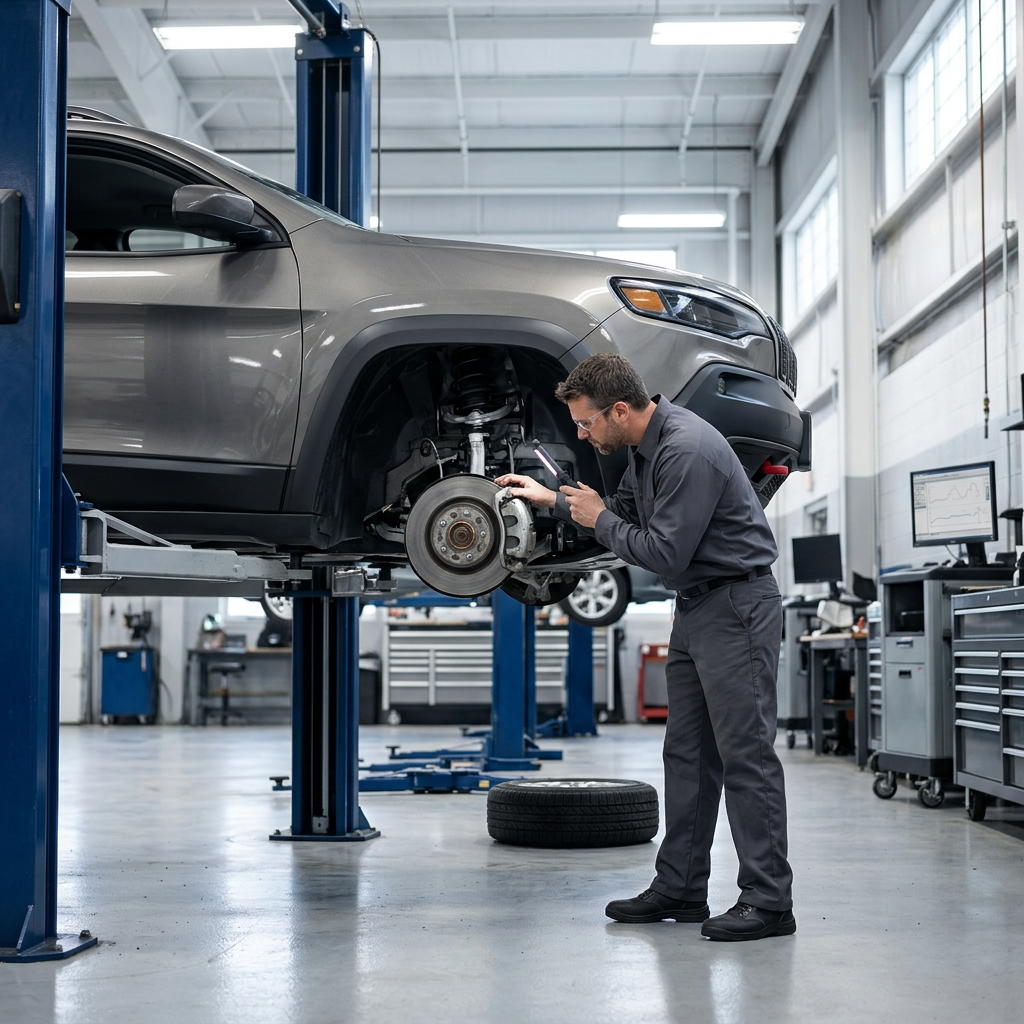
Jeep Cherokee Maintenance Cost: Expert Service Q&A With Valor CDJR
A Jeep Cherokee costs roughly a typical annual maintenance budget for standard routine maintenance and minor mechanical repairs under typical driving conditions. Today, we sat down with Jace Grabouski, General Manager at Valor CDJR, who brings 20 years of automotive leadership to break down what owners can expect for long-term service schedules, fluid intervals, and component care.
Q: How much does annual Jeep Cherokee maintenance cost on average?
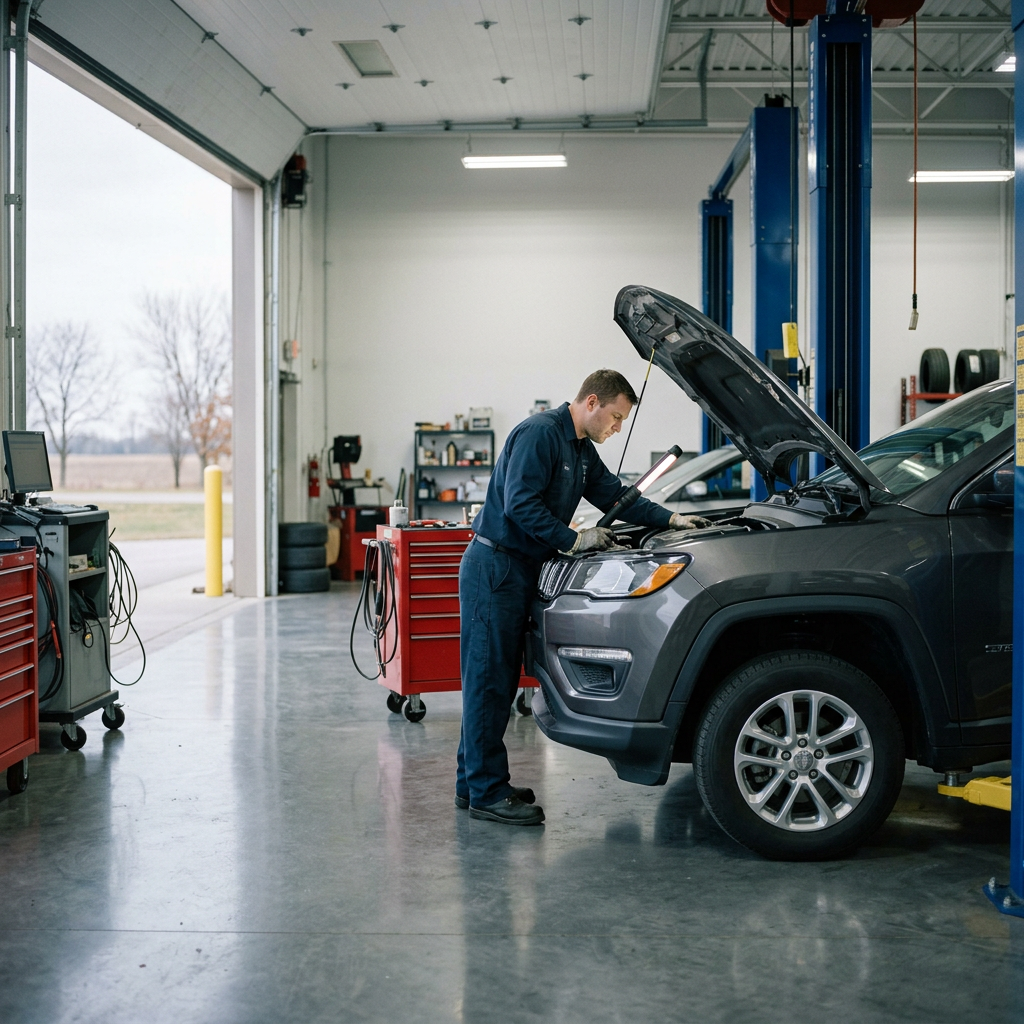
A: Routine upkeep for a Jeep Cherokee generally totals between $520 and $700 each year when you follow factory recommendations and handle wear items promptly. In lighter driving years where you only need standard fluid services, filter changes, and tire rotations, your annual out-of-pocket expenses can sit closer to $270. Higher-mileage years that call for new brake pads, fresh rotors, or major driveline inspections naturally nudge that annual budget toward the upper end of that range.
Operating conditions also play a measurable part in your baseline expenses. Drivers commuting daily along the highway corridors around Junction City experience different wear patterns on tires and brake linings than vehicles driven across unpaved rural routes or subjected to prolonged idle times. Following the onboard oil-life monitoring system ensures you service the engine when lubricants degrade rather than paying for unnecessary shop visits.
Keeping up with scheduled visits at an authorized facility preserves vehicle health and avoids costly secondary failures down the road. If you have questions about your specific model year or want a direct estimate for your vehicle, give our service desk a quick call or stop by our service drive using our showroom address to plan out your service budget with a dedicated advisor.
Q: How often does a Jeep Cherokee need routine service and oil changes?
A: The Cherokee relies on an automatic oil-life monitoring system that tracks operating temperatures, engine revolutions, and run time, alerting you when an oil service is required. Under normal highway and suburban driving, that system typically prompts an oil and filter replacement between 7,500 and 10,000 miles, with a firm manufacturer threshold of no later than 12 months or 10,000 miles. For vehicles operating in severe conditions, such as continuous dusty back roads, extreme ambient temperatures, or extended idling, service intervals should occur closer to 4,000 miles.
A standard full synthetic oil change and oil filter service on a Cherokee typically runs between a range that can vary by vehicle and service needs. Older generations equipped with the 2.4L Tigershark require 5.5 quarts of 0W-20, the 3.2L Pentastar V6 takes 6 quarts of 5W-20, while the turbocharged 2.0L requires 5 quarts of 5W-30 full synthetic. The latest 2026 Cherokee utilizes an efficient 1.6-liter turbocharged hybrid powertrain paired with a continuously variable transmission, demanding precise manufacturer fluid specifications to keep both the combustion engine and hybrid assist components operating seamlessly.
Every oil change visit should also include a tire rotation and a thorough multi-point inspection of the chassis, steering linkage, and brake linings. Routine tire rotations balance the tread wear caused by the Cherokee's standard four-wheel drive or all-wheel-drive systems, extending the life of your tires across every season. You can easily reserve your next maintenance window through our online service appointment tool to keep your crossover running on its designated factory timeline.
Q: Which service interval most affects a Cherokee’s annual maintenance budget?
A: The 60,000-mile and 100,000-mile milestones create the largest single-year bumps in a Cherokee maintenance budget due to comprehensive fluid flushes, belt checks, and ignition component replacements. While standard 10,000-mile visits focus primarily on oil, tire rotations, and cabin air filter replacements, the higher-mileage thresholds introduce major service procedures designed to ensure long-term mechanical durability.
At 60,000 miles, turbocharged models typically require replacement spark plugs, while naturally aspirated engines schedule spark plug replacements at the 100,000-mile mark. The 100,000-mile milestone also introduces cooling system flushes, suspension bushing inspections, and driveline evaluations. For Cherokee models with a factory tow package rated to pull up to 3,500 pounds, inspecting the rear driveline module and power transfer unit fluid becomes critical after years of trailering boats or utility haulers.
Brake maintenance also coincides with these broader mileage windows. Most drivers find front brake pads last between 30,000 and 50,000 miles, depending on traffic density and braking habits. Replacing front brake pads and resurfacing or replacing rotors typically run between $300 and $600 per axle at an independent facility and slightly higher when installing original equipment parts. Budgeting for these scheduled milestones in advance prevents surprise repair bills and protects essential mechanical components.
Q: Does Jeep Wave or FlexCare Protection cover routine Cherokee maintenance?
A: Factory complimentary maintenance coverage depends directly on the model year of your Cherokee. For model years 2021 through 2025, the Jeep Wave customer care program provides dedicated owner support and covers the first two oil changes and tire rotations during the first 24 months of vehicle ownership. Those existing contracts remain fully honored at authorized dealerships through their active term.
"Staying ahead of scheduled fluid changes is what keeps a crossover dependable long after the factory warranty expires."
Starting with the 2026 model year, factory-backed maintenance shifts to the Mopar FlexCare Vehicle Protection program. FlexCare offers customizable prepaid maintenance packages, such as MyFlexCare Service Essentials and Service Premium, allowing owners to lock in upcoming oil changes, tire rotations, and multi-point inspections ahead of time. These prepaid plans shield owners from future parts inflation while ensuring certified technicians install genuine factory-engineered filters and fluids.
For unexpected mechanical and electrical failures beyond the standard 3 years or 36,000 miles basic warranty and 5 years or 60,000 miles powertrain warranty, Mopar FlexCare extended service plans offer comprehensive component coverage. An extended service contract typically ranges from pricing that varies by coverage, deductible, and mileage limits depending on your selected deductible, coverage term, and mileage limits. Investing in extended protection offers peace of mind by covering complex electronics, driveline modules, and climate control components.
Q: What are the most common repair issues and reliability concerns for the Cherokee?
A: Historically, owner-reported concerns on previous-generation Cherokee models center around transmission software calibration on the nine-speed automatic, power transfer unit wear on four-wheel-drive systems, and electrical sensor communication faults. RepairPal awards the Cherokee an overall reliability rating of 4 out of 5, placing it eighth among 29 compact SUVs evaluated, reflecting average to above-average mechanical dependability when properly maintained.
Addressing small performance anomalies early on prevents minor electronic or software glitches from escalating into mechanical breakdowns. Keeping transmission control modules flashed with the latest factory software updates resolves shift flare or hesitation, while routine visual inspections of rear power liftgate wiring and battery ground cables resolve common parasitic electrical drains. Routine battery testing every three to four years also prevents voltage drops that trigger false sensor warnings on the digital instrument cluster.
For owners tackling DIY upkeep or certified repairs, using authentic components ensures factory tolerances and wiring standards remain intact. Our knowledgeable specialists in the dealership parts center can supply genuine spark plugs, brake hardware, factory fluids, and cabin filters matched directly to your VIN to maintain optimal performance.
Q: Are advanced driver assistance cameras and windshield sensors expensive to calibrate?
A: Advanced driver assistance systems require precision recalibration whenever the windshield is replaced or front-facing camera sensors are disturbed, which generally adds $300 to $600 to the total service bill. Modern Cherokee trims incorporate standard forward collision warning, active lane management, and blind-spot monitoring systems that depend on digital cameras mounted behind the upper windshield glass.
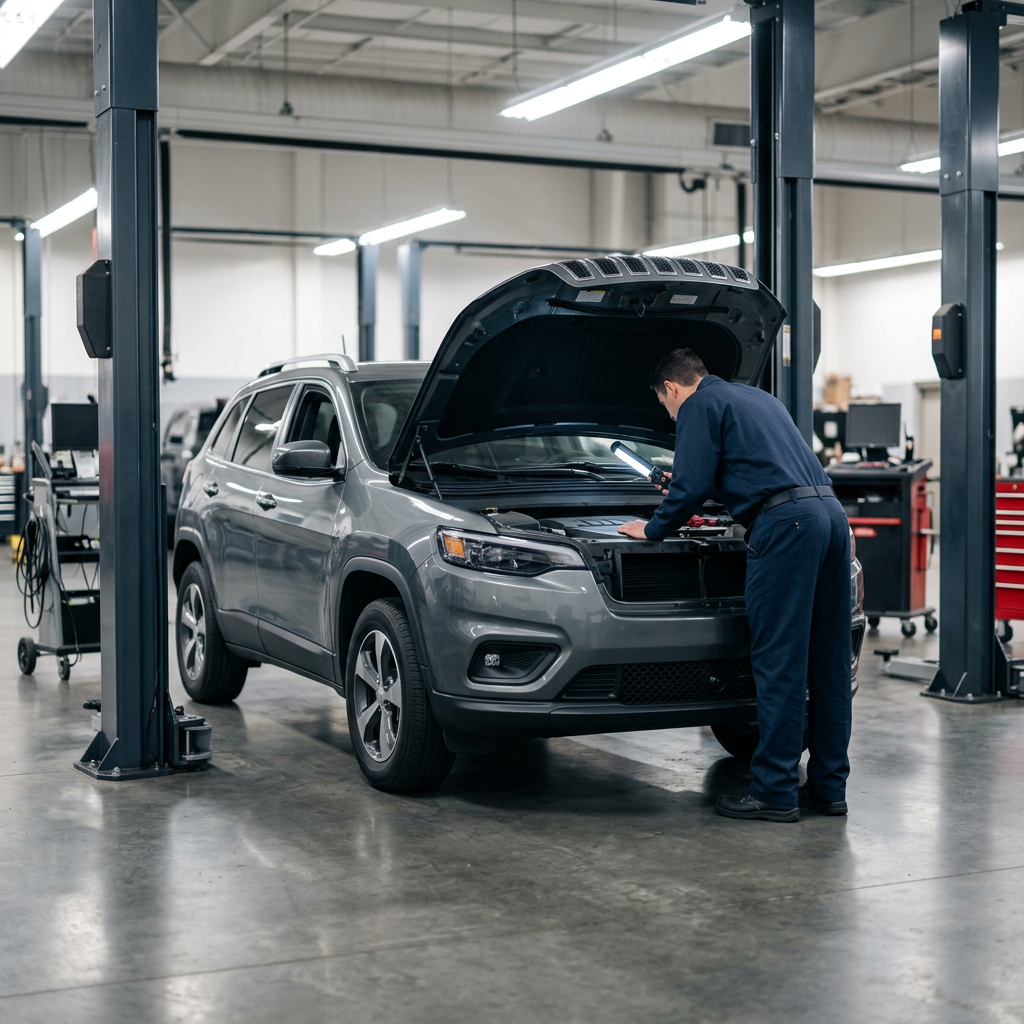
If a flying rock cracks the windshield on a commute through Manhattan, replacing the glass involves more than setting a new pane. Technicians must connect specialized diagnostic equipment and utilize physical aiming targets to calibrate the camera's optical alignment down to the millimeter. Skipping this calibration process can cause adaptive cruise control to disengage unexpectedly or misjudge following distances.
Beyond windshield glass replacement, routine maintenance on driver-assist hardware is minimal. Keeping the front radar sensor bezel clear of winter road slush, mud, and insect buildup prevents temporary system outages. As long as the mounting brackets remain undisturbed and the vehicle alignment stays true, these electronic driver aids provide reliable active safety without requiring recurring maintenance fees.
Q: How can Cherokee owners keep long-term ownership and upkeep costs low?
A: Cherokee owners keep lifetime operating costs lowest by adhering strictly to the oil-life monitor, addressing open recall software updates promptly, and performing preventive chassis inspections. Skipping small preventative tasks like cabin filter replacements or brake slide lubrication often leads to premature rotor warping or blower motor strain, transforming an inexpensive service visit into a substantial mechanical repair.
Vehicle owners should also monitor manufacturer safety recalls to ensure essential control module software updates are completed without charge. For example, recent campaigns involving radio frequency hub software for tire pressure monitoring or rear camera display updates are completed entirely free of charge at authorized repair facilities. Handling these updates during your standard oil change visits minimizes downtime and keeps your safety systems functioning as engineered.
Whether you drive an earlier Cherokee with a proven V6 or the latest model featuring an EPA-estimated 37 mpg combined fuel rating, factory-certified service protects your vehicle investment over hundreds of thousands of miles. To consult our service team about customized maintenance schedules or to have a technician inspect your vehicle, navigate to our service entrance at 1825 Goldenbelt Blvd, Junction City, KS 66441 or dial (785) 238-5114 to speak directly with an advisor today.
© 2026 Valor CDJR. All rights reserved.