




Blog / Towing & Roadside Assistance

Blog

All Towing & Roadside Assistance Buying Guides New Vehicle Reviews Maintenance & Service Technology & Innovation Financing & Insurance Model Comparisons Safety Features New Vehicle Inventory Used Vehicle Guides Valor CDJR Towing & Hauling Safety Trade in Advice Family & Lifestyle Vehicles Vehicle Financing & Trade-In Tips Dealership Sales Strategies KS Community Parts & Accessories Seasonal Vehicle Care Junction City Military & Veteran Benefits Automotive Repair Buying Guides & Dealership Services Financing & Trade-In Options Heavy-Duty Truck Features Off-Road & Adventure Vehicles Service Vehicle Ownership Care Hybrid & Electric Vehicles Military Vehicle Buying Guides Commercial Truck Reviews Parts Performance & Powertrain Vehicle Features & Accessories Automotive Recalls Dealership Inventory Highlights Dealership Visit Preparation Inventory & Pricing Insights Jeep Lifestyle & Accessories Military & Community Car Buying Programs Repair & Diagnostics Vehicle Maintenance & Preparation Vehicle Pricing Strategies Vehicle Safety & Compliance Vehicle Trade-In Tips Warranty & Coverage Automotive News Car Buying Tips Car Purchase Tips Commercial Fleet Management Commercial Vehicle Comparisons Dealer Profiles & Interviews Dealership Offers & Promotions Dealership Service Experience Financing & Insurance for Military Families Genuine Parts & Accessories Local Automotive Events OEM Parts & Warranty Coverage Pre-Owned Vehicle Sales Road Trip & Travel Tips Special Offers & Promotions Tailgating & Outdoor Adventures Tailgating & Outdoor Recreation Towing & Hauling Vehicle Registration & Legal Advice for Military Personnel Vehicle Repair & Diagnostics Vehicle Sales Experience Warranty & Protection Plans Agricultural Vehicles & Equipment Brake System Care Certified Pre-Owned Programs Community & Military Support Initiatives Dealership Events Diesel Engine Technology Engine & Performance Insights Fleet & Upfit Buying Guides Luxury SUVs Out-of-State Purchasing Guides Part & Warranty Services Parts & Repair Reimbursement Recall & Warranty Repairs Seasonal Sales Events Technology & Innovation in Vehicle Service Vehicle Incentives & Promotions Vehicle Maintenance & Winter Care Vehicle Technology & Features Weekend Dealership Events and Services
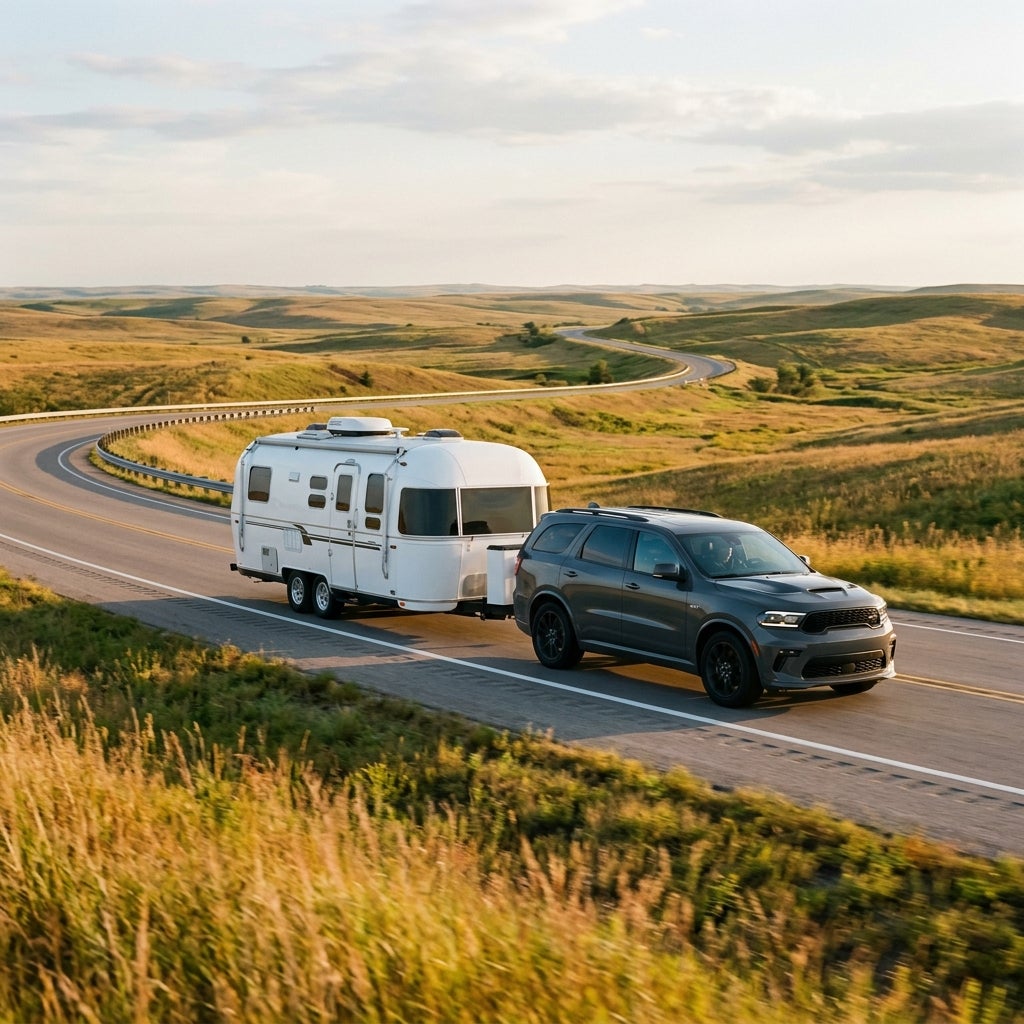
A dark gray SUV towing a white camper trailer along a winding scenic road through rolling hills. (Representative image for illustration purposes only. Actual vehicle may vary based on trim and configuration.)

What Is the Maximum Towing Capacity Available on a Properly Equipped Dodge Durango?

.hrizn-visual-root a { color: #566BA1; } .hrizn-visual-root a { color: inherit; } .hrizn-visual-root p { margin: 0 0 1em; } .hrizn-visual-root p:last-child { margin-bottom: 0; } @media (max-width: 640px) { .hrizn-visual-root { text-align: center !important; } .hrizn-visual-root a { display: block; width: 100%; max-width: 320px; margin-left: auto; margin-right: auto; box-sizing: border-box; } .hrizn-visual-root + a { margin-top: 8px; } } @media (max-width: 640px) { #hrizn-cols-1 { flex-direction: column !important; align-items: stretch !important; } #hrizn-cols-1 > .hrizn-col { flex: 1 1 100% !important; width: 100% !important; } } #hrizn-table-sec-2-tbl table{width:100%;table-layout:auto;border-collapse:collapse;font-family:'Open Sans',sans-serif;font-size:0.9rem} #hrizn-table-sec-2-tbl th,#hrizn-table-sec-2-tbl td{border:1px solid #e0e4ed;padding:8px;color:#595959;word-break:break-word;overflow-wrap:break-word} #hrizn-table-sec-2-tbl th{background:#eeeeee;color:#1a1a22;font-weight:700;font-size:14px;text-align:left;vertical-align:middle;padding:8px} #hrizn-table-sec-2-tbl tr:nth-child(even) td{background:rgba(86,107,161,0.04)} #hrizn-table-sec-2-tbl .tableWrapper{overflow-x:hidden} @media (max-width: 640px) { #hrizn-cols-2 { flex-direction: column !important; align-items: stretch !important; } #hrizn-cols-2 > .hrizn-col { flex: 1 1 100% !important; width: 100% !important; } } @media (max-width: 640px) { #hrizn-3cols-1 { flex-direction: column !important; align-items: stretch !important; } #hrizn-3cols-1 > .hrizn-col { flex: 1 1 100% !important; width: 100% !important; } } @media (max-width: 640px) { #hrizn-cols-3 { flex-direction: column !important; align-items: stretch !important; } #hrizn-cols-3 > .hrizn-col { flex: 1 1 100% !important; width: 100% !important; } } @media (max-width: 640px) { #hrizn-3cols-2 { flex-direction: column !important; align-items: stretch !important; } #hrizn-3cols-2 > .hrizn-col { flex: 1 1 100% !important; width: 100% !important; } } @media (max-width: 640px) { #hrizn-cols-4 { flex-direction: column !important; align-items: stretch !important; } #hrizn-cols-4 > .hrizn-col { flex: 1 1 100% !important; width: 100% !important; } } @media (max-width: 640px) { #hrizn-cols-5 { flex-direction: column !important; align-items: stretch !important; } #hrizn-cols-5 > .hrizn-col { flex: 1 1 100% !important; width: 100% !important; } } @media (max-width: 640px) { #hrizn-3cols-3 { flex-direction: column !important; align-items: stretch !important; } #hrizn-3cols-3 > .hrizn-col { flex: 1 1 100% !important; width: 100% !important; } } @media (max-width: 640px) { #hrizn-cols-6 { flex-direction: column !important; align-items: stretch !important; } #hrizn-cols-6 > .hrizn-col { flex: 1 1 100% !important; width: 100% !important; } } #hrizn-table-sec-11-tbl table{width:100%;table-layout:auto;border-collapse:collapse;font-family:'Open Sans',sans-serif;font-size:0.9rem} #hrizn-table-sec-11-tbl th,#hrizn-table-sec-11-tbl td{border:1px solid #e0e4ed;padding:8px;color:#595959;word-break:break-word;overflow-wrap:break-word} #hrizn-table-sec-11-tbl th{background:#eeeeee;color:#1a1a22;font-weight:700;font-size:14px;text-align:left;vertical-align:middle;padding:8px} #hrizn-table-sec-11-tbl tr:nth-child(even) td{background:rgba(86,107,161,0.04)} #hrizn-table-sec-11-tbl .tableWrapper{overflow-x:hidden} What Is the Maximum Towing Capacity Available on a Properly Equipped Dodge Durango? When properly equipped, the Dodge Durango achieves a impressive maximum towing capacity of 8,700 pounds. This standout pulling power is available across multiple high-performance V8 powertrains, including the 5.7L HEMI® V8 equipped with the factory Tow N Go Package, the 6.4L SRT® 392 V8, and the supercharged 6.2L SRT® Hellcat V8. For drivers choosing the standard 3.6L Pentastar® V6 engine, the Durango still delivers an impressive maximum towing capacity of 6,200 pounds, easily outpacing standard entry-level crossovers. What sets the Dodge Durango apart from conventional three-row midsize SUVs is its rear-wheel-drive-based muscle architecture and unibody platform constructed with high-strength steel. Unlike front-wheel-drive competitors that struggle with traction when hauling heavy trailers up incline ramps, the Durango distributes tongue weight evenly over its drive wheels. Whether you are transporting a ski boat to the marina, pulling a two-axle camper through rolling state parks, or hauling heavy equipment across Junction City, the Durango bridges the gap between midsize SUV passenger comfort and full-size truck pulling performance. Dodge Durango Towing Capacity Breakdown by Engine and Trim Level Understanding the precise towing capability of your Dodge Durango starts with identifying the underlying engine and factory packages. Dodge offers four distinct engine options across trims like SXT, GT, R/T, Citadel, SRT 392, and SRT Hellcat. Standard non-Tow N Go 5.7L HEMI models deliver a generous 7,200-pound rating, while adding the factory Tow N Go Package unlocks standard SRT performance hardware and jumps the capacity directly to 8,700 pounds. Check out our New Vehicle Listings to compare trim features. Engine Powertrain Horsepower / Torque Standard Max Towing Tow N Go Max Towing Max Payload Range 3.6L Pentastar V6 295 hp / 260 lb-ft 6,200 lbs N/A 1,380 - 1,420 lbs 5.7L HEMI V8 360 hp / 390 lb-ft 7,200 lbs 8,700 lbs 1,330 - 1,410 lbs 6.4L SRT 392 V8 475 hp / 470 lb-ft 读 8,700 lbs Standard (8,700 lbs) 1,390 lbs 6.2L Supercharged V8 710 hp / 645 lb-ft 8,700 lbs Standard (8,700 lbs) 1,350 lbs Tongue Weight Recommendations: Always observe the standard 10% to 15% rule when balancing your trailer. For an 8,700-pound maximum trailer, maximum allowed tongue weight sits between 870 and 1,200 pounds (subject to hitch receiver ratings). Keep in mind that tongue weight counts directly toward your vehicle's overall interior payload limit. What Size Camper Can You Tow with a V6 Dodge Durango? Drivers often wonder if the standard 3.6L Pentastar® V6 engine has enough muscle for weekend outdoor adventures. Rated at 6,200 pounds of max towing capacity, the V6 Durango is exceptionally capable and versatile for most light-to-medium recreational trailering needs. You do not necessarily need a V8 to enjoy camping excursions across Kansas. Compatible recreational options for the V6 Durango include: • Pop-Up Campers & A-Frame Trailers: Typically weighing 1,500 to 3,000 lbs dry, these are effortlessly pulled with minimal impact on fuel economy. • Teardrop & Overland Trailers: Ranging from 1,200 to 2,500 lbs, perfect for off-grid camping trips. • Lightweight Ultra-Lite Travel Trailers (up to 24 feet): Many modern single-axle camper models feature dry weights between 3,200 and 4,500 lbs, leaving ample margin for gear, propane, and water tanks under the 6,200-lb threshold. • Watercraft & Powersports: Easily hauls dual jet ski trailers, aluminum fishing boats, or twin ATV utility trailers. When evaluating campers for a V6 Durango, pay close attention to the trailer's Gross Vehicle Weight Rating (GVWR) rather than just its published dry weight. A camper listed with a 3,800-lb dry weight can quickly reach 5,000 lbs once loaded with freshwater, batteries, gear, and supplies. The TorqueFlite® 8-speed automatic transmission paired with the Pentastar V6 uses optimized gear ratios to keep the engine in its sweet spot. Electronic stability control with integrated Trailer Sway Control continuously monitors vehicle motion to counteract trailer movement caused by passing semi-trucks or crosswinds. Explore pre-owned options in our Used Vehicle Listings. Dodge Durango Towing Capacity Breakdown: Pulling Campers and Trailers in Northeast Kansas Milford Lake Boating & Launching: Located right near Junction City, Milford Lake requires dependable pulling power and wet-ramp traction. Launching a heavy pontoon or ski boat demands instant low-end torque and confident four-wheel-drive traction. The Durango's available AWD system easily grips slick concrete boat ramps when pulling watercraft back onto dry land. Flint Hills Rolling Terrain: Towing campers through Manhattan, Riley County, and the rolling Flint Hills along I-70 tests powertrain endurance. Heavy-duty cooling systems on V8 Tow N Go models prevent thermal buildup during sustained uphill pulls on warm Kansas summer afternoons. Kansas Crosswinds & Highway Stability: Strong regional winds across open farmland require vehicle weight and structural rigidity. The Durango's near 50/50 weight distribution and dynamic damping suspension keep your rig tracking straight. Visit our dealership to inspect inventory— Get Directions to Valor CDJR. Explore New Durango Towing Models Is a Pickup Truck Better for Towing Campers Than a Dodge Durango? For decades, conventional wisdom dictated that pulling any travel trailer required a traditional light-duty body-on-frame pickup truck like the Ram 1500. However, modern SUV engineering has changed the landscape. Choosing between a Dodge Durango and a full-size pickup comes down to how you balance passenger transport, cargo weatherproofing, and maneuverability. Advantages of the Dodge Durango over a Pickup Truck: • Enclosed 3-Row Seating: Seats up to seven passengers comfortably in climate-controlled luxury, whereas crew-cab pickups max out at five or six. • Weatherproof Indoor Cargo: Keep luggage, coolers, sleeping bags, and electronics secure and protected from rain, dust, and outdoor elements inside the cabin. • Shorter Wheelbase Maneuverability: Parallel parking, backing into tight campsite slips, and navigating suburban driveways are significantly easier in a Durango than in a 20-foot-long pickup truck. When a Pickup Truck Might Be Preferred: Full-size trucks excel when you need an open bed for hauling dirty cargo like gravel, firewood, dirt bikes, or fifth-wheel/gooseneck hitches. Pickups also generally offer higher maximum payload ratings in the bed. However, for families who spend 90% of their time commuting, running errands, and carpooling, but still want to tow an 8,000-pound travel trailer on weekends, the Dodge Durango offers the ideal compromise. You get genuine muscle-car performance, premium 3-row comfort, and heavy-duty towing capacity without driving a cumbersome truck every day. Thinking about upgrading? Start with a quick Trade In Evaluation. Which Factory Packages and Equipment Are Required for Maximum Durango Towing? Tow N Go Package (5.7L V8): Transforms the 5.7L HEMI Durango into an 8,700-lb towing juggernaut. Includes Brembo® performance brakes, active damping suspension, electronic rear limited-slip differential, performance exhaust, and drive modes (Track, Sport, Tow, Snow). Trailer Tow Group IV: Includes heavy-duty engine cooling, Class IV hitch receiver, integrated trailer brake controller, load-leveling rear suspension, 7-pin/4-pin wiring harness, and full-size spare tire. Why Factory Hardware Superiority Matters: Integrated trailer brake controls allow subtle electric brake adjustments right from the dashboard. Non-factory aftermarket hitches often lack load-leveling suspension integration and dynamic brake calibrations. Contact our Parts Department for factory accessories. What Driving Habits Help Protect a Durango While Towing Near Its Capacity? Driving near your vehicle's maximum towing capacity requires deliberate driving habits to protect transmission gears, brake rotors, and suspension components. Simple operational adjustments preserve long-term vehicle health: • Engage Tow/Haul Mode: Always activate Tow/Haul mode when pulling heavy loads. This recalibrates transmission shift points, holding gears longer during acceleration and providing engine braking when coasting downhill. • Smooth Throttle Management: Avoid wide-open throttle bursts from complete stops. Smooth progression minimizes strain on torque converters, driveshafts, and rear differentials. • Manual Gear Selection on Steep Grades: When descending rolling hills around the Flint Hills region, manually downshift using steering-wheel paddle shifters to engine-brake, reducing brake heat fade. • Increase Following Distances: Give yourself 4 to 6 seconds of stopping gap behind leading traffic. Even with trailer brakes properly gain-adjusted, stopping an extra 7,000+ pounds takes increased distance. • Monitor Gauge Cluster Temperatures: Use the Durango's customizable digital instrument cluster to monitor engine coolant, oil temperature, and transmission fluid temperatures during hot summer drives. • Verify Tire Pressures Cold: Under-inflated trailer or SUV tires generate excessive heat under heavy loads, increasing blowout risk. Adjust pressures to door-jamb specifications prior to loading. Schedule Towing Maintenance Inspection How Often Should You Change Transmission Fluid If Towing Regularly? Towing heavy trailers puts significantly higher thermal and mechanical stress on your Durango's powertrain. Under severe duty conditions—defined as towing a trailer, boat, or camper for more than 50% of your driving miles—standard fluid service intervals must be shortened to prevent premature fluid degradation and component wear. Recommended Severe-Duty Maintenance Schedule: • Transmission Fluid & Filter Replacement: Every 30,000 to 50,000 miles (compared to 100,000 miles under normal commuting conditions). • Front & Rear Differential Fluid Changes: Every 30,000 miles to clear metal shearing particles generated by heavy torque loading. • Transfer Case Fluid (AWD Models): Inspect and change every 30,000 to 45,000 miles. • Brake Fluid Flush: Flush brake lines every 2 years to remove absorbed atmospheric moisture that lowers fluid boiling points during downhill braking. • Cooling System Maintenance: Inspect coolant strength and hose integrity annually before summer trailering season starts. Keep your vehicle running smoothly with help from certified technicians at Valor CDJR. Stop by our Express Lane or book ahead using our Service Scheduler. Understanding Towing Math: Gross Combined Weight Rating, Payload, and Tongue Weight Safe towing requires understanding key weight terms so you don't exceed your vehicle's structural capacity: • Curb Weight: Total weight of the empty vehicle with standard equipment and full fuel tank, but no passengers or cargo. • GVWR (Gross Vehicle Weight Rating): Maximum allowable total weight of the vehicle itself, including passengers, cabin cargo, fuel, and trailer tongue weight. • GCWR (Gross Combined Weight Rating): The maximum permissible combined weight of the fully loaded Durango PLUS the fully loaded trailer combined. • Payload Capacity: The total weight you can add inside the cabin and cargo bay (typically 1,330 to 1,420 lbs depending on Durango trim). How Cabin Weight Directly Reduces Max Towing Limit: If your Durango has a Payload Limit of 1,400 lbs, and you load 5 passengers (total 800 lbs) plus 200 lbs of camping gear in the trunk, you have consumed 1,000 lbs of payload. This leaves only 400 lbs of remaining payload capacity for trailer tongue weight. Since tongue weight must equal roughly 10% to 15% of total trailer weight, a 400-lb tongue weight cap effectively restricts your maximum trailer weight to approximately 3,500–4,000 pounds, regardless of whether your SUV engine is rated for 8,700 lbs. Always perform your towing math before setting out! What Questions Should You Ask a Dealer About Durango Towing Specs Before Buying? 1. Is the Tow Package Factory-Installed? Confirm whether the vehicle features factory Trailer Tow Group IV or Tow N Go, rather than an aftermarket hitch receiver lacking heavy-duty engine cooling. 2. What Does the Door-Jamb Payload Sticker Say? Ask to inspect the physical tire/loading sticker on the driver door-jamb to confirm exact payload capacity for that vehicle's optional equipment package. 3. How Does My Trade-In Affect Deal Options? Evaluate your current vehicle value with a Trade In Evaluation, then choose to Get Pre-Approved. Have questions? Call us at (785) 238-5114. Contact us for financing information How Does the Dodge Durango Towing Rating Compare to Other 3-Row Midsize SUVs? When comparing 3-row midsize crossovers, the Dodge Durango offers strong towing capability in its class. While most competitors max out between 5,000 and 5,600 pounds, the Durango's 8,700-pound maximum rating gives drivers up to 3,700 additional pounds of pulling capacity —making the difference between hauling a full-size travel trailer or leaving it behind. Make & Model Engine Options Max Towing Capacity Drive Architecture Dodge Durango 3.6L V6 / 5.7L V8 / 6.4L V8 / 6.2L SC V8 8,700 lbs RWD / AWD Ford Explorer 2.3L I4 / 3.0L EcoBoost V6 5,600 lbs RWD / AWD Honda Pilot 3.5L V6 5,000 lbs FWD / AWD Toyota Grand Highlander 2.4L Turbo / 2.5L Hybrid / Max Hybrid 5,000 lbs FWD / AWD Kia Telluride 3.8L V6 5,500 lbs (X-Pro) FWD / AWD Hyundai Palisade 3.8L V6 5,000 lbs FWD / AWD Ready to experience strong 3-row towing power, muscular exhaust note, and luxury cabin comfort? Visit Valor CDJR in Junction City today to test drive the new Dodge Durango! Shop Dodge Durango at Valor CDJR
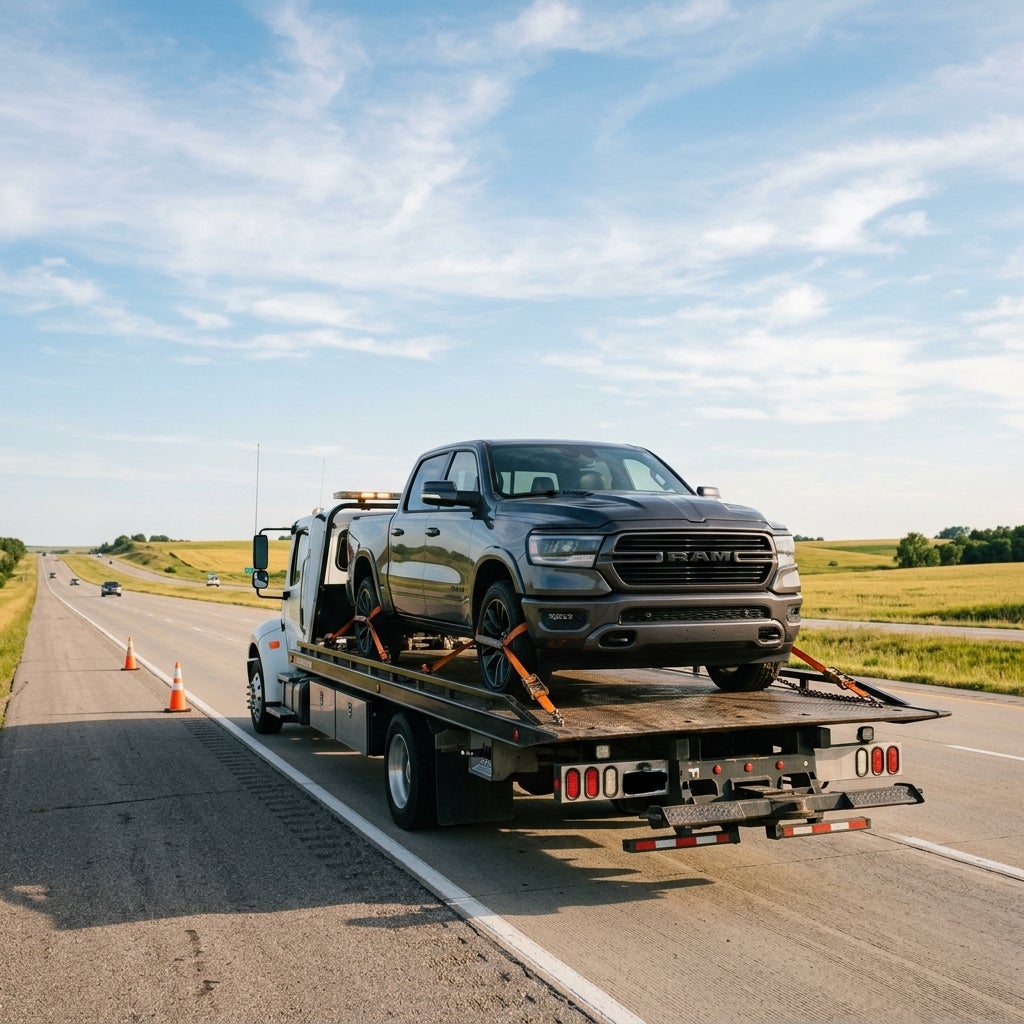
A grey RAM pickup truck secured with orange straps on a flatbed tow truck driving along a highway. (Representative image for illustration purposes only. Actual vehicle may vary based on trim and configuration.)

Is Your RAM 1500 Unsafe to Drive Due to a Recall?

.hrizn-visual-root a { color: #566BA1; } .hrizn-visual-root a { color: inherit; } .hrizn-visual-root p { margin: 0 0 1em; } .hrizn-visual-root p:last-child { margin-bottom: 0; } @media (max-width: 640px) { .hrizn-visual-root { text-align: center !important; } .hrizn-visual-root a { display: block; width: 100%; max-width: 320px; margin-left: auto; margin-right: auto; box-sizing: border-box; } .hrizn-visual-root + a { margin-top: 8px; } } @media (max-width: 640px) { #hrizn-cols-1 { flex-direction: column !important; align-items: stretch !important; } #hrizn-cols-1 > .hrizn-col { flex: 1 1 100% !important; width: 100% !important; } } #hrizn-table-policy-comparison-table table{width:100%;table-layout:auto;border-collapse:collapse;font-family:'Open Sans',sans-serif;font-size:0.9rem} #hrizn-table-policy-comparison-table th,#hrizn-table-policy-comparison-table td{border:1px solid #e0e4ed;padding:8px;color:#595959;word-break:break-word;overflow-wrap:break-word} #hrizn-table-policy-comparison-table th{background:#eeeeee;color:#1a1a22;font-weight:700;font-size:14px;text-align:left;vertical-align:middle;padding:10px} #hrizn-table-policy-comparison-table tr:nth-child(even) td{background:rgba(86,107,161,0.04)} #hrizn-table-policy-comparison-table .tableWrapper{overflow-x:hidden} @media (max-width: 640px) { #hrizn-3cols-1 { flex-direction: column !important; align-items: stretch !important; } #hrizn-3cols-1 > .hrizn-col { flex: 1 1 100% !important; width: 100% !important; } } @media (max-width: 640px) { #hrizn-cols-2 { flex-direction: column !important; align-items: stretch !important; } #hrizn-cols-2 > .hrizn-col { flex: 1 1 100% !important; width: 100% !important; } } @media (max-width: 640px) { #hrizn-cols-3 { flex-direction: column !important; align-items: stretch !important; } #hrizn-cols-3 > .hrizn-col { flex: 1 1 100% !important; width: 100% !important; } } @media (max-width: 640px) { #hrizn-3cols-2 { flex-direction: column !important; align-items: stretch !important; } #hrizn-3cols-2 > .hrizn-col { flex: 1 1 100% !important; width: 100% !important; } } @media (max-width: 640px) { #hrizn-cols-4 { flex-direction: column !important; align-items: stretch !important; } #hrizn-cols-4 > .hrizn-col { flex: 1 1 100% !important; width: 100% !important; } } @media (max-width: 640px) { #hrizn-3cols-3 { flex-direction: column !important; align-items: stretch !important; } #hrizn-3cols-3 > .hrizn-col { flex: 1 1 100% !important; width: 100% !important; } } @media (max-width: 640px) { #hrizn-cols-5 { flex-direction: column !important; align-items: stretch !important; } #hrizn-cols-5 > .hrizn-col { flex: 1 1 100% !important; width: 100% !important; } } @media (max-width: 640px) { #hrizn-cols-6 { flex-direction: column !important; align-items: stretch !important; } #hrizn-cols-6 > .hrizn-col { flex: 1 1 100% !important; width: 100% !important; } } #hrizn-table-checklist-table table{width:100%;table-layout:auto;border-collapse:collapse;font-family:'Open Sans',sans-serif;font-size:0.9rem} #hrizn-table-checklist-table th,#hrizn-table-checklist-table td{border:1px solid #e0e4ed;padding:8px;color:#595959;word-break:break-word;overflow-wrap:break-word} #hrizn-table-checklist-table th{background:#eeeeee;color:#1a1a22;font-weight:700;font-size:14px;text-align:left;vertical-align:middle;padding:10px} #hrizn-table-checklist-table tr:nth-child(even) td{background:rgba(86,107,161,0.04)} #hrizn-table-checklist-table .tableWrapper{overflow-x:hidden} Is Your Ram 1500 Unsafe to Drive Due to a Recall? Here Is How to Get FCA to Pay for Your Towing Costs Discovering that your Ram 1500 has been flagged with an active safety recall is never pleasant. It is a moment that immediately disrupts your schedule, causes unnecessary stress, and leaves you wondering about the safety of your family, your passengers, and your cargo. During the scorching summer heat of July 21, 2026, the last thing you want to do is navigate an unsafe vehicle down the busy corridors of Interstate 70 or Highway 77 in Kansas. When a recall notice clearly states that your truck is unsafe to drive, or when a major component like your steering, braking, or electronic stability control is compromised, driving the vehicle to a service center is no longer a viable option. It becomes a matter of public safety, demanding immediate action without putting your life or your truck at further risk. This brings up a critical financial and logistical question for truck owners: Does Fiat Chrysler Automobiles (FCA), now operating under the Stellantis parent company, cover the towing costs associated with bringing an unsafe, recalled Ram 1500 to a certified dealership? The quick answer is yes, but the execution of this policy depends heavily on the specific language of the recall, how you coordinate the transport, and the documentation you maintain. Many drivers mistakenly assume they must pay out-of-pocket and hope for a reimbursement check months later, or worse, they risk driving an unsafe truck to avoid a towing bill. Neither of these approaches is necessary when you understand how the system is structured. At Valor CDJR in Junction City, Kansas, we believe that our responsibility to our community extends far beyond selling vehicles. As a trusted local resource for truck owners throughout Riley, Geary, and surrounding counties, we are dedicated to helping you navigate the complexities of manufacturer recalls. We understand that your Ram 1500 is more than just transportation; it is your mobile office, your weekend hauler, and your daily partner. In this comprehensive guide, we will break down the exact protocols FCA uses to authorize and pay for emergency towing, the common mechanical failure points currently triggering active recalls, and how you can protect your rights as a consumer while keeping your vehicle—and your wallet—completely safe. Does FCA Pay for the Towing Costs if My Ram 1500 Is Unsafe to Drive Due to This Recall? When a safety recall is officially issued by the National Highway Traffic Safety Administration (NHTSA) in conjunction with FCA, the manufacturer is legally obligated to resolve the safety defect at no cost to the consumer. This obligation extends to the safe transport of the vehicle if the manufacturer's official recall notice explicitly warns owners not to drive the vehicle, or if the nature of the mechanical defect makes operating the vehicle an immediate road hazard. Under these strict circumstances, FCA will cover the towing fees to transport your Ram 1500 to the nearest authorized dealership, such as Valor CDJR. However, it is crucial to understand the distinction between a standard recall and a "Do Not Drive" or "Park Outside" advisory recall. For a standard recall—such as a minor software update for your Uconnect system or a non-safety-critical trim piece adjustment—the vehicle is still considered fully roadworthy. In those standard scenarios, FCA typically expects you to drive the truck to the dealership yourself, and they will not cover the cost of a flatbed tow. On the flip side, if the recall involves steering failure, brake loss, sudden engine stall risks, or a serious fire hazard, the vehicle qualifies as unsafe to drive, and towing is fully covered under the corporate safety policy. To ensure your towing costs are paid directly by FCA rather than coming out of your pocket as an upfront expense, you should always coordinate the tow through FCA Roadside Assistance or by directly contacting the service department here at Valor CDJR. If you arrange your own independent towing service without obtaining pre-authorization or a dispatch number from FCA, you may have to pay the towing operator yourself and go through a lengthy reimbursement claim process. By utilizing authorized channels, the tow is billed directly to the manufacturer, saving you immediate financial strain. Keep in mind that FCA's coverage is designed to transport your truck to the *nearest* authorized Ram dealership. If you choose to have your vehicle towed to a far-away dealership rather than your local service center, you may be responsible for paying the difference in mileage. For drivers in the Junction City, Manhattan, and Fort Riley areas, Valor CDJR is your closest authorized warranty and recall repair hub, ensuring your transport is fully covered under standard mileage rules. Column 1 Column 2 What Are the Common Recall Issues Affecting the 2024 Ram 1500? Electronic Stability Control Malfunctions One of the most notable recalls affecting the 2024 Ram 1500 involves a software glitch within the Anti-Lock Brake System (ABS) control module. This specific issue can disable the Electronic Stability Control (ESC) system unexpectedly while driving. Without functional ESC, the driver loses crucial electronic assistance during sudden steering maneuvers or on slick road surfaces, drastically increasing the risk of a high-speed collision. Because this defect compromises active safety systems, driving with a malfunctioning ABS control module is highly discouraged, making it a primary candidate for emergency towing coverage. Steering Column Gear Assembly Defects A mechanical issue identified in certain production runs of the 2024 Ram 1500 involves the steering column gear assembly. In affected trucks, a manufacturing defect within the steering gear can cause a sudden, total loss of steering control without warning. This is arguably the most severe safety hazard a driver can face. If you receive a steering recall notice that explicitly warns of a steering lockup or loss of control, you should immediately park the vehicle and request a tow. Attempting to drive even a few miles to the dealership is an unacceptable risk. Powertrain & Fuel System Anomalies Another set of active recall campaigns involves software glitches in the powertrain control module (PCM) and potential fuel pump failures that can cause the engine to stall unexpectedly. An unexpected engine shutdown at highway speeds poses an immediate threat to the driver and surrounding motorists, as it also results in a sudden loss of power steering and brake vacuum assist. If your Ram 1500 is displaying warning lamps related to these powertrain recalls, getting it towed ensures that you prevent a dangerous on-road breakdown. How Do I Request Towing Reimbursement From FCA for a Recall? If you find yourself with an unsafe Ram 1500, the process of requesting towing and ensuring reimbursement must be handled carefully to avoid out-of-pocket costs. First, look up your specific 17-digit Vehicle Identification Number (VIN) on the official NHTSA database or the Stellantis recall portal to verify that your vehicle has an active recall that warns against driving. Once verified, do not call a random local tow service. Instead, contact FCA Customer Care or the service department at Valor CDJR directly. We can frequently coordinate a flatbed tow on your behalf, utilizing FCA's direct-billing system so you never have to see a bill. If you are forced to pay for a tow yourself due to an emergency breakdown in a remote location where corporate dispatch is unavailable, you must follow a strict protocol to get your money back. Secure an itemized invoice from the towing company that explicitly details the pickup location, the destination (which must be an authorized Ram dealer), the mileage towed, and the total amount paid. You will then need to submit these documents along with your official recall notification letter to the Stellantis Reimbursement Portal or mail them to the corporate address. The review process can take several weeks, which is why utilizing dealer-coordinated towing is always the preferred, stress-free route. To make this process as seamless as possible for our customers in Kansas, Valor CDJR offers dedicated assistance with recall management. When you schedule your service appointment, let our advisors know that your vehicle is unsafe to operate. We can walk you through the pre-authorization process, check for parts availability, and make sure that a certified flatbed operator is sent to your location. This proactive coordination minimizes the risk of claim denial and guarantees that your truck is transported under fully approved manufacturer guidelines. Schedule Recall Service & Tow Support Can I Get Reimbursed for Repair Bills I Paid Before My Ram 1500 Recall Was Announced? It is not uncommon for truck owners to experience a mechanical failure and pay out-of-pocket for repairs, only to find out months later that the exact component they replaced has become the subject of an official safety recall. If you have paid for a repair on your Ram 1500 that was subsequently designated as a safety recall, you are generally entitled to retroactive reimbursement from FCA. This includes the cost of the replacement parts, the labor charges, and any associated towing costs that you incurred during the original breakdown. To successfully claim a retroactive reimbursement, the repair must have occurred within a specific timeframe—typically between the date the defect was first identified by the manufacturer and the official date the recall campaign was launched. Additionally, the repair must have addressed the exact defect described in the recall notice. If you replaced your entire transmission but the recall only covers a minor electrical wiring harness within the gear shift mechanism, your claim may only be partially approved or denied outright. This is why having precise, itemized documentation is absolutely vital. When compiling your reimbursement package, make sure you have the original repair order from the independent mechanic or dealership, proof of payment (such as a credit card receipt or cleared check), and your vehicle's registration. If you need assistance verifying whether a past repair matches a newly announced recall, our Parts Department and service advisors at Valor CDJR can review your old invoices, cross-reference them with active technical service bulletins (TSBs), and help you package the documentation correctly to maximize your chances of a successful corporate payout. Keep in mind that Stellantis typically has a strict deadline for submitting retroactive reimbursement claims—often within 60 to 90 days after the official recall notices are mailed to owners. Delaying your submission could result in losing your right to reimbursement. If you have a stack of receipts from a tricky steering or electrical issue on your 2024 Ram 1500, bring them to our service center as soon as possible so we can help you take immediate action. What Should I Do if the Local Ram Dealer Refuses to Provide Towing for My Unsafe Truck? Unfortunately, not all dealership service departments handle safety recalls with the same level of urgency and customer care. Some truck owners report contacting local dealers only to be told that the dealership "does not handle towing" or that the customer must pay for transport themselves and deal with corporate later. If you encounter a dealer who refuses to assist with arranging towing for an active, unsafe recall, it is important to know your rights and take strategic action. First, reference the official recall notification letter. In almost all cases involving a serious safety risk, the letter itself will state that towing is covered. Presenting this physical or digital document to the service manager can quickly resolve the misunderstanding. If the dealer remains uncooperative, your next step is to immediately escalate the issue to Stellantis/FCA corporate customer service. Explain that the local franchise is refusing to comply with the manufacturer's safety transport directives. Corporate customer care can issue a direct dispatch to an authorized towing service, bypassing the uncooperative dealer entirely and ensuring your truck is brought to a service center that respects corporate safety guidelines. Additionally, documenting the refusal in writing (such as via email) provides vital leverage if you are forced to pay for the tow and seek reimbursement later. At Valor CDJR, we take a completely different approach. We view ourselves as your advocates, not just a service provider. If you have an unsafe Ram 1500, we do not make you jump through corporate hoops or argue over who pays for the flatbed. Our dedicated service team works directly with Stellantis to secure immediate authorization, coordinate the tow, and welcome your truck into our state-of-the-art service facility. We believe that keeping Riley County roads safe is a shared community effort, and we work tirelessly to ensure no driver is left stranded due to administrative friction. What Recourse Do I Have if My Ram Recall Repair Is Delayed for an Extended Period? Rental Car Reimbursement Policies When safety recall components are backordered or delayed due to global supply chain constraints, FCA often provides rental car reimbursement. This program allows you to rent a comparable vehicle from a local agency while your Ram 1500 sits safely at our dealership. To qualify, the recall must be active, the parts must be officially delayed, and the rental must be pre-authorized through our service advisors. Keeping detailed receipts of your rental agreement is critical for a smooth reimbursement process. Dealer Loaner Vehicle Allocation For safety-related recalls where the vehicle cannot be driven, dealerships like Valor CDJR maintain a limited fleet of loaner vehicles. We prioritize these loaners for drivers facing long-term safety recall delays. Since we understand that Kansas truck owners often need towing and hauling capabilities, we do our absolute best to place you in a comparable truck or utility vehicle so your daily operations and summer projects do not miss a beat while your vehicle is serviced. Alternative Transport Strategies If you are considering trading in your vehicle rather than waiting out a long-term parts delay, we can assist you with that transition. You can browse our comprehensive Used Vehicle Listings to find a highly reliable replacement vehicle immediately. Our team can evaluate your current truck, factor in the recall status fairly, and help you transition into a safe, ready-to-drive vehicle without the headache of waiting on backordered corporate parts. Explore Safe & Reliable Used Vehicles What Documentation Do I Need to Support Towing Reimbursement in a Ram Lemon-Law Case? In severe scenarios where a safety recall cannot be successfully resolved after multiple attempts, or when your Ram 1500 remains out of service for an extended period due to lack of recall parts, you may find yourself exploring a legal claim under the Kansas Lemon Law (KS Stat § 50-645). For a lemon-law case to succeed, meticulous record-keeping is absolutely paramount. You must be able to present a clear, undeniable timeline of events to the manufacturer's legal representatives or a court of law. This timeline must prove that the vehicle possessed a substantial defect that impaired its safety, use, or value, and that the manufacturer failed to repair it within a reasonable number of attempts. Your documentation package must include every single towing receipt and dispatch notice. Why? Because a towing receipt is concrete, third-party proof that your vehicle was genuinely unsafe to drive on Kansas highways. It establishes the exact date and mileage when the truck was taken out of service. If you simply drove the truck to the dealer despite the safety warning, the manufacturer's legal team might argue that the defect was not severe enough to impair the vehicle's safe operation. By utilizing professional flatbed towing and keeping the receipts, you solidify the argument that the truck posed a genuine hazard. In addition to towing records, you must retain all dealership repair orders, parts invoices, and communication logs. Every time you speak with a service advisor, a dealership manager, or an FCA corporate representative, write down the date, time, the name of the person you spoke with, and a summary of the conversation. If parts are backordered, request a written statement or a printout of the parts order status from the dealer. This collection of documentation turns a frustrating situation into an airtight case, protecting your financial investment. Who Can I Contact if I Cannot Get Recall or Towing Help for My Ram 1500 in Kansas? National Highway Traffic Safety Administration (NHTSA) The NHTSA is the federal agency responsible for overseeing automotive safety and enforcing recall compliance. If you believe Stellantis or a local dealership is failing to comply with safety recall mandates—including refusing to cover towing for a documented unsafe vehicle—you can file an official complaint. You can reach the NHTSA Vehicle Safety Hotline at 1-888-327-4236 or submit a report online at nhtsa.gov. These complaints are monitored closely and help hold manufacturers accountable. Kansas Attorney General - Consumer Protection For state-level consumer advocacy, the Office of the Kansas Attorney General operates a dedicated Consumer Protection Division. If a manufacturer is acting in bad faith regarding warranty coverage, safety recalls, or promised towing reimbursements, you can file a formal consumer complaint. This division investigates unfair or deceptive business practices, protecting Kansas motorists from corporate neglect. Contact them at 1-800-432-2310 or visit ag.ks.gov. Stellantis Support & Valor CDJR Customer Advocacy Before escalating to federal or state authorities, we highly recommend calling the Ram Customer Care line at 1-866-726-4636, or reaching out directly to our local team. You can Call us at (785) 238-5114 here at Valor CDJR. Our service manager and customer advocates have direct channels to regional Stellantis representatives, allowing us to escalate and resolve towing and recall disputes far faster than standard consumer hotlines. How Valor CDJR Simplifies the Ram Recall and Towing Process for Riley County Drivers Navigating a safety recall can feel like a part-time job, but it doesn't have to be. At Valor CDJR, we have streamlined our recall management process to minimize disruption for our neighbors in Junction City, Manhattan, Fort Riley, and throughout Riley County. When you contact our service center, we immediately run your VIN through our advanced diagnostic database to confirm the exact recalls active on your Ram 1500. If your truck is flagged as unsafe, we take immediate ownership of the situation, coordinating the logistics so you don't have to spend hours on hold with corporate call centers. Our service department is staffed by certified Chrysler, Dodge, Jeep, and Ram technicians who undergo continuous factory training. This means that when your truck is towed to our facility, it is worked on by specialists who understand the intricate electrical, mechanical, and software architecture of your Ram 1500. We use only genuine OEM parts directly from our authorized Parts Department, ensuring that the repair is completed to precise engineering standards and that your factory warranty remains fully intact. Conveniently located at 1825 Goldenbelt Blvd in Junction City, KS, we are incredibly easy to reach. You can easily Get Directions to Valor CDJR and visit us in person. Whether you are dealing with an urgent safety recall or simply looking to update your vehicle, our team is here to support you every step of the way. If you decide that you'd rather trade in your current vehicle rather than wait for recall repairs, we invite you to complete a comprehensive Trade In Evaluation online to see how much your truck is worth in today's active summer market. Get a Trade-In Evaluation Get Pre-Approved Online Quick Checklist: Managing Your Ram 1500 Recall Safely To ensure you don't miss a single step or leave yourself vulnerable to unexpected out-of-pocket expenses, use this comprehensive, highly actionable checklist the moment you suspect or confirm a safety recall on your Ram 1500: Step Number Action Required Critical Details to Remember 1 Verify the Recall Status Locate your 17-digit VIN on your driver-side dashboard or doorjamb and run it through the NHTSA or Stellantis recall search tool. 2 Evaluate the Safety Level Read the official recall notice carefully. Look for keywords like 'Do Not Drive,' 'Park Outside,' or statements warning of immediate safety risks. 3 Contact Valor CDJR First Call our service department directly. Let us check for active recall parts and coordinate pre-authorized towing to eliminate upfront costs. 4 Document Everything If self-towing is required, keep an itemized, paid receipt showing pickup from your home/breakdown site directly to Valor CDJR. 5 Inquire About Rental/Loaner Ask our service team if your specific safety recall qualifies you for a complimentary dealer loaner or corporate rental reimbursement. 6 Complete the Repair Ensure our certified technicians perform the recall service, sign the final repair order, and keep a copy in your glovebox for your records. Let Valor CDJR Coordinate Your Ram 1500 Recall and Towing Needs You do not have to navigate the stress, confusion, and bureaucratic red tape of a manufacturer safety recall on your own. Driving an unsafe truck puts you, your family, and other Kansas drivers at serious risk. Let the professional, community-focused team at Valor CDJR take the weight off your shoulders. We are fully equipped to handle everything from checking your vehicle's VIN, coordinating safe flatbed transport directly with Stellantis, sourcing certified OEM replacement parts, and completing the necessary safety repairs quickly and professionally. Contact us today to protect your investment and ensure your truck is roadworthy and safe for all of your upcoming summer adventures. Click below to access our online Service Scheduler, or reach out to our service advisors directly to arrange a safe, covered tow to our facility. We are proud to serve as your premier Ram resource in Junction City, and we look forward to getting you back on the road with complete confidence. Schedule Your Recall Inspection & Towing Now

Contact Us

Fill out this form below and we'll contact you shortly
*Required Fields