




Blog / Vehicle Safety & Compliance

Blog

All Vehicle Safety & Compliance Buying Guides Maintenance & Service New Vehicle Reviews Technology & Innovation Financing & Insurance Model Comparisons Used Vehicle Guides Safety Features New Vehicle Inventory Valor CDJR Vehicle Ownership Care Seasonal Vehicle Care Towing & Hauling Safety Parts & Accessories Commercial Truck Reviews Trade in Advice Ownership & Service Vehicle Financing & Trade-In Tips Commercial Fleet Management Military & Veteran Benefits Service Commercial Vehicles Family & Lifestyle Vehicles KS Community Automotive Repair Buying Guides & Dealership Services Dealership Sales Strategies Heavy-Duty Truck Features Military Vehicle Buying Guides Junction City Off-Road & Adventure Vehicles Model Research Automotive Recalls Financing & Trade-In Options Fleet & Upfit Buying Guides Military & Community Car Buying Programs Towing & Hauling Warranty & Coverage Hybrid & Electric Vehicles Parts Repair & Diagnostics Automotive News Dealership Visit Preparation Performance & Powertrain Vehicle Features & Accessories Vehicle Maintenance & Preparation Vehicle Registration & Legal Advice for Military Personnel Brake System Care Dealership Inventory Highlights Financing & Insurance for Military Families Inventory & Pricing Insights Jeep Lifestyle & Accessories Pre-Owned Vehicle Sales Tailgating & Outdoor Recreation Vehicle Pricing Strategies Vehicle Sales Experience Vehicle Trade-In Tips Warranty & Protection Plans Car Buying Tips Car Purchase Tips Commercial Vehicle Comparisons Community & Military Support Initiatives Dealer Profiles & Interviews Dealership Offers & Promotions Dealership Service Experience Diesel Engine Technology Genuine Parts & Accessories Local Automotive Events OEM Parts & Warranty Coverage Recall & Warranty Repairs Road Trip & Travel Tips Special Offers & Promotions Tailgating & Outdoor Adventures Towing & Roadside Assistance Vehicle Maintenance & Winter Care Vehicle Repair & Diagnostics Winter Driving Tips 4WD and AWD Systems Agricultural Vehicles & Equipment Certified Pre-Owned Programs Dealership Events Engine & Performance Insights Lease & Lease-End Information Leasing Options Luxury SUVs Out-of-State Purchasing Guides Part & Warranty Services Parts & Repair Reimbursement Seasonal Sales Events Technology & Innovation in Vehicle Service Tire & Traction Guides Vehicle Care & Upkeep Vehicle Incentives & Promotions Vehicle Technology & Features Weekend Dealership Events and Services
Is All-Wheel Drive Worth the Extra Cost for Kansas Winters? The Bottom-Line Verdict from 20 Years in the Dealer Seat

Is All-Wheel Drive Worth the Extra Cost for Kansas Winters? The Bottom-Line Verdict from 20 Years in the Dealer Seat

Is All-Wheel Drive Worth the Extra Cost for Kansas Winters? A 20-Year Perspective from the Dealership As the General Manager at Valor CDJR here in Junction City, I get asked the exact same question as temperatures drop each fall: "Jace, do I really need to spend the extra $2,000 to $3,000 for All-Wheel Drive, or am I just buying into clever dealership marketing?" After two decades sitting in the dealer seat, watching how vehicles perform across thousands of Kansas winter commutes, evaluating trade-ins, and analyzing real-world accident reports, my short answer is unequivocally YES. However, that affirmative comes with one critical, non-negotiable caveat: an advanced AWD system is only as effective as the mechanical grip of the rubber touching the pavement. Kansas winter driving is notoriously deceptive. Unlike regions that receive consistent, dry powder snowfall, the weather patterns across Geary, Riley, and Dickinson counties deliver freezing rain, sudden black ice on I-70 bridges over the Smoky Hill River, unplowed rural farm routes, and deep sludgy slush on hill inclines throughout Manhattan. Rear-wheel drive vehicles—traditionally loved for their raw American muscle dynamics—can quickly transform into stressful challenges when torque breaks rear traction. Front-wheel drive offers decent pull over the front axle, but it lacks the active dynamic torque distribution required to climb frozen grades or recover from sudden lateral slippage. All-Wheel Drive changes the safety equation completely by transforming wheelspin into forward momentum within milliseconds. Throughout this deep-dive report, I am going to break down the mechanical engineering behind modern Dodge all-wheel drive systems, contrast rear-wheel drive muscle against four-corner traction, evaluate winter tire physics, examine cold-weather electric vehicle range retention, and calculate the true monetary return on investment. Whether you are driving an daily commuter across Junction City or navigating backroads near Fort Riley, understanding how AWD technology operates will empower you to make an informed, safety-first automotive decision. Meet Jace Grabouski: Two Decades Navigating Flint Hills Roads and Automotive Engineering My perspective isn't derived from press releases or vehicle brochures; it comes from 20 continuous years on the frontlines of dealership operations right here in Junction City. Over two decades serving as General Manager at Get Directions to Valor CDJR, I have personally assisted thousands of local drivers, military service members from nearby Fort Riley, and local farm families select vehicles tailored to our rugged regional topography. Having spent decades evaluating Chrysler, Dodge, Jeep, and Ram engineering evolutions—from early mechanical transfer cases to modern electro-hydraulic active axle disconnections—I have developed a granular appreciation for drivetrain engineering. When winter storms sweep through the Flint Hills, bringing sub-zero temperatures and packed sheet ice, knowing exactly how your car's transfer case shifts torque between axles isn't just automotive trivia—it's essential knowledge for keeping your family safe on rural state highways. How Does the Dodge Charger All-Wheel Drive System Perform in Snow and Winter Conditions? To understand why the Dodge Charger AWD system is uniquely qualified for Midwestern winter storms, you have to look under its sheet metal. Unlike traditional basic all-wheel drive setups that drag all four wheels continuously—sucking fuel efficiency dry—Dodge engineered an active transfer case with complete front-axle disconnect technology. Under ideal summer driving conditions or dry autumn highway cruising, the system can disengage the front driveshaft. The vehicle operates as a 100% rear-wheel drive sedan, preserving classic muscle car steering dynamics and maximizing fuel economy. However, the moment ambient temperatures drop below approximately 40°F, or sensors detect wheel slip, windshield wiper activation, or rapid acceleration inputs, an electro-hydraulic clutch pack seamlessly engages the front axle in under 17 milliseconds. This lightning-fast engagement happens without any driver intervention. On frozen asphalt or unpaved backroads across Riley County, torque is dynamically shifted up to a 38/62 front-to-rear ratio, ensuring instant stability before micro-slips turn into major loss of control. Furthermore, Dodge pairs this active transfer case with Electronic Stability Control (ESC) and All-Speed Traction Control tuned specifically for icy conditions. When the Charger detects one side of the vehicle resting on snow while the other sits on pavement (a common occurrence when pulls off onto shoulder gravel), the system applies micro-braking pressure to spinning wheels while re-routing torque across the open differentials to wheels with grip. The result is a heavy, balanced four-door sedan that plants itself with total confidence into winter corners. Having driven Charger AWD test units through heavy blizzards along US-77, I can attest that the level of lateral stability and directional tracking provides peace of mind that lightweight front-wheel drive economy cars simply cannot match. How Does Dodge Charger AWD Compare to RWD in Winter Driving Across Junction City? Rear-Wheel Drive (RWD) Dynamics RWD delivers unmatched acceleration geometry on dry asphalt because vehicle weight transfers to the rear axle during launch. However, on freezing rain or slick ice, pushing a vehicle from behind while using front wheels solely for steering creates inherent instability. Under heavy throttle on icy Junction City streets, rear wheels easily break traction, causing oversteer ('fishtailing') that requires quick counter-steering. All-Wheel Drive (AWD) Traction AWD pulls and pushes simultaneously. By transferring engine output across four contact patches, engine torque per wheel is effectively cut in half. This drastically reduces the likelihood of exceeding any single tire's threshold of static friction. Starting from a complete stop on an icy uphill stoplight becomes effortless, eliminating panic and wheelspin completely. Flint Hills Commuting Realities Cruising I-70 between Junction City and Manhattan during severe squalls presents high-speed crosswinds combined with slush accumulation between lanes. RWD vehicles experience severe lateral drift during lane changes. AWD provides directional stability, locking the sedan onto its intended path even when crossing frozen slush ruts at speed. Browse New AWD Inventory How Does the Next-Gen Dodge Charger’s Wet/Snow Mode Help in Winter Conditions? Modern drivetrain engineering extends far beyond mechanical gears; software algorithms dictate how power reaches the cold asphalt. In next-generation Dodge Charger platforms, the selectable Wet/Snow Drive Mode fundamentally recalibrates the vehicle’s brain to prioritize stability over aggressive performance. When engaged, Wet/Snow mode alters electronic throttle mapping. Even if a driver presses heavy on the accelerator pedal out of habit, the ECU dampens engine response, delivering smooth, progressive torque build-up rather than sudden bursts that break tire adhesion. The transmission logic shifts early to keep engine RPM low, reducing peak torque torque at the wheels. Simultaneously, the active transfer case locks into a fixed 50/50 static torque split, ensuring both front and rear axles share initial movement duties instantly upon acceleration. The ABS and ESC systems adopt ultra-sensitive threshold settings, intervening subtly before driver-perceptible slip occurs. For drivers facing deep snow drifts or packed ice near Milford Lake, this software integration transforms high-horsepower machinery into a predictable, compliant winter transport. It removes driver error from throttle management during slippery maneuvers. Are Factory All-Season Tires Sufficient for Winter Driving in a Dodge Charger AWD? The All-Season Myth Factory all-season tires are engineered for low rolling resistance and long tread life in moderate conditions. However, once ambient temperatures drop below 45°F (7°C), standard all-season rubber compounds harden like hockey pucks. Regardless of how sophisticated your AWD system is, hard rubber cannot conform to ice micro-texture. Dedicated Winter Rubber Dedicated winter tires utilize silica-rich soft rubber compounds that remain flexible in sub-zero Kansas deep freezes. High-density 3D siping cuts through surface water films to bite directly into hard ice. Pairing Dodge AWD with dedicated winter tires yields stopping distances up to 35% shorter than AWD with all-season rubber. Remember: All-wheel drive helps you accelerate, but all four wheels already brake on every car. AWD does not reduce stopping distance on ice—tires do. If you plan to navigate extreme winter conditions across Kansas, combining AWD technology with proper winter tires or severe-snow-rated 3PMSF (Three-Peak Mountain Snowflake) tires at our Parts Department is the ultimate safety solution. Jace’s Core Insight: "Traction Tech Gets You Moving, But Tread Physics Keeps You Off the Shoulder "In my 20 years managing dealerships in Junction City, the most dangerous driver on the road during a winter storm is the one who believes an 'AWD' badge makes them immune to the laws of physics. All-Wheel Drive gives you incredible confidence getting out of snowy driveways and climbing icy Flint Hills grades. But when it comes to steering around an obstacle or emergency stopping on freezing rain, your drivetrain won't save you if your tires are bald or unsuited for sub-zero temperatures. Respect the road, maintain your vehicle, drive with sensible speed, and let technology work for you." — Jace Grabouski, General Manager at Valor CDJR Schedule Winter Service Checkup Is the Dodge Charger AWD Platform Identical to the Chrysler 300 AWD? A frequent technical query from pre-owned vehicle buyers visiting our showroom is whether the Dodge Charger AWD system is identical to the Chrysler 300 AWD setup. From an architecture standpoint, yes—they share core mechanical DNA. Both flagship sedans utilize Stellantis' unibody full-size platform, sharing the BorgWarner active transfer case, front axle disconnect hardware, and 3.6L Pentastar V6 powertrain pairing. However, executive chassis tuning separates their road personalities. The Chrysler 300 AWD is calibrated for plush, luxury isolation, utilizing softer dampening rates, quieter compliance bushings, and smoother throttle mapping. It absorbs highway expansion joints effortlessly while delivering quiet winter confidence. In contrast, the Dodge Charger AWD receives sport-calibrated steering gear ratios, firmer anti-roll bars, stiffer damper valving, and aggressive transmission shift schedules. The electronic stability control thresholds in the Charger allow slightly more dynamic rotation before intervening, providing a sportier feel on winding Kansas country roads. Both sedans offer exceptional winter capability, but choosing between them depends on whether your preference leans toward executive comfort or muscular performance. Explore our Used Vehicle Listings to compare both models side-by-side. How Does Cold Weather Affect the Battery Range and AWD of the Electric Dodge Charger Daytona? As Dodge ushers in the electrified era with the all-electric Dodge Charger Daytona, winter performance dynamics undergo a radical revolution. The Daytona replaces mechanical driveshafts and transfer cases with dual Electric Drive Modules (EDMs)—one powering the front axle and one powering the rear. This dual-motor electric AWD configuration delivers instant torque vectoring across four wheels within microseconds, eliminating mechanical engagement delays entirely. However, extreme Midwestern cold impacts high-voltage lithium-ion battery chemistry. During sub-zero Kansas cold snaps, chemical reactions slow down, and cabin heating demands energy from the traction battery. Drivers can expect a temporary range reduction of 20% to 30% during severe freezing conditions if proper thermal management protocols aren't followed. To mitigate range loss, the Charger Daytona features automated battery pre-conditioning. When scheduled while plugged into your Level 2 home charger prior to morning departure in Junction City, the system warms the battery pack to its optimal electrochemical operating window (around 70°F) using grid power rather than stored battery energy. This preserves maximum driving range and ensures full dual-motor AWD power availability from the instant you back out of your driveway. Calculating the ROI: Upfront Costs, Resale Value, and Winter Safety Peace of Mind Initial Purchase Cost Selecting All-Wheel Drive can affect a vehicle's MSRP. For current pricing and payment information, contact the dealership. Additionally, active front-axle disconnect technology keeps fuel economy penalties negligible (typically less than 1 MPG difference compared to RWD). Resale & Trade Equity In Midwestern resale markets like Kansas, AWD vehicles retain a significantly higher percentage of their initial value compared to RWD sedans. At trade-in time, AWD vehicles may retain stronger resale value compared with similar RWD models. Accident Avoidance ROI Insurance deductibles and related costs vary. AWD may help improve winter confidence and could reduce the risk of weather-related incidents. Evaluate Your Trade-In Equity Jace Grabouski’s Winter Readiness Checklist for Riley County Drivers Before the first severe freeze hits Junction City, I recommend every driver complete this 4-step winter readiness protocol to ensure total vehicle reliability: 1. Battery Load Testing: Cold weather reduces battery capacity by up to 50%. Have your 12V battery load-tested at our Express Lane to avoid getting stranded in freezing temperatures. 2. Transfer Case Fluid Inspection: AWD transfer cases rely on clean synthetic fluid to actuate clutch packs smoothly. Check your maintenance schedule or visit service every 30,000 to 50,000 miles. 3. Tire Tread Depth & Pressure: Inspect tread depth using a depth gauge (minimum 4/32" for winter driving). Remember that tire pressure drops approximately 1 PSI for every 10°F drop in outside temperature. 4. Verify Drive Modes & Emergency Kit: Familiarize yourself with how to engage Wet/Snow drive modes in your vehicle controls, and pack a trunk kit containing jumper cables, a tow strap, blanket, flashlight, and bag of ice melt. Test Drive All-Wheel Drive Performance at Valor CDJR in Junction City If you are considering winter readiness to find out if your vehicle is equipped for Kansas roads. My team and I at Valor CDJR are ready to help you navigate your winter vehicle search with transparent expert guidance, competitive financing offers, and world-class service support. Visit our showroom at 1825 Goldenbelt Blvd, Junction City, KS 66441 or Call us at (785) 238-5114 to speak directly with our product specialists. Experience the security, power, and engineering precision of modern Dodge and Chrysler All-Wheel Drive firsthand. Get Pre-Approved Online
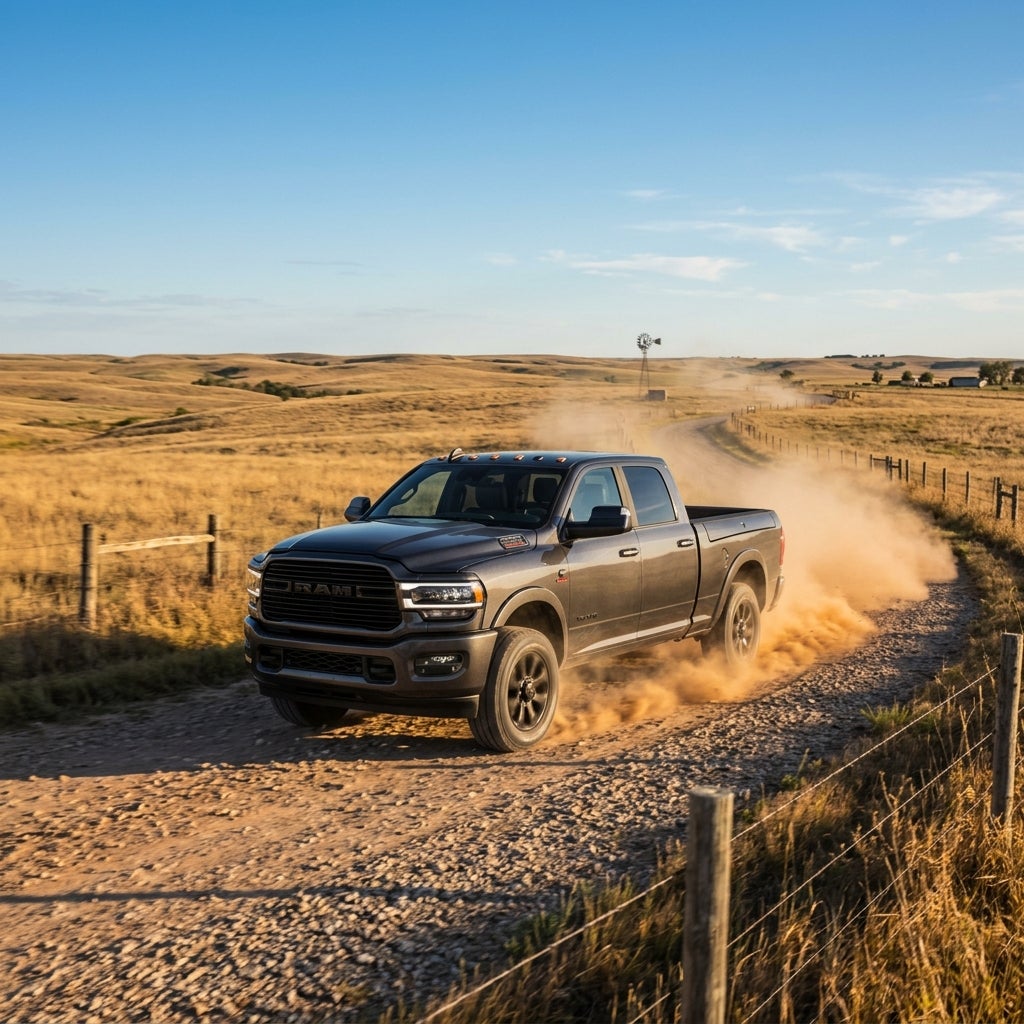
Dark grey Ram pickup truck kicking up dust on a rural dirt road through rolling golden grassy hills. (Representative image for illustration purposes only. Actual vehicle may vary based on trim and configuration.)

Essential Mopar Maintenance for Rural Driving: Key Takeaways from 20 Years in the Service Bay

Essential Mopar Maintenance for Rural Driving: Key Takeaways from 20 Years in the Service Bay The Bottom-Line Answer: Driving on unpaved roads, loose gravel, and demanding agricultural terrain throughout rural Kansas may shorten brake and suspension maintenance intervals significantly. Severe-duty inspections every 5,000 miles—focusing on gravel-abraded brake rotors, dust-contaminated caliper pins, and premature ball joint or bushing play—are essential to maintaining vehicle safety, occupant comfort, and full towing capacity across Junction City, Riley County, and the Flint Hills region. When OEM engineers design maintenance schedules published in your owner's manual, their baseline numbers assume ideal highway conditions: smooth asphalt, moderate ambient temperatures, clean paved roads, and lightweight passenger loads. However, central Kansas drivers operate in an environment far removed from paved highways. Daily transit over unpaved county roads subjects Ram 1500, 2500, 3500 trucks and Jeep 4x4 SUVs to severe mechanical grinding from fine airborne silica dust and high-velocity stone strikes. Over time, these conditions accelerate friction wear, compromise rubber dust boots, and breakdown hydraulic fluids far ahead of factory schedules. At Valor CDJR, our factory-certified service team sees firsthand how Flint Hills washboard tracks impact suspension dampers and brake calipers. By adopting a proactive severe-duty maintenance regimen, owners preserve factory ride quality, prevent secondary system wear, and protect the overall resale value of their vehicle. Whether you are hauling livestock trailers along county lines or commuting between Manhattan and Junction City, staying ahead of rural wear ensures your Ram truck or Jeep 4x4 delivers unwavering reliability when you need it most. Check out our New Vehicle Listings to explore the newest severe-duty equipped models. Meet Mike Hogg: 20 Years of Keeping Mopar Vehicles Performing in Central Kansas As Service Director at Valor CDJR, Mike Hogg brings two decades of hands-on automotive diagnostic expertise directly to vehicle owners across central Kansas. Over 20 years in the service bay, Mike has personally evaluated thousands of Ram pickup trucks, Jeep Wranglers, Grand Cherokees, and Dodge Durangos subjected to the harsh conditions of rural farming, ranching, and cross-county trailering. "Standard service manuals give you a great starting point for city driving, but rural Kansas is a different proving ground altogether," explains Mike. "Fine limestone dust gets past rubber boots, gravel chops up brake rotor surfaces, and continuous washboard chatter works chassis fasteners loose. Understanding how rural conditions degrade Mopar components is what separates a minor preventative service from a costly breakdown in the field." Mike's technical leadership at Valor CDJR ensures every service customer receives expert guidance grounded in real-world local experience. His team focuses on targeted preventative care to keep agricultural equipment operators, small business fleets, and rural commuters running safely year-round. If you're considering expanding your fleet, view our Commercial Vehicle Inventory or stop by to consult directly with our service team. How Rural Dirt and Gravel Roads Impact Mopar Brake Pads and Rotors Silica Dust Contamination: Dry unpaved roads in rural Kansas generate micro-abrasive silica dust that settles directly on open brake assemblies. When you step on the pedal, this fine grit acts like sandpaper between the friction material and rotor face, creating severe scoring, deep grooves, and rapid thickness variation across the disc surface. Caliper Pin and Slide Binding: Fine dirt particles easily bypass worn caliper guide pin boots. As dust mixes with high-temperature lubricant, it creates a thick sludge that binds caliper slides. Bound caliper pins force brake pads to drag constantly against the rotor, causing localized thermal hot spots, pad glazing, and uneven inner-versus-outer pad wear. Gravel Chipping & Thermal Cracking: Loose gravel flung from tires can strike brake dust shields and lodge between the backing plate and rotor. Small stones caught in the assembly gouge metallic compounds and create heat concentration spots. Under heavy braking, these hotspots can cause thermal stress cracking across the cast iron rotor web. Adjusting Your Inspection Frequency: Under standard paved driving conditions, Mopar recommends inspecting brake components every 10,000 miles. However, for vehicles frequently exposed to Kansas gravel roads, Mike Hogg recommends shortening inspection intervals to every 5,000 miles (or every oil change). If you suspect pad wear, drop by our Express Lane for a rapid check. Ceramic vs. Semi-Metallic Mopar Brake Pads: Choosing the Right Compound for Rural Use Ceramic Mopar Pads Quiet & Clean: Ceramic friction formulations combine dense ceramic material with fine copper flakes to deliver smooth, quiet stopping power. They generate minimal dark brake dust, making them ideal for light trucks and SUVs driven primarily on mixed commuter routes between Manhattan and Junction City. However, ceramic pads can take slightly longer to reach optimal thermal grip in extreme sub-zero Kansas winter mornings. Semi-Metallic Mopar Pads Heavy-Duty Heat Resistance: Engineered with 30% to 65% steel, iron, and copper fibers, semi-metallic pads excel at dissipating extreme heat generated by heavy payload hauling, farm implement towing, and steep Flint Hills grade descents. They offer strong cold-bite performance from the moment you turn the key, though they produce more visible wheel dust and increase rotor wear under light-duty driving. Expert Recommendation Matching Duty to Material: For working Ram 2500/3500 trucks regularly pulling livestock or equipment trailers over unpaved routes, semi-metallic Mopar pads are the clear winner for safety and fade resistance. For daily passenger commuters in Ram 1500 or Jeep Cherokee models operating on mixed surfaces, ceramic pads offer superior longevity and quieter operation. Consult our factory-trained specialists at the Parts Department to select the ideal compound. Is Your Ram Truck or Jeep SUV Due for a Rural Road Brake Inspection? If your vehicle experiences increased brake pedal travel, grinding noises over gravel, or steering wheel pulsation during highway stops, do not wait for complete component breakdown. Our certified Mopar technicians at Valor CDJR are equipped with specialized precision tools to measure rotor runout, assess caliper slide lubrication, and test fluid boiling points. Schedule Your Brake Inspection Online Which Mopar Suspension Components Are Most Vulnerable to Gravel Road Damage? Continuous travel across corrugated washboard surfaces subjects every suspension pivot point to thousands of rapid micro-impacts per mile. Understanding which components bear the heaviest burden helps you address wear before total component failure occurs on isolated country roads. 1. Shock Absorbers & Strut Seals: High-frequency shaft oscillations generate intense hydraulic fluid temperatures inside dampers. Continuous dust exposure abrades shaft seals, causing oil leaks, nitrogen gas loss, and loss of rebound damping control. 2. Ball Joints & Tie Rod Ends: Fine agricultural dust penetrates torn rubber dust boots, turning grease into an abrasive grinding compound that creates hazardous looseness, excessive tire wear, and loose steering response. 3. Sway Bar End Links & Bushings: Lateral weight transfers on rutted dirt tracks place immense side-loads on stabilizer links. Worn bushings create distinct metallic clunking sounds over low-speed bumps and increase body roll in highway maneuvers. How Frequent Towing in Rural Areas Changes Mopar Brake Maintenance Needs Towing heavy agricultural loads, gooseneck livestock trailers, or equipment flatbeds introduces severe thermal and mechanical stresses to your vehicle's braking system. When heavy trailering is combined with unpaved road vibration, brake maintenance schedules must adapt accordingly. Thermal Fluid Degradation: Heavy towing elevates caliper temperatures significantly. Glycol-based DOT 3 and DOT 4 brake fluid is hygroscopic—meaning it absorbs ambient moisture over time. Water contamination lowers fluid boiling points, causing fluid vaporization and soft pedal feel under sustained downhill braking. Severe-Duty Caliper Lubrication: Heavy trailering forces caliper slides to work under extreme loads. High-temperature synthetic Mopar slide grease must be reapplied periodically to prevent guide pins from seizing under heat stress. Trailer Brake Controller Calibration: Proper synchronization between your vehicle's integrated Mopar trailer brake controller and trailer electric/hydraulic brakes prevents trailering push-pull wear. If you are upgrading your tow vehicle, explore options to Trade In Evaluation your current truck today. Service Director Insights: Why Severe-Duty Maintenance Isn't Optional in the Flint Hills "In my 20 years managing Mopar service departments across central Kansas, I've seen standard maintenance schedules fall short when applied to daily rural driving. When a truck spends half its life on gravel roads pulling a fully loaded trailer, waiting 10,000 or 12,000 miles for a brake check is a risk you shouldn't take. Minor ball joint play or minor caliper pin sticking left unchecked will quickly snowball into ruined tires, warped rotors, or an unwanted breakdown miles away from cell service." — Mike Hogg, Service Director at Valor CDJR Proactive maintenance is not about spending more money; it's about protecting your investment. Replacing a $15 dust boot or lubricating caliper pins during a routine 5,000-mile tire rotation prevents $800 rotor and caliper overhauls down the road. At Valor CDJR, our technicians perform multi-point chassis checks tailored specifically to the terrain demands of Junction City, Manhattan, and surrounding agricultural areas. Feel free to Call us at (785) 238-5114 to consult with our service advisors. Upgrade Your Suspension with Genuine Mopar Parts at Valor CDJR Mopar HD Shocks Factory-engineered severe-duty shock absorbers built with twin-tube gas charge technology and hardened steel shafts to withstand washboard gravel vibration and heavy bed loads without fading. Severe-Duty Brake Kits Heavy-duty ceramic and semi-metallic friction kits paired with anti-corrosion coated Mopar rotors designed to shed dust, resist thermal warping, and maximize pad service life on unpaved roads. Vehicle Financing Options Looking to upgrade to a newer Ram 2500 Heavy Duty or Jeep Rubicon built for rugged terrain? You can easily Contact us for current financing options online through our simple finance department portal. Order Mopar Parts & Accessories What Does a Severe-Duty Mopar Brake and Suspension Inspection Include? Our certified technicians follow a comprehensive 21-point severe-duty evaluation checklist specifically formulated for vehicles operating in rural, agricultural, and unpaved conditions across Geary and Riley counties. Inspection Phase Component Checked Severe-Duty Evaluation Criteria Phase 1: Friction & Rotors Pad thickness & rotor runout Micrometer verification of thickness; check for gravel scoring and thermal cracking. Phase 2: Caliper Hardware Slide pins & rubber boots Inspect boot integrity, clean dust contamination, apply high-temp synthetic lubricant. Phase 3: Hydraulic System Brake fluid moisture content Refractometer boiling point test; inspect flexible rubber brake hoses for stone impacts. Phase 4: Shock Dampening Strut seals & shaft dampening Check for hydraulic fluid leakage, pitting on piston shaft, and rebound degradation. Phase 5: Chassis & Steering Ball joints & tie rod ends Dial indicator measurement of axial/radial play; verify dust boot seal integrity. Book your severe-duty check-up online using our convenient Service Scheduler to keep your truck or SUV performing at factory standards. Recognizing Early Warning Signs of Brake Fade and Suspension Wear Steering Wheel Shimmy over Gravel: If your steering wheel oscillates excessively when driving across light washboard dirt roads, your shock dampers or inner tie rod ends may no longer be stabilizing the front axle movement. Spongy Brake Pedal Under Load: A brake pedal that feels soft or requires pump-braking when towing a trailer indicates moisture contamination in the brake fluid or overheating caliper piston seals. Uneven Tire Tread Cupping: Scalloped or cupped wear patterns along the inside edge of your aggressive all-terrain tires point directly to worn shock absorbers failing to keep the tire firmly planted against bumpy rural roads. Catching these early symptoms prevents catastrophic component failure while hauling heavy payloads. If you're looking for a reliable pre-owned truck equipped for rural conditions, browse our Used Vehicle Listings today. Schedule Your Severe-Duty Mopar Inspection at Valor CDJR Today Don't let unpaved county roads compromise the performance, towing capacity, or safety of your Ram truck or Jeep SUV. Visit Mike Hogg and the factory-certified service team at Valor CDJR in Junction City, KS. Conveniently located at 1825 Goldenbelt Blvd, we are dedicated to keeping central Kansas drivers moving safely across every square mile of rural terrain. Get Directions to Valor CDJR | Call us at (785) 238-5114 Book Severe-Duty Service Online

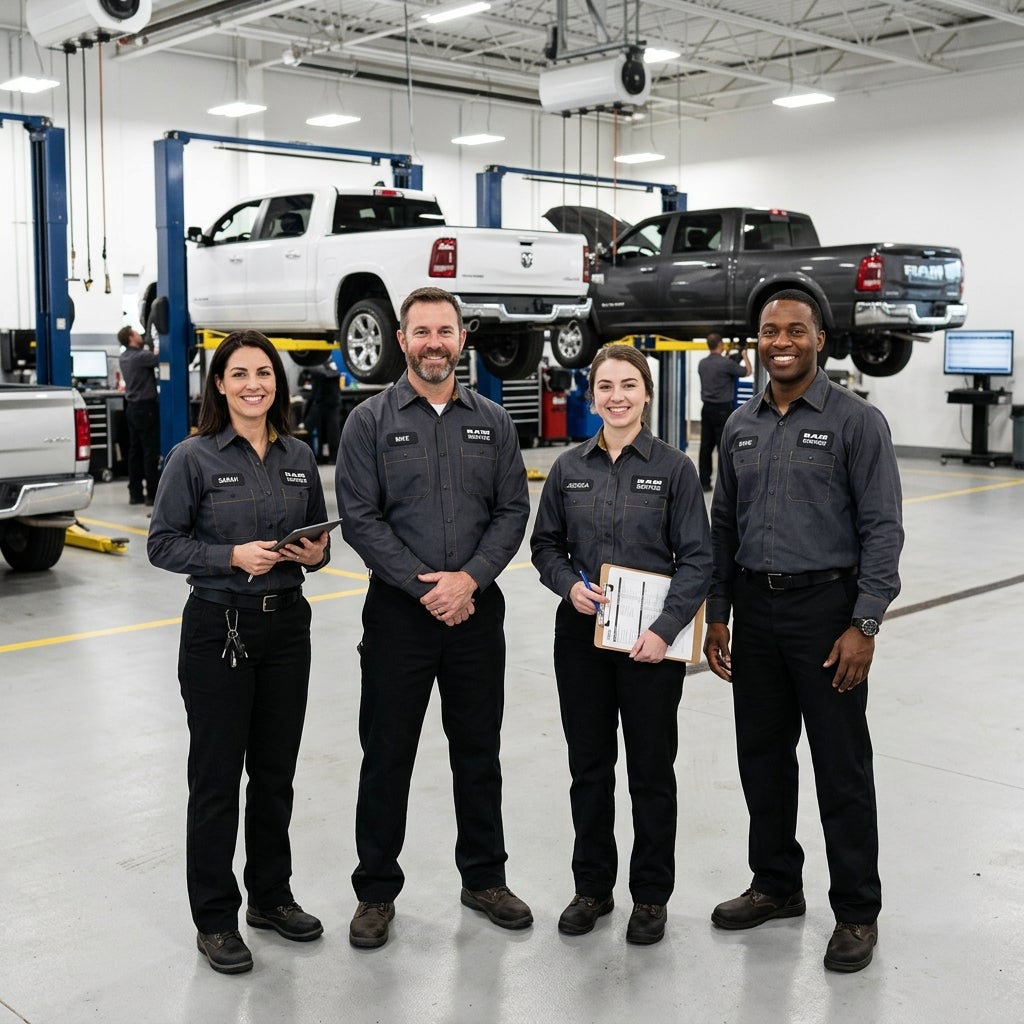
Four smiling automotive service professionals in matching uniforms standing in a clean garage with trucks on lifts. (Representative image for illustration purposes only. Actual vehicle may vary based on trim and configuration.)

Can I Get a Loaner Vehicle From Valor While My Truck Is Being Repaired?

Can I Get a Loaner Vehicle From Valor CDJR While My Truck Is Being Repaired? For truck owners across Junction City, Riley County, and the surrounding Kansas communities, a pickup is not just a secondary mode of transportation—it is an indispensable tool for daily operations, family routines, and professional commitments. When your Ram 1500, Ram 2500, or heavy-duty commercial rig needs to spend time in the service bay, your immediate concern is almost certainly: How do I keep moving? At Valor CDJR, we understand that life does not halt when your vehicle requires professional mechanical attention. We recognize the logistical headaches that come with unexpected maintenance or extensive repairs, and we are committed to minimizing that disruption to your busy schedule. To address your primary concern directly: Yes, Valor CDJR offers alternative transportation and loaner vehicle solutions for qualifying repair scenarios. However, because demand for temporary vehicles is exceptionally high in our active community, availability depends on several factors, including the nature of your repair, warranty coverage, and current fleet allocation. Whether you are managing agricultural operations in Milford, commuting to Fort Riley, or running errands in Manhattan, our team works tirelessly to coordinate a seamless transition from your truck to a reliable temporary ride. In this comprehensive guide, we will break down exactly how our loaner vehicle program operates, who qualifies, how warranties interact with rental coverage, and what you need to prepare before your service visit. Navigating the logistics of auto repairs can feel overwhelming, but establishing a clear plan of action helps clear the path forward. By coordinating with our knowledgeable service advisors, you can find the perfect balance between necessary mechanical upkeep and your daily driving requirements. Let's dive deeper into our dealership policies so you know precisely what to expect when you bring your truck to our facility. Understanding Valor CDJR’s Loaner Vehicle Policy in Junction City Our loaner vehicle program is specifically structured to support drivers experiencing major, multi-day repair procedures. Due to the sheer volume of customers we serve daily from throughout the Flint Hills region, our physical fleet of dedicated dealer loaners must be carefully managed. Eligibility for a complimentary or low-cost loaner vehicle generally hinges on the complexity and expected duration of your service visit. For example, if your truck requires an engine rebuild, transmission replacement, or intensive electrical diagnostics that force your vehicle to remain on a lift for several consecutive days, you are a primary candidate for our alternative transportation solutions. Conversely, we must emphasize that reservations are strictly required and are granted on a first-come, first-served basis. We recommend discussing your transportation needs the very moment you realize your truck requires work. Our advisors will cross-reference your vehicle's warranty status, the nature of the mechanical issue, and our real-time fleet calendar to determine the most suitable option for you. It is our goal to maintain transparency, so you never feel stranded while we perform the critical work needed to restore your truck to factory specifications. Another key component of our policy is the matching of vehicles. While we always try to put truck owners back into a pickup to ensure they do not lose their towing or hauling capabilities, our loaner fleet consists of a diverse mix of Chrysler, Dodge, Jeep, and Ram models. Depending on daily availability, you might find yourself temporarily driving a versatile Jeep Grand Cherokee or a fuel-efficient compact SUV. If your work demands a truck for commercial or agricultural tasks, please communicate this to our team early so we can make every effort to accommodate your specific utility needs. Keep in mind that all loaner vehicle drivers must meet strict legal and insurance guidelines. This includes holding a valid, unrestricted driver's license, meeting our minimum age requirements (typically 21 or 25 years old depending on insurance stipulations), and presenting active full-coverage automotive insurance that seamlessly transfers to a temporary dealer vehicle. By preparing these documents in advance, you can significantly accelerate your check-in process on the day of your service appointment. Does Valor CDJR Prioritize Loaner Vehicles for Safety‑Related Repairs Over Routine Maintenance? To maintain fairness and ensure public safety, our service department operates on a triaged prioritization system. Because safety-related repairs and major powertrain failures pose direct risks to drivers or render vehicles completely inoperable, these situations receive immediate priority for our loaner fleet. Understanding this framework helps explain why a vehicle undergoing a long-term safety recall or transmission overhaul is prioritized over a truck scheduled for basic maintenance. Safety Recalls & Major Repairs When a vehicle has an active, high-priority safety recall or a critical mechanical defect that makes it unsafe to drive, we act swiftly. These situations require our immediate attention, and because the vehicle must remain grounded, we prioritize these drivers for complimentary loaner cars. This keeps you safe and mobile while our master technicians resolve complex, factory-identified hazards. Routine Maintenance Exclusions For quick, routine maintenance items such as oil changes, tire rotations, cabin filter replacements, or brake pad installations, we do not allocate loaner vehicles. These services are highly predictable and typically completed within one to two hours, making a full-day loaner unnecessary. Instead, we encourage customers to take advantage of our comfortable service amenities. The Express Lane Alternative For those seeking rapid maintenance without the need for an appointment or a loaner, our dedicated service features a specialized path. You can utilize our Express Lane for quick, efficient oil changes and multi-point inspections, getting you back on the roads of Junction City without disrupting your day or requiring alternative transport. Does Mopar's Warranty Cover a Rental Car If My Vehicle Is in the Shop? One of the most valuable resources for truck owners facing unexpected mechanical issues is their manufacturer warranty or extended coverage plan. Mopar’s official factory warranties, Certified Pre-Owned (CPO) vehicle coverages, and Mopar Vehicle Protection (MVP) plans frequently include robust provisions for alternative transportation. If your Ram truck is currently covered under its 3-year/36,000-mile basic bumper-to-bumper warranty or its 5-year/60,000-mile powertrain warranty, certain qualifying repairs will automatically trigger rental car allowance benefits. For drivers with Mopar Vehicle Protection plans, the rental car benefit is highly structured and incredibly convenient. These extended plans are designed to eliminate out-of-pocket stress. When a covered component fails, the plan pays for a rental or loaner vehicle starting on the very first day of the repair, provided the vehicle must be kept overnight at our facility. Our service advisors are highly proficient in navigating Mopar’s digital warranty portal, meaning we will handle the authorization and direct-billing processes behind the scenes so you do not have to worry about complex paperwork or delayed reimbursement claims. If you are unsure of your truck's current warranty status, we can easily verify this for you. All we need is your 17-digit Vehicle Identification Number (VIN). Our team can look up active factory warranties, recall statuses, and any existing extended service contracts linked to your vehicle. This allows us to maximize your benefits and ensure you receive every bit of financial support you are entitled to during your repair period. Schedule Your Service Appointment Now What Typical Limits Apply to Rental Reimbursement Coverage While My Truck Is in the Shop? While warranty-backed rental reimbursement is an outstanding perk, it is important to understand the standard financial limits that govern these policies to prevent unexpected expenses. Most standard Mopar warranties and extended service contracts establish a daily dollar cap on rental vehicles, varying by plan and repair circumstance, with duration limits also depending on the coverage terms if parts backorders or complex technical diagnoses delay the repair process. At Valor CDJR, we maintain close partnerships with local rental car agencies in the Junction City area to ensure our customers can access quality vehicles that fit within these precise daily allowances. When a direct-billing arrangement is authorized by your warranty provider, we coordinate directly with the rental agency. This means you won’t have to pay the daily rate out-of-pocket and wait weeks for reimbursement; instead, the rental cost is billed straight to the warranty company up to the allowed daily threshold. It is worth noting that any charges exceeding the daily allowance—such as upgrading to an premium full-size truck, purchasing optional rental insurance, or returning the vehicle with an empty fuel tank—are the responsibility of the vehicle owner. Our experienced service staff will meticulously outline these boundaries beforehand so you can enjoy your temporary transportation with total peace of mind. How Do I Confirm That My Ram 1500 Recall Is Serious Enough to Warrant a Loaner Vehicle? Safety recalls are issued by the manufacturer to correct defects that could compromise the safe operation of your vehicle. However, not all recalls are created equal; they range from minor software updates to critical mechanical components that require immediate attention. If you drive a Ram 1500 in the Riley County region and receive a recall notice, here is how you can determine if the situation warrants a complimentary loaner vehicle. 1. Analyze the Manufacturer's Notice Carefully review the official letter sent by Ram or FCA. Look for specific language such as a 'Stop-Drive' order or explicit instructions advising against operating the vehicle until repairs are complete. These extreme safety warnings almost always qualify you for immediate, complimentary alternative transportation while your local dealer schedules the recall service. 2. Check Parts and Repair Timelines Some safety recalls require extensive disassembly of your truck's steering, suspension, or fuel delivery systems, which can easily translate to a full-day or multi-day stay in our shop. If the labor time listed on the recall documentation exceeds several hours, or if parts are on a localized backorder, a loaner vehicle is typically authorized by the manufacturer to keep you mobile. 3. Consult Your Valor CDJR Advisor The most reliable way to confirm loaner eligibility is by contacting our dedicated service department. Our staff can cross-reference your specific VIN with active manufacturer campaigns, check our current loaner vehicle inventory, and obtain the necessary corporate approvals before you even drive onto our lot for your scheduled appointment. Why Should I Call Valor CDJR Before Scheduling Service If I Need a Loaner Vehicle? In an era where digital conveniences allow us to book appointments with a simple tap on our smartphones, it may seem counterintuitive to suggest picking up the phone. However, when it comes to securing a loaner vehicle in the high-demand Junction City and Fort Riley areas, speaking directly with an advisor remains the absolute best strategy. While our online scheduling platform is incredibly efficient for booking a basic time slot, it cannot automatically guarantee the real-time availability of a physical loaner car on our lot. By placing a quick call to our service department, you initiate a collaborative conversation with an expert who can actively problem-solve on your behalf. We can review the specific mechanical symptoms of your truck, estimate the realistic duration of the diagnostics and repairs, and schedule your appointment to precisely align with a day when a loaner vehicle is scheduled to be returned to our fleet. This simple step eliminates the frustration of arriving at the dealership expecting a temporary ride, only to find that all fleet vehicles are currently checked out. If you are ready to plan your truck's repair, please do not hesitate to reach out. You can Call us at (785) 238-5114 to discuss your upcoming appointment and reserve your alternative transportation. Let our team do the heavy lifting of coordinating your schedule so you can enjoy a completely stress-free experience from start to finish. What to Bring When Picking Up Your Loaner Vehicle in Junction City To ensure a smooth, professional, and rapid transition into your temporary vehicle, it is critical to come prepared with the proper legal and financial documentation. Much like a traditional rental car agency, we must adhere to strict state laws and insurance regulations when handing over the keys to a dealer-owned vehicle. Please review this mandatory checklist before you arrive at our service center: Valid Driver's License: You must present a current, unrestricted physical driver's license. Temp permits or expired licenses cannot be accepted. Active Auto Insurance: You must provide proof of active, full-coverage auto insurance. Our team will verify that your policy transfers comprehensive and collision coverage to a temporary replacement vehicle. Major Credit Card: We require a major credit card in the driver's name to place a temporary security hold. This card is kept on file to cover incidental expenses such as tolls, unreturned fuel, or minor cosmetic damages. By ensuring you have these three essential items ready when you walk through our doors, you can bypass unnecessary delays and get back on the road in a matter of minutes. In addition to these legal requirements, we highly recommend taking a brief moment to clear any personal belongings from your truck before handing us the keys. Items like garage door openers, trailer hitches, sunglasses, charging cords, and work tools are easily forgotten in the hustle of a vehicle drop-off. Preparing your truck beforehand ensures our technicians can immediately begin their diagnostic and repair work without delay. If you have any questions regarding the insurance transfer process or acceptable forms of payment for our security holds, please speak with one of our service coordinators prior to your visit. We are here to make the transition as clear and straightforward as possible, keeping your day moving forward without a hitch. Get Pre-Approved Online Alternatives to Loaner Cars: Shuttle Services and Convenient Drop-Off Options We recognize that a physical loaner car is not always the most practical or necessary solution for every driver. For shorter service visits, or for customers who simply need a convenient lift back to their home or office, Valor CDJR offers highly reliable alternative transportation options designed to seamlessly fit into your day. Complimentary Local Shuttle Our professional dealership shuttle operates throughout the Junction City, Fort Riley, and immediate Manhattan areas. Our friendly drivers will happily drop you off at your home, workplace, or local shopping center, and pick you up once our technicians have finished working on your vehicle. Comfortable Guest Lounge If you prefer to wait for your vehicle, our modern customer lounge is designed for productivity and relaxation. Enjoy complimentary high-speed Wi-Fi, plenty of charging stations for your electronic devices, gourmet coffee and refreshments, and comfortable seating areas that make working remotely or unwinding a pleasure. Flexible Drop-Off & Pick-Up For those with highly unpredictable schedules, we offer convenient early-bird and late-evening key drop boxes. This allows you to safely park and secure your truck at our facility outside of regular business hours, ensuring our service team can begin working on it first thing in the morning. Upgrading Your Ride: Trading in Your Truck While It's in the Shop Sometimes, a major mechanical failure or an extensive repair bill is the ultimate sign that it is time to move on from your current truck. If your older vehicle is facing thousands of dollars in engine, transmission, or electrical repairs, continuing to invest money into it may not make financial sense. While your truck is in our service bay being evaluated by our technicians, you have a unique and highly convenient opportunity to explore upgrading to a newer, more reliable vehicle. At Valor CDJR, we make the transition incredibly simple. Our sales and finance teams can coordinate directly with the service department to evaluate your current vehicle's condition, factor in the cost of any pending repairs, and provide you with an competitive, transparent trade-in value. By utilizing our online Trade In Evaluation tool, you can get a head start on understanding your vehicle's current market worth, allowing you to make an informed, stress-free decision about your automotive future. While our factory-trained technicians assess your vehicle, you are invited to browse our comprehensive selection of brand-new vehicles and high-quality pre-owned models. We maintain a diverse inventory of capability-focused trucks and SUVs designed to match every lifestyle and budget in the Riley County region. Whether you are looking for the latest towing technology or a reliable daily driver, we have options ready for you. We encourage you to explore our current New Vehicle Listings to see the latest standard features and manufacturer incentives, or check out our affordable, thoroughly inspected Used Vehicle Listings. If your business depends on serious heavy-duty capability, don't miss our dedicated Commercial Vehicle Inventory. Transitioning from a costly repair directly into a fresh vehicle can save you valuable time and get you back on the road with complete confidence. Frequently Asked Questions About Loaner Cars and Truck Repairs Q: Do I need to replace the fuel in my loaner vehicle before returning it? A: Yes, our standard loaner policy requires customers to return the temporary vehicle with the exact same level of fuel it had when it was checked out. This ensures the next customer receives a vehicle that is ready to drive immediately. A refueling fee may apply if the vehicle is returned with less fuel than documented at pick-up. Q: Are pets or smoking allowed in Valor CDJR loaner vehicles? A: To maintain a clean, allergen-free environment for all of our customers, smoking, vaping, and transporting pets are strictly prohibited in our loaner and rental fleet. Violating these policies can result in detailed professional cleaning fees being charged to the credit card on file. Q: Can I drive the loaner vehicle out of state or past certain mileage limits? A: Our loaner vehicles are primarily intended for local use within the state of Kansas. While reasonable commuting is expected, we do enforce daily mileage limits, and out-of-state travel is generally not permitted without express written authorization from our service management team. Please discuss any long-distance travel plans with your advisor. Q: What happens if the parts for my truck are delayed for several weeks? A: In rare cases where supply chain constraints or national backorders delay your repair, we work closely with the manufacturer or your extended warranty company to secure authorization for an extended rental period. We aim to keep you mobile and informed throughout the entire duration of the repair process. Schedule Your Truck Service and Reserve Your Transportation at Valor CDJR Today At Valor CDJR, we believe that high-quality automotive repair goes hand-in-hand with outstanding customer care. We know that your time is valuable, and keeping your daily life moving forward is our top priority. Our service department is fully staffed with factory-trained technicians, advanced diagnostic equipment, and a dedicated team of advisors who are experts in matching customers with the right loaner, rental, or shuttle solutions. If your truck is due for repair, recall work, or routine servicing, take control of your schedule today. Use our quick online tool to access our Service Scheduler, or get in touch with our team directly. If you need to drop off your vehicle or consult with our advisors in person, you can easily Get Directions to Valor CDJR and visit our dealership at 1825 Goldenbelt Blvd, Junction City, KS 66441. Reserve Your Service Spot Evaluate Your Trade-In

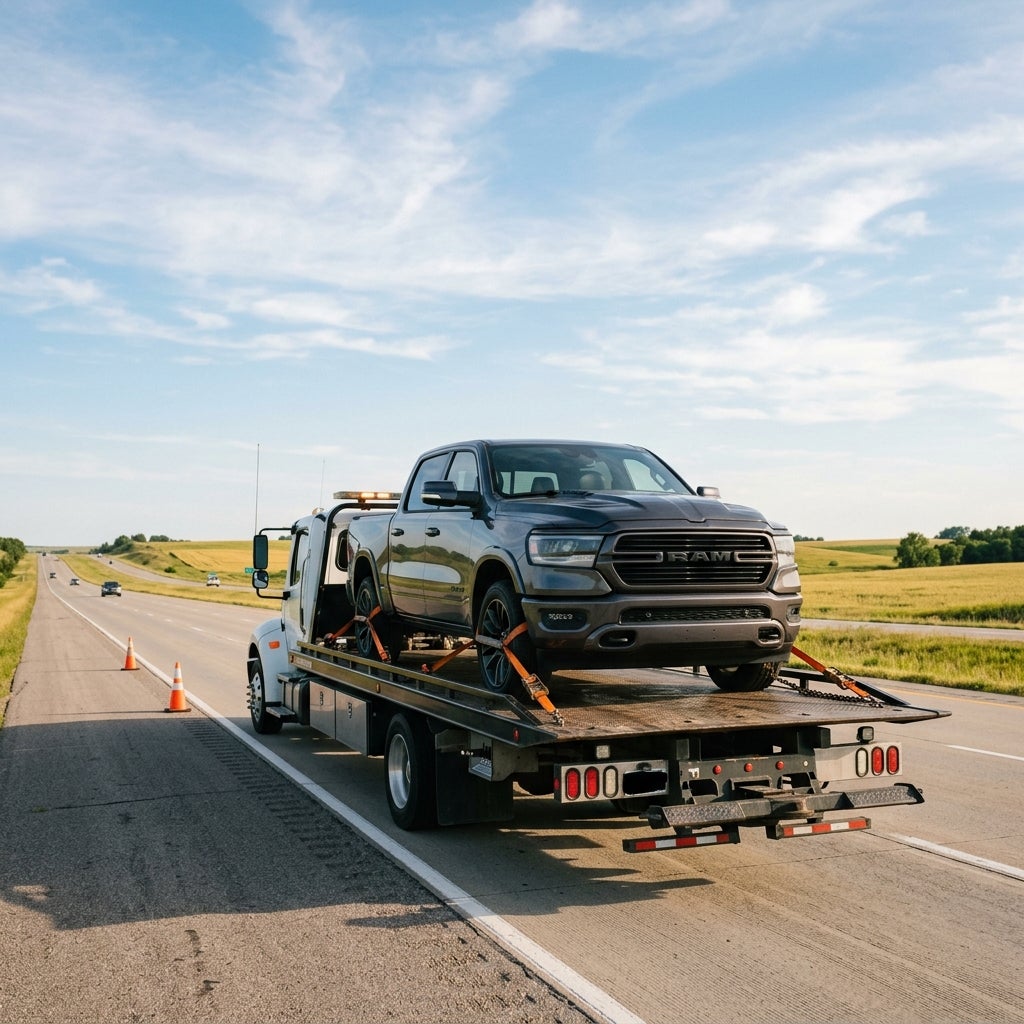
A grey RAM pickup truck secured with orange straps on a flatbed tow truck driving along a highway. (Representative image for illustration purposes only. Actual vehicle may vary based on trim and configuration.)

Is Your RAM 1500 Unsafe to Drive Due to a Recall?

Is Your Ram 1500 Unsafe to Drive Due to a Recall? Here Is How to Get FCA to Pay for Your Towing Costs Discovering that your Ram 1500 has been flagged with an active safety recall is never pleasant. It is a moment that immediately disrupts your schedule, causes unnecessary stress, and leaves you wondering about the safety of your family, your passengers, and your cargo. During the scorching summer heat of July 21, 2026, the last thing you want to do is navigate an unsafe vehicle down the busy corridors of Interstate 70 or Highway 77 in Kansas. When a recall notice clearly states that your truck is unsafe to drive, or when a major component like your steering, braking, or electronic stability control is compromised, driving the vehicle to a service center is no longer a viable option. It becomes a matter of public safety, demanding immediate action without putting your life or your truck at further risk. This brings up a critical financial and logistical question for truck owners: Does Fiat Chrysler Automobiles (FCA), now operating under the Stellantis parent company, cover the towing costs associated with bringing an unsafe, recalled Ram 1500 to a certified dealership? The quick answer is yes, but the execution of this policy depends heavily on the specific language of the recall, how you coordinate the transport, and the documentation you maintain. Many drivers mistakenly assume they must pay out-of-pocket and hope for a reimbursement check months later, or worse, they risk driving an unsafe truck to avoid a towing bill. Neither of these approaches is necessary when you understand how the system is structured. At Valor CDJR in Junction City, Kansas, we believe that our responsibility to our community extends far beyond selling vehicles. As a trusted local resource for truck owners throughout Riley, Geary, and surrounding counties, we are dedicated to helping you navigate the complexities of manufacturer recalls. We understand that your Ram 1500 is more than just transportation; it is your mobile office, your weekend hauler, and your daily partner. In this comprehensive guide, we will break down the exact protocols FCA uses to authorize and pay for emergency towing, the common mechanical failure points currently triggering active recalls, and how you can protect your rights as a consumer while keeping your vehicle—and your wallet—completely safe. Does FCA Pay for the Towing Costs if My Ram 1500 Is Unsafe to Drive Due to This Recall? When a safety recall is officially issued by the National Highway Traffic Safety Administration (NHTSA) in conjunction with FCA, the manufacturer is legally obligated to resolve the safety defect at no cost to the consumer. This obligation extends to the safe transport of the vehicle if the manufacturer's official recall notice explicitly warns owners not to drive the vehicle, or if the nature of the mechanical defect makes operating the vehicle an immediate road hazard. Under these strict circumstances, FCA will cover the towing fees to transport your Ram 1500 to the nearest authorized dealership, such as Valor CDJR. However, it is crucial to understand the distinction between a standard recall and a "Do Not Drive" or "Park Outside" advisory recall. For a standard recall—such as a minor software update for your Uconnect system or a non-safety-critical trim piece adjustment—the vehicle is still considered fully roadworthy. In those standard scenarios, FCA typically expects you to drive the truck to the dealership yourself, and they will not cover the cost of a flatbed tow. On the flip side, if the recall involves steering failure, brake loss, sudden engine stall risks, or a serious fire hazard, the vehicle qualifies as unsafe to drive, and towing is fully covered under the corporate safety policy. To ensure your towing costs are paid directly by FCA rather than coming out of your pocket as an upfront expense, you should always coordinate the tow through FCA Roadside Assistance or by directly contacting the service department here at Valor CDJR. If you arrange your own independent towing service without obtaining pre-authorization or a dispatch number from FCA, you may have to pay the towing operator yourself and go through a lengthy reimbursement claim process. By utilizing authorized channels, the tow is billed directly to the manufacturer, saving you immediate financial strain. Keep in mind that FCA's coverage is designed to transport your truck to the *nearest* authorized Ram dealership. If you choose to have your vehicle towed to a far-away dealership rather than your local service center, you may be responsible for paying the difference in mileage. For drivers in the Junction City, Manhattan, and Fort Riley areas, Valor CDJR is your closest authorized warranty and recall repair hub, ensuring your transport is fully covered under standard mileage rules. Column 1 Column 2 What Are the Common Recall Issues Affecting the 2024 Ram 1500? Electronic Stability Control Malfunctions One of the most notable recalls affecting the 2024 Ram 1500 involves a software glitch within the Anti-Lock Brake System (ABS) control module. This specific issue can disable the Electronic Stability Control (ESC) system unexpectedly while driving. Without functional ESC, the driver loses crucial electronic assistance during sudden steering maneuvers or on slick road surfaces, drastically increasing the risk of a high-speed collision. Because this defect compromises active safety systems, driving with a malfunctioning ABS control module is highly discouraged, making it a primary candidate for emergency towing coverage. Steering Column Gear Assembly Defects A mechanical issue identified in certain production runs of the 2024 Ram 1500 involves the steering column gear assembly. In affected trucks, a manufacturing defect within the steering gear can cause a sudden, total loss of steering control without warning. This is arguably the most severe safety hazard a driver can face. If you receive a steering recall notice that explicitly warns of a steering lockup or loss of control, you should immediately park the vehicle and request a tow. Attempting to drive even a few miles to the dealership is an unacceptable risk. Powertrain & Fuel System Anomalies Another set of active recall campaigns involves software glitches in the powertrain control module (PCM) and potential fuel pump failures that can cause the engine to stall unexpectedly. An unexpected engine shutdown at highway speeds poses an immediate threat to the driver and surrounding motorists, as it also results in a sudden loss of power steering and brake vacuum assist. If your Ram 1500 is displaying warning lamps related to these powertrain recalls, getting it towed ensures that you prevent a dangerous on-road breakdown. How Do I Request Towing Reimbursement From FCA for a Recall? If you find yourself with an unsafe Ram 1500, the process of requesting towing and ensuring reimbursement must be handled carefully to avoid out-of-pocket costs. First, look up your specific 17-digit Vehicle Identification Number (VIN) on the official NHTSA database or the Stellantis recall portal to verify that your vehicle has an active recall that warns against driving. Once verified, do not call a random local tow service. Instead, contact FCA Customer Care or the service department at Valor CDJR directly. We can frequently coordinate a flatbed tow on your behalf, utilizing FCA's direct-billing system so you never have to see a bill. If you are forced to pay for a tow yourself due to an emergency breakdown in a remote location where corporate dispatch is unavailable, you must follow a strict protocol to get your money back. Secure an itemized invoice from the towing company that explicitly details the pickup location, the destination (which must be an authorized Ram dealer), the mileage towed, and the total amount paid. You will then need to submit these documents along with your official recall notification letter to the Stellantis Reimbursement Portal or mail them to the corporate address. The review process can take several weeks, which is why utilizing dealer-coordinated towing is always the preferred, stress-free route. To make this process as seamless as possible for our customers in Kansas, Valor CDJR offers dedicated assistance with recall management. When you schedule your service appointment, let our advisors know that your vehicle is unsafe to operate. We can walk you through the pre-authorization process, check for parts availability, and make sure that a certified flatbed operator is sent to your location. This proactive coordination minimizes the risk of claim denial and guarantees that your truck is transported under fully approved manufacturer guidelines. Schedule Recall Service & Tow Support Can I Get Reimbursed for Repair Bills I Paid Before My Ram 1500 Recall Was Announced? It is not uncommon for truck owners to experience a mechanical failure and pay out-of-pocket for repairs, only to find out months later that the exact component they replaced has become the subject of an official safety recall. If you have paid for a repair on your Ram 1500 that was subsequently designated as a safety recall, you are generally entitled to retroactive reimbursement from FCA. This includes the cost of the replacement parts, the labor charges, and any associated towing costs that you incurred during the original breakdown. To successfully claim a retroactive reimbursement, the repair must have occurred within a specific timeframe—typically between the date the defect was first identified by the manufacturer and the official date the recall campaign was launched. Additionally, the repair must have addressed the exact defect described in the recall notice. If you replaced your entire transmission but the recall only covers a minor electrical wiring harness within the gear shift mechanism, your claim may only be partially approved or denied outright. This is why having precise, itemized documentation is absolutely vital. When compiling your reimbursement package, make sure you have the original repair order from the independent mechanic or dealership, proof of payment (such as a credit card receipt or cleared check), and your vehicle's registration. If you need assistance verifying whether a past repair matches a newly announced recall, our Parts Department and service advisors at Valor CDJR can review your old invoices, cross-reference them with active technical service bulletins (TSBs), and help you package the documentation correctly to maximize your chances of a successful corporate payout. Keep in mind that Stellantis typically has a strict deadline for submitting retroactive reimbursement claims—often within 60 to 90 days after the official recall notices are mailed to owners. Delaying your submission could result in losing your right to reimbursement. If you have a stack of receipts from a tricky steering or electrical issue on your 2024 Ram 1500, bring them to our service center as soon as possible so we can help you take immediate action. What Should I Do if the Local Ram Dealer Refuses to Provide Towing for My Unsafe Truck? Unfortunately, not all dealership service departments handle safety recalls with the same level of urgency and customer care. Some truck owners report contacting local dealers only to be told that the dealership "does not handle towing" or that the customer must pay for transport themselves and deal with corporate later. If you encounter a dealer who refuses to assist with arranging towing for an active, unsafe recall, it is important to know your rights and take strategic action. First, reference the official recall notification letter. In almost all cases involving a serious safety risk, the letter itself will state that towing is covered. Presenting this physical or digital document to the service manager can quickly resolve the misunderstanding. If the dealer remains uncooperative, your next step is to immediately escalate the issue to Stellantis/FCA corporate customer service. Explain that the local franchise is refusing to comply with the manufacturer's safety transport directives. Corporate customer care can issue a direct dispatch to an authorized towing service, bypassing the uncooperative dealer entirely and ensuring your truck is brought to a service center that respects corporate safety guidelines. Additionally, documenting the refusal in writing (such as via email) provides vital leverage if you are forced to pay for the tow and seek reimbursement later. At Valor CDJR, we take a completely different approach. We view ourselves as your advocates, not just a service provider. If you have an unsafe Ram 1500, we do not make you jump through corporate hoops or argue over who pays for the flatbed. Our dedicated service team works directly with Stellantis to secure immediate authorization, coordinate the tow, and welcome your truck into our state-of-the-art service facility. We believe that keeping Riley County roads safe is a shared community effort, and we work tirelessly to ensure no driver is left stranded due to administrative friction. What Recourse Do I Have if My Ram Recall Repair Is Delayed for an Extended Period? Rental Car Reimbursement Policies When safety recall components are backordered or delayed due to global supply chain constraints, FCA often provides rental car reimbursement. This program allows you to rent a comparable vehicle from a local agency while your Ram 1500 sits safely at our dealership. To qualify, the recall must be active, the parts must be officially delayed, and the rental must be pre-authorized through our service advisors. Keeping detailed receipts of your rental agreement is critical for a smooth reimbursement process. Dealer Loaner Vehicle Allocation For safety-related recalls where the vehicle cannot be driven, dealerships like Valor CDJR maintain a limited fleet of loaner vehicles. We prioritize these loaners for drivers facing long-term safety recall delays. Since we understand that Kansas truck owners often need towing and hauling capabilities, we do our absolute best to place you in a comparable truck or utility vehicle so your daily operations and summer projects do not miss a beat while your vehicle is serviced. Alternative Transport Strategies If you are considering trading in your vehicle rather than waiting out a long-term parts delay, we can assist you with that transition. You can browse our comprehensive Used Vehicle Listings to find a highly reliable replacement vehicle immediately. Our team can evaluate your current truck, factor in the recall status fairly, and help you transition into a safe, ready-to-drive vehicle without the headache of waiting on backordered corporate parts. Explore Safe & Reliable Used Vehicles What Documentation Do I Need to Support Towing Reimbursement in a Ram Lemon-Law Case? In severe scenarios where a safety recall cannot be successfully resolved after multiple attempts, or when your Ram 1500 remains out of service for an extended period due to lack of recall parts, you may find yourself exploring a legal claim under the Kansas Lemon Law (KS Stat § 50-645). For a lemon-law case to succeed, meticulous record-keeping is absolutely paramount. You must be able to present a clear, undeniable timeline of events to the manufacturer's legal representatives or a court of law. This timeline must prove that the vehicle possessed a substantial defect that impaired its safety, use, or value, and that the manufacturer failed to repair it within a reasonable number of attempts. Your documentation package must include every single towing receipt and dispatch notice. Why? Because a towing receipt is concrete, third-party proof that your vehicle was genuinely unsafe to drive on Kansas highways. It establishes the exact date and mileage when the truck was taken out of service. If you simply drove the truck to the dealer despite the safety warning, the manufacturer's legal team might argue that the defect was not severe enough to impair the vehicle's safe operation. By utilizing professional flatbed towing and keeping the receipts, you solidify the argument that the truck posed a genuine hazard. In addition to towing records, you must retain all dealership repair orders, parts invoices, and communication logs. Every time you speak with a service advisor, a dealership manager, or an FCA corporate representative, write down the date, time, the name of the person you spoke with, and a summary of the conversation. If parts are backordered, request a written statement or a printout of the parts order status from the dealer. This collection of documentation turns a frustrating situation into an airtight case, protecting your financial investment. Who Can I Contact if I Cannot Get Recall or Towing Help for My Ram 1500 in Kansas? National Highway Traffic Safety Administration (NHTSA) The NHTSA is the federal agency responsible for overseeing automotive safety and enforcing recall compliance. If you believe Stellantis or a local dealership is failing to comply with safety recall mandates—including refusing to cover towing for a documented unsafe vehicle—you can file an official complaint. You can reach the NHTSA Vehicle Safety Hotline at 1-888-327-4236 or submit a report online at nhtsa.gov. These complaints are monitored closely and help hold manufacturers accountable. Kansas Attorney General - Consumer Protection For state-level consumer advocacy, the Office of the Kansas Attorney General operates a dedicated Consumer Protection Division. If a manufacturer is acting in bad faith regarding warranty coverage, safety recalls, or promised towing reimbursements, you can file a formal consumer complaint. This division investigates unfair or deceptive business practices, protecting Kansas motorists from corporate neglect. Contact them at 1-800-432-2310 or visit ag.ks.gov. Stellantis Support & Valor CDJR Customer Advocacy Before escalating to federal or state authorities, we highly recommend calling the Ram Customer Care line at 1-866-726-4636, or reaching out directly to our local team. You can Call us at (785) 238-5114 here at Valor CDJR. Our service manager and customer advocates have direct channels to regional Stellantis representatives, allowing us to escalate and resolve towing and recall disputes far faster than standard consumer hotlines. How Valor CDJR Simplifies the Ram Recall and Towing Process for Riley County Drivers Navigating a safety recall can feel like a part-time job, but it doesn't have to be. At Valor CDJR, we have streamlined our recall management process to minimize disruption for our neighbors in Junction City, Manhattan, Fort Riley, and throughout Riley County. When you contact our service center, we immediately run your VIN through our advanced diagnostic database to confirm the exact recalls active on your Ram 1500. If your truck is flagged as unsafe, we take immediate ownership of the situation, coordinating the logistics so you don't have to spend hours on hold with corporate call centers. Our service department is staffed by certified Chrysler, Dodge, Jeep, and Ram technicians who undergo continuous factory training. This means that when your truck is towed to our facility, it is worked on by specialists who understand the intricate electrical, mechanical, and software architecture of your Ram 1500. We use only genuine OEM parts directly from our authorized Parts Department, ensuring that the repair is completed to precise engineering standards and that your factory warranty remains fully intact. Conveniently located at 1825 Goldenbelt Blvd in Junction City, KS, we are incredibly easy to reach. You can easily Get Directions to Valor CDJR and visit us in person. Whether you are dealing with an urgent safety recall or simply looking to update your vehicle, our team is here to support you every step of the way. If you decide that you'd rather trade in your current vehicle rather than wait for recall repairs, we invite you to complete a comprehensive Trade In Evaluation online to see how much your truck is worth in today's active summer market. Get a Trade-In Evaluation Get Pre-Approved Online Quick Checklist: Managing Your Ram 1500 Recall Safely To ensure you don't miss a single step or leave yourself vulnerable to unexpected out-of-pocket expenses, use this comprehensive, highly actionable checklist the moment you suspect or confirm a safety recall on your Ram 1500: Step Number Action Required Critical Details to Remember 1 Verify the Recall Status Locate your 17-digit VIN on your driver-side dashboard or doorjamb and run it through the NHTSA or Stellantis recall search tool. 2 Evaluate the Safety Level Read the official recall notice carefully. Look for keywords like 'Do Not Drive,' 'Park Outside,' or statements warning of immediate safety risks. 3 Contact Valor CDJR First Call our service department directly. Let us check for active recall parts and coordinate pre-authorized towing to eliminate upfront costs. 4 Document Everything If self-towing is required, keep an itemized, paid receipt showing pickup from your home/breakdown site directly to Valor CDJR. 5 Inquire About Rental/Loaner Ask our service team if your specific safety recall qualifies you for a complimentary dealer loaner or corporate rental reimbursement. 6 Complete the Repair Ensure our certified technicians perform the recall service, sign the final repair order, and keep a copy in your glovebox for your records. Let Valor CDJR Coordinate Your Ram 1500 Recall and Towing Needs You do not have to navigate the stress, confusion, and bureaucratic red tape of a manufacturer safety recall on your own. Driving an unsafe truck puts you, your family, and other Kansas drivers at serious risk. Let the professional, community-focused team at Valor CDJR take the weight off your shoulders. We are fully equipped to handle everything from checking your vehicle's VIN, coordinating safe flatbed transport directly with Stellantis, sourcing certified OEM replacement parts, and completing the necessary safety repairs quickly and professionally. Contact us today to protect your investment and ensure your truck is roadworthy and safe for all of your upcoming summer adventures. Click below to access our online Service Scheduler, or reach out to our service advisors directly to arrange a safe, covered tow to our facility. We are proud to serve as your premier Ram resource in Junction City, and we look forward to getting you back on the road with complete confidence. Schedule Your Recall Inspection & Towing Now

Contact Us

Fill out this form below and we'll contact you shortly
*Required Fields