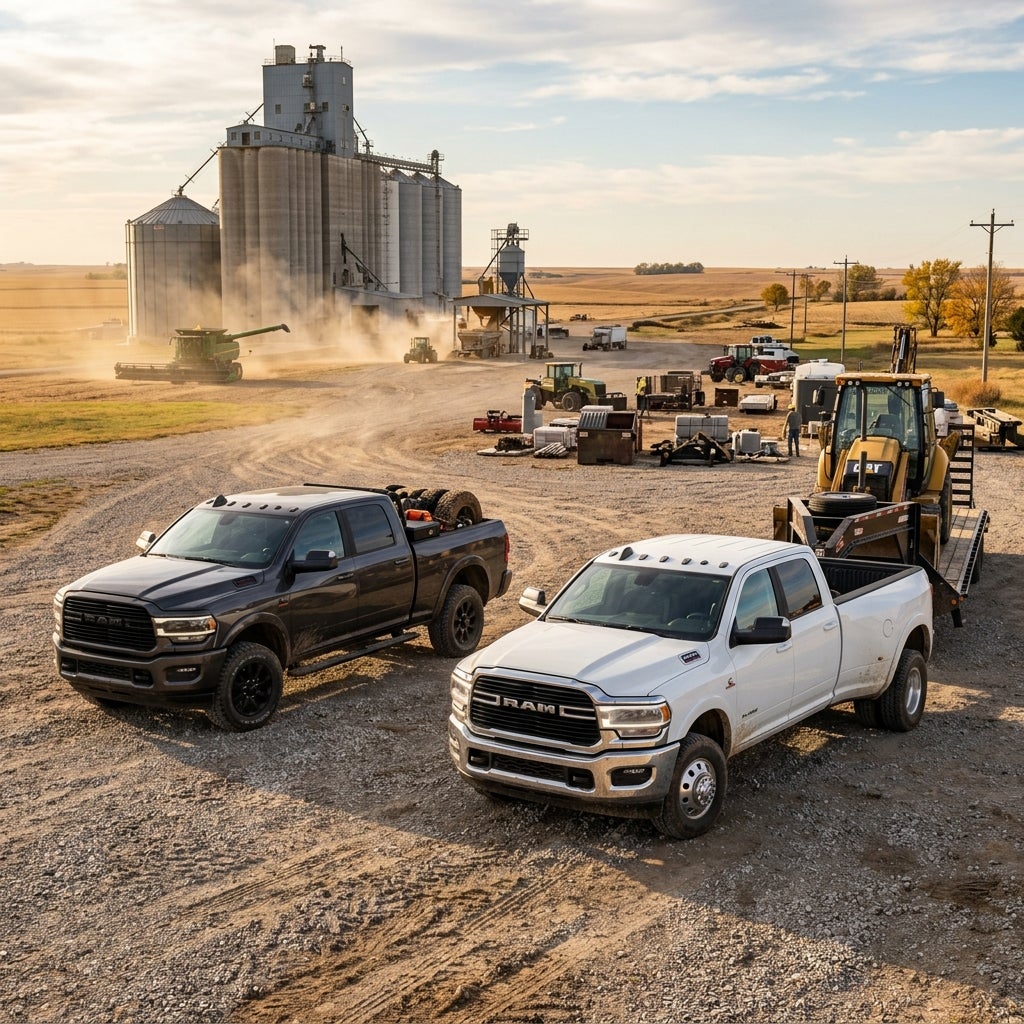





Ram 2500 vs. 3500 Cummins Heavy Duty Workhorses: Key Performance Capabilities When heavy machinery, multi-car trailers, or massive agricultural loads need to move across Kansas, commercial operators and serious truck enthusiasts turn to a legendary moniker: the Cummins Turbo Diesel. Embedded in the Ram Heavy Duty line, the 6.7L inline-six turbo diesel engine has established itself as a benchmark in industrial-grade pulling power. However, deciding between the Ram 2500 and the Ram 3500 requires a thorough understanding of how these twin heavy-duty titans deploy their powertrain options, chassis engineering, and rear suspension systems to serve different work profiles. The Ram 2500 comes equipped with the Standard Output 6.7L Cummins Turbo Diesel engine, pushing out a formidable 370 horsepower and 850 lb-ft of low-end torque. Designed with an industry-exclusive five-link rear coil suspension system (or optional rear air suspension), the Ram 2500 delivers maximum trailering capability up to 19,980 pounds while providing an extraordinarily smooth highway ride. In contrast, the Ram 3500 unlocks the optional High Output 6.7L Cummins Turbo Diesel, unleashing an incredible 420 horsepower and a earth-moving 1,075 lb-ft of torque. Paired with traditional heavy-duty rear leaf springs and available dual rear wheels (dually), the Ram 3500 elevates maximum towing capacities to an astonishing 37,090 pounds. Capability Metric Ram 2500 6.7L Cummins Ram 3500 6.7L High Output Cummins Horsepower 370 hp @ 2,800 rpm 420 hp @ 2,800 rpm Torque 850 lb-ft @ 1,700 rpm 1,075 lb-ft @ 1,800 rpm Transmission 68RFE 6-Speed Automatic Aisin AS69RC Heavy-Duty 6-Speed Maximum Towing Capacity Up to 19,980 lbs Up to 37,090 lbs Maximum Payload Capacity Up to 3,150 lbs Up to 6,840 lbs Rear Suspension Architecture Five-Link Coil Springs (Air Optional) Multi-Leaf Springs (Air Optional) What Are the Horsepower and Torque Specifications for the 6.7L Cummins Diesel in the Ram 2500 vs 3500? Standard Output 6.7L Cummins (Ram 2500 & 3500) The Standard Output (SO) 6.7L Cummins Turbo Diesel inline-six engine produces 370 horsepower and 850 lb-ft of torque. Built around a high-strength Compacted Graphite Iron (CGI) block, this engine architecture increases cylinder wall rigidity and thermal efficiency while reducing overall mass compared to traditional cast iron. Equipped with a Holset variable-geometry turbocharger (VGT), the Standard Output engine provides immediate boost at low crankshaft speeds. Maximum torque is achieved at a low 1,700 RPM, delivering immediate throttle response when starting up steep inclines with heavily loaded gooseneck trailers. Power is routed through the proven Ram 68RFE six-speed automatic transmission, optimized for smooth shifts and long-term durability under commercial duty cycles. High Output 6.7L Cummins (Ram 3500 Exclusive) For extreme heavy-haul applications, the High Output (HO) 6.7L Cummins variant elevates output to 420 horsepower and a staggering 1,075 lb-ft of torque. To withstand this extreme force, the High Output engine incorporates lightweight forged pistons, upgraded connecting rods, high-flow fuel injectors operating at over 29,000 PSI, and a higher-boost Holset VGT turbocharger setup. Generating 1,075 lb-ft of torque creates significant thermal and mechanical stresses. Consequently, Ram pairs the HO engine exclusively with the heavy-duty Aisin AS69RC six-speed automatic transmission. Featuring steel clutch plates, a heavy-duty torque converter, and advanced transmission cooling circuits, the HO Cummins configuration allows the Ram 3500 to pull severe loads up mountain passes without thermal degradation. Can You Get the High Output Cummins Turbo Diesel in a Ram 2500? A frequent question among heavy-duty truck buyers is whether the High Output 6.7L Cummins engine can be ordered on a Ram 2500. The definitive answer is **no**—the High Output Cummins Turbo Diesel is reserved exclusively for the Ram 3500 model line. This structural decision comes down to engineering constraints regarding chassis classification, cooling dynamics, and transmission size. The High Output Cummins requires the commercial-grade Aisin AS69RC six-speed automatic transmission to handle 1,075 lb-ft of torque reliably. The Aisin transmission features a substantially larger case, larger bellhousing, and beefed-up clutch packs that physical dimensions cannot fit without sacrificing ground clearance and packaging limits on the Ram 2500 chassis. Furthermore, class 2b trucks like the Ram 2500 are limited to a 10,000-lb Gross Vehicle Weight Rating (GVWR) to maintain driver license accessibility and vehicle classification standards. Adding the physical weight of the HO engine, the heavier Aisin transmission, and larger cooling modules would significantly decrease the Ram 2500's net payload capacity. Buyers needing maximum torque and extreme gooseneck capacities naturally migrate to the Ram 3500 line. What Is the Difference Between Ram 2500 and Ram 3500 Towing Capacity with the Cummins Diesel Engine? Ram 2500 Towing Characteristics The Ram 2500 Cummins tops out at **19,980 lbs** max tow rating. Its signature engineering feature is the proprietary five-link rear coil suspension. Unlike rigid leaf spring setups, multi-link coil springs dramatically reduce unladen rear chassis harshness, making the Ram 2500 the most comfortable daily-driver heavy-duty truck on the market. Ram 3500 SRW Towing Setup In Single Rear Wheel (SRW) configuration, the Ram 3500 replaces coil springs with heavy-duty multi-leaf rear springs. This increases max towing capacity up to approximately **22,670 lbs**. It offers a middle ground for drivers pulling heavy 5th-wheel RVs or mid-sized livestock trailers without requiring the wider track of a dually. Ram 3500 DRW (Dually) Towing When equipped with Dual Rear Wheels (DRW), 4.10 axle ratios, and the High Output Cummins diesel engine, the Ram 3500 becomes an unstoppable pulling platform rated up to **37,090 lbs** gooseneck towing. Dual rear tires spread heavy pin weight over four contact patches for maximum lateral stability. Browse Commercial Vehicle Inventory Does the Ram 2500 or Ram 3500 Cummins Have a Higher Payload Capacity? The **Ram 3500 Cummins** possesses a far higher payload capacity than the Ram 2500 Cummins. Payload represents the total weight a vehicle can carry in its bed and cabin, calculated by subtracting the curb weight from the Gross Vehicle Weight Rating (GVWR). Because the 6.7L Cummins cast-iron engine block weighs roughly 1,100 lbs (over 500 lbs heavier than a standard gas engine), it consumes a sizable portion of the Ram 2500’s fixed 10,000-lb GVWR limit. As a result, payload capacity for a diesel Ram 2500 typically ranges between **1,800 lbs and 3,150 lbs** depending on cab layout and trim level. The Ram 3500 operates under higher GVWR thresholds—up to 12,300 lbs for SRW models and up to 14,000 lbs for DRW dually models. This expanded structural rating allows the Ram 3500 Cummins to deliver net payload capabilities up to **6,840 lbs**. For commercial operators hauling heavy slide-in campers, bed-mounted auxiliary fuel tanks, or dense gravel, the Ram 3500 is necessary to stay legal and safe. How Does the Ram 2500/3500 Cummins Compare to the Ford F-250/F-350 Super Duty Power Stroke Diesel? Engine Architecture & Layout The fundamental difference lies in cylinder orientation: Ram utilizes an **Inline-6 (I-6)** engine design, whereas Ford utilizes a 6.7L Power Stroke V8. The inline layout features fewer moving parts (6 pistons vs 8, 1 cylinder head vs 2), providing unmatched mechanical simplicity and under-hood maintenance clearance. Torque Delivery & Exhaust Braking While Ford’s Power Stroke produces higher peak horsepower numbers on paper, the inline-six Cummins delivers its massive torque much earlier in the RPM band. Furthermore, Ram's smart variable-geometry exhaust brake provides superior hold-back control when descending steep grade hills without riding friction brakes. Cab Refinement & Longevity Ram Heavy Duty trucks are famous for class-leading interior quietness and premium cabin material options (such as Laramie, Limited Longhorn, and Limited trims). Combined with the long-term commercial heritage of Cummins industrial power plants, Ram offers superior overall cabin luxury and long-distance comfort. How Does Maximum Towing Compare Between Ram 3500 and Ford F-350 Super Duty? At the highest competitive levels of heavy-duty towing, both the Ram 3500 Cummins HO and Ford F-350 High Output Power Stroke push trailering metrics beyond 37,000 pounds. While raw paper figures trade back and forth across model years, real-world towing dynamics involve much more than just peak numbers. The Ram 3500 features a fully boxed hydroformed steel frame built with 98% high-strength steel and ten crossmembers. This ultra-rigid structural backbone minimizes frame flex when maneuvering tight gooseneck trailers into construction sites or barn yards. Factory gooseneck/5th-wheel prep packages integrate hitch mounting points directly into the frame crossmembers, complete with in-bed 7-pin electrical connectors. Additionally, Ram’s Trailer Reverse Steering Control and integrated digital rearview mirror system allow drivers to navigate long commercial trailers with heightened precision and reduced driver stress compared to Ford’s system. Browse New Vehicle Listings Does the Cummins Diesel Engine Option Hold Better Resale Value Than the Gas Engine? Historically and consistently in the pre-owned truck market, the **6.7L Cummins Turbo Diesel retains significantly higher resale value** over time compared to the 6.4L HEMI V8 gas engine. While the diesel engine carries a higher upfront option cost, buyers regularly recover a substantial percentage of that investment when trading in or selling their truck years down the line. The reason for this residual value gap comes down to operational lifespan and market demand. While a heavy-duty gas engine typically approaches overhaul considerations between 150,000 and 200,000 miles, a properly maintained 6.7L Cummins diesel engine is engineered for B10/B50 life durability extending well beyond 300,000 to 500,000 miles. In agricultural hubs and commercial hubs across Kansas, demand for clean, used Cummins-powered trucks remains exceptionally strong. Whether you plan to keep your truck for three years or ten, choosing the Cummins diesel platform shields you from rapid depreciation curves. Ready to see what your current truck is worth on trade toward a new Ram Cummins? Get an exact market estimate today with our fast Trade In Evaluation tool. Hauling Heavy Loads across Junction City and the Flint Hills Agricultural Corridor Flint Hills Agriculture & Ranching Ranchers moving cattle stock trailers through rolling hills around Geary, Riley, and Morris counties depend on the low-RPM grunt of the Cummins engine. Steeper terrain and rutted pasture routes demand maximum low-speed control and high thermal cooling capacities during hot Kansas summers. Fort Riley & Defense Logistics Contractors supporting operations near Fort Riley frequently transport heavy tracked equipment, generator trailers, and tactical supply loads. The Ram 3500 dually configuration offers stability against high crosswinds along open Kansas highway stretches. Routine Maintenance Tips to Maximize 6.7L Cummins Diesel Engine Lifespan To ensure your 6.7L Cummins Turbo Diesel reaches its full multi-hundred-thousand-mile potential, disciplined maintenance is essential. Key maintenance priorities include: 1. **Dual Fuel Filter Service**: The Ram 6.7L Cummins relies on a two-filter system—one engine-mounted 3-micron filter and one rear frame-mounted water separator. Replace both filters every 15,000 miles or 12 months without exception to protect delicate 29,000+ PSI common-rail injectors from water and debris contamination. 2. **Oil & Filter Changes**: Change heavy-duty diesel motor oil and filter every 7,500 to 10,000 miles (or according to severe duty oil life monitor prompts). Use high-grade 15W-40 or synthetic 5W-40 motor oil during cold Kansas winters. 3. **DEF & Emissions Maintenance**: Keep your Diesel Exhaust Fluid (DEF) tank filled with fresh, high-grade DEF fluid to prevent crystal buildup in injectors and SCR catalysts. Avoid storing DEF in direct sunlight during high heat periods. 4. **Winter Warm-Up Protocol**: When Kansas winter temps drop below freezing, utilize the factory engine block heater and allow the engine to warm up before towing heavy loads. Need genuine OEM Mopar diesel filters or quick maintenance service? Visit our dedicated Parts Department or pull into our Express Lane for fast oil and filter maintenance. Schedule Service Online Choosing the Right Cab, Bed, and Axle Ratio Configuration for Your Worksite Tailoring your Ram Heavy Duty truck to match your exact work demands requires selecting the optimal combination of cab size, bed length, and rear axle ratio: * **Cab Styles**: Choose **Crew Cab** for exceptional rear seat legroom and under-seat storage, or upgrade to the legendary **Mega Cab** for additional rear cabin comfort and reclining rear seats. * **Bed Lengths**: Pair your cabin with either a 6'4" standard bed (ideal for daily parking maneuverability and fifth-wheel trailering with a slider hitch) or an 8' long bed (maximum cargo area and direct fifth-wheel mount placement). * **Axle Ratios**: Select a **3.42 axle ratio** for optimal highway fuel economy during long unloaded trips, or opt for a **3.73 / 4.10 axle ratio** to maximize launch acceleration and heavy gooseneck towing power. Explore our latest New Vehicle Listings to filter Ram 2500 and 3500 inventory by cab, bed length, and gear ratios. Test Drive a Cummins-Powered Ram 2500 or 3500 at Valor CDJR in Junction City Whether you need the refined riding comfort and 19,980-lb towing capacity of a Ram 2500 Cummins, or the up to 37,090-lb pulling force of a Ram 3500 High Output dually, Valor CDJR is your premier heavy-duty truck center in central Kansas. Our knowledgeable truck specialists understand towing specs, GVWR limits, and commercial outfit requirements inside and out. Visit our showroom at 1825 Goldenbelt Blvd in Junction City to experience Cummins torque firsthand. You can Get Directions to Valor CDJR or Call us at (785) 238-5114 to speak directly with our commercial vehicle team. You can also start your purchase online today—simply apply online to Get Pre-Approved for flexible auto financing. Contact Us for Financing Information