




Blog / OEM Parts & Warranty Coverage

Blog

All OEM Parts & Warranty Coverage Buying Guides New Vehicle Reviews Maintenance & Service Technology & Innovation Financing & Insurance Model Comparisons Safety Features New Vehicle Inventory Used Vehicle Guides Valor CDJR Towing & Hauling Safety Trade in Advice Family & Lifestyle Vehicles Vehicle Financing & Trade-In Tips Dealership Sales Strategies KS Community Parts & Accessories Seasonal Vehicle Care Junction City Military & Veteran Benefits Automotive Repair Buying Guides & Dealership Services Financing & Trade-In Options Heavy-Duty Truck Features Off-Road & Adventure Vehicles Service Vehicle Ownership Care Hybrid & Electric Vehicles Military Vehicle Buying Guides Commercial Truck Reviews Parts Performance & Powertrain Vehicle Features & Accessories Automotive Recalls Dealership Inventory Highlights Dealership Visit Preparation Inventory & Pricing Insights Jeep Lifestyle & Accessories Military & Community Car Buying Programs Repair & Diagnostics Vehicle Maintenance & Preparation Vehicle Pricing Strategies Vehicle Safety & Compliance Vehicle Trade-In Tips Warranty & Coverage Automotive News Car Buying Tips Car Purchase Tips Commercial Fleet Management Commercial Vehicle Comparisons Dealer Profiles & Interviews Dealership Offers & Promotions Dealership Service Experience Financing & Insurance for Military Families Genuine Parts & Accessories Local Automotive Events Pre-Owned Vehicle Sales Road Trip & Travel Tips Special Offers & Promotions Tailgating & Outdoor Adventures Tailgating & Outdoor Recreation Towing & Hauling Towing & Roadside Assistance Vehicle Registration & Legal Advice for Military Personnel Vehicle Repair & Diagnostics Vehicle Sales Experience Warranty & Protection Plans Agricultural Vehicles & Equipment Brake System Care Certified Pre-Owned Programs Community & Military Support Initiatives Dealership Events Diesel Engine Technology Engine & Performance Insights Fleet & Upfit Buying Guides Luxury SUVs Out-of-State Purchasing Guides Part & Warranty Services Parts & Repair Reimbursement Recall & Warranty Repairs Seasonal Sales Events Technology & Innovation in Vehicle Service Vehicle Incentives & Promotions Vehicle Maintenance & Winter Care Vehicle Technology & Features Weekend Dealership Events and Services
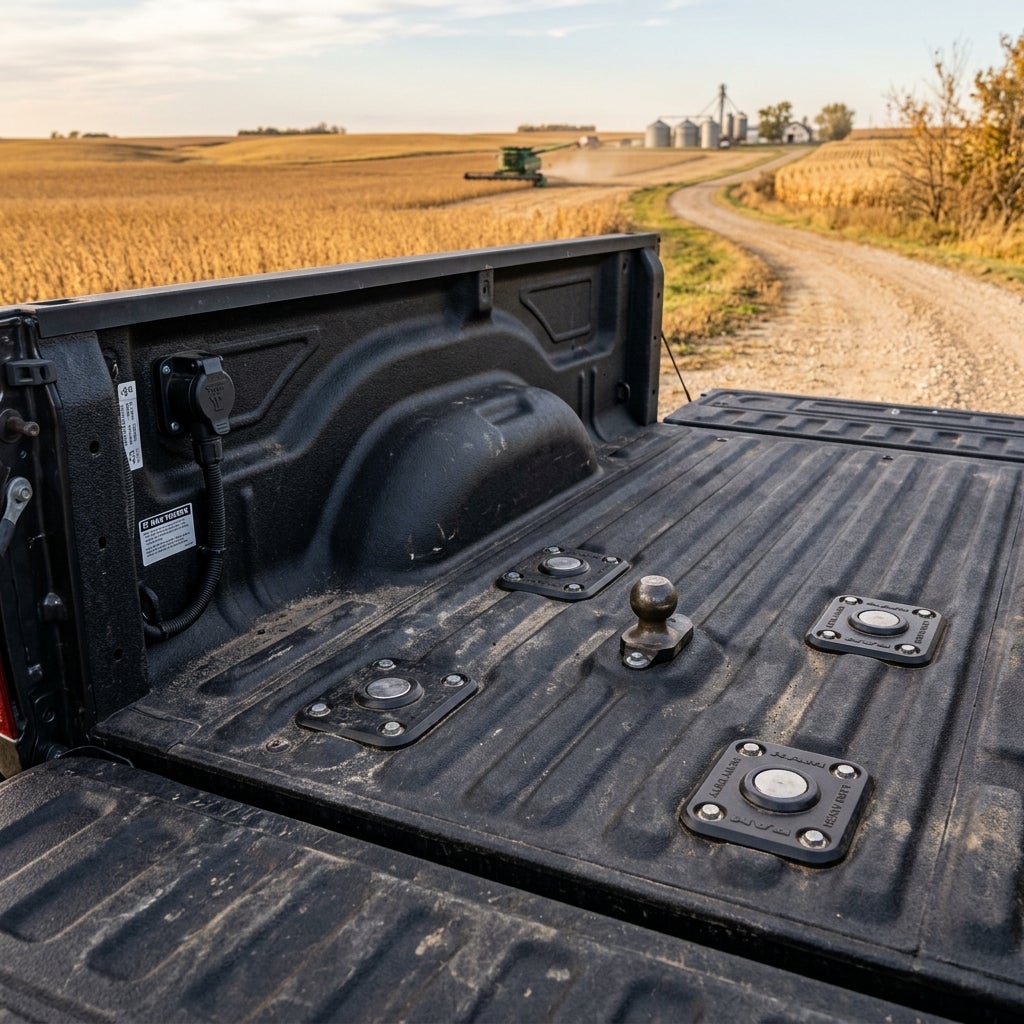
Bed of a black pickup truck fitted with a gooseneck hitch ball and puck system against a rural farm background. (Representative image for illustration purposes only. Actual vehicle may vary based on trim and configuration.)

What Factory Hardware Is Included in the RAM Fifth-Wheel / Gooseneck Prep Group?

.hrizn-visual-root a { color: #566BA1; } .hrizn-visual-root a { color: inherit; } .hrizn-visual-root p { margin: 0 0 1em; } .hrizn-visual-root p:last-child { margin-bottom: 0; } @media (max-width: 640px) { .hrizn-visual-root { text-align: center !important; } .hrizn-visual-root a { display: block; width: 100%; max-width: 320px; margin-left: auto; margin-right: auto; box-sizing: border-box; } .hrizn-visual-root + a { margin-top: 8px; } } @media (max-width: 640px) { #hrizn-cols-1 { flex-direction: column !important; align-items: stretch !important; } #hrizn-cols-1 > .hrizn-col { flex: 1 1 100% !important; width: 100% !important; } } #hrizn-table-tbl-sec-3 table{width:100%;table-layout:auto;border-collapse:collapse;font-family:'Open Sans',sans-serif;font-size:0.9rem} #hrizn-table-tbl-sec-3 th,#hrizn-table-tbl-sec-3 td{border:1px solid #e0e4ed;padding:8px;color:#595959;word-break:break-word;overflow-wrap:break-word} #hrizn-table-tbl-sec-3 th{background:#1a1a22;color:#ffffff;font-weight:700;font-size:14px;text-align:left;vertical-align:middle;padding:8px} #hrizn-table-tbl-sec-3 tr:nth-child(even) td{background:rgba(86,107,161,0.04)} #hrizn-table-tbl-sec-3 .tableWrapper{overflow-x:hidden} @media (max-width: 640px) { #hrizn-3cols-1 { flex-direction: column !important; align-items: stretch !important; } #hrizn-3cols-1 > .hrizn-col { flex: 1 1 100% !important; width: 100% !important; } } @media (max-width: 640px) { #hrizn-cols-2 { flex-direction: column !important; align-items: stretch !important; } #hrizn-cols-2 > .hrizn-col { flex: 1 1 100% !important; width: 100% !important; } } #hrizn-table-tbl-sec-5 table{width:100%;table-layout:auto;border-collapse:collapse;font-family:'Open Sans',sans-serif;font-size:0.9rem} #hrizn-table-tbl-sec-5 th,#hrizn-table-tbl-sec-5 td{border:1px solid #e0e4ed;padding:8px;color:#595959;word-break:break-word;overflow-wrap:break-word} #hrizn-table-tbl-sec-5 th{background:#1a1a22;color:#ffffff;font-weight:700;font-size:14px;text-align:left;vertical-align:middle;padding:8px} #hrizn-table-tbl-sec-5 tr:nth-child(even) td{background:rgba(86,107,161,0.04)} #hrizn-table-tbl-sec-5 .tableWrapper{overflow-x:hidden} @media (max-width: 640px) { #hrizn-cols-3 { flex-direction: column !important; align-items: stretch !important; } #hrizn-cols-3 > .hrizn-col { flex: 1 1 100% !important; width: 100% !important; } } @media (max-width: 640px) { #hrizn-3cols-2 { flex-direction: column !important; align-items: stretch !important; } #hrizn-3cols-2 > .hrizn-col { flex: 1 1 100% !important; width: 100% !important; } } @media (max-width: 640px) { #hrizn-3cols-3 { flex-direction: column !important; align-items: stretch !important; } #hrizn-3cols-3 > .hrizn-col { flex: 1 1 100% !important; width: 100% !important; } } #hrizn-table-tbl-sec-8 table{width:100%;table-layout:auto;border-collapse:collapse;font-family:'Open Sans',sans-serif;font-size:0.9rem} #hrizn-table-tbl-sec-8 th,#hrizn-table-tbl-sec-8 td{border:1px solid #e0e4ed;padding:8px;color:#595959;word-break:break-word;overflow-wrap:break-word} #hrizn-table-tbl-sec-8 th{background:#1a1a22;color:#ffffff;font-weight:700;font-size:14px;text-align:left;vertical-align:middle;padding:8px} #hrizn-table-tbl-sec-8 tr:nth-child(even) td{background:rgba(86,107,161,0.04)} #hrizn-table-tbl-sec-8 .tableWrapper{overflow-x:hidden} @media (max-width: 640px) { #hrizn-3cols-4 { flex-direction: column !important; align-items: stretch !important; } #hrizn-3cols-4 > .hrizn-col { flex: 1 1 100% !important; width: 100% !important; } } @media (max-width: 640px) { #hrizn-cols-4 { flex-direction: column !important; align-items: stretch !important; } #hrizn-cols-4 > .hrizn-col { flex: 1 1 100% !important; width: 100% !important; } } What Factory Hardware Is Included in the Ram Fifth-Wheel / Gooseneck Prep Group? When you are preparing for heavy agricultural hauling across Riley County or hitching up a 35-foot livestock trailer in Junction City, knowing exactly what equipment comes integrated into your truck bed is critical. The Ram Heavy Duty Production Option Code AHU—officially designated as the Fifth-Wheel / Gooseneck Towing Prep Group—is a factory-engineered structural system built directly into the frame assembly during production. Rather than relying on aftermarket brackets, bed drilling, or welded subframes that compromise factory rust warranties, Option Code AHU delivers a seamless, flush-mounted towing foundation engineered specifically for extreme structural loads. Every Ram 2500 and 3500 equipped with the factory AHU Prep Group includes five essential hardware components engineered directly into the bed floor and frame architecture: • Integrated Fully Welded Frame Crossmembers: Below the stamped steel bed floor sit massive, factory-welded structural steel crossmembers attached directly to the hydroformed box frame rails. These crossmembers distribute tongue weights and vertical pin loads directly to the chassis rather than stressing the bed sheet metal. • Five In-Bed Mounting Pucks: Four outer receiver pucks arranged in a standard footprint for quick drop-in fifth-wheel hitches, plus a centralized fifth puck specifically designed for a 2-5/16 inch gooseneck ball. • Removable Cast-Aluminum Puck Covers: Durable, flush-fitting covers that seal each receiver hole when hitches are removed, preserving a completely flat bed floor for loose grain bags, tools, or lumber. • In-Bed 7-Pin Electrical Wiring Connector: Mounted conveniently into the rear driver-side bed wall, keeping trailer wiring harnesses off the tailgate and safely isolated inside the bed. • Pre-Drilled Bed Floor Ports with Reinforced Collars: Factory-punched bed openings featuring structural collars that prevent moisture penetration, bed flexing, and metal fatigue around the mounting points. Whether you are shopping our New Vehicle Listings or upgrading your current fleet, understanding this factory architecture ensures you maximize your truck's towing potential safely and legally. Anatomical Breakdown: Beneath the Bed Cover of Ram Production Option Code AHU Hydroformed Frame Integration & Structural Metallurgy To appreciate why option code AHU is superior to aftermarket hitches, you must look underneath the truck bed. Ram Heavy Duty chassis frames utilize 50,000 PSI steel hydroformed frame rails with fully boxed cross-sections. In factory AHU builds, additional structural steel crossmembers are Robotically Metal Inert Gas (MIG) welded directly between the main frame rails at the assembly plant in Saltillo. This direct frame attachment creates an uninterrupted load path. When a heavy gooseneck trailer applies 5,000 lbs of vertical pin weight while rolling down bumpy rural roads in Geary County, that force travels directly down through the cast steel puck housings, into the factory welded crossmembers, and evenly across both frame rails. Because no aftermarket drilling is performed on the high-strength frame flanges, structural integrity and factory rust-through warranties remain 100% intact. In-Bed Electrical Integration & Corrosion Prevention Beyond heavy iron, Option Code AHU includes a fully integrated 7-pin electrical harness extension connected directly to the primary vehicle body harness. Unlike aftermarket installations that splice into rear bumper wiring using clip-on connectors—which frequently corrode from winter road salt or mud—the factory harness uses weatherproof Deutsch-style sealed connectors. The bed-side outlet is inset flush into the rear driver-side inner quarter panel. This placement prevents cargo from crushing the plug while allowing full wire clearance when making sharp jackknife turns with tall gooseneck couplers. The integrated circuitry communicates seamlessly with the truck's central Body Control Module (BCM), enabling automatic trailer light checks, trailer anti-lock brake integration, and blind-spot monitoring trailer length detection. 2026 Ram 2500 vs. 3500: Realistic Towing and Payload Capacities for Heavy Agricultural Hauling Choosing between a 2026 Ram 2500 and Ram 3500 for high-payload fall harvest towing requires evaluating more than just horsepower. While both trucks offer the legendary 6.7L Cummins Turbo Diesel and the 6.4L HEMI V8, their rear suspension designs and Gross Vehicle Weight Ratings (GVWR) create distinctly different real-world capabilities when hooked to heavy gooseneck grain wagons or multi-axle livestock trailers. Model / Engine Configuration Rear Suspension Architecture Max Gooseneck Towing Max Payload Capacity Ideal Kansas Hauling Role 2026 Ram 2500 6.4L HEMI V8 5-Link Coil Spring / Auto-Level Air Up to 17,730 lbs Up to 4,010 lbs General ranch work, utility trailers, equipment shuttle 2026 Ram 2500 6.7L Cummins Diesel 5-Link Coil Spring / Auto-Level Air Up to 19,990 lbs Up to 3,150 lbs Medium livestock trailers, round-bale transportation 2026 Ram 3500 SRW 6.7L Cummins Hotchkiss Leaf Spring System Up to 25,650 lbs Up to 4,580 lbs Heavy gooseneck flatbeds, heavy machinery haulers 2026 Ram 3500 DRW 6.7L HO Cummins High-Capacity Leaf Springs + Air Up to 37,090 lbs Up to 7,680 lbs Maximum commercial grain hauling, multi-head livestock Ram 2500 Coil vs Air The Ram 2500 features a proprietary 5-link rear coil spring suspension that provides unmatched unladen ride quality. For gooseneck towing, opting for the factory Rear Auto-Level Air Suspension levels the truck bed automatically under high pin weights, preserving headlight alignment and front axle steering traction. Ram 3500 Leaf Springs Ram 3500 models utilize heavy-duty Hotchkiss leaf spring rear suspensions. This stiff architecture supports severe vertical pin weights (up to 7,680 lbs payload on dual-rear-wheel models) without excessive suspension squat, maintaining vehicle stability on Kansas highway routes. High-Output Cummins Power Paired with the AISIN 6-speed heavy-duty automatic transmission, the High-Output 6.7L Cummins Turbo Diesel generates up to 1,075 lb-ft of low-end torque. This torque peak arrives as low as 1,800 RPM, allowing heavy grain loads to pull smoothly out of soft field conditions. Browse Commercial Vehicle Inventory Understanding Gross Combined Weight Rating (GCWR) and How It Limits Ram Truck Hauling Defining Key Weight Limits: GCWR vs. GVWR vs. GAWR A common mistake among agricultural operators in Geary County is assuming that if a trailer hitch is rated for 30,000 lbs, the truck can legally tow 30,000 lbs under all conditions. Safety and legal compliance depend on respecting three distinct ratings specified on the driver's door pillar label: 1. Gross Vehicle Weight Rating (GVWR): The maximum total allowable weight of the truck alone, including fuel, passengers, cargo, and trailer pin weight. 2. Gross Axle Weight Rating (GAWR): The maximum weight allowed on the individual front and rear axles. On heavy goosenecks, rear GAWR is frequently breached before hitting total towing capacity. 3. Gross Combined Weight Rating (GCWR): The total maximum allowable combined weight of the fully loaded truck AND the fully loaded trailer together. Practical Calculation for Kansas Harvest Operations To calculate your true legal payload capability, consider a Ram 3500 Crew Cab 4x4 with a GCWR of 43,000 lbs. If the scale weight of the truck equipped with tools, auxiliary fuel tanks, driver, and passengers totals 9,200 lbs, your maximum allowable trailer weight (including trailer tare weight plus grain cargo) cannot exceed 33,800 lbs (43,000 - 9,200 = 33,800). Furthermore, gooseneck trailers transfer roughly 20% to 25% of their total weight onto the truck's bed as pin weight. A 20,000 lb gooseneck trailer places 4,000 to 5,000 lbs directly onto the truck's rear axle. If your truck has a payload capacity of only 3,200 lbs, you will exceed rear GAWR and GVWR even though you are well under maximum GCWR. To check your vehicle's payload status or evaluate your trade, visit our Trade In Evaluation page. Calibrating the Integrated Trailer Brake Controller: Recommended Gain Settings for Harvest Trailers Every Ram Heavy Duty truck equipped with Option Code AHU or towing packages includes an Integrated Trailer Brake Controller (ITBC) built directly into the center stack. This unit uses electronic proportional braking, sending voltage to trailer brakes based on hydraulic brake pressure generated by the truck's master cylinder. Calibrating gain settings correctly before hauling heavy harvest loads is crucial for preventing jackknifing or premature brake overheating. Trailer Type & Braking System Trailer Weight Condition ITBC Setting Mode Recommended Starting Gain Dual-Axle Electric Drum Brakes Unladen / Light Load Light Electric 4.0 to 5.5 Triple-Axle Electric Drum (Livestock) Fully Loaded (Harvest / Cattle) Heavy Electric 6.5 to 8.5 Electric-Over-Hydraulic Disc Brakes Loaded Commercial Flatbed EOH Heavy 5.5 to 7.5 Heavy Grain Gooseneck (Surge/EOH) Peak Harvest Weight (25k+ lbs) EOH Heavy 7.5 to 9.5 Step-by-Step Brake Calibration Procedure for Rural Kansas Roads: 1. Select the Correct Brake Type: In the Ram Instrument Cluster menu, navigate to Trailer Tow -> Trailer Select -> Brake Type. Choose between 'Light Electric', 'Heavy Electric', 'Light EOH', or 'Heavy EOH'. Electric-over-hydraulic (EOH) systems require specific pulse timings to prevent pump delay. 2. Set Initial Gain On Flat Ground: Accelerate truck and trailer to approximately 20 MPH on a clean, paved road (such as Goldenbelt Blvd near Junction City). 3. Manual Squeeze Test: Without touching the foot brake pedal, squeeze the manual slider switch on the dashboard brake controller completely. 4. Adjust Until Lockup Threshold: If trailer brakes lock up and slide tires, reduce gain by 0.5 increments. If trailer pushes the truck during braking, increase gain until you feel a firm, smooth drag that decelerates the rig without wheel lockup. 5. Gravel Road Verification: When operating on dirt or gravel township roads around Manhattan and Geary County, reduce gain settings by 1.0 to 1.5 points to prevent trailer tires from skidding on loose stone. Tire Pressure Best Practices: Should Heavy Harvest Trailer Tires Be Adjusted to Max PSI? Cold Inflation Ratings vs. Heat Expansion During peak fall harvest, ambient temperatures across Kansas fluctuate dramatically between crisp autumn mornings and warm afternoon highway runs on I-70. A critical question for agricultural haulers is whether heavy trailer and truck tires should be inflated to maximum sidewall PSI ratings. The unequivocal technical answer is **YES: Under full payload conditions, tires must be inflated to the manufacturer cold maximum PSI rating listed on the tire sidewall and vehicle certification label.** Heavy HD truck tires (typically Load Range E or F rated at 80 PSI cold) rely on internal air pressure to support vertical loads. Under-inflating a tire by just 10 PSI reduces load capacity by nearly 12% and causes rapid sidewall flexing. Avoiding Thermal Blowouts & Tire Degradation Sidewall flexing generates extreme thermal heat. When hauling a 24,000 lb gooseneck trailer across the Flint Hills at 65 MPH, an under-inflated tire can quickly exceed internal temperatures of 200°F, leading to tread separation or catastrophic blowouts. Never bleed air pressure from hot tires during mid-day stops. Tire manufacturers design tire carcasses to accommodate normal thermal pressure rises (10 to 15 PSI above cold rating) during highway operation. For fast tire inspections, routine fluid checks, and rapid maintenance, stop by our Express Lane at Valor CDJR. Schedule Service at Valor CDJR Fall Harvest Towing Checklist: Preparing Heavy-Duty Ram Trucks for High-Payload Hauling Before taking heavy gooseneck trailers into field harvest operations or embarking on multi-state livestock transports, complete this essential 8-point technical checklist engineered specifically for Ram Heavy Duty trucks equipped with the AHU Prep Group. 1. Ball & Pin Box Lubrication Apply heavy lithium grease to the 2-5/16 inch gooseneck ball surface or install a high-density polyethylene lubricant plate on fifth-wheel kingpins to prevent metal grinding and binding. 2. Safety Chain Anchor Torque Inspect drop-in safety chain loops in the bed pucks. Ensure the quarter-turn locking pins seat fully and retaining cotter pins are engaged without rust deformation. 3. 7-Pin Plug Voltage Testing Test auxiliary 12V charging terminals and trailer brake signal pins inside the in-bed 7-pin socket using a digital multimeter to confirm clean 13.8V+ alternator output. 4. Tire Tread & Sidewall Inspection Verify minimum 4/32 inch tread depth on truck drive tires and inspect inner duals for trapped stones or sidewall bulges that cause high-speed thermal failure. 5. Transmission Fluid & Cooler Check transmission fluid levels on 68RFE and AISIN transmissions. Ensure auxiliary transmission oil cooler fins behind the front grille are clear of crop chaff and debris. 6. Emergency Breakaway Battery Test the 12V gel-cell battery on the trailer breakaway system. Ensure the lanyard cable is correctly length-adjusted and clipped to a rigid bed anchor, never around the ball. Factory-Installed Puck System vs. Aftermarket Gooseneck Hitches: Cost, Warranty, and Structural Integrity When configuring a commercial or agricultural Ram Heavy Duty truck, buyers often evaluate whether ordering Option Code AHU from the factory is worth the investment compared to installing an aftermarket under-bed hitch later. A head-to-head comparison illustrates the long-term operational advantages of factory integration. Evaluation Criterion Ram Factory AHU Prep Group Aftermarket Under-Bed Gooseneck Hitch Installation Requirement 100% Robotically Welded at Factory 4-8 Hours Labor; Bed Removal or Cutting Required Bed Floor Finish Flush-fit puck covers; 100% flat bed when removed Exposed center hole; aftermarket trim rings can catch cargo Powertrain & Frame Warranty Preserves 5-Year/100,000-Mile Factory Warranty Risk of voiding frame anti-corrosion coverage due to drilling Integrated 7-Pin Electrical Factory sealed in-bed wiring harness included Requires aftermarket harness splicing into rear bumper wire Fifth-Wheel Compatibility Direct drop-in for standard 5th-wheel hitches Requires bulky adapter rails mounted above bed floor Essential Mopar Gooseneck & Fifth-Wheel Adapter Kits Available at Valor CDJR To turn your Ram factory prep group into a fully functional towing rig, Valor CDJR stocks authentic Mopar towing accessories engineered specifically for Option Code AHU receiver pucks. Ordering factory-approved components ensures proper metallurgy and precise lock-pin tolerances. Mopar 2-5/16 Gooseneck Ball Kit Features a patented lever-action quick-release locking mechanism that drops directly into the center bed puck. Includes two heavy-duty safety chain tie-down loops and a custom molded carrying case. Picture-Frame Fifth-Wheel Adapter Adapts outer bed pucks to accept traditional industry-standard fifth-wheel hitches from Curt, B&W, and Reese without installing elevated bed rails. In-Bed Plug Replacement Caps UV-resistant, weather-sealed replacement puck caps and 7-pin dust covers designed to withstand extreme winter weather and agricultural chemical exposure. Order Parts from Valor CDJR Navigating Flint Hills Terrain and Kansas Rural Highway Demands in Manhattan & Junction City Managing Steep Rolling Grades on I-70 & US-77 Towing heavy agricultural loads around Fort Riley, Junction City, and Manhattan presents distinct topographic challenges. Navigating the steep, rolling grade transitions of Interstate 70 through the Flint Hills requires constant vehicle control. When descending 6% grades with a 25,000 lb gooseneck trailer, relying solely on mechanical service brakes can lead to dangerous brake fade. Ram Heavy Duty trucks equipped with Cummins Turbo Diesel engines feature a driver-selectable **Smart Exhaust Brake**. Operating in either 'Full' or 'Automatic' mode, this system adjusts variable-geometry turbocharger vanes to generate reverse engine backpressure. Automatic mode maintains a set vehicle speed during downhill descents without requiring pedal input, dramatically extending brake pad life. Crosswind Stability & Prairie Road Traction Kansas prairie winds frequently blow sustained 35+ MPH gusts across north-south corridors like Highway 77. High-profile livestock or enclosed gooseneck trailers act like massive sails, creating lateral sway that tests chassis rigidity. The Ram AHU prep group places the gooseneck ball pivot point approximately 2 inches forward of the rear axle centerline. Positioning vertical tongue weight forward of the rear axle creates natural stability, transferring downward force to both front and rear axles. Combined with Ram Electronic Stability Control (ESC) and Trailer Sway Mitigation, your rig remains firmly planted in high crosswinds. If you are exploring pre-owned heavy-duty options, browse our Used Vehicle Listings. Step-by-Step Guide: How to Connect a Gooseneck Trailer to the Ram In-Bed Puck System Connecting a gooseneck trailer to the Ram factory puck system is a streamlined process that takes less than five minutes when following proper mechanical safety protocols: 1. Remove Center Puck Cover: Rotate the central cast-aluminum bed cover counterclockwise and lift it out to expose the factory gooseneck receiver socket. 2. Insert Gooseneck Ball: Lift the center locking lever on your Mopar 2-5/16 ball, insert the shank into the socket, and drop the lever down to engage the dual locking ball bearings underneath. 3. Install Safety Chain Loops: Insert the two drop-in safety chain loops into the designated rear diagonal outer puck sockets. Rotate each loop 90 degrees until the locking tab drops securely into place. 4. Align Truck & Coupler: Lower tailgate (or open 5th-wheel cutout gate), back truck into position until the trailer coupler aligns directly over the ball, and lower the trailer jack. 5. Lock Coupler & Engage Pin: Close the trailer coupler locking handle and insert the safety pin. Verify that the coupler collar has seated fully beneath the ball shoulder. 6. Attach Safety Chains & Breakaway Lanyard: Cross safety chains beneath the drawbar and hook into bed loops. Attach the breakaway cable to a rigid bed anchor. 7. Plug in 7-Pin Harness: Insert trailer electrical plug into the bed-wall socket and latch the spring-loaded socket lid over the plug connector lock edge. 8. Verify Dashboard Display: Start truck and check instrument cluster for 'Trailer Connected' notification and automated exterior trailer light check cycle. Schedule Heavy-Duty Ram Towing Service and Order Factory Parts at Valor CDJR in Junction City, KS Whether you are equipping a brand-new 2026 Ram 3500 dually for peak harvest or maintaining a commercial fleet in Junction City, Valor CDJR is your trusted regional heavy-duty truck authority. Our dealership features factory-trained Chrysler Dodge Jeep Ram Master Technicians who understand the exacting demands of Kansas agricultural and commercial towing. Visit our showroom at 1825 Goldenbelt Blvd to inspect our inventory of factory AHU-equipped Ram 2500 and 3500 models, order genuine Mopar gooseneck ball kits, or perform a pre-harvest towing system checkup. For current financing options for your farm or commercial business, contact our team through our Finance Center page. You can also Get Directions to Valor CDJR or Call us at (785) 238-5114 to speak directly with a truck specialist. Schedule Towing Service Inspection
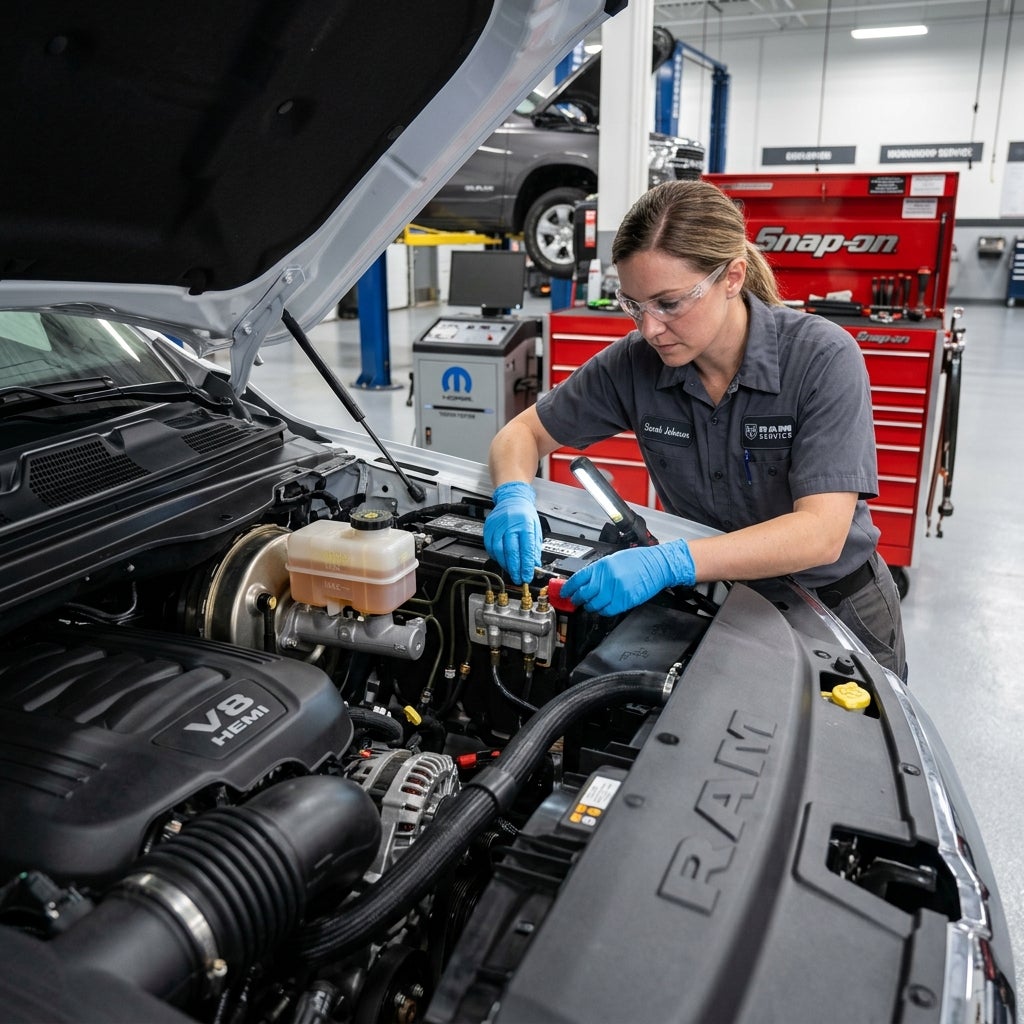
A female mechanic wearing safety glasses and blue gloves inspects the engine of a white Ram truck in a service garage. (Representative image for illustration purposes only. Actual vehicle may vary based on trim and configuration.)

How Long Does It Take for a Dealership to Replace a RAM 1500 Brake Master Cylinder?

.hrizn-visual-root a { color: #566BA1; } .hrizn-visual-root a { color: inherit; } .hrizn-visual-root p { margin: 0 0 1em; } .hrizn-visual-root p:last-child { margin-bottom: 0; } @media (max-width: 640px) { .hrizn-visual-root { text-align: center !important; } .hrizn-visual-root a { display: block; width: 100%; max-width: 320px; margin-left: auto; margin-right: auto; box-sizing: border-box; } .hrizn-visual-root + a { margin-top: 8px; } } @media (max-width: 640px) { #hrizn-cols-1 { flex-direction: column !important; align-items: stretch !important; } #hrizn-cols-1 > .hrizn-col { flex: 1 1 100% !important; width: 100% !important; } } @media (max-width: 640px) { #hrizn-3cols-1 { flex-direction: column !important; align-items: stretch !important; } #hrizn-3cols-1 > .hrizn-col { flex: 1 1 100% !important; width: 100% !important; } } @media (max-width: 640px) { #hrizn-cols-2 { flex-direction: column !important; align-items: stretch !important; } #hrizn-cols-2 > .hrizn-col { flex: 1 1 100% !important; width: 100% !important; } } @media (max-width: 640px) { #hrizn-cols-3 { flex-direction: column !important; align-items: stretch !important; } #hrizn-cols-3 > .hrizn-col { flex: 1 1 100% !important; width: 100% !important; } } @media (max-width: 640px) { #hrizn-3cols-2 { flex-direction: column !important; align-items: stretch !important; } #hrizn-3cols-2 > .hrizn-col { flex: 1 1 100% !important; width: 100% !important; } } @media (max-width: 640px) { #hrizn-cols-4 { flex-direction: column !important; align-items: stretch !important; } #hrizn-cols-4 > .hrizn-col { flex: 1 1 100% !important; width: 100% !important; } } @media (max-width: 640px) { #hrizn-3cols-3 { flex-direction: column !important; align-items: stretch !important; } #hrizn-3cols-3 > .hrizn-col { flex: 1 1 100% !important; width: 100% !important; } } @media (max-width: 640px) { #hrizn-cols-5 { flex-direction: column !important; align-items: stretch !important; } #hrizn-cols-5 > .hrizn-col { flex: 1 1 100% !important; width: 100% !important; } } How Long Does It Take for a Dealership to Replace a Ram 1500 Brake Master Cylinder? When it comes to maintaining the safety and stopping power of your Ram 1500, few components play a more critical role than the brake master cylinder. This component acts as the heart of your truck's hydraulic braking system, converting the physical force of your foot on the pedal into the hydraulic pressure that clamps your brake pads against the rotors. If your master cylinder is starting to fail, you are likely asking a very practical question: how long will it take to get it fixed? At a certified dealership like Valor CDJR, replacing a Ram 1500 brake master cylinder typically takes between 2 to 4 hours under normal circumstances. While the physical swap of the cylinder itself might seem straightforward, the process of ensuring that your entire hydraulic braking system is free of air, correctly calibrated, and thoroughly road-tested is a meticulous process that cannot be rushed. Our service department at Valor CDJR in Junction City, KS, is staffed by factory-certified Ram technicians who understand the specific nuances of your truck's braking system. Whether you drive a classic fourth-generation Ram 1500 (DS platform) or a state-of-the-art fifth-generation model (DT platform), the hydraulic system design requires specialized tools and diagnostic equipment to service correctly. A professional replacement involves much more than simply unbolting the old unit and putting a new one in. It requires draining the old glycol-ether-based brake fluid, bench-bleeding the new OEM Mopar master cylinder to purge trapped air from its internal piston chambers, installing the unit, and then performing a comprehensive pressure bleed of all four wheel lines. Choosing a certified dealership like Valor CDJR means that your vehicle is being handled by specialists who do this every day. Our team has direct access to Mopar technical databases, ensuring that every bolt is torqued to exact factory specifications and that the fluid used matches the precise viscosity and boiling point characteristics required for your Ram. In the sections below, we will dive deep into the signs that indicate your master cylinder is on its way out, the step-by-step process our technicians follow, the true cost breakdown of parts versus labor, and why cutting corners with cheap aftermarket parts or independent shops can compromise your safety on the roads of Junction City, Manhattan, and the surrounding Flint Hills region. What Are the Primary Symptoms of a Failing Brake Master Cylinder on a Ram 1500? Recognizing the early warning signs of a failing brake master cylinder is absolutely paramount to preventing a dangerous brake failure scenario. The most common symptom Ram 1500 owners report is a spongy or sinking brake pedal. When you press down on the brake pedal, it should feel firm and offer progressive resistance. If the pedal slowly sinks all the way to the floorboard while you are holding pressure—such as when standing still at a red light on Washington Street in Junction City—the internal rubber seals of the master cylinder are likely bypassing. This means hydraulic fluid is slipping past the piston cups inside the cylinder bore instead of being pushed down the brake lines to the wheels. Another telling symptom is highly contaminated brake fluid. Over time, the internal seals of a failing master cylinder degrade, shedding tiny dark rubber particles into the reservoir. If you pop the hood of your Ram and notice that the brake fluid is dark brown or black, rather than a clear golden hue, it is a strong indicator of internal wear. External leaks can also occur where the master cylinder bolts to the vacuum brake booster. Fluid leaking from this junction can damage the booster's internal diaphragm, turning a relatively simple cylinder replacement into a much more expensive repair that requires replacing both components. These symptoms are not just minor inconveniences; they pose severe safety risks for drivers traveling through Junction City, Manhattan, and throughout Riley County. A sinking brake pedal significantly increases your vehicle's overall stopping distance, which can be catastrophic during sudden highway stops on I-70 or during rainy summer afternoon downpours. Furthermore, if the brake system's internal pressure drops below a safe threshold, your Ram's onboard diagnostic computer will detect the imbalance. This will illuminate the red brake warning light or trigger the ABS (Anti-lock Braking System) light on your instrument cluster. Driving with a compromised master cylinder means you cannot rely on your truck's emergency braking performance. If you are towing a camper to Milford Lake or hauling agricultural supplies, the added momentum makes absolute hydraulic integrity vital. At Valor CDJR, we urge drivers never to ignore a soft or inconsistent pedal. If you notice any of these signs, please use our online Service Scheduler to book an immediate inspection. Our team can quickly diagnose whether your symptoms are caused by a failing master cylinder, air in the lines, or worn pads, ensuring your truck remains safe and reliable on every Kansas road. What Are the Main Steps in Replacing a Brake Master Cylinder? 1. Fluid Extraction & Disassembly The first step our technicians take is to safely extract the old, contaminated brake fluid from the master cylinder reservoir using specialized suction equipment. Once empty, they carefully disconnect the electrical sensor plug for the fluid level indicator. Next, they use precision flare nut wrenches to disconnect the steel hydraulic lines. Using correct tools is essential here to prevent rounding off the soft metal fittings. Finally, the mounting nuts securing the cylinder to the brake booster are removed, and the old master cylinder is lifted out of the engine bay. 2. Bench-Bleeding the New Unit You cannot simply bolt a dry master cylinder onto a truck and expect it to work. Our technicians perform a critical process called "bench-bleeding" on a sturdy workbench. They temporarily install bleed tubes from the exit ports of the new Mopar cylinder back into its own fluid reservoir, fill it with fresh fluid, and manually compress the piston repeatedly. This forces all trapped air out of the internal cylinder chambers and replaces it with pure fluid. Skipping or rushing this step leaves micro-bubbles inside the cylinder that are nearly impossible to remove later. 3. Installation & Full Bleed The bench-bled cylinder is carefully mounted back onto the brake booster and torqued to exact factory specification. The steel hydraulic lines are reattached. Next, the technician performs a comprehensive pressure flush and bleed of the entire braking system at all four wheels. Starting from the wheel furthest from the master cylinder (typically the passenger rear) and working inward, they purge any air that entered the lines during assembly. For modern Ram 1500s, they also utilize a diagnostic scan tool to cycle the ABS valves, ensuring no air remains trapped in the ABS hydraulic control unit. How Much of the Master Cylinder Replacement Cost Is Labor vs. Parts? When evaluating the financial side of a brake master cylinder replacement, the total invoice is split between high-quality Mopar parts and certified dealership labor. A genuine OEM Mopar brake master cylinder for a late-model Ram 1500 generally ranges from $150 to $300, depending on your truck's specific model year, trim level, and electronic braking features. While some cheap aftermarket options might cost slightly less, they often lack the premium seals and exact bore tolerances required to match factory braking performance. Investing in the genuine part guarantees long-term durability and structural integrity. On the labor side, the job is billed according to standard flat-rate times, which usually range from 2 to 3.5 hours depending on whether your truck has advanced electronic brake booster systems or standard vacuum assists. Labor accounts for the master technician's specialized training, the use of proprietary diagnostic computers to perform the ABS module bleed, and the disposal of toxic old brake fluid. While dealership labor rates reflect this high level of expertise, you are paying for peace of mind knowing that your 5,000-pound truck's primary safety system is functioning flawlessly. At Valor CDJR, we believe that critical safety repairs should never put a stressful strain on your household budget. That is why we offer flexible and convenient service financing options designed to keep your vehicle safe without immediate financial hardship. If you need to spread the cost of your brake system repair, please contact us for current financing options. We encourage you to visit our online finance center to Get Pre-Approved for service financing in just a few clicks. This simple tool allows you to plan your repair confidently, ensuring you do not have to delay vital brake work. Our service advisors are always here to walk you through the pricing structure transparently, providing a detailed written estimate before any wrenches turn on your vehicle. We believe in honest communication, so you will never face surprise fees when you pick up your keys. Get Pre-Approved for Service Financing Do Independent Mechanics Use OEM Mopar Parts for Ram 1500 Brake Repairs? A common dilemma Ram owners face is deciding whether to visit an independent repair shop or a certified dealership. While local independent mechanics are capable of performing general maintenance, they may use genuine OEM Mopar parts, but some rely on third-party aftermarket parts sourced from local retail auto parts chains. These aftermarket master cylinders are often built to "consolidated" specifications, meaning a single part number might be designed to fit five or six different truck platforms with slight variations. This one-size-fits-all approach can lead to minor fitment issues, differences in pedal travel, or a less-than-perfect seal. At Valor CDJR, we source every replacement directly from our own factory-authorized Parts Department. This ensures that the replacement master cylinder installed on your truck is a direct match engineered by Mopar specifically for your vehicle's VIN. Mopar components are manufactured with the exact same metallurgy, rubber compounds, and bore tolerances as the unit that came on your Ram from the factory. Furthermore, OEM parts installed at our dealership carry a comprehensive nationwide warranty that covers both the part and the labor to replace it if it fails prematurely. Many aftermarket parts carry limited warranties that only cover the cost of the physical part, leaving you to pay the expensive labor fees all over again if the component fails in six months. When it comes to your truck's stopping power, compromising on parts quality is a risk simply not worth taking. Does Mopar Vehicle Protection Cover Brake Master Cylinders? For many Ram 1500 owners, the cost of a master cylinder replacement may be completely covered under an active warranty. If you purchased a Mopar Vehicle Protection plan—such as the comprehensive "Maximum Care" or "Added Care Plus" extended warranties—your brake master cylinder is a listed covered component. Maximum Care, which is Mopar’s gold-standard exclusionary coverage, explicitly covers over 5,000 mechanical and electrical components, including the master cylinder, power booster, ABS assembly, brake lines, and calipers. Even with the slightly more streamlined Added Care Plus plan, the master cylinder is covered under the major mechanical systems category. These protection plans are designed to give Ram owners absolute confidence, ensuring that when unexpected component wear occurs, you are only responsible for your plan's small deductible (often $100 or even $0 depending on how your policy was structured). Having a warranty claim handled at Valor CDJR is incredibly simple because we interface directly with Mopar, meaning we handle all the paperwork, approvals, and direct billing behind the scenes. If you live in Riley, Geary, or Clay County and are unsure about your vehicle's warranty status, our service advisors are happy to perform a complimentary coverage check for you. All we need is your Ram 1500's 17-digit Vehicle Identification Number (VIN) to access the official Mopar database and determine if you have active coverage. We encourage you to Call us at (785) 238-5114 before scheduling your appointment so we can verify your coverage upfront. Knowing your warranty status ahead of time can turn a stressful repair scenario into a highly satisfying, low-cost visit. If you do have coverage, we will secure immediate approval from Mopar, order the necessary parts, and get your truck back on the road in prime condition with minimal disruption to your daily routine. How Do I Check Whether My Ram 1500 Brake Issue Is Part of a Recall? 1. Find Your 17-Digit VIN Your truck's Vehicle Identification Number (VIN) is a unique 17-character code that acts as its digital fingerprint. You can find it printed on a metal plate visible through the driver's side corner of the windshield, on the safety certification label inside the driver's side door jamb, or on your vehicle's insurance card and registration documents. Write this number down carefully. 2. Search Safety Databases Once you have your VIN, you can input it directly into the National Highway Traffic Safety Administration (NHTSA) recall lookup tool or the official Mopar recall portal. These search engines will immediately display any active safety recalls or customer satisfaction campaigns associated with your specific truck, including those involving hydraulic brake components. 3. Get Free Repairs at Valor CDJR If your search reveals an open recall related to your Ram 1500's brake master cylinder or hydraulic booster, do not panic. As an authorized Ram dealership, Valor CDJR will perform the required recall repairs completely free of charge to you. Contact our service team, and we will secure the factory-allocated recall parts and schedule your priority service appointment. Why Having Your Ram 1500 Serviced at a Junction City Dealership Saves Time Time is one of your most valuable assets, and having your Ram 1500 serviced at a specialized local dealership like Valor CDJR is the fastest way to get your truck back on the road. Independent shops often struggle with scheduling delays because they have to wait for parts delivery trucks to transport components from regional warehouses. In contrast, our on-site Parts Department maintains a massive, highly curated inventory of genuine OEM Mopar parts, meaning we usually have the exact master cylinder, fluid, and lines your truck needs sitting on our shelves the moment you arrive. Furthermore, our diagnostic workflow is highly optimized. We utilize the proprietary wiTECH 2.0 diagnostic platform, which connects directly to Ram's secure gateway module. This tool allows our technicians to perform rapid digital health scans, identify pressure sensor faults, and run automated ABS brake bleeding sequences in a fraction of the time it takes an independent shop using a generic multi-brand scan tool. What takes a general mechanic hours of troubleshooting and manual labor often takes our experienced team just minutes to isolate and resolve. Our technicians work exclusively on Chrysler, Dodge, Jeep, and Ram vehicles every single day. This extreme specialization means they are intimately familiar with the exact bolt locations, clearance requirements, and physical plumbing layout of your truck. They do not need to consult internet forums or repair manuals to figure out how to access your master cylinder—they have successfully completed this exact job dozens of times before. If you are ready to experience the fast, professional, and efficient service that only a factory-authorized dealership can provide, we invite you to book an appointment with us today. Our online system makes it simple to choose a time that fits into your busy week. Go ahead and utilize our Service Scheduler to reserve your slot and let our master technicians handle the rest with speed and precision. Schedule Your Brake Service Now How a Weak Master Cylinder Affects Towing and Driving in the Flint Hills The rolling landscape of the Flint Hills in Kansas is incredibly scenic, but it places unique demands on your truck's mechanical components—especially the braking system. Navigating steep inclines and declines on K-177 or hauling heavy agricultural loads along the gravel backroads of Geary County requires flawless braking response. When your Ram 1500 is pulling a trailer loaded with livestock, hay, or recreational boats for a weekend at Milford Lake, your vehicle's kinetic energy is multiplied significantly. In these towing scenarios, your brakes must work twice as hard to slow the vehicle down. If your master cylinder has worn internal seals, the immense heat generated during prolonged downhill braking can cause the brake fluid to warm up rapidly. As fluid temperature increases, its viscosity changes, and the bypassing effect inside a weak master cylinder becomes significantly worse. You might start a descent with a relatively firm pedal, only to feel it suddenly turn soft and sink toward the floorboard halfway down the hill. This phenomenon, known as brake fade combined with hydraulic bypass, can lead to a terrifying loss of stopping control. Keeping your hydraulic system in peak condition with a fresh, leak-free master cylinder is not just about keeping your truck running—it is about ensuring you have the necessary stopping power to handle the challenging, rolling geography of our beautiful Kansas landscape safely. What to Do While Your Ram 1500 Is in the Shop at Valor CDJR Relax in Our Comfortable Lounge While our master technicians are replacing your brake master cylinder, we invite you to relax in our clean, modern waiting area. We offer high-speed Wi-Fi, comfortable seating, flat-screen televisions, and a selection of premium complimentary coffee, bottled water, and snacks. It is the perfect environment to reply to emails, get some remote work done, or simply unwind while we restore your truck's stopping power. Shuttle Services & Stay Mobile We know that you have a busy schedule and cannot always sit at the dealership. To minimize disruption to your day, Valor CDJR offers a complimentary local shuttle service. Our shuttle can drop you off at your home, office, or local shopping centers in Junction City, and pick you up once your Ram 1500's brake service is completely finished. Ask our service advisors for details when you check in. Try Our Express Lane Service If you have minor routine maintenance tasks that need attention—such as an oil change, tire rotation, windshield wiper replacement, or cabin air filter swap—you can have them completed simultaneously. Our dedicated Mopar Express Lane is optimized for lightning-fast, high-quality maintenance without requiring a pre-scheduled appointment, helping you save valuable time by combining your services. Considering an Upgrade? Explore Your Ram 1500 Trade-In Value As trucks age, owners occasionally find themselves weighing the cost of ongoing mechanical repairs against the value of transitioning into a newer, more advanced vehicle. If your Ram 1500 has high mileage and is beginning to require multiple repairs—such as master cylinder replacement, suspension work, or engine service—it might make strong financial sense to explore your vehicle's current market value. Trading in your truck allows you to apply its equity toward a brand-new or pristine certified pre-owned vehicle, cutting down on future repair bills and giving you access to the latest safety and towing technology. At Valor CDJR, we make valuing your current truck incredibly straightforward. Our online Trade In Evaluation tool provides a quick, transparent, and highly competitive appraisal based on real-time market data in the Junction City and Manhattan areas. You can input your truck's details from the comfort of your home and receive an instant estimate of its worth. From there, our finance and sales teams can help you explore how that trade equity can help you choose a newer, highly capable model. Once you have an idea of your truck's trade value, we invite you to browse our extensive inventory of vehicles. Whether you are looking for a brand-new light-duty truck with active safety features or a solid commercial rig, we have options to fit your lifestyle. You can explore our updated New Vehicle Listings to see the latest Ram 1500 models, or check out our high-quality Used Vehicle Listings for value-conscious alternatives. If your work demands even more capability, we also offer a dedicated Commercial Vehicle Inventory featuring heavy-duty trucks built to handle the toughest jobs Kansas has to offer. Value Your Current Trade-In Schedule Your Ram 1500 Brake Service at Valor CDJR in Junction City Today Your Ram 1500's brakes are its single most important safety feature. Driving with a weak, spongy, or bypassing master cylinder compromises your vehicle's stopping distance and puts you, your family, and other drivers at risk on Kansas highways. Do not wait for a complete brake system failure before taking action. At Valor CDJR, our factory-trained master technicians are ready to diagnose, service, and restore your truck's hydraulic braking performance back to original factory standards using only genuine Mopar components. We make getting professional, trustworthy service as convenient as possible. You can easily Get Directions to Valor CDJR to visit our dealership at 1825 Goldenbelt Blvd, Junction City, KS 66441. If you prefer to speak directly with one of our experienced service advisors to ask questions or discuss pricing, please feel free to Call us at (785) 238-5114. Alternatively, you can book your appointment online in just a few seconds using our digital tool. Click the button below to access our Service Scheduler and pick a date and time that fits seamlessly into your schedule. Let our team provide the reliable, expert care your Ram truck deserves! Book Your Brake Appointment Online

Contact Us

Fill out this form below and we'll contact you shortly
*Required Fields