




Blog / Vehicle Features & Accessories

Blog

All Vehicle Features & Accessories Buying Guides New Vehicle Reviews Maintenance & Service Technology & Innovation Financing & Insurance Model Comparisons Safety Features New Vehicle Inventory Used Vehicle Guides Valor CDJR Towing & Hauling Safety Trade in Advice Family & Lifestyle Vehicles Vehicle Financing & Trade-In Tips Dealership Sales Strategies KS Community Parts & Accessories Seasonal Vehicle Care Junction City Military & Veteran Benefits Automotive Repair Buying Guides & Dealership Services Financing & Trade-In Options Heavy-Duty Truck Features Off-Road & Adventure Vehicles Service Vehicle Ownership Care Hybrid & Electric Vehicles Military Vehicle Buying Guides Commercial Truck Reviews Parts Performance & Powertrain Automotive Recalls Dealership Inventory Highlights Dealership Visit Preparation Inventory & Pricing Insights Jeep Lifestyle & Accessories Military & Community Car Buying Programs Repair & Diagnostics Vehicle Maintenance & Preparation Vehicle Pricing Strategies Vehicle Safety & Compliance Vehicle Trade-In Tips Warranty & Coverage Automotive News Car Buying Tips Car Purchase Tips Commercial Fleet Management Commercial Vehicle Comparisons Dealer Profiles & Interviews Dealership Offers & Promotions Dealership Service Experience Financing & Insurance for Military Families Genuine Parts & Accessories Local Automotive Events OEM Parts & Warranty Coverage Pre-Owned Vehicle Sales Road Trip & Travel Tips Special Offers & Promotions Tailgating & Outdoor Adventures Tailgating & Outdoor Recreation Towing & Hauling Towing & Roadside Assistance Vehicle Registration & Legal Advice for Military Personnel Vehicle Repair & Diagnostics Vehicle Sales Experience Warranty & Protection Plans Agricultural Vehicles & Equipment Brake System Care Certified Pre-Owned Programs Commercial Vehicles Community & Military Support Initiatives Dealership Events Diesel Engine Technology Engine & Performance Insights Fleet & Upfit Buying Guides Luxury SUVs Out-of-State Purchasing Guides Part & Warranty Services Parts & Repair Reimbursement Recall & Warranty Repairs Seasonal Sales Events Technology & Innovation in Vehicle Service Vehicle Incentives & Promotions Vehicle Maintenance & Winter Care Vehicle Technology & Features Weekend Dealership Events and Services
When Should You Engage 4WD Low Range While Off-Roading? The Direct Answer

When Should You Engage 4WD Low Range While Off-Roading? The Direct Answer

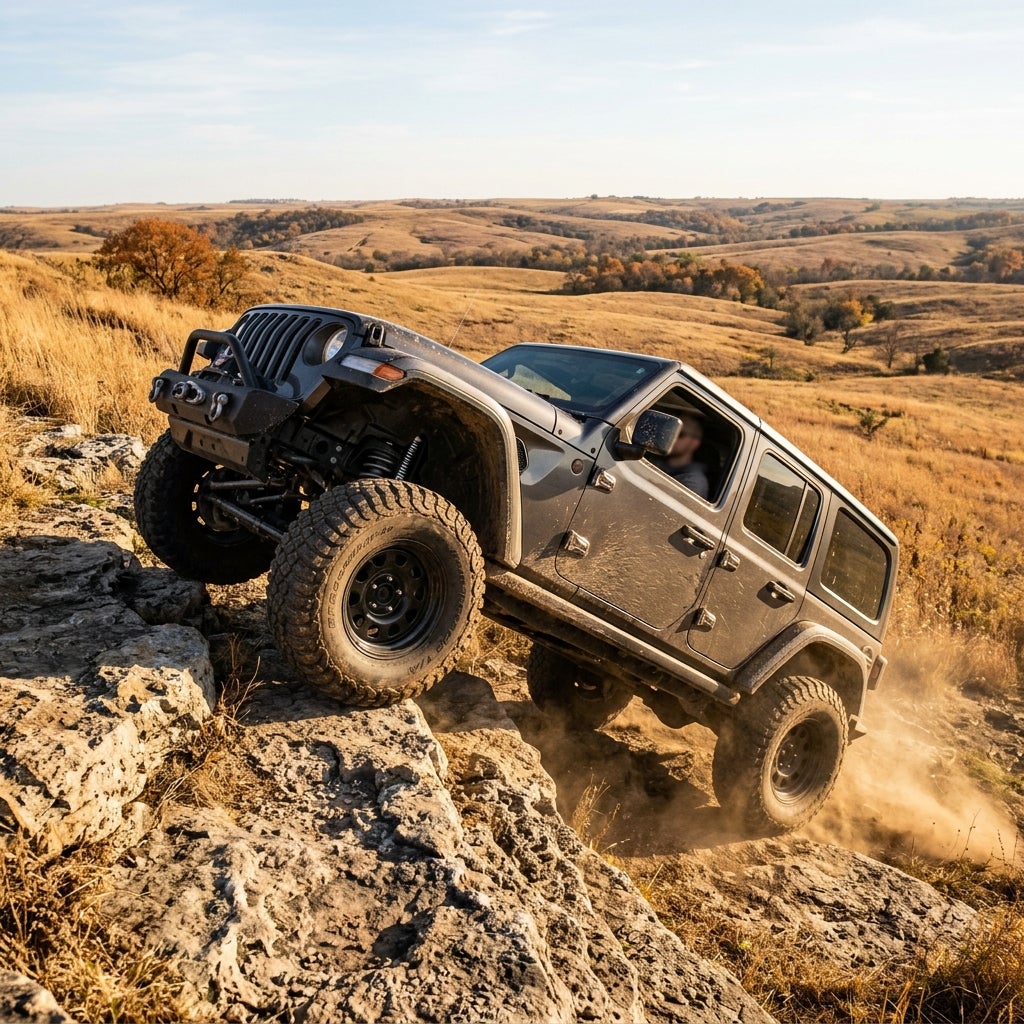
When Should You Engage 4WD Low Range While Off-Roading? The Direct Answer Direct Key Takeaway: You should engage 4WD Low (4LO) when operating your vehicle below 25 mph across demanding terrain such as steep technical inclines, deep thick mud, loose sand dunes, rocky ledge crawls, or when descending extreme gradients that require maximum engine braking. Engaging 4LO mechanically multiplies engine torque to its highest possible transfer ratio while dramatically slowing wheel rotation. This fundamental mechanical reduction gives your 4x4 precise throttle modulation and massive crawling force without overheating your automatic transmission, slipping your clutch, or spinning tires uncontrollably. Off-roading in the Flint Hills and rugged backcountry near Junction City, KS presents diverse terrain challenges ranging from slippery riverbed clay to sharp limestone shelves. Navigating these environments successfully requires an understanding of how your transfer case manages wheel torque and momentum. When you encounter severe resistance where momentum alone cannot safely carry the vehicle, shifting into 4WD Low shifts your transfer case into an auxiliary reduction gear set—typically yielding a ratio between 2.72:1 and 4.0:1 or higher depending on your vehicle's factory trim configuration. By utilizing 4LO early when facing technical obstacles, you protect key mechanical components against thermal stress and excess wear. Driver inputs become softer and far more manageable; a subtle nudge on the accelerator translates into smooth, controlled power rather than an abrupt spin of the tires that can break traction or damage fragile trail infrastructure. Understanding when and how to deploy this powerful mechanical tool separates casual drivers from experienced off-road enthusiasts. Understanding 4WD High vs. 4WD Low: How Mechanical Gear Ratios Work To master off-road driving, you must understand the mechanical difference between 4WD High (4HI) and 4WD Low (4LO). Both drive modes lock the front and rear driveshafts together inside the transfer case, ensuring equal speed distribution between the front and rear axles. However, 4HI maintains a direct 1:1 gear ratio inside the transfer case, passing the transmission's output directly to the differential ring and pinion gears. 4WD High is engineered for higher-speed traction on loose or slick surfaces such as snow-covered highways, wet gravel, fire roads, or packed dirt trails where speeds range from 25 mph up to 55 mph. Because 4HI retains street-level gearing, it allows normal highway velocities while delivering four-wheel drive stability. However, when navigating steep grades or heavy resistance at low speeds in 4HI, the transmission torque converter must slip continuously, generating immense heat that degrades automatic transmission fluid quickly. Shifting into 4WD Low engages a secondary planetary gear set inside the transfer case, creating substantial gear reduction. For example, a standard 2.72:1 transfer case reduction multiplies torque output at the axles by 272 percent compared to 4HI in the same transmission gear. Extreme off-road vehicles like the Jeep Wrangler Rubicon feature a 4.0:1 transfer case ratio, which, when multiplied by first gear and axle ratio, produces a Crawl Ratio exceeding 70:1 or 100:1. This mechanical leverage reduces ground speed dramatically relative to engine rpm. At 2,500 engine rpm in 4LO, your vehicle might move forward at only 2 to 4 mph. This slow velocity paired with high torque allows the tires to climb obstacles slowly without surging, hopping, or slipping. Furthermore, 4LO works in reverse: when descending steep inclines, engine compression acts through the gear reduction to brake the vehicle naturally without overheating service brakes. Drive Mode Transfer Case Ratio Target Speed Range Primary Use Case Key Advantage 2WD (2HI) 1.00:1 Any Speed Dry pavement, dry highway Maximum fuel efficiency, zero driveline bind 4WD High (4HI) 1.00:1 15 mph – 55 mph Snow, wet roads, loose gravel trails Four-wheel traction at normal trail speeds 4WD Low (4LO) 2.72:1 – 4.00:1 0 mph – 25 mph Rock crawling, deep mud, steep grades Maximum torque, extreme slow speed control Critical Trail Conditions Requiring 4WD Low Range Steep Rock Ledges & Technical Climbs Climbing limestone ledges across Kansas river valleys requires micro-adjustments of throttle and brake. In 4LO, the massive mechanical leverage lets you ease the tire up and over 12-inch steps without bouncing. Bouncing causes suspension loading and unloading, which frequently leads to broken axle shafts or lost traction. Deep Rutted Mud & Riverbed Clay Heavy Kansas gumbo clay creates extreme rolling resistance that bogs down engines in 4HI. Engaging 4LO gives the powertrain sufficient mechanical leverage to turn heavy mud-clogged tires, maintaining engine rpm inside its optimal powerband without bogging, stalling, or overheating the transmission fluid. Steep Descents & Loose Sand Descending steep off-road declines in 4LO uses engine compression braking to control speed naturally. Heavy foot braking on steep dirt can lock wheels, causing the vehicle to slide uncontrollably. In sand, 4LO allows steady low-rpm wheel torque that keeps momentum going without digging tires into soft pits. Can You Drive a 4WD SUV on Dry Pavement in 4WD Mode? The short answer is no. Traditional part-time 4WD systems lock the front and rear driveshafts together at an identical rotational speed when set to 4HI or 4LO. When a vehicle turns a corner, the outer front wheel travels a significantly longer path than the inner rear wheel. On loose trail surfaces like dirt, mud, or gravel, tire slippage easily absorbs this speed variance. On high-traction dry pavement or concrete, tires cannot slip. As a result, rotational forces build up in the axle shafts, transfer case gears, and U-joints—a phenomenon known as driveline binding. You will feel the vehicle jerk, resist turning, and experience severe wheel hop during low-speed parking turns. Continued operation on dry pavement in 4WD mode causes accelerated tire wear, sheared axle shafts, stretched transfer case chains, and cracked housings. The only exception is vehicles equipped with a full-time 4WD or Automatic 4WD (4AUTO) mode featuring a center differential that allows slip between axles on dry pavement. If you accidentally engage 4WD on pavement and experience binding, stop immediately, straighten the steering wheel, shift back to 2WD, and back up 10 to 20 feet to relieve tension. If binding symptoms persist, schedule an inspection at our Junction City service center. You can also New Vehicle Listings to compare models featuring automatic 4WD systems. Schedule Drivetrain Inspection How to Properly Shift into 4WD Low Without Grinding Gears Step 1: Slow the Vehicle to 1 to 3 MPH Unlike 4HI, which allows shift-on-the-fly execution at higher speeds, 4LO requires the transfer case gears to sync at near-zero velocity. Allow your 4x4 to coast slowly at 1 to 3 mph on level terrain. Do not attempt shifting while stopped completely if gears are misaligned, as teeth may butt against each other. Step 2: Place Transmission in Neutral (N) Shift your main automatic transmission or depress the clutch pedal fully on a manual transmission into Neutral. This removes load and engine torque from the input shaft, enabling transfer case gears to slide smoothly without gear clashing or grinding noises. Step 3: Move Transfer Case Lever or Push 4LO Button Firmly pull the manual transfer case lever through Neutral straight into 4LO in one continuous motion. For electronic push-button systems, press 4LO and hold momentarily. You may hear a solid mechanical engagement clunk as gear teeth mesh into position. Step 4: Verify Indicator and Select Drive Confirm the 4LO dashboard light turns solid before applying throttle. Return the transmission selector to Drive or 1st Gear. Test throttle response gently to ensure the lower gear ratio is fully engaged before driving onto steep or technical terrain. Why Are All-Terrain Tires Critical for Off-Road SUVs in Low Range? Durable Sidewall Protection Low-range torque forces tires against sharp rocks and trail debris. All-terrain and mud-terrain tires feature multi-ply reinforced sidewalls (such as 3-ply armor construction) that resist punctures and tears when crawling over flint rock. Self-Cleaning Tread Voids Standard highway tires fill up with wet Kansas clay instantly, turning smooth like slicks. Aggressive all-terrain tires feature wide shoulder voids and stone ejectors that clean mud out as the wheel rotates, maintaining bite. Airing Down for Footprint Lowering tire pressure (airing down to 15-20 PSI) increases the tire footprint length, spreading vehicle weight over a larger surface area. Combined with 4LO, this maximizes mechanical grip over loose sand and slick rock ledges. Without proper tires, the impressive gear reduction of 4LO is wasted because the vehicle cannot transmit mechanical torque to the trail. Upgrading tire specs is one of the most effective enhancements you can make. Check out our Parts Department for factory-approved wheel and tire packages fitted for heavy trail duty. What Factory Off-Road Trim Packages Offer the Best Features? Purchasing a factory off-road trim package provides integrated capability engineered directly by OEM factory technicians. Models like the Jeep Wrangler Rubicon, Jeep Grand Cherokee Trailhawk, and Ram 2500 Power Wagon come pre-equipped with essential hardware that would cost thousands more to replicate in the aftermarket. Key factory off-road features include electronic front and rear locking differentials (Tru-Lok), electronic sway-bar disconnects for extreme axle articulation, steel skid plates protecting transfer cases and oil pans, and specialized low-range transfer cases (such as the Rock-Trac 4:1 ratio system). Explore Trail-Ready New 4x4 Inventory How Do Open-Air Features Compare Between the Jeep Wrangler and Ford Bronco? Jeep Wrangler Open-Air Architecture The Jeep Wrangler features removable lightweight doors, folding windshield glass, and versatile soft or hardtop options including the Sky One-Touch Power Top. Door removal on the Wrangler provides unobstructed line-of-sight directly down to the front tires—a crucial advantage when picking precise tire placement on narrow rock ledges in 4LO. Ford Bronco Open-Air Architecture The Ford Bronco utilizes frameless door glass and cowl-mounted side mirrors, meaning mirrors remain functional even when doors are removed. While both vehicles offer exceptional trail visibility and open-air Freedom, the Wrangler's solid front axle architecture provides superior suspension flex and wheel travel during low-range technical crawls. Essential Trail Equipment and Safety Rules for 4x4 and Off-Road SUVs Recovery Hardware & Straps Never head onto Kansas trails alone. Essential gear includes kinetic snatch ropes, soft shackles, traction boards, and a high-capacity electric winch. Rated recovery points attached directly to the vehicle frame are mandatory before pulling stuck vehicles. Spotter Hand Signals When crawling steep drop-offs or limestone ledges in 4LO, rely on a trained spotter outside the vehicle. Establish clear hand signals before starting the obstacle: driver side turn, passenger side turn, slow forward, and immediate emergency stop. Trail Control Electronics Modern Jeep models offer Select-Speed Control and Hill Descent Control. These systems act as off-road cruise control in 4LO, automatically modulating individual wheel brakes to maintain set speeds between 0.6 mph and 5 mph down steep grades. Do Off-Road 4x4 SUVs Hold Their Resale Value Better Than Regular SUVs? Market Data Shows Strong Depreciation Resistance: True body-on-frame 4x4 SUVs with two-speed transfer cases consistently outperform front-wheel-drive-based crossovers in long-term residual value retaining. Models like the Jeep Wrangler regularly top automotive residual value awards, retaining up to 65% to 70% of initial MSRP after five years. Strong demand in the pre-owned market drives this value retention. Enthusiasts, outdoor adventurers, and rural drivers specifically seek out secondary market vehicles with proven 4LO capability and heavy-duty mechanical components. Factory off-road options—such as front/rear differential lockers, electronic disconnects, and factory lift packages—yield exceptional return on investment at trade-in time compared to non-functional appearance upgrades. If you currently own a capable 4x4 and are considering an upgrade, evaluate your current vehicle's market value today. Browse our Used Vehicle Listings or request an appraisal directly from our team. Value Your Current Vehicle Trade-In Preparing Your 4x4 for Flint Hills and Riley County Off-Road Trails The geography surrounding Junction City, Manhattan, and Riley County presents unique trail demands. The Flint Hills region is famous for its rocky soil structure containing sharp embedded limestone and chert rock layers. These sharp edges test tire sidewalls and underbody components during low-range technical ascents. Furthermore, seasonal rains transform local agricultural access roads and reservoir floodplains into sticky clay mud. Navigating water crossings along local creeks requires checking water depth and verifying axle breather tube extensions before crossing to prevent water contamination in front and rear differentials. Post-Trail Maintenance Checklist to Protect Your 4WD Drivetrain 1. Fluid Inspection Check front and rear differential oil as well as transfer case fluid level after deep water crossings. Milky or discolored fluid indicates water intrusion through breathers requiring immediate fluid flush. 2. High-Pressure Wash Thoroughly wash packed mud from brake calipers, steering tie rods, driveshaft U-joints, and radiator cooling fins. Dried mud creates severe wheel imbalance and traps moisture against steel frame rails. 3. Pressure & Steering Check Re-inflate tires back to recommended street pressure before hitting paved highways. Inspect CV boots, steering stabilizer shocks, and track bar bolts for damage or loosened hardware. Quick service is available at our Express Lane. Explore Capable 4x4 SUVs and Expert Off-Road Service at Valor CDJR At Valor CDJR in Junction City, KS, we are passionate about four-wheel drive capability and local trail adventures. Whether you are looking for a brand new Jeep Wrangler Rubicon, a Ram 1500 Rebel, or professional service for your current 4x4 drivetrain, our team is ready to serve drivers throughout Manhattan, Riley County, and the surrounding Flint Hills community. Visit us today at 1825 Goldenbelt Blvd, Junction City, KS 66441 or reach our team directly. Get Directions to Valor CDJR | Call us at (785) 238-5114 Get Pre-Approved Online Schedule Off-Road Service
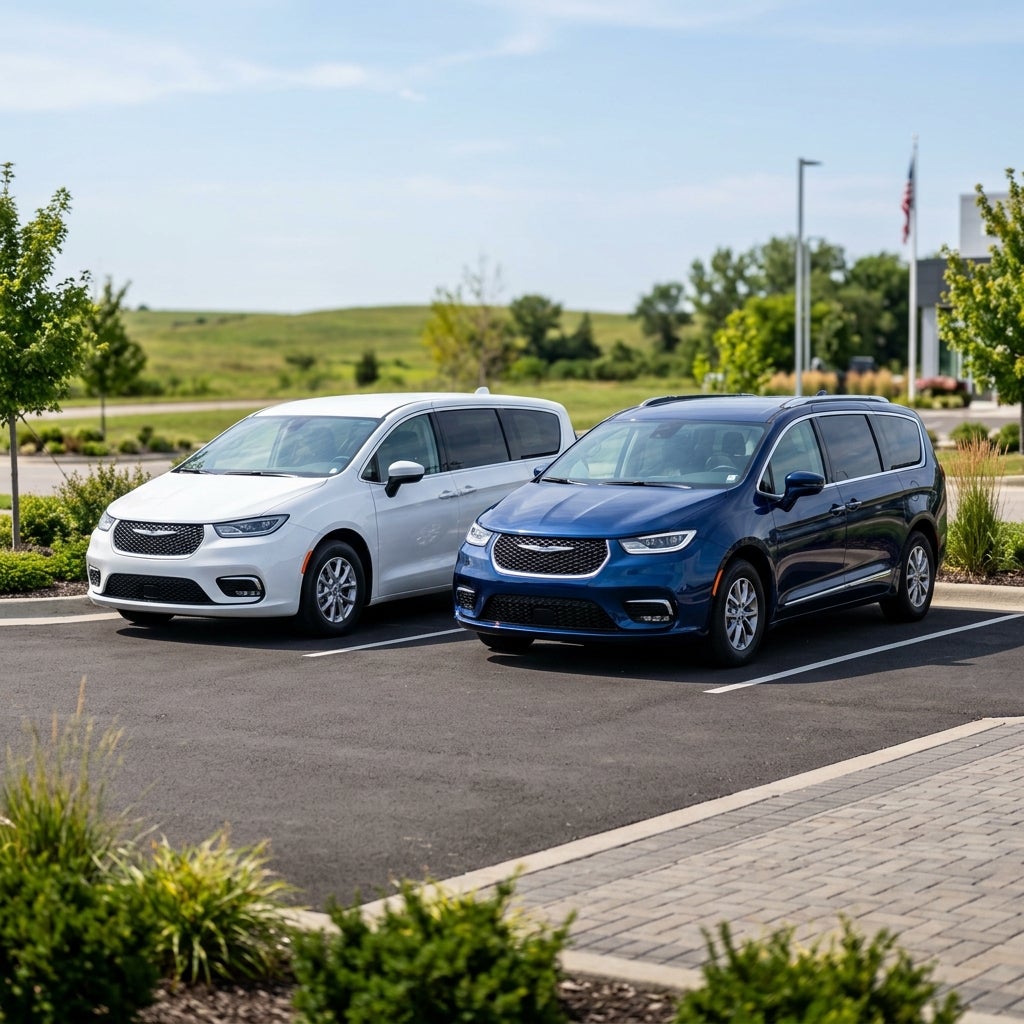
White Chrysler Pacifica parked next to a dark blue Chrysler Pacifica in a paved parking lot on a sunny day. (Representative image for illustration purposes only. Actual vehicle may vary based on trim and configuration.)

How Much Cheaper Is the Chrysler Voyager Than the Pacifica?

How Does the Chrysler Voyager Compare to the Pacifica? When evaluating family haulers for everyday life in Junction City, Fort Riley, and Manhattan, pricing is almost always top-of-mind. If you are comparing Chrysler's legendary minivan lineup, the single biggest question buyers ask is straightforward: How much cheaper is the Chrysler Voyager than the Chrysler Pacifica? The direct answer: The Chrysler Voyager starts approximately $8,000 to $10,000 lower in base MSRP than the entry-level Chrysler Pacifica. While the Chrysler Pacifica Select starts in the low-to-mid $40,000 range, the fleet-and-value-focused Chrysler Voyager LX carries a starting MSRP significantly lower, hovering around the $35,000 mark. That $8,000 to $10,000 upfront gap gives budget-conscious Kansas families a fully capable, 7-passenger minivan powered by the exact same 3.6-liter Pentastar V6 engine found in top-tier Pacificas, without forcing them into a higher financing bracket. For military families stationed at Fort Riley or local commuters navigating the Flint Hills, this price difference represents substantial real-world savings. You can explore our latest family vehicles right now on our New Vehicle Listings page to see live pricing and available incentives. In this comprehensive article, we break down every dollar difference, feature trade-off, financing offer, and long-term cost factor between these two Chrysler minivans so you can decide which one delivers the absolute best value for your household. Comparing Starting MSRPs: Chrysler Voyager vs Chrysler Pacifica Trim Breakdown To understand where the savings come from, it helps to examine how Chrysler structures its minivan line. The Chrysler Voyager is essentially engineered as the ultimate essential minivan—focusing strictly on what modern families need most: roominess, safety, reliable power, and baseline connectivity. In contrast, the Chrysler Pacifica spans multiple trims, ranging from the well-appointed Select to luxury-laden models like the Limited and Pinnacle. Because the Pacifica serves as Chrysler's flagship minivan, its standard equipment list includes features like leatherette or premium Nappa leather seats, power sliding doors, and available All-Wheel Drive (AWD). The Voyager keeps things simplified in a single, highly streamlined trim level (LX), cutting out non-essential luxury features to keep the price floor as low as possible. Model / Trim Est. Starting MSRP Price Gap vs Voyager Key Highlights Chrysler Voyager LX ~$35,345 Baseline ($0) 3.6L V6, 7-passenger, Uconnect 5, 3rd-row Stow 'n Go Chrysler Pacifica Select ~$42,450 +$7,105 higher Synthetic Leather, Power Sliding Doors, Heated Seats Chrysler Pacifica Limited ~$49,900 +$14,555 higher Nappa Leather, Hands-Free Doors, Panoramic Sunroof Chrysler Pacifica Pinnacle ~$54,200 +$18,855 higher Quilted Leather, FamCAM, Theater System, AWD Standard As demonstrated in the comparison table, choosing the Chrysler Voyager LX over even a baseline Pacifica Select leaves over $7,000 to $8,000 in your pocket from day one. When compared to luxury-focused models like the Pacifica Limited or Pinnacle, the price gap swells to $14,000 or even $18,000+. For families in Junction City who prioritize low monthly vehicle payments over prestige badges and ambient footwell lighting, the Voyager presents an unbeatable value equation. It gives you the full minivan footprint, safety structure, and engine performance for thousands less than almost any other 7-passenger vehicle on the market. What Features Do You Give Up to Save Money on a New Voyager? Saving $8,000 to $10,000 naturally begs the question: What features are omitted on the Chrysler Voyager? Understanding these differences helps ensure you make the right trade-off for your family's needs. Key Features Exclusive or Standard on Higher Pacifica Trims: Leather Upholstery: The Voyager features durable cloth seating designed for easy cleaning, while Pacifica models upgrade to leatherette or premium Nappa leather. Hands-Free Power Sliding Doors & Liftgate: The Voyager includes power sliding side doors and a power liftgate, but lacks the foot-activated motion sensors found on Pacifica. 360-Degree Surround-View Camera & FamCAM: Pacifica offers an overhead camera system and an interior camera to watch rear passengers. Voyager includes a standard ParkView rear backup camera. Rear-Seat Entertainment System: Pacifica offers dual rear touchscreens with Amazon Fire TV built-in; Voyager relies on traditional tablet mounts and rear USB charging ports. All-Wheel Drive (AWD): Voyager is exclusively Front-Wheel Drive (FWD), whereas Pacifica offers fully automatic AWD across its lineup. What the Voyager STILL Includes Standard: Despite its lower price tag, the Voyager is far from spartan. You still get Chrysler's modern Uconnect 5 infotainment system with a crisp 10.1-inch touchscreen, wireless Apple CarPlay, wireless Android Auto, active noise cancellation, dual-zone climate control, power driver's seat, third-row Stow 'n Go seating, full curtain airbags, and essential active driver assistance tech like Blind Spot Monitoring and Rear Cross Path Detection. For many Flint Hills families, these standard features represent 90% of what they actually use daily, making the $8,000+ savings a very smart compromise. Explore New Chrysler Family Minivan Inventory at Valor CDJR At Valor CDJR, we maintain a robust selection of both new Chrysler Voyager and Chrysler Pacifica minivans. Whether you want maximum budget savings or ultimate luxury travel, our sales specialists can compare exact window stickers side-by-side. You can browse our current New Vehicle Listings or explore high-quality pre-owned minivans on our Used Vehicle Listings page today. Browse New Chrysler Inventory Total Cost of Ownership: Insurance, Maintenance, and Resale Value in Riley County 1. Insurance Premiums & Taxes Because vehicle insurance premiums and local personal property taxes in Geary County and Riley County are calculated directly from vehicle valuation, starting with a $35,000 Voyager rather than a $45,000 Pacifica reduces annual auto insurance and property tax costs year after year. 2. Service & Maintenance Both minivans share identical mechanical architectures (3.6L V6 and 9-speed automatic transmission). Maintenance costs are virtually identical. You can stop by our quick-service Express Lane for routine oil changes or use our online Service Scheduler to keep maintenance costs minimal. 3. Depreciation & Resale Because you take a significantly smaller initial depreciation hit on a $35,000 vehicle compared to a $50,000 vehicle, the Chrysler Voyager holds a strong percentage of its value when re-sold in college towns like Manhattan or near military bases like Fort Riley where practical 7-passenger transport is always in high demand. End-of-Model-Year Pricing — Chrysler at Valor CDJR How much can year-end clearance pricing reduce the total cost of a Chrysler minivan? During model-year changeovers in late summer and early autumn, manufacturers and dealerships roll out aggressive factory allowances, dealer cash allowances, and trade-in bonus offers. At Valor CDJR in Junction City, current pricing on incoming and remaining inventory may vary depending on the model and trim level. When paired with trade equity—which you can calculate instantly with our Trade In Evaluation tool—your net outlay on a Chrysler Voyager can drop to unbelievable levels. Combining year-end factory dealer cash with existing Voyager pricing means local buyers can frequently drive home a brand-new, full-sized family minivan for lower monthly payments than many compact crossover SUVs. Does Chrysler Offer Special Financing Interest Rates During End-of-Year Sales? Yes! During seasonal promotional events, Chrysler Capital frequently introduces current promotional financing offers on select new minivans. Taking advantage of special promotional interest rates drastically reduces overall finance charges over the life of your loan. On a $35,000 Voyager financed over 60 months, securing a low interest rate can save thousands compared to standard bank auto financing rates. Our experienced finance team at Valor CDJR works directly with Chrysler Capital as well as local Kansas credit unions to secure the best possible finance structure for your family budget. You can secure financing pre-approval online prior to visiting our dealership by filling out our confidential form to Get Pre-Approved in just a few minutes. Calculate Your Monthly Chrysler Payment or Value Your Trade Online We believe in total pricing transparency. Before setting foot on our lot at 1825 Goldenbelt Blvd in Junction City, you can map out your entire deal from your smartphone or computer. By combining your vehicle trade equity with current Chrysler incentive programs, you can review estimated payment scenarios and contact our team for current details. Value Your Trade-In Get Pre-Approved Flint Hills Driving Dynamics: Engine Performance and All-Wheel Drive Options Shared 3.6L Pentastar V6 Power Choosing the cheaper Voyager does NOT mean sacrificing horsepower. Both the Voyager and Pacifica are powered by Chrysler's proven 3.6-liter Pentastar V6 engine mated to a smooth 9-speed automatic transmission, delivering 287 horsepower and 262 lb-ft of torque for effortless highway merging on I-70. FWD vs AWD Capabilities The Voyager features Front-Wheel Drive (FWD) with Electronic Stability Control, which handles standard Kansas weather with ease. However, if you frequently travel rural gravel roads or require maximum winter safety during Kansas snowstorms, the Pacifica offers an advanced fully automatic All-Wheel Drive (AWD) system. Highway MPG Efficiency Because the FWD Voyager LX is lighter than AWD-equipped Pacifica trims, it yields excellent highway fuel economy ratings of 28 MPG. This long cruising range translates to fewer gas station stops on weekend family trips across eastern Kansas. Cabin Space and Passenger Comfort: Does the Cheaper Voyager Feel Smaller? A common misconception among minivan shoppers is that the lower-priced Chrysler Voyager must have a cramped interior compared to the Pacifica. In reality, exterior body dimensions and interior passenger volume are identical across both minivans. Both vehicles sit on the same 121.6-inch wheelbase and offer a massive 165 cubic feet of total passenger volume. You get exact matching head room, leg room, and shoulder room across all three seating rows. Furthermore, the Voyager LX includes Chrysler's patented third-row Stow 'n Go seating, allowing you to fold the third-row seat flat into the floor in seconds to yield 87.5 cubic feet of cargo area behind the second row, or up to 140.5 cubic feet behind the front row. For military personnel stationed at Fort Riley who need to haul bulky gear, sports equipment, or luggage during relocation moves, the Voyager delivers 100% of the utility found in top-tier Pacificas. The only difference inside is second-row configuration: Voyager standard features include second-row quad captain's chairs with in-floor storage bins, while Pacifica models offer second-row Stow 'n Go seats on select trims. Can Buyers Schedule a Test Drive at Valor CDJR Online? Yes, absolutely. Can buyers schedule a test drive at Valor CDJR online? Our simple online appointment system lets you reserve a dedicated appointment in under a minute. We recommend scheduling back-to-back test drives of both the Chrysler Voyager and Chrysler Pacifica. Testing both models back-to-back on Junction City roads allows you to feel the seating materials, test the Uconnect screen, experience the ride comfort, and determine whether the Pacifica's premium features justify the $8,000+ price difference for your everyday routine. To set up your test drive or get custom directions to our dealership, simply Get Directions to Valor CDJR or Call us at (785) 238-5114 to speak directly with our friendly sales team. Decision Matrix: Which Chrysler Minivan Fits Your Family Budget Best? Choose Chrysler Voyager If: • You want to minimize your upfront loan balance by $8,000–$10,000. • You want standard V6 power and full 7-passenger cargo space. • You prefer easy-to-clean cloth seating for kids or pets. • You want modern essentials like Apple CarPlay & Blind Spot Monitoring without extra fluff. Choose Chrysler Pacifica If: • You need All-Wheel Drive (AWD) for severe Kansas winter weather. • You want luxury amenities like leather, dual rear screens, and panoramic sunroof. • You prioritize hands-free doors, 360 camera, and interior FamCAM. • You want available Plug-in Hybrid (PHEV) powertrain options. How Valor CDJR Helps: • Transparent pricing and live trade valuation online. • Access to competitive factory rebates & low-APR financing. • No-pressure guidance from local sales specialists. • Full support from our certified Mopar service center. Explore Chrysler Inventory Now Visit Valor CDJR Today to Test Drive the Chrysler Voyager and Pacifica Finding the perfect family minivan boils down to matching your household's budget with the features you rely on every day. If you are comparing features and pricing, the Chrysler Voyager LX delivers standard V6 performance, 7-passenger seating, and modern technology in a well-equipped package. Ready to see both models up close? Stop by our showroom at 1825 Goldenbelt Blvd in Junction City, KS 66441. In addition to minivan sales, our dealership provides genuine factory accessories via our Parts Department and specialized fleet solutions through our Commercial Vehicle Inventory. Get Directions to Valor CDJR or Call us at (785) 238-5114 today to schedule your back-to-back test drives! Schedule Test Drive Get Pre-Approved Now

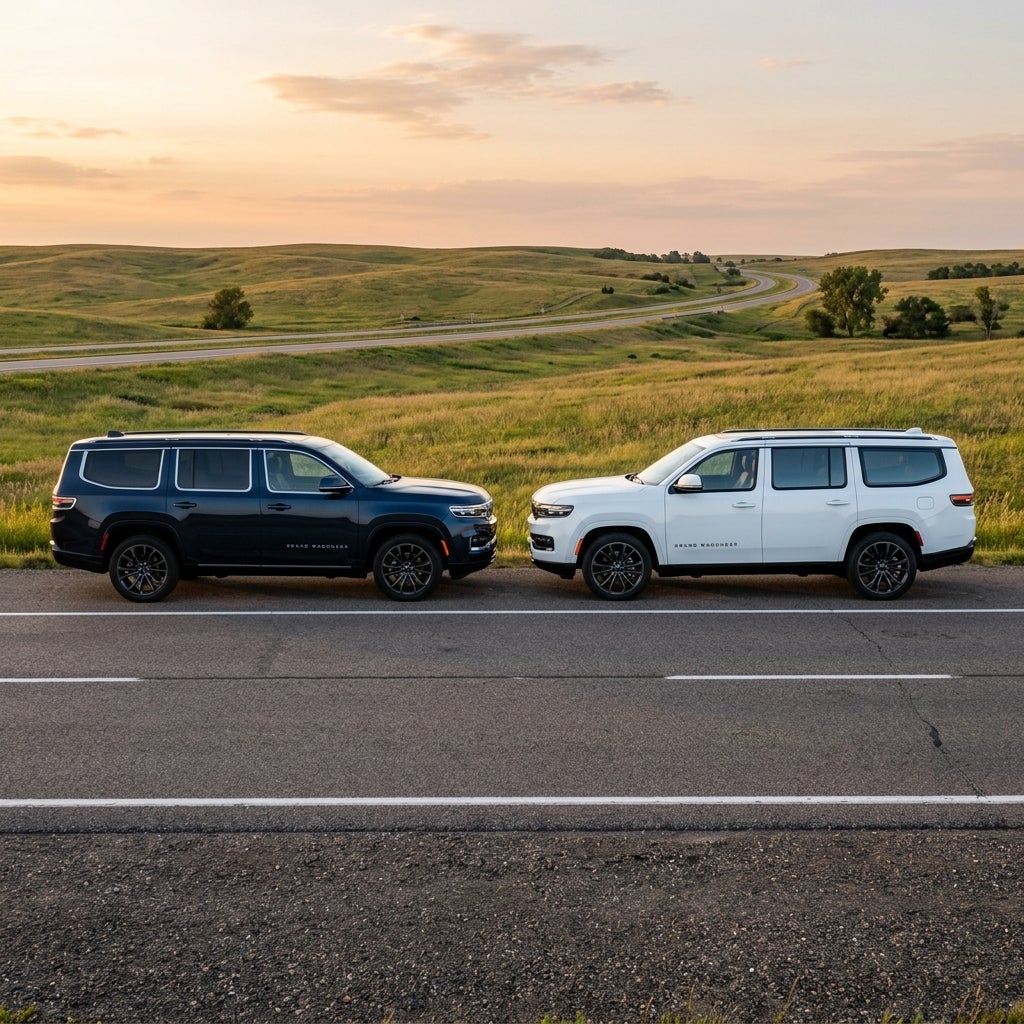
Dark blue and white Jeep Grand Wagoneer SUVs parked bumper to bumper along a rural road at sunset. (Representative image for illustration purposes only. Actual vehicle may vary based on trim and configuration.)

What Is the Primary Difference Between the 2026 Grand Wagoneer and Grand Wagoneer L?

What Is the Primary Difference Between the 2026 Grand Wagoneer and Grand Wagoneer L? When evaluating luxury full-size SUVs, the distinction between standard and extended wheelbases is critical for drivers who prioritize both passenger accommodations and cargo versatility. The primary difference between the 2026 Grand Wagoneer and the 2026 Grand Wagoneer L lies entirely in physical proportions: the Grand Wagoneer L extends overall vehicle length by exactly 12 inches (226.7 inches compared to 214.7 inches) and stretches the wheelbase by 7 inches (130.0 inches compared to 123.0 inches). Crucially, this extra length is allocated entirely behind the rear doors and into the rear overhang, leaving interior passenger legroom virtually identical across all three rows while dramatically expanding cargo capacity behind the third row from 27 cubic feet to a massive 44 cubic feet. For families, outdoor enthusiasts, and executive transporters in Geary County and across North Central Kansas, this distinction alters how the vehicle functions in daily practice. In the standard Grand Wagoneer, eight passengers travel in supreme comfort, but carrying luggage for all eight occupants often requires careful packing or roof-rack cargo boxes. In contrast, the 2026 Grand Wagoneer L effortlessly swallows full-sized luggage, sports equipment, camping gear, or agricultural supplies behind a fully upright third row. Because both models utilize the identical high-output 3.0-liter Hurricane Twin-Turbo engine and standard Quadra-Drive II 4x4 drivetrain, choosing between them comes down to garage footprint, turning maneuverability, and your exact cargo space requirements. You can explore both variations live in our New Vehicle Listings at Valor CDJR. Wheelbase and Exterior Dimensions Breakdown: Standard vs. Long-Wheelbase Understanding how 12 additional inches of exterior body length affect everyday driving dynamics is essential before deciding which vehicle belongs in your driveway. The standard 2026 Grand Wagoneer measures 214.7 inches in overall length with a 123.0-inch wheelbase, translating to a turning radius of approximately 19.0 feet. This relative compactness makes navigating tight suburban parking structures, downtown Junction City streets, or parking spots near Kansas State University in Manhattan notably straightforward for a full-size SUV. By comparison, the 2026 Grand Wagoneer L extends overall length to 226.7 inches on a 130.0-inch wheelbase. This increased span increases the turning circle to approximately 20.1 feet and adds roughly 200 pounds of curb weight. On open Kansas highways like I-70 or US-77, the extended wheelbase provides remarkable tracking stability, effectively ironing out crosswinds and road expansion joints. However, home parking requirements must be carefully measured: a standard residential garage measuring 20 feet deep (240 inches) will accommodate the extended model, but leaves minimal clearance for walking around the liftgate when closed. Specification Grand Wagoneer Grand Wagoneer L Overall Length 214.7 inches 226.7 inches Wheelbase 123.0 inches 130.0 inches Overall Width (w/ mirrors) 94.0 inches 94.0 inches Overall Height 75.6 inches 75.6 inches Curb Weight (Approx.) 6,400 lbs 6,600 lbs Turning Diameter 38.0 ft 40.2 ft Min. Garage Depth Recommended 20.0 feet 21.5 feet Cargo Space and Third-Row Passenger Comfort in the Grand Wagoneer L Many three-row luxury SUVs sacrifice comfort in the third row to preserve cargo room, or vice versa. The genius of the 2026 Grand Wagoneer lineup is that passenger space is standard-setting in both variants. Third-row legroom measures an adult-friendly 36.6 inches in both the standard and long-wheelbase models, accompanied by 39.0 inches of headroom and generous shoulder space. Passengers in the back row enjoy standard power recline features, dedicated USB-C charging ports, cup holders, and HVAC vents integrated into the luxury leather trim. Where the Grand Wagoneer L creates a distinct competitive advantage is in rear cargo capacity. Behind the third-row seatback, trunk space leaps from 27 cubic feet in the standard model to an incredible 44 cubic feet in the L variant—a massive 61% gain. Fold the third row down, and cargo volume expands to 89 cubic feet (compared to 71 cu ft). With both second and third rows folded completely flat, maximum cargo capacity reaches 131 cubic feet in the L versus 117 cubic feet in the standard wheelbase. Cargo Configuration Standard Model Grand Wagoneer L Cargo Behind 3rd Row 27.4 cu ft 44.2 cu ft (+16.8 cu ft) Cargo Behind 2nd Row 70.9 cu ft 88.8 cu ft (+17.9 cu ft) Max Cargo (Behind 1st Row) 116.7 cu ft 130.9 cu ft (+14.2 cu ft) 3rd-Row Legroom 36.6 inches 36.6 inches (Identical) 2nd-Row Legroom 42.7 inches 42.7 inches (Identical) 1st-Row Legroom 40.9 inches 40.9 inches (Identical) Practical access is identical across both configurations thanks to the standard power tip/slide second-row captain's chairs or bench seating. A single touch moves the second-row seat forward, providing a wide entryway into the third row without forcing passengers to awkwardly crawl through. What Engine Options Are Available in the 2026 Jeep Grand Wagoneer? High-Output Hurricane Twin-Turbo Every 2026 Grand Wagoneer and Grand Wagoneer L comes standard with the high-output 3.0-liter Hurricane Twin-Turbo inline-six engine. Delivering an extraordinary 510 horsepower and 500 lb-ft of torque, this powertrain surpasses legacy naturally aspirated V8 engines in horsepower, low-end torque delivery, and overall thermal efficiency. Paired with a precision TorqueFlite 8-speed automatic transmission, performance is smooth and responsive whether merging onto I-70 or ascending steep grades in the Flint Hills. Quadra-Drive II 4x4 & Towing To translate 500 lb-ft of torque into effortless capability, both wheelbases feature standard Quadra-Drive II full-time 4WD with an Electronic Rear Limited-Slip Differential (eLSD) and a 2-speed transfer case with low range. When properly equipped with the Heavy-Duty Trailer Tow Package, the standard Grand Wagoneer delivers a maximum towing rating of up to 9,800 pounds, while the extended Grand Wagoneer L carries a maximum rating of 9,450 pounds due to its increased curb weight. Integrated Trailer Brake Control and Zoom Mode rear cameras make hitching quick and effortless. Selec-Terrain & Air Suspension Both vehicles come fitted with standard Quadra-Lift Air Suspension offering up to 3.6 inches of air spring lift and 10 inches of total ground clearance. Drivers can toggle through five distinct modes via the Selec-Terrain system: Auto, Sport, Rock, Snow, and Sand/Mud. Experience this power and capability firsthand by contacting our sales specialists at Valor CDJR. Browse New Grand Wagoneer Inventory What Trim Levels Are Available on the 2026 Jeep Grand Wagoneer? Series I & Series II Series I: Sets the baseline for flagship luxury with Nappa leather-trimmed seating, 20-way power front seats with massage functions, tri-pane panoramic sunroof, McIntosh MX950 19-speaker sound system, and digital rearview mirror. Series II: Upgrades to ultra-premium Palermo leather trim, 22-inch polished aluminum wheels, Digital Rearview Mirror 2.0, Drowsy Driver Detection, and traffic sign recognition. Obsidian Trim Package Obsidian: Introduces a bold, dark-tinted aesthetic featuring Piano Black exterior accents, 22-inch Black Noise wheels, dark onyx interior badging, black leather upholstery with contrast stitching, front passenger interactive display screen, and the flagship McIntosh 23-speaker Reference Audio system generating 1,375 watts. Series III & Tech Packages Series III: Represents the pinnacle of automotive craftsmanship, adding quilted Palermo leather seats, Night Vision Camera with pedestrian/animal detection, Active Driving Assist hands-free highway driving system, and dual 10.1-inch rear seat entertainment displays with Amazon Fire TV built-in. What Is the Price Increase to Step Up from Standard Wheelbase to the Grand Wagoneer L? For buyers analyzing value, the cost differential between the standard 2026 Grand Wagoneer and the extended Grand Wagoneer L is exceptionally straightforward. Across all matching trim levels (Series I, Series II, Obsidian, and Series III), the MSRP difference to step up to the Grand Wagoneer L may vary by trim and options. Given that this step-up delivers 16.8 additional cubic feet of primary rear trunk volume and a 4-gallon larger fuel tank, many buyers view the long-wheelbase upgrade as one of the most cost-effective feature selections in the entire luxury SUV segment. Furthermore, standard equipment parity across both wheelbases means you are not forced to compromise on tech, luxury, or safety features when choosing the body style that fits your garage. When evaluating your purchase budget, taking advantage of our online Trade In Evaluation tool and securing pre-approval through our finance center can help establish precise monthly payments. Check your eligibility in advance with our online Get Pre-Approved form. Trim Baseline Standard Wheelbase Grand Wagoneer L Increment Series I Base Luxury MSRP +$3,000 MSRP (Approx.) Series II Mid-Tier Luxury MSRP +$3,000 MSRP (Approx.) Obsidian Blacked-Out Luxury MSRP +$3,200 MSRP (Approx.) Series III Pinnacle Luxury MSRP +$3,500 MSRP (Approx.) Fuel Tank Size 26.5 Gallons 30.5 Gallons (+4.0 gal) Trunk Space Value 27.4 cu ft 44.2 cu ft (+61% space) How Does the 2026 Jeep Grand Wagoneer Compare to the Cadillac Escalade? In the upper echelon of American full-size luxury SUVs, the primary benchmark competitor to the 2026 Grand Wagoneer and Grand Wagoneer L is the Cadillac Escalade and Escalade ESV. A head-to-head analysis reveals clear areas where the Grand Wagoneer platform offers notable advantages, particularly regarding performance output, standard drivetrain equipment, and maximum towing capacity. First, the standard 3.0L Hurricane Twin-Turbo HO engine in the Grand Wagoneer generates 510 horsepower and 500 lb-ft of torque, handily outperforming the Cadillac Escalade's standard 6.2L naturally aspirated V8 (420 hp / 460 lb-ft). Second, while four-wheel drive is an expensive add-on option on lower Escalade trims, Jeep includes standard Quadra-Drive II 4x4 across every Grand Wagoneer model. Finally, the Grand Wagoneer's maximum tow rating of 9,800 lbs easily surpasses the Escalade's 8,000-lb capacity, making it the preferred choice for pulling horse trailers, heavy boats, or travel trailers across Kansas. Feature / Metric Grand Wagoneer / L Cadillac Escalade / ESV Standard Engine 3.0L Hurricane Twin-Turbo I6 6.2L V8 Gasoline Horsepower 510 hp 420 hp Torque 500 lb-ft 460 lb-ft Standard Drivetrain Quadra-Drive II 4x4 Rear-Wheel Drive (4WD extra) Max Towing Capacity Up to 9,800 lbs Up to 8,000 lbs Audio System Flagship McIntosh 23-Speaker AKG Studio 36-Speaker Passenger Screen 10.25-inch Available Not Available 3rd-Row Legroom 36.6 inches 34.9 in / 36.6 in (ESV) What Are the Common Maintenance Requirements and Long-Term Reliability Expectations? Maintaining top-tier luxury performance and long-term reliability in your 2026 Grand Wagoneer or Grand Wagoneer L requires adherence to factory-recommended service intervals. The High-Output Hurricane Twin-Turbo engine is an advanced piece of engineering built with a plasma-transfer wire-arc (PTWA) cylinder bore coating and twin low-inertia turbochargers. To keep this powerplant operating at peak performance, routine maintenance scheduled every 7,500 to 10,000 miles is required using full synthetic 0W-20 engine oil and OEM filter replacements. Key long-term service considerations for the Grand Wagoneer platform include: • Quadra-Lift Air Suspension: Inspection of air lines, compressor fittings, and ride-height sensors during regular tire rotations to ensure leak-free operation in harsh winter conditions. • 4x4 Fluid Services: Front differential, rear eLSD, and transfer case fluid flushes recommended every 50,000 to 60,000 miles, especially if towing heavy trailers regularly. • Brake System Care: Given the vehicle's curb weight and high towing limits, periodic inspection of brake pad wear and rotor surfaces ensures maximum stopping power. • Wagoneer Client Services: Every 2026 Grand Wagoneer is supported by available factory-backed service coverage; contact us for current program details. For quick maintenance, oil changes, or tire inspections in Junction City, visit our Express Lane service or order genuine Mopar components directly through our Parts Department. Convenient online booking is always available via our Service Scheduler. Schedule Service Appointment Fuel Economy, Tank Capacity, and Highway Driving Range EPA Fuel Ratings The 2026 Grand Wagoneer standard wheelbase earns EPA fuel economy ratings of 14 mpg city, 20 mpg highway, and 17 mpg combined. The Grand Wagoneer L posts virtually identical EPA estimates of 14 mpg city, 19 mpg highway, and 16 mpg combined, despite its 12-inch additional body length. Expanded Tank Capacity To complement its extended body, Jeep engineers equipped the Grand Wagoneer L with a 30.5-gallon fuel tank—a 4.0-gallon increase over the standard model's 26.5-gallon tank. Premium unleaded fuel (91+ octane) is recommended to achieve peak 510-hp performance output. Cruising Range Efficiency Thanks to the 30.5-gallon fuel supply, the 2026 Grand Wagoneer L delivers a highway cruising range exceeding 575 miles on a single fill-up. This extended range makes long-distance travel across Kansas, Colorado, or Missouri effortless without frequent fuel stops. Driving in the Flint Hills: Handling Riley County Roads and Manhattan Commutes Living and driving around Junction City, Fort Riley, and Manhattan presents a unique combination of highway speed zones, rolling prairie terrain, and unpredictable seasonal weather. During summer months in the Flint Hills, high heat and crosswinds on I-70 demand structural rigidity and powerful air conditioning. The Grand Wagoneer excels in both areas, offering four-zone automatic climate control with personalized rear controls and an acoustically laminated windshield that isolates the cabin from tire and wind noise. When navigating rural properties or unpaved agricultural roads across Riley and Geary Counties, the standard Quadra-Lift air suspension elevates ground clearance to a maximum of 10.0 inches. This allows drivers to traverse muddy lanes, deep gravel, or snowdrifts with absolute composure. On daily commutes between Junction City and Manhattan via K-18, the adaptive damping suspension continuously adjusts shocks 100 times per second, absorbing road imperfections and delivering a whisper-quiet ride. Where Can I Buy a 2026 Jeep Grand Wagoneer Near Me? If you are searching for an authorized Grand Wagoneer dealership in North Central Kansas, Valor CDJR is your premier destination. Conveniently located at 1825 Goldenbelt Blvd in Junction City, KS 66441, our showroom serves customers from Manhattan, Salina, Fort Riley, Topeka, and surrounding communities. We offer dedicated Wagoneer Client Specialists, direct factory ordering, current lease and purchase financing options, and personalized VIP delivery experiences. Whether you are interested in a new standard Grand Wagoneer, an extended Grand Wagoneer L, or exploring our certified pre-owned selections in our Used Vehicle Listings, our team provides transparent, pressure-free guidance tailored to your lifestyle. We also assist business owners with heavy-vehicle tax advantages through our Commercial Vehicle Inventory specialists. Ready to get started? Get Directions to Valor CDJR or Call us at (785) 238-5114 today. Experience the 2026 Grand Wagoneer and Grand Wagoneer L at Valor CDJR The best way to determine whether the standard 2026 Grand Wagoneer or the extended Grand Wagoneer L best fits your garage and lifestyle is to compare them side-by-side at Valor CDJR. Experience the 510-horsepower Hurricane Twin-Turbo engine, test the McIntosh 23-speaker sound system, and see how the 44 cubic feet of rear cargo space in the L model may fit your family's needs. Browse New Inventory Get Pre-Approved Online Evaluate Your Trade-In

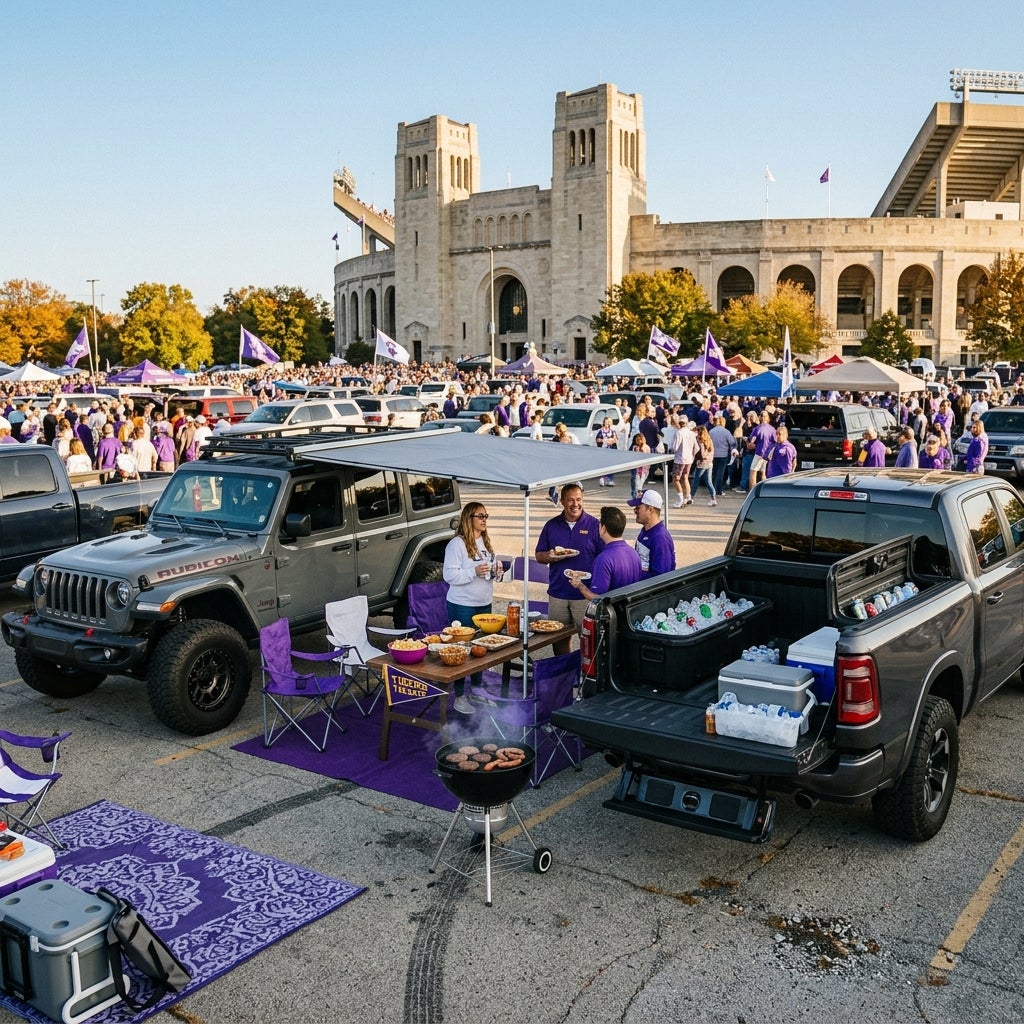
Fans tailgating with a grey Jeep and Ram pickup truck outside a crowded collegiate football stadium. (Representative image for illustration purposes only. Actual vehicle may vary based on trim and configuration.)

Kickoff Ready: How to Prepare Your Jeep or Ram for Tailgating at Kansas State University

Kickoff Ready: How to Prepare Your Jeep or Ram for Tailgating at Kansas State University There is nothing quite like the electrical charge in the air on a crisp autumn morning in Manhattan, Kansas. Long before the opening kickoff at Bill Snyder Family Stadium, the parking lots transform into a vast sea of royal purple, white, and silver. Wildcat fans are legendary for their loyalty, passion, and tailgating prowess. From the opening notes of the 'Wabash Cannonball' echoing across the asphalt to the smell of smoked brisket and grilled burgers drifting on the Great Plains breeze, K-State game days are a sacred tradition. But to truly conquer the pregame festivities, you need more than just a cooler and some folding chairs. You need a tailgate command center that can handle the demands of the day. That is where a properly equipped Jeep or Ram vehicle from Valor CDJR steps in. Operating as your ultimate game-day hub, these capable machines are engineered to elevate your pregame experience to professional levels. Whether you are navigating the tight, high-energy parking lots of Manhattan or making the quick, scenic drive east along K-18 from Junction City, your vehicle dictates your tailgating strategy. A rugged Jeep Wrangler or a heavy-duty Ram 1500 is not just a mode of transportation; it is an active participant in your tailgate, providing the power, storage, and open-air versatility needed to keep your crew entertained and fed. In this comprehensive guide, we will break down everything you need to know about preparing your rig for the ultimate K-State pregame experience. We will share essential parking logistics, compare the tailgating styles of Jeep and Ram vehicles, detail the most useful features for stadium setups, and provide practical guides for setting up awnings and utilizing on-board power. We will also outline a crucial pack-up timeline so you never miss a kickoff, and detail how to get your vehicle mechanically sound at Valor CDJR. Let's dive in and ensure you are fully equipped to represent the Wildcats with pride, power, and unparalleled style. If you are ready to upgrade your ride before the next home game, explore our New Vehicle Listings to find the perfect fit for your lifestyle. When Do Tailgating Parking Lots Open Before a K-State Home Football Game? Securing a prime tailgating spot at Kansas State University requires a mix of strategic planning and perfect timing. For K-State home football games, the parking lots around Bill Snyder Family Stadium typically open exactly five (5) hours prior to kickoff. For morning games, this means a very early wake-up call, but for the true Wildcat faithful, that is just part of the magic. If you hold reserved parking passes for the East or West Stadium lots, arriving right when the gates open is the best way to secure your preferred orientation, allowing you to set up your Jeep or Ram to block the prevailing Kansas wind or maximize shade. For fans utilizing non-reserved public parking lots, such as those at the agriculture arena, nearby parks, or local churches, the five-hour rule generally still applies, though some private lots may open even earlier. Keep in mind that Manhattan traffic can become highly congested along K-18, Fort Riley Boulevard, and Tuttle Creek Boulevard as game time approaches. Getting on the road early from Junction City or Riley County ensures you bypass the worst of the bottlenecks and get your vehicle parked safely, giving you plenty of time to enjoy the pregame atmosphere with friends and family. Early preparation is the key to a seamless entry. Ensure your digital parking passes are downloaded to your smartphone's wallet before leaving home, as cell service can become spotty near the stadium. Have your physical passes displayed clearly on your dashboard if required. If you are towing a trailer or have an oversized vehicle, verify that your designated lot accommodates your rig's dimensions. By planning your route and timing your arrival perfectly, you lay the foundation for a stress-free day of fun, food, and football. To make sure your vehicle is in peak running condition for those early morning drives and hours of idling or running accessories, we recommend scheduling a quick multi-point inspection. You can easily book an appointment using our online Service Scheduler to have our factory-trained technicians check your battery, fluids, and electrical systems before the season kicks off. When is a Jeep Better Than a Ram for Tailgating at Kansas State University? The choice between tailgating in a Jeep or a Ram ultimately comes down to your personal pregame style, cargo needs, and parking preferences. A Jeep Wrangler or Gladiator shines brightest when it comes to social connection and open-air versatility. With the doors off and the top down, a Jeep is naturally inviting, acting as an open social hub where fellow Wildcats can easily stop by to chat. Its tighter turning radius and compact footprint make it incredibly easy to maneuver into tight, crowded parking spots around Manhattan, where larger trucks might struggle to squeeze in. Furthermore, the legendary Jeep community vibe—reinforced by the iconic 'Jeep Wave'—adds a unique element of camaraderie to the parking lot. On the other hand, a Ram truck is the undisputed king of utility, space, and pure tailgating horsepower. With a Ram 1500 or 2500, you have a massive cargo bed capable of hauling heavy-duty smokers, large flat-screen TVs, multiple pop-up canopies, and enough food to feed an entire offensive line. The high payload and towing capacities mean you can pull a fully customized tailgating trailer with ease. If your tailgating philosophy revolves around gourmet cooking, massive television screens, and hosting a large crowd with extensive gear, the Ram's sheer size and capability make it the superior choice. Whether you prefer the nimble, community-focused adventure of a Jeep or the heavy-duty, high-capacity utility of a Ram, both vehicles deliver unmatched capability on game day. Deciding which one is right for you depends on how you balance your desire for open-air freedom against the need for massive cargo storage and power generation. What Jeep Features Are Most Useful Specifically for Tailgating at Kansas State University? Sky One-Touch Top The available Sky One-Touch Power Top on the Jeep Wrangler is a game-changer for the pregame party. With the simple press of a button, you can retract the entire canvas roof, instantly opening up the cabin to the sunshine and allowing music to flow freely from your soundbar to the surrounding crowd. It turns your vehicle's interior into an integrated part of the outdoor party space, perfect for standing up and cheering as the K-State band marches past. Wash-Out Interior Tailgating can get messy, especially when handling barbecue sauce, soda, and muddy shoes from a rainy day in Riley County. Fortunately, Jeep Wranglers feature a wash-out interior with durable, weather-resistant materials and built-in floor drain plugs. After the game, you can simply pull up the carpets, hose out the floorboards, and let the water drain straight out of the bottom, making post-game cleanup incredibly quick and completely stress-free. Trail Rail System The Jeep Gladiator's available Trail Rail Cargo Management System provides adjustable tie-down loops along the cargo bed walls and cab header. This allows you to securely strap down heavy coolers, generators, propane tanks, and storage bins so they won't shift or spill during your drive along K-18. It ensures your tailgating gear arrives organized and intact, ready to be deployed the moment you park. Explore New Jeep & Ram Inventory What Types of Appliances Can You Run Off a 150-Watt Jeep Power Outlet? Many modern Jeep Wranglers and Gladiators come equipped with a built-in 115-volt, 150-watt power outlet located in the rear cargo area or center console. While 150 watts is not enough power to run heavy-duty heating appliances like electric grills or microwave ovens, it is incredibly useful for running a wide variety of lower-draw electronics that can make your tailgate much more comfortable and entertaining. Understanding your power limits is the key to maximizing this feature without blowing a fuse. For example, you can easily power multiple strands of energy-efficient LED string lights to illuminate your tailgate after dark, or plug in a portable, high-quality Bluetooth speaker to keep the pregame playlist going. It is also perfect for running a small, portable fan on hot late-summer afternoons, charging multiple smartphones, tablets, or camera batteries simultaneously, and even running a low-draw slow cooker on its 'warm' setting (which typically pulls between 50 to 100 watts) to keep your famous game-day chili or cheese dip hot and ready for your guests. Before plugging in any appliance, always check its manufacturer label for the wattage rating (calculated as Volts x Amps). To avoid draining your Jeep's primary battery, it is always best practice to run the engine periodically if you are drawing power for extended periods, or invest in a dual-battery system or high-output alternator from our Parts Department to ensure your rig is fully equipped to handle your electronic demands. How Do I Install a Tailgating Awning on My Jeep’s Roof Rack? A high-quality, vehicle-mounted awning is one of the best investments you can make for your tailgating setup. It provides instant shade from the blazing late-summer Kansas sun and reliable protection from unexpected autumn drizzle in Manhattan. Installing a retractable awning to your Jeep's aftermarket or Mopar roof rack is a straightforward DIY project that can be completed in about an hour with basic hand tools. First, ensure you select a durable, weather-resistant awning designed for overland use, measuring between 4.5 to 6.5 feet in length to perfectly match the roofline of your Wrangler or Gladiator. To begin installation, position the mounting brackets that came with your awning onto your roof rack's crossbars. If your roof rack uses T-slots, slide the mounting bolts into the tracks and align them with the bracket holes. Lightly tighten the nuts, ensuring the brackets are spaced evenly apart to distribute the weight of the awning. Next, lift the awning housing—having a friend help with this step makes it much easier—and align the mounting tracks on the back of the awning with the bolts on the brackets. Once the awning is sitting flush against the brackets, tighten all nuts securely using a socket wrench, but be careful not to over-tighten and strip the threads. Check that the awning is level and does not interfere with the opening of your doors, tailgate, or hardtop panels. Double-check all hardware after driving a few miles to ensure nothing has shifted or vibrated loose. When you arrive at the stadium, simply unzip the protective cover, roll out the awning fabric, extend the integrated aluminum support legs, and secure them with the provided stakes and guy lines. This quick, sturdy setup will keep your crew comfortable and dry all day long, no matter what the Kansas weather decides to throw your way. What Are the Key Tailgating Features of the RamBox Cargo Management System on the Ram 1500? Built-In Cooler The RamBox storage compartments integrated into the sides of the truck bed are completely weatherproof and feature built-in drainage plugs. This means you can dump bags of ice directly into the RamBox, fill it with your favorite pregame drinks, and have a massive, convenient, built-in cooler that doesn't take up any valuable space in your truck bed. When the game is over, simply pull the plug and let the melted ice drain out. Secure Storage Tailgating involves a lot of valuable gear, from expensive portable speakers and cameras to premium cooking tools. The RamBox system integrates seamlessly with your truck's central locking system, allowing you to lock and unlock the compartments with the touch of your key fob. This gives you absolute peace of mind knowing your gear is locked up safely when you head into the stadium to watch the Wildcats play. Integrated Power In addition to lockable, illuminated storage, the RamBox Cargo Management System includes a handy 115-volt power outlet inside the driver-side compartment. This allows you to power accessories, charge tool batteries, or run small entertainment systems directly from the side of your truck, leaving your main bed free of messy extension cords and making your pregame layout cleaner and safer for foot traffic. Shop Genuine Mopar Accessories How the Ram Multifunction Tailgate and Onboard Power Elevate Your Pregame Setup The Ram 1500’s available Multifunction Tailgate is a masterpiece of engineering that completely reimagines how you use your truck bed. Featuring a unique 60/40 split, swing-away door design, it can open horizontally like a set of barn doors in addition to dropping down traditionally. This provides a massive advantage during a crowded tailgate: it allows you to step directly up into the truck bed without having to stretch over an open tailgate, making loading and unloading heavy, awkward gear like coolers and grills significantly easier. Crucially, the swing-away doors can open fully even while a trailer is hitched to your truck. This means if you are towing a custom tailgating rig, you still have completely unobstructed access to your cargo bed. The bed can also be equipped with an integrated center step, allowing you to walk straight up into your mobile living space with ease, transforming your truck bed into the perfect elevated viewing platform for watching the stadium screens or enjoying the surrounding parking lot festivities. Beyond physical access, the Ram's available onboard generator systems elevate your pregame entertainment to a whole new level. Models equipped with the 2kW or 7.2kW onboard power systems provide multiple high-capacity outlets directly in the truck bed. This high-wattage output allows you to run high-draw appliances that would instantly overwhelm standard outlets, such as large flat-screen TVs, electric pellet grills, blenders, powerful heaters, and even high-velocity fans. With this level of power at your disposal, you can run a complete outdoor kitchen and entertainment system without the noise, fumes, and bulk of a separate gas-powered generator. It keeps your tailgating space clean, quiet, and fully charged, ensuring your guests stay entertained, fed, and happy from the moment you park until the stadium lights turn on. If you are curious about what your current vehicle is worth toward a trade-in for a highly capable Ram truck, get a fast, accurate Trade In Evaluation on our website today. How Much Time Do I Need to Safely Pack Up My Tailgate Before Going Into the Game? Winding down a successful tailgate and making the transition into Bill Snyder Family Stadium requires a carefully timed packing schedule. To avoid a rushed, stressful scramble that could lead to forgotten gear or safety hazards, we recommend starting your pack-up process exactly one hour and fifteen minutes (75 minutes) before the scheduled kickoff. This buffer ensures you have plenty of time to safely secure your equipment, pack up perishable food, and make the walk to the stadium gates without missing the team's dramatic entrance onto the field. The first 30 minutes of your pack-up window should focus on safety-critical tasks. Turn off gas cylinders, disconnect propane lines, and allow portable grills or smokers plenty of time to cool down before loading them into your Ram bed or Jeep cargo space. Pack all left-over food securely into heavy-duty coolers to prevent attracting pests or spoiling in the Kansas sun. Gather all trash and recyclables, tie the bags tightly, and dispose of them in the designated stadium dumpsters to keep Manhattan and Riley County looking beautiful. Spend the next 15 minutes folding down canopies, securing chairs, and organizing your cargo area. Always lock expensive electronics, tools, and personal valuables inside your vehicle’s secure compartments, such as the lockable RamBox or the console and glovebox of your Jeep. The final 30 minutes should be reserved for applying a fresh coat of sunscreen, grabbing your digital tickets, and walking to the gates, ensuring you are in your seats in time to watch the legendary Wildcats take the field. Getting Your Vehicle Game-Day Ready: Essential Maintenance and Accessories in Junction City Battery & Electrical Running portable speakers, charging devices, and keeping food warm can put a massive strain on your vehicle's battery. Before game day, stop by our service center for a comprehensive battery health check. We will test your battery's cold cranking amps and overall capacity, ensuring you won't need a jump-start after the game. For quick, no-appointment-needed service, check out our Express Lane options. Cooling System Driving along K-18 or I-70 to Manhattan in high-energy game-day traffic involves a lot of stop-and-go driving and extended idling. This places extra stress on your engine's cooling system. Our technicians can inspect your radiator, hoses, and coolant levels, preventing frustrating breakdowns and ensuring your engine stays cool even when traffic is backed up for miles outside the stadium gates. Mopar Accessories Elevate your setup with genuine OEM Mopar accessories designed specifically for your Jeep or Ram. From custom-fit cargo organizers, heavy-duty bed liners, and heavy-duty tow hitches to integrated lifestyle accessories like roof racks and premium floor mats, our parts center has everything you need to customize your rig for the ultimate pregame. Explore our Parts Department to find the perfect additions. Schedule Multi-Point Service Inspection The Ultimate K-State Purple and White Tailgating Checklist To ensure you don’t leave anything important behind in Junction City, we have compiled the ultimate K-State game-day checklist. Having these items organized and secured in your Jeep or Ram will guarantee a smooth, fun, and memorable tailgating experience. Refer to the table below to make sure your vehicle is fully packed and ready to roll before you hit the road for Manhattan. Category Recommended Gear Tailgating Purpose Shelter & Seating K-State purple pop-up canopy, heavy-duty folding chairs, blankets Keep your crew comfortable and protected from the weather near Manhattan. Cooking & Food Portable grill/smoker, heavy-duty cooler, tongs, food storage containers Prepare gourmet pregame meals and keep drinks ice-cold in your RamBox. Power & Electronics Bluetooth speaker, device chargers, extension cords Keep the pregame music pumping and ensure phones are charged for tickets. Safety & Utility Jumper cables, basic toolkit, trash bags, paper towels Ensure your vehicle starts after utilizing power and keep Riley County clean. Find Your Ultimate Game-Day Jeep or Ram at Valor CDJR in Junction City Tailgating at Kansas State University is more than just a pregame activity—it is a community tradition built on passion, loyalty, and family. Whether you are driving a versatile Jeep Wrangler or a high-utility Ram 1500, having a vehicle that is fully prepared for the game-day experience elevates the fun and makes hosting look effortless. At Valor CDJR, we are proud to serve the communities of Junction City, Manhattan, and Riley County, providing the rugged, capable vehicles Wildcat fans need to represent their team with pride. Are you ready to upgrade your game-day setup before the next kickoff? Visit our showroom today to browse our complete inventory of new and pre-owned vehicles. Our expert sales staff will help you find the perfect model with all the right tailgating features, and our finance department can walk you through flexible purchasing options. Get Directions to Valor CDJR to find our physical dealership, or Call us at (785) 238-5114 to speak with our friendly team. Let us get you kickoff ready so you can focus on what matters most—cheering the Wildcats to victory! Get Pre-Approved Online Value Your Current Trade

Contact Us

Fill out this form below and we'll contact you shortly
*Required Fields