Blog / Repair & Diagnostics

Blog

All Repair & Diagnostics Buying Guides Maintenance & Service New Vehicle Reviews Technology & Innovation Financing & Insurance Model Comparisons Used Vehicle Guides Safety Features New Vehicle Inventory Valor CDJR Vehicle Ownership Care Seasonal Vehicle Care Towing & Hauling Safety Parts & Accessories Commercial Truck Reviews Trade in Advice Ownership & Service Vehicle Financing & Trade-In Tips Commercial Fleet Management Military & Veteran Benefits Service Commercial Vehicles Family & Lifestyle Vehicles KS Community Automotive Repair Buying Guides & Dealership Services Dealership Sales Strategies Heavy-Duty Truck Features Military Vehicle Buying Guides Junction City Off-Road & Adventure Vehicles Model Research Automotive Recalls Financing & Trade-In Options Fleet & Upfit Buying Guides Military & Community Car Buying Programs Towing & Hauling Warranty & Coverage Hybrid & Electric Vehicles Parts Automotive News Dealership Visit Preparation Performance & Powertrain Vehicle Features & Accessories Vehicle Maintenance & Preparation Vehicle Registration & Legal Advice for Military Personnel Vehicle Safety & Compliance Brake System Care Dealership Inventory Highlights Financing & Insurance for Military Families Inventory & Pricing Insights Jeep Lifestyle & Accessories Pre-Owned Vehicle Sales Tailgating & Outdoor Recreation Vehicle Pricing Strategies Vehicle Sales Experience Vehicle Trade-In Tips Warranty & Protection Plans Car Buying Tips Car Purchase Tips Commercial Vehicle Comparisons Community & Military Support Initiatives Dealer Profiles & Interviews Dealership Offers & Promotions Dealership Service Experience Diesel Engine Technology Genuine Parts & Accessories Local Automotive Events OEM Parts & Warranty Coverage Recall & Warranty Repairs Road Trip & Travel Tips Special Offers & Promotions Tailgating & Outdoor Adventures Towing & Roadside Assistance Vehicle Maintenance & Winter Care Vehicle Repair & Diagnostics Winter Driving Tips 4WD and AWD Systems Agricultural Vehicles & Equipment Certified Pre-Owned Programs Dealership Events Engine & Performance Insights Lease & Lease-End Information Leasing Options Luxury SUVs Out-of-State Purchasing Guides Part & Warranty Services Parts & Repair Reimbursement Seasonal Sales Events Technology & Innovation in Vehicle Service Tire & Traction Guides Vehicle Care & Upkeep Vehicle Incentives & Promotions Vehicle Technology & Features Weekend Dealership Events and Services
What Does Chrysler Factory-Recommended Service Include?

What Does Chrysler Factory-Recommended Service Include?

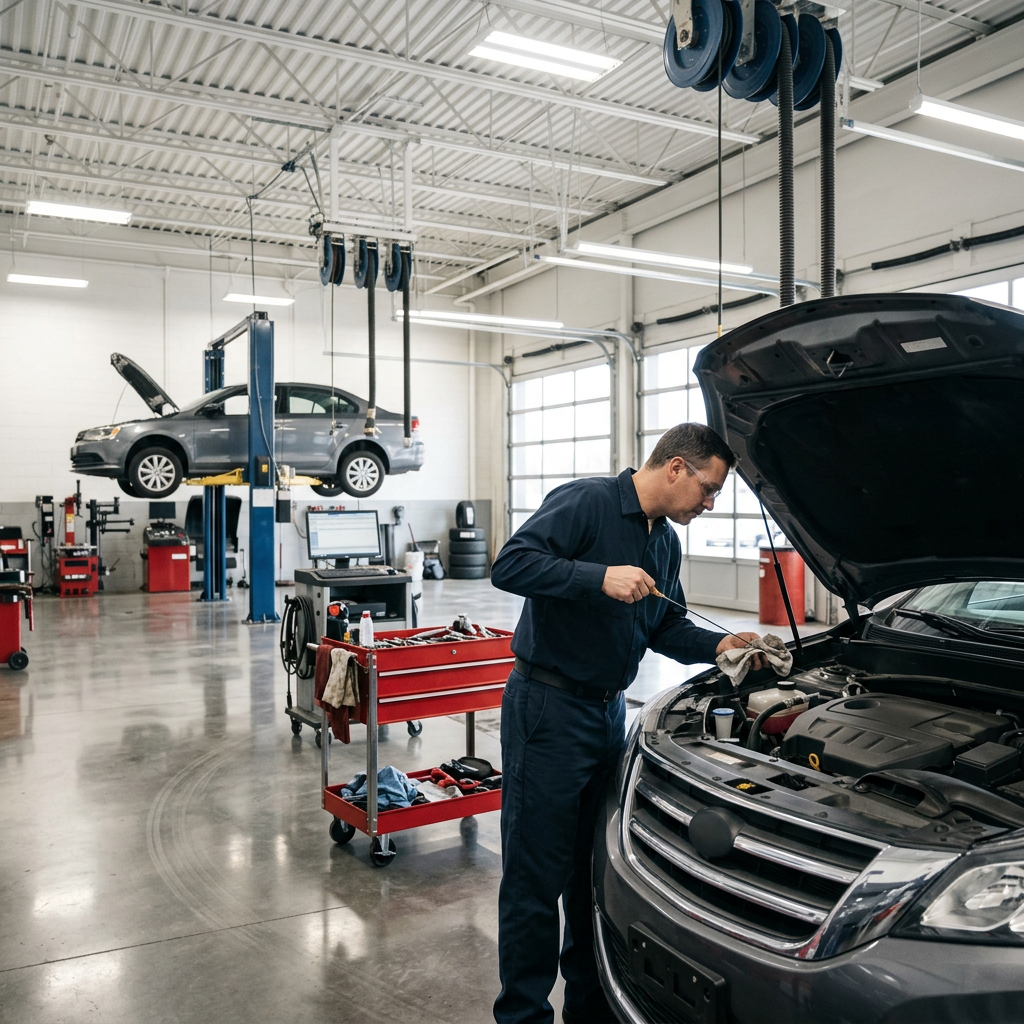
What Does Chrysler Factory-Recommended Service Include? Chrysler factory-recommended service includes scheduled oil and filter changes, tire rotations, brake system inspections, cabin and engine air filter replacements, fluid updates, and multi-point safety checks. Performed at established mileage or time intervals guided by the onboard Oil Change Indicator System, these factory-specified maintenance routines protect mechanical integrity, optimize fuel efficiency, and ensure long-term powertrain reliability. Automotive engineers design vehicle service schedules around the exact mechanical tolerances and operating parameters of each model. Following a structured schedule ensures that wearable components, such as brake friction materials, engine air filters, and synthetic lubricants, are renewed before degradation affects vehicle performance or causes damage to surrounding parts. Routine factory service is divided into minor and major maintenance appointments: Minor maintenance visits occur every 7,500 to 10,000 miles or 12 months, focusing on essential engine oil replacement, oil filter installation, tire rotation to promote even tread wear, and a comprehensive visual inspection of underbody components. Major maintenance appointments take place at larger milestones—typically 30,000, 60,000, and 90,000 miles—adding air intake updates, cabin air filtration service, spark plug replacements, and fluid renewals for braking and cooling systems. Adhering to these service guidelines provided by Mopar keeps your Chrysler operating as intended by its designers. To maintain your vehicle's scheduled service or learn more about specific maintenance guidelines, visit our physical location on Goldenbelt Blvd or speak directly with our service team by giving us a quick call today. Table of Contents Why Is Following Recommended Maintenance Important for Your Chrysler Pacifica? What Services Are Needed at 30,000, 60,000, and 90,000-Mile Intervals? What Synthetic Oil Is Recommended for Chrysler 3.6L Pentastar V6 Engines? What Is Chrysler's Recommended Brake Service Schedule and Inspection Process? Why Are Mopar Genuine Parts and Certified Technicians Essential for Chrysler Repairs? How Does Documented Maintenance Preserve Chrysler Resale Value? Frequently Asked Questions About Chrysler Maintenance Schedule Your Chrysler Recommended Maintenance at Valor CDJR Why Is Following Recommended Maintenance Important for Your Chrysler Pacifica? Following recommended maintenance for a Chrysler Pacifica prevents unexpected mechanical wear, maintains smooth power delivery from the 3.6L Pentastar V6 engine, and safeguards delicate family safety electronics. Regular servicing prevents minor fluid degradation or component friction from evolving into costly repairs. Modern minivans serve as complex mobile environments combining advanced mechanical engines with intricate electrical networks. Routine maintenance preserves the calibrated efficiency of the 9-speed automatic transmission, supports proper cabin climate control function, and ensures onboard driver-assist sensors operate accurately. Skipping scheduled service allows contaminants to accumulate in vital fluids, accelerating wear on engine bearings, valvetrain components, and brake hydraulics. Our service advisors observe that minivan owners often ask how the vehicle's automated indicator system calculates oil life during seasonal family trips before booking routine visits. The system monitors engine operating temperatures, revolutions, and idle duration to alert drivers when service is needed, protecting the engine long before thermal breakdown occurs. Maintaining a consistent service routine also preserves your factory coverage under the 5-year/60,000-mile powertrain warranty, ensuring covered components remain protected against unforeseen mechanical issues. What Services Are Needed at 30,000, 60,000, and 90,000-Mile Intervals? Chrysler 30,000-mile service focuses on engine air filter and cabin air filter replacements alongside full brake system evaluations. The 60,000-mile interval adds spark plug inspections, transmission fluid checks, and suspension component testing, while the 90,000-mile mark demands comprehensive drive belt renewals, full fluid flushes, and cooling system checks. Mileage milestones mark critical points in a vehicle's service lifecycle, where wear items require systematic replacement to maintain factory performance levels: 30,000-Mile Milestone: Technicians replace the engine air filter to maintain proper air-fuel ratios and install a clean cabin air filter to preserve HVAC efficiency. The service includes measuring brake pad thickness, checking rotor surfaces, and inspecting steering linkage. 60,000-Mile Milestone: Service expands to include spark plug condition checks or replacements to prevent engine misfires, testing battery health, inspecting suspension bushings, and checking transmission fluid clarity. 90,000-Mile Milestone: Focus shifts toward major component preservation. Technicians replace auxiliary drive belts, inspect radiator and heater hoses for rubber degradation, flush and refill engine coolant, and renew brake hydraulic fluid. Drivers navigating daily routines through Junction City experience consistent vehicle response and greater long-term mechanical reliability when adhering strictly to these mileage-based service benchmarks. What Synthetic Oil Is Recommended for Chrysler 3.6L Pentastar V6 Engines? Chrysler requires API Certified SAE 0W-20 or SAE 5W-20 full synthetic motor oil that meets Chrysler Material Standard MS-6395 for the 3.6L Pentastar V6 engine. Using the specified oil weight and specification ensures correct oil pressure across variable valve timing actuators and reduces internal engine friction. The 3.6L Pentastar V6 relies on precise hydraulic oil pressure to operate its variable valve timing (VVT) phasers and variable-displacement oil pump. Synthetic lubricants engineered to meet the MS-6395 material standard contain specialized additive packages that resist oxidation, prevent sludge formation, and maintain stable viscosity across wide operating temperature ranges. Using conventional engine oil or an incorrect viscosity can slow hydraulic response within the valvetrain, leading to reduced engine efficiency, increased fuel consumption, or premature component wear. Full synthetic motor oil maintains fluid flow during cold engine starts, protecting upper valvetrain components instantly upon ignition while sustaining thermal stability during extended highway driving. What Is Chrysler's Recommended Brake Service Schedule and Inspection Process? Chrysler recommends inspecting brake pads, rotors, calipers, and fluid lines at every oil change or 10,000-mile interval, with a complete brake fluid flush performed every two to three years. Technicians measure pad thickness, evaluate rotor surface condition, and check hydraulic pressure to maintain stopping performance. Brake maintenance involves a multi-point technical assessment to verify every part of the stopping system functions correctly: Technicians measure remaining friction material on outer and inner brake pads using precision calipers. Rotor surfaces are inspected for heat scoring, grooves, or lateral runout that could cause pedal pulsation. Caliper slide pins and hardware are cleaned and lubricated to ensure even pad pressure distribution. Hydraulic brake lines and flexible rubber hoses are checked for leaks, cracks, or outer sheath wear. Brake fluid is tested for moisture contamination, which lowers fluid boiling points and reduces pedal firmness under heavy braking. Navigating the rolling terrain around Manhattan puts distinct demands on stopping systems, making routine rotor checks critical for consistent braking power. You can arrange a comprehensive brake evaluation using our online appointment scheduling tool. Why Are Mopar Genuine Parts and Certified Technicians Essential for Chrysler Repairs? Genuine Mopar parts are engineered specifically for Chrysler vehicles to mirror original factory dimensions, safety crush performance, and metallurgy, while certified technicians complete rigorous Stellantis factory training. This combination ensures precise fitment, long-term durability, and complete protection under factory warranties. Factory-certified repair components differ significantly from generic aftermarket alternatives in material composition and manufacturing standards: Maintenance Component Genuine Mopar Parts Generic Aftermarket Parts Engineering Standards Designed to exact Stellantis factory specifications Reverse-engineered universal fitment Material Quality Tested for long-term heat resistance and durability Variable material quality and performance Warranty Backing Supported by official factory parts coverage Limited manufacturer or retailer warranties Electrical Integration Fully compatible with vehicle software architecture Potential signal distortion or fault codes Stellantis-certified technicians undergo hundreds of hours of specialized instruction to diagnose mechanical systems and software networks accurately. Using factory diagnostic computers, our service team identifies potential system errors before they result in component failures. Our team maintains authentic components directly through our dedicated Mopar parts department. How Does Documented Maintenance Preserve Chrysler Resale Value? Comprehensive, documented factory service records prove to future buyers and dealership appraisers that a Chrysler vehicle received scheduled fluid changes, OEM replacement parts, and timely inspections. A documented maintenance history commands a higher trade-in value by eliminating buyer uncertainty regarding mechanical condition. When a vehicle enters the secondary market, its recorded service history serves as tangible proof of proper ownership care. A complete history showing regular oil changes, filter updates, and milestone inspections confirms that internal components were protected from fluid starvation and thermal stress. Vehicles with verified Mopar maintenance records routinely trade at premium values compared to similar models lacking documentation. Detailed records eliminate doubts regarding deferred maintenance, helping prospective buyers and trade-in evaluators offer higher valuations with confidence. To review your vehicle's maintenance plan or schedule upcoming service, stop by our service center address or reach out to our service team by giving us a quick phone call. Frequently Asked Questions About Chrysler Maintenance Q: How does the Oil Change Indicator System inform vehicle maintenance timing? Chrysler's Oil Change Indicator System uses engine operating software to track thermal exposure, engine revolutions, idle time, and trip distances. Instead of relying strictly on fixed mileage, the system calculates actual oil breakdown and illuminates a dashboard prompt when service is required, ensuring oil changes match actual driving conditions up to a 10,000-mile or 12-month limit. Q: Can factory warranty repairs be completed at any authorized dealership? Warranty repairs covered under Chrysler's 3-year/36,000-mile basic warranty or 5-year/60,000-mile powertrain warranty can be performed at any authorized Stellantis dealership service center. Performing scheduled maintenance according to factory guidelines protects these warranty protections against claims caused by deferred care. Q: What is the difference between minor and major service visits? Minor service visits occur every 7,500 to 10,000 miles and focus on foundational items like motor oil replacement, oil filter updates, tire rotations, and multi-point visual safety checks. Major service intervals at 30,000, 60,000, and 90,000 miles incorporate comprehensive component updates, including cabin air filters, engine air intake filters, spark plugs, drive belts, and hydraulic flushes. Q: Is full synthetic oil strictly required for every oil change? Chrysler engines designed for specific viscosities, such as the 3.6L Pentastar V6, require full synthetic oils meeting strict material standards like MS-6395. Using conventional oil or non-compliant formulations can compromise variable valve timing performance and lead to premature component wear. Q: How often should engine air filters and cabin filters be replaced? Engine and cabin air filters are typically scheduled for replacement every 30,000 miles under normal driving conditions. However, driving on unpaved roads or in dusty environments may require more frequent updates to preserve engine air intake efficiency and maintain clean cabin airflow. Schedule Your Chrysler Recommended Maintenance at Valor CDJR Keeping up with Chrysler factory-recommended service intervals is the most effective way to protect your vehicle's mechanical integrity, preserve fuel efficiency, and ensure long-term reliability on every drive. From routine oil changes and brake inspections to major 30,000, 60,000, and 90,000-mile milestone services, using authentic Mopar parts and relying on factory-certified technicians preserves your vehicle's performance and trade-in value. Our team at Valor CDJR is dedicated to providing transparent, professional care for your Chrysler. Whether you drive a Pacifica or another Chrysler model, our service center is fully equipped with advanced diagnostic equipment and genuine components to handle all your maintenance needs efficiently. Take the next step in protecting your automotive investment today. Contact our team to speak with a service advisor, order genuine replacement parts, or conveniently reserve your next maintenance appointment using our online service scheduling tool. © 2026 Valor CDJR. All rights reserved. Vehicle specification data © JATO Dynamics Limited.

Managing and Maintaining Your RAM 4500 Chassis Cab: Insights from Our Service Bay

Managing and Maintaining Your RAM 4500 Chassis Cab: Insights from Our Service Bay

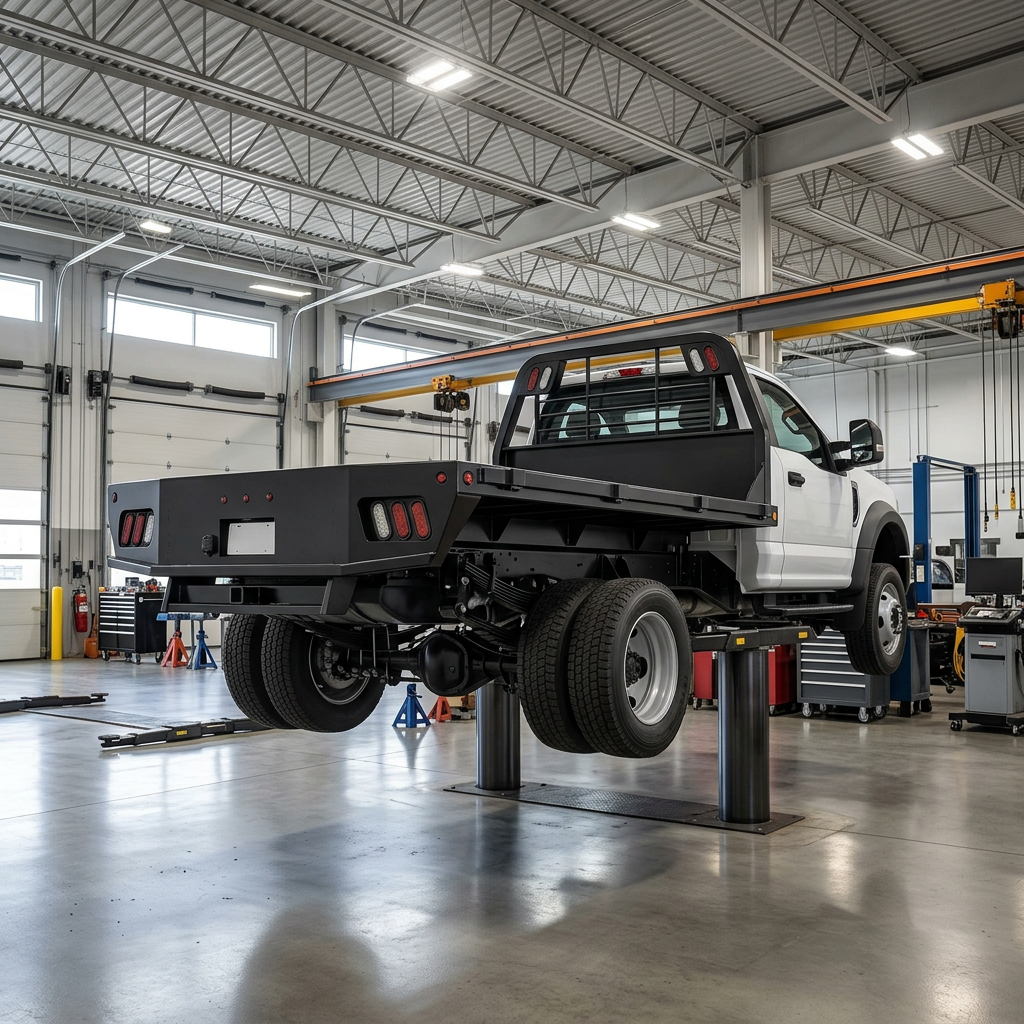
Managing and Maintaining Your RAM 4500 Chassis Cab: Insights from Our Service Bay ## Which Chassis Cab Offers Better Upfitter Integration Between Ram and Ford? The Ram 4500 Chassis Cab delivers superior upfitter integration compared to the Ford F-450 by utilizing flat, standard 34-inch wide 50,000-PSI steel C-channel frame rails with zero top-rail rivets alongside a factory-integrated Vehicle System Interface Module (VSIM) that routes over 70 programmable electrical circuits directly to body builders. When local fleet mechanics and independent contractors evaluate chassis cabs for new service bodies, dump beds, or flatbeds, frame topology and electrical connectivity determine how quickly a truck goes from the delivery lot to the jobsite. Ford chassis frames feature structural humps and top-rivet placement that often force upfitters to fabricate custom adapter brackets or add spacers. In contrast, Ram engineers design the rear chassis with entirely flat top frame rails. This flat mounting plane lets body builders bolt commercial equipment directly to high-tensile steel frame webs, preventing chassis twist and reducing strain on hydraulic lines during heavy unloading. From an electrical standpoint, aftermarket bodies demand clean integration with throttle control, lighting circuits, and power take-off (PTO) engagement. Ram accomplishes this through the factory VSIM system. The module allows service technicians and body installers to map custom switches without splicing into primary wiring harnesses or risking computer fault codes. Additionally, Ram provides dual-side PTO mounting options on the heavy-duty automatic transmission, giving equipment builders flexibility when placing hydraulic pumps around exhaust systems. Fleet operators who need technical guidance on electrical taps or frame mounting clearances can drop by our service bay location at 1825 Goldenbelt Blvd or connect with our heavy-duty technicians by giving us a quick call at (785) 238-5114. Table of Contents What Maintenance Costs and Service Schedules Should Ram 4500 Fleet Owners Expect? How Do Cummins 6.7L Diesel and Ford 6.7L Power Stroke Maintenance Requirements Compare? Why Must Ram 4500 Owners Verify Guide Specs Against Cab-to-Axle Configurations? What Are the Towing Limits and Running Gear Service Protocols for the Ram 4500 Chassis Cab? How Do Commercial Class 4 Care and Operating Considerations Differ From a Ram 3500? What Maintenance Costs and Service Schedules Should Ram 4500 Fleet Owners Expect? Commercial Ram 4500 fleet owners should plan for average routine maintenance costs between $1,200 and $2,000 annually per truck, driven primarily by heavy-duty synthetic oil capacity, dual fuel filter changes every 15,000 miles, transmission fluid drain-and-fill services every 30,000 to 45,000 severe-duty miles, and commercial brake component inspections. Managing a Class 4 workhorse requires shifting away from light-duty pickup habits. Because commercial trucks accumulate extensive engine idling hours while powering PTO hydraulic pumps, crane bodies, and auxiliary jobsite tools, fluid breakdown occurs much faster than mileage counters indicate. In my 20 years leading commercial service teams, the question I hear most often from local fleet managers is how to avoid premature injector wear on high-idle work trucks. I always emphasize strictly adhering to the 15,000-mile interval for both the engine-mounted and chassis-mounted fuel filters, while draining the water-in-fuel separator at the first indication of water contamination. A predictable service routine keeps commercial chassis operating reliably through demanding work seasons: Engine Oil and Filter Service: Replace 12 quarts of low-ash synthetic oil and the heavy-duty filter every 7,500 to 10,000 miles, or sooner if engine hour monitors indicate heavy idle duty cycles. Dual Fuel Filter Replacement: Swap both primary and secondary fuel filters every 15,000 miles to safeguard high-pressure common-rail fuel injectors against sediment and water damage. Transmission Fluid and Filter Care: Drain and refill fluid while replacing internal filters every 30,000 to 45,000 miles under severe commercial towing conditions. Brake Thermal and Lining Checks: Perform semi-annual inspections of 15.35-inch commercial rotors, calipers, and heavy-duty friction pads during routine tire rotations. Commercial managers can easily schedule a commercial service appointment online to keep fleet maintenance records current, or consult directly with our heavy-duty parts department for factory-approved OEM filters, heavy-duty fluids, and mounting hardware. How Do Cummins 6.7L Diesel and Ford 6.7L Power Stroke Maintenance Requirements Compare? The available 6.7L Cummins turbo-diesel inline-six engine requires less labor time for routine overhead maintenance and component access than the Ford 6.7L Power Stroke V8 due to its straight-six architecture, single cylinder head layout, and simpler front-engine accessory drive layout. While Ford’s Power Stroke V8 produces high peak horsepower, its packaging inside a tight engine bay creates labor-intensive service scenarios. Replacing turbocharger components, valve cover gaskets, or fuel rails on a V8 diesel often requires removing body panels or tilting the cab. The inline-six design of the Cummins diesel leaves substantial clearance on both sides of the engine block. This layout makes routine tasks—such as replacing valve cover gaskets, checking pushrods, or servicing the turbocharger system—straightforward for technicians working in the shop. The Cummins diesel delivers 360 horsepower and 800 lb-ft of torque when paired with the TorqueFlite HD eight-speed automatic transmission. Its lower component count means fewer moving parts in the valvetrain and timing system compared to overhead-cam V8 diesels. Furthermore, the integrated exhaust brake on the Cummins turbocharger reduces friction brake wear by utilizing engine backpressure during steep downhill descents, significantly extending the service life of rear brake pads and rotors on loaded equipment trailers around Junction City. Why Must Ram 4500 Owners Verify Guide Specs Against Cab-to-Axle Configurations? Ram 4500 owners must verify technical specifications against their truck's specific Cab-to-Axle (CA) measurement because frame wheelbases, payload distribution limits, turning diameters, and body-builder wiring harness lengths vary significantly across the four Regular Cab and two Crew Cab dimensions. Operating manual data, fluid capacities, and wiring schematics rely on exact vehicle packaging. Ram manufactures the Regular Cab 4500 in 60-inch, 84-inch, 108-inch, and 120-inch CA frame lengths, while the Crew Cab variant comes in 60-inch and 84-inch CA frame options. Selecting a guide or service diagram that does not match your specific CA length can lead to incorrect driveline torque specs, improper rear axle weight calculations, or wrong replacement harness part numbers. Matching body length to frame dimension directly influences jobsite maneuverability and chassis longevity: 60-inch CA (144.5-inch Regular Cab / 173.5-inch Crew Cab wheelbase): Designed for 9-foot to 10-foot service bodies and MINI-dumps; achieves a tight curb-to-curb turning diameter of approximately 42.1 feet on Regular Cab chassis. 84-inch CA (168.5-inch Regular Cab / 197.5-inch Crew Cab wheelbase): Ideal for 11-foot to 12-foot contractor flatbeds and agricultural utility bodies. 108-inch CA (192.5-inch Regular Cab wheelbase): Engineered for 14-foot flatbeds and grain bodies transporting bulk cargo across farm properties in Riley County. 120-inch CA (204.5-inch Regular Cab wheelbase): Accommodates 16-foot to 18-foot rollback tow beds and large box bodies. Mounting a body that exceeds the recommended frame length places payload behind the rear axle centerline, creating a lever effect that unweights the front steering axle and degrades directional control on wet or icy roads. What Are the Towing Limits and Running Gear Service Protocols for the Ram 4500 Chassis Cab? The Ram 4500 Chassis Cab provides a maximum towing capacity of up to 28,550 pounds and a Gross Combined Weight Rating (GCWR) of up to 37,500 pounds when configured with the 6.7L Cummins turbo-diesel, requiring specialized running gear service protocols to manage extreme tongue weights and rolling loads. With a maximum Gross Vehicle Weight Rating ( 16,500-pound GVWR) and payload capabilities reaching up to 12,080 pounds on gasoline models and 11,250 pounds on diesel setups, every component between the frame rails and the road operates under high structural loads. Standard gas models feature the 6.4L HEMI V8 producing 375 horsepower and 429 lb-ft of torque, rated for up to 20,400 pounds of maximum towing. To support these heavy loads without component failure, Ram specs the 4500 with medium-duty commercial running gear: 10-Lug Commercial Wheel Hubs: Heavy-duty hubs on a 225mm bolt circle distribute clamping forces across ten studs rather than light-duty eight-lug patterns. 19.5 x 6.0-Inch Steel or Aluminum Wheels: Commercial wheel cavities house massive 15.35-inch front brake rotors while promoting airflow to cool calipers. Load Range G Commercial Tires: Fitted with 225/70R19.5G highway or traction tires featuring reinforced sidewalls designed to resist puncture and shoulder wear under heavy loads. Service protocols for this commercial running gear require checking wheel stud torque after the first 50 and 100 miles following any wheel removal. Additionally, technicians perform thermal inspections on rear axle bearings and inspect leaf spring shackle bushings for deformation during every scheduled oil service. How Do Commercial Class 4 Care and Operating Considerations Differ From a Ram 3500? Operating a Class 4 Ram 4500 requires commercial vehicle registration, specialized medium-duty shop equipment, and elevated insurance coverage, whereas a Class 3 Ram 3500 operates under standard consumer light-truck service guidelines. Because the Ram 4500 carries a 16,500-pound GVWR, commercial auto insurance premiums reflect its medium-duty status. However, business owners benefit significantly on driver licensing. Federal Motor Carrier Safety Administration rules set the single-vehicle Commercial Driver's License (CDL) threshold at 26,001 pounds GVWR. Because the Ram 4500 chassis sits at 16,500 pounds, standard non-CDL employees can operate the truck legally, provided any towed equipment trailer stays at or under 9,500 pounds GVWR to keep the combined GCWR under 26,000 pounds. From a maintenance standpoint, light-duty shop lifts cannot lift a fully upfitted Class 4 chassis cab equipped with a service crane or loaded dump body. Servicing these vehicles demands heavy-duty drive-on lifts, high-capacity hydraulic jacks, and specialized Cummins software interfaces. Business managers seeking to add or service medium-duty workhorses can browse our new commercial Ram chassis cab inventory online, visit our commercial facility, or speak directly with our service specialists by calling (785) 238-5114 to establish a preventive maintenance plan tailored to their operation. © 2026 Valor CDJR. All rights reserved.

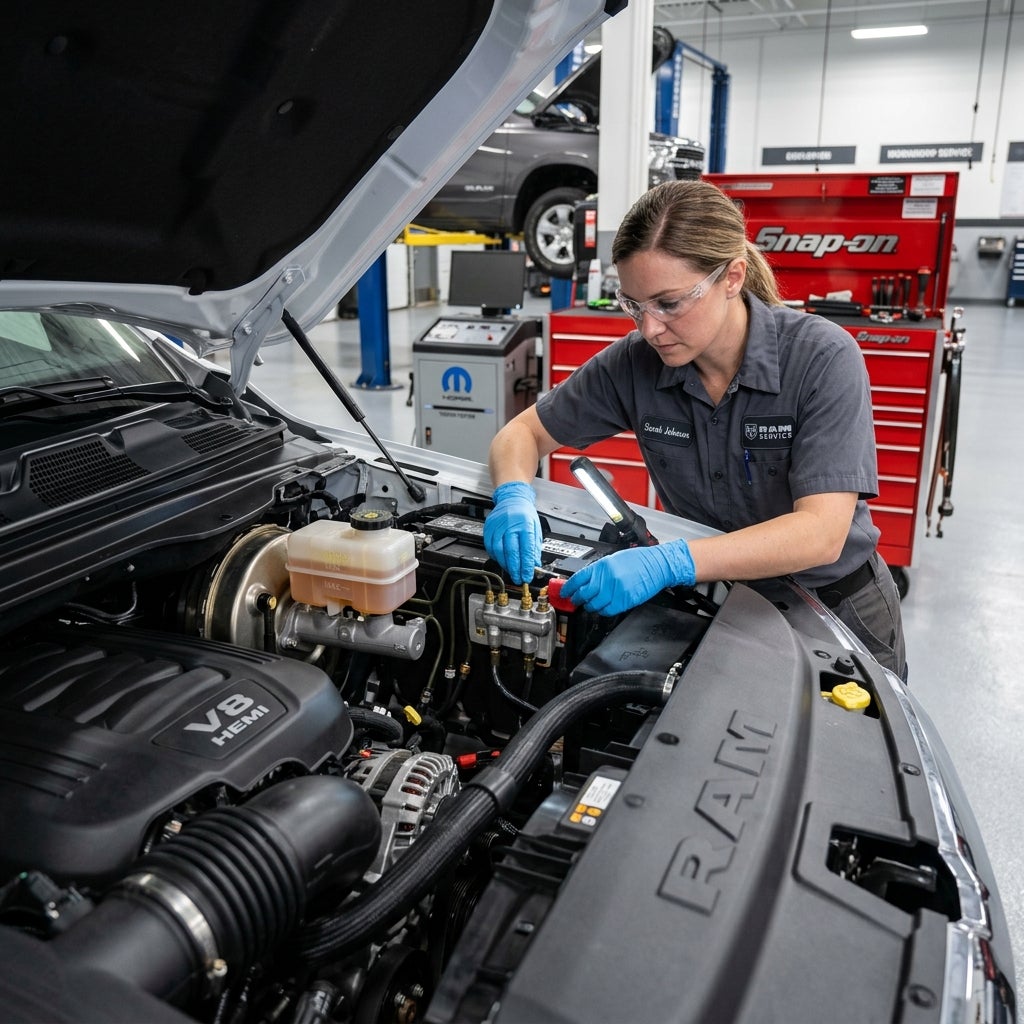
A female mechanic wearing safety glasses and blue gloves inspects the engine of a white Ram truck in a service garage. (Representative image for illustration purposes only. Actual vehicle may vary based on trim and configuration.)

How Long Does It Take for a Dealership to Replace a RAM 1500 Brake Master Cylinder?

How Long Does It Take for a Dealership to Replace a Ram 1500 Brake Master Cylinder? When it comes to maintaining the safety and stopping power of your Ram 1500, few components play a more critical role than the brake master cylinder. This component acts as the heart of your truck's hydraulic braking system, converting the physical force of your foot on the pedal into the hydraulic pressure that clamps your brake pads against the rotors. If your master cylinder is starting to fail, you are likely asking a very practical question: how long will it take to get it fixed? At a certified dealership like Valor CDJR, replacing a Ram 1500 brake master cylinder typically takes between 2 to 4 hours under normal circumstances. While the physical swap of the cylinder itself might seem straightforward, the process of ensuring that your entire hydraulic braking system is free of air, correctly calibrated, and thoroughly road-tested is a meticulous process that cannot be rushed. Our service department at Valor CDJR in Junction City, KS, is staffed by factory-certified Ram technicians who understand the specific nuances of your truck's braking system. Whether you drive a classic fourth-generation Ram 1500 (DS platform) or a state-of-the-art fifth-generation model (DT platform), the hydraulic system design requires specialized tools and diagnostic equipment to service correctly. A professional replacement involves much more than simply unbolting the old unit and putting a new one in. It requires draining the old glycol-ether-based brake fluid, bench-bleeding the new OEM Mopar master cylinder to purge trapped air from its internal piston chambers, installing the unit, and then performing a comprehensive pressure bleed of all four wheel lines. Choosing a certified dealership like Valor CDJR means that your vehicle is being handled by specialists who do this every day. Our team has direct access to Mopar technical databases, ensuring that every bolt is torqued to exact factory specifications and that the fluid used matches the precise viscosity and boiling point characteristics required for your Ram. In the sections below, we will dive deep into the signs that indicate your master cylinder is on its way out, the step-by-step process our technicians follow, the true cost breakdown of parts versus labor, and why cutting corners with cheap aftermarket parts or independent shops can compromise your safety on the roads of Junction City, Manhattan, and the surrounding Flint Hills region. What Are the Primary Symptoms of a Failing Brake Master Cylinder on a Ram 1500? Recognizing the early warning signs of a failing brake master cylinder is absolutely paramount to preventing a dangerous brake failure scenario. The most common symptom Ram 1500 owners report is a spongy or sinking brake pedal. When you press down on the brake pedal, it should feel firm and offer progressive resistance. If the pedal slowly sinks all the way to the floorboard while you are holding pressure—such as when standing still at a red light on Washington Street in Junction City—the internal rubber seals of the master cylinder are likely bypassing. This means hydraulic fluid is slipping past the piston cups inside the cylinder bore instead of being pushed down the brake lines to the wheels. Another telling symptom is highly contaminated brake fluid. Over time, the internal seals of a failing master cylinder degrade, shedding tiny dark rubber particles into the reservoir. If you pop the hood of your Ram and notice that the brake fluid is dark brown or black, rather than a clear golden hue, it is a strong indicator of internal wear. External leaks can also occur where the master cylinder bolts to the vacuum brake booster. Fluid leaking from this junction can damage the booster's internal diaphragm, turning a relatively simple cylinder replacement into a much more expensive repair that requires replacing both components. These symptoms are not just minor inconveniences; they pose severe safety risks for drivers traveling through Junction City, Manhattan, and throughout Riley County. A sinking brake pedal significantly increases your vehicle's overall stopping distance, which can be catastrophic during sudden highway stops on I-70 or during rainy summer afternoon downpours. Furthermore, if the brake system's internal pressure drops below a safe threshold, your Ram's onboard diagnostic computer will detect the imbalance. This will illuminate the red brake warning light or trigger the ABS (Anti-lock Braking System) light on your instrument cluster. Driving with a compromised master cylinder means you cannot rely on your truck's emergency braking performance. If you are towing a camper to Milford Lake or hauling agricultural supplies, the added momentum makes absolute hydraulic integrity vital. At Valor CDJR, we urge drivers never to ignore a soft or inconsistent pedal. If you notice any of these signs, please use our online Service Scheduler to book an immediate inspection. Our team can quickly diagnose whether your symptoms are caused by a failing master cylinder, air in the lines, or worn pads, ensuring your truck remains safe and reliable on every Kansas road. What Are the Main Steps in Replacing a Brake Master Cylinder? 1. Fluid Extraction & Disassembly The first step our technicians take is to safely extract the old, contaminated brake fluid from the master cylinder reservoir using specialized suction equipment. Once empty, they carefully disconnect the electrical sensor plug for the fluid level indicator. Next, they use precision flare nut wrenches to disconnect the steel hydraulic lines. Using correct tools is essential here to prevent rounding off the soft metal fittings. Finally, the mounting nuts securing the cylinder to the brake booster are removed, and the old master cylinder is lifted out of the engine bay. 2. Bench-Bleeding the New Unit You cannot simply bolt a dry master cylinder onto a truck and expect it to work. Our technicians perform a critical process called "bench-bleeding" on a sturdy workbench. They temporarily install bleed tubes from the exit ports of the new Mopar cylinder back into its own fluid reservoir, fill it with fresh fluid, and manually compress the piston repeatedly. This forces all trapped air out of the internal cylinder chambers and replaces it with pure fluid. Skipping or rushing this step leaves micro-bubbles inside the cylinder that are nearly impossible to remove later. 3. Installation & Full Bleed The bench-bled cylinder is carefully mounted back onto the brake booster and torqued to exact factory specification. The steel hydraulic lines are reattached. Next, the technician performs a comprehensive pressure flush and bleed of the entire braking system at all four wheels. Starting from the wheel furthest from the master cylinder (typically the passenger rear) and working inward, they purge any air that entered the lines during assembly. For modern Ram 1500s, they also utilize a diagnostic scan tool to cycle the ABS valves, ensuring no air remains trapped in the ABS hydraulic control unit. How Much of the Master Cylinder Replacement Cost Is Labor vs. Parts? When evaluating the financial side of a brake master cylinder replacement, the total invoice is split between high-quality Mopar parts and certified dealership labor. A genuine OEM Mopar brake master cylinder for a late-model Ram 1500 generally ranges from $150 to $300, depending on your truck's specific model year, trim level, and electronic braking features. While some cheap aftermarket options might cost slightly less, they often lack the premium seals and exact bore tolerances required to match factory braking performance. Investing in the genuine part guarantees long-term durability and structural integrity. On the labor side, the job is billed according to standard flat-rate times, which usually range from 2 to 3.5 hours depending on whether your truck has advanced electronic brake booster systems or standard vacuum assists. Labor accounts for the master technician's specialized training, the use of proprietary diagnostic computers to perform the ABS module bleed, and the disposal of toxic old brake fluid. While dealership labor rates reflect this high level of expertise, you are paying for peace of mind knowing that your 5,000-pound truck's primary safety system is functioning flawlessly. At Valor CDJR, we believe that critical safety repairs should never put a stressful strain on your household budget. That is why we offer flexible and convenient service financing options designed to keep your vehicle safe without immediate financial hardship. If you need to spread the cost of your brake system repair, please contact us for current financing options. We encourage you to visit our online finance center to Get Pre-Approved for service financing in just a few clicks. This simple tool allows you to plan your repair confidently, ensuring you do not have to delay vital brake work. Our service advisors are always here to walk you through the pricing structure transparently, providing a detailed written estimate before any wrenches turn on your vehicle. We believe in honest communication, so you will never face surprise fees when you pick up your keys. Get Pre-Approved for Service Financing Do Independent Mechanics Use OEM Mopar Parts for Ram 1500 Brake Repairs? A common dilemma Ram owners face is deciding whether to visit an independent repair shop or a certified dealership. While local independent mechanics are capable of performing general maintenance, they may use genuine OEM Mopar parts, but some rely on third-party aftermarket parts sourced from local retail auto parts chains. These aftermarket master cylinders are often built to "consolidated" specifications, meaning a single part number might be designed to fit five or six different truck platforms with slight variations. This one-size-fits-all approach can lead to minor fitment issues, differences in pedal travel, or a less-than-perfect seal. At Valor CDJR, we source every replacement directly from our own factory-authorized Parts Department. This ensures that the replacement master cylinder installed on your truck is a direct match engineered by Mopar specifically for your vehicle's VIN. Mopar components are manufactured with the exact same metallurgy, rubber compounds, and bore tolerances as the unit that came on your Ram from the factory. Furthermore, OEM parts installed at our dealership carry a comprehensive nationwide warranty that covers both the part and the labor to replace it if it fails prematurely. Many aftermarket parts carry limited warranties that only cover the cost of the physical part, leaving you to pay the expensive labor fees all over again if the component fails in six months. When it comes to your truck's stopping power, compromising on parts quality is a risk simply not worth taking. Does Mopar Vehicle Protection Cover Brake Master Cylinders? For many Ram 1500 owners, the cost of a master cylinder replacement may be completely covered under an active warranty. If you purchased a Mopar Vehicle Protection plan—such as the comprehensive "Maximum Care" or "Added Care Plus" extended warranties—your brake master cylinder is a listed covered component. Maximum Care, which is Mopar’s gold-standard exclusionary coverage, explicitly covers over 5,000 mechanical and electrical components, including the master cylinder, power booster, ABS assembly, brake lines, and calipers. Even with the slightly more streamlined Added Care Plus plan, the master cylinder is covered under the major mechanical systems category. These protection plans are designed to give Ram owners absolute confidence, ensuring that when unexpected component wear occurs, you are only responsible for your plan's small deductible (often $100 or even $0 depending on how your policy was structured). Having a warranty claim handled at Valor CDJR is incredibly simple because we interface directly with Mopar, meaning we handle all the paperwork, approvals, and direct billing behind the scenes. If you live in Riley, Geary, or Clay County and are unsure about your vehicle's warranty status, our service advisors are happy to perform a complimentary coverage check for you. All we need is your Ram 1500's 17-digit Vehicle Identification Number (VIN) to access the official Mopar database and determine if you have active coverage. We encourage you to Call us at (785) 238-5114 before scheduling your appointment so we can verify your coverage upfront. Knowing your warranty status ahead of time can turn a stressful repair scenario into a highly satisfying, low-cost visit. If you do have coverage, we will secure immediate approval from Mopar, order the necessary parts, and get your truck back on the road in prime condition with minimal disruption to your daily routine. How Do I Check Whether My Ram 1500 Brake Issue Is Part of a Recall? 1. Find Your 17-Digit VIN Your truck's Vehicle Identification Number (VIN) is a unique 17-character code that acts as its digital fingerprint. You can find it printed on a metal plate visible through the driver's side corner of the windshield, on the safety certification label inside the driver's side door jamb, or on your vehicle's insurance card and registration documents. Write this number down carefully. 2. Search Safety Databases Once you have your VIN, you can input it directly into the National Highway Traffic Safety Administration (NHTSA) recall lookup tool or the official Mopar recall portal. These search engines will immediately display any active safety recalls or customer satisfaction campaigns associated with your specific truck, including those involving hydraulic brake components. 3. Get Free Repairs at Valor CDJR If your search reveals an open recall related to your Ram 1500's brake master cylinder or hydraulic booster, do not panic. As an authorized Ram dealership, Valor CDJR will perform the required recall repairs completely free of charge to you. Contact our service team, and we will secure the factory-allocated recall parts and schedule your priority service appointment. Why Having Your Ram 1500 Serviced at a Junction City Dealership Saves Time Time is one of your most valuable assets, and having your Ram 1500 serviced at a specialized local dealership like Valor CDJR is the fastest way to get your truck back on the road. Independent shops often struggle with scheduling delays because they have to wait for parts delivery trucks to transport components from regional warehouses. In contrast, our on-site Parts Department maintains a massive, highly curated inventory of genuine OEM Mopar parts, meaning we usually have the exact master cylinder, fluid, and lines your truck needs sitting on our shelves the moment you arrive. Furthermore, our diagnostic workflow is highly optimized. We utilize the proprietary wiTECH 2.0 diagnostic platform, which connects directly to Ram's secure gateway module. This tool allows our technicians to perform rapid digital health scans, identify pressure sensor faults, and run automated ABS brake bleeding sequences in a fraction of the time it takes an independent shop using a generic multi-brand scan tool. What takes a general mechanic hours of troubleshooting and manual labor often takes our experienced team just minutes to isolate and resolve. Our technicians work exclusively on Chrysler, Dodge, Jeep, and Ram vehicles every single day. This extreme specialization means they are intimately familiar with the exact bolt locations, clearance requirements, and physical plumbing layout of your truck. They do not need to consult internet forums or repair manuals to figure out how to access your master cylinder—they have successfully completed this exact job dozens of times before. If you are ready to experience the fast, professional, and efficient service that only a factory-authorized dealership can provide, we invite you to book an appointment with us today. Our online system makes it simple to choose a time that fits into your busy week. Go ahead and utilize our Service Scheduler to reserve your slot and let our master technicians handle the rest with speed and precision. Schedule Your Brake Service Now How a Weak Master Cylinder Affects Towing and Driving in the Flint Hills The rolling landscape of the Flint Hills in Kansas is incredibly scenic, but it places unique demands on your truck's mechanical components—especially the braking system. Navigating steep inclines and declines on K-177 or hauling heavy agricultural loads along the gravel backroads of Geary County requires flawless braking response. When your Ram 1500 is pulling a trailer loaded with livestock, hay, or recreational boats for a weekend at Milford Lake, your vehicle's kinetic energy is multiplied significantly. In these towing scenarios, your brakes must work twice as hard to slow the vehicle down. If your master cylinder has worn internal seals, the immense heat generated during prolonged downhill braking can cause the brake fluid to warm up rapidly. As fluid temperature increases, its viscosity changes, and the bypassing effect inside a weak master cylinder becomes significantly worse. You might start a descent with a relatively firm pedal, only to feel it suddenly turn soft and sink toward the floorboard halfway down the hill. This phenomenon, known as brake fade combined with hydraulic bypass, can lead to a terrifying loss of stopping control. Keeping your hydraulic system in peak condition with a fresh, leak-free master cylinder is not just about keeping your truck running—it is about ensuring you have the necessary stopping power to handle the challenging, rolling geography of our beautiful Kansas landscape safely. What to Do While Your Ram 1500 Is in the Shop at Valor CDJR Relax in Our Comfortable Lounge While our master technicians are replacing your brake master cylinder, we invite you to relax in our clean, modern waiting area. We offer high-speed Wi-Fi, comfortable seating, flat-screen televisions, and a selection of premium complimentary coffee, bottled water, and snacks. It is the perfect environment to reply to emails, get some remote work done, or simply unwind while we restore your truck's stopping power. Shuttle Services & Stay Mobile We know that you have a busy schedule and cannot always sit at the dealership. To minimize disruption to your day, Valor CDJR offers a complimentary local shuttle service. Our shuttle can drop you off at your home, office, or local shopping centers in Junction City, and pick you up once your Ram 1500's brake service is completely finished. Ask our service advisors for details when you check in. Try Our Express Lane Service If you have minor routine maintenance tasks that need attention—such as an oil change, tire rotation, windshield wiper replacement, or cabin air filter swap—you can have them completed simultaneously. Our dedicated Mopar Express Lane is optimized for lightning-fast, high-quality maintenance without requiring a pre-scheduled appointment, helping you save valuable time by combining your services. Considering an Upgrade? Explore Your Ram 1500 Trade-In Value As trucks age, owners occasionally find themselves weighing the cost of ongoing mechanical repairs against the value of transitioning into a newer, more advanced vehicle. If your Ram 1500 has high mileage and is beginning to require multiple repairs—such as master cylinder replacement, suspension work, or engine service—it might make strong financial sense to explore your vehicle's current market value. Trading in your truck allows you to apply its equity toward a brand-new or pristine certified pre-owned vehicle, cutting down on future repair bills and giving you access to the latest safety and towing technology. At Valor CDJR, we make valuing your current truck incredibly straightforward. Our online Trade In Evaluation tool provides a quick, transparent, and highly competitive appraisal based on real-time market data in the Junction City and Manhattan areas. You can input your truck's details from the comfort of your home and receive an instant estimate of its worth. From there, our finance and sales teams can help you explore how that trade equity can help you choose a newer, highly capable model. Once you have an idea of your truck's trade value, we invite you to browse our extensive inventory of vehicles. Whether you are looking for a brand-new light-duty truck with active safety features or a solid commercial rig, we have options to fit your lifestyle. You can explore our updated New Vehicle Listings to see the latest Ram 1500 models, or check out our high-quality Used Vehicle Listings for value-conscious alternatives. If your work demands even more capability, we also offer a dedicated Commercial Vehicle Inventory featuring heavy-duty trucks built to handle the toughest jobs Kansas has to offer. Value Your Current Trade-In Schedule Your Ram 1500 Brake Service at Valor CDJR in Junction City Today Your Ram 1500's brakes are its single most important safety feature. Driving with a weak, spongy, or bypassing master cylinder compromises your vehicle's stopping distance and puts you, your family, and other drivers at risk on Kansas highways. Do not wait for a complete brake system failure before taking action. At Valor CDJR, our factory-trained master technicians are ready to diagnose, service, and restore your truck's hydraulic braking performance back to original factory standards using only genuine Mopar components. We make getting professional, trustworthy service as convenient as possible. You can easily Get Directions to Valor CDJR to visit our dealership at 1825 Goldenbelt Blvd, Junction City, KS 66441. If you prefer to speak directly with one of our experienced service advisors to ask questions or discuss pricing, please feel free to Call us at (785) 238-5114. Alternatively, you can book your appointment online in just a few seconds using our digital tool. Click the button below to access our Service Scheduler and pick a date and time that fits seamlessly into your schedule. Let our team provide the reliable, expert care your Ram truck deserves! Book Your Brake Appointment Online

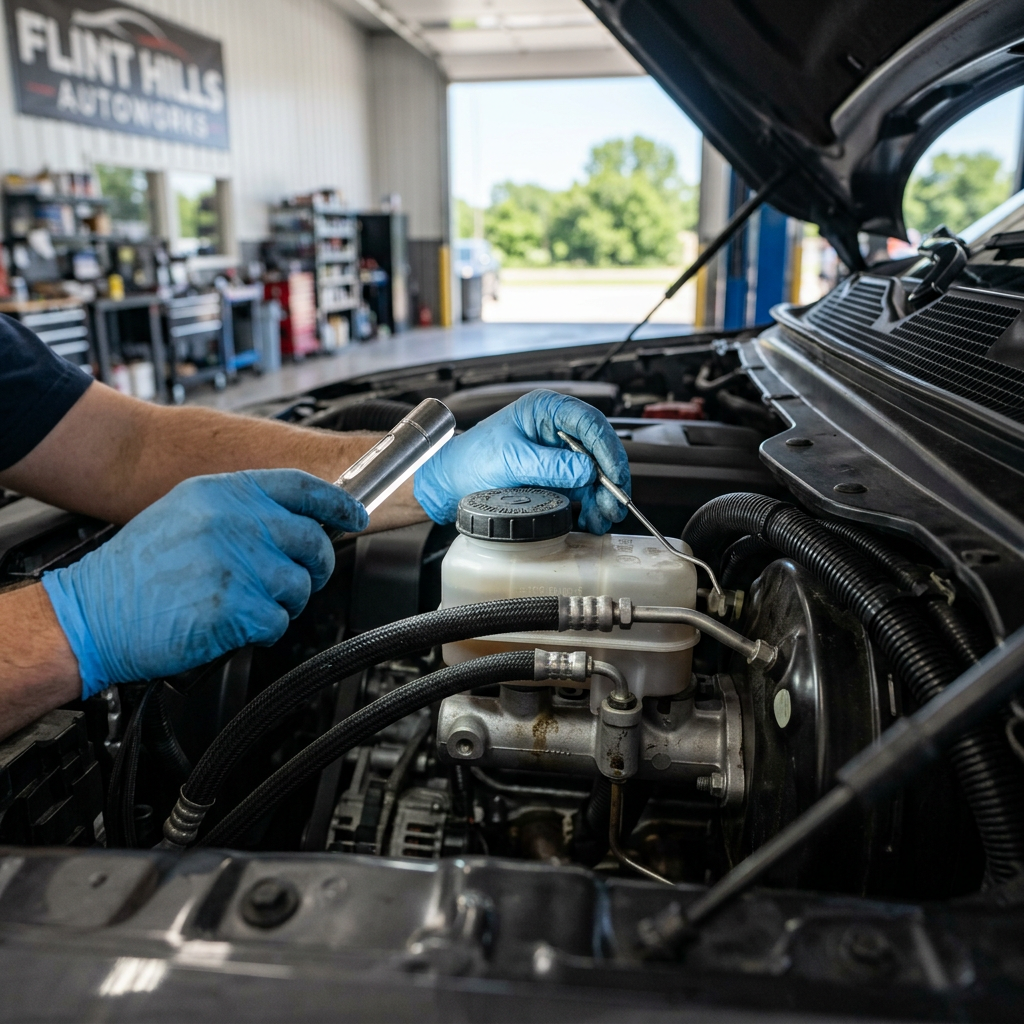
Mechanic in blue gloves inspecting a car engine compartment using a flashlight and probe. (Representative image for illustration purposes only. Actual vehicle may vary based on trim and configuration.)

2021 RAM 1500 Recall: SERVICE BRAKES, HYDRAULIC:FOUNDATION COMPONENTS:MASTER CYLINDER — What Valor CDJR Customers Need to Know

2021 Ram 1500 Recall: SERVICE BRAKES, HYDRAULIC:FOUNDATION COMPONENTS:MASTER CYLINDER — What Valor CDJR Customers Need to Know As a proud Ram truck owner, you already know that these heavy-duty machines are engineered to conquer the toughest challenges—whether you are pulling heavy equipment to a job site in Junction City, hauling weekend toys out to Milford Lake, or navigating daily Kansas highway traffic. However, even the most robust trucks occasionally face manufacturing hurdles that demand prompt, expert attention. Recently, a critical safety recall was issued concerning the 2021 Ram 1500. Specifically, this campaign targets the hydraulic service brakes foundation components, focusing heavily on a potential vulnerability in the brake master cylinder assembly. If you drive a 2021 model-year truck, understanding the details of this recall is not just a matter of keeping up with routine maintenance; it is an absolute necessity for ensuring your personal safety, the protection of your passengers, and the long-term reliability of your vehicle. At Valor CDJR, situated in the heart of Junction City, KS, we believe in keeping our community informed, safe, and mobile. We view our relationship with local drivers as a partnership built on trust, expert advice, and transparent communication. This comprehensive guide has been crafted to walk you through every aspect of the 2021 Ram 1500 brake master cylinder recall. From the complex engineering principles behind the issue to the precise warning signs you need to watch out for while driving, we cover it all. More importantly, we outline how our certified Mopar technicians are fully equipped to resolve this issue for you quickly, professionally, and entirely free of charge. Your safety is our absolute, non-negotiable priority, and we are dedicated to helping you navigate this recall with zero stress and maximum confidence. What is the 2021 Ram 1500 master cylinder recall about? To understand the gravity of this recall, we must first look at the mechanical heart of your truck's stopping power: the hydraulic master cylinder. In any modern vehicle, when you press down on the brake pedal, you are not directly pushing mechanical pads against spinning wheels. Instead, you are activating a hydraulic pump—the master cylinder. This component takes the mechanical force of your foot and translates it into intense hydraulic pressure, sending specialized brake fluid through high-strength lines down to the individual brake calipers at each wheel. These calipers then squeeze the brake rotors, creating the friction necessary to bring your multi-ton truck to a safe, controlled stop. In affected 2021 Ram 1500 models, a specific manufacturing defect in the master cylinder housing or internal seals can lead to an internal fluid bypass or pressure loss. Over time, or under sudden heavy braking demands, the master cylinder may fail to maintain the high hydraulic pressures required by the foundation braking components. This means that when you step on the pedal, the system cannot deliver the necessary force to the calipers, directly resulting in significantly extended stopping distances. In real-world driving conditions, even a fraction of a second or a few extra feet of stopping distance can make the difference between a routine stop and a severe collision. Furthermore, this defect can compromise the integration between the foundation hydraulic brakes and the vehicle's electronic stability control (ESC) and anti-lock braking (ABS) systems. Because modern Ram trucks rely heavily on advanced electronics to manage traction, brake bias, and emergency stops, any physical drop in hydraulic pressure at the master cylinder source sends cascading errors through these safety systems. This can cause sudden, unexpected changes in brake pedal feel and behavior, leaving drivers unprepared for a weak pedal response. Our team of factory-trained technicians at Valor CDJR has studied this recall thoroughly. The remedy involves a detailed inspection of the brake master cylinder assembly. If the component falls within the affected manufacturing batch, it must be replaced with a redesigned, updated master cylinder unit. This new unit features improved seals and robust housing materials designed to prevent internal bypass and guarantee steady, reliable hydraulic pressure under all driving conditions. Rest assured, this repair is engineered to restore your truck to its original factory safety standards, ensuring you can drive with total peace of mind. How do I know if my 2021 Ram 1500 is included in this brake recall? 1. Locate Your VIN The absolute best and most accurate way to verify if your truck is affected is by checking its unique 17-character Vehicle Identification Number (VIN). You can find this stamped on a metal plate visible through the lower driver-side corner of your windshield, or on the safety certification label located on the driver's side door jamb. 2. Spot Warning Signs Pay extremely close attention to how your brakes feel during operation. If you notice a 'spongy' or soft feeling when you press the brake pedal, or if the pedal sinks slowly to the floorboard when you are holding the truck at a complete stop, these are classic symptoms of an internal master cylinder fluid bypass. 3. Watch the Dash Keep an eye out for dashboard warning lights. Because a drop in hydraulic pressure disrupts the electronic safety systems, you may see the ABS warning light, the Electronic Stability Control (ESC) indicator, or the red brake warning light illuminate on your instrument cluster, indicating an immediate system fault. If you experience any of these warning signs, or if you simply want the absolute certainty that your vehicle is safe to operate, please schedule service soon for a letter to arrive in the mail. Take control of your safety today. You can quickly use our convenient Service Scheduler to book an inspection, or bring your VIN to our dealership and have our team verify your status instantly. If you are also considering trading in your truck for a newer model with advanced safety features, you can get an immediate, competitive valuation using our Trade In Evaluation tool. Schedule a Recall Check Is it safe to drive my Ram 1500 if it has an open master cylinder recall? This is the single most common question we receive from concerned drivers in the Junction City and Riley County areas, and we believe in giving a direct, unfiltered answer: Operating a vehicle with an unresolved hydraulic brake recall carries significant safety risks and is not recommended. While your truck might seem to stop normally during low-speed drives around town, the structural integrity of a compromised master cylinder is unpredictable. Under sudden emergency braking scenarios, or when heat and pressure build up within the hydraulic system, a weak seal or compromised housing can fail completely, leading to a sudden, dramatic loss of braking power. This risk escalates exponentially when you consider the driving conditions common to our region. Kansas highways demand sustained high speeds, and quick stops are frequently required due to changing traffic patterns, wildlife crossings, or sudden summer storms. If your master cylinder chooses that exact moment to experience an internal pressure bypass, your stopping distance will increase dramatically, leaving you with little to no control. Furthermore, many Ram 1500 owners use their trucks for heavy-duty utility—towing boats, utility trailers, or agricultural equipment. When you add thousands of pounds of trailer weight behind a truck, your braking system is pushed to its absolute limit. A master cylinder with an open recall is simply not equipped to safely manage that level of intense thermal and physical stress. At Valor CDJR, we strongly urge you not to take unnecessary chances with your safety or the safety of other families sharing our Kansas roads. If your vehicle is flagged for this recall, we highly recommend getting it serviced immediately. There is no reason to delay, especially since the repair is entirely free and handled by certified professionals. If you are concerned about your vehicle's safety but still need a reliable way to travel or work, please contact our team. We can discuss alternative transportation options, coordinate quick towing if your brakes feel compromised, or assist you in exploring our quality pre-owned inventory by browsing our Used Vehicle Listings while your truck is being serviced. How does the 2021 Ram 1500 compare to the 2021 Ford F-150 in safety and reliability? When shopping for a light-duty full-size pickup, the matchup between the 2021 Ram 1500 and the 2021 Ford F-150 is always at the top of drivers' minds. Both trucks are industry heavyweights, offering incredible utility, advanced cabin technology, and strong safety ratings. However, they approach braking systems, suspension, and chassis engineering in distinct ways. The 2021 Ram 1500 is widely celebrated for its class-exclusive coil-spring rear suspension (or optional air suspension), which delivers a smooth, car-like ride quality that the F-150's traditional leaf-spring setup differs in design. In terms of braking engineering, the Ram utilizes massive front and rear rotors paired with a highly responsive brake booster system designed to offer a firm pedal feel. While this master cylinder recall highlights a specific manufacturing issue on certain 2021 batches, it is worth noting that the Ford F-150 has also had its share of safety campaigns, including recalls for windshield wiper motors, steering components, and electronic parking brakes. In terms of overall crash test ratings, both vehicles earned top-tier marks from the IIHS, but Ram's superior ride stability often gives drivers a stronger sense of control and confidence in adverse road conditions. When properly maintained and free of open recalls, the Ram 1500's foundation braking components provide class-leading stopping power. If you are currently evaluating your options and want to experience the unmatched interior luxury and ride comfort of a Ram pickup, we invite you to browse our extensive New Vehicle Listings to find the perfect truck for your lifestyle. Which 2021 Ram 1500 engine option offers the highest towing capacity? 5.7L HEMI® V8 with eTorque For maximum towing capacity, the 5.7L HEMI® V8 engine with eTorque Mild Hybrid Technology is the absolute champion of the 2021 lineup. This powerhouse delivers 395 horsepower and 410 lb-ft of torque, enabling the Ram 1500 to tow an incredible maximum capacity of up to 12,750 pounds when properly equipped. 3.0L EcoDiesel V6 If you prioritize fuel range and low-end torque for long-distance hauling, the 3.0L EcoDiesel V6 is an outstanding choice. Producing 260 horsepower and a robust 480 lb-ft of torque, this highly efficient diesel engine offers a substantial maximum towing capacity of up to 12,560 pounds. 3.6L Pentastar® V6 The reliable 3.6L Pentastar® V6 engine with eTorque serves as a highly capable and efficient standard option. It delivers 305 horsepower and 269 lb-ft of torque, which provides a very respectable maximum towing capacity of up to 7,730 pounds, perfect for mid-sized trailers and daily work tasks. While these towing numbers are highly impressive, they underscore a critical safety truth: the heavier your load, the more vital your master cylinder becomes. When pulling over 12,000 pounds down the rolling hills of Kansas, your vehicle relies entirely on a flawless hydraulic link to transfer stopping force from your foot to both the truck's heavy-duty brake calipers and the electronic trailer brake controllers. Any slight pressure drop or internal fluid bypass within a compromised master cylinder can result in a catastrophic inability to control your load during a descent or sudden stop. At Valor CDJR, we want to help you utilize your truck's maximum capabilities safely. If you plan to tow this season, please let us verify and resolve your master cylinder recall first. If you require specialized commercial-grade hauling power, we invite you to explore our dedicated Commercial Vehicle Inventory to find heavy-duty trucks built to handle the most demanding jobs in Geary County. Browse Commercial Inventory How can Valor CDJR in Junction City, KS assist with my Ram 1500 recall repair? When it comes to safety recalls, where you have your vehicle serviced makes all the difference. Valor CDJR is your authorized, premier Chrysler, Dodge, Jeep, and Ram dealership in Junction City, KS. This official designation means we have direct, priority access to authentic Mopar parts and specialized diagnostic equipment that independent repair shops simply cannot match. When you bring your 2021 Ram 1500 to our state-of-the-art facility, you are placing your vehicle in the hands of factory-certified master technicians who have spent countless hours training specifically on Ram truck mechanical and electronic platforms. Our recall process is designed to be completely seamless and stress-free for you. First, we perform a comprehensive diagnostic inspection of your hydraulic brake foundation components, including the master cylinder, booster assembly, and brake lines. If a replacement is required, we install a brand-new, factory-redesigned OEM master cylinder. This updated unit is guaranteed to perform to the highest quality standards, restoring your truck's physical hydraulic performance and its integration with crucial safety systems like ABS and ESC. Because this is an safety campaign, the entire diagnostic process, the replacement parts, and all associated labor are provided to you completely free of charge. Additionally, our team checks for any other outstanding recalls or service campaigns that may apply to your truck, ensuring that when you drive off our lot, your vehicle is as safe, reliable, and up-to-date as possible. If you need any replacement accessories or specialized equipment during your visit, our fully stocked Parts Department is ready to supply you with genuine Mopar components built specifically for your Ram. Do I need to make an appointment at Valor CDJR for recall work, or can I walk in? While we always strive to accommodate every driver who visits our dealership, we highly recommend scheduling an appointment in advance for all recall service work. Recall campaigns involve a high volume of vehicles, which means specialized replacement parts—such as the redesigned Ram 1500 master cylinder—are in high demand across the country. By scheduling an appointment ahead of time, you allow our service advisors to verify your vehicle's specific needs, pre-order the correct Mopar replacement parts, and ensure they are physically sitting on our shelves in Junction City before you even arrive. This proactive approach minimizes your waiting time and ensures we can complete your repair quickly and efficiently. An appointment also helps us allocate dedicated time with our certified master technicians. Because safety repairs require precise execution, high-pressure line bleeding, and electronic system recalibration, we want to ensure our experts have the focused time required to complete the job to perfection. If you are experiencing an urgent safety issue—such as a sudden, severe drop in brake pedal pressure—please contact us immediately or bring your truck in right away. We treat critical, active brake failures with the highest priority to ensure you are not left stranded or in danger on the road. For fast, routine maintenance items like oil changes, tire rotations, or quick safety inspections, we invite you to take advantage of our specialized Express Lane, which requires no appointment whatsoever. However, because of the complex technical nature of the hydraulic master cylinder replacement, scheduling your recall work through our primary service center is the absolute best way to ensure a fast, flawless experience. Can I schedule a service appointment online at Valor CDJR? Yes, absolutely! We believe that maintaining your truck's safety should fit easily into your busy schedule. That is why we have developed a highly intuitive, user-friendly online scheduling system that puts you in complete control. Whether you are relaxing at home in Manhattan, working at Fort Riley, or taking a break at a job site in Junction City, you can book your appointment in under two minutes from any computer or mobile device. To get started, simply navigate to our digital Service Scheduler. If you are a returning customer, the system can quickly pull up your vehicle details based on your phone number or email. If you are new to Valor CDJR, welcome! You can easily enter your vehicle details manually—just select '2021' and 'Ram 1500', then choose the specific master cylinder recall service from our drop-down menu of safety campaigns. From there, you will be shown a live calendar of available dates and times. Simply select the slot that works best for your schedule, choose your preferred service advisor if you have one, and let us know if you plan to wait in our comfortable, Wi-Fi-enabled customer lounge or if you will be utilizing our convenient local shuttle service. Once your appointment is submitted, you will receive an immediate confirmation email or text message. Our service team will then review your submission, verify that the required Mopar master cylinder parts are allocated to your name, and prepare for your arrival. We are committed to making your service experience as streamlined and hassle-free as possible. Access Online Service Scheduler Schedule Your Free 2021 Ram 1500 Recall Repair at Valor CDJR Today Your brakes are the single most critical safety system on your vehicle. When it comes to a manufacturing defect in your hydraulic master cylinder, delaying repairs is simply not worth the risk to you, your family, or your fellow drivers. Contact us today and let our expert team at Valor CDJR restore your truck to its peak, safest operating condition. Our certified service department is conveniently located right here in Junction City, KS. We make it incredibly easy to get your safety recalls resolved quickly, professionally, and completely free of charge. You can easily Get Directions to Valor CDJR to find our physical showroom and service bays at 1825 Goldenbelt Blvd. If you prefer to speak directly with one of our friendly, knowledgeable service advisors to discuss your vehicle's recall status or ask specific technical questions, please Call us at (785) 238-5114 today. If you have questions about service or your recall appointment, please contact Valor CDJR. Please schedule service for warning lights to flash or pedal pressure to fail on the highway—contact Valor CDJR now and drive with confidence! Schedule Free Recall Service Schedule Recall Service Online

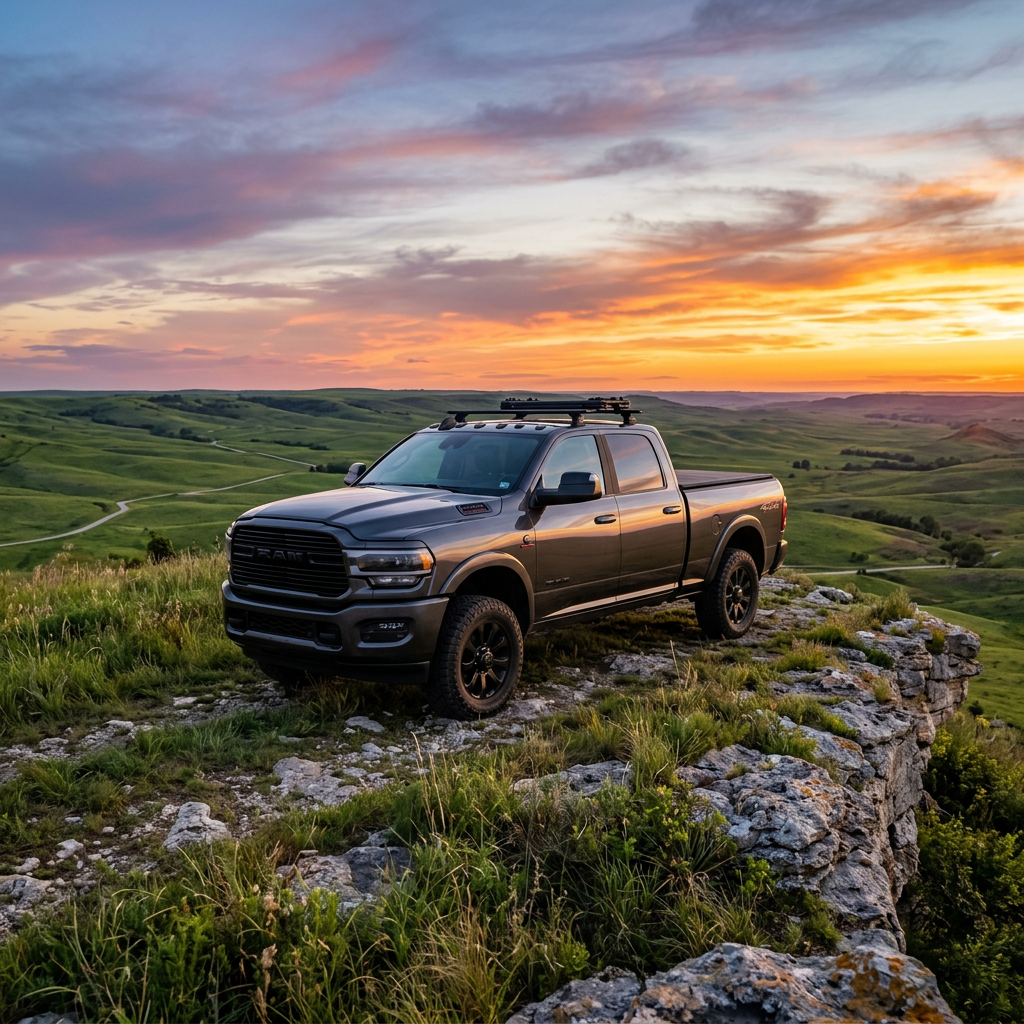
A dark gray Ram pickup truck parked on a grassy, rocky overlook during a vibrant sunset over green hills. (Representative image for illustration purposes only. Actual vehicle may vary based on trim and configuration.)

Expert Servicing for CDJR Vehicles in the Flint Hills Region

Expert Servicing for CDJR Vehicles in the Flint Hills Region When it comes to protecting your automotive investment, nothing matches the peace of mind that comes from certified factory care. Here in the heart of the Flint Hills, drivers from Junction City, Manhattan, and throughout Riley County rely on their Chrysler, Dodge, Jeep, and Ram vehicles to power through demanding daily commutes, rugged agricultural tasks, and weekend adventures alike. At Valor CDJR, we do not just spin wrenches; we deliver a comprehensive, highly specialized service experience designed to keep your vehicle performing exactly as the engineers intended. Our state-of-the-art facility is fully equipped with factory-grade diagnostic computers, heavy-duty vehicle lifts, and specialized alignment machinery tailored to the precise specifications of the CDJR lineup. Every vehicle that rolls into our service drive represents a complex ecosystem of mechanical and electrical systems. Modern Ram trucks feature sophisticated torque-management systems and multi-link rear suspensions; Jeep vehicles utilize complex four-wheel-drive transfer cases and Selec-Terrain matrices; Dodge muscle cars rely on high-output cooling configurations; and Chrysler minivans integrate intricate hybrid powertrains and Stow 'n Go seating layouts. Entrusting these specialized machines to a generic, all-brand lube shop can result in overlooked signs of wear, incorrect fluid applications, and diagnosis errors. Our certified master technicians undergo rigorous, ongoing training directly from Mopar to master the unique architectures of these four iconic brands, ensuring every diagnostic cycle and mechanical repair is executed flawlessly. We understand that your time is incredibly valuable, which is why we have streamlined our service processes to minimize disruption to your busy schedule. From our comfortable waiting lounge equipped with high-speed Wi-Fi and complimentary beverages to our efficient check-in procedures, our entire operation is structured around your convenience. Whether you are driving a high-performance Dodge Charger, a legendary Jeep Wrangler, or a commercial-grade Ram 3500, you will receive clear explanations of all necessary repairs, upfront pricing estimates with no hidden fees, and the absolute assurance that only genuine OEM components are used. For quick, routine maintenance items, you can take advantage of our dedicated Express Lane, where no appointment is required for oil changes, tire rotations, and multi-point inspections. Beyond technical excellence, our service philosophy is rooted in building lifelong relationships with our guests. We treat every vehicle as if it belonged to a member of our own family, inspecting critical safety components such as brake pads, steering linkages, and tire treads during every single visit. This proactive approach helps identify minor issues before they escalate into costly road-side emergencies. If you are ready to experience the high standard of CDJR maintenance, we invite you to explore our specialized services, meet our expert team, and schedule your next service interval with us today. Let us help you preserve the safety, value, and performance of your vehicle for miles and years to come. What Maintenance Schedule Is Recommended for Chrysler, Dodge, Jeep, and Ram Vehicles? Maintaining your vehicle according to factory-recommended intervals is the single most effective way to prevent premature wear, maximize fuel efficiency, and protect your manufacturer warranty. However, a standardized schedule in an owner's manual does not always account for the unique geographical and environmental demands of the Flint Hills region. The driving landscape around Manhattan and Riley County presents a distinct set of challenges: dusty rural gravel roads, sharp elevation changes, intense summer heat waves, freezing winter blizzards, and the stop-and-go pattern of university commuter traffic near Kansas State University. These local driving conditions mean your vehicle often operates under what manufacturers classify as 'severe duty' cycles, requiring more frequent maintenance checks than standard highway driving. The 8,000-Mile Checkpoint At this early interval, your vehicle requires foundational maintenance. This includes a comprehensive synthetic oil and filter change to flush out contaminants, followed by a precise tire rotation to distribute tread wear evenly across all four corners. Our technicians perform a thorough visual inspection of the braking system, check all fluid levels (windshield washer, engine coolant, transmission, and power steering), and test the battery health to ensure strong cranking power. For local drivers regularly traversing dusty country lanes or gravel pathways, we also inspect and clean the engine air filter and cabin air filter, as agricultural dust can rapidly clog these vital pathways and restrict airflow. The 16,000-Mile Checkpoint Building upon the basic oil and tire services, the 16,000-mile mark introduces deeper mechanical inspections. We perform a complete chassis lubrication to keep suspension joints moving smoothly and quiet. Technicians inspect the front suspension, tie rod ends, and boot seals for signs of wear or cracking. We also perform a comprehensive brake inspection, measuring rotor thickness and brake pad wear to guarantee your stopping power. The cabin air filter is typically replaced at this point to maintain crisp, allergen-free climate control inside your cabin, which is especially important during the intense Kansas pollen and harvest seasons. The 30,000-Mile Checkpoint This major service milestone is critical for long-term mechanical reliability. In addition to our standard oil and tire services, we replace the engine air filter and fuel filter to maintain optimal combustion efficiency. For Jeep and Ram four-wheel-drive vehicles, we perform a vital fluid exchange for the transfer case and front/rear differentials. The fluid in these components can break down over time due to heavy towing loads or off-road excursions, and fresh fluid is vital to prevent gear friction. We also conduct a detailed inspection of the engine cooling system, hoses, and clamps to ensure your vehicle can handle extreme temperature swings. Operating a vehicle in Junction City or Manhattan often means navigating short trips where the engine does not have sufficient time to reach its full operating temperature. This is highly common for students and faculty commuting to university campuses or families running quick errands. Short-trip driving leads to moisture accumulation inside the engine oil, which degrades its lubricating properties much faster than continuous highway driving. Furthermore, our region's heavy winter road salting can accelerate underbody corrosion, making routine multi-point inspections of brake lines, suspension components, and exhaust systems absolutely essential. By adhering to a proactive, severe-duty maintenance schedule, you can protect your powertrain, extend your vehicle's lifespan, and avoid unexpected breakdowns. To keep track of these complex intervals without any stress, we highly recommend utilizing our convenient online Service Scheduler. Our digital system allows you to log in, view your vehicle's specific maintenance history, select from recommended manufacturer service packages, and reserve a convenient time slot that fits seamlessly into your day. Whether you require a quick oil change before a weekend road trip or a comprehensive 30,000-mile service, our factory-trained technicians are ready to handle it with absolute precision and care. Understanding Your Ram Truck: Does the Ram Hurricane Engine Require Premium Fuel? The automotive industry has witnessed a massive technological shift, and nowhere is this more evident than in the powerhouse heart of the new Ram 1500: the Hurricane twin-turbo inline-six engine. This modern engineering marvel replaces traditional naturally aspirated V8 configurations, delivering significantly more horsepower, torque, and efficiency through advanced turbocharging, high-pressure direct fuel injection, and state-of-the-art thermal management. However, with this leap in high-performance engineering comes a very common question from truck owners throughout Riley County: Does the new Ram Hurricane engine require premium fuel to run safely, or can you get by with standard regular unleaded? To understand the fuel requirements, we must look at the two distinct variants of this incredible powerplant. The Standard Output (SO) Hurricane engine, which produces a robust 420 horsepower and 469 lb-ft of torque, is engineered with a high degree of flexibility. While premium fuel (91 octane or higher) is officially recommended by Mopar engineers to achieve maximum performance and peak towing efficiency, the Standard Output variant can run safely on regular unleaded fuel (87 octane) without causing any damage to the engine. The truck's advanced engine control module (ECM) instantly detects the octane level of the fuel and adjusts ignition timing to prevent pre-detonation or 'engine knock.' However, when using regular fuel, you may notice a slight reduction in total horsepower and torque under heavy loads, such as towing a livestock trailer or hauling construction materials up steep Kansas inclines. Conversely, the High Output (HO) Hurricane engine—pumping out an astonishing 540 horsepower and 521 lb-ft of torque—is a different beast entirely. Built with higher boost pressures and a specialized mechanical compression ratio, the High Output variant may require premium fuel (91 octane or higher) depending on configuration for daily operation. Using lower octane fuel in the High Output engine can severely restrict its performance, trigger electronic engine safeguards, and potentially lead to severe engine damage over extended periods. For truck owners who demand the absolute peak capability of their Ram 1500, investing in premium fuel is non-negotiable to maintain the structural integrity and high-output performance of this twin-turbocharged masterpiece. Beyond octane levels, long-term care for a twin-turbocharged engine like the Hurricane requires strict adherence to maintenance best practices. Turbochargers operate at incredibly high rotational speeds and extreme temperatures, relying heavily on clean, high-quality engine oil for both lubrication and cooling. Neglecting oil changes or using non-approved oil weights can lead to oil carbonization inside the turbo bearings, resulting in premature turbocharger failure. Our service department utilizes premium synthetic oils specifically formulated to meet the rigorous MS-6395 standards required by Mopar, ensuring your turbochargers remain perfectly lubricated under all operating conditions. If you are shopping for a powerful new truck or want to learn more about our commercial line, we invite you to browse our extensive Commercial Vehicle Inventory to find the perfect Ram for your business or personal needs. Explore New Ram Truck Inventory Are Dealership Extended Warranties Worth It for Jeep Vehicles? Jeep vehicles are engineered to conquer some of the most unforgiving terrain on earth, from muddy trails and rocky creek beds to snow-packed Kansas highways. This exceptional off-road capability is made possible by sophisticated mechanical and electronic systems: electronic sway bar disconnects, locking differentials, complex Selec-Trac transfer cases, and advanced Quadra-Lift air suspension systems. Because Jeep owners often push their vehicles to the absolute limit, the question of whether to invest in a dealership extended warranty—specifically a genuine Mopar Vehicle Protection plan—is a highly relevant topic for buyers planning their long-term ownership journey. Unlike third-party aftermarket warranty companies, which are notorious for fine-print exclusions, complex claims processes, and requiring the use of lower-cost aftermarket parts, a Mopar Vehicle Protection plan is backed directly by Stellantis. This means your coverage is honored at any CDJR dealership across North America, including Valor CDJR. It guarantees that any necessary repairs will be executed by factory-certified technicians using genuine, identical Mopar parts. For Jeep owners, this level of protection is incredibly valuable. If an advanced electrical component, an electronic locking differential, or a touchscreen infotainment system experiences a failure years down the road, the cost of a single major repair can easily exceed the entire upfront cost of the protection plan itself. Mopar offers several tiers of coverage to fit different budgets and ownership goals, with 'Maximum Care' standing out as a comprehensive 'bumper-to-bumper' plan. Covering over 5,000 individual mechanical and electrical components, Maximum Care provides complete peace of mind for drivers who plan to keep their Jeep well beyond the standard 3-year/36,000-mile factory warranty. This coverage is especially relevant for modern Jeep models like the Grand Cherokee L or the Wrangler 4xe plug-in hybrid, which feature extensive digital displays, advanced driver assistance safety suites, and complex high-voltage hybrid electronics. Knowing that these highly advanced components are protected against unexpected failures allows you to enjoy every trail and highway journey with total confidence. When evaluating whether an extended warranty is right for you, consider your driving habits, budget flexibility, and long-term vehicle plans. If you prefer a predictable ownership cost over the risk of unpredictable out-of-pocket repair bills, or if you plan to drive your Jeep for the next five to ten years, a Mopar Vehicle Protection plan represents an exceptional value. Additionally, these plans are fully transferable if you decide to sell your vehicle to a private party in the future, significantly increasing your Jeep's resale value. If you are looking to purchase a reliable, pre-owned Jeep, you can explore our certified Used Vehicle Listings, many of which are eligible for extended warranty coverage, or contact our team to discuss current financing options and available vehicle protection packages. What Are Common Repair Issues for the Jeep Grand Cherokee? The Jeep Grand Cherokee stands as a global icon of refined capability, blending luxurious interior appointments with legendary off-road hardware. However, like any sophisticated, high-end vehicle, certain model years are prone to specific wear-and-tear items and known mechanical issues. Understanding these common repair points is incredibly helpful for current owners and prospective buyers alike, as early diagnostic detection and preventative maintenance can save thousands of dollars in major repair costs down the road. Quadra-Lift Air Suspension The optional Quadra-Lift air suspension provides a cloud-like ride and adjustable ground clearance, but it is a complex system of air bags, lines, sensors, and a pressurized compressor. Over time, and especially when exposed to freezing Kansas winters and abrasive road salt, the rubber air bladders can develop microscopic cracks, leading to slow air leaks. If left unaddressed, the compressor must run constantly to maintain vehicle height, leading to total compressor burnout. Our technicians can perform specialized pressure tests to locate leaks early, replacing individual lines or bags before a complete system failure occurs. Electrical & Infotainment Updates With the integration of advanced Uconnect touchscreens, digital gauge clusters, and electronic safety suites, modern Grand Cherokees rely heavily on stable electrical currents and software. Over time, owners may experience minor glitches, frozen screens, or false warning lights. In many cases, these issues do not require expensive hardware replacements. Instead, they can be resolved through official Mopar software flashes and system recalibrations. Our service bay has direct digital access to the latest factory software releases, allowing us to update your vehicle's computers and restore flawless operation quickly. Cooling System Components On older Grand Cherokee models, particularly those powered by the legendary 3.6L Pentastar V6, we occasionally see wear-and-tear failures in the engine cooling system, such as minor leaks from the oil filter housing or the water pump. During our routine multi-point inspections, we pay incredibly close attention to these areas, checking for the faint smell of burning coolant or minor residue. Catching a weak water pump or a small housing leak early prevents engine overheating, which is the leading cause of warped cylinder heads and catastrophic engine failure. The key to minimizing ownership costs for a Jeep Grand Cherokee is proactive, expert diagnostics. At Valor CDJR, our team uses specialized factory scan tools that read deep manufacturer-specific codes that generic auto-parts store scanners simply cannot access. This allows us to pinpoint the exact root cause of a warning light, preventing costly guess-and-check parts replacements. If you are noticing any unusual noises, a slightly rougher ride, or a persistent warning light on your dashboard, do not wait for a minor issue to become a major repair bills. Schedule a diagnostic evaluation with our certified service team to ensure your Grand Cherokee remains in pristine operating condition. Schedule Your Next CDJR Certified Service Visit Today Keep your Chrysler, Dodge, Jeep, or Ram vehicle performing at its absolute peak. Our user-friendly online scheduler makes it easier than ever to book your certified maintenance or repair service. Simply choose your preferred date and time, let us know what your vehicle needs, and our factory-trained technicians will handle the rest. Schedule service today to protect your automotive investment. Book Your Service Appointment Now Which Truck Has a More Comfortable Ride: Ram 1500 or Chevy Silverado? For decades, full-size light-duty pickup trucks were viewed strictly as work tools, with ride quality and cabin comfort treated as secondary considerations. However, today's truck buyers demand a vehicle that can haul heavy payloads during the workweek and comfortably carry the family on long interstate road trips. When comparing the ride quality of the Ram 1500 against its chief rival, the Chevrolet Silverado 1500, the engineering differences under the chassis reveal why the Ram 1500 is known for its comfortable ride in the pickup segment. The secret to the Ram 1500's legendary ride comfort lies in its class-exclusive rear suspension design. While the Chevy Silverado continues to utilize traditional, rigid leaf springs—a design that has remained largely unchanged for over a century—the Ram 1500 features a standard five-link coil-spring rear suspension. Coil springs allow each rear wheel to react independently to road imperfections, significantly reducing the harsh vertical impacts and lateral 'skittering' that leaf-spring trucks experience when traversing bumpy surfaces or highway expansion joints with an empty bed. For those seeking the absolute pinnacle of luxury, the Ram 1500 is also available with a four-corner Active-Level air suspension system. This system automatically adapts to changing road conditions, lowers the truck at highway speeds to maximize aerodynamics, and keeps the vehicle perfectly level even when carrying a heavy payload or towing a trailer. To preserve this signature, buttery-smooth ride over Kansas highways, proper suspension maintenance is absolutely critical. The complex bushings, shocks, control arms, and air lines that make the Ram 1500 ride so beautifully require regular inspections by experienced technicians. Over time, worn shock absorbers can lose their dampening ability, leading to excessive body roll and bounce, while cracked rubber bushings can cause annoying clunks and suspension misalignment. At Valor CDJR, we specialize in maintaining and repairing Ram suspension systems, ensuring your truck continues to glide effortlessly over the road. If you want to experience this unparalleled comfort for yourself, we encourage you to check out our New Vehicle Listings and schedule a test drive, or let us evaluate your current truck's trade-in value with our online Trade In Evaluation tool. Can I Look Up Active CDJR Recalls for My Vehicle Online? Vehicle safety is our absolute highest priority at Valor CDJR. From time to time, automotive manufacturers issue safety recalls to address potential design or manufacturing defects. While recalls are a normal part of the automotive lifecycle, staying informed and taking prompt action when a recall is issued is vital to protect yourself, your passengers, and your vehicle's mechanical integrity. Fortunately, checking to see if your Chrysler, Dodge, Jeep, or Ram vehicle has any open safety recalls is an incredibly simple, transparent process that can be completed entirely online from the comfort of your home. To check for active recalls, you will first need your vehicle's unique 17-digit Vehicle Identification Number (VIN). Your VIN serves as a unique fingerprint for your vehicle and can be found in several convenient locations: printed on a small metal plate on the driver's side dashboard (visible through the windshield), on the safety certification label inside the driver's door jamb, or on your vehicle's registration card and auto insurance documentation. Once you have located your VIN, you can visit our website or the official Mopar recall lookup portal, enter the 17-digit code, and instantly receive a comprehensive report showing any outstanding safety recalls or campaign services required for your specific vehicle. If you discover that your vehicle does have an active recall, there is absolutely no need to panic. Simply use our online Service Scheduler or call our dedicated service desk. As an authorized CDJR dealership, Valor CDJR performs all manufacturer safety recall repairs completely free of charge to the owner. Our service department will order the necessary OEM recall parts, schedule a convenient time for you to bring your vehicle in, and complete the repair with minimal disruption to your day. We work closely with the manufacturer to ensure all recall procedures are performed exactly according to official engineering bulletins, restoring your vehicle's safety and peace of mind. Genuine OEM Mopar Parts vs. Aftermarket Alternatives When your vehicle requires a replacement part—whether it's a routine item like front brake pads or a major mechanical component like an alternator—you will face a critical decision: should you choose genuine OEM Mopar parts, or opt for aftermarket alternatives? While third-party auto parts stores often promote aftermarket parts as a cost-conscious option, a closer look at the engineering, safety, and long-term durability reveals why using genuine Mopar parts is always the smartest, most cost-effective choice for your Chrysler, Dodge, Jeep, or Ram vehicle. Genuine Mopar parts are designed and engineered by the exact same team that built your vehicle. This means each component is manufactured to meet precise tolerances, utilizing the exact same materials, dimensions, and quality control standards as the parts that originally rolled off the assembly line. This perfect fit and finish guarantees that the replacement part will integrate seamlessly with your vehicle's existing mechanical and electrical systems, preserving the original factory performance, safety ratings, and fuel efficiency. In contrast, aftermarket manufacturers often design parts to fit a wide variety of vehicle makes and models to cut costs, resulting in minor dimensional discrepancies that can lead to premature wear, annoying squeaks, and potential compatibility issues. Furthermore, genuine Mopar parts are backed by an extensive manufacturer warranty, giving you complete confidence on the road. If a Mopar part fails due to a manufacturing defect, it is covered for both parts and labor at any authorized CDJR dealership nationwide. At Valor CDJR, our dedicated Parts Department maintains a massive, fully stocked inventory of genuine Mopar components, fluids, and accessories, ensuring we have the exact part your vehicle needs when you need it. Investing in genuine Mopar parts protects your vehicle's mechanical health, safeguards your warranty, and preserves its resale value over time. Visit Our Parts Department Preparing Your CDJR Vehicle for Kansas Winters and Summer Heat Living in the Flint Hills means navigating a climate of extremes. The blazing, humid heat waves of a Kansas summer can push engine cooling systems and vehicle batteries to their absolute limits, while the freezing, bone-chilling blizzards of winter demand flawless electrical performance and reliable traction. Because our local weather changes so dramatically, seasonal preventative maintenance is absolutely essential to ensure your Chrysler, Dodge, Jeep, or Ram vehicle remains safe, reliable, and comfortable all year round. During the intense heat of summer, your vehicle's cooling system is under immense stress. Engine coolant must flow efficiently to prevent overheating, while the air conditioning compressor works overtime to keep the cabin comfortable. Our service technicians can perform comprehensive cooling system flushes, inspect all radiator hoses for weak spots or bulges, and test your AC system's refrigerant pressure. Summer heat is also a silent killer of car batteries, accelerating internal corrosion and evaporating vital liquid electrolytes. We recommend having your battery load-tested before the peak heat sets in to avoid being stranded with a dead battery. Conversely, preparing for a Kansas winter requires a different set of maintenance priorities. Sub-zero temperatures drastically reduce a battery's cranking power while thickening engine oil, making winter starting incredibly difficult. We check your battery's cold cranking amps (CCA), test your engine's heater and defroster functions, and inspect your windshield wiper blades for cracking. We also evaluate your tire tread depth and pressure, as cold air causes tire pressure to drop, and adequate tread is vital for maintaining grip on icy roads. For added winter peace of mind, we can help you transition to specialized winter tires designed to handle heavy snow and slick surfaces. No matter the season, a proactive approach to maintenance is the best way to protect your vehicle and ensure your family's safety. Our service team at Valor CDJR is fully equipped to perform seasonal inspections and safety checks tailored to the specific demands of the local Junction City and Manhattan climate. Take a moment to schedule your seasonal service check-up today, and let us help you drive with absolute confidence through every season of the year. Visit Valor CDJR in Junction City for Trusted, Certified Care At Valor CDJR, we are incredibly proud to serve as the premier destination for certified automotive care throughout the Junction City, Manhattan, and greater Riley County areas. Our unwavering commitment to technical excellence, transparent pricing, and exceptional guest service has earned us the trust of drivers throughout the region. Whether your vehicle requires a simple routine oil change, advanced computer diagnostics, or a major mechanical repair, you can trust our factory-trained technicians to complete the work quickly, precisely, and with the absolute highest standards of professionalism. We make finding and visiting our dealership completely stress-free. Conveniently located at 1825 Goldenbelt Blvd, Junction City, KS 66441, we are just a short drive from Manhattan and surrounding communities. You can easily Get Directions to Valor CDJR online and plan your visit. Our friendly service team is always available to answer your questions, discuss your maintenance needs, and help you keep your vehicle performing beautifully for miles to come. Call us at (785) 238-5114 to speak with a service advisor directly, or schedule your next visit online today. We look forward to welcoming you to the Valor CDJR family! Schedule Service Order OEM Parts

Contact Us

Fill out this form below and we'll contact you shortly
*Required Fields